Spandidos Publications Logo
  • About
    • About Spandidos
    • Aims and Scopes
    • Abstracting and Indexing
    • Editorial Policies
    • Reprints and Permissions
    • Job Opportunities
    • Terms and Conditions
    • Contact
  • Journals
    • All Journals
    • Oncology Letters
      • Oncology Letters
      • Information for Authors
      • Editorial Policies
      • Editorial Board
      • Aims and Scope
      • Abstracting and Indexing
      • Bibliographic Information
      • Archive
    • International Journal of Oncology
      • International Journal of Oncology
      • Information for Authors
      • Editorial Policies
      • Editorial Board
      • Aims and Scope
      • Abstracting and Indexing
      • Bibliographic Information
      • Archive
    • Molecular and Clinical Oncology
      • Molecular and Clinical Oncology
      • Information for Authors
      • Editorial Policies
      • Editorial Board
      • Aims and Scope
      • Abstracting and Indexing
      • Bibliographic Information
      • Archive
    • Experimental and Therapeutic Medicine
      • Experimental and Therapeutic Medicine
      • Information for Authors
      • Editorial Policies
      • Editorial Board
      • Aims and Scope
      • Abstracting and Indexing
      • Bibliographic Information
      • Archive
    • International Journal of Molecular Medicine
      • International Journal of Molecular Medicine
      • Information for Authors
      • Editorial Policies
      • Editorial Board
      • Aims and Scope
      • Abstracting and Indexing
      • Bibliographic Information
      • Archive
    • Biomedical Reports
      • Biomedical Reports
      • Information for Authors
      • Editorial Policies
      • Editorial Board
      • Aims and Scope
      • Abstracting and Indexing
      • Bibliographic Information
      • Archive
    • Oncology Reports
      • Oncology Reports
      • Information for Authors
      • Editorial Policies
      • Editorial Board
      • Aims and Scope
      • Abstracting and Indexing
      • Bibliographic Information
      • Archive
    • Molecular Medicine Reports
      • Molecular Medicine Reports
      • Information for Authors
      • Editorial Policies
      • Editorial Board
      • Aims and Scope
      • Abstracting and Indexing
      • Bibliographic Information
      • Archive
    • World Academy of Sciences Journal
      • World Academy of Sciences Journal
      • Information for Authors
      • Editorial Policies
      • Editorial Board
      • Aims and Scope
      • Abstracting and Indexing
      • Bibliographic Information
      • Archive
    • International Journal of Functional Nutrition
      • International Journal of Functional Nutrition
      • Information for Authors
      • Editorial Policies
      • Editorial Board
      • Aims and Scope
      • Abstracting and Indexing
      • Bibliographic Information
      • Archive
    • International Journal of Epigenetics
      • International Journal of Epigenetics
      • Information for Authors
      • Editorial Policies
      • Editorial Board
      • Aims and Scope
      • Abstracting and Indexing
      • Bibliographic Information
      • Archive
    • Medicine International
      • Medicine International
      • Information for Authors
      • Editorial Policies
      • Editorial Board
      • Aims and Scope
      • Abstracting and Indexing
      • Bibliographic Information
      • Archive
  • Articles
  • Information
    • Information for Authors
    • Information for Reviewers
    • Information for Librarians
    • Information for Advertisers
    • Conferences
  • Language Editing
Spandidos Publications Logo
  • About
    • About Spandidos
    • Aims and Scopes
    • Abstracting and Indexing
    • Editorial Policies
    • Reprints and Permissions
    • Job Opportunities
    • Terms and Conditions
    • Contact
  • Journals
    • All Journals
    • Biomedical Reports
      • Information for Authors
      • Editorial Policies
      • Editorial Board
      • Aims and Scope
      • Abstracting and Indexing
      • Bibliographic Information
      • Archive
    • Experimental and Therapeutic Medicine
      • Information for Authors
      • Editorial Policies
      • Editorial Board
      • Aims and Scope
      • Abstracting and Indexing
      • Bibliographic Information
      • Archive
    • International Journal of Epigenetics
      • Information for Authors
      • Editorial Policies
      • Editorial Board
      • Aims and Scope
      • Abstracting and Indexing
      • Bibliographic Information
      • Archive
    • International Journal of Functional Nutrition
      • Information for Authors
      • Editorial Policies
      • Editorial Board
      • Aims and Scope
      • Abstracting and Indexing
      • Bibliographic Information
      • Archive
    • International Journal of Molecular Medicine
      • Information for Authors
      • Editorial Policies
      • Editorial Board
      • Aims and Scope
      • Abstracting and Indexing
      • Bibliographic Information
      • Archive
    • International Journal of Oncology
      • Information for Authors
      • Editorial Policies
      • Editorial Board
      • Aims and Scope
      • Abstracting and Indexing
      • Bibliographic Information
      • Archive
    • Medicine International
      • Information for Authors
      • Editorial Policies
      • Editorial Board
      • Aims and Scope
      • Abstracting and Indexing
      • Bibliographic Information
      • Archive
    • Molecular and Clinical Oncology
      • Information for Authors
      • Editorial Policies
      • Editorial Board
      • Aims and Scope
      • Abstracting and Indexing
      • Bibliographic Information
      • Archive
    • Molecular Medicine Reports
      • Information for Authors
      • Editorial Policies
      • Editorial Board
      • Aims and Scope
      • Abstracting and Indexing
      • Bibliographic Information
      • Archive
    • Oncology Letters
      • Information for Authors
      • Editorial Policies
      • Editorial Board
      • Aims and Scope
      • Abstracting and Indexing
      • Bibliographic Information
      • Archive
    • Oncology Reports
      • Information for Authors
      • Editorial Policies
      • Editorial Board
      • Aims and Scope
      • Abstracting and Indexing
      • Bibliographic Information
      • Archive
    • World Academy of Sciences Journal
      • Information for Authors
      • Editorial Policies
      • Editorial Board
      • Aims and Scope
      • Abstracting and Indexing
      • Bibliographic Information
      • Archive
  • Articles
  • Information
    • For Authors
    • For Reviewers
    • For Librarians
    • For Advertisers
    • Conferences
  • Language Editing
Login Register Submit
  • This site uses cookies
  • You can change your cookie settings at any time by following the instructions in our Cookie Policy. To find out more, you may read our Privacy Policy.

    I agree
Search articles by DOI, keyword, author or affiliation
Search
Advanced Search
presentation
Molecular Medicine Reports
Join Editorial Board Propose a Special Issue
Print ISSN: 1791-2997 Online ISSN: 1791-3004
Journal Cover
October 2012 Volume 6 Issue 4

Full Size Image

Sign up for eToc alerts
Recommend to Library

Journals

International Journal of Molecular Medicine

International Journal of Molecular Medicine

International Journal of Molecular Medicine is an international journal devoted to molecular mechanisms of human disease.

International Journal of Oncology

International Journal of Oncology

International Journal of Oncology is an international journal devoted to oncology research and cancer treatment.

Molecular Medicine Reports

Molecular Medicine Reports

Covers molecular medicine topics such as pharmacology, pathology, genetics, neuroscience, infectious diseases, molecular cardiology, and molecular surgery.

Oncology Reports

Oncology Reports

Oncology Reports is an international journal devoted to fundamental and applied research in Oncology.

Experimental and Therapeutic Medicine

Experimental and Therapeutic Medicine

Experimental and Therapeutic Medicine is an international journal devoted to laboratory and clinical medicine.

Oncology Letters

Oncology Letters

Oncology Letters is an international journal devoted to Experimental and Clinical Oncology.

Biomedical Reports

Biomedical Reports

Explores a wide range of biological and medical fields, including pharmacology, genetics, microbiology, neuroscience, and molecular cardiology.

Molecular and Clinical Oncology

Molecular and Clinical Oncology

International journal addressing all aspects of oncology research, from tumorigenesis and oncogenes to chemotherapy and metastasis.

World Academy of Sciences Journal

World Academy of Sciences Journal

Multidisciplinary open-access journal spanning biochemistry, genetics, neuroscience, environmental health, and synthetic biology.

International Journal of Functional Nutrition

International Journal of Functional Nutrition

Open-access journal combining biochemistry, pharmacology, immunology, and genetics to advance health through functional nutrition.

International Journal of Epigenetics

International Journal of Epigenetics

Publishes open-access research on using epigenetics to advance understanding and treatment of human disease.

Medicine International

Medicine International

An International Open Access Journal Devoted to General Medicine.

Journal Cover
October 2012 Volume 6 Issue 4

Full Size Image

Sign up for eToc alerts
Recommend to Library

  • Article
  • Citations
    • Cite This Article
    • Download Citation
    • Create Citation Alert
    • Remove Citation Alert
    • Cited By
  • Similar Articles
    • Related Articles (in Spandidos Publications)
    • Similar Articles (Google Scholar)
    • Similar Articles (PubMed)
  • Download PDF
  • Download XML
  • View XML
Article

Lead acetate reduces the ability of human umbilical cord mesenchymal stem cells to support hematopoiesis in vitro

  • Authors:
    • Xiaochun Sun
    • Yan Xie
    • Lele Wu
    • Wei Zhu
    • Jiabo Hu
    • Rongzhu Lu
    • Wenrong Xu
  • View Affiliations / Copyright

    Affiliations: School of Medical Science and Laboratory Medicine, Key Institute of Clinical Laboratory Science, Jiangsu University, Zhenjiang Key Institute of Clinical Laboratory Medicine, Zhenjiang, Jiangsu 212013, P.R. China
  • Pages: 827-832
    |
    Published online on: July 31, 2012
       https://doi.org/10.3892/mmr.2012.1014
  • Expand metrics +
Metrics: Total Views: 0 (Spandidos Publications: | PMC Statistics: )
Metrics: Total PDF Downloads: 0 (Spandidos Publications: | PMC Statistics: )
Cited By (CrossRef): 0 citations Loading Articles...

This article is mentioned in:


Abstract

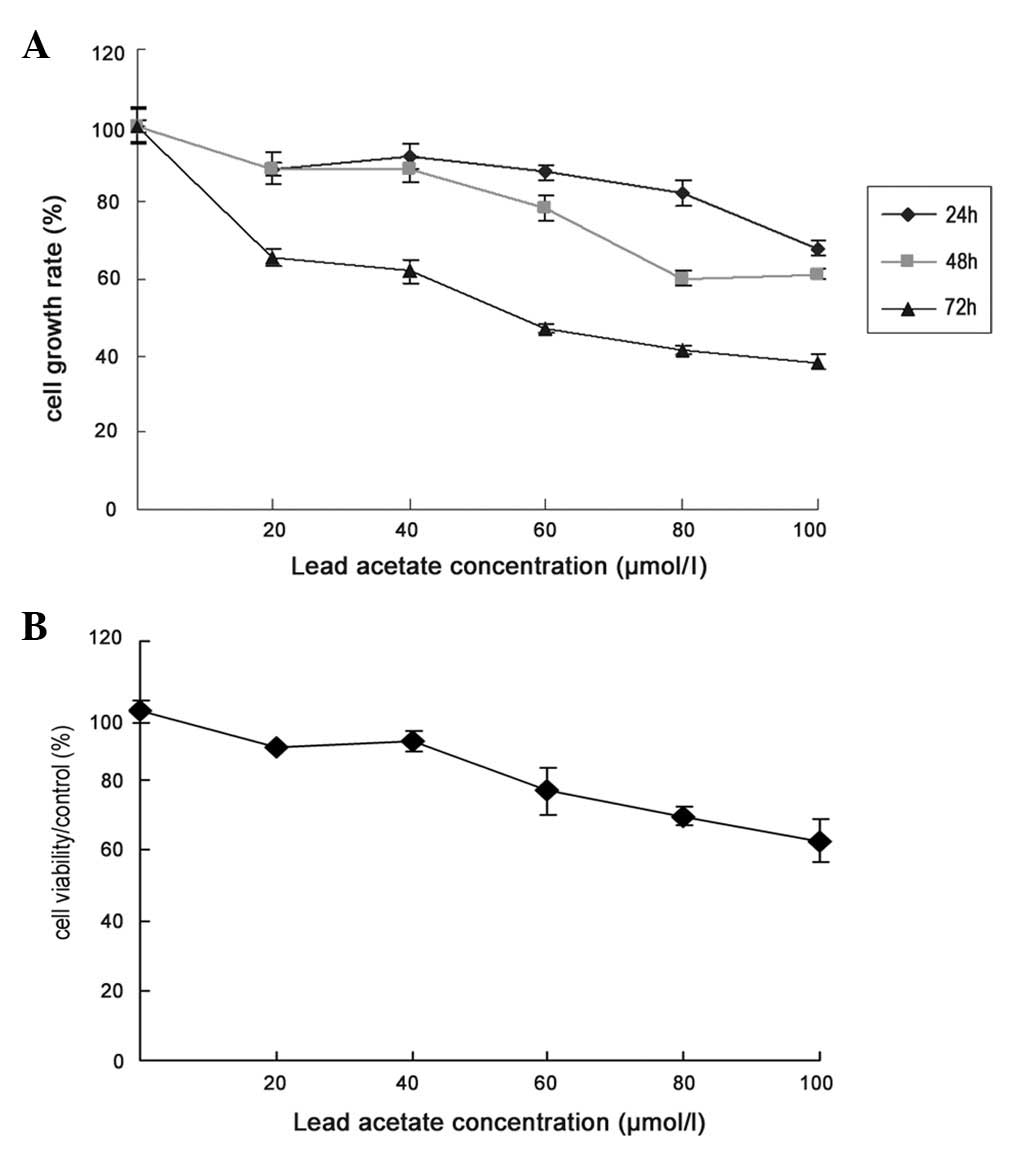
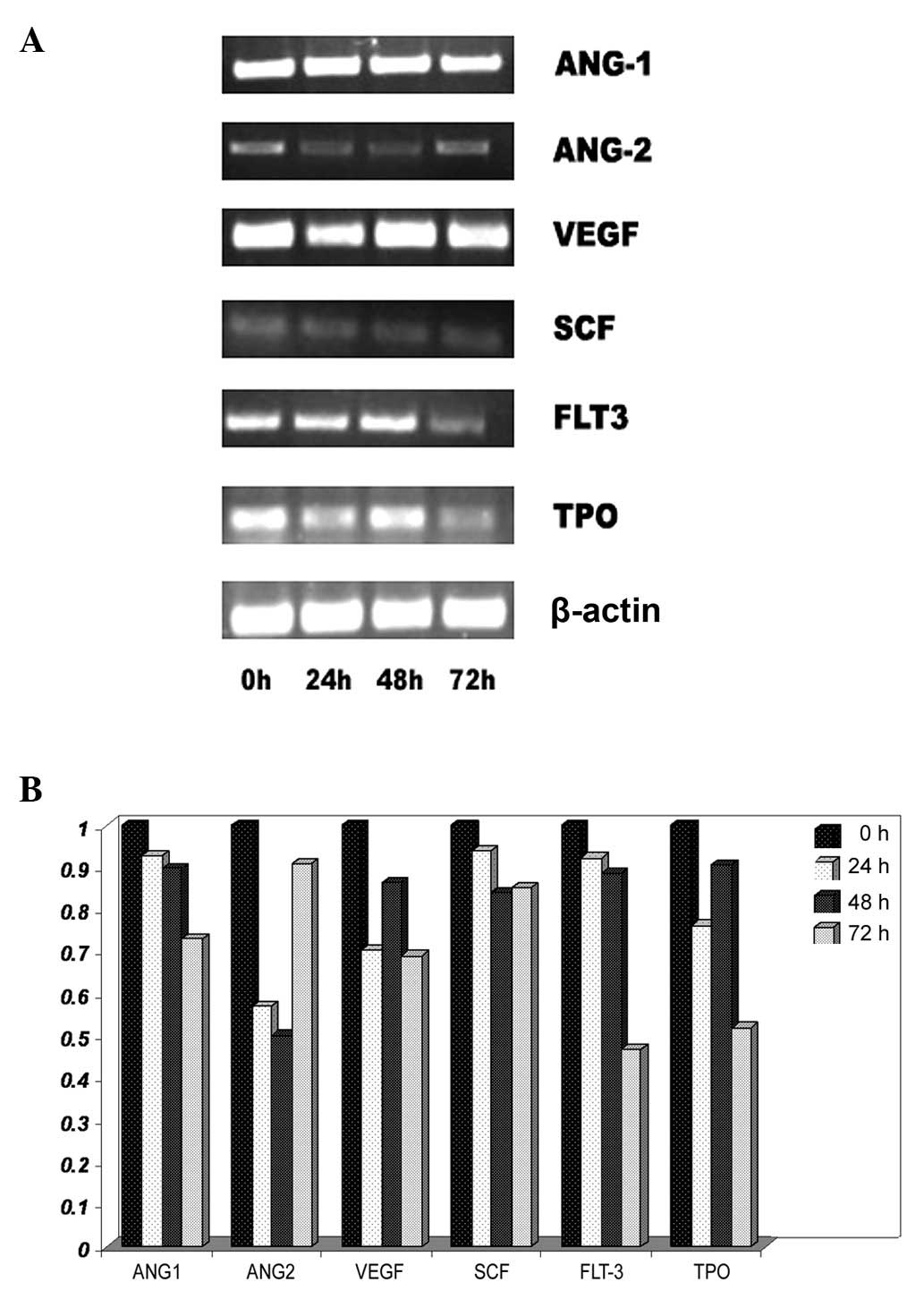
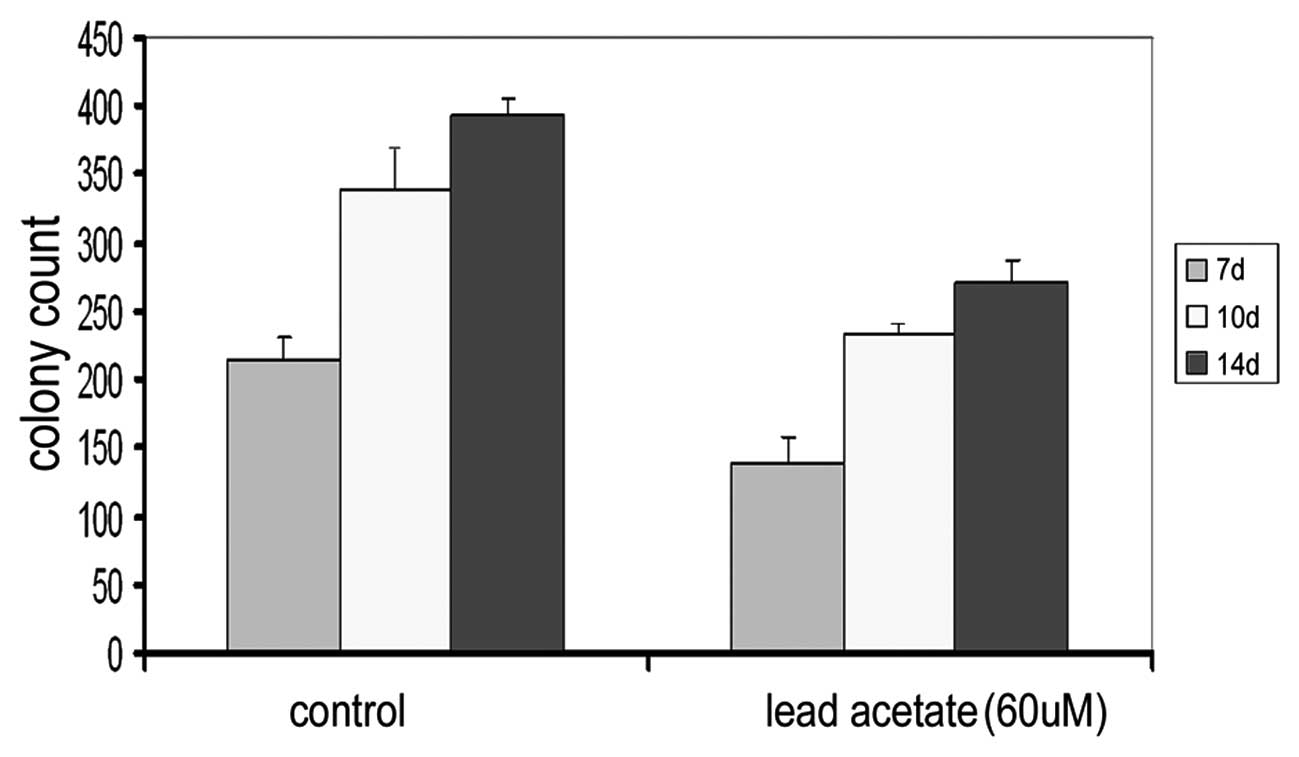
Plumbum (Pb) is a heavy metal toxin that causes many pathophysiological effects in various systems of the human body. It has previously been reported that excessive lead trioxide causes hematopoietic system toxicity. Mesenchymal stem cells (MSCs), as cells with self-renewal and multipotent differentiation potential, play a supportive role in hematopoietic function. Lead is well known to interfere with hemoglobin synthesis and affect erythrocyte morphology and survival. MSCs and the cytokines secreted by MSCs are the important components of the hematopoietic microenvironment. Thus, we hypothesized that lead may cause damage to MSCs, which may provide a new understanding of the mechanism of lead toxicity in the hematopoietic system. In the present study, cell count, MTT assay, apoptosis assay, osteogenic differentiation, cell histochemical staining, cell cycle analysis, colony forming assay and RT-PCR were used. The results showed that the proliferation of umbilical cord MSCs (UCMSCs) was affected if the concentrations of lead were higher than 10 µM. Following osteogenic differentiation, the rate of alkaline phosphatase and Von Kossa stain positivity in the experimental group was lower than that in the control group. In conclusion, these results demonstrate that lead suppresses the self-renewal and multipotent differentiation potential of UCMSCs, and induces an adverse effect on the expression of UCMSCs cytokines. MSCs also have a hematopoiesis-promoting function that is capable of supporting colony formation of bone marrow cells. Furthermore, we found that following treatment with lead acetate, the supportive function of UCMSCs on colony formation was inhibited. Taken together, lead acetate has a toxic effect on the self-renewal, multipotent differentiation potential and hematopoiesis-promoting function of UCMSCs.
View Figures

Figure 1

Figure 2

Figure 3

Figure 4

Figure 5

View References

1 

Srianujata S: Lead - the toxic metal to stay with human. J Toxicol Sci. 23(Suppl 2): 237–240. 1998. View Article : Google Scholar : PubMed/NCBI

2 

Chen H and Pan SS: Bioremediation potential of spirulina: toxicity and biosorption studies of lead. J Zhejiang Univ Sci B. 6:171–174. 2005. View Article : Google Scholar : PubMed/NCBI

3 

Mielke HW and Reagan PL: Soil is an important pathway of human lead exposure. Environ Health Perspect. 106(Suppl 1): 217–229. 1998. View Article : Google Scholar : PubMed/NCBI

4 

Massadeh AM, Al-Safi SA, Momani IF, Alomary AA, Jaradat QM and AlKofahi AS: Garlic (Allium sativum L) as a potential antidote for cadmium and lead intoxication: cadmium and lead distribution and analysis in different mice organs. Biol Trace Elem Res. 120:227–234. 2007.

5 

Jeyaratnam J, Devathasan G, Ong CN, Phoon WO and Wong PK: Neurophysiological studies on workers exposed to lead. Br J Ind Med. 42:173–177. 1985.PubMed/NCBI

6 

Rader JI, Peeler JT and Mahaffey KR: Comparative toxicity and tissue distribution of lead acetate in weanling and adult rats. Environ Health Perspect. 42:187–195. 1981. View Article : Google Scholar : PubMed/NCBI

7 

Audesirk G, Shugarts D, Nelson G and Przekwas J: Organic and inorganic lead inhibit neurite growth in vertebrate and invertebrate neurons in culture. In Vitro Cell Dev Biol. 25:1121–1128. 1989. View Article : Google Scholar : PubMed/NCBI

8 

Vigeh M, Saito H and Sawada S: Lead exposure in female workers who are pregnant or of childbearing age. Ind Health. 49:255–261. 2011. View Article : Google Scholar : PubMed/NCBI

9 

Bradman A, Eskenazi B, Sutton P, Athanasoulis M and Goldman LR: Iron deficiency associated with higher blood lead in children living in contaminated environments. Environ Health Perspect. 109:1079–1084. 2001. View Article : Google Scholar : PubMed/NCBI

10 

Chapin RE and Stedman DB: Endless possibilities: stem cells and the vision for toxicology testing in the 21st century. Toxicol Sci. 112:17–22. 2009. View Article : Google Scholar : PubMed/NCBI

11 

Stummann TC, Hareng L and Bremer S: Hazard assessment of methylmercury toxicity to neuronal induction in embryogenesis using human embryonic stem cells. Toxicology. 257:117–126. 2009. View Article : Google Scholar : PubMed/NCBI

12 

Pittenger MF, Mackay AM, Beck SC, et al: Multilineage potential of adult human mesenchymal stem cells. Science. 284:143–147. 1999. View Article : Google Scholar : PubMed/NCBI

13 

Jiang Y, Jahagirdar BN, Reinhardt RL, et al: Pluripotency of mesenchymal stem cells derived from adult marrow. Nature. 418:41–49. 2002. View Article : Google Scholar : PubMed/NCBI

14 

Caplan AI: Mesenchymal stem cells. J Orthop Res. 9:641–650. 1991. View Article : Google Scholar : PubMed/NCBI

15 

Rotter N, Oder J, Schlenke P, et al: Isolation and characterization of adult stem cells from human salivary glands. Stem Cells Dev. 17:509–518. 2008. View Article : Google Scholar : PubMed/NCBI

16 

Lin TM, Chang HW, Wang KH, et al: Isolation and identification of mesenchymal stem cells from human lipoma tissue. Biochem Biophys Res Commun. 361:883–889. 2007. View Article : Google Scholar : PubMed/NCBI

17 

Fickert S, Fiedler J and Brenner RE: Identification, quantification and isolation of mesenchymal progenitor cells from osteoarthritic synovium by fluorescence automated cell sorting. Osteoarthritis Cartilage. 11:790–800. 2003. View Article : Google Scholar : PubMed/NCBI

18 

Dazzi F, Ramasamy R, Glennie S, Jones SP and Roberts I: The role of mesenchymal stem cells in haemopoiesis. Blood Rev. 20:161–171. 2006. View Article : Google Scholar : PubMed/NCBI

19 

Zhu W, Xu W, Jiang R, et al: Mesenchymal stem cells derived from bone marrow favor tumor cell growth in vivo. Exp Mol Pathol. 80:267–274. 2006. View Article : Google Scholar : PubMed/NCBI

20 

Wang X, Zhao T, Huang W, et al: Hsp20-engineered mesenchymal stem cells are resistant to oxidative stress via enhanced activation of Akt and increased secretion of growth factors. Stem Cells. 27:3021–3031. 2009.PubMed/NCBI

21 

Cai Y, Aoshima K, Katoh T, Teranishi H and Kasuya M: Renal tubular dysfunction in male inhabitants of a cadmium-polluted area in Toyama, Japan - an eleven-year follow-up study. J Epidemiol. 11:180–189. 2001.PubMed/NCBI

22 

Topashka-Ancheva M, Metcheva R and Teodorova S: Bioaccumulation and damaging action of polymetal industrial dust on laboratory mice Mus musculus alba. II Genetic, cell, and metabolic disturbances. Environ Res. 92:152–160. 2003. View Article : Google Scholar : PubMed/NCBI

23 

Zhang W, Yang N and Shi XM: Regulation of mesenchymal stem cell osteogenic differentiation by glucocorticoid-induced leucine zipper (GILZ). J Biol Chem. 283:4723–4729. 2008. View Article : Google Scholar : PubMed/NCBI

24 

Cheng SL, Yang JW, Rifas L, Zhang SF and Avioli LV: Differentiation of human bone marrow osteogenic stromal cells in vitro: induction of the osteoblast phenotype by dexamethasone. Endocrinology. 134:277–286. 1994.PubMed/NCBI

25 

Rio B, Froquet R and Parent-massin D: In vitro effect of leadacetate on human erythropoietic progenitors. Cell Biol Toxicol. 17:41–50. 2001. View Article : Google Scholar : PubMed/NCBI

26 

Barry PS: A comparison of concentrations of lead in human tissues. Br J Ind Med. 32:119–139. 1975.PubMed/NCBI

27 

Haleagrahara N, Jackie T, Chakravarthi S, Rao M and Kulur A: Protective effect of Etlingera elatior (torch ginger) extract on lead acetate - induced hepatotoxicity in rats. J Toxicol Sci. 35:663–671. 2010.

28 

Nehez M, Lorencz R and Desi I: Simultaneous action of cypermethrin and two environmental pollutant metals, cadmium and lead, on bone marrow cell chromosomes of rats in subchronic administration. Ecotoxicol Environ Saf. 45:55–60. 2000. View Article : Google Scholar : PubMed/NCBI

29 

Queiroz ML, Torello CO, Perhs SM, et al: Chlorella vulgaris up-modulation of myelossupression induced by lead: the role of stromal cells. Food Chem Toxicol. 46:3147–3154. 2008. View Article : Google Scholar

30 

Kasperczyk A, Kasperczyk S, Horak S, et al: Assessment of semen function and lipid peroxidation among lead exposed men. Toxicol Appl Pharmacol. 228:378–384. 2008. View Article : Google Scholar : PubMed/NCBI

31 

Osterode W, Barnas U and Geissler K: Dose dependent reduction of erythroid progenitor cells and inappropriate erythropoietin response in exposure to lead: new aspects of anaemia induced by lead. Occup Environ Med. 56:106–109. 1999. View Article : Google Scholar

32 

Jacob B, Ritz B, Heinrich J, Hoelscher B and Wichmann HE: The effect of low-level blood lead on hematologic parameters in children. Environ Res. 82:150–159. 2000. View Article : Google Scholar : PubMed/NCBI

33 

Weissman IL: Stem cells: units of development, units of regeneration, and units in evolution. Cell. 100:157–168. 2000. View Article : Google Scholar : PubMed/NCBI

Related Articles

  • Abstract
  • View
  • Download
  • Twitter
Copy and paste a formatted citation
Spandidos Publications style
Sun X, Xie Y, Wu L, Zhu W, Hu J, Lu R and Xu W: Lead acetate reduces the ability of human umbilical cord mesenchymal stem cells to support hematopoiesis in vitro. Mol Med Rep 6: 827-832, 2012.
APA
Sun, X., Xie, Y., Wu, L., Zhu, W., Hu, J., Lu, R., & Xu, W. (2012). Lead acetate reduces the ability of human umbilical cord mesenchymal stem cells to support hematopoiesis in vitro. Molecular Medicine Reports, 6, 827-832. https://doi.org/10.3892/mmr.2012.1014
MLA
Sun, X., Xie, Y., Wu, L., Zhu, W., Hu, J., Lu, R., Xu, W."Lead acetate reduces the ability of human umbilical cord mesenchymal stem cells to support hematopoiesis in vitro". Molecular Medicine Reports 6.4 (2012): 827-832.
Chicago
Sun, X., Xie, Y., Wu, L., Zhu, W., Hu, J., Lu, R., Xu, W."Lead acetate reduces the ability of human umbilical cord mesenchymal stem cells to support hematopoiesis in vitro". Molecular Medicine Reports 6, no. 4 (2012): 827-832. https://doi.org/10.3892/mmr.2012.1014
Copy and paste a formatted citation
x
Spandidos Publications style
Sun X, Xie Y, Wu L, Zhu W, Hu J, Lu R and Xu W: Lead acetate reduces the ability of human umbilical cord mesenchymal stem cells to support hematopoiesis in vitro. Mol Med Rep 6: 827-832, 2012.
APA
Sun, X., Xie, Y., Wu, L., Zhu, W., Hu, J., Lu, R., & Xu, W. (2012). Lead acetate reduces the ability of human umbilical cord mesenchymal stem cells to support hematopoiesis in vitro. Molecular Medicine Reports, 6, 827-832. https://doi.org/10.3892/mmr.2012.1014
MLA
Sun, X., Xie, Y., Wu, L., Zhu, W., Hu, J., Lu, R., Xu, W."Lead acetate reduces the ability of human umbilical cord mesenchymal stem cells to support hematopoiesis in vitro". Molecular Medicine Reports 6.4 (2012): 827-832.
Chicago
Sun, X., Xie, Y., Wu, L., Zhu, W., Hu, J., Lu, R., Xu, W."Lead acetate reduces the ability of human umbilical cord mesenchymal stem cells to support hematopoiesis in vitro". Molecular Medicine Reports 6, no. 4 (2012): 827-832. https://doi.org/10.3892/mmr.2012.1014
Follow us
  • Twitter
  • LinkedIn
  • Facebook
About
  • Spandidos Publications
  • Careers
  • Cookie Policy
  • Privacy Policy
How can we help?
  • Help
  • Live Chat
  • Contact
  • Email to our Support Team