Spandidos Publications Logo
  • About
    • About Spandidos
    • Aims and Scopes
    • Abstracting and Indexing
    • Editorial Policies
    • Reprints and Permissions
    • Job Opportunities
    • Terms and Conditions
    • Contact
  • Journals
    • All Journals
    • Oncology Letters
      • Oncology Letters
      • Information for Authors
      • Editorial Policies
      • Editorial Board
      • Aims and Scope
      • Abstracting and Indexing
      • Bibliographic Information
      • Archive
    • International Journal of Oncology
      • International Journal of Oncology
      • Information for Authors
      • Editorial Policies
      • Editorial Board
      • Aims and Scope
      • Abstracting and Indexing
      • Bibliographic Information
      • Archive
    • Molecular and Clinical Oncology
      • Molecular and Clinical Oncology
      • Information for Authors
      • Editorial Policies
      • Editorial Board
      • Aims and Scope
      • Abstracting and Indexing
      • Bibliographic Information
      • Archive
    • Experimental and Therapeutic Medicine
      • Experimental and Therapeutic Medicine
      • Information for Authors
      • Editorial Policies
      • Editorial Board
      • Aims and Scope
      • Abstracting and Indexing
      • Bibliographic Information
      • Archive
    • International Journal of Molecular Medicine
      • International Journal of Molecular Medicine
      • Information for Authors
      • Editorial Policies
      • Editorial Board
      • Aims and Scope
      • Abstracting and Indexing
      • Bibliographic Information
      • Archive
    • Biomedical Reports
      • Biomedical Reports
      • Information for Authors
      • Editorial Policies
      • Editorial Board
      • Aims and Scope
      • Abstracting and Indexing
      • Bibliographic Information
      • Archive
    • Oncology Reports
      • Oncology Reports
      • Information for Authors
      • Editorial Policies
      • Editorial Board
      • Aims and Scope
      • Abstracting and Indexing
      • Bibliographic Information
      • Archive
    • Molecular Medicine Reports
      • Molecular Medicine Reports
      • Information for Authors
      • Editorial Policies
      • Editorial Board
      • Aims and Scope
      • Abstracting and Indexing
      • Bibliographic Information
      • Archive
    • World Academy of Sciences Journal
      • World Academy of Sciences Journal
      • Information for Authors
      • Editorial Policies
      • Editorial Board
      • Aims and Scope
      • Abstracting and Indexing
      • Bibliographic Information
      • Archive
    • International Journal of Functional Nutrition
      • International Journal of Functional Nutrition
      • Information for Authors
      • Editorial Policies
      • Editorial Board
      • Aims and Scope
      • Abstracting and Indexing
      • Bibliographic Information
      • Archive
    • International Journal of Epigenetics
      • International Journal of Epigenetics
      • Information for Authors
      • Editorial Policies
      • Editorial Board
      • Aims and Scope
      • Abstracting and Indexing
      • Bibliographic Information
      • Archive
    • Medicine International
      • Medicine International
      • Information for Authors
      • Editorial Policies
      • Editorial Board
      • Aims and Scope
      • Abstracting and Indexing
      • Bibliographic Information
      • Archive
  • Articles
  • Information
    • Information for Authors
    • Information for Reviewers
    • Information for Librarians
    • Information for Advertisers
    • Conferences
  • Language Editing
Spandidos Publications Logo
  • About
    • About Spandidos
    • Aims and Scopes
    • Abstracting and Indexing
    • Editorial Policies
    • Reprints and Permissions
    • Job Opportunities
    • Terms and Conditions
    • Contact
  • Journals
    • All Journals
    • Biomedical Reports
      • Information for Authors
      • Editorial Policies
      • Editorial Board
      • Aims and Scope
      • Abstracting and Indexing
      • Bibliographic Information
      • Archive
    • Experimental and Therapeutic Medicine
      • Information for Authors
      • Editorial Policies
      • Editorial Board
      • Aims and Scope
      • Abstracting and Indexing
      • Bibliographic Information
      • Archive
    • International Journal of Epigenetics
      • Information for Authors
      • Editorial Policies
      • Editorial Board
      • Aims and Scope
      • Abstracting and Indexing
      • Bibliographic Information
      • Archive
    • International Journal of Functional Nutrition
      • Information for Authors
      • Editorial Policies
      • Editorial Board
      • Aims and Scope
      • Abstracting and Indexing
      • Bibliographic Information
      • Archive
    • International Journal of Molecular Medicine
      • Information for Authors
      • Editorial Policies
      • Editorial Board
      • Aims and Scope
      • Abstracting and Indexing
      • Bibliographic Information
      • Archive
    • International Journal of Oncology
      • Information for Authors
      • Editorial Policies
      • Editorial Board
      • Aims and Scope
      • Abstracting and Indexing
      • Bibliographic Information
      • Archive
    • Medicine International
      • Information for Authors
      • Editorial Policies
      • Editorial Board
      • Aims and Scope
      • Abstracting and Indexing
      • Bibliographic Information
      • Archive
    • Molecular and Clinical Oncology
      • Information for Authors
      • Editorial Policies
      • Editorial Board
      • Aims and Scope
      • Abstracting and Indexing
      • Bibliographic Information
      • Archive
    • Molecular Medicine Reports
      • Information for Authors
      • Editorial Policies
      • Editorial Board
      • Aims and Scope
      • Abstracting and Indexing
      • Bibliographic Information
      • Archive
    • Oncology Letters
      • Information for Authors
      • Editorial Policies
      • Editorial Board
      • Aims and Scope
      • Abstracting and Indexing
      • Bibliographic Information
      • Archive
    • Oncology Reports
      • Information for Authors
      • Editorial Policies
      • Editorial Board
      • Aims and Scope
      • Abstracting and Indexing
      • Bibliographic Information
      • Archive
    • World Academy of Sciences Journal
      • Information for Authors
      • Editorial Policies
      • Editorial Board
      • Aims and Scope
      • Abstracting and Indexing
      • Bibliographic Information
      • Archive
  • Articles
  • Information
    • For Authors
    • For Reviewers
    • For Librarians
    • For Advertisers
    • Conferences
  • Language Editing
Login Register Submit
  • This site uses cookies
  • You can change your cookie settings at any time by following the instructions in our Cookie Policy. To find out more, you may read our Privacy Policy.

    I agree
Search articles by DOI, keyword, author or affiliation
Search
Advanced Search
presentation
Molecular Medicine Reports
Join Editorial Board Propose a Special Issue
Print ISSN: 1791-2997 Online ISSN: 1791-3004
Journal Cover
January 2013 Volume 7 Issue 1

Full Size Image

Sign up for eToc alerts
Recommend to Library

Journals

International Journal of Molecular Medicine

International Journal of Molecular Medicine

International Journal of Molecular Medicine is an international journal devoted to molecular mechanisms of human disease.

International Journal of Oncology

International Journal of Oncology

International Journal of Oncology is an international journal devoted to oncology research and cancer treatment.

Molecular Medicine Reports

Molecular Medicine Reports

Covers molecular medicine topics such as pharmacology, pathology, genetics, neuroscience, infectious diseases, molecular cardiology, and molecular surgery.

Oncology Reports

Oncology Reports

Oncology Reports is an international journal devoted to fundamental and applied research in Oncology.

Experimental and Therapeutic Medicine

Experimental and Therapeutic Medicine

Experimental and Therapeutic Medicine is an international journal devoted to laboratory and clinical medicine.

Oncology Letters

Oncology Letters

Oncology Letters is an international journal devoted to Experimental and Clinical Oncology.

Biomedical Reports

Biomedical Reports

Explores a wide range of biological and medical fields, including pharmacology, genetics, microbiology, neuroscience, and molecular cardiology.

Molecular and Clinical Oncology

Molecular and Clinical Oncology

International journal addressing all aspects of oncology research, from tumorigenesis and oncogenes to chemotherapy and metastasis.

World Academy of Sciences Journal

World Academy of Sciences Journal

Multidisciplinary open-access journal spanning biochemistry, genetics, neuroscience, environmental health, and synthetic biology.

International Journal of Functional Nutrition

International Journal of Functional Nutrition

Open-access journal combining biochemistry, pharmacology, immunology, and genetics to advance health through functional nutrition.

International Journal of Epigenetics

International Journal of Epigenetics

Publishes open-access research on using epigenetics to advance understanding and treatment of human disease.

Medicine International

Medicine International

An International Open Access Journal Devoted to General Medicine.

Journal Cover
January 2013 Volume 7 Issue 1

Full Size Image

Sign up for eToc alerts
Recommend to Library

  • Article
  • Citations
    • Cite This Article
    • Download Citation
    • Create Citation Alert
    • Remove Citation Alert
    • Cited By
  • Similar Articles
    • Related Articles (in Spandidos Publications)
    • Similar Articles (Google Scholar)
    • Similar Articles (PubMed)
  • Download PDF
  • Download XML
  • View XML
Article

CD8+ T cells from vitiligo perilesional margins induce autologous melanocyte apoptosis

  • Authors:
    • Jilong Wu
    • Miaoni Zhou
    • Yinsheng Wan
    • Aie Xu
  • View Affiliations / Copyright

    Affiliations: Department of Dermatology, The Third People's Hospital of Hangzhou, Hangzhou 310009, P.R. China, Department of Biology, Providence College, Providence, RI 02918, USA
  • Pages: 237-241
    |
    Published online on: October 8, 2012
       https://doi.org/10.3892/mmr.2012.1117
  • Expand metrics +
Metrics: Total Views: 0 (Spandidos Publications: | PMC Statistics: )
Metrics: Total PDF Downloads: 0 (Spandidos Publications: | PMC Statistics: )
Cited By (CrossRef): 0 citations Loading Articles...

This article is mentioned in:


Abstract

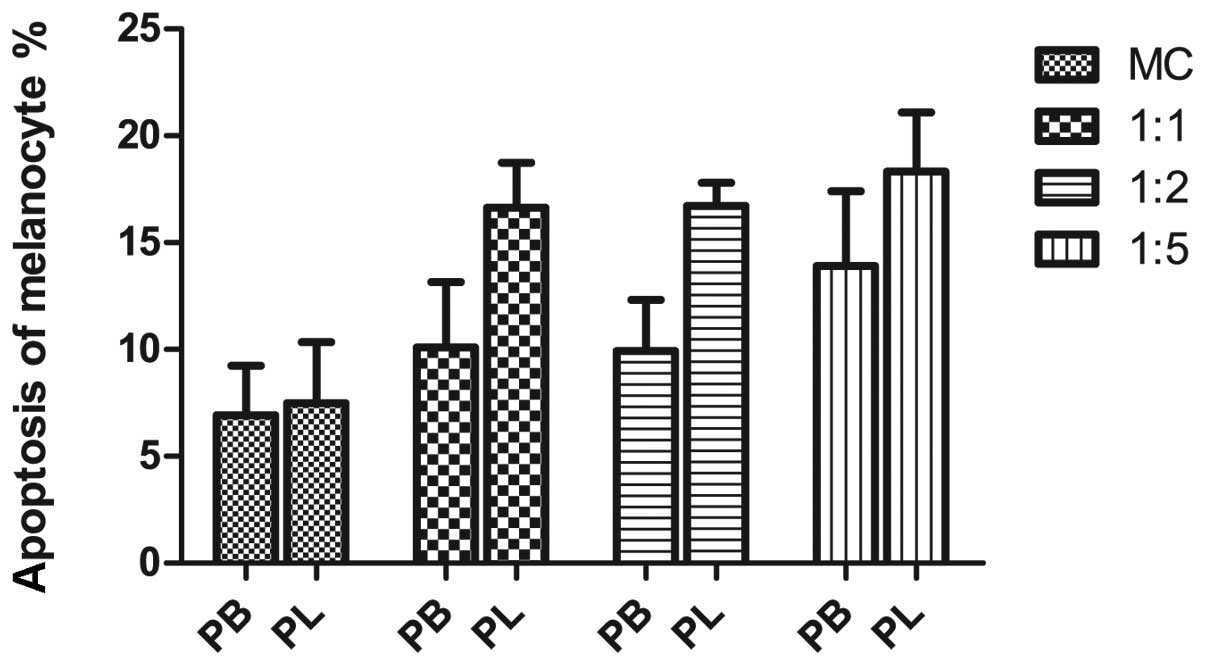
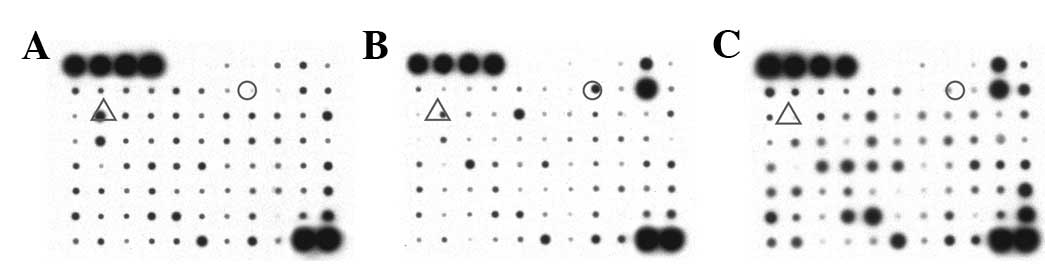
Cell-mediated autoimmunity has been suggested to be involved in the melanocyte apoptosis that occurs in vitiligo. We investigated the cytotoxicity to autologous melanocytes of CD8+ T cells from the perilesional margins and peripheral blood samples of vitiligo patients. CD8+ T cells isolated from skin biopsied from the edges of depigmented skin patches of vitiligo patients or from peripheral blood samples of the same donors were proliferated in culture medium. The primary cultures of CD8+ T cells and autologous melanocytes were mixed at ratios of 1:1, 1:2 or 1:5 and incubated for 3 days. The apoptosis of the melanocytes was analyzed by flow cytometry. Secreted cytokines in selected samples were measured by cytokine arrays. The results show that the CD8+ T cells were successfully isolated from the vitiligo perilesional margins. This cell population showed a significantly higher percentage of CD69 expression (56.13±3.55 versus 29.93±2.35%, p<0.01) and CD137 expression (41.74±1.06 versus 25.97±1.63%, p<0.01) compared with CD8+ T cells in peripheral blood from the same donors. The co-culturing of CD8+ T cells from lesional skin with autologous melanocytes induced apoptosis in the melanocytes (16.63±1.21, 16.71±0.63 and 18.32±1.60% for CD8+ T cells and autologous melanocytes at ratios of 1:1, 1:2 and 1:5, respectively). IL-6 levels were much higher in the co-culture (3.01-fold higher than in a melanocyte monoculture and 17.32-fold higher than in a CD8+ T-cell monoculture). The CD8+ T cells were also demonstrated to secrete more IL-13. Taken together, our data demonstrate that the infiltration of active CD8+ T cells takes place in the vitiligo perilesional margins. Those CD8+ T cells present significantly higher activation levels and higher cytotoxicity to autologous melanocytes than their counterparts from peripheral blood samples. These data suggest that CD8+ T cells are likely to be involved in the pathogenesis of vitiligo.
View Figures

Figure 1

Figure 2

Figure 3

View References

1 

Yee C, Thompson JA, Roche P, et al: Melanocyte destruction after antigen-specific immunotherapy of melanoma: direct evidence of T cell-mediated vitiligo. J Exp Med. 192:1637–44. 2000. View Article : Google Scholar : PubMed/NCBI

2 

Kemp EH, Waterman EA, Hawes BE, et al: The melanin-concentrating hormone receptor 1, a novel target of autoantibody responses in vitiligo. J Clin Invest. 109:923–930. 2002. View Article : Google Scholar : PubMed/NCBI

3 

Palermo B, Campanelli R, Garbelli S, et al: Specific cytotoxic T lymphocyte responses against Melan-A/MART1, tyrosinase and gp100 in vitiligo by the use of major histocompatibility complex/peptide tetramers: the role of cellular immunity in the etiopathogenesis of vitiligo. J Invest Dermatol. 117:326–332. 2001. View Article : Google Scholar

4 

Glassman SJ: Vitiligo, reactive oxygen species and T-cells (Review). Clin Sci (Lond). 120:99–120. 2011. View Article : Google Scholar : PubMed/NCBI

5 

Le Poole IC and Luiten RM: Autoimmune etiology of generalized vitiligo (Review). Curr Dir Autoimmun. 10:227–243. 2008.PubMed/NCBI

6 

Le Poole IC, ElMasri WM, Denman CJ, et al: Langerhans cells and dendritic cells are cytotoxic towards HPV16 E6 and E7 expressing target cells. Cancer Immunol Immunother. 57:789–797. 2008.PubMed/NCBI

7 

Ongenae K, Van Geel N and Naeyaert JM: Evidence for an autoimmune pathogenesis of vitiligo (Review). Pigment Cell Res. 16:90–100. 2003. View Article : Google Scholar : PubMed/NCBI

8 

Badri AM, Todd PM, Garioch JJ, et al: An immunohistological study of cutaneous lymphocytes in vitiligo. J Pathol. 170:149–155. 1993. View Article : Google Scholar : PubMed/NCBI

9 

Wankowicz-Kalinska A, van den Wijngaard RM, Tigges BJ, et al: Immunopolarization of CD4+ and CD8+ T cells to Type-1-like is associated with melanocyte loss in human vitiligo. Lab Invest. 83:683–695. 2003.

10 

Wankowicz-Kalinska A, Le Poole C, van den Wijngaard R, et al: Melanocyte-specific immune response in melanoma and vitiligo: two faces of the same coin? Pigment Cell Res. 16:254–260. 2003. View Article : Google Scholar : PubMed/NCBI

11 

van den Wijngaard RM, Aten J, Scheepmaker A, et al: Expression and modulation of apoptosis regulatory molecules in human melanocytes: significance in vitiligo. Br J Dermatol. 143:573–581. 2000.PubMed/NCBI

12 

van den Wijngaard R, Wankowicz-Kalinska A, Le Poole C, et al: Local immune response in skin of generalized vitiligo patients. Destruction of melanocytes is associated with the prominent presence of CLA+ T cells at the perilesional site. Lab Invest. 80:1299–1309. 2000.PubMed/NCBI

13 

Bos JD, Zonneveld I, Das PK, et al: The skin immune system (SIS): distribution and immunophenotype of lymphocyte subpopulations in normal human skin. J Invest Dermatol. 88:569–573. 1987. View Article : Google Scholar : PubMed/NCBI

14 

Gross AJ, Hunt HH, Cantor AB and Clark BC: Sample size determination in clinical trials with an emphasis on exponentially distributed responses. Biometrics. 43:875–883. 1987. View Article : Google Scholar : PubMed/NCBI

15 

van den Boorn JG, Konijnenberg D, Dellemijn TA, et al: Autoimmune destruction of skin melanocytes by perilesional T cells from vitiligo patients. J Invest Dermatol. 129:2220–2232. 2009.PubMed/NCBI

16 

Hong WS, Hu DN, Qian GP, et al: Treatment of vitiligo in children and adolescents by autologous cultured pure melanocytes transplantation with comparison of efficacy to results in adults. J Eur Acad Dermatol Venereol. 25:538–543. 2011. View Article : Google Scholar : PubMed/NCBI

17 

Hong WS, Hu DN, Qian GP, et al: Ratio of size of recipient and donor areas in treatment of vitiligo by autologous cultured melanocyte transplantation. Br J Dermatol. 165:520–525. 2011.PubMed/NCBI

18 

Yu HS, Chang KL, Yu CL, et al: Alterations in IL-6, IL-8, GM-CSF, TNF-alpha, and IFN-gamma release by peripheral mononuclear cells in patients with active vitiligo. J Invest Dermatol. 108:527–529. 1997. View Article : Google Scholar : PubMed/NCBI

19 

Moretti S, Spallanzani A, Amato L, et al: New insights into the pathogenesis of vitiligo: imbalance of epidermal cytokines at sites of lesions. Pigment Cell Res. 15:87–92. 2002. View Article : Google Scholar : PubMed/NCBI

20 

Moretti S, Spallanzani A, Amato L, et al: Vitiligo and epidermal microenvironment: possible involvement of keratinocyte-derived cytokines. Arch Dermatol. 138:273–274. 2002. View Article : Google Scholar : PubMed/NCBI

21 

Tu CX, Gu JS and Lin XR: Increased interleukin-6 and granulocyte-macrophage colony stimulating factor levels in the sera of patients with non-segmental vitiligo. J Dermatol Sci. 31:73–78. 2003. View Article : Google Scholar : PubMed/NCBI

22 

Neurath MF and Finotto S: IL-6 signaling in autoimmunity, chronic inflammation and inflammation-associated cancer (Review). Cytokine Growth Factor Rev. 22:83–89. 2011. View Article : Google Scholar : PubMed/NCBI

23 

Chalaris A, Garbers C, Rabe B, et al: The soluble Interleukin 6 receptor: generation and role in inflammation and cancer. Eur J Cell Biol. 90:484–494. 2011. View Article : Google Scholar : PubMed/NCBI

24 

Krasagakis K, Hettmannsperger U, Tebbe B and Garbe C: Cutaneous metastatic angiosarcoma with a lethal outcome, following radiotherapy for a cervical carcinoma. Br J Dermatol. 133:610–614. 1995. View Article : Google Scholar : PubMed/NCBI

25 

Krasagakis K, Garbe C, Zouboulis CC and Orfanos CE: Growth control of melanoma cells and melanocytes by cytokines. Recent Results Cancer Res. 139:169–182. 1995. View Article : Google Scholar : PubMed/NCBI

26 

Krasagakis K, Garbe C, Eberle J and Orfanos CE: Tumour necrosis factors and several interleukins inhibit the growth and modulate the antigen expression of normal human melanocytes in vitro. Arch Dermatol Res. 287:259–265. 1995. View Article : Google Scholar : PubMed/NCBI

27 

Kotobuki Y, Tanemura A, Yang L, et al: Dysregulation of melanocyte function by Th17-related cytokines: significance of Th17 cell infiltration in autoimmune vitiligo vulgaris. Pigment Cell Melanoma Res. 25:219–230. 2012. View Article : Google Scholar : PubMed/NCBI

28 

Dienz O and Rincon M: The effects of IL-6 on CD4 T cell responses (Review). Clin Immunol. 130:27–33. 2009. View Article : Google Scholar : PubMed/NCBI

29 

Dienz O, Eaton SM, Bond JP, et al: The induction of antibody production by IL-6 is indirectly mediated by IL-21 produced by CD4+ T cells. J Exp Med. 206:69–78. 2009. View Article : Google Scholar : PubMed/NCBI

30 

Yoshida H, Hashizume M, Suzuki M and Mihara M: Anti-IL-6 receptor antibody suppressed T cell activation by inhibiting IL-2 production and inducing regulatory T cells. Eur J Pharmacol. 634:178–183. 2010. View Article : Google Scholar : PubMed/NCBI

31 

Yoshida H, Hashizume M and Mihara M: IL-6 blockade preferentially inhibits Th17 differentiation in collagen-induced arthritis. Rheumatol Int. 31:127–131. 2011. View Article : Google Scholar : PubMed/NCBI

32 

Romagnani S, Maggi E, Liotta F, et al: Properties and origin of human Th17 cells (Review). Mol Immunol. 47:3–7. 2009. View Article : Google Scholar

33 

Suzuki T, Shoji S, Yamamoto K, et al: Essential roles of Lyn in fibronectin-mediated filamentous actin assembly and cell motility in mast cells. J Immunol. 161:3694–3701. 1998.PubMed/NCBI

34 

Vercelli D: Genetics of IL-13 and functional relevance of IL-13 variants (Review). Curr Opin Allergy Clin Immunol. 2:389–393. 2002. View Article : Google Scholar : PubMed/NCBI

35 

Mentink-Kane MM and Wynn TA: Opposing roles for IL-13 and IL-13 receptor alpha 2 in health and disease (Review). Immunol Rev. 202:191–202. 2004. View Article : Google Scholar : PubMed/NCBI

36 

Mentink-Kane MM, Cheever AW, Thompson RW, et al: IL-13 receptor alpha 2 down-modulates granulomatous inflammation and prolongs host survival in schistosomiasis. Proc Natl Acad Sci USA. 101:586–590. 2004. View Article : Google Scholar : PubMed/NCBI

Related Articles

  • Abstract
  • View
  • Download
  • Twitter
Copy and paste a formatted citation
Spandidos Publications style
Wu J, Zhou M, Wan Y and Xu A: CD8+ T cells from vitiligo perilesional margins induce autologous melanocyte apoptosis. Mol Med Rep 7: 237-241, 2013.
APA
Wu, J., Zhou, M., Wan, Y., & Xu, A. (2013). CD8+ T cells from vitiligo perilesional margins induce autologous melanocyte apoptosis. Molecular Medicine Reports, 7, 237-241. https://doi.org/10.3892/mmr.2012.1117
MLA
Wu, J., Zhou, M., Wan, Y., Xu, A."CD8+ T cells from vitiligo perilesional margins induce autologous melanocyte apoptosis". Molecular Medicine Reports 7.1 (2013): 237-241.
Chicago
Wu, J., Zhou, M., Wan, Y., Xu, A."CD8+ T cells from vitiligo perilesional margins induce autologous melanocyte apoptosis". Molecular Medicine Reports 7, no. 1 (2013): 237-241. https://doi.org/10.3892/mmr.2012.1117
Copy and paste a formatted citation
x
Spandidos Publications style
Wu J, Zhou M, Wan Y and Xu A: CD8+ T cells from vitiligo perilesional margins induce autologous melanocyte apoptosis. Mol Med Rep 7: 237-241, 2013.
APA
Wu, J., Zhou, M., Wan, Y., & Xu, A. (2013). CD8+ T cells from vitiligo perilesional margins induce autologous melanocyte apoptosis. Molecular Medicine Reports, 7, 237-241. https://doi.org/10.3892/mmr.2012.1117
MLA
Wu, J., Zhou, M., Wan, Y., Xu, A."CD8+ T cells from vitiligo perilesional margins induce autologous melanocyte apoptosis". Molecular Medicine Reports 7.1 (2013): 237-241.
Chicago
Wu, J., Zhou, M., Wan, Y., Xu, A."CD8+ T cells from vitiligo perilesional margins induce autologous melanocyte apoptosis". Molecular Medicine Reports 7, no. 1 (2013): 237-241. https://doi.org/10.3892/mmr.2012.1117
Follow us
  • Twitter
  • LinkedIn
  • Facebook
About
  • Spandidos Publications
  • Careers
  • Cookie Policy
  • Privacy Policy
How can we help?
  • Help
  • Live Chat
  • Contact
  • Email to our Support Team