Spandidos Publications Logo
  • About
    • About Spandidos
    • Aims and Scopes
    • Abstracting and Indexing
    • Editorial Policies
    • Reprints and Permissions
    • Job Opportunities
    • Terms and Conditions
    • Contact
  • Journals
    • All Journals
    • Oncology Letters
      • Oncology Letters
      • Information for Authors
      • Editorial Policies
      • Editorial Board
      • Aims and Scope
      • Abstracting and Indexing
      • Bibliographic Information
      • Archive
    • International Journal of Oncology
      • International Journal of Oncology
      • Information for Authors
      • Editorial Policies
      • Editorial Board
      • Aims and Scope
      • Abstracting and Indexing
      • Bibliographic Information
      • Archive
    • Molecular and Clinical Oncology
      • Molecular and Clinical Oncology
      • Information for Authors
      • Editorial Policies
      • Editorial Board
      • Aims and Scope
      • Abstracting and Indexing
      • Bibliographic Information
      • Archive
    • Experimental and Therapeutic Medicine
      • Experimental and Therapeutic Medicine
      • Information for Authors
      • Editorial Policies
      • Editorial Board
      • Aims and Scope
      • Abstracting and Indexing
      • Bibliographic Information
      • Archive
    • International Journal of Molecular Medicine
      • International Journal of Molecular Medicine
      • Information for Authors
      • Editorial Policies
      • Editorial Board
      • Aims and Scope
      • Abstracting and Indexing
      • Bibliographic Information
      • Archive
    • Biomedical Reports
      • Biomedical Reports
      • Information for Authors
      • Editorial Policies
      • Editorial Board
      • Aims and Scope
      • Abstracting and Indexing
      • Bibliographic Information
      • Archive
    • Oncology Reports
      • Oncology Reports
      • Information for Authors
      • Editorial Policies
      • Editorial Board
      • Aims and Scope
      • Abstracting and Indexing
      • Bibliographic Information
      • Archive
    • Molecular Medicine Reports
      • Molecular Medicine Reports
      • Information for Authors
      • Editorial Policies
      • Editorial Board
      • Aims and Scope
      • Abstracting and Indexing
      • Bibliographic Information
      • Archive
    • World Academy of Sciences Journal
      • World Academy of Sciences Journal
      • Information for Authors
      • Editorial Policies
      • Editorial Board
      • Aims and Scope
      • Abstracting and Indexing
      • Bibliographic Information
      • Archive
    • International Journal of Functional Nutrition
      • International Journal of Functional Nutrition
      • Information for Authors
      • Editorial Policies
      • Editorial Board
      • Aims and Scope
      • Abstracting and Indexing
      • Bibliographic Information
      • Archive
    • International Journal of Epigenetics
      • International Journal of Epigenetics
      • Information for Authors
      • Editorial Policies
      • Editorial Board
      • Aims and Scope
      • Abstracting and Indexing
      • Bibliographic Information
      • Archive
    • Medicine International
      • Medicine International
      • Information for Authors
      • Editorial Policies
      • Editorial Board
      • Aims and Scope
      • Abstracting and Indexing
      • Bibliographic Information
      • Archive
  • Articles
  • Information
    • Information for Authors
    • Information for Reviewers
    • Information for Librarians
    • Information for Advertisers
    • Conferences
  • Language Editing
Spandidos Publications Logo
  • About
    • About Spandidos
    • Aims and Scopes
    • Abstracting and Indexing
    • Editorial Policies
    • Reprints and Permissions
    • Job Opportunities
    • Terms and Conditions
    • Contact
  • Journals
    • All Journals
    • Biomedical Reports
      • Information for Authors
      • Editorial Policies
      • Editorial Board
      • Aims and Scope
      • Abstracting and Indexing
      • Bibliographic Information
      • Archive
    • Experimental and Therapeutic Medicine
      • Information for Authors
      • Editorial Policies
      • Editorial Board
      • Aims and Scope
      • Abstracting and Indexing
      • Bibliographic Information
      • Archive
    • International Journal of Epigenetics
      • Information for Authors
      • Editorial Policies
      • Editorial Board
      • Aims and Scope
      • Abstracting and Indexing
      • Bibliographic Information
      • Archive
    • International Journal of Functional Nutrition
      • Information for Authors
      • Editorial Policies
      • Editorial Board
      • Aims and Scope
      • Abstracting and Indexing
      • Bibliographic Information
      • Archive
    • International Journal of Molecular Medicine
      • Information for Authors
      • Editorial Policies
      • Editorial Board
      • Aims and Scope
      • Abstracting and Indexing
      • Bibliographic Information
      • Archive
    • International Journal of Oncology
      • Information for Authors
      • Editorial Policies
      • Editorial Board
      • Aims and Scope
      • Abstracting and Indexing
      • Bibliographic Information
      • Archive
    • Medicine International
      • Information for Authors
      • Editorial Policies
      • Editorial Board
      • Aims and Scope
      • Abstracting and Indexing
      • Bibliographic Information
      • Archive
    • Molecular and Clinical Oncology
      • Information for Authors
      • Editorial Policies
      • Editorial Board
      • Aims and Scope
      • Abstracting and Indexing
      • Bibliographic Information
      • Archive
    • Molecular Medicine Reports
      • Information for Authors
      • Editorial Policies
      • Editorial Board
      • Aims and Scope
      • Abstracting and Indexing
      • Bibliographic Information
      • Archive
    • Oncology Letters
      • Information for Authors
      • Editorial Policies
      • Editorial Board
      • Aims and Scope
      • Abstracting and Indexing
      • Bibliographic Information
      • Archive
    • Oncology Reports
      • Information for Authors
      • Editorial Policies
      • Editorial Board
      • Aims and Scope
      • Abstracting and Indexing
      • Bibliographic Information
      • Archive
    • World Academy of Sciences Journal
      • Information for Authors
      • Editorial Policies
      • Editorial Board
      • Aims and Scope
      • Abstracting and Indexing
      • Bibliographic Information
      • Archive
  • Articles
  • Information
    • For Authors
    • For Reviewers
    • For Librarians
    • For Advertisers
    • Conferences
  • Language Editing
Login Register Submit
  • This site uses cookies
  • You can change your cookie settings at any time by following the instructions in our Cookie Policy. To find out more, you may read our Privacy Policy.

    I agree
Search articles by DOI, keyword, author or affiliation
Search
Advanced Search
presentation
Molecular Medicine Reports
Join Editorial Board Propose a Special Issue
Print ISSN: 1791-2997 Online ISSN: 1791-3004
Journal Cover
August 2012 Volume 6 Issue 2

Full Size Image

Sign up for eToc alerts
Recommend to Library

Journals

International Journal of Molecular Medicine

International Journal of Molecular Medicine

International Journal of Molecular Medicine is an international journal devoted to molecular mechanisms of human disease.

International Journal of Oncology

International Journal of Oncology

International Journal of Oncology is an international journal devoted to oncology research and cancer treatment.

Molecular Medicine Reports

Molecular Medicine Reports

Covers molecular medicine topics such as pharmacology, pathology, genetics, neuroscience, infectious diseases, molecular cardiology, and molecular surgery.

Oncology Reports

Oncology Reports

Oncology Reports is an international journal devoted to fundamental and applied research in Oncology.

Experimental and Therapeutic Medicine

Experimental and Therapeutic Medicine

Experimental and Therapeutic Medicine is an international journal devoted to laboratory and clinical medicine.

Oncology Letters

Oncology Letters

Oncology Letters is an international journal devoted to Experimental and Clinical Oncology.

Biomedical Reports

Biomedical Reports

Explores a wide range of biological and medical fields, including pharmacology, genetics, microbiology, neuroscience, and molecular cardiology.

Molecular and Clinical Oncology

Molecular and Clinical Oncology

International journal addressing all aspects of oncology research, from tumorigenesis and oncogenes to chemotherapy and metastasis.

World Academy of Sciences Journal

World Academy of Sciences Journal

Multidisciplinary open-access journal spanning biochemistry, genetics, neuroscience, environmental health, and synthetic biology.

International Journal of Functional Nutrition

International Journal of Functional Nutrition

Open-access journal combining biochemistry, pharmacology, immunology, and genetics to advance health through functional nutrition.

International Journal of Epigenetics

International Journal of Epigenetics

Publishes open-access research on using epigenetics to advance understanding and treatment of human disease.

Medicine International

Medicine International

An International Open Access Journal Devoted to General Medicine.

Journal Cover
August 2012 Volume 6 Issue 2

Full Size Image

Sign up for eToc alerts
Recommend to Library

  • Article
  • Citations
    • Cite This Article
    • Download Citation
    • Create Citation Alert
    • Remove Citation Alert
    • Cited By
  • Similar Articles
    • Related Articles (in Spandidos Publications)
    • Similar Articles (Google Scholar)
    • Similar Articles (PubMed)
  • Download PDF
  • Download XML
  • View XML
Article

Measurement of peroxiredoxin-4 serum levels in rat tissue and its use as a potential marker for hepatic disease

  • Authors:
    • Ritsu Ito
    • Motoko Takahashi
    • Hideyuki Ihara
    • Hiroki Tsukamoto
    • Junichi Fujii
    • Yoshitaka Ikeda
  • View Affiliations / Copyright

    Affiliations: Division of Molecular Cell Biology, Department of Biomolecular Sciences, Faculty of Medicine, Saga University, Saga 849‑8501, Japan, Department of Biochemistry, Sapporo Medical University School of Medicine, Chuo-Ku, Sapporo 060-8556, Japan, Department of Biochemistry and Molecular Biology, Graduate School of Medical Science, Yamagata University, Yamagata 990-9585, Japan
  • Pages: 379-384
    |
    Published online on: June 6, 2012
       https://doi.org/10.3892/mmr.2012.935
  • Expand metrics +
Metrics: Total Views: 0 (Spandidos Publications: | PMC Statistics: )
Metrics: Total PDF Downloads: 0 (Spandidos Publications: | PMC Statistics: )
Cited By (CrossRef): 0 citations Loading Articles...

This article is mentioned in:


Abstract

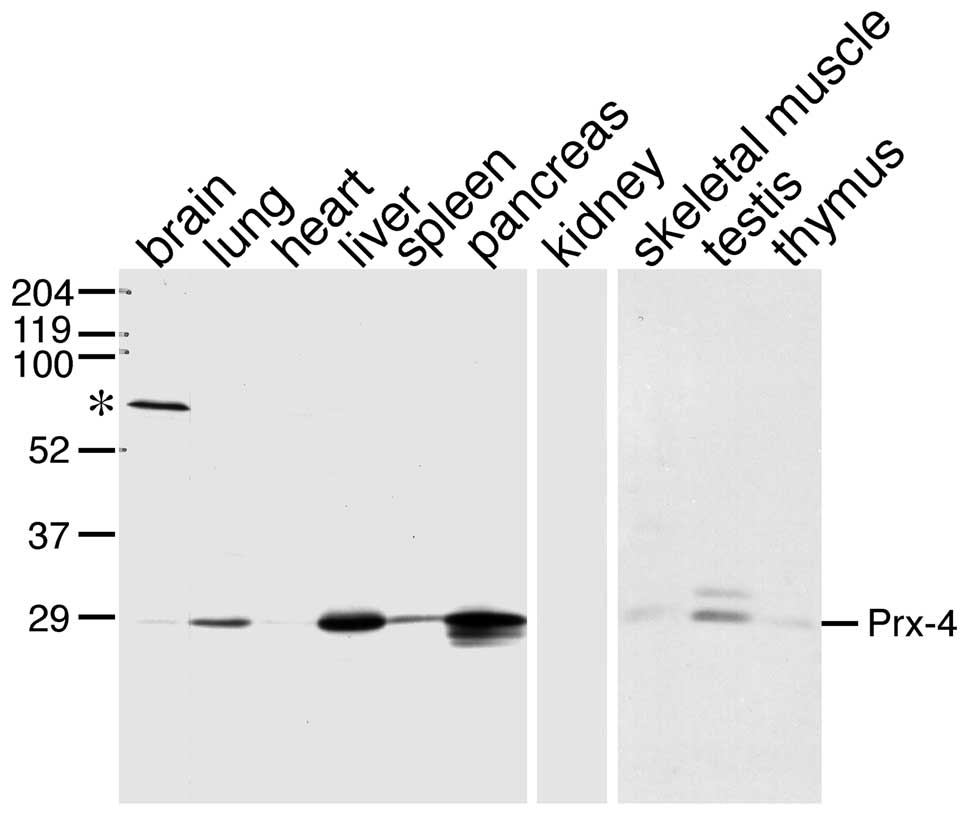
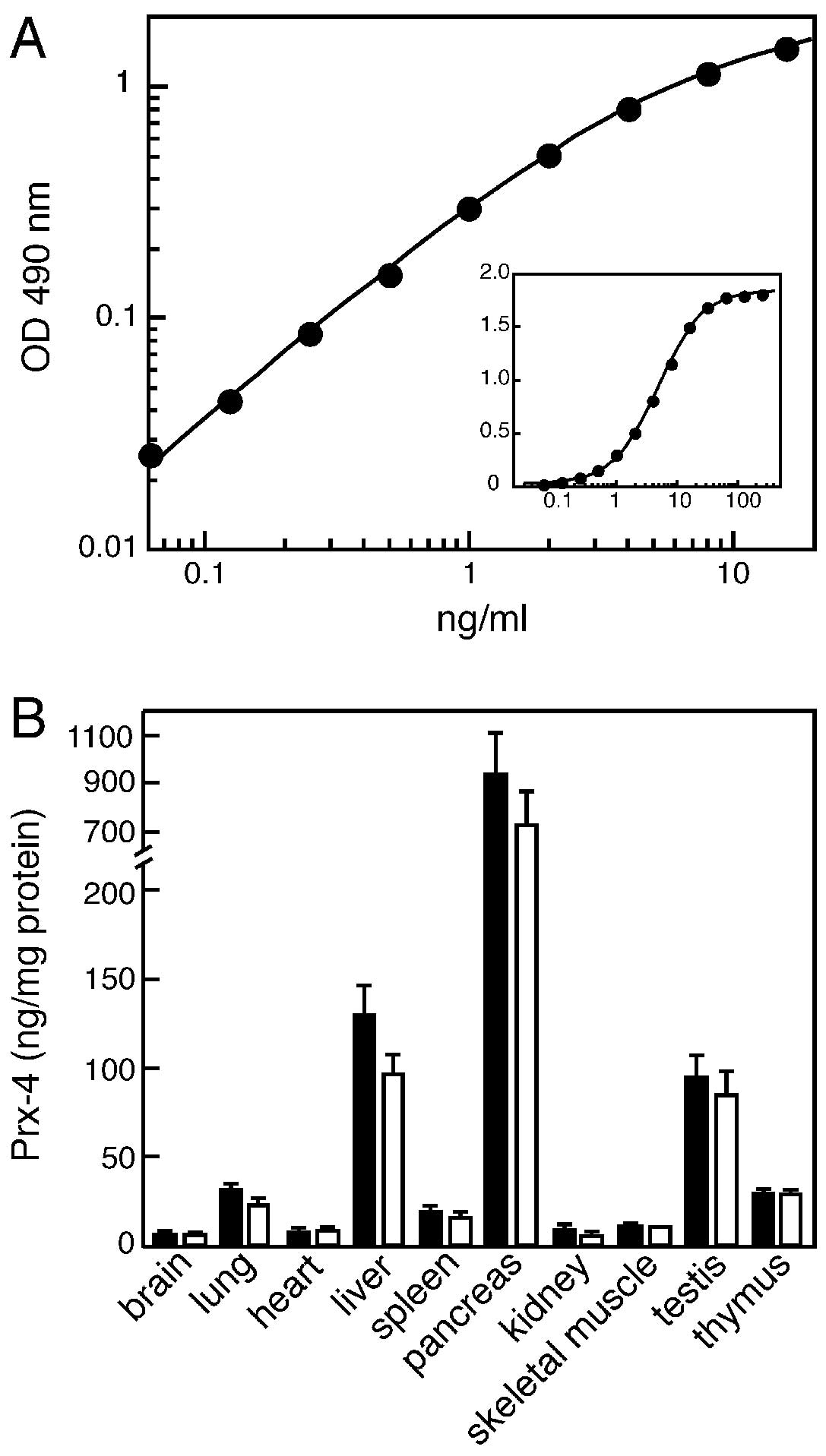
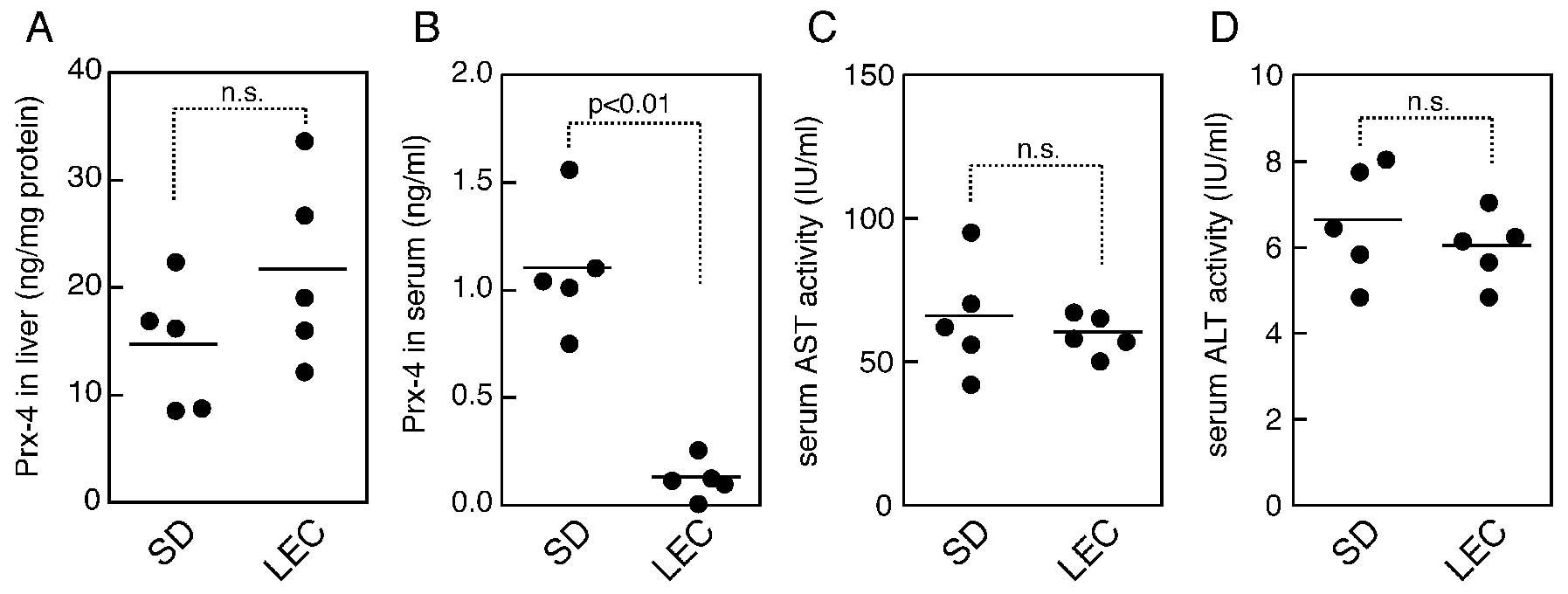
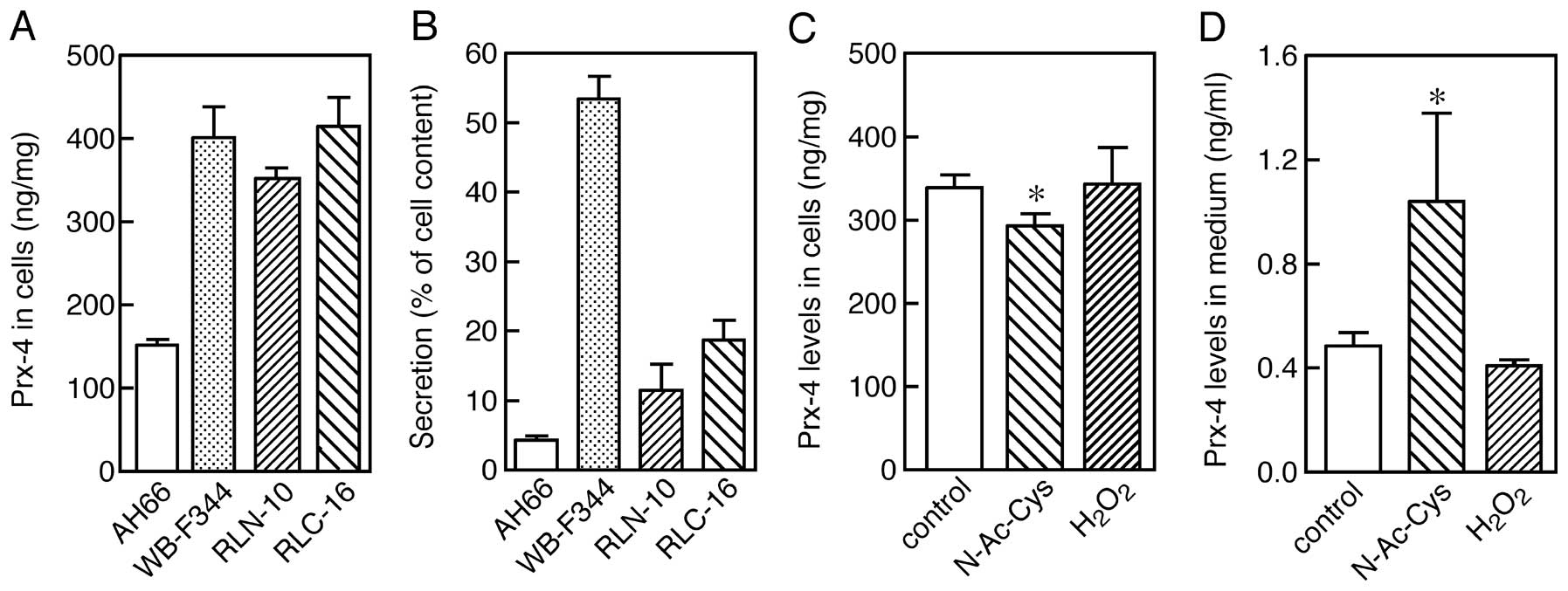
Peroxiredoxin (Prx)-4, a secretable endoplasmic reticulum (ER)-resident isoform of the mammalian Prx family, functions as a thioredoxin-dependent peroxidase. It is acknowledged that Prx-4 plays a role in the detoxification of hydrogen peroxide, and potentially other peroxides, which may be generated during the oxidative folding of proteins and oxidative stress in the ER. The present study was undertaken in order to specifically quantify the tissue levels of Prx-4. To accomplish this, an enzyme-linked immunosorbent assay was developed using a specific polyclonal antibody produced by immunizing a rabbit with native recombinant rat Prx-4 protein. The assay was used to detect Prx-4 in the range of 0.1 and 10 ng/ml, and to investigate tissue distribution in rats. Using this immunoassay, we found that the serum levels of Prx-4 were substantially lower in asymptomatic Long-Evans Cinnamon rats, a rat model of Wilson's disease, compared to normal rats. In addition, the treatment of rat hepatoma cells with N-acetylcysteine led to a significant increase in the release of Prx-4 protein into the medium; thus, it appears likely that the secretion of Prx-4 is associated with the redox state within cells. These results suggest that serum Prx-4 has potential for use as a biomarker for hepatic oxidative stress.
View Figures

Figure 1

Figure 2

Figure 3

Figure 4

View References

1 

Halliwell B and Gutteridge JMC: Free Radicals in Biology and Medicine. 4th edition. Oxford University Press; Oxford, United Kingdom: 2007

2 

Fridovich I: Oxygen toxicity: a radical explanation. J Exp Biol. 201:1203–1209. 1998.PubMed/NCBI

3 

Papa S and Skulachev VP: Reactive oxygen species, mitochondria, apoptosis and aging. Mol Cell Biochem. 174:305–319. 1997. View Article : Google Scholar : PubMed/NCBI

4 

Rhee SG, Kang SW, Chang TS, Jeong W and Kim K: Peroxiredoxin, a novel family of peroxidases. IUBMB Life. 52:35–41. 2001. View Article : Google Scholar : PubMed/NCBI

5 

Rhee SG, Yang KS, Kang SW, Woo HA and Chang TS: Controlled elimination of intracellular H2O2: regulation of peroxiredoxin, catalase, and glutathione peroxidase via post-translational modification. Antioxid Redox Signal. 7:619–626. 2005.PubMed/NCBI

6 

Rhee SG, Chae HZ and Kim K: Peroxiredoxins: a historical overview and speculative preview of novel mechanisms and emerging concepts in cell signaling. Free Radic Biol Med. 38:1543–5152. 2005. View Article : Google Scholar : PubMed/NCBI

7 

Fujii J and Ikeda Y: Advances in our understanding of peroxiredoxin, a multifunctional, mammalian redox protein. Redox Rep. 7:123–130. 2002. View Article : Google Scholar : PubMed/NCBI

8 

Chang XZ, Li DQ, Hou YF, Wu J, Lu JS, Di GH, Jin W, Ou ZL, Shen ZZ and Shao ZM: Identification of the functional role of peroxiredoxin 6 in the progression of breast cancer. Breast Cancer Res. 9:R762007. View Article : Google Scholar : PubMed/NCBI

9 

Iraqui I, Faye G, Ragu S, Masurel-Heneman A, Kolodner RD and Huang ME: Human peroxiredoxin PrxI is an orthologue of yeast Tsa1, capable of suppressing genome instability in Saccharomyces cerevisiae. Cancer Res. 68:1055–1063. 2008. View Article : Google Scholar : PubMed/NCBI

10 

Song IS, Kim SU, Oh NS, Kim J, Yu DY, Huang SM, Kim JM, Lee DS and Kim NS: Peroxiredoxin I contributes to TRAIL resistance through suppression of redox-sensitive caspase activation in human hepatoma cells. Carcinogenesis. 30:1106–1114. 2009. View Article : Google Scholar : PubMed/NCBI

11 

Neumann CA, Krause DS, Carman CV, Das S, Dubey DP, Abraham JL, Bronson RT, Fujiwara Y, Orkin SH and Van Etten RA: Essential role for the peroxiredoxin Prdx1 in erythrocyte antioxidant defence and tumour suppression. Nature. 424:561–565. 2003. View Article : Google Scholar : PubMed/NCBI

12 

Fang J, Nakamura T, Cho DH, Gu Z and Lipton SA: S-nitrosylation of peroxiredoxin 2 promotes oxidative stress-induced neuronal cell death in Parkinson’s disease. Proc Natl Acad Sci USA. 104:18742–18747. 2007.PubMed/NCBI

13 

Cha MK, Suh KH and Kim IH: Overexpression of peroxiredoxin I and thioredoxin1 in human breast carcinoma. J Exp Clin Cancer Res. 28:932009. View Article : Google Scholar : PubMed/NCBI

14 

Karihtala P, Mantyniemi A, Kang SW, Kinnula VL and Soini Y: Peroxiredoxins in breast carcinoma. Clin Cancer Res. 9:3418–3424. 2003.PubMed/NCBI

15 

Quan C, Cha EJ, Lee HL, Han KH, Lee KM and Kim WJ: Enhanced expression of peroxiredoxin I and VI correlates with development, recurrence and progression of human bladder cancer. J Urol. 175:1512–1516. 2006. View Article : Google Scholar : PubMed/NCBI

16 

Lehtonen ST, Svensk AM, Soini Y, Paakko P, Hirvikoski P, Kang SW, Saily M and Kinnula VL: Peroxiredoxins, a novel protein family in lung cancer. Int J Cancer. 111:514–521. 2004. View Article : Google Scholar : PubMed/NCBI

17 

Yanagawa T, Iwasa S, Ishii T, Tabuchi K, Yusa H, Onizawa K, Omura K, Harada H, Suzuki H and Yoshida H: Peroxiredoxin I expression in oral cancer: a potential new tumor marker. Cancer Lett. 156:27–35. 2000. View Article : Google Scholar : PubMed/NCBI

18 

Chang JW, Jeon HB, Lee JH, Yoo JS, Chun JS, Kim JH and Yoo YJ: Augmented expression of peroxiredoxin I in lung cancer. Biochem Biophys Res Commun. 289:507–512. 2001. View Article : Google Scholar : PubMed/NCBI

19 

Rhee SG, Kang SW, Jeong W, Chang TS, Yang KS and Woo HA: Intracellular messenger function of hydrogen peroxide and its regulation by peroxiredoxins. Curr Opin Cell Biol. 17:183–189. 2005. View Article : Google Scholar : PubMed/NCBI

20 

Rhee SG: Cell signaling. H2O2, a necessary evil for cell signaling. Science. 312:1882–1883. 2006.PubMed/NCBI

21 

Okado-Matsumoto A, Matsumoto A, Fujii J and Taniguchi N: Peroxiredoxin IV is a secretable protein with heparin-binding properties under reduced conditions. J Biochem. 127:493–501. 2000. View Article : Google Scholar : PubMed/NCBI

22 

Tavender TJ, Sheppard AM and Bulleid NJ: Peroxiredoxin IV is an endoplasmic reticulum-localized enzyme forming oligomeric complexes in human cells. Biochem J. 411:191–199. 2008. View Article : Google Scholar : PubMed/NCBI

23 

Schulte J, Struck J, Bergmann A and Kohrle J: Immunoluminometric assay for quantification of peroxiredoxin 4 in human serum. Clin Chim Acta. 411:1258–1263. 2010. View Article : Google Scholar : PubMed/NCBI

24 

Tavender TJ and Bulleid NJ: Peroxiredoxin IV protects cells from oxidative stress by removing H2O2 produced during disulphide formation. J Cell Sci. 123:2672–2679. 2010. View Article : Google Scholar : PubMed/NCBI

25 

Bertolotti M, Yim SH, Garcia-Manteiga JM, Masciarelli S, Kim YJ, Kang MH, Iuchi Y, Fujii J, Vene R, Rubartelli A, Rhee SG and Sitia R: B- to plasma-cell terminal differentiation entails oxidative stress and profound reshaping of the antioxidant responses. Antioxid Redox Signal. 13:1133–1144. 2010. View Article : Google Scholar : PubMed/NCBI

26 

Ikeda Y, Ito R, Ihara H, Okada T and Fujii J: Expression of N-terminally truncated forms of rat peroxiredoxin-4 in insect cells. Protein Expr Purif. 72:1–7. 2010. View Article : Google Scholar : PubMed/NCBI

27 

Matsumoto A, Okado A, Fujii T, Fujii J, Egashira M, Niikawa N and Taniguchi N: Cloning of the peroxiredoxin gene family in rats and characterization of the fourth member. FEBS Lett. 443:246–250. 1999. View Article : Google Scholar : PubMed/NCBI

28 

Yoshida MC, Masuda R, Sasaki M, Takeichi N, Kobayashi H, Dempo K and Mori M: New mutation causing hereditary hepatitis in the laboratory rat. J Hered. 78:361–365. 1987.PubMed/NCBI

29 

Li Y, Togashi Y, Sato S, Emoto T, Kang JH, Takeichi N, Kobayashi H, Kojima Y, Une Y and Uchino J: Spontaneous hepatic copper accumulation in Long-Evans Cinnamon rats with hereditary hepatitis. A model of Wilson’s disease. J Clin Invest. 87:1858–1861. 1991.PubMed/NCBI

30 

Wu J, Forbes JR, Chen HS and Cox DW: The LEC rat has a deletion in the copper transporting ATPase gene homologous to the Wilson disease gene. Nat Genet. 7:541–545. 1994. View Article : Google Scholar : PubMed/NCBI

31 

Masuda R, Yoshida MC, Sasaki M, Dempo K and Mori M: High susceptibility to hepatocellular carcinoma development in LEC rats with hereditary hepatitis. Jpn J Cancer Res. 79:828–835. 1988. View Article : Google Scholar : PubMed/NCBI

32 

Marquez-Quinones A, Cipak A, Zarkovic K, Fattel-Fazenda S, Villa-Trevino S, Waeg G, Zarkovic N and Gueraud F: HNE-protein adducts formation in different pre-carcinogenic stages of hepatitis in LEC rats. Free Radic Res. 44:119–127. 2010. View Article : Google Scholar : PubMed/NCBI

33 

Samuele A, Mangiagalli A, Armentero MT, Fancellu R, Bazzini E, Vairetti M, Ferrigno A, Richelmi P, Nappi G and Blandini F: Oxidative stress and pro-apoptotic conditions in a rodent model of Wilson’s disease. Biochim Biophys Acta. 1741:325–330. 2005.PubMed/NCBI

34 

Madhani M, Barchowsky A, Klei L, Ross CR, Jackson SK, Swartz HM and James PE: Antibacterial peptide PR-39 affects local nitric oxide and preserves tissue oxygenation in the liver during septic shock. Biochim Biophys Acta. 1588:232–240. 2002. View Article : Google Scholar : PubMed/NCBI

35 

Sato H, Shiiya A, Kimata M, Maebara K, Tamba M, Sakakura Y, Makino N, Sugiyama F, Yagami K, Moriguchi T, Takahashi S and Bannai S: Redox imbalance in cystine/glutamate transporter-deficient mice. J Biol Chem. 280:37423–37429. 2005. View Article : Google Scholar : PubMed/NCBI

36 

Khan N, Williams BB, Hou H, Li H and Swartz HM: Repetitive tissue pO2 measurements by electron paramagnetic resonance oximetry: current status and future potential for experimental and clinical studies. Antioxid Redox Signal. 9:1169–1182. 2007.

37 

Nagaoka Y, Iuchi Y, Ikeda Y and Fujii J: Glutathione reductase is expressed at high levels in pancreatic islet cells. Redox Rep. 9:321–324. 2004. View Article : Google Scholar : PubMed/NCBI

38 

Fujii T, Fujii J and Taniguchi N: Augmented expression of peroxiredoxin VI in rat lung and kidney after birth implies an antioxidative role. Eur J Biochem. 268:218–225. 2001. View Article : Google Scholar : PubMed/NCBI

Related Articles

  • Abstract
  • View
  • Download
  • Twitter
Copy and paste a formatted citation
Spandidos Publications style
Ito R, Takahashi M, Ihara H, Tsukamoto H, Fujii J and Ikeda Y: Measurement of peroxiredoxin-4 serum levels in rat tissue and its use as a potential marker for hepatic disease. Mol Med Rep 6: 379-384, 2012.
APA
Ito, R., Takahashi, M., Ihara, H., Tsukamoto, H., Fujii, J., & Ikeda, Y. (2012). Measurement of peroxiredoxin-4 serum levels in rat tissue and its use as a potential marker for hepatic disease. Molecular Medicine Reports, 6, 379-384. https://doi.org/10.3892/mmr.2012.935
MLA
Ito, R., Takahashi, M., Ihara, H., Tsukamoto, H., Fujii, J., Ikeda, Y."Measurement of peroxiredoxin-4 serum levels in rat tissue and its use as a potential marker for hepatic disease". Molecular Medicine Reports 6.2 (2012): 379-384.
Chicago
Ito, R., Takahashi, M., Ihara, H., Tsukamoto, H., Fujii, J., Ikeda, Y."Measurement of peroxiredoxin-4 serum levels in rat tissue and its use as a potential marker for hepatic disease". Molecular Medicine Reports 6, no. 2 (2012): 379-384. https://doi.org/10.3892/mmr.2012.935
Copy and paste a formatted citation
x
Spandidos Publications style
Ito R, Takahashi M, Ihara H, Tsukamoto H, Fujii J and Ikeda Y: Measurement of peroxiredoxin-4 serum levels in rat tissue and its use as a potential marker for hepatic disease. Mol Med Rep 6: 379-384, 2012.
APA
Ito, R., Takahashi, M., Ihara, H., Tsukamoto, H., Fujii, J., & Ikeda, Y. (2012). Measurement of peroxiredoxin-4 serum levels in rat tissue and its use as a potential marker for hepatic disease. Molecular Medicine Reports, 6, 379-384. https://doi.org/10.3892/mmr.2012.935
MLA
Ito, R., Takahashi, M., Ihara, H., Tsukamoto, H., Fujii, J., Ikeda, Y."Measurement of peroxiredoxin-4 serum levels in rat tissue and its use as a potential marker for hepatic disease". Molecular Medicine Reports 6.2 (2012): 379-384.
Chicago
Ito, R., Takahashi, M., Ihara, H., Tsukamoto, H., Fujii, J., Ikeda, Y."Measurement of peroxiredoxin-4 serum levels in rat tissue and its use as a potential marker for hepatic disease". Molecular Medicine Reports 6, no. 2 (2012): 379-384. https://doi.org/10.3892/mmr.2012.935
Follow us
  • Twitter
  • LinkedIn
  • Facebook
About
  • Spandidos Publications
  • Careers
  • Cookie Policy
  • Privacy Policy
How can we help?
  • Help
  • Live Chat
  • Contact
  • Email to our Support Team