Spandidos Publications Logo
  • About
    • About Spandidos
    • Aims and Scopes
    • Abstracting and Indexing
    • Editorial Policies
    • Reprints and Permissions
    • Job Opportunities
    • Terms and Conditions
    • Contact
  • Journals
    • All Journals
    • Oncology Letters
      • Oncology Letters
      • Information for Authors
      • Editorial Policies
      • Editorial Board
      • Aims and Scope
      • Abstracting and Indexing
      • Bibliographic Information
      • Archive
    • International Journal of Oncology
      • International Journal of Oncology
      • Information for Authors
      • Editorial Policies
      • Editorial Board
      • Aims and Scope
      • Abstracting and Indexing
      • Bibliographic Information
      • Archive
    • Molecular and Clinical Oncology
      • Molecular and Clinical Oncology
      • Information for Authors
      • Editorial Policies
      • Editorial Board
      • Aims and Scope
      • Abstracting and Indexing
      • Bibliographic Information
      • Archive
    • Experimental and Therapeutic Medicine
      • Experimental and Therapeutic Medicine
      • Information for Authors
      • Editorial Policies
      • Editorial Board
      • Aims and Scope
      • Abstracting and Indexing
      • Bibliographic Information
      • Archive
    • International Journal of Molecular Medicine
      • International Journal of Molecular Medicine
      • Information for Authors
      • Editorial Policies
      • Editorial Board
      • Aims and Scope
      • Abstracting and Indexing
      • Bibliographic Information
      • Archive
    • Biomedical Reports
      • Biomedical Reports
      • Information for Authors
      • Editorial Policies
      • Editorial Board
      • Aims and Scope
      • Abstracting and Indexing
      • Bibliographic Information
      • Archive
    • Oncology Reports
      • Oncology Reports
      • Information for Authors
      • Editorial Policies
      • Editorial Board
      • Aims and Scope
      • Abstracting and Indexing
      • Bibliographic Information
      • Archive
    • Molecular Medicine Reports
      • Molecular Medicine Reports
      • Information for Authors
      • Editorial Policies
      • Editorial Board
      • Aims and Scope
      • Abstracting and Indexing
      • Bibliographic Information
      • Archive
    • World Academy of Sciences Journal
      • World Academy of Sciences Journal
      • Information for Authors
      • Editorial Policies
      • Editorial Board
      • Aims and Scope
      • Abstracting and Indexing
      • Bibliographic Information
      • Archive
    • International Journal of Functional Nutrition
      • International Journal of Functional Nutrition
      • Information for Authors
      • Editorial Policies
      • Editorial Board
      • Aims and Scope
      • Abstracting and Indexing
      • Bibliographic Information
      • Archive
    • International Journal of Epigenetics
      • International Journal of Epigenetics
      • Information for Authors
      • Editorial Policies
      • Editorial Board
      • Aims and Scope
      • Abstracting and Indexing
      • Bibliographic Information
      • Archive
    • Medicine International
      • Medicine International
      • Information for Authors
      • Editorial Policies
      • Editorial Board
      • Aims and Scope
      • Abstracting and Indexing
      • Bibliographic Information
      • Archive
  • Articles
  • Information
    • Information for Authors
    • Information for Reviewers
    • Information for Librarians
    • Information for Advertisers
    • Conferences
  • Language Editing
Spandidos Publications Logo
  • About
    • About Spandidos
    • Aims and Scopes
    • Abstracting and Indexing
    • Editorial Policies
    • Reprints and Permissions
    • Job Opportunities
    • Terms and Conditions
    • Contact
  • Journals
    • All Journals
    • Biomedical Reports
      • Information for Authors
      • Editorial Policies
      • Editorial Board
      • Aims and Scope
      • Abstracting and Indexing
      • Bibliographic Information
      • Archive
    • Experimental and Therapeutic Medicine
      • Information for Authors
      • Editorial Policies
      • Editorial Board
      • Aims and Scope
      • Abstracting and Indexing
      • Bibliographic Information
      • Archive
    • International Journal of Epigenetics
      • Information for Authors
      • Editorial Policies
      • Editorial Board
      • Aims and Scope
      • Abstracting and Indexing
      • Bibliographic Information
      • Archive
    • International Journal of Functional Nutrition
      • Information for Authors
      • Editorial Policies
      • Editorial Board
      • Aims and Scope
      • Abstracting and Indexing
      • Bibliographic Information
      • Archive
    • International Journal of Molecular Medicine
      • Information for Authors
      • Editorial Policies
      • Editorial Board
      • Aims and Scope
      • Abstracting and Indexing
      • Bibliographic Information
      • Archive
    • International Journal of Oncology
      • Information for Authors
      • Editorial Policies
      • Editorial Board
      • Aims and Scope
      • Abstracting and Indexing
      • Bibliographic Information
      • Archive
    • Medicine International
      • Information for Authors
      • Editorial Policies
      • Editorial Board
      • Aims and Scope
      • Abstracting and Indexing
      • Bibliographic Information
      • Archive
    • Molecular and Clinical Oncology
      • Information for Authors
      • Editorial Policies
      • Editorial Board
      • Aims and Scope
      • Abstracting and Indexing
      • Bibliographic Information
      • Archive
    • Molecular Medicine Reports
      • Information for Authors
      • Editorial Policies
      • Editorial Board
      • Aims and Scope
      • Abstracting and Indexing
      • Bibliographic Information
      • Archive
    • Oncology Letters
      • Information for Authors
      • Editorial Policies
      • Editorial Board
      • Aims and Scope
      • Abstracting and Indexing
      • Bibliographic Information
      • Archive
    • Oncology Reports
      • Information for Authors
      • Editorial Policies
      • Editorial Board
      • Aims and Scope
      • Abstracting and Indexing
      • Bibliographic Information
      • Archive
    • World Academy of Sciences Journal
      • Information for Authors
      • Editorial Policies
      • Editorial Board
      • Aims and Scope
      • Abstracting and Indexing
      • Bibliographic Information
      • Archive
  • Articles
  • Information
    • For Authors
    • For Reviewers
    • For Librarians
    • For Advertisers
    • Conferences
  • Language Editing
Login Register Submit
  • This site uses cookies
  • You can change your cookie settings at any time by following the instructions in our Cookie Policy. To find out more, you may read our Privacy Policy.

    I agree
Search articles by DOI, keyword, author or affiliation
Search
Advanced Search
presentation
Molecular Medicine Reports
Join Editorial Board Propose a Special Issue
Print ISSN: 1791-2997 Online ISSN: 1791-3004
Journal Cover
March 2013 Volume 7 Issue 3

Full Size Image

Sign up for eToc alerts
Recommend to Library

Journals

International Journal of Molecular Medicine

International Journal of Molecular Medicine

International Journal of Molecular Medicine is an international journal devoted to molecular mechanisms of human disease.

International Journal of Oncology

International Journal of Oncology

International Journal of Oncology is an international journal devoted to oncology research and cancer treatment.

Molecular Medicine Reports

Molecular Medicine Reports

Covers molecular medicine topics such as pharmacology, pathology, genetics, neuroscience, infectious diseases, molecular cardiology, and molecular surgery.

Oncology Reports

Oncology Reports

Oncology Reports is an international journal devoted to fundamental and applied research in Oncology.

Experimental and Therapeutic Medicine

Experimental and Therapeutic Medicine

Experimental and Therapeutic Medicine is an international journal devoted to laboratory and clinical medicine.

Oncology Letters

Oncology Letters

Oncology Letters is an international journal devoted to Experimental and Clinical Oncology.

Biomedical Reports

Biomedical Reports

Explores a wide range of biological and medical fields, including pharmacology, genetics, microbiology, neuroscience, and molecular cardiology.

Molecular and Clinical Oncology

Molecular and Clinical Oncology

International journal addressing all aspects of oncology research, from tumorigenesis and oncogenes to chemotherapy and metastasis.

World Academy of Sciences Journal

World Academy of Sciences Journal

Multidisciplinary open-access journal spanning biochemistry, genetics, neuroscience, environmental health, and synthetic biology.

International Journal of Functional Nutrition

International Journal of Functional Nutrition

Open-access journal combining biochemistry, pharmacology, immunology, and genetics to advance health through functional nutrition.

International Journal of Epigenetics

International Journal of Epigenetics

Publishes open-access research on using epigenetics to advance understanding and treatment of human disease.

Medicine International

Medicine International

An International Open Access Journal Devoted to General Medicine.

Journal Cover
March 2013 Volume 7 Issue 3

Full Size Image

Sign up for eToc alerts
Recommend to Library

  • Article
  • Citations
    • Cite This Article
    • Download Citation
    • Create Citation Alert
    • Remove Citation Alert
    • Cited By
  • Similar Articles
    • Related Articles (in Spandidos Publications)
    • Similar Articles (Google Scholar)
    • Similar Articles (PubMed)
  • Download PDF
  • Download XML
  • View XML
Article

Palmitate induces H9c2 cell apoptosis by increasing reactive oxygen species generation and activation of the ERK1/2 signaling pathway

  • Authors:
    • Chuan‑Dong Wei
    • Yan Li
    • Hong‑Yun Zheng
    • Yong‑Qing Tong
    • Wen Dai
  • View Affiliations / Copyright

    Affiliations: Department of Clinical Laboratory, Renmin Hospital of Wuhan University, Hubai 430060, P.R. China
  • Pages: 855-861
    |
    Published online on: January 16, 2013
       https://doi.org/10.3892/mmr.2013.1276
  • Expand metrics +
Metrics: Total Views: 0 (Spandidos Publications: | PMC Statistics: )
Metrics: Total PDF Downloads: 0 (Spandidos Publications: | PMC Statistics: )
Cited By (CrossRef): 0 citations Loading Articles...

This article is mentioned in:


Abstract

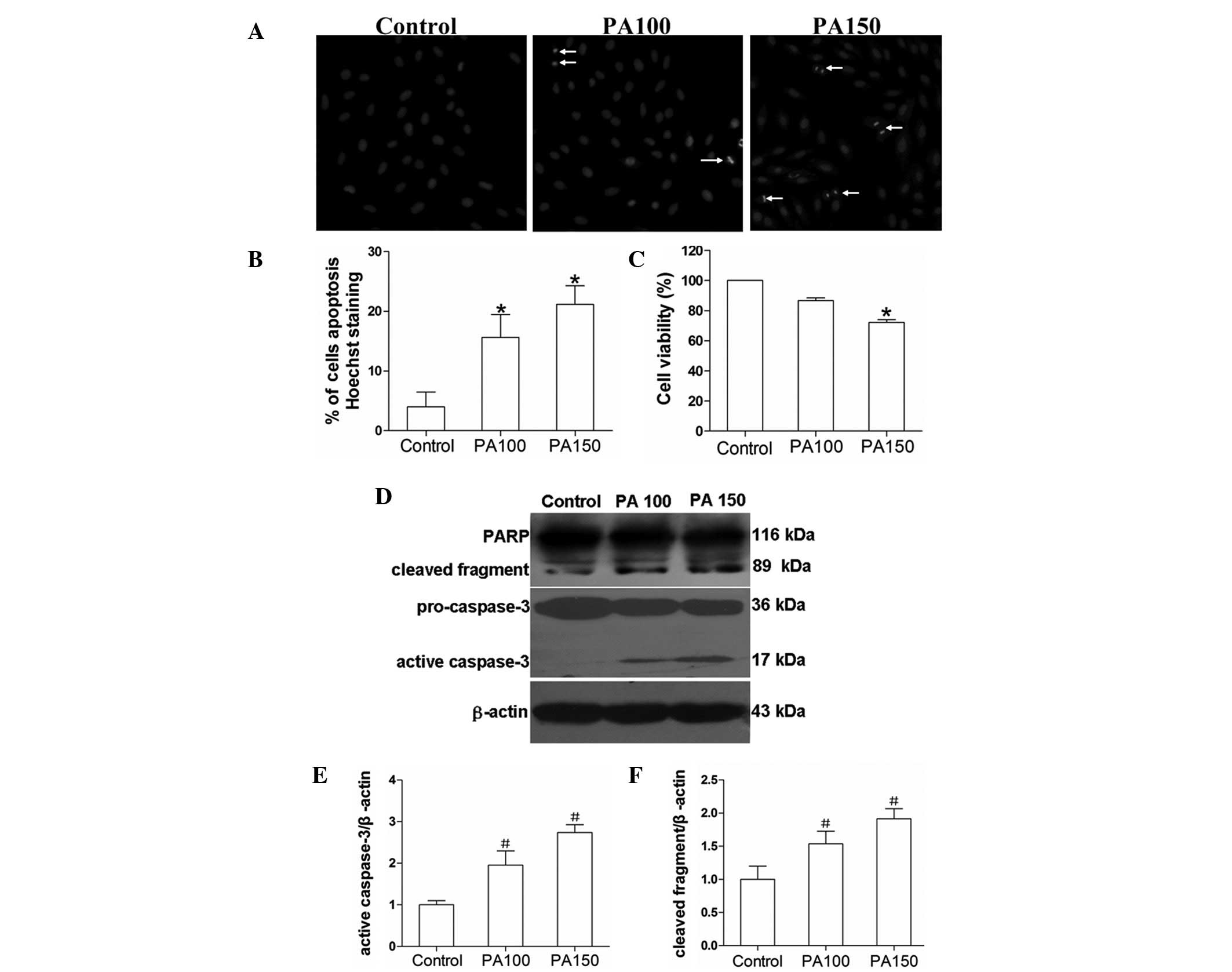
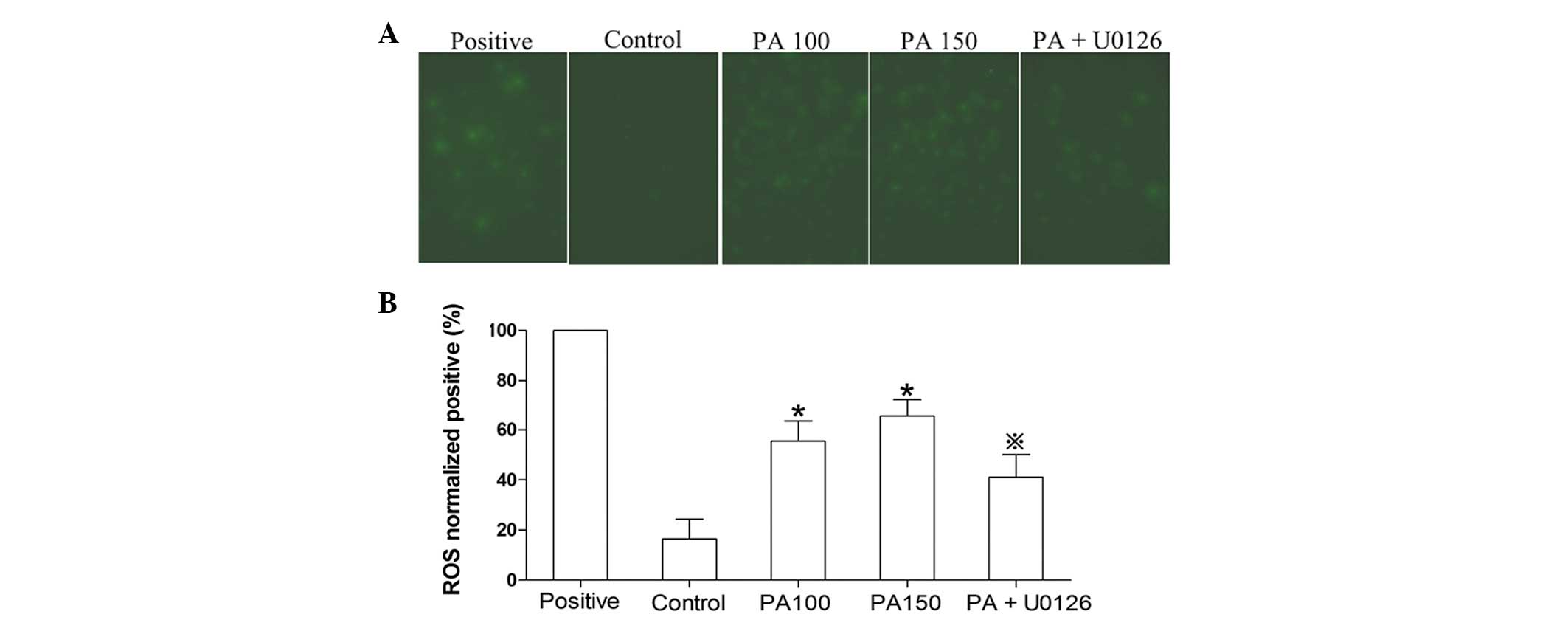
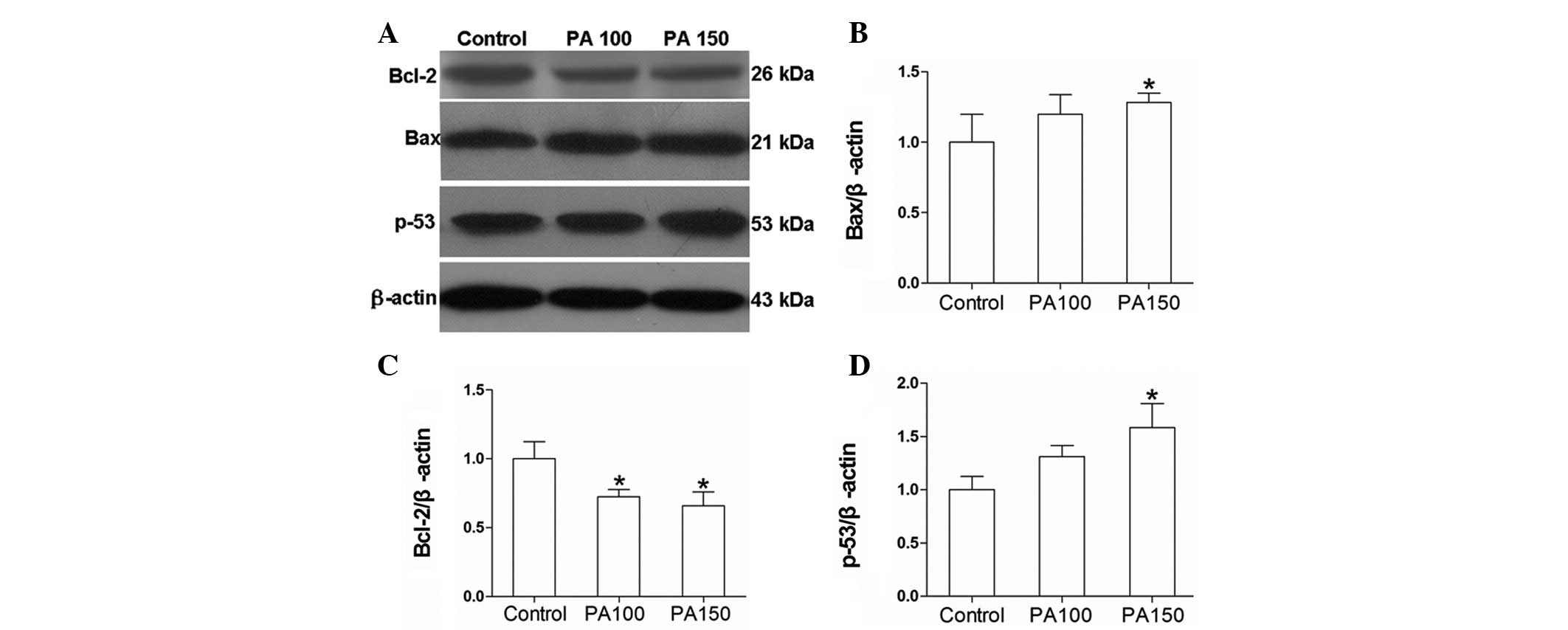
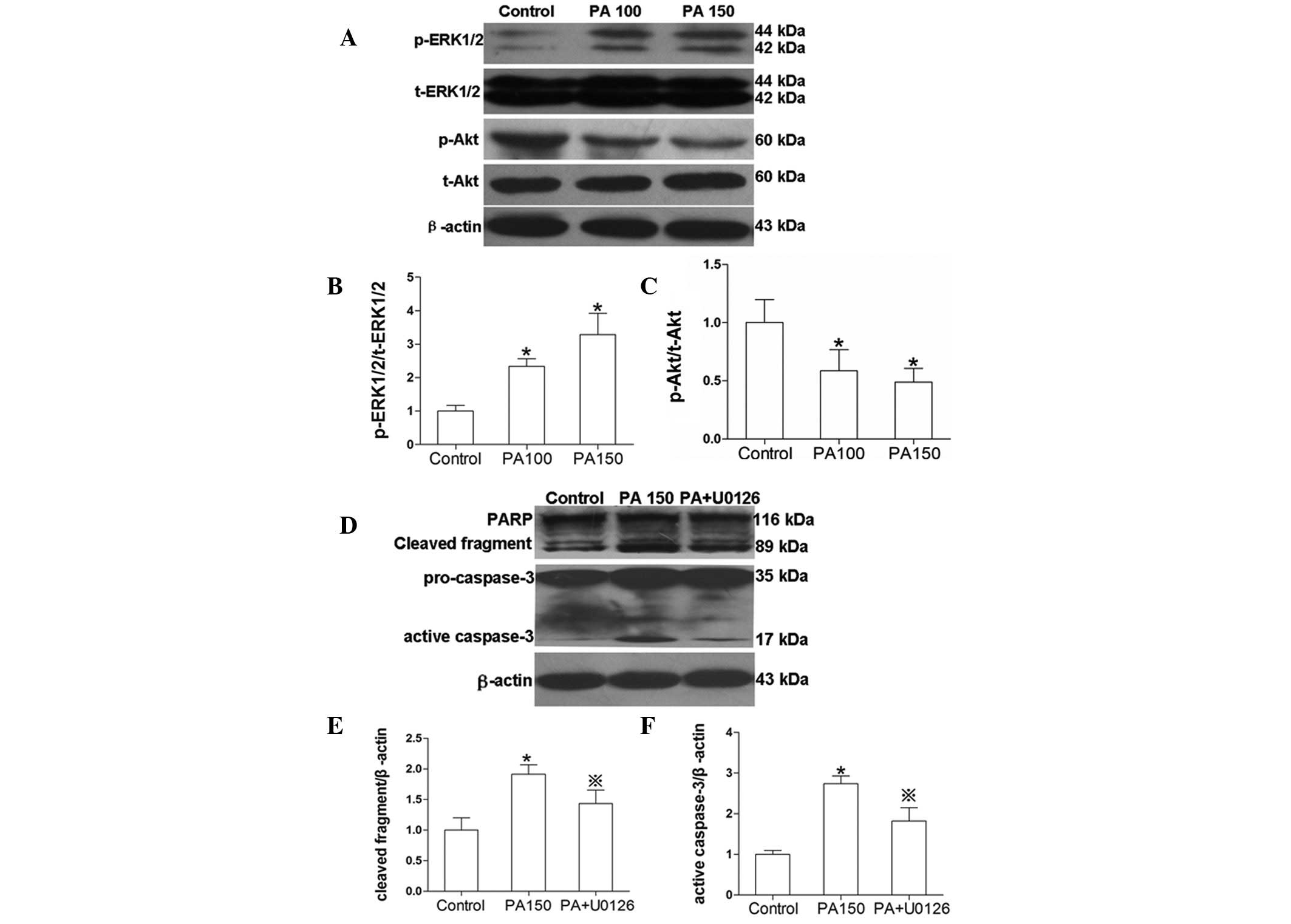
Cardiac myocytes undergo apoptosis under conditions of high free fatty acid concentrations, including palmitate, which is implicated in lipotoxic cardiomyopathy. However, the underlying mechanisms remain unknown. The aim of the present study was to understand the role of reactive oxygen species (ROS) production and the extracellular signal‑regulated kinase 1/2 (ERK1/2) signaling pathway in palmitate‑induced apoptosis in H9c2 cells. H9c2 cells were exposed to palmitate for 12 h. The effect on the cell viability of H9c2 cells was evaluated using the 3‑(4,5‑dimethylthiazol‑2‑yl)‑2,5‑diphenyltetrazolium bromide (MTT) assay and cell apoptosis was determined by Hoechst 33342 staining. Levels of intracellular ROS were determined using a peroxide‑sensitive fluorescent probe, 2',7'‑dichlorofluorescein diacetate. Protein expression was measured by western blot analysis. Following treatment with palmitate for 12 h, H9c2 cells apoptosis was demonstrated as increased brightly condensed chromatin or unclear fragments by staining with Hoechst 33342, which was associated with increasing levels of active caspase‑3 and cleaved poly (ADP-ribose) polymerase (PARP). In this model of treatment with palmitate, H9c2 cell apoptosis correlated with increased levels of p53 and Bax expression and reduced levels of Bcl-2 expression. Palmitate‑induced apoptosis was observed to increase levels of intracellular ROS production and p‑ERK1/2 and decrease p‑Akt significantly. Consistent with these results, palmitate‑induced apoptosis was attenuated by the ERK1/2 inhibitor, U0126, through partial reduction of intracellular ROS generation. Collectively, these results indicate that palmitate‑induced apoptosis in H9c2 cells is mediated by activation of the ERK1/2 signaling pathway and increased ROS generation.
View Figures

Figure 1

Figure 2

Figure 3

Figure 4

View References

1 

de Vries JE, Vork MM, Roemen TH, et al: Saturated but not mono-unsaturated fatty acids induce apoptotic cell death in neonatal rat ventricular myocytes. J Lipid Res. 38:1384–1394. 1997.

2 

Miller TA, LeBrasseur NK, Cote GM, et al: Oleate prevents palmitate-induced cytotoxic stress in cardiac myocytes. Biochem Biophys Res Commun. 336:309–315. 2005. View Article : Google Scholar : PubMed/NCBI

3 

Hickson-Bick DL, Buja LM and McMillin JB: Palmitate-mediated alterations in the fatty acid metabolism of rat neonatal cardiac myocytes. J Mol Cell Cardiol. 32:511–519. 2000. View Article : Google Scholar : PubMed/NCBI

4 

Haunstetter A and Izumo S: Apoptosis: basic mechanisms and implications for cardiovascular disease. Circ Res. 82:1111–1129. 1998. View Article : Google Scholar : PubMed/NCBI

5 

Opie LH: Metabolism of free fatty acids, glucose and catecholamines in acute myocardial infarction. Relation to myocardial ischemia and infarct size. Am J Cardiol. 36:938–953. 1975. View Article : Google Scholar : PubMed/NCBI

6 

Oliver MF, Kurien VA and Greenwood TW: Relation between serum-free-fatty acids and arrhythmias and death after acute myocardial infarction. Lancet. 1:710–714. 1968. View Article : Google Scholar : PubMed/NCBI

7 

Vik-Mo H and Mjos OD: Influence of free fatty acids on myocardial oxygen consumption and ischemic injury. Am J Cardiol. 48:361–365. 1981. View Article : Google Scholar : PubMed/NCBI

8 

Listenberger LL, Ory DS and Schaffer JE: Palmitate-induced apoptosis can occur through a ceramide-independent pathway. J Biol Chem. 276:14890–14895. 2001. View Article : Google Scholar : PubMed/NCBI

9 

Sparagna GC, Hickson-Bick DL, Buja LM and McMillin JB: A metabolic role for mitochondria in palmitate-induced cardiac myocyte apoptosis. Am J Physiol Heart Circ Physiol. 279:H2124–H2132. 2000.PubMed/NCBI

10 

Cave AC, Brewer AC, Narayanapanicker A, et al: NADPH oxidases in cardiovascular health and disease. Antioxid Redox Signal. 8:691–728. 2006. View Article : Google Scholar : PubMed/NCBI

11 

Selvaraju V, Joshi M, Suresh S, Sanchez JA, Maulik N and Maulik G: Diabetes, oxidative stress, molecular mechanism and cardiovascular disease - an overview. Toxicol Mech Methods. 22:330–335. 2012. View Article : Google Scholar : PubMed/NCBI

12 

Polyak K, Xia Y, Zweier JL, Kinzler KW and Vogelstein B: A model for p53-induced apoptosis. Nature. 389:300–305. 1997. View Article : Google Scholar : PubMed/NCBI

13 

Agarwal ML, Taylor WR, Chernov MV, Chernova OB and Stark GR: The p53 network. J Biol Chem. 273:1–4. 1998. View Article : Google Scholar

14 

Hemann MT and Lowe SW: The p53-Bcl-2 connection. Cell Death Differ. 13:1256–1259. 2006. View Article : Google Scholar : PubMed/NCBI

15 

Haupt S, Berger M, Goldberg Z and Haupt Y: Apoptosis - the p53 network. J Cell Sci. 116:4077–4085. 2003. View Article : Google Scholar : PubMed/NCBI

16 

von Harsdorf R, Li PF and Dietz R: Signaling pathways in reactive oxygen species-induced cardiomyocyte apoptosis. Circulation. 99:2934–2941. 1999.PubMed/NCBI

17 

Circu ML and Aw TY: Reactive oxygen species, cellular redox systems and apoptosis. Free Radic Biol Med. 48:749–762. 2010. View Article : Google Scholar : PubMed/NCBI

18 

Lu Z and Xu S: ERK1/2 MAP kinases in cell survival and apoptosis. IUBMB Life. 58:621–631. 2006. View Article : Google Scholar : PubMed/NCBI

19 

Tantini B, Pignatti C, Fattori M, et al: Polyamine depletion inhibits etoposide-induced NF-kappaB activation in transformed mouse fibroblasts. Amino Acids. 27:207–214. 2004. View Article : Google Scholar : PubMed/NCBI

20 

Liu J, Mao W, Ding B and Liang CS: ERKs/p53 signal transduction pathway is involved in doxorubicin-induced apoptosis in H9c2 cells and cardiomyocytes. Am J Physiol Heart Circ Physiol. 295:H1956–H1965. 2008. View Article : Google Scholar : PubMed/NCBI

21 

Dong XB, Yang CT, Zheng DD, et al: Inhibition of ROS-activated ERK1/2 pathway contributes to the protection of H2S against chemical hypoxia-induced injury in H9c2 cells. Mol Cell Biochem. 362:149–157. 2012. View Article : Google Scholar : PubMed/NCBI

22 

Dyntar D, Eppenberger-Eberhardt M, Maedler K, et al: Glucose and palmitic acid induce degeneration of myofibrils and modulate apoptosis in rat adult cardiomyocytes. Diabetes. 50:2105–2113. 2001. View Article : Google Scholar : PubMed/NCBI

23 

Fiordaliso F, Leri A, Cesselli D, et al: Hyperglycemia activates p53 and p53-regulated genes leading to myocyte cell death. Diabetes. 50:2363–2375. 2001. View Article : Google Scholar : PubMed/NCBI

24 

Cousin SP, Hugl SR, Wrede CE, Kajio H, Myers MG Jr and Rhodes CJ: Free fatty acid-induced inhibition of glucose and insulin-like growth factor I-induced deoxyribonucleic acid synthesis in the pancreatic beta-cell line INS-1. Endocrinology. 142:229–240. 2001.PubMed/NCBI

25 

Nicholson DW and Thornberry NA: Caspases: killer proteases. Trends Biochem Sci. 22:299–306. 1997. View Article : Google Scholar

26 

Herceg Z and Wang ZQ: Failure of poly(ADP-ribose) polymerase cleavage by caspases leads to induction of necrosis and enhanced apoptosis. Mol Cell Biol. 19:5124–5133. 1999.PubMed/NCBI

27 

Diffley JM, Wu M, Sohn M, Song W, Hammad SM and Lyons TJ: Apoptosis induction by oxidized glycated LDL in human retinal capillary pericytes is independent of activation of MAPK signaling pathways. Mol Vis. 15:135–145. 2009.PubMed/NCBI

28 

Takano H, Zou Y, Hasegawa H, Akazawa H, Nagai T and Komuro I: Oxidative stress-induced signal transduction pathways in cardiac myocytes: involvement of ROS in heart diseases. Antioxid Redox Signal. 5:789–794. 2003. View Article : Google Scholar : PubMed/NCBI

29 

Yao Y, Li R, Ma Y, et al: α-Lipoic acid increases tolerance of cardiomyoblasts to glucose/glucose oxidase-induced injury via ROS-dependent ERK1/2 activation. Biochim Biophys Acta. 1823:920–929. 2012.

30 

Tsai KH, Wang WJ, Lin CW, et al: NADPH oxidase-derived superoxide anion-induced apoptosis is mediated via the JNK-dependent activation of NF-κB in cardiomyocytes exposed to high glucose. J Cell Physiol. 227:1347–1357. 2012.PubMed/NCBI

31 

Sun B, Sun GB, Xiao J, et al: Isorhamnetin inhibits HO-induced activation of the intrinsic apoptotic pathway in H9c2 cardiomyocytes through scavenging reactive oxygen species and ERK inactivation. J Cell Biochem. 113:473–485. 2012. View Article : Google Scholar

32 

Zhu H, Yang Y, Wang Y, Li J, Schiller PW and Peng T: MicroRNA-195 promotes palmitate-induced apoptosis in cardiomyocytes by down-regulating Sirt1. Cardiovasc Res. 92:75–84. 2011. View Article : Google Scholar : PubMed/NCBI

33 

Nakamura S, Takamura T, Matsuzawa-Nagata N, et al: Palmitate induces insulin resistance in H4IIEC3 hepatocytes through reactive oxygen species produced by mitochondria. J Biol Chem. 284:14809–14818. 2009. View Article : Google Scholar : PubMed/NCBI

34 

Maloney E, Sweet IR, Hockenbery DM, et al: Activation of NF-kappaB by palmitate in endothelial cells: a key role for NADPH oxidase-derived superoxide in response to TLR4 activation. Arterioscler Thromb Vasc Biol. 29:1370–1375. 2009. View Article : Google Scholar : PubMed/NCBI

35 

Lin N, Chen H, Zhang H, Wan X and Su Q: Mitochondrial reactive oxygen species (ROS) inhibition ameliorates palmitate-induced INS-1 beta cell death. Endocrine. 42:107–117. 2012. View Article : Google Scholar : PubMed/NCBI

36 

Yeop Han C, Kargi AY, Omer M, et al: Differential effect of saturated and unsaturated free fatty acids on the generation of monocyte adhesion and chemotactic factors by adipocytes: dissociation of adipocyte hypertrophy from inflammation. Diabetes. 59:386–396. 2010.PubMed/NCBI

37 

Hickson-Bick DL, Sparagna GC, Buja LM and McMillin JB: Palmitate-induced apoptosis in neonatal cardiomyocytes is not dependent on the generation of ROS. Am J Physiol Heart Circ Physiol. 282:H656–H664. 2002. View Article : Google Scholar : PubMed/NCBI

38 

Shimabukuro M, Wang MY, Zhou YT, Newgard CB and Unger RH: Protection against lipoapoptosis of beta cells through leptin-dependent maintenance of Bcl-2 expression. Proc Natl Acad Sci USA. 95:9558–9561. 1998. View Article : Google Scholar : PubMed/NCBI

39 

Peterson JM, Wang Y, Bryner RW, Williamson DL and Alway SE: Bax signaling regulates palmitate-mediated apoptosis in C(2)C(12) myotubes. Am J Physiol Endocrinol Metab. 295:E1307–E1314. 2008. View Article : Google Scholar : PubMed/NCBI

40 

Cheng M, Sexl V, Sherr CJ and Roussel MF: Assembly of cyclin D-dependent kinase and titration of p27Kip1 regulated by mitogen-activated protein kinase kinase (MEK1). Proc Natl Acad Sci USA. 95:1091–1096. 1998. View Article : Google Scholar : PubMed/NCBI

41 

Tran SE, Holmstrom TH, Ahonen M, Kahari VM and Eriksson JE: MAPK/ERK overrides the apoptotic signaling from Fas, TNF and TRAIL receptors. J Biol Chem. 276:16484–16490. 2001. View Article : Google Scholar : PubMed/NCBI

42 

Martelli AM, Faenza I, Billi AM, et al: Intranuclear 3′-phosphoinositide metabolism and Akt signaling: new mechanisms for tumorigenesis and protection against apoptosis? Cell Signal. 18:1101–1107. 2006.

43 

Matsui T and Rosenzweig A: Convergent signal transduction pathways controlling cardiomyocyte survival and function: the role of PI 3-kinase and Akt. J Mol Cell Cardiol. 38:63–71. 2005. View Article : Google Scholar : PubMed/NCBI

Related Articles

  • Abstract
  • View
  • Download
  • Twitter
Copy and paste a formatted citation
Spandidos Publications style
Wei CD, Li Y, Zheng HY, Tong YQ and Dai W: Palmitate induces H9c2 cell apoptosis by increasing reactive oxygen species generation and activation of the ERK1/2 signaling pathway. Mol Med Rep 7: 855-861, 2013.
APA
Wei, C., Li, Y., Zheng, H., Tong, Y., & Dai, W. (2013). Palmitate induces H9c2 cell apoptosis by increasing reactive oxygen species generation and activation of the ERK1/2 signaling pathway. Molecular Medicine Reports, 7, 855-861. https://doi.org/10.3892/mmr.2013.1276
MLA
Wei, C., Li, Y., Zheng, H., Tong, Y., Dai, W."Palmitate induces H9c2 cell apoptosis by increasing reactive oxygen species generation and activation of the ERK1/2 signaling pathway". Molecular Medicine Reports 7.3 (2013): 855-861.
Chicago
Wei, C., Li, Y., Zheng, H., Tong, Y., Dai, W."Palmitate induces H9c2 cell apoptosis by increasing reactive oxygen species generation and activation of the ERK1/2 signaling pathway". Molecular Medicine Reports 7, no. 3 (2013): 855-861. https://doi.org/10.3892/mmr.2013.1276
Copy and paste a formatted citation
x
Spandidos Publications style
Wei CD, Li Y, Zheng HY, Tong YQ and Dai W: Palmitate induces H9c2 cell apoptosis by increasing reactive oxygen species generation and activation of the ERK1/2 signaling pathway. Mol Med Rep 7: 855-861, 2013.
APA
Wei, C., Li, Y., Zheng, H., Tong, Y., & Dai, W. (2013). Palmitate induces H9c2 cell apoptosis by increasing reactive oxygen species generation and activation of the ERK1/2 signaling pathway. Molecular Medicine Reports, 7, 855-861. https://doi.org/10.3892/mmr.2013.1276
MLA
Wei, C., Li, Y., Zheng, H., Tong, Y., Dai, W."Palmitate induces H9c2 cell apoptosis by increasing reactive oxygen species generation and activation of the ERK1/2 signaling pathway". Molecular Medicine Reports 7.3 (2013): 855-861.
Chicago
Wei, C., Li, Y., Zheng, H., Tong, Y., Dai, W."Palmitate induces H9c2 cell apoptosis by increasing reactive oxygen species generation and activation of the ERK1/2 signaling pathway". Molecular Medicine Reports 7, no. 3 (2013): 855-861. https://doi.org/10.3892/mmr.2013.1276
Follow us
  • Twitter
  • LinkedIn
  • Facebook
About
  • Spandidos Publications
  • Careers
  • Cookie Policy
  • Privacy Policy
How can we help?
  • Help
  • Live Chat
  • Contact
  • Email to our Support Team