Spandidos Publications Logo
  • About
    • About Spandidos
    • Aims and Scopes
    • Abstracting and Indexing
    • Editorial Policies
    • Reprints and Permissions
    • Job Opportunities
    • Terms and Conditions
    • Contact
  • Journals
    • All Journals
    • Oncology Letters
      • Oncology Letters
      • Information for Authors
      • Editorial Policies
      • Editorial Board
      • Aims and Scope
      • Abstracting and Indexing
      • Bibliographic Information
      • Archive
    • International Journal of Oncology
      • International Journal of Oncology
      • Information for Authors
      • Editorial Policies
      • Editorial Board
      • Aims and Scope
      • Abstracting and Indexing
      • Bibliographic Information
      • Archive
    • Molecular and Clinical Oncology
      • Molecular and Clinical Oncology
      • Information for Authors
      • Editorial Policies
      • Editorial Board
      • Aims and Scope
      • Abstracting and Indexing
      • Bibliographic Information
      • Archive
    • Experimental and Therapeutic Medicine
      • Experimental and Therapeutic Medicine
      • Information for Authors
      • Editorial Policies
      • Editorial Board
      • Aims and Scope
      • Abstracting and Indexing
      • Bibliographic Information
      • Archive
    • International Journal of Molecular Medicine
      • International Journal of Molecular Medicine
      • Information for Authors
      • Editorial Policies
      • Editorial Board
      • Aims and Scope
      • Abstracting and Indexing
      • Bibliographic Information
      • Archive
    • Biomedical Reports
      • Biomedical Reports
      • Information for Authors
      • Editorial Policies
      • Editorial Board
      • Aims and Scope
      • Abstracting and Indexing
      • Bibliographic Information
      • Archive
    • Oncology Reports
      • Oncology Reports
      • Information for Authors
      • Editorial Policies
      • Editorial Board
      • Aims and Scope
      • Abstracting and Indexing
      • Bibliographic Information
      • Archive
    • Molecular Medicine Reports
      • Molecular Medicine Reports
      • Information for Authors
      • Editorial Policies
      • Editorial Board
      • Aims and Scope
      • Abstracting and Indexing
      • Bibliographic Information
      • Archive
    • World Academy of Sciences Journal
      • World Academy of Sciences Journal
      • Information for Authors
      • Editorial Policies
      • Editorial Board
      • Aims and Scope
      • Abstracting and Indexing
      • Bibliographic Information
      • Archive
    • International Journal of Functional Nutrition
      • International Journal of Functional Nutrition
      • Information for Authors
      • Editorial Policies
      • Editorial Board
      • Aims and Scope
      • Abstracting and Indexing
      • Bibliographic Information
      • Archive
    • International Journal of Epigenetics
      • International Journal of Epigenetics
      • Information for Authors
      • Editorial Policies
      • Editorial Board
      • Aims and Scope
      • Abstracting and Indexing
      • Bibliographic Information
      • Archive
    • Medicine International
      • Medicine International
      • Information for Authors
      • Editorial Policies
      • Editorial Board
      • Aims and Scope
      • Abstracting and Indexing
      • Bibliographic Information
      • Archive
  • Articles
  • Information
    • Information for Authors
    • Information for Reviewers
    • Information for Librarians
    • Information for Advertisers
    • Conferences
  • Language Editing
Spandidos Publications Logo
  • About
    • About Spandidos
    • Aims and Scopes
    • Abstracting and Indexing
    • Editorial Policies
    • Reprints and Permissions
    • Job Opportunities
    • Terms and Conditions
    • Contact
  • Journals
    • All Journals
    • Biomedical Reports
      • Information for Authors
      • Editorial Policies
      • Editorial Board
      • Aims and Scope
      • Abstracting and Indexing
      • Bibliographic Information
      • Archive
    • Experimental and Therapeutic Medicine
      • Information for Authors
      • Editorial Policies
      • Editorial Board
      • Aims and Scope
      • Abstracting and Indexing
      • Bibliographic Information
      • Archive
    • International Journal of Epigenetics
      • Information for Authors
      • Editorial Policies
      • Editorial Board
      • Aims and Scope
      • Abstracting and Indexing
      • Bibliographic Information
      • Archive
    • International Journal of Functional Nutrition
      • Information for Authors
      • Editorial Policies
      • Editorial Board
      • Aims and Scope
      • Abstracting and Indexing
      • Bibliographic Information
      • Archive
    • International Journal of Molecular Medicine
      • Information for Authors
      • Editorial Policies
      • Editorial Board
      • Aims and Scope
      • Abstracting and Indexing
      • Bibliographic Information
      • Archive
    • International Journal of Oncology
      • Information for Authors
      • Editorial Policies
      • Editorial Board
      • Aims and Scope
      • Abstracting and Indexing
      • Bibliographic Information
      • Archive
    • Medicine International
      • Information for Authors
      • Editorial Policies
      • Editorial Board
      • Aims and Scope
      • Abstracting and Indexing
      • Bibliographic Information
      • Archive
    • Molecular and Clinical Oncology
      • Information for Authors
      • Editorial Policies
      • Editorial Board
      • Aims and Scope
      • Abstracting and Indexing
      • Bibliographic Information
      • Archive
    • Molecular Medicine Reports
      • Information for Authors
      • Editorial Policies
      • Editorial Board
      • Aims and Scope
      • Abstracting and Indexing
      • Bibliographic Information
      • Archive
    • Oncology Letters
      • Information for Authors
      • Editorial Policies
      • Editorial Board
      • Aims and Scope
      • Abstracting and Indexing
      • Bibliographic Information
      • Archive
    • Oncology Reports
      • Information for Authors
      • Editorial Policies
      • Editorial Board
      • Aims and Scope
      • Abstracting and Indexing
      • Bibliographic Information
      • Archive
    • World Academy of Sciences Journal
      • Information for Authors
      • Editorial Policies
      • Editorial Board
      • Aims and Scope
      • Abstracting and Indexing
      • Bibliographic Information
      • Archive
  • Articles
  • Information
    • For Authors
    • For Reviewers
    • For Librarians
    • For Advertisers
    • Conferences
  • Language Editing
Login Register Submit
  • This site uses cookies
  • You can change your cookie settings at any time by following the instructions in our Cookie Policy. To find out more, you may read our Privacy Policy.

    I agree
Search articles by DOI, keyword, author or affiliation
Search
Advanced Search
presentation
Molecular Medicine Reports
Join Editorial Board Propose a Special Issue
Print ISSN: 1791-2997 Online ISSN: 1791-3004
Journal Cover
September 2013 Volume 8 Issue 3

Full Size Image

Sign up for eToc alerts
Recommend to Library

Journals

International Journal of Molecular Medicine

International Journal of Molecular Medicine

International Journal of Molecular Medicine is an international journal devoted to molecular mechanisms of human disease.

International Journal of Oncology

International Journal of Oncology

International Journal of Oncology is an international journal devoted to oncology research and cancer treatment.

Molecular Medicine Reports

Molecular Medicine Reports

Covers molecular medicine topics such as pharmacology, pathology, genetics, neuroscience, infectious diseases, molecular cardiology, and molecular surgery.

Oncology Reports

Oncology Reports

Oncology Reports is an international journal devoted to fundamental and applied research in Oncology.

Experimental and Therapeutic Medicine

Experimental and Therapeutic Medicine

Experimental and Therapeutic Medicine is an international journal devoted to laboratory and clinical medicine.

Oncology Letters

Oncology Letters

Oncology Letters is an international journal devoted to Experimental and Clinical Oncology.

Biomedical Reports

Biomedical Reports

Explores a wide range of biological and medical fields, including pharmacology, genetics, microbiology, neuroscience, and molecular cardiology.

Molecular and Clinical Oncology

Molecular and Clinical Oncology

International journal addressing all aspects of oncology research, from tumorigenesis and oncogenes to chemotherapy and metastasis.

World Academy of Sciences Journal

World Academy of Sciences Journal

Multidisciplinary open-access journal spanning biochemistry, genetics, neuroscience, environmental health, and synthetic biology.

International Journal of Functional Nutrition

International Journal of Functional Nutrition

Open-access journal combining biochemistry, pharmacology, immunology, and genetics to advance health through functional nutrition.

International Journal of Epigenetics

International Journal of Epigenetics

Publishes open-access research on using epigenetics to advance understanding and treatment of human disease.

Medicine International

Medicine International

An International Open Access Journal Devoted to General Medicine.

Journal Cover
September 2013 Volume 8 Issue 3

Full Size Image

Sign up for eToc alerts
Recommend to Library

  • Article
  • Citations
    • Cite This Article
    • Download Citation
    • Create Citation Alert
    • Remove Citation Alert
    • Cited By
  • Similar Articles
    • Related Articles (in Spandidos Publications)
    • Similar Articles (Google Scholar)
    • Similar Articles (PubMed)
  • Download PDF
  • Download XML
  • View XML
Article

Effects of Nogo-A receptor antagonist on the regulation of the Wnt signaling pathway and neural cell proliferation in newborn rats with hypoxic ischemic encephalopathy

  • Authors:
    • Yongxiang Wang
    • Jiaxiang Gu
    • Xinmin Feng
    • Hua Wang
    • Yuping Tao
    • Jingcheng Wang
  • View Affiliations / Copyright

    Affiliations: Department of Orthopedic Surgery, Clinical Medical College of Yangzhou, University of Yangzhou, Yangzhou, Jiangsu 225001, P.R. China
  • Pages: 883-886
    |
    Published online on: July 9, 2013
       https://doi.org/10.3892/mmr.2013.1579
  • Expand metrics +
Metrics: Total Views: 0 (Spandidos Publications: | PMC Statistics: )
Metrics: Total PDF Downloads: 0 (Spandidos Publications: | PMC Statistics: )
Cited By (CrossRef): 0 citations Loading Articles...

This article is mentioned in:


Abstract

Hypoxic ischemic encephalopathy is a serious condition due to inadequate oxygen supply to the brain. Regeneration of neural cells is a critical process for repairing the damaged brain. Nogo has been identified as an inhibitor of neurite outgrowth that is specific to the brain. In the present study, the Nogo-A receptor (NgR) antagonist NEP1-40 was used to study the effects of inhibition of NgR on the regeneration of neural cells and the related Wnt signaling pathway in newborn rats. The investigation focused on the transcription factors regulated in the Wnt signaling pathway during the repair process, together with the proliferation of neural cells. The results indicated that c-Jun and c-Myc were the main transcription factors involved in the Wnt signaling pathway, while neural cell proliferation in the subventricular zone was increased during this process.

Introduction

Hypoxic ischemic encephalopathy (HIE) is a serious condition due to the inadequate oxygen supply to the brain, and is associated with oxygen deprivation in the neonate. For HIE neonates, regeneration of neural cells is a critical process for repairing the damaged brain (1). Several inhibitors are capable of reducing the ability of central nervous system (CNS) repair, among which Nogo A is important (2). Nogo has been identified as an inhibitor of neurite outgrowth that is specific to the CNS. It belongs to the family of reticulon-encoding genes, associated with the endoplasmic reticulum (3). Nogo is a potent neurite outgrowth inhibitor that may also block the regeneration of the CNS in higher vertebrates (4). Nogo-66 receptor (NgR), together with oligodendrocyte myelin glycoprotein and myelin-associated glycoprotein, mediate axonal growth inhibition and may play a role in regulating axonal regeneration and plasticity in the adult CNS (5). However, NgR may inhibit the regeneration of neurons and related nervous cells in HIE neonates and thus hinder the repair of injured CNS. NgR mediates axonal growth inhibition and may play a role in regulating axonal regeneration and plasticity in the adult CNS (6).

The Wnt signaling pathway controls cell-cell communication in the embryo and in adults, including cell proliferation and differentiation during development and healing (7). A previous study indicated that the Wnt signaling pathway is involved in regeneration of neural cells mediated by Nogo; however, the mechanism involved remains unknown (8). Inhibition of NgR is considered as one potentially useful method for treatment of HIE neonates. To study the effects of inhibition of NgR on the regeneration of injured CNS and the related transcription factors (TFs) involved, Nogo-A receptor antagonist NEP1-40 was used in the present study. The investigation focused on the TFs in the Wnt signaling pathway that are regulated by inhibition of NgR during CNS regeneration, together with the proliferation of neural cells.

Materials and methods

Generation of animal model and drug treatments

ewborn male Wistar rats (7 days old, weighing 16.0±3.0 g) were provided by the Animal Research Center, University of Yangzhou, China. The newborn hypoxic ischemic encephalopathy rat animal model was generated as described previously and rats were named hypoxic ischemic brain damage (HIBD) rats (9). The 40 HIBD rats were divided into a HIBD group and a HIBD + NEP1-40 group (n=20 in each group). The HIBD + NEP1-40 group rats were treated with NEP1-40 for 7 days as previously described (9). Rats were sacrificed by inhalation of CO2 for 3 min. This study was approved by the Medical Ethics Committee of the Clinical Medical College of Yangzhou, University of Yangzhou (Yangzhou, China).

Quantitative PCR (qPCR)

Total RNA from rat brains was isolated using TRIzol (Invitrogen Life Technologies, Carlsbad, CA, USA) according to the manufacturer’s instructions. The Rat WNT Signaling Pathway PCR array (SABiosciences, Qiagen, Inc., Frederick, CA, USA), which contained Apc, Apc2, Ccnd1, Ccnd2, Ccnd3, Ctnnb1, Ep300, Fgf4, Fzd3, c-Jun, Lrp5, c-Myc, Ppp2ca, Ppp2r1a, Wisp1 and Wnt3a was used to detect the expression of genes related to the Wnt signaling pathway. After reverse transcription using a cDNA Synthesis kit (Invitrogen Life Technologies), all the products were used as the templates for the qPCR using the ABI Prism SDS 7000 (Applied Biosystems, Inc., Foster City, CA, USA). qPCR conditions were as follows: i) 50°C 2 min, 1 cycle; ii) 95°C 10 min, 1 cycle; iii) 95°C 15 sec, followed by 60°C 30 sec and 72°C 30 sec, 40 cycles; iv) 72°C 10 min, 1 cycle.

Western blot analysis

Total protein extracted from rat brains (12 μg) was boiled at 100°C with 4X loading buffer for 5 min, and then subjected to 10% SDS-PAGE (Invitrogen Life Technologies). After electrophoresis, the gel was transferred onto a nitrocellulose (NE) membrane at 70 V for 2 h at 4°C. After blocking in 5% nonfat milk for 1 h, the membrane was incubated with Apc (1:800, rabbit polyclonal IgG; Millipore, Billerica, MA, USA), Ep300 (1:1,000, rabbit polyclonal IgG; Sigma-Aldrich, St. Louis, MO, USA), c-Jun (1:1,000, rabbit polyclonal IgG; Millipore), c- Myc (1:1,000, rabbit polyclonal IgG; Millipore) and Wnt3a (1:1,000, rabbit polyclonal IgG; Millipore) primary antibodies overnight at 4°C in 3% BSA according to the results from qPCR. After washing with 1X tris phosphate-buffered saline (TPBS; pH 7.4), the membrane was incubated with secondary antibody (goat anti-rabbit IgG, Cell Signaling Technology, Inc., Boston, MA, USA) for 1 h at room temperature, washed again with 1X TPBS (pH 7.4), and images were captured with film exposure (Kodak, Rochester, NY, USA) for analysis. β-actin was used as a negative control. The value of each protein was first compared with β-actin, then the relative value was compared between the HIBD and HIBD + NEP1-40 groups.

Immunofluorescence (IF) for cell proliferation

Brain extracts were detected by IF for the expression of Ki67. Cryostat rat brain coronal sections (12 μm) were prepared (Leica, Solms, Germany) and stained with Ki67 antibody (Abcam, Cambridge, MA, USA; 1:1,000) to assess the proliferation of neural cells in the subventricular zone (SVZ). Images were captured using a confocal microscope, shown in the dark (A1R MP+ Multiphoton Confocal; Nikon, Tokyo, Japan; ×100).

8-Isoprostane detection

The brains were homogenized in TBS buffer with protease inhibitors (1:1,000, Invitrogen Life Technologies) and centrifuged at 12,000 g/min for 40 min at 4°C. Supernatant was transferred into another tube. The levels of 8-isoprostane, a special marker for reactive oxygen species (ROS), were determined using an 8-Isoprostane EIA kit (Cayman Chemical Company, Ann Arbor, MI, USA) according to the manufacturer’s instructions.

Statistical analysis

All data were expressed as the means ± SD. The results were evaluated by Student’s t-tests. Statistically significant differences between groups were defined as P<0.05 and P<0.01. Calculations were performed using SPSS 13.0 (SPSS, Inc., Chicago, IL, USA).

Results

Effects of NEP1-40 on gene expression

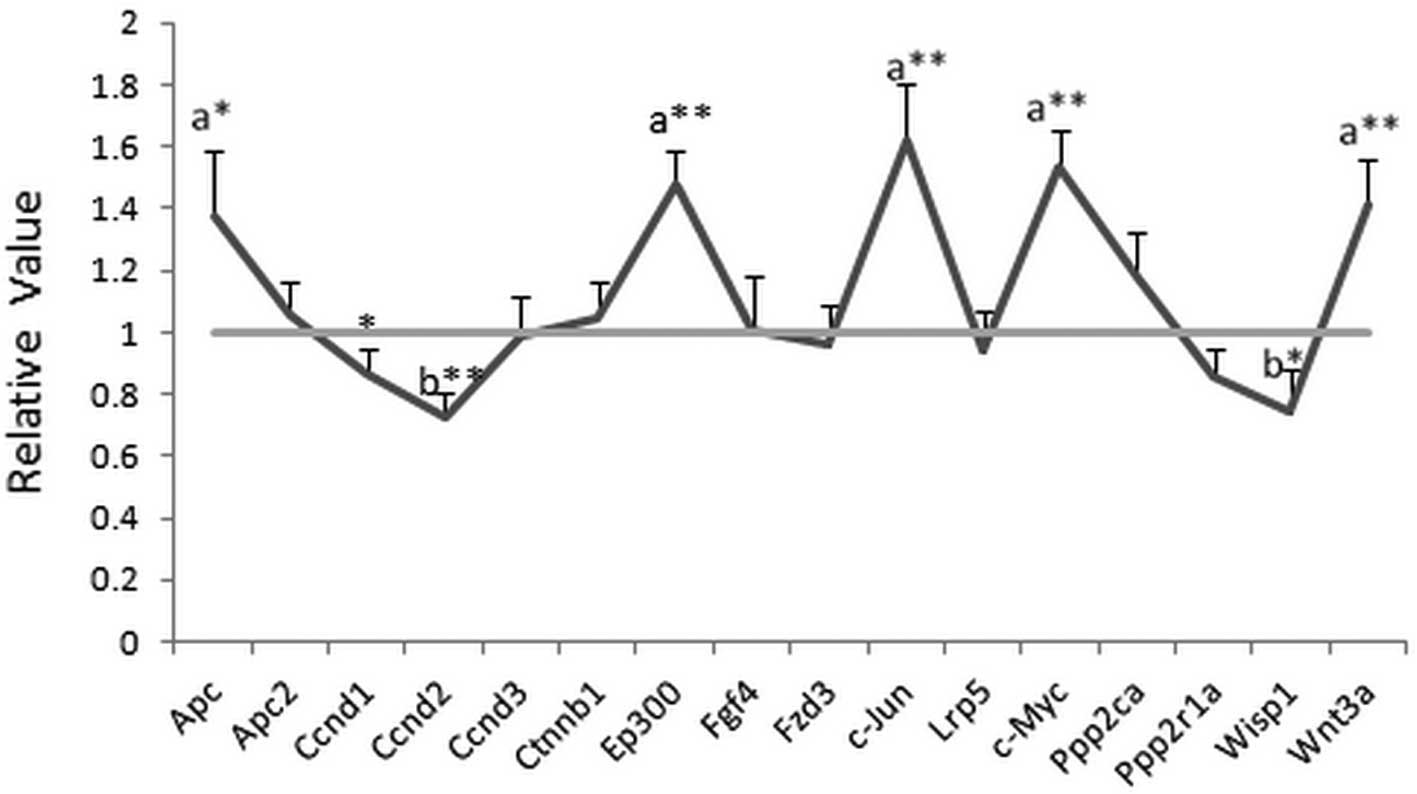
The gene expression of Apc, Ep300, c-Jun, c-Myc and Wnt3a was significantly increased (>1.35-fold) while Ccnd2 and Wisp1 (<0.75-fold) were decreased in the HIBD + NEP1-40 group after treatment with NEP1-40 for 7 days. For other genes, no significant changes (>1.5- or <0.75-fold) were detected. The value in the HIBD group was set as 1, while the relative value was calculated by comparing the HIBD + NEP1-40 group with the HIBD group. All data are shown in Fig. 1.

Figure 1

Gene expression in the HIBD and HIBD + NEP1-40 groups. Values in the HIBD group were set as 1 in all groups and the relative value was calculated by comparing the HIBD + NEP1-40 group with the HIBD group. a: >1.35-fold; b: <0.75-fold. *P<0.05; **P<0.01 in comparison between HIBD and HIBD + NEP1-40 groups. HIBD, hypoxic ischemic brain damage.

Effects of NEP1-40 on protein expression

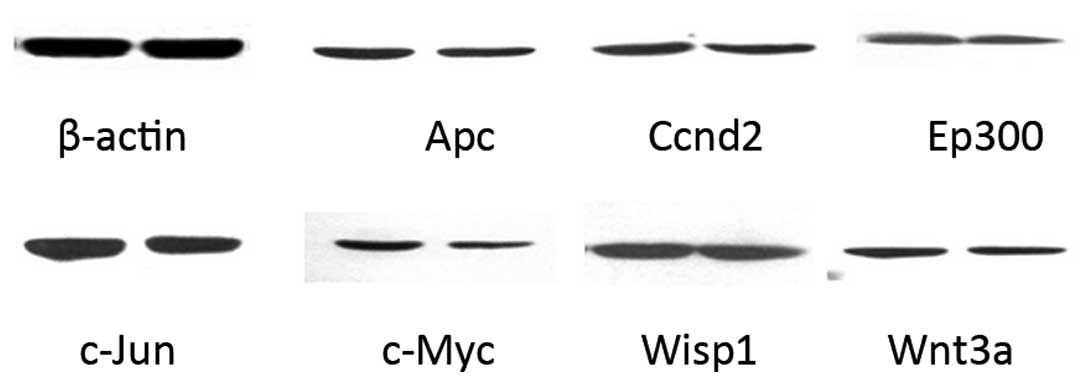
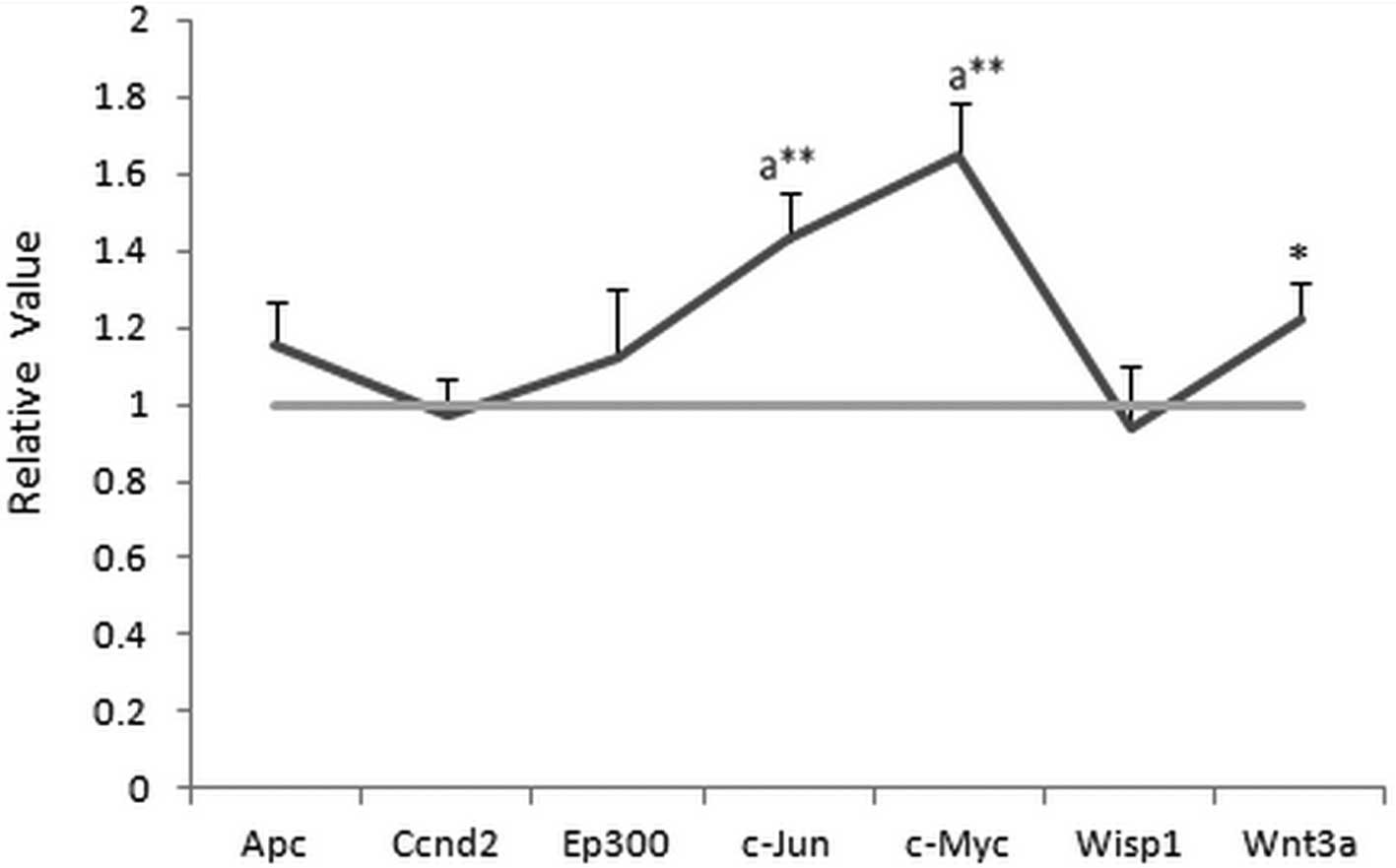
As shown in Fig. 2, the expression of c-Jun and c-Myc at the protein level were upregulated (>1.5-fold) after treatment with the Nogo-A receptor antagonist NEP1-40 for 7 days, which correlated with the changes observed for gene expression. However, no marked changes in Apc, EP300, Wnt3a, Ccnd2 and Wisp1 expression (>1.35- or <0.75-fold) were detected, in contrast with the gene expression results. The value in the HIBD group was set as 1, while the relative value was calculated by comparing the HIBD + NEP1-40 group with the HIBD group. All data were analyzed in Fig. 3.

Figure 2

Results of western blot analysis. Left: HIBD + NEP1-40 group; right: HIBD group. HIBD, hypoxic ischemic brain damage.

Figure 3

Protein expression in the HIBD and HIBD + NEP1-40 groups. Values in the HIBD group were set as 1 in all groups and the relative value was calculated by comparing the HIBD + NEP1-40 group with the HIBD group. (a: >1.35-fold; *P<0.05; **P<0.01 in comparison between HIBD and HIBD + NEP1-40 groups). HIBD, hypoxic ischemic brain damage.

Analysis of 8-isoprostane detection

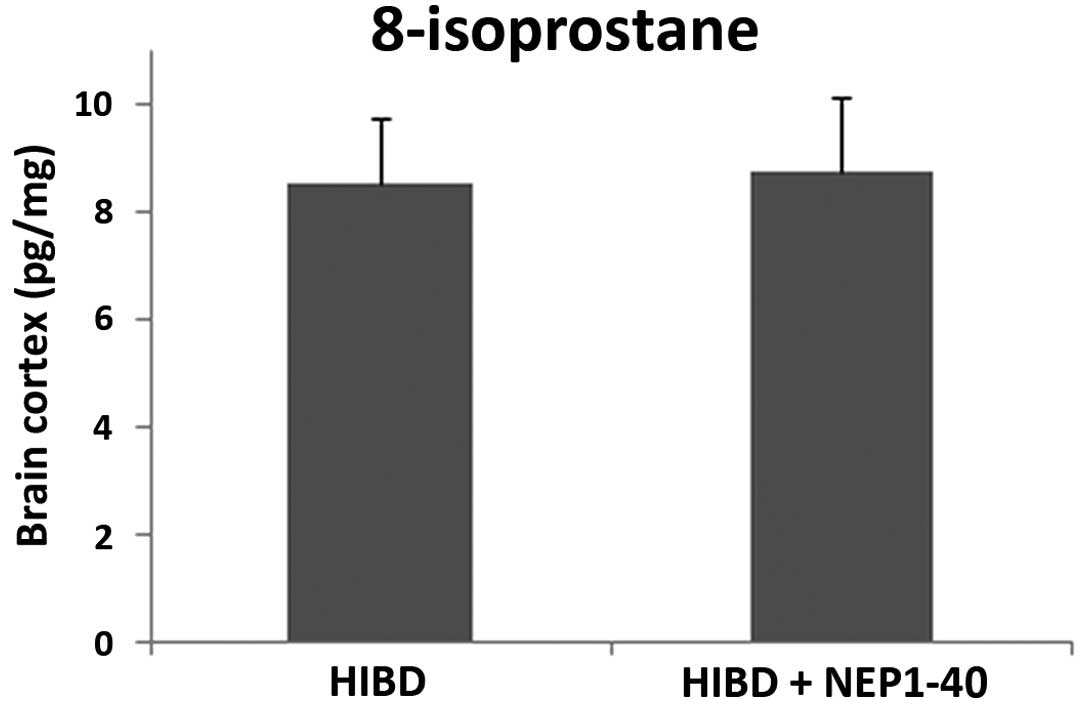
8-Isoprostane is an ideal biomarker for detecting oxidative stress in animal tissues and organs. No significant changes in 8-isoprostane were detected between the HIBD + NEP1-40 group and the HIBD group (Fig. 4). This study indicated that the Nogo-A receptor antagonist NEP1-40 did not affect oxidative stress in the CNS during HIE.

Figure 4

8-Isoprostane detection in the HIBD and HIBD + NEP1-40 groups. The value in the HIBD group was set as 1 in all groups and the relative value was calculated by comparing the HIBD + NEP1-40 with the HIBD group. No significant changes were detected. HIBD, hypoxic ischemic brain damage.

Analysis of the regeneration of neural cells

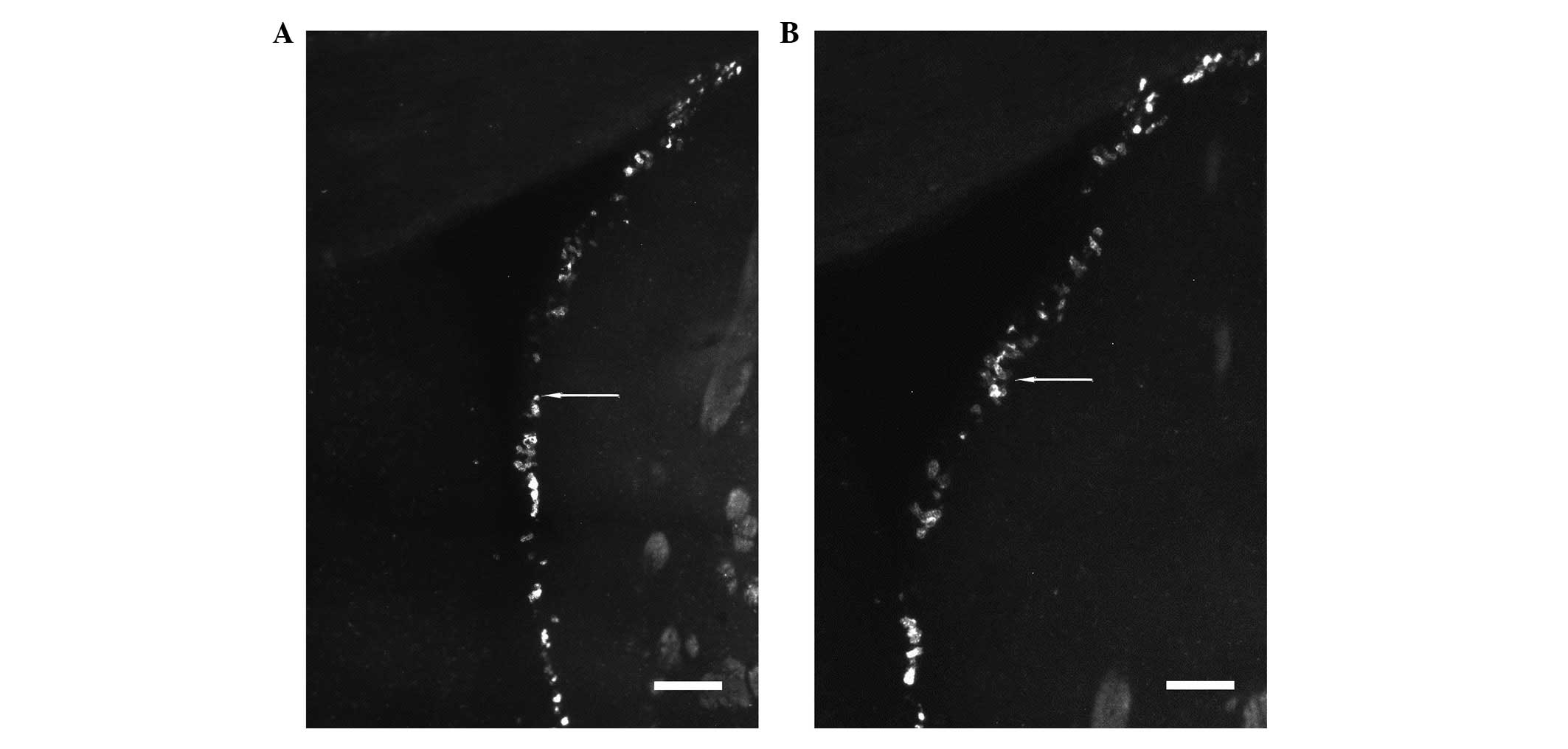
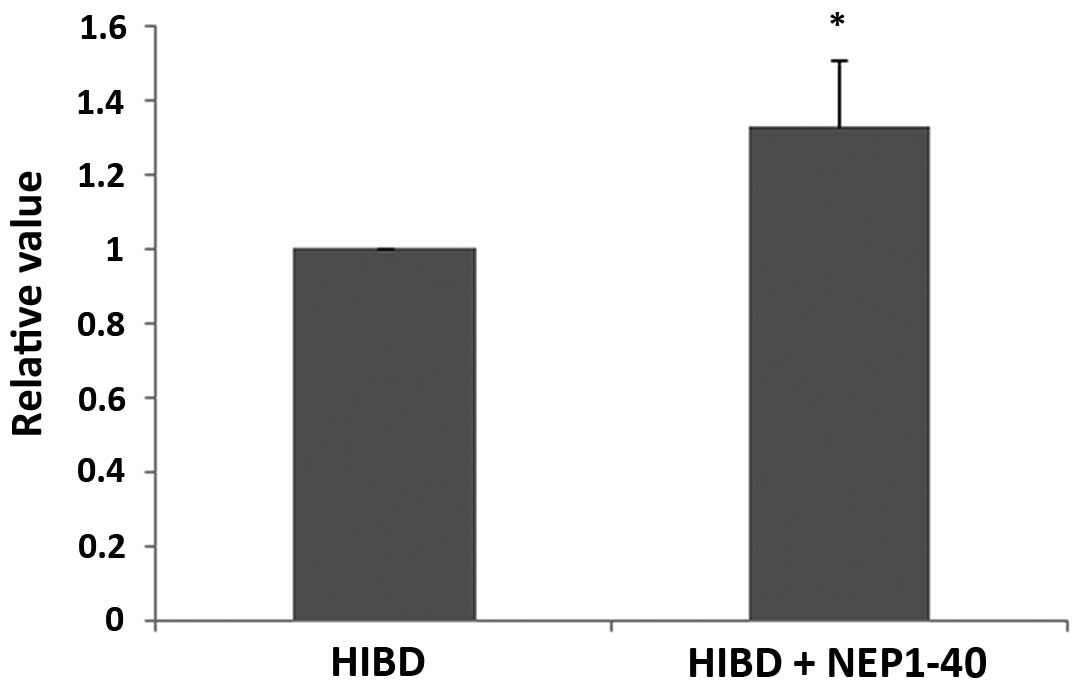
As indicated by arrows showing Ki67 in Fig. 5 (bar, 200 μm), increased regeneration of neural cells was detected in the HIBD + NEP1-40 group (Fig. 5A) compared with the HIBD group (Fig. 5B) in the SVZ, the site of neural cellular proliferation in the adult brain, which may be useful for repair of damage to the CNS. Promotion of neural cellular proliferation is a potential method for HIE treatment. The value in the HIBD group was set as 1, while the relative value was calculated by comparing the HIBD + NEP1-40 group with the HIBD group. All data were analyzed in Fig. 6.

Figure 5

Detection of Ki67 expression in the SVZ in the HIBD and HIBD + NEP1-40 groups (magnification, ×200; bar, 200 μm). (A) HIBD + NEP1-40 group; (B) HIBD group. HIBD, hypoxic ischemic brain damage; SVZ, subventricular zone. Ki67 positive cells are indicated by arrows.

Figure 6

Analysis of Ki67 expression. The value in the HIBD group was set as 1 in all groups and the relative value was calculated by comparing the HIBD + NEP1-40 group with the HIBD group. *P<0.05 in comparison between HIBD and HIBD + NEP1-40 groups. HIBD, hypoxic ischemic brain damage.

Discussion

Numerous proteins are involved in HIE, including Nogo, which is involved in neuroendocrine secretion or in membrane trafficking in neuroendocrine cells (10). Nogo-A has two known inhibitory domains including amino-Nogo, at the N-terminus, and Nogo-66 (4). Blocking Nogo-A during neuronal damage may help to protect or restore the damaged neurons. NgR is a high-affinity binding receptor for a region of Nogo, a myelin-associated protein that inhibits axon outgrowth, which requires membrane-spanning co-receptors to transduce growth inhibitory signals (11). NgR is implicated in neuronal plasticity and regeneration (12). However, the mechanism involved remains unknown, among which the Wnt signaling pathway is valuable to study. Wnt signaling pathways play a variety of roles in embryonic development, cell differentiation and cell polarity generation (13), particularly for shifting ventral genes into dorsal regions of the neural tube (14). In this study, c-Jun and c-Myc were found to be upregulated. c-Jun plays an important role in cellular proliferation and apoptosis of the endometrium throughout the menstrual cycle (15). Cyclical changes of the c-Jun protein levels are significant in the proliferation and apoptosis of glandular epithelial cells (16). c-Myc activates the expression of a number of genes through binding to enhancer box sequences and recruiting histone acetyltransferases (HATs) (17), activated upon various mitogenic signals, including the Wnt signaling pathway (18).

8-Isoprostane is an ideal biomarker of oxidative stress and increased concentrations are detected during this progress, indicating that an imbalance between the systemic manifestation and clearance of reactive oxygen species results in body or organ damage. (19). Our research indicated that no significant change in 8-isoprostane levels was detected between the HIBD + NEP1-40 group and the HIBD group. This result suggested that oxidative stress was not related to or involved in the inhibition of Nogo-A during neuronal damage and neuronal repair. Ki67 is a cellular marker for proliferation. Ki67 is strictly associated with cell proliferation and is present during all active phases of the cell cycle (G1, S, G2 and mitosis), but is absent from resting cells (G0) (20). Increased Ki67 expression means that increased regeneration of neural cells was detected in the HIBD + NEP1-40 group in the SVZ, the area of neural cellular proliferation in the adult brain. Promotion of neural cellular proliferation is a potential method for HIE treatment, which requires further study. Given that this antagonist may be a good potential drug target for the treatment of HIE, the importance of this in vivo study is currently under intense investigation.

This study focused on the effects of the Nogo-A receptor antagonist, NEP1-40, on regulation of the Wnt signaling pathway and neural cell proliferation in newborn HIE rats. It was indicated by inhibition of NgR that c-Jun and c-Myc were the main TFs in the Wnt signaling pathway, while neural cell proliferation in the SVZ was increased during this process.

Acknowledgements

This study was supported by the National Natural Science Foundation of China (grant no. 81071466) and Research Project Foundation on Social Development of Science and Technology of Yangzhou (YZ2011082).

References

1 

Pietrini D, Piastra M, Luca E, Mancino A, Conti G, Cavaliere F and De Luca D: Neuroprotection and hypothermia in infants and children. Curr Drug Targets. 13:925–935. 2012. View Article : Google Scholar : PubMed/NCBI

2 

Pernet V and Schwab ME: The role of Nogo-A in axonal plasticity, regrowth and repair. Cell Tissue Res. 49:97–104. 2012. View Article : Google Scholar : PubMed/NCBI

3 

Skaper SD: Neuronal growth-promoting and inhibitory cues in neuroprotection and neuroregeneration. Methods Mol Biol. 846:13–22. 2012. View Article : Google Scholar : PubMed/NCBI

4 

Borrie SC, Baeumer BE and Bandtlow CE: The Nogo-66 receptor family in the intact and diseased CNS. Cell Tissue Res. 349:105–117. 2012. View Article : Google Scholar : PubMed/NCBI

5 

McDonald CL, Bandtlow C and Reindl M: Targeting the Nogo receptor complex in diseases of the central nervous system. Curr Med Chem. 18:234–244. 2011. View Article : Google Scholar : PubMed/NCBI

6 

Cao Z, Gao Y, Deng K, Williams G, Doherty P and Walsh FS: Receptors for myelin inhibitors: structures and therapeutic opportunities. Mol Cell Neurosci. 43:1–14. 2010. View Article : Google Scholar : PubMed/NCBI

7 

Budnik V and Salinas PC: Wnt signaling during synaptic development and plasticity. Curr Opin Neurobiol. 21:151–159. 2011. View Article : Google Scholar : PubMed/NCBI

8 

Cerpa W, Toledo EM, Varela-Nallar L and Inestrosa NC: The role of Wnt signaling in neuroprotection. Drug News Perspect. 22:579–591. 2009. View Article : Google Scholar : PubMed/NCBI

9 

Cao Y, Shumsky JS, Sabol MA, Kushner RA, Strittmatter S, Hamers FP, Lee DH, Rabacchi SA and Murray M: Nogo-66 receptor antagonist peptide (NEP1–40) administration promotes functional recovery and axonal growth after lateral funiculus injury in the adult rat. Neurorehabil Neural Repair. 22:262–278. 2008.

10 

Llorens F, Gil V and del Río JA: Emerging functions of myelin-associated proteins during development, neuronal plasticity, and neurodegeneration. FASEB J. 25:463–475. 2011. View Article : Google Scholar : PubMed/NCBI

11 

Teng FY and Tang BL: Nogo-A and Nogo-66 receptor in amyotrophic lateral sclerosis. J Cell Mol Med. 12:1199–1204. 2008. View Article : Google Scholar : PubMed/NCBI

12 

Zhang S, Zhang Q, Zhang JH and Qin X: NgR acts as an inhibitor to axonal regeneration in adults. Front Biosci. 13:2030–2040. 2008. View Article : Google Scholar : PubMed/NCBI

13 

Cadigan KM: TCFs and Wnt/β-catenin signaling: more than one way to throw the switch. Curr Top Dev Biol. 98:1–34. 2012.

14 

Clevers H and Nusse R: Wnt/β-catenin signaling and disease. Cell. 149:1192–1205. 2012.

15 

Otsuki Y: Apoptosis in human endometrium: apoptotic detection methods and signaling. Med Electron Microsc. 34:166–173. 2001. View Article : Google Scholar : PubMed/NCBI

16 

Doucas H, Garcea G, Neal CP, Manson MM and Berry DP: Changes in the Wnt signalling pathway in gastrointestinal cancers and their prognostic significance. Eur J Cancer. 41:365–379. 2005. View Article : Google Scholar : PubMed/NCBI

17 

Honeycutt KA and Roop DR: c-Myc and epidermal stem cell fate determination. J Dermatol. 31:368–375. 2004. View Article : Google Scholar : PubMed/NCBI

18 

Katoh M and Katoh M: WNT signaling pathway and stem cell signaling network. Clin Cancer Res. 13:4042–4045. 2007. View Article : Google Scholar : PubMed/NCBI

19 

Kim HS, Lee K, Kang KA, Lee NH, Hyun JW and Kim HS: Phloroglucinol exerts protective effects against oxidative stress-induced cell damage in SH-SY5Y cells. J Pharmacol Sci. 119:186–192. 2012. View Article : Google Scholar : PubMed/NCBI

20 

Lin T, Liu Y, Shi M, Liu X, Li L, Liu Y and Zhao G: Promotive effect of ginsenoside Rd on proliferation of neural stem cells in vivo and in vitro. J Ethnopharmacol. 142:754–761. 2012. View Article : Google Scholar : PubMed/NCBI

Related Articles

  • Abstract
  • View
  • Download
  • Twitter
Copy and paste a formatted citation
Spandidos Publications style
Wang Y, Gu J, Feng X, Wang H, Tao Y and Wang J: Effects of Nogo-A receptor antagonist on the regulation of the Wnt signaling pathway and neural cell proliferation in newborn rats with hypoxic ischemic encephalopathy. Mol Med Rep 8: 883-886, 2013.
APA
Wang, Y., Gu, J., Feng, X., Wang, H., Tao, Y., & Wang, J. (2013). Effects of Nogo-A receptor antagonist on the regulation of the Wnt signaling pathway and neural cell proliferation in newborn rats with hypoxic ischemic encephalopathy. Molecular Medicine Reports, 8, 883-886. https://doi.org/10.3892/mmr.2013.1579
MLA
Wang, Y., Gu, J., Feng, X., Wang, H., Tao, Y., Wang, J."Effects of Nogo-A receptor antagonist on the regulation of the Wnt signaling pathway and neural cell proliferation in newborn rats with hypoxic ischemic encephalopathy". Molecular Medicine Reports 8.3 (2013): 883-886.
Chicago
Wang, Y., Gu, J., Feng, X., Wang, H., Tao, Y., Wang, J."Effects of Nogo-A receptor antagonist on the regulation of the Wnt signaling pathway and neural cell proliferation in newborn rats with hypoxic ischemic encephalopathy". Molecular Medicine Reports 8, no. 3 (2013): 883-886. https://doi.org/10.3892/mmr.2013.1579
Copy and paste a formatted citation
x
Spandidos Publications style
Wang Y, Gu J, Feng X, Wang H, Tao Y and Wang J: Effects of Nogo-A receptor antagonist on the regulation of the Wnt signaling pathway and neural cell proliferation in newborn rats with hypoxic ischemic encephalopathy. Mol Med Rep 8: 883-886, 2013.
APA
Wang, Y., Gu, J., Feng, X., Wang, H., Tao, Y., & Wang, J. (2013). Effects of Nogo-A receptor antagonist on the regulation of the Wnt signaling pathway and neural cell proliferation in newborn rats with hypoxic ischemic encephalopathy. Molecular Medicine Reports, 8, 883-886. https://doi.org/10.3892/mmr.2013.1579
MLA
Wang, Y., Gu, J., Feng, X., Wang, H., Tao, Y., Wang, J."Effects of Nogo-A receptor antagonist on the regulation of the Wnt signaling pathway and neural cell proliferation in newborn rats with hypoxic ischemic encephalopathy". Molecular Medicine Reports 8.3 (2013): 883-886.
Chicago
Wang, Y., Gu, J., Feng, X., Wang, H., Tao, Y., Wang, J."Effects of Nogo-A receptor antagonist on the regulation of the Wnt signaling pathway and neural cell proliferation in newborn rats with hypoxic ischemic encephalopathy". Molecular Medicine Reports 8, no. 3 (2013): 883-886. https://doi.org/10.3892/mmr.2013.1579
Follow us
  • Twitter
  • LinkedIn
  • Facebook
About
  • Spandidos Publications
  • Careers
  • Cookie Policy
  • Privacy Policy
How can we help?
  • Help
  • Live Chat
  • Contact
  • Email to our Support Team