Spandidos Publications Logo
  • About
    • About Spandidos
    • Aims and Scopes
    • Abstracting and Indexing
    • Editorial Policies
    • Reprints and Permissions
    • Job Opportunities
    • Terms and Conditions
    • Contact
  • Journals
    • All Journals
    • Oncology Letters
      • Oncology Letters
      • Information for Authors
      • Editorial Policies
      • Editorial Board
      • Aims and Scope
      • Abstracting and Indexing
      • Bibliographic Information
      • Archive
    • International Journal of Oncology
      • International Journal of Oncology
      • Information for Authors
      • Editorial Policies
      • Editorial Board
      • Aims and Scope
      • Abstracting and Indexing
      • Bibliographic Information
      • Archive
    • Molecular and Clinical Oncology
      • Molecular and Clinical Oncology
      • Information for Authors
      • Editorial Policies
      • Editorial Board
      • Aims and Scope
      • Abstracting and Indexing
      • Bibliographic Information
      • Archive
    • Experimental and Therapeutic Medicine
      • Experimental and Therapeutic Medicine
      • Information for Authors
      • Editorial Policies
      • Editorial Board
      • Aims and Scope
      • Abstracting and Indexing
      • Bibliographic Information
      • Archive
    • International Journal of Molecular Medicine
      • International Journal of Molecular Medicine
      • Information for Authors
      • Editorial Policies
      • Editorial Board
      • Aims and Scope
      • Abstracting and Indexing
      • Bibliographic Information
      • Archive
    • Biomedical Reports
      • Biomedical Reports
      • Information for Authors
      • Editorial Policies
      • Editorial Board
      • Aims and Scope
      • Abstracting and Indexing
      • Bibliographic Information
      • Archive
    • Oncology Reports
      • Oncology Reports
      • Information for Authors
      • Editorial Policies
      • Editorial Board
      • Aims and Scope
      • Abstracting and Indexing
      • Bibliographic Information
      • Archive
    • Molecular Medicine Reports
      • Molecular Medicine Reports
      • Information for Authors
      • Editorial Policies
      • Editorial Board
      • Aims and Scope
      • Abstracting and Indexing
      • Bibliographic Information
      • Archive
    • World Academy of Sciences Journal
      • World Academy of Sciences Journal
      • Information for Authors
      • Editorial Policies
      • Editorial Board
      • Aims and Scope
      • Abstracting and Indexing
      • Bibliographic Information
      • Archive
    • International Journal of Functional Nutrition
      • International Journal of Functional Nutrition
      • Information for Authors
      • Editorial Policies
      • Editorial Board
      • Aims and Scope
      • Abstracting and Indexing
      • Bibliographic Information
      • Archive
    • International Journal of Epigenetics
      • International Journal of Epigenetics
      • Information for Authors
      • Editorial Policies
      • Editorial Board
      • Aims and Scope
      • Abstracting and Indexing
      • Bibliographic Information
      • Archive
    • Medicine International
      • Medicine International
      • Information for Authors
      • Editorial Policies
      • Editorial Board
      • Aims and Scope
      • Abstracting and Indexing
      • Bibliographic Information
      • Archive
  • Articles
  • Information
    • Information for Authors
    • Information for Reviewers
    • Information for Librarians
    • Information for Advertisers
    • Conferences
  • Language Editing
Spandidos Publications Logo
  • About
    • About Spandidos
    • Aims and Scopes
    • Abstracting and Indexing
    • Editorial Policies
    • Reprints and Permissions
    • Job Opportunities
    • Terms and Conditions
    • Contact
  • Journals
    • All Journals
    • Biomedical Reports
      • Information for Authors
      • Editorial Policies
      • Editorial Board
      • Aims and Scope
      • Abstracting and Indexing
      • Bibliographic Information
      • Archive
    • Experimental and Therapeutic Medicine
      • Information for Authors
      • Editorial Policies
      • Editorial Board
      • Aims and Scope
      • Abstracting and Indexing
      • Bibliographic Information
      • Archive
    • International Journal of Epigenetics
      • Information for Authors
      • Editorial Policies
      • Editorial Board
      • Aims and Scope
      • Abstracting and Indexing
      • Bibliographic Information
      • Archive
    • International Journal of Functional Nutrition
      • Information for Authors
      • Editorial Policies
      • Editorial Board
      • Aims and Scope
      • Abstracting and Indexing
      • Bibliographic Information
      • Archive
    • International Journal of Molecular Medicine
      • Information for Authors
      • Editorial Policies
      • Editorial Board
      • Aims and Scope
      • Abstracting and Indexing
      • Bibliographic Information
      • Archive
    • International Journal of Oncology
      • Information for Authors
      • Editorial Policies
      • Editorial Board
      • Aims and Scope
      • Abstracting and Indexing
      • Bibliographic Information
      • Archive
    • Medicine International
      • Information for Authors
      • Editorial Policies
      • Editorial Board
      • Aims and Scope
      • Abstracting and Indexing
      • Bibliographic Information
      • Archive
    • Molecular and Clinical Oncology
      • Information for Authors
      • Editorial Policies
      • Editorial Board
      • Aims and Scope
      • Abstracting and Indexing
      • Bibliographic Information
      • Archive
    • Molecular Medicine Reports
      • Information for Authors
      • Editorial Policies
      • Editorial Board
      • Aims and Scope
      • Abstracting and Indexing
      • Bibliographic Information
      • Archive
    • Oncology Letters
      • Information for Authors
      • Editorial Policies
      • Editorial Board
      • Aims and Scope
      • Abstracting and Indexing
      • Bibliographic Information
      • Archive
    • Oncology Reports
      • Information for Authors
      • Editorial Policies
      • Editorial Board
      • Aims and Scope
      • Abstracting and Indexing
      • Bibliographic Information
      • Archive
    • World Academy of Sciences Journal
      • Information for Authors
      • Editorial Policies
      • Editorial Board
      • Aims and Scope
      • Abstracting and Indexing
      • Bibliographic Information
      • Archive
  • Articles
  • Information
    • For Authors
    • For Reviewers
    • For Librarians
    • For Advertisers
    • Conferences
  • Language Editing
Login Register Submit
  • This site uses cookies
  • You can change your cookie settings at any time by following the instructions in our Cookie Policy. To find out more, you may read our Privacy Policy.

    I agree
Search articles by DOI, keyword, author or affiliation
Search
Advanced Search
presentation
Molecular Medicine Reports
Join Editorial Board Propose a Special Issue
Print ISSN: 1791-2997 Online ISSN: 1791-3004
Journal Cover
2014-February Volume 9 Issue 2

Full Size Image

Sign up for eToc alerts
Recommend to Library

Journals

International Journal of Molecular Medicine

International Journal of Molecular Medicine

International Journal of Molecular Medicine is an international journal devoted to molecular mechanisms of human disease.

International Journal of Oncology

International Journal of Oncology

International Journal of Oncology is an international journal devoted to oncology research and cancer treatment.

Molecular Medicine Reports

Molecular Medicine Reports

Covers molecular medicine topics such as pharmacology, pathology, genetics, neuroscience, infectious diseases, molecular cardiology, and molecular surgery.

Oncology Reports

Oncology Reports

Oncology Reports is an international journal devoted to fundamental and applied research in Oncology.

Experimental and Therapeutic Medicine

Experimental and Therapeutic Medicine

Experimental and Therapeutic Medicine is an international journal devoted to laboratory and clinical medicine.

Oncology Letters

Oncology Letters

Oncology Letters is an international journal devoted to Experimental and Clinical Oncology.

Biomedical Reports

Biomedical Reports

Explores a wide range of biological and medical fields, including pharmacology, genetics, microbiology, neuroscience, and molecular cardiology.

Molecular and Clinical Oncology

Molecular and Clinical Oncology

International journal addressing all aspects of oncology research, from tumorigenesis and oncogenes to chemotherapy and metastasis.

World Academy of Sciences Journal

World Academy of Sciences Journal

Multidisciplinary open-access journal spanning biochemistry, genetics, neuroscience, environmental health, and synthetic biology.

International Journal of Functional Nutrition

International Journal of Functional Nutrition

Open-access journal combining biochemistry, pharmacology, immunology, and genetics to advance health through functional nutrition.

International Journal of Epigenetics

International Journal of Epigenetics

Publishes open-access research on using epigenetics to advance understanding and treatment of human disease.

Medicine International

Medicine International

An International Open Access Journal Devoted to General Medicine.

Journal Cover
2014-February Volume 9 Issue 2

Full Size Image

Sign up for eToc alerts
Recommend to Library

  • Article
  • Citations
    • Cite This Article
    • Download Citation
    • Create Citation Alert
    • Remove Citation Alert
    • Cited By
  • Similar Articles
    • Related Articles (in Spandidos Publications)
    • Similar Articles (Google Scholar)
    • Similar Articles (PubMed)
  • Download PDF
  • Download XML
  • View XML
Article

Co‑culture of human nucleus pulposus cells with multipotent mesenchymal stromal cells from human bone marrow reveals formation of tunnelling nanotubes

  • Authors:
    • Tomasz P. Lehmann
    • Krystyna Filipiak
    • Wojciech  Juzwa
    • Patrycja  Sujka‑Kordowska
    • Paweł P. Jagodziński
    • Maciej Zabel
    • Jakub  Głowacki
    • Ewa  Misterska
    • Michał Walczak
    • Maciej Głowacki
  • View Affiliations / Copyright

    Affiliations: Department of Biochemistry and Molecular Biology, Poznan University of Medical Sciences, Poznan 60‑781, Poland, Department of Histology and Embryology, Poznan University of Medical Sciences, Poznan 60‑781, Poland, Department of Biotechnology and Food Microbiology, Poznan University of Life Sciences, Poznan 60‑627, Poland, SSG of Paediatric Orthopaedics and Traumatology, Department of Paediatric Orthopaedics and Traumatology, Poznan University of Medical Sciences, Poznan 61-545, Poland, Department of Paediatric Orthopaedics and Traumatology, Poznan University of Medical Sciences, Poznan 61‑545, Poland
  • Pages: 574-582
    |
    Published online on: November 21, 2013
       https://doi.org/10.3892/mmr.2013.1821
  • Expand metrics +
Metrics: Total Views: 0 (Spandidos Publications: | PMC Statistics: )
Metrics: Total PDF Downloads: 0 (Spandidos Publications: | PMC Statistics: )
Cited By (CrossRef): 0 citations Loading Articles...

This article is mentioned in:


Abstract

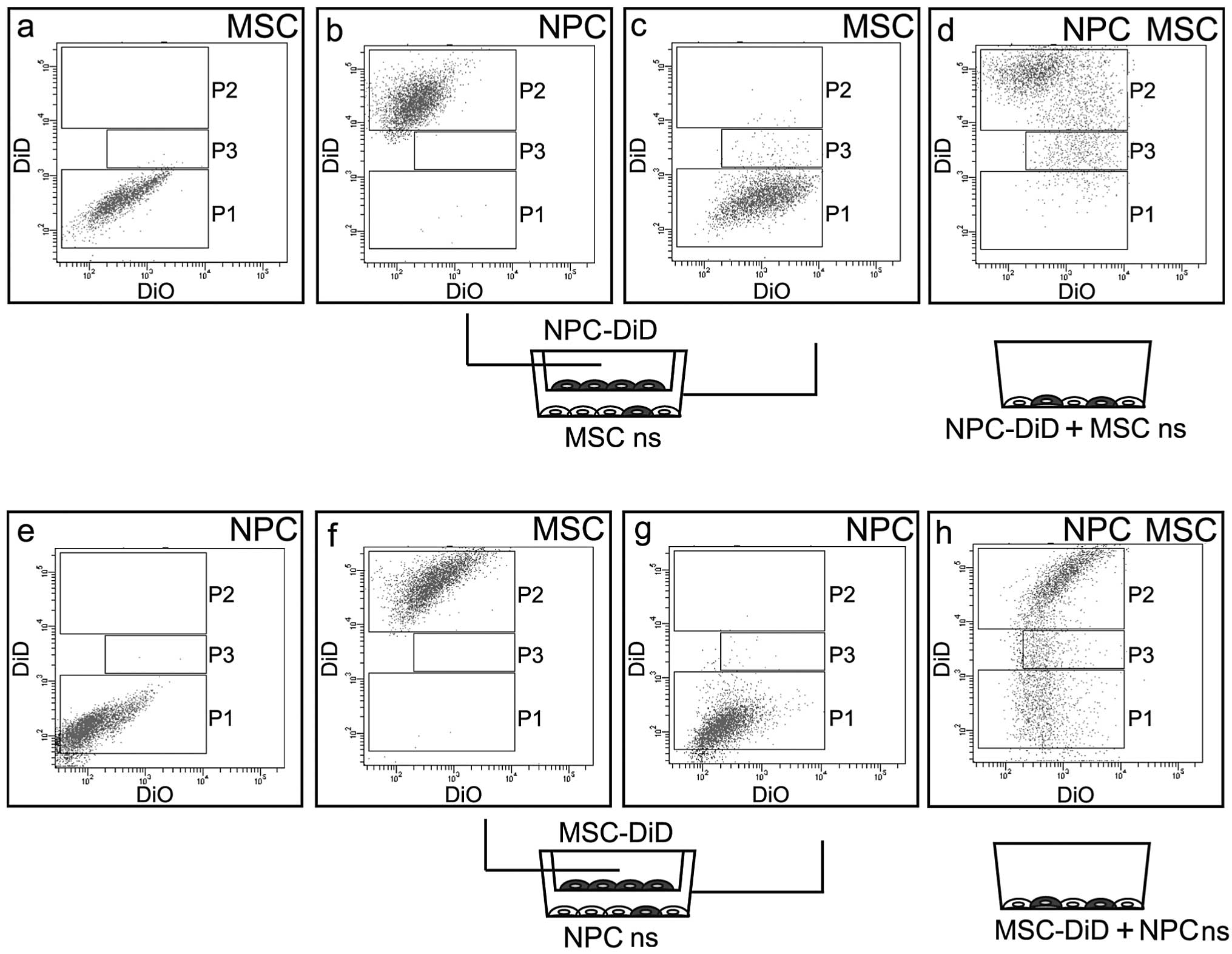
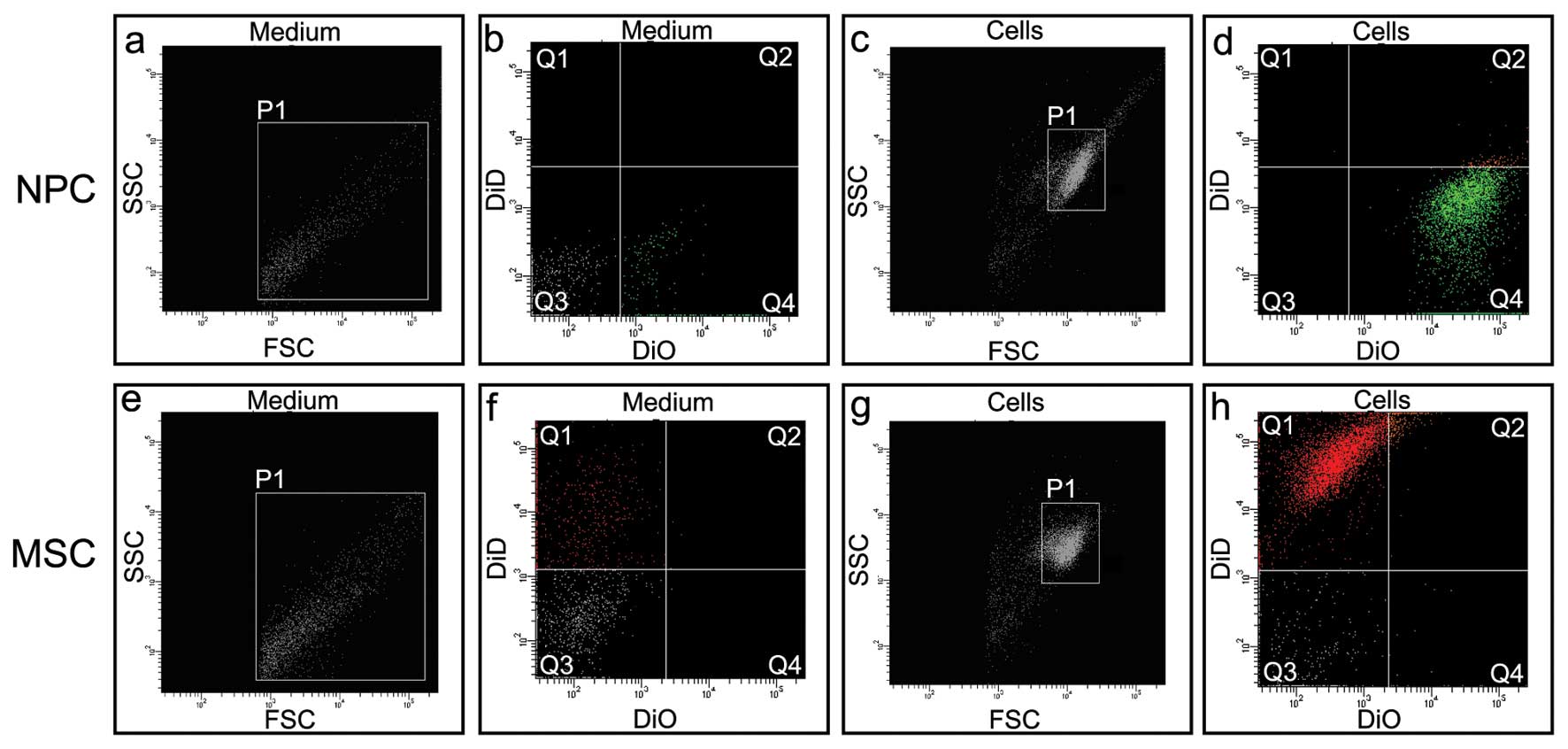
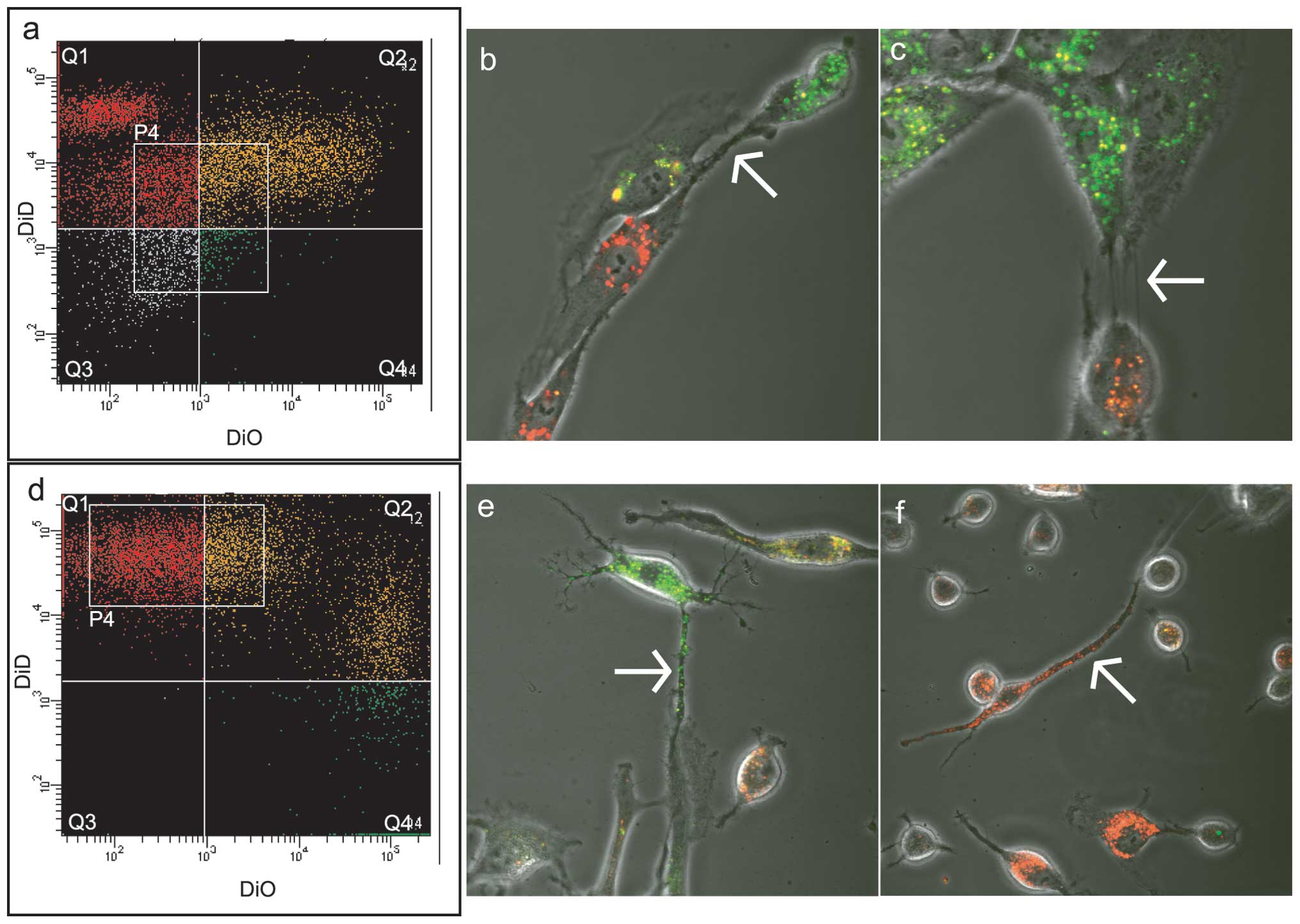
Degeneration of the intervertebral disc (IVD) is the main cause of age‑related damage of spinal tissues. Using multipotent mesenchymal stromal cells (MSCs) regenerative medicine intends to restore the IVD components of annulus fibrosus (AF) and nucleus pulposus (NP). In the present study NP cells (NPCs) and MSCs obtained from adolescent patients suffering from scoliosis were used. IVDs and vertebrae were obtained during surgery and subsequently processed in order to establish cultures of NPCs and MSCs. The two cell types were co‑cultured in 1‑µm pore size insert system (indirect co‑culture) or on one surface (direct co‑culture). Prior to co‑culture in these systems one of the cell types was stained by lipophilic fluorescent dye DiD (red). The results demonstrated that regardless of the cell type, the flow of DiD from stained to non‑stained cells was more efficient in the direct co‑culture in comparison with the insert system. Moreover, in the direct system the DiD flow was more efficient from MSCs towards NPCs compared with that in the opposite direction. These data indicated that the membrane interchange between the two cell types was asymmetric. To discriminate the subpopulation of cells that underwent membrane interchange, cells were double stained with DiD and DiO (green). In the first part of the experiment NPCs were stained by DiO and MSCs by DiD. In the second, NPCs were stained by DiD and MSCs by DiO. The cells were co‑cultured in the direct system for 8 days and subsequently analyzed by flow cytometry and confocal microscopy. This analysis revealed that >50% of cells were stained by the DiO and DiD dyes. NPCs and MSCs formed structures similar to tunnelling nanotubes (TnT). In conclusion, the formation of TnT‑like structures is able to promote, phenotypic changes during the direct co‑culture of NPCs with MSCs.
View Figures

Figure 1

Figure 2

Figure 3

View References

1 

Roberts S, Evans H, Trivedi J and Menage J: Histology and pathology of the human intervertebral disc. J Bone Joint Surg Am. 88(Suppl 2): 10–14. 2006. View Article : Google Scholar

2 

Yamamoto Y, Mochida J, Sakai D, et al: Upregulation of the viability of nucleus pulposus cells by bone marrow-derived stromal cells: significance of direct cell-to-cell contact in coculture system. Spine (Phila Pa 1976). 29:1508–1514. 2004. View Article : Google Scholar

3 

Wei A, Chung SA, Tao H, et al: Differentiation of rodent bone marrow mesenchymal stem cells into intervertebral disc-like cells following coculture with rat disc tissue. Tissue Eng Part A. 15:2581–2595. 2009. View Article : Google Scholar

4 

Niu CC, Yuan LJ, Lin SS, Chen LH and Chen WJ: Mesenchymal stem cell and nucleus pulposus cell coculture modulates cell profile. Clin Orthop Relat Res. 467:3263–3272. 2009. View Article : Google Scholar : PubMed/NCBI

5 

Le Visage C, Kim SW, Tateno K, Sieber AN, Kostuik JP and Leong KW: Interaction of human mesenchymal stem cells with disc cells: changes in extracellular matrix biosynthesis. Spine (Phila Pa 1976). 31:2036–2042. 2006.

6 

Richardson SM, Walker RV, Parker S, et al: Intervertebral disc cell-mediated mesenchymal stem cell differentiation. Stem Cells. 24:707–716. 2006. View Article : Google Scholar : PubMed/NCBI

7 

Yang SH, Wu CC, Shih TT, Sun YH and Lin FH: In vitro study on interaction between human nucleus pulposus cells and mesenchymal stem cells through paracrine stimulation. Spine (Phila Pa 1976). 33:1951–1957. 2008. View Article : Google Scholar : PubMed/NCBI

8 

Vadalà G, Studer RK, Sowa G, et al: Coculture of bone marrow mesenchymal stem cells and nucleus pulposus cells modulate gene expression profile without cell fusion. Spine (Phila Pa 1976). 33:870–876. 2008.PubMed/NCBI

9 

Strassburg S, Richardson SM, Freemont AJ and Hoyland JA: Co-culture induces mesenchymal stem cell differentiation and modulation of the degenerate human nucleus pulposus cell phenotype. Regen Med. 5:701–711. 2010. View Article : Google Scholar : PubMed/NCBI

10 

Strassburg S, Hodson NW, Hill PI, Richardson SM and Hoyland JA: Bi-directional exchange of membrane components occurs during co-culture of mesenchymal stem cells and nucleus pulposus cells. PLoS One. 7:e337392012. View Article : Google Scholar : PubMed/NCBI

11 

Gerdes HH, Rustom A and Wang X: Tunneling nanotubes, an emerging intercellular communication route in development. Mech Dev. 131:381–387. 2013. View Article : Google Scholar : PubMed/NCBI

12 

Abounit S and Zurzolo C: Wiring through tunneling nanotubes - from electrical signals to organelle transfer. J Cell Sci. 125:1089–1098. 2012. View Article : Google Scholar : PubMed/NCBI

13 

Horwitz EM, Le Blanc K, Dominici M, et al: Clarification of the nomenclature for MSC: The International Society for Cellular Therapy position statement. Cytotherapy. 7:393–395. 2005. View Article : Google Scholar : PubMed/NCBI

14 

Huang S, Tam V, Cheung KM, et al: Stem cell-based approaches for intervertebral disc regeneration. Curr Stem Cell Res Ther. 6:317–326. 2011. View Article : Google Scholar : PubMed/NCBI

15 

Xie LW, Fang H, Chen AM and Li F: Differentiation of rat adipose tissue-derived mesenchymal stem cells towards a nucleus pulposus-like phenotype in vitro. Chin J Traumatol. 12:98–103. 2009.PubMed/NCBI

16 

Feng G, Jin X, Hu J, et al: Effects of hypoxias and scaffold architecture on rabbit mesenchymal stem cell differentiation towards a nucleus pulposus-like phenotype. Biomaterials. 32:8182–8189. 2011. View Article : Google Scholar : PubMed/NCBI

17 

Gantenbein-Ritter B, Benneker LM, Alini M and Grad S: Differential response of human bone marrow stromal cells to either TGF-β(1) or rhGDF-5. Eur Spine J. 20:962–971. 2011.

18 

Morigele M, Shao Z, Zhang Z, et al: TGF-β1 induces a nucleus pulposus-like phenotype in Notch 1 knockdown rabbit bone marrow mesenchymal stem cells. Cell Biol Int. 37:820–825. 2013.

19 

Yuan M, Leong KW and Chan BP: Three-dimensional culture of rabbit nucleus pulposus cells in collagen microspheres. Spine J. 11:947–960. 2011. View Article : Google Scholar : PubMed/NCBI

20 

Leckie SK, Sowa GA, Bechara BP, et al: Injection of human umbilical tissue-derived cells into the nucleus pulposus alters the course of intervertebral disc degeneration in vivo. Spine J. 13:263–272. 2013. View Article : Google Scholar : PubMed/NCBI

21 

Niu X, Gupta K, Yang JT, Shamblott MJ and Levchenko A: Physical transfer of membrane and cytoplasmic components as a general mechanism of cell-cell communication. J Cell Sci. 122:600–610. 2009. View Article : Google Scholar : PubMed/NCBI

22 

Oren-Suissa M and Podbilewicz B: Evolution of programmed cell fusion: common mechanisms and distinct functions. Dev Dyn. 239:1515–1528. 2010. View Article : Google Scholar : PubMed/NCBI

23 

Vallabhaneni KC, Haller H and Dumler I: Vascular smooth muscle cells initiate proliferation of mesenchymal stem cells by mitochondrial transfer via tunneling nanotubes. Stem Cells Dev. 21:3104–3113. 2012. View Article : Google Scholar : PubMed/NCBI

24 

Lee TH, D’Asti E, Magnus N, Al-Nedawi K, Meehan B and Rak J: Microvesicles as mediators of intercellular communication in cancer - the emerging science of cellular ‘debris’. Semin Immunopathol. 33:455–467. 2011.PubMed/NCBI

25 

Chazotte B: Labeling membranes with carbocyanine dyes (Dils) as phospholipid analogs. Cold Spring Harb Protoc. 2011:pdb prot5555. 2011. View Article : Google Scholar : PubMed/NCBI

26 

Plotnikov EY, Khryapenkova TG, Galkina SI, Sukhikh GT and Zorov DB: Cytoplasm and organelle transfer between mesenchymal multipotent stromal cells and renal tubular cells in co-culture. Exp Cell Res. 316:2447–2455. 2010. View Article : Google Scholar

27 

Chen EH and Olson EN: Unveiling the mechanisms of cell-cell fusion. Science. 308:369–373. 2005. View Article : Google Scholar : PubMed/NCBI

28 

Ferrand J, Noël D, Lehours P, et al: Human bone marrow-derived stem cells acquire epithelial characteristics through fusion with gastrointestinal epithelial cells. PLoS One. 6:e195692011. View Article : Google Scholar

29 

Chernomordik LV and Kozlov MM: Membrane hemifusion: crossing a chasm in two leaps. Cell. 123:375–382. 2005. View Article : Google Scholar : PubMed/NCBI

30 

Nincheri P, Luciani P, Squecco R, et al: Sphingosine 1-phosphate induces differentiation of adipose tissue-derived mesenchymal stem cells towards smooth muscle cells. Cell Mol Life Sci. 66:1741–1754. 2009. View Article : Google Scholar : PubMed/NCBI

31 

Yang HJ, Jung KY, Kwak DH, et al: Inhibition of ganglioside GD1a synthesis suppresses the differentiation of human mesenchymal stem cells into osteoblasts. Dev Growth Differ. 53:323–332. 2011. View Article : Google Scholar : PubMed/NCBI

32 

Yang L, Chang N, Liu X, et al: Bone marrow-derived mesenchymal stem cells differentiate to hepatic myofibroblasts by transforming growth factor-β1 via sphingosine kinase/sphingosine 1-phosphate (S1P)/S1P receptor axis. Am J Pathol. 181:85–97. 2012.PubMed/NCBI

33 

Sundelacruz S, Levin M and Kaplan DL: Membrane potential controls adipogenic and osteogenic differentiation of mesenchymal stem cells. PLoS One. 3:e37372008. View Article : Google Scholar

34 

Essentials of Stem Cell Biology. Lanza R, Gearhart J, Hogan B, Melton D, Pedersen R, Donnall Thomas E, Thomson AJ and Wilmut I: Academic Press; pp. 105–110. 2009

Related Articles

  • Abstract
  • View
  • Download
  • Twitter
Copy and paste a formatted citation
Spandidos Publications style
Lehmann TP, Filipiak K, Juzwa W, Sujka‑Kordowska P, Jagodziński PP, Zabel M, Głowacki J, Misterska E, Walczak M, Głowacki M, Głowacki M, et al: Co‑culture of human nucleus pulposus cells with multipotent mesenchymal stromal cells from human bone marrow reveals formation of tunnelling nanotubes. Mol Med Rep 9: 574-582, 2014.
APA
Lehmann, T.P., Filipiak, K., Juzwa, W., Sujka‑Kordowska, P., Jagodziński, P.P., Zabel, M. ... Głowacki, M. (2014). Co‑culture of human nucleus pulposus cells with multipotent mesenchymal stromal cells from human bone marrow reveals formation of tunnelling nanotubes. Molecular Medicine Reports, 9, 574-582. https://doi.org/10.3892/mmr.2013.1821
MLA
Lehmann, T. P., Filipiak, K., Juzwa, W., Sujka‑Kordowska, P., Jagodziński, P. P., Zabel, M., Głowacki, J., Misterska, E., Walczak, M., Głowacki, M."Co‑culture of human nucleus pulposus cells with multipotent mesenchymal stromal cells from human bone marrow reveals formation of tunnelling nanotubes". Molecular Medicine Reports 9.2 (2014): 574-582.
Chicago
Lehmann, T. P., Filipiak, K., Juzwa, W., Sujka‑Kordowska, P., Jagodziński, P. P., Zabel, M., Głowacki, J., Misterska, E., Walczak, M., Głowacki, M."Co‑culture of human nucleus pulposus cells with multipotent mesenchymal stromal cells from human bone marrow reveals formation of tunnelling nanotubes". Molecular Medicine Reports 9, no. 2 (2014): 574-582. https://doi.org/10.3892/mmr.2013.1821
Copy and paste a formatted citation
x
Spandidos Publications style
Lehmann TP, Filipiak K, Juzwa W, Sujka‑Kordowska P, Jagodziński PP, Zabel M, Głowacki J, Misterska E, Walczak M, Głowacki M, Głowacki M, et al: Co‑culture of human nucleus pulposus cells with multipotent mesenchymal stromal cells from human bone marrow reveals formation of tunnelling nanotubes. Mol Med Rep 9: 574-582, 2014.
APA
Lehmann, T.P., Filipiak, K., Juzwa, W., Sujka‑Kordowska, P., Jagodziński, P.P., Zabel, M. ... Głowacki, M. (2014). Co‑culture of human nucleus pulposus cells with multipotent mesenchymal stromal cells from human bone marrow reveals formation of tunnelling nanotubes. Molecular Medicine Reports, 9, 574-582. https://doi.org/10.3892/mmr.2013.1821
MLA
Lehmann, T. P., Filipiak, K., Juzwa, W., Sujka‑Kordowska, P., Jagodziński, P. P., Zabel, M., Głowacki, J., Misterska, E., Walczak, M., Głowacki, M."Co‑culture of human nucleus pulposus cells with multipotent mesenchymal stromal cells from human bone marrow reveals formation of tunnelling nanotubes". Molecular Medicine Reports 9.2 (2014): 574-582.
Chicago
Lehmann, T. P., Filipiak, K., Juzwa, W., Sujka‑Kordowska, P., Jagodziński, P. P., Zabel, M., Głowacki, J., Misterska, E., Walczak, M., Głowacki, M."Co‑culture of human nucleus pulposus cells with multipotent mesenchymal stromal cells from human bone marrow reveals formation of tunnelling nanotubes". Molecular Medicine Reports 9, no. 2 (2014): 574-582. https://doi.org/10.3892/mmr.2013.1821
Follow us
  • Twitter
  • LinkedIn
  • Facebook
About
  • Spandidos Publications
  • Careers
  • Cookie Policy
  • Privacy Policy
How can we help?
  • Help
  • Live Chat
  • Contact
  • Email to our Support Team