Introduction
Human cytomegalovirus (HCMV) belongs to the β
subgroup of herpes viruses, which exhibit a restricted host range
and slow replication cycle (1,2).
HCMV has a linear double-stranded DNA genome of ~230 kb, which
encodes potentially >200 viral proteins (2). The viral DNA genome can be divided
into two segments known as the unique long (UL), which is ~175 kb,
and the unique short (US), which is ~38 kb. Flanking the UL and US
regions are repeat sequences termed the terminal repeat long (TRL),
the terminal repeat short (TRS), the internal repeat long (IRL) and
the internal repeat short (IRS). The genes of the HCMV are
classified according to location in the UL, US, TRS, TRL, IRS or
IRL followed by the open reading frame number (2).
During lytic replication, HCMV gene expression
occurs according to a cascade of three consecutive phases:
immediate early (IE), early (E) and late (L) (2). The IE genes are
transcribed immediately following infection and they do not require
de novo viral protein synthesis. The IE proteins are
important transactivators of viral early genes and cellular genes.
The early genes encode proteins that are important for the
replication of the viral DNA. Following the onset of viral DNA
replication, late genes, which encode structural proteins for
virion components, are transcribed.
HCMV is transmitted by bodily secretions and infects
50–90% of the human population worldwide (1). Following primary infection, HCMV
establishes a lifelong latent infection in blood monocytes and
myelomonocytic precursors within the bone marrow with periodic
reactivation (3–8). In immunocompetent individuals,
infection with HCMV is usually asymptomatic. In rare cases, HCMV
mononucleosis syndrome develops with potential complications,
including pneumonia, hepatitis and meningitis (1).
In immunosuppressed or immunocompromised
individuals, primary infection with HCMV or reactivation of the
latent virus causes severe diseases, including pneumonitis,
encephalitis, retinitis, hepatitis and gastroenteritis (1). In addition, HCMV can be transmitted
to infants from their mothers during a primary infection or
reactivation either in utero or while passing through the
cervix at birth, which can cause infant mortality, premature
deliveries and birth defects, including blindness, mental
retardation and hearing loss (1).
Currently, there are only a few drugs approved by
the Food and Drug Administration (FDA) for the treatment of
HCMV-related diseases (9,10). Ganciclovir, valganciclovir,
cidofovir and fomivirsen are synthetic nucleotide analogs and
foscamet is a pyrophosphate analog (9,10).
These drugs inhibit HCMV DNA replication by targeting the viral DNA
polymerase. However, there are several disadvantages associated
with the use of these synthetic drugs, including toxicity and
inactivation by resistant viruses (9,11).
Thus, it is necessary to develop new anti-HCMV drugs with high
efficacy and fewer side effects. Natural products from plants have
been reported to be a valuable source for antiviral agents with
fewer side effects than synthetic drugs (12). In the present study, the effects of
70% ethanol extract of Elaeocarpus sylvestris leaves (ESE)
on HCMV infection and/or replication were investigated.
Materials and methods
Cells, viruses and plant material
The maintenance and propagation of primary human
foreskin fibroblasts (HFFs) and HCMV have been described previously
(13). The HCMV Towne strain and a
recombinant HCMV Towne strain expressing green fluorescent protein
(HCMV-Towne-GFP) were kindly provided by Dr Mark Stinski
(University of Iowa, Iowa City, IA, USA). The plant materials
(Elaeocarpus sylvestris var. ellipticus) and 70%
ethanol extracts used in the present study were collected from the
Jeju island in Korea through the Jeju Biodiversity Research
Institute (Jeju, Korea; specimen no. JBR-083).
Fluorescence microscopy
The fluorescence was assessed and images were
analyzed using an inverted Nikon TS100-F fluorescence microscope
(Tokyo, Japan) equipped with a digital camera and Nikon
NIS-Elements microscope imaging software.
Quantification of HCMV DNA and RNA
HCMV DNA was quantified by quantitative PCR (qPCR).
Total DNA was isolated using an AccuPrep Genomic DNA Extraction kit
(Bioneer, Daejon, Korea) and HCMV DNA was amplified and quantified
in an MxPro3000P QPCR System (Agilent Technologies, Santa Clara,
CA, USA) using HOT FIREPol® EvaGreen qPCR mix Plus
(Solis BioDyne, Tartu, Estonia). The primers used were as follows:
HCMV UL123, forward 5′-CTGCAAACATCCTCCCATCA-3′ and reverse
5′-AATATACCCAGACGGAAGAGAAATTC-3′; β-actin, forward
5′-ATCATGTTTGAGACCTTCAAC-3′ and reverse
5′-CAGGAAGGAAGGCTGGAAGAG-3′.
HCMV RNA was quantified by quantitative reverse
transcription PCR (qRT-PCR). Total RNA was isolated using an
RNeasy® kit and reverse transcribed into complementary
DNA (cDNA) using a QuantiTect® reverse transcription kit
according to the manufacturer’s instructions (Qiagen, Hilden,
Germany). cDNAs were amplified and quantified in an MxPro3000P QPCR
System (Agilent Technologies) using HOT FIREPol®
EvaGreen qPCR mix Plus (Solis BioDyne) and the following primers:
UL122 (immediate early, IE), forward 5′-ACCATGCAGGTGAACAACAA-3′ and
reverse 5′-CATGAGGAAGGGAGTGGAGA-3′; UL44 (E), forward
5′-TTTTCTCACCGAGGAACCTTTC-3′ and reverse 5′-CCGCTGTTCCCGACGTAAT-3′;
UL83 (L), forward 5′-GCAGCCACGGGATCGTACT-3′ and reverse
5′-GGCTTTTACCTCACACGAGACTT-3′; β-actin, forward
5′-ATCATGTTTGAGACCTTCAAC-3′ and reverse
5′-CAGGAAGGAAGGCTGGAAGAG-3′.
Western blot analysis
Cells were collected, fractionated and transferred
onto nitrocellulose membranes as described previously (14). Antibodies to IE-86 and tubulin were
purchased from EMD Millipore (Billerica, MA, USA) and Sigma-Aldrich
(St. Louis, MO, USA), respectively. Enhanced chemiluminescence
detection reagents (Pierce Biotechnology, Inc., Rockford, IL, USA)
and secondary peroxidase-labeled anti-mouse immunoglobulin G
antibody (Amersham Biosciences, Piscataway, NJ, USA) were used
according to the manufacturer’s instructions.
Cell viability assays
Cell viability was determined using a CellTiter-Glo
luminescent cell viability assay (Promega Corporation, Madison, WI,
USA) according to the manufacturer’s instructions.
Results
ESE inhibits HCMV replication
By using HCMV-Towne-GFP, 70% ethanol extracts of 662
plants were screened for their inhibitory effect on HCMV
replication. HFF cells were infected with HCMV-Towne-GFP at a
multiplicity of infection (MOI) of 0.1 (low) or 1 (high) and
treated with either dimethyl sulfoxide (DMSO) or plant extracts at
10 μg/ml. The cells were retreated with either DMSO or plant
extracts at 3 days following infection and GFP was visualized using
a fluorescence microscope. Among the screened extracts, ESE was
found to interfere with HCMV replication (Fig. 1A; compare lanes 2 and 3 with lanes
4 and 5). HCMV-Towne-GFP replication was completely inhibited by
ESE at a low MOI (compare lane 2 with lane 4) and significantly
downregulated at a high MOI (compare lane 3 with lane 5).
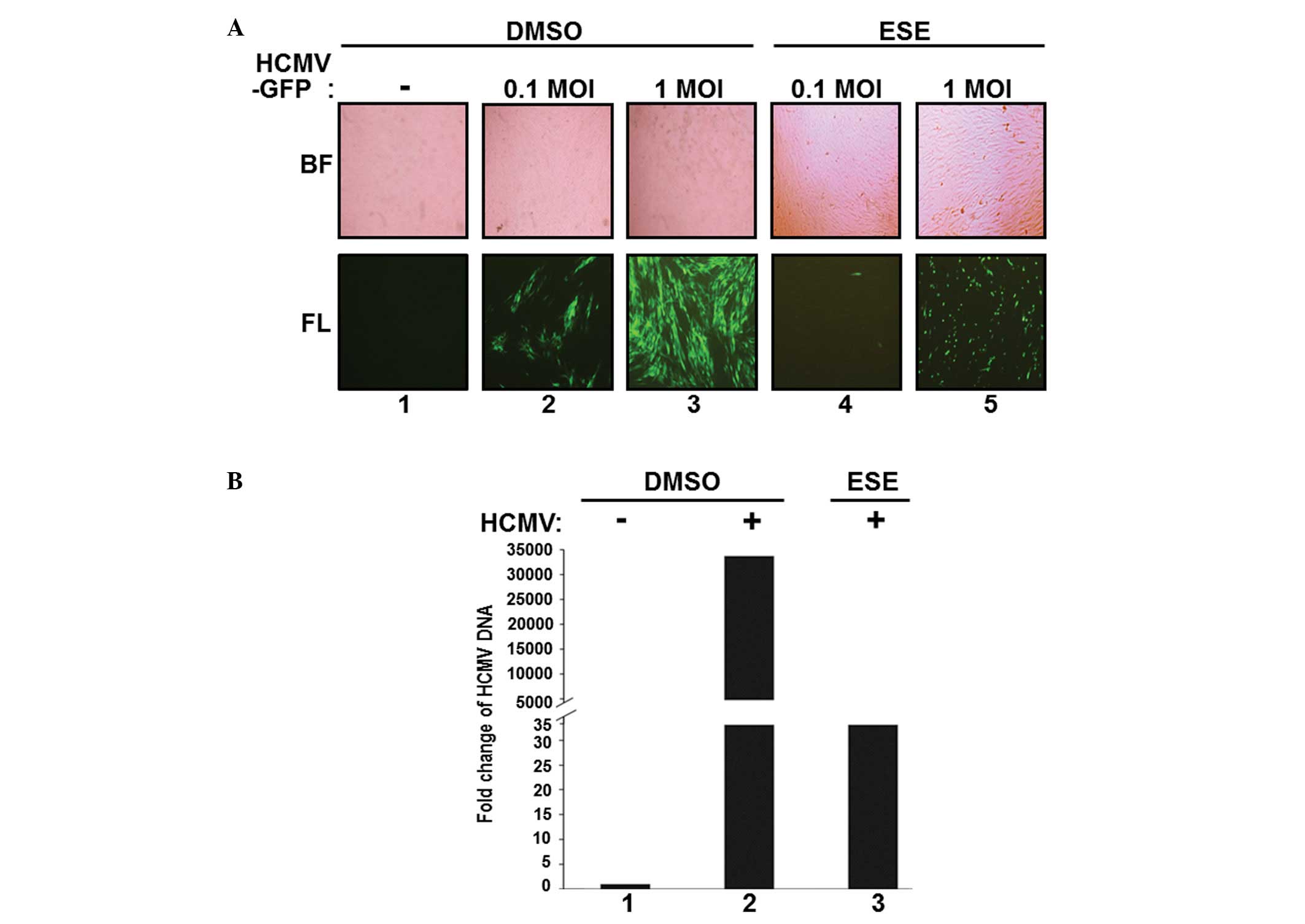 | Figure 1ESE inhibits HCMV replication. (A) HFF
cells were mock- (lane 1) or HCMV-Towne-GFP infected at an MOI of
0.1 (low; lanes 2 and 4) or 1 (high; lanes 3 and 5) and treated
with either DMSO (lanes 1–3) or ESE (lanes 4 and 5) at 10 μg/ml.
HCMV- or mock-infected HFF cells were treated again with either
DMSO or ESE at 3 days following infection. At 7 days following
infection, GFP fluorescence was measured using a Nikon TS100-F
inverted fluorescence microscope. (B) HFF cells were mock- (lane 1)
or HCMV-Towne-infected at an MOI of 1 (high; lanes 2 and 3) and
treated with either DMSO (lanes 1 and 2) or ESE (lane 3) as
described above. At 7 days following infection, total DNA was
harvested and the relative amount of viral DNA was measured by qPCR
using primers specific for UL123 as described in Materials and
methods. BF, bright field microscopic image; FL, fluorescence
microscopic image; ESE, ethanol extract of Elaeocarpus
sylvestris leaves; HCMV, human cytomegalovirus; HFF, human
foreskin fibroblasts; HCMV-Towne-GFP, HCMV-Towne strain-expressing
green fluorescent protein; MOI, multiplicity of infection; qPCR,
quantitative PCR; DMSO, dimethyl sulfoxide; UL, unique long. |
To quantify HCMV replication, the relative amount of
viral DNA was measured by qPCR using primers specific for UL123.
Notably, ESE almost completely inhibited HCMV replication at a high
MOI (Fig. 1B). ESE treatment
reduced HCMV replication in HFF cells by 99.6% compared with
DMSO-treated cells (Fig. 1B;
compare lane 3 with lane 2). Thus, ESE significantly inhibited
HCMV-Towne replication.
ESE interferes with HCMV lytic gene
expression
During lytic infection, HCMV gene expression occurs
according to a cascade of three consecutive phases: IE, E and L. To
determine the effect of ESE on HCMV gene expression, the levels of
IE, E, or L transcripts were measured by using qRT-PCR. HFF cells
were infected with HCMV Towne at a high MOI and treated with either
DMSO or ESE at 10 μg/ml. At 24, 48 and 72 h following infection,
the levels of UL122 (IE), UL44 (E) or UL83 (L) transcripts were
determined by qRT-PCR (Fig. 2). In
DMSO-treated cells, the expression of IE, E and L genes was induced
at 24 h and then increased at 48 and 72 h following infection
(Fig. 2; lane 2). However, in
ESE-treated cells, the expression of IE, E and L genes was
significantly downregulated (Fig.
2; compare lane 3 with lane 2). Therefore, ESE interferes with
the expression of HCMV IE and subsequently, E and L genes.
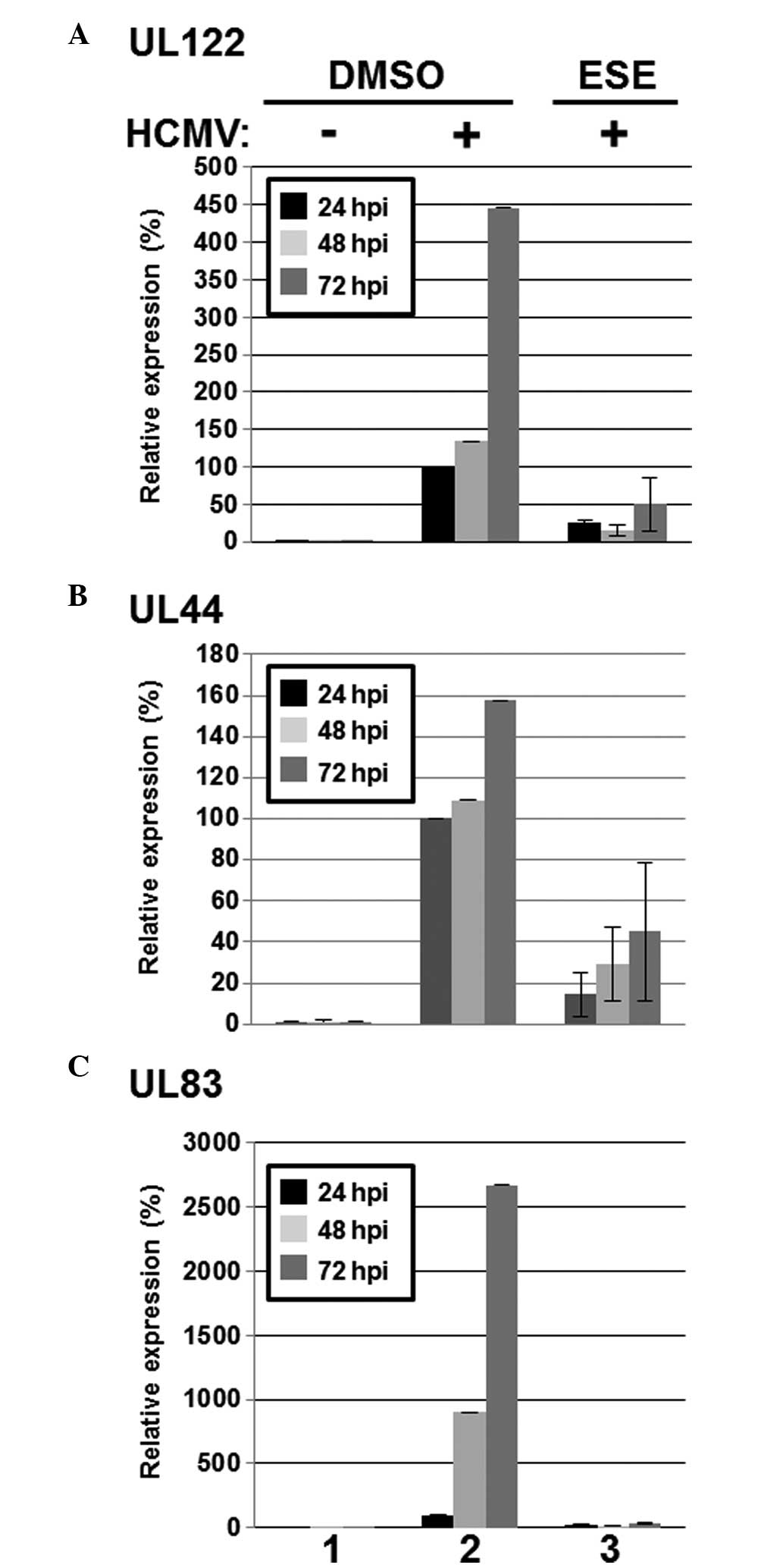 | Figure 2ESE interferes with HCMV lytic gene
expression. HFF cells were mock- (lane 1) or HCMV-Towne infected at
an MOI of 1 (lanes 2 and 3) and treated with DMSO (lanes 1 and 2)
or ESE (lane 3) at 10 μg/ml. At 24, 48 or 72 h following infection,
total RNA was harvested and reverse transcribed into cDNA. The
relative amount of HCMV (A) UL122, (B) UL44 or (C) UL83 transcripts
was measured by qRT-PCR as described in Materials and methods. To
calculate the relative gene expression, the amount of transcripts
in DMSO-treated HCMV-infected cells at 24 h was set at 100%. The
qRT-PCR data are representative of three independent experiments.
ESE, ethanol extract of Elaeocarpus sylvestris leaves; HCMV,
human cytomegalovirus; HFF, human foreskin fibroblasts; MOI,
multiplicity of infection; DMSO, dimethyl sulfoxide; cDNA,
complementary DNA; UL, unique long; qRT-PCR, quantitative reverse
transcription PCR. |
ESE inhibits HCMV major immediate early
(MIE) gene expression
To confirm the inhibitory effect of ESE on HCMV
lytic gene expression, the expression of the HCMV MIE gene, the
most abundant IE gene, was determined by western blot analysis. HFF
cells were infected with HCMV Towne at a high MOI and treated with
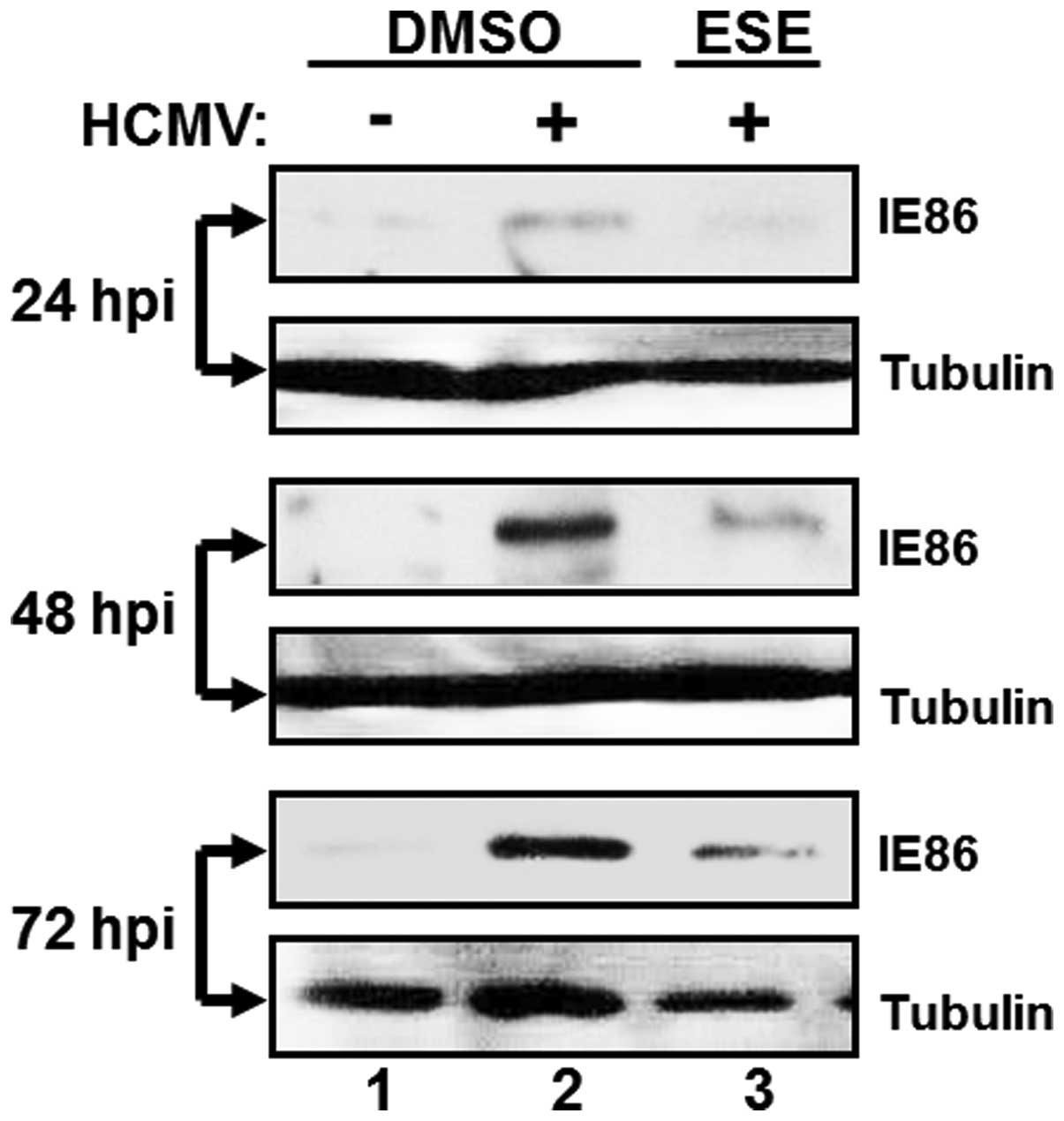
either DMSO or ESE at 10 μg/ml. The expression of the IE86 protein
encoded by the MIE2 gene (UL122) was determined by western blot
analysis with an anti-IE86 antibody. In DMSO-treated cells, the
HCMV IE86 protein was expressed at 24 h following infection and the
level of IE86 protein was markedly induced at 48 and 72 h following
infection (Fig. 3; lane 2).
Consistent with the qRT-PCR data, ESE significantly reduced the
expression of the HCMV IE86 protein (Fig. 3; compare lane 3 with lane 2). These
data indicated that ESE inhibits HCMV replication possibly by
downregulating IE gene expression.
ESE has a minor effect on the viability
of HFF cells
To determine whether the effect of ESE on HCMV gene
expression and replication was associated with its cytotoxicity,
the effect of ESE on the viability of HFF cells was further
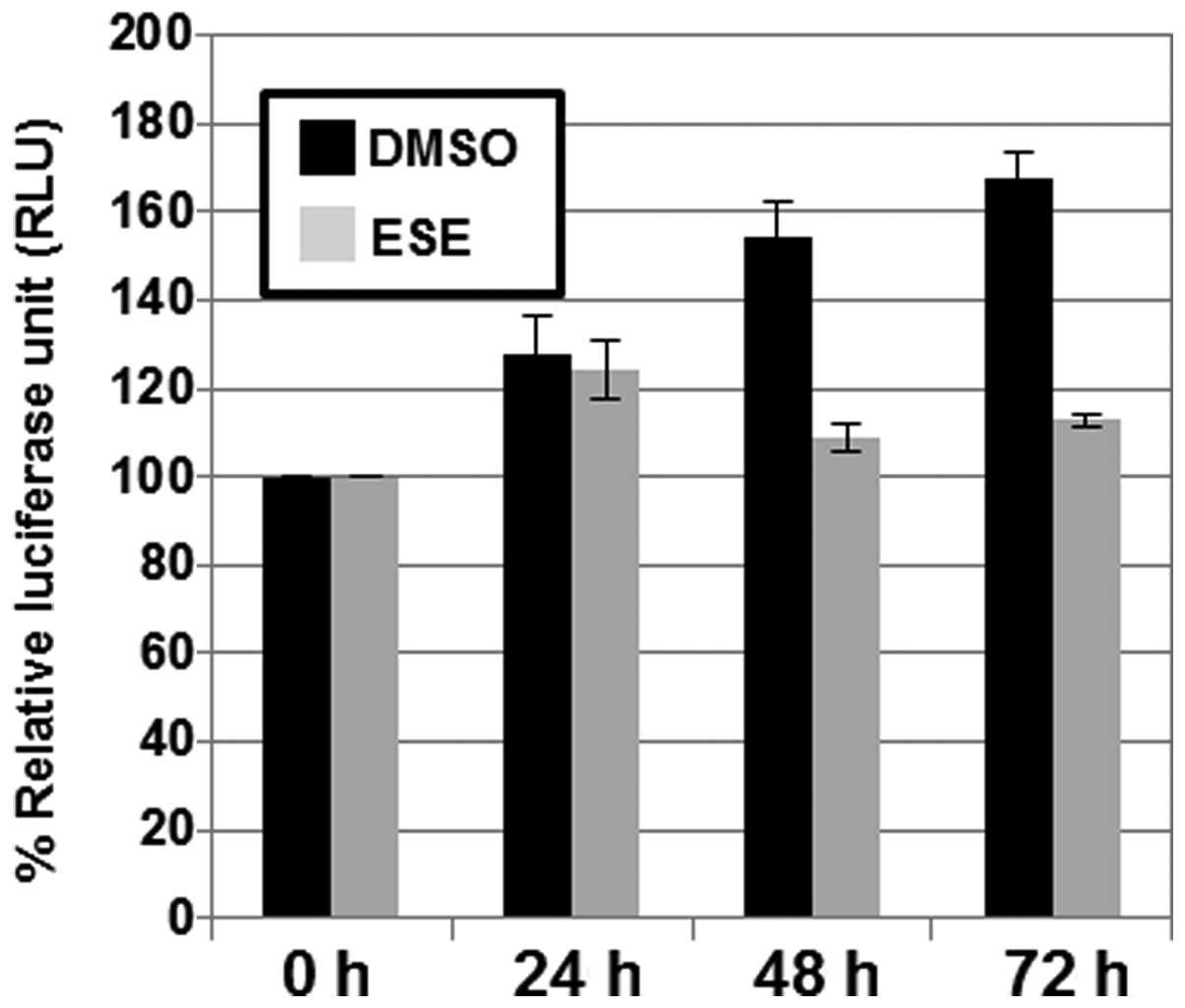
investigated. HFF cells were treated with 10 μg/ml of ESE and the
cell viability was determined by the CellTiter-Glo assay, a
luciferase-based assay measuring cellular ATP which represents the
presence of metabolically active cells, at 24, 48 or 72 h following
treatment (Fig. 4). Within the
first 24 h, the viability of HFF cells treated with ESE was similar
to those treated with DMSO (Fig.
4; 24 h). At 48 and 72 h following ESE treatment, HFF cell
viability was reduced by 26 and 32%, respectively (Fig. 4; 48 and 72 h). Although the
viability of HFF cells treated with ESE was slightly reduced at 48
and 72 h following treatment, ESE had little cytotoxic effect on
HFF cells at 10 μg/ml.
Discussion
HCMV is a major health threat in newborn infants,
immunocompromised individuals with HIV/AIDS and organ transplant
recipients. Although certain synthetic drugs that may be used to
treat HCMV-related diseases have been approved by the FDA, several
problems with these drugs, including toxicity and inactivation by
resistant viruses, have arisen. Natural products have been a major
source for drug development. Particularly, anti-cancer or
anti-infective agents isolated from natural sources have been
extensively developed. Therefore, the aim of the present study was
to identify plant extracts with anti-HCMV activities.
By screening 70% ethanol extracts of 662 plant
extracts, ESE was identified to induce an inhibitory effect on HCMV
replication. Elaeocarpus is the largest genus in
Elaeocarpaceae (15) and
Elaeocarpus sylvestris var. ellipticus is distributed
in the Jeju island in Korea, Southern China, Okinawa and Kyushu in
Japan and Taiwan. The extract of Elaeocarpus sylvestris
contains chemical compounds, including 2-hydroxybenzaldehyde,
coniferyl alcohol, umbelliferone, scopoletin, β-sitosterol and
daucosterol (16). Notably, the
biological activities of ESE have not been extensively
investigated. It was reported that ESE protects mice from radiation
injury and possesses radioprotective activity by enhancing
hematopoietic stem cell regeneration, although the detailed
mechanisms remain to be elucidated (17).
Our data indicate that ESE markedly inhibits HCMV
replication possibly by downregulating IE gene expression. The
anti-HCMV activity of ESE is not associated with cytotoxicity as
ESE has almost no adverse effect on the viability of HFF cells. The
manner in which ESE inhibits HCMV IE gene expression remains to be
elucidated and may be the subject of future studies. ESE may
directly inhibit functional activity of transcription factors for
the HCMV IE promoter or indirectly interfere with a signal
transduction pathway(s) to activate a transcription factor(s) that
is critical for HCMV IE gene expression.
Taken together, this is the first study, to the best
of our knowledge, demonstrating that ESE induces an inhibitory
effect on HCMV replication without affecting the viability of HFF
cells. ESE may be a good candidate for new drug discovery to treat
HCMV-related diseases.
Acknowledgements
This study was supported by the Bio-industry
Technology Development Program and the Ministry of Agriculture,
Food and Rural Affairs (no. 311063-5).
Abbreviations:
|
HCMV
|
human cytomegalovirus
|
|
IE
|
immediate early
|
|
ESE
|
ethanol extract of Elaeocarpus
sylvestris
|
|
HFF
|
human foreskin fibroblasts
|
References
|
1
|
Gandhi MK and Khanna R: Human
cytomegalovirus: clinical aspects, immune regulation, and emerging
treatments. Lancet Infect Dis. 4:725–738. 2004. View Article : Google Scholar : PubMed/NCBI
|
|
2
|
Mocarski ES, Shenk T and Pass RF:
Cytomegaloviruses. Fields Virology. Knipe DM and Howley PM: 2. 5th
edition. Lippincott Williams & Wilkins; Philadelphia: pp.
2701–2772. 2007
|
|
3
|
Albright ER and Kalejta RF: Myeloblastic
cell lines mimic some but not all aspects of human cytomegalovirus
experimental latency defined in primary CD34+ cell
populations. J Virol. 87:9802–9812. 2013. View Article : Google Scholar : PubMed/NCBI
|
|
4
|
Goodrum F, Caviness K and Zagallo P: Human
cytomegalovirus persistence. Cell Microbiol. 14:644–655. 2012.
View Article : Google Scholar
|
|
5
|
Hahn G, Jores R and Mocarski ES:
Cytomegalovirus remains latent in a common precursor of dendritic
and myeloid cells. Proc Natl Acad Sci USA. 95:3937–3942. 1998.
View Article : Google Scholar : PubMed/NCBI
|
|
6
|
Kondo K, Kaneshima H and Mocarski ES:
Human cytomegalovirus latent infection of granulocyte-macrophage
progenitors. Proc Natl Acad Sci USA. 91:11879–11883. 1994.
View Article : Google Scholar : PubMed/NCBI
|
|
7
|
Rossetto CC, Tarrant-Elorza M and Pari GS:
Cis and trans acting factors involved in human cytomegalovirus
experimental and natural latent infection of CD14 (+) monocytes and
CD34 (+) cells. PLoS Pathog. 9:e10033662013.PubMed/NCBI
|
|
8
|
Taylor-Wiedeman J, Sissons JG, Borysiewicz
LK and Sinclair JH: Monocytes are a major site of persistence of
human cytomegalovirus in peripheral blood mononuclear cells. J Gen
Virol. 72:2059–2064. 1991. View Article : Google Scholar : PubMed/NCBI
|
|
9
|
James SH, Kimberlin DW and Whitley RJ:
Antiviral therapy for herpesvirus central nervous system
infections: neonatal herpes simplex virus infection, herpes simplex
encephalitis, and congenital cytomegalovirus infection. Antiviral
Res. 83:207–213. 2009. View Article : Google Scholar
|
|
10
|
Coen DM and Schaffer PA: Antiherpesvirus
drugs: a promising spectrum of new drugs and drug targets. Nat Rev
Drug Discov. 2:278–288. 2003. View
Article : Google Scholar : PubMed/NCBI
|
|
11
|
Villarreal EC: Current and potential
therapies for the treatment of herpes-virus infections. Prog Drug
Res. 60:263–307. 2003. View Article : Google Scholar : PubMed/NCBI
|
|
12
|
Arakawa T, Yamasaki H, Ikeda K, Ejima D,
Naito T and Koyama AH: Antiviral and virucidal activities of
natural products. Curr Med Chem. 16:2485–2497. 2009. View Article : Google Scholar : PubMed/NCBI
|
|
13
|
Stinski MF: Synthesis of proteins and
glycoproteins in cells infected with human cytomegalovirus. J
Virol. 23:751–767. 1977.PubMed/NCBI
|
|
14
|
Song YJ and Stinski MF: Inhibition of cell
division by the human cytomegalovirus IE86 protein: role of the p53
pathway or cyclin-dependent kinase 1/cyclin B1. J Virol.
79:2597–2603. 2005. View Article : Google Scholar : PubMed/NCBI
|
|
15
|
Sugai K, Setsuko S, Nagamitsu T, Murakami
N, Kato H and Yoshimaru H: Genetic differentiation in Elaeocarpus
photiniifolia (Elaeocarpaceae) associated with geographic
distribution and habitat variation in the Bonin (Ogasawara)
Islands. J Plant Res. 126:763–774. 2013. View Article : Google Scholar
|
|
16
|
Zhang HC and Shi HM: Studies on chemical
constituents from Elaeocarpus sylvestris. Zhong Yao Cai.
31:1503–1505. 2008.(In Chinese).
|
|
17
|
Park E, Lee NH, Baik JS and Jee Y:
Elaeocarpus sylvestris modulates gamma-ray-induced
immunosuppression in mice: implications in radioprotection.
Phytother Res. 22:1046–1051. 2008. View
Article : Google Scholar
|