Spandidos Publications Logo
  • About
    • About Spandidos
    • Aims and Scopes
    • Abstracting and Indexing
    • Editorial Policies
    • Reprints and Permissions
    • Job Opportunities
    • Terms and Conditions
    • Contact
  • Journals
    • All Journals
    • Oncology Letters
      • Oncology Letters
      • Information for Authors
      • Editorial Policies
      • Editorial Board
      • Aims and Scope
      • Abstracting and Indexing
      • Bibliographic Information
      • Archive
    • International Journal of Oncology
      • International Journal of Oncology
      • Information for Authors
      • Editorial Policies
      • Editorial Board
      • Aims and Scope
      • Abstracting and Indexing
      • Bibliographic Information
      • Archive
    • Molecular and Clinical Oncology
      • Molecular and Clinical Oncology
      • Information for Authors
      • Editorial Policies
      • Editorial Board
      • Aims and Scope
      • Abstracting and Indexing
      • Bibliographic Information
      • Archive
    • Experimental and Therapeutic Medicine
      • Experimental and Therapeutic Medicine
      • Information for Authors
      • Editorial Policies
      • Editorial Board
      • Aims and Scope
      • Abstracting and Indexing
      • Bibliographic Information
      • Archive
    • International Journal of Molecular Medicine
      • International Journal of Molecular Medicine
      • Information for Authors
      • Editorial Policies
      • Editorial Board
      • Aims and Scope
      • Abstracting and Indexing
      • Bibliographic Information
      • Archive
    • Biomedical Reports
      • Biomedical Reports
      • Information for Authors
      • Editorial Policies
      • Editorial Board
      • Aims and Scope
      • Abstracting and Indexing
      • Bibliographic Information
      • Archive
    • Oncology Reports
      • Oncology Reports
      • Information for Authors
      • Editorial Policies
      • Editorial Board
      • Aims and Scope
      • Abstracting and Indexing
      • Bibliographic Information
      • Archive
    • Molecular Medicine Reports
      • Molecular Medicine Reports
      • Information for Authors
      • Editorial Policies
      • Editorial Board
      • Aims and Scope
      • Abstracting and Indexing
      • Bibliographic Information
      • Archive
    • World Academy of Sciences Journal
      • World Academy of Sciences Journal
      • Information for Authors
      • Editorial Policies
      • Editorial Board
      • Aims and Scope
      • Abstracting and Indexing
      • Bibliographic Information
      • Archive
    • International Journal of Functional Nutrition
      • International Journal of Functional Nutrition
      • Information for Authors
      • Editorial Policies
      • Editorial Board
      • Aims and Scope
      • Abstracting and Indexing
      • Bibliographic Information
      • Archive
    • International Journal of Epigenetics
      • International Journal of Epigenetics
      • Information for Authors
      • Editorial Policies
      • Editorial Board
      • Aims and Scope
      • Abstracting and Indexing
      • Bibliographic Information
      • Archive
    • Medicine International
      • Medicine International
      • Information for Authors
      • Editorial Policies
      • Editorial Board
      • Aims and Scope
      • Abstracting and Indexing
      • Bibliographic Information
      • Archive
  • Articles
  • Information
    • Information for Authors
    • Information for Reviewers
    • Information for Librarians
    • Information for Advertisers
    • Conferences
  • Language Editing
Spandidos Publications Logo
  • About
    • About Spandidos
    • Aims and Scopes
    • Abstracting and Indexing
    • Editorial Policies
    • Reprints and Permissions
    • Job Opportunities
    • Terms and Conditions
    • Contact
  • Journals
    • All Journals
    • Biomedical Reports
      • Information for Authors
      • Editorial Policies
      • Editorial Board
      • Aims and Scope
      • Abstracting and Indexing
      • Bibliographic Information
      • Archive
    • Experimental and Therapeutic Medicine
      • Information for Authors
      • Editorial Policies
      • Editorial Board
      • Aims and Scope
      • Abstracting and Indexing
      • Bibliographic Information
      • Archive
    • International Journal of Epigenetics
      • Information for Authors
      • Editorial Policies
      • Editorial Board
      • Aims and Scope
      • Abstracting and Indexing
      • Bibliographic Information
      • Archive
    • International Journal of Functional Nutrition
      • Information for Authors
      • Editorial Policies
      • Editorial Board
      • Aims and Scope
      • Abstracting and Indexing
      • Bibliographic Information
      • Archive
    • International Journal of Molecular Medicine
      • Information for Authors
      • Editorial Policies
      • Editorial Board
      • Aims and Scope
      • Abstracting and Indexing
      • Bibliographic Information
      • Archive
    • International Journal of Oncology
      • Information for Authors
      • Editorial Policies
      • Editorial Board
      • Aims and Scope
      • Abstracting and Indexing
      • Bibliographic Information
      • Archive
    • Medicine International
      • Information for Authors
      • Editorial Policies
      • Editorial Board
      • Aims and Scope
      • Abstracting and Indexing
      • Bibliographic Information
      • Archive
    • Molecular and Clinical Oncology
      • Information for Authors
      • Editorial Policies
      • Editorial Board
      • Aims and Scope
      • Abstracting and Indexing
      • Bibliographic Information
      • Archive
    • Molecular Medicine Reports
      • Information for Authors
      • Editorial Policies
      • Editorial Board
      • Aims and Scope
      • Abstracting and Indexing
      • Bibliographic Information
      • Archive
    • Oncology Letters
      • Information for Authors
      • Editorial Policies
      • Editorial Board
      • Aims and Scope
      • Abstracting and Indexing
      • Bibliographic Information
      • Archive
    • Oncology Reports
      • Information for Authors
      • Editorial Policies
      • Editorial Board
      • Aims and Scope
      • Abstracting and Indexing
      • Bibliographic Information
      • Archive
    • World Academy of Sciences Journal
      • Information for Authors
      • Editorial Policies
      • Editorial Board
      • Aims and Scope
      • Abstracting and Indexing
      • Bibliographic Information
      • Archive
  • Articles
  • Information
    • For Authors
    • For Reviewers
    • For Librarians
    • For Advertisers
    • Conferences
  • Language Editing
Login Register Submit
  • This site uses cookies
  • You can change your cookie settings at any time by following the instructions in our Cookie Policy. To find out more, you may read our Privacy Policy.

    I agree
Search articles by DOI, keyword, author or affiliation
Search
Advanced Search
presentation
Molecular Medicine Reports
Join Editorial Board Propose a Special Issue
Print ISSN: 1791-2997 Online ISSN: 1791-3004
Journal Cover
2014-March Volume 9 Issue 3

Full Size Image

Sign up for eToc alerts
Recommend to Library

Journals

International Journal of Molecular Medicine

International Journal of Molecular Medicine

International Journal of Molecular Medicine is an international journal devoted to molecular mechanisms of human disease.

International Journal of Oncology

International Journal of Oncology

International Journal of Oncology is an international journal devoted to oncology research and cancer treatment.

Molecular Medicine Reports

Molecular Medicine Reports

Covers molecular medicine topics such as pharmacology, pathology, genetics, neuroscience, infectious diseases, molecular cardiology, and molecular surgery.

Oncology Reports

Oncology Reports

Oncology Reports is an international journal devoted to fundamental and applied research in Oncology.

Experimental and Therapeutic Medicine

Experimental and Therapeutic Medicine

Experimental and Therapeutic Medicine is an international journal devoted to laboratory and clinical medicine.

Oncology Letters

Oncology Letters

Oncology Letters is an international journal devoted to Experimental and Clinical Oncology.

Biomedical Reports

Biomedical Reports

Explores a wide range of biological and medical fields, including pharmacology, genetics, microbiology, neuroscience, and molecular cardiology.

Molecular and Clinical Oncology

Molecular and Clinical Oncology

International journal addressing all aspects of oncology research, from tumorigenesis and oncogenes to chemotherapy and metastasis.

World Academy of Sciences Journal

World Academy of Sciences Journal

Multidisciplinary open-access journal spanning biochemistry, genetics, neuroscience, environmental health, and synthetic biology.

International Journal of Functional Nutrition

International Journal of Functional Nutrition

Open-access journal combining biochemistry, pharmacology, immunology, and genetics to advance health through functional nutrition.

International Journal of Epigenetics

International Journal of Epigenetics

Publishes open-access research on using epigenetics to advance understanding and treatment of human disease.

Medicine International

Medicine International

An International Open Access Journal Devoted to General Medicine.

Journal Cover
2014-March Volume 9 Issue 3

Full Size Image

Sign up for eToc alerts
Recommend to Library

  • Article
  • Citations
    • Cite This Article
    • Download Citation
    • Create Citation Alert
    • Remove Citation Alert
    • Cited By
  • Similar Articles
    • Related Articles (in Spandidos Publications)
    • Similar Articles (Google Scholar)
    • Similar Articles (PubMed)
  • Download PDF
  • Download XML
  • View XML
Article

Ginsenoside Rg1 reduces toxicity of fine particulate matter on human alveolar epithelial cells: A preliminary observation

  • Authors:
    • Zhi‑Guo Zhang
    • Xu‑Yan Niu
    • Xiao‑Juan He
    • Jun Shu
  • View Affiliations / Copyright

    Affiliations: Institute of Basic Theory, China Academy of Chinese Medical Sciences, Beijing 100700, P.R. China, Institute of Basic Research in Clinical Medicine, China Academy of Chinese Medical Sciences, Beijing 100700, P.R. China, Institute of Clinical Medicine, China‑Japan Friendship Hospital, Beijing 100029, P.R. China
  • Pages: 989-992
    |
    Published online on: December 17, 2013
       https://doi.org/10.3892/mmr.2013.1870
  • Expand metrics +
Metrics: Total Views: 0 (Spandidos Publications: | PMC Statistics: )
Metrics: Total PDF Downloads: 0 (Spandidos Publications: | PMC Statistics: )
Cited By (CrossRef): 0 citations Loading Articles...

This article is mentioned in:


Abstract

Fine particulate matter (PM2.5) is a significant environmental pollutant responsible for a number of human diseases. Ginsenoside Rg1 (Rg1) is likely to have the potential to relieve PM2.5‑induced cell injury. The present study is designed to preliminarily observe the harmful effect of PM2.5 and the protective effect of Rg1 against PM2.5 on human A549 lung epithelial cells in vitro. The cytotoxic effects of the PM2.5 or Rg1 on A549 cells were measured by means of cell viability, and then exposure concentration of PM2.5 and pretreatment concentration of Rg1 used in the following assays were established. The A549 cells were pretreated with Rg1 for 1 h and then exposed to PM2.5 for 24 h. The levels of lactate dehydrogenase (LDH) in the cell culture supernatant and malondialdehyde (MDA) within the cells were assayed. The present results revealed that 200‑1,200 µg/ml of PM2.5 decreased the viability of A549 cells significantly in a concentration‑dependent manner; however, 50‑400 µg/ml of Rg1 had no significant effect. Pretreatment with 100, 200 or 400 µg/ml Rg1 significantly diminished the 200 µg/ml PM2.5‑induced A549 cell viability and decreased LDH leakage and MDA generation in a concentration‑dependent manner. These results indicated that PM2.5 induced cell injury and Rg1, antagonized PM2.5‑induced cell injury to a certain extent.

Introduction

A well-known hazard to human health is air pollution. One significant environmental pollutant is ambient airborne particular matter (PM), which has been linked to several types of cancer and cardiopulmonary diseases (1). Over the last few decades, several studies have shown that a significant parameter in determining the potential to cause inflammatory injury, oxidative damage and other biological effects is the size and surface area of PM (2). Fine particles (diameter <2.5 μm; termed as PM2.5) had stronger effects due to their ability to enter deeper into the airways of the respiratory tract. As a consequence, PM2.5 can reach the alveoli whereby 50% are retained in the lung parenchyma (3). In recent years, the hazardous effects of PM2.5 have captured increasingly more public attention. However, whether there are alternative methods to protect us from the effects of PM2.5, whether its discharge into the atmosphere can be reduced and if certain herbal additive intake can actively defend the body against the damaging effects of PM2.5 remain to be elucidated.

Panax ginseng has been safely used in China for >2000 years. In Asia, Panax ginseng is a general tonic and an adaptogen to maintain the body’s resistance to adverse factors and homeostasis, including enhanced physical functions, general vitality, anti-stress and anti-aging (4,5). Ginsenoside Rg1, a steroidal saponin abundantly contained in Panax ginseng, is one of its most active components and contributes to a number of its effects (6). A previous study reveals that Rg1 has protective effects on glutamate-induced lung injury (7). Based upon this literature, we hypothesize that Rg1 may offset the ill effects of PM2.5 on human A549 lung epithelial cells. To date, there are limited studies on the protective effects of Rg1 on an organism exposed to PM2.5 in vivo or in vitro. Only a recent study shows that Rg1 reduces the toxicity of PM2.5 on human umbilical vein endothelial cells by upregulating the intracellular antioxidative state (8). However, whether Rg1 has similar protective effects on lung cells remains unclear considering the lung is a major target organ attacked by PM2.5 (9). This preliminary study was designed to examine the toxic effects of PM2.5 and the protective effects of Rg1 on the A549 cells.

Materials and methods

Reagents

The following reagents were used: Dulbecco’s modified Eagle’s medium (DMEM), fetal bovine serum (FBS; Gibco-BRL, New York, NY, USA), Ginsenoside Rg1 with purity >98% was purchased from Shanghai Winwerb Medical Science Co., Ltd) and dissolved in double distilled water and dimethyl sulfoxide (DMSO) and penicillin-streptomycin (both from Invitrogen, Carlsbad, CA, USA). An assay kit of MDA was purchased from Nanjing Jiancheng Biological Engineering Co., Ltd. (Nanjing, China).

Cell culture

The A549 human alveolar type II epithelial cells were obtained from the Cell Bank of Peking Union Medical College (Beijing, China) and were maintained in low-glucose DMEM supplemented with 10% heated-inactivated FBS (Hyclone, Atlanta, GA, USA), 100 U/ml penicillin and 100 μg/ml streptomycin in a humidified atmosphere of 5% CO2 and 95% air at 37°C. The cells were serum-starved for 24 h prior to being treated with the PM2.5. The Rg1 were added to the cells 1 h prior to the PM2.5 treatment.

PM2.5 sampling and preparation

Urban atmospheric PM2.5 was kindly provided by Professor Xiaohong Zhao from the College of Arts and Sciences of Beijing Union University (Beijing, China). PM2.5 was collected on 150-mm diameter nitrocellulose filters (HAWP, Sartorius, La Ferté-sous-Jouarre, France) with a high volume sampler machine (DA-80 Digitel, Cugy, Switzerland; flowrate, 30 m3/h) on the roof of a five story building on Xueyuan Road (Beijing, China) which was taller than surrounding buildings. The particles were processed as described previously (10). Briefly, the PM2.5 samples were extracted from sampled filter strips by immersing them in deionized water and then sonicating them for 30 min in a water bath sonicator (KQ-700 V and 700 W; Asha Analytical Instruments Pvt. Ltd., Secunderabad, India). The PM2.5 samples were then stored at −80°C until further use.

Cell viability

A 3-(4,5-dimethylthiazol-2-yl)-2,5-diphenyltetrazolium bromide (MTT) assay was used to measure cell viability. Following treatment with PM2.5 or Rg1, medium was discharged and the cells were rinsed with PBS and the MTT (final concentration, 0.5 mg/ml) was added for 4 h (11). The medium was removed and the MTT reduction product dissolved in 1 ml DMSO. The absorbance of each sample was assessed by Multiskan Ascent (Thermo Scientific Inc., Waltham, MA, USA) at 565 nm. The test was replicated three times and the cell viability was calculated as follows: % cell viability = [(ODexperiment − ODblank)/(ODcontrol − ODblank)] × 100.

Cell toxicity

The cytotoxicity of the PM2.5 was measured by the lactate dehydrogenase (LDH) activity in the cell medium using ELISA. The absorbance was read using an ELISA reader (Bio-Tek, Colmar, France) at 450 nm. An increase in the number of dead or cell membrane-damaged cells increases the LDH activity in the cell culture supernatant. In these experiments, the A549 cells were exposed to PM2.5 for 24 h after pretreatment of Rg1 for 1 h. This incubation period is required to obtain reliable measurements of the cytotoxicity.

Measurement of MDA

MDA was quantitated by spectrophotometry. Following removal of the media, the membranes were solubilized in 400 μl of 8% SDS, 25 μl of 4% butylated hydroxy toluene in ethanol was added and 500 μl of 10% phosphotungstic acid in 0.5 M sulfuric acid in a serial manner. Following addition of 250 μl of 0.7% thiobarbituric acid, the tubes were placed in a boiling bath for 50 min. Next, 1 ml of 1-butanol was added, the tubes were centrifuged and the supernatant containing thiobarbituric acid reactants was collected to measure the absorbance at 532 nm. Thiobarbituric acid reactants were quantitated using a standard curve prepared with a 1 mM solution of tetrahydroxypropane hydrolyzed in 1% sulfuric acid.

Statistical analysis

Statistical analysis of the data was performed using one-way analysis of variance with the Newman-Keuls multiple comparison post-hoc tests by using SPSS 13.0 software (SPSS, Inc., Chicago, IL, USA). All the data are expressed as the mean ± standard deviation. P<0.05 was used to indicate a statistically significant difference.

Results

Effect of PM2.5 on viability of A549 cells

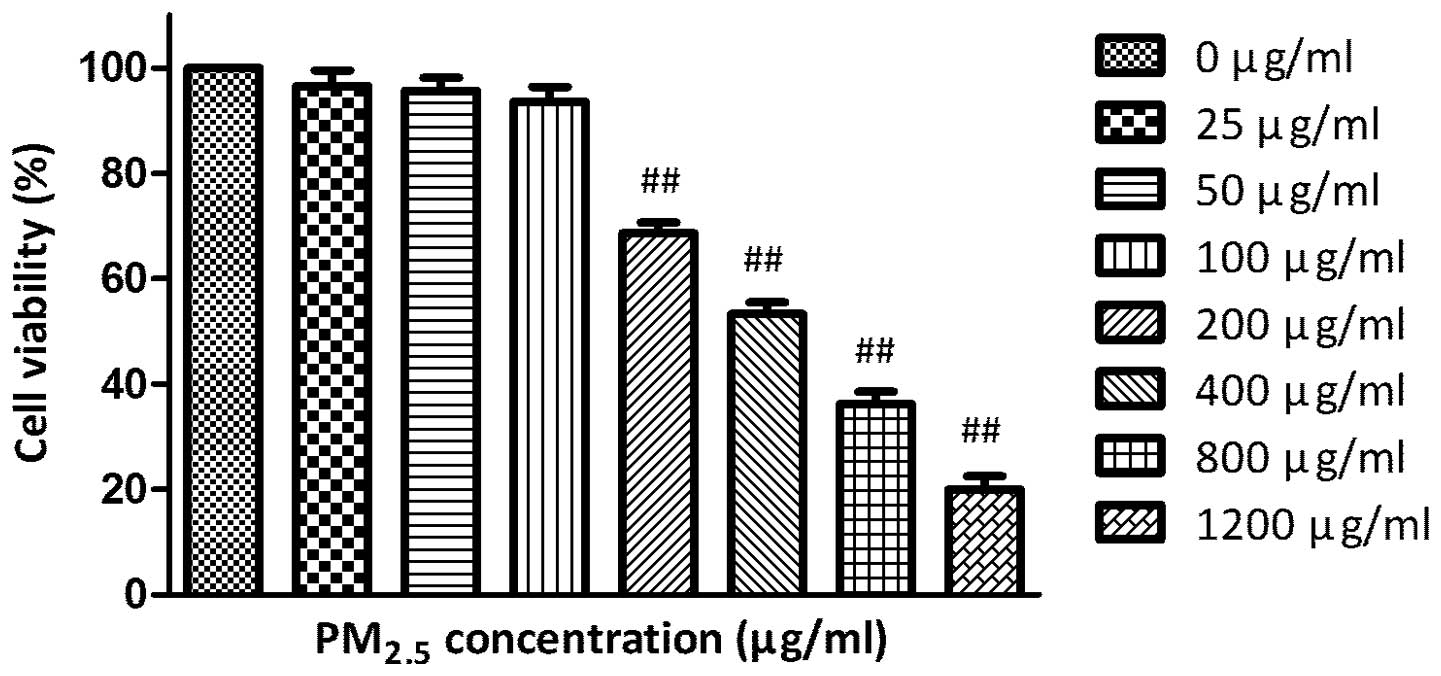
The MTT assay demonstrated that incubation with 0–1,200 μg/ml PM2.5 for 24 h decreased the A549 cells viability in a concentration-dependent manner (Fig. 1).

Figure 1

Viability of the cultured human A549 lung epithelial cells exposed to 0–1,200 μg/ml PM2.5 was determined by an MTT assay. The MTT assay revealed that incubation with 200–1,200 μg/ml PM2.5 for 24 h decreased the A549 cells viability in a concentration-dependent manner (##P<0.01 compared with A549 cells not exposed to PM2.5).

Effect of Rg1 on viability of A549 cells

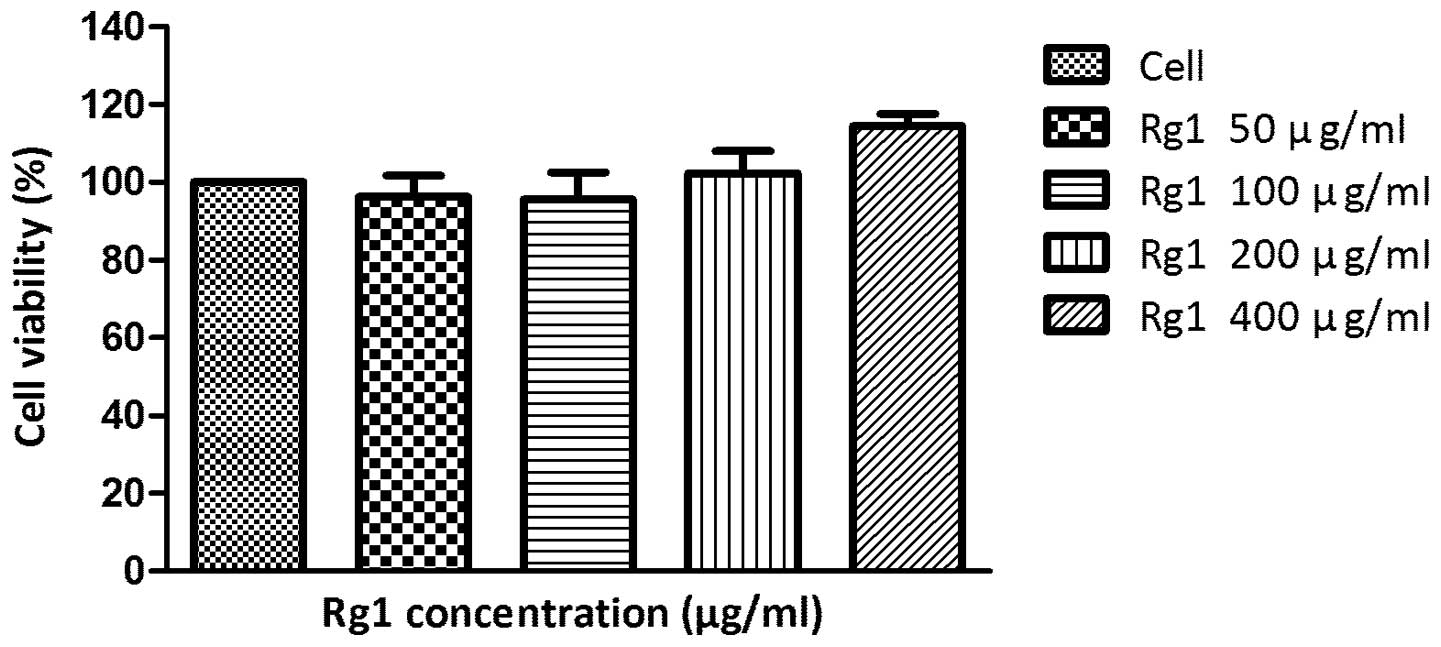
The MTT assay revealed that treatments with 50–800 μg/ml Rg1 for 24 h did not change the A549 cells viability significantly (Fig. 2).

Figure 2

Viability of the cultured human A549 lung epithelial cells incubated with Rg1 was determined by the MTT assay. MTT assay demonstrated that incubation with 50–400 μg/ml Rg1 for 24 h did not significantly change the A549 cells viability.

Effect of Rg1 on viability of A549 cells exposed to 200 μg/ml PM2.5

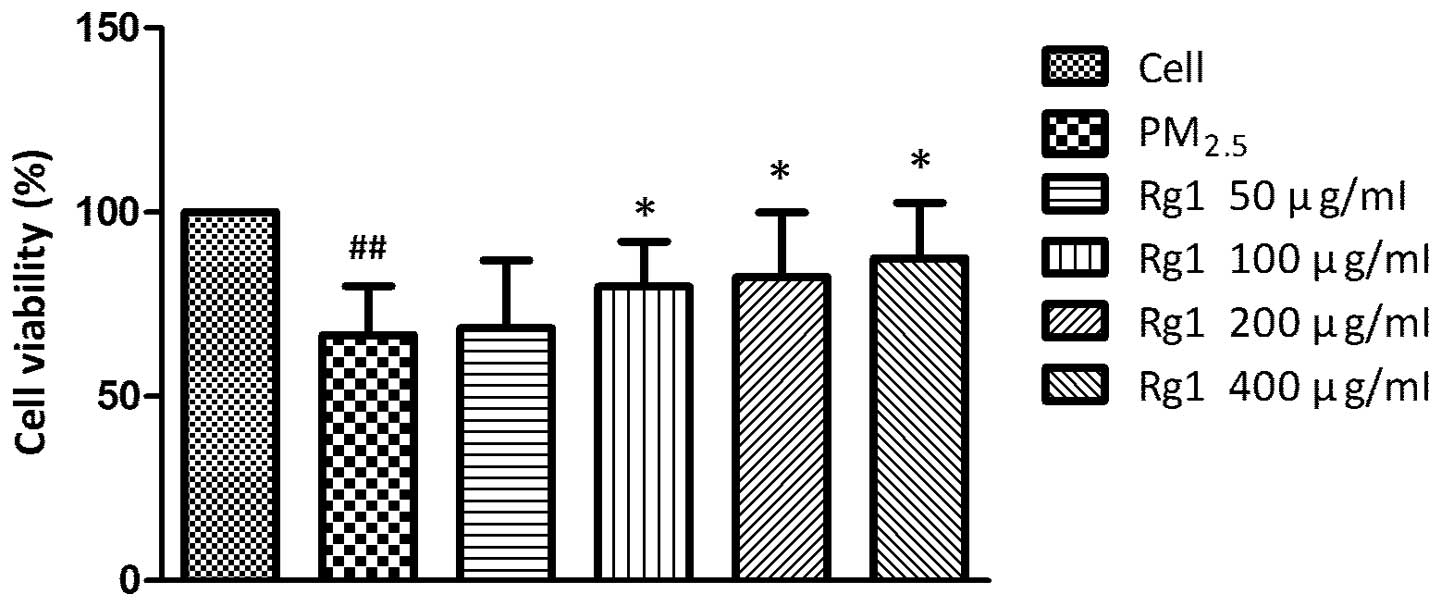
The MTT assay revealed that pretreatments with 50–400 μg/ml Rg1 for 1 h increased the viability of A549 cells exposed to 200 μg/ml PM2.5 in a dose-dependent manner (Fig. 3).

Figure 3

Effect of Rg1 on viability of cultured human A549 lung epithelial cells exposed to PM2.5. The MTT assay revealed that 200 μg/ml PM2.5 decreased the viability of the untreated cells compared with the untreated control cells (##P<0.01 compared with untreated control A549 cells), but pretreatments with 50–400 μg/ml Rg1 for 1 h increased the viability of the A549 cells exposed to PM2.5 in a dose-dependent manner (*P<0.05 compared with untreated A549 cells exposed to 200 μg/ml PM2.5).

Effect of Rg1 on LDH concentration in culture supernatants of A549 cells exposed to 200 μg/ml PM2.5

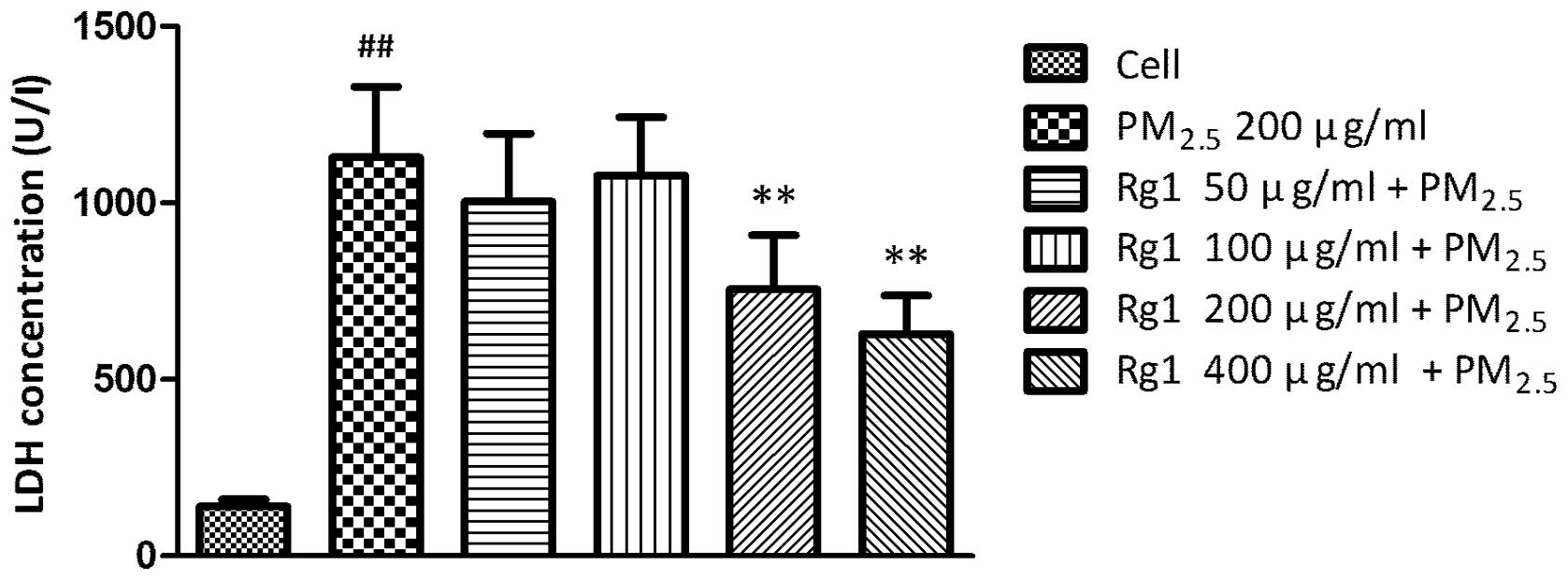
The level of LDH in cell-free culture supernatants significantly increased in untreated A549 cells exposed to PM2.5 (1129.944±199.428 U/l; P<0.01) compared with untreated control cells (140.248±20.771 U/l). Co-culture with 200 and 400 μg/ml Rg1 decreased PM2.5-stimulated LDH leakage to 755.858±153.423 U/l (P<0.01) and 629.738±108.065 U/l (P<0.01), respectively (Fig. 4).

Figure 4

Effect of Rg1 on the lactate dehydrogenase (LDH) concentration in culture supernatants of A549 cells exposed to 200 μg/ml PM2.5. PM2.5 increased the LDH release from the untreated cells compared with the untreated control cells (##P<0.01 compared with untreated control A549 cells), but co-culture with 200 and 400 μg/ml Rg1 decreased PM2.5-stimulated LDH leakage from cells significantly (**P<0.01 compared with untreated A549 cells exposed to 200 μg/ml PM2.5).

Effect of Rg1 on MDA concentration in A549 cells exposed to 200 μg/ml PM2.5

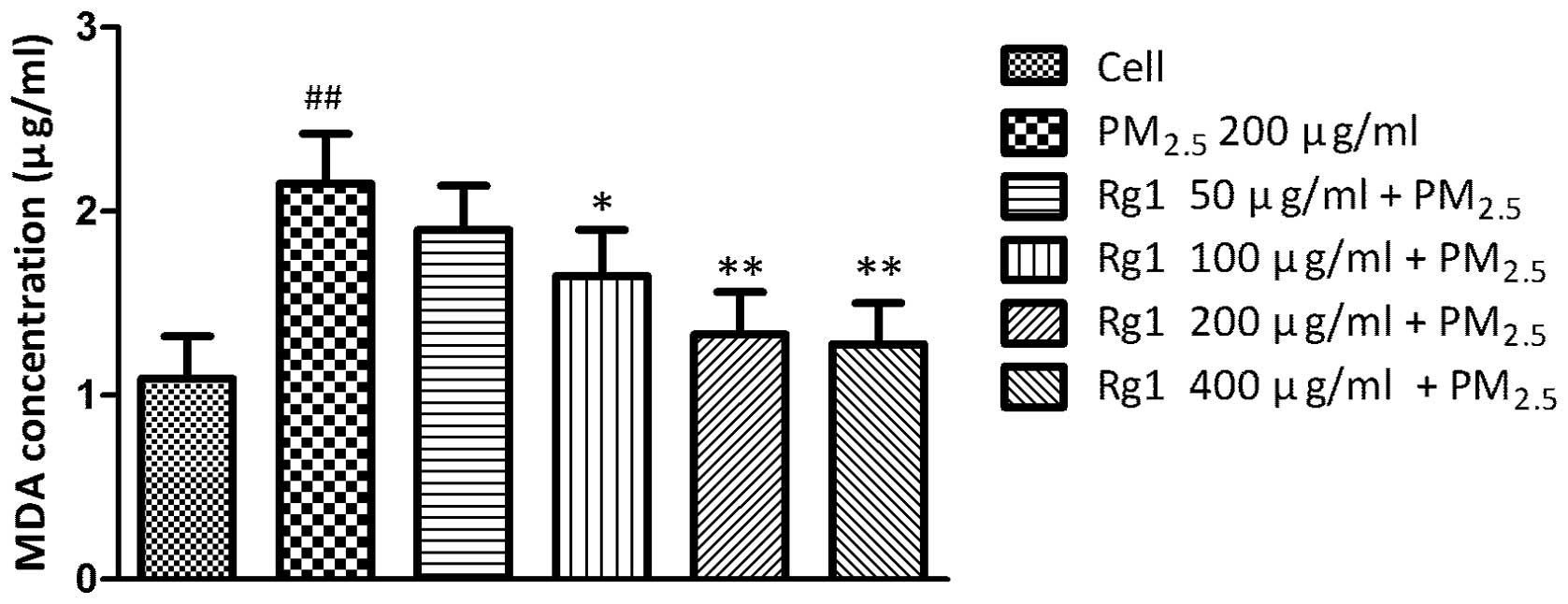
The level of the oxidative stress based on the MDA assay significantly increased in untreated A549 cells exposed to PM2.5 (2.15±0.27 μg/ml; P<0.01) compared with untreated control cells (1.09±0.23 μg/ml). Co-culture with 100, 200 and 400 μg/ml Rg1 decreased PM2.5-induced MDA production to 1.65±0.25 μg/ml (P<0.05), 1.33±0.23 μg/ml (P<0.01) and 1.28±0.22 μg/ml (P<0.01), respectively (Fig. 5).

Figure 5

Effect of Rg1 on malondialdehyde (MDA) concentration in the A549 cells exposed to 200 μg/ml PM2.5. PM2.5 increased the MDA production of the untreated cells compared with the untreated control cells (##P<0.01 compared with untreated control A549 cells), but co-culture with 100, 200 and 400 μg/ml Rg1 decreased PM2.5-stimulated MDA production of the cells significantly (*P<0.05 and **P<0.01 compared with untreated A549 cells exposed to 200 μg/ml PM2.5).

Discussion

In the present study, the 25–1,200 μg/ml of PM2.5 decreased the A549 cells viability in a dose-dependent manner, which was in accordance with previous studies (12,13). Since 200 μg/ml was the minimum effective dose of PM2.5, this dose was selected as the exposure concentration in the following assays. Ginsenoside Rg1 was a compound extracted from Panax ginseng and had been studied extensively. The MTT assay demonstrated that 50–400 μg/ml Rg1 did not alter the cell viability in A549 cells significantly. Although there were no previous studies on the viability of A549 cells co-incubated with Rg1, numerous studies indicated that Rg1 had no marked cytotoxic effect on fibroblasts (14) or neuroblasts (15). Doses of 50–400 μg/ml were selected as pretreatment concentrations of Rg1 in the following assays. While the A549 cells were pretreated with Rg1 for 1 h at concentrations of 50–400 μg/ml, followed by exposure to 200 μg/ml PM2.5, Rg1 at three concentrations of 100, 200 and 400 μg/ml was observed to be capable of increasing the cells viability significantly, which implied that Rg1 possessed a cytoprotective effect in order to antagonize the lesion from PM2.5.

The measurement of LDH in the culture supernatant as a result of leakage is an indicator of cell membrane integrity (16). In the present study, 200 μg/ml PM2.5 increased the level of LDH in the A549 cell culture supernatant compared with the control cells. However, 200 and 400 μg/ml Rg1 could decrease the LDH generation significantly in a concentration-dependent manner. These results indicated that Rg1 had inhibitory effects on the cytotoxicity induced by PM2.5.

The cellular level of MDA is a sensitive marker for oxidative damage, particularly lipid peroxidation and has been widely used (17). In the present study, the A549 cells exposed to PM2.5 produced more MDA than the control cells indicating that PM2.5 could induce more oxidative stress. This result was in accordance with a previous study (18). Rg1 had been proven to have an effect on antioxidative stress by inhibiting MDA production (19,20). To the best of our knowledge, the present study, for the first time, observed that 100, 200 and 400 μg/ml Rg1 could reduce the MDA level of the A549 cells exposed to PM2.5 in a concentration-dependent manner. These results indicated that Rg1 had the potential to protect the alveolar epithelium from oxidative damage induced by PM2.5.

The present study preliminarily implies that ginsenoside Rg1 is a promising candidate drug to antagonize the harmful effects of PM2.5 on alveolar epithelium cells, but the usefulness of Rg1 for this purpose requires further investigation, in particular, clinical studies.

Acknowledgements

This study was supported by the National Natural Science Foundation of China (no.81102680) and the China Postdoctoral Science Foundation (no. 20100470524 and 20110490548).

References

1 

Valavanidis A, Fiotakis K and Vlachogianni T: Airborne particulate matter and human health: toxicological assessment and importance of size and composition of particles for oxidative damage and carcinogenic mechanisms. J Environ Sci Health C Environ Carcinog Ecotoxicol Rev. 26:339–362. 2008. View Article : Google Scholar

2 

Sacks JD, Stanek LW, Luben TJ, et al: Particulate matter-induced health effects: who is susceptible? Environ Health Perspect. 119:446–454. 2011. View Article : Google Scholar : PubMed/NCBI

3 

Polichetti G, Cocco S, Spinali A, Trimarco V and Nunziata A: Effects of particulate matter (PM(10), PM(2.5) and PM(1)) on the cardiovascular system. Toxicology. 261:1–8. 2009. View Article : Google Scholar : PubMed/NCBI

4 

Chen CF, Chiou WF and Zhang JT: Comparison of the pharmacological effects of Panax ginseng and Panax quinquefolium. Acta Pharmacol Sin. 29:1103–1108. 2008. View Article : Google Scholar

5 

Xiang YZ, Shang HC, Gao XM and Zhang BL: A comparison of the ancient use of ginseng in traditional Chinese medicine with modern pharmacological experiments and clinical trials. Phytother Res. 22:851–858. 2008. View Article : Google Scholar : PubMed/NCBI

6 

Lu JM, Yao Q and Chen C: Ginseng compounds: an update on their molecular mechanisms and medical applications. Curr Vasc Pharmacol. 7:293–302. 2009. View Article : Google Scholar : PubMed/NCBI

7 

Shen L, Han JZ, Li C, et al: Protective effect of ginsenoside Rg1 on glutamate-induced lung injury. Acta Pharmacol Sin. 28:392–397. 2007. View Article : Google Scholar : PubMed/NCBI

8 

Li CP, Qin G, Shi RZ, Zhang MS and Lv JY: Ginsenoside Rg1 reduces toxicity of PM(2.5) on human umbilical vein endothelial cells by upregulating intracellular antioxidative state. Environ Toxicol Pharmacol. 35:21–29. 2013. View Article : Google Scholar : PubMed/NCBI

9 

Kouassi KS, Billet S, Garcon G, et al: Oxidative damage induced in A549 cells by physically and chemically characterized air particulate matter (PM2.5) collected in Abidjan, Côte d’Ivoire. J Appl Toxicol. 30:310–320. 2010.PubMed/NCBI

10 

Imrich A, Ning Y and Kobzik L: Insoluble components of concentrated air particles mediate alveolar macrophage responses in vitro. Toxicol Appl Pharmacol. 167:140–150. 2000. View Article : Google Scholar : PubMed/NCBI

11 

Carmichael J, DeGraff WG, Gazdar AF, Minna JD and Mitchell JB: Evaluation of a tetrazolium-based semiautomated colorimetric assay: assessment of chemosensitivity testing. Cancer Res. 47:936–942. 1987.PubMed/NCBI

12 

Akhtar US, McWhinney RD, Rastogi N, Abbatt JP, Evans GJ and Scott JA: Cytotoxic and proinflammatory effects of ambient and source-related particulate matter (PM) in relation to the production of reactive oxygen species (ROS) and cytokine adsorption by particles. Inhal Toxicol. 22(Suppl 2): 37–47. 2010.PubMed/NCBI

13 

Gualtieri M, Mantecca P, Corvaja V, et al: Winter fine particulate matter from Milan induces morphological and functional alterations in human pulmonary epithelial cells (A549). Toxicol Lett. 188:52–62. 2009. View Article : Google Scholar

14 

Park S, Ahn IS, Kwon DY, Ko BS and Jun WK: Ginsenosides Rb1 and Rg1 suppress triglyceride accumulation in 3T3-L1 adipocytes and enhance beta-cell insulin secretion and viability in Min6 cells via PKA-dependent pathways. Biosci Biotechnol Biochem. 72:2815–2823. 2008. View Article : Google Scholar : PubMed/NCBI

15 

Du X, Xu H, Jiang H and Xie J: Akt/Nrf2 activated upregulation of heme oxygenase-1 involves in the role of Rg1 against ferrous iron-induced neurotoxicity in SK-N-SH cells. Neurotox Res. 24:71–79. 2013. View Article : Google Scholar : PubMed/NCBI

16 

Fautz R, Husein B and Hechenberger C: Application of the neutral red assay (NR assay) to monolayer cultures of primary hepatocytes: rapid colorimetric viability determination for the unscheduled DNA synthesis test (UDS). Mutat Res. 253:173–179. 1991. View Article : Google Scholar : PubMed/NCBI

17 

de Zwart LL, Meerman JH, Commandeur JN and Vermeulen NP: Biomarkers of free radical damage applications in experimental animals and in humans. Free Radic Biol Med. 26:202–226. 1999.PubMed/NCBI

18 

Aust AE, Ball JC, Hu AA, et al: Particle characteristics responsible for effects on human lung epithelial cells. Res Rep Health Eff Inst. 110:1–65; discussion 67–76. 2002.PubMed/NCBI

19 

Deng HL and Zhang JT: Anti-lipid peroxilative effect of ginsenoside Rb1 and Rg1. Chin Med J (Engl). 104:395–398. 1991.PubMed/NCBI

20 

Yu SH, Huang HY, Korivi M, et al: Oral Rg1 supplementation strengthens antioxidant defense system against exercise-induced oxidative stress in rat skeletal muscles. J Int Soc Sports Nutr. 9:232012. View Article : Google Scholar

Related Articles

  • Abstract
  • View
  • Download
  • Twitter
Copy and paste a formatted citation
Spandidos Publications style
Zhang ZG, Niu XY, He XJ and Shu J: Ginsenoside Rg1 reduces toxicity of fine particulate matter on human alveolar epithelial cells: A preliminary observation. Mol Med Rep 9: 989-992, 2014.
APA
Zhang, Z., Niu, X., He, X., & Shu, J. (2014). Ginsenoside Rg1 reduces toxicity of fine particulate matter on human alveolar epithelial cells: A preliminary observation. Molecular Medicine Reports, 9, 989-992. https://doi.org/10.3892/mmr.2013.1870
MLA
Zhang, Z., Niu, X., He, X., Shu, J."Ginsenoside Rg1 reduces toxicity of fine particulate matter on human alveolar epithelial cells: A preliminary observation". Molecular Medicine Reports 9.3 (2014): 989-992.
Chicago
Zhang, Z., Niu, X., He, X., Shu, J."Ginsenoside Rg1 reduces toxicity of fine particulate matter on human alveolar epithelial cells: A preliminary observation". Molecular Medicine Reports 9, no. 3 (2014): 989-992. https://doi.org/10.3892/mmr.2013.1870
Copy and paste a formatted citation
x
Spandidos Publications style
Zhang ZG, Niu XY, He XJ and Shu J: Ginsenoside Rg1 reduces toxicity of fine particulate matter on human alveolar epithelial cells: A preliminary observation. Mol Med Rep 9: 989-992, 2014.
APA
Zhang, Z., Niu, X., He, X., & Shu, J. (2014). Ginsenoside Rg1 reduces toxicity of fine particulate matter on human alveolar epithelial cells: A preliminary observation. Molecular Medicine Reports, 9, 989-992. https://doi.org/10.3892/mmr.2013.1870
MLA
Zhang, Z., Niu, X., He, X., Shu, J."Ginsenoside Rg1 reduces toxicity of fine particulate matter on human alveolar epithelial cells: A preliminary observation". Molecular Medicine Reports 9.3 (2014): 989-992.
Chicago
Zhang, Z., Niu, X., He, X., Shu, J."Ginsenoside Rg1 reduces toxicity of fine particulate matter on human alveolar epithelial cells: A preliminary observation". Molecular Medicine Reports 9, no. 3 (2014): 989-992. https://doi.org/10.3892/mmr.2013.1870
Follow us
  • Twitter
  • LinkedIn
  • Facebook
About
  • Spandidos Publications
  • Careers
  • Cookie Policy
  • Privacy Policy
How can we help?
  • Help
  • Live Chat
  • Contact
  • Email to our Support Team