Spandidos Publications Logo
  • About
    • About Spandidos
    • Aims and Scopes
    • Abstracting and Indexing
    • Editorial Policies
    • Reprints and Permissions
    • Job Opportunities
    • Terms and Conditions
    • Contact
  • Journals
    • All Journals
    • Oncology Letters
      • Oncology Letters
      • Information for Authors
      • Editorial Policies
      • Editorial Board
      • Aims and Scope
      • Abstracting and Indexing
      • Bibliographic Information
      • Archive
    • International Journal of Oncology
      • International Journal of Oncology
      • Information for Authors
      • Editorial Policies
      • Editorial Board
      • Aims and Scope
      • Abstracting and Indexing
      • Bibliographic Information
      • Archive
    • Molecular and Clinical Oncology
      • Molecular and Clinical Oncology
      • Information for Authors
      • Editorial Policies
      • Editorial Board
      • Aims and Scope
      • Abstracting and Indexing
      • Bibliographic Information
      • Archive
    • Experimental and Therapeutic Medicine
      • Experimental and Therapeutic Medicine
      • Information for Authors
      • Editorial Policies
      • Editorial Board
      • Aims and Scope
      • Abstracting and Indexing
      • Bibliographic Information
      • Archive
    • International Journal of Molecular Medicine
      • International Journal of Molecular Medicine
      • Information for Authors
      • Editorial Policies
      • Editorial Board
      • Aims and Scope
      • Abstracting and Indexing
      • Bibliographic Information
      • Archive
    • Biomedical Reports
      • Biomedical Reports
      • Information for Authors
      • Editorial Policies
      • Editorial Board
      • Aims and Scope
      • Abstracting and Indexing
      • Bibliographic Information
      • Archive
    • Oncology Reports
      • Oncology Reports
      • Information for Authors
      • Editorial Policies
      • Editorial Board
      • Aims and Scope
      • Abstracting and Indexing
      • Bibliographic Information
      • Archive
    • Molecular Medicine Reports
      • Molecular Medicine Reports
      • Information for Authors
      • Editorial Policies
      • Editorial Board
      • Aims and Scope
      • Abstracting and Indexing
      • Bibliographic Information
      • Archive
    • World Academy of Sciences Journal
      • World Academy of Sciences Journal
      • Information for Authors
      • Editorial Policies
      • Editorial Board
      • Aims and Scope
      • Abstracting and Indexing
      • Bibliographic Information
      • Archive
    • International Journal of Functional Nutrition
      • International Journal of Functional Nutrition
      • Information for Authors
      • Editorial Policies
      • Editorial Board
      • Aims and Scope
      • Abstracting and Indexing
      • Bibliographic Information
      • Archive
    • International Journal of Epigenetics
      • International Journal of Epigenetics
      • Information for Authors
      • Editorial Policies
      • Editorial Board
      • Aims and Scope
      • Abstracting and Indexing
      • Bibliographic Information
      • Archive
    • Medicine International
      • Medicine International
      • Information for Authors
      • Editorial Policies
      • Editorial Board
      • Aims and Scope
      • Abstracting and Indexing
      • Bibliographic Information
      • Archive
  • Articles
  • Information
    • Information for Authors
    • Information for Reviewers
    • Information for Librarians
    • Information for Advertisers
    • Conferences
  • Language Editing
Spandidos Publications Logo
  • About
    • About Spandidos
    • Aims and Scopes
    • Abstracting and Indexing
    • Editorial Policies
    • Reprints and Permissions
    • Job Opportunities
    • Terms and Conditions
    • Contact
  • Journals
    • All Journals
    • Biomedical Reports
      • Information for Authors
      • Editorial Policies
      • Editorial Board
      • Aims and Scope
      • Abstracting and Indexing
      • Bibliographic Information
      • Archive
    • Experimental and Therapeutic Medicine
      • Information for Authors
      • Editorial Policies
      • Editorial Board
      • Aims and Scope
      • Abstracting and Indexing
      • Bibliographic Information
      • Archive
    • International Journal of Epigenetics
      • Information for Authors
      • Editorial Policies
      • Editorial Board
      • Aims and Scope
      • Abstracting and Indexing
      • Bibliographic Information
      • Archive
    • International Journal of Functional Nutrition
      • Information for Authors
      • Editorial Policies
      • Editorial Board
      • Aims and Scope
      • Abstracting and Indexing
      • Bibliographic Information
      • Archive
    • International Journal of Molecular Medicine
      • Information for Authors
      • Editorial Policies
      • Editorial Board
      • Aims and Scope
      • Abstracting and Indexing
      • Bibliographic Information
      • Archive
    • International Journal of Oncology
      • Information for Authors
      • Editorial Policies
      • Editorial Board
      • Aims and Scope
      • Abstracting and Indexing
      • Bibliographic Information
      • Archive
    • Medicine International
      • Information for Authors
      • Editorial Policies
      • Editorial Board
      • Aims and Scope
      • Abstracting and Indexing
      • Bibliographic Information
      • Archive
    • Molecular and Clinical Oncology
      • Information for Authors
      • Editorial Policies
      • Editorial Board
      • Aims and Scope
      • Abstracting and Indexing
      • Bibliographic Information
      • Archive
    • Molecular Medicine Reports
      • Information for Authors
      • Editorial Policies
      • Editorial Board
      • Aims and Scope
      • Abstracting and Indexing
      • Bibliographic Information
      • Archive
    • Oncology Letters
      • Information for Authors
      • Editorial Policies
      • Editorial Board
      • Aims and Scope
      • Abstracting and Indexing
      • Bibliographic Information
      • Archive
    • Oncology Reports
      • Information for Authors
      • Editorial Policies
      • Editorial Board
      • Aims and Scope
      • Abstracting and Indexing
      • Bibliographic Information
      • Archive
    • World Academy of Sciences Journal
      • Information for Authors
      • Editorial Policies
      • Editorial Board
      • Aims and Scope
      • Abstracting and Indexing
      • Bibliographic Information
      • Archive
  • Articles
  • Information
    • For Authors
    • For Reviewers
    • For Librarians
    • For Advertisers
    • Conferences
  • Language Editing
Login Register Submit
  • This site uses cookies
  • You can change your cookie settings at any time by following the instructions in our Cookie Policy. To find out more, you may read our Privacy Policy.

    I agree
Search articles by DOI, keyword, author or affiliation
Search
Advanced Search
presentation
Molecular Medicine Reports
Join Editorial Board Propose a Special Issue
Print ISSN: 1791-2997 Online ISSN: 1791-3004
Journal Cover
2014-March Volume 9 Issue 3

Full Size Image

Sign up for eToc alerts
Recommend to Library

Journals

International Journal of Molecular Medicine

International Journal of Molecular Medicine

International Journal of Molecular Medicine is an international journal devoted to molecular mechanisms of human disease.

International Journal of Oncology

International Journal of Oncology

International Journal of Oncology is an international journal devoted to oncology research and cancer treatment.

Molecular Medicine Reports

Molecular Medicine Reports

Covers molecular medicine topics such as pharmacology, pathology, genetics, neuroscience, infectious diseases, molecular cardiology, and molecular surgery.

Oncology Reports

Oncology Reports

Oncology Reports is an international journal devoted to fundamental and applied research in Oncology.

Experimental and Therapeutic Medicine

Experimental and Therapeutic Medicine

Experimental and Therapeutic Medicine is an international journal devoted to laboratory and clinical medicine.

Oncology Letters

Oncology Letters

Oncology Letters is an international journal devoted to Experimental and Clinical Oncology.

Biomedical Reports

Biomedical Reports

Explores a wide range of biological and medical fields, including pharmacology, genetics, microbiology, neuroscience, and molecular cardiology.

Molecular and Clinical Oncology

Molecular and Clinical Oncology

International journal addressing all aspects of oncology research, from tumorigenesis and oncogenes to chemotherapy and metastasis.

World Academy of Sciences Journal

World Academy of Sciences Journal

Multidisciplinary open-access journal spanning biochemistry, genetics, neuroscience, environmental health, and synthetic biology.

International Journal of Functional Nutrition

International Journal of Functional Nutrition

Open-access journal combining biochemistry, pharmacology, immunology, and genetics to advance health through functional nutrition.

International Journal of Epigenetics

International Journal of Epigenetics

Publishes open-access research on using epigenetics to advance understanding and treatment of human disease.

Medicine International

Medicine International

An International Open Access Journal Devoted to General Medicine.

Journal Cover
2014-March Volume 9 Issue 3

Full Size Image

Sign up for eToc alerts
Recommend to Library

  • Article
  • Citations
    • Cite This Article
    • Download Citation
    • Create Citation Alert
    • Remove Citation Alert
    • Cited By
  • Similar Articles
    • Related Articles (in Spandidos Publications)
    • Similar Articles (Google Scholar)
    • Similar Articles (PubMed)
  • Download PDF
  • Download XML
  • View XML
Article

Increased expression of herpesvirus entry mediator in 1,25‑dihydroxyvitamin D3‑treated mouse bone marrow‑derived dendritic cells promotes the generation of CD4+CD25+Foxp3+ regulatory T cells

  • Authors:
    • Yi Huang
    • Yan Zhao
    • Xuemei Ran
    • Changzheng Wang
  • View Affiliations / Copyright

    Affiliations: Institute of Respiratory Diseases, Xinqiao Hospital, The Third Military Medical University, Chongqing 430037, P.R. China, Department of Respiratory Medicine, Second Affiliated Hospital, Chongqing Medical University, Chongqing 404000, P.R. China
  • Pages: 813-818
    |
    Published online on: December 18, 2013
       https://doi.org/10.3892/mmr.2013.1874
  • Expand metrics +
Metrics: Total Views: 0 (Spandidos Publications: | PMC Statistics: )
Metrics: Total PDF Downloads: 0 (Spandidos Publications: | PMC Statistics: )
Cited By (CrossRef): 0 citations Loading Articles...

This article is mentioned in:


Abstract

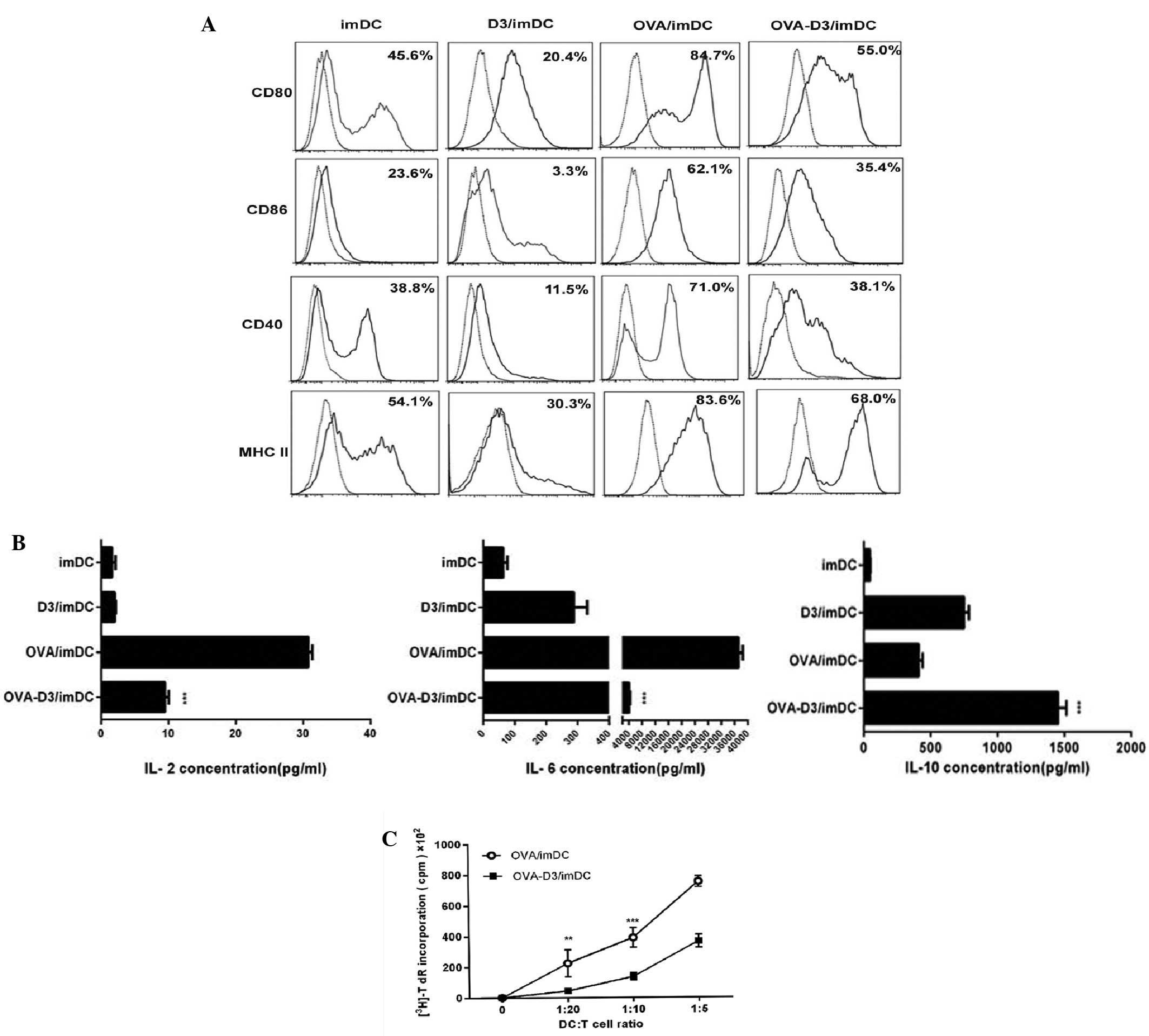
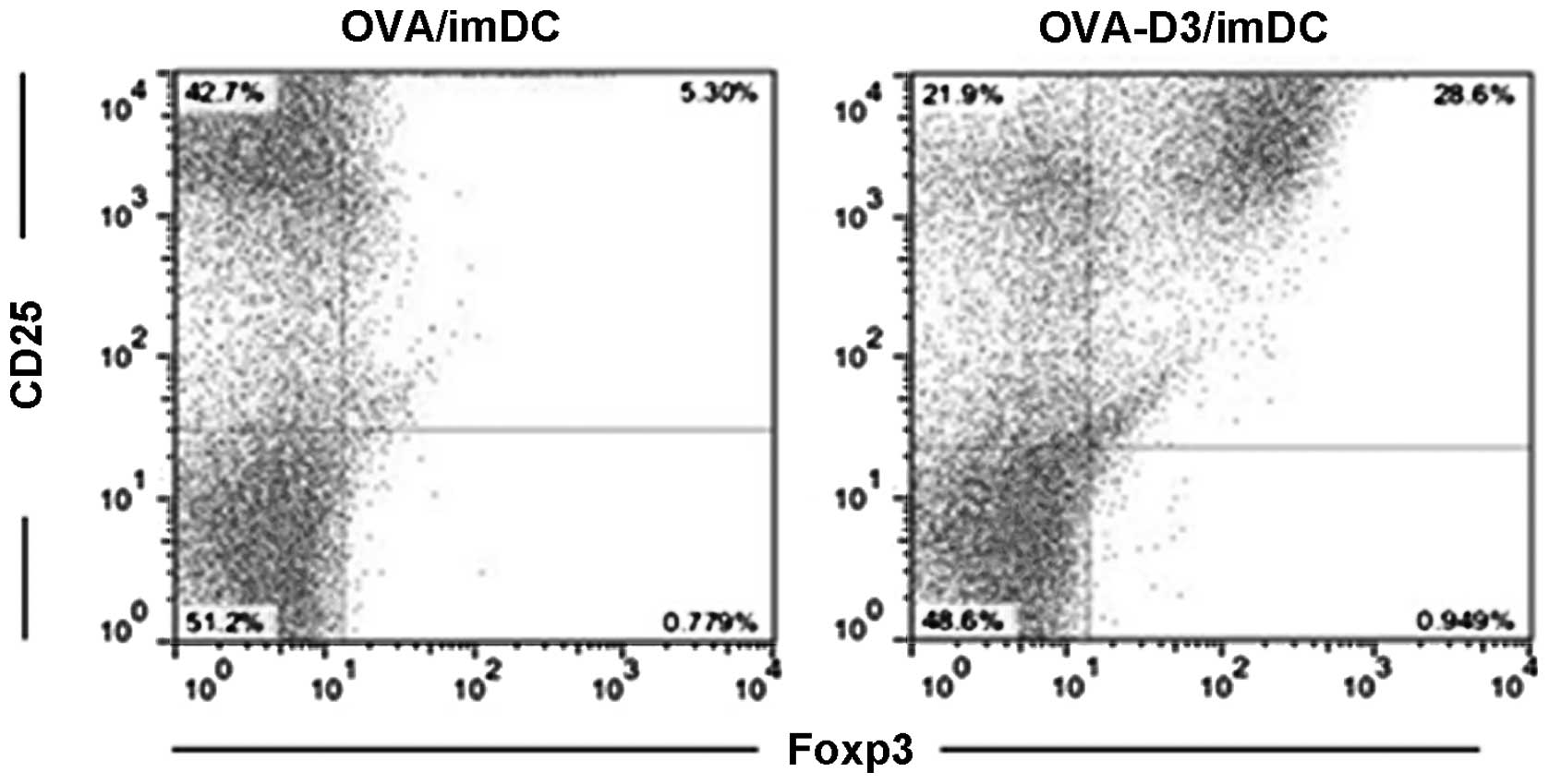
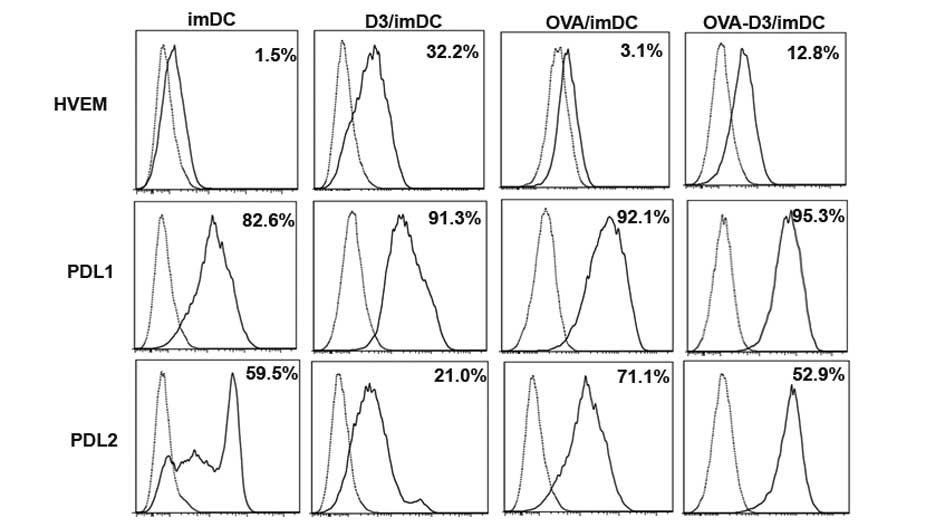
Dendritic cells (DCs) can initiate immune responses or induce immune tolerance. 1,25-dihydroxyvitamin D3 [1,25(OH)2D3] is a secosteroid hormone that can induce tolerogenic dendritic cells favoring the induction of regulatory T cells (Treg). The present study revealed a tolerogenic effect of 1,25(OH)2D3 on the phenotype and function of ovalbumin (OVA)‑activated mouse bone marrow‑derived DCs. Three inhibitory molecules associated with tolerogenic DCs, programmed death‑ligand-1 (PD‑L1), PD‑L2 and herpesvirus entry mediator (HVEM) and the expression of co‑stimulatory molecules (CD80, CD86 and CD40) on 1,25(OH)2D3‑treated DCs were examined. The levels of interleukin (IL)‑2, IL‑6 and IL‑10 secreted by 1,25(OH)2D3‑treated DCs were analyzed. The capability of 1,25(OH)2D3‑treated DCs to induce CD4+CD25+Foxp3+ Treg and the stimulation of allogeneic CD4+ T‑cell proliferation in mixed lymphocyte reaction (MLR) was studied. 1,25(OH)2D3‑treated DCs induced up to 21.0‑fold upregulation of the HVEM expression and 4.1‑fold enhancement of the HVEM expression upon activation with OVA [OVA‑D3/immature (im)DCs]. PD‑L1 was not affected by 1,25(OH)2D3‑treated DCs and downregulated PD‑L2 expression on 1,25(OH)2D3‑treated DCs and OVA‑D3/imDC. The expression of co‑stimulatory molecules (CD80, CD86 and CD40) was downregulated in 1,25(OH)2D3‑treated DCs and OVA‑D3/imDC. Furthermore, 1,25(OH)2D3‑treated DCs secreted much higher levels of IL‑10, however lower levels of IL‑2 and IL‑6 compared with the activated control DCs. Together with this pattern of cytokines, 1,25(OH)2D3‑treated DCs exhibited low allogeneic CD4+ T‑cell stimulatory activity and a higher number of CD4+CD25+Foxp3+ cells in the MLR cultures but not in the activated control DCs. These findings indicate that 1,25(OH)2D3 possesses the immunosuppressive properties by upregulating the expression of the inhibitory molecules, HVEM, which may be therapeutically useful in controlling chronic immune and/or inflammatory diseases.
View Figures

Figure 1

Figure 2

Figure 3

View References

1 

Casteels K, Bouillon R, Waer M and Mathieu C: Immunomodulatory effects of 1,25-dihydroxyvitamin D3. Curr Opin Nephrol Hypertens. 4:313–318. 1995. View Article : Google Scholar : PubMed/NCBI

2 

Carlberg C: Current understanding of the function of the nuclear vitamin D receptor in response to its natural and synthetic ligands. Recent Results Cancer Res. 164:29–42. 2003. View Article : Google Scholar : PubMed/NCBI

3 

Griffin MD, Xing N and Kumar R: Vitamin D and its analogs as regulators of immune activation and antigen presentation. Annu Rev Nutr. 23:117–145. 2003. View Article : Google Scholar : PubMed/NCBI

4 

Mathieu C and Adorini L: The coming of age of 1,25-dihydroxyvitamin D3 analogs as immunomodulatory agents. Trends Mol Med. 8:174–179. 2002. View Article : Google Scholar : PubMed/NCBI

5 

Adorini L: Immunomodulatory effects of vitamin D receptor ligands in autoimmune diseases. Int Immunopharmacol. 2:1017–1028. 2002. View Article : Google Scholar : PubMed/NCBI

6 

Adorini L: 1,25-Dihydroxyvitamin D3 analogs as potential therapies in transplantation. Curr Opin Investig Drugs. 3:1458–1463. 2002.PubMed/NCBI

7 

Deluca HF and Cantorna MT: Vitamin D: its role and uses in immunology. FASEB J. 15:2579–2585. 2001. View Article : Google Scholar : PubMed/NCBI

8 

Penna G and Adorini L: 1 Alpha,25-dihydroxyvitamin D3 inhibits differentiation, maturation, activation, and survival of dendritic cells leading to impaired alloreactive T cell activation. J Immunol. 164:2405–2411. 2000. View Article : Google Scholar

9 

Piemonti L, Monti P, Sironi M, et al: Vitamin D3 affects differentiation, maturation, and function of human monocyte-derived dendritic cells. J Immunol. 164:4443–4451. 2000. View Article : Google Scholar : PubMed/NCBI

10 

Griffin MD, Lutz WH, Phan VA, Bachman LA, McKean DJ and Kumar R: Potent inhibition of dendritic cell differentiation and maturation by vitamin D analogs. Biochem Biophys Res Commun. 270:701–708. 2000. View Article : Google Scholar : PubMed/NCBI

11 

van Halteren AG, van Etten E, de Jong EC, Bouillon R, Roep BO and Mathieu C: Redirection of human autoreactive T-cells Upon interaction with dendritic cells modulated by TX527, an analog of 1,25 dihydroxyvitamin D(3). Diabetes. 51:2119–2125. 2002.PubMed/NCBI

12 

Gauzzi MC, Purificato C, Donato K, et al: Suppressive effect of 1alpha,25-dihydroxyvitamin D3 on type I IFN-mediated monocyte differentiation into dendritic cells: impairment of functional activities and chemotaxis. J Immunol. 174:270–276. 2005. View Article : Google Scholar : PubMed/NCBI

13 

Dai H, Zhu H, Lei P, et al: Programmed death-1 signaling is essential for the skin allograft protection by alternatively activated dendritic cell infusion in mice. Transplantation. 88:864–873. 2009. View Article : Google Scholar : PubMed/NCBI

14 

Wang L, Pino-Lagos K, de Vries VC, Guleria I, Sayegh MH and Noelle RJ: Programmed death 1 ligand signaling regulates the generation of adaptive Foxp3+CD4+ regulatory T cells. Proc Natl Acad Sci USA. 105:9331–9336. 2008.PubMed/NCBI

15 

Chen C, Qu QX, Huang JA, et al: Expression of programmed-death receptor ligands 1 and 2 may contribute to the poor stimulatory potential of murine immature dendritic cells. Immunobiology. 212:159–165. 2007. View Article : Google Scholar : PubMed/NCBI

16 

Kwon BS, Tan KB, Ni J, et al: A newly identified member of the tumor necrosis factor receptor superfamily with a wide tissue distribution and involvement in lymphocyte activation. J Biol Chem. 272:14272–14276. 1997. View Article : Google Scholar : PubMed/NCBI

17 

Morel Y, Schiano de Colella JM, Harrop J, et al: Reciprocal expression of the TNF family receptor herpes virus entry mediator and its ligand LIGHT on activated T cells: LIGHT down-regulates its own receptor. J Immunol. 165:4397–4404. 2000. View Article : Google Scholar

18 

Jung HW, La SJ, Kim JY, et al: High levels of soluble herpes virus entry mediator in sera of patients with allergic and autoimmune diseases. Exp Mol Med. 35:501–508. 2003. View Article : Google Scholar : PubMed/NCBI

19 

Wang Y, Subudhi SK, Anders RA, et al: The role of herpesvirus entry mediator as a negative regulator of T cell-mediated responses. J Clin Invest. 115:711–717. 2005. View Article : Google Scholar : PubMed/NCBI

20 

Sedy JR, Gavrieli M, Potter KG, et al: B and T lymphocyte attenuator regulates T cell activation through interaction with herpesvirus entry mediator. Nat Immunol. 6:90–98. 2005. View Article : Google Scholar : PubMed/NCBI

21 

Cai G, Wang H, Qin Q, et al: Amelioration of myocarditis by HVEM-overexpressing dendritic cells through induction of IL-10-producing cells. Cardiovasc Res. 84:425–433. 2009. View Article : Google Scholar : PubMed/NCBI

22 

Zhang M, Tang H, Guo Z, et al: Splenic stroma drives mature dendritic cells to differentiate into regulatory dendritic cells. Nat Immunol. 5:1124–1133. 2004. View Article : Google Scholar : PubMed/NCBI

23 

Latchman Y, Wood CR, Chernova T, et al: PD-L2 is a second ligand for PD-1 and inhibits T cell activation. Nat Immunol. 2:261–268. 2001. View Article : Google Scholar : PubMed/NCBI

24 

Freeman GJ, Long AJ, Iwai Y, et al: Engagement of the PD-1 immunoinhibitory receptor by a novel B7 family member leads to negative regulation of lymphocyte activation. J Exp Med. 192:1027–1034. 2000. View Article : Google Scholar : PubMed/NCBI

25 

Kaliński P, Hilkens CM, Wierenga EA and Kapsenberg ML: T-cell priming by type-1 and type-2 polarized dendritic cells: the concept of a third signal. Immunology Today. 20:561–567. 1999.PubMed/NCBI

26 

Lutz MB and Schuler G: Immature, semi-mature and fully mature dendritic cells: which signals induce tolerance or immunity? Trends Immunol. 23:445–449. 2002. View Article : Google Scholar : PubMed/NCBI

27 

Anderson AE, Swan DJ, Sayers BL, et al: LPS activation is required for migratory activity and antigen presentation by tolerogenic dendritic cells. J Leukoc Biol. 85:243–250. 2009. View Article : Google Scholar : PubMed/NCBI

28 

Alroy I, Towers TL and Freedman LP: Transcriptional repression of the interleukin-2 gene by vitamin D3: direct inhibition of NFATp/AP-1 complex formation by a nuclear hormone receptor. Mol Cell Biol. 15:5789–5799. 1995.PubMed/NCBI

29 

Wölfle SJ, Strebovsky J, Bartz H, et al: PD-L1 expression on tolerogenic APCs is controlled by STAT-3. Eur J Immunol. 41:413–424. 2011.PubMed/NCBI

30 

Unger WW, Laban S, Kleijwegt FS, van der Slik AR and Roep BO: Induction of Treg by monocyte-derived DC modulated by vitamin D3 or dexamethasone: differential role for PD-L1. Eur J Immunol. 39:3147–3159. 2009. View Article : Google Scholar : PubMed/NCBI

31 

Kuipers H, Muskens F, Willart M, et al: Contribution of the PD-1 ligands/PD-1 signaling pathway to dendritic cell-mediated CD4+ T cell activation. Eur J Immunol. 36:2472–2482. 2006. View Article : Google Scholar : PubMed/NCBI

32 

Sadeghi K, Wessner B, Laggner U, et al: Vitamin D3 down-regulates monocyte TLR expression and triggers hyporesponsiveness to pathogen-associated molecular patterns. Eur J Immunol. 36:361–370. 2006. View Article : Google Scholar : PubMed/NCBI

33 

Hewison M, Freeman L, Hughes SV, et al: Differential regulation of vitamin D receptor and its ligand in human monocyte-derived dendritic cells. J Immunol. 170:5382–5390. 2003. View Article : Google Scholar : PubMed/NCBI

34 

Dong X, Craig T, Xing N, et al: Direct transcriptional regulation of RelB by 1alpha,25-dihydroxyvitamin D3 and its analogs: physiologic and therapeutic implications for dendritic cell function. J Biol Chem. 278:49378–49385. 2003. View Article : Google Scholar : PubMed/NCBI

35 

Griffin MD, Lutz W, Phan VA, Bachman LA, McKean DJ and Kumar R: Dendritic cell modulation by 1alpha,25 dihydroxyvitamin D3 and its analogs: a vitamin D receptor-dependent pathway that promotes a persistent state of immaturity in vitro and in vivo. Proc Natl Acad Sci USA. 98:6800–6805. 2001. View Article : Google Scholar : PubMed/NCBI

36 

Szeles L, Keresztes G, Töröcsik D, et al: 1,25-dihydroxyvitamin D3 is an autonomous regulator of the transcriptional changes leading to a tolerogenic dendritic cell phenotype. J Immunol. 182:2074–2083. 2009. View Article : Google Scholar : PubMed/NCBI

Related Articles

  • Abstract
  • View
  • Download
  • Twitter
Copy and paste a formatted citation
Spandidos Publications style
Huang Y, Zhao Y, Ran X and Wang C: Increased expression of herpesvirus entry mediator in 1,25‑dihydroxyvitamin D3‑treated mouse bone marrow‑derived dendritic cells promotes the generation of CD4+CD25+Foxp3+ regulatory T cells. Mol Med Rep 9: 813-818, 2014.
APA
Huang, Y., Zhao, Y., Ran, X., & Wang, C. (2014). Increased expression of herpesvirus entry mediator in 1,25‑dihydroxyvitamin D3‑treated mouse bone marrow‑derived dendritic cells promotes the generation of CD4+CD25+Foxp3+ regulatory T cells. Molecular Medicine Reports, 9, 813-818. https://doi.org/10.3892/mmr.2013.1874
MLA
Huang, Y., Zhao, Y., Ran, X., Wang, C."Increased expression of herpesvirus entry mediator in 1,25‑dihydroxyvitamin D3‑treated mouse bone marrow‑derived dendritic cells promotes the generation of CD4+CD25+Foxp3+ regulatory T cells". Molecular Medicine Reports 9.3 (2014): 813-818.
Chicago
Huang, Y., Zhao, Y., Ran, X., Wang, C."Increased expression of herpesvirus entry mediator in 1,25‑dihydroxyvitamin D3‑treated mouse bone marrow‑derived dendritic cells promotes the generation of CD4+CD25+Foxp3+ regulatory T cells". Molecular Medicine Reports 9, no. 3 (2014): 813-818. https://doi.org/10.3892/mmr.2013.1874
Copy and paste a formatted citation
x
Spandidos Publications style
Huang Y, Zhao Y, Ran X and Wang C: Increased expression of herpesvirus entry mediator in 1,25‑dihydroxyvitamin D3‑treated mouse bone marrow‑derived dendritic cells promotes the generation of CD4+CD25+Foxp3+ regulatory T cells. Mol Med Rep 9: 813-818, 2014.
APA
Huang, Y., Zhao, Y., Ran, X., & Wang, C. (2014). Increased expression of herpesvirus entry mediator in 1,25‑dihydroxyvitamin D3‑treated mouse bone marrow‑derived dendritic cells promotes the generation of CD4+CD25+Foxp3+ regulatory T cells. Molecular Medicine Reports, 9, 813-818. https://doi.org/10.3892/mmr.2013.1874
MLA
Huang, Y., Zhao, Y., Ran, X., Wang, C."Increased expression of herpesvirus entry mediator in 1,25‑dihydroxyvitamin D3‑treated mouse bone marrow‑derived dendritic cells promotes the generation of CD4+CD25+Foxp3+ regulatory T cells". Molecular Medicine Reports 9.3 (2014): 813-818.
Chicago
Huang, Y., Zhao, Y., Ran, X., Wang, C."Increased expression of herpesvirus entry mediator in 1,25‑dihydroxyvitamin D3‑treated mouse bone marrow‑derived dendritic cells promotes the generation of CD4+CD25+Foxp3+ regulatory T cells". Molecular Medicine Reports 9, no. 3 (2014): 813-818. https://doi.org/10.3892/mmr.2013.1874
Follow us
  • Twitter
  • LinkedIn
  • Facebook
About
  • Spandidos Publications
  • Careers
  • Cookie Policy
  • Privacy Policy
How can we help?
  • Help
  • Live Chat
  • Contact
  • Email to our Support Team