Spandidos Publications Logo
  • About
    • About Spandidos
    • Aims and Scopes
    • Abstracting and Indexing
    • Editorial Policies
    • Reprints and Permissions
    • Job Opportunities
    • Terms and Conditions
    • Contact
  • Journals
    • All Journals
    • Oncology Letters
      • Oncology Letters
      • Information for Authors
      • Editorial Policies
      • Editorial Board
      • Aims and Scope
      • Abstracting and Indexing
      • Bibliographic Information
      • Archive
    • International Journal of Oncology
      • International Journal of Oncology
      • Information for Authors
      • Editorial Policies
      • Editorial Board
      • Aims and Scope
      • Abstracting and Indexing
      • Bibliographic Information
      • Archive
    • Molecular and Clinical Oncology
      • Molecular and Clinical Oncology
      • Information for Authors
      • Editorial Policies
      • Editorial Board
      • Aims and Scope
      • Abstracting and Indexing
      • Bibliographic Information
      • Archive
    • Experimental and Therapeutic Medicine
      • Experimental and Therapeutic Medicine
      • Information for Authors
      • Editorial Policies
      • Editorial Board
      • Aims and Scope
      • Abstracting and Indexing
      • Bibliographic Information
      • Archive
    • International Journal of Molecular Medicine
      • International Journal of Molecular Medicine
      • Information for Authors
      • Editorial Policies
      • Editorial Board
      • Aims and Scope
      • Abstracting and Indexing
      • Bibliographic Information
      • Archive
    • Biomedical Reports
      • Biomedical Reports
      • Information for Authors
      • Editorial Policies
      • Editorial Board
      • Aims and Scope
      • Abstracting and Indexing
      • Bibliographic Information
      • Archive
    • Oncology Reports
      • Oncology Reports
      • Information for Authors
      • Editorial Policies
      • Editorial Board
      • Aims and Scope
      • Abstracting and Indexing
      • Bibliographic Information
      • Archive
    • Molecular Medicine Reports
      • Molecular Medicine Reports
      • Information for Authors
      • Editorial Policies
      • Editorial Board
      • Aims and Scope
      • Abstracting and Indexing
      • Bibliographic Information
      • Archive
    • World Academy of Sciences Journal
      • World Academy of Sciences Journal
      • Information for Authors
      • Editorial Policies
      • Editorial Board
      • Aims and Scope
      • Abstracting and Indexing
      • Bibliographic Information
      • Archive
    • International Journal of Functional Nutrition
      • International Journal of Functional Nutrition
      • Information for Authors
      • Editorial Policies
      • Editorial Board
      • Aims and Scope
      • Abstracting and Indexing
      • Bibliographic Information
      • Archive
    • International Journal of Epigenetics
      • International Journal of Epigenetics
      • Information for Authors
      • Editorial Policies
      • Editorial Board
      • Aims and Scope
      • Abstracting and Indexing
      • Bibliographic Information
      • Archive
    • Medicine International
      • Medicine International
      • Information for Authors
      • Editorial Policies
      • Editorial Board
      • Aims and Scope
      • Abstracting and Indexing
      • Bibliographic Information
      • Archive
  • Articles
  • Information
    • Information for Authors
    • Information for Reviewers
    • Information for Librarians
    • Information for Advertisers
    • Conferences
  • Language Editing
Spandidos Publications Logo
  • About
    • About Spandidos
    • Aims and Scopes
    • Abstracting and Indexing
    • Editorial Policies
    • Reprints and Permissions
    • Job Opportunities
    • Terms and Conditions
    • Contact
  • Journals
    • All Journals
    • Biomedical Reports
      • Information for Authors
      • Editorial Policies
      • Editorial Board
      • Aims and Scope
      • Abstracting and Indexing
      • Bibliographic Information
      • Archive
    • Experimental and Therapeutic Medicine
      • Information for Authors
      • Editorial Policies
      • Editorial Board
      • Aims and Scope
      • Abstracting and Indexing
      • Bibliographic Information
      • Archive
    • International Journal of Epigenetics
      • Information for Authors
      • Editorial Policies
      • Editorial Board
      • Aims and Scope
      • Abstracting and Indexing
      • Bibliographic Information
      • Archive
    • International Journal of Functional Nutrition
      • Information for Authors
      • Editorial Policies
      • Editorial Board
      • Aims and Scope
      • Abstracting and Indexing
      • Bibliographic Information
      • Archive
    • International Journal of Molecular Medicine
      • Information for Authors
      • Editorial Policies
      • Editorial Board
      • Aims and Scope
      • Abstracting and Indexing
      • Bibliographic Information
      • Archive
    • International Journal of Oncology
      • Information for Authors
      • Editorial Policies
      • Editorial Board
      • Aims and Scope
      • Abstracting and Indexing
      • Bibliographic Information
      • Archive
    • Medicine International
      • Information for Authors
      • Editorial Policies
      • Editorial Board
      • Aims and Scope
      • Abstracting and Indexing
      • Bibliographic Information
      • Archive
    • Molecular and Clinical Oncology
      • Information for Authors
      • Editorial Policies
      • Editorial Board
      • Aims and Scope
      • Abstracting and Indexing
      • Bibliographic Information
      • Archive
    • Molecular Medicine Reports
      • Information for Authors
      • Editorial Policies
      • Editorial Board
      • Aims and Scope
      • Abstracting and Indexing
      • Bibliographic Information
      • Archive
    • Oncology Letters
      • Information for Authors
      • Editorial Policies
      • Editorial Board
      • Aims and Scope
      • Abstracting and Indexing
      • Bibliographic Information
      • Archive
    • Oncology Reports
      • Information for Authors
      • Editorial Policies
      • Editorial Board
      • Aims and Scope
      • Abstracting and Indexing
      • Bibliographic Information
      • Archive
    • World Academy of Sciences Journal
      • Information for Authors
      • Editorial Policies
      • Editorial Board
      • Aims and Scope
      • Abstracting and Indexing
      • Bibliographic Information
      • Archive
  • Articles
  • Information
    • For Authors
    • For Reviewers
    • For Librarians
    • For Advertisers
    • Conferences
  • Language Editing
Login Register Submit
  • This site uses cookies
  • You can change your cookie settings at any time by following the instructions in our Cookie Policy. To find out more, you may read our Privacy Policy.

    I agree
Search articles by DOI, keyword, author or affiliation
Search
Advanced Search
presentation
Molecular Medicine Reports
Join Editorial Board Propose a Special Issue
Print ISSN: 1791-2997 Online ISSN: 1791-3004
Journal Cover
2014-March Volume 9 Issue 3

Full Size Image

Sign up for eToc alerts
Recommend to Library

Journals

International Journal of Molecular Medicine

International Journal of Molecular Medicine

International Journal of Molecular Medicine is an international journal devoted to molecular mechanisms of human disease.

International Journal of Oncology

International Journal of Oncology

International Journal of Oncology is an international journal devoted to oncology research and cancer treatment.

Molecular Medicine Reports

Molecular Medicine Reports

Covers molecular medicine topics such as pharmacology, pathology, genetics, neuroscience, infectious diseases, molecular cardiology, and molecular surgery.

Oncology Reports

Oncology Reports

Oncology Reports is an international journal devoted to fundamental and applied research in Oncology.

Experimental and Therapeutic Medicine

Experimental and Therapeutic Medicine

Experimental and Therapeutic Medicine is an international journal devoted to laboratory and clinical medicine.

Oncology Letters

Oncology Letters

Oncology Letters is an international journal devoted to Experimental and Clinical Oncology.

Biomedical Reports

Biomedical Reports

Explores a wide range of biological and medical fields, including pharmacology, genetics, microbiology, neuroscience, and molecular cardiology.

Molecular and Clinical Oncology

Molecular and Clinical Oncology

International journal addressing all aspects of oncology research, from tumorigenesis and oncogenes to chemotherapy and metastasis.

World Academy of Sciences Journal

World Academy of Sciences Journal

Multidisciplinary open-access journal spanning biochemistry, genetics, neuroscience, environmental health, and synthetic biology.

International Journal of Functional Nutrition

International Journal of Functional Nutrition

Open-access journal combining biochemistry, pharmacology, immunology, and genetics to advance health through functional nutrition.

International Journal of Epigenetics

International Journal of Epigenetics

Publishes open-access research on using epigenetics to advance understanding and treatment of human disease.

Medicine International

Medicine International

An International Open Access Journal Devoted to General Medicine.

Journal Cover
2014-March Volume 9 Issue 3

Full Size Image

Sign up for eToc alerts
Recommend to Library

  • Article
  • Citations
    • Cite This Article
    • Download Citation
    • Create Citation Alert
    • Remove Citation Alert
    • Cited By
  • Similar Articles
    • Related Articles (in Spandidos Publications)
    • Similar Articles (Google Scholar)
    • Similar Articles (PubMed)
  • Download PDF
  • Download XML
  • View XML
Article

Transmembrane protein with unknown function 16A overexpression promotes glioma formation through the nuclear factor‑κB signaling pathway

  • Authors:
    • Jun Liu
    • Yu Liu
    • Yingang Ren
    • Li Kang
    • Lihua Zhang
  • View Affiliations / Copyright

    Affiliations: Department of Geriatrics, Tangdu Hospital, Fourth Military Medical University, Xi'an, Shaanxi 710038, P.R. China, Department of Neurology, Tangdu Hospital, Fourth Military Medical University, Xi'an, Shaanxi 710038, P.R. China
  • Pages: 1068-1074
    |
    Published online on: January 8, 2014
       https://doi.org/10.3892/mmr.2014.1888
  • Expand metrics +
Metrics: Total Views: 0 (Spandidos Publications: | PMC Statistics: )
Metrics: Total PDF Downloads: 0 (Spandidos Publications: | PMC Statistics: )
Cited By (CrossRef): 0 citations Loading Articles...

This article is mentioned in:


Abstract

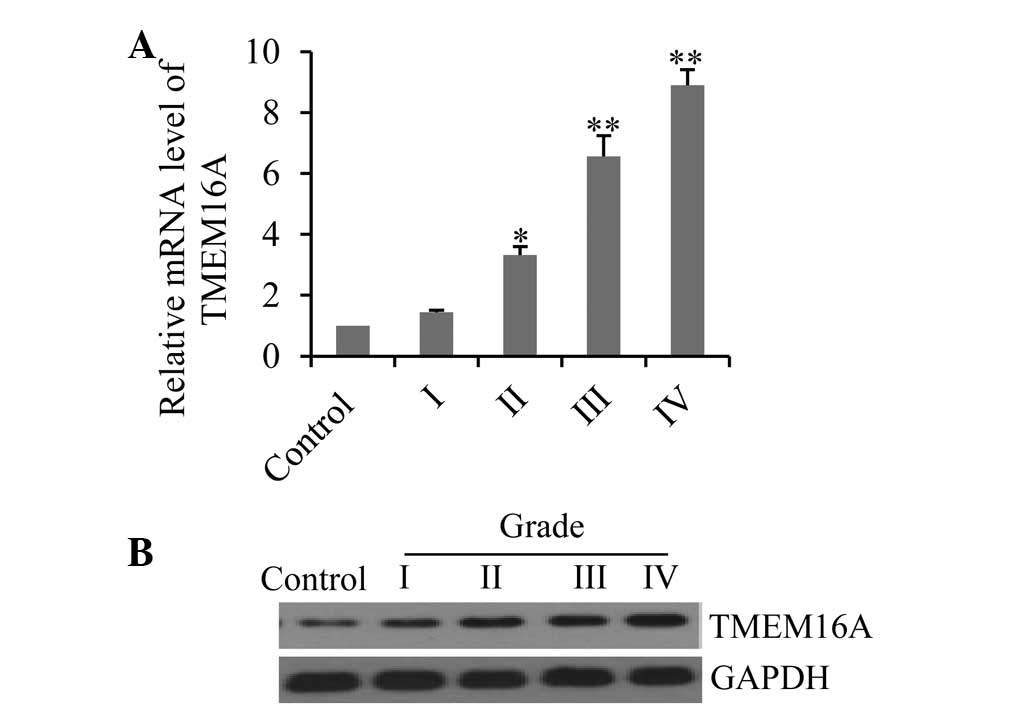
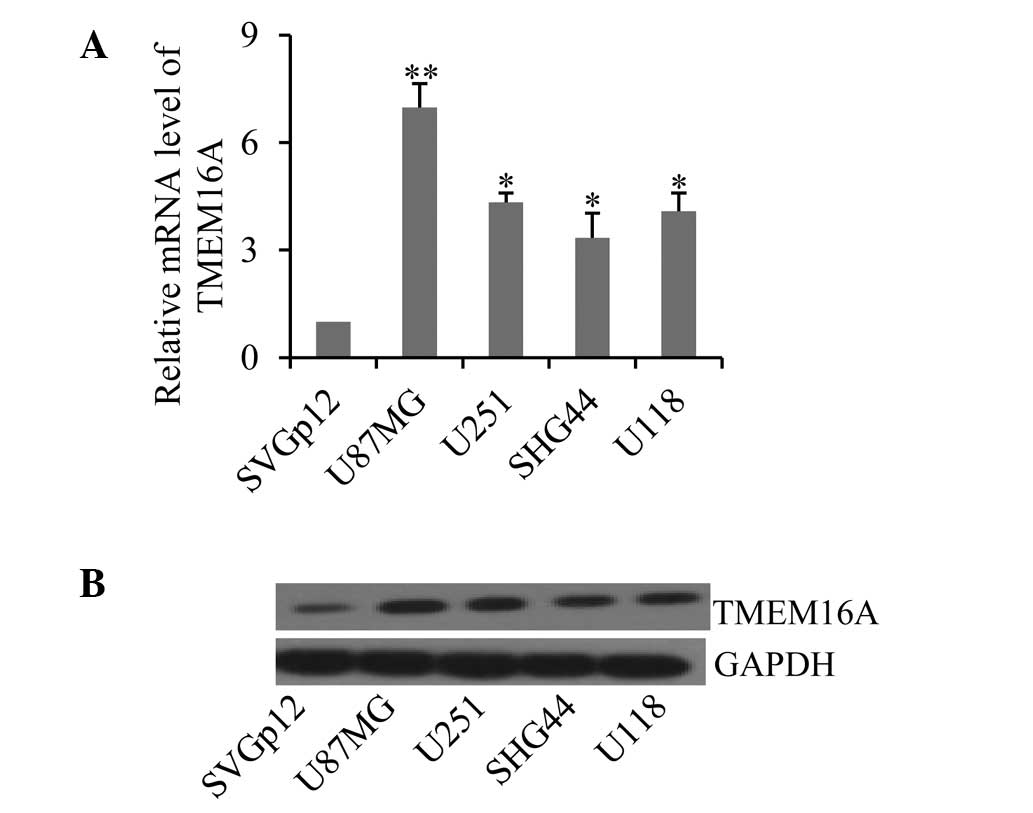
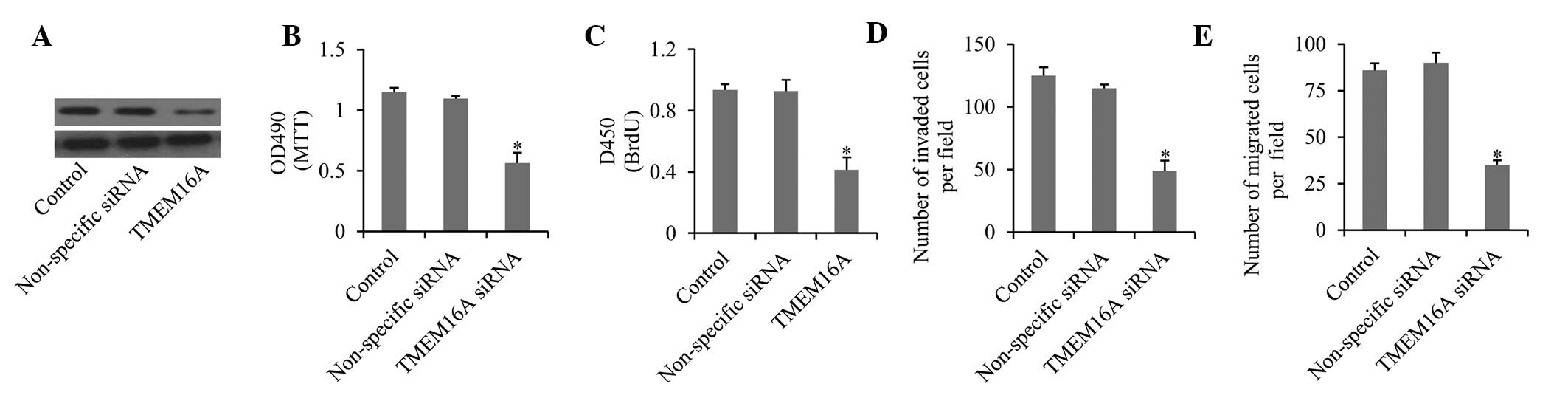
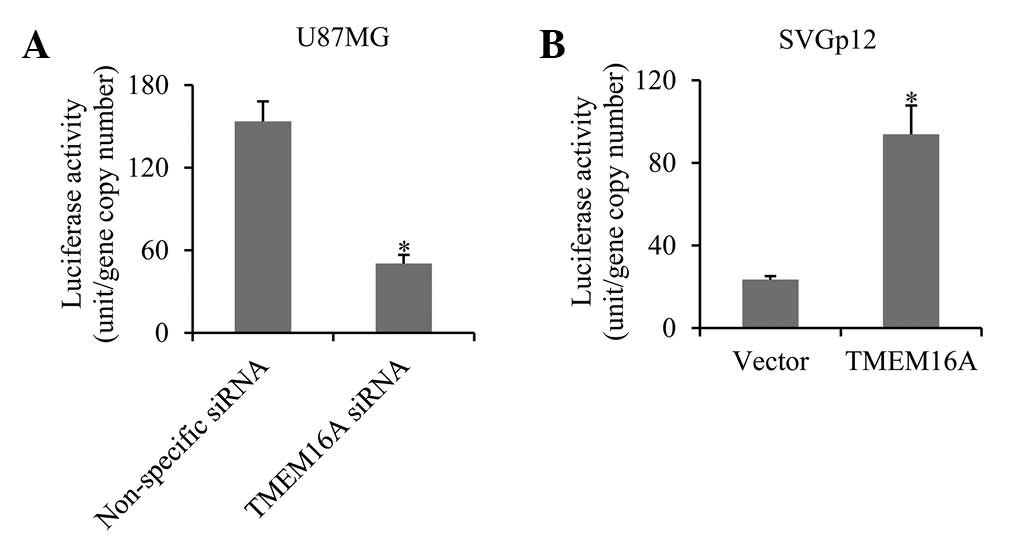
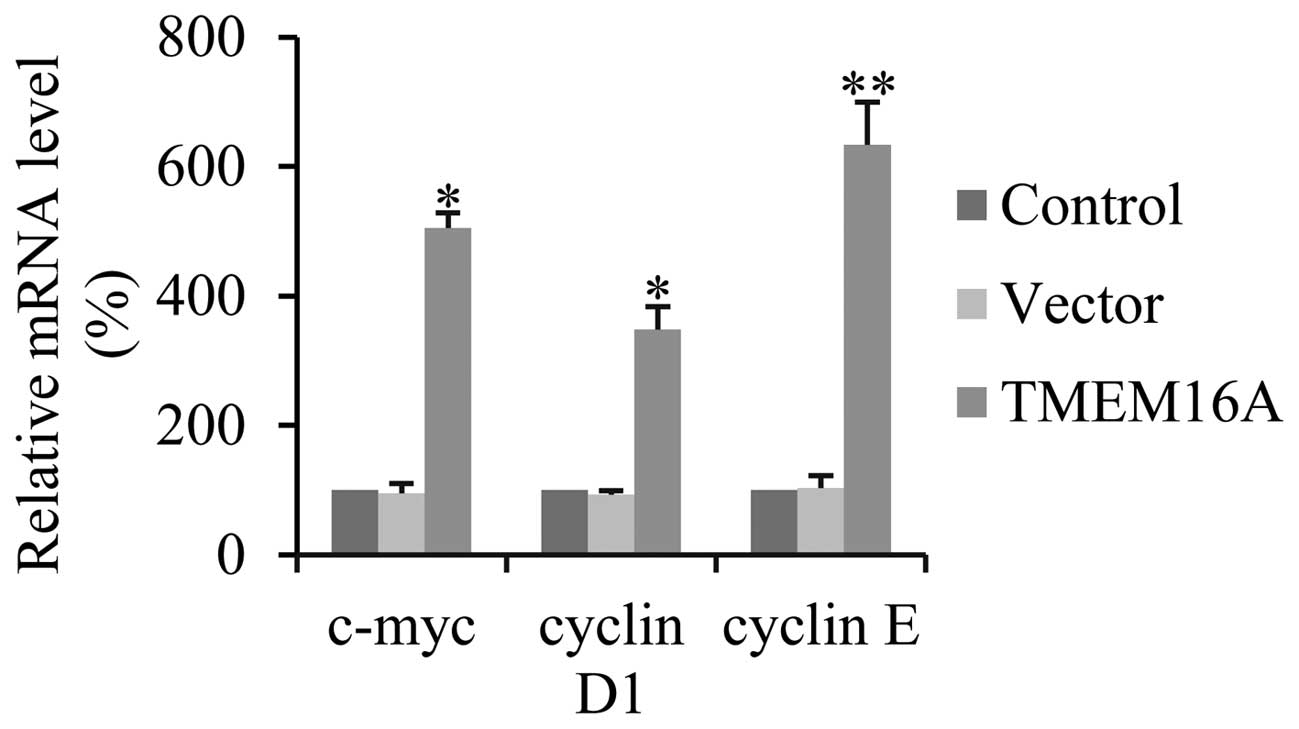
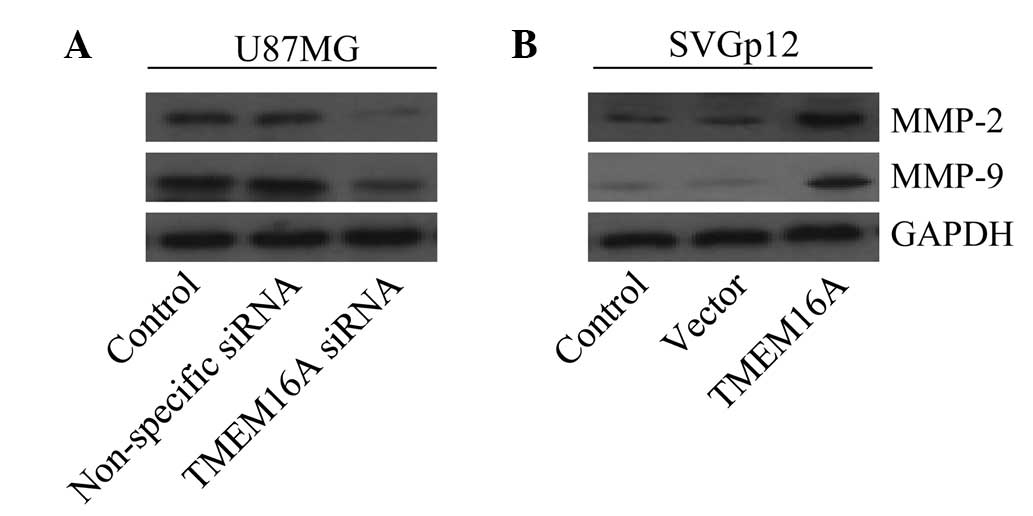
Ion channels have been suggested to be important in the development and progression of tumors, however, chloride channels have rarely been analyzed in tumorigenesis. More recently, transmembrane protein with unknown function 16A (TMEM16A), hypothesized to be a candidate calcium‑activated Cl‑ channel, has been found to be overexpressed in a number of tumor types. Although several studies have implicated the overexpression of TMEM16A in certain tumor types, the exact role of TMEM16A in gliomas and the underlying mechanisms in tumorigenesis, remain poorly understood. In the present study, the role of TMEM16A in gliomas and the potential underlying mechanisms were analyzed. TMEM16A was highly abundant in various grades of gliomas and cultured glioma cells. Knockdown of TMEM16A suppressed cell proliferation, migration and invasion. Furthermore, nuclear factor‑κB (NF‑κB) was activated by overexpression of TMEM16A. In addition, TMEM16A regulated the expression of NF‑κB‑mediated genes, including cyclin D1, cyclin E and c‑myc, involved in cell proliferation, and matrix metalloproteinases (MMPs)‑2 and MMP‑9, which are associated with the migration and invasion of glioma cells. Collectively, results of the present study provide evidence for the involvement of TMEM16A in gliomas and the potential mechanism through which TMEM16A promotes glioma formation.
View Figures

Figure 1

Figure 2

Figure 3

Figure 4

Figure 5

Figure 6

Figure 7

View References

1 

Stühmer W, Alves F, Hartung F, Zientkowska M and Pardo LA: Potassium channels as tumour markers. FEBS Lett. 580:2850–2852. 2006.PubMed/NCBI

2 

Lastraioli E, Taddei A, Messerini L, et al: hERG1 channels in human esophagus: evidence for their aberrant expression in the malignant progression of Barrett’s esophagus. J Cell Physiol. 209:398–404. 2006.PubMed/NCBI

3 

Masi A, Becchetti A, Restano-Cassulini R, et al: hERG1 channels are overexpressed in glioblastoma multiforme and modulate VEGF secretion in glioblastoma cell lines. Br J Cancer. 93:781–792. 2005. View Article : Google Scholar : PubMed/NCBI

4 

Panner A and Wurster RD: T-type calcium channels and tumor proliferation. Cell Calcium. 40:253–259. 2006. View Article : Google Scholar : PubMed/NCBI

5 

Diss JK, Stewart D, Pani F, et al: A potential novel marker for human prostate cancer: voltage-gated sodium channel expression in vivo. Prostate Cancer Prostatic Dis. 8:266–273. 2005. View Article : Google Scholar : PubMed/NCBI

6 

Fraser SP, Diss JK, Chioni AM, et al: Voltage-gated sodium channel expression and potentiation of human breast cancer metastasis. Clin Cancer Res. 11:5381–5389. 2005. View Article : Google Scholar : PubMed/NCBI

7 

Furst J, Gschwentner M, Ritter M, et al: Molecular and functional aspects of anionic channels activated during regulatory volume decrease in mammalian cells. Pflugers Arch. 444:1–25. 2002.PubMed/NCBI

8 

Ferrera L, Caputo A and Galietta LJ: TMEM16A protein: a new identity for Ca(2+)-dependent Cl- channels. Physiology (Bethesda). 25:357–363. 2010.

9 

Hartzell C, Putzier I and Arreola J: Calcium-activated chloride channels. Annu Rev Physiol. 67:719–758. 2005. View Article : Google Scholar : PubMed/NCBI

10 

Caputo A, Caci E, Ferrera L, et al: TMEM16A, a membrane protein associated with calcium-dependent chloride channel activity. Science. 322:590–594. 2008. View Article : Google Scholar : PubMed/NCBI

11 

Yang YD, Cho H, Koo JY, et al: TMEM16A confers receptor-activated calcium-dependent chloride conductance. Nature. 455:1210–1215. 2008. View Article : Google Scholar : PubMed/NCBI

12 

Schroeder BC, Cheng T, Jan YN and Jan LY: Expression cloning of TMEM16A as a calcium-activated chloride channel subunit. Cell. 134:1019–1029. 2008. View Article : Google Scholar : PubMed/NCBI

13 

Rock JR, O’Neal WK, Gabriel SE, et al: Transmembrane protein 16A (TMEM16A) is a Ca2+-regulated Cl− secretory channel in mouse airways. J Biol Chem. 284:14875–14880. 2009. View Article : Google Scholar : PubMed/NCBI

14 

Huang F, Rock JR, Harfe BD, et al: Studies on expression and function of the TMEM16A calcium-activated chloride channel. Proc Natl Acad Sci USA. 106:21413–21418. 2009. View Article : Google Scholar : PubMed/NCBI

15 

Hwang SJ, Blair PJ, Britton FC, et al: Expression of anoctamin 1/TMEM16A by interstitial cells of Cajal is fundamental for slow wave activity in gastrointestinal muscles. J Physiol. 587:4887–4904. 2009. View Article : Google Scholar : PubMed/NCBI

16 

Romanenko VG, Catalán MA, Brown DA, et al: Tmem16A encodes the Ca2+-activated Cl− channel in mouse submandibular salivary gland acinar cells. J Biol Chem. 285:12990–13001. 2010.PubMed/NCBI

17 

Elble RC and Pauli BU: Tumor suppression by a proapoptotic calcium-activated chloride channel in mammary epithelium. J Biol Chem. 276:40510–40517. 2001. View Article : Google Scholar : PubMed/NCBI

18 

Spitzner M, Martins JR, Soria RB, et al: Eag1 and Bestrophin 1 are up-regulated in fast-growing colonic cancer cells. J Biol Chem. 283:7421–7428. 2008. View Article : Google Scholar : PubMed/NCBI

19 

Katoh M and Katoh M: FLJ10261 gene, located within the CCND1-EMS1 locus on human chromosome 11q13, encodes the eight-transmembrane protein homologous to C12orf3, C11orf25 and FLJ34272 gene products. Int J Oncol. 22:1375–1381. 2003.PubMed/NCBI

20 

Akervall JA, Jin Y, Wennerberg JP, et al: Chromosomal abnormalities involving 11q13 are associated with poor prognosis in patients with squamous cell carcinoma of the head and neck. Cancer. 76:853–859. 1995. View Article : Google Scholar : PubMed/NCBI

21 

Schwab M: Amplification of oncogenes in human cancer cells. Bioessays. 20:473–479. 1998. View Article : Google Scholar : PubMed/NCBI

22 

Carles A, Millon R, Cromer A, et al: Head and neck squamous cell carcinoma transcriptome analysis by comprehensive validated differential display. Oncogene. 25:1821–1831. 2006. View Article : Google Scholar : PubMed/NCBI

23 

Espinosa I, Lee CH, Kim MK, et al: A novel monoclonal antibody against DOG1 is a sensitive and specific marker for gastrointestinal stromal tumors. Am J Surg Pathol. 32:210–218. 2008. View Article : Google Scholar : PubMed/NCBI

24 

Kashyap MK, Marimuthu A, Kishore CJ, et al: Genomewide mRNA profiling of esophageal squamous cell carcinoma for identification of cancer biomarkers. Cancer Biol Ther. 8:36–46. 2009. View Article : Google Scholar : PubMed/NCBI

25 

Yang H, Huang LY, Zeng DY, et al: Decrease of intracellular chloride concentration promotes endothelial cell inflammation by activating nuclear factor-kappaB pathway. Hypertension. 60:1287–1293. 2012. View Article : Google Scholar : PubMed/NCBI

26 

Chen J, Fok KL, Chen H, et al: Cryptorchidism-induced CFTR down-regulation results in disruption of testicular tight junctions through up-regulation of NF-κB/COX-2/PGE2. Hum Reprod. 27:2585–2597. 2012.PubMed/NCBI

27 

He G, Ma Y, Chou SY, et al: Role of CLIC4 in the host innate responses to bacterial lipopolysaccharide. Eur J Immunol. 41:1221–1230. 2011. View Article : Google Scholar : PubMed/NCBI

28 

Sheridan GK, Pickering M, Twomey C, et al: NF-kappaB activity in distinct neural subtypes of the rat hippocampus: Influence of time and GABA antagonism in acute slice preparations. Learn Mem. 14:525–532. 2007. View Article : Google Scholar : PubMed/NCBI

29 

Miller FJ Jr, Filali M, Huss GJ, et al: Cytokine activation of nuclear factor kappa B in vascular smooth muscle cells requires signaling endosomes containing Nox1 and ClC-3. Circ Res. 101:663–671. 2007. View Article : Google Scholar : PubMed/NCBI

30 

Laver T, Nozell S and Benveniste EN: The NF-κB signaling pathway in GBMs: implications for apoptotic and inflammatory responses and exploitation for therapy. CNS Cancer: Models, Markers, Prognostic Factors, Targets and Therapeutic Approaches. Van Meir EG: 1. Humana Press (Springer); New York, NY: pp. 1011–1036. 2009

31 

Gilmore TD: Introduction to NF-kappaB: players, pathways, perspectives. Oncogene. 25:6680–6684. 2006. View Article : Google Scholar : PubMed/NCBI

32 

Perkins ND: The Rel/NF-kappa B family: friend and foe. Trends Biochem Sci. 25:434–440. 2000. View Article : Google Scholar : PubMed/NCBI

33 

Perkins ND and Gilmore TD: Good cop, bad cop: the different faces of NF-kappaB. Cell Death Differ. 13:759–772. 2006. View Article : Google Scholar : PubMed/NCBI

34 

Louis DN, Ohgaki H, Wiestler OD, et al: The 2007 WHO classification of tumours of the central nervous system. Acta Neuropathol. 114:97–109. 2007. View Article : Google Scholar : PubMed/NCBI

35 

Livak KJ and Schmittgen TD: Analysis of relative gene expression data using real-time quantitative PCR and the 2(−Delta Delta C(T)) method. Methods. 25:402–408. 2001.

36 

Lee CH, Jeon YT, Kim SH and Song YS: NF-kappaB as a potential molecular target for cancer therapy. Biofactors. 29:19–35. 2007. View Article : Google Scholar : PubMed/NCBI

37 

Sethi G, Sung B and Aggarwal BB: Nuclear factor-kappaB activation: from bench to bedside. Experiment Biol Med (Maywood). 233:21–31. 2008. View Article : Google Scholar : PubMed/NCBI

38 

Van Waes C: Nuclear factor-kappaB in development, prevention, and therapy of cancer. Clin Cancer Res. 13:1076–1082. 2007.PubMed/NCBI

39 

Bauvois B: New facets of matrix metalloproteinases MMP-2 and MMP-9 as cell surface transducers: outside-in signaling and relationship to tumor progression. Biochim Biophys Acta. 1825:29–36. 2012.PubMed/NCBI

40 

Veeravalli KK and Rao JS: MMP-9 and uPAR regulated glioma cell migration. Cell Adh Migr. 6:509–512. 2012. View Article : Google Scholar : PubMed/NCBI

41 

Kesanakurti D, Chetty C, Rajasekhar Maddirela D, Gujrati M and Rao JS: Functional cooperativity by direct interaction between PAK4 and MMP-2 in the regulation of anoikis resistance, migration and invasion in glioma. Cell Death Dis. 3:e4452012. View Article : Google Scholar : PubMed/NCBI

42 

Habela CW, Ernest NJ, Swindall AF and Sontheimer H: Chloride accumulation drives volume dynamics underlying cell proliferation and migration. J Neurophysiol. 101:750–757. 2009.PubMed/NCBI

43 

Habela CW, Olsen ML and Sontheimer H: ClC3 is a critical regulator of the cell cycle in normal and malignant glial cells. J Neurosci. 28:9205–9217. 2008. View Article : Google Scholar : PubMed/NCBI

44 

Kunzelmann K, Kongsuphol P, Aldehni F, et al: Bestrophin and TMEM16-Ca(2+) activated Cl(−) channels with different functions. Cell Calcium. 46:233–241. 2009.PubMed/NCBI

45 

Ayoub C, Wasylyk C, Li Y, et al: ANO1 amplification and expression in HNSCC with a high propensity for future distant metastasis and its functions in HNSCC cell lines. Br J Cancer. 103:715–726. 2010. View Article : Google Scholar : PubMed/NCBI

46 

Duvvuri U, Shiwarski DJ, Xiao D, et al: TMEM16A induces MAPK and contributes directly to tumorigenesis and cancer progression. Cancer Res. 72:3270–3281. 2012. View Article : Google Scholar : PubMed/NCBI

47 

Simon S, Grabellus F, Ferrera L, et al: DOG1 regulates growth and IGFBP5 in gastrointestinal stromal tumors. Cancer Res. 73:3661–3670. 2013. View Article : Google Scholar : PubMed/NCBI

48 

Mazzone A, Eisenman ST, Strege PR, et al: Inhibition of cell proliferation by a selective inhibitor of the Ca(2+)-activated Cl(−) channel, Ano1. Biochem Biophys Res Commun. 427:248–253. 2012.

49 

Liu W, Lu M, Liu B, Huang Y and Wang K: Inhibition of Ca(2+)-activated Cl(−) channel ANO1/TMEM16A expression suppresses tumor growth and invasiveness in human prostate carcinoma. Cancer Lett. 326:41–51. 2012.

50 

Abdullah JM, Ahmad F, Ahmad KA, et al: Molecular genetic analysis of BAX and Cyclin D1 genes in patients with malignant glioma. Neurol Res. 29:239–242. 2007. View Article : Google Scholar : PubMed/NCBI

51 

Arato-Ohshima T and Sawa H: Over-expression of cyclin D1 induces glioma invasion by increasing matrix metalloproteinase activity and cell motility. Int J Cancer. 83:387–392. 1999. View Article : Google Scholar : PubMed/NCBI

52 

Zhang X, Zhao M, Huang AY, et al: The effect of cyclin D expression on cell proliferation in human gliomas. J Clin Neurosci. 12:166–168. 2005. View Article : Google Scholar : PubMed/NCBI

53 

Liao DJ, Thakur A, Wu J, Biliran H and Sarkar FH: Perspectives on c-Myc, cyclin D1, and their interaction in cancer formation, progression, and response to chemotherapy. Crit Rev Oncogen. 13:93–158. 2007. View Article : Google Scholar : PubMed/NCBI

54 

Robson S, Pelengaris S and Khan M: c-Myc and downstream targets in the pathogenesis and treatment of cancer. Recent Pat Anticancer Drug Discov. 1:305–326. 2006. View Article : Google Scholar : PubMed/NCBI

Related Articles

  • Abstract
  • View
  • Download
  • Twitter
Copy and paste a formatted citation
Spandidos Publications style
Liu J, Liu Y, Ren Y, Kang L and Zhang L: Transmembrane protein with unknown function 16A overexpression promotes glioma formation through the nuclear factor‑κB signaling pathway. Mol Med Rep 9: 1068-1074, 2014.
APA
Liu, J., Liu, Y., Ren, Y., Kang, L., & Zhang, L. (2014). Transmembrane protein with unknown function 16A overexpression promotes glioma formation through the nuclear factor‑κB signaling pathway. Molecular Medicine Reports, 9, 1068-1074. https://doi.org/10.3892/mmr.2014.1888
MLA
Liu, J., Liu, Y., Ren, Y., Kang, L., Zhang, L."Transmembrane protein with unknown function 16A overexpression promotes glioma formation through the nuclear factor‑κB signaling pathway". Molecular Medicine Reports 9.3 (2014): 1068-1074.
Chicago
Liu, J., Liu, Y., Ren, Y., Kang, L., Zhang, L."Transmembrane protein with unknown function 16A overexpression promotes glioma formation through the nuclear factor‑κB signaling pathway". Molecular Medicine Reports 9, no. 3 (2014): 1068-1074. https://doi.org/10.3892/mmr.2014.1888
Copy and paste a formatted citation
x
Spandidos Publications style
Liu J, Liu Y, Ren Y, Kang L and Zhang L: Transmembrane protein with unknown function 16A overexpression promotes glioma formation through the nuclear factor‑κB signaling pathway. Mol Med Rep 9: 1068-1074, 2014.
APA
Liu, J., Liu, Y., Ren, Y., Kang, L., & Zhang, L. (2014). Transmembrane protein with unknown function 16A overexpression promotes glioma formation through the nuclear factor‑κB signaling pathway. Molecular Medicine Reports, 9, 1068-1074. https://doi.org/10.3892/mmr.2014.1888
MLA
Liu, J., Liu, Y., Ren, Y., Kang, L., Zhang, L."Transmembrane protein with unknown function 16A overexpression promotes glioma formation through the nuclear factor‑κB signaling pathway". Molecular Medicine Reports 9.3 (2014): 1068-1074.
Chicago
Liu, J., Liu, Y., Ren, Y., Kang, L., Zhang, L."Transmembrane protein with unknown function 16A overexpression promotes glioma formation through the nuclear factor‑κB signaling pathway". Molecular Medicine Reports 9, no. 3 (2014): 1068-1074. https://doi.org/10.3892/mmr.2014.1888
Follow us
  • Twitter
  • LinkedIn
  • Facebook
About
  • Spandidos Publications
  • Careers
  • Cookie Policy
  • Privacy Policy
How can we help?
  • Help
  • Live Chat
  • Contact
  • Email to our Support Team