Spandidos Publications Logo
  • About
    • About Spandidos
    • Aims and Scopes
    • Abstracting and Indexing
    • Editorial Policies
    • Reprints and Permissions
    • Job Opportunities
    • Terms and Conditions
    • Contact
  • Journals
    • All Journals
    • Oncology Letters
      • Oncology Letters
      • Information for Authors
      • Editorial Policies
      • Editorial Board
      • Aims and Scope
      • Abstracting and Indexing
      • Bibliographic Information
      • Archive
    • International Journal of Oncology
      • International Journal of Oncology
      • Information for Authors
      • Editorial Policies
      • Editorial Board
      • Aims and Scope
      • Abstracting and Indexing
      • Bibliographic Information
      • Archive
    • Molecular and Clinical Oncology
      • Molecular and Clinical Oncology
      • Information for Authors
      • Editorial Policies
      • Editorial Board
      • Aims and Scope
      • Abstracting and Indexing
      • Bibliographic Information
      • Archive
    • Experimental and Therapeutic Medicine
      • Experimental and Therapeutic Medicine
      • Information for Authors
      • Editorial Policies
      • Editorial Board
      • Aims and Scope
      • Abstracting and Indexing
      • Bibliographic Information
      • Archive
    • International Journal of Molecular Medicine
      • International Journal of Molecular Medicine
      • Information for Authors
      • Editorial Policies
      • Editorial Board
      • Aims and Scope
      • Abstracting and Indexing
      • Bibliographic Information
      • Archive
    • Biomedical Reports
      • Biomedical Reports
      • Information for Authors
      • Editorial Policies
      • Editorial Board
      • Aims and Scope
      • Abstracting and Indexing
      • Bibliographic Information
      • Archive
    • Oncology Reports
      • Oncology Reports
      • Information for Authors
      • Editorial Policies
      • Editorial Board
      • Aims and Scope
      • Abstracting and Indexing
      • Bibliographic Information
      • Archive
    • Molecular Medicine Reports
      • Molecular Medicine Reports
      • Information for Authors
      • Editorial Policies
      • Editorial Board
      • Aims and Scope
      • Abstracting and Indexing
      • Bibliographic Information
      • Archive
    • World Academy of Sciences Journal
      • World Academy of Sciences Journal
      • Information for Authors
      • Editorial Policies
      • Editorial Board
      • Aims and Scope
      • Abstracting and Indexing
      • Bibliographic Information
      • Archive
    • International Journal of Functional Nutrition
      • International Journal of Functional Nutrition
      • Information for Authors
      • Editorial Policies
      • Editorial Board
      • Aims and Scope
      • Abstracting and Indexing
      • Bibliographic Information
      • Archive
    • International Journal of Epigenetics
      • International Journal of Epigenetics
      • Information for Authors
      • Editorial Policies
      • Editorial Board
      • Aims and Scope
      • Abstracting and Indexing
      • Bibliographic Information
      • Archive
    • Medicine International
      • Medicine International
      • Information for Authors
      • Editorial Policies
      • Editorial Board
      • Aims and Scope
      • Abstracting and Indexing
      • Bibliographic Information
      • Archive
  • Articles
  • Information
    • Information for Authors
    • Information for Reviewers
    • Information for Librarians
    • Information for Advertisers
    • Conferences
  • Language Editing
Spandidos Publications Logo
  • About
    • About Spandidos
    • Aims and Scopes
    • Abstracting and Indexing
    • Editorial Policies
    • Reprints and Permissions
    • Job Opportunities
    • Terms and Conditions
    • Contact
  • Journals
    • All Journals
    • Biomedical Reports
      • Information for Authors
      • Editorial Policies
      • Editorial Board
      • Aims and Scope
      • Abstracting and Indexing
      • Bibliographic Information
      • Archive
    • Experimental and Therapeutic Medicine
      • Information for Authors
      • Editorial Policies
      • Editorial Board
      • Aims and Scope
      • Abstracting and Indexing
      • Bibliographic Information
      • Archive
    • International Journal of Epigenetics
      • Information for Authors
      • Editorial Policies
      • Editorial Board
      • Aims and Scope
      • Abstracting and Indexing
      • Bibliographic Information
      • Archive
    • International Journal of Functional Nutrition
      • Information for Authors
      • Editorial Policies
      • Editorial Board
      • Aims and Scope
      • Abstracting and Indexing
      • Bibliographic Information
      • Archive
    • International Journal of Molecular Medicine
      • Information for Authors
      • Editorial Policies
      • Editorial Board
      • Aims and Scope
      • Abstracting and Indexing
      • Bibliographic Information
      • Archive
    • International Journal of Oncology
      • Information for Authors
      • Editorial Policies
      • Editorial Board
      • Aims and Scope
      • Abstracting and Indexing
      • Bibliographic Information
      • Archive
    • Medicine International
      • Information for Authors
      • Editorial Policies
      • Editorial Board
      • Aims and Scope
      • Abstracting and Indexing
      • Bibliographic Information
      • Archive
    • Molecular and Clinical Oncology
      • Information for Authors
      • Editorial Policies
      • Editorial Board
      • Aims and Scope
      • Abstracting and Indexing
      • Bibliographic Information
      • Archive
    • Molecular Medicine Reports
      • Information for Authors
      • Editorial Policies
      • Editorial Board
      • Aims and Scope
      • Abstracting and Indexing
      • Bibliographic Information
      • Archive
    • Oncology Letters
      • Information for Authors
      • Editorial Policies
      • Editorial Board
      • Aims and Scope
      • Abstracting and Indexing
      • Bibliographic Information
      • Archive
    • Oncology Reports
      • Information for Authors
      • Editorial Policies
      • Editorial Board
      • Aims and Scope
      • Abstracting and Indexing
      • Bibliographic Information
      • Archive
    • World Academy of Sciences Journal
      • Information for Authors
      • Editorial Policies
      • Editorial Board
      • Aims and Scope
      • Abstracting and Indexing
      • Bibliographic Information
      • Archive
  • Articles
  • Information
    • For Authors
    • For Reviewers
    • For Librarians
    • For Advertisers
    • Conferences
  • Language Editing
Login Register Submit
  • This site uses cookies
  • You can change your cookie settings at any time by following the instructions in our Cookie Policy. To find out more, you may read our Privacy Policy.

    I agree
Search articles by DOI, keyword, author or affiliation
Search
Advanced Search
presentation
Molecular Medicine Reports
Join Editorial Board Propose a Special Issue
Print ISSN: 1791-2997 Online ISSN: 1791-3004
Journal Cover
June-2014 Volume 9 Issue 6

Full Size Image

Sign up for eToc alerts
Recommend to Library

Journals

International Journal of Molecular Medicine

International Journal of Molecular Medicine

International Journal of Molecular Medicine is an international journal devoted to molecular mechanisms of human disease.

International Journal of Oncology

International Journal of Oncology

International Journal of Oncology is an international journal devoted to oncology research and cancer treatment.

Molecular Medicine Reports

Molecular Medicine Reports

Covers molecular medicine topics such as pharmacology, pathology, genetics, neuroscience, infectious diseases, molecular cardiology, and molecular surgery.

Oncology Reports

Oncology Reports

Oncology Reports is an international journal devoted to fundamental and applied research in Oncology.

Experimental and Therapeutic Medicine

Experimental and Therapeutic Medicine

Experimental and Therapeutic Medicine is an international journal devoted to laboratory and clinical medicine.

Oncology Letters

Oncology Letters

Oncology Letters is an international journal devoted to Experimental and Clinical Oncology.

Biomedical Reports

Biomedical Reports

Explores a wide range of biological and medical fields, including pharmacology, genetics, microbiology, neuroscience, and molecular cardiology.

Molecular and Clinical Oncology

Molecular and Clinical Oncology

International journal addressing all aspects of oncology research, from tumorigenesis and oncogenes to chemotherapy and metastasis.

World Academy of Sciences Journal

World Academy of Sciences Journal

Multidisciplinary open-access journal spanning biochemistry, genetics, neuroscience, environmental health, and synthetic biology.

International Journal of Functional Nutrition

International Journal of Functional Nutrition

Open-access journal combining biochemistry, pharmacology, immunology, and genetics to advance health through functional nutrition.

International Journal of Epigenetics

International Journal of Epigenetics

Publishes open-access research on using epigenetics to advance understanding and treatment of human disease.

Medicine International

Medicine International

An International Open Access Journal Devoted to General Medicine.

Journal Cover
June-2014 Volume 9 Issue 6

Full Size Image

Sign up for eToc alerts
Recommend to Library

  • Article
  • Citations
    • Cite This Article
    • Download Citation
    • Create Citation Alert
    • Remove Citation Alert
    • Cited By
  • Similar Articles
    • Related Articles (in Spandidos Publications)
    • Similar Articles (Google Scholar)
    • Similar Articles (PubMed)
  • Download PDF
  • Download XML
  • View XML
Article

Inhibition of the endogenous CSE/H2S system contributes to hypoxia and serum deprivation‑induced apoptosis in mesenchymal stem cells

  • Authors:
    • Congsheng Li
    • Zeng Guo
    • Birong Guo
    • Yangjing Xie
    • Jing Yang
    • Ailing Wang
  • View Affiliations / Copyright

    Affiliations: Department of Cardiology, The First Affiliated Hospital of Anhui Medical University, Hefei, Anhui 230022, P.R. China, Department of Dermatology, The Third Affiliated Hospital of Anhui Medical University and the First People's Hospital of Hefei, Hefei, Anhui 230061, P.R. China, Department of Emergency, The Third Affiliated Hospital of Anhui Medical University and the First People's Hospital of Hefei, Hefei, Anhui 230061, P.R. China
  • Pages: 2467-2472
    |
    Published online on: April 3, 2014
       https://doi.org/10.3892/mmr.2014.2111
  • Expand metrics +
Metrics: Total Views: 0 (Spandidos Publications: | PMC Statistics: )
Metrics: Total PDF Downloads: 0 (Spandidos Publications: | PMC Statistics: )
Cited By (CrossRef): 0 citations Loading Articles...

This article is mentioned in:


Abstract

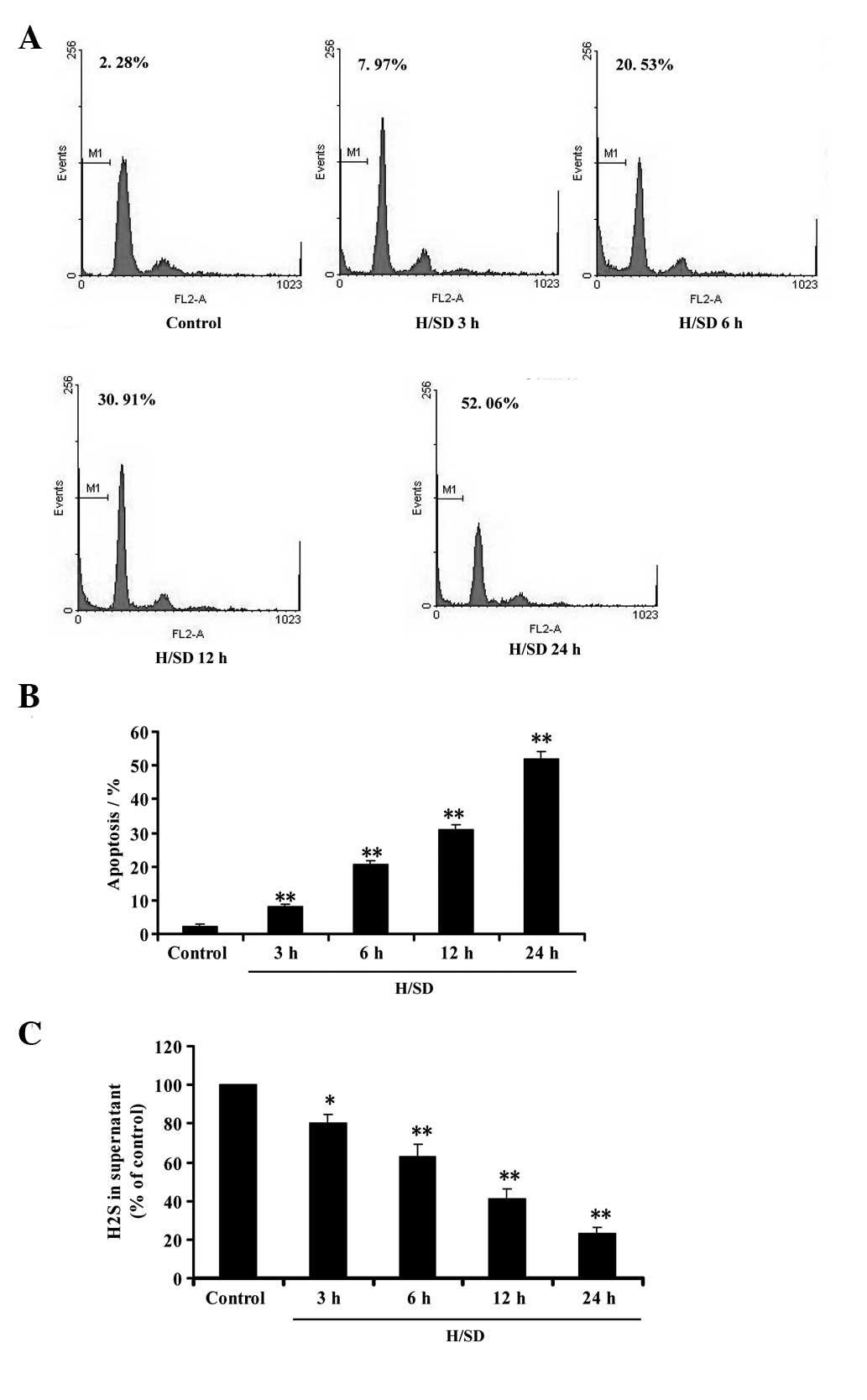
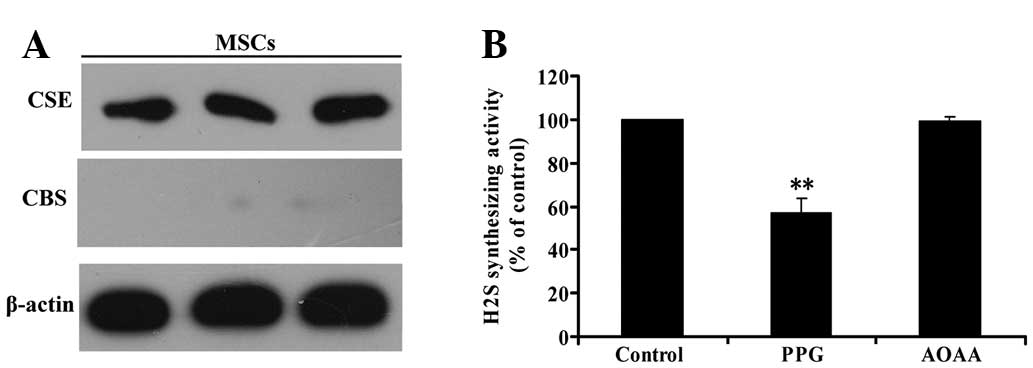
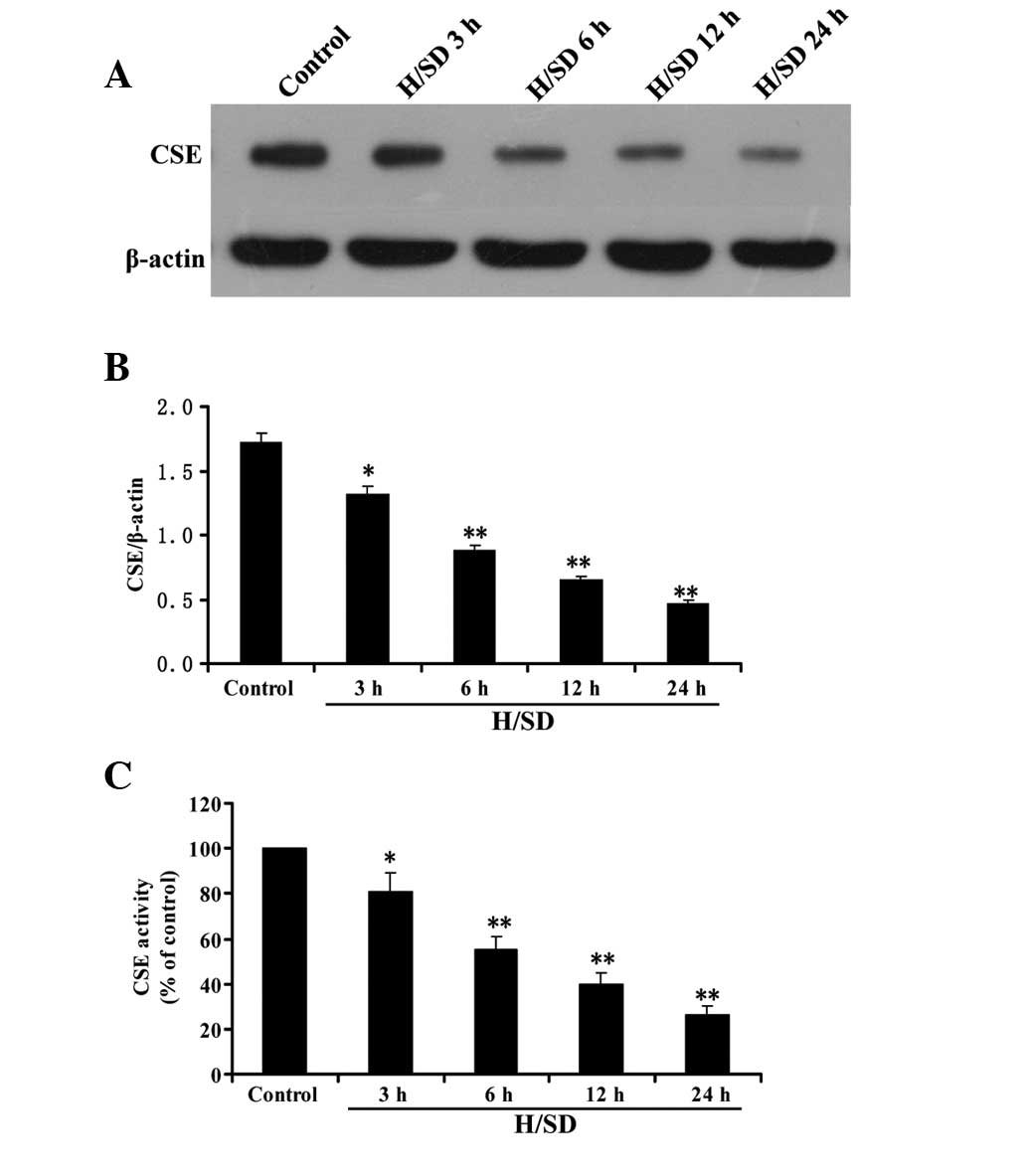
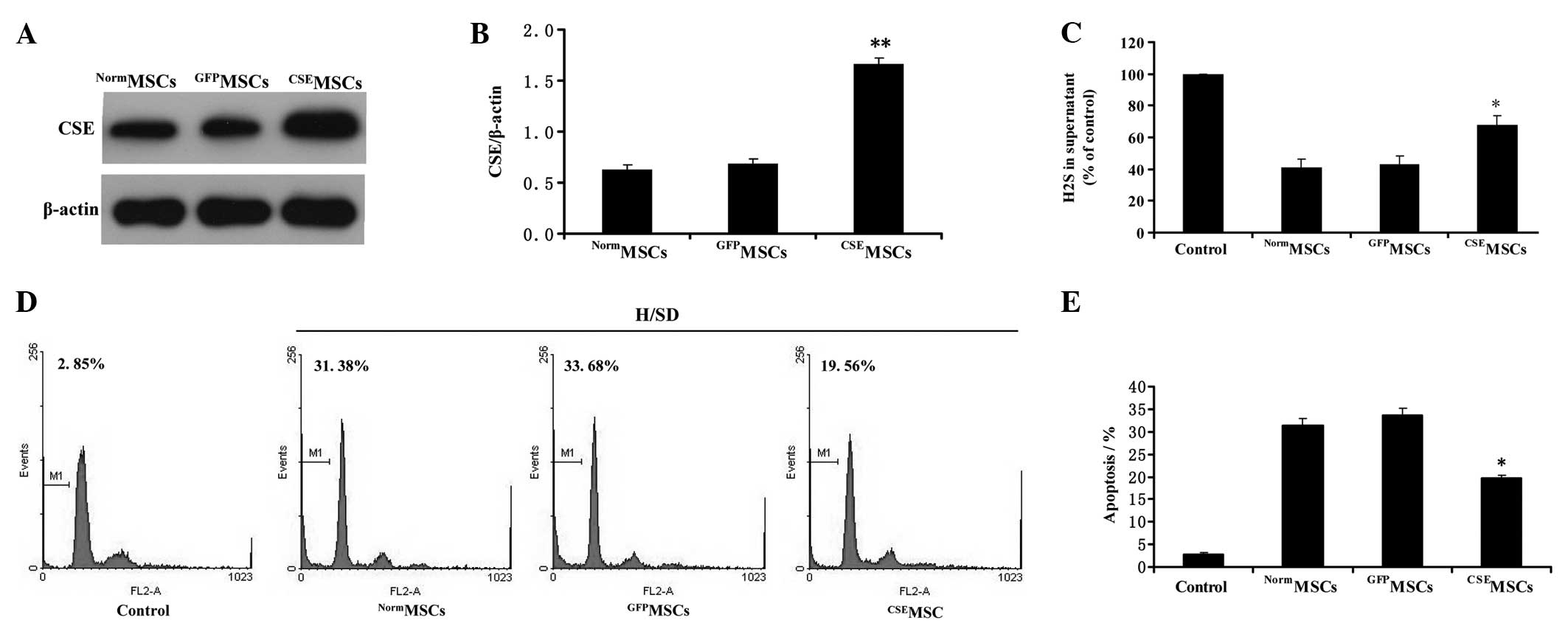
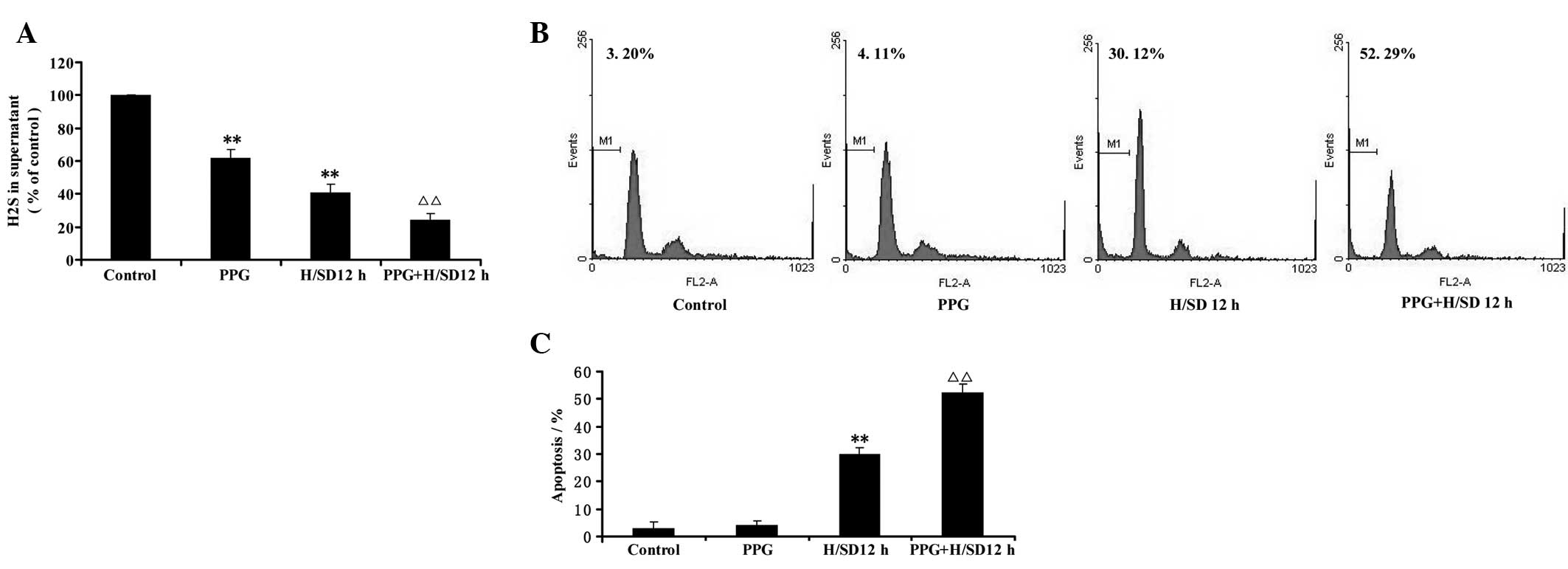
Mesenchymal stem cells (MSCs) have great potential for repair following acute myocardial infarction. However, a major challenge to MSC therapy is that transplanted cells undergo apoptosis. Hydrogen sulfide (H2S) has recently been proposed as an endogenous mediator of cell apoptosis in various systems. The aim of the present study was to investigate the role of endogenous H2S in hypoxia and serum deprivation (hypoxia/SD)‑induced apoptosis in MSCs. The present study demonstrated that exposure of MSCs to hypoxia/SD caused a significant decrease in H2S generation and resulted in marked cell apoptosis. Furthermore, under basal conditions, MSCs expressed cystathionine γ‑lyase (CSE) and synthesized H2S, whereas CSE expression and activity was inhibited by hypoxia/SD treatment. Overexpression of CSE not only markedly prevented hypoxia/SD‑induced decreases in endogenous H2S generation but also protected MSCs from apoptosis, while inhibition of CSE by its potent inhibitors significantly deteriorated the effect of hypoxia/SD in MSCs. These data indicate that the H2S generation pathway exists in MSCs and the inhibition of the endogenous CSE/H2S system contributes to hypoxia/SD‑induced apoptosis in MSCs. Our findings suggest that modulation of the CSE/H2S system is a potential therapeutic avenue for promoting the viability of transplanted MSCs.
View Figures

Figure 1

Figure 2

Figure 3

Figure 4

Figure 5

View References

1 

Lloyd-Jones DM, Larson MG, Leip EP, et al: Lifetime risk for developing congestive heart failure: the Framingham Heart Study. Circulation. 106:3068–3072. 2002. View Article : Google Scholar : PubMed/NCBI

2 

Zhang H, Wei YJ and Hu SS: Intraoperative cell transplantation for congestive heart failure: experience in China. Semin Thorac Cardiovasc Surg. 20:126–130. 2008. View Article : Google Scholar : PubMed/NCBI

3 

Kovacic JC and Graham RM: Stem-cell therapy for myocardial diseases. Lancet. 363:1735–1736. 2004. View Article : Google Scholar : PubMed/NCBI

4 

Fukuda K and Yuasa S: Stem cells as a source of regenerative cardiomyocytes. Circ Res. 98:1002–1013. 2006.PubMed/NCBI

5 

Nesselmann C, Ma N, Bieback K, et al: Mesenchymal stem cells and cardiac repair. J Cell Mol Med. 12:1795–1810. 2008. View Article : Google Scholar : PubMed/NCBI

6 

Dai W, Hale SL, Martin BJ, et al: Allogeneic mesenchymal stem cell transplantation in postinfarcted rat myocardium: short- and long-term effects. Circulation. 112:214–223. 2005. View Article : Google Scholar : PubMed/NCBI

7 

Müller-Ehmsen J, Krausgrill B, Burst V, et al: Effective engraftment but poor mid-term persistence of mononuclear and mesenchymal bone marrow cells in acute and chronic rat myocardial infarction. J Mol Cell Cardiol. 41:876–884. 2006.PubMed/NCBI

8 

Zhu W, Chen J, Cong X, Hu S and Chen X: Hypoxia and serum deprivation-induced apoptosis in mesenchymal stem cells. Stem Cells. 24:416–425. 2006. View Article : Google Scholar : PubMed/NCBI

9 

Robey TE, Saiget MK, Reinecke H and Murry CE: Systems approaches to preventing transplanted cell death in cardiac repair. J Mol Cell Cardiol. 45:567–581. 2008. View Article : Google Scholar : PubMed/NCBI

10 

Papapetropoulos A, Pyriochou A, Altaany Z, et al: Hydrogen sulfide is an endogenous stimulator of angiogenesis. Proc Natl Acad Sci USA. 106:21972–21977. 2009. View Article : Google Scholar : PubMed/NCBI

11 

Sen U, Givvimani S, Abe OA, Lederer ED and Tyagi SC: Cystathionine beta-synthase and cystathionine gamma-lyase double gene transfer ameliorate homocysteine-mediated mesangial inflammation through hydrogen sulfide generation. Am J Physiol Cell Physiol. 300:C155–C163. 2011. View Article : Google Scholar

12 

Lu F, Xing J, Zhang X, et al: Exogenous hydrogen sulfide prevents cardiomyocyte apoptosis from cardiac hypertrophy induced by isoproterenol. Mol Cell Biochem. 381:41–50. 2013. View Article : Google Scholar : PubMed/NCBI

13 

Calvert JW, Coetzee WA and Lefer DJ: Novel insights into hydrogen sulfide--mediated cytoprotection. Antioxid Redox Signal. 12:1203–1217. 2010. View Article : Google Scholar : PubMed/NCBI

14 

Kimura H: Hydrogen sulfide: its production and functions. Exp Physiol. 96:833–835. 2011. View Article : Google Scholar : PubMed/NCBI

15 

Tang XQ, Ren YK, Zhou CF, et al: Hydrogen sulfide prevents formaldehyde-induced neurotoxicity to PC12 cells by attenuation of mitochondrial dysfunction and pro-apoptotic potential. Neurochem Int. 61:16–24. 2012. View Article : Google Scholar : PubMed/NCBI

16 

Baskar R, Li L and Moore PK: Hydrogen sulfide-induces DNA damage and changes in apoptotic gene expression in human lung fibroblast cells. FASEB J. 21:247–255. 2007. View Article : Google Scholar : PubMed/NCBI

17 

Chen YH, Wang PP, Wang XM, et al: Involvement of endogenous hydrogen sulfide in cigarette smoke-induced changes in airway responsiveness and inflammation of rat lung. Cytokine. 53:334–341. 2011. View Article : Google Scholar : PubMed/NCBI

18 

Taniguchi S, Kang L, Kimura T and Niki I: Hydrogen sulphide protects mouse pancreatic beta-cells from cell death induced by oxidative stress, but not by endoplasmic reticulum stress. Br J Pharmacol. 162:1171–1178. 2011. View Article : Google Scholar : PubMed/NCBI

19 

Xie X, Sun A, Zhu W, et al: Transplantation of mesenchymal stem cells preconditioned with hydrogen sulfide enhances repair of myocardial infarction in rats. Tohoku J Exp Med. 226:29–36. 2012. View Article : Google Scholar : PubMed/NCBI

20 

Wang A, Shen F, Liang Y and Wang J: Marrow-derived MSCs and atorvastatin improve cardiac function in rat model of AMI. Int J Cardiol. 150:28–32. 2011. View Article : Google Scholar : PubMed/NCBI

21 

Pae HO, Lee YC, Jo EK and Chung HT: Subtle interplay of endogenous bioactive gases (NO, CO and H(2)S) in inflammation. Arch Pharm Res. 32:1155–1162. 2009. View Article : Google Scholar : PubMed/NCBI

22 

Wallace JL: Physiological and pathophysiological roles of hydrogen sulfide in the gastrointestinal tract. Antioxid Redox Signal. 12:1125–1133. 2010. View Article : Google Scholar : PubMed/NCBI

23 

Kimura Y, Goto Y and Kimura H: Hydrogen sulfide increases glutathione production and suppresses oxidative stress in mitochondria. Antioxid Redox Signal. 12:1–13. 2010. View Article : Google Scholar : PubMed/NCBI

24 

Mani S, Li H, Untereiner A, et al: Decreased endogenous production of hydrogen sulfide accelerates atherosclerosis. Circulation. 127:2523–2534. 2013. View Article : Google Scholar : PubMed/NCBI

25 

Barry FP and Murphy JM: Mesenchymal stem cells: clinical applications and biological characterization. Int J Biochem Cell Biol. 36:568–584. 2004. View Article : Google Scholar : PubMed/NCBI

26 

Short B, Brouard N, Occhiodoro-Scott T, Ramakrishnan A and Simmons PJ: Mesenchymal stem cells. Arch Med Res. 34:565–571. 2003. View Article : Google Scholar

27 

Tan BH, Wong PT and Bian JS: Hydrogen sulfide: a novel signaling molecule in the central nervous system. Neurochem Int. 56:3–10. 2010. View Article : Google Scholar : PubMed/NCBI

28 

Shibuya N, Tanaka M, Yoshida M, et al: 3-Mercaptopyruvate sulfurtransferase produces hydrogen sulfide and bound sulfane sulfur in the brain. Antioxid Redox Signal. 11:703–714. 2009. View Article : Google Scholar : PubMed/NCBI

29 

Wang W, Li W, Ou L, et al: Polyethylenimine-mediated gene delivery into human bone marrow mesenchymal stem cells from patients. J Cell Mol Med. 15:1989–1998. 2011. View Article : Google Scholar : PubMed/NCBI

30 

Mani S, Untereiner A, Wu L and Wang R: Hydrogen Sulfide and the Pathogenesis of Atherosclerosis. Antioxid Redox Signal. May 21–2013.(Epub ahead of print).

31 

Nicholson CK and Calvert JW: Hydrogen sulfide and ischemia-reperfusion injury. Pharmacol Res. 62:289–297. 2010. View Article : Google Scholar : PubMed/NCBI

32 

Yang G, Wu L, Jiang B, et al: H2S as a physiologic vasorelaxant: hypertension in mice with deletion of cystathionine gamma-lyase. Science. 322:587–590. 2008. View Article : Google Scholar : PubMed/NCBI

33 

Łowicka E and Bełtowski J: Hydrogen sulfide (H2S)-the third gas of interest for pharmacologists. Pharmacol Rep. 59:4–24. 2007.PubMed/NCBI

34 

Nie Y, Han BM, Liu XB, et al: Identification of MicroRNAs involved in hypoxia- and serum deprivation-induced apoptosis in mesenchymal stem cells. Int J Biol Sci. 7:762–768. 2011. View Article : Google Scholar : PubMed/NCBI

Related Articles

  • Abstract
  • View
  • Download
  • Twitter
Copy and paste a formatted citation
Spandidos Publications style
Li C, Guo Z, Guo B, Xie Y, Yang J and Wang A: Inhibition of the endogenous CSE/H2S system contributes to hypoxia and serum deprivation‑induced apoptosis in mesenchymal stem cells. Mol Med Rep 9: 2467-2472, 2014.
APA
Li, C., Guo, Z., Guo, B., Xie, Y., Yang, J., & Wang, A. (2014). Inhibition of the endogenous CSE/H2S system contributes to hypoxia and serum deprivation‑induced apoptosis in mesenchymal stem cells. Molecular Medicine Reports, 9, 2467-2472. https://doi.org/10.3892/mmr.2014.2111
MLA
Li, C., Guo, Z., Guo, B., Xie, Y., Yang, J., Wang, A."Inhibition of the endogenous CSE/H2S system contributes to hypoxia and serum deprivation‑induced apoptosis in mesenchymal stem cells". Molecular Medicine Reports 9.6 (2014): 2467-2472.
Chicago
Li, C., Guo, Z., Guo, B., Xie, Y., Yang, J., Wang, A."Inhibition of the endogenous CSE/H2S system contributes to hypoxia and serum deprivation‑induced apoptosis in mesenchymal stem cells". Molecular Medicine Reports 9, no. 6 (2014): 2467-2472. https://doi.org/10.3892/mmr.2014.2111
Copy and paste a formatted citation
x
Spandidos Publications style
Li C, Guo Z, Guo B, Xie Y, Yang J and Wang A: Inhibition of the endogenous CSE/H2S system contributes to hypoxia and serum deprivation‑induced apoptosis in mesenchymal stem cells. Mol Med Rep 9: 2467-2472, 2014.
APA
Li, C., Guo, Z., Guo, B., Xie, Y., Yang, J., & Wang, A. (2014). Inhibition of the endogenous CSE/H2S system contributes to hypoxia and serum deprivation‑induced apoptosis in mesenchymal stem cells. Molecular Medicine Reports, 9, 2467-2472. https://doi.org/10.3892/mmr.2014.2111
MLA
Li, C., Guo, Z., Guo, B., Xie, Y., Yang, J., Wang, A."Inhibition of the endogenous CSE/H2S system contributes to hypoxia and serum deprivation‑induced apoptosis in mesenchymal stem cells". Molecular Medicine Reports 9.6 (2014): 2467-2472.
Chicago
Li, C., Guo, Z., Guo, B., Xie, Y., Yang, J., Wang, A."Inhibition of the endogenous CSE/H2S system contributes to hypoxia and serum deprivation‑induced apoptosis in mesenchymal stem cells". Molecular Medicine Reports 9, no. 6 (2014): 2467-2472. https://doi.org/10.3892/mmr.2014.2111
Follow us
  • Twitter
  • LinkedIn
  • Facebook
About
  • Spandidos Publications
  • Careers
  • Cookie Policy
  • Privacy Policy
How can we help?
  • Help
  • Live Chat
  • Contact
  • Email to our Support Team