Spandidos Publications Logo
  • About
    • About Spandidos
    • Aims and Scopes
    • Abstracting and Indexing
    • Editorial Policies
    • Reprints and Permissions
    • Job Opportunities
    • Terms and Conditions
    • Contact
  • Journals
    • All Journals
    • Oncology Letters
      • Oncology Letters
      • Information for Authors
      • Editorial Policies
      • Editorial Board
      • Aims and Scope
      • Abstracting and Indexing
      • Bibliographic Information
      • Archive
    • International Journal of Oncology
      • International Journal of Oncology
      • Information for Authors
      • Editorial Policies
      • Editorial Board
      • Aims and Scope
      • Abstracting and Indexing
      • Bibliographic Information
      • Archive
    • Molecular and Clinical Oncology
      • Molecular and Clinical Oncology
      • Information for Authors
      • Editorial Policies
      • Editorial Board
      • Aims and Scope
      • Abstracting and Indexing
      • Bibliographic Information
      • Archive
    • Experimental and Therapeutic Medicine
      • Experimental and Therapeutic Medicine
      • Information for Authors
      • Editorial Policies
      • Editorial Board
      • Aims and Scope
      • Abstracting and Indexing
      • Bibliographic Information
      • Archive
    • International Journal of Molecular Medicine
      • International Journal of Molecular Medicine
      • Information for Authors
      • Editorial Policies
      • Editorial Board
      • Aims and Scope
      • Abstracting and Indexing
      • Bibliographic Information
      • Archive
    • Biomedical Reports
      • Biomedical Reports
      • Information for Authors
      • Editorial Policies
      • Editorial Board
      • Aims and Scope
      • Abstracting and Indexing
      • Bibliographic Information
      • Archive
    • Oncology Reports
      • Oncology Reports
      • Information for Authors
      • Editorial Policies
      • Editorial Board
      • Aims and Scope
      • Abstracting and Indexing
      • Bibliographic Information
      • Archive
    • Molecular Medicine Reports
      • Molecular Medicine Reports
      • Information for Authors
      • Editorial Policies
      • Editorial Board
      • Aims and Scope
      • Abstracting and Indexing
      • Bibliographic Information
      • Archive
    • World Academy of Sciences Journal
      • World Academy of Sciences Journal
      • Information for Authors
      • Editorial Policies
      • Editorial Board
      • Aims and Scope
      • Abstracting and Indexing
      • Bibliographic Information
      • Archive
    • International Journal of Functional Nutrition
      • International Journal of Functional Nutrition
      • Information for Authors
      • Editorial Policies
      • Editorial Board
      • Aims and Scope
      • Abstracting and Indexing
      • Bibliographic Information
      • Archive
    • International Journal of Epigenetics
      • International Journal of Epigenetics
      • Information for Authors
      • Editorial Policies
      • Editorial Board
      • Aims and Scope
      • Abstracting and Indexing
      • Bibliographic Information
      • Archive
    • Medicine International
      • Medicine International
      • Information for Authors
      • Editorial Policies
      • Editorial Board
      • Aims and Scope
      • Abstracting and Indexing
      • Bibliographic Information
      • Archive
  • Articles
  • Information
    • Information for Authors
    • Information for Reviewers
    • Information for Librarians
    • Information for Advertisers
    • Conferences
  • Language Editing
Spandidos Publications Logo
  • About
    • About Spandidos
    • Aims and Scopes
    • Abstracting and Indexing
    • Editorial Policies
    • Reprints and Permissions
    • Job Opportunities
    • Terms and Conditions
    • Contact
  • Journals
    • All Journals
    • Biomedical Reports
      • Information for Authors
      • Editorial Policies
      • Editorial Board
      • Aims and Scope
      • Abstracting and Indexing
      • Bibliographic Information
      • Archive
    • Experimental and Therapeutic Medicine
      • Information for Authors
      • Editorial Policies
      • Editorial Board
      • Aims and Scope
      • Abstracting and Indexing
      • Bibliographic Information
      • Archive
    • International Journal of Epigenetics
      • Information for Authors
      • Editorial Policies
      • Editorial Board
      • Aims and Scope
      • Abstracting and Indexing
      • Bibliographic Information
      • Archive
    • International Journal of Functional Nutrition
      • Information for Authors
      • Editorial Policies
      • Editorial Board
      • Aims and Scope
      • Abstracting and Indexing
      • Bibliographic Information
      • Archive
    • International Journal of Molecular Medicine
      • Information for Authors
      • Editorial Policies
      • Editorial Board
      • Aims and Scope
      • Abstracting and Indexing
      • Bibliographic Information
      • Archive
    • International Journal of Oncology
      • Information for Authors
      • Editorial Policies
      • Editorial Board
      • Aims and Scope
      • Abstracting and Indexing
      • Bibliographic Information
      • Archive
    • Medicine International
      • Information for Authors
      • Editorial Policies
      • Editorial Board
      • Aims and Scope
      • Abstracting and Indexing
      • Bibliographic Information
      • Archive
    • Molecular and Clinical Oncology
      • Information for Authors
      • Editorial Policies
      • Editorial Board
      • Aims and Scope
      • Abstracting and Indexing
      • Bibliographic Information
      • Archive
    • Molecular Medicine Reports
      • Information for Authors
      • Editorial Policies
      • Editorial Board
      • Aims and Scope
      • Abstracting and Indexing
      • Bibliographic Information
      • Archive
    • Oncology Letters
      • Information for Authors
      • Editorial Policies
      • Editorial Board
      • Aims and Scope
      • Abstracting and Indexing
      • Bibliographic Information
      • Archive
    • Oncology Reports
      • Information for Authors
      • Editorial Policies
      • Editorial Board
      • Aims and Scope
      • Abstracting and Indexing
      • Bibliographic Information
      • Archive
    • World Academy of Sciences Journal
      • Information for Authors
      • Editorial Policies
      • Editorial Board
      • Aims and Scope
      • Abstracting and Indexing
      • Bibliographic Information
      • Archive
  • Articles
  • Information
    • For Authors
    • For Reviewers
    • For Librarians
    • For Advertisers
    • Conferences
  • Language Editing
Login Register Submit
  • This site uses cookies
  • You can change your cookie settings at any time by following the instructions in our Cookie Policy. To find out more, you may read our Privacy Policy.

    I agree
Search articles by DOI, keyword, author or affiliation
Search
Advanced Search
presentation
Molecular Medicine Reports
Join Editorial Board Propose a Special Issue
Print ISSN: 1791-2997 Online ISSN: 1791-3004
Journal Cover
June-2014 Volume 9 Issue 6

Full Size Image

Sign up for eToc alerts
Recommend to Library

Journals

International Journal of Molecular Medicine

International Journal of Molecular Medicine

International Journal of Molecular Medicine is an international journal devoted to molecular mechanisms of human disease.

International Journal of Oncology

International Journal of Oncology

International Journal of Oncology is an international journal devoted to oncology research and cancer treatment.

Molecular Medicine Reports

Molecular Medicine Reports

Covers molecular medicine topics such as pharmacology, pathology, genetics, neuroscience, infectious diseases, molecular cardiology, and molecular surgery.

Oncology Reports

Oncology Reports

Oncology Reports is an international journal devoted to fundamental and applied research in Oncology.

Experimental and Therapeutic Medicine

Experimental and Therapeutic Medicine

Experimental and Therapeutic Medicine is an international journal devoted to laboratory and clinical medicine.

Oncology Letters

Oncology Letters

Oncology Letters is an international journal devoted to Experimental and Clinical Oncology.

Biomedical Reports

Biomedical Reports

Explores a wide range of biological and medical fields, including pharmacology, genetics, microbiology, neuroscience, and molecular cardiology.

Molecular and Clinical Oncology

Molecular and Clinical Oncology

International journal addressing all aspects of oncology research, from tumorigenesis and oncogenes to chemotherapy and metastasis.

World Academy of Sciences Journal

World Academy of Sciences Journal

Multidisciplinary open-access journal spanning biochemistry, genetics, neuroscience, environmental health, and synthetic biology.

International Journal of Functional Nutrition

International Journal of Functional Nutrition

Open-access journal combining biochemistry, pharmacology, immunology, and genetics to advance health through functional nutrition.

International Journal of Epigenetics

International Journal of Epigenetics

Publishes open-access research on using epigenetics to advance understanding and treatment of human disease.

Medicine International

Medicine International

An International Open Access Journal Devoted to General Medicine.

Journal Cover
June-2014 Volume 9 Issue 6

Full Size Image

Sign up for eToc alerts
Recommend to Library

  • Article
  • Citations
    • Cite This Article
    • Download Citation
    • Create Citation Alert
    • Remove Citation Alert
    • Cited By
  • Similar Articles
    • Related Articles (in Spandidos Publications)
    • Similar Articles (Google Scholar)
    • Similar Articles (PubMed)
  • Download PDF
  • Download XML
  • View XML
Article

Enhanced p62 expression triggers concomitant autophagy and apoptosis in a rat chronic spinal cord compression model

  • Authors:
    • Zhi Chen
    • Qingge Fu
    • Baoliang Shen
    • Xuan Huang
    • Kun Wang
    • Ping He
    • Fengning Li
    • Fan Zhang
    • Hongxing Shen
  • View Affiliations / Copyright

    Affiliations: Department of Orthopaedics, Changhai Hospital Affiliated to The Second Military Medical University, Shanghai 200433, P.R. China, Department of Emergency and Trauma, Shanghai East Hospital, Tongji University School of Medicine, Shanghai 200120, P.R. China, Department of Orthopaedics, Shanghai Jiading Central Hospital, Shanghai 201800, P.R. China
  • Pages: 2091-2096
    |
    Published online on: April 8, 2014
       https://doi.org/10.3892/mmr.2014.2124
  • Expand metrics +
Metrics: Total Views: 0 (Spandidos Publications: | PMC Statistics: )
Metrics: Total PDF Downloads: 0 (Spandidos Publications: | PMC Statistics: )
Cited By (CrossRef): 0 citations Loading Articles...

This article is mentioned in:


Abstract

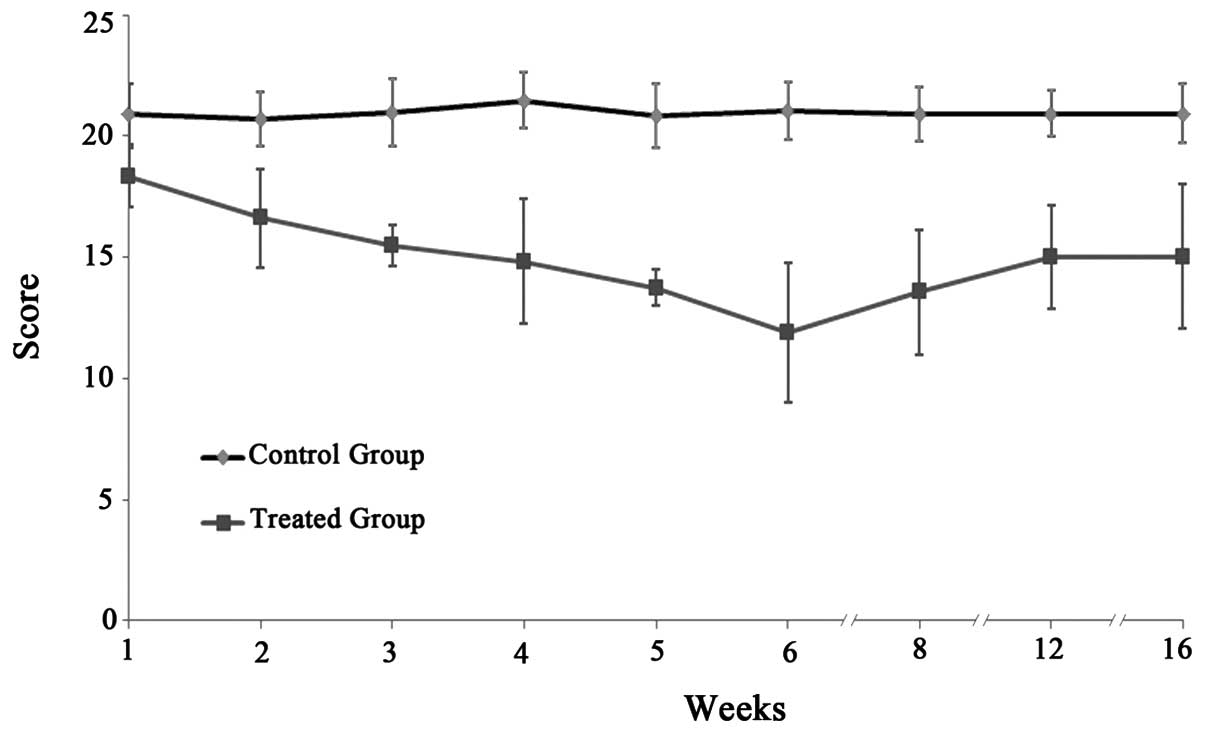
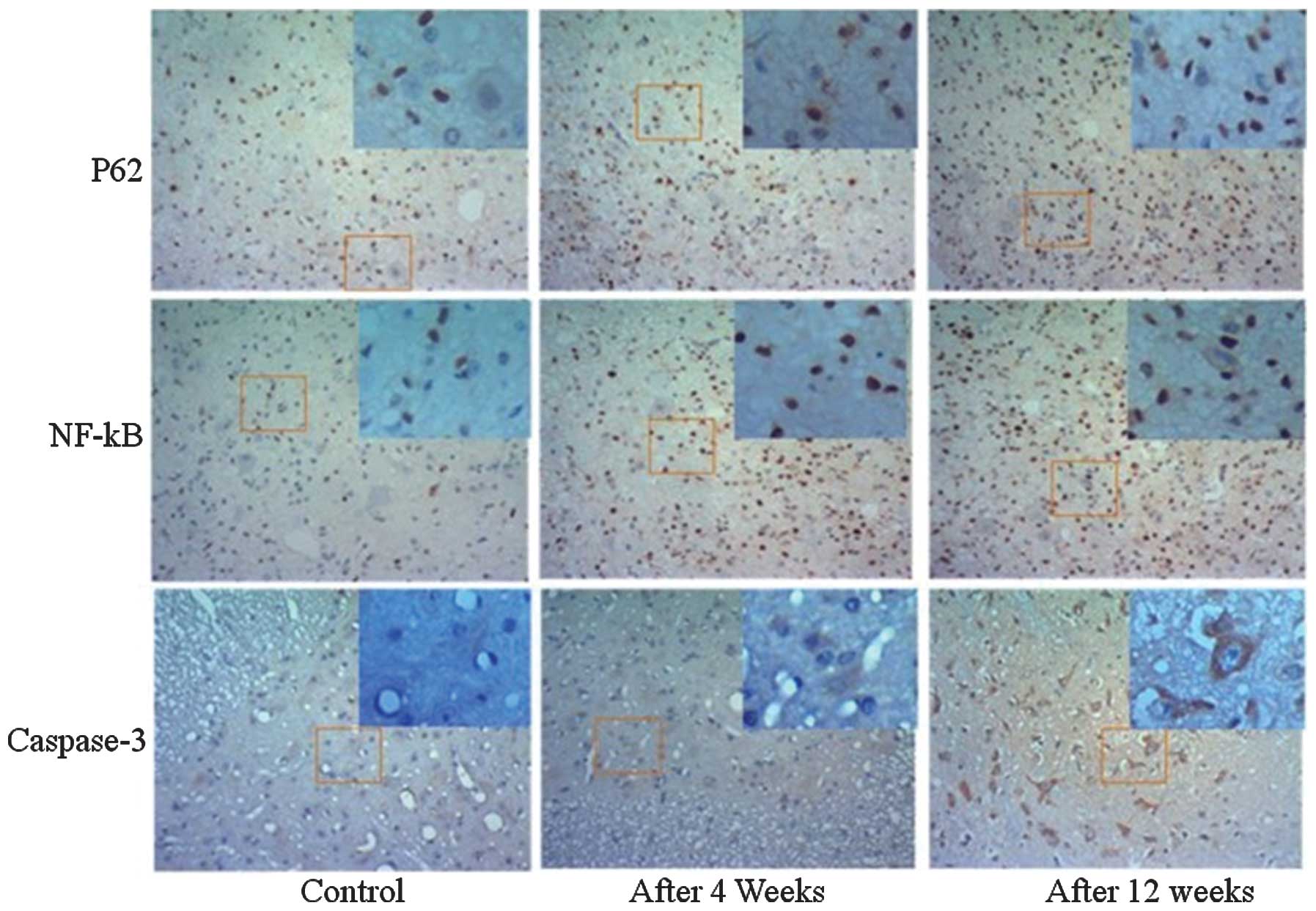
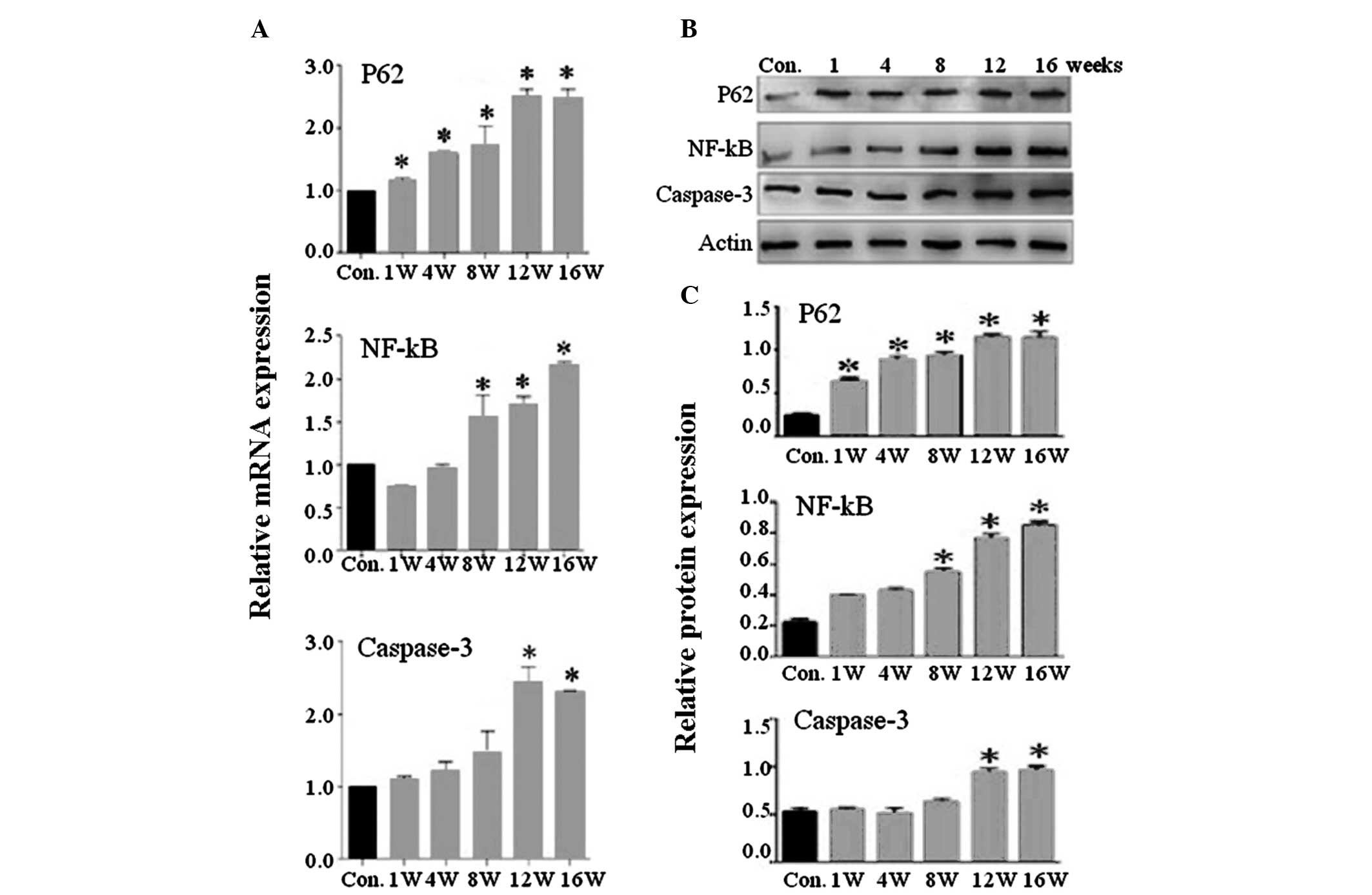
Chronic spinal cord compression is the result of mechanical pressure on the spinal cord, which in contrast to traumatic spinal cord injury, leads to slowly progressing nerve degeneration. These two types of spinal cord injuries may trigger similar mechanisms, including motoric nerve cell apoptosis and autophagy, however, depending on differences in the underlying injury severity, nerve reactions may predominantly involve the conservation of function or the initiation of functions for the removal of irreversibly damaged cells. p62 is a multidomain adapter protein, which is involved in apoptosis and cell survival as well as autophagy, and is a common component of protein aggregations in neurodegenerative diseases. In the present study, a rat chronic spinal cord compression model was used, in which the spinal cord was progressively compressed for six weeks and then constantly compressed for another 10 weeks. As a result Basso, Beattie and Bresnahan locomotor scaling revealed a gradual score decrease until the 6th week followed by constant recovery until the 16th week after spinal cord compression was initiated. During the first eight weeks of the experiment, p62 and nuclear factor‑κB (NF‑κB) were increasingly expressed up to a constant plateau at 12‑16 weeks, whereas caspase 3 exhibited a marginally enhanced expression at 8 weeks, however, reached a constant maximum peak 12‑16 weeks after the beginning of spinal cord compression. It was hypothesized that, in the initial phase of spinal cord compression, enhanced p62 expression triggered NF‑κB activity, directing the cell responses mainly to cell survival and autophagy, whereas following eight weeks of spinal cord compression, caspase 3 was additionally activated indicating cumulative elimination of irreversibly damaged nerve cells with highly activated autophagy.
View Figures

Figure 1

Figure 2

Figure 3

Figure 4

Figure 5

Figure 6

View References

1 

Hayashi H, Okada K, Hamada M, Tada K and Ueno R: Etiologic factors of myelopathy. A radiographic evaluation of the aging changes in the cervical spine. Clin Orthop Relat Res. 200–209. 1987.PubMed/NCBI

2 

Ogino H, Tada K, Okada K, et al: Canal diameter, anteroposterior compression ratio, and spondylotic myelopathy of the cervical spine. Spine (Phila Pa 1976). 8:1–15. 1983. View Article : Google Scholar : PubMed/NCBI

3 

Edwards WC and LaRocca H: The developmental segmental sagittal diameter of the cervical spinal canal in patients with cervical spondylosis. Spine (Phila Pa 1976). 8:20–27. 1983. View Article : Google Scholar : PubMed/NCBI

4 

Ito T, Oyanagi K, Takahashi H, Takahashi HE and Ikuta F: Cervical spondylotic myelopathy. Clinicopathologic study on the progression pattern and thin myelinated fibers of the lesions of seven patients examined during complete autopsy. Spine (Phila Pa 1976). 21:827–833. 1996. View Article : Google Scholar

5 

Gooding MR, Wilson CB and Hoff JT: Experimental cervical myelopathy. Effects of ischemia and compression of the canine cervical spinal cord. J Neurosurg. 43:9–17. 1975. View Article : Google Scholar : PubMed/NCBI

6 

Hukuda S and Wilson CB: Experimental cervical myelopathy: effects of compression and ischemia on the canine cervical cord. J Neurosurg. 37:631–652. 1972. View Article : Google Scholar : PubMed/NCBI

7 

Long HQ, Li GS, Hu Y, Wen CY and Xie WH: HIF-1alpha/VEGF signaling pathway may play a dual role in secondary pathogenesis of cervical myelopathy. Med Hypotheses. 79:82–84. 2012. View Article : Google Scholar : PubMed/NCBI

8 

Fehlings MG and Skaf G: A review of the pathophysiology of cervical spondylotic myelopathy with insights for potential novel mechanisms drawn from traumatic spinal cord injury. Spine (Phila Pa 1976). 23:2730–2737. 1998. View Article : Google Scholar : PubMed/NCBI

9 

Yu WR, Baptiste DC, Liu T, Odrobina E, Stanisz GJ and Fehlings MG: Molecular mechanisms of spinal cord dysfunction and cell death in the spinal hyperostotic mouse: implications for the pathophysiology of human cervical spondylotic myelopathy. Neurobiol Dis. 33:149–163. 2009. View Article : Google Scholar : PubMed/NCBI

10 

Yu WR, Liu T, Kiehl TR and Fehlings MG: Human neuropathological and animal model evidence supporting a role for Fas-mediated apoptosis and inflammation in cervical spondylotic myelopathy. Brain. 134:1277–1292. 2011. View Article : Google Scholar : PubMed/NCBI

11 

Kim DH, Vaccaro AR, Henderson FC and Benzel EC: Molecular biology of cervical myelopathy and spinal cord injury: role of oligodendrocyte apoptosis. Spine J. 3:510–519. 2003. View Article : Google Scholar : PubMed/NCBI

12 

Karadimas SK, Gialeli CH, Klironomos G, et al: The role of oligodendrocytes in the molecular pathobiology and potential molecular treatment of cervical spondylotic myelopathy. Curr Med Chem. 17:1048–1058. 2010. View Article : Google Scholar : PubMed/NCBI

13 

Hara T, Nakamura K, Matsui M, et al: Suppression of basal autophagy in neural cells causes neurodegenerative disease in mice. Nature. 441:885–889. 2006. View Article : Google Scholar : PubMed/NCBI

14 

Komatsu M, Waguri S, Chiba T, et al: Loss of autophagy in the central nervous system causes neurodegeneration in mice. Nature. 441:880–884. 2006. View Article : Google Scholar : PubMed/NCBI

15 

Sarkar S, Ravikumar B, Floto RA and Rubinsztein DC: Rapamycin and mTOR-independent autophagy inducers ameliorate toxicity of polyglutamine-expanded huntingtin and related proteinopathies. Cell Death Differ. 16:46–56. 2009. View Article : Google Scholar : PubMed/NCBI

16 

Pan T, Kondo S, Zhu W, Xie W, Jankovic J and Le W: Neuroprotection of rapamycin in lactacystin-induced neurodegeneration via autophagy enhancement. Neurobiol Dis. 32:16–25. 2008. View Article : Google Scholar : PubMed/NCBI

17 

Wong E and Cuervo AM: Autophagy gone awry in neurodegenerative diseases. Nat Neurosci. 13:805–811. 2010. View Article : Google Scholar : PubMed/NCBI

18 

Keane RW, Kraydieh S, Lotocki G, et al: Apoptotic and anti-apoptotic mechanisms following spinal cord injury. J Neuropathol Exp Neurol. 60:422–429. 2001.PubMed/NCBI

19 

Yoshino O, Matsuno H, Nakamura H, et al: The role of Fas-mediated apoptosis after traumatic spinal cord injury. Spine (Phila Pa 1976). 29:1394–1404. 2004. View Article : Google Scholar : PubMed/NCBI

20 

Casha S, Yu WR and Fehlings MG: FAS deficiency reduces apoptosis, spares axons and improves function after spinal cord injury. Exp Neurol. 196:390–400. 2005. View Article : Google Scholar

21 

Erlich S, Alexandrovich A, Shohami E and Pinkas-Kramarski R: Rapamycin is a neuroprotective treatment for traumatic brain injury. Neurobiol Dis. 26:86–93. 2007. View Article : Google Scholar : PubMed/NCBI

22 

Sekiguchi A, Kanno H, Ozawa H, Yamaya S and Itoi E: Rapamycin promotes autophagy and reduces neural tissue damage and locomotor impairment after spinal cord injury in mice. J Neurotrauma. 29:946–956. 2012. View Article : Google Scholar : PubMed/NCBI

23 

Duran A, Serrano M, Leitges M, et al: The atypical PKC-interacting protein p62 is an important mediator of RANK-activated osteoclastogenesis. Dev Cell. 6:303–309. 2004. View Article : Google Scholar : PubMed/NCBI

24 

Rodriguez A, Durán A, Selloum M, et al: Mature-onset obesity and insulin resistance in mice deficient in the signaling adapter p62. Cell Metab. 3:211–222. 2006. View Article : Google Scholar : PubMed/NCBI

25 

Duran A, Linares JF, Galvez AS, et al: The signaling adaptor p62 is an important NF-kappaB mediator in tumorigenesis. Cancer Cell. 13:343–354. 2008. View Article : Google Scholar

26 

Kuusisto E, Salminen A and Alafuzoff I: Ubiquitin-binding protein p62 is present in neuronal and glial inclusions in human tauopathies and synucleinopathies. Neuroreport. 12:2085–2090. 2001. View Article : Google Scholar : PubMed/NCBI

27 

Zatloukal K, Stumptner C, Fuchsbichler A, et al: p62 is a common component of cytoplasmic inclusions in protein aggregation diseases. Am J Pathol. 160:255–263. 2002. View Article : Google Scholar : PubMed/NCBI

28 

Nagaoka U, Kim K, Jana NR, et al: Increased expression of p62 in expanded polyglutamine-expressing cells and its association with polyglutamine inclusions. J Neurochem. 91:57–68. 2004. View Article : Google Scholar : PubMed/NCBI

29 

Komatsu M, Waguri S, Koike M, et al: Homeostatic levels of p62 control cytoplasmic inclusion body formation in autophagy-deficient mice. Cell. 131:1149–1163. 2007. View Article : Google Scholar : PubMed/NCBI

30 

Jin Z, Li Y, Pitti R, et al: Cullin3-based polyubiquitination and p62-dependent aggregation of caspase-8 mediate extrinsic apoptosis signaling. Cell. 137:721–735. 2009. View Article : Google Scholar : PubMed/NCBI

31 

Sanz L, Diaz-Meco MT, Nakano H and Moscat J: The atypical PKC-interacting protein p62 channels NF-kappaB activation by the IL-1-TRAF6 pathway. EMBO J. 19:1576–1586. 2000. View Article : Google Scholar : PubMed/NCBI

32 

Moscat J, Diaz-Meco MT, Albert A and Campuzano S: Cell signaling and function organized by PB1 domain interactions. Mol Cell. 23:631–640. 2006. View Article : Google Scholar : PubMed/NCBI

33 

Moscat J and Diaz-Meco MT: p62 at the crossroads of autophagy, apoptosis, and cancer. Cell. 137:1001–1004. 2009. View Article : Google Scholar : PubMed/NCBI

34 

Xu P, Gong WM, Li Y, et al: Destructive pathological changes in the rat spinal cord due to chronic mechanical compression. Laboratory investigation. J Neurosurg Spine. 8:279–285. 2008. View Article : Google Scholar

35 

Basso DM, Beattie MS and Bresnahan JC: A sensitive and reliable locomotor rating scale for open field testing in rats. J Neurotrauma. 12:1–21. 1995. View Article : Google Scholar : PubMed/NCBI

36 

Kuusisto E, Kauppinen T and Alafuzoff I: Use of p62/SQSTM1 antibodies for neuropathological diagnosis. Neuropathol Appl Neurobiol. 34:169–180. 2008. View Article : Google Scholar : PubMed/NCBI

37 

Karin M and Lin A: NF-kappaB at the crossroads of life and death. Nat Immunol. 3:221–227. 2002. View Article : Google Scholar : PubMed/NCBI

38 

Sheikh MS and Huang Y: Death receptor activation complexes: it takes two to activate TNF receptor 1. Cell Cycle. 2:550–552. 2003. View Article : Google Scholar : PubMed/NCBI

Related Articles

  • Abstract
  • View
  • Download
  • Twitter
Copy and paste a formatted citation
Spandidos Publications style
Chen Z, Fu Q, Shen B, Huang X, Wang K, He P, Li F, Zhang F and Shen H: Enhanced p62 expression triggers concomitant autophagy and apoptosis in a rat chronic spinal cord compression model. Mol Med Rep 9: 2091-2096, 2014.
APA
Chen, Z., Fu, Q., Shen, B., Huang, X., Wang, K., He, P. ... Shen, H. (2014). Enhanced p62 expression triggers concomitant autophagy and apoptosis in a rat chronic spinal cord compression model. Molecular Medicine Reports, 9, 2091-2096. https://doi.org/10.3892/mmr.2014.2124
MLA
Chen, Z., Fu, Q., Shen, B., Huang, X., Wang, K., He, P., Li, F., Zhang, F., Shen, H."Enhanced p62 expression triggers concomitant autophagy and apoptosis in a rat chronic spinal cord compression model". Molecular Medicine Reports 9.6 (2014): 2091-2096.
Chicago
Chen, Z., Fu, Q., Shen, B., Huang, X., Wang, K., He, P., Li, F., Zhang, F., Shen, H."Enhanced p62 expression triggers concomitant autophagy and apoptosis in a rat chronic spinal cord compression model". Molecular Medicine Reports 9, no. 6 (2014): 2091-2096. https://doi.org/10.3892/mmr.2014.2124
Copy and paste a formatted citation
x
Spandidos Publications style
Chen Z, Fu Q, Shen B, Huang X, Wang K, He P, Li F, Zhang F and Shen H: Enhanced p62 expression triggers concomitant autophagy and apoptosis in a rat chronic spinal cord compression model. Mol Med Rep 9: 2091-2096, 2014.
APA
Chen, Z., Fu, Q., Shen, B., Huang, X., Wang, K., He, P. ... Shen, H. (2014). Enhanced p62 expression triggers concomitant autophagy and apoptosis in a rat chronic spinal cord compression model. Molecular Medicine Reports, 9, 2091-2096. https://doi.org/10.3892/mmr.2014.2124
MLA
Chen, Z., Fu, Q., Shen, B., Huang, X., Wang, K., He, P., Li, F., Zhang, F., Shen, H."Enhanced p62 expression triggers concomitant autophagy and apoptosis in a rat chronic spinal cord compression model". Molecular Medicine Reports 9.6 (2014): 2091-2096.
Chicago
Chen, Z., Fu, Q., Shen, B., Huang, X., Wang, K., He, P., Li, F., Zhang, F., Shen, H."Enhanced p62 expression triggers concomitant autophagy and apoptosis in a rat chronic spinal cord compression model". Molecular Medicine Reports 9, no. 6 (2014): 2091-2096. https://doi.org/10.3892/mmr.2014.2124
Follow us
  • Twitter
  • LinkedIn
  • Facebook
About
  • Spandidos Publications
  • Careers
  • Cookie Policy
  • Privacy Policy
How can we help?
  • Help
  • Live Chat
  • Contact
  • Email to our Support Team