Spandidos Publications Logo
  • About
    • About Spandidos
    • Aims and Scopes
    • Abstracting and Indexing
    • Editorial Policies
    • Reprints and Permissions
    • Job Opportunities
    • Terms and Conditions
    • Contact
  • Journals
    • All Journals
    • Oncology Letters
      • Oncology Letters
      • Information for Authors
      • Editorial Policies
      • Editorial Board
      • Aims and Scope
      • Abstracting and Indexing
      • Bibliographic Information
      • Archive
    • International Journal of Oncology
      • International Journal of Oncology
      • Information for Authors
      • Editorial Policies
      • Editorial Board
      • Aims and Scope
      • Abstracting and Indexing
      • Bibliographic Information
      • Archive
    • Molecular and Clinical Oncology
      • Molecular and Clinical Oncology
      • Information for Authors
      • Editorial Policies
      • Editorial Board
      • Aims and Scope
      • Abstracting and Indexing
      • Bibliographic Information
      • Archive
    • Experimental and Therapeutic Medicine
      • Experimental and Therapeutic Medicine
      • Information for Authors
      • Editorial Policies
      • Editorial Board
      • Aims and Scope
      • Abstracting and Indexing
      • Bibliographic Information
      • Archive
    • International Journal of Molecular Medicine
      • International Journal of Molecular Medicine
      • Information for Authors
      • Editorial Policies
      • Editorial Board
      • Aims and Scope
      • Abstracting and Indexing
      • Bibliographic Information
      • Archive
    • Biomedical Reports
      • Biomedical Reports
      • Information for Authors
      • Editorial Policies
      • Editorial Board
      • Aims and Scope
      • Abstracting and Indexing
      • Bibliographic Information
      • Archive
    • Oncology Reports
      • Oncology Reports
      • Information for Authors
      • Editorial Policies
      • Editorial Board
      • Aims and Scope
      • Abstracting and Indexing
      • Bibliographic Information
      • Archive
    • Molecular Medicine Reports
      • Molecular Medicine Reports
      • Information for Authors
      • Editorial Policies
      • Editorial Board
      • Aims and Scope
      • Abstracting and Indexing
      • Bibliographic Information
      • Archive
    • World Academy of Sciences Journal
      • World Academy of Sciences Journal
      • Information for Authors
      • Editorial Policies
      • Editorial Board
      • Aims and Scope
      • Abstracting and Indexing
      • Bibliographic Information
      • Archive
    • International Journal of Functional Nutrition
      • International Journal of Functional Nutrition
      • Information for Authors
      • Editorial Policies
      • Editorial Board
      • Aims and Scope
      • Abstracting and Indexing
      • Bibliographic Information
      • Archive
    • International Journal of Epigenetics
      • International Journal of Epigenetics
      • Information for Authors
      • Editorial Policies
      • Editorial Board
      • Aims and Scope
      • Abstracting and Indexing
      • Bibliographic Information
      • Archive
    • Medicine International
      • Medicine International
      • Information for Authors
      • Editorial Policies
      • Editorial Board
      • Aims and Scope
      • Abstracting and Indexing
      • Bibliographic Information
      • Archive
  • Articles
  • Information
    • Information for Authors
    • Information for Reviewers
    • Information for Librarians
    • Information for Advertisers
    • Conferences
  • Language Editing
Spandidos Publications Logo
  • About
    • About Spandidos
    • Aims and Scopes
    • Abstracting and Indexing
    • Editorial Policies
    • Reprints and Permissions
    • Job Opportunities
    • Terms and Conditions
    • Contact
  • Journals
    • All Journals
    • Biomedical Reports
      • Information for Authors
      • Editorial Policies
      • Editorial Board
      • Aims and Scope
      • Abstracting and Indexing
      • Bibliographic Information
      • Archive
    • Experimental and Therapeutic Medicine
      • Information for Authors
      • Editorial Policies
      • Editorial Board
      • Aims and Scope
      • Abstracting and Indexing
      • Bibliographic Information
      • Archive
    • International Journal of Epigenetics
      • Information for Authors
      • Editorial Policies
      • Editorial Board
      • Aims and Scope
      • Abstracting and Indexing
      • Bibliographic Information
      • Archive
    • International Journal of Functional Nutrition
      • Information for Authors
      • Editorial Policies
      • Editorial Board
      • Aims and Scope
      • Abstracting and Indexing
      • Bibliographic Information
      • Archive
    • International Journal of Molecular Medicine
      • Information for Authors
      • Editorial Policies
      • Editorial Board
      • Aims and Scope
      • Abstracting and Indexing
      • Bibliographic Information
      • Archive
    • International Journal of Oncology
      • Information for Authors
      • Editorial Policies
      • Editorial Board
      • Aims and Scope
      • Abstracting and Indexing
      • Bibliographic Information
      • Archive
    • Medicine International
      • Information for Authors
      • Editorial Policies
      • Editorial Board
      • Aims and Scope
      • Abstracting and Indexing
      • Bibliographic Information
      • Archive
    • Molecular and Clinical Oncology
      • Information for Authors
      • Editorial Policies
      • Editorial Board
      • Aims and Scope
      • Abstracting and Indexing
      • Bibliographic Information
      • Archive
    • Molecular Medicine Reports
      • Information for Authors
      • Editorial Policies
      • Editorial Board
      • Aims and Scope
      • Abstracting and Indexing
      • Bibliographic Information
      • Archive
    • Oncology Letters
      • Information for Authors
      • Editorial Policies
      • Editorial Board
      • Aims and Scope
      • Abstracting and Indexing
      • Bibliographic Information
      • Archive
    • Oncology Reports
      • Information for Authors
      • Editorial Policies
      • Editorial Board
      • Aims and Scope
      • Abstracting and Indexing
      • Bibliographic Information
      • Archive
    • World Academy of Sciences Journal
      • Information for Authors
      • Editorial Policies
      • Editorial Board
      • Aims and Scope
      • Abstracting and Indexing
      • Bibliographic Information
      • Archive
  • Articles
  • Information
    • For Authors
    • For Reviewers
    • For Librarians
    • For Advertisers
    • Conferences
  • Language Editing
Login Register Submit
  • This site uses cookies
  • You can change your cookie settings at any time by following the instructions in our Cookie Policy. To find out more, you may read our Privacy Policy.

    I agree
Search articles by DOI, keyword, author or affiliation
Search
Advanced Search
presentation
Molecular Medicine Reports
Join Editorial Board Propose a Special Issue
Print ISSN: 1791-2997 Online ISSN: 1791-3004
Journal Cover
July-2014 Volume 10 Issue 1

Full Size Image

Sign up for eToc alerts
Recommend to Library

Journals

International Journal of Molecular Medicine

International Journal of Molecular Medicine

International Journal of Molecular Medicine is an international journal devoted to molecular mechanisms of human disease.

International Journal of Oncology

International Journal of Oncology

International Journal of Oncology is an international journal devoted to oncology research and cancer treatment.

Molecular Medicine Reports

Molecular Medicine Reports

Covers molecular medicine topics such as pharmacology, pathology, genetics, neuroscience, infectious diseases, molecular cardiology, and molecular surgery.

Oncology Reports

Oncology Reports

Oncology Reports is an international journal devoted to fundamental and applied research in Oncology.

Experimental and Therapeutic Medicine

Experimental and Therapeutic Medicine

Experimental and Therapeutic Medicine is an international journal devoted to laboratory and clinical medicine.

Oncology Letters

Oncology Letters

Oncology Letters is an international journal devoted to Experimental and Clinical Oncology.

Biomedical Reports

Biomedical Reports

Explores a wide range of biological and medical fields, including pharmacology, genetics, microbiology, neuroscience, and molecular cardiology.

Molecular and Clinical Oncology

Molecular and Clinical Oncology

International journal addressing all aspects of oncology research, from tumorigenesis and oncogenes to chemotherapy and metastasis.

World Academy of Sciences Journal

World Academy of Sciences Journal

Multidisciplinary open-access journal spanning biochemistry, genetics, neuroscience, environmental health, and synthetic biology.

International Journal of Functional Nutrition

International Journal of Functional Nutrition

Open-access journal combining biochemistry, pharmacology, immunology, and genetics to advance health through functional nutrition.

International Journal of Epigenetics

International Journal of Epigenetics

Publishes open-access research on using epigenetics to advance understanding and treatment of human disease.

Medicine International

Medicine International

An International Open Access Journal Devoted to General Medicine.

Journal Cover
July-2014 Volume 10 Issue 1

Full Size Image

Sign up for eToc alerts
Recommend to Library

  • Article
  • Citations
    • Cite This Article
    • Download Citation
    • Create Citation Alert
    • Remove Citation Alert
    • Cited By
  • Similar Articles
    • Related Articles (in Spandidos Publications)
    • Similar Articles (Google Scholar)
    • Similar Articles (PubMed)
  • Download PDF
  • Download XML
  • View XML
Article

Prevalence and range of GJB2 and SLC26A4 mutations in patients with autosomal recessive non‑syndromic hearing loss

  • Authors:
    • Hua Jiang
    • Jia Chen
    • Xin‑Ji Shan
    • Ying Li
    • Jian‑Guo He
    • Bei‑Bei Yang
  • View Affiliations / Copyright

    Affiliations: Department of Otolaryngology, Second Affiliated Hospital, School of Medicine, Zhejiang University, Hangzhou, Zhejiang 310009, P.R. China
  • Pages: 379-386
    |
    Published online on: April 15, 2014
       https://doi.org/10.3892/mmr.2014.2148
  • Expand metrics +
Metrics: Total Views: 0 (Spandidos Publications: | PMC Statistics: )
Metrics: Total PDF Downloads: 0 (Spandidos Publications: | PMC Statistics: )
Cited By (CrossRef): 0 citations Loading Articles...

This article is mentioned in:


Abstract

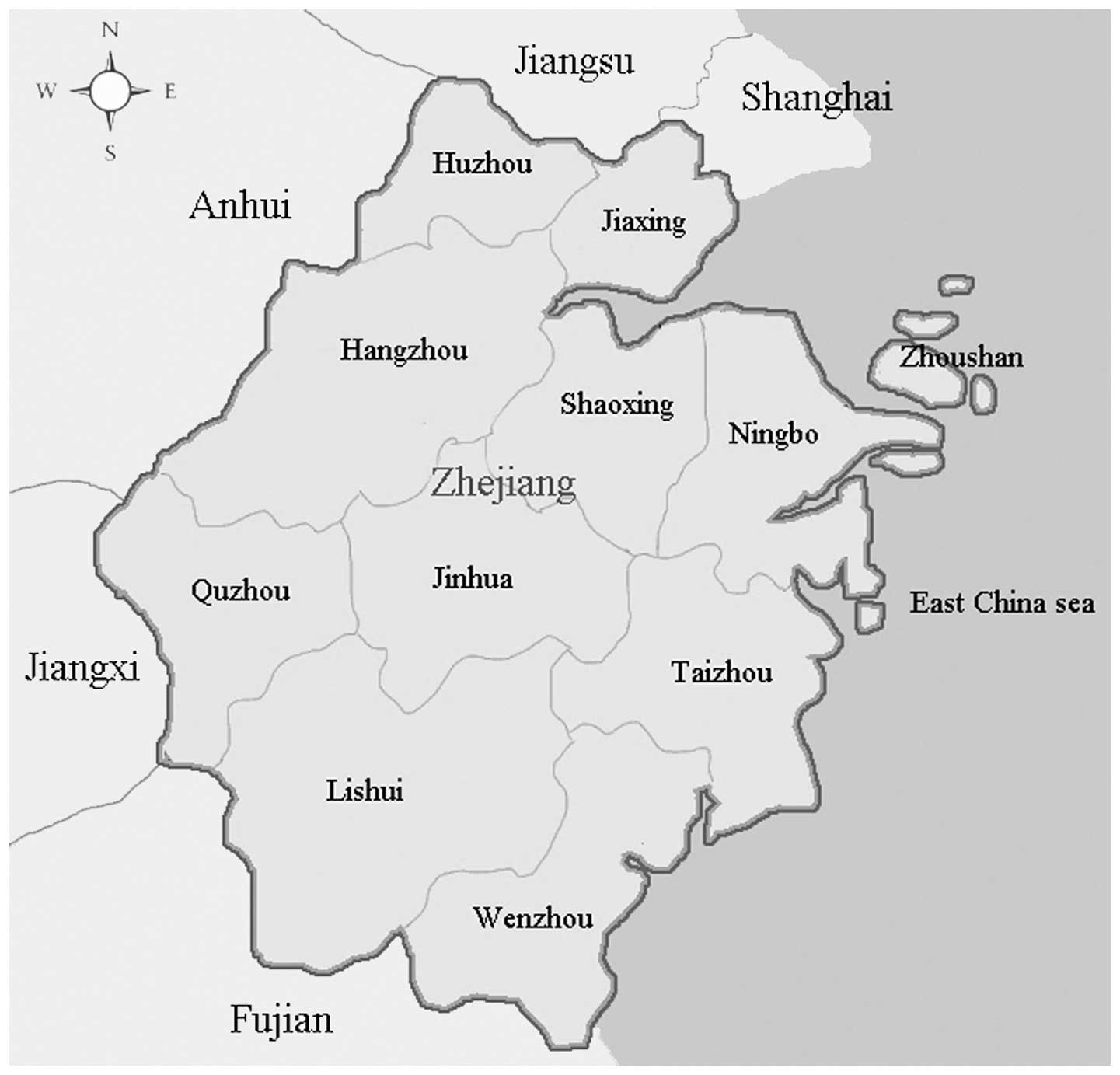
The frequency and distribution of genetic mutations that cause deafness differ significantly according to ethnic group and region. Zhejiang is a province in the southeast of China, with an exceptional racial composition of the population caused by mass migration in ancient China. The purpose of the present study was to investigate the prevalence and spectrum of gap junction‑β2 (GJB2), solute carrier family 26 (anion exchanger) member 4 (SLC26A4) and GJB3 mutations in patients with autosomal recessive non‑syndromic hearing loss (ARNHL) in this area. A total of 176 unrelated pediatric patients with ARNHL were enrolled in the study. A genomic DNA sample was extracted from the peripheral blood. Polymerase chain reaction was employed, and the products were sequenced to screen for mutations in GJB2. In addition, a SNaPshot sequencing method was utilized to detect four hotspot mutations in SLC26A4 (IVS7‑2A>G and c.2168A>G) and GJB3 (c.538C>T and c.547G>A). All patients were subjected to a temporal bone computed tomography scan to identify enlarged vestibular aqueducts (EVA). In total, 14 different mutations, including two new mutations (p.W44L and p.D66N) of GJB2, were detected. The most common pathogenic mutation of GJB2 was c.235delC (15.1%), followed by c.176_191del16 (1.7%), c.299_300delAT (1.7%), c.508_511dup (0.85%) and c.35delG (0.28%) of the total alleles. Mutation analysis of SLC26A4 demonstrated that 13.6% (24/176) of patients carried at least one mutant allele. The patients with EVA (84.2%) had SLC26A4 mutations, and 31% had homozygous mutations. Only one patient carried a heterozygous mutation of GJB3 (c.538C>T). Compared with the other regions of China, in the present population cohort, the prevalence and spectrum of mutations in GJB2 was unique, and in patients with EVA the frequency of a homozygous mutation in SLC26A4 was significantly lower. These findings may be of benefit in genetic counseling and risk assessment for families from this area of China.
View Figures

Figure 1

View References

1 

Morton NE: Genetic epidemiology of hearing impairment. Ann NY Acad Sci. 630:16–31. 1991. View Article : Google Scholar : PubMed/NCBI

2 

Wang QJ, Zhao YL, Rao SQ, Guo YF, He Y, Lan L, et al: Newborn hearing concurrent gene screening can improve care for hearing loss: a study on 14,913 Chinese newborns. Int J Pediatr Otorhinolaryngol. 75:535–542. 2011. View Article : Google Scholar : PubMed/NCBI

3 

Dai P, Liu X, Yu F, Zhu QW, Yuan YY, Yang SZ, et al: Molecular etiology of patients with nonsyndromic hearing loss from deaf-mute schools in 18 provinces of China. Chinese J Otol. 1:1–5. 2006.

4 

Smith RJ, Bale JF Jr and White KR: Sensorineural hearing loss in children. Lancet. 365:879–890. 2005. View Article : Google Scholar : PubMed/NCBI

5 

Kenneson A, Van Naarden Braun K and Boyle C: GJB2 (connexin 26) variants and nonsyndromic sensorineural hearing loss: a HuGE review. Genet Med. 4:258–274. 2002. View Article : Google Scholar : PubMed/NCBI

6 

Yuan Y, You Y, Huang D, Cui J, Wang Y, Wang Q, et al: Comprehensive molecular etiology analysis of nonsyndromic hearing impairment from typical areas in China. J Transl Med. 7:792009. View Article : Google Scholar : PubMed/NCBI

7 

Goodenough DA, Goliger JA and Paul DL: Connexins, connexons, and intercellular communication. Annu Rev Biochem. 65:475–502. 1996. View Article : Google Scholar : PubMed/NCBI

8 

Bruzzone R, White TW and Paul DL: Connections with connexins: the molecular basis of direct intercellular signaling. Eur J Biochem. 238:1–27. 1996. View Article : Google Scholar : PubMed/NCBI

9 

Simon AM and Goodenough DA: Diverse functions of vertebrate gap junctions. Trends Cell Biol. 8:477–483. 1998. View Article : Google Scholar

10 

Wangemann P: K+ cycling and the endocochlear potential. Hear Res. 165:1–9. 2002.

11 

Kikuchi T, Kimura RS, Paul DL, Takasaka T and Adams JC: Gap junction systems in the mammalian cochlea. Brain Res Brain Res Rev. 32:163–166. 2000. View Article : Google Scholar : PubMed/NCBI

12 

The Connexin-Deafness Homepage. http://davinci.crg.es/deafness. Accessed August 20, 2013

13 

Gabriel H, Kupsch P, Sudendey J, Winterhager E, Jahnke K and Lautermann J: Mutations in the connexin26/GJB2 gene are the most common event in non-syndromic hearing loss among the German population. Hum Mutat. 17:521–522. 2001. View Article : Google Scholar : PubMed/NCBI

14 

Morell RJ, Kim HJ, Hood LJ, Goforth L, Friderici K, Fisher R, et al: Mutations in the connexin 26 gene (GJB2) among Ashkenazi Jews with nonsyndromic recessive deafness. N Engl J Med. 339:1500–1505. 1998. View Article : Google Scholar : PubMed/NCBI

15 

Dai P, Yu F, Han B, Liu X, Wang G, Li Q, et al: GJB2 mutation spectrum in 2,063 Chinese patients with nonsyndromic hearing impairment. J Transl Med. 7:262009. View Article : Google Scholar : PubMed/NCBI

16 

Liu XZ, Yuan Y, Yan D, Ding EH, Ouyang XM, Fei Y, et al: Digenic inheritance of non-syndromic deafness caused by mutations at the gap junction proteins Cx26 and Cx31. Hum Genet. 125:53–62. 2009. View Article : Google Scholar : PubMed/NCBI

17 

Xia JH, Liu CY, Tang BS, Pan Q, Huang L, Dai HP, et al: Mutations in the gene encoding gap junction protein beta-3 associated with autosomal dominant hearing impairment. Nat Genet. 20:370–373. 1998. View Article : Google Scholar : PubMed/NCBI

18 

Liu XZ, Xia XJ, Xu LR, Pandya A, Liang CY, Blanton SH, et al: Mutations in connexin31 underlie recessive as well as dominant non-syndromic hearing loss. Hum Mol Genet. 9:63–67. 2000. View Article : Google Scholar : PubMed/NCBI

19 

Alexandrino F, Oliveira CA, Reis FC, Maciel-Guerra AT and Sartorato EL: Screening for mutations in the GJB3 gene in Brazilian patients with nonsyndromic deafness. J Appl Genet. 45:249–254. 2004.PubMed/NCBI

20 

Everett LA, Morsli H, Wu DK and Green ED: Expression pattern of the mouse ortholog of the Pendred’s syndrome gene (Pds) suggests a key role for pendrin in the inner ear. Proc Natl Acad Sci USA. 96:9727–9732. 1999.

21 

Wangemann P, Nakaya K, Wu T, Maganti RJ, Itza EM, Sanneman JD, et al: Loss of cochlear HCO3− secretion causes deafness via endolymphatic acidification and inhibition of Ca2+ reabsorption in a Pendred syndrome mouse model. Am J Physiol Renal Physiol. 292:F1345–F1353. 2007.

22 

Everett LA, Belyantseva IA, Noben-Trauth K, Cantos R, Chen A, Thakkar SI, et al: Targeted disruption of mouse Pds provides insight about the inner-ear defects encountered in Pendred syndrome. Hum Mol Genet. 10:153–161. 2001. View Article : Google Scholar : PubMed/NCBI

23 

Campbell C, Cucci RA, Prasad S, Green GE, Edeal JB, Galer CE, et al: Pendred syndrome, DFNB4, and PDS/SLC26A4 identification of eight novel mutations and possible genotype-phenotype correlations. Hum Mutat. 17:403–411. 2001. View Article : Google Scholar : PubMed/NCBI

24 

Park HJ, Shaukat S, Liu XZ, Hahn SH, Naz S, Ghosh M, et al: Origins and frequencies of SLC26A4 (PDS) mutations in east and south Asians: global implications for the epidemiology of deafness. J Med Genet. 40:242–248. 2003. View Article : Google Scholar : PubMed/NCBI

25 

Yuan Y, Guo W, Tang J, Zhang G, Wang G, Han M, et al: Molecular epidemiology and functional assessment of novel allelic variants of SLC26A4 in non-syndromic hearing loss patients with enlarged vestibular aqueduct in China. PLoS One. 7:e499842012. View Article : Google Scholar : PubMed/NCBI

26 

Hu X, Liang F, Zhao M, Gong A, Berry ER, Shi Y, et al: Mutational analysis of the SLC26A4 gene in Chinese sporadic nonsyndromic hearing-impaired children. Int J Pediatr Otorhinolaryngol. 76:1474–1480. 2012. View Article : Google Scholar : PubMed/NCBI

27 

Qu C, Sun X, Shi Y, Gong A, Liang S, Zhao M, et al: Microarray-based mutation detection of pediatric sporadic nonsyndromic hearing loss in China. Int J Pediatr Otorhinolaryngol. 76:235–239. 2012. View Article : Google Scholar : PubMed/NCBI

28 

Murgia A, Orzan E, Polli R, Martella M, Vinanzi C, Leonardi E, et al: Cx26 deafness: mutation analysis and clinical variability. J Med Genet. 36:829–832. 1999.PubMed/NCBI

29 

Liu Y, Ke X, Qi Y, Li W and Zhu P: Connexin26 gene (GJB2): prevalence of mutations in the Chinese population. J Hum Genet. 47:688–690. 2002. View Article : Google Scholar : PubMed/NCBI

30 

Pryor SP, Madeo AC, Reynolds JC, Sarlis NJ, Arnos KS, Nance WE, et al: SLC26A4/PDS genotype-phenotype correlation in hearing loss with enlargement of the vestibular aqueduct (EVA): evidence that Pendred syndrome and non-syndromic EVA are distinct clinical and genetic entities. J Med Genet. 42:159–165. 2005. View Article : Google Scholar

31 

Dai P, Yuan Y, Huang D, Zhu X, Yu F, Kang D, et al: Molecular etiology of hearing impairment in Inner Mongolia: mutations in SLC26A4 gene and relevant phenotype analysis. J Transl Med. 6:742008. View Article : Google Scholar : PubMed/NCBI

32 

Valvassori GE and Clemis JD: The large vestibular aqueduct syndrome. Laryngoscope. 88:723–728. 1978.

33 

Chen G, He F, Fu S and Dong J: GJB2 and mitochondrial DNA 1555A>G mutations in students with hearing loss in the Hubei Province of China. Int J Pediatr Otorhinolaryngol. 75:1156–1159. 2011.

34 

Wu BL, Lindeman N, Lip V, et al: Effectiveness of sequencing connexin 26 (GJB2) in cases of familial or sporadic childhood deafness referred for molecular diagnostic testing. Genet Med. 4:279–288. 2002. View Article : Google Scholar : PubMed/NCBI

35 

Ma Y, Yang T, Li Y, et al: Genotype-phenotype correlation of two prevalent GJB2 mutations in Chinese newborn infants ascertained from the Universal Newborn Hearing Screening Program. Am J Med Genet A. 152A:2912–2915. 2010. View Article : Google Scholar : PubMed/NCBI

36 

Ji YB, Han DY, Lan L, Wang DY, Zong L, Zhao FF, et al: Molecular epidemiological analysis of mitochondrial DNA12SrRNA A1555G, GJB2, and SLC26A4 mutations in sporadic outpatients with nonsyndromic sensorineural hearing loss in China. Acta Otolaryngol. 131:124–129. 2011. View Article : Google Scholar

37 

Tekin M, Xia XJ, Erdenetungalag R, Cengiz FB, White TW, Radnaabazar J, et al: GJB2 mutations in Mongolia: complex alleles, low frequency, and reduced fitness of the deaf. Ann Hum Genet. 74:155–164. 2010. View Article : Google Scholar : PubMed/NCBI

38 

Kelley PM, Harris DJ, Comer BC, Askew JW, Fowler T, Smith SD, et al: Novel mutations in the connexin 26 gene (GJB2) that cause autosomal recessive (DFNB1) hearing loss. Am J Hum Genet. 62:792–799. 1998. View Article : Google Scholar : PubMed/NCBI

39 

Bruzzone R, Veronesi V, Gomès D, Bicego M, Duval N, Marlin S, et al: Loss-of-function and residual channel activity of connexin26 mutations associated with non-syndromic deafness. FEBS Lett. 533:79–88. 2003. View Article : Google Scholar : PubMed/NCBI

40 

Snoeckx RL, Huygen PL, Feldmann D, Marlin S, Denoyelle F, Waligora J, et al: GJB2 mutations and degree of hearing loss: a multicenter study. Am J Hum Genet. 77:945–957. 2005. View Article : Google Scholar : PubMed/NCBI

41 

Oguchi T, Ohtsuka A, Hashimoto S, Oshima A, Abe S, Kobayashi Y, et al: Clinical features of patients with GJB2 (connexin 26) mutations: severity of hearing loss is correlated with genotypes and protein expression patterns. J Hum Genet. 50:76–83. 2005. View Article : Google Scholar : PubMed/NCBI

42 

Huculak C, Bruyere H, Nelson TN, Kozak FK and Langlois S: V37I connexin 26 allele in patients with sensorineural hearing loss: evidence of its pathogenicity. Am J Med Genet A. 140:2394–2400. 2006. View Article : Google Scholar : PubMed/NCBI

43 

Hayashi C, Funayama M, Li Y, Kamiya K, Kawano A, Suzuki M, et al: Prevalence of GJB2 causing recessive profound non-syndromic deafness in Japanese children. Int J Pediatr Otorhinolaryngol. 75:211–214. 2011. View Article : Google Scholar : PubMed/NCBI

44 

Liu XZ, Xia XJ, Ke XM, Ouyang XM, Du LL, Liu YH, et al: The prevalence of connexin 26 ( GJB2) mutations in the Chinese population. Hum Genet. 111:394–397. 2002. View Article : Google Scholar : PubMed/NCBI

45 

Paneto GG, Köhnemann S, Martins JA, Cicarelli RM and Pfeiffer H: A single multiplex PCR and SNaPshot minisequencing reaction of 42 SNPs to classify admixture populations into mitochondrial DNA haplogroups. Mitochondrion. 11:296–302. 2011. View Article : Google Scholar : PubMed/NCBI

46 

Speiser PW and White PC: Congenital adrenal hyperplasia. N Engl J Med. 349:776–788. 2003. View Article : Google Scholar : PubMed/NCBI

47 

Kirchhoff T, Gaudet MM, Antoniou AC, McGuffog L, Humphreys MK, Dunning AM, et al: Breast cancer risk and 6q22.33: combined results from Breast Cancer Association Consortium and Consortium of Investigators on Modifiers of BRCA1/2. PLoS One. 7:e357062012. View Article : Google Scholar : PubMed/NCBI

48 

Sagong B, Baek JI, Oh SK, Na KJ, Bae JW, Choi SY, et al: A rapid method for simultaneous screening of multi-gene mutations associated with hearing loss in the Korean population. PLoS One. 8:e572372013. View Article : Google Scholar : PubMed/NCBI

49 

Wang QJ, Zhao YL, Rao SQ, Guo YF, Yuan H, Zong L, et al: A distinct spectrum of SLC26A4 mutations in patients with enlarged vestibular aqueduct in China. Clin Genet. 72:245–254. 2007. View Article : Google Scholar : PubMed/NCBI

50 

Choi BY, Stewart AK, Madeo AC, Pryor SP, Lenhard S, Kittles R, et al: Hypo-functional SLC26A4 variants associated with nonsyndromic hearing loss and enlargement of the vestibular aqueduct: genotype-phenotype correlation or coincidental polymorphisms? Hum Mutat. 30:599–608. 2009. View Article : Google Scholar : PubMed/NCBI

51 

Tsukamoto K, Suzuki H, Harada D, Namba A, Abe S and Usami S: Distribution and frequencies of PDS (SLC26A4) mutations in Pendred syndrome and nonsyndromic hearing loss associated with enlarged vestibular aqueduct: a unique spectrum of mutations in Japanese. Eur J Hum Genet. 11:916–922. 2003. View Article : Google Scholar : PubMed/NCBI

52 

Park HJ, Lee SJ, Jin HS, Lee JO, Go SH, Jang HS, et al: Genetic basis of hearing loss associated with enlarged vestibular aqueducts in Koreans. Clin Genet. 67:160–165. 2005. View Article : Google Scholar : PubMed/NCBI

53 

Azaiez H, Yang T, Prasad S, Sorensen JL, Nishimura CJ, Kimberling WJ, et al: Genotype-phenotype correlations for SLC26A4-related deafness. Hum Genet. 122:451–457. 2007. View Article : Google Scholar : PubMed/NCBI

54 

Albert S, Blons H, Jonard L, Feldmann D, Chauvin P, Loundon N, et al: SLC26A4 gene is frequently involved in nonsyndromic hearing impairment with enlarged vestibular aqueduct in Caucasian populations. Eur J Hum Genet. 14:773–779. 2006. View Article : Google Scholar : PubMed/NCBI

55 

de Moraes VC, dos Santos NZ, Ramos PZ, Svidnicki MC, Castilho AM and Sartorato EL: Molecular analysis of SLC26A4 gene in patients with nonsyndromic hearing loss and EVA: identification of two novel mutations in Brazilian patients. Int J Pediatr Otorhinolaryngol. 77:410–413. 2013.PubMed/NCBI

Related Articles

  • Abstract
  • View
  • Download
  • Twitter
Copy and paste a formatted citation
Spandidos Publications style
Jiang H, Chen J, Shan XJ, Li Y, He JG and Yang BB: Prevalence and range of GJB2 and SLC26A4 mutations in patients with autosomal recessive non‑syndromic hearing loss. Mol Med Rep 10: 379-386, 2014.
APA
Jiang, H., Chen, J., Shan, X., Li, Y., He, J., & Yang, B. (2014). Prevalence and range of GJB2 and SLC26A4 mutations in patients with autosomal recessive non‑syndromic hearing loss. Molecular Medicine Reports, 10, 379-386. https://doi.org/10.3892/mmr.2014.2148
MLA
Jiang, H., Chen, J., Shan, X., Li, Y., He, J., Yang, B."Prevalence and range of GJB2 and SLC26A4 mutations in patients with autosomal recessive non‑syndromic hearing loss". Molecular Medicine Reports 10.1 (2014): 379-386.
Chicago
Jiang, H., Chen, J., Shan, X., Li, Y., He, J., Yang, B."Prevalence and range of GJB2 and SLC26A4 mutations in patients with autosomal recessive non‑syndromic hearing loss". Molecular Medicine Reports 10, no. 1 (2014): 379-386. https://doi.org/10.3892/mmr.2014.2148
Copy and paste a formatted citation
x
Spandidos Publications style
Jiang H, Chen J, Shan XJ, Li Y, He JG and Yang BB: Prevalence and range of GJB2 and SLC26A4 mutations in patients with autosomal recessive non‑syndromic hearing loss. Mol Med Rep 10: 379-386, 2014.
APA
Jiang, H., Chen, J., Shan, X., Li, Y., He, J., & Yang, B. (2014). Prevalence and range of GJB2 and SLC26A4 mutations in patients with autosomal recessive non‑syndromic hearing loss. Molecular Medicine Reports, 10, 379-386. https://doi.org/10.3892/mmr.2014.2148
MLA
Jiang, H., Chen, J., Shan, X., Li, Y., He, J., Yang, B."Prevalence and range of GJB2 and SLC26A4 mutations in patients with autosomal recessive non‑syndromic hearing loss". Molecular Medicine Reports 10.1 (2014): 379-386.
Chicago
Jiang, H., Chen, J., Shan, X., Li, Y., He, J., Yang, B."Prevalence and range of GJB2 and SLC26A4 mutations in patients with autosomal recessive non‑syndromic hearing loss". Molecular Medicine Reports 10, no. 1 (2014): 379-386. https://doi.org/10.3892/mmr.2014.2148
Follow us
  • Twitter
  • LinkedIn
  • Facebook
About
  • Spandidos Publications
  • Careers
  • Cookie Policy
  • Privacy Policy
How can we help?
  • Help
  • Live Chat
  • Contact
  • Email to our Support Team