Spandidos Publications Logo
  • About
    • About Spandidos
    • Aims and Scopes
    • Abstracting and Indexing
    • Editorial Policies
    • Reprints and Permissions
    • Job Opportunities
    • Terms and Conditions
    • Contact
  • Journals
    • All Journals
    • Oncology Letters
      • Oncology Letters
      • Information for Authors
      • Editorial Policies
      • Editorial Board
      • Aims and Scope
      • Abstracting and Indexing
      • Bibliographic Information
      • Archive
    • International Journal of Oncology
      • International Journal of Oncology
      • Information for Authors
      • Editorial Policies
      • Editorial Board
      • Aims and Scope
      • Abstracting and Indexing
      • Bibliographic Information
      • Archive
    • Molecular and Clinical Oncology
      • Molecular and Clinical Oncology
      • Information for Authors
      • Editorial Policies
      • Editorial Board
      • Aims and Scope
      • Abstracting and Indexing
      • Bibliographic Information
      • Archive
    • Experimental and Therapeutic Medicine
      • Experimental and Therapeutic Medicine
      • Information for Authors
      • Editorial Policies
      • Editorial Board
      • Aims and Scope
      • Abstracting and Indexing
      • Bibliographic Information
      • Archive
    • International Journal of Molecular Medicine
      • International Journal of Molecular Medicine
      • Information for Authors
      • Editorial Policies
      • Editorial Board
      • Aims and Scope
      • Abstracting and Indexing
      • Bibliographic Information
      • Archive
    • Biomedical Reports
      • Biomedical Reports
      • Information for Authors
      • Editorial Policies
      • Editorial Board
      • Aims and Scope
      • Abstracting and Indexing
      • Bibliographic Information
      • Archive
    • Oncology Reports
      • Oncology Reports
      • Information for Authors
      • Editorial Policies
      • Editorial Board
      • Aims and Scope
      • Abstracting and Indexing
      • Bibliographic Information
      • Archive
    • Molecular Medicine Reports
      • Molecular Medicine Reports
      • Information for Authors
      • Editorial Policies
      • Editorial Board
      • Aims and Scope
      • Abstracting and Indexing
      • Bibliographic Information
      • Archive
    • World Academy of Sciences Journal
      • World Academy of Sciences Journal
      • Information for Authors
      • Editorial Policies
      • Editorial Board
      • Aims and Scope
      • Abstracting and Indexing
      • Bibliographic Information
      • Archive
    • International Journal of Functional Nutrition
      • International Journal of Functional Nutrition
      • Information for Authors
      • Editorial Policies
      • Editorial Board
      • Aims and Scope
      • Abstracting and Indexing
      • Bibliographic Information
      • Archive
    • International Journal of Epigenetics
      • International Journal of Epigenetics
      • Information for Authors
      • Editorial Policies
      • Editorial Board
      • Aims and Scope
      • Abstracting and Indexing
      • Bibliographic Information
      • Archive
    • Medicine International
      • Medicine International
      • Information for Authors
      • Editorial Policies
      • Editorial Board
      • Aims and Scope
      • Abstracting and Indexing
      • Bibliographic Information
      • Archive
  • Articles
  • Information
    • Information for Authors
    • Information for Reviewers
    • Information for Librarians
    • Information for Advertisers
    • Conferences
  • Language Editing
Spandidos Publications Logo
  • About
    • About Spandidos
    • Aims and Scopes
    • Abstracting and Indexing
    • Editorial Policies
    • Reprints and Permissions
    • Job Opportunities
    • Terms and Conditions
    • Contact
  • Journals
    • All Journals
    • Biomedical Reports
      • Information for Authors
      • Editorial Policies
      • Editorial Board
      • Aims and Scope
      • Abstracting and Indexing
      • Bibliographic Information
      • Archive
    • Experimental and Therapeutic Medicine
      • Information for Authors
      • Editorial Policies
      • Editorial Board
      • Aims and Scope
      • Abstracting and Indexing
      • Bibliographic Information
      • Archive
    • International Journal of Epigenetics
      • Information for Authors
      • Editorial Policies
      • Editorial Board
      • Aims and Scope
      • Abstracting and Indexing
      • Bibliographic Information
      • Archive
    • International Journal of Functional Nutrition
      • Information for Authors
      • Editorial Policies
      • Editorial Board
      • Aims and Scope
      • Abstracting and Indexing
      • Bibliographic Information
      • Archive
    • International Journal of Molecular Medicine
      • Information for Authors
      • Editorial Policies
      • Editorial Board
      • Aims and Scope
      • Abstracting and Indexing
      • Bibliographic Information
      • Archive
    • International Journal of Oncology
      • Information for Authors
      • Editorial Policies
      • Editorial Board
      • Aims and Scope
      • Abstracting and Indexing
      • Bibliographic Information
      • Archive
    • Medicine International
      • Information for Authors
      • Editorial Policies
      • Editorial Board
      • Aims and Scope
      • Abstracting and Indexing
      • Bibliographic Information
      • Archive
    • Molecular and Clinical Oncology
      • Information for Authors
      • Editorial Policies
      • Editorial Board
      • Aims and Scope
      • Abstracting and Indexing
      • Bibliographic Information
      • Archive
    • Molecular Medicine Reports
      • Information for Authors
      • Editorial Policies
      • Editorial Board
      • Aims and Scope
      • Abstracting and Indexing
      • Bibliographic Information
      • Archive
    • Oncology Letters
      • Information for Authors
      • Editorial Policies
      • Editorial Board
      • Aims and Scope
      • Abstracting and Indexing
      • Bibliographic Information
      • Archive
    • Oncology Reports
      • Information for Authors
      • Editorial Policies
      • Editorial Board
      • Aims and Scope
      • Abstracting and Indexing
      • Bibliographic Information
      • Archive
    • World Academy of Sciences Journal
      • Information for Authors
      • Editorial Policies
      • Editorial Board
      • Aims and Scope
      • Abstracting and Indexing
      • Bibliographic Information
      • Archive
  • Articles
  • Information
    • For Authors
    • For Reviewers
    • For Librarians
    • For Advertisers
    • Conferences
  • Language Editing
Login Register Submit
  • This site uses cookies
  • You can change your cookie settings at any time by following the instructions in our Cookie Policy. To find out more, you may read our Privacy Policy.

    I agree
Search articles by DOI, keyword, author or affiliation
Search
Advanced Search
presentation
Molecular Medicine Reports
Join Editorial Board Propose a Special Issue
Print ISSN: 1791-2997 Online ISSN: 1791-3004
Journal Cover
July-2014 Volume 10 Issue 1

Full Size Image

Sign up for eToc alerts
Recommend to Library

Journals

International Journal of Molecular Medicine

International Journal of Molecular Medicine

International Journal of Molecular Medicine is an international journal devoted to molecular mechanisms of human disease.

International Journal of Oncology

International Journal of Oncology

International Journal of Oncology is an international journal devoted to oncology research and cancer treatment.

Molecular Medicine Reports

Molecular Medicine Reports

Covers molecular medicine topics such as pharmacology, pathology, genetics, neuroscience, infectious diseases, molecular cardiology, and molecular surgery.

Oncology Reports

Oncology Reports

Oncology Reports is an international journal devoted to fundamental and applied research in Oncology.

Experimental and Therapeutic Medicine

Experimental and Therapeutic Medicine

Experimental and Therapeutic Medicine is an international journal devoted to laboratory and clinical medicine.

Oncology Letters

Oncology Letters

Oncology Letters is an international journal devoted to Experimental and Clinical Oncology.

Biomedical Reports

Biomedical Reports

Explores a wide range of biological and medical fields, including pharmacology, genetics, microbiology, neuroscience, and molecular cardiology.

Molecular and Clinical Oncology

Molecular and Clinical Oncology

International journal addressing all aspects of oncology research, from tumorigenesis and oncogenes to chemotherapy and metastasis.

World Academy of Sciences Journal

World Academy of Sciences Journal

Multidisciplinary open-access journal spanning biochemistry, genetics, neuroscience, environmental health, and synthetic biology.

International Journal of Functional Nutrition

International Journal of Functional Nutrition

Open-access journal combining biochemistry, pharmacology, immunology, and genetics to advance health through functional nutrition.

International Journal of Epigenetics

International Journal of Epigenetics

Publishes open-access research on using epigenetics to advance understanding and treatment of human disease.

Medicine International

Medicine International

An International Open Access Journal Devoted to General Medicine.

Journal Cover
July-2014 Volume 10 Issue 1

Full Size Image

Sign up for eToc alerts
Recommend to Library

  • Article
  • Citations
    • Cite This Article
    • Download Citation
    • Create Citation Alert
    • Remove Citation Alert
    • Cited By
  • Similar Articles
    • Related Articles (in Spandidos Publications)
    • Similar Articles (Google Scholar)
    • Similar Articles (PubMed)
  • Download PDF
  • Download XML
  • View XML
Article

Peroxisome proliferator-activated receptor γ ligands inhibit VEGF-mediated vasculogenic mimicry of prostate cancer through the AKT signaling pathway

  • Authors:
    • Liang Qin
    • Ye Ren
    • An-Min Chen
    • Feng-Jing Guo
    • Fei Xu
    • Chen Gong
    • Peng Cheng
    • Yu Du
    • Hui Liao
  • View Affiliations / Copyright

    Affiliations: Department of Orthopedics, Tongji Hospital, Tongji Medical College, Huazhong University of Science and Technology, Wuhan, Hubei 430030, P.R. China, Department of Oncology, Tongji Hospital, Tongji Medical College, Huazhong University of Science and Technology, Wuhan, Hubei 430030, P.R. China
  • Pages: 276-282
    |
    Published online on: April 29, 2014
       https://doi.org/10.3892/mmr.2014.2198
  • Expand metrics +
Metrics: Total Views: 0 (Spandidos Publications: | PMC Statistics: )
Metrics: Total PDF Downloads: 0 (Spandidos Publications: | PMC Statistics: )
Cited By (CrossRef): 0 citations Loading Articles...

This article is mentioned in:


Abstract

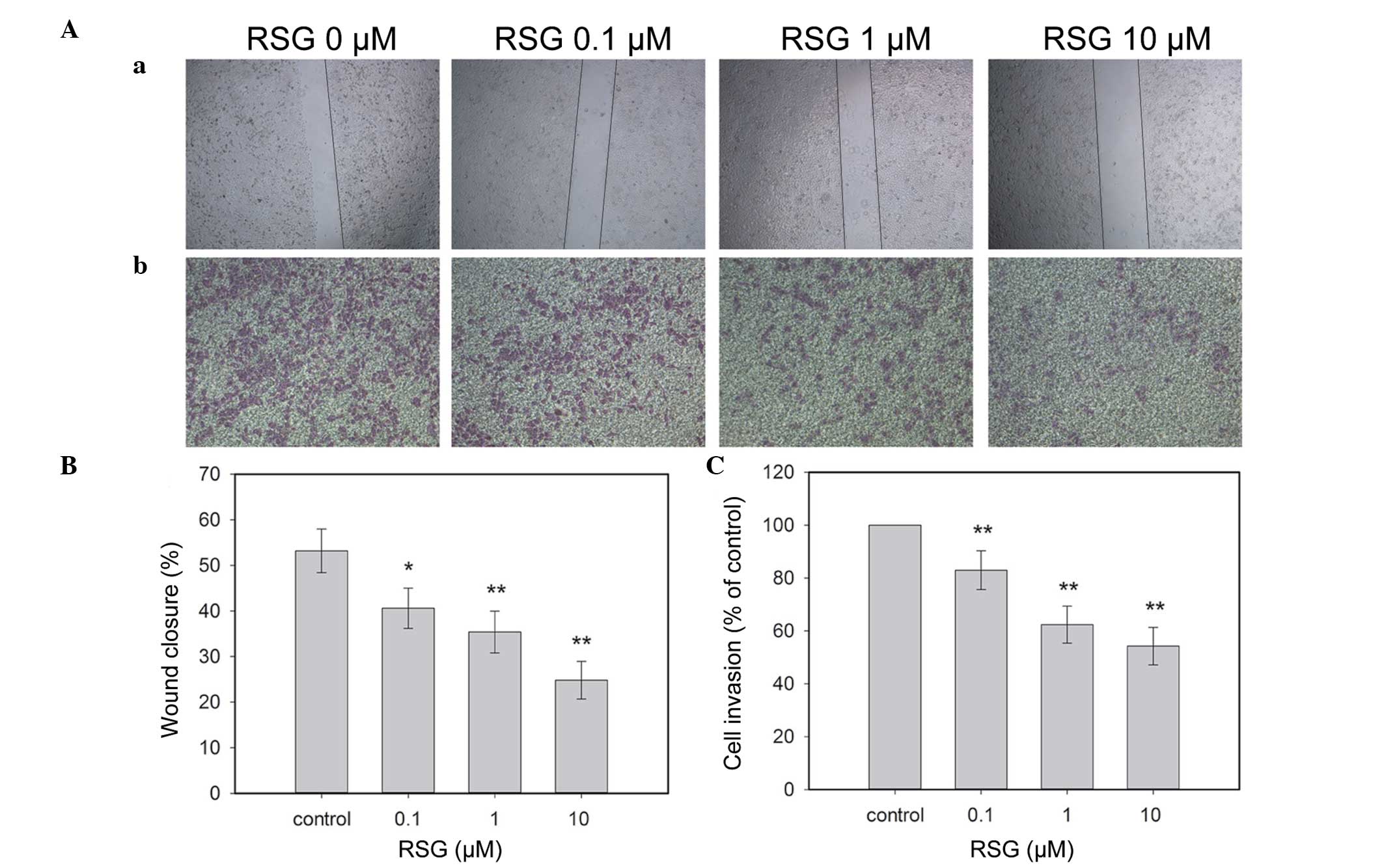
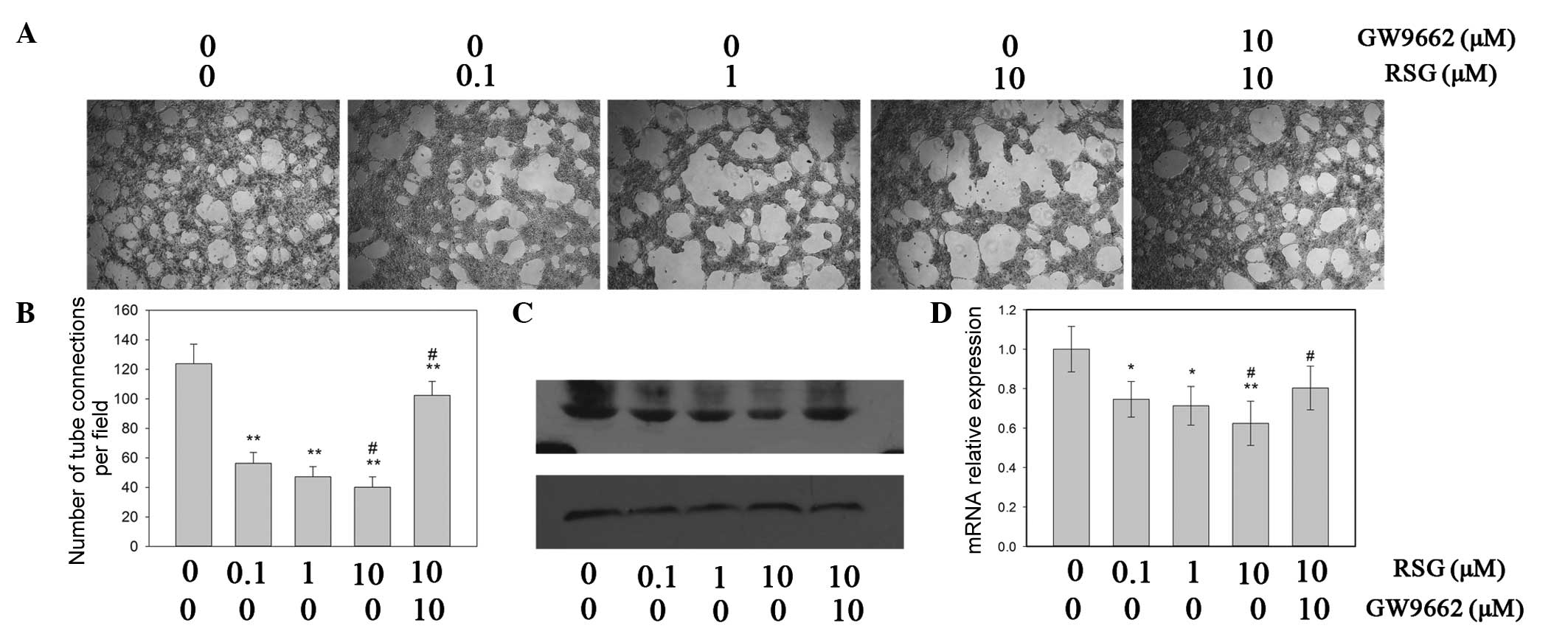
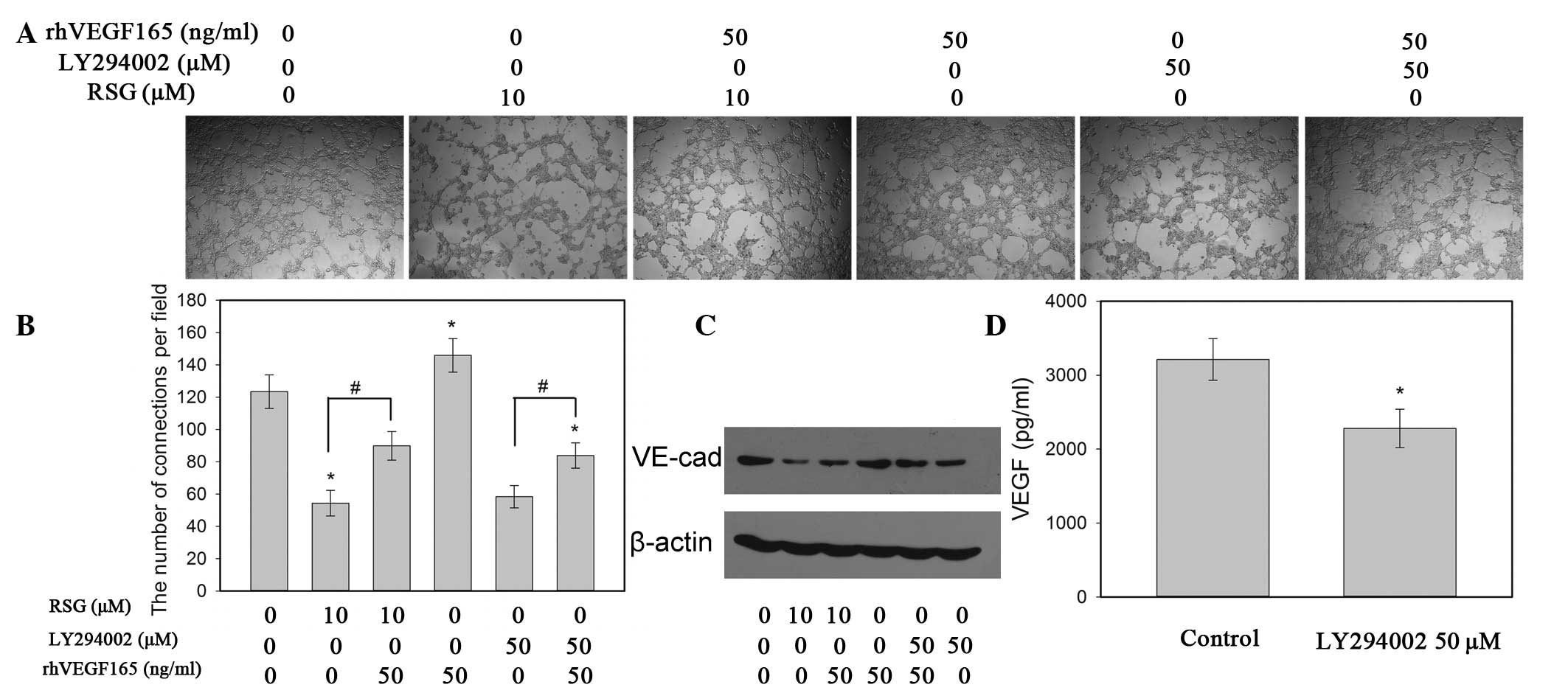
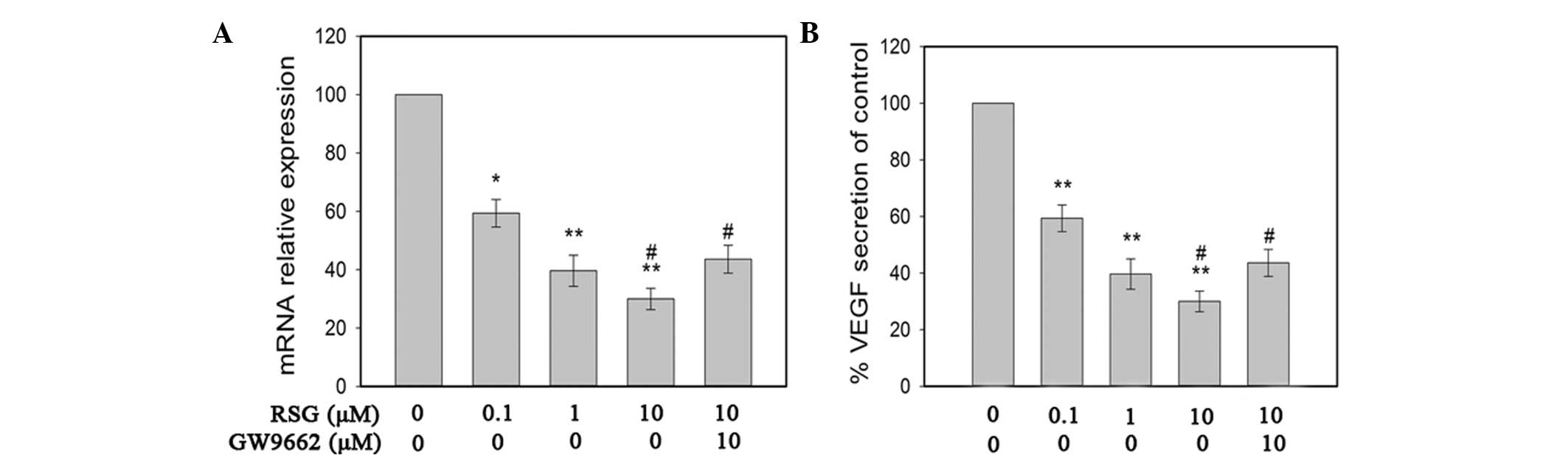
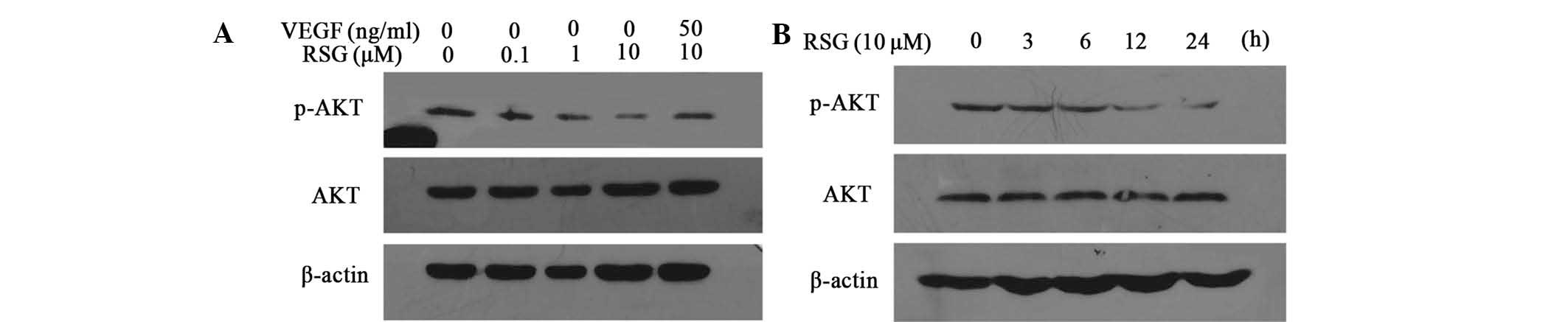
Vasculogenic mimicry (VM) describes functional vascular channels composed only of tumor cells and its presence predicts a poor prognosis for patients with prostate cancer. The present study demonstrated that prostate cancer PC-3 cells were able to form a patterned matrix or tubular VM in 3D cultures in vitro and rosiglitazone (RSG), the ligand of peroxisome proliferator-activated receptor γ (PPARγ) and effectively inhibited the formation of VM structures in a dose- and PPARγ‑dependent manner. In addition, RSG significantly inhibited prostate cancer cell migration and invasion. The inhibitory effect of RSG on VM formation could be at least partially explained by an RSG-driven downregulation of vascular endothelial growth factor (VEGF) levels and phosphorylation of AKT, which is known to be important in VM. Furthermore, the present study highlighted that VEGF and the phosphoinositide 3-kinase/AKT pathway exert a positive feedback regulation in the process of VM formation. These findings reveal new therapeutic potential for PPARγ ligands in anti‑cancer therapy.
View Figures

Figure 1

Figure 2

Figure 3

Figure 4

Figure 5

View References

1 

Hanahan D and Folkman J: Patterns and emerging mechanisms of the angiogenic switch during tumorigenesis. Cell. 86:353–364. 1996. View Article : Google Scholar : PubMed/NCBI

2 

Döme B, Hendrix MJ, Paku S, Tóvári J and Tímár J: Alternative vascularization mechanisms in cancer: Pathology and therapeutic implications. Am J Pathol. 170:1–15. 2007.PubMed/NCBI

3 

Maniotis AJ, Folberg R, Hess A, et al: Vascular channel formation by human melanoma cells in vivo and in vitro: vasculogenic mimicry. Am J Pathol. 155:739–752. 1999. View Article : Google Scholar : PubMed/NCBI

4 

Basu GD, Pathangey LB, Tinder TL, Gendler SJ and Mukherjee P: Mechanisms underlying the growth inhibitory effects of the cyclo-oxygenase-2 inhibitor celecoxib in human breast cancer cells. Breast Cancer Res. 7:R422–R435. 2005. View Article : Google Scholar : PubMed/NCBI

5 

El Hallani S, Boisselier B, Peglion F, et al: A new alternative mechanism in glioblastoma vascularization: tubular vasculogenic mimicry. Brain. 133:973–982. 2010.PubMed/NCBI

6 

Sharma N, Seftor RE, Seftor EA, et al: Prostatic tumor cell plasticity involves cooperative interactions of distinct phenotypic subpopulations: role in vasculogenic mimicry. Prostate. 50:189–201. 2002. View Article : Google Scholar

7 

Sun B, Zhang D, Zhang S, Zhang W, Guo H and Zhao X: Hypoxia influences vasculogenic mimicry channel formation and tumor invasion-related protein expression in melanoma. Cancer Lett. 249:188–197. 2007. View Article : Google Scholar : PubMed/NCBI

8 

Millimaggi D, Mari M, D’ Ascenzo S, Giusti I, Pavan A and Dolo V: Vasculogenic mimicry of human ovarian cancer cells: role of CD147. Int J Oncol. 35:1423–1428. 2009.PubMed/NCBI

9 

Zhang S, Zhang D and Sun B: Vasculogenic mimicry: current status and future prospects. Cancer Lett. 254:157–164. 2007. View Article : Google Scholar : PubMed/NCBI

10 

Wang JY, Sun T, Zhao XL, et al: Functional significance of VEGF-a in human ovarian carcinoma: role in vasculogenic mimicry. Cancer Biol Ther. 7:758–766. 2008. View Article : Google Scholar : PubMed/NCBI

11 

Liu R, Yang K, Meng C, Zhang Z and Xu Y: Vasculogenic mimicry is a marker of poor prognosis in prostate cancer. Cancer Biol Ther. 13:527–533. 2012. View Article : Google Scholar : PubMed/NCBI

12 

Kota BP, Huang TH and Roufogalis BD: An overview on biological mechanisms of PPARs. Pharmacol Res. 51:85–94. 2005. View Article : Google Scholar : PubMed/NCBI

13 

Kim S, Lee JJ and Heo DS: PPARgamma ligands induce growth inhibition and apoptosis through p63 and p73 in human ovarian cancer cells. Biochem Biophys Res Commun. 406:389–395. 2011. View Article : Google Scholar : PubMed/NCBI

14 

Lyles BE, Akinyeke TO, Moss PE and Stewart LV: Thiazolidinediones regulate expression of cell cycle proteins in human prostate cancer cells via PPARgamma-dependent and PPARgamma-independent pathways. Cell Cycle. 8:268–277. 2009. View Article : Google Scholar

15 

Fujita M, Yagami T, Fujio M, et al: Cytotoxicity of troglitazone through PPARgamma-independent pathway and p38 MAPK pathway in renal cell carcinoma. Cancer Lett. 312:219–227. 2011. View Article : Google Scholar : PubMed/NCBI

16 

Kim KY, Ahn JH and Cheon HG: Anti-angiogenic action of PPARgamma ligand in human umbilical vein endothelial cells is mediated by PTEN upregulation and VEGFR-2 downregulation. Mol Cell Biochem. 358:375–385. 2011. View Article : Google Scholar : PubMed/NCBI

17 

Panigrahy D, Singer S, Shen LQ, et al: PPARgamma ligands inhibit primary tumor growth and metastasis by inhibiting angiogenesis. J Clin Invest. 110:923–932. 2002. View Article : Google Scholar : PubMed/NCBI

18 

Tian L, Zhou J, Casimiro MC, et al: Activating peroxisome proliferator-activated receptor gamma mutant promotes tumor growth in vivo by enhancing angiogenesis. Cancer Res. 69:9236–9244. 2009. View Article : Google Scholar : PubMed/NCBI

19 

Lissitzky JC, Parriaux D, Ristorcelli E, Verine A, Lombardo D and Verrando P: Cyclic AMP signaling as a mediator of vasculogenic mimicry in aggressive human melanoma cells in vitro. Cancer Res. 69:802–809. 2009. View Article : Google Scholar : PubMed/NCBI

20 

Liu H, Chen A, Guo F and Yuan L: A short-hairpin RNA targeting osteopontin downregulates MMP-2 and MMP-9 expressions in prostate cancer PC-3 cells. Cancer Lett. 295:27–37. 2010. View Article : Google Scholar : PubMed/NCBI

21 

Yamashita D, Shimizu M and Osumi T: Mechanism for the action of PPARs. Nihon Rinsho. 63:536–537. 2005.(In Japanese).

22 

Shukla S, Maclennan GT, Hartman DJ, Fu P, Resnick MI and Gupta S: Activation of PI3K-Akt signaling pathway promotes prostate cancer cell invasion. Int J Cancer. 121:1424–1432. 2007. View Article : Google Scholar : PubMed/NCBI

23 

Wang J, Wang J, Sun Y, Song W, Nor JE, Wang CY and Taichman RS: Diverse signaling pathways through the SDF-1/CXCR4 chemokine axis in prostate cancer cell lines leads to altered patterns of cytokine secretion and angiogenesis. Cell Signal. 17:1578–1592. 2005. View Article : Google Scholar : PubMed/NCBI

24 

Jemal A, Bray F, Center MM, Ferlay J, Ward E and Forman D: Global cancer statistics. CA Cancer J Clin. 61:69–90. 2011. View Article : Google Scholar

25 

de Bono JS, Oudard S, Ozguroglu M, et al: Prednisone plus cabazitaxel or mitoxantrone for metastatic castration-resistant prostate cancer progressing after docetaxel treatment: a randomised open-label trial. Lancet. 376:1147–1154. 2010.

26 

Samaranayake H, Määttä AM, Pikkarainen J and Ylä-Herttuala S: Future prospects and challenges of antiangiogenic cancer gene therapy. Hum Gene Ther. 21:381–396. 2010. View Article : Google Scholar : PubMed/NCBI

27 

van der Schaft DW, Seftor RE, Seftor EA, et al: Effects of angiogenesis inhibitors on vascular network formation by human endothelial and melanoma cells. J Natl Cancer Inst. 96:1473–1477. 2004.PubMed/NCBI

28 

Pàez-Ribes M, Allen E, Hudock J, et al: Antiangiogenic therapy elicits malignant progression of tumors to increased local invasion and distant metastasis. Cancer Cell. 15:220–231. 2009.PubMed/NCBI

29 

Qu B, Guo L, Ma J and Lv Y: Antiangiogenesis therapy might have the unintended effect of promoting tumor metastasis by increasing an alternative circulatory system. Med Hypotheses. 74:360–361. 2010. View Article : Google Scholar : PubMed/NCBI

30 

Xu Y, Li Q, Li XY, Yang QY, Xu WW and Liu GL: Short-term anti-vascular endothelial growth factor treatment elicits vasculogenic mimicry formation of tumors to accelerate metastasis. J Exp Clin Cancer Res. 31:162012. View Article : Google Scholar : PubMed/NCBI

31 

Itzhaki O, Greenberg E, Shalmon B, et al: Nicotinamide inhibits vasculogenic mimicry, an alternative vascularization pathway observed in highly aggressive melanoma. PLoS One. 8:e571602013. View Article : Google Scholar

32 

Fan YZ and Sun W: Molecular regulation of vasculogenic mimicry in tumors and potential tumor-target therapy. World J Gastrointest Surg. 2:117–127. 2010. View Article : Google Scholar : PubMed/NCBI

33 

Goetze S, Eilers F, Bungenstock A, et al: PPAR activators inhibit endothelial cell migration by targeting Akt. Biochem Biophys Res Commun. 293:1431–1437. 2002. View Article : Google Scholar : PubMed/NCBI

34 

Vartanian A, Stepanova E, Grigorieva I, Solomko E, Baryshnikov A and Lichinitser M: VEGFR1 and PKCalpha signaling control melanoma vasculogenic mimicry in a VEGFR2 kinase-independent manner. Melanoma Res. 21:91–98. 2011. View Article : Google Scholar : PubMed/NCBI

35 

van der Schaft DW, Hillen F, Pauwels P, et al: Tumor cell plasticity in Ewing sarcoma, an alternative circulatory system stimulated by hypoxia. Cancer Res. 65:11520–11528. 2005.PubMed/NCBI

36 

Lirdprapamongkol K, Chiablaem K, Sila-Asna M, Surarit R, Bunyaratvej A and Svasti J: Exploring stemness gene expression and vasculogenic mimicry capacity in well- and poorly-differentiated hepatocellular carcinoma cell lines. Biochem Biophys Res Commun. 422:429–435. 2012. View Article : Google Scholar

37 

Yoshizaki T, Motomura W, Tanno S, Kumei S, Yoshizaki Y and Okumura T: Thiazolidinediones enhance vascular endothelial growth factor expression and induce cell growth inhibition in non-small-cell lung cancer cells. J Exp Clin Cancer Res. 29:222010. View Article : Google Scholar

38 

Hess AR, Seftor EA, Seftor RE and Hendrix MJ: Phosphoinositide 3-kinase regulates membrane Type 1-matrix metalloproteinase (MMP) and MMP-2 activity during melanoma cell vasculogenic mimicry. Cancer Res. 63:4757–4762. 2003.PubMed/NCBI

39 

Chetty C, Lakka SS, Bhoopathi P and Rao JS: MMP-2 alters VEGF expression via alphaVbeta3 integrin-mediated PI3K/AKT signaling in A549 lung cancer cells. Int J Cancer. 127:1081–1095. 2010. View Article : Google Scholar : PubMed/NCBI

40 

Chen WC, Lin MS and Bai X: Induction of apoptosis in colorectal cancer cells by peroxisome proliferators-activated receptor gamma activation up-regulating PTEN and inhibiting PI3K activity. Chin Med J (Engl). 118:1477–1481. 2005.PubMed/NCBI

41 

Trisciuoglio D, Iervolino A, Zupi G and Del Bufalo D: Involvement of PI3K and MAPK signaling in bcl-2-induced vascular endothelial growth factor expression in melanoma cells. Mol Biol Cell. 16:4153–4162. 2005. View Article : Google Scholar : PubMed/NCBI

42 

Pore N, Gupta AK, Cerniglia GJ and Maity A: HIV protease inhibitors decrease VEGF/HIF-1alpha expression and angiogenesis in glioblastoma cells. Neoplasia. 8:889–895. 2006. View Article : Google Scholar : PubMed/NCBI

43 

Zhong H, Chiles K, Feldser D, et al: Modulation of hypoxia-inducible factor 1alpha expression by the epidermal growth factor/phosphatidylinositol 3-kinase/PTEN/AKT/FRAP pathway in human prostate cancer cells: implications for tumor angiogenesis and therapeutics. Cancer Res. 60:1541–1545. 2000.

Related Articles

  • Abstract
  • View
  • Download
  • Twitter
Copy and paste a formatted citation
Spandidos Publications style
Qin L, Ren Y, Chen A, Guo F, Xu F, Gong C, Cheng P, Du Y and Liao H: Peroxisome proliferator-activated receptor γ ligands inhibit VEGF-mediated vasculogenic mimicry of prostate cancer through the AKT signaling pathway. Mol Med Rep 10: 276-282, 2014.
APA
Qin, L., Ren, Y., Chen, A., Guo, F., Xu, F., Gong, C. ... Liao, H. (2014). Peroxisome proliferator-activated receptor γ ligands inhibit VEGF-mediated vasculogenic mimicry of prostate cancer through the AKT signaling pathway. Molecular Medicine Reports, 10, 276-282. https://doi.org/10.3892/mmr.2014.2198
MLA
Qin, L., Ren, Y., Chen, A., Guo, F., Xu, F., Gong, C., Cheng, P., Du, Y., Liao, H."Peroxisome proliferator-activated receptor γ ligands inhibit VEGF-mediated vasculogenic mimicry of prostate cancer through the AKT signaling pathway". Molecular Medicine Reports 10.1 (2014): 276-282.
Chicago
Qin, L., Ren, Y., Chen, A., Guo, F., Xu, F., Gong, C., Cheng, P., Du, Y., Liao, H."Peroxisome proliferator-activated receptor γ ligands inhibit VEGF-mediated vasculogenic mimicry of prostate cancer through the AKT signaling pathway". Molecular Medicine Reports 10, no. 1 (2014): 276-282. https://doi.org/10.3892/mmr.2014.2198
Copy and paste a formatted citation
x
Spandidos Publications style
Qin L, Ren Y, Chen A, Guo F, Xu F, Gong C, Cheng P, Du Y and Liao H: Peroxisome proliferator-activated receptor γ ligands inhibit VEGF-mediated vasculogenic mimicry of prostate cancer through the AKT signaling pathway. Mol Med Rep 10: 276-282, 2014.
APA
Qin, L., Ren, Y., Chen, A., Guo, F., Xu, F., Gong, C. ... Liao, H. (2014). Peroxisome proliferator-activated receptor γ ligands inhibit VEGF-mediated vasculogenic mimicry of prostate cancer through the AKT signaling pathway. Molecular Medicine Reports, 10, 276-282. https://doi.org/10.3892/mmr.2014.2198
MLA
Qin, L., Ren, Y., Chen, A., Guo, F., Xu, F., Gong, C., Cheng, P., Du, Y., Liao, H."Peroxisome proliferator-activated receptor γ ligands inhibit VEGF-mediated vasculogenic mimicry of prostate cancer through the AKT signaling pathway". Molecular Medicine Reports 10.1 (2014): 276-282.
Chicago
Qin, L., Ren, Y., Chen, A., Guo, F., Xu, F., Gong, C., Cheng, P., Du, Y., Liao, H."Peroxisome proliferator-activated receptor γ ligands inhibit VEGF-mediated vasculogenic mimicry of prostate cancer through the AKT signaling pathway". Molecular Medicine Reports 10, no. 1 (2014): 276-282. https://doi.org/10.3892/mmr.2014.2198
Follow us
  • Twitter
  • LinkedIn
  • Facebook
About
  • Spandidos Publications
  • Careers
  • Cookie Policy
  • Privacy Policy
How can we help?
  • Help
  • Live Chat
  • Contact
  • Email to our Support Team