Spandidos Publications Logo
  • About
    • About Spandidos
    • Aims and Scopes
    • Abstracting and Indexing
    • Editorial Policies
    • Reprints and Permissions
    • Job Opportunities
    • Terms and Conditions
    • Contact
  • Journals
    • All Journals
    • Oncology Letters
      • Oncology Letters
      • Information for Authors
      • Editorial Policies
      • Editorial Board
      • Aims and Scope
      • Abstracting and Indexing
      • Bibliographic Information
      • Archive
    • International Journal of Oncology
      • International Journal of Oncology
      • Information for Authors
      • Editorial Policies
      • Editorial Board
      • Aims and Scope
      • Abstracting and Indexing
      • Bibliographic Information
      • Archive
    • Molecular and Clinical Oncology
      • Molecular and Clinical Oncology
      • Information for Authors
      • Editorial Policies
      • Editorial Board
      • Aims and Scope
      • Abstracting and Indexing
      • Bibliographic Information
      • Archive
    • Experimental and Therapeutic Medicine
      • Experimental and Therapeutic Medicine
      • Information for Authors
      • Editorial Policies
      • Editorial Board
      • Aims and Scope
      • Abstracting and Indexing
      • Bibliographic Information
      • Archive
    • International Journal of Molecular Medicine
      • International Journal of Molecular Medicine
      • Information for Authors
      • Editorial Policies
      • Editorial Board
      • Aims and Scope
      • Abstracting and Indexing
      • Bibliographic Information
      • Archive
    • Biomedical Reports
      • Biomedical Reports
      • Information for Authors
      • Editorial Policies
      • Editorial Board
      • Aims and Scope
      • Abstracting and Indexing
      • Bibliographic Information
      • Archive
    • Oncology Reports
      • Oncology Reports
      • Information for Authors
      • Editorial Policies
      • Editorial Board
      • Aims and Scope
      • Abstracting and Indexing
      • Bibliographic Information
      • Archive
    • Molecular Medicine Reports
      • Molecular Medicine Reports
      • Information for Authors
      • Editorial Policies
      • Editorial Board
      • Aims and Scope
      • Abstracting and Indexing
      • Bibliographic Information
      • Archive
    • World Academy of Sciences Journal
      • World Academy of Sciences Journal
      • Information for Authors
      • Editorial Policies
      • Editorial Board
      • Aims and Scope
      • Abstracting and Indexing
      • Bibliographic Information
      • Archive
    • International Journal of Functional Nutrition
      • International Journal of Functional Nutrition
      • Information for Authors
      • Editorial Policies
      • Editorial Board
      • Aims and Scope
      • Abstracting and Indexing
      • Bibliographic Information
      • Archive
    • International Journal of Epigenetics
      • International Journal of Epigenetics
      • Information for Authors
      • Editorial Policies
      • Editorial Board
      • Aims and Scope
      • Abstracting and Indexing
      • Bibliographic Information
      • Archive
    • Medicine International
      • Medicine International
      • Information for Authors
      • Editorial Policies
      • Editorial Board
      • Aims and Scope
      • Abstracting and Indexing
      • Bibliographic Information
      • Archive
  • Articles
  • Information
    • Information for Authors
    • Information for Reviewers
    • Information for Librarians
    • Information for Advertisers
    • Conferences
  • Language Editing
Spandidos Publications Logo
  • About
    • About Spandidos
    • Aims and Scopes
    • Abstracting and Indexing
    • Editorial Policies
    • Reprints and Permissions
    • Job Opportunities
    • Terms and Conditions
    • Contact
  • Journals
    • All Journals
    • Biomedical Reports
      • Information for Authors
      • Editorial Policies
      • Editorial Board
      • Aims and Scope
      • Abstracting and Indexing
      • Bibliographic Information
      • Archive
    • Experimental and Therapeutic Medicine
      • Information for Authors
      • Editorial Policies
      • Editorial Board
      • Aims and Scope
      • Abstracting and Indexing
      • Bibliographic Information
      • Archive
    • International Journal of Epigenetics
      • Information for Authors
      • Editorial Policies
      • Editorial Board
      • Aims and Scope
      • Abstracting and Indexing
      • Bibliographic Information
      • Archive
    • International Journal of Functional Nutrition
      • Information for Authors
      • Editorial Policies
      • Editorial Board
      • Aims and Scope
      • Abstracting and Indexing
      • Bibliographic Information
      • Archive
    • International Journal of Molecular Medicine
      • Information for Authors
      • Editorial Policies
      • Editorial Board
      • Aims and Scope
      • Abstracting and Indexing
      • Bibliographic Information
      • Archive
    • International Journal of Oncology
      • Information for Authors
      • Editorial Policies
      • Editorial Board
      • Aims and Scope
      • Abstracting and Indexing
      • Bibliographic Information
      • Archive
    • Medicine International
      • Information for Authors
      • Editorial Policies
      • Editorial Board
      • Aims and Scope
      • Abstracting and Indexing
      • Bibliographic Information
      • Archive
    • Molecular and Clinical Oncology
      • Information for Authors
      • Editorial Policies
      • Editorial Board
      • Aims and Scope
      • Abstracting and Indexing
      • Bibliographic Information
      • Archive
    • Molecular Medicine Reports
      • Information for Authors
      • Editorial Policies
      • Editorial Board
      • Aims and Scope
      • Abstracting and Indexing
      • Bibliographic Information
      • Archive
    • Oncology Letters
      • Information for Authors
      • Editorial Policies
      • Editorial Board
      • Aims and Scope
      • Abstracting and Indexing
      • Bibliographic Information
      • Archive
    • Oncology Reports
      • Information for Authors
      • Editorial Policies
      • Editorial Board
      • Aims and Scope
      • Abstracting and Indexing
      • Bibliographic Information
      • Archive
    • World Academy of Sciences Journal
      • Information for Authors
      • Editorial Policies
      • Editorial Board
      • Aims and Scope
      • Abstracting and Indexing
      • Bibliographic Information
      • Archive
  • Articles
  • Information
    • For Authors
    • For Reviewers
    • For Librarians
    • For Advertisers
    • Conferences
  • Language Editing
Login Register Submit
  • This site uses cookies
  • You can change your cookie settings at any time by following the instructions in our Cookie Policy. To find out more, you may read our Privacy Policy.

    I agree
Search articles by DOI, keyword, author or affiliation
Search
Advanced Search
presentation
Molecular Medicine Reports
Join Editorial Board Propose a Special Issue
Print ISSN: 1791-2997 Online ISSN: 1791-3004
Journal Cover
August-2014 Volume 10 Issue 2

Full Size Image

Sign up for eToc alerts
Recommend to Library

Journals

International Journal of Molecular Medicine

International Journal of Molecular Medicine

International Journal of Molecular Medicine is an international journal devoted to molecular mechanisms of human disease.

International Journal of Oncology

International Journal of Oncology

International Journal of Oncology is an international journal devoted to oncology research and cancer treatment.

Molecular Medicine Reports

Molecular Medicine Reports

Covers molecular medicine topics such as pharmacology, pathology, genetics, neuroscience, infectious diseases, molecular cardiology, and molecular surgery.

Oncology Reports

Oncology Reports

Oncology Reports is an international journal devoted to fundamental and applied research in Oncology.

Experimental and Therapeutic Medicine

Experimental and Therapeutic Medicine

Experimental and Therapeutic Medicine is an international journal devoted to laboratory and clinical medicine.

Oncology Letters

Oncology Letters

Oncology Letters is an international journal devoted to Experimental and Clinical Oncology.

Biomedical Reports

Biomedical Reports

Explores a wide range of biological and medical fields, including pharmacology, genetics, microbiology, neuroscience, and molecular cardiology.

Molecular and Clinical Oncology

Molecular and Clinical Oncology

International journal addressing all aspects of oncology research, from tumorigenesis and oncogenes to chemotherapy and metastasis.

World Academy of Sciences Journal

World Academy of Sciences Journal

Multidisciplinary open-access journal spanning biochemistry, genetics, neuroscience, environmental health, and synthetic biology.

International Journal of Functional Nutrition

International Journal of Functional Nutrition

Open-access journal combining biochemistry, pharmacology, immunology, and genetics to advance health through functional nutrition.

International Journal of Epigenetics

International Journal of Epigenetics

Publishes open-access research on using epigenetics to advance understanding and treatment of human disease.

Medicine International

Medicine International

An International Open Access Journal Devoted to General Medicine.

Journal Cover
August-2014 Volume 10 Issue 2

Full Size Image

Sign up for eToc alerts
Recommend to Library

  • Article
  • Citations
    • Cite This Article
    • Download Citation
    • Create Citation Alert
    • Remove Citation Alert
    • Cited By
  • Similar Articles
    • Related Articles (in Spandidos Publications)
    • Similar Articles (Google Scholar)
    • Similar Articles (PubMed)
  • Download PDF
  • Download XML
  • View XML
Article

Activated δ‑opioid receptors inhibit hydrogen peroxide‑induced apoptosis in liver cancer cells through the PKC/ERK signaling pathway

  • Authors:
    • Kaiqi Jia
    • Deguang Sun
    • Sunbin Ling
    • Yu Tian
    • Xuejun Yang
    • Jidong Sui
    • Bo Tang
    • Liming Wang
  • View Affiliations / Copyright

    Affiliations: Department of General Surgery, The Second Affiliated Hospital of Dalian Medical University, Dalian, Liaoning 116027, P.R. China, Department of Hepatobiliary Surgery, Affiliated Hospital of Guilin Medical University, Guilin, Guangxi 541001, P.R. China
  • Pages: 839-847
    |
    Published online on: June 5, 2014
       https://doi.org/10.3892/mmr.2014.2301
  • Expand metrics +
Metrics: Total Views: 0 (Spandidos Publications: | PMC Statistics: )
Metrics: Total PDF Downloads: 0 (Spandidos Publications: | PMC Statistics: )
Cited By (CrossRef): 0 citations Loading Articles...

This article is mentioned in:


Abstract

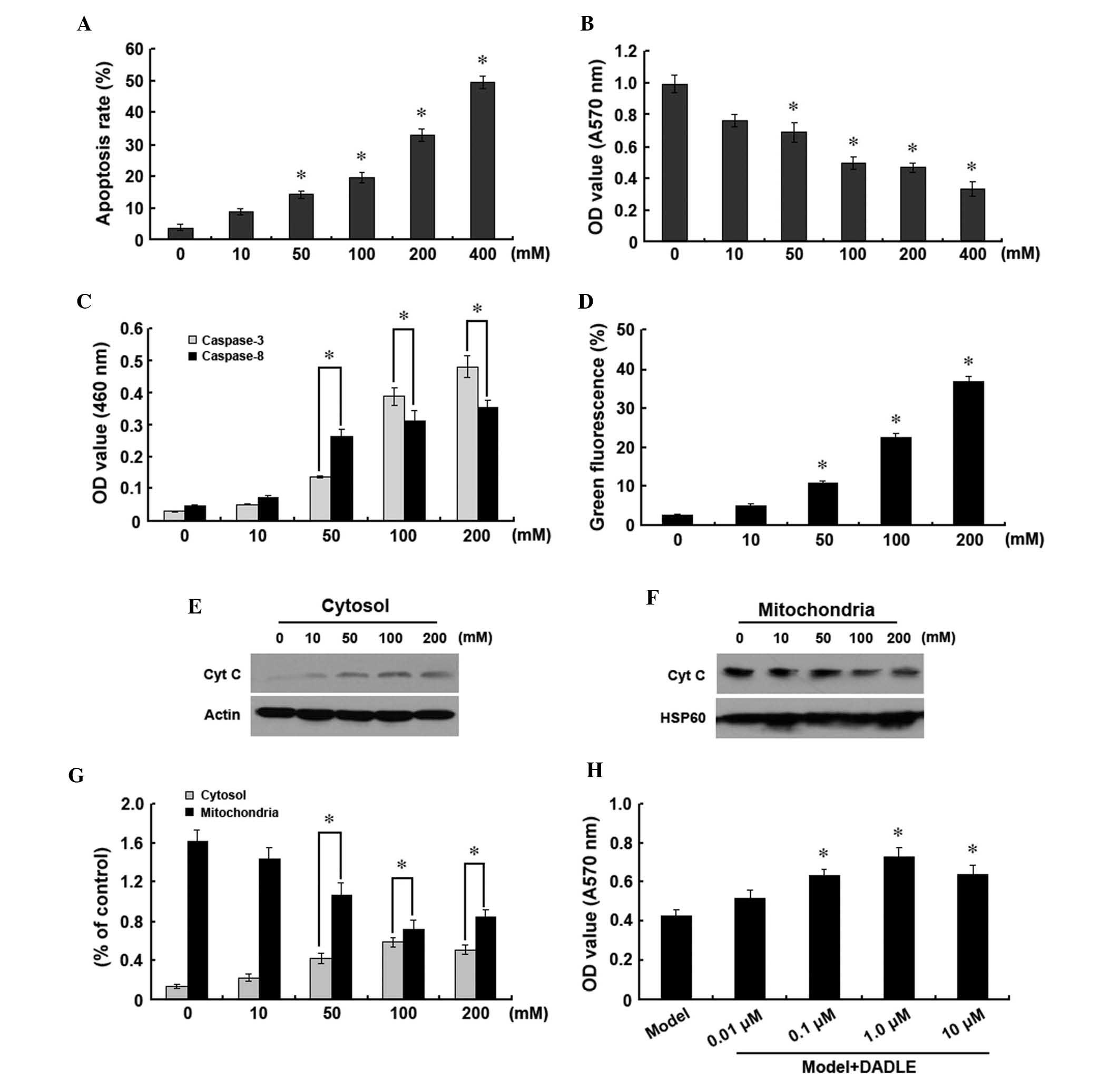
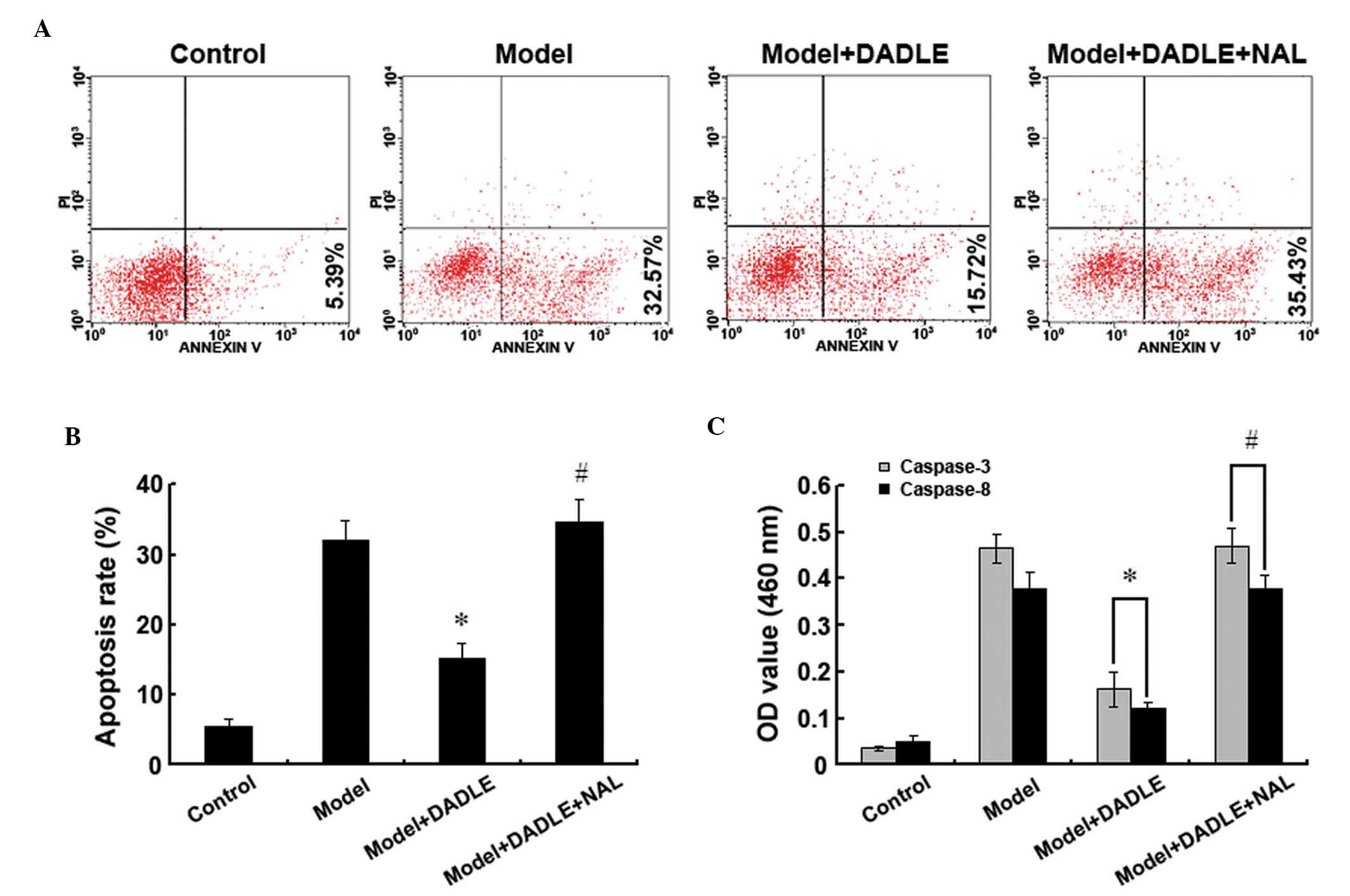
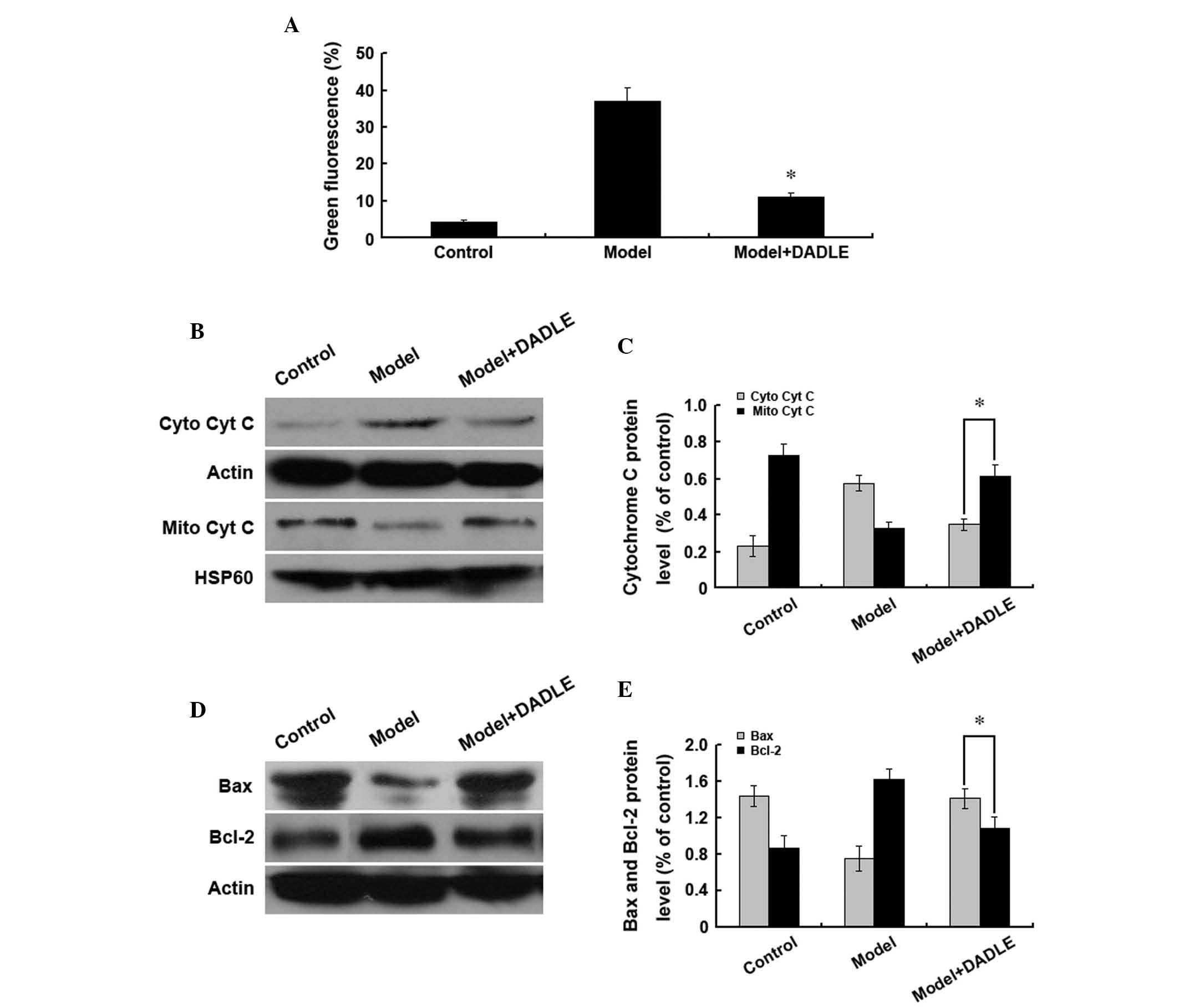
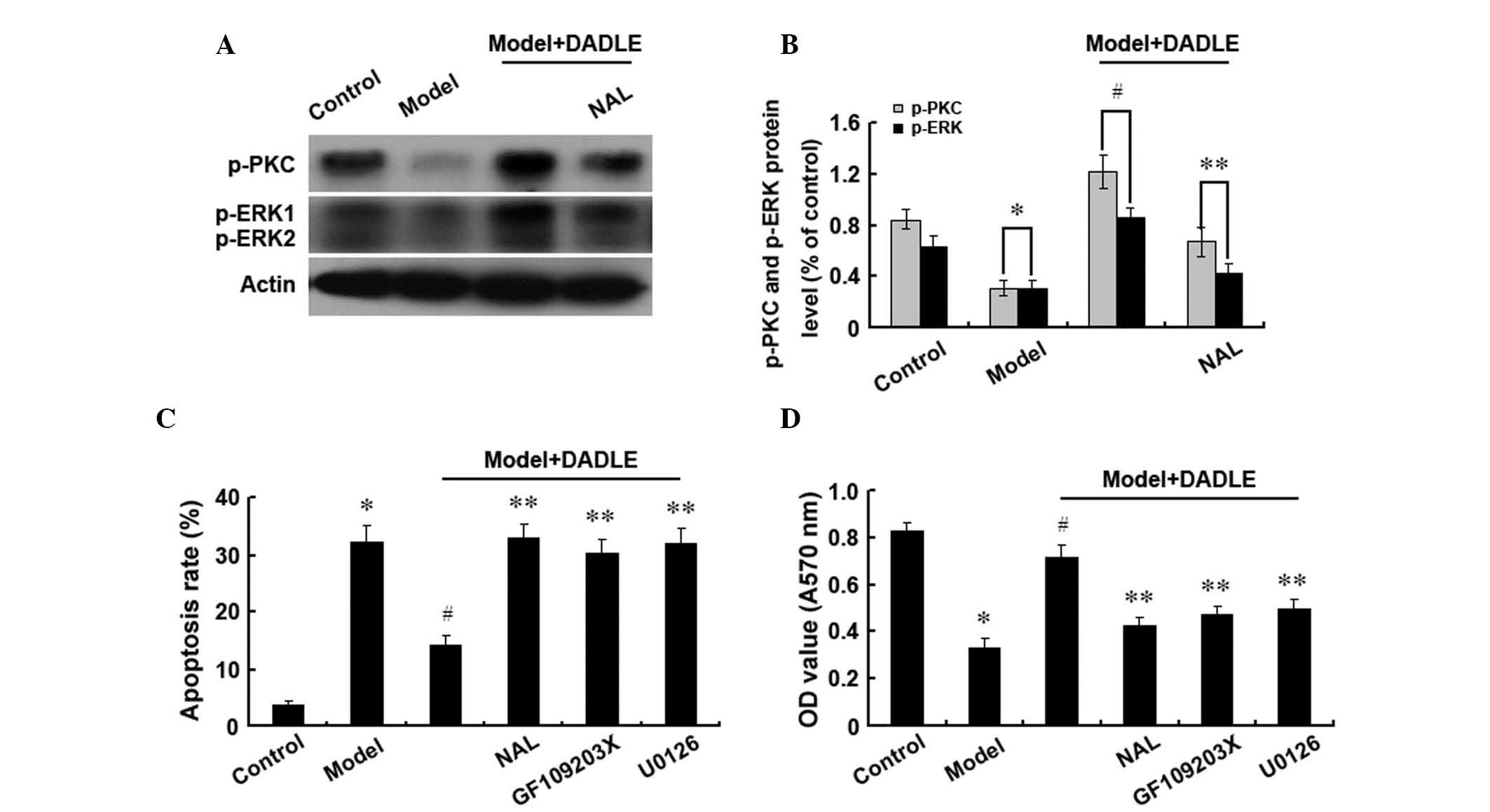
Apoptotic liver cancer cells have important roles in liver tumorigenesis and liver cancer progression. Recent studies have shown that δ‑opioid receptors are highly expressed in human liver and liver cancer cells. The present study aimed to investigate the role of activated δ‑opioid receptors on human liver cancer cell apoptosis and its interrelation with the mitochondria and the protein kinase C/extracellular‑signal‑regulated kinase (PKC/ERK) signaling pathway. H2O2 was used to induce apoptosis in human liver cancer cells. During apoptosis, mitochondrial transmembrane potentials were observed to decrease, cytochrome c expression was found to increase and B cell lymphoma 2 (Bcl‑2) expression decreased. These findings suggested that H2O2‑induced apoptosis was mediated through the mitochondrial pathway. Of note, activated δ‑opioid receptors were observed to inhibit H2O2‑induced apoptosis in human liver cancer cells. Following δ‑opioid receptor activation, the number of apoptotic liver cancer cells decreased, mitochondrial transmembrane potentials were restored, cytoplasmic cytochrome c and Bcl‑2‑associated X protein expression decreased and Bcl‑2 expression increased. These data suggested that δ‑opioid receptor activation inhibited mitochondria‑mediated apoptosis. In addition, activation of δ‑opioid receptors was observed to increase the expression of PKC and ERK in human liver cancer cells. Furthermore, upon inhibition of the PKC/ERK signaling pathway, the protective effect associated with the δ‑opioid receptor on liver cancer cell apoptosis was inhibited, which was not associated with the status of δ‑opioid receptor activation. These findings suggested that the PKC/ERK signaling pathway has an important role in δ‑opioid receptor‑mediated inhibition of apoptosis in human liver cancer cells.
View Figures

Figure 1

Figure 2

Figure 3

Figure 4

Figure 5

View References

1 

Schattenberg JM, Schuchmann M and Galle PR: Cell death and hepatocarcinogenesis: Dysregulation of apoptosis signaling pathways. J Gastroenterol Hepatol. 26(Suppl 1): 213–219. 2011. View Article : Google Scholar : PubMed/NCBI

2 

Wang D, Wang H, Wu G, Yang Y, Yang J, Liu C and Wong TM: Protein kinase C mediates the effects of delta-opioid receptor stimulation on survival and apoptosis in neonatal cardiomyocytes cultured in serum-deprived condition. Pharmazie. 64:466–471. 2009.

3 

Maslov LN, Barzakh EI, Krylatov AV, Chernysheva GA, Krieg T, Solenkova NV, Lishmanov AY, Cybulnikov SY and Zhang Y: Opioid peptide deltorphin II simulates the cardioprotective effect of ischemic preconditioning: role of δ2-opioid receptors, protein kinase C, and K(ATP) channels. Bull Exp Biol Med. 149:591–593. 2010.PubMed/NCBI

4 

Wang S, Duan Y, Su D, Li W, Tan J, Yang D, Wang W, Zhao Z and Wang X: Delta opioid peptide [D-Ala2, D-Leu5] enkephalin (DADLE) triggers postconditioning against transient forebrain ischemia. Eur J Pharmacol. 658:140–144. 2011.

5 

Tang B, Zhang Y, Liang R, Yuan P, Du J, Wang H and Wang L: Activation of the δ-opioid receptor inhibits serum deprivation-induced apoptosis of human liver cells via the activation of PKC and the mitochondrial pathway. Int J Mol Med. 28:1077–1085. 2011.

6 

Neidle A, Manigault I and Wajda IJ: Distribution of opiate-like substances in rat tissues. Neurochem Res. 4:399–410. 1979. View Article : Google Scholar : PubMed/NCBI

7 

Tang B, Li Y, Yuan S, Tomlinson S and He S: Upregulation of the δ opioid receptor in liver cancer promotes liver cancer progression both in vitro and in vivo. Int J Oncol. 43:1281–1290. 2013.

8 

Avella DM, Kimchi ET, Donahue RN, Tagaram HR, McLaughlin PJ, Zagon IS and Staveley-O’Carroll KF: The opioid growth factor-opioid growth factor receptor axis regulates cell proliferation of human hepatocellular cancer. Am J Physiol Regul Integr Comp Physiol. 298:R459–R466. 2010. View Article : Google Scholar : PubMed/NCBI

9 

Boyella VD, Nicastri AD and Bergasa NV: Human hepatic met-enkephalin and delta opioid receptor-1 immunoreactivities in viral and autoimmune hepatitis. Ann Hepatol. 7:221–226. 2008.PubMed/NCBI

10 

Erol-Dayi Ö, Arda N and Erdem G: Protective effects of olive oil phenolics and gallic acid on hydrogen peroxide-induced apoptosis. Eur J Nutr. 51:955–960. 2012.PubMed/NCBI

11 

Hamdi Y, Kaddour H, Vaudry D, Bahdoudi S, Douiri S, Leprince J, Castel H, Vaudry H, Tonon MC, Amri M and Masmoudi-Kouki O: The octadecaneuropeptide ODN protects astrocytes against hydrogen peroxide-induced apoptosis via a PKA/MAPK-dependent mechanism. PLoS One. 7:e424982012. View Article : Google Scholar : PubMed/NCBI

12 

Orrenius S: Mitochondrial regulation of apoptotic cell death. Toxicol Lett. 149:19–23. 2004. View Article : Google Scholar : PubMed/NCBI

13 

Jang Y, Xi J, Wang H, Mueller RA, Norfleet EA and Xu Z: Postconditioning prevents reperfusion injury by activating delta-opioid receptors. Anesthesiology. 108:243–250. 2008. View Article : Google Scholar : PubMed/NCBI

14 

Raut A, Iglewski M and Ratka A: Differential effects of impaired mitochondrial energy production on the function of mu and delta opioid receptors in neuronal SK-N-SH cells. Neurosci Lett. 404:242–246. 2006. View Article : Google Scholar

15 

Baldanzi G, Alchera E, Imarisio C, Gaggianesi M, Dal Ponte C, Nitti M, Domenicotti C, van Blitterswijk WJ, Albano E, Graziani A and Carini R: Negative regulation of diacylglycerol kinase theta mediates adenosine-dependent hepatocyte preconditioning. Cell Death Differ. 17:1059–1068. 2010. View Article : Google Scholar

16 

Saberi B, Shinohara M, Ybanez MD, Hanawa N, Gaarde WA, Kaplowitz N and Han D: Regulation of H(2)O(2)-induced necrosis by PKC and AMP-activated kinase signaling in primary cultured hepatocytes. Am J Physiol Cell Physiol. 295:C50–C63. 2008. View Article : Google Scholar : PubMed/NCBI

17 

Wang Y, Schattenberg JM, Rigoli RM, Storz P and Czaja MJ: Hepatocyte resistance to oxidative stress is dependent on protein kinase C-mediated down-regulation of c-Jun/AP-1. J Biol Chem. 279:31089–31097. 2004. View Article : Google Scholar : PubMed/NCBI

18 

Takai S, Matsushima-Nishiwaki R, Tokuda H, Yasuda E, Toyoda H, Kaneoka Y, Yamaguchi A, Kumada T and Kozawa O: Protein kinase C delta regulates the phosphorylation of heat shock protein 27 in human hepatocellular carcinoma. Life Sci. 81:585–591. 2007. View Article : Google Scholar : PubMed/NCBI

19 

Sancho P, Galeano E, Estañ MC, Gañán-Gómez I, del Boyano-Adánez MC and García-Pérez AI: Raf/MEK/ERK signaling inhibition enhances the ability of dequalinium to induce apoptosis in the human leukemic cell line K562. Exp Biol Med (Maywood). 237:933–942. 2012. View Article : Google Scholar : PubMed/NCBI

20 

Eisinger DA, Ammer H and Schulz R: Chronic morphine treatment inhibits opioid receptor desensitization and internalization. J Neurosci. 22:10192–10200. 2002.PubMed/NCBI

21 

Hong MH, Xu C, Wang YJ, Ji JL, Tao YM, Xu XJ, Chen J, Xie X, Chi ZQ and Liu JG: Role of Src in ligand-specific regulation of delta-opioid receptor desensitization and internalization. J Neurochem. 108:102–114. 2009. View Article : Google Scholar : PubMed/NCBI

22 

Xu C, Hong MH, Zhang LS, Hou YY, Wang YH, Wang FF, Chen YJ, Xu XJ, Chen J, Xie X, Ma L, Chi ZQ and Liu JG: Serine 363 of the {delta}-opioid receptor is crucial for adopting distinct pathways to activate ERK1/2 in response to stimulation with different ligands. J Cell Sci. 123:4259–4270. 2010. View Article : Google Scholar : PubMed/NCBI

23 

Tang B, Zhang Y, Liang R, Yuan P, Du J, Wang H and Wang L: Activation of the δ-opioid receptor inhibits serum deprivation-induced apoptosis of human liver cells via the activation of PKC and the mitochondrial pathway. Int J Mol Med. 28:1077–1085. 2011.

24 

Diestel A, Drescher C, Miera O, Berger F and Schmitt KR: Hypothermia protects H9c2 cardiomyocytes from H2O2 induced apoptosis. Cryobiology. 62:53–61. 2011. View Article : Google Scholar : PubMed/NCBI

25 

Yu H, Liu Z, Zhou H, Dai W, Chen S, Shu Y and Feng J: JAK-STAT pathway modulates the roles of iNOS and COX-2 in the cytoprotection of early phase of hydrogen peroxide preconditioning against apoptosis induced by oxidative stress. Neurosci Lett. 529:166–171. 2012. View Article : Google Scholar : PubMed/NCBI

26 

Gao W, Xu K, Ji L and Tang B: Effect of gold nanoparticles on glutathione depletion-induced hydrogen peroxide generation and apoptosis in HL7702 cells. Toxicol Lett. 205:86–95. 2011. View Article : Google Scholar : PubMed/NCBI

27 

Su TP: Delta opioid peptide[D-Ala(2), D-Leu(5)]enkephalin promotes cell survival. J Biomed Sci. 7:195–199. 2000.

28 

Marzioni M, Alpini G, Saccomanno S, de Minicis S, Glaser S, Francis H, Trozzi L, Venter J, Orlando F, Fava G, Candelaresi C, Macarri G and Benedetti A: Endogenous opioids modulate the growth of the biliary tree in the course of cholestasis. Gastroenterology. 130:1831–1847. 2006. View Article : Google Scholar : PubMed/NCBI

29 

Schultz JJ, Hsu AK and Gross GJ: Ischemic preconditioning and morphine-induced cardioprotection involve the delta (delta)-opioid receptor in the intact rat heart. J Mol Cell Cardiol. 29:2187–2195. 1997. View Article : Google Scholar

30 

Pateliya BB, Singh N and Jaggi AS: Possible role of opioids and KATP channels in neuroprotective effect of postconditioning in mice. Biol Pharm Bull. 31:1755–1760. 2008. View Article : Google Scholar : PubMed/NCBI

31 

Zhao M, Wang HX, Yang J, Su YH, Su RJ and Wong TM: delta-Opioid receptor stimulation enhances the growth of neonatal rat ventricular myocytes via the extracellular signal-regulated kinase pathway. Clin Exp Pharmacol Physiol. 35:97–102. 2008. View Article : Google Scholar : PubMed/NCBI

32 

Allen TR, Krueger KD, Hunter WJ III and Agrawal DK: Evidence that insulin-like growth factor-1 requires protein kinase C-epsilon, PI3-kinase and mitogen-activated protein kinase pathways to protect human vascular smooth muscle cells from apoptosis. Immunol Cell Biol. 83:651–667. 2005. View Article : Google Scholar

33 

Agudo-López A, Miguel BG, Fernández I and Martínez AM: Role of protein kinase C and mitochondrial permeability transition pore in the neuroprotective effect of ceramide in ischemia-induced cell death. FEBS Lett. 585:99–103. 2011.PubMed/NCBI

34 

Peng Y, Hu Y, Feng N, Wang L and Wang X: L-3-n-butyl-phthalide alleviates hydrogen peroxide-induced apoptosis by PKC pathway in human neuroblastoma SK-N-SH cells. Naunyn Schmiedebergs Arch Pharmacol. 383:91–99. 2011. View Article : Google Scholar : PubMed/NCBI

35 

Audet N, Paquin-Gobeil M, Landry-Paquet O, Schiller PW and Piñeyro G: Internalization and Src activity regulate the time course of ERK activation by delta opioid receptor ligands. J Biol Chem. 280:7808–7816. 2005. View Article : Google Scholar : PubMed/NCBI

36 

Eisinger DA and Schulz R: Extracellular signal-regulated kinase/mitogen-activated protein kinases block internalization of delta-opioid receptors. J Pharmacol Exp Ther. 309:776–785. 2004. View Article : Google Scholar

37 

Li R, Yan G, Li Q, Sun H, Hu Y, Sun J and Xu B: MicroRNA-145 protects cardiomyocytes against hydrogen peroxide (H2O2)-induced apoptosis through targeting the mitochondria apoptotic pathway. PLoS One. 7:e449072012. View Article : Google Scholar : PubMed/NCBI

Related Articles

  • Abstract
  • View
  • Download
  • Twitter
Copy and paste a formatted citation
Spandidos Publications style
Jia K, Sun D, Ling S, Tian Y, Yang X, Sui J, Tang B and Wang L: Activated δ‑opioid receptors inhibit hydrogen peroxide‑induced apoptosis in liver cancer cells through the PKC/ERK signaling pathway. Mol Med Rep 10: 839-847, 2014.
APA
Jia, K., Sun, D., Ling, S., Tian, Y., Yang, X., Sui, J. ... Wang, L. (2014). Activated δ‑opioid receptors inhibit hydrogen peroxide‑induced apoptosis in liver cancer cells through the PKC/ERK signaling pathway. Molecular Medicine Reports, 10, 839-847. https://doi.org/10.3892/mmr.2014.2301
MLA
Jia, K., Sun, D., Ling, S., Tian, Y., Yang, X., Sui, J., Tang, B., Wang, L."Activated δ‑opioid receptors inhibit hydrogen peroxide‑induced apoptosis in liver cancer cells through the PKC/ERK signaling pathway". Molecular Medicine Reports 10.2 (2014): 839-847.
Chicago
Jia, K., Sun, D., Ling, S., Tian, Y., Yang, X., Sui, J., Tang, B., Wang, L."Activated δ‑opioid receptors inhibit hydrogen peroxide‑induced apoptosis in liver cancer cells through the PKC/ERK signaling pathway". Molecular Medicine Reports 10, no. 2 (2014): 839-847. https://doi.org/10.3892/mmr.2014.2301
Copy and paste a formatted citation
x
Spandidos Publications style
Jia K, Sun D, Ling S, Tian Y, Yang X, Sui J, Tang B and Wang L: Activated δ‑opioid receptors inhibit hydrogen peroxide‑induced apoptosis in liver cancer cells through the PKC/ERK signaling pathway. Mol Med Rep 10: 839-847, 2014.
APA
Jia, K., Sun, D., Ling, S., Tian, Y., Yang, X., Sui, J. ... Wang, L. (2014). Activated δ‑opioid receptors inhibit hydrogen peroxide‑induced apoptosis in liver cancer cells through the PKC/ERK signaling pathway. Molecular Medicine Reports, 10, 839-847. https://doi.org/10.3892/mmr.2014.2301
MLA
Jia, K., Sun, D., Ling, S., Tian, Y., Yang, X., Sui, J., Tang, B., Wang, L."Activated δ‑opioid receptors inhibit hydrogen peroxide‑induced apoptosis in liver cancer cells through the PKC/ERK signaling pathway". Molecular Medicine Reports 10.2 (2014): 839-847.
Chicago
Jia, K., Sun, D., Ling, S., Tian, Y., Yang, X., Sui, J., Tang, B., Wang, L."Activated δ‑opioid receptors inhibit hydrogen peroxide‑induced apoptosis in liver cancer cells through the PKC/ERK signaling pathway". Molecular Medicine Reports 10, no. 2 (2014): 839-847. https://doi.org/10.3892/mmr.2014.2301
Follow us
  • Twitter
  • LinkedIn
  • Facebook
About
  • Spandidos Publications
  • Careers
  • Cookie Policy
  • Privacy Policy
How can we help?
  • Help
  • Live Chat
  • Contact
  • Email to our Support Team