Spandidos Publications Logo
  • About
    • About Spandidos
    • Aims and Scopes
    • Abstracting and Indexing
    • Editorial Policies
    • Reprints and Permissions
    • Job Opportunities
    • Terms and Conditions
    • Contact
  • Journals
    • All Journals
    • Oncology Letters
      • Oncology Letters
      • Information for Authors
      • Editorial Policies
      • Editorial Board
      • Aims and Scope
      • Abstracting and Indexing
      • Bibliographic Information
      • Archive
    • International Journal of Oncology
      • International Journal of Oncology
      • Information for Authors
      • Editorial Policies
      • Editorial Board
      • Aims and Scope
      • Abstracting and Indexing
      • Bibliographic Information
      • Archive
    • Molecular and Clinical Oncology
      • Molecular and Clinical Oncology
      • Information for Authors
      • Editorial Policies
      • Editorial Board
      • Aims and Scope
      • Abstracting and Indexing
      • Bibliographic Information
      • Archive
    • Experimental and Therapeutic Medicine
      • Experimental and Therapeutic Medicine
      • Information for Authors
      • Editorial Policies
      • Editorial Board
      • Aims and Scope
      • Abstracting and Indexing
      • Bibliographic Information
      • Archive
    • International Journal of Molecular Medicine
      • International Journal of Molecular Medicine
      • Information for Authors
      • Editorial Policies
      • Editorial Board
      • Aims and Scope
      • Abstracting and Indexing
      • Bibliographic Information
      • Archive
    • Biomedical Reports
      • Biomedical Reports
      • Information for Authors
      • Editorial Policies
      • Editorial Board
      • Aims and Scope
      • Abstracting and Indexing
      • Bibliographic Information
      • Archive
    • Oncology Reports
      • Oncology Reports
      • Information for Authors
      • Editorial Policies
      • Editorial Board
      • Aims and Scope
      • Abstracting and Indexing
      • Bibliographic Information
      • Archive
    • Molecular Medicine Reports
      • Molecular Medicine Reports
      • Information for Authors
      • Editorial Policies
      • Editorial Board
      • Aims and Scope
      • Abstracting and Indexing
      • Bibliographic Information
      • Archive
    • World Academy of Sciences Journal
      • World Academy of Sciences Journal
      • Information for Authors
      • Editorial Policies
      • Editorial Board
      • Aims and Scope
      • Abstracting and Indexing
      • Bibliographic Information
      • Archive
    • International Journal of Functional Nutrition
      • International Journal of Functional Nutrition
      • Information for Authors
      • Editorial Policies
      • Editorial Board
      • Aims and Scope
      • Abstracting and Indexing
      • Bibliographic Information
      • Archive
    • International Journal of Epigenetics
      • International Journal of Epigenetics
      • Information for Authors
      • Editorial Policies
      • Editorial Board
      • Aims and Scope
      • Abstracting and Indexing
      • Bibliographic Information
      • Archive
    • Medicine International
      • Medicine International
      • Information for Authors
      • Editorial Policies
      • Editorial Board
      • Aims and Scope
      • Abstracting and Indexing
      • Bibliographic Information
      • Archive
  • Articles
  • Information
    • Information for Authors
    • Information for Reviewers
    • Information for Librarians
    • Information for Advertisers
    • Conferences
  • Language Editing
Spandidos Publications Logo
  • About
    • About Spandidos
    • Aims and Scopes
    • Abstracting and Indexing
    • Editorial Policies
    • Reprints and Permissions
    • Job Opportunities
    • Terms and Conditions
    • Contact
  • Journals
    • All Journals
    • Biomedical Reports
      • Information for Authors
      • Editorial Policies
      • Editorial Board
      • Aims and Scope
      • Abstracting and Indexing
      • Bibliographic Information
      • Archive
    • Experimental and Therapeutic Medicine
      • Information for Authors
      • Editorial Policies
      • Editorial Board
      • Aims and Scope
      • Abstracting and Indexing
      • Bibliographic Information
      • Archive
    • International Journal of Epigenetics
      • Information for Authors
      • Editorial Policies
      • Editorial Board
      • Aims and Scope
      • Abstracting and Indexing
      • Bibliographic Information
      • Archive
    • International Journal of Functional Nutrition
      • Information for Authors
      • Editorial Policies
      • Editorial Board
      • Aims and Scope
      • Abstracting and Indexing
      • Bibliographic Information
      • Archive
    • International Journal of Molecular Medicine
      • Information for Authors
      • Editorial Policies
      • Editorial Board
      • Aims and Scope
      • Abstracting and Indexing
      • Bibliographic Information
      • Archive
    • International Journal of Oncology
      • Information for Authors
      • Editorial Policies
      • Editorial Board
      • Aims and Scope
      • Abstracting and Indexing
      • Bibliographic Information
      • Archive
    • Medicine International
      • Information for Authors
      • Editorial Policies
      • Editorial Board
      • Aims and Scope
      • Abstracting and Indexing
      • Bibliographic Information
      • Archive
    • Molecular and Clinical Oncology
      • Information for Authors
      • Editorial Policies
      • Editorial Board
      • Aims and Scope
      • Abstracting and Indexing
      • Bibliographic Information
      • Archive
    • Molecular Medicine Reports
      • Information for Authors
      • Editorial Policies
      • Editorial Board
      • Aims and Scope
      • Abstracting and Indexing
      • Bibliographic Information
      • Archive
    • Oncology Letters
      • Information for Authors
      • Editorial Policies
      • Editorial Board
      • Aims and Scope
      • Abstracting and Indexing
      • Bibliographic Information
      • Archive
    • Oncology Reports
      • Information for Authors
      • Editorial Policies
      • Editorial Board
      • Aims and Scope
      • Abstracting and Indexing
      • Bibliographic Information
      • Archive
    • World Academy of Sciences Journal
      • Information for Authors
      • Editorial Policies
      • Editorial Board
      • Aims and Scope
      • Abstracting and Indexing
      • Bibliographic Information
      • Archive
  • Articles
  • Information
    • For Authors
    • For Reviewers
    • For Librarians
    • For Advertisers
    • Conferences
  • Language Editing
Login Register Submit
  • This site uses cookies
  • You can change your cookie settings at any time by following the instructions in our Cookie Policy. To find out more, you may read our Privacy Policy.

    I agree
Search articles by DOI, keyword, author or affiliation
Search
Advanced Search
presentation
Molecular Medicine Reports
Join Editorial Board Propose a Special Issue
Print ISSN: 1791-2997 Online ISSN: 1791-3004
Journal Cover
September-2014 Volume 10 Issue 3

Full Size Image

Sign up for eToc alerts
Recommend to Library

Journals

International Journal of Molecular Medicine

International Journal of Molecular Medicine

International Journal of Molecular Medicine is an international journal devoted to molecular mechanisms of human disease.

International Journal of Oncology

International Journal of Oncology

International Journal of Oncology is an international journal devoted to oncology research and cancer treatment.

Molecular Medicine Reports

Molecular Medicine Reports

Covers molecular medicine topics such as pharmacology, pathology, genetics, neuroscience, infectious diseases, molecular cardiology, and molecular surgery.

Oncology Reports

Oncology Reports

Oncology Reports is an international journal devoted to fundamental and applied research in Oncology.

Experimental and Therapeutic Medicine

Experimental and Therapeutic Medicine

Experimental and Therapeutic Medicine is an international journal devoted to laboratory and clinical medicine.

Oncology Letters

Oncology Letters

Oncology Letters is an international journal devoted to Experimental and Clinical Oncology.

Biomedical Reports

Biomedical Reports

Explores a wide range of biological and medical fields, including pharmacology, genetics, microbiology, neuroscience, and molecular cardiology.

Molecular and Clinical Oncology

Molecular and Clinical Oncology

International journal addressing all aspects of oncology research, from tumorigenesis and oncogenes to chemotherapy and metastasis.

World Academy of Sciences Journal

World Academy of Sciences Journal

Multidisciplinary open-access journal spanning biochemistry, genetics, neuroscience, environmental health, and synthetic biology.

International Journal of Functional Nutrition

International Journal of Functional Nutrition

Open-access journal combining biochemistry, pharmacology, immunology, and genetics to advance health through functional nutrition.

International Journal of Epigenetics

International Journal of Epigenetics

Publishes open-access research on using epigenetics to advance understanding and treatment of human disease.

Medicine International

Medicine International

An International Open Access Journal Devoted to General Medicine.

Journal Cover
September-2014 Volume 10 Issue 3

Full Size Image

Sign up for eToc alerts
Recommend to Library

  • Article
  • Citations
    • Cite This Article
    • Download Citation
    • Create Citation Alert
    • Remove Citation Alert
    • Cited By
  • Similar Articles
    • Related Articles (in Spandidos Publications)
    • Similar Articles (Google Scholar)
    • Similar Articles (PubMed)
  • Download PDF
  • Download XML
  • View XML
Article

A familial late‑onset hereditary ataxia mimicking pontocerebellar hypoplasia caused by a novel TSEN54 mutation

  • Authors:
    • Yi Qian
    • Haiyong Wang
    • Tao Jin
    • Yiqing Wang
    • Lizheng  Fang
    • Yuhao Chen
    • Liying Chen
  • View Affiliations / Copyright

    Affiliations: School of Public Health, Fudan University, Shanghai 200032, P.R. China, Department of Oncology, The First Affiliated Hospital, School of Medicine, Zhejiang University, Hangzhou, Zhejiang 310003, P.R. China, Department of Cardiothoracic Surgery, Zhejiang Provincial People's Hospital, Hangzhou, Zhejiang 310014, P.R. China, Department of Clinical Medicine, School of Medicine, Zhejiang University, Hangzhou, Zhejiang 310012, P.R. China, Department of Family Medicine, Sir Run Run Shaw Hospital, School of Medicine, Zhejiang University, Hangzhou, Zhejiang 310016, P.R. China
  • Pages: 1423-1425
    |
    Published online on: June 17, 2014
       https://doi.org/10.3892/mmr.2014.2342
  • Expand metrics +
Metrics: Total Views: 0 (Spandidos Publications: | PMC Statistics: )
Metrics: Total PDF Downloads: 0 (Spandidos Publications: | PMC Statistics: )
Cited By (CrossRef): 0 citations Loading Articles...

This article is mentioned in:


Abstract

Pontocerebellar hypoplasia (PCH) comprises a rare group of neurodegenerative disorders with variable symptoms of cerebellar ataxia. Several gene mutations have been reported to be associated with different presentations of PCH. In the present study, an extended familial case of late‑onset hereditary ataxia mimicking PCH in respect of clinical manifestation, neuroradiological findings and genetic analysis is described. By means of direct sequencing, a novel heterozygous mutation was found in the TSEN54 gene by c.254A > T(+) (p.E85V), which may be a new subtype of hereditary ataxia. However, this subtype was shown to exhibit late onset, differing from PCH with prenatal onset and predominantly affecting the growth of neurons.

Introduction

Hereditary ataxia comprises a clinically and genetically heterogeneous group of neurodegenerative disorders (1). Clinical features include progressive limb and gait ataxia, loss of coordination and disturbance of speech and occulomotor control. Lesions are common in the spinal cord, cerebellum and brain stem; thus, the pathology is also referred to as spinocerebellar ataxia (SCA). In 1863, Friedreich (2) made the first report of a case of SCA that occurred in an adolescent, and since then it has been reported that several gene mutations are associated with various subtypes of hereditary ataxia. In this study, a familial case of late-onset hereditary ataxia was identified, mimicking pontocerebellar hypoplasia (PCH) in its clinical, neuroradiological and genetic aspects, but differing in its age of onset. At present, seven different subtypes of PHC have been identified, which are commonly characterized by hypoplasia and variable atrophy of cerebellum and pons, progressive microcephaly and variable cerebral involvement. Mutations in three tRNA splicing endonuclease subunit genes (TSEN54, TSEN2 and TSEN34) were demonstrated to be responsible for PCH2, PCH4 and PCH5. Mutations in the mitochondrial tRNA arginyl synthetase gene (RARS2) are associated with PCH6. TSEN54, RARS2 and the vaccinia related kinase 1 (VRK1) are mutated in a minority of PCH1 cases. PHC7, the latest subtype, has not yet been clarified in detail (3,4).

Case report

The proband was a 36-year-old female referred to the Department of Family Medicine of the Sir Run Run Shaw hospital due to a consistently unsteady gait for 6 years. The patient initially presented with a mildly imbalanced gait and incoordination at 30 years of age. The symptoms progressed with unsteady walking and a tendency to fall, accompanied by coughing upon drinking and slurred speech. No symptoms of headache, vomiting or dysphagia were reported.

A family history investigation revealed a four-generation family history with seven affected family members, who presented with similar symptoms of cerebellar ataxia, including unsteady gait, coughing upon drinking and slurred speech, in their mid-thirties and succumbed due to complications of PCH during their fifties or sixties (Fig. 1). No aggravation of the symptoms was found from one generation to the next. The genetic inheritance pattern was consistent with an autosomal dominant model.
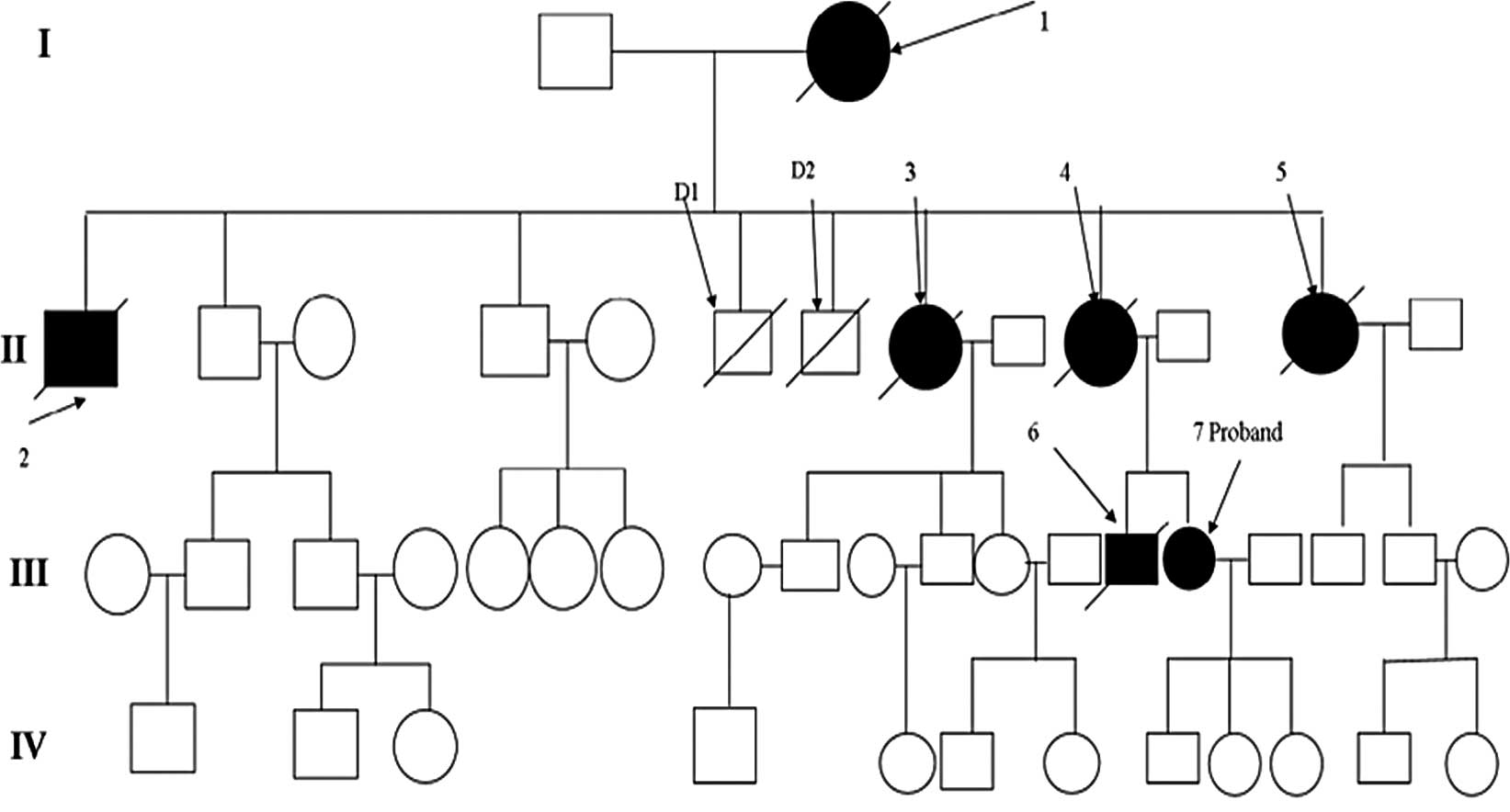
Figure 1

Pedigree of a Chinese family with pontocerebellar hypoplasia. Patient 1, onset at 30, diet at 50; patient 2, onset at 28, died at 60; patient 3, onset at 40, died at 70; patient 4, onset at 30, died at 50; patient 5, onset at 30, died at 65; patient 6, onset at 27, died at 63; patient 7 (the proband), onset at 36. Filled squares and circles denote affected males and females, respectively, indicated in the figure by arrows 1–7. Normal individuals are shown as empty symbols. The proband is shown by the indicated arrow. D1 died of cardiac problem in his fifties, D2 died of drowning in his twenties.

Physical examination showed a normal appearance and stature; however, the neurological examination revealed a series of positive indicators of cerebellar ataxia, including a wide-based gait, difficulty walking in a straight line, hyporeflexia of the left pharynx reflex, enhanced muscular tension and tendon reflex of both lower extremities and positive results for the finger-to-nose and heal-knee-tibia tests, as well as for the Romberg and Babinski signs (tests of proprioception and pyramidal tract, respectively).

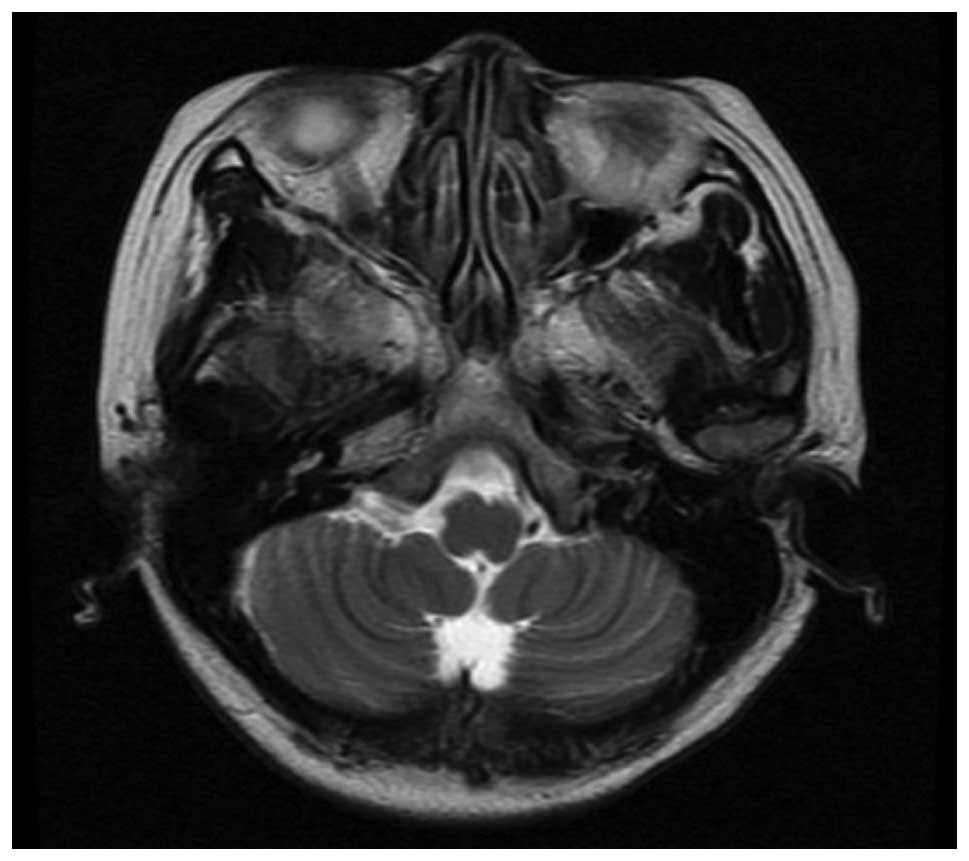
Initial laboratory investigations were normal, although magnetic resonance imaging (MRI) of the brain identified mild atrophy of the cerebellar hemisphere with visibly deepened sulci (Fig. 2). From these data, a primary diagnosis of hereditary cerebellar ataxia was considered.

Figure 2

Brain magnetic resonance imaging scan of the proband, showing mild atrophy of the cerebellar hemisphere with visibly deepened sulci.

A detailed gene analysis of the patient and other family members was conducted to determine further diagnosis and treatment. Prior to this, ethics approval was gained from the Ethics Committee of Zhejiang University (Hangzhou, China) and informed consent was obtained from the patient and all family members. Genomic DNA was extracted from nucleated blood cells of the affected and unaffected individuals of a four-generation Chinese family with PCH. Candidate genes were then selected for sequencing based upon their reported involvement in PCH development. For mutation analysis, the coding region of TSEN54 was sequenced with DNA from one patient and other unaffected alive family members. Other susceptible sites, including two TSEN2 sites (c.926 A > G and c.960+1delGTAAG) and four mitochondrial arginyl-tRNA synthetase (RARS2) sites (c.35 A > G, c.110+5 A > G, c.1024 A > G and c.1072 C > T), were sequenced only in the affected patient. The primers were designed according to previous studies (5,6). Amplification was performed using a Bori thermal cycler (Bori Technology Co., Ltd., Hangzhou, China) and polymerase chain reaction (PCR) products were then separated by polyacrylamide gel electrophoresis and directly sequenced using an ABI BigDye® Terminator Cycle Sequencing kit (Applied Biosystems, Austin, TX, USA) according to manufacturer’s instructions and run on an ABI 3100 sequencer. Sequencing results were analyzed using the DNASTAR® software program package (DNASTAR, Inc., Madison, WI, USA).

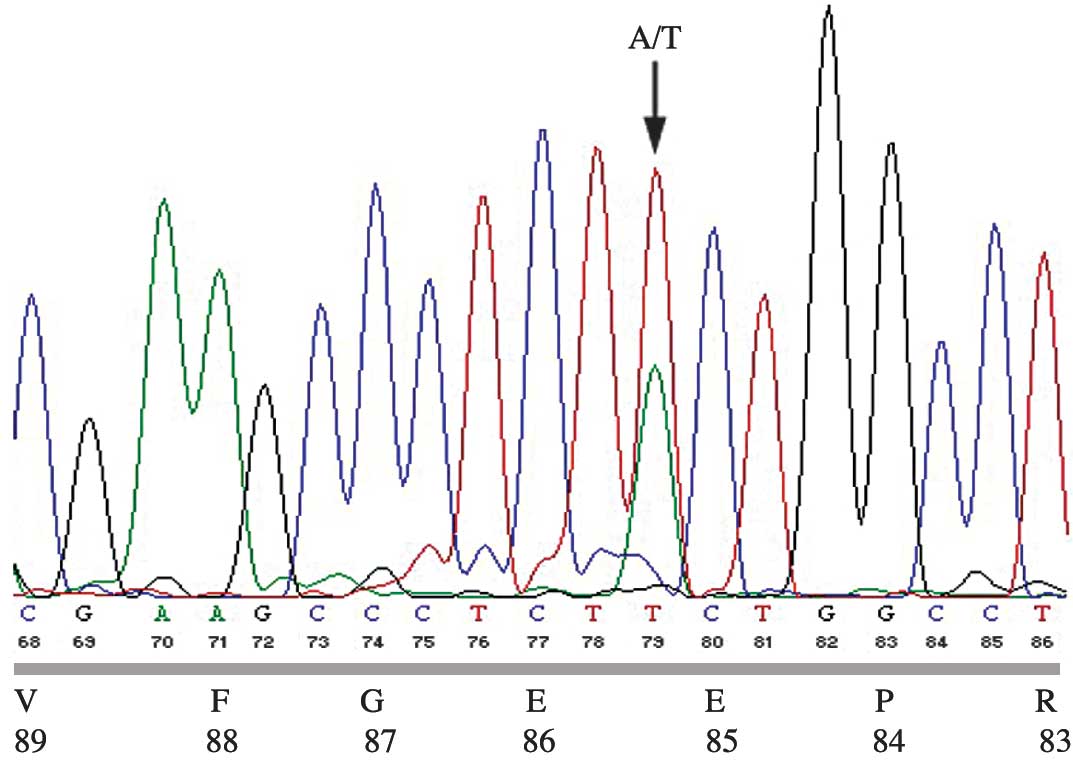
A novel c.254A > T heterozygous mutation in the coding region of TSEN54 was found by direct sequencing in the affected family members. No other mutations were detected in any other exon of TSEN54, TSEN2, RARS2 or vVRK1 in the affected patient, and no mutations were found in any unaffected family members. The mutation resulted in an amino acid substitution from glutamic acid to valine at amino acid 85 (Fig. 3). For the differential diagnosis of SCAs, another hereditary ataxia disorder prevalent in the Chinese population, a CAG repeat mutation in SCA1, 2, 3, 6, 7 and 17 was screened for by PCR and DNA sequencing techniques. A CAG repeat was not found in any of the SCA genes in the affected patients.

Figure 3

Sequencing chromatogram of TSEN54 gene. A heterozygous A254T transition was detected in the affected patients. V, valine; F, phenylalanine; G, glycine; E, glutamic acid; P, proline; R, arginine.

Discussion

PCH comprises a group of neurodegenerative disorders characterized by a small cerebellum and brainstem and progressive microcephaly. The seven currently described PCH subtypes are distinguished by additional characteristics. Two subtypes, PCH2 and PCH4, are the most common, with dyskinesia and dystonia observed in PCH2 (7) and more severe symptoms and prenatal onset in PCH4. The most predominant clinical manifestation is cerebellar ataxia. Autonomic nervous-system disturbance and extra-pyramidal symptoms are also frequently observed in patients with PCH. Several genes have been shown to contribute to the manifestation and symptoms of PCH, with all genes currently identified being involved in tRNA processing: PCH2B is caused by a TSEN2 mutation, PCH2C is caused by TSEN34 mutations, PCH6 is caused by mutations in RARS2 (5) and mutations in TSEN54, the gene encoding noncatalytic subunits of the tRNA-splicing endonuclease complex, have been detected in patients exhibiting symptoms characteristic of PCH2 and PCH4 (6). A total of >20 mutations have been identified within the TSEN54 gene in various subtypes of PCH, with A307S being the most commonly occurring mutation in families with inherited PCH (3).

The radiological features of PCH are hypoplasia and variable atrophy of the cerebellum and the pons. By MRI, the typical characteristic of PCH2 is a ‘dragonfly-like’ cerebellar pattern (4), while patients with PCH4 exhibit C-shaped inferior olives (8). The case presented in this study showed a mild atrophy of the cerebellar hemisphere with visibly deepened sulci; these radiological symptoms may correspond with the milder symptoms and late onset. It is difficult to differentiate PCH from other hereditary ataxia diseases from their clinical manifestations. SCA is a relatively common neurological degenerative disease with hereditary disparity. Abnormal CAG repeats found in the coding regions of SCA1, 2, 3, 6, 7 and 17 and DRPLA have been cloned (9). No abnormal CAG repeats were found in any of the affected patients in the present case.

VRK1 has been reported to be associated with a mild presentation of PCH1 (10), and mutations in the transfer RNA splicing endonuclease subunit genes TSEN54, TSEN2 and TSEN34 have been associated with PCH2 and 4. In addition, mutations in RARS2 have been identified in patients with PCH6 (11).

TSEN54 is highly expressed in neurons of the pons, cerebellar dentate and olivary nuclei during the second trimester of pregnancy (12). Budde et al (11) identified homozygosity for an A307S mutation in the TSEN54 gene in 42/47 individuals with PCH2. In the presented case, a novel heterozygous missense c.254 A > T mutation in the coding region of TSEN54 was identified. The consequences of this mutation on protein conformation and function and whether this results in hereditary ataxia mimicking PCH require further investigation. It is therefore important to perform a mutation analysis of known PCH-causing genes in patients presenting with symptoms similar to PCH.

Acknowledgements

This study was supported by a grant from the Health Bureau of Zhejiang Province, China (no. 2012KYA108).

References

1 

Sumathipala DS, Abeysekera GS, Jayasekara RW, Tallaksen CM and Dissanayake VH: Autosomal dominant hereditary ataxia in Sri Lanka. BMC Neurol. 13:392013. View Article : Google Scholar : PubMed/NCBI

2 

Friedreich N: On degenerative atrophy of the spinal dorsal columns. Arch Pathol Anat Physiol Klin Med. 26:391–419. 1863.(In German).

3 

Namavar Y, Barth PG, Poll-The BT and Baas F: Classification, diagnosis and potential mechanisms in pontocerebellar hypoplasia. Orphanet J Rare Dis. 6:502011. View Article : Google Scholar : PubMed/NCBI

4 

Namavar Y, Barth PG, Kasher PR, et al: Clinical, neuroradiological and genetic findings in pontocerebellar hypoplasia. Brain. 134:143–156. 2011. View Article : Google Scholar : PubMed/NCBI

5 

Barth PG, Blennow G, Lenard HG, et al: The syndrome of autosomal recessive pontocerebellar hypoplasia, microcephaly, and extrapyramidal dyskinesia (pontocerebellar hypoplasia type 2): compiled data from 10 pedigrees. Neurology. 45:311–317. 1995. View Article : Google Scholar

6 

Maricich SM, Aqeeb KA, Moayedi Y, et al: Pontocerebellar hypoplasia: review of classification and genetics, and exclusion of several genes known to be important for cerebellar development. J Child Neurol. 26:288–294. 2011. View Article : Google Scholar

7 

Simonati A, Cassandrini D, Bazan D and Santorelli FM: TSEN54 mutation in a child with pontocerebellar hypoplasia type 1. Acta Neuropathol. 121:671–673. 2011. View Article : Google Scholar : PubMed/NCBI

8 

Barth PG, Aronica E, de Vries L, et al: Pontocerebellar hypoplasia type 2: a neuropathological update. Acta Neuropathol. 114:373–386. 2007. View Article : Google Scholar : PubMed/NCBI

9 

Schöls L, Bauer P, Schmidt T, Schulte T and Riess O: Autosomal dominant cerebellar ataxias: clinical features, genetics, and pathogenesis. Lancet Neurol. 3:291–304. 2004.PubMed/NCBI

10 

Renbaum P, Kellerman E, Jaron R, et al: Spinal muscular atrophy with pontocerebellar hypoplasia is caused by a mutation in the VRK1 gene. Am J Hum Genet. 85:281–289. 2009. View Article : Google Scholar : PubMed/NCBI

11 

Cassandrini D, Cilio MR, Bianchi M, et al: Pontocerebellar hypoplasia type 6 caused by mutations in RARS2: definition of the clinical spectrum and molecular findings in five patients. J Inherit Metab Dis. 36:43–53. 2013. View Article : Google Scholar : PubMed/NCBI

12 

Budde BS, Namavar Y, Barth PG, et al: tRNA splicing endonuclease mutations cause pontocerebellar hypoplasia. Nat Genet. 40:1113–1118. 2008. View Article : Google Scholar : PubMed/NCBI

Related Articles

  • Abstract
  • View
  • Download
  • Twitter
Copy and paste a formatted citation
Spandidos Publications style
Qian Y, Wang H, Jin T, Wang Y, Fang L, Chen Y and Chen L: A familial late‑onset hereditary ataxia mimicking pontocerebellar hypoplasia caused by a novel TSEN54 mutation. Mol Med Rep 10: 1423-1425, 2014.
APA
Qian, Y., Wang, H., Jin, T., Wang, Y., Fang, L., Chen, Y., & Chen, L. (2014). A familial late‑onset hereditary ataxia mimicking pontocerebellar hypoplasia caused by a novel TSEN54 mutation. Molecular Medicine Reports, 10, 1423-1425. https://doi.org/10.3892/mmr.2014.2342
MLA
Qian, Y., Wang, H., Jin, T., Wang, Y., Fang, L., Chen, Y., Chen, L."A familial late‑onset hereditary ataxia mimicking pontocerebellar hypoplasia caused by a novel TSEN54 mutation". Molecular Medicine Reports 10.3 (2014): 1423-1425.
Chicago
Qian, Y., Wang, H., Jin, T., Wang, Y., Fang, L., Chen, Y., Chen, L."A familial late‑onset hereditary ataxia mimicking pontocerebellar hypoplasia caused by a novel TSEN54 mutation". Molecular Medicine Reports 10, no. 3 (2014): 1423-1425. https://doi.org/10.3892/mmr.2014.2342
Copy and paste a formatted citation
x
Spandidos Publications style
Qian Y, Wang H, Jin T, Wang Y, Fang L, Chen Y and Chen L: A familial late‑onset hereditary ataxia mimicking pontocerebellar hypoplasia caused by a novel TSEN54 mutation. Mol Med Rep 10: 1423-1425, 2014.
APA
Qian, Y., Wang, H., Jin, T., Wang, Y., Fang, L., Chen, Y., & Chen, L. (2014). A familial late‑onset hereditary ataxia mimicking pontocerebellar hypoplasia caused by a novel TSEN54 mutation. Molecular Medicine Reports, 10, 1423-1425. https://doi.org/10.3892/mmr.2014.2342
MLA
Qian, Y., Wang, H., Jin, T., Wang, Y., Fang, L., Chen, Y., Chen, L."A familial late‑onset hereditary ataxia mimicking pontocerebellar hypoplasia caused by a novel TSEN54 mutation". Molecular Medicine Reports 10.3 (2014): 1423-1425.
Chicago
Qian, Y., Wang, H., Jin, T., Wang, Y., Fang, L., Chen, Y., Chen, L."A familial late‑onset hereditary ataxia mimicking pontocerebellar hypoplasia caused by a novel TSEN54 mutation". Molecular Medicine Reports 10, no. 3 (2014): 1423-1425. https://doi.org/10.3892/mmr.2014.2342
Follow us
  • Twitter
  • LinkedIn
  • Facebook
About
  • Spandidos Publications
  • Careers
  • Cookie Policy
  • Privacy Policy
How can we help?
  • Help
  • Live Chat
  • Contact
  • Email to our Support Team