Spandidos Publications Logo
  • About
    • About Spandidos
    • Aims and Scopes
    • Abstracting and Indexing
    • Editorial Policies
    • Reprints and Permissions
    • Job Opportunities
    • Terms and Conditions
    • Contact
  • Journals
    • All Journals
    • Oncology Letters
      • Oncology Letters
      • Information for Authors
      • Editorial Policies
      • Editorial Board
      • Aims and Scope
      • Abstracting and Indexing
      • Bibliographic Information
      • Archive
    • International Journal of Oncology
      • International Journal of Oncology
      • Information for Authors
      • Editorial Policies
      • Editorial Board
      • Aims and Scope
      • Abstracting and Indexing
      • Bibliographic Information
      • Archive
    • Molecular and Clinical Oncology
      • Molecular and Clinical Oncology
      • Information for Authors
      • Editorial Policies
      • Editorial Board
      • Aims and Scope
      • Abstracting and Indexing
      • Bibliographic Information
      • Archive
    • Experimental and Therapeutic Medicine
      • Experimental and Therapeutic Medicine
      • Information for Authors
      • Editorial Policies
      • Editorial Board
      • Aims and Scope
      • Abstracting and Indexing
      • Bibliographic Information
      • Archive
    • International Journal of Molecular Medicine
      • International Journal of Molecular Medicine
      • Information for Authors
      • Editorial Policies
      • Editorial Board
      • Aims and Scope
      • Abstracting and Indexing
      • Bibliographic Information
      • Archive
    • Biomedical Reports
      • Biomedical Reports
      • Information for Authors
      • Editorial Policies
      • Editorial Board
      • Aims and Scope
      • Abstracting and Indexing
      • Bibliographic Information
      • Archive
    • Oncology Reports
      • Oncology Reports
      • Information for Authors
      • Editorial Policies
      • Editorial Board
      • Aims and Scope
      • Abstracting and Indexing
      • Bibliographic Information
      • Archive
    • Molecular Medicine Reports
      • Molecular Medicine Reports
      • Information for Authors
      • Editorial Policies
      • Editorial Board
      • Aims and Scope
      • Abstracting and Indexing
      • Bibliographic Information
      • Archive
    • World Academy of Sciences Journal
      • World Academy of Sciences Journal
      • Information for Authors
      • Editorial Policies
      • Editorial Board
      • Aims and Scope
      • Abstracting and Indexing
      • Bibliographic Information
      • Archive
    • International Journal of Functional Nutrition
      • International Journal of Functional Nutrition
      • Information for Authors
      • Editorial Policies
      • Editorial Board
      • Aims and Scope
      • Abstracting and Indexing
      • Bibliographic Information
      • Archive
    • International Journal of Epigenetics
      • International Journal of Epigenetics
      • Information for Authors
      • Editorial Policies
      • Editorial Board
      • Aims and Scope
      • Abstracting and Indexing
      • Bibliographic Information
      • Archive
    • Medicine International
      • Medicine International
      • Information for Authors
      • Editorial Policies
      • Editorial Board
      • Aims and Scope
      • Abstracting and Indexing
      • Bibliographic Information
      • Archive
  • Articles
  • Information
    • Information for Authors
    • Information for Reviewers
    • Information for Librarians
    • Information for Advertisers
    • Conferences
  • Language Editing
Spandidos Publications Logo
  • About
    • About Spandidos
    • Aims and Scopes
    • Abstracting and Indexing
    • Editorial Policies
    • Reprints and Permissions
    • Job Opportunities
    • Terms and Conditions
    • Contact
  • Journals
    • All Journals
    • Biomedical Reports
      • Information for Authors
      • Editorial Policies
      • Editorial Board
      • Aims and Scope
      • Abstracting and Indexing
      • Bibliographic Information
      • Archive
    • Experimental and Therapeutic Medicine
      • Information for Authors
      • Editorial Policies
      • Editorial Board
      • Aims and Scope
      • Abstracting and Indexing
      • Bibliographic Information
      • Archive
    • International Journal of Epigenetics
      • Information for Authors
      • Editorial Policies
      • Editorial Board
      • Aims and Scope
      • Abstracting and Indexing
      • Bibliographic Information
      • Archive
    • International Journal of Functional Nutrition
      • Information for Authors
      • Editorial Policies
      • Editorial Board
      • Aims and Scope
      • Abstracting and Indexing
      • Bibliographic Information
      • Archive
    • International Journal of Molecular Medicine
      • Information for Authors
      • Editorial Policies
      • Editorial Board
      • Aims and Scope
      • Abstracting and Indexing
      • Bibliographic Information
      • Archive
    • International Journal of Oncology
      • Information for Authors
      • Editorial Policies
      • Editorial Board
      • Aims and Scope
      • Abstracting and Indexing
      • Bibliographic Information
      • Archive
    • Medicine International
      • Information for Authors
      • Editorial Policies
      • Editorial Board
      • Aims and Scope
      • Abstracting and Indexing
      • Bibliographic Information
      • Archive
    • Molecular and Clinical Oncology
      • Information for Authors
      • Editorial Policies
      • Editorial Board
      • Aims and Scope
      • Abstracting and Indexing
      • Bibliographic Information
      • Archive
    • Molecular Medicine Reports
      • Information for Authors
      • Editorial Policies
      • Editorial Board
      • Aims and Scope
      • Abstracting and Indexing
      • Bibliographic Information
      • Archive
    • Oncology Letters
      • Information for Authors
      • Editorial Policies
      • Editorial Board
      • Aims and Scope
      • Abstracting and Indexing
      • Bibliographic Information
      • Archive
    • Oncology Reports
      • Information for Authors
      • Editorial Policies
      • Editorial Board
      • Aims and Scope
      • Abstracting and Indexing
      • Bibliographic Information
      • Archive
    • World Academy of Sciences Journal
      • Information for Authors
      • Editorial Policies
      • Editorial Board
      • Aims and Scope
      • Abstracting and Indexing
      • Bibliographic Information
      • Archive
  • Articles
  • Information
    • For Authors
    • For Reviewers
    • For Librarians
    • For Advertisers
    • Conferences
  • Language Editing
Login Register Submit
  • This site uses cookies
  • You can change your cookie settings at any time by following the instructions in our Cookie Policy. To find out more, you may read our Privacy Policy.

    I agree
Search articles by DOI, keyword, author or affiliation
Search
Advanced Search
presentation
Molecular Medicine Reports
Join Editorial Board Propose a Special Issue
Print ISSN: 1791-2997 Online ISSN: 1791-3004
Journal Cover
December-2014 Volume 10 Issue 6

Full Size Image

Sign up for eToc alerts
Recommend to Library

Journals

International Journal of Molecular Medicine

International Journal of Molecular Medicine

International Journal of Molecular Medicine is an international journal devoted to molecular mechanisms of human disease.

International Journal of Oncology

International Journal of Oncology

International Journal of Oncology is an international journal devoted to oncology research and cancer treatment.

Molecular Medicine Reports

Molecular Medicine Reports

Covers molecular medicine topics such as pharmacology, pathology, genetics, neuroscience, infectious diseases, molecular cardiology, and molecular surgery.

Oncology Reports

Oncology Reports

Oncology Reports is an international journal devoted to fundamental and applied research in Oncology.

Experimental and Therapeutic Medicine

Experimental and Therapeutic Medicine

Experimental and Therapeutic Medicine is an international journal devoted to laboratory and clinical medicine.

Oncology Letters

Oncology Letters

Oncology Letters is an international journal devoted to Experimental and Clinical Oncology.

Biomedical Reports

Biomedical Reports

Explores a wide range of biological and medical fields, including pharmacology, genetics, microbiology, neuroscience, and molecular cardiology.

Molecular and Clinical Oncology

Molecular and Clinical Oncology

International journal addressing all aspects of oncology research, from tumorigenesis and oncogenes to chemotherapy and metastasis.

World Academy of Sciences Journal

World Academy of Sciences Journal

Multidisciplinary open-access journal spanning biochemistry, genetics, neuroscience, environmental health, and synthetic biology.

International Journal of Functional Nutrition

International Journal of Functional Nutrition

Open-access journal combining biochemistry, pharmacology, immunology, and genetics to advance health through functional nutrition.

International Journal of Epigenetics

International Journal of Epigenetics

Publishes open-access research on using epigenetics to advance understanding and treatment of human disease.

Medicine International

Medicine International

An International Open Access Journal Devoted to General Medicine.

Journal Cover
December-2014 Volume 10 Issue 6

Full Size Image

Sign up for eToc alerts
Recommend to Library

  • Article
  • Citations
    • Cite This Article
    • Download Citation
    • Create Citation Alert
    • Remove Citation Alert
    • Cited By
  • Similar Articles
    • Related Articles (in Spandidos Publications)
    • Similar Articles (Google Scholar)
    • Similar Articles (PubMed)
  • Download PDF
  • Download XML
  • View XML
Article

N‑acetyl‑L‑cysteine reduces arsenite‑induced cytotoxicity through chelation in U937 monocytes and macrophages

  • Authors:
    • Sidra Ghani
    • Noureen Khan
    • Chihaya Koriyama
    • Suminori Akiba
    • Megumi Yamamoto
  • View Affiliations / Copyright

    Affiliations: Department of Epidemiology and Preventive Medicine, Kagoshima University Graduate School of Medical and Dental Sciences, Kagoshima, Kagoshima 890‑8544, Japan, Integrated Physiology Section, Department of Basic Medical Science, National Institute for Minamata Disease, Minamata, Kumamoto 867‑0008, Japan
  • Pages: 2961-2966
    |
    Published online on: October 8, 2014
       https://doi.org/10.3892/mmr.2014.2612
  • Expand metrics +
Metrics: Total Views: 0 (Spandidos Publications: | PMC Statistics: )
Metrics: Total PDF Downloads: 0 (Spandidos Publications: | PMC Statistics: )
Cited By (CrossRef): 0 citations Loading Articles...

This article is mentioned in:


Abstract

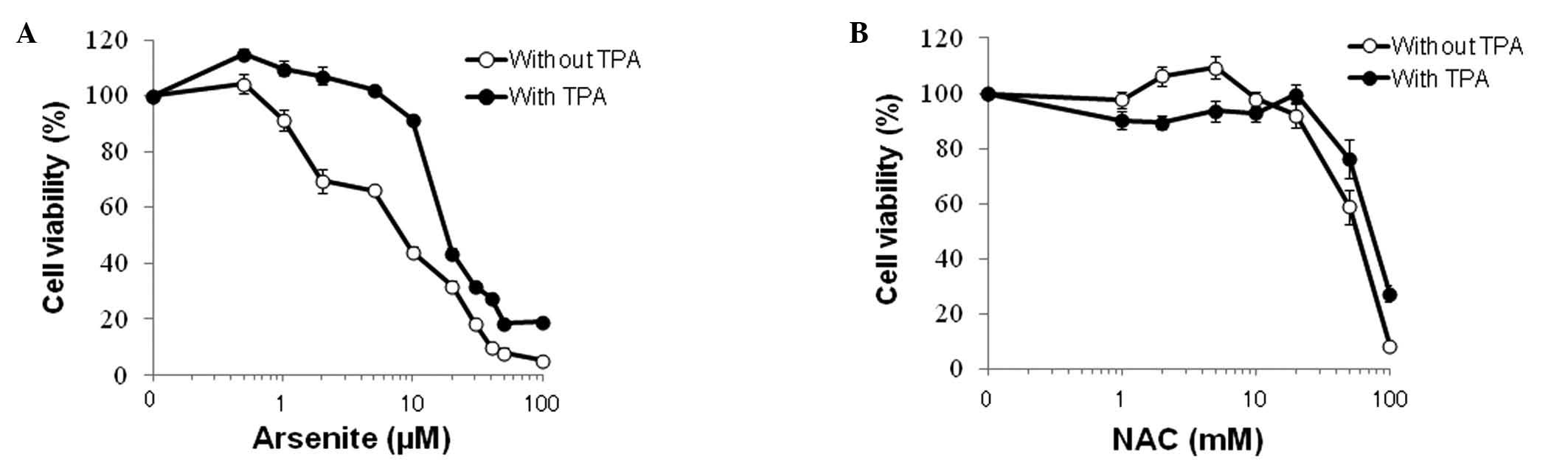
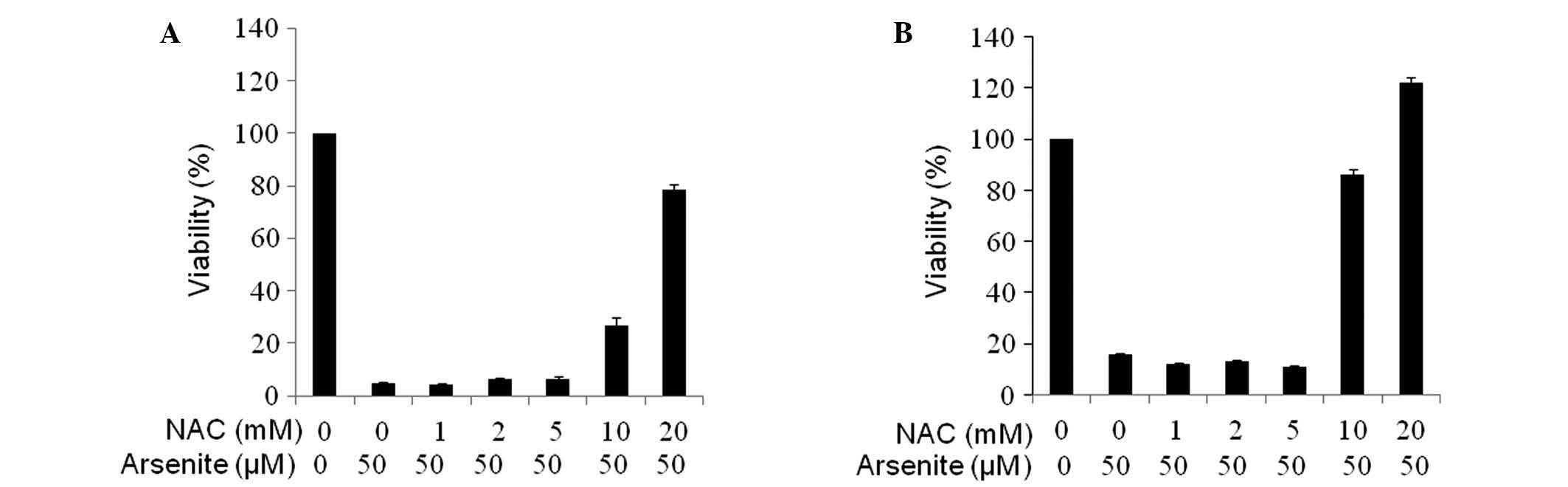
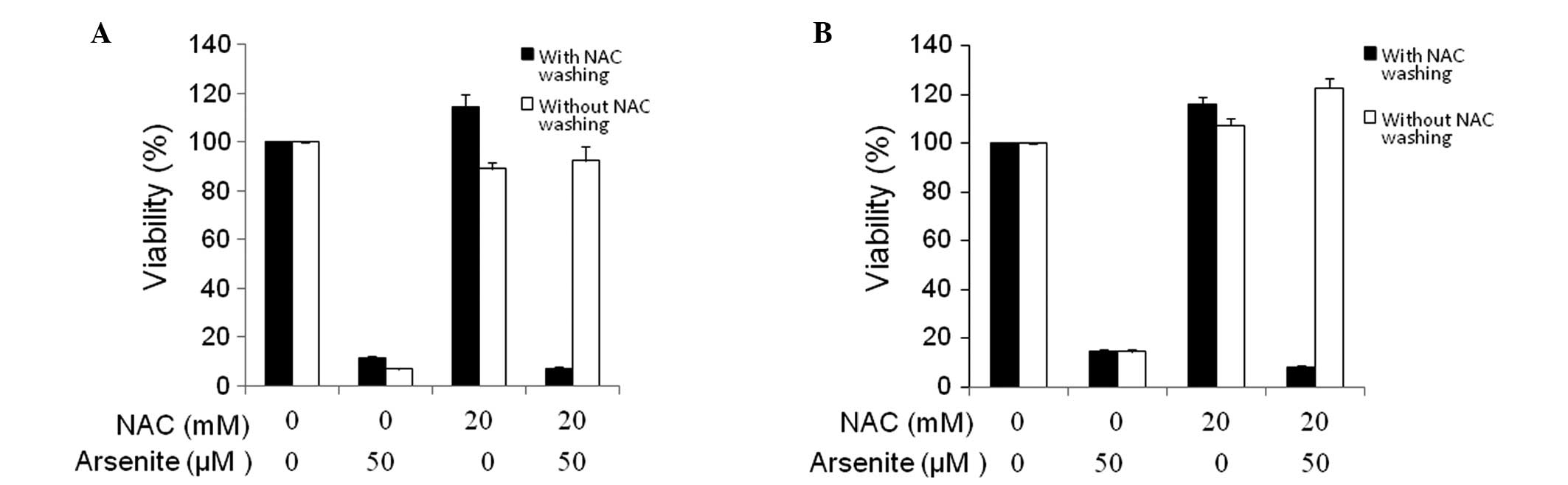
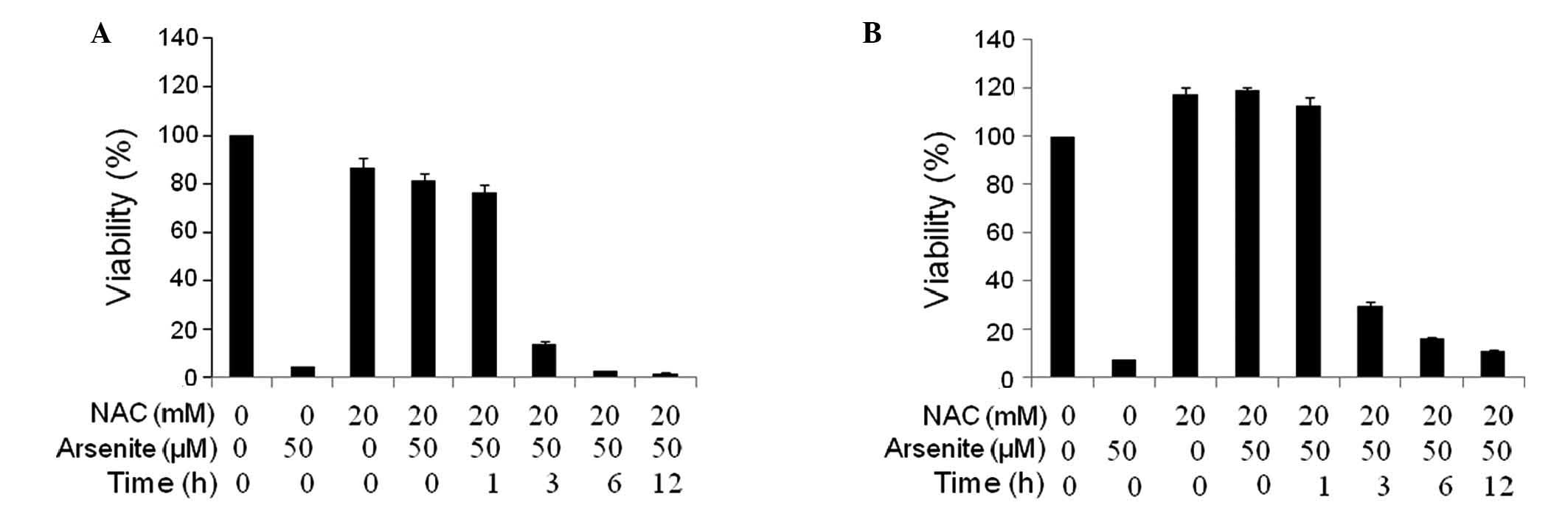
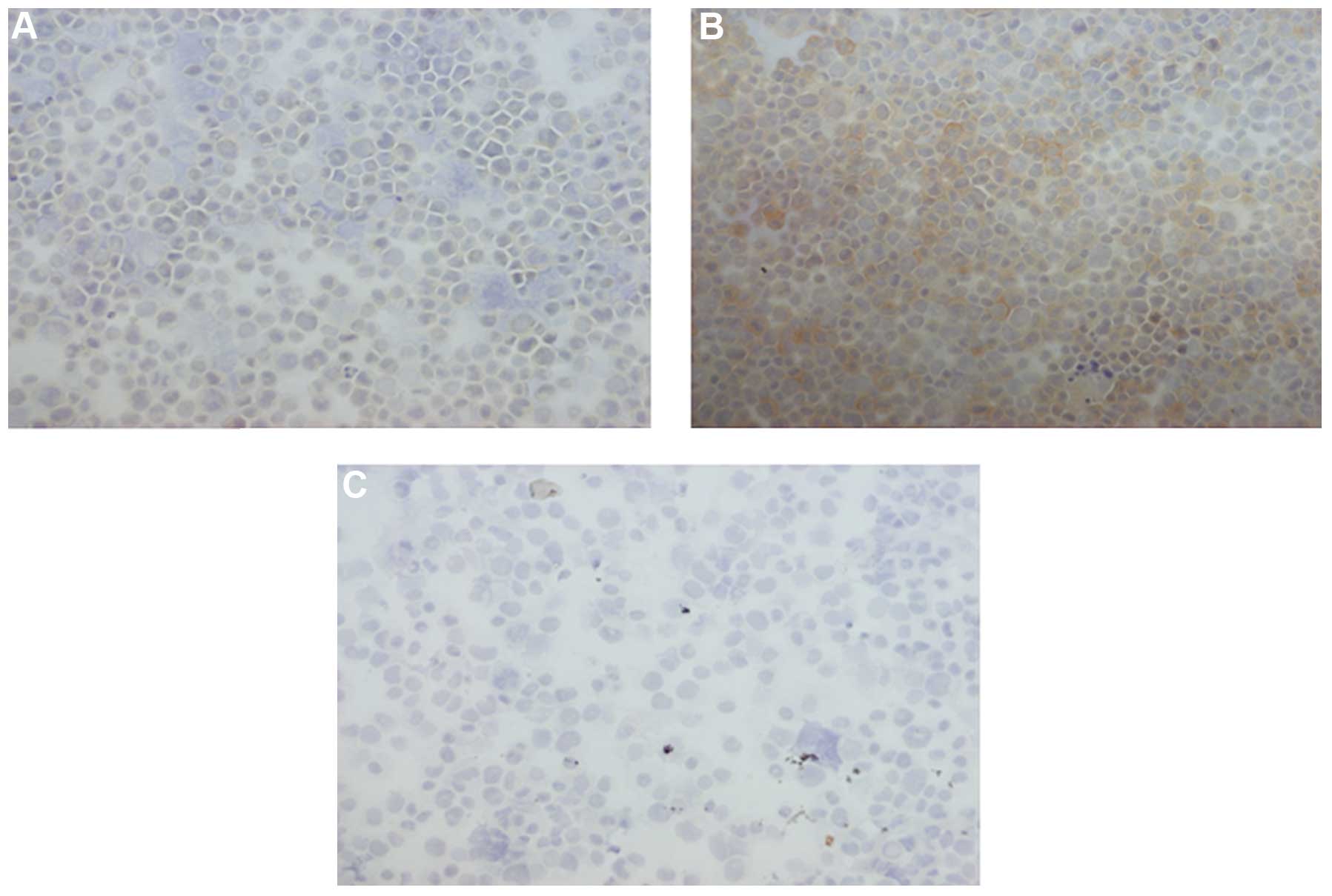
In the present study, in order to clarify the preventive mechanism of N‑acetyl‑L‑cysteine (NAC) on arsenite‑induced apoptosis in U937 cells, which lack functional p53, the cytotoxicity among U937 cells [monocytes and 12‑O‑tetradecanoylphorbol‑13‑acetate (TPA)‑treated macrophages] receiving NAC treatment at different times post arsenite treatment was examined. TPA‑treated macrophages were more resistant to arsenite‑induced apoptosis than monocytes, which may be associated with the induction of Bcl‑2 expression. Pretreatment with 20 mM NAC prior to arsenite exposure suppressed apoptosis up to 75% in the monocytes and 100% in the macrophages. However, 6‑h NAC pretreatment and subsequent washing out of NAC from the culture medium prior to arsenite treatment did not inhibit the arsenite‑induced apoptosis. Post‑treatment by NAC up to 1 h following arsenite exposure almost completely inhibited the cytotoxic effects of arsenite in U937 monocytes and macrophages. The results of the current study indicate that the preventive mechanism of NAC on arsenite‑induced apoptosis in U937 monocytes and macrophages mainly involves chelation of arsenite in culture medium.
View Figures

Figure 1

Figure 2

Figure 3

Figure 4

Figure 5

View References

1 

States JC, Barchowsky A, Cartwright IL, Reichard JF, Futscher BW and Lantz RC: Arsenic toxicology: translating between experimental models and human pathology. Environ Health Perspect. 119:1356–1363. 2011. View Article : Google Scholar

2 

Nickson RT, McArthur JM, Shrestha B, Kyaw-Myint TO and Lowry D: Arsenic and other drinking water quality issues, Muzaffargarh District, Pakistan. Appl Geochem. 20:55–68. 2005. View Article : Google Scholar

3 

Uqaili AA, Mughal AH and Maheshwari BK: Arsenic contamination in ground water sources of district Matiari, Sindh. Int J Eng Res Appl. 3:259–266. 2012.

4 

Ahmad SA, Gulzar A, Rehman HU, Soomro ZA, Hussain M, Rehman MU and Qadir MA: Study of arsenic in drinking water of distric Kasur Pakistan. World Appl Sci J. 24:634–640. 2013.

5 

Ashraf M, Tariq J and Jaffar M: Contents of trace metals in fish, sediment and water from three freshwater reservoirs on the Indus River, Pakistan. Fish Res. 12:355–364. 1991. View Article : Google Scholar

6 

Marchiset-Ferlay N, Savanovitch C and Sauvant-Rochat MP: What is the best biomarker to assess arsenic exposure via drinking water? Environ Int. 39:150–171. 2012. View Article : Google Scholar : PubMed/NCBI

7 

Smith AH, Goycolea M, Haque R and Biggs ML: Marked increase in bladder and lung cancer mortality in a region of Northern Chile due to arsenic in drinking water. Am J Epidemiol. 147:660–669. 1998. View Article : Google Scholar : PubMed/NCBI

8 

Biswas R, Ghosh P, Banerjee N, Das JK, Sau T, Banerjee A, Roy S, Ganguly S, Chatterjee M, Mukherjee A and Giri AK: Analysis of T-cell proliferation and cytokine secretion in the individuals exposed to arsenic. Hum Exp Toxicol. 27:381–386. 2008. View Article : Google Scholar : PubMed/NCBI

9 

Banerjee N, Banerjee M, Ganguly S, Bandyopadhyay S, Das JK, Bandyopadhay A, Chatterjee M and Giri AK: Arsenic-induced mitochondrial instability leading to programmed cell death in the exposed individuals. Toxicology. 246:101–111. 2008. View Article : Google Scholar : PubMed/NCBI

10 

Banerjee N, Banerjee S, Sen R, Bandyopadhyay A, Sarma N, Majumder P, Das JK, Chatterjee M, Kabir SN and Giri AK: Chronic arsenic exposure impairs macrophage functions in the exposed individuals. J Clin Immunol. 29:582–594. 2009. View Article : Google Scholar : PubMed/NCBI

11 

Luna AL, Acosta-Saavedra LC, Lopez-Carrillo L, Conde P, Vera E, De Vizcaya-Ruiz A, Bastida M, Cebrian ME and Calderon-Aranda ES: Arsenic alters monocyte superoxide anion and nitric oxide production in environmentally exposed children. Toxicol Appl Pharmacol. 245:244–251. 2010. View Article : Google Scholar : PubMed/NCBI

12 

Ramos AM, Fernández C, Amrán D, Sancho P, de Blas E and Aller P: Pharmacologic inhibitors of PI3K/Akt potentiate the apoptotic action of the antileukemic drug arsenic trioxide via glutathione depletion and increased peroxide accumulation in myeloid leukemia cells. Blood. 105:4013–4020. 2005. View Article : Google Scholar

13 

Foti A, Bar-Eli M, Ahuja HG and Cline MJ: A splicing mutation accounts for the lack of p53 gene expression in a CML blast crisis cell line: a novel mechanism of p53 gene inactivation. Br J Haematol. 76:143–145. 1990. View Article : Google Scholar : PubMed/NCBI

14 

Vogel CF, Sciullo E, Wong P, Kuzmicky P, Kado N and Matsumura F: Induction of proinflammatory cytokines and C-reactive protein in human macrophage cell line U937 exposed to air pollution particulates. Environ Health Perspect. 113:1536–1541. 2005. View Article : Google Scholar : PubMed/NCBI

15 

Yamamoto M, Hirano S, Vogel CF, Cui X and Matsumura F: Selective activation of NF-kappaB and E2F by low concentration of arsenite in U937 human monocytic leukemia cells. J Biochem Mol Toxicol. 22:136–146. 2008. View Article : Google Scholar : PubMed/NCBI

16 

Solary E, Bertrand R, Kohn KW and Pommier Y: Differential induction of apoptosis in undifferentiated and differentiated HL-60 cells by DNA topoisomerase I and II inhibitors. Blood. 81:1359–1368. 1993.PubMed/NCBI

17 

Sordet O, Bettaieb A, Bruey JM, Eymin B, Droin N, Ivarsson M, Garrido C and Solary E: Selective inhibition of apoptosis by TPA-induced differentiation of U937 leukemic cells. Cell Death Differ. 6:351–361. 1999. View Article : Google Scholar : PubMed/NCBI

18 

Sordet O, Rébé C, Leroy I, Bruey JM, Garrido C, Miguet C, Lizard G, Plenchette S, Corcos L and Solary E: Mitochondria-targeting drugs arsenic trioxide and lonidamine bypass the resistance of TPA-differentiated leukemic cells to apoptosis. Blood. 97:3931–3940. 2001. View Article : Google Scholar

19 

Iwama K, Nakajo S, Aiuchi T and Nakaya K: Apoptosis induced by arsenic trioxide in leukemia U937 cells is dependent on activation of p38, inactivation of ERK and the Ca2+-dependent production of superoxide. Int J Cancer. 92:518–526. 2001. View Article : Google Scholar : PubMed/NCBI

20 

Fernández C, Ramos AM, Sancho P, Amrán D, de Blas E and Aller P: 12-O-tetradecanoylphorbol-13-acetate may both potentiate and decrease the generation of apoptosis by the antileukemic agent arsenic trioxide in human promonocytic cells. Regulation by extracellular signal-regulated protein kinases and glutathione. J Biol Chem. 279:3877–3884. 2004.

21 

Flora SJ: Arsenic-induced oxidative stress and its reversibility. Free Radic Biol Med. 51:257–281. 2011. View Article : Google Scholar : PubMed/NCBI

22 

Henderson P, Hale TW, Shum S and Habersang RW: N-Acetylcysteine therapy of acute heavy metal poisoning in mice. Vet Hum Toxicol. 27:522–525. 1985.PubMed/NCBI

23 

Reddy PS, Rani GP, Sainath SB, Meena R and Supriya Ch: Protective effects of N-acetylcysteine against arsenic-induced oxidative stress and reprotoxicity in male mice. J Trace Elem Med Biol. 25:247–253. 2011. View Article : Google Scholar : PubMed/NCBI

24 

Banner W Jr, Koch M, Capin DM, Hopf SB, Chang S and Tong TG: Experimental chelation therapy in chromium, lead, and boron intoxication with N-acetylcysteine and other compounds. Toxicol Appl Pharmacol. 83:142–147. 1986. View Article : Google Scholar : PubMed/NCBI

25 

Ho SY, Wu WJ, Chiu HW, Chen YA, Ho YS, Guo HR and Wang YJ: Arsenic trioxide and radiation enhance apoptotic effects in HL-60 cells through increased ROS generation and regulation of JNK and p38 MAPK signaling pathways. Chem Biol Interact. 193:162–171. 2011. View Article : Google Scholar : PubMed/NCBI

26 

Liu YQ, You S, Zhang CL, Tashiro S, Onodera S and Ikejima T: Oridonin enhances phagocytosis of UV-irradiated apoptotic U937 cells. Biol Pharm Bull. 28:461–467. 2005. View Article : Google Scholar : PubMed/NCBI

27 

Hirano S, Cui X, Li S, Kanno S, Kobayashi Y, Hayakawa T and Shraim A: Difference in uptake and toxicity of trivalent and pentavalent inorganic arsenic in rat heart microvessel endothelial cells. Arch Toxicol. 77:305–312. 2003.

28 

Riganti C, Aldieri E, Bergandi L, Tomatis M, Fenoglio I, Costamagna C, Fubini B, Bosia A and Ghigo D: Long and short fiber amosite asbestos alters at a different extent the redox metabolism in human lung epithelial cells. Toxicol Appl Pharmacol. 193:106–115. 2003. View Article : Google Scholar

29 

Hirano S, Kobayashi Y, Cui X, Kanno S, Hayakawa T and Shraim A: The accumulation and toxicity of methylated arsenicals in endothelial cells: important roles of thiol compounds. Toxicol Appl Pharmacol. 198:458–467. 2004. View Article : Google Scholar : PubMed/NCBI

30 

Rosato RR, Almenara JA and Grant S: The histone deacetylase inhibitor MS-275 promotes differentiation or apoptosis in human leukemia cells through a process regulated by generation of reactive oxygen species and induction of p21CIP1/WAF1 1. Cancer Res. 63:3637–3645. 2003.

31 

Martin DS, Willis SE and Cline DM: N-acetylcysteine in the treatment of human arsenic poisoning. J Am Board Fam Pract. 3:293–296. 1990.PubMed/NCBI

32 

United States Environmental Protection Agency. Proven alternatives for aboveground treatment of arsenic in groundwater. EPA-542-S-02-002. EPA; New York, NY, USA: 2002

33 

Shiiki K, Yoshikawa H, Kinoshita H, Takeda M, Ueno A, Nakajima Y and Tasaka K: Potential mechanisms of resistance to TRAIL/Apo2L-induced apoptosis in human promyelocytic leukemia HL-60 cells during granulocytic differentiation. Cell Death Differ. 7:939–946. 2000. View Article : Google Scholar

34 

Yang J, Liu X, Bhalla K, Kim CN, Ibrado AM, Cai J, Peng TI, Jones DP and Wang X: Prevention of apoptosis by Bcl-2: release of cytochrome c from mitochondria blocked. Science. 275:1129–1132. 1997. View Article : Google Scholar : PubMed/NCBI

35 

Kluck RM, Bossy-Wetzel E, Green DR and Newmeyer DD: The release of cytochrome c from mitochondria: a primary site for Bcl-2 regulation of apoptosis. Science. 275:1132–1136. 1997. View Article : Google Scholar : PubMed/NCBI

36 

Meinhardt G, Roth J and Hass R: Activation of protein kinase C relays distinct signaling pathways in the same cell type: differentiation and caspase-mediated apoptosis. Cell Death Differ. 7:795–803. 2000. View Article : Google Scholar

37 

Meinhardt G, Roth J and Totok G: Protein kinase C activation modulates pro- and anti-apoptotic signaling pathways. Eur J Cell Biol. 79:824–833. 2000. View Article : Google Scholar : PubMed/NCBI

38 

Takada Y, Hachiya M, Osawa Y, Hasegawa Y, Ando K, Kobayashi Y and Akashi M: 12-O-tetradecanoylphorbol-13-acetate-induced apoptosis is mediated by tumor necrosis factor alpha in human monocytic U937 cells. J Biol Chem. 274:28286–28292. 1999. View Article : Google Scholar : PubMed/NCBI

Related Articles

  • Abstract
  • View
  • Download
  • Twitter
Copy and paste a formatted citation
Spandidos Publications style
Ghani S, Khan N, Koriyama C, Akiba S and Yamamoto M: N‑acetyl‑L‑cysteine reduces arsenite‑induced cytotoxicity through chelation in U937 monocytes and macrophages. Mol Med Rep 10: 2961-2966, 2014.
APA
Ghani, S., Khan, N., Koriyama, C., Akiba, S., & Yamamoto, M. (2014). N‑acetyl‑L‑cysteine reduces arsenite‑induced cytotoxicity through chelation in U937 monocytes and macrophages. Molecular Medicine Reports, 10, 2961-2966. https://doi.org/10.3892/mmr.2014.2612
MLA
Ghani, S., Khan, N., Koriyama, C., Akiba, S., Yamamoto, M."N‑acetyl‑L‑cysteine reduces arsenite‑induced cytotoxicity through chelation in U937 monocytes and macrophages". Molecular Medicine Reports 10.6 (2014): 2961-2966.
Chicago
Ghani, S., Khan, N., Koriyama, C., Akiba, S., Yamamoto, M."N‑acetyl‑L‑cysteine reduces arsenite‑induced cytotoxicity through chelation in U937 monocytes and macrophages". Molecular Medicine Reports 10, no. 6 (2014): 2961-2966. https://doi.org/10.3892/mmr.2014.2612
Copy and paste a formatted citation
x
Spandidos Publications style
Ghani S, Khan N, Koriyama C, Akiba S and Yamamoto M: N‑acetyl‑L‑cysteine reduces arsenite‑induced cytotoxicity through chelation in U937 monocytes and macrophages. Mol Med Rep 10: 2961-2966, 2014.
APA
Ghani, S., Khan, N., Koriyama, C., Akiba, S., & Yamamoto, M. (2014). N‑acetyl‑L‑cysteine reduces arsenite‑induced cytotoxicity through chelation in U937 monocytes and macrophages. Molecular Medicine Reports, 10, 2961-2966. https://doi.org/10.3892/mmr.2014.2612
MLA
Ghani, S., Khan, N., Koriyama, C., Akiba, S., Yamamoto, M."N‑acetyl‑L‑cysteine reduces arsenite‑induced cytotoxicity through chelation in U937 monocytes and macrophages". Molecular Medicine Reports 10.6 (2014): 2961-2966.
Chicago
Ghani, S., Khan, N., Koriyama, C., Akiba, S., Yamamoto, M."N‑acetyl‑L‑cysteine reduces arsenite‑induced cytotoxicity through chelation in U937 monocytes and macrophages". Molecular Medicine Reports 10, no. 6 (2014): 2961-2966. https://doi.org/10.3892/mmr.2014.2612
Follow us
  • Twitter
  • LinkedIn
  • Facebook
About
  • Spandidos Publications
  • Careers
  • Cookie Policy
  • Privacy Policy
How can we help?
  • Help
  • Live Chat
  • Contact
  • Email to our Support Team