Spandidos Publications Logo
  • About
    • About Spandidos
    • Aims and Scopes
    • Abstracting and Indexing
    • Editorial Policies
    • Reprints and Permissions
    • Job Opportunities
    • Terms and Conditions
    • Contact
  • Journals
    • All Journals
    • Oncology Letters
      • Oncology Letters
      • Information for Authors
      • Editorial Policies
      • Editorial Board
      • Aims and Scope
      • Abstracting and Indexing
      • Bibliographic Information
      • Archive
    • International Journal of Oncology
      • International Journal of Oncology
      • Information for Authors
      • Editorial Policies
      • Editorial Board
      • Aims and Scope
      • Abstracting and Indexing
      • Bibliographic Information
      • Archive
    • Molecular and Clinical Oncology
      • Molecular and Clinical Oncology
      • Information for Authors
      • Editorial Policies
      • Editorial Board
      • Aims and Scope
      • Abstracting and Indexing
      • Bibliographic Information
      • Archive
    • Experimental and Therapeutic Medicine
      • Experimental and Therapeutic Medicine
      • Information for Authors
      • Editorial Policies
      • Editorial Board
      • Aims and Scope
      • Abstracting and Indexing
      • Bibliographic Information
      • Archive
    • International Journal of Molecular Medicine
      • International Journal of Molecular Medicine
      • Information for Authors
      • Editorial Policies
      • Editorial Board
      • Aims and Scope
      • Abstracting and Indexing
      • Bibliographic Information
      • Archive
    • Biomedical Reports
      • Biomedical Reports
      • Information for Authors
      • Editorial Policies
      • Editorial Board
      • Aims and Scope
      • Abstracting and Indexing
      • Bibliographic Information
      • Archive
    • Oncology Reports
      • Oncology Reports
      • Information for Authors
      • Editorial Policies
      • Editorial Board
      • Aims and Scope
      • Abstracting and Indexing
      • Bibliographic Information
      • Archive
    • Molecular Medicine Reports
      • Molecular Medicine Reports
      • Information for Authors
      • Editorial Policies
      • Editorial Board
      • Aims and Scope
      • Abstracting and Indexing
      • Bibliographic Information
      • Archive
    • World Academy of Sciences Journal
      • World Academy of Sciences Journal
      • Information for Authors
      • Editorial Policies
      • Editorial Board
      • Aims and Scope
      • Abstracting and Indexing
      • Bibliographic Information
      • Archive
    • International Journal of Functional Nutrition
      • International Journal of Functional Nutrition
      • Information for Authors
      • Editorial Policies
      • Editorial Board
      • Aims and Scope
      • Abstracting and Indexing
      • Bibliographic Information
      • Archive
    • International Journal of Epigenetics
      • International Journal of Epigenetics
      • Information for Authors
      • Editorial Policies
      • Editorial Board
      • Aims and Scope
      • Abstracting and Indexing
      • Bibliographic Information
      • Archive
    • Medicine International
      • Medicine International
      • Information for Authors
      • Editorial Policies
      • Editorial Board
      • Aims and Scope
      • Abstracting and Indexing
      • Bibliographic Information
      • Archive
  • Articles
  • Information
    • Information for Authors
    • Information for Reviewers
    • Information for Librarians
    • Information for Advertisers
    • Conferences
  • Language Editing
Spandidos Publications Logo
  • About
    • About Spandidos
    • Aims and Scopes
    • Abstracting and Indexing
    • Editorial Policies
    • Reprints and Permissions
    • Job Opportunities
    • Terms and Conditions
    • Contact
  • Journals
    • All Journals
    • Biomedical Reports
      • Information for Authors
      • Editorial Policies
      • Editorial Board
      • Aims and Scope
      • Abstracting and Indexing
      • Bibliographic Information
      • Archive
    • Experimental and Therapeutic Medicine
      • Information for Authors
      • Editorial Policies
      • Editorial Board
      • Aims and Scope
      • Abstracting and Indexing
      • Bibliographic Information
      • Archive
    • International Journal of Epigenetics
      • Information for Authors
      • Editorial Policies
      • Editorial Board
      • Aims and Scope
      • Abstracting and Indexing
      • Bibliographic Information
      • Archive
    • International Journal of Functional Nutrition
      • Information for Authors
      • Editorial Policies
      • Editorial Board
      • Aims and Scope
      • Abstracting and Indexing
      • Bibliographic Information
      • Archive
    • International Journal of Molecular Medicine
      • Information for Authors
      • Editorial Policies
      • Editorial Board
      • Aims and Scope
      • Abstracting and Indexing
      • Bibliographic Information
      • Archive
    • International Journal of Oncology
      • Information for Authors
      • Editorial Policies
      • Editorial Board
      • Aims and Scope
      • Abstracting and Indexing
      • Bibliographic Information
      • Archive
    • Medicine International
      • Information for Authors
      • Editorial Policies
      • Editorial Board
      • Aims and Scope
      • Abstracting and Indexing
      • Bibliographic Information
      • Archive
    • Molecular and Clinical Oncology
      • Information for Authors
      • Editorial Policies
      • Editorial Board
      • Aims and Scope
      • Abstracting and Indexing
      • Bibliographic Information
      • Archive
    • Molecular Medicine Reports
      • Information for Authors
      • Editorial Policies
      • Editorial Board
      • Aims and Scope
      • Abstracting and Indexing
      • Bibliographic Information
      • Archive
    • Oncology Letters
      • Information for Authors
      • Editorial Policies
      • Editorial Board
      • Aims and Scope
      • Abstracting and Indexing
      • Bibliographic Information
      • Archive
    • Oncology Reports
      • Information for Authors
      • Editorial Policies
      • Editorial Board
      • Aims and Scope
      • Abstracting and Indexing
      • Bibliographic Information
      • Archive
    • World Academy of Sciences Journal
      • Information for Authors
      • Editorial Policies
      • Editorial Board
      • Aims and Scope
      • Abstracting and Indexing
      • Bibliographic Information
      • Archive
  • Articles
  • Information
    • For Authors
    • For Reviewers
    • For Librarians
    • For Advertisers
    • Conferences
  • Language Editing
Login Register Submit
  • This site uses cookies
  • You can change your cookie settings at any time by following the instructions in our Cookie Policy. To find out more, you may read our Privacy Policy.

    I agree
Search articles by DOI, keyword, author or affiliation
Search
Advanced Search
presentation
Molecular Medicine Reports
Join Editorial Board Propose a Special Issue
Print ISSN: 1791-2997 Online ISSN: 1791-3004
Journal Cover
January-2015 Volume 11 Issue 1

Full Size Image

Sign up for eToc alerts
Recommend to Library

Journals

International Journal of Molecular Medicine

International Journal of Molecular Medicine

International Journal of Molecular Medicine is an international journal devoted to molecular mechanisms of human disease.

International Journal of Oncology

International Journal of Oncology

International Journal of Oncology is an international journal devoted to oncology research and cancer treatment.

Molecular Medicine Reports

Molecular Medicine Reports

Covers molecular medicine topics such as pharmacology, pathology, genetics, neuroscience, infectious diseases, molecular cardiology, and molecular surgery.

Oncology Reports

Oncology Reports

Oncology Reports is an international journal devoted to fundamental and applied research in Oncology.

Experimental and Therapeutic Medicine

Experimental and Therapeutic Medicine

Experimental and Therapeutic Medicine is an international journal devoted to laboratory and clinical medicine.

Oncology Letters

Oncology Letters

Oncology Letters is an international journal devoted to Experimental and Clinical Oncology.

Biomedical Reports

Biomedical Reports

Explores a wide range of biological and medical fields, including pharmacology, genetics, microbiology, neuroscience, and molecular cardiology.

Molecular and Clinical Oncology

Molecular and Clinical Oncology

International journal addressing all aspects of oncology research, from tumorigenesis and oncogenes to chemotherapy and metastasis.

World Academy of Sciences Journal

World Academy of Sciences Journal

Multidisciplinary open-access journal spanning biochemistry, genetics, neuroscience, environmental health, and synthetic biology.

International Journal of Functional Nutrition

International Journal of Functional Nutrition

Open-access journal combining biochemistry, pharmacology, immunology, and genetics to advance health through functional nutrition.

International Journal of Epigenetics

International Journal of Epigenetics

Publishes open-access research on using epigenetics to advance understanding and treatment of human disease.

Medicine International

Medicine International

An International Open Access Journal Devoted to General Medicine.

Journal Cover
January-2015 Volume 11 Issue 1

Full Size Image

Sign up for eToc alerts
Recommend to Library

  • Article
  • Citations
    • Cite This Article
    • Download Citation
    • Create Citation Alert
    • Remove Citation Alert
    • Cited By
  • Similar Articles
    • Related Articles (in Spandidos Publications)
    • Similar Articles (Google Scholar)
    • Similar Articles (PubMed)
  • Download PDF
  • Download XML
  • View XML
Article

Evodiamine sensitizes U87 glioblastoma cells to TRAIL via the death receptor pathway

  • Authors:
    • Muhammad Khan
    • Yanying Bi
    • Javed Iqbal Qazi
    • Limei Fan
    • Hongwen Gao
  • View Affiliations / Copyright

    Affiliations: Department of Pathology, The Second Hospital of Jilin University, Changchun 130041, P.R. China, Infection Control Office, The First Affilliated Hospital to Changchun University of Chinese Medicine, Changchun 130021, P.R. China, Department of Zoology, University of the Punjab, Quaid-e-Azam Campus, Lahore 54590, Pakistan, Department of Gynecology and Obstetrics, The Second Hospital of Jilin University, Changchun 130041, P.R. China
  • Pages: 257-262
    |
    Published online on: October 20, 2014
       https://doi.org/10.3892/mmr.2014.2705
  • Expand metrics +
Metrics: Total Views: 0 (Spandidos Publications: | PMC Statistics: )
Metrics: Total PDF Downloads: 0 (Spandidos Publications: | PMC Statistics: )
Cited By (CrossRef): 0 citations Loading Articles...

This article is mentioned in:


Abstract

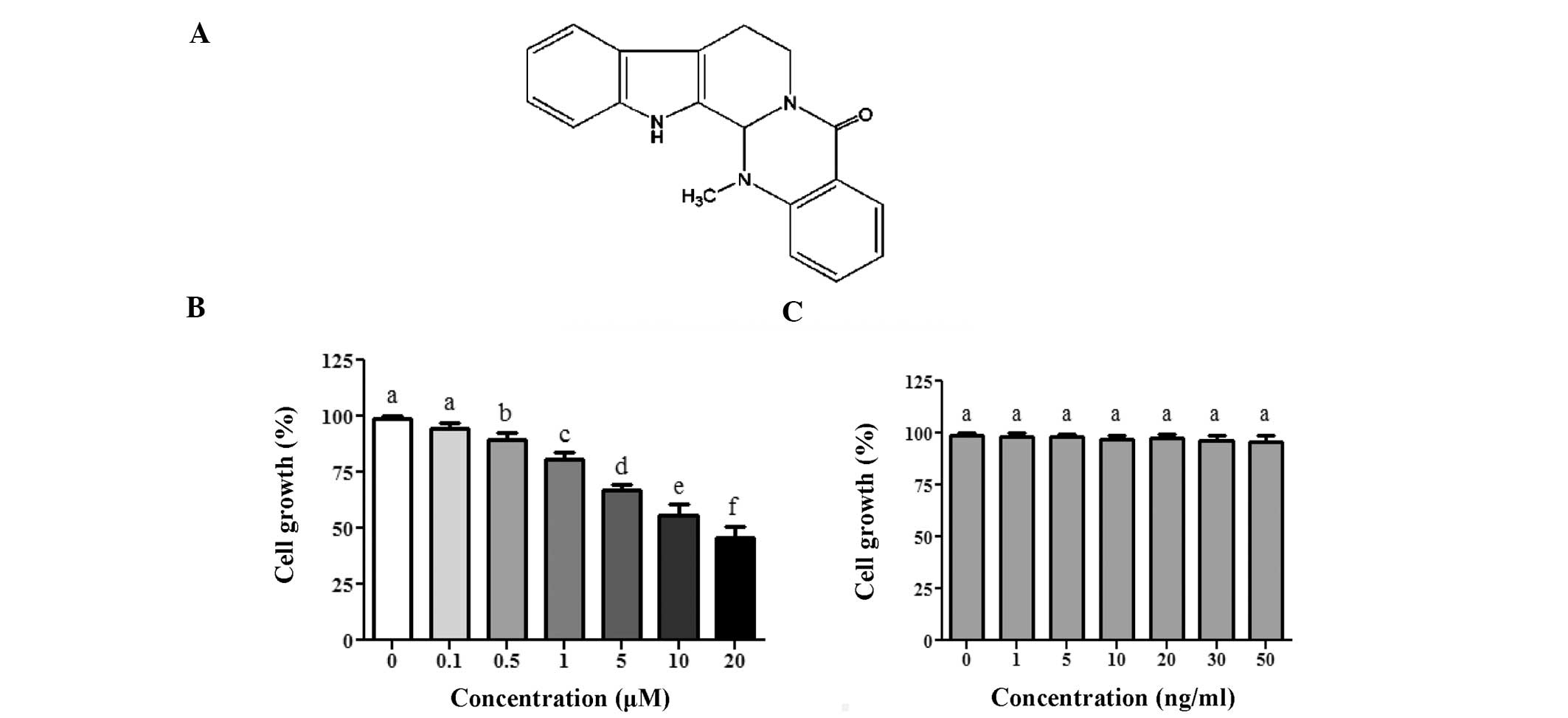
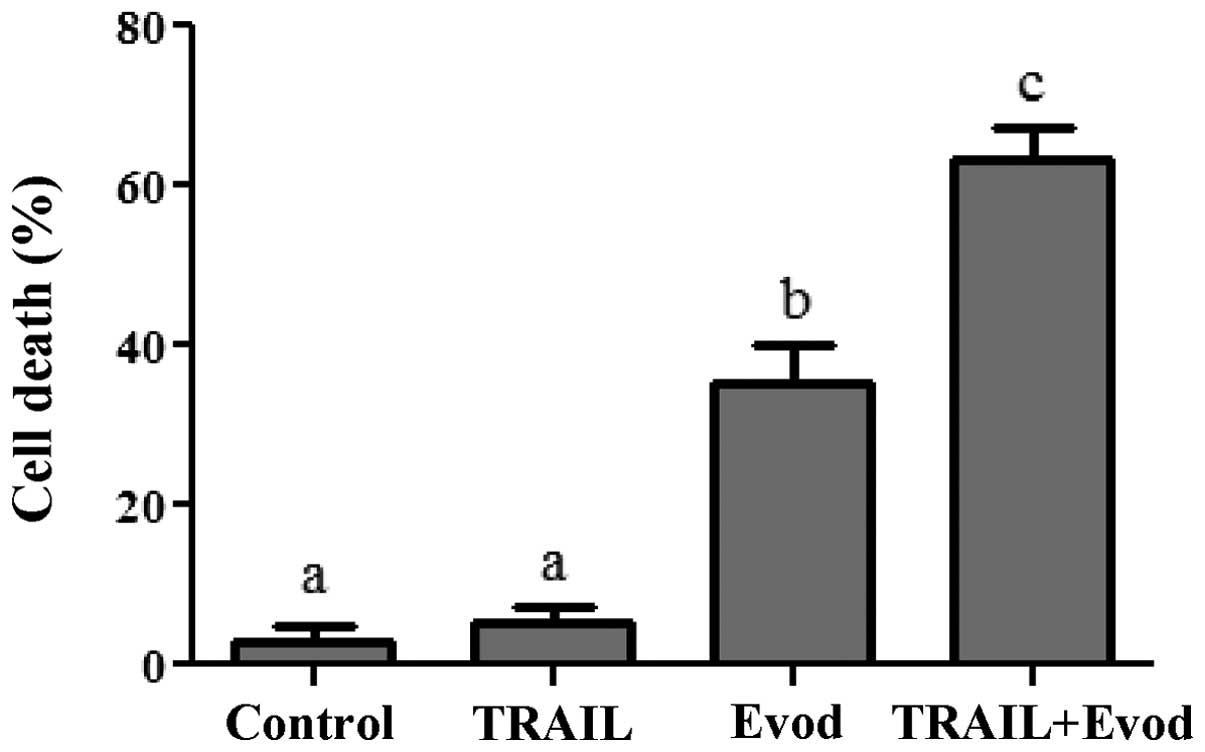
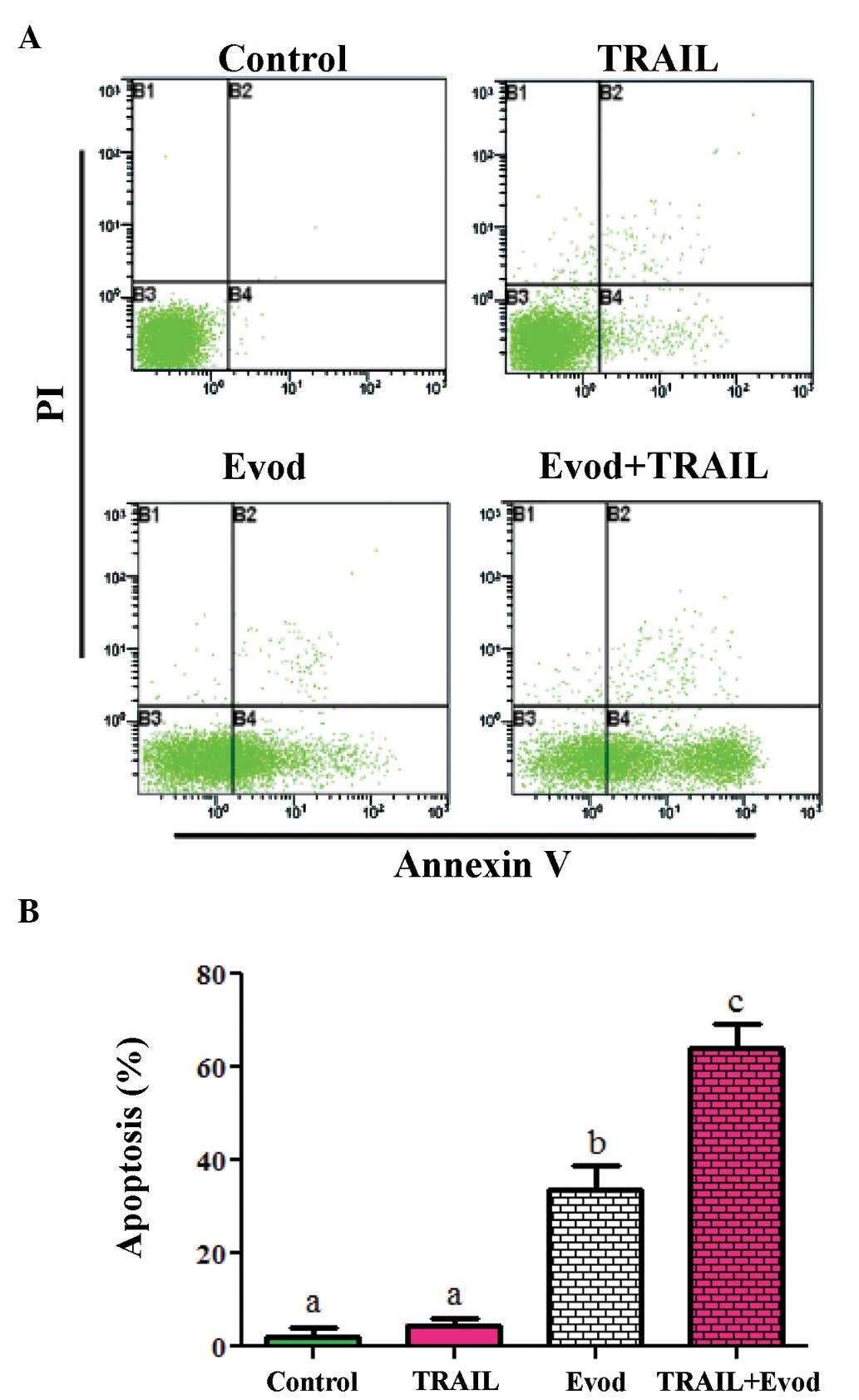
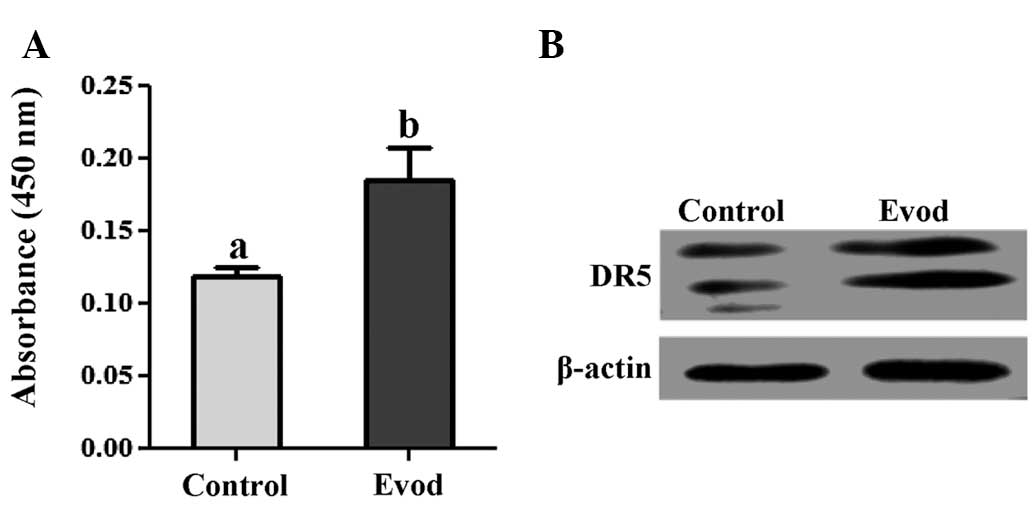
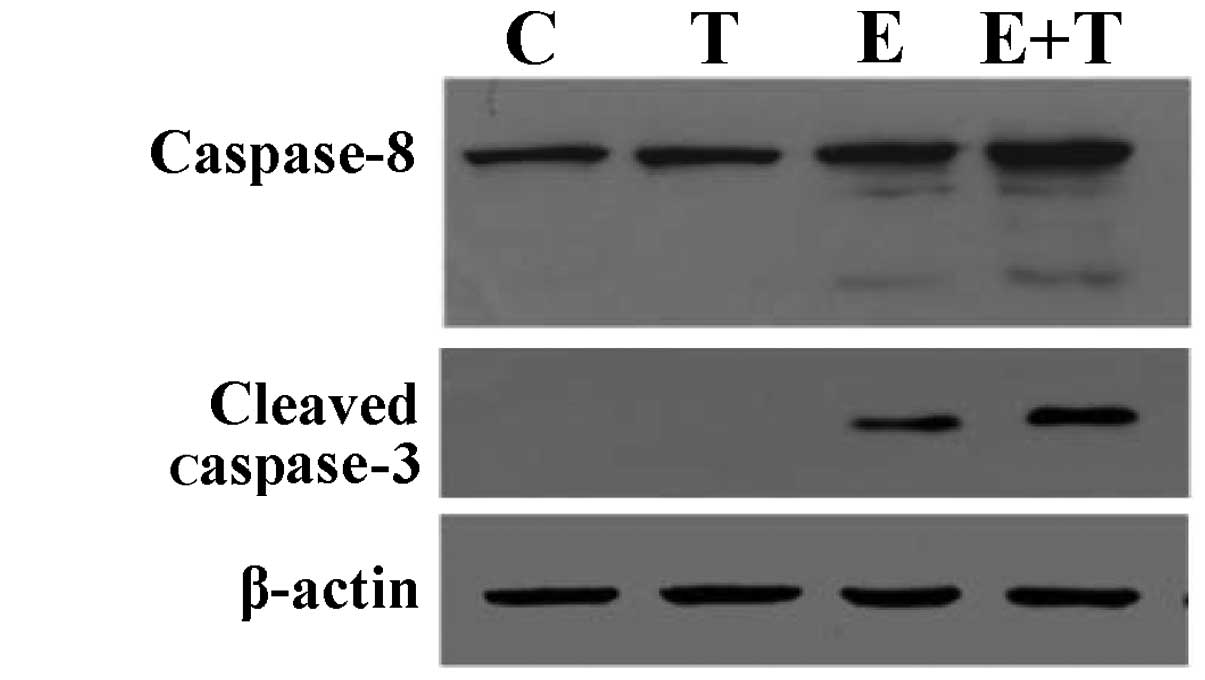
The tumor necrosis factor-α-related apoptosis‑inducing ligand (TRAIL) has been shown to selectively induce death in cancer cells without affecting healthy cells. Most glioma cells are resistant to TRAIL-induced apoptosis. Resistance to TRAIL limits its potential use as a drug for therapy of glioma. The present study was conducted to identify bioactive compounds that have the potential to sensitize U87 glioblastoma cells to TRAIL. Evodiamine, a major bioactive compound of the Chinese herb Evodiae fructus, has been reported to sensitize U87 glioblastoma cells to TRAIL. TRAIL and evodiamine, in combination or alone, were used to treat U87 glioblastoma cells. We show that evodiamine treatment inhibited cell growth in a dose-dependent manner; however, TRAIL alone failed to exert any cytotoxic effect. Combining TRAIL with evodiamine significantly increased the apoptotic rate of U87 glioblastoma cells, as compared to evodiamine treatment alone. Further investigation of the mechanism underlying these effects revealed that the evodiamine + TRAIL effect is associated with the increased expression of death receptor (DR)4, DR5, caspase-8 and cleaved caspase-3. The present study demonstrated, for the first time to the best of our knowledge, that evodiamine can sensitize U87 glioblastoma cells to TRAIL via the death receptor pathway. Thus, our results suggest that combined treatment with evodiamine and TRAIL may represent a novel chemotherapeutic strategy for the therapy of glioma.
View Figures

Figure 1

Figure 2

Figure 3

Figure 4

Figure 5

View References

1 

Khan M, Yi F, Rasul A, Li T, Wang N, Gao H, Gao R and Ma T: Alantolactone induces apoptosis in glioblastoma cells via GSH depletion, ROS generation, and mitochondrial dysfunction. IUBMB Life. 64:783–794. 2012. View Article : Google Scholar : PubMed/NCBI

2 

Khan M, Zheng B, Yi F, Rasul A, Gu Z, Li T, Gao H, Qazi JI, Yang H and Ma T: Pseudolaric Acid B induces caspase-dependent and caspase-independent apoptosis in U87 glioblastoma cells. Evid Based Complement Alternat Med. 2012:9575682012.PubMed/NCBI

3 

Amantini C, Mosca M, Nabissi M, Lucciarini R, Caprodossi S, Arcella A, Giangaspero F and Santoni G: Capsaicin-induced apoptosis of glioma cells is mediated by TRPV1 vanilloid receptor and requires p38 MAPK activation. J Neurochem. 102:977–990. 2007. View Article : Google Scholar : PubMed/NCBI

4 

Su Y, Li G, Zhang X, Gu J, Zhang C, Tian Z and Zhang J: JSI-124 inhibits glioblastoma multiforme cell proliferation through G(2)/M cell cycle arrest and apoptosis augment. Cancer Biol Ther. 7:1243–1249. 2008. View Article : Google Scholar : PubMed/NCBI

5 

Yin D, Wakimoto N, Xing H, Lu D, Huynh T, Wang X, Black KL and Koeffler HP: Cucurbitacin B markedly inhibits growth and rapidly affects the cytoskeleton in glioblastoma multiforme. Int J Cancer. 123:1364–1375. 2008. View Article : Google Scholar : PubMed/NCBI

6 

Jeon JY, An JH, Kim SU, Park HG and Lee MA: Migration of human neural stem cells toward an intracranial glioma. Exp Mol Med. 40:84–91. 2008. View Article : Google Scholar : PubMed/NCBI

7 

Qiu B, Sun X, Zhang D, Wang Y, Tao J and Ou S: TRAIL and paclitaxel synergize to kill U87 cells and U87-derived stem-like cells in vitro. Int J Mol Sci. 13:9142–9156. 2012. View Article : Google Scholar : PubMed/NCBI

8 

Suliman A, Lam A, Datta R and Srivastava RK: Intracellular mechanisms of TRAIL: apoptosis through mitochondrial-dependent and -independent pathways. Oncogene. 20:2122–2133. 2001. View Article : Google Scholar : PubMed/NCBI

9 

Siegelin MD, Reuss DE, Habel A, Rami A and von Deimling A: Quercetin promotes degradation of survivin and thereby enhances death-receptor-mediated apoptosis in glioma cells. Neuro Oncol. 11:122–131. 2009. View Article : Google Scholar

10 

Siegelin MD, Reuss DE, Habel A, Herold-Mende C and von Deimling A: The flavonoid kaempferol sensitizes human glioma cells to TRAIL-mediated apoptosis by proteasomal degradation of survivin. Mol Cancer Ther. 7:3566–3574. 2008. View Article : Google Scholar : PubMed/NCBI

11 

Xia S, Li Y, Rosen EM and Laterra J: Ribotoxic stress sensitizes glioblastoma cells to death receptor induced apoptosis: requirements for c-Jun NH2-terminal kinase and Bim. Mol Cancer Res. 5:783–792. 2007. View Article : Google Scholar : PubMed/NCBI

12 

Smyth MJ, Takeda K, Hayakawa Y, Peschon JJ, van den Brink MR and Yagita H: Nature’s TRAIL - on a path to cancer immunotherapy. Immunity. 18:1–6. 2003.

13 

Knight MJ, Riffkin CD, Muscat AM, Ashley DM and Hawkins CJ: Analysis of FasL and TRAIL induced apoptosis pathways in glioma cells. Oncogene. 20:5789–5798. 2001. View Article : Google Scholar : PubMed/NCBI

14 

Badr CE, Wurdinger T, Nilsson J, Niers JM, Whalen M, Degterev A and Tannous BA: Lanatoside C sensitizes glioblastoma cells to tumor necrosis factor-related apoptosis-inducing ligand and induces an alternative cell death pathway. Neuro Oncol. 13:1213–1224. 2011. View Article : Google Scholar : PubMed/NCBI

15 

Khan M, Qazi JI, Rasul A, Zheng Y and Ma T: Evodiamine induces apoptosis in pancreatic carcinoma PANC-1 cells via NF κB inhibition. Bangl J Pharmacol. 8:8–14. 2013.

16 

Wang KL, Hsia SM, Yeh JY, Cheng SC, Wang PS and Wang SW: Anti-proliferative effects of evodiamine on human breast cancer cells. PloS One. 8:e672972013. View Article : Google Scholar : PubMed/NCBI

17 

Tu YJ, Fan X, Yang X, Zhang C and Liang HP: Evodiamine activates autophagy as a cytoprotective response in murine Lewis lung carcinoma cells. Oncol Rep. 29:481–490. 2013.PubMed/NCBI

18 

Yang J, Cai X, Lu W, Hu C, Xu X, Yu Q and Cao P: Evodiamine inhibits STAT3 signaling by inducing phosphatase shatterproof 1 in hepatocellular carcinoma cells. Cancer Lett. 328:243–251. 2013. View Article : Google Scholar : PubMed/NCBI

19 

Rasul A, Yu B, Zhong L, Khan M, Yang H and Ma T: Cytotoxic effect of evodiamine in SGC-7901 human gastric adenocarcinoma cells via simultaneous induction of apoptosis and autophagy. Oncol Rep. 27:1481–1487. 2012.PubMed/NCBI

20 

Zhang C, Fan X, Xu X, Yang X, Wang X and Liang HP: Evodiamine induces caspase-dependent apoptosis and S phase arrest in human colon lovo cells. Anticancer Drugs. 21:766–776. 2010. View Article : Google Scholar : PubMed/NCBI

21 

Wang C, Li S and Wang MW: Evodiamine-induced human melanoma A375-S2 cell death was mediated by PI3K/Akt/caspase and Fas-L/NF-kappaB signaling pathways and augmented by ubiquitin-proteasome inhibition. Toxicol In Vitro. 24:898–904. 2010. View Article : Google Scholar : PubMed/NCBI

22 

Yang J, Wu LJ, Tashino S, Onodera S and Ikejima T: Reactive oxygen species and nitric oxide regulate mitochondria-dependent apoptosis and autophagy in evodiamine-treated human cervix carcinoma HeLa cells. Free Radic Res. 42:492–504. 2008. View Article : Google Scholar

23 

Kan SF, Yu CH, Pu HF, Hsu JM, Chen MJ and Wang PS: Anti-proliferative effects of evodiamine on human prostate cancer cell lines DU145 and PC3. J Cell Biochem. 101:44–56. 2007. View Article : Google Scholar : PubMed/NCBI

24 

Lee TJ, Kim EJ, Kim S, Jung EM, Park JW, Jeong SH, Park SE, Yoo YH and Kwon TK: Caspase-dependent and caspase-independent apoptosis induced by evodiamine in human leukemic U937 cells. Mol Cancer Ther. 5:2398–2407. 2006. View Article : Google Scholar : PubMed/NCBI

25 

Liu AJ, Wang SH, Chen KC, Kuei HP, Shih YL, Hou SY, Chiu WT, Hsiao SH and Shih CM: Evodiamine, a plant alkaloid, induces calcium/JNK-mediated autophagy and calcium/mitochondria-mediated apoptosis in human glioblastoma cells. Chem Biol Interact. 205:20–28. 2013. View Article : Google Scholar

26 

Khan M, Ding C, Rasul A, Yi F, Li T, Gao H, Gao R, Zhong L, Zhang K, Fang X and Ma T: Isoalantolactone induces reactive oxygen species mediated apoptosis in pancreatic carcinoma PANC-1 cells. Int J Biol Sci. 8:533–547. 2012. View Article : Google Scholar : PubMed/NCBI

27 

Khan M, Yu B, Rasul A, Al Shawi A, Yi F, Yang H and Ma T: Jaceosidin induces apoptosis in U87 glioblastoma cells through G2/M phase arrest. Evid Based Complement Alternat Med. 2012:7030342012.PubMed/NCBI

28 

Khan M, Li T, Ahmad Khan MK, Rasul A, Nawaz F, Zheng Y and Ma T: Alantolactone induces apoptosis in HepG2 cells through GSH depletion, inhibition of STAT3 activation, and mitochondrial dysfunction. Biomed Res Int. 2013:7198582013. View Article : Google Scholar : PubMed/NCBI

29 

Melguizo C, Prados J, Luque R, Ortiz R, Rama AR, Caba O, Rodriguez-Serrano F, Alvarez PJ and Aranega A: Modulation of multidrug resistance gene expression in peripheral blood mononuclear cells of lung cancer patients and evaluation of their clinical significance. Cancer Chemother Pharmacol. 71:537–541. 2013. View Article : Google Scholar

30 

Voelkel-Johnson C: An antibody against DR4 (TRAIL-R1) in combination with doxorubicin selectively kills malignant but not normal prostate cells. Cancer Biol Ther. 2:283–290. 2003. View Article : Google Scholar

31 

Reis CR, van der Sloot AM, Natoni A, Szegezdi E, Setroikromo R, Meijer M, Sjollema K, Stricher F, Cool RH, Samali A, Serrano L and Quax WJ: Rapid and efficient cancer cell killing mediated by high-affinity death receptor homotrimerizing TRAIL variants. Cell Death Dis. 1:e832010. View Article : Google Scholar : PubMed/NCBI

32 

Keane MM, Ettenberg SA, Nau MM, Russell EK and Lipkowitz S: Chemotherapy augments TRAIL-induced apoptosis in breast cell lines. Cancer Res. 59:734–741. 1999.PubMed/NCBI

Related Articles

  • Abstract
  • View
  • Download
  • Twitter
Copy and paste a formatted citation
Spandidos Publications style
Khan M, Bi Y, Qazi JI, Fan L and Gao H: Evodiamine sensitizes U87 glioblastoma cells to TRAIL via the death receptor pathway. Mol Med Rep 11: 257-262, 2015.
APA
Khan, M., Bi, Y., Qazi, J.I., Fan, L., & Gao, H. (2015). Evodiamine sensitizes U87 glioblastoma cells to TRAIL via the death receptor pathway. Molecular Medicine Reports, 11, 257-262. https://doi.org/10.3892/mmr.2014.2705
MLA
Khan, M., Bi, Y., Qazi, J. I., Fan, L., Gao, H."Evodiamine sensitizes U87 glioblastoma cells to TRAIL via the death receptor pathway". Molecular Medicine Reports 11.1 (2015): 257-262.
Chicago
Khan, M., Bi, Y., Qazi, J. I., Fan, L., Gao, H."Evodiamine sensitizes U87 glioblastoma cells to TRAIL via the death receptor pathway". Molecular Medicine Reports 11, no. 1 (2015): 257-262. https://doi.org/10.3892/mmr.2014.2705
Copy and paste a formatted citation
x
Spandidos Publications style
Khan M, Bi Y, Qazi JI, Fan L and Gao H: Evodiamine sensitizes U87 glioblastoma cells to TRAIL via the death receptor pathway. Mol Med Rep 11: 257-262, 2015.
APA
Khan, M., Bi, Y., Qazi, J.I., Fan, L., & Gao, H. (2015). Evodiamine sensitizes U87 glioblastoma cells to TRAIL via the death receptor pathway. Molecular Medicine Reports, 11, 257-262. https://doi.org/10.3892/mmr.2014.2705
MLA
Khan, M., Bi, Y., Qazi, J. I., Fan, L., Gao, H."Evodiamine sensitizes U87 glioblastoma cells to TRAIL via the death receptor pathway". Molecular Medicine Reports 11.1 (2015): 257-262.
Chicago
Khan, M., Bi, Y., Qazi, J. I., Fan, L., Gao, H."Evodiamine sensitizes U87 glioblastoma cells to TRAIL via the death receptor pathway". Molecular Medicine Reports 11, no. 1 (2015): 257-262. https://doi.org/10.3892/mmr.2014.2705
Follow us
  • Twitter
  • LinkedIn
  • Facebook
About
  • Spandidos Publications
  • Careers
  • Cookie Policy
  • Privacy Policy
How can we help?
  • Help
  • Live Chat
  • Contact
  • Email to our Support Team