Spandidos Publications Logo
  • About
    • About Spandidos
    • Aims and Scopes
    • Abstracting and Indexing
    • Editorial Policies
    • Reprints and Permissions
    • Job Opportunities
    • Terms and Conditions
    • Contact
  • Journals
    • All Journals
    • Oncology Letters
      • Oncology Letters
      • Information for Authors
      • Editorial Policies
      • Editorial Board
      • Aims and Scope
      • Abstracting and Indexing
      • Bibliographic Information
      • Archive
    • International Journal of Oncology
      • International Journal of Oncology
      • Information for Authors
      • Editorial Policies
      • Editorial Board
      • Aims and Scope
      • Abstracting and Indexing
      • Bibliographic Information
      • Archive
    • Molecular and Clinical Oncology
      • Molecular and Clinical Oncology
      • Information for Authors
      • Editorial Policies
      • Editorial Board
      • Aims and Scope
      • Abstracting and Indexing
      • Bibliographic Information
      • Archive
    • Experimental and Therapeutic Medicine
      • Experimental and Therapeutic Medicine
      • Information for Authors
      • Editorial Policies
      • Editorial Board
      • Aims and Scope
      • Abstracting and Indexing
      • Bibliographic Information
      • Archive
    • International Journal of Molecular Medicine
      • International Journal of Molecular Medicine
      • Information for Authors
      • Editorial Policies
      • Editorial Board
      • Aims and Scope
      • Abstracting and Indexing
      • Bibliographic Information
      • Archive
    • Biomedical Reports
      • Biomedical Reports
      • Information for Authors
      • Editorial Policies
      • Editorial Board
      • Aims and Scope
      • Abstracting and Indexing
      • Bibliographic Information
      • Archive
    • Oncology Reports
      • Oncology Reports
      • Information for Authors
      • Editorial Policies
      • Editorial Board
      • Aims and Scope
      • Abstracting and Indexing
      • Bibliographic Information
      • Archive
    • Molecular Medicine Reports
      • Molecular Medicine Reports
      • Information for Authors
      • Editorial Policies
      • Editorial Board
      • Aims and Scope
      • Abstracting and Indexing
      • Bibliographic Information
      • Archive
    • World Academy of Sciences Journal
      • World Academy of Sciences Journal
      • Information for Authors
      • Editorial Policies
      • Editorial Board
      • Aims and Scope
      • Abstracting and Indexing
      • Bibliographic Information
      • Archive
    • International Journal of Functional Nutrition
      • International Journal of Functional Nutrition
      • Information for Authors
      • Editorial Policies
      • Editorial Board
      • Aims and Scope
      • Abstracting and Indexing
      • Bibliographic Information
      • Archive
    • International Journal of Epigenetics
      • International Journal of Epigenetics
      • Information for Authors
      • Editorial Policies
      • Editorial Board
      • Aims and Scope
      • Abstracting and Indexing
      • Bibliographic Information
      • Archive
    • Medicine International
      • Medicine International
      • Information for Authors
      • Editorial Policies
      • Editorial Board
      • Aims and Scope
      • Abstracting and Indexing
      • Bibliographic Information
      • Archive
  • Articles
  • Information
    • Information for Authors
    • Information for Reviewers
    • Information for Librarians
    • Information for Advertisers
    • Conferences
  • Language Editing
Spandidos Publications Logo
  • About
    • About Spandidos
    • Aims and Scopes
    • Abstracting and Indexing
    • Editorial Policies
    • Reprints and Permissions
    • Job Opportunities
    • Terms and Conditions
    • Contact
  • Journals
    • All Journals
    • Biomedical Reports
      • Information for Authors
      • Editorial Policies
      • Editorial Board
      • Aims and Scope
      • Abstracting and Indexing
      • Bibliographic Information
      • Archive
    • Experimental and Therapeutic Medicine
      • Information for Authors
      • Editorial Policies
      • Editorial Board
      • Aims and Scope
      • Abstracting and Indexing
      • Bibliographic Information
      • Archive
    • International Journal of Epigenetics
      • Information for Authors
      • Editorial Policies
      • Editorial Board
      • Aims and Scope
      • Abstracting and Indexing
      • Bibliographic Information
      • Archive
    • International Journal of Functional Nutrition
      • Information for Authors
      • Editorial Policies
      • Editorial Board
      • Aims and Scope
      • Abstracting and Indexing
      • Bibliographic Information
      • Archive
    • International Journal of Molecular Medicine
      • Information for Authors
      • Editorial Policies
      • Editorial Board
      • Aims and Scope
      • Abstracting and Indexing
      • Bibliographic Information
      • Archive
    • International Journal of Oncology
      • Information for Authors
      • Editorial Policies
      • Editorial Board
      • Aims and Scope
      • Abstracting and Indexing
      • Bibliographic Information
      • Archive
    • Medicine International
      • Information for Authors
      • Editorial Policies
      • Editorial Board
      • Aims and Scope
      • Abstracting and Indexing
      • Bibliographic Information
      • Archive
    • Molecular and Clinical Oncology
      • Information for Authors
      • Editorial Policies
      • Editorial Board
      • Aims and Scope
      • Abstracting and Indexing
      • Bibliographic Information
      • Archive
    • Molecular Medicine Reports
      • Information for Authors
      • Editorial Policies
      • Editorial Board
      • Aims and Scope
      • Abstracting and Indexing
      • Bibliographic Information
      • Archive
    • Oncology Letters
      • Information for Authors
      • Editorial Policies
      • Editorial Board
      • Aims and Scope
      • Abstracting and Indexing
      • Bibliographic Information
      • Archive
    • Oncology Reports
      • Information for Authors
      • Editorial Policies
      • Editorial Board
      • Aims and Scope
      • Abstracting and Indexing
      • Bibliographic Information
      • Archive
    • World Academy of Sciences Journal
      • Information for Authors
      • Editorial Policies
      • Editorial Board
      • Aims and Scope
      • Abstracting and Indexing
      • Bibliographic Information
      • Archive
  • Articles
  • Information
    • For Authors
    • For Reviewers
    • For Librarians
    • For Advertisers
    • Conferences
  • Language Editing
Login Register Submit
  • This site uses cookies
  • You can change your cookie settings at any time by following the instructions in our Cookie Policy. To find out more, you may read our Privacy Policy.

    I agree
Search articles by DOI, keyword, author or affiliation
Search
Advanced Search
presentation
Molecular Medicine Reports
Join Editorial Board Propose a Special Issue
Print ISSN: 1791-2997 Online ISSN: 1791-3004
Journal Cover
January-2015 Volume 11 Issue 1

Full Size Image

Sign up for eToc alerts
Recommend to Library

Journals

International Journal of Molecular Medicine

International Journal of Molecular Medicine

International Journal of Molecular Medicine is an international journal devoted to molecular mechanisms of human disease.

International Journal of Oncology

International Journal of Oncology

International Journal of Oncology is an international journal devoted to oncology research and cancer treatment.

Molecular Medicine Reports

Molecular Medicine Reports

Covers molecular medicine topics such as pharmacology, pathology, genetics, neuroscience, infectious diseases, molecular cardiology, and molecular surgery.

Oncology Reports

Oncology Reports

Oncology Reports is an international journal devoted to fundamental and applied research in Oncology.

Experimental and Therapeutic Medicine

Experimental and Therapeutic Medicine

Experimental and Therapeutic Medicine is an international journal devoted to laboratory and clinical medicine.

Oncology Letters

Oncology Letters

Oncology Letters is an international journal devoted to Experimental and Clinical Oncology.

Biomedical Reports

Biomedical Reports

Explores a wide range of biological and medical fields, including pharmacology, genetics, microbiology, neuroscience, and molecular cardiology.

Molecular and Clinical Oncology

Molecular and Clinical Oncology

International journal addressing all aspects of oncology research, from tumorigenesis and oncogenes to chemotherapy and metastasis.

World Academy of Sciences Journal

World Academy of Sciences Journal

Multidisciplinary open-access journal spanning biochemistry, genetics, neuroscience, environmental health, and synthetic biology.

International Journal of Functional Nutrition

International Journal of Functional Nutrition

Open-access journal combining biochemistry, pharmacology, immunology, and genetics to advance health through functional nutrition.

International Journal of Epigenetics

International Journal of Epigenetics

Publishes open-access research on using epigenetics to advance understanding and treatment of human disease.

Medicine International

Medicine International

An International Open Access Journal Devoted to General Medicine.

Journal Cover
January-2015 Volume 11 Issue 1

Full Size Image

Sign up for eToc alerts
Recommend to Library

  • Article
  • Citations
    • Cite This Article
    • Download Citation
    • Create Citation Alert
    • Remove Citation Alert
    • Cited By
  • Similar Articles
    • Related Articles (in Spandidos Publications)
    • Similar Articles (Google Scholar)
    • Similar Articles (PubMed)
  • Download PDF
  • Download XML
  • View XML
Article Open Access

Ampelopsin induces apoptosis by regulating multiple c‑Myc/S‑phase kinase‑associated protein 2/F‑box and WD repeat‑containing protein 7/histone deacetylase 2 pathways in human lung adenocarcinoma cells

  • Authors:
    • Xin‑Mei Chen
    • Xian‑Biao Xie
    • Qing Zhao
    • Fang Wang
    • Yang Bai
    • Jun‑Qiang  Yin
    • Hong Jiang
    • Xiao‑Lin Xie
    • Qiang Jia
    • Gang Huang
  • View Affiliations / Copyright

    Affiliations: Department of Biochemistry, School of Basic Science, Guangzhou Medical University, Guangzhou, Guangdong 510182, P.R. China, Department of Musculoskeletal Oncology, The First Affiliated Hospital of Sun Yat‑Sen University, Guangzhou, Guangdong 510080, P.R. China, Institute of Biology, Guizhou Academy of Sciences, Guiyang, Guizhou 550009, P.R. China, Guangzhou Institute of Biomedicine and Health, Chinese Academy of Sciences, Guangzhou, Guangdong 510230, P.R. China
    Copyright: © Chen et al. This is an open access article distributed under the terms of Creative Commons Attribution License [CC BY_NC 3.0].
  • Pages: 105-112
    |
    Published online on: October 21, 2014
       https://doi.org/10.3892/mmr.2014.2733
  • Expand metrics +
Metrics: Total Views: 0 (Spandidos Publications: | PMC Statistics: )
Metrics: Total PDF Downloads: 0 (Spandidos Publications: | PMC Statistics: )
Cited By (CrossRef): 0 citations Loading Articles...

This article is mentioned in:


Abstract

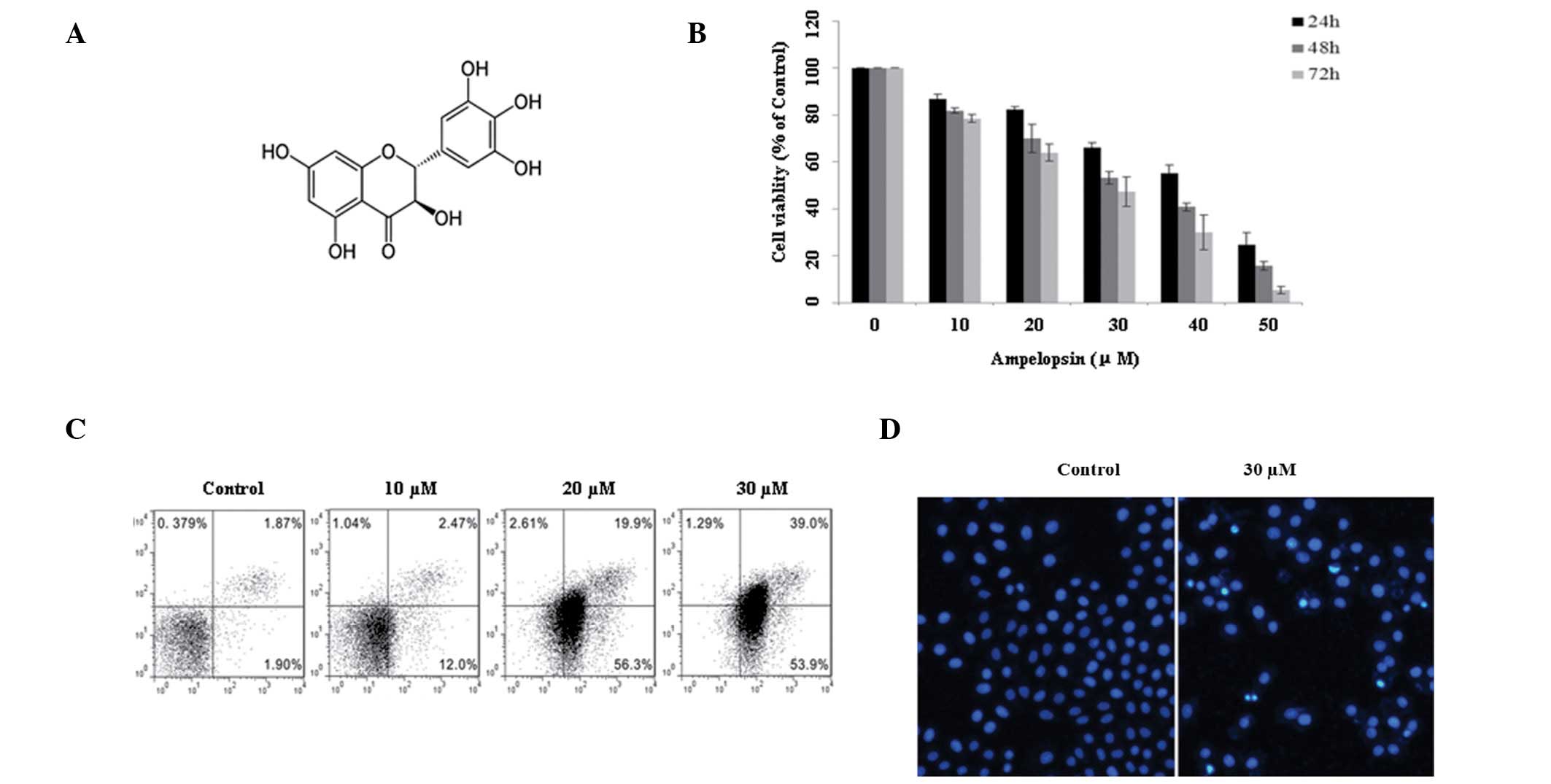
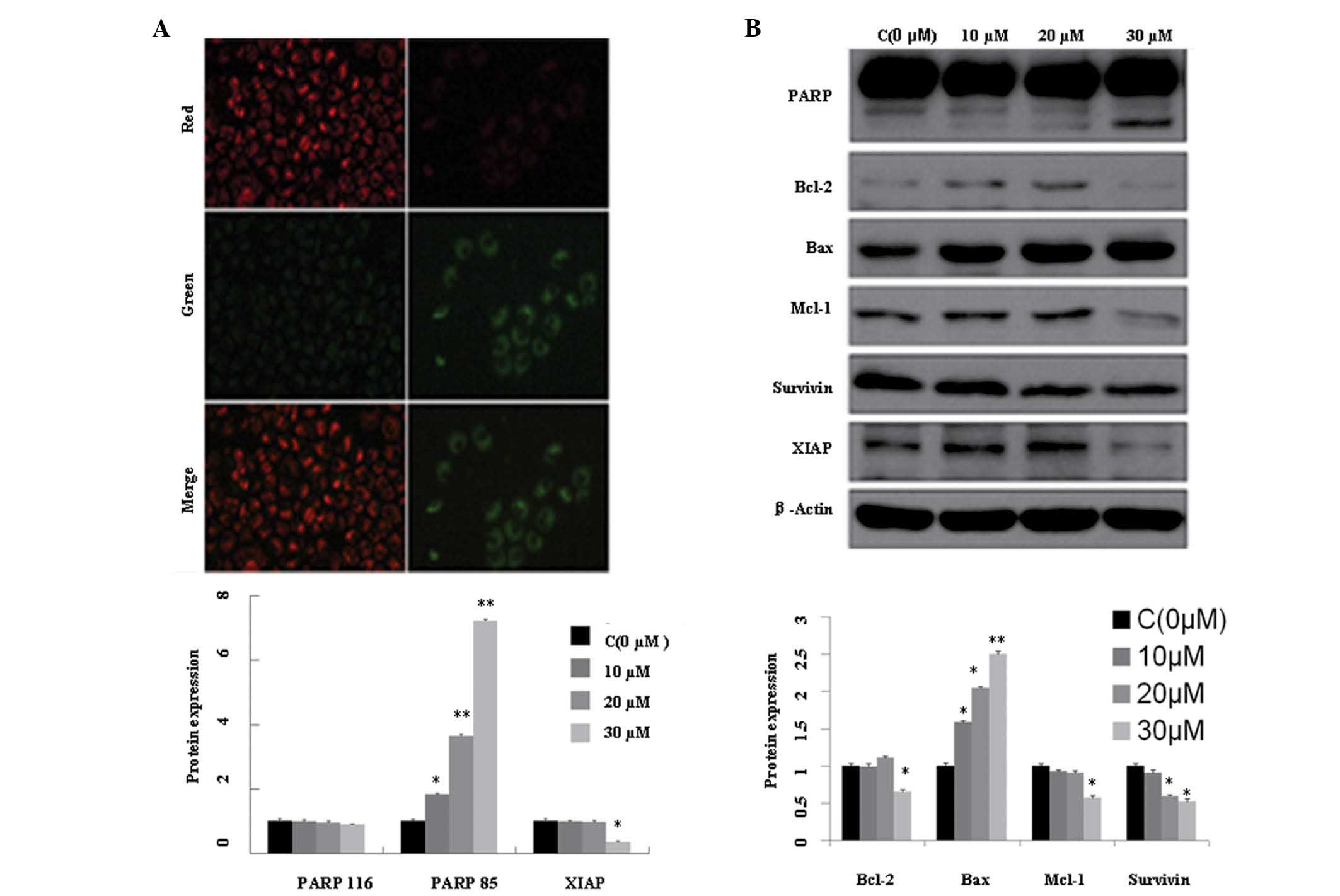
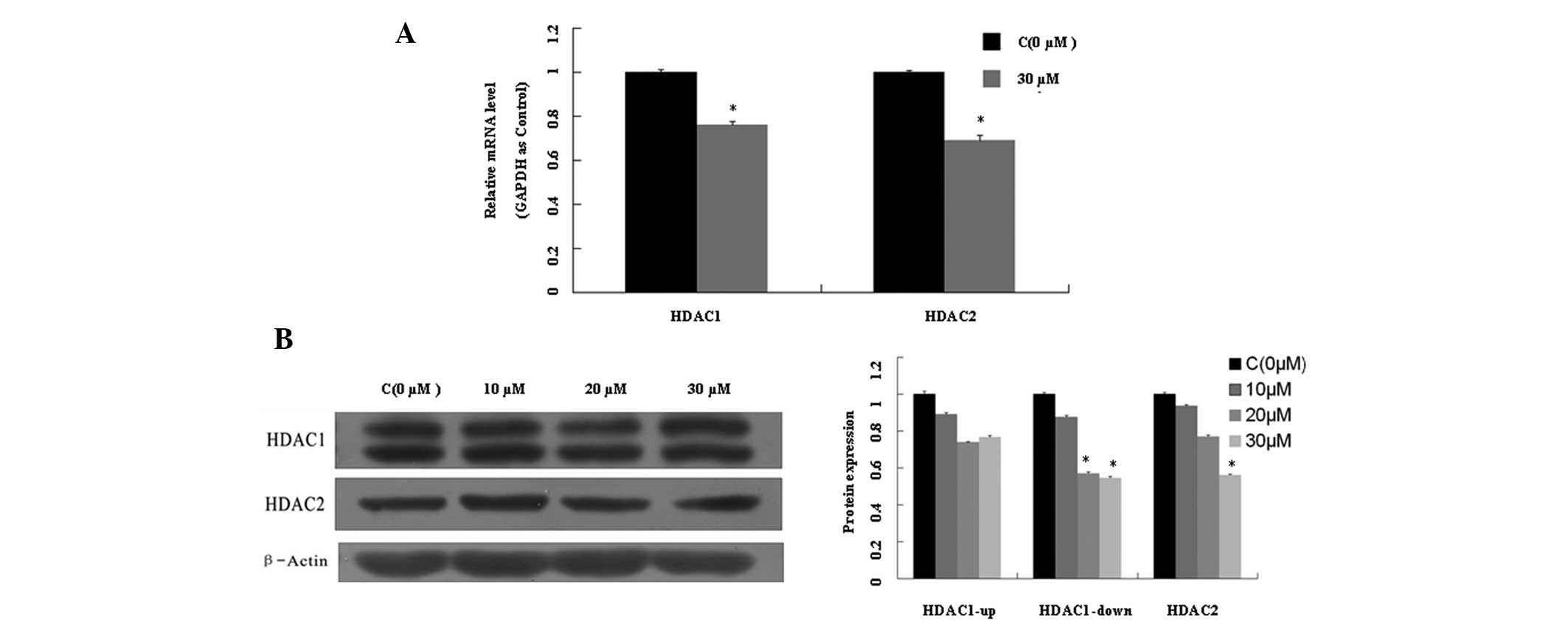
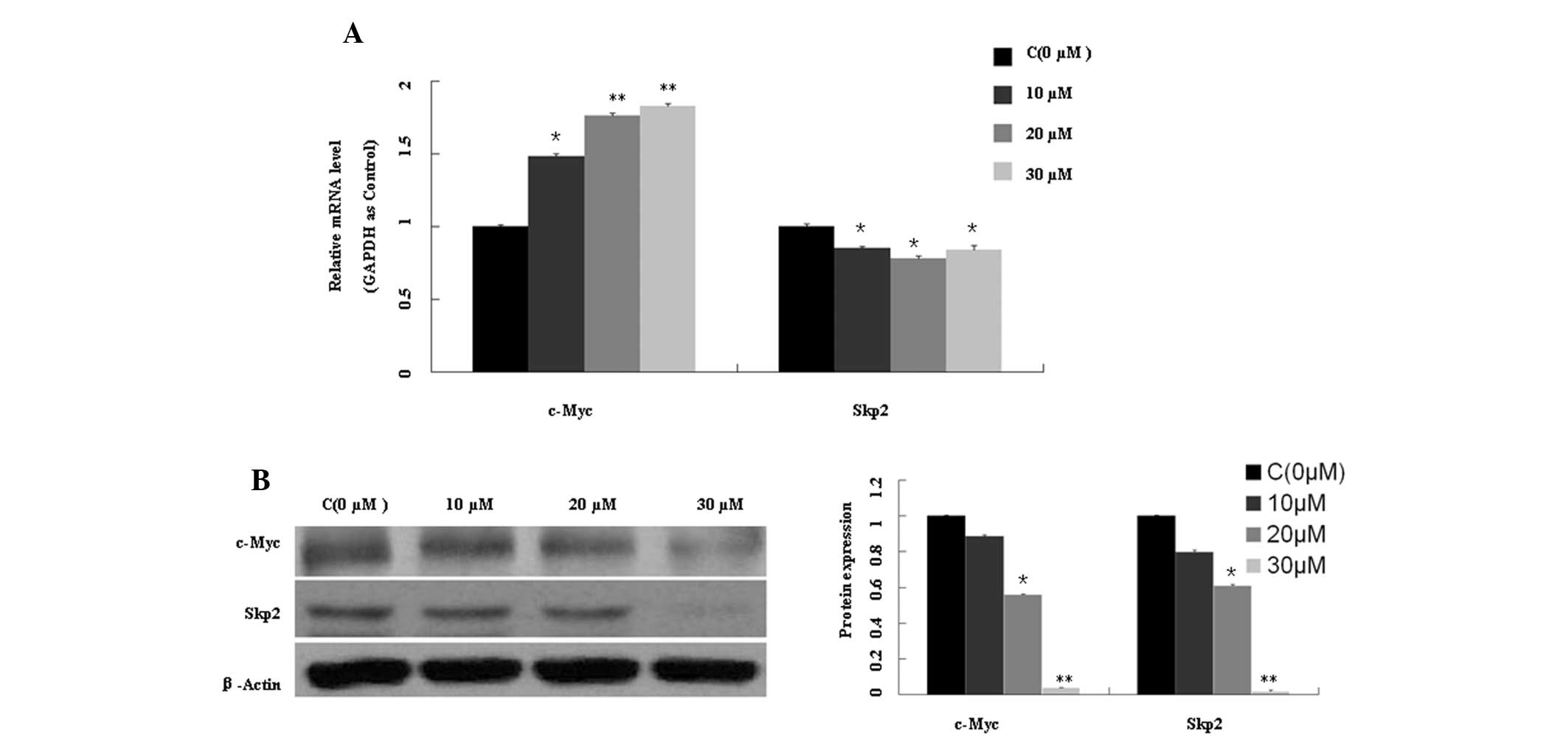
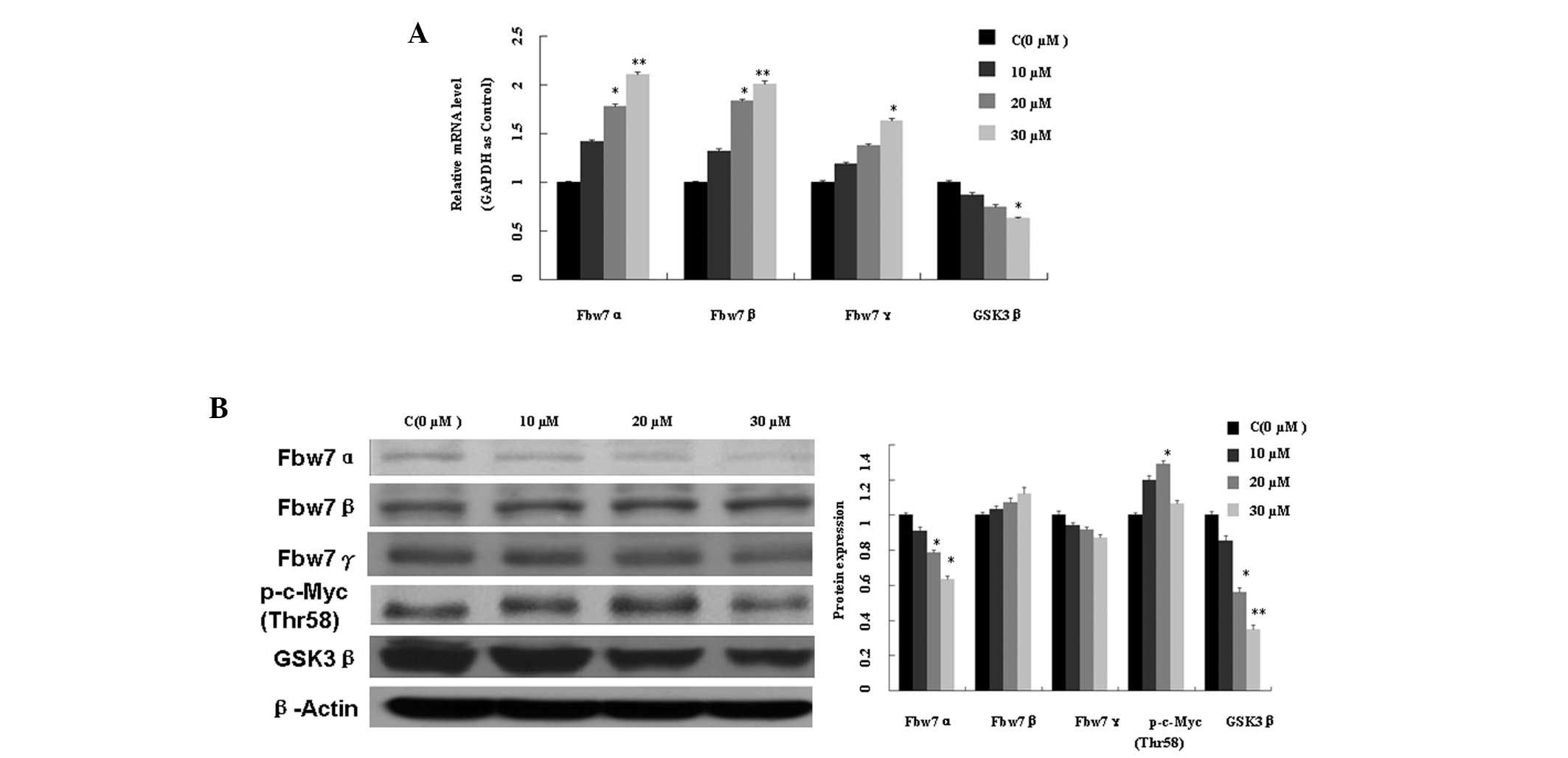
Ampelopsin (AMP), a plant flavonoid, has been reported to inhibit cell growth and/or induce apoptosis in various types of tumor. The aim of the present study was to assess the apoptosis‑inducing activity of AMP in A549 human lung adenocarcinoma epithelial cells and the associated underlying mechanism. A549 cells were incubated with different concentrations of AMP in culture medium. Cell growth and apoptosis were evaluated by MTT assay and Annexin V/propidium iodide double staining and flow cytometry, respectively. In addition, western blotting and reverse transcription quantitative polymerase chain reaction analysis were used to examine the time-dependent changes in protein expression. Certain changes in apoptotic protein expression were detected following exposure to AMP, including X‑linked inhibitor of apoptosis protein release, reduced B‑cell lymphoma 2, myeloid cell leukemia 1 and survivin expression levels, increased Bcl‑2‑associated X protein expression levels and cleaved‑poly ADP ribose polymerase expression. The results revealed that AMP was a potent inhibitor of A549 cell proliferation. The c‑Myc/S‑phase kinase‑associated protein 2 (Skp2) and histone deacetylase (HDAC)1/2 pathways were found to exert an important role in AMP‑induced A549 cell apoptosis, as increased levels of c‑Myc mRNA and reduced levels of c‑Myc/Skp2 and HDAC1 and 2 proteins following AMP treatment were observed. The levels of F‑box and WD repeat‑containing protein 7α (Fbw7α), Fbw7β, Fbw7γ, phosphorylated‑(p‑)c‑Myc (Thr58) and glycogen synthase kinase 3β (GSK3β) proteins involved in c‑Myc ubiquitin‑dependent degradation were also analyzed. Following exposure to AMP, the expression levels of Fbw7α, Fbw7γ and GSK3β were reduced and p‑c‑Myc (Thr58) expression levels were increased. The results suggest that AMP exerts an anticancer effect, which is associated with the degradation of c‑Myc, Skp2 and HDAC1 and 2. The ability of AMP to induce apoptosis independently of Fbwα and Fbw7γ suggests a possible use in drug‑resistant cancer associated with Fbw7 deficiency. Understanding the exact underlying mechanism requires further investigation of the association between c‑Myc and Fbw7α/γ reversal, and analysis of whether Thr58 phosphorylation of c‑Myc is dependent on GSK3β.
View Figures

Figure 1

Figure 2

Figure 3

Figure 4

Figure 5

View References

1 

Juergens R and Brahmer J: Targeting the epidermal growth factor receptor in non-small-cell lung cancer: who, which, when, and how? Curr Oncol Rep. 4:255–264. 2007. View Article : Google Scholar : PubMed/NCBI

2 

Crocetti E and Paci E: Trends in lung adenocarcinoma incidence and survival. Lung Cancer. 2:215–216. 2002. View Article : Google Scholar

3 

Ruthenburg AJ, Li H, Patel DJ and Allis CD: Multivalent engagement of chromatin modifications by linked binding modules. Nat Rev Mol Cell Biol. 8:983–994. 2007. View Article : Google Scholar : PubMed/NCBI

4 

Marks PA and Xu WS: Histone deacetylase inhibitors: Potential in cancer therapy. J Cell Biochem. 107:600–608. 2009. View Article : Google Scholar : PubMed/NCBI

5 

Slingerland M, Guchelaar HJ and Gelderblom H: Histone deacetylase inhibitors: an overview of the clinical studies in solid tumors. Anticancer Drugs. 2:140–149. 2014. View Article : Google Scholar : PubMed/NCBI

6 

de Ruijter AJ, van Gennip AH, Caron HN, Kemp S and van Kuilenburg AB: Histone deacetylases (HDACs): characterization of the classical HDAC family. Biochem J. 370:737–749. 2003.PubMed/NCBI

7 

Dang CV, Resar LM, Emison E, Kim S, Li Q, Prescott JE, Wonsey D and Zeller K: Function of the c-Myc oncogenic transcription factor. Exp Cell Res. 253:63–77. 1999. View Article : Google Scholar : PubMed/NCBI

8 

Nesbit CE, Tersak JM and Prochownik EV: MYC oncogenes and human neoplastic disease. Oncogene. 18:3004–3016. 1999. View Article : Google Scholar : PubMed/NCBI

9 

Flinn EM, Busch CM and Wright AP: Myc boxes, which are conserved in Myc family proteins, are signals for protein degradation via the proteasome. Mol Cell Biol. 18:5961–5969. 1998.PubMed/NCBI

10 

Jones TR and Cole MD: Rapid cytoplasmic turnover of c-Myc mRNA: requirement of the 3′ untranslated sequences. Mol Cell Biol. 7:4513–4521. 1987.PubMed/NCBI

11 

Kelly K, Cochran H, Stiles CD and Leder P: Cell-specific regulation of the c-Myc gene by lymphocyte mitogens and platelet-derived growth factor. Cell. 35:603–610. 1983. View Article : Google Scholar : PubMed/NCBI

12 

Amati B: Myc degradation: Dancing with ubiquitin ligases. Proc Natl Acad Sci USA. 101:8843–8844. 2004. View Article : Google Scholar : PubMed/NCBI

13 

Carrano AC, Eytan E, Hershko A and Pagano M: Skp2 is required for ubiquitin-mediated degradation of the CDK inhibitor p27. Nat Cell Biol. 1:193–199. 1999. View Article : Google Scholar : PubMed/NCBI

14 

Kamura T, Hara T, Kotoshiba S, Yada M, Ishida N, Imaki H, Hatakeyama S, Nakayama K and Nakayama KI: Degradation of p57 Kip2 mediated by SCFSkp2-dependent ubiquitylation. Proc Natl Acad Sci USA. 100:10231–10236. 2003. View Article : Google Scholar : PubMed/NCBI

15 

Tedesco D, Lukas J and Reed SI: The pRb-related protein p130 is regulated by phosphorylation-dependent proteolysis via the protein-ubiquitin ligase SCF (Skp2). Genes Dev. 16:2946–2957. 2002. View Article : Google Scholar : PubMed/NCBI

16 

Hiramatsu Y, Kitagawa K, Suzuki T, Uchida C, Hattori T, Kikuchi H, Oda T, Hatakeyama S, Nakayama KI, Yamamoto T, et al: Degradation of Tob1 mediated by SCFSkp2-dependent ubiquitination. Cancer Res. 66:8477–8483. 2006. View Article : Google Scholar : PubMed/NCBI

17 

Zhao D, Zheng HQ, Zhou Z and Chen C: The Fbw7 tumor suppressor targets KLF5 for ubiquitin-mediated degradation and suppresses breast cell proliferation. Cancer Res. 70:4728–4738. 2010. View Article : Google Scholar : PubMed/NCBI

18 

Akhoondi S, Lindström L, Widschwendter M, Corcoran M, Bergh J, Spruck C, Grandér D and Sangfelt O: Inactivation of FBXW7/hCDC4-beta expression by promoter hypermethylation is associated with favorable prognosis in primary breast cancer. Breast Cancer Res. 12:R1052010. View Article : Google Scholar : PubMed/NCBI

19 

Inuzuka H, Shaik S, Onoyama I, et al: SCF(FBW7) regulates cellular apoptosis by targeting MCL1 for ubiquitylation and destruction. Nature. 471:104–109. 2011. View Article : Google Scholar : PubMed/NCBI

20 

Sancho R, Jandke A, Davis H, Diefenbacher ME, Tomlinson I and Behrens A: F-box and WD repeat domain-containing 7 regulates intestinal cell lineage commitment and is a haploinsufficient tumor suppressor. Gastroenterology. 139:929–941. 2010. View Article : Google Scholar : PubMed/NCBI

21 

O’Neil J and Look AT: Mechanisms of transcription factor deregulation in lymphoid cell transformation. Oncogene. 26:6838–6849. 2007.PubMed/NCBI

22 

Wang Z, Fukushima H, Gao D, Inuzuka H, Wan L, Lau AW, Liu P and Wei W: The two faces of FBW7 in cancer drug resistance. Bioessays. 11:851–859. 2011. View Article : Google Scholar : PubMed/NCBI

23 

Wertz IE, Kusam S, Lam C, et al: Sensitivity to antitubulin chemotherapeutics is regulated by MCL1 and FBW7. Nature. 471:110–114. 2011. View Article : Google Scholar : PubMed/NCBI

24 

Pulverer BJ, Fisher C, Vousden K, Littlewood T, Evan G and Woodgett JR: Site-specific modulation of c-Myc cotransformation by residues phosphorylated in vivo. Oncogene. 9:59–70. 1994.PubMed/NCBI

25 

Kim SY, Herbst A, Tworkowski KA, Salghetti SE and Tansey WP: Skp2 regulates Myc protein stability and activity. Mol Cell. 11:1177–1188. 2003. View Article : Google Scholar : PubMed/NCBI

26 

Spruck CH, Strohmaier H, Sangfelt O, Müller HM, Hubalek M, Müller-Holzner E, Marth C, Widschwendter M and Reed SI: hCDC4 gene mutations in endometrial cancer. Cancer Res. 62:4535–4539. 2002.PubMed/NCBI

27 

Welcker M, Orian A, Grim JE, Eisenman RN and Clurman BE: A nucleolar isoform of the Fbw7 ubiquitin ligase regulates c-Myc and cell size. Curr Biol. 14:1852–1857. 2004. View Article : Google Scholar : PubMed/NCBI

28 

Zhang B, Dong S, Cen X, Wang X, Liu X, Zhang H, Zhao X and Wu Y: Ampelopsin sodium exhibits antitumor effects against bladder carcinoma in orthotopic xenograft models. Anticancer Drugs. 6:590–596. 2012. View Article : Google Scholar

29 

Zheng HQ and Liu DY: Anti-invasive and anti-metastatic effect of ampelopsin on melanoma. Ai Zheng. 22:363–367. 2003.(In Chinese).

30 

Zeng S, Liu D, Ye Y, Wang L and Wang W: Anti-tumor effects of ampelopsin on human lung cancer GLC-82 implanted in nude mice. Zhong Yao Cai. 27:842–845. 2004.(In Chinese).

31 

Luo GQ, Zeng S and Liu DY: Inhibitory effects of ampelopsin on angiogenesis. Zhong Yao Cai. 29:146–150. 2006.(In Chinese).

32 

Ye J, Zheng Y and Liu D: Reversal effect and its mechanism of ampelopsin on multidrug resistance in K562/ADR cells. Zhongguo Zhong Yao Za Zhi. 34:761–765. 2009.(In Chinese).

33 

Ni F, Gong Y, Li L, Abdolmaleky HM and Zhou JR: Flavonoid ampelopsin inhibits the growth and metastasis of prostate cancer in vitro and in mice. PLoS One. 7:e388022012. View Article : Google Scholar : PubMed/NCBI

34 

Kou X, Shen K, An Y, Qi S, Dai WX and Yin Z: Ampelopsin inhibits H2O2-induced apoptosis by ERK and Akt signaling pathways and up-regulation of heme oxygenase-1. Phytother Res. 7:988–994. 2012.

35 

Gregory MA, Qi Y and Hann SR: Phosphorylation by glycogen synthase kinase-3 controls c-myc proteolysis and subnuclear localization. J Biol Chem. 51:51606–51612. 2003. View Article : Google Scholar : PubMed/NCBI

36 

Kamemura K, Hayes BK, Comer FI and Hart GW: Dynamic interplay between O-glycosylation and O-phosphorylation of nucleocytoplasmic proteins: alternative glycosylation/phosphorylation of THR-58, a known mutational hot spot of c-Myc in lymphomas, is regulated by mitogens. J Biol Chem. 21:19229–19235. 2002. View Article : Google Scholar

37 

Chen XM, Bai Y, Zhong YJ, Xie XL, Long HW, Yang YY, Wu SG, Jia Q and Wang XH: Wogonin has multiple anti-cancer effects by regulating c-Myc/SKP2/Fbw7a and HDAC1/HDAC2 pathways and inducing apoptosis in human lung adenocarcinoma cell line A549. PLoS One. 8:e792012013. View Article : Google Scholar : PubMed/NCBI

38 

Li Q, Kluz T, Sun H and Costa M: Mechanisms of c-Myc degradation by nickel compounds and hypoxia. PLoS One. 4:e85312009. View Article : Google Scholar : PubMed/NCBI

Related Articles

  • Abstract
  • View
  • Download
  • Twitter
Copy and paste a formatted citation
Spandidos Publications style
Chen XM, Xie XB, Zhao Q, Wang F, Bai Y, Yin JQ, Jiang H, Xie XL, Jia Q, Huang G, Huang G, et al: Ampelopsin induces apoptosis by regulating multiple c‑Myc/S‑phase kinase‑associated protein 2/F‑box and WD repeat‑containing protein 7/histone deacetylase 2 pathways in human lung adenocarcinoma cells. Mol Med Rep 11: 105-112, 2015.
APA
Chen, X., Xie, X., Zhao, Q., Wang, F., Bai, Y., Yin, J. ... Huang, G. (2015). Ampelopsin induces apoptosis by regulating multiple c‑Myc/S‑phase kinase‑associated protein 2/F‑box and WD repeat‑containing protein 7/histone deacetylase 2 pathways in human lung adenocarcinoma cells. Molecular Medicine Reports, 11, 105-112. https://doi.org/10.3892/mmr.2014.2733
MLA
Chen, X., Xie, X., Zhao, Q., Wang, F., Bai, Y., Yin, J., Jiang, H., Xie, X., Jia, Q., Huang, G."Ampelopsin induces apoptosis by regulating multiple c‑Myc/S‑phase kinase‑associated protein 2/F‑box and WD repeat‑containing protein 7/histone deacetylase 2 pathways in human lung adenocarcinoma cells". Molecular Medicine Reports 11.1 (2015): 105-112.
Chicago
Chen, X., Xie, X., Zhao, Q., Wang, F., Bai, Y., Yin, J., Jiang, H., Xie, X., Jia, Q., Huang, G."Ampelopsin induces apoptosis by regulating multiple c‑Myc/S‑phase kinase‑associated protein 2/F‑box and WD repeat‑containing protein 7/histone deacetylase 2 pathways in human lung adenocarcinoma cells". Molecular Medicine Reports 11, no. 1 (2015): 105-112. https://doi.org/10.3892/mmr.2014.2733
Copy and paste a formatted citation
x
Spandidos Publications style
Chen XM, Xie XB, Zhao Q, Wang F, Bai Y, Yin JQ, Jiang H, Xie XL, Jia Q, Huang G, Huang G, et al: Ampelopsin induces apoptosis by regulating multiple c‑Myc/S‑phase kinase‑associated protein 2/F‑box and WD repeat‑containing protein 7/histone deacetylase 2 pathways in human lung adenocarcinoma cells. Mol Med Rep 11: 105-112, 2015.
APA
Chen, X., Xie, X., Zhao, Q., Wang, F., Bai, Y., Yin, J. ... Huang, G. (2015). Ampelopsin induces apoptosis by regulating multiple c‑Myc/S‑phase kinase‑associated protein 2/F‑box and WD repeat‑containing protein 7/histone deacetylase 2 pathways in human lung adenocarcinoma cells. Molecular Medicine Reports, 11, 105-112. https://doi.org/10.3892/mmr.2014.2733
MLA
Chen, X., Xie, X., Zhao, Q., Wang, F., Bai, Y., Yin, J., Jiang, H., Xie, X., Jia, Q., Huang, G."Ampelopsin induces apoptosis by regulating multiple c‑Myc/S‑phase kinase‑associated protein 2/F‑box and WD repeat‑containing protein 7/histone deacetylase 2 pathways in human lung adenocarcinoma cells". Molecular Medicine Reports 11.1 (2015): 105-112.
Chicago
Chen, X., Xie, X., Zhao, Q., Wang, F., Bai, Y., Yin, J., Jiang, H., Xie, X., Jia, Q., Huang, G."Ampelopsin induces apoptosis by regulating multiple c‑Myc/S‑phase kinase‑associated protein 2/F‑box and WD repeat‑containing protein 7/histone deacetylase 2 pathways in human lung adenocarcinoma cells". Molecular Medicine Reports 11, no. 1 (2015): 105-112. https://doi.org/10.3892/mmr.2014.2733
Follow us
  • Twitter
  • LinkedIn
  • Facebook
About
  • Spandidos Publications
  • Careers
  • Cookie Policy
  • Privacy Policy
How can we help?
  • Help
  • Live Chat
  • Contact
  • Email to our Support Team