Spandidos Publications Logo
  • About
    • About Spandidos
    • Aims and Scopes
    • Abstracting and Indexing
    • Editorial Policies
    • Reprints and Permissions
    • Job Opportunities
    • Terms and Conditions
    • Contact
  • Journals
    • All Journals
    • Oncology Letters
      • Oncology Letters
      • Information for Authors
      • Editorial Policies
      • Editorial Board
      • Aims and Scope
      • Abstracting and Indexing
      • Bibliographic Information
      • Archive
    • International Journal of Oncology
      • International Journal of Oncology
      • Information for Authors
      • Editorial Policies
      • Editorial Board
      • Aims and Scope
      • Abstracting and Indexing
      • Bibliographic Information
      • Archive
    • Molecular and Clinical Oncology
      • Molecular and Clinical Oncology
      • Information for Authors
      • Editorial Policies
      • Editorial Board
      • Aims and Scope
      • Abstracting and Indexing
      • Bibliographic Information
      • Archive
    • Experimental and Therapeutic Medicine
      • Experimental and Therapeutic Medicine
      • Information for Authors
      • Editorial Policies
      • Editorial Board
      • Aims and Scope
      • Abstracting and Indexing
      • Bibliographic Information
      • Archive
    • International Journal of Molecular Medicine
      • International Journal of Molecular Medicine
      • Information for Authors
      • Editorial Policies
      • Editorial Board
      • Aims and Scope
      • Abstracting and Indexing
      • Bibliographic Information
      • Archive
    • Biomedical Reports
      • Biomedical Reports
      • Information for Authors
      • Editorial Policies
      • Editorial Board
      • Aims and Scope
      • Abstracting and Indexing
      • Bibliographic Information
      • Archive
    • Oncology Reports
      • Oncology Reports
      • Information for Authors
      • Editorial Policies
      • Editorial Board
      • Aims and Scope
      • Abstracting and Indexing
      • Bibliographic Information
      • Archive
    • Molecular Medicine Reports
      • Molecular Medicine Reports
      • Information for Authors
      • Editorial Policies
      • Editorial Board
      • Aims and Scope
      • Abstracting and Indexing
      • Bibliographic Information
      • Archive
    • World Academy of Sciences Journal
      • World Academy of Sciences Journal
      • Information for Authors
      • Editorial Policies
      • Editorial Board
      • Aims and Scope
      • Abstracting and Indexing
      • Bibliographic Information
      • Archive
    • International Journal of Functional Nutrition
      • International Journal of Functional Nutrition
      • Information for Authors
      • Editorial Policies
      • Editorial Board
      • Aims and Scope
      • Abstracting and Indexing
      • Bibliographic Information
      • Archive
    • International Journal of Epigenetics
      • International Journal of Epigenetics
      • Information for Authors
      • Editorial Policies
      • Editorial Board
      • Aims and Scope
      • Abstracting and Indexing
      • Bibliographic Information
      • Archive
    • Medicine International
      • Medicine International
      • Information for Authors
      • Editorial Policies
      • Editorial Board
      • Aims and Scope
      • Abstracting and Indexing
      • Bibliographic Information
      • Archive
  • Articles
  • Information
    • Information for Authors
    • Information for Reviewers
    • Information for Librarians
    • Information for Advertisers
    • Conferences
  • Language Editing
Spandidos Publications Logo
  • About
    • About Spandidos
    • Aims and Scopes
    • Abstracting and Indexing
    • Editorial Policies
    • Reprints and Permissions
    • Job Opportunities
    • Terms and Conditions
    • Contact
  • Journals
    • All Journals
    • Biomedical Reports
      • Information for Authors
      • Editorial Policies
      • Editorial Board
      • Aims and Scope
      • Abstracting and Indexing
      • Bibliographic Information
      • Archive
    • Experimental and Therapeutic Medicine
      • Information for Authors
      • Editorial Policies
      • Editorial Board
      • Aims and Scope
      • Abstracting and Indexing
      • Bibliographic Information
      • Archive
    • International Journal of Epigenetics
      • Information for Authors
      • Editorial Policies
      • Editorial Board
      • Aims and Scope
      • Abstracting and Indexing
      • Bibliographic Information
      • Archive
    • International Journal of Functional Nutrition
      • Information for Authors
      • Editorial Policies
      • Editorial Board
      • Aims and Scope
      • Abstracting and Indexing
      • Bibliographic Information
      • Archive
    • International Journal of Molecular Medicine
      • Information for Authors
      • Editorial Policies
      • Editorial Board
      • Aims and Scope
      • Abstracting and Indexing
      • Bibliographic Information
      • Archive
    • International Journal of Oncology
      • Information for Authors
      • Editorial Policies
      • Editorial Board
      • Aims and Scope
      • Abstracting and Indexing
      • Bibliographic Information
      • Archive
    • Medicine International
      • Information for Authors
      • Editorial Policies
      • Editorial Board
      • Aims and Scope
      • Abstracting and Indexing
      • Bibliographic Information
      • Archive
    • Molecular and Clinical Oncology
      • Information for Authors
      • Editorial Policies
      • Editorial Board
      • Aims and Scope
      • Abstracting and Indexing
      • Bibliographic Information
      • Archive
    • Molecular Medicine Reports
      • Information for Authors
      • Editorial Policies
      • Editorial Board
      • Aims and Scope
      • Abstracting and Indexing
      • Bibliographic Information
      • Archive
    • Oncology Letters
      • Information for Authors
      • Editorial Policies
      • Editorial Board
      • Aims and Scope
      • Abstracting and Indexing
      • Bibliographic Information
      • Archive
    • Oncology Reports
      • Information for Authors
      • Editorial Policies
      • Editorial Board
      • Aims and Scope
      • Abstracting and Indexing
      • Bibliographic Information
      • Archive
    • World Academy of Sciences Journal
      • Information for Authors
      • Editorial Policies
      • Editorial Board
      • Aims and Scope
      • Abstracting and Indexing
      • Bibliographic Information
      • Archive
  • Articles
  • Information
    • For Authors
    • For Reviewers
    • For Librarians
    • For Advertisers
    • Conferences
  • Language Editing
Login Register Submit
  • This site uses cookies
  • You can change your cookie settings at any time by following the instructions in our Cookie Policy. To find out more, you may read our Privacy Policy.

    I agree
Search articles by DOI, keyword, author or affiliation
Search
Advanced Search
presentation
Molecular Medicine Reports
Join Editorial Board Propose a Special Issue
Print ISSN: 1791-2997 Online ISSN: 1791-3004
Journal Cover
February-2015 Volume 11 Issue 2

Full Size Image

Sign up for eToc alerts
Recommend to Library

Journals

International Journal of Molecular Medicine

International Journal of Molecular Medicine

International Journal of Molecular Medicine is an international journal devoted to molecular mechanisms of human disease.

International Journal of Oncology

International Journal of Oncology

International Journal of Oncology is an international journal devoted to oncology research and cancer treatment.

Molecular Medicine Reports

Molecular Medicine Reports

Covers molecular medicine topics such as pharmacology, pathology, genetics, neuroscience, infectious diseases, molecular cardiology, and molecular surgery.

Oncology Reports

Oncology Reports

Oncology Reports is an international journal devoted to fundamental and applied research in Oncology.

Experimental and Therapeutic Medicine

Experimental and Therapeutic Medicine

Experimental and Therapeutic Medicine is an international journal devoted to laboratory and clinical medicine.

Oncology Letters

Oncology Letters

Oncology Letters is an international journal devoted to Experimental and Clinical Oncology.

Biomedical Reports

Biomedical Reports

Explores a wide range of biological and medical fields, including pharmacology, genetics, microbiology, neuroscience, and molecular cardiology.

Molecular and Clinical Oncology

Molecular and Clinical Oncology

International journal addressing all aspects of oncology research, from tumorigenesis and oncogenes to chemotherapy and metastasis.

World Academy of Sciences Journal

World Academy of Sciences Journal

Multidisciplinary open-access journal spanning biochemistry, genetics, neuroscience, environmental health, and synthetic biology.

International Journal of Functional Nutrition

International Journal of Functional Nutrition

Open-access journal combining biochemistry, pharmacology, immunology, and genetics to advance health through functional nutrition.

International Journal of Epigenetics

International Journal of Epigenetics

Publishes open-access research on using epigenetics to advance understanding and treatment of human disease.

Medicine International

Medicine International

An International Open Access Journal Devoted to General Medicine.

Journal Cover
February-2015 Volume 11 Issue 2

Full Size Image

Sign up for eToc alerts
Recommend to Library

  • Article
  • Citations
    • Cite This Article
    • Download Citation
    • Create Citation Alert
    • Remove Citation Alert
    • Cited By
  • Similar Articles
    • Related Articles (in Spandidos Publications)
    • Similar Articles (Google Scholar)
    • Similar Articles (PubMed)
  • Download PDF
  • Download XML
  • View XML
Article Open Access

Triptolide inhibits cell proliferation and tumorigenicity of human neuroblastoma cells

  • Authors:
    • Xiaomin Yan
    • Xiao-Xue Ke
    • Hailong Zhao
    • Mengying Huang
    • Renjian Hu
    • Hongjuan Cui
  • View Affiliations / Copyright

    Affiliations: State Key Laboratory of Silkworm Genome Biology, Southwest University, Chongqing 400716, P.R. China
    Copyright: © Yan et al. This is an open access article distributed under the terms of Creative Commons Attribution License [CC BY_NC 3.0].
  • Pages: 791-796
    |
    Published online on: October 29, 2014
       https://doi.org/10.3892/mmr.2014.2814
  • Expand metrics +
Metrics: Total Views: 0 (Spandidos Publications: | PMC Statistics: )
Metrics: Total PDF Downloads: 0 (Spandidos Publications: | PMC Statistics: )
Cited By (CrossRef): 0 citations Loading Articles...

This article is mentioned in:


Abstract

Triptolide is a diterpene triepoxide, extracted from the Chinese herb Tripterygium wilfordii Hook F, which has been shown to have antitumor activity in a number of cancers. Neuroblastoma is an aggressive extracranial pediatric solid tumor, with significant chemotherapeutic resistance. In this study, triptolide was hypothesized to be a potential therapeutic agent for neuroblastoma. The effects of triptolide on neuroblastoma cell growth and tumor development were investigated. Cell growth and proliferation were evaluated using a cell counting kit‑8 assay and a 5-bromo-2-deoxyuridine staining assay. Cell cycle and apoptosis were detected by flow cytometry. Reverse transcription‑quantitative polymerase chain reaction was conducted to detect the expression levels of the apoptosis‑associated proteins, caspase‑3 and caspase‑9. The tumorigenicity of neuroblastoma cells was assessed by a soft agar clonogenic assay and an in vivo tumorigenic assay. The results demonstrated that exposure of BE(2)‑C human neuroblastoma cells to triptolide resulted in a reduction in cell growth and proliferation, and the induction of cell death and apoptosis, together with cell cycle arrest in the S phase. A soft agar assay indicated that triptolide inhibited the colony‑forming ability of BE(2)‑C neuroblastoma cells. The xenograft experiment showed that triptolide significantly reduced tumor growth and development in vivo. The data suggested that this Chinese herb may be a potential novel chemotherapeutic agent for neuroblastoma.

Introduction

Neuroblastoma is a common extracranial pediatric solid tumor, accounting for up to 10% of pediatric cancers and ultimately resulting in 15% of cancer-related mortality in children (1,2). Histologically, neuroblastoma is a heterogeneous group of tumors ranging from benign changes in sympathetic neurons to tumors that cause critical illness as a result of extensive invasion and metastasis (3–5). The clinical presentation of neuroblastoma is variable and advanced cases are often found to be highly resistant to conventional treatment modalities based on surgery, chemotherapy and radiotherapy (6). Therefore, recent studies have primarily focused on these particularly aggressive cases, with the goal of identifying additional therapeutic options (7).

Natural compounds extracted from herbs, such as Taxol, have been widely used in cancer therapy (8). A number of active compounds isolated from Chinese herbs have been shown to have antitumor properties (9,10). Thus, traditional Chinese medicine provides an important additional option for the development of novel cancer treatments. Triptolide is a diterpene triepoxide and is extracted from the Chinese herb Tripterygium wilfordii Hook F, which has been used to treat inflammation and autoimmune diseases in Chinese medicine (11,12). Recently, evidence has shown that triptolide has a potent immunosuppressive effect and antineoplastic activity in certain types of cancer, including breast cancer, pancreatic cancer, melanoma and prostate cancer (13–16). In addition, triptolide has been shown to exert its antitumor properties through induction of apoptosis and inhibition of cell proliferation, angiogenesis, cell invasion and metastasis (17–20). This study investigated the effects of triptolide on malignant neuroblastoma cell growth and cell proliferation with the aim of providing evidence that may support the use of triptolide as a novel drug for the treatment of neuroblastoma.

Materials and methods

Cell culture

BE(2)-C neuroblastoma cells were obtained from the American Type Culture Collection (Manassus, VA, USA), and was cultured in a 1:1 mixture of Dulbecco’s modified Eagle’s medium and Ham’s nutrient mixture F12 (DMEM/F-12; Invitrogen, Carlsbad, CA, USA) plus 10% fetal bovine serum (Invitrogen) and 1% penicillin and streptomycin (Invitrogen), and was incubated at 37°C in a 5% CO2 humidified incubator. Purified triptolide (>98%) was purchased from Sigma-Aldrich (T3652; St. Louis, MO, USA), which was dissolved in dimethyl sulfoxide (DMSO; Sigma-Aldrich) at a stock concentration of 50 mM and stored at 4°C.

Cell growth and viability assays

BE(2)-C cells grown in 96-well culture plates were treated either with various doses of triptolide (5, 10, 25, 50 or 100 nM), or DMSO. The cell growth rate was analyzed with the cell counting kit-8 (CCK-8) growth assay after 24 h culture. Briefly, cells in each well were incubated with 10 μl CCK-8 reagent at 37°C for 2 h. The optical density was measured at a wavelength of 450 nm using a microplate reader (Model 550, Bio-Rad, Hercules, CA, USA). In addition, BE(2)-C cells were treated with 25 or 50 nM for 24 h, photographed using an Olympus 1X71 (Olympus Corporation, Tokyo, Japan) and counted with a TC10™ Automated Cell Counter (Bio-Rad).

5-Bromo-2-deoxyuridine (BrdU) staining assay

For BrdU immunofluorescent staining, cells were grown on coverslips. After treatment with 25 or 50 nM triptolide for 24 h, cells were incubated with 10 μg/ml BrdU (Sigma) for 30 min, then washed with phosphate-buffered saline (PBS) and fixed in 4% paraformaldehyde for 20 min. Subsequently, cells were treated with 1 mol/L HCl, and blocked with 10% goat serum for 1 h, followed by a monoclonal rat primary antibody against BrdU (1:200, ab6326, Abcam, Cambridge, MA, USA) for 1 h and Alexa FluorR® 594 goat anti-rat IgG secondary antibody, (H+L; Invitrogen). DAPI (300 nM) was used for nuclear staining, after which the percentage BrdU uptake in 10 microscopic fields was calculated (Nikon 80i, Nikon Corporation, Tokyo, Japan).

Cell cycle assay

After treatment with triptolide (25 nM) for 24 h, cells were collected by centrifugation at 211 × g for 5 min, washed with ice-cold PBS, fixed with 70% ethanol, stained with 20 μg/ml propidium iodide (Invitrogen) and analyzed by flow cytometry (BD FACSVerse™, BD BioSciences, Franklin Lakes, NJ, USA). The data were analyzed with CellQuest Pro software, version 5.0 (BD BioSciences).

Cell death and apoptosis assays

Cells were either untreated or treated with triptolide. DMSO was used as control. After 24 h treatment, adherent and floating cells were pooled, collected by centrifugation at 211 × g for 5 min, and washed once with ice-cold PBS. The cell death rate was detected with 0.2% trypan blue dye (Bio-Rad). Apoptotic cells were determined by the Annexin V-fluorescein isothiocyanate (FITC) kit (Sigma-Aldrich), using flow cytometry according to the manufacturer’s instructions.

Reverse transcription-quantitative polymerase chain reactions (RT-qPCR) assay

After treatment with triptolide for 24 h, cells were harvested and lysed with TRIzol (Invitrogen) for total RNA purification. RNA was reverse transcribed into cDNA using M-MLV reverse transcriptase (Promega Corporation, Madison, WI, USA). The caspase-3 and caspase-9 mRNA transcripts were determined using the SYBRR Green PCR Master mix (Takara Bio, Inc., Shiga, Japan) by RT-qPCR. RT-qPCR reactions in triplicate were conducted using the OneStep plus7500 real-time PCR system (Bio-Rad). The individual values were normalized to that of the GAPDH control. Primer sequences were as follows: Forward: 5′-AGCGAATCAATGGACTCTGGA-3′ and reverse: 5′-CTGAATGTTTCCCTGAGGTTTG-3′ for caspase-3, forward: 5′-GCTCTTCCTTTGTTCATCTCC-3′ and reverse: 5′-CATCTGGCTCGGGGTTACTGC-3′ for caspase-9, and forward: 5′-ACGGATTTGGTCGTATTGGG-3′ and reverse: 5′-TCCTGGAAGATGGTGATGGG-3′ for GAPDH.

Soft agar clonogenic assay

Cells (1×10³) were mixed in 0.3% Noble agar in a growth medium containing vehicle or triptolide, and plated into six-well plates containing a solidified bottom layer (0.6% Noble agar in the same growth medium). Colonies were photographed after 14 days (Olympus 1X71) and cell numbers were counted from at least five randomly selected fields.

In vivo tumorigenic assay

Six female non-obese diabetic (NOD)/severe combined immunodeficiency (SCID) mice (4 weeks old) were used and maintained under specific pathogen-free conditions. Cells (1×10⁶) were suspended in 200 μl serum-free DMEM/F12, and injected subcutaneously into both flanks. After tumor formation, mice were divided randomly into treatment and control groups. Mice in the treatment group were injected with triptolide at 0.4 mg/kg daily for seven days (21), while control mice were injected with DMSO. Tumor size was measured using calipers and tumor volume was calculated using the formula 4/3πr3, where r is the radius of the tumor. Mouse body weight was monitored daily. Three weeks after tumor growth, xenograft tumors were removed and weighed immediately after the mice were sacrificed by cervical dislocation. All animal experiments were approved by the Institutional Animal Care and Use Committee of Southwest University (Chonqing, China).

Statistical analysis

All observations were confirmed by at least three independent experiments. Quantitative data are expressed as the mean ± standard deviation. Two-tailed Student’s t-test was performed for paired samples using GraphPad Prism version 6.0 (GraphPad Software, Inc., La Jolla, CA, USA). P<0.05 was considered to indicate a statistically significant difference.

Results

Triptolide inhibits neuroblastoma cell growth and viability

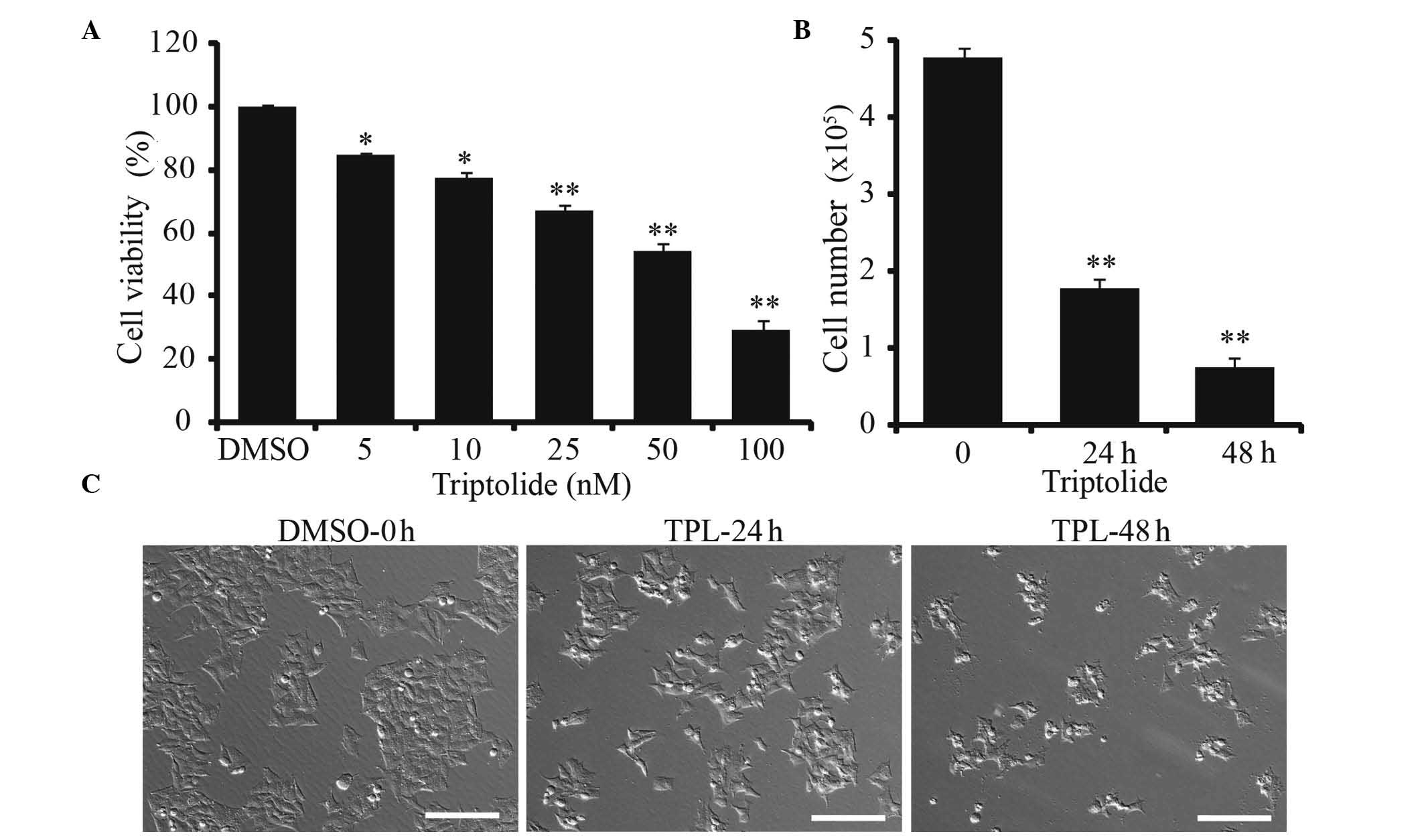
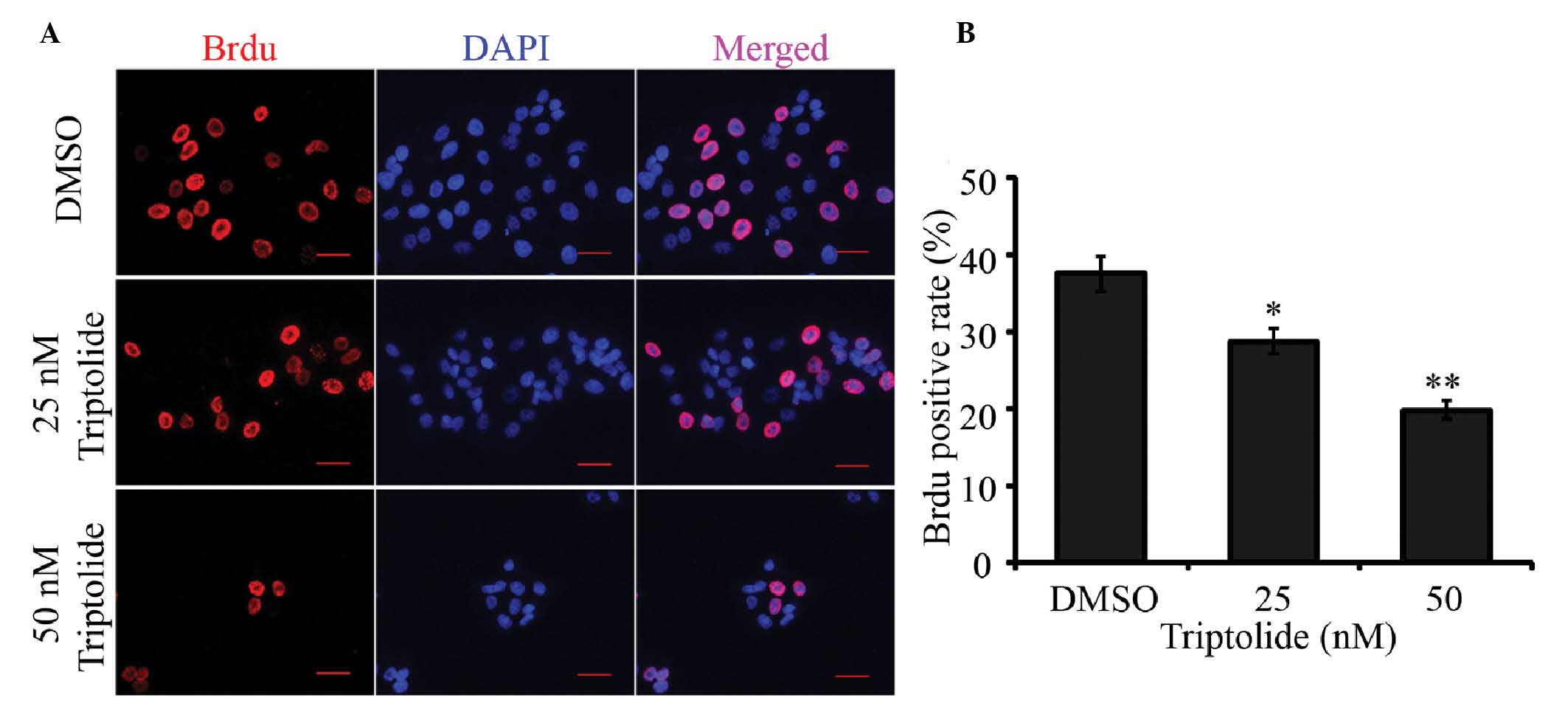
BE(2)-C cells were treated with increasing doses of triptolide for 24 h. A concentration-dependent response to triptolide in the BE(2)-C cells was observed. As shown in Fig. 1A, triptolide inhibited cell growth even at a low dose of 5 nM. The cell viability was significantly reduced to 50% at 50 nM of triptolide. Triptolide also inhibited cell growth in a time dependent manner (Fig. 1B and C). Moreover, immunofluorescent staining using a BrdU label confirmed that triptolide markedly inhibited cell proliferation (Fig. 2A and B).

Figure 1

TPL inhibited neuroblastoma cell growth and viability. (A) BE(2)-C cells were treated with 5, 10, 25, 50 and 100 nM TPL for 24 h. DMSO was used as a control. Cell viability was assessed by a CCK-8 assay. (B) BE(2)-C cell numbers from panel C were counted using the TC10™ Automated Cell Counter.(C) Morphologic examination of BE (2)-C cells treated with 25 nM triptolide for the indicated times (0, 24 or 48 h). Scale bar, 100 μm. Each value represents the average obtained from three independent experiments. Data are presented as the mean ± standard deviation. *P<0.05 and **P<0.01, compared with control. CCK-8, cell counting kit-8; TPL, triptolide; DMSO, dimethyl sufoxide.

Figure 2

BrdU immunofluorescence staining assay. (A) Immunofluorescence staining of Brdu in BE(2)-C cells treated with triptolide (25 and 50 nM) for 24 h. Scale bars, 25 μm. (B) The percentage of BrdU positive cells from panel A was calculated. Each value represents the average obtained from three independent experiments. Data are presented as the mean ± standard deviation. *P<0.05 and **P<0.01, compared with control. BrdU, 5-bromo-2-deoxyuridine; DMSO, dimethyl sulfoxide.

Triptolide induces neuroblastoma cell cycle arrest and apoptosis

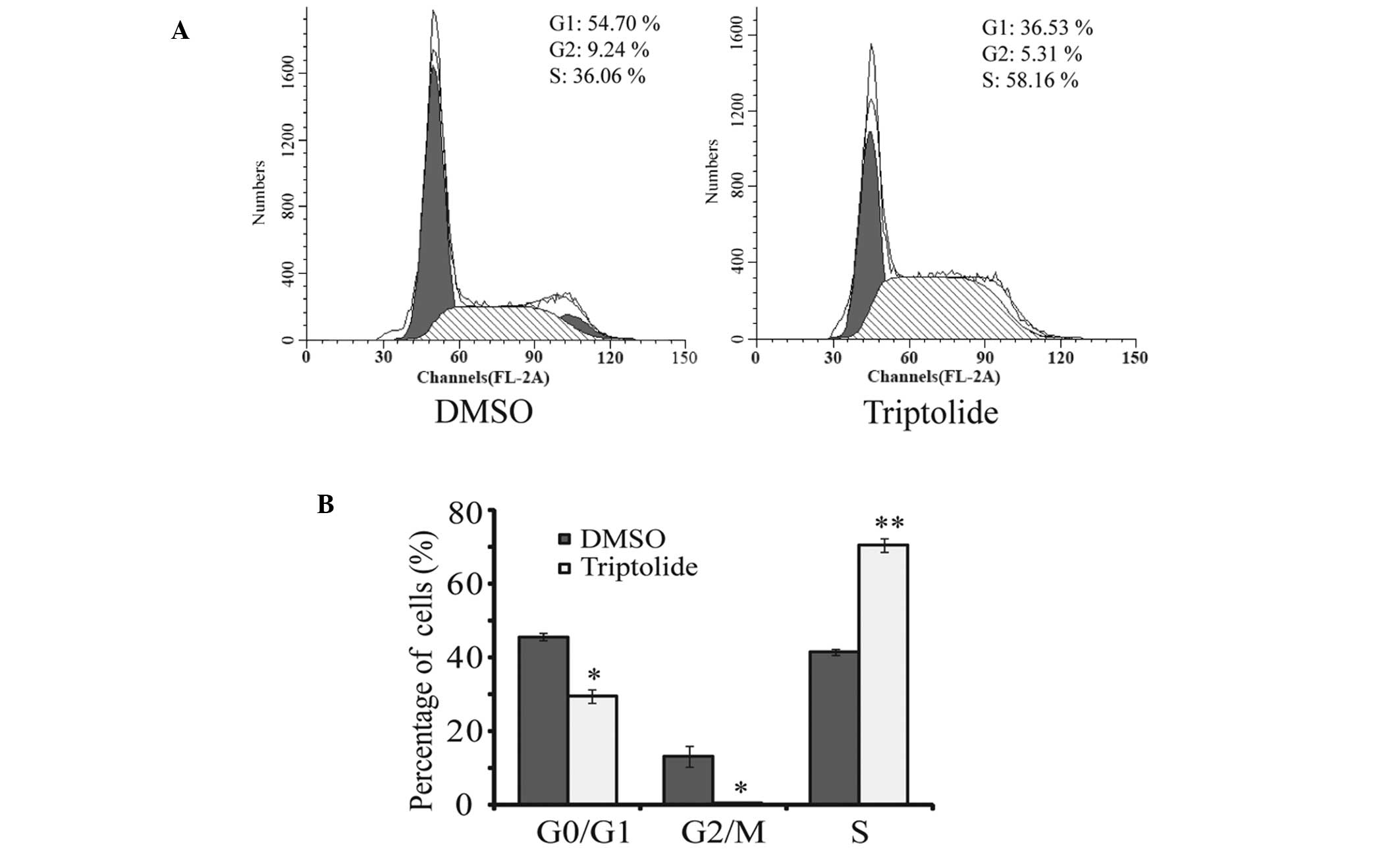
The effect of triptolide on cell cycle was investigated. It was found that the percentage of cells in S phase increased from 36.06 to 58.16% (Fig. 3A and B). This result suggests that triptolide induces cell cycle arrest in the S phase, which may contribute to inhibition of cell proliferation.

Figure 3

Triptolide induced neuroblastoma cell cycle arrest in the S phase. (A) BE(2)-C cells were either treated with DMSO or 25 nM triptolide for 24 h. Cells were harvested, fixed with ethanol and stained with propidium iodide. DNA content was determined by flow cytometry. (B) Analysis of cell cycle phase percentage in BE(2)-C cells from panel A. Each column represents the average obtained from three independent experiments. Data are presented as the mean ± standard deviation. *P<0.05 and **P<0.01, compared with control. DMSO, dimethyl sulfoxide.

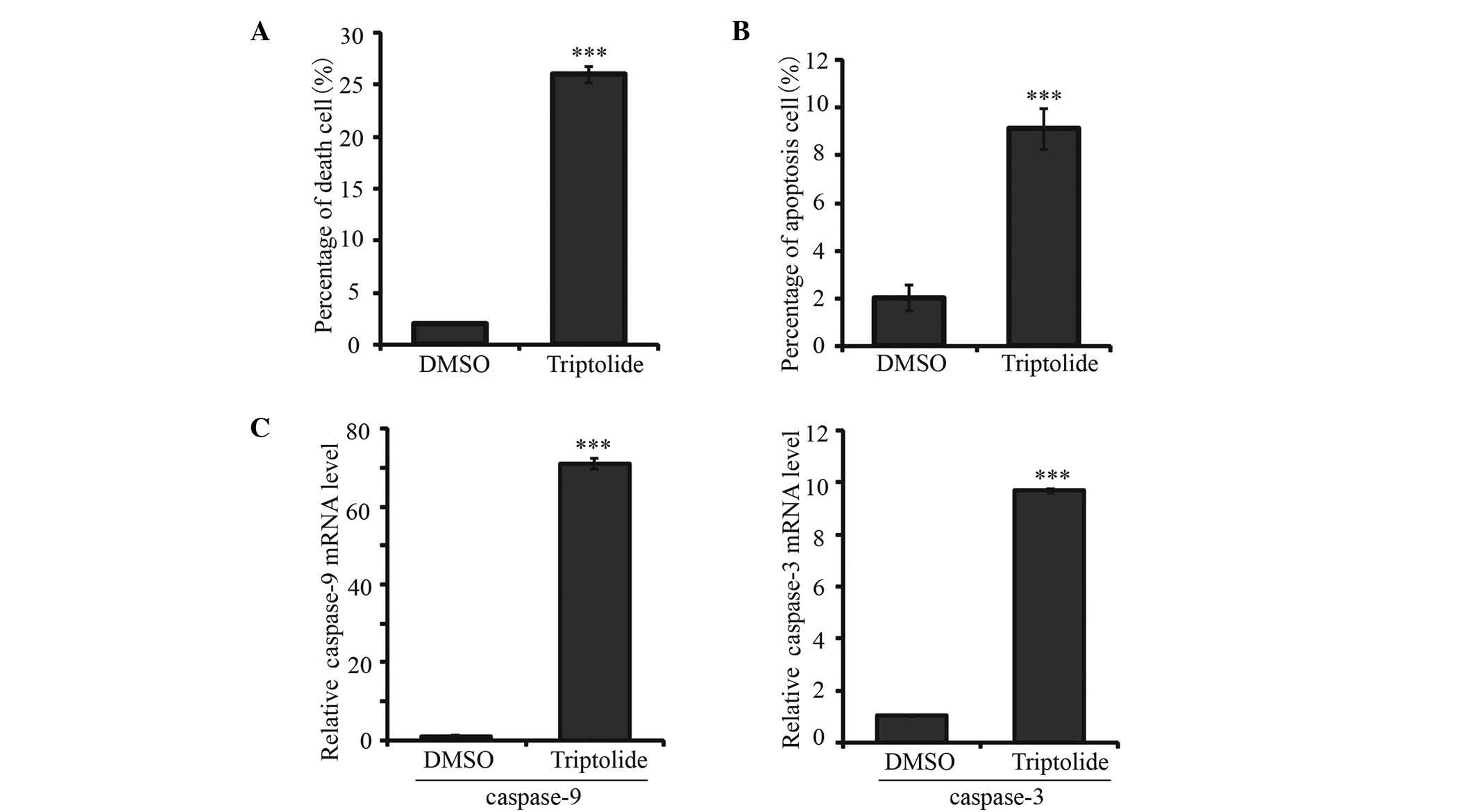
It was also observed that exposure of BE(2)-C cells to triptolide could induce cell death and apoptosis. Triptolide significantly increased cell death from 1.88 in the control group to 25.9% in the triptolide 25 nM group (P<0.001; Fig. 4A). The apoptosis rate was also increased after treatment with 25 nM triptolide for 24 h (Fig. 4B). As shown in Fig. 4C and D, following triptolide treatment mRNA expression levels of caspase-9 and caspase-3 were increased 70.9 and 9.7 fold, respectively, compared with control. These results indicate that triptolide induces cell death and apoptosis through caspase-9 and caspase-3 activation.

Figure 4

Triptolide induced neuroblastoma cell apoptosis through caspase-9/caspase-3 pathway activation. Analysis of the percentage of (A) dead and (B) apoptotic BE(2)-C cells. BE(2)-C cells were treated with 25nM triptolide for 24 h, and cell death and apoptosis were determined by trypan blue dye and Annexin V-fluorescein isothiocyanate kit, respectively. DMSO was used as a control. (C) mRNA expression levels of caspase-3 and caspase-9 in BE(2)-C cells treated with DMSO or triptolide were determined by RT-qPCR analysis. Data represent the average obtained from three independent experiments. Data are presented as the mean ± standard deviation. *P<0.05 and **P<0.01, compared with control. RT-qPCR, reverse transcription-quantitative polymerase chain reaction; DMSO, dimethyl sulfoxide.

Triptolide suppresses neuroblastoma cell colony formation in vitro and tumorigenicity in vivo

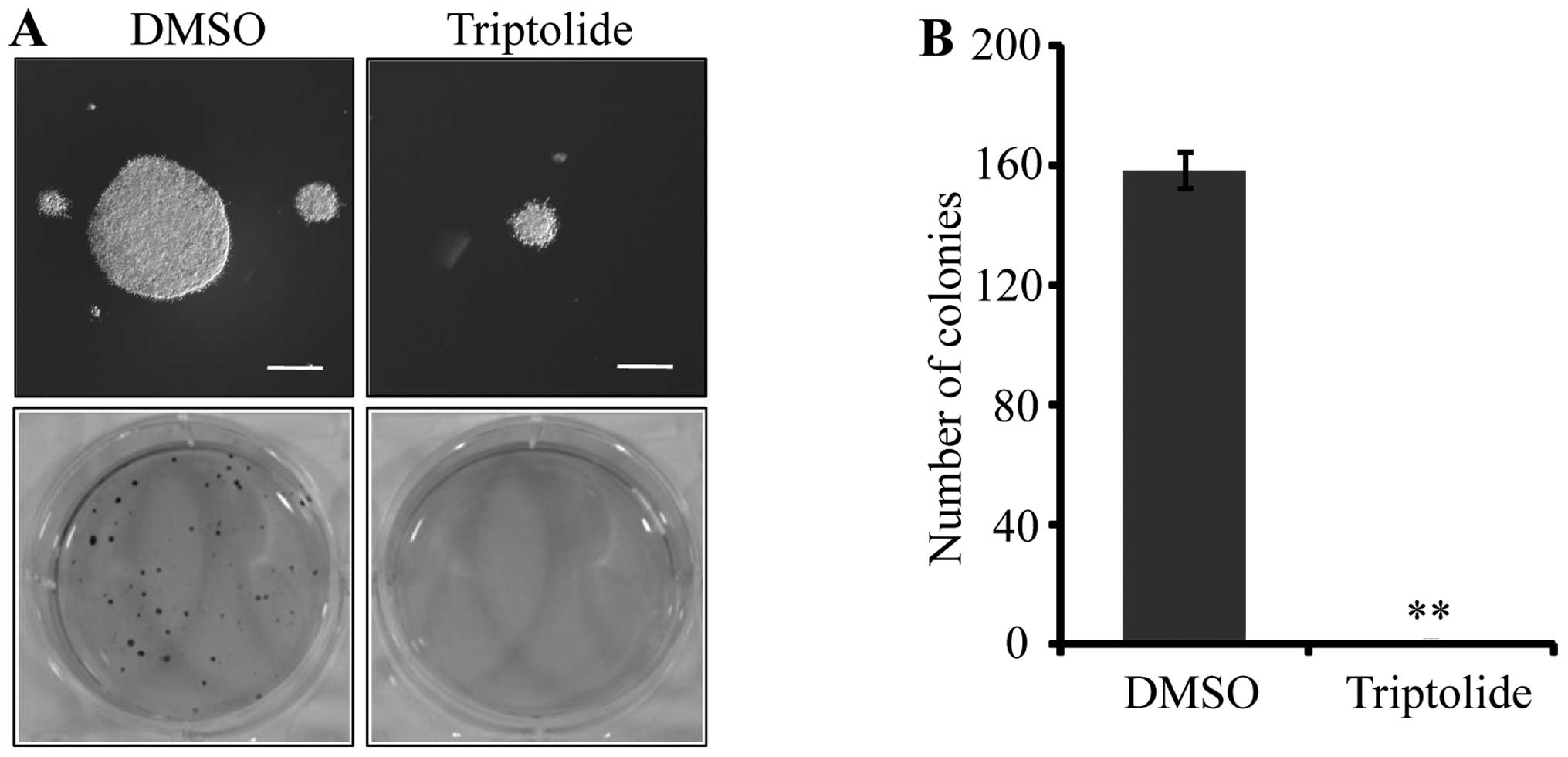
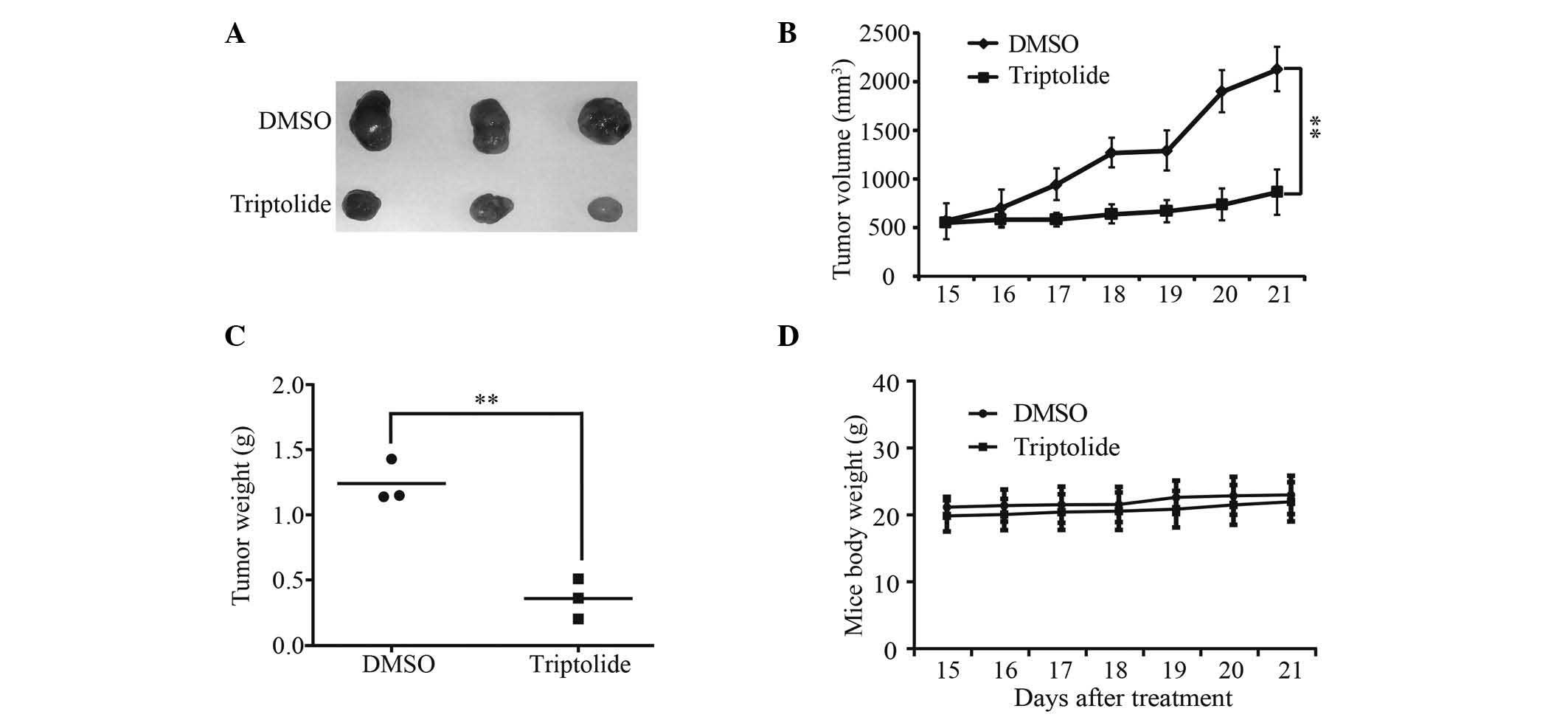
The role of triptolide in neuroblastoma tumorigenesis was examined. BE(2)-C cells treated with 25 nM triptolide gave rise to smaller and and sparser colonies in soft agar, compared with cells treated with DMSO (Fig. 5A and B). The xenograft study in NOD/SCID mice showed that the volume and weight of xenograft tumors in the triptolide treatment group were lower than those in the DMSO group (Fig. 6). These data indicate that triptolide may inhibit neuroblastoma cell self-renewal and tumorigenesis. In addition, there was no significant difference in mouse body weight after triptolide treatment (Fig. 6D), which suggests that the administered dose of triptolide may have minimal toxic side effects.

Figure 5

Triptolide suppressed BE (2)-C cells colony-forming capability. (A) Soft agar clonogenic assay of BE(2)-C cells was performed after treatment with triptolide. After 14 days of culture, images of colonies (larger than 1.0 mm or containing more than 150 cells) were captured. Scale bars, 50 μm. (B) Analysis of colony formation numbers from panel A was performed. Cells were counted from at least five randomly selected fields. Data are presented as the mean ± standard deviation. *P<0.05 and **P<0.01, compared with control. DMSO, dimethyl sulfoxide.

Figure 6

Triptolide inhibited tumor growth and development in the xenograft model. BE(2)-C cells (1×10⁶) were injected subcutaneously into the flanks of NOD/SCID mice. After tumor formation (approximately two weeks), mice were injected with DMSO or triptolide (0.4 mg/kg) daily for seven days. (A) Images of tumors dissected from NOD/SCID mice after treatment with triptolide or DMSO. (B) Xenograft tumors were measured daily, after treatment with triptolide or DMSO, by calipers. (C) Scatter plot of xenograft tumor weight with horizontal lines indicated the mean in each group. (D) The average body weight of NOD/SCID mice was monitored daily after treatment with triptolide or DMSO. Data are presented as the mean ± standard deviation. *P<0.05 and **P<0.01, compared with control. DMSO, dimethyl sulfoxide; NOD mice, non-obese diabetic mice; SCID mice, severe combined immunodeficiency mice.

Discussion

Recently, Chinese herbs have attracted attention from researchers worldwide due to their potential efficacy in the treatment of a number of diseases (22,23). A large number of active compounds have been extracted from Chinese herbs. Tripterygium wilfordii Hook F has been used in traditional Chinese medicine for centuries for the treatment of fever, chills, carbuncles and edema (24,25). The diterpenoid epoxide triptolide is one of the two main bioactive components of Tripterygium wilfordii Hook F, which exhibits antitumor activity (26,27). However, there is little data regarding the efficacy of triptolide against neuroblastoma cells. This study aimed to investigate the effect of triptolide on neuroblastoma cell growth and tumor development, with the aim of providing more information for the development of novel neuroblastoma treatments.

The current study demonstrated that triptolide not only induced neuroblastoma cell death and apoptosis via caspase-9/caspase-3 pathway activation, but also inhibited cell growth and viability by inducing cell cycle arrest at the S phase. Furthermore, the results showed that triptolide inhibited neuroblastoma cell colony-forming capability in vitro and tumor progression in vivo. In conclusion, triptolide may be a potent natural candidate for neuroblastoma treatment.

Acknowledgements

This study was supported by the National Basic Research Program of China (grant no. 2012cb114603); the National Natural Science Foundation of China (grant no. 81201551); the Natural Science Foundation of Chongqing (grant no. cstc2013jcyjys0007); and the Fundamental Research Funds for the Central Universities (grant nos. SWU111014 and SWU112033).

References

1 

Castleberry RP, Pritchard J, Ambros P, et al: The International Neuroblastoma Risk Groups (INRG): a preliminary report. Eur J Cancer. 33:2113–2116. 1997. View Article : Google Scholar

2 

Li T, Wang L, Ke XX, et al: DNA-damaging drug-induced apoptosis sensitized by N-myc in neuroblastoma cells. Cell Biol Int. 36:331–337. 2012. View Article : Google Scholar

3 

Shimada H, Ambros IM, Dehner LP, et al: The International Neuroblastoma Pathology Classification (the Shimada system). Cancer. 86:364–372. 1999. View Article : Google Scholar : PubMed/NCBI

4 

Brodeur GM: Neuroblastoma: biological insights into a clinical enigma. Nat Rev Cancer. 3:203–216. 2003. View Article : Google Scholar : PubMed/NCBI

5 

Cui H, Ma J, Ding J, et al: Bmi-1 regulates the differentiation and clonogenic self-renewal of I-type neuroblastoma cells in a concentration-dependent manner. J Biol Chem. 281:34696–34704. 2006. View Article : Google Scholar : PubMed/NCBI

6 

Cheung NK and Dyer MA: Neuroblastoma: developmental biology, cancer genomics and immunotherapy. Nat Rev Cancer. 13:397–411. 2013. View Article : Google Scholar : PubMed/NCBI

7 

Morgenstern DA, Baruchel S and Irwin MS: Current and future strategies for relapsed neuroblastoma: challenges on the road to precision therapy. J Pediatr Hematol Oncol. 35:337–347. 2013. View Article : Google Scholar : PubMed/NCBI

8 

Camirand A, Fadhil I, Luco AL, et al: Enhancement of taxol, doxorubicin and zoledronate anti-proliferation action on triple-negative breast cancer cells by a PTHrP blocking monoclonal antibody. Am J Cancer Res. 3:500–508. 2013.PubMed/NCBI

9 

Jia L, Ma S, Hou X, et al: The synergistic effects of traditional Chinese herbs and radiotherapy for cancer treatment. Oncol Lett. 5:1439–1447. 2013.PubMed/NCBI

10 

Kavandi L, Lee LR, Bokhari AA, et al: The Chinese herbs Scutellaria baicalensis and Fritillaria cirrhosa target NFκB to inhibit proliferation of ovarian and endometrial cancer cells. Mol Carcinog. 2013. View Article : Google Scholar

11 

Hailong G, Yujie Z, Hanying M, et al: Effectiveness of triptolide-coated stent on decreasing inflammation and attenuation of intimal hyperplasia in a pig after coronary angioplasty. Angiology. 62:265–269. 2011. View Article : Google Scholar

12 

Wu R, Li Y, Guo Z, et al: Triptolide ameliorates ileocolonic anastomosis inflammation in IL-10 deficient mice by mechanism involving suppression of miR-155/SHIP-1 signaling pathway. Mol Immunol. 56:340–346. 2013. View Article : Google Scholar : PubMed/NCBI

13 

Owa C, Messina ME Jr and Halaby R: Triptolide induces lysosomal-mediated programmed cell death in MCF-7 breast cancer cells. Int J Womens Health. 5:557–569. 2013.PubMed/NCBI

14 

Banerjee S, Sangwan V, McGinn O, et al: Triptolide-induced cell death in pancreatic cancer is mediated by O-GlcNAc modification of transcription factor Sp1. J Biol Chem. 288:33927–33938. 2013. View Article : Google Scholar : PubMed/NCBI

15 

Chueh FS, Chen YL, Hsu SC, et al: Triptolide induced DNA damage in A375.S2 human malignant melanoma cells is mediated via reduction of DNA repair genes. Oncol Rep. 29:613–618. 2013.

16 

Chen YW, Lin GJ, Hueng DY, et al: Enhanced anti-tumor activity of triptolide in combination with irradiation for the treatment of oral cancer. Planta Med. 80:255–261. 2014. View Article : Google Scholar : PubMed/NCBI

17 

Wang XF, Zhao YB, Wu Q, et al: Triptolide induces apoptosis in endometrial cancer via a p53-independent mitochondrial pathway. Mol Med Rep. 9:39–44. 2014.

18 

Krizanova O, Markova J, Pacak K, et al: Triptolide induces apoptosis through the SERCA 3 upregulation in PC12 cells. Gen Physiol Biophys. 33:137–144. 2014. View Article : Google Scholar : PubMed/NCBI

19 

Johnson SM, Wang X and Evers BM: Triptolide inhibits proliferation and migration of colon cancer cells by inhibition of cell cycle regulators and cytokine receptors. J Surg Res. 168:197–205. 2011. View Article : Google Scholar

20 

Ma JX, Sun YL, Wang YQ, et al: Triptolide induces apoptosis and inhibits the growth and angiogenesis of human pancreatic cancer cells by downregulating COX-2 and VEGF. Oncol Res. 20:359–368. 2013. View Article : Google Scholar : PubMed/NCBI

21 

Antonoff MB, Chugh R, Borja-Cacho D, et al: Triptolide therapy for neuroblastoma decreases cell viability in vitro and inhibits tumor growth in vivo. Surgery. 146:282–290. 2009. View Article : Google Scholar : PubMed/NCBI

22 

Wan YG, Che XY, Sun W, et al: Low-dose of multi-glycoside of Tripterygium wilfordii Hook. f., a natural regulator of TGF-β1/Smad signaling activity improves adriamycin-induced glomerulosclerosis in vivo. J Ethnopharmacol. 151:1079–1089. 2014. View Article : Google Scholar

23 

Ge Y, Xie H, Li S, et al: Treatment of diabetic nephropathy with Tripterygium wilfordii Hook F extract: a prospective, randomized, controlled clinical trial. J Transl Med. 11:1342013. View Article : Google Scholar : PubMed/NCBI

24 

Chen Y, Gong Z, Chen X, et al: Tripterygium wilfordii Hook F (a traditional Chinese medicine) for primary nephrotic syndrome. Cochrane Database Syst Rev. 8:CD0085682013.PubMed/NCBI

25 

Helmstädter A: Tripterygium wilfordii Hook. f. - how a traditional Taiwanese medicinal plant found its way to the West. Pharmazie. 68:643–646. 2013.PubMed/NCBI

26 

Huang W, He T, Chai C, et al: Triptolide inhibits the proliferation of prostate cancer cells and down-regulates SUMO-specific protease 1 expression. PLoS One. 7:e376932012. View Article : Google Scholar : PubMed/NCBI

27 

Liu Z, Ma L, Wen ZS, et al: Cancerous inhibitor of PP2A is targeted by natural compound celastrol for degradation in non-small-cell lung cancer. Carcinogenesis. 35:905–914. 2014. View Article : Google Scholar

Related Articles

  • Abstract
  • View
  • Download
  • Twitter
Copy and paste a formatted citation
Spandidos Publications style
Yan X, Ke X, Zhao H, Huang M, Hu R and Cui H: Triptolide inhibits cell proliferation and tumorigenicity of human neuroblastoma cells. Mol Med Rep 11: 791-796, 2015.
APA
Yan, X., Ke, X., Zhao, H., Huang, M., Hu, R., & Cui, H. (2015). Triptolide inhibits cell proliferation and tumorigenicity of human neuroblastoma cells. Molecular Medicine Reports, 11, 791-796. https://doi.org/10.3892/mmr.2014.2814
MLA
Yan, X., Ke, X., Zhao, H., Huang, M., Hu, R., Cui, H."Triptolide inhibits cell proliferation and tumorigenicity of human neuroblastoma cells". Molecular Medicine Reports 11.2 (2015): 791-796.
Chicago
Yan, X., Ke, X., Zhao, H., Huang, M., Hu, R., Cui, H."Triptolide inhibits cell proliferation and tumorigenicity of human neuroblastoma cells". Molecular Medicine Reports 11, no. 2 (2015): 791-796. https://doi.org/10.3892/mmr.2014.2814
Copy and paste a formatted citation
x
Spandidos Publications style
Yan X, Ke X, Zhao H, Huang M, Hu R and Cui H: Triptolide inhibits cell proliferation and tumorigenicity of human neuroblastoma cells. Mol Med Rep 11: 791-796, 2015.
APA
Yan, X., Ke, X., Zhao, H., Huang, M., Hu, R., & Cui, H. (2015). Triptolide inhibits cell proliferation and tumorigenicity of human neuroblastoma cells. Molecular Medicine Reports, 11, 791-796. https://doi.org/10.3892/mmr.2014.2814
MLA
Yan, X., Ke, X., Zhao, H., Huang, M., Hu, R., Cui, H."Triptolide inhibits cell proliferation and tumorigenicity of human neuroblastoma cells". Molecular Medicine Reports 11.2 (2015): 791-796.
Chicago
Yan, X., Ke, X., Zhao, H., Huang, M., Hu, R., Cui, H."Triptolide inhibits cell proliferation and tumorigenicity of human neuroblastoma cells". Molecular Medicine Reports 11, no. 2 (2015): 791-796. https://doi.org/10.3892/mmr.2014.2814
Follow us
  • Twitter
  • LinkedIn
  • Facebook
About
  • Spandidos Publications
  • Careers
  • Cookie Policy
  • Privacy Policy
How can we help?
  • Help
  • Live Chat
  • Contact
  • Email to our Support Team