Spandidos Publications Logo
  • About
    • About Spandidos
    • Aims and Scopes
    • Abstracting and Indexing
    • Editorial Policies
    • Reprints and Permissions
    • Job Opportunities
    • Terms and Conditions
    • Contact
  • Journals
    • All Journals
    • Oncology Letters
      • Oncology Letters
      • Information for Authors
      • Editorial Policies
      • Editorial Board
      • Aims and Scope
      • Abstracting and Indexing
      • Bibliographic Information
      • Archive
    • International Journal of Oncology
      • International Journal of Oncology
      • Information for Authors
      • Editorial Policies
      • Editorial Board
      • Aims and Scope
      • Abstracting and Indexing
      • Bibliographic Information
      • Archive
    • Molecular and Clinical Oncology
      • Molecular and Clinical Oncology
      • Information for Authors
      • Editorial Policies
      • Editorial Board
      • Aims and Scope
      • Abstracting and Indexing
      • Bibliographic Information
      • Archive
    • Experimental and Therapeutic Medicine
      • Experimental and Therapeutic Medicine
      • Information for Authors
      • Editorial Policies
      • Editorial Board
      • Aims and Scope
      • Abstracting and Indexing
      • Bibliographic Information
      • Archive
    • International Journal of Molecular Medicine
      • International Journal of Molecular Medicine
      • Information for Authors
      • Editorial Policies
      • Editorial Board
      • Aims and Scope
      • Abstracting and Indexing
      • Bibliographic Information
      • Archive
    • Biomedical Reports
      • Biomedical Reports
      • Information for Authors
      • Editorial Policies
      • Editorial Board
      • Aims and Scope
      • Abstracting and Indexing
      • Bibliographic Information
      • Archive
    • Oncology Reports
      • Oncology Reports
      • Information for Authors
      • Editorial Policies
      • Editorial Board
      • Aims and Scope
      • Abstracting and Indexing
      • Bibliographic Information
      • Archive
    • Molecular Medicine Reports
      • Molecular Medicine Reports
      • Information for Authors
      • Editorial Policies
      • Editorial Board
      • Aims and Scope
      • Abstracting and Indexing
      • Bibliographic Information
      • Archive
    • World Academy of Sciences Journal
      • World Academy of Sciences Journal
      • Information for Authors
      • Editorial Policies
      • Editorial Board
      • Aims and Scope
      • Abstracting and Indexing
      • Bibliographic Information
      • Archive
    • International Journal of Functional Nutrition
      • International Journal of Functional Nutrition
      • Information for Authors
      • Editorial Policies
      • Editorial Board
      • Aims and Scope
      • Abstracting and Indexing
      • Bibliographic Information
      • Archive
    • International Journal of Epigenetics
      • International Journal of Epigenetics
      • Information for Authors
      • Editorial Policies
      • Editorial Board
      • Aims and Scope
      • Abstracting and Indexing
      • Bibliographic Information
      • Archive
    • Medicine International
      • Medicine International
      • Information for Authors
      • Editorial Policies
      • Editorial Board
      • Aims and Scope
      • Abstracting and Indexing
      • Bibliographic Information
      • Archive
  • Articles
  • Information
    • Information for Authors
    • Information for Reviewers
    • Information for Librarians
    • Information for Advertisers
    • Conferences
  • Language Editing
Spandidos Publications Logo
  • About
    • About Spandidos
    • Aims and Scopes
    • Abstracting and Indexing
    • Editorial Policies
    • Reprints and Permissions
    • Job Opportunities
    • Terms and Conditions
    • Contact
  • Journals
    • All Journals
    • Biomedical Reports
      • Information for Authors
      • Editorial Policies
      • Editorial Board
      • Aims and Scope
      • Abstracting and Indexing
      • Bibliographic Information
      • Archive
    • Experimental and Therapeutic Medicine
      • Information for Authors
      • Editorial Policies
      • Editorial Board
      • Aims and Scope
      • Abstracting and Indexing
      • Bibliographic Information
      • Archive
    • International Journal of Epigenetics
      • Information for Authors
      • Editorial Policies
      • Editorial Board
      • Aims and Scope
      • Abstracting and Indexing
      • Bibliographic Information
      • Archive
    • International Journal of Functional Nutrition
      • Information for Authors
      • Editorial Policies
      • Editorial Board
      • Aims and Scope
      • Abstracting and Indexing
      • Bibliographic Information
      • Archive
    • International Journal of Molecular Medicine
      • Information for Authors
      • Editorial Policies
      • Editorial Board
      • Aims and Scope
      • Abstracting and Indexing
      • Bibliographic Information
      • Archive
    • International Journal of Oncology
      • Information for Authors
      • Editorial Policies
      • Editorial Board
      • Aims and Scope
      • Abstracting and Indexing
      • Bibliographic Information
      • Archive
    • Medicine International
      • Information for Authors
      • Editorial Policies
      • Editorial Board
      • Aims and Scope
      • Abstracting and Indexing
      • Bibliographic Information
      • Archive
    • Molecular and Clinical Oncology
      • Information for Authors
      • Editorial Policies
      • Editorial Board
      • Aims and Scope
      • Abstracting and Indexing
      • Bibliographic Information
      • Archive
    • Molecular Medicine Reports
      • Information for Authors
      • Editorial Policies
      • Editorial Board
      • Aims and Scope
      • Abstracting and Indexing
      • Bibliographic Information
      • Archive
    • Oncology Letters
      • Information for Authors
      • Editorial Policies
      • Editorial Board
      • Aims and Scope
      • Abstracting and Indexing
      • Bibliographic Information
      • Archive
    • Oncology Reports
      • Information for Authors
      • Editorial Policies
      • Editorial Board
      • Aims and Scope
      • Abstracting and Indexing
      • Bibliographic Information
      • Archive
    • World Academy of Sciences Journal
      • Information for Authors
      • Editorial Policies
      • Editorial Board
      • Aims and Scope
      • Abstracting and Indexing
      • Bibliographic Information
      • Archive
  • Articles
  • Information
    • For Authors
    • For Reviewers
    • For Librarians
    • For Advertisers
    • Conferences
  • Language Editing
Login Register Submit
  • This site uses cookies
  • You can change your cookie settings at any time by following the instructions in our Cookie Policy. To find out more, you may read our Privacy Policy.

    I agree
Search articles by DOI, keyword, author or affiliation
Search
Advanced Search
presentation
Molecular Medicine Reports
Join Editorial Board Propose a Special Issue
Print ISSN: 1791-2997 Online ISSN: 1791-3004
Journal Cover
February-2015 Volume 11 Issue 2

Full Size Image

Sign up for eToc alerts
Recommend to Library

Journals

International Journal of Molecular Medicine

International Journal of Molecular Medicine

International Journal of Molecular Medicine is an international journal devoted to molecular mechanisms of human disease.

International Journal of Oncology

International Journal of Oncology

International Journal of Oncology is an international journal devoted to oncology research and cancer treatment.

Molecular Medicine Reports

Molecular Medicine Reports

Covers molecular medicine topics such as pharmacology, pathology, genetics, neuroscience, infectious diseases, molecular cardiology, and molecular surgery.

Oncology Reports

Oncology Reports

Oncology Reports is an international journal devoted to fundamental and applied research in Oncology.

Experimental and Therapeutic Medicine

Experimental and Therapeutic Medicine

Experimental and Therapeutic Medicine is an international journal devoted to laboratory and clinical medicine.

Oncology Letters

Oncology Letters

Oncology Letters is an international journal devoted to Experimental and Clinical Oncology.

Biomedical Reports

Biomedical Reports

Explores a wide range of biological and medical fields, including pharmacology, genetics, microbiology, neuroscience, and molecular cardiology.

Molecular and Clinical Oncology

Molecular and Clinical Oncology

International journal addressing all aspects of oncology research, from tumorigenesis and oncogenes to chemotherapy and metastasis.

World Academy of Sciences Journal

World Academy of Sciences Journal

Multidisciplinary open-access journal spanning biochemistry, genetics, neuroscience, environmental health, and synthetic biology.

International Journal of Functional Nutrition

International Journal of Functional Nutrition

Open-access journal combining biochemistry, pharmacology, immunology, and genetics to advance health through functional nutrition.

International Journal of Epigenetics

International Journal of Epigenetics

Publishes open-access research on using epigenetics to advance understanding and treatment of human disease.

Medicine International

Medicine International

An International Open Access Journal Devoted to General Medicine.

Journal Cover
February-2015 Volume 11 Issue 2

Full Size Image

Sign up for eToc alerts
Recommend to Library

  • Article
  • Citations
    • Cite This Article
    • Download Citation
    • Create Citation Alert
    • Remove Citation Alert
    • Cited By
  • Similar Articles
    • Related Articles (in Spandidos Publications)
    • Similar Articles (Google Scholar)
    • Similar Articles (PubMed)
  • Download PDF
  • Download XML
  • View XML
Article

Protection of cultured human hepatocytes from hydrogen peroxide‑induced apoptosis by relaxin‑3

  • Authors:
    • Xiao Ma
    • Su Han
    • Wei Zhang
    • Yu‑Jing Fan
    • Ming‑Na Liu
    • Ai‑Yun Liu
    • Bing‑Rong Liu
  • View Affiliations / Copyright

    Affiliations: Department of Gastroenterology and Hepatology, The Second Affiliated Hospital of Harbin Medical University, Harbin, Heilongjiang 150086, P.R. China, Department of Microbiology and Parasitology, The Heilongjiang Key Laboratory of Immunity and Infection, Pathogenic Biology, Harbin Medical University, Harbin, Heilongjiang 150086, P.R. China, Center for Endemic Disease Control, Chinese Center for Disease Control and Prevention, Harbin Medical University, Harbin, Heilongjiang 150081, P.R. China
  • Pages: 1228-1234
    |
    Published online on: November 3, 2014
       https://doi.org/10.3892/mmr.2014.2842
  • Expand metrics +
Metrics: Total Views: 0 (Spandidos Publications: | PMC Statistics: )
Metrics: Total PDF Downloads: 0 (Spandidos Publications: | PMC Statistics: )
Cited By (CrossRef): 0 citations Loading Articles...

This article is mentioned in:


Abstract

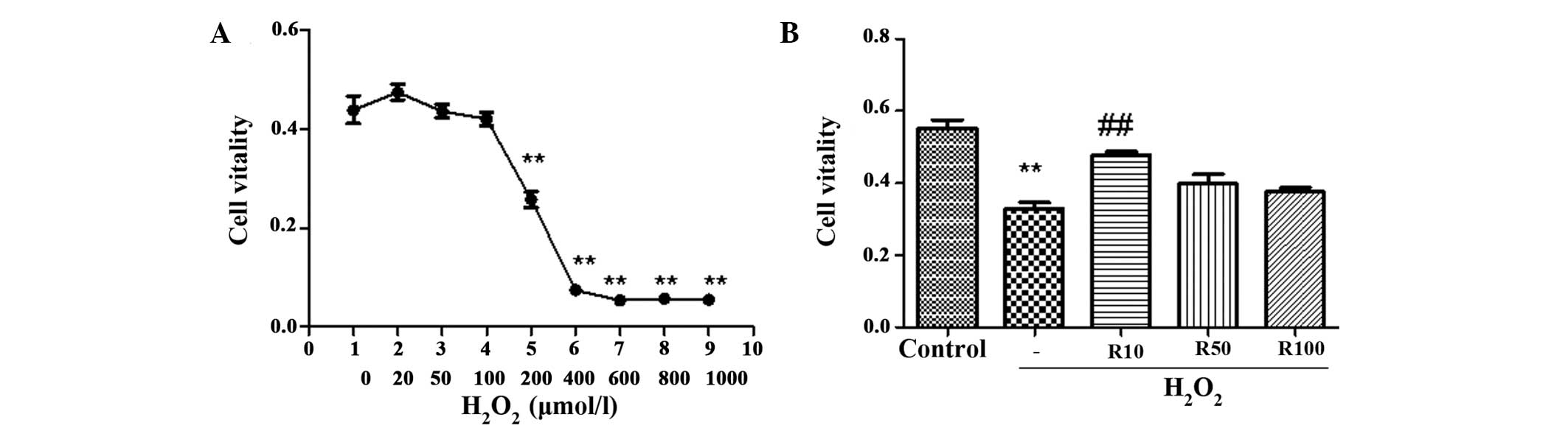
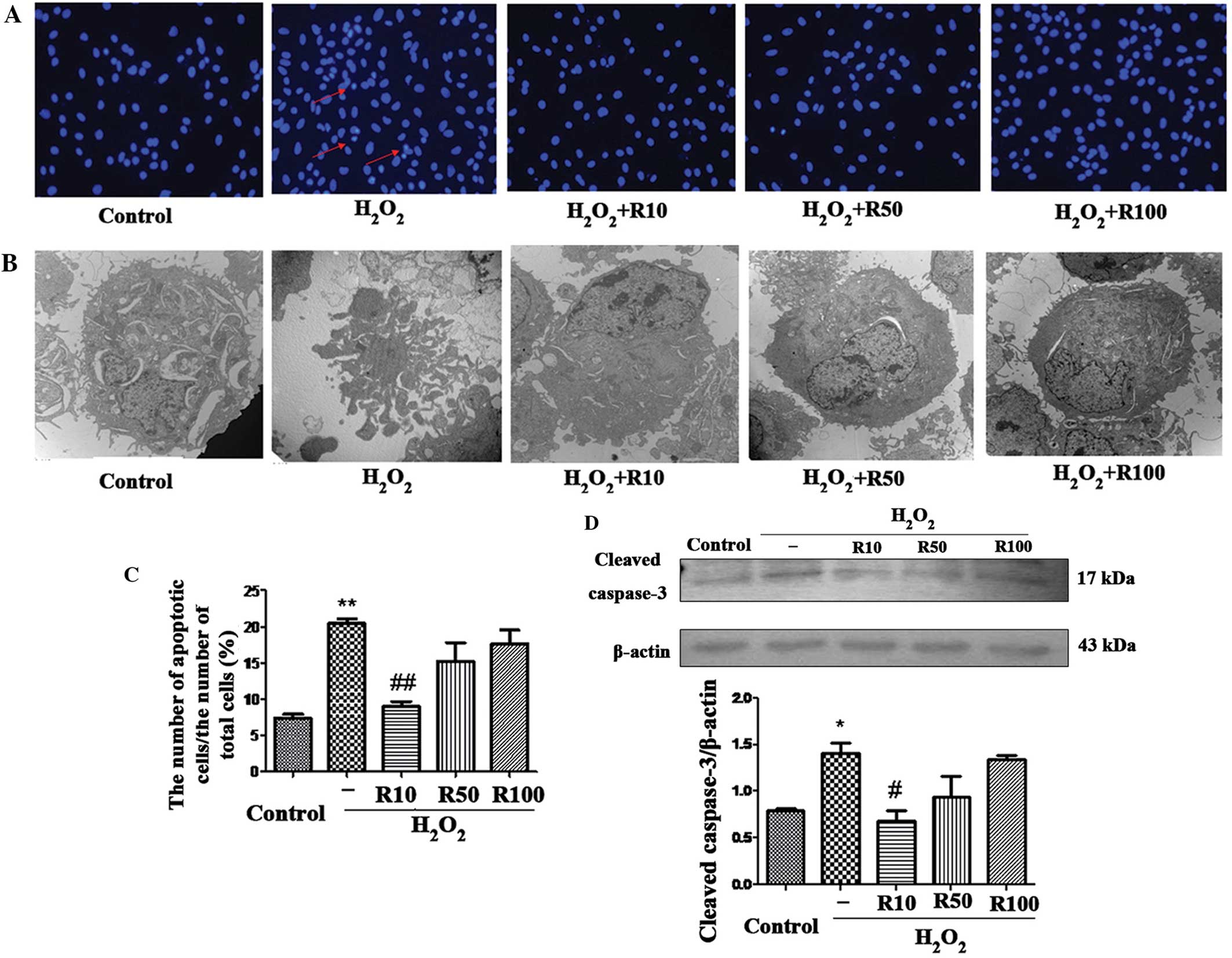
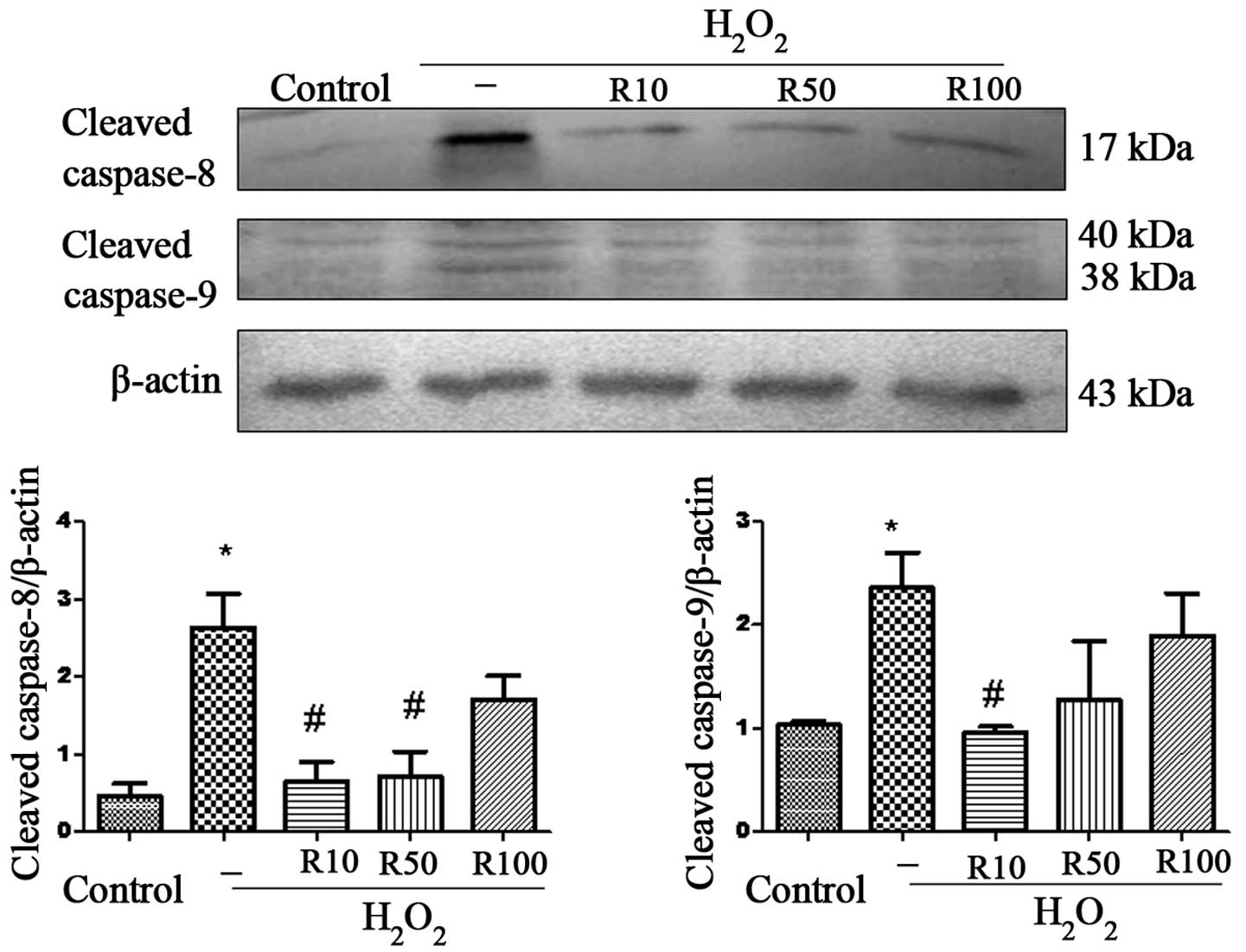
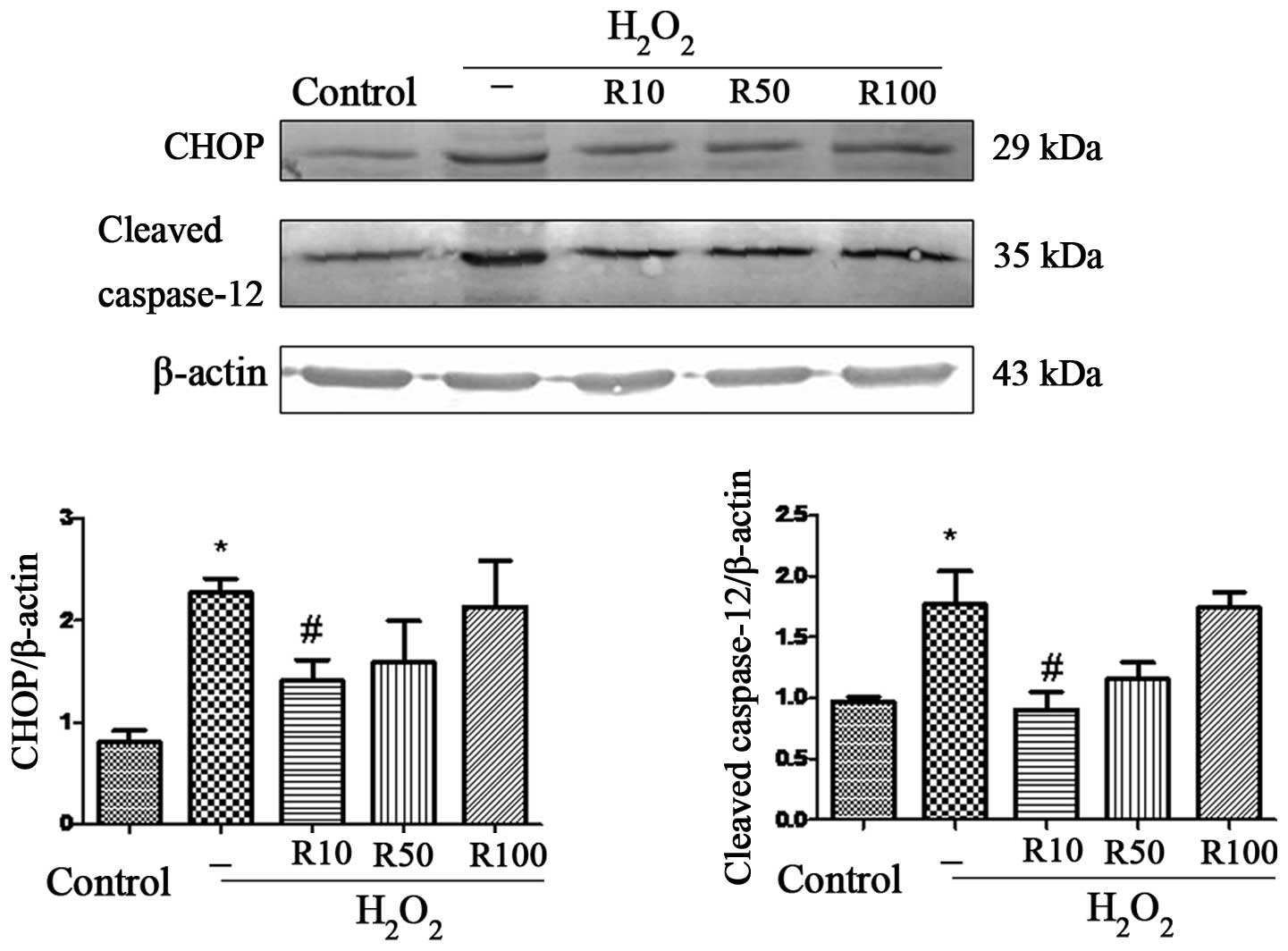
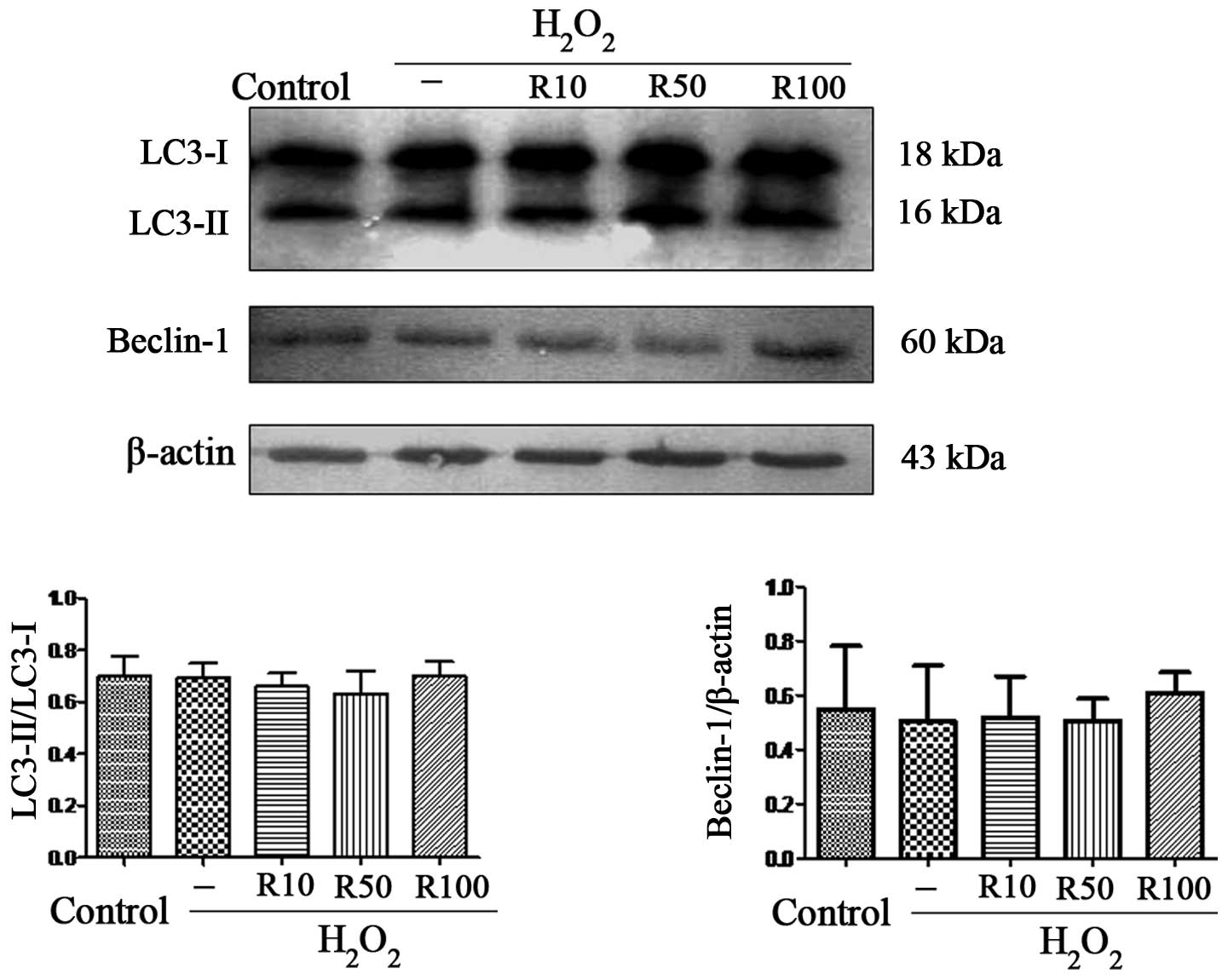
Previous studies have suggested that hepatocyte apoptosis may be a fundamental underlying mechanism of liver injury and diseases, such as liver fibrosis. Relaxin‑3 has been reported to have anti‑fibrotic actions in the heart and to attenuate isoproterenol‑induced myocardial injury; however, the beneficial role of relaxin‑3 on hepatocyte apoptosis remains to be elucidated. The aim of the present study was to explore the role and possible mechanisms of relaxin‑3 through hydrogen peroxide (H2O2)‑induced apoptosis in primary human hepatocytes. Cells were treated with relaxin‑3 and then cell viability, morphological features, the presence of cleaved caspases as well as the levels of endoplasmic reticulum stress (ERS) protein markers and autophagy markers were evaluated. The H2O2 group showed significantly decreased cell viability, increased apoptosis as well as upregulation of caspases (cleaved caspase‑3, ‑8 and ‑9) and ERS protein markers compared with those of the control group. However, cells treated with relaxin‑3 (10 ng/ml) demonstrated improved cell viability, reduced apoptosis and decreased expression of cleaved caspases and ERS markers. However, the expression of autophagy markers remained unchanged following H2O2‑induced apoptosis and relaxin‑3 treatment. In conclusion, relaxin‑3 was shown to protect hepatocytes from H2O2‑induced apoptosis via downregulation of cleaved caspase‑8 and ‑9, as well as inhibition of the ERS pathway.
View Figures

Figure 1

Figure 2

Figure 3

Figure 4

Figure 5

View References

1 

Horvathova E, Eckl PM, Bresgen N and Slamenova D: Evaluation of genotoxic and cytotoxic effects of H2O2 and DMNQ on freshly isolated rat hepatocytes; protective effects of carboxymethyl chitin-glucan. Neuro Endocrinol Lett. 29:644–648. 2008.PubMed/NCBI

2 

Miñana JB, Gómez-Cambronero L, Lloret A, et al: Mitochondrial oxidative stress and CD95 ligand: a dual mechanism for hepatocyte apoptosis in chronic alcoholism. Hepatology. 35:1205–1214. 2002. View Article : Google Scholar : PubMed/NCBI

3 

Jaeschke H, McGill MR and Ramachandran A: Oxidant stress, mitochondria, and cell death mechanisms in drug-induced liver injury: lessons learned from acetaminophen hepatotoxicity. Drug Metab Rev. 44:88–106. 2012. View Article : Google Scholar : PubMed/NCBI

4 

Kundu D, Roy A, Mandal T, Bandyopadhyay U, Ghosh E and Ray D: Oxidative stress in alcoholic and viral hepatitis. N Am J Med Sci. 4:412–415. 2012. View Article : Google Scholar : PubMed/NCBI

5 

Koike K: Oxidative stress and apoptosis in hepatitis C: the core issue. J Gastroenterol. 41:292–294. 2006. View Article : Google Scholar : PubMed/NCBI

6 

Rodrigues CM, Fan G, Wong PY, Kren BT and Steer CJ: Ursodeoxycholic acid may inhibit deoxycholic acid-induced apoptosis by modulating mitochondrial transmembrane potential and reactive oxygen species production. Mol Med. 4:165–178. 1998.PubMed/NCBI

7 

Canbay A, Gieseler RK, Gores GJ and Gerken G: The relationship between apoptosis and non-alcoholic fatty liver disease: an evolutionary cornerstone turned pathogenic. Z Gastroenterol. 43:211–217. 2005. View Article : Google Scholar : PubMed/NCBI

8 

Canbay A, Friedman S and Gores GJ: Apoptosis: the nexus of liver injury and fibrosis. Hepatology. 39:273–278. 2004. View Article : Google Scholar : PubMed/NCBI

9 

Matthews GM, Newbold A and Johnstone RW: Intrinsic and extrinsic apoptotic pathway signaling as determinants of histone deacetylase inhibitor antitumor activity. Adv Cancer Res. 116:165–197. 2012. View Article : Google Scholar : PubMed/NCBI

10 

Breckenridge DG, Germain M, Mathai JP, Nguyen M and Shore GC: Regulation of apoptosis by endoplasmic reticulum pathways. Oncogene. 22:8608–8618. 2003. View Article : Google Scholar : PubMed/NCBI

11 

McCullough KD, Martindale JL, Klotz LO, Aw TY and Holbrook NJ: Gadd153 sensitizes cells to endoplasmic reticulum stress by down-regulating Bcl2 and perturbing the cellular redox state. Mol Cell Biol. 21:1249–1259. 2001. View Article : Google Scholar : PubMed/NCBI

12 

Puthalakath H, O’Reilly LA, Gunn P, Lee L, et al: ER stress triggers apoptosis by activating BH3-only protein Bim. Cell. 129:1337–1349. 2007. View Article : Google Scholar : PubMed/NCBI

13 

Nakagawa T, Zhu H, Morishima N, Li E, Xu J, Yankner BA and Yuan J: Caspase-12 mediates endoplasmic-reticulum-specific apoptosis and cytotoxicity by amyloid-beta. Nature. 403:98–103. 2000. View Article : Google Scholar : PubMed/NCBI

14 

Bathgate RA, Samuel CS, Burazin TC, et al: Human relaxin gene 3 (H3) and the equivalent mouse relaxin (M3) gene: Novel members of the relaxin peptide family. J Biol Chem. 277:1148–1157. 2002. View Article : Google Scholar

15 

McGowan BM, Stanley SA, Ghatei MA and Bloom SR: Relaxin-3 and its role in neuroendocrine function. Ann NY Acad Sci. 1160:250–255. 2009. View Article : Google Scholar : PubMed/NCBI

16 

Chan LJ, Hossain MA, Samuel CS, Separovic F and Wade JD: The relaxin peptide family - structure, function and clinical applications. Protein Pept Lett. 18:220–229. 2011. View Article : Google Scholar

17 

Fallowfield JA, Hayden AL, Snowdon VK, Aucott RL, Stutchfield BM, Mole DJ, Pellicoro A, Gordon-Walker TT, Henke A, Schrader J, Trivedi PJ, Princivalle M, Forbes SJ, Collins JE and Iredale JP: Relaxin modulates human and rat hepatic myofibroblast function and ameliorates portal hypertension in vivo. Hepatology. 59:1492–1504. 2014. View Article : Google Scholar

18 

Bennett RG, Dalton SR, Mahan KJ, Gentry-Nielsen MJ, Hamel FG and Tuma DJ: Relaxin receptors in hepatic stellate cells and cirrhotic liver. Biochem Pharmacol. 73:1033–1040. 2007. View Article : Google Scholar : PubMed/NCBI

19 

Yao L, Agoulnik AI, Cooke PS, Meling DD and Sherwood OD: Relaxin acts on stromal cells to promote epithelial and stromal proliferation and inhibit apoptosis in the mouse cervix and vagina. Endocrinology. 149:2072–2079. 2008. View Article : Google Scholar : PubMed/NCBI

20 

Moore XL, Tan SL, Lo CY, et al: Relaxin antagonizes hypertrophy and apoptosis in neonatal rat cardiomyocytes. Endocrinology. 148:1582–1589. 2007. View Article : Google Scholar : PubMed/NCBI

21 

Wu CC and Bratton SB: Regulation of the intrinsic apoptosis pathway by reactive oxygen species. Antioxid Redox Signal. 19:546–558. 2013. View Article : Google Scholar :

22 

Shore GC, Papa FR and Oakes SA: Signaling cell death from the endoplasmic reticulum stress response. Curr Opin Cell Biol. 23:143–149. 2011. View Article : Google Scholar :

23 

Ryter SW, Cloonan SM and Choi AM: Autophagy: a critical regulator of cellular metabolism and homeostasis. Mol Cells. 36:7–16. 2013. View Article : Google Scholar : PubMed/NCBI

24 

Bhogal RH, Weston CJ, Curbishley SM, Adams DH and Afford SC: Autophagy: a cyto-protective mechanism which prevents primary human hepatocyte apoptosis during oxidative stress. Autophagy. 8:545–558. 2012. View Article : Google Scholar : PubMed/NCBI

25 

Tanaka M, Iijima N, Miyamoto Y, Fukusumi S, Itoh Y, Ozawa H and Ibata Y: Neurons expressing relaxin 3/INSL 7 in the nucleus incertus respond to stress. Eur J Neurosci. 21:1659–1670. 2005. View Article : Google Scholar : PubMed/NCBI

26 

McGowan BM, Stanley SA, Smith KL, et al: Central relaxin-3 administration causes hyperphagia in male Wistar rats. Endocrinology. 146:3295–3300. 2005. View Article : Google Scholar : PubMed/NCBI

27 

Hida T, Takahashi E, Shikata K, et al: Chronic intracerebroventricular administration of relaxin-3 increases body weight in rats. J Recept Signal Transduct Res. 26:147–158. 2006. View Article : Google Scholar : PubMed/NCBI

28 

Sutton SW, Bonaventure P, Kuei C, Roland B, Chen J, Nepomuceno D, Lovenberg TW and Liu C: Distribution of G-protein-coupled receptor (GPCR)135 binding sites and receptor mRNA in the rat brain suggests a role for relaxin-3 in neuroendocrine and sensory processing. Neuroendocrinology. 80:298–307. 2004. View Article : Google Scholar

29 

Smith CM, Ryan PJ, Hosken IT, Ma S and Gundlach AL: Relaxin-3 systems in the brain - the first 10 years. J Chem Neuroanat. 42:262–275. 2011. View Article : Google Scholar : PubMed/NCBI

30 

Czaja MJ: Induction and regulation of hepatocyte apoptosis by oxidative stress. Antioxid Redox Signal. 4:759–767. 2002. View Article : Google Scholar : PubMed/NCBI

31 

Wang H, Xue Z, Wang Q, Feng X and Shen Z: Propofol protects hepatic L02 cells from hydrogen peroxide-induced apoptosis via activation of extracellular signal-regulated kinases pathway. Anesth Analg. 107:534–540. 2008. View Article : Google Scholar : PubMed/NCBI

32 

van der Westhuizen ET, Halls ML, Samuel CS, Bathgate RA, Unemori EN, Sutton SW and Summers RJ: Relaxin family peptide receptors - from orphans to therapeutic targets. Drug Discov Today. 13:640–651. 2008. View Article : Google Scholar : PubMed/NCBI

33 

Zhao S, Fields PA and Sherwood OD: Evidence that relaxin inhibits apoptosis in the cervix and the vagina during the second half of pregnancy in the rat. Endocrinology. 142:2221–2229. 2001.PubMed/NCBI

34 

Ghavami S, Hashemi M, Kadkhoda K, Alavian SM, Bay GH and Los M: Apoptosis in liver diseases - detection and therapeutic applications. Med Sci Monit. 11:RA337–RA345. 2005.PubMed/NCBI

35 

Kannan K and Jain SK: Oxidative stress and apoptosis. Pathophysiology. 7:153–163. 2000. View Article : Google Scholar : PubMed/NCBI

36 

Yin XM and Ding WX: Death receptor activation-induced hepatocyte apoptosis and liver injury. Curr Mol Med. 3:491–508. 2003. View Article : Google Scholar : PubMed/NCBI

37 

Liu YY, Xie Q, Wang H, Lin LY, Jiang S, Zhou XQ, Yu H and Guo Q: The effect of N-acetyl-L-cysteine on endoplasmic reticulum stress mediated apoptosis of HepG2 cells. Zhonghua Gan Zang Bing Za Zhi. 16:524–527. 2008.(In Chinese). PubMed/NCBI

38 

Loos B, Genade S, Ellis B, Lochner A and Engelbrecht AM: At the core of survival: autophagy delays the onset of both apoptotic and necrotic cell death in a model of ischemic cell injury. Exp Cell Res. 317:1437–1453. 2011. View Article : Google Scholar : PubMed/NCBI

Related Articles

  • Abstract
  • View
  • Download
  • Twitter
Copy and paste a formatted citation
Spandidos Publications style
Ma X, Han S, Zhang W, Fan YJ, Liu MN, Liu AY and Liu BR: Protection of cultured human hepatocytes from hydrogen peroxide‑induced apoptosis by relaxin‑3. Mol Med Rep 11: 1228-1234, 2015.
APA
Ma, X., Han, S., Zhang, W., Fan, Y., Liu, M., Liu, A., & Liu, B. (2015). Protection of cultured human hepatocytes from hydrogen peroxide‑induced apoptosis by relaxin‑3. Molecular Medicine Reports, 11, 1228-1234. https://doi.org/10.3892/mmr.2014.2842
MLA
Ma, X., Han, S., Zhang, W., Fan, Y., Liu, M., Liu, A., Liu, B."Protection of cultured human hepatocytes from hydrogen peroxide‑induced apoptosis by relaxin‑3". Molecular Medicine Reports 11.2 (2015): 1228-1234.
Chicago
Ma, X., Han, S., Zhang, W., Fan, Y., Liu, M., Liu, A., Liu, B."Protection of cultured human hepatocytes from hydrogen peroxide‑induced apoptosis by relaxin‑3". Molecular Medicine Reports 11, no. 2 (2015): 1228-1234. https://doi.org/10.3892/mmr.2014.2842
Copy and paste a formatted citation
x
Spandidos Publications style
Ma X, Han S, Zhang W, Fan YJ, Liu MN, Liu AY and Liu BR: Protection of cultured human hepatocytes from hydrogen peroxide‑induced apoptosis by relaxin‑3. Mol Med Rep 11: 1228-1234, 2015.
APA
Ma, X., Han, S., Zhang, W., Fan, Y., Liu, M., Liu, A., & Liu, B. (2015). Protection of cultured human hepatocytes from hydrogen peroxide‑induced apoptosis by relaxin‑3. Molecular Medicine Reports, 11, 1228-1234. https://doi.org/10.3892/mmr.2014.2842
MLA
Ma, X., Han, S., Zhang, W., Fan, Y., Liu, M., Liu, A., Liu, B."Protection of cultured human hepatocytes from hydrogen peroxide‑induced apoptosis by relaxin‑3". Molecular Medicine Reports 11.2 (2015): 1228-1234.
Chicago
Ma, X., Han, S., Zhang, W., Fan, Y., Liu, M., Liu, A., Liu, B."Protection of cultured human hepatocytes from hydrogen peroxide‑induced apoptosis by relaxin‑3". Molecular Medicine Reports 11, no. 2 (2015): 1228-1234. https://doi.org/10.3892/mmr.2014.2842
Follow us
  • Twitter
  • LinkedIn
  • Facebook
About
  • Spandidos Publications
  • Careers
  • Cookie Policy
  • Privacy Policy
How can we help?
  • Help
  • Live Chat
  • Contact
  • Email to our Support Team