Spandidos Publications Logo
  • About
    • About Spandidos
    • Aims and Scopes
    • Abstracting and Indexing
    • Editorial Policies
    • Reprints and Permissions
    • Job Opportunities
    • Terms and Conditions
    • Contact
  • Journals
    • All Journals
    • Oncology Letters
      • Oncology Letters
      • Information for Authors
      • Editorial Policies
      • Editorial Board
      • Aims and Scope
      • Abstracting and Indexing
      • Bibliographic Information
      • Archive
    • International Journal of Oncology
      • International Journal of Oncology
      • Information for Authors
      • Editorial Policies
      • Editorial Board
      • Aims and Scope
      • Abstracting and Indexing
      • Bibliographic Information
      • Archive
    • Molecular and Clinical Oncology
      • Molecular and Clinical Oncology
      • Information for Authors
      • Editorial Policies
      • Editorial Board
      • Aims and Scope
      • Abstracting and Indexing
      • Bibliographic Information
      • Archive
    • Experimental and Therapeutic Medicine
      • Experimental and Therapeutic Medicine
      • Information for Authors
      • Editorial Policies
      • Editorial Board
      • Aims and Scope
      • Abstracting and Indexing
      • Bibliographic Information
      • Archive
    • International Journal of Molecular Medicine
      • International Journal of Molecular Medicine
      • Information for Authors
      • Editorial Policies
      • Editorial Board
      • Aims and Scope
      • Abstracting and Indexing
      • Bibliographic Information
      • Archive
    • Biomedical Reports
      • Biomedical Reports
      • Information for Authors
      • Editorial Policies
      • Editorial Board
      • Aims and Scope
      • Abstracting and Indexing
      • Bibliographic Information
      • Archive
    • Oncology Reports
      • Oncology Reports
      • Information for Authors
      • Editorial Policies
      • Editorial Board
      • Aims and Scope
      • Abstracting and Indexing
      • Bibliographic Information
      • Archive
    • Molecular Medicine Reports
      • Molecular Medicine Reports
      • Information for Authors
      • Editorial Policies
      • Editorial Board
      • Aims and Scope
      • Abstracting and Indexing
      • Bibliographic Information
      • Archive
    • World Academy of Sciences Journal
      • World Academy of Sciences Journal
      • Information for Authors
      • Editorial Policies
      • Editorial Board
      • Aims and Scope
      • Abstracting and Indexing
      • Bibliographic Information
      • Archive
    • International Journal of Functional Nutrition
      • International Journal of Functional Nutrition
      • Information for Authors
      • Editorial Policies
      • Editorial Board
      • Aims and Scope
      • Abstracting and Indexing
      • Bibliographic Information
      • Archive
    • International Journal of Epigenetics
      • International Journal of Epigenetics
      • Information for Authors
      • Editorial Policies
      • Editorial Board
      • Aims and Scope
      • Abstracting and Indexing
      • Bibliographic Information
      • Archive
    • Medicine International
      • Medicine International
      • Information for Authors
      • Editorial Policies
      • Editorial Board
      • Aims and Scope
      • Abstracting and Indexing
      • Bibliographic Information
      • Archive
  • Articles
  • Information
    • Information for Authors
    • Information for Reviewers
    • Information for Librarians
    • Information for Advertisers
    • Conferences
  • Language Editing
Spandidos Publications Logo
  • About
    • About Spandidos
    • Aims and Scopes
    • Abstracting and Indexing
    • Editorial Policies
    • Reprints and Permissions
    • Job Opportunities
    • Terms and Conditions
    • Contact
  • Journals
    • All Journals
    • Biomedical Reports
      • Information for Authors
      • Editorial Policies
      • Editorial Board
      • Aims and Scope
      • Abstracting and Indexing
      • Bibliographic Information
      • Archive
    • Experimental and Therapeutic Medicine
      • Information for Authors
      • Editorial Policies
      • Editorial Board
      • Aims and Scope
      • Abstracting and Indexing
      • Bibliographic Information
      • Archive
    • International Journal of Epigenetics
      • Information for Authors
      • Editorial Policies
      • Editorial Board
      • Aims and Scope
      • Abstracting and Indexing
      • Bibliographic Information
      • Archive
    • International Journal of Functional Nutrition
      • Information for Authors
      • Editorial Policies
      • Editorial Board
      • Aims and Scope
      • Abstracting and Indexing
      • Bibliographic Information
      • Archive
    • International Journal of Molecular Medicine
      • Information for Authors
      • Editorial Policies
      • Editorial Board
      • Aims and Scope
      • Abstracting and Indexing
      • Bibliographic Information
      • Archive
    • International Journal of Oncology
      • Information for Authors
      • Editorial Policies
      • Editorial Board
      • Aims and Scope
      • Abstracting and Indexing
      • Bibliographic Information
      • Archive
    • Medicine International
      • Information for Authors
      • Editorial Policies
      • Editorial Board
      • Aims and Scope
      • Abstracting and Indexing
      • Bibliographic Information
      • Archive
    • Molecular and Clinical Oncology
      • Information for Authors
      • Editorial Policies
      • Editorial Board
      • Aims and Scope
      • Abstracting and Indexing
      • Bibliographic Information
      • Archive
    • Molecular Medicine Reports
      • Information for Authors
      • Editorial Policies
      • Editorial Board
      • Aims and Scope
      • Abstracting and Indexing
      • Bibliographic Information
      • Archive
    • Oncology Letters
      • Information for Authors
      • Editorial Policies
      • Editorial Board
      • Aims and Scope
      • Abstracting and Indexing
      • Bibliographic Information
      • Archive
    • Oncology Reports
      • Information for Authors
      • Editorial Policies
      • Editorial Board
      • Aims and Scope
      • Abstracting and Indexing
      • Bibliographic Information
      • Archive
    • World Academy of Sciences Journal
      • Information for Authors
      • Editorial Policies
      • Editorial Board
      • Aims and Scope
      • Abstracting and Indexing
      • Bibliographic Information
      • Archive
  • Articles
  • Information
    • For Authors
    • For Reviewers
    • For Librarians
    • For Advertisers
    • Conferences
  • Language Editing
Login Register Submit
  • This site uses cookies
  • You can change your cookie settings at any time by following the instructions in our Cookie Policy. To find out more, you may read our Privacy Policy.

    I agree
Search articles by DOI, keyword, author or affiliation
Search
Advanced Search
presentation
Molecular Medicine Reports
Join Editorial Board Propose a Special Issue
Print ISSN: 1791-2997 Online ISSN: 1791-3004
Journal Cover
February-2015 Volume 11 Issue 2

Full Size Image

Sign up for eToc alerts
Recommend to Library

Journals

International Journal of Molecular Medicine

International Journal of Molecular Medicine

International Journal of Molecular Medicine is an international journal devoted to molecular mechanisms of human disease.

International Journal of Oncology

International Journal of Oncology

International Journal of Oncology is an international journal devoted to oncology research and cancer treatment.

Molecular Medicine Reports

Molecular Medicine Reports

Covers molecular medicine topics such as pharmacology, pathology, genetics, neuroscience, infectious diseases, molecular cardiology, and molecular surgery.

Oncology Reports

Oncology Reports

Oncology Reports is an international journal devoted to fundamental and applied research in Oncology.

Experimental and Therapeutic Medicine

Experimental and Therapeutic Medicine

Experimental and Therapeutic Medicine is an international journal devoted to laboratory and clinical medicine.

Oncology Letters

Oncology Letters

Oncology Letters is an international journal devoted to Experimental and Clinical Oncology.

Biomedical Reports

Biomedical Reports

Explores a wide range of biological and medical fields, including pharmacology, genetics, microbiology, neuroscience, and molecular cardiology.

Molecular and Clinical Oncology

Molecular and Clinical Oncology

International journal addressing all aspects of oncology research, from tumorigenesis and oncogenes to chemotherapy and metastasis.

World Academy of Sciences Journal

World Academy of Sciences Journal

Multidisciplinary open-access journal spanning biochemistry, genetics, neuroscience, environmental health, and synthetic biology.

International Journal of Functional Nutrition

International Journal of Functional Nutrition

Open-access journal combining biochemistry, pharmacology, immunology, and genetics to advance health through functional nutrition.

International Journal of Epigenetics

International Journal of Epigenetics

Publishes open-access research on using epigenetics to advance understanding and treatment of human disease.

Medicine International

Medicine International

An International Open Access Journal Devoted to General Medicine.

Journal Cover
February-2015 Volume 11 Issue 2

Full Size Image

Sign up for eToc alerts
Recommend to Library

  • Article
  • Citations
    • Cite This Article
    • Download Citation
    • Create Citation Alert
    • Remove Citation Alert
    • Cited By
  • Similar Articles
    • Related Articles (in Spandidos Publications)
    • Similar Articles (Google Scholar)
    • Similar Articles (PubMed)
  • Download PDF
  • Download XML
  • View XML
Article Open Access

The role of death receptor 3 in the biological behavior of hepatocellular carcinoma cells

  • Authors:
    • You Cheng Zhang
    • Liu Qing Guo
    • Xiao Chen
    • Gen  Nian Wang
    • Ri Ni
    • Man Cai Wang
    • Feng Xian Wei
  • View Affiliations / Copyright

    Affiliations: Department of General Surgery, Lanzhou University Second Hospital, Lanzhou, Gansu 730030, P.R. China, Hepato‑Biliary‑Pancreatic Institute, Lanzhou University Second Hospital, Lanzhou, Gansu 730030, P.R. China
    Copyright: © Zhang et al. This is an open access article distributed under the terms of Creative Commons Attribution License [CC BY_NC 3.0].
  • Pages: 797-804
    |
    Published online on: November 4, 2014
       https://doi.org/10.3892/mmr.2014.2858
  • Expand metrics +
Metrics: Total Views: 0 (Spandidos Publications: | PMC Statistics: )
Metrics: Total PDF Downloads: 0 (Spandidos Publications: | PMC Statistics: )
Cited By (CrossRef): 0 citations Loading Articles...

This article is mentioned in:


Abstract

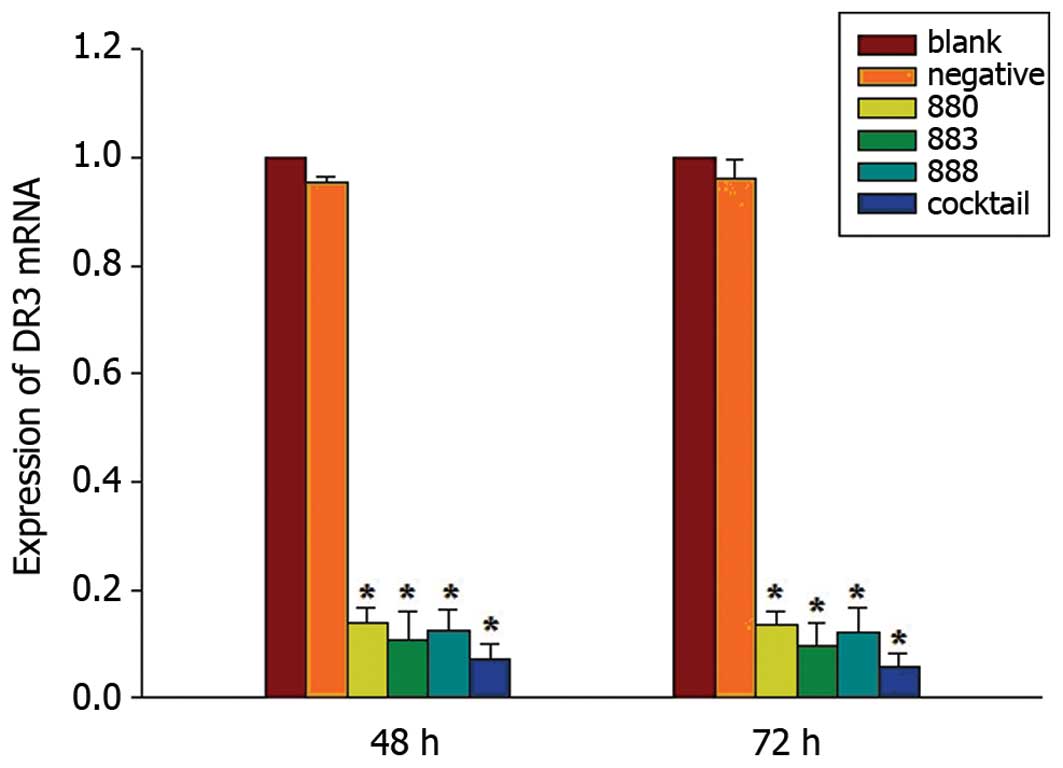
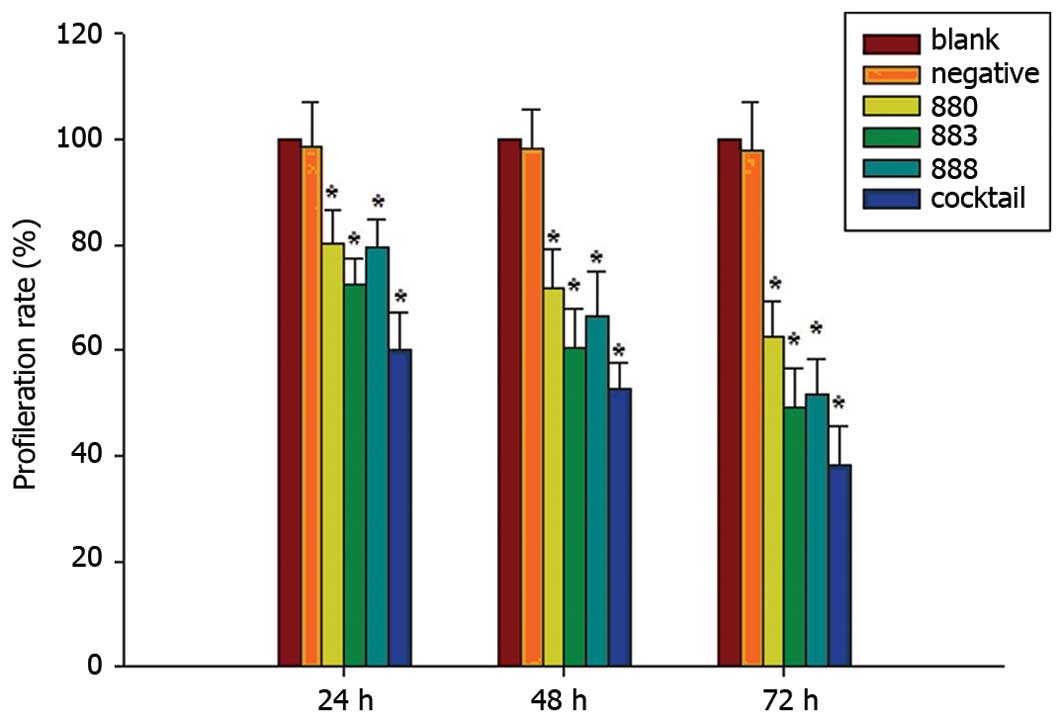
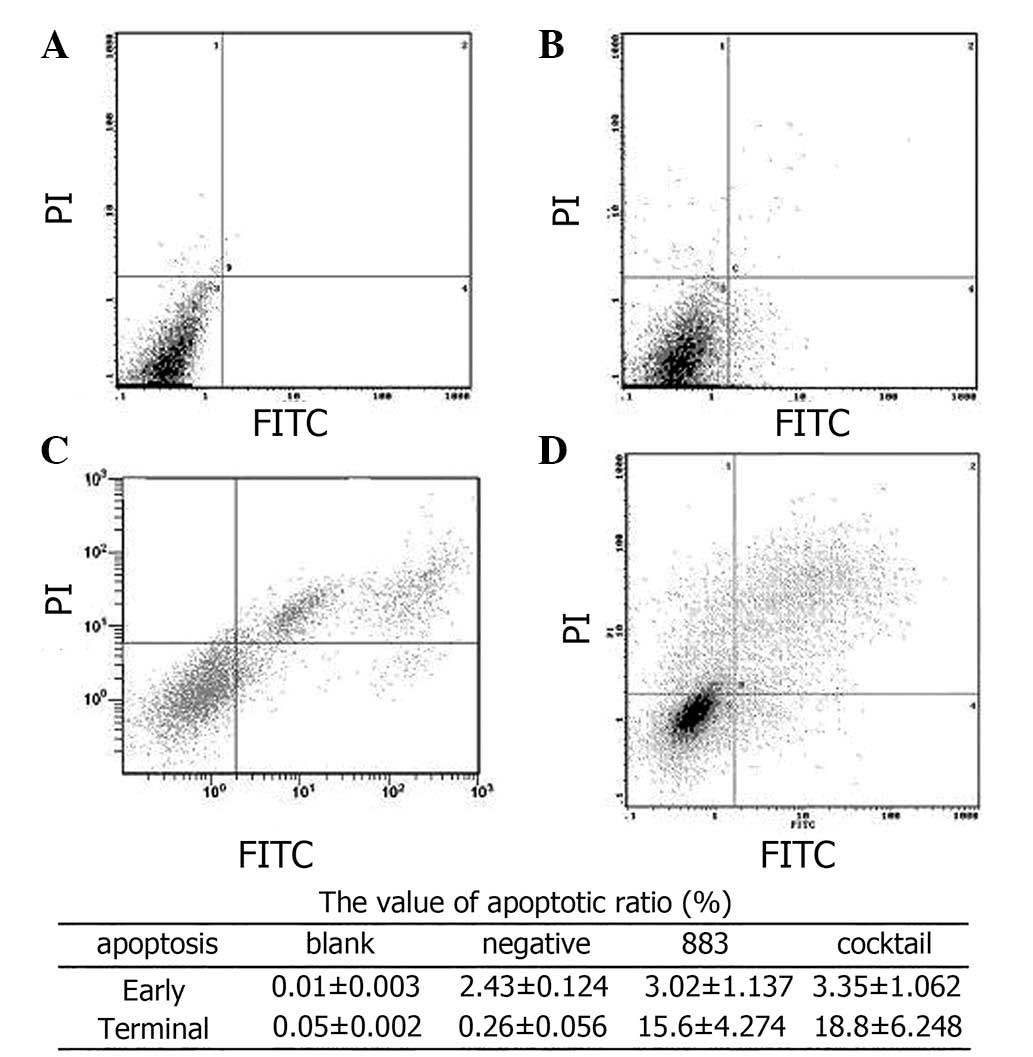
Death receptor 3 (DR3) belongs to the tumor necrosis factor (TNF) receptor superfamily, primarily found in lymphoid tissues. Reports have determined that DR3 may also be distributed in numerous types of tumors. Therefore, it is thought that DR3 may have an important role in the process of tumorigenesis. The aim of the present study was to observe the effect of silencing DR3 expression on hepatocarcinoma cell growth, apoptosis and invasion in order to elucidate the role of DR3 in tumor development. The hepatocarcinoma cell lines (HepG2, Huh7, SMMC7721 and Bel‑7402) and normal human liver cells (HL‑7702) were transfected with three stealth RNA interference (RNAi) sequences that target the DR3 gene. Reverse transcription quantitative polymerase chain reaction was used to detect the expression levels of DR3 in hepatocarcinoma cell lines and normal liver HL‑7702 cells. MTT assay and flow cytometry (FCM) were used to determine the rates of cell proliferation and apoptosis, respectively. Following silencing of the DR3 gene, western blot analysis was used to determine the protein expression of P53, Fas, Caspase8, nuclear factor kappa‑light‑chain‑enhancer of activated B cells (NF‑κB) and Caspase3. DR3 messenger RNA (mRNA) expression in hepatocarcinoma cell lines was significantly increased compared with that in the normal liver cell line. Three targeted DR3 gene small interfering RNAs significantly inhibited DR3 gene expression in Bel‑7402 cells at the nucleic acid level. AF02670.1_stealth_883 and cocktail demonstrated the most efficient inhibition of DR3 gene expression at 48 and 72 h following transfection, with mRNA inhibition rates of 89.46 and 92.75%, and 90.53 and 94.25% (P<0.01), respectively. Cell viability was significantly reduced by AF02670.1_stealth_883 and RNAi cocktail at 24, 48 and 72 h following transfection. The inhibition rates of cell proliferation were 50.76 and 61.76% (P<0.05) at 72 h following transfection. FCM revealed that AF02670.1_stealth_883 and RNAi cocktail also induced apoptosis in Bel‑7402 cells at 72 h following transfection. Reduction of NF‑κB and P53 levels was observed (P<0.05) in Bel‑7402 cells following DR3 silencing, whereas levels of Fas, Caspase3 and Caspase8 were markedly elevated (P<0.05). DR3 expression levels in hepatocellular carcinoma cells were significantly higher than those in normal cells. DR3 silencing effectively inhibited proliferation and invasion of hepatocellular carcinoma cells in vitro. However, silencing of the DR3 gene affect levels of apoptosis antigen‑3 ligand in cells, therefore indicating that it may be involved with other pathways that regulate apoptosis in HCCs. In conclusion, the results of the present study indicated that DR3 may be a promising therapeutic target molecule for further study of hepatocellular carcinoma gene therapy.
View Figures

Figure 1

Figure 2

Figure 3

Figure 4

Figure 5

Figure 6

Figure 7

Figure 8

Figure 9

View References

1 

Parkin DM, Bray F, Ferlay J and Pisani P: Estimating the world cancer burden: Globocan 2000. Int J Cancer. 94:153–156. 2001. View Article : Google Scholar : PubMed/NCBI

2 

Llovet JM and Bruix J: Novel advancements in the management of hepatocellular carcinoma in 2008. J Hepatol. 48(Suppl 1): S20–S37. 2008. View Article : Google Scholar : PubMed/NCBI

3 

Bergé M, Bonnin P, Sulpice E, et al: Small interfering RNAs induce target-independent inhibition of tumor growth and vasculature remodeling in a mouse model of hepatocellular carcinoma. Am J Pathol. 177:3192–3201. 2010. View Article : Google Scholar : PubMed/NCBI

4 

Schuster MJ and Wu GY: Gene therapy for hepatocellular carcinoma: progress but many stones yet unturned. Gastroenterology. 112:656–659. 1997. View Article : Google Scholar : PubMed/NCBI

5 

Chinnaiyan AM, O’Rourke K, Yu GL, et al: Signal transduction by DR3, a death domain-containing receptor related to TNFR-1 and CD95. Science. 8:990–992. 1996. View Article : Google Scholar

6 

Ashkenazi A and Dixit VM: Death receptor: signaling and modulation. Science. 281:1305–1308. 1998. View Article : Google Scholar : PubMed/NCBI

7 

Croft M: The role of TNF superfamily members in T-cell function and diseases. Nat Rev Immunol. 9:271–285. 2009. View Article : Google Scholar : PubMed/NCBI

8 

Kang YJ, Kim WJ, Bae HU, et al: Involvement of TL1A and DR3 in induction of proinflammatory cytokines and matrix metalloproteinase-9 in atherogenesis. Cytokine. 29:229–235. 2005. View Article : Google Scholar : PubMed/NCBI

9 

Fang L, Adkins B, Deyev V and Podack ER: Essential role of TNF receptor superfamily 25 (TNFRSF25) in the development of allergic lung inflammation. J Exp Med. 205:1037–1048. 2008. View Article : Google Scholar : PubMed/NCBI

10 

Migone TS, Zhang J, Luo X, et al: TL1A is a TNF-like ligand for DR3 and TR6/DcR3 and functions as a T cell costimulator. Immunity. 16:479–492. 2002. View Article : Google Scholar : PubMed/NCBI

11 

Pappu BP, Borodovsky A, Zheng TS, et al: TL1A-DR3 interaction regulates Th17 cell function and Th17-mediated autoimmune disease. J Exp Med. 205:1049–1062. 2008. View Article : Google Scholar : PubMed/NCBI

12 

Meylan F, Davidson TS, Kahle E, et al: The TNF-family receptor DR3 is essential for diverse T cell-mediated inflammatory diseases. Immunity. 29:79–89. 2008. View Article : Google Scholar : PubMed/NCBI

13 

Bamias G, Martin C III, Marini M, et al: Expression, localization, and functional activity of TL1A, a novel Th1-polarizing cytokine in inflammatory bowel disease. J Immunol. 171:4868–4874. 2003. View Article : Google Scholar : PubMed/NCBI

14 

Warzocha K, Ribeiro P, Charlot C, Renard N, Coiffier B and Salles G: A new death receptor 3 isoform: expression in human lymphoid cell lines and non-Hodgkin’s lymphomas. Biochem Biophys Res Commun. 242:376–379. 1998. View Article : Google Scholar : PubMed/NCBI

15 

Gout S, Morin C, Houle F and Huot J: Death receptor-3, a new E-Selectin counter-receptor that confers migration and survival advantages to colon carcinoma cells by triggering p38 and ERK MAPK activation. Cancer Res. 66:9117–9124. 2006. View Article : Google Scholar : PubMed/NCBI

16 

Jiang S, Song MJ, Shin EC, Lee MO, Kim SJ and Park JH: Apoptosis in human hepatocarcinoma cell lines by chemotherapeutic drugs via Fas-dependent and Fas-independent pathways. Hepatology. 29:101–110. 1999. View Article : Google Scholar

17 

Zhang L, Zhang Y, Zhang L, Yang X and Lv Z: Lupeol, a dietary triterpene, inhibited growth and induced apoptosis through down-regulation of DR3 in SMMC7721 cells. Cancer Invest. 27:163–170. 2009. View Article : Google Scholar : PubMed/NCBI

18 

Strumberg D: Preclinical and clinical development of the oral multikinase inhibitor sorafenib in cancer treatment. Drugs Today (Barc). 41:773–784. 2005. View Article : Google Scholar

19 

Adnane L, Trail PA, Taylor I and Wilhelm SM: Sorafenib (BAY 43-9006, Nexavar), a dual-action inhibitor that targets RAF/MEK/ERK pathway in tumor cells and tyrosine kinases VEGFR/PDGFR in tumor vasculature. Methods Enzymol. 407:597–612. 2006. View Article : Google Scholar : PubMed/NCBI

20 

Rini BI: Sorafenib. Expert Opin Pharmacother. 7:453–461. 2006. View Article : Google Scholar : PubMed/NCBI

21 

Willett CG, Boucher Y, di Tomaso E, et al: Direct evidence that the VEGF-specific antibody bevacizumab has antivascular effects in human rectal cancer. Nat Med. 10:145–147. 2004. View Article : Google Scholar : PubMed/NCBI

22 

Goodman L: Persistence - luck - Avastin. J Clin Invest. 113:9342004. View Article : Google Scholar

23 

Bergsland E and Dickler MN: Maximizing the potential of bevacizumab in cancer treatment. Oncologist. 9(Suppl 1): 36–42. 2004. View Article : Google Scholar : PubMed/NCBI

24 

Zhu AX, Blaszkowsky LS, Ryan DP, et al: Phase II study of gemcitabine and oxaliplatin in combination with bevacizumab in patients with advanced hepatocellular carcinoma. J Clin Oncol. 4:1898–1903. 2006. View Article : Google Scholar

25 

David D, Rajappan L, Balachandran KK, et al: Prognostic significance of STAT3 and phosphorylated STAT3 in human soft tissue tumors-a clinicopathological analysis. J Exp Clin Res. 30:562011. View Article : Google Scholar

26 

Roth W, Grund K, Wiestler OD and Schirmacher P: The anti-diabetic drug troglitazone sensitizes colon cancer cells to TRAIL-induced apoptosis by down-regulating FLIP. Verh Dtsch Ges Pathol. 91:294–301. 2007.(In German).

27 

Zhao B, Li L, Cui K, Wang AL, et al: Mechanisms of TRAIL and gemcitabine induction of pancreatic cancer cell apoptosis. Asian Pac J Cancer Prev. 12:2675–2678. 2011.

28 

Wilhelm SM, Carter C, Tang L, et al: BAY 43-9006 exhibits broad spectrum oral antitumor activity and targets the RAF/MEK/ERK pathway and receptor tyrosine kinases involved in tumor progression and angiogenesis. Cancer Res. 64:7099–7109. 2004. View Article : Google Scholar : PubMed/NCBI

29 

Herold-Mende C, Steiner HH, Andl T, et al: Expression and functional significance of vascular endothelial growth factor receptors in human tumor cells. Lab Invest. 79:1573–1582. 1999.

30 

Kitson J, Raven T, Jiang YP, et al: A death-domain-containing receptor that mediates apoptosis. Nature. 384:372–375. 1996. View Article : Google Scholar : PubMed/NCBI

31 

Marsters SA, Sheridan JP, Donahue CJ, et al: Apo-3, a new member of the tumor necrosis factor receptor family, contains a death domain and activates apoptosis and NF-kappa B. Curr Biol. 6:1669–1676. 1996. View Article : Google Scholar : PubMed/NCBI

32 

Bodmer JL, Burns K, Schneider P, et al: TRAMP, a novel apoptosis-mediating receptor with sequence homology to tumor necrosis factor receptor 1 and Fas (Apo-1/CD95). Immunity. 6:79–88. 1997. View Article : Google Scholar : PubMed/NCBI

33 

Screaton GR, Xu XN, Olsen AL, Cowper AE, Tan R, McMichael AJ and Bell JI: LARD: A new lymphoid-specific death domain containing receptor regulated by alternative pre-mRNA splicing. Proc Natl Acad Sci USA. 94:4615–4619. 1997. View Article : Google Scholar : PubMed/NCBI

34 

Abou-Alfa GK, Schwartz L, Ricci S, et al: Phase II study of sorafenib in patients with advanced hepatocellular carcinoma. J Clin Oncol. 24:4293–4300. 2006. View Article : Google Scholar : PubMed/NCBI

35 

Butterfield LH: Immunotherapeutic strategies for hepatocellular carcinoma. Gastroenterology. 127(5 Suppl 1): S232–S241. 2004. View Article : Google Scholar : PubMed/NCBI

36 

Butterfield LH: Recent advances in immunotherapy for hepatocellular cancer. Swiss Med Wkly. 137:83–90. 2007.PubMed/NCBI

37 

Song G, Luo Q, Qin J, Wang L, Shi Y and Sun C: Effects of oxymatrine on proliferation and apoptosis in human hepatoma cells. Colloids Surf B Biointerfaces. 48:1–5. 2006. View Article : Google Scholar : PubMed/NCBI

38 

Ashkenazi A and Dixit VM: Death receptors: signaling and modulation. Science. 281:1305–1308. 1998. View Article : Google Scholar : PubMed/NCBI

39 

Hengartner MO: The biochemistry of apoptosis. Nature. 407:770–776. 2000. View Article : Google Scholar : PubMed/NCBI

40 

Nakagawa T, Zhu H, Morishima N, et al: Caspase-12 mediates endoplasmic-reticulum-specific apoptosis and cytotoxicity by amyloid-beta. Nature. 403:98–103. 2000. View Article : Google Scholar : PubMed/NCBI

41 

Pittoni P, Tripodo C, Piconese S, Mauri G, Parenza M, Rigoni A, Sangaletti S and Colombo MP: Mast cell targeting hampers prostate adenocarcinoma development but promotes the occurrence of highly malignant neuroendocrine cancers. Cancer Res. 71:5987–5997. 2011. View Article : Google Scholar : PubMed/NCBI

42 

Dechant MJ, Fellenberg J, Scheuerpflug CG, Ewerbeck V and Debatin KM: Mutation analysis of the apoptotic ‘death-receptors’ and the adaptors TRADD and FADD/MORT-1 in osteosarcoma tumor samples and osteosarcoma cell lines. Int J Cancer. 109:661–667. 2004. View Article : Google Scholar : PubMed/NCBI

43 

He Y, Liu F, Zhang L, et al: Growth inhibition and apoptosis induced by lupeol, a dietary triterpene, in human hepatocellular carcinoma cells. Biol Pharm Bull. 34:517–522. 2011. View Article : Google Scholar : PubMed/NCBI

Related Articles

  • Abstract
  • View
  • Download
  • Twitter
Copy and paste a formatted citation
Spandidos Publications style
Zhang YC, Guo LQ, Chen X, Wang GN, Ni R, Wang MC and Wei FX: The role of death receptor 3 in the biological behavior of hepatocellular carcinoma cells. Mol Med Rep 11: 797-804, 2015.
APA
Zhang, Y.C., Guo, L.Q., Chen, X., Wang, G.N., Ni, R., Wang, M.C., & Wei, F.X. (2015). The role of death receptor 3 in the biological behavior of hepatocellular carcinoma cells. Molecular Medicine Reports, 11, 797-804. https://doi.org/10.3892/mmr.2014.2858
MLA
Zhang, Y. C., Guo, L. Q., Chen, X., Wang, G. N., Ni, R., Wang, M. C., Wei, F. X."The role of death receptor 3 in the biological behavior of hepatocellular carcinoma cells". Molecular Medicine Reports 11.2 (2015): 797-804.
Chicago
Zhang, Y. C., Guo, L. Q., Chen, X., Wang, G. N., Ni, R., Wang, M. C., Wei, F. X."The role of death receptor 3 in the biological behavior of hepatocellular carcinoma cells". Molecular Medicine Reports 11, no. 2 (2015): 797-804. https://doi.org/10.3892/mmr.2014.2858
Copy and paste a formatted citation
x
Spandidos Publications style
Zhang YC, Guo LQ, Chen X, Wang GN, Ni R, Wang MC and Wei FX: The role of death receptor 3 in the biological behavior of hepatocellular carcinoma cells. Mol Med Rep 11: 797-804, 2015.
APA
Zhang, Y.C., Guo, L.Q., Chen, X., Wang, G.N., Ni, R., Wang, M.C., & Wei, F.X. (2015). The role of death receptor 3 in the biological behavior of hepatocellular carcinoma cells. Molecular Medicine Reports, 11, 797-804. https://doi.org/10.3892/mmr.2014.2858
MLA
Zhang, Y. C., Guo, L. Q., Chen, X., Wang, G. N., Ni, R., Wang, M. C., Wei, F. X."The role of death receptor 3 in the biological behavior of hepatocellular carcinoma cells". Molecular Medicine Reports 11.2 (2015): 797-804.
Chicago
Zhang, Y. C., Guo, L. Q., Chen, X., Wang, G. N., Ni, R., Wang, M. C., Wei, F. X."The role of death receptor 3 in the biological behavior of hepatocellular carcinoma cells". Molecular Medicine Reports 11, no. 2 (2015): 797-804. https://doi.org/10.3892/mmr.2014.2858
Follow us
  • Twitter
  • LinkedIn
  • Facebook
About
  • Spandidos Publications
  • Careers
  • Cookie Policy
  • Privacy Policy
How can we help?
  • Help
  • Live Chat
  • Contact
  • Email to our Support Team