Spandidos Publications Logo
  • About
    • About Spandidos
    • Aims and Scopes
    • Abstracting and Indexing
    • Editorial Policies
    • Reprints and Permissions
    • Job Opportunities
    • Terms and Conditions
    • Contact
  • Journals
    • All Journals
    • Oncology Letters
      • Oncology Letters
      • Information for Authors
      • Editorial Policies
      • Editorial Board
      • Aims and Scope
      • Abstracting and Indexing
      • Bibliographic Information
      • Archive
    • International Journal of Oncology
      • International Journal of Oncology
      • Information for Authors
      • Editorial Policies
      • Editorial Board
      • Aims and Scope
      • Abstracting and Indexing
      • Bibliographic Information
      • Archive
    • Molecular and Clinical Oncology
      • Molecular and Clinical Oncology
      • Information for Authors
      • Editorial Policies
      • Editorial Board
      • Aims and Scope
      • Abstracting and Indexing
      • Bibliographic Information
      • Archive
    • Experimental and Therapeutic Medicine
      • Experimental and Therapeutic Medicine
      • Information for Authors
      • Editorial Policies
      • Editorial Board
      • Aims and Scope
      • Abstracting and Indexing
      • Bibliographic Information
      • Archive
    • International Journal of Molecular Medicine
      • International Journal of Molecular Medicine
      • Information for Authors
      • Editorial Policies
      • Editorial Board
      • Aims and Scope
      • Abstracting and Indexing
      • Bibliographic Information
      • Archive
    • Biomedical Reports
      • Biomedical Reports
      • Information for Authors
      • Editorial Policies
      • Editorial Board
      • Aims and Scope
      • Abstracting and Indexing
      • Bibliographic Information
      • Archive
    • Oncology Reports
      • Oncology Reports
      • Information for Authors
      • Editorial Policies
      • Editorial Board
      • Aims and Scope
      • Abstracting and Indexing
      • Bibliographic Information
      • Archive
    • Molecular Medicine Reports
      • Molecular Medicine Reports
      • Information for Authors
      • Editorial Policies
      • Editorial Board
      • Aims and Scope
      • Abstracting and Indexing
      • Bibliographic Information
      • Archive
    • World Academy of Sciences Journal
      • World Academy of Sciences Journal
      • Information for Authors
      • Editorial Policies
      • Editorial Board
      • Aims and Scope
      • Abstracting and Indexing
      • Bibliographic Information
      • Archive
    • International Journal of Functional Nutrition
      • International Journal of Functional Nutrition
      • Information for Authors
      • Editorial Policies
      • Editorial Board
      • Aims and Scope
      • Abstracting and Indexing
      • Bibliographic Information
      • Archive
    • International Journal of Epigenetics
      • International Journal of Epigenetics
      • Information for Authors
      • Editorial Policies
      • Editorial Board
      • Aims and Scope
      • Abstracting and Indexing
      • Bibliographic Information
      • Archive
    • Medicine International
      • Medicine International
      • Information for Authors
      • Editorial Policies
      • Editorial Board
      • Aims and Scope
      • Abstracting and Indexing
      • Bibliographic Information
      • Archive
  • Articles
  • Information
    • Information for Authors
    • Information for Reviewers
    • Information for Librarians
    • Information for Advertisers
    • Conferences
  • Language Editing
Spandidos Publications Logo
  • About
    • About Spandidos
    • Aims and Scopes
    • Abstracting and Indexing
    • Editorial Policies
    • Reprints and Permissions
    • Job Opportunities
    • Terms and Conditions
    • Contact
  • Journals
    • All Journals
    • Biomedical Reports
      • Information for Authors
      • Editorial Policies
      • Editorial Board
      • Aims and Scope
      • Abstracting and Indexing
      • Bibliographic Information
      • Archive
    • Experimental and Therapeutic Medicine
      • Information for Authors
      • Editorial Policies
      • Editorial Board
      • Aims and Scope
      • Abstracting and Indexing
      • Bibliographic Information
      • Archive
    • International Journal of Epigenetics
      • Information for Authors
      • Editorial Policies
      • Editorial Board
      • Aims and Scope
      • Abstracting and Indexing
      • Bibliographic Information
      • Archive
    • International Journal of Functional Nutrition
      • Information for Authors
      • Editorial Policies
      • Editorial Board
      • Aims and Scope
      • Abstracting and Indexing
      • Bibliographic Information
      • Archive
    • International Journal of Molecular Medicine
      • Information for Authors
      • Editorial Policies
      • Editorial Board
      • Aims and Scope
      • Abstracting and Indexing
      • Bibliographic Information
      • Archive
    • International Journal of Oncology
      • Information for Authors
      • Editorial Policies
      • Editorial Board
      • Aims and Scope
      • Abstracting and Indexing
      • Bibliographic Information
      • Archive
    • Medicine International
      • Information for Authors
      • Editorial Policies
      • Editorial Board
      • Aims and Scope
      • Abstracting and Indexing
      • Bibliographic Information
      • Archive
    • Molecular and Clinical Oncology
      • Information for Authors
      • Editorial Policies
      • Editorial Board
      • Aims and Scope
      • Abstracting and Indexing
      • Bibliographic Information
      • Archive
    • Molecular Medicine Reports
      • Information for Authors
      • Editorial Policies
      • Editorial Board
      • Aims and Scope
      • Abstracting and Indexing
      • Bibliographic Information
      • Archive
    • Oncology Letters
      • Information for Authors
      • Editorial Policies
      • Editorial Board
      • Aims and Scope
      • Abstracting and Indexing
      • Bibliographic Information
      • Archive
    • Oncology Reports
      • Information for Authors
      • Editorial Policies
      • Editorial Board
      • Aims and Scope
      • Abstracting and Indexing
      • Bibliographic Information
      • Archive
    • World Academy of Sciences Journal
      • Information for Authors
      • Editorial Policies
      • Editorial Board
      • Aims and Scope
      • Abstracting and Indexing
      • Bibliographic Information
      • Archive
  • Articles
  • Information
    • For Authors
    • For Reviewers
    • For Librarians
    • For Advertisers
    • Conferences
  • Language Editing
Login Register Submit
  • This site uses cookies
  • You can change your cookie settings at any time by following the instructions in our Cookie Policy. To find out more, you may read our Privacy Policy.

    I agree
Search articles by DOI, keyword, author or affiliation
Search
Advanced Search
presentation
Molecular Medicine Reports
Join Editorial Board Propose a Special Issue
Print ISSN: 1791-2997 Online ISSN: 1791-3004
Journal Cover
April-2015 Volume 11 Issue 4

Full Size Image

Sign up for eToc alerts
Recommend to Library

Journals

International Journal of Molecular Medicine

International Journal of Molecular Medicine

International Journal of Molecular Medicine is an international journal devoted to molecular mechanisms of human disease.

International Journal of Oncology

International Journal of Oncology

International Journal of Oncology is an international journal devoted to oncology research and cancer treatment.

Molecular Medicine Reports

Molecular Medicine Reports

Covers molecular medicine topics such as pharmacology, pathology, genetics, neuroscience, infectious diseases, molecular cardiology, and molecular surgery.

Oncology Reports

Oncology Reports

Oncology Reports is an international journal devoted to fundamental and applied research in Oncology.

Experimental and Therapeutic Medicine

Experimental and Therapeutic Medicine

Experimental and Therapeutic Medicine is an international journal devoted to laboratory and clinical medicine.

Oncology Letters

Oncology Letters

Oncology Letters is an international journal devoted to Experimental and Clinical Oncology.

Biomedical Reports

Biomedical Reports

Explores a wide range of biological and medical fields, including pharmacology, genetics, microbiology, neuroscience, and molecular cardiology.

Molecular and Clinical Oncology

Molecular and Clinical Oncology

International journal addressing all aspects of oncology research, from tumorigenesis and oncogenes to chemotherapy and metastasis.

World Academy of Sciences Journal

World Academy of Sciences Journal

Multidisciplinary open-access journal spanning biochemistry, genetics, neuroscience, environmental health, and synthetic biology.

International Journal of Functional Nutrition

International Journal of Functional Nutrition

Open-access journal combining biochemistry, pharmacology, immunology, and genetics to advance health through functional nutrition.

International Journal of Epigenetics

International Journal of Epigenetics

Publishes open-access research on using epigenetics to advance understanding and treatment of human disease.

Medicine International

Medicine International

An International Open Access Journal Devoted to General Medicine.

Journal Cover
April-2015 Volume 11 Issue 4

Full Size Image

Sign up for eToc alerts
Recommend to Library

  • Article
  • Citations
    • Cite This Article
    • Download Citation
    • Create Citation Alert
    • Remove Citation Alert
    • Cited By
  • Similar Articles
    • Related Articles (in Spandidos Publications)
    • Similar Articles (Google Scholar)
    • Similar Articles (PubMed)
  • Download PDF
  • Download XML
  • View XML
Article

Anticancer agent icaritin induces apoptosis through caspase-dependent pathways in human hepatocellular carcinoma cells

  • Authors:
    • Li Sun
    • Qisong Peng
    • Lili Qu
    • Lailing Gong
    • Jin Si
  • View Affiliations / Copyright

    Affiliations: Department of Laboratory Medicine, The Second Affiliated Hospital of Nanjing Medical University, Nanjing, Jiangsu 210011, P.R. China, Department of Laboratory Medicine, The Affiliated Jiangning Hospital of Nanjing Medical University, Nanjing, Jiangsu 211100, P.R. China
  • Pages: 3094-3100
    |
    Published online on: November 26, 2014
       https://doi.org/10.3892/mmr.2014.3007
  • Expand metrics +
Metrics: Total Views: 0 (Spandidos Publications: | PMC Statistics: )
Metrics: Total PDF Downloads: 0 (Spandidos Publications: | PMC Statistics: )
Cited By (CrossRef): 0 citations Loading Articles...

This article is mentioned in:


Abstract

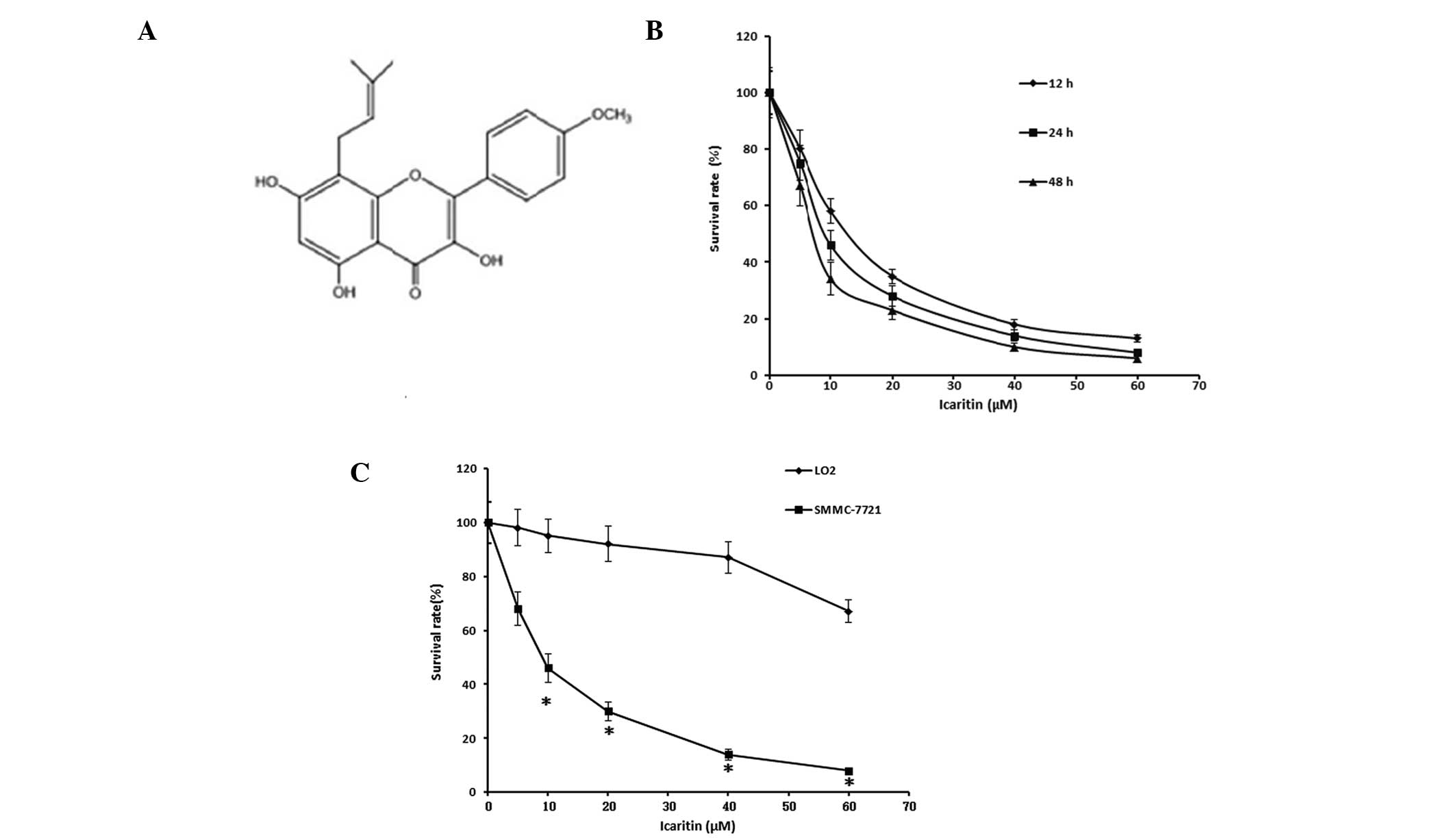
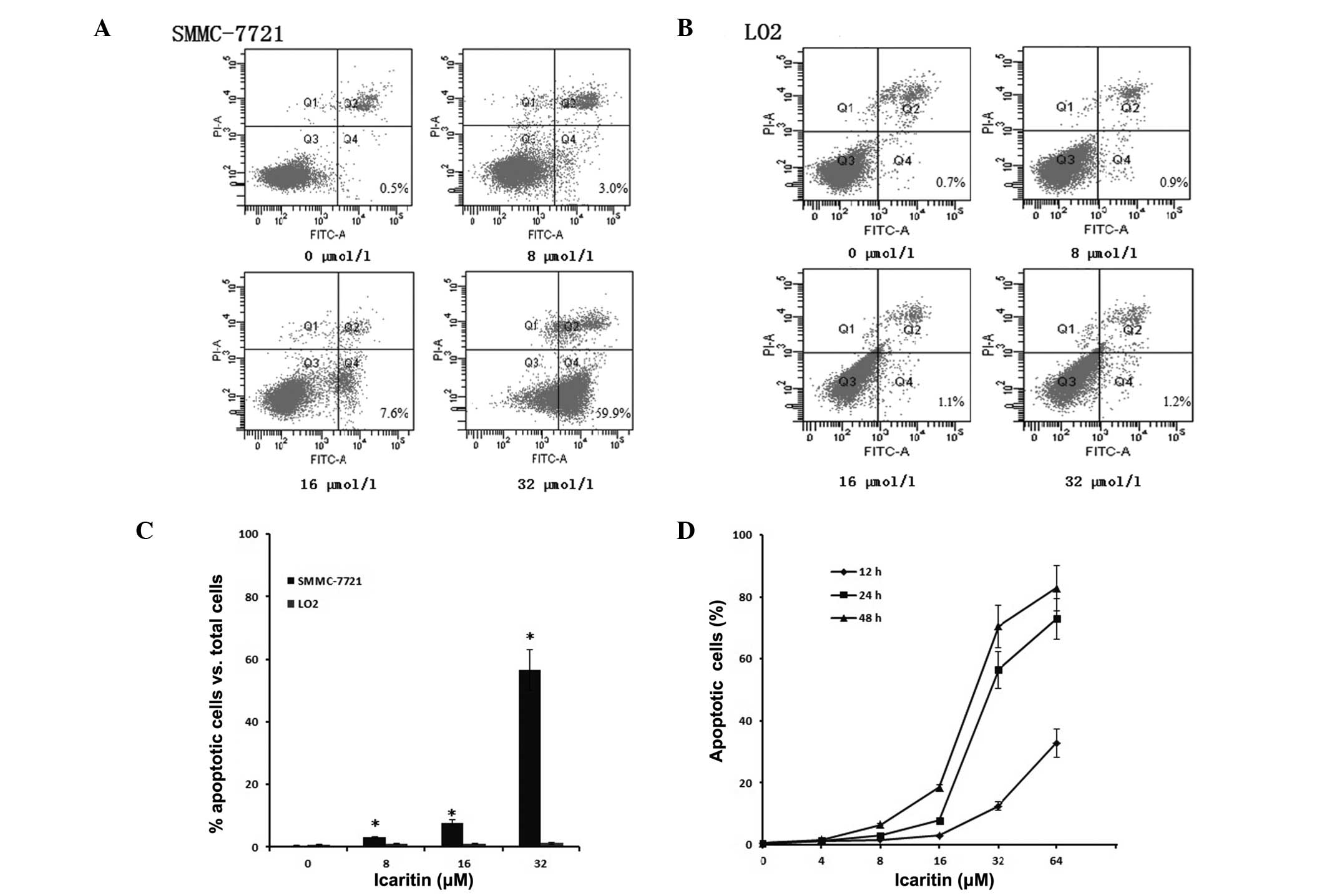
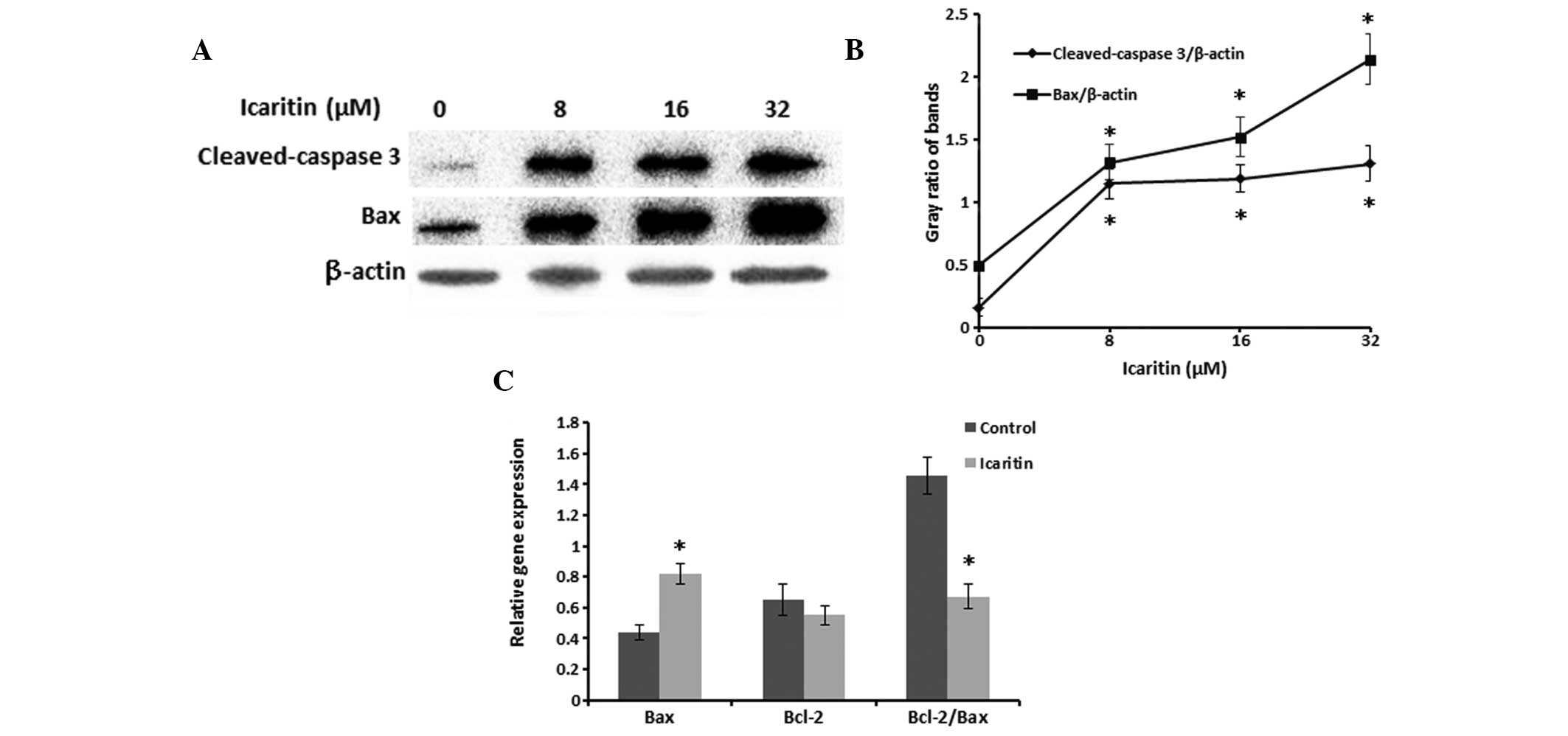
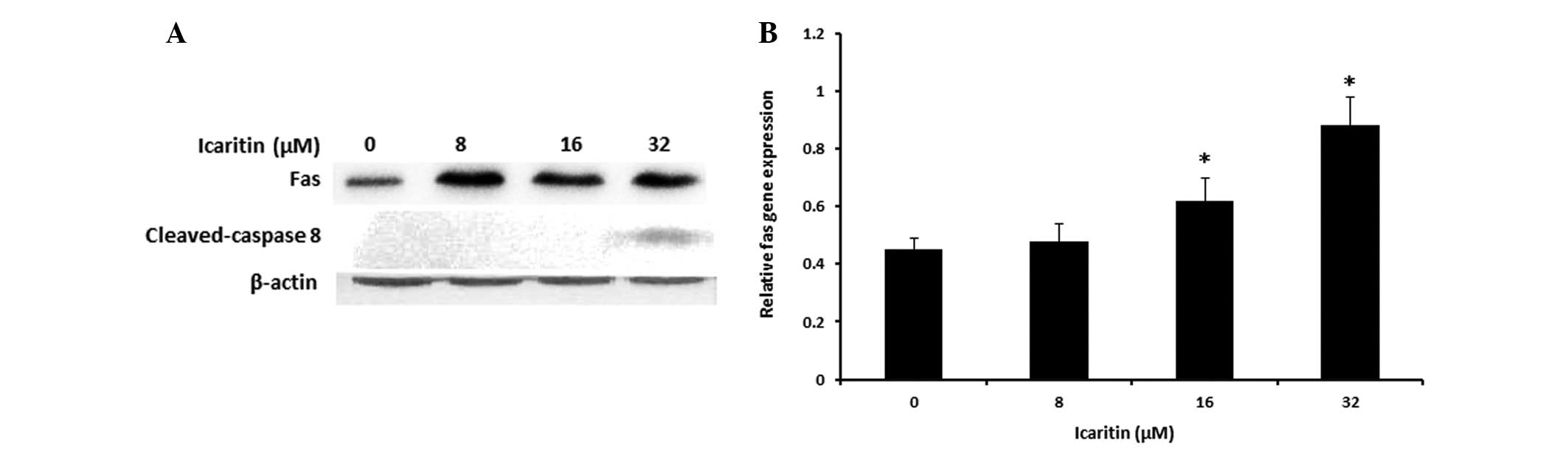
Icaritin is an active ingredient derived from the plant Herba epimedium, which exhibits various pharmacological and biological activities. However, the function, and the underlying mechanisms of icaritin on the growth of SMMC‑7721 human hepatoma cells have yet to be elucidated. The present study aimed to investigate the function and underlying mechanisms of icaritin in the growth of SMMC‑7721 cells. The cells were treated with varying concentrations of icaritin for 12, 24 and 48 h, respectively, prior to cytotoxic analysis. Apoptosis of SMMC‑7721 cells following treatment with icaritin was measured using flow cytometry. The gene expression of mitochondria‑ and Fas‑mediated caspase‑dependent pathways was detected by reverse transcription‑quantitative polymerase chain reaction and western blotting. Statistical analysis was performed by Student's t‑test and one‑way analysis or variance. The present study demonstrated that treatment with icaritin significantly inhibited growth, and induced apoptosis of SMMC‑7721 cells, in a time‑ and dose‑dependent manner. In addition, icaritin triggered the mitochondrial/caspase apoptotic pathway, by decreasing the Bcl‑2/Bax protein ratio and increasing activation of caspase‑3. Icaritin also activated the Fas‑mediated apoptosis pathway, as was evident by the increased expression levels of Fas and activation of caspase‑8. These data suggest that icaritin may be a potent growth inhibitor and induce apoptosis of SMMC‑7721 cells through the mitochondria‑ and Fas‑mediated caspase‑dependent pathways. The present study may provide experimental evidence for preclinical and clinical evaluations of icaritin for HCC therapy.
View Figures

Figure 1

Figure 2

Figure 3

Figure 4

View References

1 

McKillop IH, Moran DM, Jin X and Koniaris LG: Molecular pathogenesis of hepatocellular carcinoma. J Surg Res. 136:125–135. 2006. View Article : Google Scholar : PubMed/NCBI

2 

Bruix J, Boix L, Sala M and Llovet JM: Focus on hepatocellular carcinoma. Cancer Cell. 5:215–219. 2004. View Article : Google Scholar : PubMed/NCBI

3 

Trevisani F, Cantarini MC, Wands JR and Bernardi M: Recent advances in the natural history of hepatocellular carcinoma. Carcinogenesis. 29:1299–1305. 2008. View Article : Google Scholar : PubMed/NCBI

4 

Kusakabe A, Tanaka Y, Orito E, et al: A weak association between occult HBV infection and non-B non-c hepatocellular carcinoma in Japan. J Gastroenterol. 42:298–305. 2007. View Article : Google Scholar : PubMed/NCBI

5 

El-Serag HB, Siegel AB, Davila JA, Shaib YH, Cayton-Woody M, McBride R and McGlynn KA: Treatment and outcomes of treating of hepatocellular carcinoma among Medicare recipients in the United States: a population-based study. J Hepatol. 44:158–166. 2006. View Article : Google Scholar

6 

Llovet JM, Burroughs A and Bruix J: Hepatocellular carcinoma. Lancet. 362:1907–1917. 2003. View Article : Google Scholar : PubMed/NCBI

7 

Plataniotis G and Castiglione M; ESMO Guidelines Working Group. Endometrial cancer : ESMO Clinical Practice Guidelines for diagnosis, treatment and follow-up. Ann Oncol. 2:v41–v45. 2010. View Article : Google Scholar

8 

Gehrig PA and Bae-Jump VL: Promising novel therapies for the treatment of endometrial cancer. Gynecol Oncol. 116:187–194. 2010. View Article : Google Scholar

9 

Middleton E Jr, Kandaswami C and Theoharides TC: The effects of plant flavonoids on mammalian cells: implications for inflammation, heart disease, and cancer. Pharmacol Rev. 52:673–751. 2000.PubMed/NCBI

10 

Li YL, Gan GP, Zhang HZ, Wu HZ, Li CL, Huang YP, Liu YW and Liu JW: A flavonoid glycoside isolated from Smilax china L. rhizome in vitro anticancer effects on human cancer cell lines. J Ethnopharmacol. 113:115–124. 2007. View Article : Google Scholar : PubMed/NCBI

11 

Díaz JG, Carmona AJ, Torres F, Quintana J, Estévez F and Herz W: Cytotoxic activities of flavonoid glycoside acetates from Consolida oliveriana. Planta Med. 74:171–174. 2008. View Article : Google Scholar : PubMed/NCBI

12 

Wang Z, Wang H, Wu J, Zhu D, Zhang X, Ou L, Yu Y and Lou Y: Enhanced co-expression of beta-tubulin III and choline acetyltransferase in neurons from mouse embryonic stem cells promoted by icaritin in an estrogen receptor-independent manner. Chem Biol Interact. 179:375–385. 2009. View Article : Google Scholar : PubMed/NCBI

13 

Wo YB, Zhu DY, Hu Y, Wang ZQ, Liu J and Lou YJ: Reactive oxygen species involved in prenylflavonoids, icariin and icaritin, initiating cardiac differentiation of mouse embryonic stem cells. J Cell Biochem. 103:1536–1550. 2008. View Article : Google Scholar

14 

Zhang G, Qin L, Sheng H, Wang XL, Wang YX, Yeung DK, Griffith JF, Yao XS, Xie XH, Li ZR, Lee KM and Leung KS: A novel semisynthesized small molecule icaritin reduces incidence of steroid-associated osteonecrosis with inhibition of both thrombosis and lipid-deposition in a dose-dependent manner. Bone. 44:345–356. 2009. View Article : Google Scholar

15 

Huang X, Zhu D and Lou Y: A novel anticancer agent, icaritin, induced cell growth inhibition, Gl arrest and mitochondrial transmenbrane potential drop in human prostate carcinoma PC-3 cells. Eur J Pharmacol. 564:26–36. 2007. View Article : Google Scholar : PubMed/NCBI

16 

Wang ZQ and Lou YJ: Proliferation-stimulating effects of icaritin and desmethylicaritin in MCF-7 cells. Eur J Pharmacol. 504:147–153. 2004. View Article : Google Scholar : PubMed/NCBI

17 

Guo Y, Zhang X, Meng J and Wang ZY: An anticancer agent icaritin induces sustained activation of the extracellular signal-regulated kinase (ERK) pathway and inhibits growth of breast cancer cells. Eur J Pharmacol. 658:114–122. 2011. View Article : Google Scholar : PubMed/NCBI

18 

Tong JS, Zhang QH, Huang X, Fu XQ, Qi ST, Wang YP, Hou Y, Sheng J and Sun QY: Icaritin causes sustained ERK1/2 activation and induces apoptosis in human endometrial cancer cells. PLoS One. 6:e167812011. View Article : Google Scholar : PubMed/NCBI

19 

Parkin DM, Bray F, Ferlay J and Pisani P: Global cancer statistics, 2002. CA Cancer J Clin. 55:74–108. 2005. View Article : Google Scholar : PubMed/NCBI

20 

Zhou NN, Tang J, Chen WD, Feng GK, Xie BF, Liu ZC, Yang D and Zhu XF: Houttuyninum, an active constituent of Chinese herbal medicine, inhibits phosphorylation of HER2/neu receptor tyrosine kinase and the tumor growth of HER2/neu-overexpressing cancer cells. Life Sci. 90:770–775. 2012. View Article : Google Scholar : PubMed/NCBI

21 

Wang CZ, Calway T and Yuan CS: Herbal medicines as adjuvants for cancer therapeutics. Am J Chin Med. 40:657–669. 2012. View Article : Google Scholar : PubMed/NCBI

22 

Ben-Arye E, Schiff E, Hassan E, Mutafoglu K, Lev-Ari S, Steiner M, Lavie O, Polliack A, Silbermann M and Lev E: Integrative oncology in the Middle East: from traditional herbal knowledge to contemporary cancer care. Ann Oncol. 23:211–221. 2012. View Article : Google Scholar

23 

Li J, Liu P, Zhang R, Cao L, Qian H, Liao J, Xu W, Wu M and Yin Z: Icaritin induces cell death in activated hepatic stellate cells through mitochondrial activated apoptosis and ameliorates the development of liver fibrosis in rats. J Ethnopharmacol. 137:714–723. 2011. View Article : Google Scholar : PubMed/NCBI

24 

Zhou J, Wu J, Chen X, Fortenbery N, Eksioglu E, Kodumudi KN, Pk EB, Dong J, Djeu JY and Wei S: Icariin and its derivative, ICT, exert anti-inflammatory, anti-tumor effects, and modulate myeloid derived suppressive cells (MDSCs) functions. Int Immunopharmacol. 11:890–898. 2011. View Article : Google Scholar : PubMed/NCBI

25 

Huang J, Yuan L, Wang X, Zhang TL and Wang K: Icaritin and its glycosides enhance osteoblastic, but suppress osteoclastic, differentiation and activity in vitro. Life Sci. 81:832–840. 2007. View Article : Google Scholar : PubMed/NCBI

26 

He J, Wang Y, Duan F, Jiang H, Chen MF and Tang SY: Icaritin induces apoptosis of HepG2 cells via the JNK1 signaling pathway independent of the estrogen receptor. Planta Med. 76:1834–1839. 2010. View Article : Google Scholar : PubMed/NCBI

27 

Golbano JM, Lóppez-Aparicio P, Recio MN and Pérez-Albarsanz MA: Finasteride induces apoptosis via Bcl-2, Bcl-xL, Bax and caspase-3 proteins in LNCaP human prostate cancer cell line. Int J Oncol. 32:919–924. 2008.PubMed/NCBI

28 

Kroemer G and Reed JC: Mitochondrial control of cell death. Nat Med. 6:513–519. 2000. View Article : Google Scholar : PubMed/NCBI

29 

van Loo G, Saelens X, van Gurp M, MacFarlane M, Martin SJ and Vandenabeele P: The role of mitochondrial factors in apoptosis: a Russian roulette with more than one bullet. Cell Death Differ. 9:1031–1042. 2002. View Article : Google Scholar : PubMed/NCBI

30 

Llambi F, Moldoveanu T, Tait SW, Bouchier-Hayes L, Temirov J, McCormick LL, Dillon CP and Green DR: A unified model of mammalian BCL-2 protein family interactions at the mitochondria. Mol Cell. 44:517–531. 2011. View Article : Google Scholar : PubMed/NCBI

31 

Wang X: The expanding role of mitochondria in apoptosis. Genes Dev. 15:2922–2933. 2001.PubMed/NCBI

32 

Susnow N, Zeng L, Margineantu D and Hockenbery DM: Bcl-2 family proteins as regulators of oxidative stress. Semin Cancer Biol. 19:42–49. 2009. View Article : Google Scholar : PubMed/NCBI

33 

Tait SW and Green DR: Mitochondria and cell death: outer membrane permeabilization and beyond. Nat Rev Mol Cell Biol. 11:621–632. 2010. View Article : Google Scholar : PubMed/NCBI

34 

Fulda S and Debatin KM: Extrinsic versus intrinsic apoptosis pathways in anticancer chemotherapy. Oncogene. 25:4798–4811. 2006. View Article : Google Scholar : PubMed/NCBI

35 

Yamaguchi Y, Shiraki K, Fuke H, Inoue T, Miyashita K, Yamanaka Y and Nakano T: Adenovirus-mediated transfection of caspase-8 sensitizes hepatocellular carcinoma to TRAIL- and chemotherapeutic agent-induced cell death. Biochim Biophys Acta. 1763:844–853. 2006. View Article : Google Scholar : PubMed/NCBI

36 

Wang SH, Chen LM, Yang WK and Lee JD: Increased extrinsic apoptotic pathway activity in patients with hepatocellular carcinoma following transarterial embolization. World J Gastroenterol. 17:4675–4681. 2011. View Article : Google Scholar : PubMed/NCBI

37 

Muppidi JR and Siegel RM: Ligand-independent redistribution of Fas (CD95) into lipid rafts mediates clonotypic T cell death. Nat Immunol. 5:182–189. 2004. View Article : Google Scholar : PubMed/NCBI

38 

Abd El-Ghany RM, Sharaf NM, Kassem LA, Mahran LG and Heikal OA: Thymoquinone triggers anti-apoptotic signaling targeting death ligand and apoptotic regulators in a model of hepatic ischemia reperfusion injury. Drug Discov Ther. 3:296–306. 2009.PubMed/NCBI

39 

Hyer ML, Shi R, Krajewska M, Meyer C, Lebedeva IV, Fisher PB and Reed JC: Apoptotic activity and mechanism of 2-cyano-3,12-dioxoolean-1,9-dien-28-oic-acid and related synthetic triterpenoids in prostate cancer. Cancer Res. 68:2927–2933. 2008. View Article : Google Scholar : PubMed/NCBI

40 

Zhang L, Zhang Y, Zhang L, Yang X and Lv Z: Lupeol, a dietary triterpene, inhibited growth, and induced apoptosis through down-regulation of DR3 in SMMC7721 cells. Cancer Invest. 27:163–170. 2009. View Article : Google Scholar : PubMed/NCBI

Related Articles

  • Abstract
  • View
  • Download
  • Twitter
Copy and paste a formatted citation
Spandidos Publications style
Sun L, Peng Q, Qu L, Gong L and Si J: Anticancer agent icaritin induces apoptosis through caspase-dependent pathways in human hepatocellular carcinoma cells. Mol Med Rep 11: 3094-3100, 2015.
APA
Sun, L., Peng, Q., Qu, L., Gong, L., & Si, J. (2015). Anticancer agent icaritin induces apoptosis through caspase-dependent pathways in human hepatocellular carcinoma cells. Molecular Medicine Reports, 11, 3094-3100. https://doi.org/10.3892/mmr.2014.3007
MLA
Sun, L., Peng, Q., Qu, L., Gong, L., Si, J."Anticancer agent icaritin induces apoptosis through caspase-dependent pathways in human hepatocellular carcinoma cells". Molecular Medicine Reports 11.4 (2015): 3094-3100.
Chicago
Sun, L., Peng, Q., Qu, L., Gong, L., Si, J."Anticancer agent icaritin induces apoptosis through caspase-dependent pathways in human hepatocellular carcinoma cells". Molecular Medicine Reports 11, no. 4 (2015): 3094-3100. https://doi.org/10.3892/mmr.2014.3007
Copy and paste a formatted citation
x
Spandidos Publications style
Sun L, Peng Q, Qu L, Gong L and Si J: Anticancer agent icaritin induces apoptosis through caspase-dependent pathways in human hepatocellular carcinoma cells. Mol Med Rep 11: 3094-3100, 2015.
APA
Sun, L., Peng, Q., Qu, L., Gong, L., & Si, J. (2015). Anticancer agent icaritin induces apoptosis through caspase-dependent pathways in human hepatocellular carcinoma cells. Molecular Medicine Reports, 11, 3094-3100. https://doi.org/10.3892/mmr.2014.3007
MLA
Sun, L., Peng, Q., Qu, L., Gong, L., Si, J."Anticancer agent icaritin induces apoptosis through caspase-dependent pathways in human hepatocellular carcinoma cells". Molecular Medicine Reports 11.4 (2015): 3094-3100.
Chicago
Sun, L., Peng, Q., Qu, L., Gong, L., Si, J."Anticancer agent icaritin induces apoptosis through caspase-dependent pathways in human hepatocellular carcinoma cells". Molecular Medicine Reports 11, no. 4 (2015): 3094-3100. https://doi.org/10.3892/mmr.2014.3007
Follow us
  • Twitter
  • LinkedIn
  • Facebook
About
  • Spandidos Publications
  • Careers
  • Cookie Policy
  • Privacy Policy
How can we help?
  • Help
  • Live Chat
  • Contact
  • Email to our Support Team