Spandidos Publications Logo
  • About
    • About Spandidos
    • Aims and Scopes
    • Abstracting and Indexing
    • Editorial Policies
    • Reprints and Permissions
    • Job Opportunities
    • Terms and Conditions
    • Contact
  • Journals
    • All Journals
    • Oncology Letters
      • Oncology Letters
      • Information for Authors
      • Editorial Policies
      • Editorial Board
      • Aims and Scope
      • Abstracting and Indexing
      • Bibliographic Information
      • Archive
    • International Journal of Oncology
      • International Journal of Oncology
      • Information for Authors
      • Editorial Policies
      • Editorial Board
      • Aims and Scope
      • Abstracting and Indexing
      • Bibliographic Information
      • Archive
    • Molecular and Clinical Oncology
      • Molecular and Clinical Oncology
      • Information for Authors
      • Editorial Policies
      • Editorial Board
      • Aims and Scope
      • Abstracting and Indexing
      • Bibliographic Information
      • Archive
    • Experimental and Therapeutic Medicine
      • Experimental and Therapeutic Medicine
      • Information for Authors
      • Editorial Policies
      • Editorial Board
      • Aims and Scope
      • Abstracting and Indexing
      • Bibliographic Information
      • Archive
    • International Journal of Molecular Medicine
      • International Journal of Molecular Medicine
      • Information for Authors
      • Editorial Policies
      • Editorial Board
      • Aims and Scope
      • Abstracting and Indexing
      • Bibliographic Information
      • Archive
    • Biomedical Reports
      • Biomedical Reports
      • Information for Authors
      • Editorial Policies
      • Editorial Board
      • Aims and Scope
      • Abstracting and Indexing
      • Bibliographic Information
      • Archive
    • Oncology Reports
      • Oncology Reports
      • Information for Authors
      • Editorial Policies
      • Editorial Board
      • Aims and Scope
      • Abstracting and Indexing
      • Bibliographic Information
      • Archive
    • Molecular Medicine Reports
      • Molecular Medicine Reports
      • Information for Authors
      • Editorial Policies
      • Editorial Board
      • Aims and Scope
      • Abstracting and Indexing
      • Bibliographic Information
      • Archive
    • World Academy of Sciences Journal
      • World Academy of Sciences Journal
      • Information for Authors
      • Editorial Policies
      • Editorial Board
      • Aims and Scope
      • Abstracting and Indexing
      • Bibliographic Information
      • Archive
    • International Journal of Functional Nutrition
      • International Journal of Functional Nutrition
      • Information for Authors
      • Editorial Policies
      • Editorial Board
      • Aims and Scope
      • Abstracting and Indexing
      • Bibliographic Information
      • Archive
    • International Journal of Epigenetics
      • International Journal of Epigenetics
      • Information for Authors
      • Editorial Policies
      • Editorial Board
      • Aims and Scope
      • Abstracting and Indexing
      • Bibliographic Information
      • Archive
    • Medicine International
      • Medicine International
      • Information for Authors
      • Editorial Policies
      • Editorial Board
      • Aims and Scope
      • Abstracting and Indexing
      • Bibliographic Information
      • Archive
  • Articles
  • Information
    • Information for Authors
    • Information for Reviewers
    • Information for Librarians
    • Information for Advertisers
    • Conferences
  • Language Editing
Spandidos Publications Logo
  • About
    • About Spandidos
    • Aims and Scopes
    • Abstracting and Indexing
    • Editorial Policies
    • Reprints and Permissions
    • Job Opportunities
    • Terms and Conditions
    • Contact
  • Journals
    • All Journals
    • Biomedical Reports
      • Information for Authors
      • Editorial Policies
      • Editorial Board
      • Aims and Scope
      • Abstracting and Indexing
      • Bibliographic Information
      • Archive
    • Experimental and Therapeutic Medicine
      • Information for Authors
      • Editorial Policies
      • Editorial Board
      • Aims and Scope
      • Abstracting and Indexing
      • Bibliographic Information
      • Archive
    • International Journal of Epigenetics
      • Information for Authors
      • Editorial Policies
      • Editorial Board
      • Aims and Scope
      • Abstracting and Indexing
      • Bibliographic Information
      • Archive
    • International Journal of Functional Nutrition
      • Information for Authors
      • Editorial Policies
      • Editorial Board
      • Aims and Scope
      • Abstracting and Indexing
      • Bibliographic Information
      • Archive
    • International Journal of Molecular Medicine
      • Information for Authors
      • Editorial Policies
      • Editorial Board
      • Aims and Scope
      • Abstracting and Indexing
      • Bibliographic Information
      • Archive
    • International Journal of Oncology
      • Information for Authors
      • Editorial Policies
      • Editorial Board
      • Aims and Scope
      • Abstracting and Indexing
      • Bibliographic Information
      • Archive
    • Medicine International
      • Information for Authors
      • Editorial Policies
      • Editorial Board
      • Aims and Scope
      • Abstracting and Indexing
      • Bibliographic Information
      • Archive
    • Molecular and Clinical Oncology
      • Information for Authors
      • Editorial Policies
      • Editorial Board
      • Aims and Scope
      • Abstracting and Indexing
      • Bibliographic Information
      • Archive
    • Molecular Medicine Reports
      • Information for Authors
      • Editorial Policies
      • Editorial Board
      • Aims and Scope
      • Abstracting and Indexing
      • Bibliographic Information
      • Archive
    • Oncology Letters
      • Information for Authors
      • Editorial Policies
      • Editorial Board
      • Aims and Scope
      • Abstracting and Indexing
      • Bibliographic Information
      • Archive
    • Oncology Reports
      • Information for Authors
      • Editorial Policies
      • Editorial Board
      • Aims and Scope
      • Abstracting and Indexing
      • Bibliographic Information
      • Archive
    • World Academy of Sciences Journal
      • Information for Authors
      • Editorial Policies
      • Editorial Board
      • Aims and Scope
      • Abstracting and Indexing
      • Bibliographic Information
      • Archive
  • Articles
  • Information
    • For Authors
    • For Reviewers
    • For Librarians
    • For Advertisers
    • Conferences
  • Language Editing
Login Register Submit
  • This site uses cookies
  • You can change your cookie settings at any time by following the instructions in our Cookie Policy. To find out more, you may read our Privacy Policy.

    I agree
Search articles by DOI, keyword, author or affiliation
Search
Advanced Search
presentation
Molecular Medicine Reports
Join Editorial Board Propose a Special Issue
Print ISSN: 1791-2997 Online ISSN: 1791-3004
Journal Cover
April-2015 Volume 11 Issue 4

Full Size Image

Sign up for eToc alerts
Recommend to Library

Journals

International Journal of Molecular Medicine

International Journal of Molecular Medicine

International Journal of Molecular Medicine is an international journal devoted to molecular mechanisms of human disease.

International Journal of Oncology

International Journal of Oncology

International Journal of Oncology is an international journal devoted to oncology research and cancer treatment.

Molecular Medicine Reports

Molecular Medicine Reports

Covers molecular medicine topics such as pharmacology, pathology, genetics, neuroscience, infectious diseases, molecular cardiology, and molecular surgery.

Oncology Reports

Oncology Reports

Oncology Reports is an international journal devoted to fundamental and applied research in Oncology.

Experimental and Therapeutic Medicine

Experimental and Therapeutic Medicine

Experimental and Therapeutic Medicine is an international journal devoted to laboratory and clinical medicine.

Oncology Letters

Oncology Letters

Oncology Letters is an international journal devoted to Experimental and Clinical Oncology.

Biomedical Reports

Biomedical Reports

Explores a wide range of biological and medical fields, including pharmacology, genetics, microbiology, neuroscience, and molecular cardiology.

Molecular and Clinical Oncology

Molecular and Clinical Oncology

International journal addressing all aspects of oncology research, from tumorigenesis and oncogenes to chemotherapy and metastasis.

World Academy of Sciences Journal

World Academy of Sciences Journal

Multidisciplinary open-access journal spanning biochemistry, genetics, neuroscience, environmental health, and synthetic biology.

International Journal of Functional Nutrition

International Journal of Functional Nutrition

Open-access journal combining biochemistry, pharmacology, immunology, and genetics to advance health through functional nutrition.

International Journal of Epigenetics

International Journal of Epigenetics

Publishes open-access research on using epigenetics to advance understanding and treatment of human disease.

Medicine International

Medicine International

An International Open Access Journal Devoted to General Medicine.

Journal Cover
April-2015 Volume 11 Issue 4

Full Size Image

Sign up for eToc alerts
Recommend to Library

  • Article
  • Citations
    • Cite This Article
    • Download Citation
    • Create Citation Alert
    • Remove Citation Alert
    • Cited By
  • Similar Articles
    • Related Articles (in Spandidos Publications)
    • Similar Articles (Google Scholar)
    • Similar Articles (PubMed)
  • Download PDF
  • Download XML
  • View XML
Article

Protein extracts of Crassostrea gigas alleviate CCl4-induced hepatic fibrosis in rats by reducing the expression of CTGF, TGF-β1 and NF-κB in liver tissues

  • Authors:
    • Jue Zhou
    • Yi Liang
    • Jie‑Xue Pan
    • Fang‑Fang Wang
    • Xian‑Ming  Lin
    • Rui‑Jie Ma
    • Fan Qu
    • Jian‑Qiao Fang
  • View Affiliations / Copyright

    Affiliations: College of Food Science and Biotechnology, Zhejiang Gongshang University, Hangzhou, Zhejiang 310012, P.R. China, Acupuncture Department, The Third Clinical College of Zhejiang Chinese Medicine University, Hangzhou, Zhejiang 310035, P.R. China, Women's Hospital, School of Medicine, Zhejiang University, Hangzhou, Zhejiang 310006, P.R. China
  • Pages: 2913-2920
    |
    Published online on: November 28, 2014
       https://doi.org/10.3892/mmr.2014.3019
  • Expand metrics +
Metrics: Total Views: 0 (Spandidos Publications: | PMC Statistics: )
Metrics: Total PDF Downloads: 0 (Spandidos Publications: | PMC Statistics: )
Cited By (CrossRef): 0 citations Loading Articles...

This article is mentioned in:


Abstract

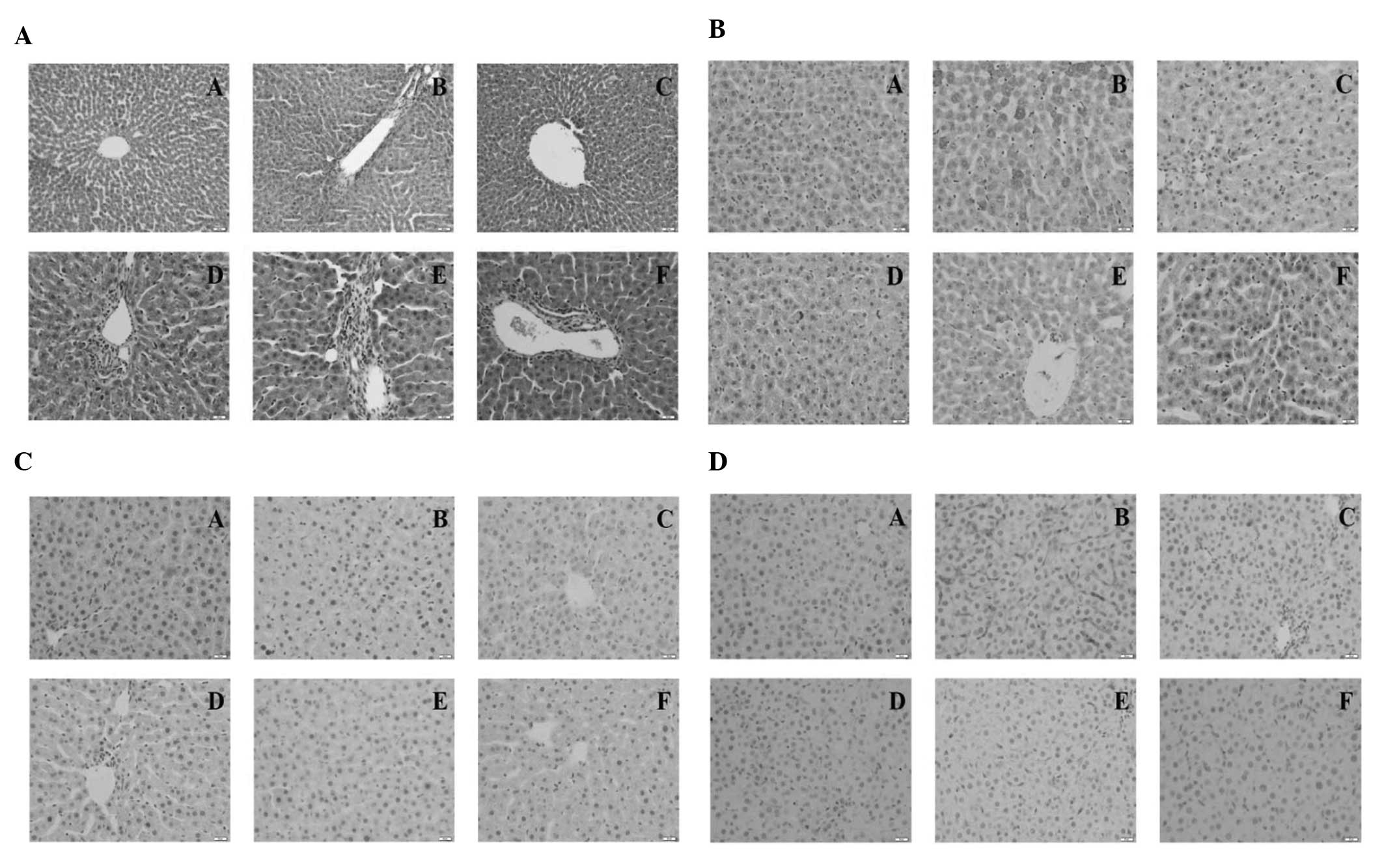
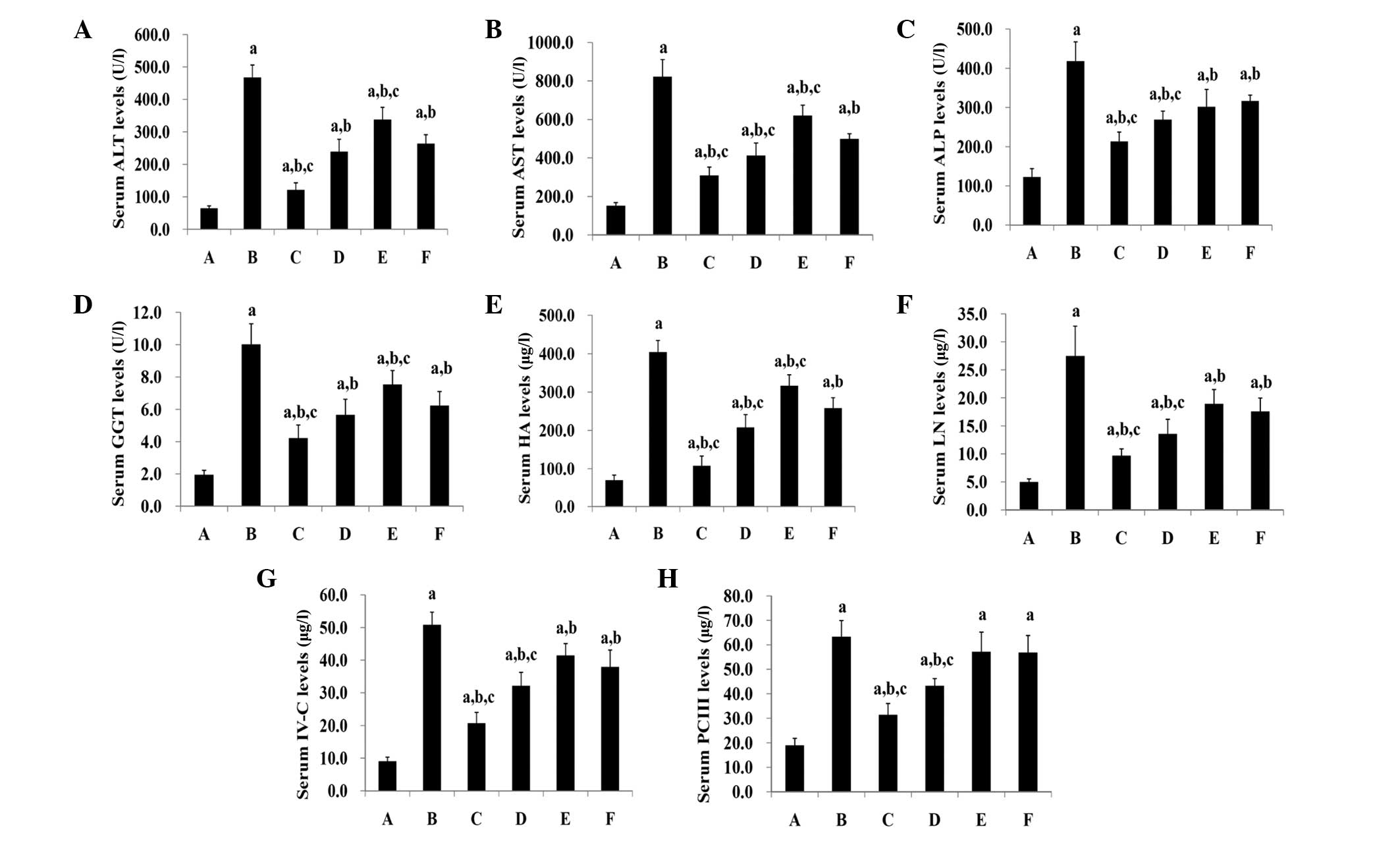
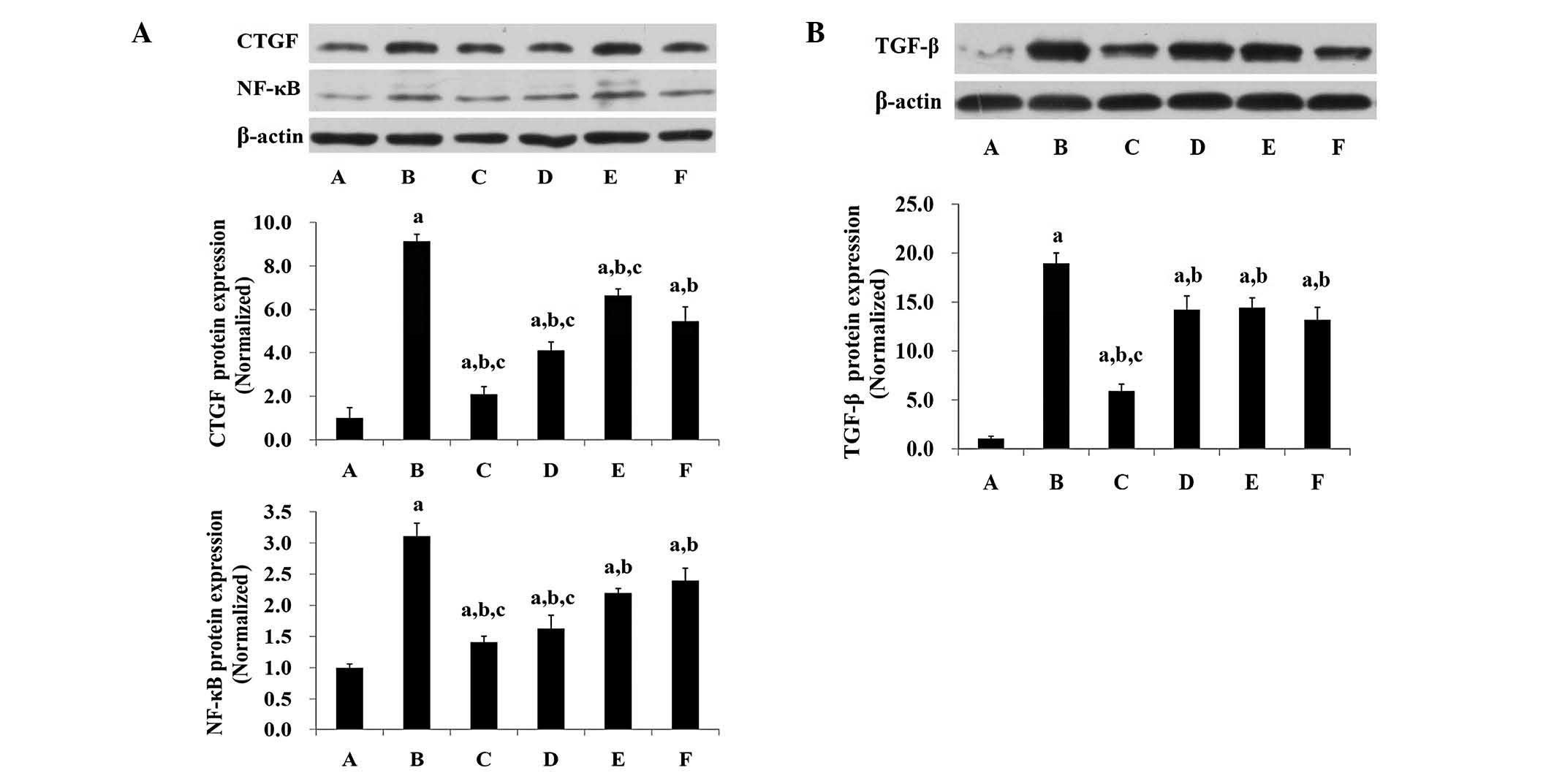
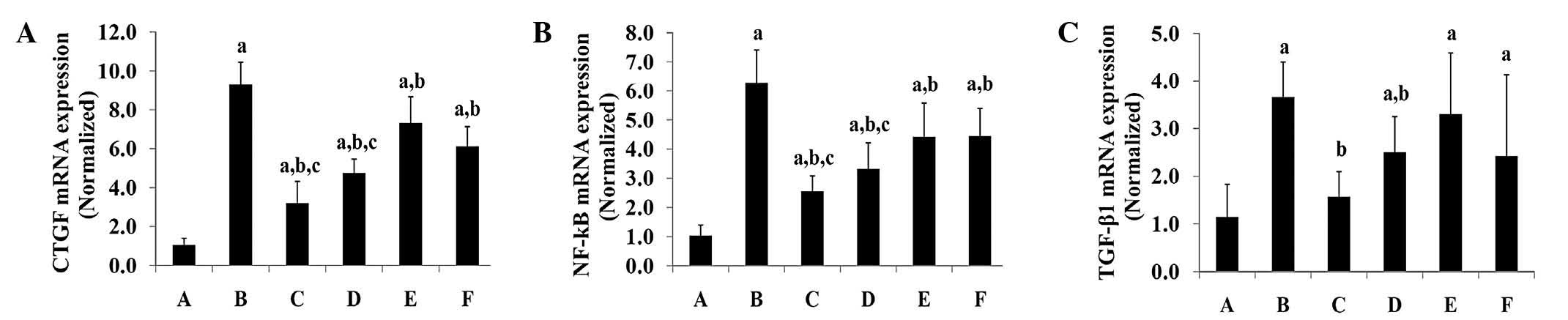
Hepatic fibrosis may contribute to liver carcinoma and the mortality of patients with hepatic fibrosis is gradually increasing. However, no definitive treatment has been established for hepatic fibrosis. The hepatic fibrotic process is reversible and can be controlled; therefore, the creation of novel and effective therapeutic methods to prevent or reverse the disease is required. The aim of the present study was to identify whether protein extracts from Pacific oysters (PEPO) could alleviate the hepatic fibrosis induced by CCl4 and to examine the mechanisms involved. A total of sixty rats were randomly divided into the following experimental groups: The normal control group; the hepatic fibrosis model group; the high‑dose; medium‑dose; and low‑dose PEPO groups; and the colchicine group. The results indicated that compared with those of the model group, PEPO treatment significantly decreased the serum levels of alanine aminotransferase, aspartate aminotransferase, γ‑glutamyltransferase, alkaline phosphatase, hyaluronic acid, laminin, collagen type IV and procollagen III in rats with hepatic fibrosis. The hematoxylin and eosin staining demonstrated that PEPO markedly alleviated hepatic fibrosis. The experiments using immunohistochemistry, western blotting and quantitative PCR indicated that protein and mRNA expression levels of connective tissue growth factor (CTGF), transforming growth factor β1 (TGFβ‑1) and nuclear factor κB (NF‑κB) in the liver tissues were significantly reduced by PEPO treatment. Therefore, it was concluded that PEPO successfully alleviated hepatic fibrosis induced by CCl4 and reversed the effects of hepatotoxicity by regulating the serum levels of enzymes and decreasing the expression levels of CTGF, TGF‑β1 and NF‑κB in liver tissues. These findings may provide a novel treatment option for patients with hepatic fibrosis in the future.
View Figures

Figure 1

Figure 2

Figure 3

Figure 4

View References

1 

Friedman SL: Mechanisms of disease: Mechanisms of hepatic fibrosis and therapeutic implications. Nat Clin Pract Gastroenterol Hepatol. 1:98–105. 2004. View Article : Google Scholar

2 

Bataller R and Brenner DA: Liver fibrosis. J Clin Invest. 115:209–218. 2005. View Article : Google Scholar : PubMed/NCBI

3 

Poli G: Pathogenesis of liver fibrosis: role of oxidative stress. Mol Aspects Med. 21:49–98. 2000. View Article : Google Scholar : PubMed/NCBI

4 

Afdhal NH: The natural history of hepatitis C. Semin Liver Dis. 24(Suppl 2): 3–8. 2004. View Article : Google Scholar : PubMed/NCBI

5 

McMahon BJ: The natural history of chronic hepatitis B virus infection. Semin Liver Dis. 24(Suppl 1): 17–21. 2004. View Article : Google Scholar : PubMed/NCBI

6 

Lavanchy D: Hepatitis B virus epidemiology, disease burden, treatment, and current and emerging prevention and control measures. J Viral Hepat. 11:97–107. 2004. View Article : Google Scholar : PubMed/NCBI

7 

Brenner DA: Molecular pathogenesis of liver fibrosis. Trans Am Clin Climatol Assoc. 120:361–368. 2009.PubMed/NCBI

8 

Rosenbloom J, Castro SV and Jimenez SA: Narrative review: fibrotic diseases: cellular and molecular mechanisms and novel therapies. Ann Intern Med. 152:159–166. 2010. View Article : Google Scholar : PubMed/NCBI

9 

Lissoos TW, Beno DW and Davis BH: Hepatic fibrogenesis and its modulation by growth factors. J Pediatr Gastroenterol Nutr. 15:225–231. 1992. View Article : Google Scholar : PubMed/NCBI

10 

Friedman SL: Seminars in medicine of the Beth Israel Hospital, Boston. The cellular basis of hepatic fibrosis Mechanisms and treatment strategies. N Engl J Med. 328:1828–1835. 1993. View Article : Google Scholar : PubMed/NCBI

11 

Mavier P and Mallat A: Perspectives in the treatment of liver fibrosis. J Hepatol. 22(Suppl): 111–115. 1995.PubMed/NCBI

12 

Iredale J: Defining therapeutic targets for liver fibrosis: exploiting the biology of inflammation and repair. Pharmacol Res. 58:129–136. 2008. View Article : Google Scholar : PubMed/NCBI

13 

Yamaura K, Takahashi KG and Suzuki T: Identification and tissue expression analysis of C-type lectin and galectin in the Pacific oyster, Crassostrea gigas. Comp Biochem Physiol B Biochem Mol Biol. 149:168–175. 2008. View Article : Google Scholar

14 

Fishery and Aquaculture Statistics 2007. Food and Agriculture Organization of the United Nations; Rome: pp. 542009

15 

Gaté L, Schultz M, Walsh E, et al: Impact of dietary supplement of Crassostrea gigas extract (JCOE) on glutathione levels and glutathione S-transferase activity in rat tissues. In Vivo. 12:299–303. 1998.PubMed/NCBI

16 

Gaté L, Paul J, Ba GN, Tew KD and Tapiero H: Oxidative stress induced in pathologies: the role of antioxidants. Biomed Pharmacother. 53:169–180. 1999. View Article : Google Scholar : PubMed/NCBI

17 

Gressner OA and Gressner AM: Connective tissue growth factor: a fibrogenic master switch in fibrotic liver diseases. Liver Int. 28:1065–1079. 2008. View Article : Google Scholar : PubMed/NCBI

18 

Tamatani T, Kobayashi H, Tezuka K, et al: Establishment of the enzyme-linked immunosorbent assay for connective tissue growth factor (CTGF) and its detection in the sera of biliary atresia. Biochem Biophys Res Commun. 251:748–752. 1998. View Article : Google Scholar : PubMed/NCBI

19 

Zhang D, Wang NY, Yang CB, et al: The clinical value of serum connective tissue growth factor in the assessment of liver fibrosis. Dig Dis Sci. 55:767–774. 2010. View Article : Google Scholar

20 

Guo-Qiu W, Nai-Feng L, Xiao-Bo V, et al: The level of connective tissue growth factor in sera of patients with hepatitis B virus strongly correlates with stage of hepatic fibrosis. Viral Immunol. 23:71–78. 2010. View Article : Google Scholar : PubMed/NCBI

21 

Piao RL, Brigstock DR, Zhu J, Zhang ML and Gao RP: Clinical significance of connective tissue growth factor in hepatitis B virus-induced hepatic fibrosis. World J Gastroenterol. 18:2280–2286. 2012. View Article : Google Scholar : PubMed/NCBI

22 

Dessein A, Arnaud V, He H, et al: Genetic analysis of human predisposition to hepatosplenic disease caused by schistosomes reveals the crucial role of connective tissue growth factor in rapid progression to severe hepatic fibrosis. Pathol Biol (Paris). 61:3–10. 2013. View Article : Google Scholar

23 

Torre F, Bellis L, Delfino A, et al: Peripheral blood serum markers for apoptosis and liver fibrosis: are they trustworthy indicators of liver realness? Dig Liver Dis. 40:441–445. 2008. View Article : Google Scholar : PubMed/NCBI

24 

Papa S, Zazzeroni F, Bubici C, et al: Gadd45 beta mediates the NF-kappa B suppression of JNK signalling by targeting MKK7/JNKK2. Nat Cell Biol. 6:146–153. 2004. View Article : Google Scholar : PubMed/NCBI

25 

Fu M, Zhang J, Zhu X, et al: Peroxisome proliferator-activated receptor gamma inhibits transforming growth factor beta-induced connective tissue growth factor expression in human aortic smooth muscle cells by interfering with Smad3. J Biol Chem. 276:45888–45894. 2001. View Article : Google Scholar : PubMed/NCBI

26 

Chen A and Zheng S: Curcumin inhibits connective tissue growth factor gene expression in activated hepatic stellate cells in vitro by blocking NF-kappaB and ERK signalling. Br J Pharmacol. 153:557–567. 2008. View Article : Google Scholar

27 

Sun H, Che QM, Zhao X and Pu XP: Antifibrotic effects of chronic baicalein administration in a CCl4 liver fibrosis model in rats. Eur J Pharmacol. 631:53–60. 2010. View Article : Google Scholar : PubMed/NCBI

28 

Erman F, Balkan J, Cevikbaş U, Koçak-Toker N and Uysal M: Betaine or taurine administration prevents fibrosis and lipid peroxidation induced by rat liver by ethanol plus carbon tetrachloride intoxication. Amino Acids. 27:199–205. 2004. View Article : Google Scholar : PubMed/NCBI

29 

Lin X, Zhang S, Huang Q, et al: Protective effect of Fufang-Liu-Yue-Qing, a traditional Chinese herbal formula, on CCl4 induced liver fibrosis in rats. J Ethnopharmacol. 142:548–556. 2012. View Article : Google Scholar : PubMed/NCBI

30 

Basu S: Carbon tetrachloride-induced lipid peroxidation: eicosanoid formation and their regulation by antioxidant nutrients. Toxicology. 189:113–127. 2003. View Article : Google Scholar : PubMed/NCBI

31 

Oh WY, Pyo S, Lee KR, et al: Effect of Holotrichia diomphalia larvae on liver fibrosis and hepatotoxicity in rats. J Ethnopharmacol. 87:175–180. 2003. View Article : Google Scholar : PubMed/NCBI

32 

Dendooven A, Gerritsen KG, Nguyen TQ, Kok RJ and Goldschmeding R: Connective tissue growth factor (CTGF/CCN2) ELISA: a novel tool for monitoring fibrosis. Biomarkers. 16:289–301. 2011. View Article : Google Scholar : PubMed/NCBI

33 

Abou-Shady M, Friess H, Zimmermann A, et al: Connective tissue growth factor in human liver cirrhosis. Liver. 20:296–304. 2000. View Article : Google Scholar : PubMed/NCBI

34 

Hora C, Negro F, Leandro G, et al: Connective tissue growth factor, steatosis and fibrosis in patients with chronic hepatitis C. Liver Int. 28:370–376. 2008. View Article : Google Scholar

35 

Williams EJ, Gaça MD, Brigstock DR, Arthur MJ and Benyon RC: Increased expression of connective tissue growth factor in fibrotic human liver and in activated hepatic stellate cells. J Hepatol. 32:754–761. 2000. View Article : Google Scholar : PubMed/NCBI

36 

Friedman SL: Molecular regulation of hepatic fibrosis, an integrated cellular response to tissue injury. J Biol Chem. 275:2247–2250. 2000. View Article : Google Scholar : PubMed/NCBI

37 

Liu Y, Wen XM, Lui EL, et al: Therapeutic targeting of the PDGF and TGF-beta-signaling pathways in hepatic stellate cells by PTK787/ZK22258. Lab Invest. 89:1152–1160. 2009. View Article : Google Scholar : PubMed/NCBI

38 

Gressner OA, Lahme B, Demirci I, Gressner AM and Weiskirchen R: Differential effects of TGF-beta on connective tissue growth factor (CTGF/CCN2) expression in hepatic stellate cells and hepatocytes. J Hepatol. 47:699–710. 2007. View Article : Google Scholar : PubMed/NCBI

39 

Hernandez-Gea V and Friedman SL: Pathogenesis of liver fibrosis. Annu Rev Pathol. 6:425–456. 2011. View Article : Google Scholar

40 

Biernacka A, Dobaczewski M and Frangogiannis NG: TGF-β signaling in fibrosis. Growth Factors. 29:196–202. 2011. View Article : Google Scholar : PubMed/NCBI

41 

Nakamura T, Sakata R, Ueno T, Sata M and Ueno H: Inhibition of transforming growth factor beta prevents progression of liver fibrosis and enhances hepatocyte regeneration in dimethylnitrosamine-treated rats. Hepatology. 32:247–255. 2000. View Article : Google Scholar : PubMed/NCBI

42 

Povero D, Busletta C, Novo E, et al: Liver fibrosis: a dynamic and potentially reversible process. Histol Histopathol. 25:1075–1091. 2010.PubMed/NCBI

43 

Tache D, Bogdan F, Pisoschi C, et al: Evidence for the involvement of TGF-β1-CTGF axis in liver fibrogenesis secondary to hepatic viral infection. Rom J Morphol Embryol. 52(Suppl): 409–412. 2011.

44 

Weng HL, Ciuclan L, Liu Y, et al: Profibrogenic transforming growth factor-beta/activin receptor-like kinase 5 signaling via connective tissue growth factor expression in hepatocytes. Hepatology. 46:1257–1270. 2007. View Article : Google Scholar : PubMed/NCBI

45 

Kovalenko E, Tacke F, Gressner OA, et al: Validation of connective tissue growth factor (CTGF/CCN2) and its gene polymorphisms as noninvasive biomarkers for the assessment of liver fibrosis. J Viral Hepat. 16:612–620. 2009. View Article : Google Scholar : PubMed/NCBI

46 

Igarashi A, Okochi H, Bradham DM and Grotendorst GR: Regulation of connective tissue growth factor gene expression in human skin fibroblasts and during wound repair. Mol Biol Cell. 4:637–645. 1993. View Article : Google Scholar : PubMed/NCBI

47 

Fox ES, Kim JC and Tracy TF: NF-kappaB activation and modulation in hepatic macrophages during cholestatic injury. J Surg Res. 72:129–134. 1997. View Article : Google Scholar : PubMed/NCBI

48 

Demirbilek S, Akin M, Gürünlüoğlu K, et al: The NF-kappaB inhibitors attenuate hepatic injury in bile duct ligated rats. Pediatr Surg Int. 22:655–663. 2006. View Article : Google Scholar : PubMed/NCBI

49 

Rippe RA, Schrum LW, Stefanovic B, Solís-Herruzo JA and Brenner DA: NF-kappaB inhibits expression of the alpha1(I) collagen gene. DNA Cell Biol. 18:751–761. 1999. View Article : Google Scholar : PubMed/NCBI

Related Articles

  • Abstract
  • View
  • Download
  • Twitter
Copy and paste a formatted citation
Spandidos Publications style
Zhou J, Liang Y, Pan JX, Wang FF, Lin XM, Ma RJ, Qu F and Fang JQ: Protein extracts of Crassostrea gigas alleviate CCl4-induced hepatic fibrosis in rats by reducing the expression of CTGF, TGF-β1 and NF-κB in liver tissues. Mol Med Rep 11: 2913-2920, 2015.
APA
Zhou, J., Liang, Y., Pan, J., Wang, F., Lin, X., Ma, R. ... Fang, J. (2015). Protein extracts of Crassostrea gigas alleviate CCl4-induced hepatic fibrosis in rats by reducing the expression of CTGF, TGF-β1 and NF-κB in liver tissues. Molecular Medicine Reports, 11, 2913-2920. https://doi.org/10.3892/mmr.2014.3019
MLA
Zhou, J., Liang, Y., Pan, J., Wang, F., Lin, X., Ma, R., Qu, F., Fang, J."Protein extracts of Crassostrea gigas alleviate CCl4-induced hepatic fibrosis in rats by reducing the expression of CTGF, TGF-β1 and NF-κB in liver tissues". Molecular Medicine Reports 11.4 (2015): 2913-2920.
Chicago
Zhou, J., Liang, Y., Pan, J., Wang, F., Lin, X., Ma, R., Qu, F., Fang, J."Protein extracts of Crassostrea gigas alleviate CCl4-induced hepatic fibrosis in rats by reducing the expression of CTGF, TGF-β1 and NF-κB in liver tissues". Molecular Medicine Reports 11, no. 4 (2015): 2913-2920. https://doi.org/10.3892/mmr.2014.3019
Copy and paste a formatted citation
x
Spandidos Publications style
Zhou J, Liang Y, Pan JX, Wang FF, Lin XM, Ma RJ, Qu F and Fang JQ: Protein extracts of Crassostrea gigas alleviate CCl4-induced hepatic fibrosis in rats by reducing the expression of CTGF, TGF-β1 and NF-κB in liver tissues. Mol Med Rep 11: 2913-2920, 2015.
APA
Zhou, J., Liang, Y., Pan, J., Wang, F., Lin, X., Ma, R. ... Fang, J. (2015). Protein extracts of Crassostrea gigas alleviate CCl4-induced hepatic fibrosis in rats by reducing the expression of CTGF, TGF-β1 and NF-κB in liver tissues. Molecular Medicine Reports, 11, 2913-2920. https://doi.org/10.3892/mmr.2014.3019
MLA
Zhou, J., Liang, Y., Pan, J., Wang, F., Lin, X., Ma, R., Qu, F., Fang, J."Protein extracts of Crassostrea gigas alleviate CCl4-induced hepatic fibrosis in rats by reducing the expression of CTGF, TGF-β1 and NF-κB in liver tissues". Molecular Medicine Reports 11.4 (2015): 2913-2920.
Chicago
Zhou, J., Liang, Y., Pan, J., Wang, F., Lin, X., Ma, R., Qu, F., Fang, J."Protein extracts of Crassostrea gigas alleviate CCl4-induced hepatic fibrosis in rats by reducing the expression of CTGF, TGF-β1 and NF-κB in liver tissues". Molecular Medicine Reports 11, no. 4 (2015): 2913-2920. https://doi.org/10.3892/mmr.2014.3019
Follow us
  • Twitter
  • LinkedIn
  • Facebook
About
  • Spandidos Publications
  • Careers
  • Cookie Policy
  • Privacy Policy
How can we help?
  • Help
  • Live Chat
  • Contact
  • Email to our Support Team