Spandidos Publications Logo
  • About
    • About Spandidos
    • Aims and Scopes
    • Abstracting and Indexing
    • Editorial Policies
    • Reprints and Permissions
    • Job Opportunities
    • Terms and Conditions
    • Contact
  • Journals
    • All Journals
    • Oncology Letters
      • Oncology Letters
      • Information for Authors
      • Editorial Policies
      • Editorial Board
      • Aims and Scope
      • Abstracting and Indexing
      • Bibliographic Information
      • Archive
    • International Journal of Oncology
      • International Journal of Oncology
      • Information for Authors
      • Editorial Policies
      • Editorial Board
      • Aims and Scope
      • Abstracting and Indexing
      • Bibliographic Information
      • Archive
    • Molecular and Clinical Oncology
      • Molecular and Clinical Oncology
      • Information for Authors
      • Editorial Policies
      • Editorial Board
      • Aims and Scope
      • Abstracting and Indexing
      • Bibliographic Information
      • Archive
    • Experimental and Therapeutic Medicine
      • Experimental and Therapeutic Medicine
      • Information for Authors
      • Editorial Policies
      • Editorial Board
      • Aims and Scope
      • Abstracting and Indexing
      • Bibliographic Information
      • Archive
    • International Journal of Molecular Medicine
      • International Journal of Molecular Medicine
      • Information for Authors
      • Editorial Policies
      • Editorial Board
      • Aims and Scope
      • Abstracting and Indexing
      • Bibliographic Information
      • Archive
    • Biomedical Reports
      • Biomedical Reports
      • Information for Authors
      • Editorial Policies
      • Editorial Board
      • Aims and Scope
      • Abstracting and Indexing
      • Bibliographic Information
      • Archive
    • Oncology Reports
      • Oncology Reports
      • Information for Authors
      • Editorial Policies
      • Editorial Board
      • Aims and Scope
      • Abstracting and Indexing
      • Bibliographic Information
      • Archive
    • Molecular Medicine Reports
      • Molecular Medicine Reports
      • Information for Authors
      • Editorial Policies
      • Editorial Board
      • Aims and Scope
      • Abstracting and Indexing
      • Bibliographic Information
      • Archive
    • World Academy of Sciences Journal
      • World Academy of Sciences Journal
      • Information for Authors
      • Editorial Policies
      • Editorial Board
      • Aims and Scope
      • Abstracting and Indexing
      • Bibliographic Information
      • Archive
    • International Journal of Functional Nutrition
      • International Journal of Functional Nutrition
      • Information for Authors
      • Editorial Policies
      • Editorial Board
      • Aims and Scope
      • Abstracting and Indexing
      • Bibliographic Information
      • Archive
    • International Journal of Epigenetics
      • International Journal of Epigenetics
      • Information for Authors
      • Editorial Policies
      • Editorial Board
      • Aims and Scope
      • Abstracting and Indexing
      • Bibliographic Information
      • Archive
    • Medicine International
      • Medicine International
      • Information for Authors
      • Editorial Policies
      • Editorial Board
      • Aims and Scope
      • Abstracting and Indexing
      • Bibliographic Information
      • Archive
  • Articles
  • Information
    • Information for Authors
    • Information for Reviewers
    • Information for Librarians
    • Information for Advertisers
    • Conferences
  • Language Editing
Spandidos Publications Logo
  • About
    • About Spandidos
    • Aims and Scopes
    • Abstracting and Indexing
    • Editorial Policies
    • Reprints and Permissions
    • Job Opportunities
    • Terms and Conditions
    • Contact
  • Journals
    • All Journals
    • Biomedical Reports
      • Information for Authors
      • Editorial Policies
      • Editorial Board
      • Aims and Scope
      • Abstracting and Indexing
      • Bibliographic Information
      • Archive
    • Experimental and Therapeutic Medicine
      • Information for Authors
      • Editorial Policies
      • Editorial Board
      • Aims and Scope
      • Abstracting and Indexing
      • Bibliographic Information
      • Archive
    • International Journal of Epigenetics
      • Information for Authors
      • Editorial Policies
      • Editorial Board
      • Aims and Scope
      • Abstracting and Indexing
      • Bibliographic Information
      • Archive
    • International Journal of Functional Nutrition
      • Information for Authors
      • Editorial Policies
      • Editorial Board
      • Aims and Scope
      • Abstracting and Indexing
      • Bibliographic Information
      • Archive
    • International Journal of Molecular Medicine
      • Information for Authors
      • Editorial Policies
      • Editorial Board
      • Aims and Scope
      • Abstracting and Indexing
      • Bibliographic Information
      • Archive
    • International Journal of Oncology
      • Information for Authors
      • Editorial Policies
      • Editorial Board
      • Aims and Scope
      • Abstracting and Indexing
      • Bibliographic Information
      • Archive
    • Medicine International
      • Information for Authors
      • Editorial Policies
      • Editorial Board
      • Aims and Scope
      • Abstracting and Indexing
      • Bibliographic Information
      • Archive
    • Molecular and Clinical Oncology
      • Information for Authors
      • Editorial Policies
      • Editorial Board
      • Aims and Scope
      • Abstracting and Indexing
      • Bibliographic Information
      • Archive
    • Molecular Medicine Reports
      • Information for Authors
      • Editorial Policies
      • Editorial Board
      • Aims and Scope
      • Abstracting and Indexing
      • Bibliographic Information
      • Archive
    • Oncology Letters
      • Information for Authors
      • Editorial Policies
      • Editorial Board
      • Aims and Scope
      • Abstracting and Indexing
      • Bibliographic Information
      • Archive
    • Oncology Reports
      • Information for Authors
      • Editorial Policies
      • Editorial Board
      • Aims and Scope
      • Abstracting and Indexing
      • Bibliographic Information
      • Archive
    • World Academy of Sciences Journal
      • Information for Authors
      • Editorial Policies
      • Editorial Board
      • Aims and Scope
      • Abstracting and Indexing
      • Bibliographic Information
      • Archive
  • Articles
  • Information
    • For Authors
    • For Reviewers
    • For Librarians
    • For Advertisers
    • Conferences
  • Language Editing
Login Register Submit
  • This site uses cookies
  • You can change your cookie settings at any time by following the instructions in our Cookie Policy. To find out more, you may read our Privacy Policy.

    I agree
Search articles by DOI, keyword, author or affiliation
Search
Advanced Search
presentation
Molecular Medicine Reports
Join Editorial Board Propose a Special Issue
Print ISSN: 1791-2997 Online ISSN: 1791-3004
Journal Cover
July-2015 Volume 12 Issue 1

Full Size Image

Sign up for eToc alerts
Recommend to Library

Journals

International Journal of Molecular Medicine

International Journal of Molecular Medicine

International Journal of Molecular Medicine is an international journal devoted to molecular mechanisms of human disease.

International Journal of Oncology

International Journal of Oncology

International Journal of Oncology is an international journal devoted to oncology research and cancer treatment.

Molecular Medicine Reports

Molecular Medicine Reports

Covers molecular medicine topics such as pharmacology, pathology, genetics, neuroscience, infectious diseases, molecular cardiology, and molecular surgery.

Oncology Reports

Oncology Reports

Oncology Reports is an international journal devoted to fundamental and applied research in Oncology.

Experimental and Therapeutic Medicine

Experimental and Therapeutic Medicine

Experimental and Therapeutic Medicine is an international journal devoted to laboratory and clinical medicine.

Oncology Letters

Oncology Letters

Oncology Letters is an international journal devoted to Experimental and Clinical Oncology.

Biomedical Reports

Biomedical Reports

Explores a wide range of biological and medical fields, including pharmacology, genetics, microbiology, neuroscience, and molecular cardiology.

Molecular and Clinical Oncology

Molecular and Clinical Oncology

International journal addressing all aspects of oncology research, from tumorigenesis and oncogenes to chemotherapy and metastasis.

World Academy of Sciences Journal

World Academy of Sciences Journal

Multidisciplinary open-access journal spanning biochemistry, genetics, neuroscience, environmental health, and synthetic biology.

International Journal of Functional Nutrition

International Journal of Functional Nutrition

Open-access journal combining biochemistry, pharmacology, immunology, and genetics to advance health through functional nutrition.

International Journal of Epigenetics

International Journal of Epigenetics

Publishes open-access research on using epigenetics to advance understanding and treatment of human disease.

Medicine International

Medicine International

An International Open Access Journal Devoted to General Medicine.

Journal Cover
July-2015 Volume 12 Issue 1

Full Size Image

Sign up for eToc alerts
Recommend to Library

  • Article
  • Citations
    • Cite This Article
    • Download Citation
    • Create Citation Alert
    • Remove Citation Alert
    • Cited By
  • Similar Articles
    • Related Articles (in Spandidos Publications)
    • Similar Articles (Google Scholar)
    • Similar Articles (PubMed)
  • Download PDF
  • Download XML
  • View XML
Article Open Access

All‑trans‑retinoic acid inhibits chondrogenesis of rat embryo hindlimb bud mesenchymal cells by downregulating p53 expression

  • Authors:
    • Tao‑Gen Zhang
    • Xue‑Dong Li
    • Guo‑Yong Yu
    • Peng Xie
    • Yun‑Guo Wang
    • Zhao‑Yong Liu
    • Quan Hong
    • De‑Zhong Liu
    • Shi‑Xin Du
  • View Affiliations / Copyright

    Affiliations: Department of Orthopedics, The Affiliated Luohu Hospital of Shenzhen University, Shenzhen, Guangdong 518000, P.R. China, Department of Orthopedics, The First Affiliated Hospital, Shantou University Medical College, Shantou, Guangdong 515041, P.R. China
    Copyright: © Zhang et al. This is an open access article distributed under the terms of Creative Commons Attribution License [CC BY_NC 3.0].
  • Pages: 210-218
    |
    Published online on: March 4, 2015
       https://doi.org/10.3892/mmr.2015.3423
  • Expand metrics +
Metrics: Total Views: 0 (Spandidos Publications: | PMC Statistics: )
Metrics: Total PDF Downloads: 0 (Spandidos Publications: | PMC Statistics: )
Cited By (CrossRef): 0 citations Loading Articles...

This article is mentioned in:


Abstract

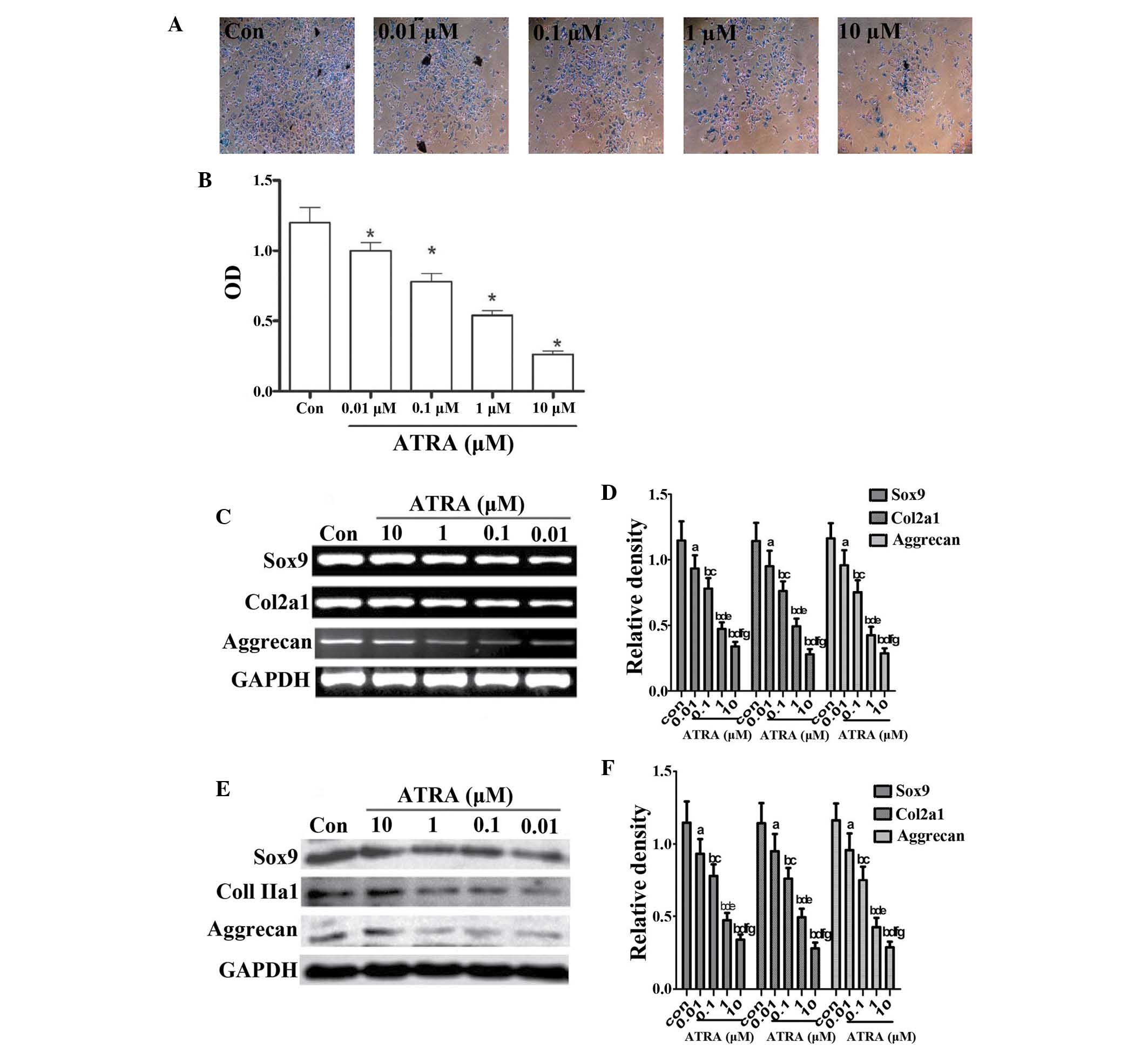
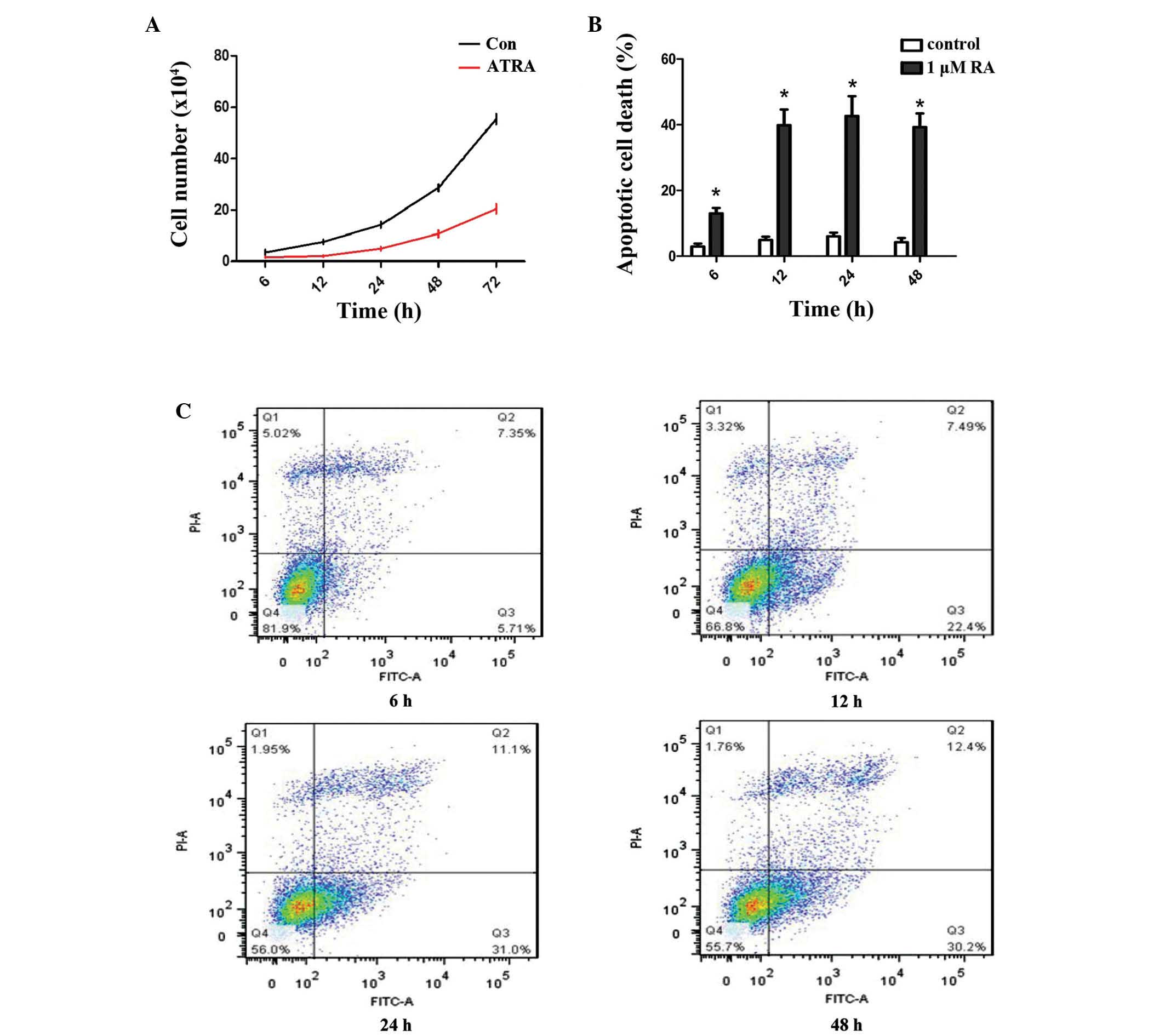
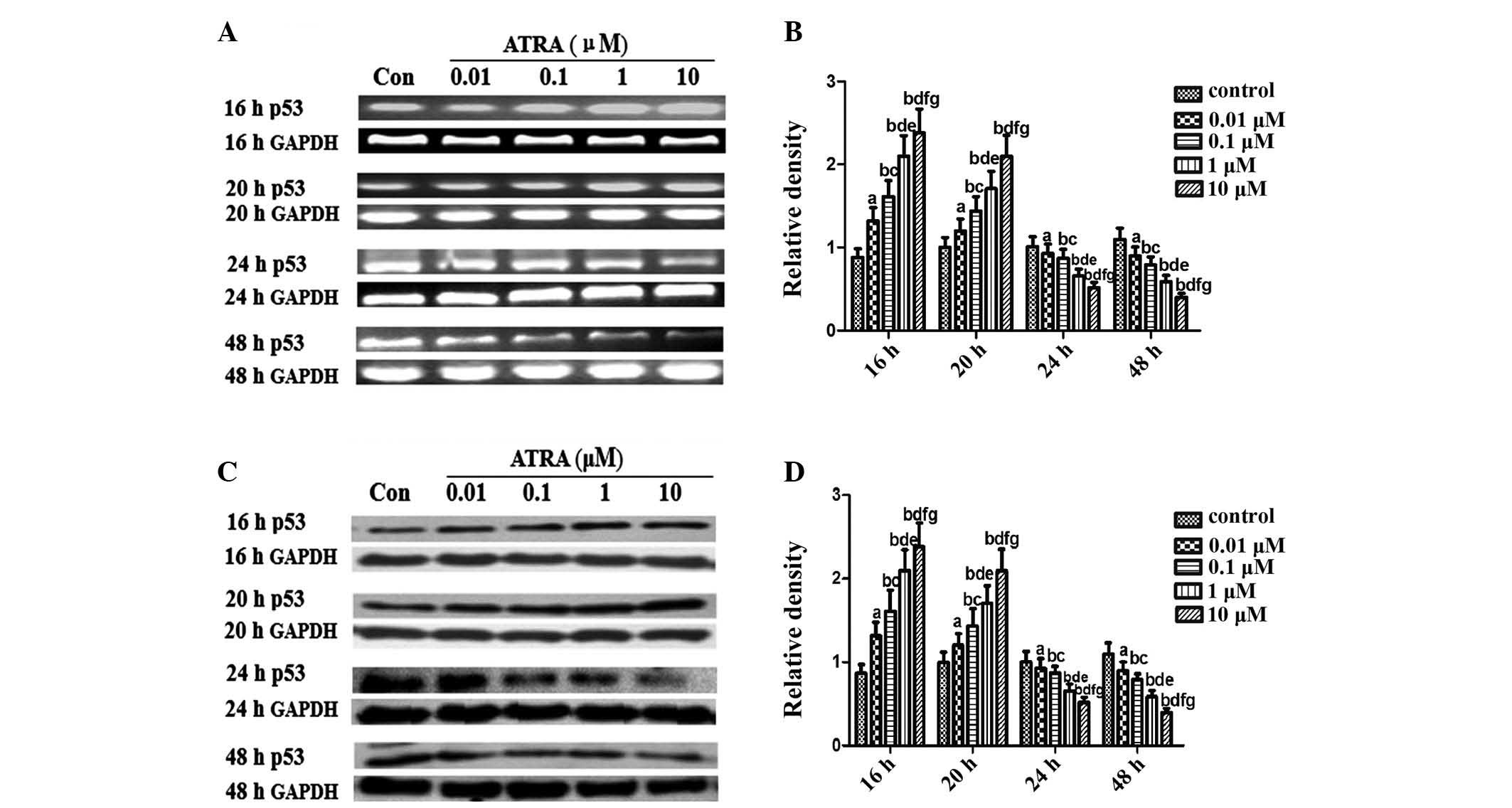
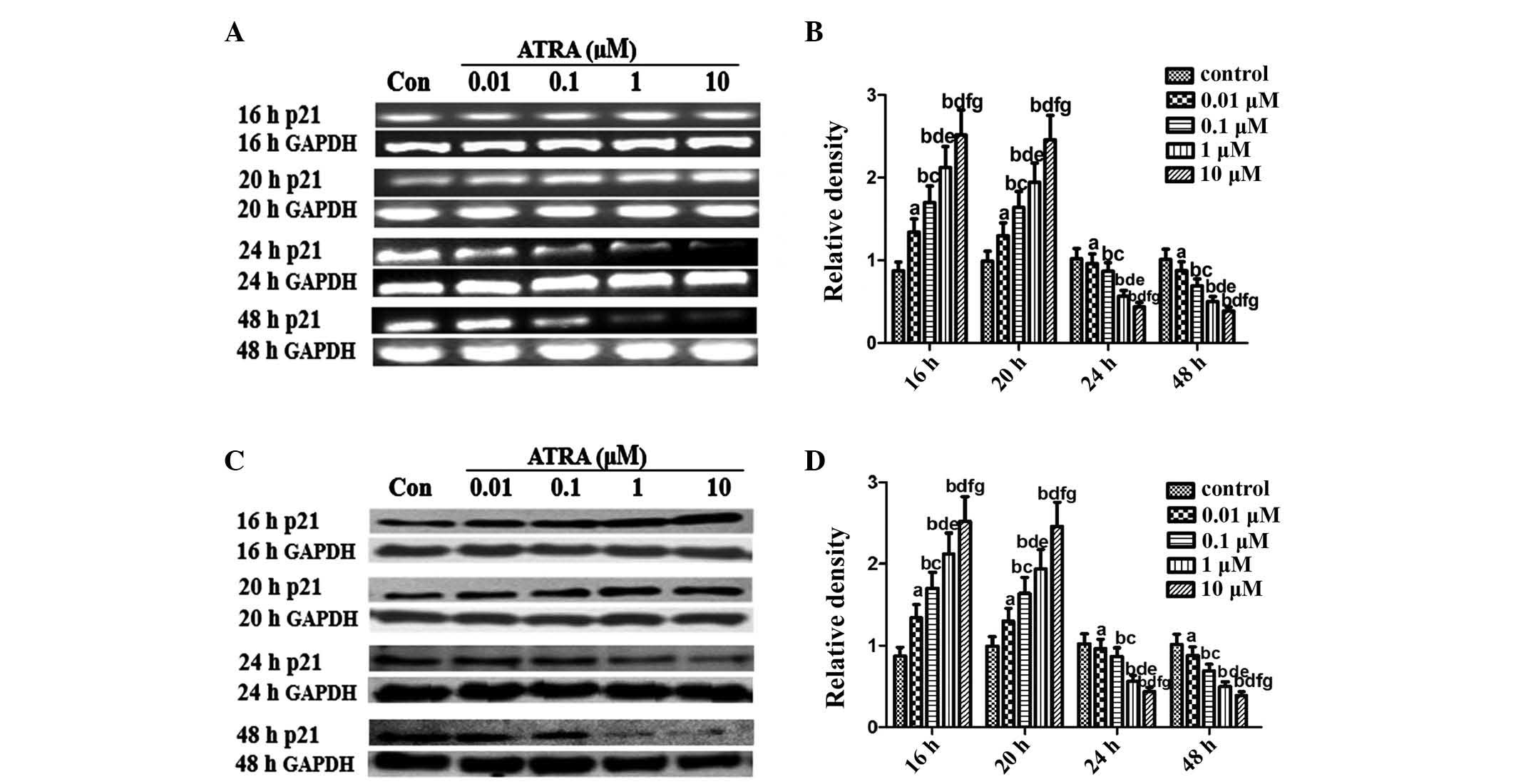
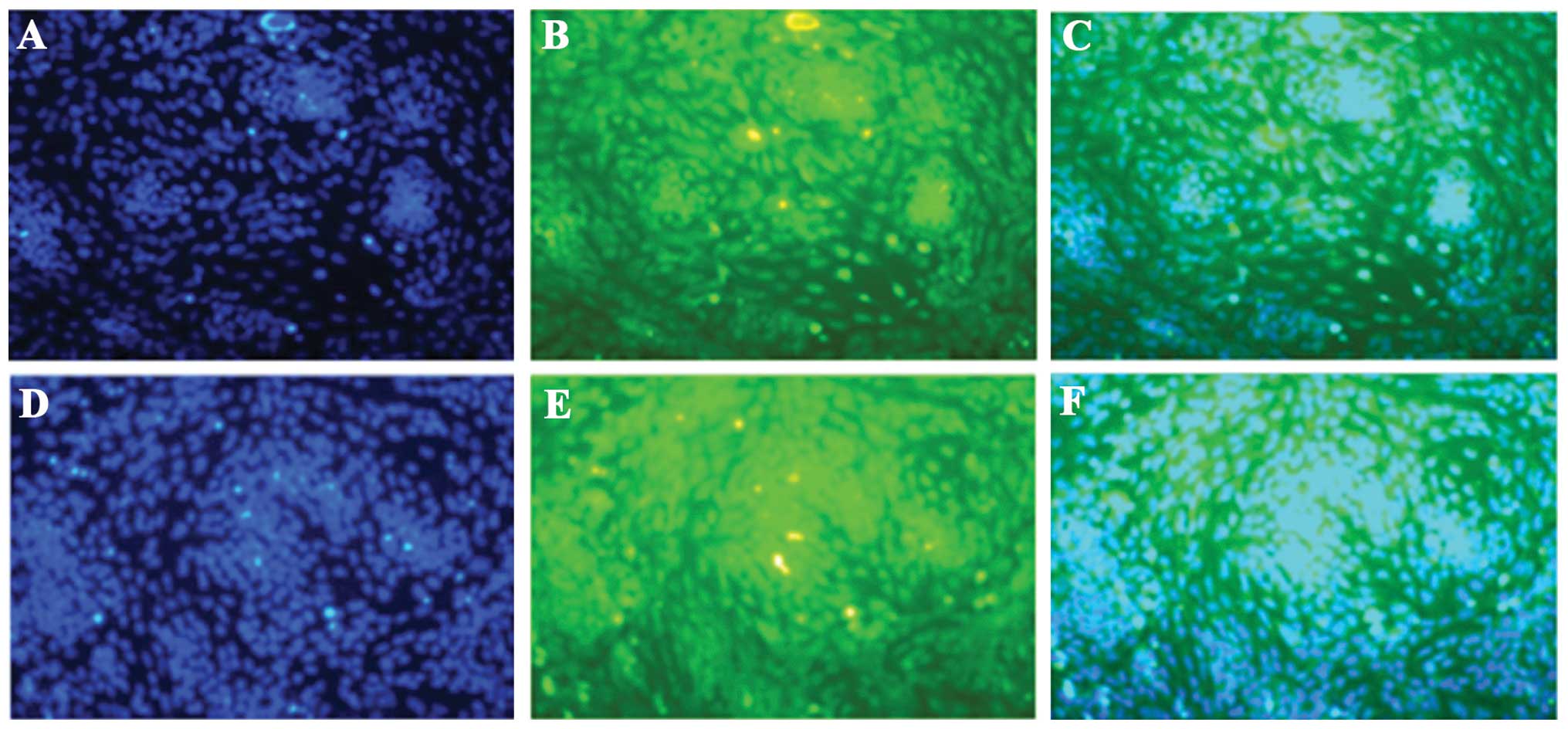
Despite the well‑established role of all‑trans‑retinoic acid (ATRA) in congenital clubfoot (CCF)‑like deformities in in vivo models, the essential cellular and molecular targets and the signaling mechanisms for ATRA‑induced CCF‑like deformities remain to be elucidated. Recent studies have demonstrated that p53 and p21, expressed in the hindlimb bud mesenchyme, regulate cellular proliferation and differentiation, contributing to a significant proportion of embryonic CCF‑like abnormalities. The objective of the present study was to investigate the mechanisms for ATRA‑induced CCF, by assessing ATRA‑regulated chondrogenesis in rat embryo hindlimb bud mesenchymal cells (rEHBMCs) in vitro. The experimental study was based on varying concentrations of ATRA exposure on embryonic day 12.5 rEHBMCs in vitro. The present study demonstrated that ATRA inhibited the proliferation of cells by stimulating apoptotic cell death of rEHBMCs. It was also observed that ATRA induced a dose‑dependent reduction of cartilage nodules compared with the control group. Reverse transcription‑polymerase chain reaction and western blotting assays revealed that the mRNA and protein expression of cartilage‑specific molecules, including aggrecan, Sox9 and collagen, type II, α 1 (Col2a1), were downregulated by ATRA in a dose‑dependent manner; the mRNA levels of p53 and p21 were dose‑dependently upregulated from 16 to 20 h of incubation with ATRA, but dose‑dependently downregulated from 24 to 48 h. Of note, p53 and p21 were regulated at the translational level in parallel with the transcription with rEHBMCs treated with ATRA. Furthermore, the immunofluorescent microscopy assays indicated that proteins of p53 and p21 were predominantly expressed in the cartilage nodules. The present study demonstrated that ATRA decreases the chondrogenesis of rEHBMCs by inhibiting cartilage‑specific molecules, including aggrecan, Sox9 and Col2al, via regulating the expression of p53 and p21.
View Figures

Figure 1

Figure 2

Figure 3

Figure 4

Figure 5

View References

1 

Lee GS, Kochhar DM and Collins MD: Retinoid-induced limb malformations. Curr Pharm Design. 10:2657–2699. 2004. View Article : Google Scholar

2 

Delgado-Baeza E, Santos-Alvarez I and Martos-Rodriguez A: Retinoic acid-induced clubfoot-like deformity: pathoanatomy in rat fetuses. J Pediatr Orthoped B. 8:12–18. 1999.

3 

Zhong YS, Zheng C, Jia Y, et al: Quantitative evaluation in vivo of the degree of differentiation of hindlimb cartilage in a rat clubfoot model. Toxicol Mech Methods. 19:292–297. 2009. View Article : Google Scholar : PubMed/NCBI

4 

Liu ZY, Li XD, Chen B, et al: Retinoic acid retards fetal and hindlimb skeletal development asymmetrically in a retinoic acid-induced clubfoot model. Exp Toxicol Pathol. 62:663–670. 2010. View Article : Google Scholar : PubMed/NCBI

5 

Zelzer E and Olsen BR: The genetic basis for skeletal diseases. Nature. 423:343–348. 2003. View Article : Google Scholar : PubMed/NCBI

6 

Tickle C: Patterning systems - from one end of the limb to the other. Dev Cel. 4:449–458. 2003. View Article : Google Scholar

7 

Kastan MB, Zhan Q, El-Deiry WS, et al: A mammalian cell cycle checkpoint pathway utilizing p53 and GADD45 is defective in ataxia-telangiectasia. Cell. 71:587–597. 1992. View Article : Google Scholar : PubMed/NCBI

8 

Sarkar SA and Sharma RP: All-trans-retinoic acid-mediated modulation of p53 during neural differentiation in murine embryonic stem cells. Cell Biol Toxicol. 18:243–257. 2002. View Article : Google Scholar : PubMed/NCBI

9 

Beier F, Leask TA, Haque S, et al: Cell cycle genes in chondrocyte proliferation and differentiation. Matrix Biol. 18:109–120. 1999. View Article : Google Scholar : PubMed/NCBI

10 

Beier F, Taylor AC and LuValle P: The Raf-1/MEK/ERK pathway regulates the expression of the p21Cip1/Waf1 gene in chondrocytes. J Biol Chem. 274:30273–30279. 1999. View Article : Google Scholar : PubMed/NCBI

11 

Wade J, Adami GR, Wei N, Keyomarsi K and Elledge SJ: The p21 Cdk-interacting protein Cip1 is a potent inhibitor of G1 cyclin-dependent kinases. Cell. 75:805–816. 1993. View Article : Google Scholar

12 

El-Deiry WS, Tokino T, Velculescu VE, et al: WAF1, a potential mediator of p53 tumor suppression. Cell. 75:817–825. 1993. View Article : Google Scholar : PubMed/NCBI

13 

Gartel AL and Tyner AL: Transcriptional regulation of the p21 [(WAF1/CIP1)] gene. Exp Cell Res. 246:280–289. 1999. View Article : Google Scholar : PubMed/NCBI

14 

de Oca Luna RM, Wagner DS and Lozano G: Rescue of early embryonic lethality in mdm2-deficient mice by deletion of p53. Nature. 378:203–206. 1995. View Article : Google Scholar

15 

Uren AG and Vaux DL: Molecular and clinical aspects of apoptosis. Pharmacol Ther. 72:37–50. 1996. View Article : Google Scholar : PubMed/NCBI

16 

Nomoto S, Ootsuyama A, Shioyama Y, Katsuki M, Kondo S and Norimura T: The high susceptibility of heterozygous p53(+/−) mice to malformation after foetal irradiation is related to sub-competent apoptosis. Int J Radiat Biol. 74:419–429. 1998. View Article : Google Scholar : PubMed/NCBI

17 

Westphal CH, Hoyes KP, Canman CE, et al: Loss of atm radiosensitizes multiple p53 null tissues. Cancer Res. 58:5637–5639. 1998.PubMed/NCBI

18 

Armstrong JF, Kaufman MH, Harrison DJ and Clarke AR: High-frequency developmental abnormalities in p53-deficient mice. Curr Biol. 5:931–936. 1995. View Article : Google Scholar : PubMed/NCBI

19 

Cordenonsi M, Dupont S, Maretto S, Insinga A, Imbriano C and Piccolo S: Links between tumor suppressors: p53 is required for TGF-β gene responses by cooperating with Smads. Cell. 113:301–314. 2003. View Article : Google Scholar : PubMed/NCBI

20 

Danilova N, Sakamoto KM and Lin S: p53 family in development. Mech Dev. 125:919–931. 2008. View Article : Google Scholar : PubMed/NCBI

21 

Campbell WA, Yang H, Zetterberg H, et al: Zebrafish lacking Alzheimer presenilin enhancer 2 (Pen-2) demonstrate excessive p53-dependent apoptosis and neuronal loss. J Neurochem. 96:1423–1440. 2006. View Article : Google Scholar : PubMed/NCBI

22 

Villiard É, Brinkmann H, Moiseeva O, Mallette FA, Ferbeyre G and Roy S: Urodele p53 tolerates amino acid changes found in p53 variants linked to human cancer. BMC Evol Biol. 7:1802007. View Article : Google Scholar : PubMed/NCBI

23 

Schmid P, Lorenz A, Hameister H and Montenarh M: Expression of p53 during mouse embryogenesis. Development. 113:857–865. 1991.PubMed/NCBI

24 

Flint O and Orton T: An in vitro assay for teratogens with cultures of rat embryo midbrain and limb bud cells. Toxicol Appl Pharmacol. 76:383–395. 1984. View Article : Google Scholar : PubMed/NCBI

25 

Lev R and Spicer S: Specific staining of sulphate groups with alcian blue at low pH. J Histochem Cytochem. 12:309. 1964. View Article : Google Scholar : PubMed/NCBI

26 

Li Y, Jiang Y, Wan Y, et al: Medroxyprogestogen enhances apoptosis of SKOV-3 cells via inhibition of the PI3K/Akt signaling pathway. J Biomed Res. 27:43–50. 2013. View Article : Google Scholar : PubMed/NCBI

27 

Solursh M: Differentiation of cartilage and bone. Curr Opin Cell Biol. 1:989–994. 1989. View Article : Google Scholar : PubMed/NCBI

28 

Ruberte E, Dolle P, Chambon P and Morriss-Kay G: Retinoic acid receptors and cellular retinoid binding proteins. II. Their differential pattern of transcription during early morphogenesis in mouse embryos. Development. 111:45–60. 1991.PubMed/NCBI

29 

Thorogood P and Hinchliffe J: An analysis of the condensation process during chondrogenesis in the embryonic chick hindlimb. J Embryol Exp Morphol. 33:581–606. 1975.PubMed/NCBI

30 

Ahrens PB, Solursh M and Reiter RS: Stage-related capacity for limb chondrogenesis in cell culture. Dev Biol. 60:69–82. 1977. View Article : Google Scholar : PubMed/NCBI

31 

Duester G: Retinoic acid synthesis and signaling during early organogenesis. Cell. 134:921–931. 2008. View Article : Google Scholar : PubMed/NCBI

32 

Galdones E and Hales BF: Retinoic acid receptor gamma-induced misregulation of chondrogenesis in the murine limb bud in vitro. Toxicol Sci. 106:223–232. 2008. View Article : Google Scholar : PubMed/NCBI

33 

Kochlar D: Cellular basis of congenital limb deformity induced in mice by vitamin A. Birth Defects Orig Artic Ser. 13:111–154. 1977.PubMed/NCBI

34 

Paulsen DF, Chen WD, Pang L, Johnson B and Okello D: Stage- and region-dependent chondrogenesis and growth of chick wing-bud mesenchyme in serum-containing and defined tissue culture media. Dev Dyn. 200:39–52. 1994. View Article : Google Scholar : PubMed/NCBI

35 

Jia YL, Zhong YS, Chen B, et al: The primary research of posterior buds in quantificated congenital clubfoot at pathological and molecule levels. Chin J Exp Surg. 6:726–728. 2009.

36 

Hall BK and Miyake T: All for one and one for all: condensations and the initiation of skeletal development. Bioessays. 22:138–147. 2000. View Article : Google Scholar : PubMed/NCBI

37 

Hall B and Miyake T: The membranous skeleton: the role of cell condensations in vertebrate skeletogenesis. Anat Embryol (Berl). 186:107–124. 1992. View Article : Google Scholar

38 

Bi W, Deng JM, Zhang Z, Behringer RR and de Crombrugghe B: Sox9 is required for cartilage formation. Nat Genet. 22:85–89. 1999. View Article : Google Scholar : PubMed/NCBI

39 

Bi W, Huang W, Whitworth DJ, et al: Haploinsufficiency of Sox9 results in defective cartilage primordia and premature skeletal mineralization. Proc Natl Acad Sci USA. 98:6698–6703. 2001. View Article : Google Scholar : PubMed/NCBI

40 

Goldring MB, Tsuchimochi K and Ijiri K: The control of chondrogenesis. J Cell Biochem. 97:33–44. 2006. View Article : Google Scholar

41 

Stewart M, Farnum C and MacLeod J: Expression of p21CIP1/WAF1 in chondrocytes. Calcif Tissue Int. 61:199–204. 1997. View Article : Google Scholar : PubMed/NCBI

42 

de Crombrugghe B, Lefebvre V and Nakashima K: Regulatory mechanisms in the pathways of cartilage and bone formation. Curr Opin Cell Biol. 13:721–727. 2001. View Article : Google Scholar : PubMed/NCBI

43 

Almog N and Rotter V: Involvement of p53 in cell differentiation and development. Biochim Biophys Acta. 1333:F1–F27. 1997.PubMed/NCBI

44 

Ng LJ, Wheatley S, Muscat GE, et al: SOX9 binds DNA, activates transcription and coexpresses with type II collagen during chondrogenesis in the mouse. Dev Biol. 183:108–121. 1997. View Article : Google Scholar : PubMed/NCBI

45 

Meletis K, Wirta V, Hede S-M, Nistér M, Lundeberg J and Frisén J: p53 suppresses the self-renewal of adult neural stem cells. Development. 133:363–369. 2006. View Article : Google Scholar

46 

Qin H, Yu T, Qing T, et al: Regulation of apoptosis and differentiation by p53 in human embryonic stem cells. J Biol Chem. 282:5842–5852. 2007. View Article : Google Scholar

47 

Ikeda T, Kawaguchi H, Saito T, et al: p63 plays a central role in cartilage development by directly regulating key genes for chondrogenesis. J Bone Miner Res. 22:s52–s101. 2007.

Related Articles

  • Abstract
  • View
  • Download
  • Twitter
Copy and paste a formatted citation
Spandidos Publications style
Zhang TG, Li XD, Yu GY, Xie P, Wang YG, Liu ZY, Hong Q, Liu DZ and Du SX: All‑trans‑retinoic acid inhibits chondrogenesis of rat embryo hindlimb bud mesenchymal cells by downregulating p53 expression. Mol Med Rep 12: 210-218, 2015.
APA
Zhang, T., Li, X., Yu, G., Xie, P., Wang, Y., Liu, Z. ... Du, S. (2015). All‑trans‑retinoic acid inhibits chondrogenesis of rat embryo hindlimb bud mesenchymal cells by downregulating p53 expression. Molecular Medicine Reports, 12, 210-218. https://doi.org/10.3892/mmr.2015.3423
MLA
Zhang, T., Li, X., Yu, G., Xie, P., Wang, Y., Liu, Z., Hong, Q., Liu, D., Du, S."All‑trans‑retinoic acid inhibits chondrogenesis of rat embryo hindlimb bud mesenchymal cells by downregulating p53 expression". Molecular Medicine Reports 12.1 (2015): 210-218.
Chicago
Zhang, T., Li, X., Yu, G., Xie, P., Wang, Y., Liu, Z., Hong, Q., Liu, D., Du, S."All‑trans‑retinoic acid inhibits chondrogenesis of rat embryo hindlimb bud mesenchymal cells by downregulating p53 expression". Molecular Medicine Reports 12, no. 1 (2015): 210-218. https://doi.org/10.3892/mmr.2015.3423
Copy and paste a formatted citation
x
Spandidos Publications style
Zhang TG, Li XD, Yu GY, Xie P, Wang YG, Liu ZY, Hong Q, Liu DZ and Du SX: All‑trans‑retinoic acid inhibits chondrogenesis of rat embryo hindlimb bud mesenchymal cells by downregulating p53 expression. Mol Med Rep 12: 210-218, 2015.
APA
Zhang, T., Li, X., Yu, G., Xie, P., Wang, Y., Liu, Z. ... Du, S. (2015). All‑trans‑retinoic acid inhibits chondrogenesis of rat embryo hindlimb bud mesenchymal cells by downregulating p53 expression. Molecular Medicine Reports, 12, 210-218. https://doi.org/10.3892/mmr.2015.3423
MLA
Zhang, T., Li, X., Yu, G., Xie, P., Wang, Y., Liu, Z., Hong, Q., Liu, D., Du, S."All‑trans‑retinoic acid inhibits chondrogenesis of rat embryo hindlimb bud mesenchymal cells by downregulating p53 expression". Molecular Medicine Reports 12.1 (2015): 210-218.
Chicago
Zhang, T., Li, X., Yu, G., Xie, P., Wang, Y., Liu, Z., Hong, Q., Liu, D., Du, S."All‑trans‑retinoic acid inhibits chondrogenesis of rat embryo hindlimb bud mesenchymal cells by downregulating p53 expression". Molecular Medicine Reports 12, no. 1 (2015): 210-218. https://doi.org/10.3892/mmr.2015.3423
Follow us
  • Twitter
  • LinkedIn
  • Facebook
About
  • Spandidos Publications
  • Careers
  • Cookie Policy
  • Privacy Policy
How can we help?
  • Help
  • Live Chat
  • Contact
  • Email to our Support Team