Spandidos Publications Logo
  • About
    • About Spandidos
    • Aims and Scopes
    • Abstracting and Indexing
    • Editorial Policies
    • Reprints and Permissions
    • Job Opportunities
    • Terms and Conditions
    • Contact
  • Journals
    • All Journals
    • Oncology Letters
      • Oncology Letters
      • Information for Authors
      • Editorial Policies
      • Editorial Board
      • Aims and Scope
      • Abstracting and Indexing
      • Bibliographic Information
      • Archive
    • International Journal of Oncology
      • International Journal of Oncology
      • Information for Authors
      • Editorial Policies
      • Editorial Board
      • Aims and Scope
      • Abstracting and Indexing
      • Bibliographic Information
      • Archive
    • Molecular and Clinical Oncology
      • Molecular and Clinical Oncology
      • Information for Authors
      • Editorial Policies
      • Editorial Board
      • Aims and Scope
      • Abstracting and Indexing
      • Bibliographic Information
      • Archive
    • Experimental and Therapeutic Medicine
      • Experimental and Therapeutic Medicine
      • Information for Authors
      • Editorial Policies
      • Editorial Board
      • Aims and Scope
      • Abstracting and Indexing
      • Bibliographic Information
      • Archive
    • International Journal of Molecular Medicine
      • International Journal of Molecular Medicine
      • Information for Authors
      • Editorial Policies
      • Editorial Board
      • Aims and Scope
      • Abstracting and Indexing
      • Bibliographic Information
      • Archive
    • Biomedical Reports
      • Biomedical Reports
      • Information for Authors
      • Editorial Policies
      • Editorial Board
      • Aims and Scope
      • Abstracting and Indexing
      • Bibliographic Information
      • Archive
    • Oncology Reports
      • Oncology Reports
      • Information for Authors
      • Editorial Policies
      • Editorial Board
      • Aims and Scope
      • Abstracting and Indexing
      • Bibliographic Information
      • Archive
    • Molecular Medicine Reports
      • Molecular Medicine Reports
      • Information for Authors
      • Editorial Policies
      • Editorial Board
      • Aims and Scope
      • Abstracting and Indexing
      • Bibliographic Information
      • Archive
    • World Academy of Sciences Journal
      • World Academy of Sciences Journal
      • Information for Authors
      • Editorial Policies
      • Editorial Board
      • Aims and Scope
      • Abstracting and Indexing
      • Bibliographic Information
      • Archive
    • International Journal of Functional Nutrition
      • International Journal of Functional Nutrition
      • Information for Authors
      • Editorial Policies
      • Editorial Board
      • Aims and Scope
      • Abstracting and Indexing
      • Bibliographic Information
      • Archive
    • International Journal of Epigenetics
      • International Journal of Epigenetics
      • Information for Authors
      • Editorial Policies
      • Editorial Board
      • Aims and Scope
      • Abstracting and Indexing
      • Bibliographic Information
      • Archive
    • Medicine International
      • Medicine International
      • Information for Authors
      • Editorial Policies
      • Editorial Board
      • Aims and Scope
      • Abstracting and Indexing
      • Bibliographic Information
      • Archive
  • Articles
  • Information
    • Information for Authors
    • Information for Reviewers
    • Information for Librarians
    • Information for Advertisers
    • Conferences
  • Language Editing
Spandidos Publications Logo
  • About
    • About Spandidos
    • Aims and Scopes
    • Abstracting and Indexing
    • Editorial Policies
    • Reprints and Permissions
    • Job Opportunities
    • Terms and Conditions
    • Contact
  • Journals
    • All Journals
    • Biomedical Reports
      • Information for Authors
      • Editorial Policies
      • Editorial Board
      • Aims and Scope
      • Abstracting and Indexing
      • Bibliographic Information
      • Archive
    • Experimental and Therapeutic Medicine
      • Information for Authors
      • Editorial Policies
      • Editorial Board
      • Aims and Scope
      • Abstracting and Indexing
      • Bibliographic Information
      • Archive
    • International Journal of Epigenetics
      • Information for Authors
      • Editorial Policies
      • Editorial Board
      • Aims and Scope
      • Abstracting and Indexing
      • Bibliographic Information
      • Archive
    • International Journal of Functional Nutrition
      • Information for Authors
      • Editorial Policies
      • Editorial Board
      • Aims and Scope
      • Abstracting and Indexing
      • Bibliographic Information
      • Archive
    • International Journal of Molecular Medicine
      • Information for Authors
      • Editorial Policies
      • Editorial Board
      • Aims and Scope
      • Abstracting and Indexing
      • Bibliographic Information
      • Archive
    • International Journal of Oncology
      • Information for Authors
      • Editorial Policies
      • Editorial Board
      • Aims and Scope
      • Abstracting and Indexing
      • Bibliographic Information
      • Archive
    • Medicine International
      • Information for Authors
      • Editorial Policies
      • Editorial Board
      • Aims and Scope
      • Abstracting and Indexing
      • Bibliographic Information
      • Archive
    • Molecular and Clinical Oncology
      • Information for Authors
      • Editorial Policies
      • Editorial Board
      • Aims and Scope
      • Abstracting and Indexing
      • Bibliographic Information
      • Archive
    • Molecular Medicine Reports
      • Information for Authors
      • Editorial Policies
      • Editorial Board
      • Aims and Scope
      • Abstracting and Indexing
      • Bibliographic Information
      • Archive
    • Oncology Letters
      • Information for Authors
      • Editorial Policies
      • Editorial Board
      • Aims and Scope
      • Abstracting and Indexing
      • Bibliographic Information
      • Archive
    • Oncology Reports
      • Information for Authors
      • Editorial Policies
      • Editorial Board
      • Aims and Scope
      • Abstracting and Indexing
      • Bibliographic Information
      • Archive
    • World Academy of Sciences Journal
      • Information for Authors
      • Editorial Policies
      • Editorial Board
      • Aims and Scope
      • Abstracting and Indexing
      • Bibliographic Information
      • Archive
  • Articles
  • Information
    • For Authors
    • For Reviewers
    • For Librarians
    • For Advertisers
    • Conferences
  • Language Editing
Login Register Submit
  • This site uses cookies
  • You can change your cookie settings at any time by following the instructions in our Cookie Policy. To find out more, you may read our Privacy Policy.

    I agree
Search articles by DOI, keyword, author or affiliation
Search
Advanced Search
presentation
Molecular Medicine Reports
Join Editorial Board Propose a Special Issue
Print ISSN: 1791-2997 Online ISSN: 1791-3004
Journal Cover
July-2015 Volume 12 Issue 1

Full Size Image

Sign up for eToc alerts
Recommend to Library

Journals

International Journal of Molecular Medicine

International Journal of Molecular Medicine

International Journal of Molecular Medicine is an international journal devoted to molecular mechanisms of human disease.

International Journal of Oncology

International Journal of Oncology

International Journal of Oncology is an international journal devoted to oncology research and cancer treatment.

Molecular Medicine Reports

Molecular Medicine Reports

Covers molecular medicine topics such as pharmacology, pathology, genetics, neuroscience, infectious diseases, molecular cardiology, and molecular surgery.

Oncology Reports

Oncology Reports

Oncology Reports is an international journal devoted to fundamental and applied research in Oncology.

Experimental and Therapeutic Medicine

Experimental and Therapeutic Medicine

Experimental and Therapeutic Medicine is an international journal devoted to laboratory and clinical medicine.

Oncology Letters

Oncology Letters

Oncology Letters is an international journal devoted to Experimental and Clinical Oncology.

Biomedical Reports

Biomedical Reports

Explores a wide range of biological and medical fields, including pharmacology, genetics, microbiology, neuroscience, and molecular cardiology.

Molecular and Clinical Oncology

Molecular and Clinical Oncology

International journal addressing all aspects of oncology research, from tumorigenesis and oncogenes to chemotherapy and metastasis.

World Academy of Sciences Journal

World Academy of Sciences Journal

Multidisciplinary open-access journal spanning biochemistry, genetics, neuroscience, environmental health, and synthetic biology.

International Journal of Functional Nutrition

International Journal of Functional Nutrition

Open-access journal combining biochemistry, pharmacology, immunology, and genetics to advance health through functional nutrition.

International Journal of Epigenetics

International Journal of Epigenetics

Publishes open-access research on using epigenetics to advance understanding and treatment of human disease.

Medicine International

Medicine International

An International Open Access Journal Devoted to General Medicine.

Journal Cover
July-2015 Volume 12 Issue 1

Full Size Image

Sign up for eToc alerts
Recommend to Library

  • Article
  • Citations
    • Cite This Article
    • Download Citation
    • Create Citation Alert
    • Remove Citation Alert
    • Cited By
  • Similar Articles
    • Related Articles (in Spandidos Publications)
    • Similar Articles (Google Scholar)
    • Similar Articles (PubMed)
  • Download PDF
  • Download XML
  • View XML
Article

Paclitaxel resistance in MCF-7/PTX cells is reversed by paeonol through suppression of the SET/phosphatidylinositol 3-kinase/Akt pathway

  • Authors:
    • Weipeng Zhang
    • Jiangxia Cai
    • Siying Chen
    • Xiaowei Zheng
    • Sasa Hu
    • Weihua Dong
    • Jun Lu
    • Jianfeng Xing
    • Yalin Dong
  • View Affiliations / Copyright

    Affiliations: Department of Pharmacy, The First Affiliated Hospital of Medical College, Xi'an Jiaotong University, Xi'an, Shaanxi 710061, P.R. China, Department of Pharmacy, College of Medicine, Xi'an Jiaotong University, Xi'an, Shaanxi 710061, P.R. China
  • Pages: 1506-1514
    |
    Published online on: March 11, 2015
       https://doi.org/10.3892/mmr.2015.3468
  • Expand metrics +
Metrics: Total Views: 0 (Spandidos Publications: | PMC Statistics: )
Metrics: Total PDF Downloads: 0 (Spandidos Publications: | PMC Statistics: )
Cited By (CrossRef): 0 citations Loading Articles...

This article is mentioned in:


Abstract

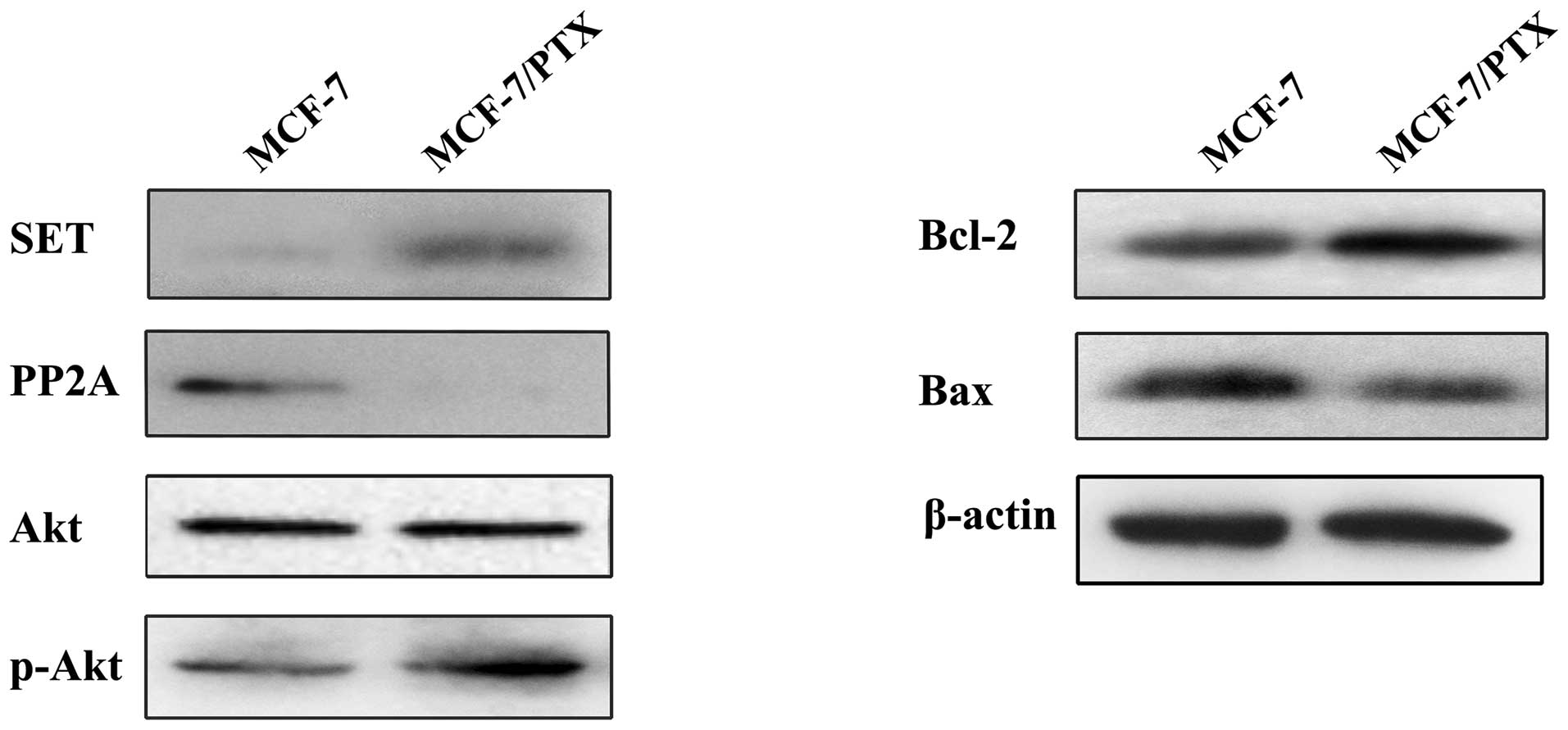
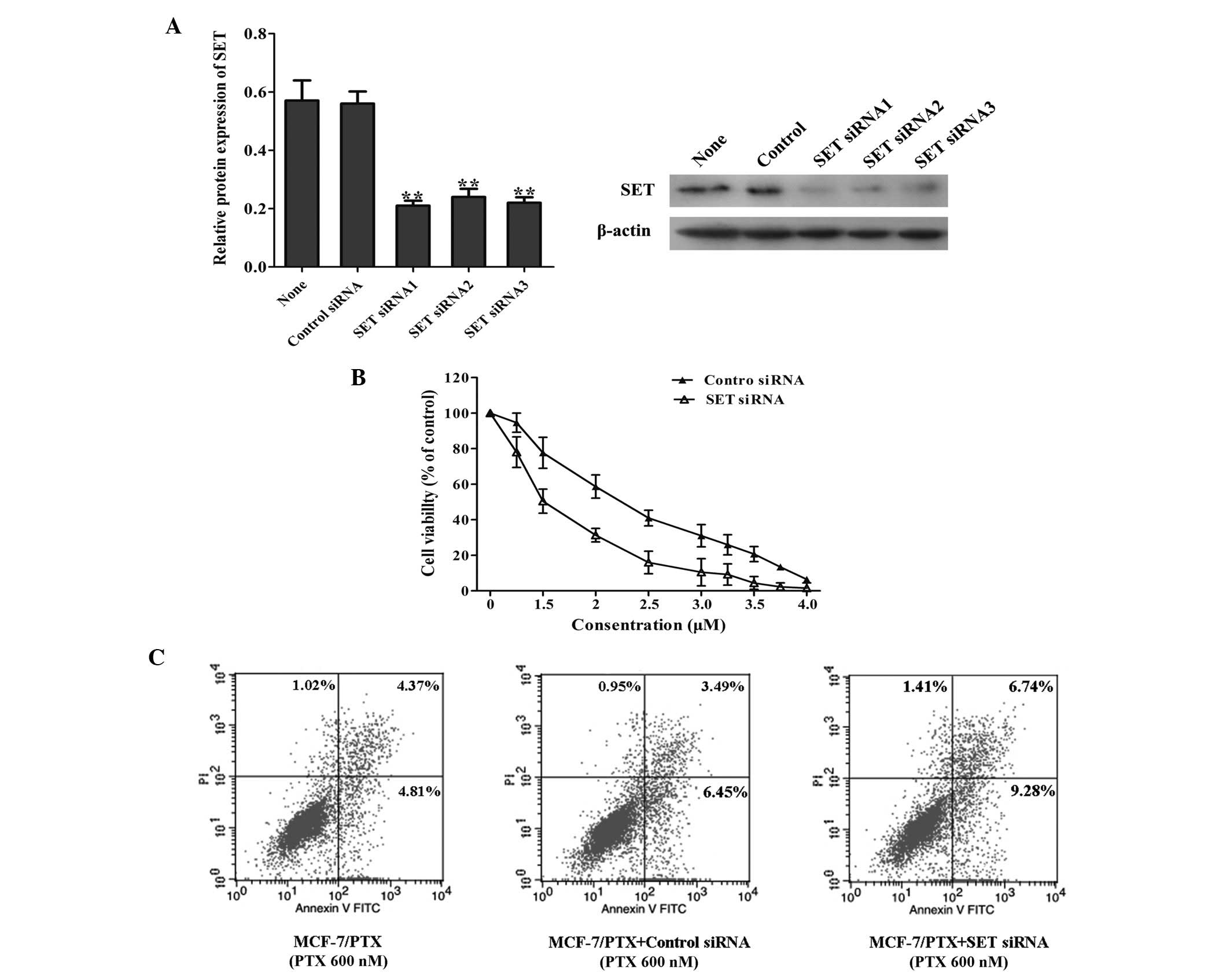
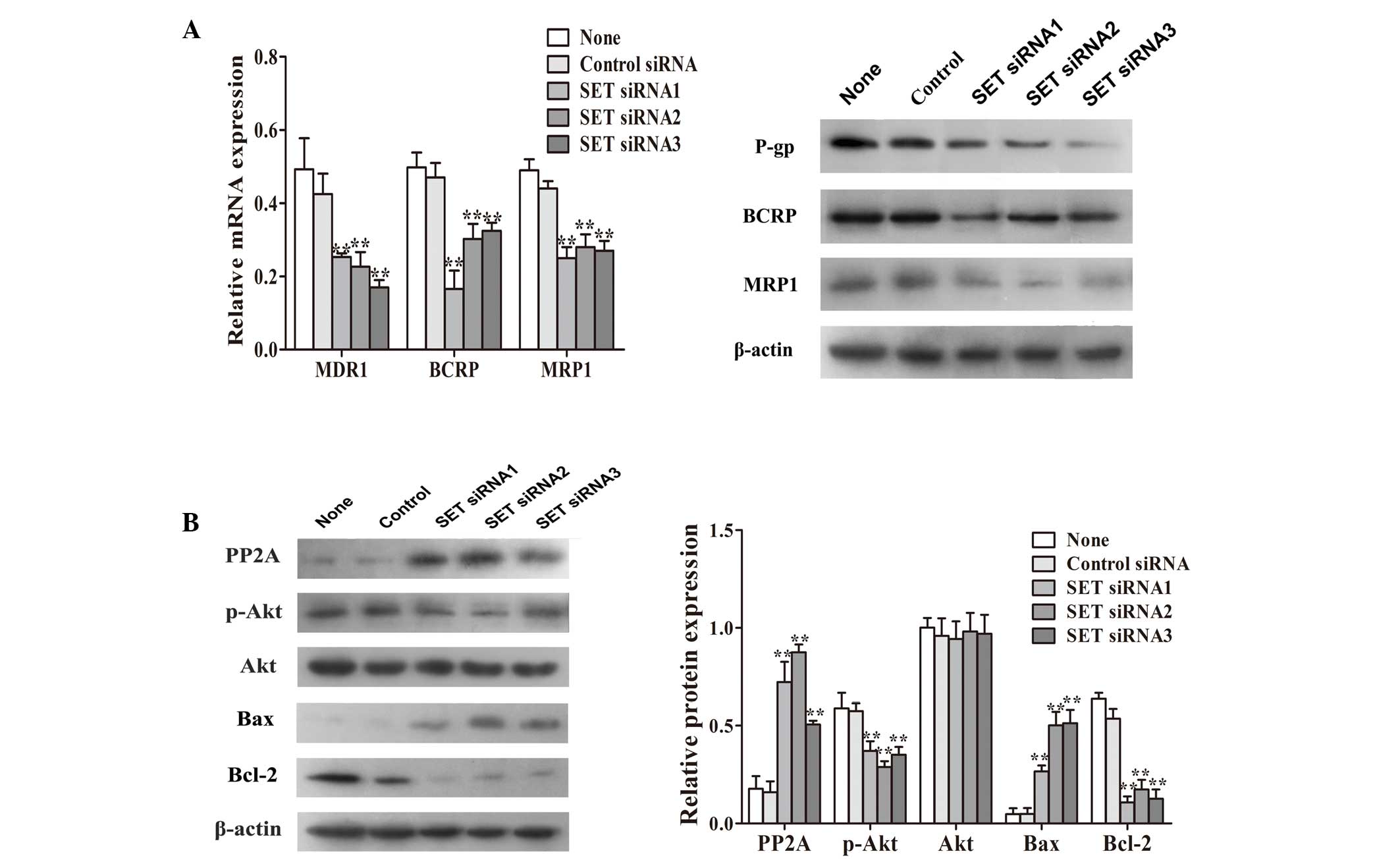
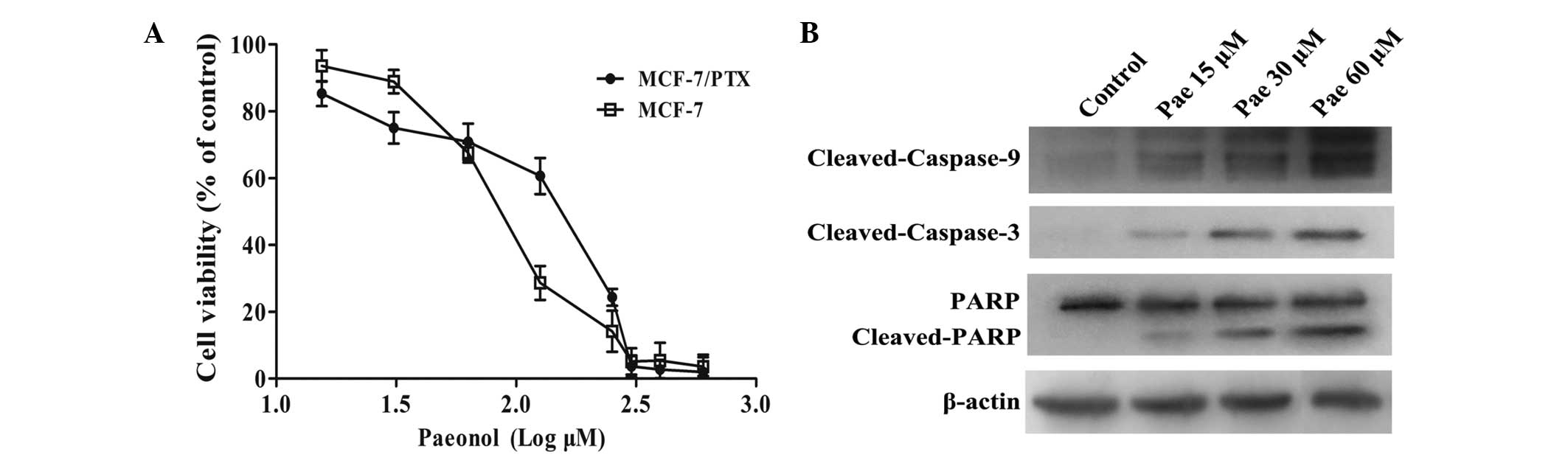
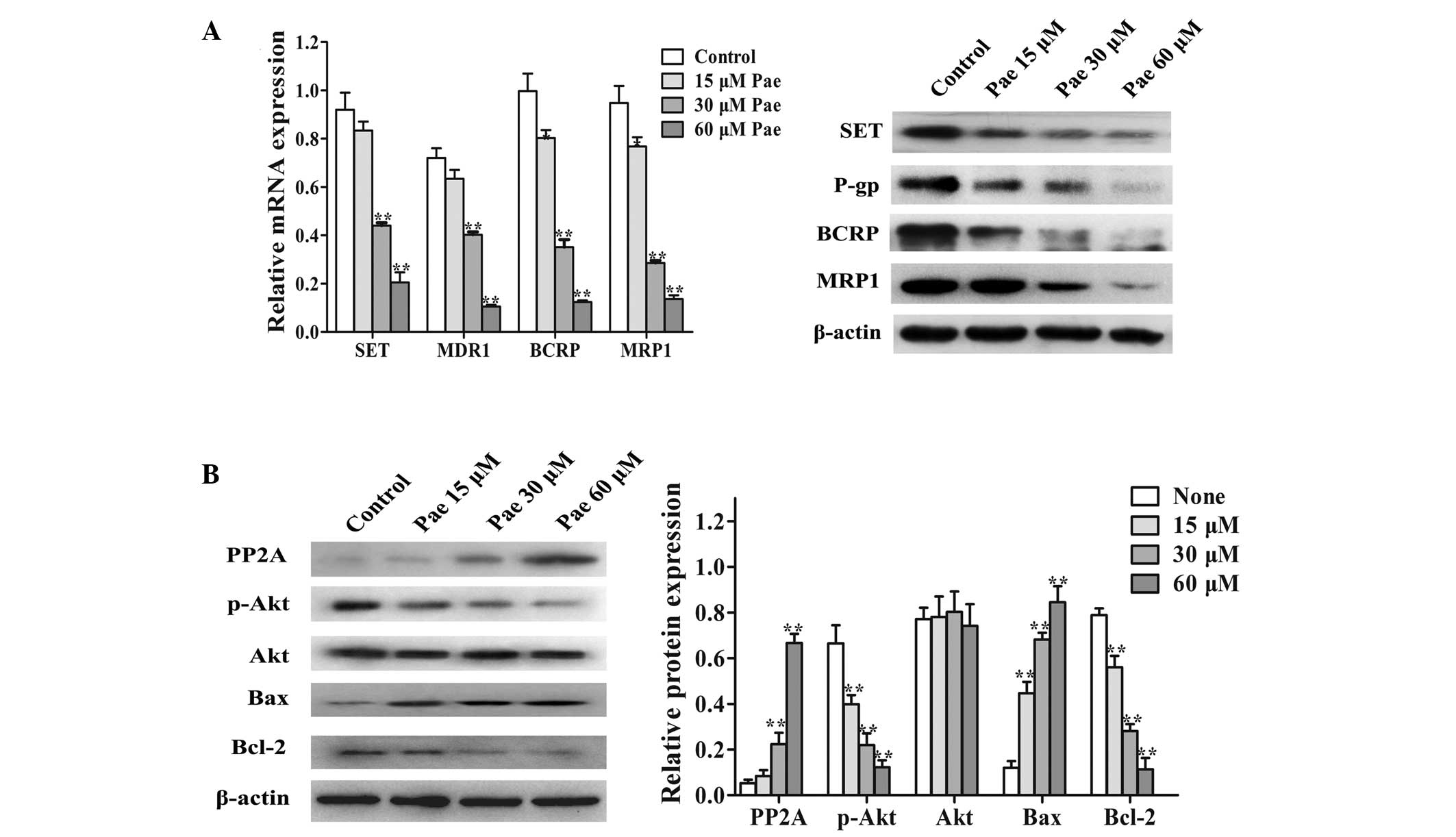
Breast cancer is one of the most prevalent types of malignant tumor. Paclitaxel is widely used in the treatment of breast cancer; however, the major problem contributing to the failure of chemotherapy in breast cancer is the development of drug resistance. Therefore, it is necessary to identify novel therapeutic targets and reversal agents for breast cancer. In the present study, the protein expression levels of SET, protein phosphatase 2A (PP2A) and phosphatidylinositol 3‑kinase (PI3K)/Akt pathway were determined in MCF‑7/PTX human breast carcinoma paclitaxel‑resistant cells using western blot analysis. Small interference RNAs (siRNAs) were used to knock down the gene expression of SET in MCF‑7/PTX cells and the cell viability was assessed following treatment with paclitaxel, using 3‑(4,5‑dimethylthiazol‑2‑yl)‑2,5‑diphenyl tetrazolium bromide assays and flow cytometry. In addition, western blot analysis was used to determined PI3K/Akt pathway activity following SET knockdown. Furthermore, the reversal effects of paeonol on paclitaxel, and its underlying mechanisms of action, were investigated using western blot analysis and reverse transcription‑quantitative polymerase chain reaction. The results demonstrated that increased levels of SET and PI3K/Akt pathway proteins were present in the MCF‑7/PTX cells, compared with normal MCF‑7 cells. Knockdown of SET significantly sensitized MCF‑7/PTX cells to paclitaxel and induced cell apoptosis. In addition, the expression levels of the adenosine triphosphate binding cassette (ABC) transporter proteins were significantly reduced in the MCF‑7/PTX cells compared with the normal MCF‑7 cells. SET‑induced paclitaxel resistance was found to be associated with the activation of the PI3K/Akt pathway. Paeonol significantly reduced the mRNA and protein expression levels of SET in the MCF‑7/PTX cells. Furthermore, paeonol significantly sensitized the MCF‑7/PTX to paclitaxel via regulation of ABC transporters, B cell lymphoma‑2 (Bcl‑2) and Bcl‑2‑associated X protein. In addition, paeonol inhibited SET‑mediated paclitaxel resistance by attenuating PI3K/Akt pathway activity in the MCF‑7/PTX cells. In conclusion, the results of the present study demonstrated that SET was associated with paclitaxel resistance in MCF‑7/PTX cells, and that paeonol reversed paclitaxel resistance in MCF‑7/PTX cells by downregulating the activity of the SET/PP2A/Akt pathway.
View Figures

Figure 1

Figure 2

Figure 3

Figure 4

Figure 5

View References

1 

Bhoo-Pathy N, Yip CH, Hartman M, et al: Breast cancer research in Asia: adopt or adapt Western knowledge? Eur J Cancer. 49:703–709. 2013. View Article : Google Scholar

2 

Kim H, Park GS, Lee JE and Kim JH: A leukotriene B4 receptor-2 is associated with paclitaxel resistance in MCF-7/DOX breast cancer cells. Br J Cancer. 109:351–359. 2013. View Article : Google Scholar : PubMed/NCBI

3 

Ajabnoor GM, Crook T and Coley HM: Paclitaxel resistance is associated with switch from apoptotic to autophagic cell death in MCF-7 breast cancer cells. Cell Death Dis. 3:e2602012. View Article : Google Scholar : PubMed/NCBI

4 

Carrara L, Guzzo F, Roque DM, et al: Differential in vitro sensitivity to patupilone versus paclitaxel in uterine and ovarian carcinosarcoma cell lines is linked to tubulin-beta-III expression. Gynecol Oncol. 125:231–236. 2012. View Article : Google Scholar : PubMed/NCBI

5 

Yin S, Zeng C, Hari M and Cabral F: Random mutagenesis of beta-tubulin defines a set of dispersed mutations that confer paclitaxel resistance. Pharm Res. 29:2994–3006. 2012. View Article : Google Scholar : PubMed/NCBI

6 

Zhang J, Zhao J, Zhang W, et al: Establishment of paclitaxel-resistant cell line and the underlying mechanism on drug resistance. Int J Gynecol Cancer. 22:1450–1456. 2012.PubMed/NCBI

7 

Bhattacharya R and Cabral F: Molecular basis for class V beta-tubulin effects on microtubule assembly and paclitaxel resistance. J Biol Chem. 284:13023–13032. 2009. View Article : Google Scholar : PubMed/NCBI

8 

Miller AV, Hicks MA, Nakajima W, Richardson AC, Windle JJ and Harada H: Paclitaxel-induced apoptosis is BAK-dependent, but BAX and BIM-independent in breast tumor. PLoS One. 8:e606852013. View Article : Google Scholar : PubMed/NCBI

9 

Youns M, Hoheisel JD and Efferth T: Traditional Chinese medicines (TCMs) for molecular targeted therapies of tumours. Curr Drug Discov Technol. 7:37–45. 2010. View Article : Google Scholar : PubMed/NCBI

10 

Lee H, Lee G, Kim H and Bae H: Paeonol, a major compound of moutan cortex, attenuates Cisplatin-induced nephrotoxicity in mice. Evid Based Complement Alternat Med. 2013:3109892013.PubMed/NCBI

11 

Huang H, Chang EJ, Lee Y, Kim JS, Kang SS and Kim HH: A genome-wide microarray analysis reveals anti-inflammatory target genes of paeonol in macrophages. Inflamm Res. 57:189–198. 2008. View Article : Google Scholar : PubMed/NCBI

12 

Lee B, Shin YW, Bae EA, et al: Antiallergic effect of the root of Paeonia lactiflora and its constituents paeoniflorin and paeonol. Arch Pharm Res. 31:445–450. 2008. View Article : Google Scholar

13 

Ishiguro K, Ando T, Maeda O, et al: Paeonol attenuates TNBS-induced colitis by inhibiting NF-kappaB and STAT1 transactivation. Toxicol Appl Pharmacol. 217:35–42. 2006. View Article : Google Scholar : PubMed/NCBI

14 

Zhou J, Zhou L, Hou D, Tang J, Sun J and Bondy SC: Paeonol increases levels of cortical cytochrome oxidase and vascular actin and improves behavior in a rat model of Alzheimer’s disease. Brain Res. 1388:141–147. 2011. View Article : Google Scholar : PubMed/NCBI

15 

Xu SP, Sun GP, Shen YX, Peng WR, Wang H and Wei W: Synergistic effect of combining paeonol and cisplatin on apoptotic induction of human hepatoma cell lines. Acta Pharmacol Sin. 28:869–878. 2007. View Article : Google Scholar : PubMed/NCBI

16 

Kim SA, Lee HJ, Ahn KS, et al: Paeonol exerts anti-angiogenic and anti-metastatic activities through downmodulation of Akt activation and inactivation of matrix metalloproteinases. Biol Pharm Bull. 32:1142–1147. 2009. View Article : Google Scholar : PubMed/NCBI

17 

Fan L, Song B, Sun G, Ma T, Zhong F and Wei W: Endoplasmic reticulum stress-induced resistance to Doxorubicin is reversed by paeonol treatment in human hepatocellular carcinoma cells. PLoS One. 8:e626272013. View Article : Google Scholar : PubMed/NCBI

18 

von Lindern M, van Baal S, Wiegant J, Raap A, Hagemeijer A and Grosveld G: Can, a putative oncogene associated with myeloid leukemogenesis, may be activated by fusion of its 3′ half to different genes: characterization of the set gene. Mol Cell Biol. 12:3346–3355. 1992.PubMed/NCBI

19 

Canela N, Rodriguez-Vilarrupla A, Estanyol JM, et al: The SET protein regulates G2/M transition by modulating cyclin B-cyclin-dependent kinase 1 activity. J Biol Chem. 278:1158–1164. 2003. View Article : Google Scholar

20 

Zhang P, Compagnone NA, Fiore C, et al: Developmental gonadal expression of the transcription factor SET and its target gene, P450c17 (17alpha-hydroxylase/c17,20 lyase). DNA Cell Biol. 20:613–624. 2001. View Article : Google Scholar : PubMed/NCBI

21 

Wagner S, Weber S, Kleinschmidt MA, Nagata K and Bauer UM: SET-mediated promoter hypoacetylation is a prerequisite for coactivation of the estrogen-responsive pS2 gene by PRMT1. J Biol Chem. 281:27242–27250. 2006. View Article : Google Scholar : PubMed/NCBI

22 

Madeira A, Pommet JM, Prochiantz A and Allinquant B: SET protein (TAF1beta, I2PP2A) is involved in neuronal apoptosis induced by an amyloid precursor protein cytoplasmic subdomain. Faseb J. 19:1905–1907. 2005.PubMed/NCBI

23 

Almeida LO, Goto RN, Pestana CR, et al: SET overexpression decreases cell detoxification efficiency: ALDH2 and GSTP1 are downregulated, DDR is impaired and DNA damage accumulates. FEBS J. 279:4615–4628. 2012. View Article : Google Scholar : PubMed/NCBI

24 

Boqun X, Xiaonan D, Yugui C, et al: Expression of SET protein in the ovaries of patients with polycystic ovary syndrome. Int J Endocrinol. 2013:3679562013. View Article : Google Scholar : PubMed/NCBI

25 

Cervoni N, Detich N, Seo SB, Chakravarti D and Szyf M: The onco-protein Set/TAF-1beta, an inhibitor of histone acetyltransferase, inhibits active demethylation of DNA, integrating DNA methylation and transcriptional silencing. J Biol Chem. 277:25026–25031. 2002. View Article : Google Scholar : PubMed/NCBI

26 

Switzer CH, Cheng RY, Vitek TM, Christensen DJ, Wink DA and Vitek MP: Targeting SET/I (2) PP2A oncoprotein functions as a multi-pathway strategy for cancer therapy. Oncogene. 30:2504–2513. 2011. View Article : Google Scholar : PubMed/NCBI

27 

Chen S, Dong Q, Hu S, et al: Proteomic analysis of the proteins that are associated with the resistance to paclitaxel in human breast cancer cells. Mol Biosyst. 10:294–303. 2014. View Article : Google Scholar

28 

Chen LM, Liang YJ, Ruan JW, et al: Reversal of P-gp mediated multidrug resistance in-vitro and in-vivo by FG020318. J Pharm Pharmacol. 56:1061–1066. 2004. View Article : Google Scholar : PubMed/NCBI

29 

Liu XD, Sun H and Liu GT: 5-Bromotetrandrine enhances the sensitivity of doxorubicin-induced apoptosis in intrinsic resistant human hepatic cancer Bel7402 cells. Cancer Lett. 292:24–31. 2010. View Article : Google Scholar

30 

Fazly BB, Iranshahi M, Naderinasab M, Hajian S, Sabeti Z and Masumi E: Evaluation of the effects of galbanic acid from Ferula szowitsiana and conferol from F. badrakema, as modulators of multi-drug resistance in clinical isolates of Escherichia coli and Staphylococcus aureus. Res Pharm Sci. 5:21–28. 2010.

31 

Cai J, Chen S, Zhang W, et al: Salvianolic acid A reverses paclitaxel resistance in human breast cancer MCF-7 cells via targeting the expression of transgelin 2 and attenuating PI3 K/Akt pathway. Phytomedicine. 21:1725–1732. 2014. View Article : Google Scholar : PubMed/NCBI

32 

Chen SY, Hu SS, Dong Q, et al: Establishment of paclitaxel-resistant breast cancer cell line and nude mice models and underlying multidrug resistance mechanisms in vitro and in vivo. Asian Pac J Cancer Prev. 14:6135–6140. 2013. View Article : Google Scholar

33 

Nakanishi T and Ross DD: Breast cancer resistance protein (BCRP/ABCG2): its role in multidrug resistance and regulation of its gene expression. Chin J Cancer. 31:73–99. 2012. View Article : Google Scholar

34 

Li Z, Tian T, Hu X, et al: Six1 mediates resistance to paclitaxel in breast cancer cells. Biochem Biophys Res Commun. 441:538–543. 2013. View Article : Google Scholar : PubMed/NCBI

35 

Leopoldino AM, Squarize CH, Garcia CB, et al: SET protein accumulates in HNSCC and contributes to cell survival: antioxidant defense, Akt phosphorylation and AVOs acidification. Oral Oncol. 48:1106–1113. 2012. View Article : Google Scholar : PubMed/NCBI

36 

Rooswinkel RW, van de Kooij B, de Vries E, et al: Anti-apoptotic potency of Bcl-2 proteins primarily relies on their stability, not binding selectivity. Blood. 123:2806–2815. 2014. View Article : Google Scholar : PubMed/NCBI

37 

Mao Z, Zhou J, Luan J, Sheng W, Shen X and Dong X: Tamoxifen reduces P-gp-mediated multidrug resistance via inhibiting the PI3K/Akt signaling pathway in ER-negative human gastric cancer cells. Biomed Pharmacother. 68:179–183. 2014. View Article : Google Scholar

38 

Kazi AA, Gilani RA, Schech AJ, et al: Nonhypoxic regulation and role of hypoxia-inducible factor 1 in aromatase inhibitor resistant breast cancer. Breast Cancer Res. 16:R152014. View Article : Google Scholar : PubMed/NCBI

39 

Cheng L, Luo S, Jin C, Ma H, Zhou H and Jia L: FUT family mediates the multidrug resistance of human hepatocellular carcinoma via the PI3K/Akt signaling pathway. Cell Death Dis. 4:e9232013. View Article : Google Scholar : PubMed/NCBI

40 

Pick A and Wiese M: Tyrosine kinase inhibitors influence ABCG2 expression in EGFR-positive MDCK BCRP cells via the PI3K/Akt signaling pathway. Chem Med Chem. 7:650–662. 2012. View Article : Google Scholar : PubMed/NCBI

41 

Yin J, Wu N, Zeng F, Cheng C, Kang K and Yang H: Paeonol induces apoptosis in human ovarian cancer cells. Acta Histochem. 115:835–839. 2013. View Article : Google Scholar : PubMed/NCBI

42 

Bao MH, Zhang YW and Zhou HH: Paeonol suppresses oxidized low-density lipoprotein induced endothelial cell apoptosis via activation of LOX-1/p38MAPK/NF-kappaB pathway. J Ethnopharmacol. 146:543–551. 2013. View Article : Google Scholar : PubMed/NCBI

43 

Ponnurangam S, Standing D, Rangarajan P and Subramaniam D: Tandutinib inhibits the Akt/mTOR signaling pathway to inhibit colon cancer growth. Mol Cancer Ther. 12:598–609. 2013. View Article : Google Scholar : PubMed/NCBI

Related Articles

  • Abstract
  • View
  • Download
  • Twitter
Copy and paste a formatted citation
Spandidos Publications style
Zhang W, Cai J, Chen S, Zheng X, Hu S, Dong W, Lu J, Xing J and Dong Y: Paclitaxel resistance in MCF-7/PTX cells is reversed by paeonol through suppression of the SET/phosphatidylinositol 3-kinase/Akt pathway. Mol Med Rep 12: 1506-1514, 2015.
APA
Zhang, W., Cai, J., Chen, S., Zheng, X., Hu, S., Dong, W. ... Dong, Y. (2015). Paclitaxel resistance in MCF-7/PTX cells is reversed by paeonol through suppression of the SET/phosphatidylinositol 3-kinase/Akt pathway. Molecular Medicine Reports, 12, 1506-1514. https://doi.org/10.3892/mmr.2015.3468
MLA
Zhang, W., Cai, J., Chen, S., Zheng, X., Hu, S., Dong, W., Lu, J., Xing, J., Dong, Y."Paclitaxel resistance in MCF-7/PTX cells is reversed by paeonol through suppression of the SET/phosphatidylinositol 3-kinase/Akt pathway". Molecular Medicine Reports 12.1 (2015): 1506-1514.
Chicago
Zhang, W., Cai, J., Chen, S., Zheng, X., Hu, S., Dong, W., Lu, J., Xing, J., Dong, Y."Paclitaxel resistance in MCF-7/PTX cells is reversed by paeonol through suppression of the SET/phosphatidylinositol 3-kinase/Akt pathway". Molecular Medicine Reports 12, no. 1 (2015): 1506-1514. https://doi.org/10.3892/mmr.2015.3468
Copy and paste a formatted citation
x
Spandidos Publications style
Zhang W, Cai J, Chen S, Zheng X, Hu S, Dong W, Lu J, Xing J and Dong Y: Paclitaxel resistance in MCF-7/PTX cells is reversed by paeonol through suppression of the SET/phosphatidylinositol 3-kinase/Akt pathway. Mol Med Rep 12: 1506-1514, 2015.
APA
Zhang, W., Cai, J., Chen, S., Zheng, X., Hu, S., Dong, W. ... Dong, Y. (2015). Paclitaxel resistance in MCF-7/PTX cells is reversed by paeonol through suppression of the SET/phosphatidylinositol 3-kinase/Akt pathway. Molecular Medicine Reports, 12, 1506-1514. https://doi.org/10.3892/mmr.2015.3468
MLA
Zhang, W., Cai, J., Chen, S., Zheng, X., Hu, S., Dong, W., Lu, J., Xing, J., Dong, Y."Paclitaxel resistance in MCF-7/PTX cells is reversed by paeonol through suppression of the SET/phosphatidylinositol 3-kinase/Akt pathway". Molecular Medicine Reports 12.1 (2015): 1506-1514.
Chicago
Zhang, W., Cai, J., Chen, S., Zheng, X., Hu, S., Dong, W., Lu, J., Xing, J., Dong, Y."Paclitaxel resistance in MCF-7/PTX cells is reversed by paeonol through suppression of the SET/phosphatidylinositol 3-kinase/Akt pathway". Molecular Medicine Reports 12, no. 1 (2015): 1506-1514. https://doi.org/10.3892/mmr.2015.3468
Follow us
  • Twitter
  • LinkedIn
  • Facebook
About
  • Spandidos Publications
  • Careers
  • Cookie Policy
  • Privacy Policy
How can we help?
  • Help
  • Live Chat
  • Contact
  • Email to our Support Team