Spandidos Publications Logo
  • About
    • About Spandidos
    • Aims and Scopes
    • Abstracting and Indexing
    • Editorial Policies
    • Reprints and Permissions
    • Job Opportunities
    • Terms and Conditions
    • Contact
  • Journals
    • All Journals
    • Oncology Letters
      • Oncology Letters
      • Information for Authors
      • Editorial Policies
      • Editorial Board
      • Aims and Scope
      • Abstracting and Indexing
      • Bibliographic Information
      • Archive
    • International Journal of Oncology
      • International Journal of Oncology
      • Information for Authors
      • Editorial Policies
      • Editorial Board
      • Aims and Scope
      • Abstracting and Indexing
      • Bibliographic Information
      • Archive
    • Molecular and Clinical Oncology
      • Molecular and Clinical Oncology
      • Information for Authors
      • Editorial Policies
      • Editorial Board
      • Aims and Scope
      • Abstracting and Indexing
      • Bibliographic Information
      • Archive
    • Experimental and Therapeutic Medicine
      • Experimental and Therapeutic Medicine
      • Information for Authors
      • Editorial Policies
      • Editorial Board
      • Aims and Scope
      • Abstracting and Indexing
      • Bibliographic Information
      • Archive
    • International Journal of Molecular Medicine
      • International Journal of Molecular Medicine
      • Information for Authors
      • Editorial Policies
      • Editorial Board
      • Aims and Scope
      • Abstracting and Indexing
      • Bibliographic Information
      • Archive
    • Biomedical Reports
      • Biomedical Reports
      • Information for Authors
      • Editorial Policies
      • Editorial Board
      • Aims and Scope
      • Abstracting and Indexing
      • Bibliographic Information
      • Archive
    • Oncology Reports
      • Oncology Reports
      • Information for Authors
      • Editorial Policies
      • Editorial Board
      • Aims and Scope
      • Abstracting and Indexing
      • Bibliographic Information
      • Archive
    • Molecular Medicine Reports
      • Molecular Medicine Reports
      • Information for Authors
      • Editorial Policies
      • Editorial Board
      • Aims and Scope
      • Abstracting and Indexing
      • Bibliographic Information
      • Archive
    • World Academy of Sciences Journal
      • World Academy of Sciences Journal
      • Information for Authors
      • Editorial Policies
      • Editorial Board
      • Aims and Scope
      • Abstracting and Indexing
      • Bibliographic Information
      • Archive
    • International Journal of Functional Nutrition
      • International Journal of Functional Nutrition
      • Information for Authors
      • Editorial Policies
      • Editorial Board
      • Aims and Scope
      • Abstracting and Indexing
      • Bibliographic Information
      • Archive
    • International Journal of Epigenetics
      • International Journal of Epigenetics
      • Information for Authors
      • Editorial Policies
      • Editorial Board
      • Aims and Scope
      • Abstracting and Indexing
      • Bibliographic Information
      • Archive
    • Medicine International
      • Medicine International
      • Information for Authors
      • Editorial Policies
      • Editorial Board
      • Aims and Scope
      • Abstracting and Indexing
      • Bibliographic Information
      • Archive
  • Articles
  • Information
    • Information for Authors
    • Information for Reviewers
    • Information for Librarians
    • Information for Advertisers
    • Conferences
  • Language Editing
Spandidos Publications Logo
  • About
    • About Spandidos
    • Aims and Scopes
    • Abstracting and Indexing
    • Editorial Policies
    • Reprints and Permissions
    • Job Opportunities
    • Terms and Conditions
    • Contact
  • Journals
    • All Journals
    • Biomedical Reports
      • Information for Authors
      • Editorial Policies
      • Editorial Board
      • Aims and Scope
      • Abstracting and Indexing
      • Bibliographic Information
      • Archive
    • Experimental and Therapeutic Medicine
      • Information for Authors
      • Editorial Policies
      • Editorial Board
      • Aims and Scope
      • Abstracting and Indexing
      • Bibliographic Information
      • Archive
    • International Journal of Epigenetics
      • Information for Authors
      • Editorial Policies
      • Editorial Board
      • Aims and Scope
      • Abstracting and Indexing
      • Bibliographic Information
      • Archive
    • International Journal of Functional Nutrition
      • Information for Authors
      • Editorial Policies
      • Editorial Board
      • Aims and Scope
      • Abstracting and Indexing
      • Bibliographic Information
      • Archive
    • International Journal of Molecular Medicine
      • Information for Authors
      • Editorial Policies
      • Editorial Board
      • Aims and Scope
      • Abstracting and Indexing
      • Bibliographic Information
      • Archive
    • International Journal of Oncology
      • Information for Authors
      • Editorial Policies
      • Editorial Board
      • Aims and Scope
      • Abstracting and Indexing
      • Bibliographic Information
      • Archive
    • Medicine International
      • Information for Authors
      • Editorial Policies
      • Editorial Board
      • Aims and Scope
      • Abstracting and Indexing
      • Bibliographic Information
      • Archive
    • Molecular and Clinical Oncology
      • Information for Authors
      • Editorial Policies
      • Editorial Board
      • Aims and Scope
      • Abstracting and Indexing
      • Bibliographic Information
      • Archive
    • Molecular Medicine Reports
      • Information for Authors
      • Editorial Policies
      • Editorial Board
      • Aims and Scope
      • Abstracting and Indexing
      • Bibliographic Information
      • Archive
    • Oncology Letters
      • Information for Authors
      • Editorial Policies
      • Editorial Board
      • Aims and Scope
      • Abstracting and Indexing
      • Bibliographic Information
      • Archive
    • Oncology Reports
      • Information for Authors
      • Editorial Policies
      • Editorial Board
      • Aims and Scope
      • Abstracting and Indexing
      • Bibliographic Information
      • Archive
    • World Academy of Sciences Journal
      • Information for Authors
      • Editorial Policies
      • Editorial Board
      • Aims and Scope
      • Abstracting and Indexing
      • Bibliographic Information
      • Archive
  • Articles
  • Information
    • For Authors
    • For Reviewers
    • For Librarians
    • For Advertisers
    • Conferences
  • Language Editing
Login Register Submit
  • This site uses cookies
  • You can change your cookie settings at any time by following the instructions in our Cookie Policy. To find out more, you may read our Privacy Policy.

    I agree
Search articles by DOI, keyword, author or affiliation
Search
Advanced Search
presentation
Molecular Medicine Reports
Join Editorial Board Propose a Special Issue
Print ISSN: 1791-2997 Online ISSN: 1791-3004
Journal Cover
August-2015 Volume 12 Issue 2

Full Size Image

Sign up for eToc alerts
Recommend to Library

Journals

International Journal of Molecular Medicine

International Journal of Molecular Medicine

International Journal of Molecular Medicine is an international journal devoted to molecular mechanisms of human disease.

International Journal of Oncology

International Journal of Oncology

International Journal of Oncology is an international journal devoted to oncology research and cancer treatment.

Molecular Medicine Reports

Molecular Medicine Reports

Covers molecular medicine topics such as pharmacology, pathology, genetics, neuroscience, infectious diseases, molecular cardiology, and molecular surgery.

Oncology Reports

Oncology Reports

Oncology Reports is an international journal devoted to fundamental and applied research in Oncology.

Experimental and Therapeutic Medicine

Experimental and Therapeutic Medicine

Experimental and Therapeutic Medicine is an international journal devoted to laboratory and clinical medicine.

Oncology Letters

Oncology Letters

Oncology Letters is an international journal devoted to Experimental and Clinical Oncology.

Biomedical Reports

Biomedical Reports

Explores a wide range of biological and medical fields, including pharmacology, genetics, microbiology, neuroscience, and molecular cardiology.

Molecular and Clinical Oncology

Molecular and Clinical Oncology

International journal addressing all aspects of oncology research, from tumorigenesis and oncogenes to chemotherapy and metastasis.

World Academy of Sciences Journal

World Academy of Sciences Journal

Multidisciplinary open-access journal spanning biochemistry, genetics, neuroscience, environmental health, and synthetic biology.

International Journal of Functional Nutrition

International Journal of Functional Nutrition

Open-access journal combining biochemistry, pharmacology, immunology, and genetics to advance health through functional nutrition.

International Journal of Epigenetics

International Journal of Epigenetics

Publishes open-access research on using epigenetics to advance understanding and treatment of human disease.

Medicine International

Medicine International

An International Open Access Journal Devoted to General Medicine.

Journal Cover
August-2015 Volume 12 Issue 2

Full Size Image

Sign up for eToc alerts
Recommend to Library

  • Article
  • Citations
    • Cite This Article
    • Download Citation
    • Create Citation Alert
    • Remove Citation Alert
    • Cited By
  • Similar Articles
    • Related Articles (in Spandidos Publications)
    • Similar Articles (Google Scholar)
    • Similar Articles (PubMed)
  • Download PDF
  • Download XML
  • View XML
Article

Propofol post‑conditioning protects the blood brain barrier by decreasing matrix metalloproteinase‑9 and aquaporin‑4 expression and improves the neurobehavioral outcome in a rat model of focal cerebral ischemia‑reperfusion injury

  • Authors:
    • Feng‑Tao Ji
    • Jian‑Jun Liang
    • Li‑Ping Miao
    • Qiang Wu
    • Ming‑Hui Cao
  • View Affiliations / Copyright

    Affiliations: Department of Anesthesiology, Sun Yat‑Sen Memorial Hospital of Sun Yat‑Sen University, Guangzhou, Guangdong 510120, P.R. China
  • Pages: 2049-2055
    |
    Published online on: April 1, 2015
       https://doi.org/10.3892/mmr.2015.3585
  • Expand metrics +
Metrics: Total Views: 0 (Spandidos Publications: | PMC Statistics: )
Metrics: Total PDF Downloads: 0 (Spandidos Publications: | PMC Statistics: )
Cited By (CrossRef): 0 citations Loading Articles...

This article is mentioned in:


Abstract

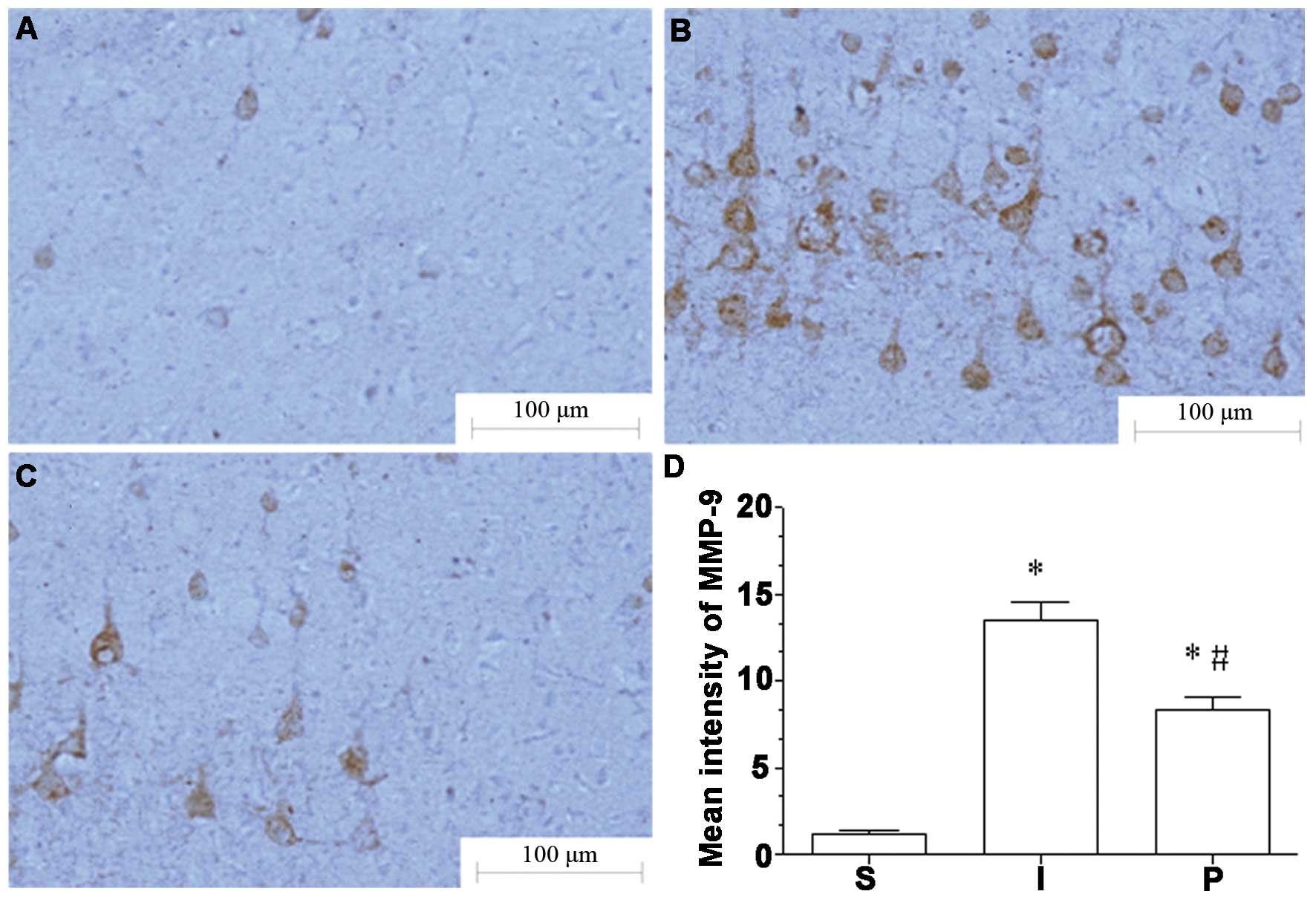
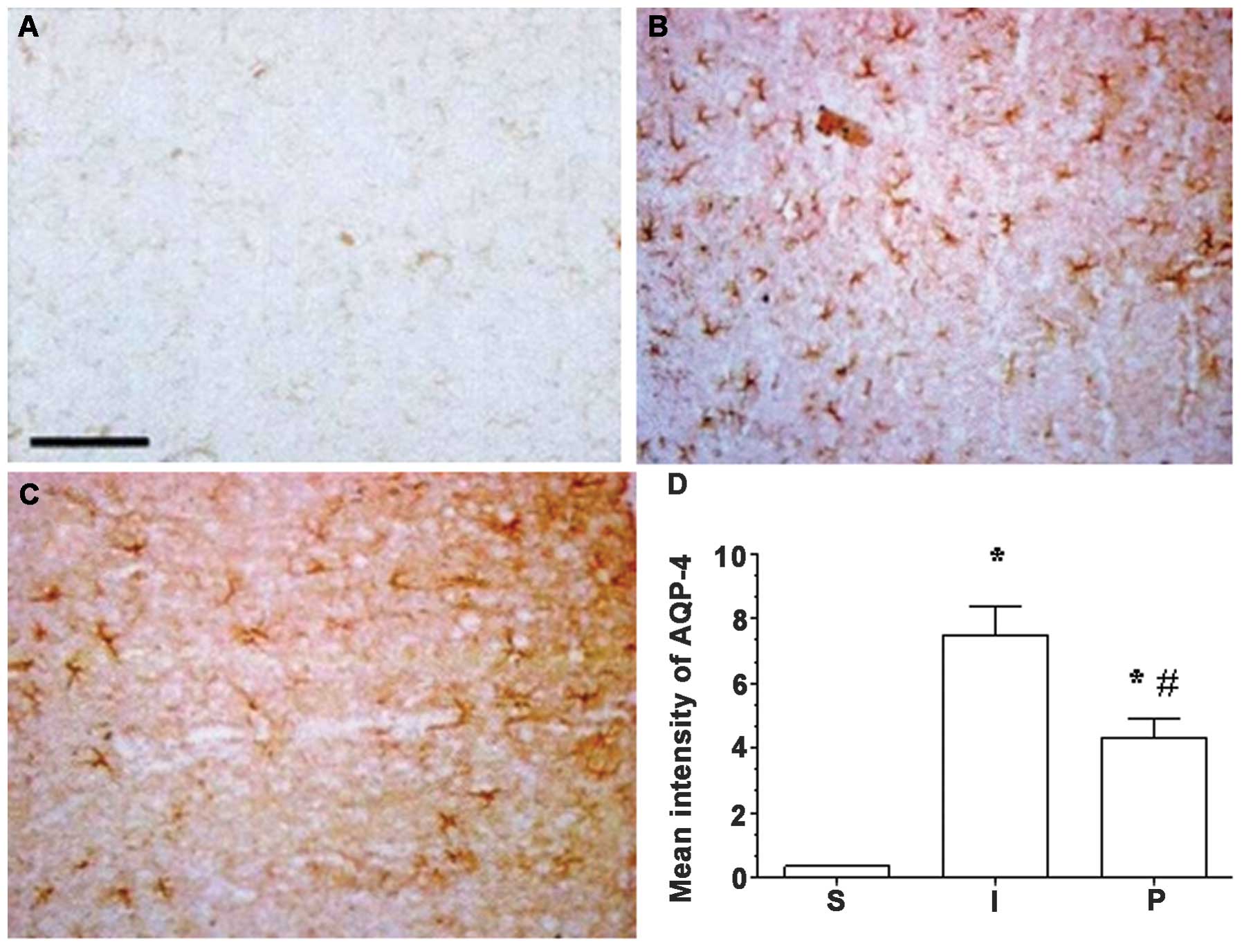
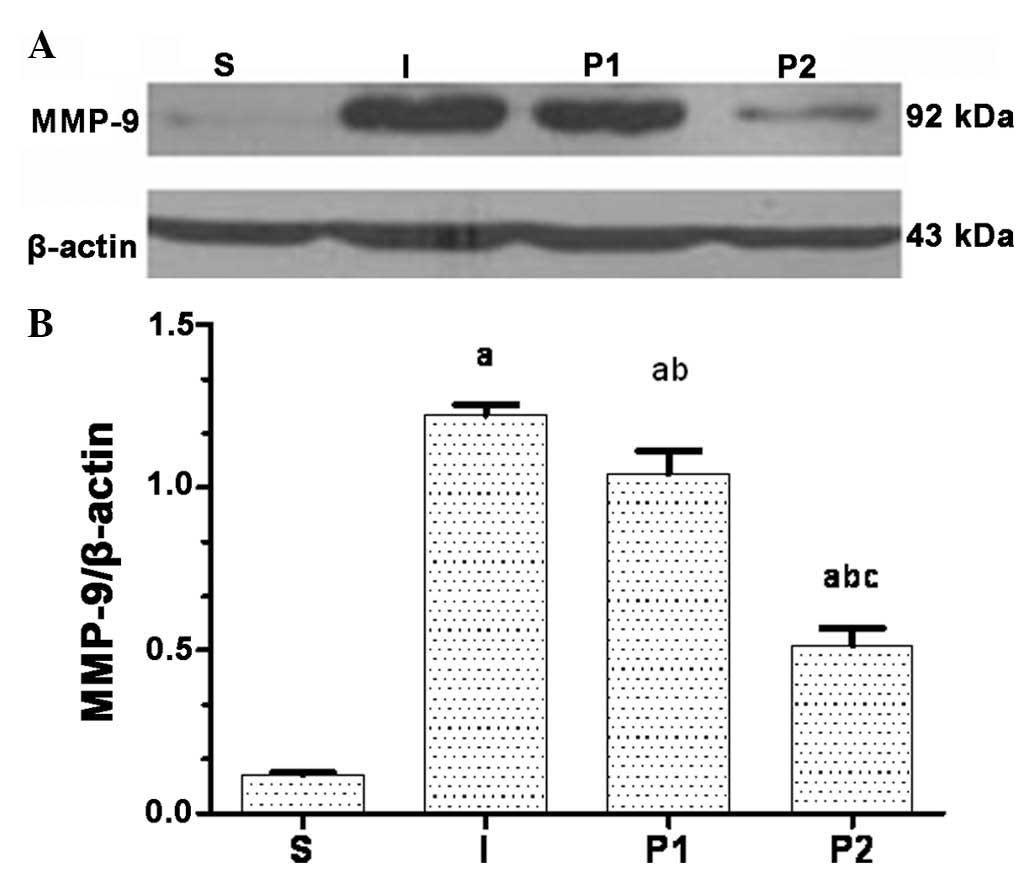
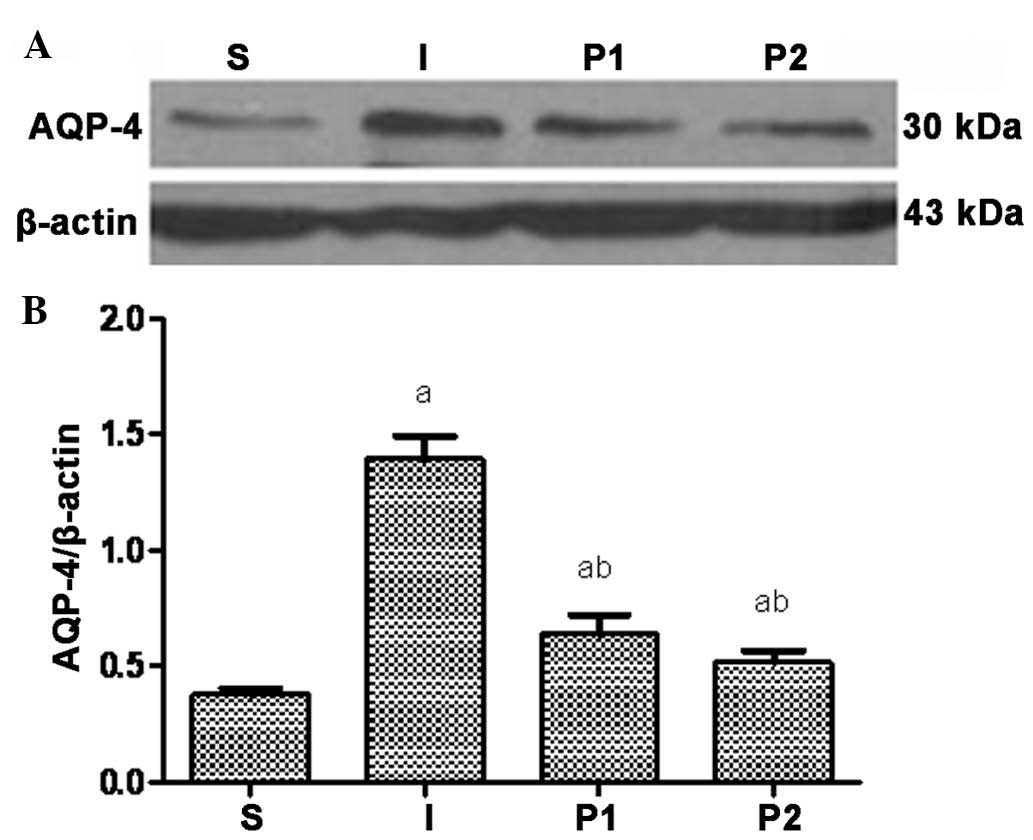
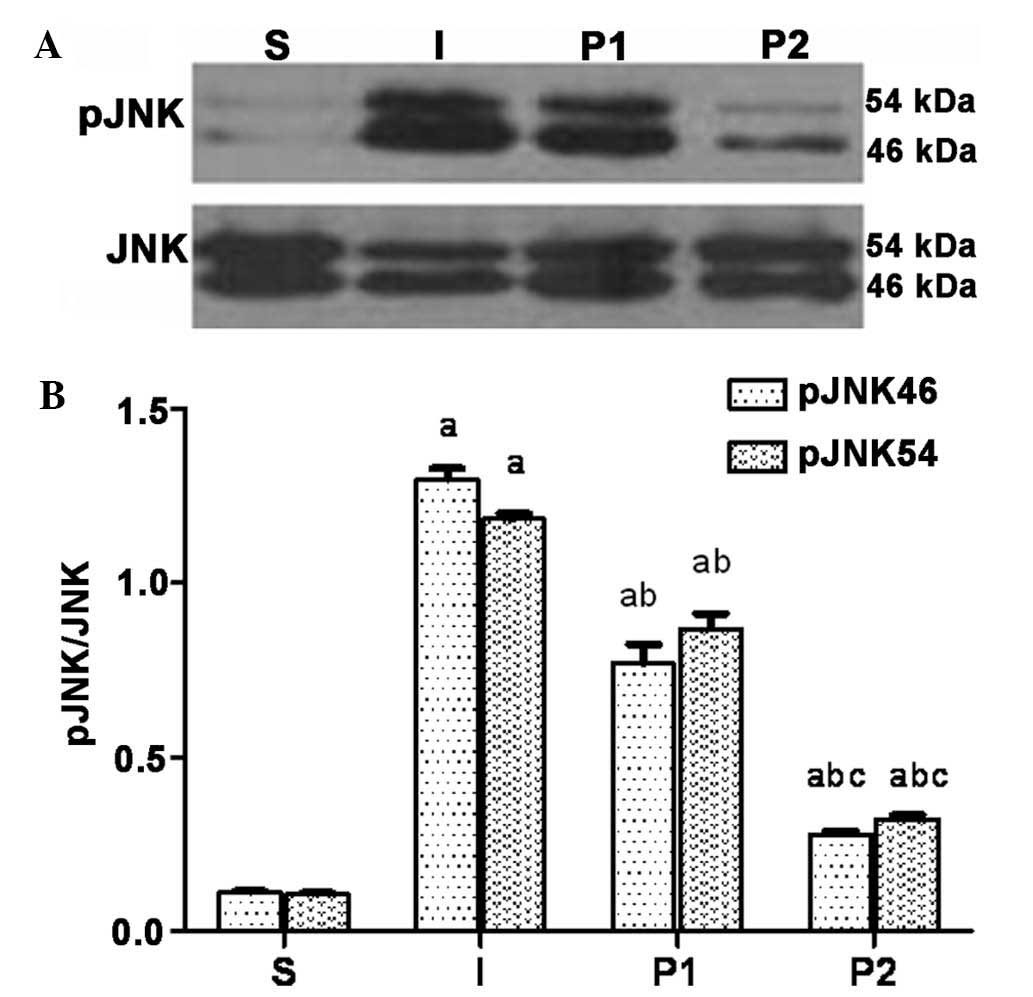
Propofol, an intravenous anesthetic, inhibits neuronal apoptosis induced by ischemic stroke, protects the brain from ischemia/reperfusion injury and improves neuronal function. However, whether propofol is able to protect the blood brain barrier (BBB) and the underlying mechanisms have remained to be elucidated. In the present study, a rat model of cerebral ischemia/reperfusion was established, using a thread embolism to achieve middle cerebral artery occlusion. Rats were treated with propofol (propofol post‑conditioning) or physiological saline (control) administered by intravenous injection 30 min following reperfusion. Twenty-four hours following reperfusion, neurobehavioral manifestations were assessed. The levels of cephaloedema, damage to the BBB and expression levels of matrix metalloproteinase-9 (MMP‑9), aquaporin-4 (AQP‑4) and phosphorylated c-Jun N-terminal kinase (pJNK) were determined in order to evaluate the effects of propofol on the BBB. In comparison to the cerebral ischemia/reperfusion group, the levels of brain water content and Evans blue content, as well as the expression levels of MMP‑9, AQP‑4 and pJNK were significantly reduced in the propofol post‑conditioning group. These results indicated that propofol post‑conditioning improved the neurobehavioral manifestations and attenuated the BBB damage and cephaloedema induced following cerebral ischemia/reperfusion. This effect may be due to the inhibition of MMP‑9 and AQP‑4 expression, and the concurrent decrease in JNK phosphorylation.
View Figures

Figure 1

Figure 2

Figure 3

Figure 4

Figure 5

View References

1 

Ginsberg MD: Role of free radical reactions in ischaemic brain injury. Drug News Perspect. 14:81–88. 2001.

2 

Pluta R: Pathological opening of the blood-brain barrier to horseradish peroxidase and amyloid precursor protein following ischemia-reperfusion brain injury. Chemotherapy. 51:223–226. 2005. View Article : Google Scholar : PubMed/NCBI

3 

Tu XK, Yang WZ, Shi SS, et al: 5-lipoxygenase inhibitor zileuton attenuates ischaemic brain damage: involvement of matrix metalloproteinase 9. Neurol Res. 31:848–852. 2009. View Article : Google Scholar : PubMed/NCBI

4 

Papadopoulos MC and Verkman AS: Aquaporin-4 and brain edema. Pediatr Nephrol. 22:778–784. 2007. View Article : Google Scholar : PubMed/NCBI

5 

Vikman P, Ansar S, Henriksson M, et al: Cerebral ischemia induces transcription of inflammatory and extracellular-matrix-related genes in rat cerebral arteries. Exp Brain Res. 183:499–510. 2007. View Article : Google Scholar : PubMed/NCBI

6 

Yatsushige H, Ostrowski RP, Tsubokawa T, et al: Role of c-jun N-terminal kinase in early brain injury after subarachnoid hemorrhage. J Neurosci Res. 85:1436–1448. 2007. View Article : Google Scholar : PubMed/NCBI

7 

Engelhard K, Werner C, Eberspächer E, et al: Influence of propofol on neuronal damage and apoptotic factors after incomplete cerebral ischemia and reperfusion in rats: a long-term observation. Anesthesiology. 101:912–917. 2004. View Article : Google Scholar : PubMed/NCBI

8 

Wang H, Luo M, Li C and Wang G: Propofol post-conditioning induced long-term neuroprotection and reduced internalization of AMPAR GluR2 subunit in a rat model of focal cerebral ischemia/reperfusion. J Neurochem. 119:210–219. 2011. View Article : Google Scholar : PubMed/NCBI

9 

Wang HY, Wang GL, Yu YH and Wang Y: The role of phosphoinositide-3-kinase/Akt pathway in propofol-induced postconditioning against focal cerebral ischemia-reperfusion injury in rats. Brain Res. 1297:177–184. 2009. View Article : Google Scholar : PubMed/NCBI

10 

Xing B, Chen H, Zhang M, et al: Ischaemic post-conditioning protects brain and reduces inflammation in a rat model of focal cerebral ischemia/reperfusion. J Neurochem. 105:1737–1745. 2008. View Article : Google Scholar : PubMed/NCBI

11 

Longa EZ, Weinstein PR, Carlson S and Cummins R: Reversible middle cerebral artery occlusion without craniotomy in rats. Stroke. 20:84–91. 1989. View Article : Google Scholar : PubMed/NCBI

12 

Uyama O, Okamura N, Yanase M, et al: Quantitative evaluation of vascular permeability in the gerbil brain after transient ischemia using Evans blue fluorescence. J Cereb Blood Flow Metab. 8:282–284. 1988. View Article : Google Scholar : PubMed/NCBI

13 

Zador Z, Stiver S, Wang V and Manley G: Role of aquaporin-4 in cerebral edema and stroke. Handb Exp Pharmacol. 190:159–170. 2009.

14 

Ho JD, Yeh R, Sandstrom A, et al: Crystal structure of human aquaporin 4 at 1.8 A and its mechanism of conductance. Proc Natl Acad Sci USA. 106:7437–7442. 2009. View Article : Google Scholar : PubMed/NCBI

15 

Manley GT, Fujimura M, Ma T, et al: Aquaporin-4 deletion in mice reduces brain edema after acute water intoxication and ischaemic stroke. Nat Med. 6:159–163. 2000. View Article : Google Scholar : PubMed/NCBI

16 

Heo JH, Lucero J, Abumiya T, Koziol JA, Copeland BR and del Zoppo GJ: Matrix metalloproteinases increase very early during experimental focal cerebral ischemia. J Cereb Blood Flow Metab. 19:624–633. 2009.

17 

Barr TL, Latour LL, Lee KY, et al: Blood-brain barrier disruption in humans is independently associated with increased matrix metalloproteinase-9. Stroke. 41:e123–e128. 2010. View Article : Google Scholar

18 

Lee K, Lee JS, Jang HJ, et al: Chlorogenic acid ameliorates brain damage and edema by inhibiting matrix metalloproteinase-2 and 9 in a rat model of focal cerebral ischemia. Eur J Pharmacol. 689:89–95. 2012. View Article : Google Scholar : PubMed/NCBI

19 

Hartz AM, Bauer B, Soldner EL, et al: Amyloid-β contributes to blood-brain barrier leakage in transgenic human amyloid precursor protein mice and in humans with cerebral amyloid angiopathy. Stroke. 43:514–523. 2012. View Article : Google Scholar

20 

Wang Z, Meng CJ, Shen XM, et al: Potential contribution of hypoxia-inducible factor-1α, aquaporin-4, and matrix metalloproteinase-9 to blood-brain barrier disruption and brain edema after experimental subarachnoid hemorrhage. J Mol Neurosci. 48:273–280. 2012. View Article : Google Scholar : PubMed/NCBI

21 

Igarashi H, Huber VJ, Tsujita M and Nakada T: Pretreatment with a novel aquaporin 4 inhibitor, TGN-020, significantly reduces ischaemic cerebral edema. Neurol Sci. 32:113–116. 2011. View Article : Google Scholar :

22 

Hu Q, Chen C, Khatibi NH, et al: Lentivirus-mediated transfer of MMP-9 shRNA provides neuroprotection following focal ischaemic brain injury in rats. Brain Res. 1367:347–359. 2011. View Article : Google Scholar

23 

Wang Z, Leng Y, Tsai LK, et al: Valproic acid attenuates blood-brain barrier disruption in a rat model of transient focal cerebral ischemia: the roles of HDAC and MMP-9 inhibition. J Cereb Blood Flow Metab. 31:52–57. 2011. View Article : Google Scholar :

24 

Zhu SM, Xiong XX, Zheng YY and Pan CF: Propofol inhibits aquaporin 4 expression through a protein kinase C-dependent pathway in an astrocyte model of cerebral ischemia/reoxygenation. Anesth Analg. 109:1493–1499. 2009. View Article : Google Scholar : PubMed/NCBI

25 

Deegan CA, Murray D, Doran P, et al: Anesthetic technique and the cytokine and matrix metalloproteinase response to primary breast cancer surgery. Reg Anesth Pain Med. 35:490–495. 2010. View Article : Google Scholar : PubMed/NCBI

26 

Chang L and Karin M: Mammalian MAP kinase signalling cascades. Nature. 410:37–40. 2001. View Article : Google Scholar : PubMed/NCBI

27 

Tripathi A and Sodhi A: Growth hormone-induced production of cytokines in murine peritoneal macrophages in vitro: role of JAK/STAT, PI3K, PKC and MAP kinases. Immuno Biology. 214:430–440. 2009. View Article : Google Scholar

28 

Park HS, Huh SH, Kim MS, et al: Nitric oxide negatively regulates c-jun N-terminal kinase/stress-activated protein kinase by means of S-nitrosylation. Proc Natl Acad Sci USA. 97:14382–14387. 2000. View Article : Google Scholar : PubMed/NCBI

29 

Zeng XW, Li MW, Pan J, et al: Activation of c-jun N-terminal kinase 1/2 regulated by nitric oxide is associated with neuronal survival in hippocampal neurons in a rat model of ischemia. Chin Med J (Engl). 124:3367–3372. 2011.

30 

Murata Y, Fujiwara N, Seo JH, et al: Delayed inhibition of c-jun N-terminal kinase worsens outcomes after focal cerebral ischemia. J Neurosci. 32:8112–8115. 2012. View Article : Google Scholar : PubMed/NCBI

31 

Shu L, Li T, Han S, et al: Inhibition of neuron-specific CREB dephosphorylation is involved in propofol and ketamine-induced neuroprotection against cerebral ischaemic injuries of mice. Neurochem Res. 37:49–58. 2012. View Article : Google Scholar

32 

De La Cruz JP, Villalobos MA, Sedeno G, et al: Effect of propofol on oxidative stress in an in vitro model of anoxia-reoxygenation in the rat brain. Brain Res. 800:136–144. 1998. View Article : Google Scholar : PubMed/NCBI

33 

Shibata H, Katsuki H, Okawara M, et al: c-jun N-terminal kinase inhibition and alpha-tocopherol protect midbrain dopaminergic neurons from interferon-gamma/lipopolysaccharide-induced injury without affecting nitric oxide production. J Neurosci Res. 83:102–109. 2006. View Article : Google Scholar

34 

Corcoran TB, Engel A, Sakamoto H, et al: The effects of propofol on neutrophil function, lipid peroxidation and inflammatory response during elective coronary artery bypass grafting in patients with impaired ventricular function. Br J Anaesth. 97:825–831. 2006. View Article : Google Scholar : PubMed/NCBI

35 

Ouyang YB, Voloboueva LA, Xu LJ and Giffard RG: Selective dysfunction of hippocampal CA1 astrocytes contributes to delayed neuronal damage after transient forebrain ischemia. J Neurosci. 27:4253–4260. 2007. View Article : Google Scholar : PubMed/NCBI

Related Articles

  • Abstract
  • View
  • Download
  • Twitter
Copy and paste a formatted citation
Spandidos Publications style
Ji FT, Liang JJ, Miao LP, Wu Q and Cao MH: Propofol post‑conditioning protects the blood brain barrier by decreasing matrix metalloproteinase‑9 and aquaporin‑4 expression and improves the neurobehavioral outcome in a rat model of focal cerebral ischemia‑reperfusion injury. Mol Med Rep 12: 2049-2055, 2015.
APA
Ji, F., Liang, J., Miao, L., Wu, Q., & Cao, M. (2015). Propofol post‑conditioning protects the blood brain barrier by decreasing matrix metalloproteinase‑9 and aquaporin‑4 expression and improves the neurobehavioral outcome in a rat model of focal cerebral ischemia‑reperfusion injury. Molecular Medicine Reports, 12, 2049-2055. https://doi.org/10.3892/mmr.2015.3585
MLA
Ji, F., Liang, J., Miao, L., Wu, Q., Cao, M."Propofol post‑conditioning protects the blood brain barrier by decreasing matrix metalloproteinase‑9 and aquaporin‑4 expression and improves the neurobehavioral outcome in a rat model of focal cerebral ischemia‑reperfusion injury". Molecular Medicine Reports 12.2 (2015): 2049-2055.
Chicago
Ji, F., Liang, J., Miao, L., Wu, Q., Cao, M."Propofol post‑conditioning protects the blood brain barrier by decreasing matrix metalloproteinase‑9 and aquaporin‑4 expression and improves the neurobehavioral outcome in a rat model of focal cerebral ischemia‑reperfusion injury". Molecular Medicine Reports 12, no. 2 (2015): 2049-2055. https://doi.org/10.3892/mmr.2015.3585
Copy and paste a formatted citation
x
Spandidos Publications style
Ji FT, Liang JJ, Miao LP, Wu Q and Cao MH: Propofol post‑conditioning protects the blood brain barrier by decreasing matrix metalloproteinase‑9 and aquaporin‑4 expression and improves the neurobehavioral outcome in a rat model of focal cerebral ischemia‑reperfusion injury. Mol Med Rep 12: 2049-2055, 2015.
APA
Ji, F., Liang, J., Miao, L., Wu, Q., & Cao, M. (2015). Propofol post‑conditioning protects the blood brain barrier by decreasing matrix metalloproteinase‑9 and aquaporin‑4 expression and improves the neurobehavioral outcome in a rat model of focal cerebral ischemia‑reperfusion injury. Molecular Medicine Reports, 12, 2049-2055. https://doi.org/10.3892/mmr.2015.3585
MLA
Ji, F., Liang, J., Miao, L., Wu, Q., Cao, M."Propofol post‑conditioning protects the blood brain barrier by decreasing matrix metalloproteinase‑9 and aquaporin‑4 expression and improves the neurobehavioral outcome in a rat model of focal cerebral ischemia‑reperfusion injury". Molecular Medicine Reports 12.2 (2015): 2049-2055.
Chicago
Ji, F., Liang, J., Miao, L., Wu, Q., Cao, M."Propofol post‑conditioning protects the blood brain barrier by decreasing matrix metalloproteinase‑9 and aquaporin‑4 expression and improves the neurobehavioral outcome in a rat model of focal cerebral ischemia‑reperfusion injury". Molecular Medicine Reports 12, no. 2 (2015): 2049-2055. https://doi.org/10.3892/mmr.2015.3585
Follow us
  • Twitter
  • LinkedIn
  • Facebook
About
  • Spandidos Publications
  • Careers
  • Cookie Policy
  • Privacy Policy
How can we help?
  • Help
  • Live Chat
  • Contact
  • Email to our Support Team