Spandidos Publications Logo
  • About
    • About Spandidos
    • Aims and Scopes
    • Abstracting and Indexing
    • Editorial Policies
    • Reprints and Permissions
    • Job Opportunities
    • Terms and Conditions
    • Contact
  • Journals
    • All Journals
    • Oncology Letters
      • Oncology Letters
      • Information for Authors
      • Editorial Policies
      • Editorial Board
      • Aims and Scope
      • Abstracting and Indexing
      • Bibliographic Information
      • Archive
    • International Journal of Oncology
      • International Journal of Oncology
      • Information for Authors
      • Editorial Policies
      • Editorial Board
      • Aims and Scope
      • Abstracting and Indexing
      • Bibliographic Information
      • Archive
    • Molecular and Clinical Oncology
      • Molecular and Clinical Oncology
      • Information for Authors
      • Editorial Policies
      • Editorial Board
      • Aims and Scope
      • Abstracting and Indexing
      • Bibliographic Information
      • Archive
    • Experimental and Therapeutic Medicine
      • Experimental and Therapeutic Medicine
      • Information for Authors
      • Editorial Policies
      • Editorial Board
      • Aims and Scope
      • Abstracting and Indexing
      • Bibliographic Information
      • Archive
    • International Journal of Molecular Medicine
      • International Journal of Molecular Medicine
      • Information for Authors
      • Editorial Policies
      • Editorial Board
      • Aims and Scope
      • Abstracting and Indexing
      • Bibliographic Information
      • Archive
    • Biomedical Reports
      • Biomedical Reports
      • Information for Authors
      • Editorial Policies
      • Editorial Board
      • Aims and Scope
      • Abstracting and Indexing
      • Bibliographic Information
      • Archive
    • Oncology Reports
      • Oncology Reports
      • Information for Authors
      • Editorial Policies
      • Editorial Board
      • Aims and Scope
      • Abstracting and Indexing
      • Bibliographic Information
      • Archive
    • Molecular Medicine Reports
      • Molecular Medicine Reports
      • Information for Authors
      • Editorial Policies
      • Editorial Board
      • Aims and Scope
      • Abstracting and Indexing
      • Bibliographic Information
      • Archive
    • World Academy of Sciences Journal
      • World Academy of Sciences Journal
      • Information for Authors
      • Editorial Policies
      • Editorial Board
      • Aims and Scope
      • Abstracting and Indexing
      • Bibliographic Information
      • Archive
    • International Journal of Functional Nutrition
      • International Journal of Functional Nutrition
      • Information for Authors
      • Editorial Policies
      • Editorial Board
      • Aims and Scope
      • Abstracting and Indexing
      • Bibliographic Information
      • Archive
    • International Journal of Epigenetics
      • International Journal of Epigenetics
      • Information for Authors
      • Editorial Policies
      • Editorial Board
      • Aims and Scope
      • Abstracting and Indexing
      • Bibliographic Information
      • Archive
    • Medicine International
      • Medicine International
      • Information for Authors
      • Editorial Policies
      • Editorial Board
      • Aims and Scope
      • Abstracting and Indexing
      • Bibliographic Information
      • Archive
  • Articles
  • Information
    • Information for Authors
    • Information for Reviewers
    • Information for Librarians
    • Information for Advertisers
    • Conferences
  • Language Editing
Spandidos Publications Logo
  • About
    • About Spandidos
    • Aims and Scopes
    • Abstracting and Indexing
    • Editorial Policies
    • Reprints and Permissions
    • Job Opportunities
    • Terms and Conditions
    • Contact
  • Journals
    • All Journals
    • Biomedical Reports
      • Information for Authors
      • Editorial Policies
      • Editorial Board
      • Aims and Scope
      • Abstracting and Indexing
      • Bibliographic Information
      • Archive
    • Experimental and Therapeutic Medicine
      • Information for Authors
      • Editorial Policies
      • Editorial Board
      • Aims and Scope
      • Abstracting and Indexing
      • Bibliographic Information
      • Archive
    • International Journal of Epigenetics
      • Information for Authors
      • Editorial Policies
      • Editorial Board
      • Aims and Scope
      • Abstracting and Indexing
      • Bibliographic Information
      • Archive
    • International Journal of Functional Nutrition
      • Information for Authors
      • Editorial Policies
      • Editorial Board
      • Aims and Scope
      • Abstracting and Indexing
      • Bibliographic Information
      • Archive
    • International Journal of Molecular Medicine
      • Information for Authors
      • Editorial Policies
      • Editorial Board
      • Aims and Scope
      • Abstracting and Indexing
      • Bibliographic Information
      • Archive
    • International Journal of Oncology
      • Information for Authors
      • Editorial Policies
      • Editorial Board
      • Aims and Scope
      • Abstracting and Indexing
      • Bibliographic Information
      • Archive
    • Medicine International
      • Information for Authors
      • Editorial Policies
      • Editorial Board
      • Aims and Scope
      • Abstracting and Indexing
      • Bibliographic Information
      • Archive
    • Molecular and Clinical Oncology
      • Information for Authors
      • Editorial Policies
      • Editorial Board
      • Aims and Scope
      • Abstracting and Indexing
      • Bibliographic Information
      • Archive
    • Molecular Medicine Reports
      • Information for Authors
      • Editorial Policies
      • Editorial Board
      • Aims and Scope
      • Abstracting and Indexing
      • Bibliographic Information
      • Archive
    • Oncology Letters
      • Information for Authors
      • Editorial Policies
      • Editorial Board
      • Aims and Scope
      • Abstracting and Indexing
      • Bibliographic Information
      • Archive
    • Oncology Reports
      • Information for Authors
      • Editorial Policies
      • Editorial Board
      • Aims and Scope
      • Abstracting and Indexing
      • Bibliographic Information
      • Archive
    • World Academy of Sciences Journal
      • Information for Authors
      • Editorial Policies
      • Editorial Board
      • Aims and Scope
      • Abstracting and Indexing
      • Bibliographic Information
      • Archive
  • Articles
  • Information
    • For Authors
    • For Reviewers
    • For Librarians
    • For Advertisers
    • Conferences
  • Language Editing
Login Register Submit
  • This site uses cookies
  • You can change your cookie settings at any time by following the instructions in our Cookie Policy. To find out more, you may read our Privacy Policy.

    I agree
Search articles by DOI, keyword, author or affiliation
Search
Advanced Search
presentation
Molecular Medicine Reports
Join Editorial Board Propose a Special Issue
Print ISSN: 1791-2997 Online ISSN: 1791-3004
Journal Cover
August-2015 Volume 12 Issue 2

Full Size Image

Sign up for eToc alerts
Recommend to Library

Journals

International Journal of Molecular Medicine

International Journal of Molecular Medicine

International Journal of Molecular Medicine is an international journal devoted to molecular mechanisms of human disease.

International Journal of Oncology

International Journal of Oncology

International Journal of Oncology is an international journal devoted to oncology research and cancer treatment.

Molecular Medicine Reports

Molecular Medicine Reports

Covers molecular medicine topics such as pharmacology, pathology, genetics, neuroscience, infectious diseases, molecular cardiology, and molecular surgery.

Oncology Reports

Oncology Reports

Oncology Reports is an international journal devoted to fundamental and applied research in Oncology.

Experimental and Therapeutic Medicine

Experimental and Therapeutic Medicine

Experimental and Therapeutic Medicine is an international journal devoted to laboratory and clinical medicine.

Oncology Letters

Oncology Letters

Oncology Letters is an international journal devoted to Experimental and Clinical Oncology.

Biomedical Reports

Biomedical Reports

Explores a wide range of biological and medical fields, including pharmacology, genetics, microbiology, neuroscience, and molecular cardiology.

Molecular and Clinical Oncology

Molecular and Clinical Oncology

International journal addressing all aspects of oncology research, from tumorigenesis and oncogenes to chemotherapy and metastasis.

World Academy of Sciences Journal

World Academy of Sciences Journal

Multidisciplinary open-access journal spanning biochemistry, genetics, neuroscience, environmental health, and synthetic biology.

International Journal of Functional Nutrition

International Journal of Functional Nutrition

Open-access journal combining biochemistry, pharmacology, immunology, and genetics to advance health through functional nutrition.

International Journal of Epigenetics

International Journal of Epigenetics

Publishes open-access research on using epigenetics to advance understanding and treatment of human disease.

Medicine International

Medicine International

An International Open Access Journal Devoted to General Medicine.

Journal Cover
August-2015 Volume 12 Issue 2

Full Size Image

Sign up for eToc alerts
Recommend to Library

  • Article
  • Citations
    • Cite This Article
    • Download Citation
    • Create Citation Alert
    • Remove Citation Alert
    • Cited By
  • Similar Articles
    • Related Articles (in Spandidos Publications)
    • Similar Articles (Google Scholar)
    • Similar Articles (PubMed)
  • Download PDF
  • Download XML
  • View XML
Article Open Access

G‑protein‑coupled receptor 30‑mediated antiapoptotic effect of estrogen on spinal motor neurons following injury and its underlying mechanisms

  • Authors:
    • Jingyu Chen
    • Rong Hu
    • Hongfei Ge
    • Wangsheng Duanmu
    • Yuhong Li
    • Xingseng Xue
    • Shengli Hu
    • Hua Feng
  • View Affiliations / Copyright

    Affiliations: Department of Neurosurgery, Southwest Hospital, Third Military Medical University, Chongqing 400038, P.R. China
    Copyright: © Chen et al. This is an open access article distributed under the terms of Creative Commons Attribution License [CC BY_NC 3.0].
  • Pages: 1733-1740
    |
    Published online on: April 8, 2015
       https://doi.org/10.3892/mmr.2015.3601
  • Expand metrics +
Metrics: Total Views: 0 (Spandidos Publications: | PMC Statistics: )
Metrics: Total PDF Downloads: 0 (Spandidos Publications: | PMC Statistics: )
Cited By (CrossRef): 0 citations Loading Articles...

This article is mentioned in:


Abstract

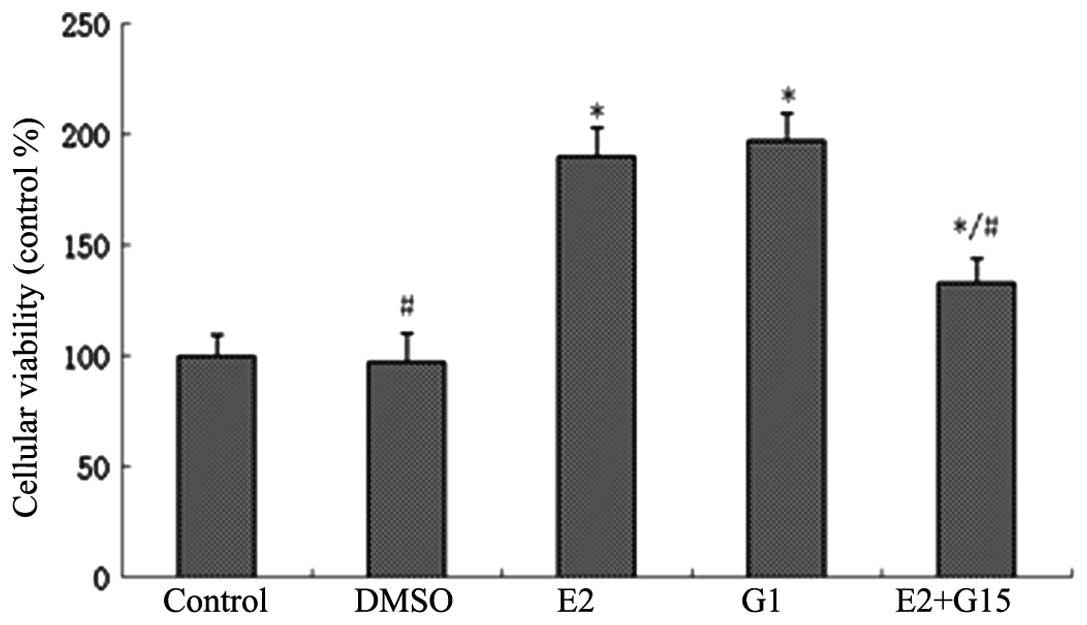
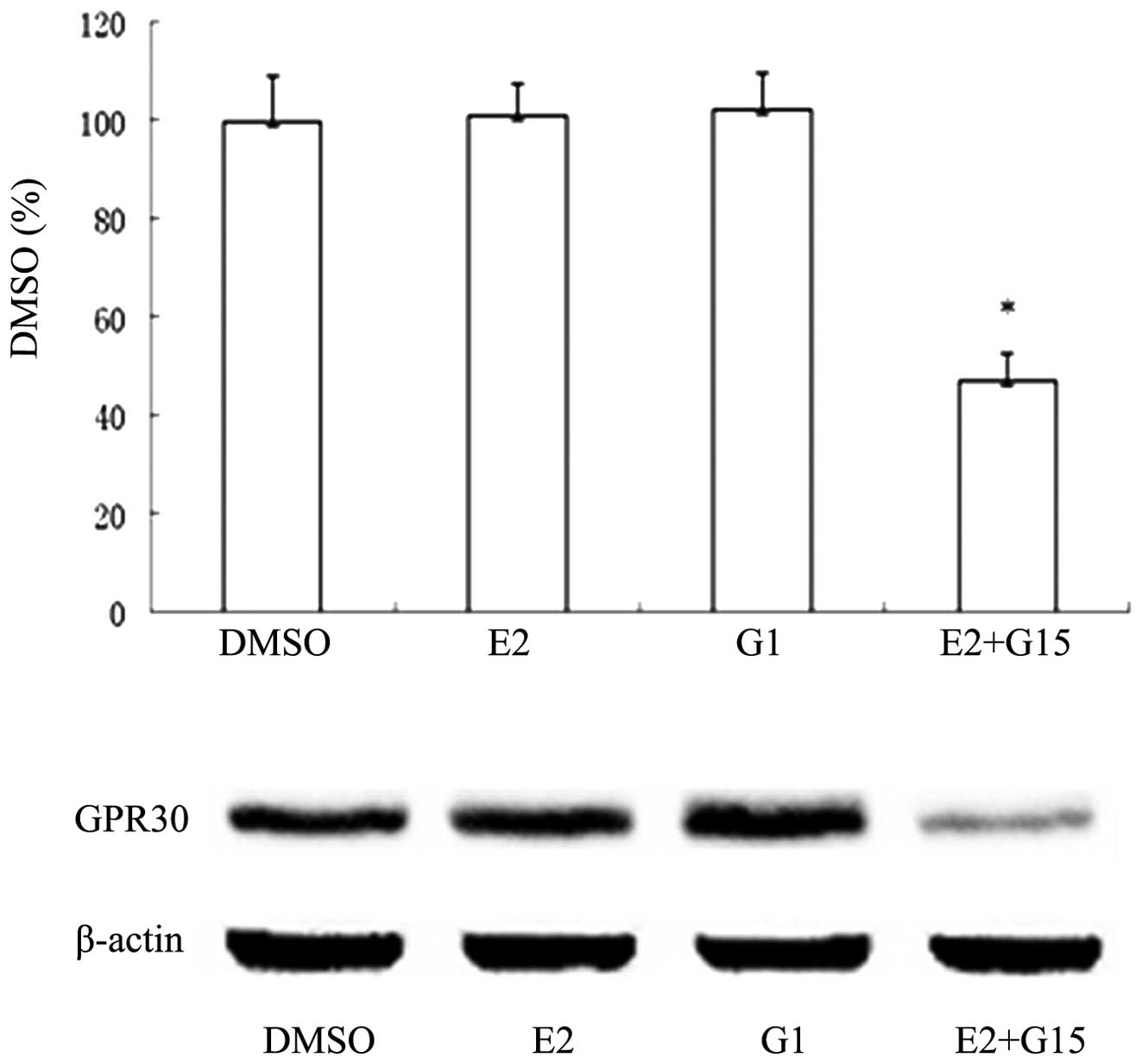
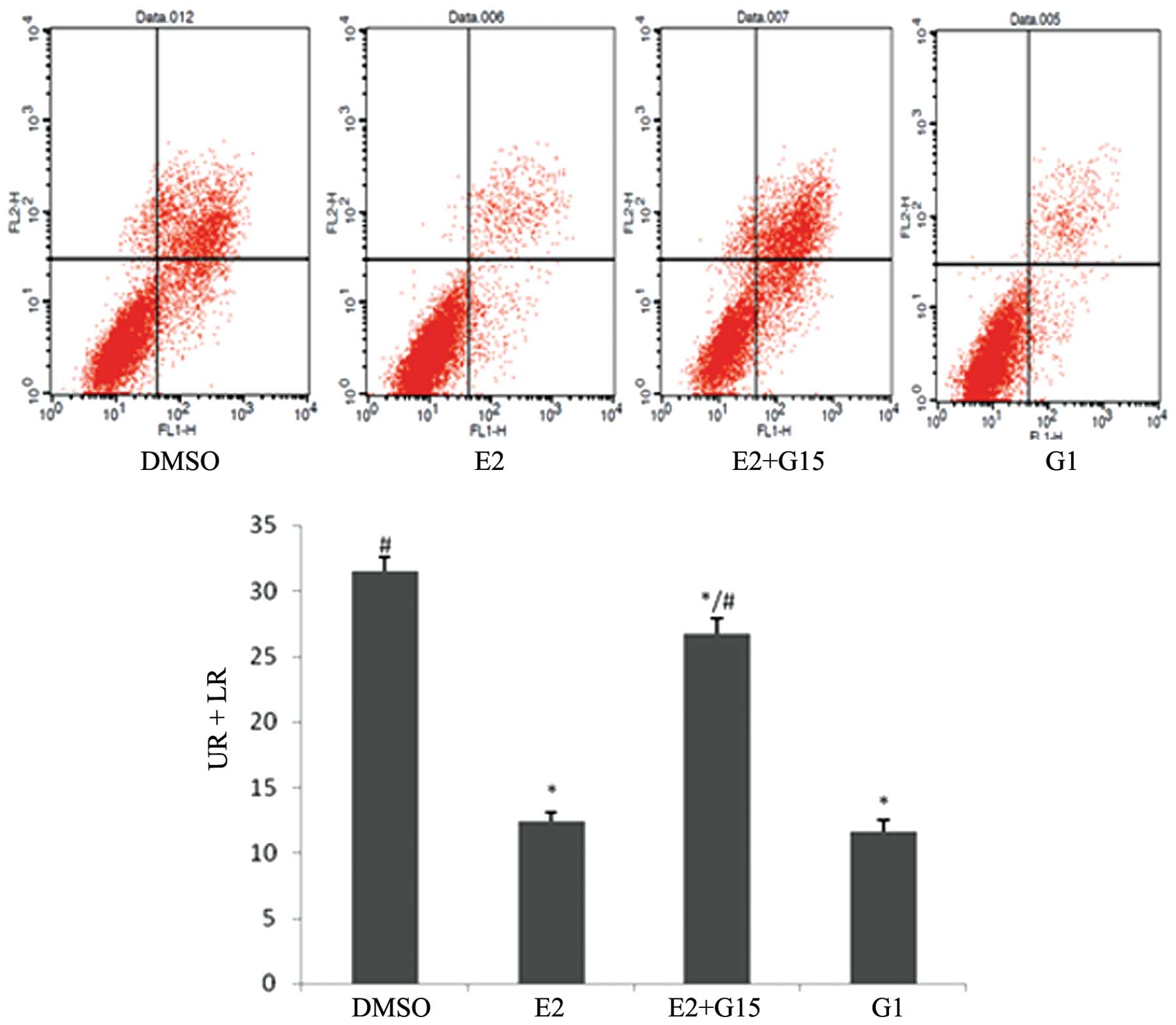
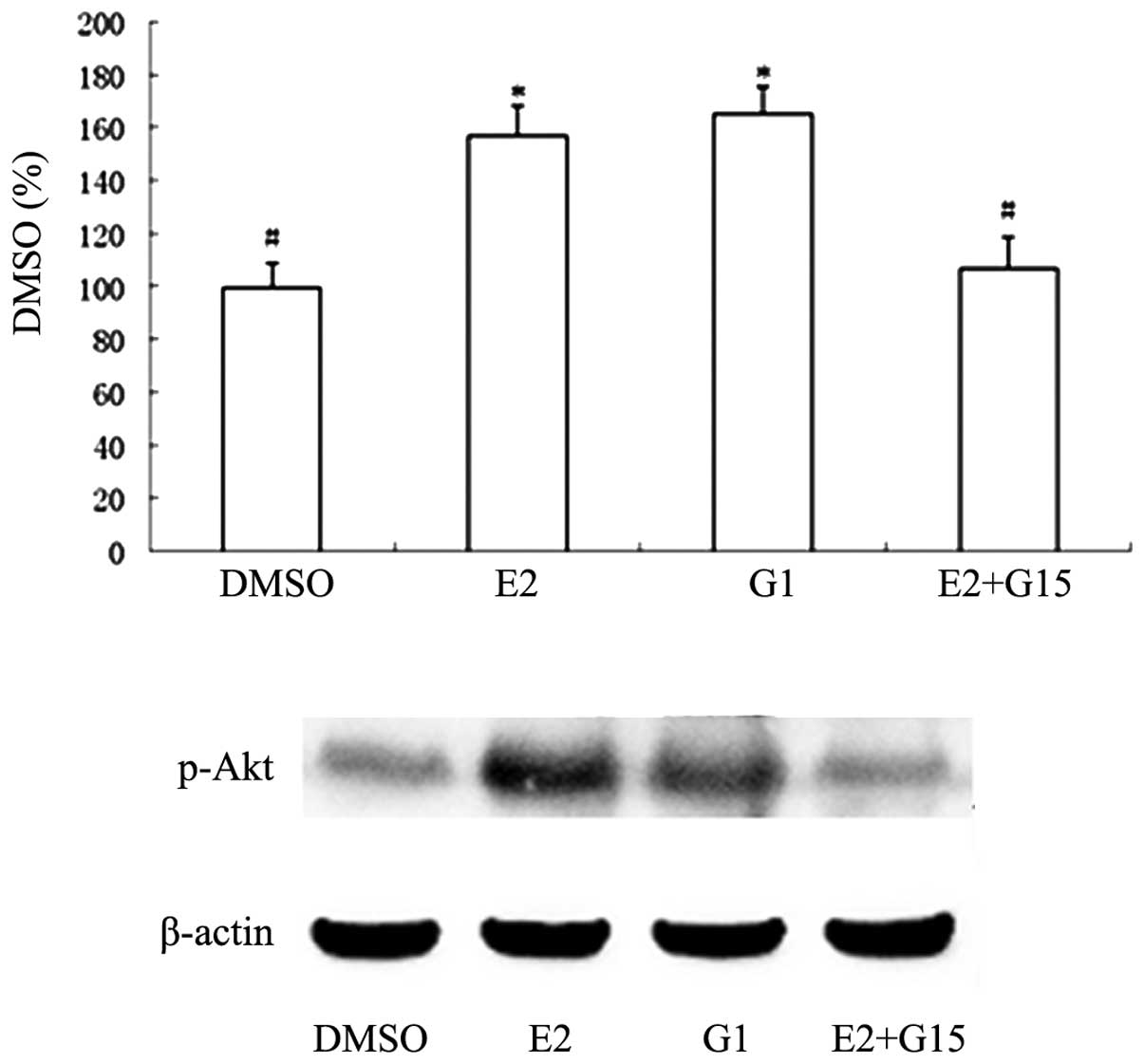
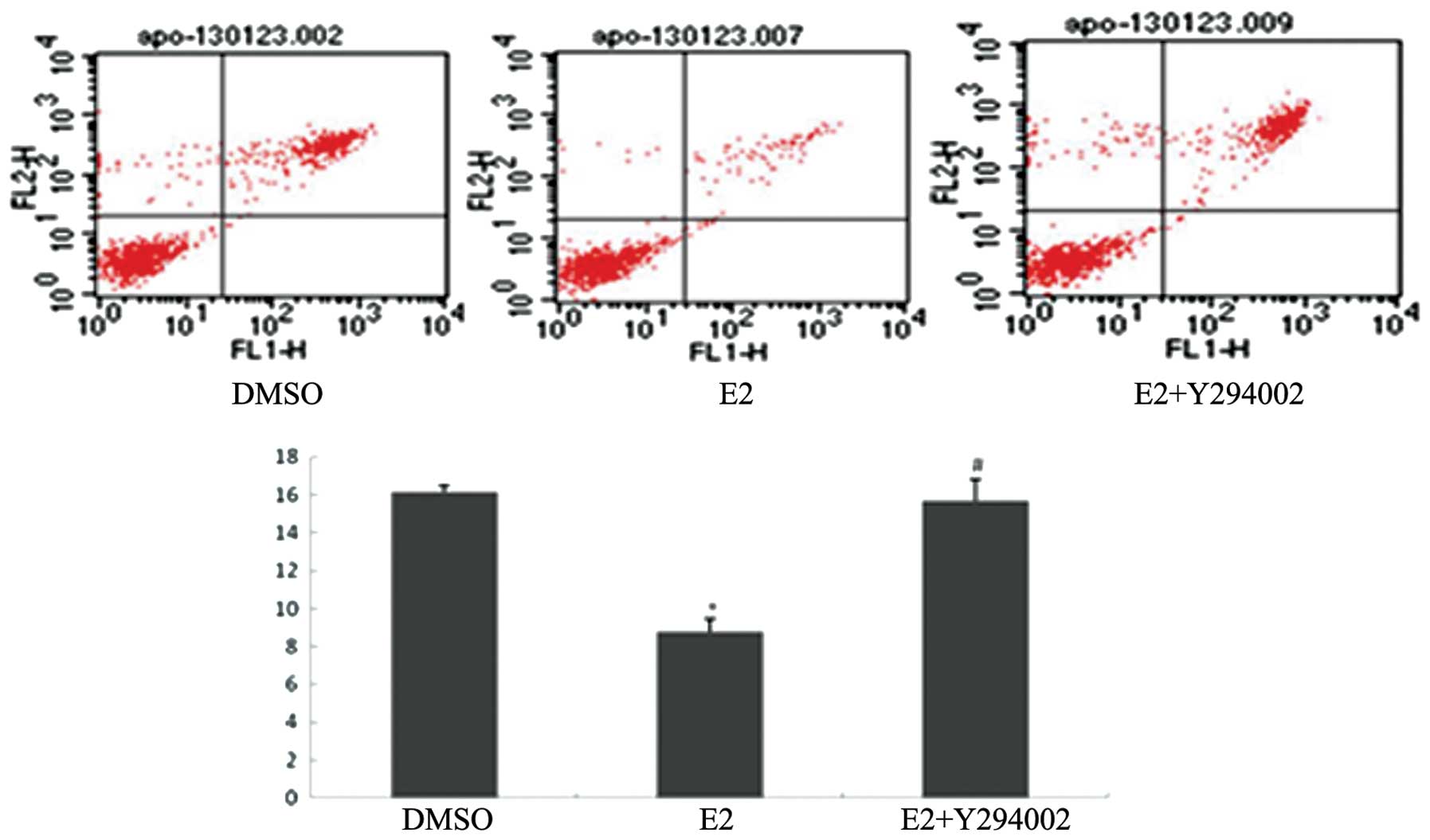
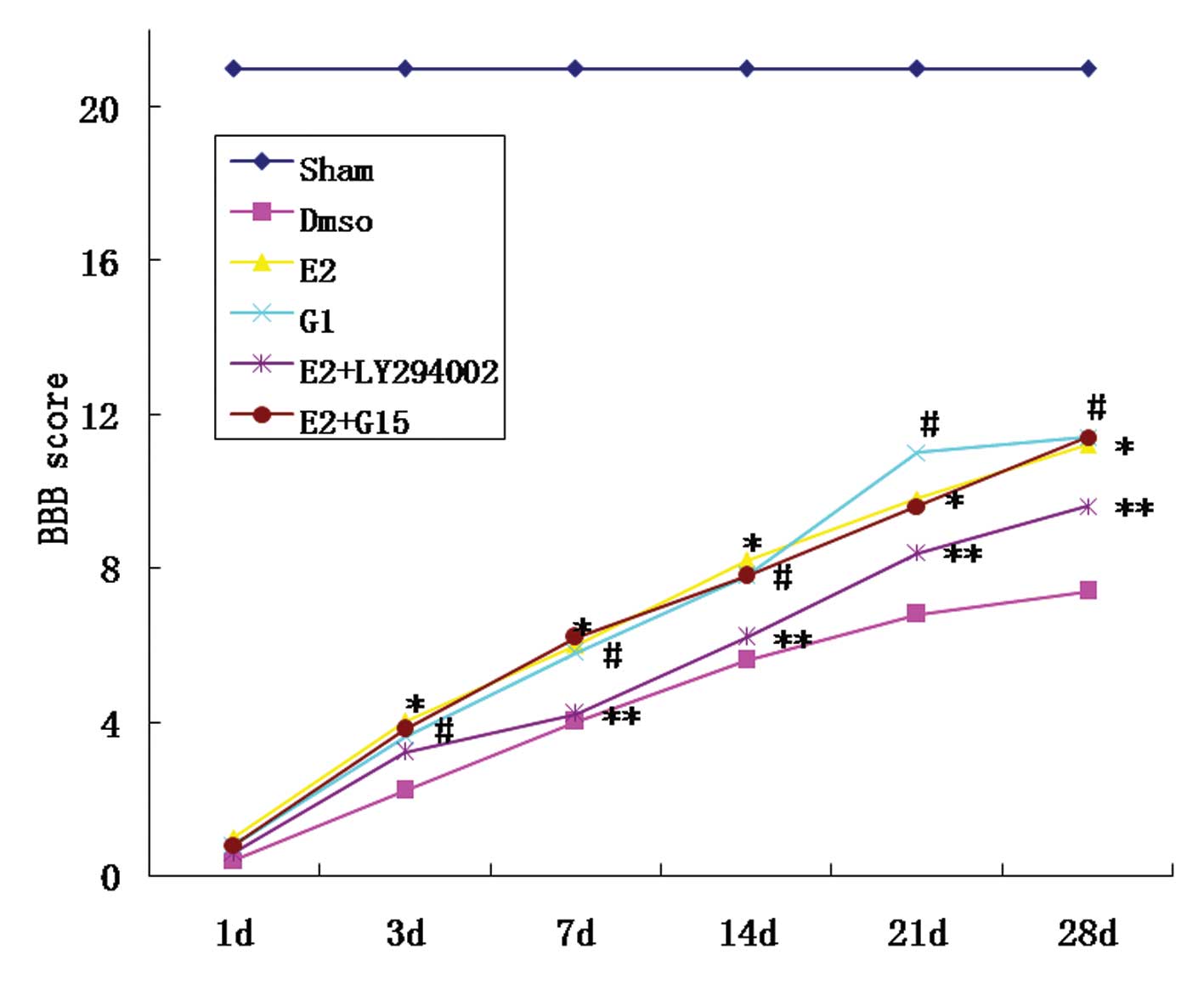
Spinal cord injury (SCI) may result in severe dysfunction of motor neurons. G‑protein‑coupled receptor 30 (GPR30) expression in the motor neurons of the ventral horn of the spinal cord mediates neuroprotection through estrogen signaling. The present study explored the antiapoptotic effect of estrogen, mediated by GPR30 following SCI, and the mechanisms underlying this effect. Spinal motor neurons from rats were cultured in vitro in order to establish cell models of oxygen and glucose deprivation (OGD). The effects of estrogen, the estrogen agonist, G1, and the estrogen inhibitor, G15, on motor neurons were observed using MTT assays. The effects of E2, G1 and G15 on spinal motor neuron apoptosis following OGD, were detected using flow cytometry. The role of the phosphatidylinositol 3‑kinase/protein kinase B (PI3K/Akt) inhibitor, LY294002, was also determined using flow cytometry. Rat SCI models were established. E2, G1 and E2+LY294002 were administered in vivo. Motor function was scored at 3, 7, 14, 21 and 28 d following injury, using Basso‑Beattie‑Bresnahan (BBB) standards. Cell activity in the estrogen and G1 groups was higher than that in the solvent group, whereas cell activity in the E2+G15 group was lower than that in the E2 group (P<0.05). Following OGD, the proportion of apoptotic cells significantly increased (P<0.05). The proportion in the estrogen group was significantly lower than that in the solvent group, whereas the proportion of apoptotic cells in the E2+G15 and E2+LY294002 groups was higher than that in the E2 group (P<0.05). Treatment with E2 and G1 led to upregulation of P‑Akt expression in normal cells and post‑OGD cells. The BBB scores of rats in the E2 and G1 groups were higher than those in the placebo group (P<0.05). The BBB scores of the E2+LY294002 group were lower than those of the E2 group (P<0.05). Estrogen thus appears to exert a protective effect on spinal motor neurons following OGD, via GPR30. The PI3K/Akt pathway may be one of those involved in the estrogen‑related antiapoptotic effects mediated by GPR30.
View Figures

Figure 1

Figure 2

Figure 3

Figure 4

Figure 5

Figure 6

Figure 7

Figure 8

Figure 9

View References

1 

Thuret S, Moon LD and Gage FH: Therapeutic interventions after spinal cord injury. Nat Rev Neurosci. 7:628–643. 2006. View Article : Google Scholar : PubMed/NCBI

2 

Fehlings MG and Hawryluk GW: Scarring after spinal cord injury. J Neurosurg Spine. 13:165–167. 2010. View Article : Google Scholar : PubMed/NCBI

3 

Crowe MJ, Bresnahan JC, Shuman SL, et al: Apoptosis and delayed degeneration after spinal cord injury in rats and monkeys. Nat Med. 3:73–76. 1997. View Article : Google Scholar : PubMed/NCBI

4 

Liu XZ, Xu XM, Hu R, et al: Neuronal and glial apoptosis after traumatic spinal cord injury. J Neurosci. 17:5395–5406. 1997.PubMed/NCBI

5 

Grossman SD, Rosenberg LJ and Wrathall JR: Temporal-spatial pattern of acute neuronal and glial loss after spinal cord contusion. Exp Neurol. 168:273–282. 2001. View Article : Google Scholar : PubMed/NCBI

6 

Hu R, Zhou J, Luo C, et al: Glial scar and neuroregeneration: Histological, functional, and magnetic resonance imaging analysis in chronic spinal cord injury. J Neurosurg Spine. 13:169–180. 2010. View Article : Google Scholar : PubMed/NCBI

7 

Macias CA, Rosengart MR, Puyana JC, et al: The effects of trauma center care, admission volume, and surgical volume on paralysis after traumatic spinal cord injury. Ann Surg. 249:10–17. 2009. View Article : Google Scholar

8 

Samantaray S, Sribnick EA, Das A, et al: Neuroprotective efficacy of estrogen in experimental spinal cord injury in rats. Ann NY Acad Sci. 1199:90–94. 2010. View Article : Google Scholar : PubMed/NCBI

9 

Fu ES and Tummala RP: Neuroprotection in brain and spinal cord trauma. Curr Opin Anaesthesiol. 18:181–187. 2005. View Article : Google Scholar

10 

Elloso MM, Phiel K, Henderson RA, et al: Suppression of experimental autoimmune encephalomyelitis using estrogen receptor-selective ligands. J Endocrinol. 185:243–252. 2005. View Article : Google Scholar : PubMed/NCBI

11 

Cho T and Chaban VV: Interaction between P2X3 and ERα/ERβ in ATP-mediated calcium signaling in mice sensory neurons. J Neuroendocrinology. 24:789–797. 2012. View Article : Google Scholar

12 

Sribnick EA, Ray SK and Banik NL: Estrogen prevents glutamate-induced apoptosis in C6 glioma cells by a receptor-mediated mechanism. Neuroscience. 137:197–209. 2006. View Article : Google Scholar

13 

Furlan JC, Krassioukov AV and Fehlings MG: The effects of gender on clinical and neurological outcomes after acute cervical spinal cord injury. J Neurotrauma. 22:368–381. 2005. View Article : Google Scholar : PubMed/NCBI

14 

Webb AA, Chan CB, Brown A and Saleh TM: Estrogen reduces the severity of autonomic dysfunction in spinal cord-injured male mice. Behav Brain Res. 171:338–349. 2006. View Article : Google Scholar : PubMed/NCBI

15 

Vanderhorst VG, Gustafsson JA and Ulfhake B: Estrogen receptor-alpha and -beta immunoreactive neurons in the brainstem and spinal cord of male and female mice: Relationships to monoaminergic, cholinergic, and spinal projection systems. J Comp Neurol. 488:152–179. 2005. View Article : Google Scholar : PubMed/NCBI

16 

Vanderhorst VG, Terasawa E and Ralston HJ III: Estrogen receptor-alpha immunoreactive neurons in the brainstem and spinal cord of the female rhesus monkey: Species-specific characteristics. Neuroscience. 158:798–810. 2009. View Article : Google Scholar

17 

Platania P, Seminara G, Aronica E, et al: 17B-estradiol rescues spinal motoneurons from AMPA-induced toxicity: A role for glial cells. Neurobiol Dis. 20:461–470. 2005. View Article : Google Scholar : PubMed/NCBI

18 

Hu R, Sun HD, Zhang Q, et al: G-protein coupled estrogen receptor 1 mediated estrogenic neuroprotection against spinal cord injury. Crit Care Med. 40:3230–3237. 2012. View Article : Google Scholar : PubMed/NCBI

19 

McEwen BS: Invited review: Estrogens effects on the brain: Multiple sites and molecular mechanisms. J Appl Physiol. 91:2785–2801. 2001.PubMed/NCBI

20 

Yang X, Tomita T, Wines-Samuelson M, Beglopoulos V, Tansey MG, Kopan R and Shen J: Notch1 signaling influences v2 interneuron and motor neuron development in the spinal cord. Dev Neurosci. 28:102–117. 2006. View Article : Google Scholar : PubMed/NCBI

21 

Yune TY, Kim SJ, Lee SM, et al: Systemic administration of 17beta-estradiol reduces apoptotic cell death and improves functional recovery following traumatic spinal cord injury in rats. J Neurotrauma. 21:293–306. 2004. View Article : Google Scholar : PubMed/NCBI

22 

Lu CL, Hsieh JC, Dun NJ, et al: Estrogen rapidly modulates 5-hydroxytrytophan-induced visceral hypersensitivity via GPR30 in rats. Gastroenterology. 137:1040–1050. 2009. View Article : Google Scholar : PubMed/NCBI

23 

Dennis MK, Burai R, Ramesh C, et al: In vivo effects of a GPR30 antagonist. Nature ChemBiol. 5:421–427. 2009.

24 

Du DS, Ma XB, Zhang JF, et al: The protective effect of capsaicin receptor-mediated genistein postconditioning on gastric ischemia-reperfusion injury in rats. Dig Dis Sci. 55:3070–3077. 2010. View Article : Google Scholar : PubMed/NCBI

25 

Basso DM, Beattie MS and Bresnahan JC: A sensitive and reliable locomotor rating scale for open field testing in rats. J Neurotrauma. 12:1–21. 1995. View Article : Google Scholar : PubMed/NCBI

26 

Yu HP, Hsieh YC, Suzuki T, et al: The PI3K/Akt pathway mediates the nongenomic cardioprotective effects of estrogen following trauma-hemorrhage. Ann Surg. 245:971–977. 2007. View Article : Google Scholar : PubMed/NCBI

27 

Tator CH: Upadate on the pathophysiology and pathology of acute spinal cord injury. Brain Pathol. 5:407–413. 1995. View Article : Google Scholar : PubMed/NCBI

28 

Ambrozaitis E, Spakauskas B and Vaitkaitis D: Pathophysiology of acute spinal cord injury. Medicina (Kaunas). 255–261. 2006.In Lithuanian.

29 

Fiford RJ, Bilston LE, Waite P and Lu J: A vertebral dislocation model cord injury in rats. J Neurotrauma. 21:451–458. 2004. View Article : Google Scholar : PubMed/NCBI

30 

Akdemir H, Paşaoğlu A, Oztürk F, et al: Histopathology of experiment spinal cord trauma. Comparison of treatment with TRH, naloxone, and dexamethasone. Res Exp Med (Berl). 92:177–183. 1992. View Article : Google Scholar

31 

Nguyen TV, Jayaraman A, Quaglino A and Pike CJ: Androgens selectively protect against apoptosis in hippocampal neurones. J Neuroendocrinol. 22:1013–1022. 2010. View Article : Google Scholar : PubMed/NCBI

32 

Meda C, Vegeto E, Pollio G, et al: Oestrogen prevention of neural cell death correlates with decreased expression of mRNA for the pro-apoptotic protein nip-2. J Neuroendocrinol. 12:1051–1059. 2000. View Article : Google Scholar : PubMed/NCBI

33 

Revankar CM, Cimino DF, Sklar LA, et al: A transmembrane intracellular estrogen receptor mediates rapid cell signaling. Science. 307:1625–1630. 2005. View Article : Google Scholar : PubMed/NCBI

34 

Dennis MK, Burai R, Ramesh C, et al: In vivo effects of a GPR30 antagonist. Nat Chem Biol. 5:421–427. 2009. View Article : Google Scholar : PubMed/NCBI

35 

Yune TY, Park HG, Lee JY and Oh TH: Estrogen-induced Bcl-2 expression after spinal cord injury is mediated through phosphoinositide- 3-kinase/Akt-dependent CREB activation. J Neurotrauma. 25:1121–1131. 2008. View Article : Google Scholar : PubMed/NCBI

36 

Sribnick EA, Matzelle DD, Ray SK and Banik NL: Estrogen treatment of spinal cord injury attenuates calpain activation and apoptosis. J Neurosci Res. 84:1064–1075. 2006. View Article : Google Scholar : PubMed/NCBI

37 

Das A, Smith JA, Gibson C, et al: Estrogen receptor agonists and estrogen attenuate TNF-α-induced apoptosis in VSC4.1 motoneurons. J Endocrinol. 208:171–182. 2011. View Article : Google Scholar

38 

Danial NN and Korsmeyer SJ: Cell death: Critical control points. Cel. 116:205–219. 2004. View Article : Google Scholar

39 

Ferrington DA, Tran TN, Lew KL, et al: Different death stimuli evoke apoptosis via multiple pathways in retinal pigment epithelial cells. Exp Eye Res. 83:638–650. 2006. View Article : Google Scholar : PubMed/NCBI

40 

Zhang J, Yang Y, Zhang Z, et al: Gankyrin plays an essential role in estrogen-driven and GPR30-mediated endometrial carcinoma cell proliferation via the PTEN/PI3K/AKT signaling pathway. Cancer Lett. 339:279–287. 2013. View Article : Google Scholar

41 

Revankar CM, Mitchell HD, Field AS, Burai R, Corona C, Ramesh C, Sklar LA, Arterburn JB and Prossnitz ER: Synthetic estrogen derivatives demonstrate the functionality of intracellular GPR30. ACS Chem Biol. 2:536–544. 2007. View Article : Google Scholar : PubMed/NCBI

42 

Lin BC, Suzawa M, Blind RD, et al: Stimulating the GPR30 estrogen receptor with a novel tamoxifen analogue activates SF-1 and promotes endometrial cell proliferation. Cancer Res. 69:5415–5423. 2009. View Article : Google Scholar : PubMed/NCBI

Related Articles

  • Abstract
  • View
  • Download
  • Twitter
Copy and paste a formatted citation
Spandidos Publications style
Chen J, Hu R, Ge H, Duanmu W, Li Y, Xue X, Hu S and Feng H: G‑protein‑coupled receptor 30‑mediated antiapoptotic effect of estrogen on spinal motor neurons following injury and its underlying mechanisms. Mol Med Rep 12: 1733-1740, 2015.
APA
Chen, J., Hu, R., Ge, H., Duanmu, W., Li, Y., Xue, X. ... Feng, H. (2015). G‑protein‑coupled receptor 30‑mediated antiapoptotic effect of estrogen on spinal motor neurons following injury and its underlying mechanisms. Molecular Medicine Reports, 12, 1733-1740. https://doi.org/10.3892/mmr.2015.3601
MLA
Chen, J., Hu, R., Ge, H., Duanmu, W., Li, Y., Xue, X., Hu, S., Feng, H."G‑protein‑coupled receptor 30‑mediated antiapoptotic effect of estrogen on spinal motor neurons following injury and its underlying mechanisms". Molecular Medicine Reports 12.2 (2015): 1733-1740.
Chicago
Chen, J., Hu, R., Ge, H., Duanmu, W., Li, Y., Xue, X., Hu, S., Feng, H."G‑protein‑coupled receptor 30‑mediated antiapoptotic effect of estrogen on spinal motor neurons following injury and its underlying mechanisms". Molecular Medicine Reports 12, no. 2 (2015): 1733-1740. https://doi.org/10.3892/mmr.2015.3601
Copy and paste a formatted citation
x
Spandidos Publications style
Chen J, Hu R, Ge H, Duanmu W, Li Y, Xue X, Hu S and Feng H: G‑protein‑coupled receptor 30‑mediated antiapoptotic effect of estrogen on spinal motor neurons following injury and its underlying mechanisms. Mol Med Rep 12: 1733-1740, 2015.
APA
Chen, J., Hu, R., Ge, H., Duanmu, W., Li, Y., Xue, X. ... Feng, H. (2015). G‑protein‑coupled receptor 30‑mediated antiapoptotic effect of estrogen on spinal motor neurons following injury and its underlying mechanisms. Molecular Medicine Reports, 12, 1733-1740. https://doi.org/10.3892/mmr.2015.3601
MLA
Chen, J., Hu, R., Ge, H., Duanmu, W., Li, Y., Xue, X., Hu, S., Feng, H."G‑protein‑coupled receptor 30‑mediated antiapoptotic effect of estrogen on spinal motor neurons following injury and its underlying mechanisms". Molecular Medicine Reports 12.2 (2015): 1733-1740.
Chicago
Chen, J., Hu, R., Ge, H., Duanmu, W., Li, Y., Xue, X., Hu, S., Feng, H."G‑protein‑coupled receptor 30‑mediated antiapoptotic effect of estrogen on spinal motor neurons following injury and its underlying mechanisms". Molecular Medicine Reports 12, no. 2 (2015): 1733-1740. https://doi.org/10.3892/mmr.2015.3601
Follow us
  • Twitter
  • LinkedIn
  • Facebook
About
  • Spandidos Publications
  • Careers
  • Cookie Policy
  • Privacy Policy
How can we help?
  • Help
  • Live Chat
  • Contact
  • Email to our Support Team