Spandidos Publications Logo
  • About
    • About Spandidos
    • Aims and Scopes
    • Abstracting and Indexing
    • Editorial Policies
    • Reprints and Permissions
    • Job Opportunities
    • Terms and Conditions
    • Contact
  • Journals
    • All Journals
    • Oncology Letters
      • Oncology Letters
      • Information for Authors
      • Editorial Policies
      • Editorial Board
      • Aims and Scope
      • Abstracting and Indexing
      • Bibliographic Information
      • Archive
    • International Journal of Oncology
      • International Journal of Oncology
      • Information for Authors
      • Editorial Policies
      • Editorial Board
      • Aims and Scope
      • Abstracting and Indexing
      • Bibliographic Information
      • Archive
    • Molecular and Clinical Oncology
      • Molecular and Clinical Oncology
      • Information for Authors
      • Editorial Policies
      • Editorial Board
      • Aims and Scope
      • Abstracting and Indexing
      • Bibliographic Information
      • Archive
    • Experimental and Therapeutic Medicine
      • Experimental and Therapeutic Medicine
      • Information for Authors
      • Editorial Policies
      • Editorial Board
      • Aims and Scope
      • Abstracting and Indexing
      • Bibliographic Information
      • Archive
    • International Journal of Molecular Medicine
      • International Journal of Molecular Medicine
      • Information for Authors
      • Editorial Policies
      • Editorial Board
      • Aims and Scope
      • Abstracting and Indexing
      • Bibliographic Information
      • Archive
    • Biomedical Reports
      • Biomedical Reports
      • Information for Authors
      • Editorial Policies
      • Editorial Board
      • Aims and Scope
      • Abstracting and Indexing
      • Bibliographic Information
      • Archive
    • Oncology Reports
      • Oncology Reports
      • Information for Authors
      • Editorial Policies
      • Editorial Board
      • Aims and Scope
      • Abstracting and Indexing
      • Bibliographic Information
      • Archive
    • Molecular Medicine Reports
      • Molecular Medicine Reports
      • Information for Authors
      • Editorial Policies
      • Editorial Board
      • Aims and Scope
      • Abstracting and Indexing
      • Bibliographic Information
      • Archive
    • World Academy of Sciences Journal
      • World Academy of Sciences Journal
      • Information for Authors
      • Editorial Policies
      • Editorial Board
      • Aims and Scope
      • Abstracting and Indexing
      • Bibliographic Information
      • Archive
    • International Journal of Functional Nutrition
      • International Journal of Functional Nutrition
      • Information for Authors
      • Editorial Policies
      • Editorial Board
      • Aims and Scope
      • Abstracting and Indexing
      • Bibliographic Information
      • Archive
    • International Journal of Epigenetics
      • International Journal of Epigenetics
      • Information for Authors
      • Editorial Policies
      • Editorial Board
      • Aims and Scope
      • Abstracting and Indexing
      • Bibliographic Information
      • Archive
    • Medicine International
      • Medicine International
      • Information for Authors
      • Editorial Policies
      • Editorial Board
      • Aims and Scope
      • Abstracting and Indexing
      • Bibliographic Information
      • Archive
  • Articles
  • Information
    • Information for Authors
    • Information for Reviewers
    • Information for Librarians
    • Information for Advertisers
    • Conferences
  • Language Editing
Spandidos Publications Logo
  • About
    • About Spandidos
    • Aims and Scopes
    • Abstracting and Indexing
    • Editorial Policies
    • Reprints and Permissions
    • Job Opportunities
    • Terms and Conditions
    • Contact
  • Journals
    • All Journals
    • Biomedical Reports
      • Information for Authors
      • Editorial Policies
      • Editorial Board
      • Aims and Scope
      • Abstracting and Indexing
      • Bibliographic Information
      • Archive
    • Experimental and Therapeutic Medicine
      • Information for Authors
      • Editorial Policies
      • Editorial Board
      • Aims and Scope
      • Abstracting and Indexing
      • Bibliographic Information
      • Archive
    • International Journal of Epigenetics
      • Information for Authors
      • Editorial Policies
      • Editorial Board
      • Aims and Scope
      • Abstracting and Indexing
      • Bibliographic Information
      • Archive
    • International Journal of Functional Nutrition
      • Information for Authors
      • Editorial Policies
      • Editorial Board
      • Aims and Scope
      • Abstracting and Indexing
      • Bibliographic Information
      • Archive
    • International Journal of Molecular Medicine
      • Information for Authors
      • Editorial Policies
      • Editorial Board
      • Aims and Scope
      • Abstracting and Indexing
      • Bibliographic Information
      • Archive
    • International Journal of Oncology
      • Information for Authors
      • Editorial Policies
      • Editorial Board
      • Aims and Scope
      • Abstracting and Indexing
      • Bibliographic Information
      • Archive
    • Medicine International
      • Information for Authors
      • Editorial Policies
      • Editorial Board
      • Aims and Scope
      • Abstracting and Indexing
      • Bibliographic Information
      • Archive
    • Molecular and Clinical Oncology
      • Information for Authors
      • Editorial Policies
      • Editorial Board
      • Aims and Scope
      • Abstracting and Indexing
      • Bibliographic Information
      • Archive
    • Molecular Medicine Reports
      • Information for Authors
      • Editorial Policies
      • Editorial Board
      • Aims and Scope
      • Abstracting and Indexing
      • Bibliographic Information
      • Archive
    • Oncology Letters
      • Information for Authors
      • Editorial Policies
      • Editorial Board
      • Aims and Scope
      • Abstracting and Indexing
      • Bibliographic Information
      • Archive
    • Oncology Reports
      • Information for Authors
      • Editorial Policies
      • Editorial Board
      • Aims and Scope
      • Abstracting and Indexing
      • Bibliographic Information
      • Archive
    • World Academy of Sciences Journal
      • Information for Authors
      • Editorial Policies
      • Editorial Board
      • Aims and Scope
      • Abstracting and Indexing
      • Bibliographic Information
      • Archive
  • Articles
  • Information
    • For Authors
    • For Reviewers
    • For Librarians
    • For Advertisers
    • Conferences
  • Language Editing
Login Register Submit
  • This site uses cookies
  • You can change your cookie settings at any time by following the instructions in our Cookie Policy. To find out more, you may read our Privacy Policy.

    I agree
Search articles by DOI, keyword, author or affiliation
Search
Advanced Search
presentation
Molecular Medicine Reports
Join Editorial Board Propose a Special Issue
Print ISSN: 1791-2997 Online ISSN: 1791-3004
Journal Cover
August-2015 Volume 12 Issue 2

Full Size Image

Sign up for eToc alerts
Recommend to Library

Journals

International Journal of Molecular Medicine

International Journal of Molecular Medicine

International Journal of Molecular Medicine is an international journal devoted to molecular mechanisms of human disease.

International Journal of Oncology

International Journal of Oncology

International Journal of Oncology is an international journal devoted to oncology research and cancer treatment.

Molecular Medicine Reports

Molecular Medicine Reports

Covers molecular medicine topics such as pharmacology, pathology, genetics, neuroscience, infectious diseases, molecular cardiology, and molecular surgery.

Oncology Reports

Oncology Reports

Oncology Reports is an international journal devoted to fundamental and applied research in Oncology.

Experimental and Therapeutic Medicine

Experimental and Therapeutic Medicine

Experimental and Therapeutic Medicine is an international journal devoted to laboratory and clinical medicine.

Oncology Letters

Oncology Letters

Oncology Letters is an international journal devoted to Experimental and Clinical Oncology.

Biomedical Reports

Biomedical Reports

Explores a wide range of biological and medical fields, including pharmacology, genetics, microbiology, neuroscience, and molecular cardiology.

Molecular and Clinical Oncology

Molecular and Clinical Oncology

International journal addressing all aspects of oncology research, from tumorigenesis and oncogenes to chemotherapy and metastasis.

World Academy of Sciences Journal

World Academy of Sciences Journal

Multidisciplinary open-access journal spanning biochemistry, genetics, neuroscience, environmental health, and synthetic biology.

International Journal of Functional Nutrition

International Journal of Functional Nutrition

Open-access journal combining biochemistry, pharmacology, immunology, and genetics to advance health through functional nutrition.

International Journal of Epigenetics

International Journal of Epigenetics

Publishes open-access research on using epigenetics to advance understanding and treatment of human disease.

Medicine International

Medicine International

An International Open Access Journal Devoted to General Medicine.

Journal Cover
August-2015 Volume 12 Issue 2

Full Size Image

Sign up for eToc alerts
Recommend to Library

  • Article
  • Citations
    • Cite This Article
    • Download Citation
    • Create Citation Alert
    • Remove Citation Alert
    • Cited By
  • Similar Articles
    • Related Articles (in Spandidos Publications)
    • Similar Articles (Google Scholar)
    • Similar Articles (PubMed)
  • Download PDF
  • Download XML
  • View XML
Article Open Access

Peroxisome proliferator‑activated receptor‑γ agonist inhibits the mammalian target of rapamycin signaling pathway and has a protective effect in a rat model of status epilepticus

  • Authors:
    • Yong‑Zhi San
    • Yu Liu
    • Yu Zhang
    • Ping‑Ping Shi
    • Yu‑Lan Zhu
  • View Affiliations / Copyright

    Affiliations: Department of Neurology, Second Affiliated Hospital of Harbin Medical University, Harbin, Heilongjiang 150086, P.R. China
    Copyright: © San et al. This is an open access article distributed under the terms of Creative Commons Attribution License [CC BY_NC 3.0].
  • Pages: 1877-1883
    |
    Published online on: April 17, 2015
       https://doi.org/10.3892/mmr.2015.3641
  • Expand metrics +
Metrics: Total Views: 0 (Spandidos Publications: | PMC Statistics: )
Metrics: Total PDF Downloads: 0 (Spandidos Publications: | PMC Statistics: )
Cited By (CrossRef): 0 citations Loading Articles...

This article is mentioned in:


Abstract

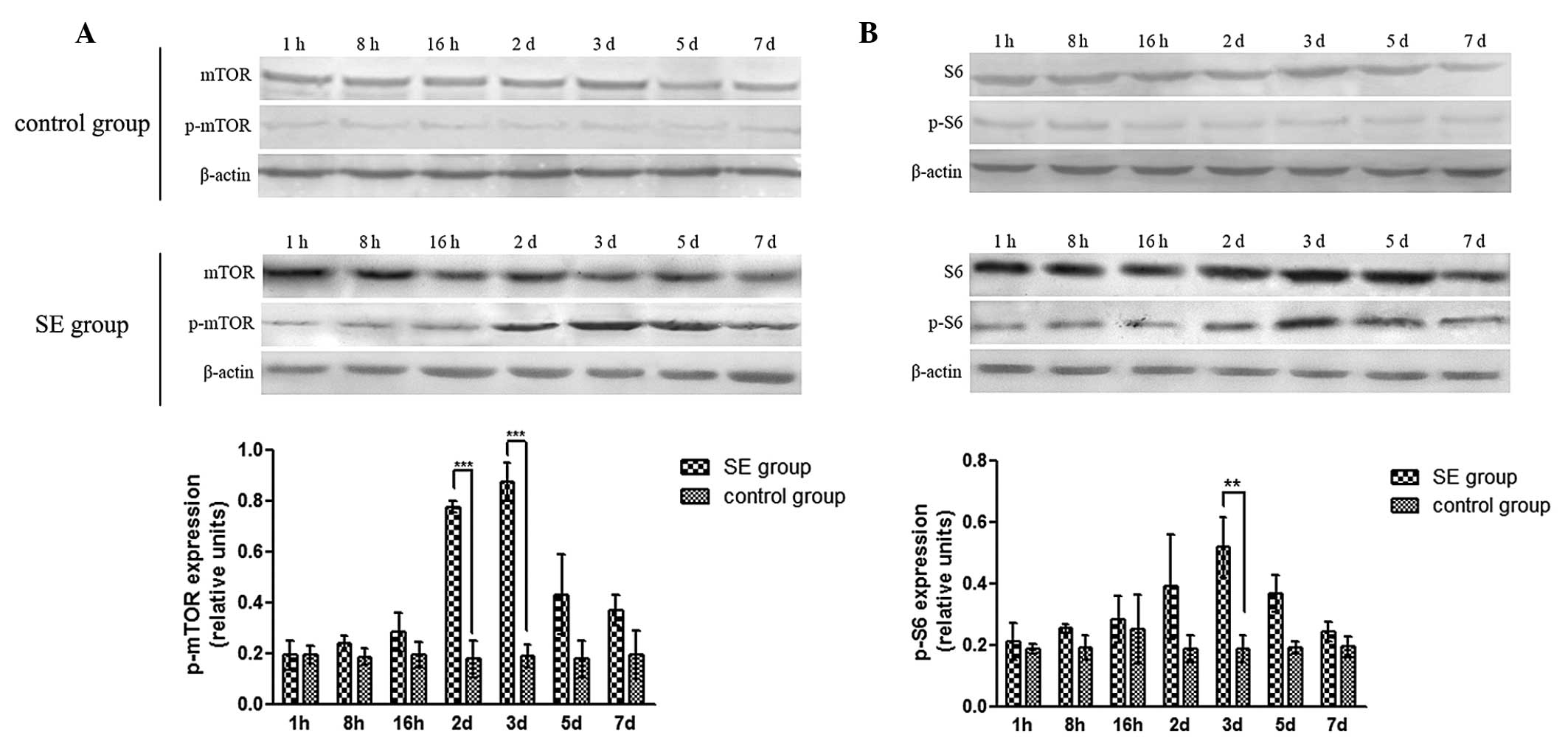
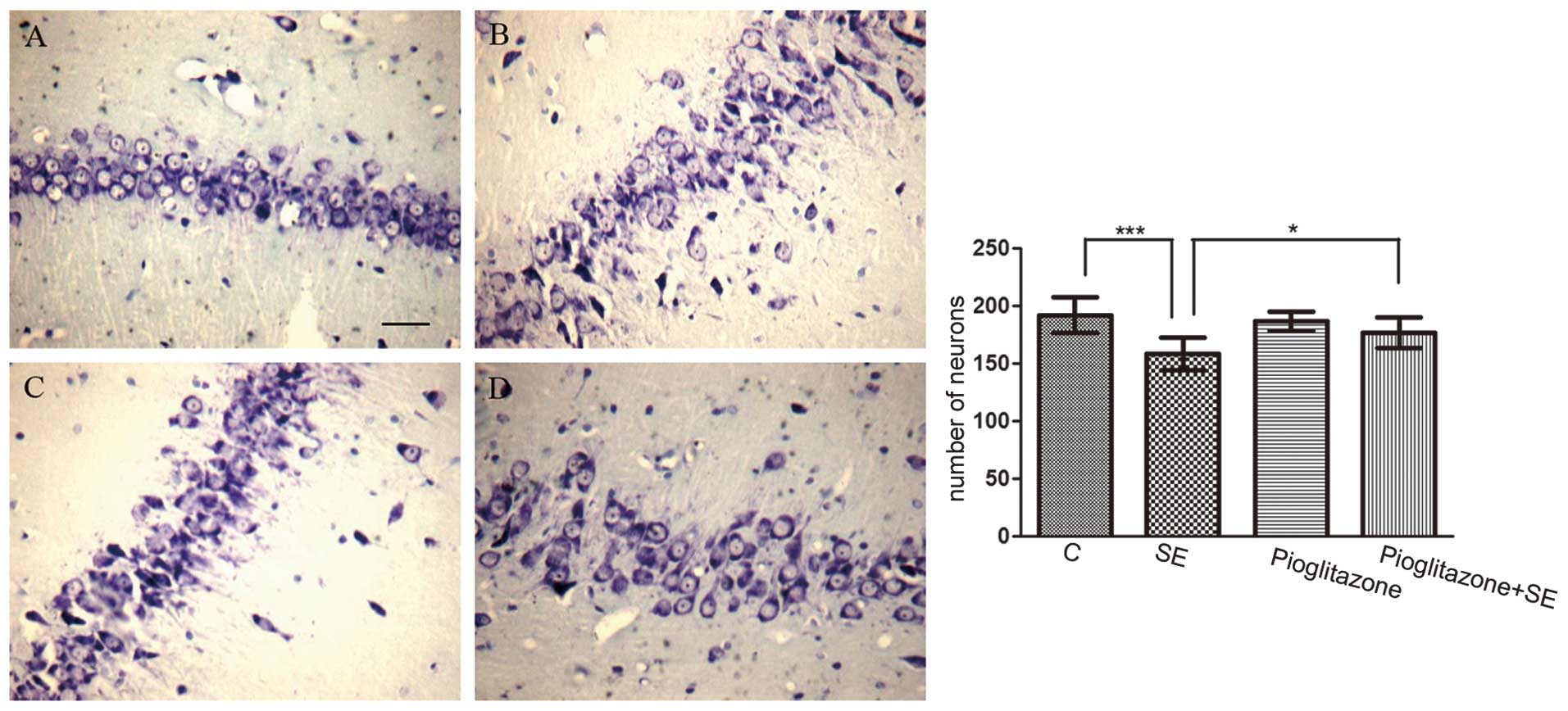
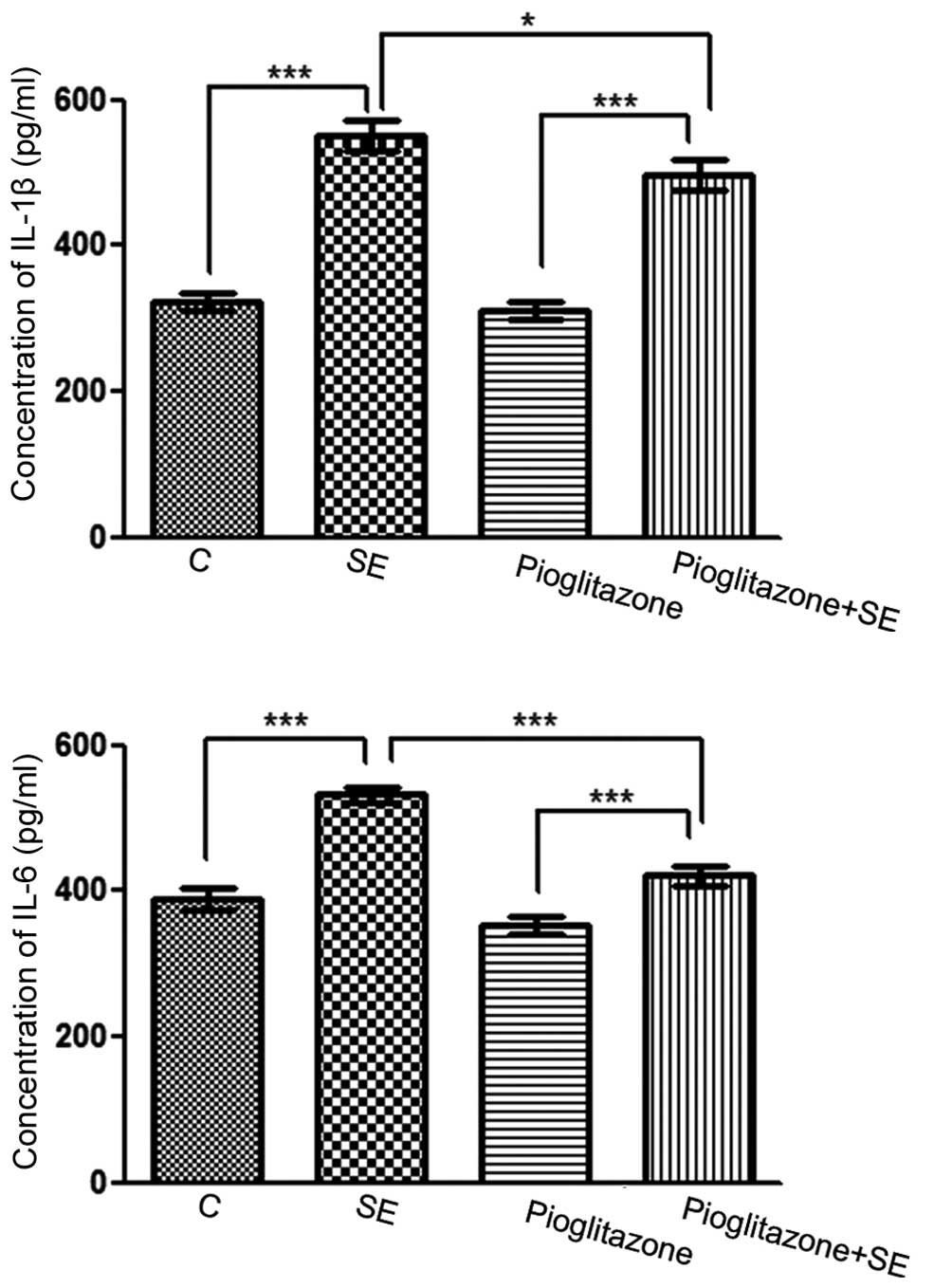
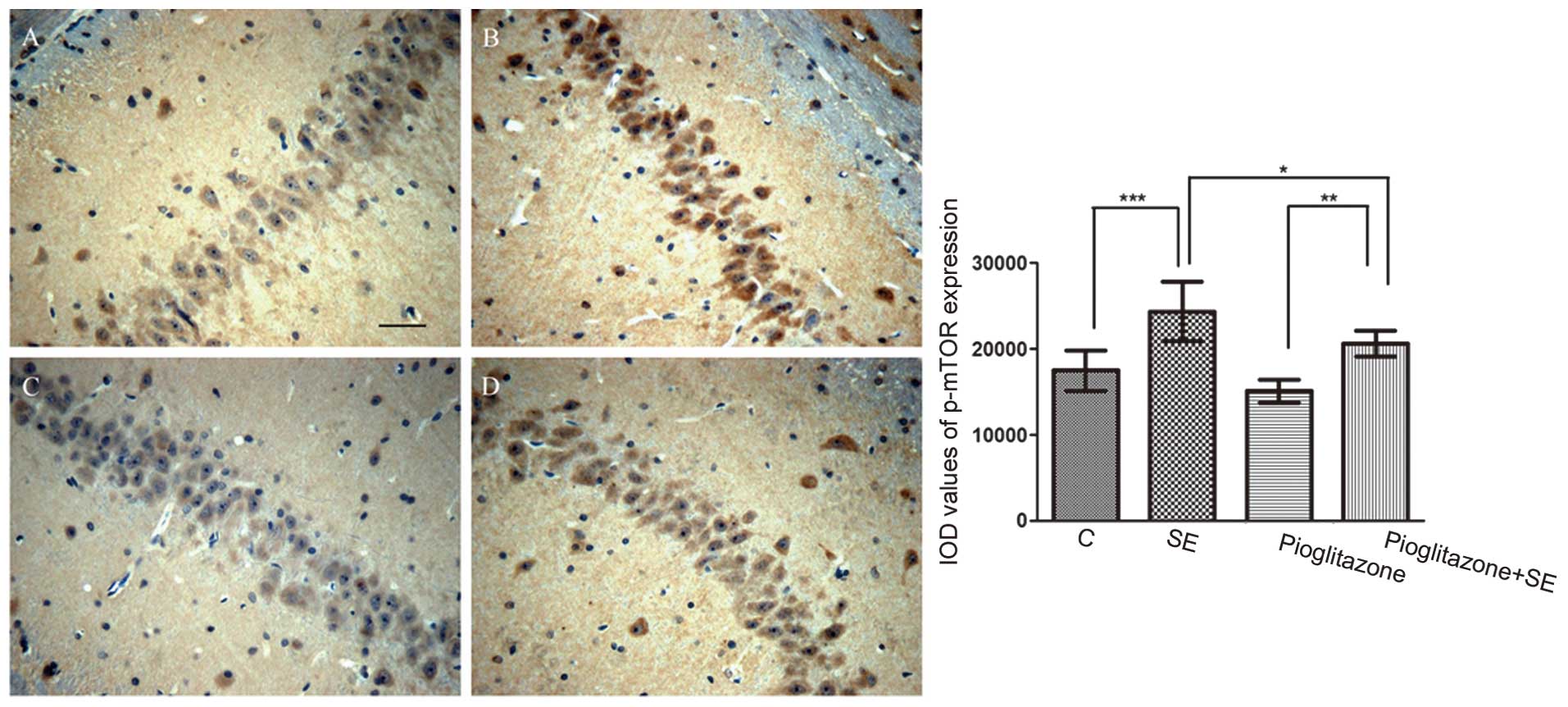
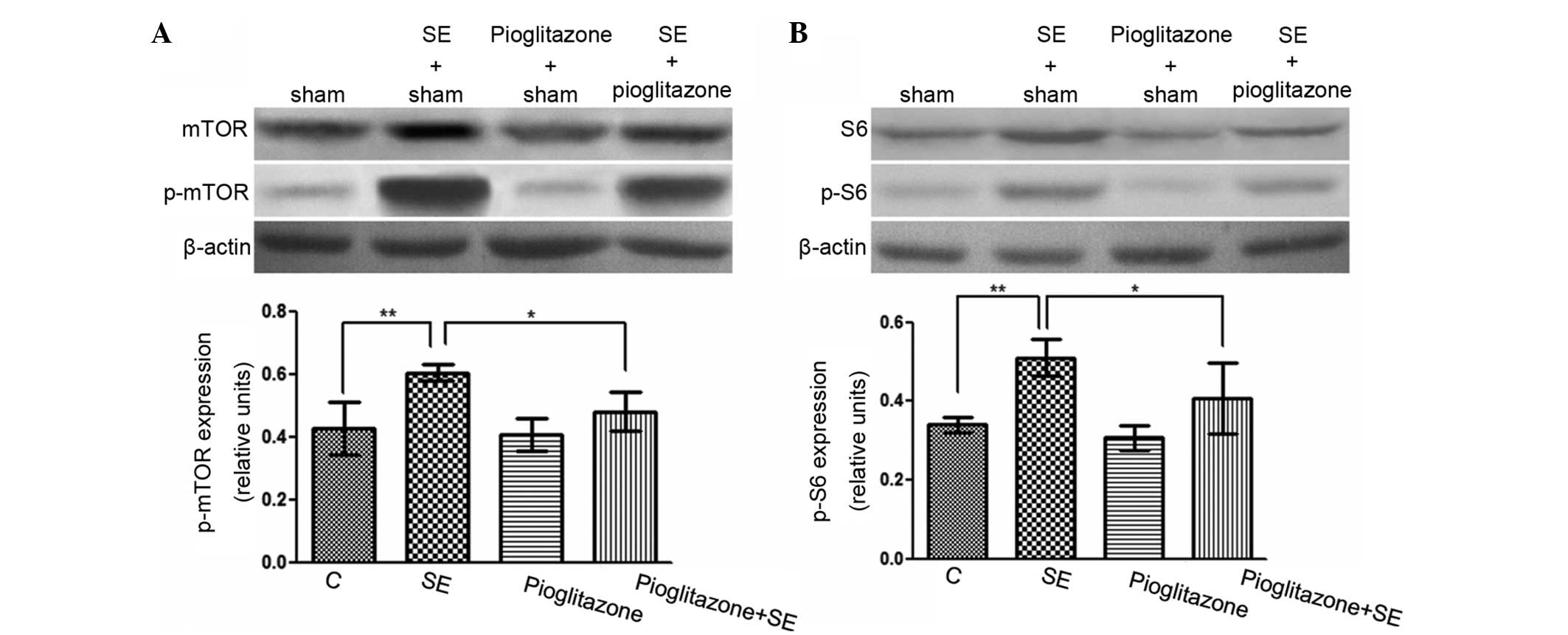
Peroxisome proliferator‑activated receptor γ (PPAR‑γ) has a protective role in several neurological diseases. The present study investigated the effect of the PPAR‑γ agonist, pioglitazone, on the mammalian target of rapamycin (mTOR) signaling pathway in a rat model of pentylenetetrazol (PTZ)‑induced status epilepticus (SE). The investigation proceeded in two stages. First, the course of activation of the mTOR signaling pathway in PTZ‑induced SE was examined to determine the time‑point of peak activity, as reflected by phopshorylated (p)‑mTOR/mTOR and p‑S6/S6 ratios. Subsequently, pioglitazone was administrated intragastrically to investigate its effect on the mTOR signaling pathway, through western blot and immunochemical analyses. The levels of the interleukin (IL)‑1β and IL‑6 inflammatory cytokines were detected using ELISA, and neuronal loss was observed via Nissl staining. In the first stage of experimentation, the mTOR signaling pathway was activated, and the p‑mTOR/mTOR and p‑S6/S6 ratios peaked on the third day. Compared with the vehicle treated‑SE group, pretreatment with pioglitazone was associated with the loss of fewer neurons, lower levels of IL‑1β and IL‑6, and inhibition of the activation of the mTOR signaling pathway. Therefore, the mTOR signaling pathway was activated in the PTZ‑induced SE rat model, and the PPAR‑γ agonist, pioglitazone, had a neuroprotective effect, by inhibiting activation of the mTOR pathway and preventing the increase in the levels of IL‑1β and IL‑6.
View Figures

Figure 1

Figure 2

Figure 3

Figure 4

Figure 5

View References

1 

Pierzchała K and Machowska-Majchrzak A: Late onset of epilepsy. Wiad Lek. 56:577–581. 2003.In Polish.

2 

Sliwa A, Plucinska G, Bednarczyk J and Lukasiuk K: Post-treatment with rapamycin does not prevent epileptogenesis in the amygdala stimulation model of temporal lobe epilepsy. Neurosci Lett. 509:105–109. 2012. View Article : Google Scholar : PubMed/NCBI

3 

Wong M: Rapamycin for treatment of epilepsy: antiseizure, antiepileptogenic, both, or neither? Epilepsy Curr. 11:66–68. 2011. View Article : Google Scholar : PubMed/NCBI

4 

Cho CH: Frontier of epilepsy research-mTOR signaling pathway. Exp Mol Med. 43:231–274. 2011. View Article : Google Scholar : PubMed/NCBI

5 

Inoki K, Zhu T and Guan KL: TSC2 mediates cellular energy response to control cell growth and survival. Cell. 115:577–590. 2003. View Article : Google Scholar : PubMed/NCBI

6 

Park IH, Bachmann R, Shirazi H and Chen J: Regulation of ribosomal S6 kinase 2 by mammalian target of rapamycin. J Biol Chem. 277:31423–31429. 2002. View Article : Google Scholar : PubMed/NCBI

7 

Reinhard C, Thomas G and Kozma SC: A single gene encodes two isoforms of the p70 S6 kinase: activation upon mitogenic stimulation. Proc Natl Acad Sci USA. 89:4052–4056. 1992. View Article : Google Scholar : PubMed/NCBI

8 

Loane DJ, Deighan BF, Clarke RM, Griffin RJ, Lynch AM and Lynch MA: Interleukin-4 mediates the neuroprotective effects of rosiglitazone in the aged brain. Neurobiol Aging. 30:920–931. 2009. View Article : Google Scholar

9 

Limor R, Sharon O, Knoll E, Many A, Weisinger G and Stern N: Lipoxygenase-derived metabolites are regulators of peroxisome proliferator-activated receptor gamma-2 expression in human vascular smooth muscle cells. Am J Hypertens. 21:219–223. 2008. View Article : Google Scholar : PubMed/NCBI

10 

Bernardo A and Minghetti L: Regulation of glial cell functions by PPAR-gamma natural and synthetic agonists. PPAR Res. 2008:8641402008. View Article : Google Scholar : PubMed/NCBI

11 

Zang L, Mu YM, Lu ZH, et al: LRP16 gene causes insulin resistance in C2-C12 cells by inhibiting the IRS-1 signaling and the transcriptional activity of peroxisome proliferator actived receptor gamma. Zhonghua Yi Xue Za Zhi. 91:1408–1412. 2011.In Chinese. PubMed/NCBI

12 

Kim KY, Cho HS, Jung WH, Kim SS and Cheon HG: Phosphatase and tensin homolog deleted on chromosome 10 suppression is an important process in peroxisome proliferator-activated receptor-gamma signaling in adipocytes and myotubes. Mol Pharmacol. 71:1554–1562. 2007. View Article : Google Scholar : PubMed/NCBI

13 

Sozio MS, Lu C, Zeng Y, Liangpunsakul S and Crabb DW: Activated AMPK inhibits PPAR-{alpha} and PPAR-{gamma} transcriptional activity in hepatoma cells. Am J Physiol Gastrointest Liver Physiol. 301:G739–747. 2011. View Article : Google Scholar : PubMed/NCBI

14 

Motte JE, da Silva Fernandes MJ, Marescaux C and Nehlig A: Effects of pentylenetetrazol-induced status epilepticus on c-Fos and HSP72 immunoreactivity in the immature rat brain. Brain Res Mol Brain Res. 50:79–84. 1997. View Article : Google Scholar : PubMed/NCBI

15 

Nehlig A and Pereira de Vasconcelos A: The model of pentylenetetrazol-induced status epilepticus in the immature rat: short- and long-term effects. Epilepsy Res. 26:93–103. 1996. View Article : Google Scholar : PubMed/NCBI

16 

Pineau N, Charriaut-Marlangue C, Motte J and Nehlig A: Pentylenetetrazol seizures induce cell suffering but not death in the immature rat brain. Brain Res Dev Brain Res. 112:139–144. 1999. View Article : Google Scholar : PubMed/NCBI

17 

Erdogan F, Golgeli A, Arman F and Ersoy AO: The effects of pentylenetetrazole-induced status epilepticus on behavior, emotional memory and learning in rats. Epilepsy Behav. 5:388–393. 2004. View Article : Google Scholar

18 

el Hamdi G, de Vasconcelos AP, Vert P and Nehlig A: An experimental model of generalized seizures for the measurement of local cerebral glucose utilization in the immature rat. I Behavioral characterization and determination of lumped constant. Brain Res Dev Brain Res. 69:233–242. 1992. View Article : Google Scholar : PubMed/NCBI

19 

Bradford MM: A rapid and sensitive method for the quantitation of microgram quantities of protein utilizing the principle of protein dye binding. Anal Biochem. 72:248–254. 1976. View Article : Google Scholar : PubMed/NCBI

20 

Augustinack JC, van der Kouwe AJ, Blackwell M1, et al: Detection of entorhinal layer II using 7Tesla [corrected] magnetic resonance imaging. Ann Neurol. 57:489–494. 2005. View Article : Google Scholar : PubMed/NCBI

21 

Zhang X, Peng X, Yu W, et al: Alpha-tocopheryl succinate enhances doxorubicin-induced apoptosis in human gastric cancer cells via promotion of doxorubicin influx and suppression of doxorubicin efflux. Cancer Lett. 307:174–181. 2011. View Article : Google Scholar : PubMed/NCBI

22 

Bovolenta R, Zucchini S, Paradiso B, et al: Hippocampal FGF-2 and BDNF overexpression attenuates epileptogenesis-associated neuroinflammation and reduces spontaneous recurrent seizures. J Neuroinflammation. 7:812010. View Article : Google Scholar : PubMed/NCBI

23 

Turrin NP and Rivest S: Innate immune reaction in response to seizures: implications for the neuropathology associated with epilepsy. Neurobiol Dis. 16:321–334. 2004. View Article : Google Scholar : PubMed/NCBI

24 

Soller M, Tautenhahn A, Brune B, et al: Peroxisome proliferator-activated receptor gamma contributes to T lymphocyte apoptosis during sepsis. J Leukoc Biol. 79:235–243. 2006. View Article : Google Scholar

25 

Leite JP, Garcia-Cairasco N and Cavalheiro EA: New insights from the use of pilocarpine and kainate models. Epilepsy Res. 50:93–103. 2002. View Article : Google Scholar : PubMed/NCBI

26 

Covolan L, Ribeiro LT, Longo BM and Mello LE: Cell damage and neurogenesis in the dentate granule cell layer of adult rats after pilocarpine- or kainate-induced status epilepticus. Hippocampus. 10:169–180. 2000. View Article : Google Scholar : PubMed/NCBI

27 

Sendrowski K and Sobaniec W: Hippocampus, hippocampal sclerosis and epilepsy. Pharmacol Rep. 65:555–565. 2013. View Article : Google Scholar : PubMed/NCBI

28 

Lian XY, Zhang Z and Stringer JL: Anticonvulsant and neuro-protective effects of ginsenosides in rats. Epilepsy Res. 70:244–256. 2006. View Article : Google Scholar : PubMed/NCBI

29 

Dhir A: Pentylenetetrazol (PTZ) kindling model of epilepsy. Curr Protoc Neurosci. Chapter 9: Unit 9. 37:2012. View Article : Google Scholar

30 

Visweswari G, Siva Prasad K, Lokanatha V and Rajendra W: The antiepileptic effect of Centella asiatica on the activities of Na+/K+, Mg2+ and Ca2+-ATPases in rat brain during pentylenetetrazol-induced epilepsy. Indian J Pharmacol. 42:82–86. 2010.

31 

Bao YY and Ding MP: C-Fos expression in the hippocampus of rats with pentylenetetrazol-induced epilepsy. Zhejiang Da Xue Xue Bao Yi Xue Ban. 31:111–114. 2002.In Chinese.

32 

Ekonomou A and Angelatou F: Upregulation of NMDA receptors in hippocampus and cortex in the pentylenetetrazol-induced ‘kindling’ model of epilepsy. Neurochem Res. 24:1515–1522. 1999. View Article : Google Scholar : PubMed/NCBI

33 

Eells JB, Clough RW, Browning RA and Jobe PC: Fos in locus coeruleus neurons following audiogenic seizure in the genetically epilepsy-prone rat: comparison to electroshock and pentylenetetrazol seizure models. Neurosci Lett. 233:21–24. 1997. View Article : Google Scholar : PubMed/NCBI

34 

Madeja M, Stocker M, Musshoff U, et al: Potassium currents in epilepsy: effects of the epileptogenic agent pentylenetetrazol on a cloned potassium channel. Brain Res. 656:287–294. 1994. View Article : Google Scholar : PubMed/NCBI

35 

Lathers CM and Schraeder PL: Autonomic dysfunction in epilepsy: characterization of autonomic cardiac neural discharge associated with pentylenetetrazol-induced epileptogenic activity. Epilepsia. 23:633–647. 1982. View Article : Google Scholar : PubMed/NCBI

36 

Planas AM, Soriano MA, Ferrer I and Rodriguez Farré E: Regional expression of inducible heat shock protein-70 mRNA in the rat brain following administration of convulsant drugs. Brain Res Mol Brain Res. 27:127–137. 1994. View Article : Google Scholar : PubMed/NCBI

37 

Berdichevsky Y, Dryer AM, Saponjian Y, et al: PI3K-Akt signaling activates mTOR-mediated epileptogenesis in organotypic hippocampal culture model of post-traumatic epilepsy. J Neurosci. 33:9056–9067. 2013. View Article : Google Scholar : PubMed/NCBI

38 

McDaniel SS and Wong M: Therapeutic role of mammalian target of rapamycin (mTOR) inhibition in preventing epileptogenesis. Neurosci Lett. 497:231–239. 2011. View Article : Google Scholar : PubMed/NCBI

39 

Russo E, Citraro R, Donato G, et al: mTOR inhibition modulates epileptogenesis, seizures and depressive behavior in a genetic rat model of absence epilepsy. Neuropharmacology. 69:25–36. 2013. View Article : Google Scholar

40 

Zeng LH, Rensing NR and Wong M: The mammalian target of rapamycin signaling pathway mediates epileptogenesis in a model of temporal lobe epilepsy. J Neurosci. 29:6964–6972. 2009. View Article : Google Scholar : PubMed/NCBI

41 

Zhang B and Wong M: Pentylenetetrazole-induced seizures cause acute, but not chronic, mTOR pathway activation in rat. Epilepsia. 53:506–511. 2012. View Article : Google Scholar : PubMed/NCBI

42 

Huang LT, Yang SN, Liou CW, et al: Pentylenetetrazol-induced recurrent seizures in rat pups: time course on spatial learning and long-term effects. Epilepsia. 43:567–573. 2002. View Article : Google Scholar : PubMed/NCBI

43 

Chen Z, Duan RS, Quezada HC, et al: Increased microglial activation and astrogliosis after intranasal administration of kainic acid in C57BL/6 mice. J Neurobiol. 62:207–218. 2005. View Article : Google Scholar

44 

Kim DJ, Akiyama TE, Harman FS, et al: Peroxisome proliferator-activated receptor beta (delta)-dependent regulation of ubiquitin C expression contributes to attenuation of skin carcinogenesis. J Biol Chem. 279:23719–23727. 2004. View Article : Google Scholar : PubMed/NCBI

45 

Svejda B, Kidd M, Kazberouk A, Lawrence B, Pfragner R and Modlin IM: Limitations in small intestinal neuroendocrine tumor therapy by mTor kinase inhibition reflect growth factor-mediated PI3K feedback loop activation via ERK1/2 and AKT. Cancer. 117:4141–4154. 2011. View Article : Google Scholar : PubMed/NCBI

46 

Shi Y, Yan H, Frost P, Gera J and Lichtenstein A: Mammalian target of rapamycin inhibitors activate the AKT kinase in multiple myeloma cells by up-regulating the insulin-like growth factor receptor/insulin receptor substrate-1/phosphatidylinositol 3-kinase cascade. Mol Cancer Ther. 4:1533–1540. 2005. View Article : Google Scholar : PubMed/NCBI

47 

Carracedo A, Ma L, Teruya-Feldstein J, et al: Inhibition of mTORC1 leads to MAPK pathway activation through a PI3K-dependent feedback loop in human cancer. J Clin Invest. 118:3065–3074. 2008.PubMed/NCBI

48 

Wang X, Hawk N, Yue P, et al: Overcoming mTOR inhibition-induced paradoxical activation of survival signaling pathways enhances mTOR inhibitors’ anticancer efficacy. Cancer Biol Ther. 7:1952–1958. 2008. View Article : Google Scholar : PubMed/NCBI

49 

Binder DK and Steinhauser C: Functional changes in astroglial cells in epilepsy. Glia. 54:358–368. 2006. View Article : Google Scholar : PubMed/NCBI

50 

Foster DA: Phosphatidic acid signaling to mTOR: signals for the survival of human cancer cells. Biochim Biophys Acta. 1791:949–955. 2009. View Article : Google Scholar : PubMed/NCBI

51 

Weichhart T and Saemann MD: The multiple facets of mTOR in immunity. Trends in immunology. 30:218–226. 2009. View Article : Google Scholar : PubMed/NCBI

52 

Dello Russo C, Lisi L, Tringali G and Navarra P: Involvement of mTOR kinase in cytokine-dependent microglial activation and cell proliferation. Biochem Pharmacol. 78:1242–1251. 2009. View Article : Google Scholar : PubMed/NCBI

53 

Zuhayra M, Zhao Y, von Forstner C, et al: Activation of cerebral peroxisome proliferator-activated receptors gamma (PPARgamma) reduces neuronal damage in the substantia nigra after transient focal cerebral ischaemia in the rat. Neuropathol Appl Neurobiol. 37:738–752. 2011. View Article : Google Scholar : PubMed/NCBI

54 

Hunter RL, Choi DY, Ross SA and Bing G: Protective properties afforded by pioglitazone against intrastriatal LPS in Sprague-Dawley rats. Neurosci Lett. 432:198–201. 2008. View Article : Google Scholar : PubMed/NCBI

55 

Zolezzi JM, Silva-Alvarez C, Ordenes D, et al: Peroxisome proliferator-activated receptor (PPAR) γ and PPARα agonists modulate mitochondrial fusion-fission dynamics: Relevance to reactive oxygen species (ROS)-related neurodegenerative disorders? PloS One. 8:e640192013. View Article : Google Scholar

Related Articles

  • Abstract
  • View
  • Download
  • Twitter
Copy and paste a formatted citation
Spandidos Publications style
San YZ, Liu Y, Zhang Y, Shi PP and Zhu YL: Peroxisome proliferator‑activated receptor‑γ agonist inhibits the mammalian target of rapamycin signaling pathway and has a protective effect in a rat model of status epilepticus. Mol Med Rep 12: 1877-1883, 2015.
APA
San, Y., Liu, Y., Zhang, Y., Shi, P., & Zhu, Y. (2015). Peroxisome proliferator‑activated receptor‑γ agonist inhibits the mammalian target of rapamycin signaling pathway and has a protective effect in a rat model of status epilepticus. Molecular Medicine Reports, 12, 1877-1883. https://doi.org/10.3892/mmr.2015.3641
MLA
San, Y., Liu, Y., Zhang, Y., Shi, P., Zhu, Y."Peroxisome proliferator‑activated receptor‑γ agonist inhibits the mammalian target of rapamycin signaling pathway and has a protective effect in a rat model of status epilepticus". Molecular Medicine Reports 12.2 (2015): 1877-1883.
Chicago
San, Y., Liu, Y., Zhang, Y., Shi, P., Zhu, Y."Peroxisome proliferator‑activated receptor‑γ agonist inhibits the mammalian target of rapamycin signaling pathway and has a protective effect in a rat model of status epilepticus". Molecular Medicine Reports 12, no. 2 (2015): 1877-1883. https://doi.org/10.3892/mmr.2015.3641
Copy and paste a formatted citation
x
Spandidos Publications style
San YZ, Liu Y, Zhang Y, Shi PP and Zhu YL: Peroxisome proliferator‑activated receptor‑γ agonist inhibits the mammalian target of rapamycin signaling pathway and has a protective effect in a rat model of status epilepticus. Mol Med Rep 12: 1877-1883, 2015.
APA
San, Y., Liu, Y., Zhang, Y., Shi, P., & Zhu, Y. (2015). Peroxisome proliferator‑activated receptor‑γ agonist inhibits the mammalian target of rapamycin signaling pathway and has a protective effect in a rat model of status epilepticus. Molecular Medicine Reports, 12, 1877-1883. https://doi.org/10.3892/mmr.2015.3641
MLA
San, Y., Liu, Y., Zhang, Y., Shi, P., Zhu, Y."Peroxisome proliferator‑activated receptor‑γ agonist inhibits the mammalian target of rapamycin signaling pathway and has a protective effect in a rat model of status epilepticus". Molecular Medicine Reports 12.2 (2015): 1877-1883.
Chicago
San, Y., Liu, Y., Zhang, Y., Shi, P., Zhu, Y."Peroxisome proliferator‑activated receptor‑γ agonist inhibits the mammalian target of rapamycin signaling pathway and has a protective effect in a rat model of status epilepticus". Molecular Medicine Reports 12, no. 2 (2015): 1877-1883. https://doi.org/10.3892/mmr.2015.3641
Follow us
  • Twitter
  • LinkedIn
  • Facebook
About
  • Spandidos Publications
  • Careers
  • Cookie Policy
  • Privacy Policy
How can we help?
  • Help
  • Live Chat
  • Contact
  • Email to our Support Team