Spandidos Publications Logo
  • About
    • About Spandidos
    • Aims and Scopes
    • Abstracting and Indexing
    • Editorial Policies
    • Reprints and Permissions
    • Job Opportunities
    • Terms and Conditions
    • Contact
  • Journals
    • All Journals
    • Oncology Letters
      • Oncology Letters
      • Information for Authors
      • Editorial Policies
      • Editorial Board
      • Aims and Scope
      • Abstracting and Indexing
      • Bibliographic Information
      • Archive
    • International Journal of Oncology
      • International Journal of Oncology
      • Information for Authors
      • Editorial Policies
      • Editorial Board
      • Aims and Scope
      • Abstracting and Indexing
      • Bibliographic Information
      • Archive
    • Molecular and Clinical Oncology
      • Molecular and Clinical Oncology
      • Information for Authors
      • Editorial Policies
      • Editorial Board
      • Aims and Scope
      • Abstracting and Indexing
      • Bibliographic Information
      • Archive
    • Experimental and Therapeutic Medicine
      • Experimental and Therapeutic Medicine
      • Information for Authors
      • Editorial Policies
      • Editorial Board
      • Aims and Scope
      • Abstracting and Indexing
      • Bibliographic Information
      • Archive
    • International Journal of Molecular Medicine
      • International Journal of Molecular Medicine
      • Information for Authors
      • Editorial Policies
      • Editorial Board
      • Aims and Scope
      • Abstracting and Indexing
      • Bibliographic Information
      • Archive
    • Biomedical Reports
      • Biomedical Reports
      • Information for Authors
      • Editorial Policies
      • Editorial Board
      • Aims and Scope
      • Abstracting and Indexing
      • Bibliographic Information
      • Archive
    • Oncology Reports
      • Oncology Reports
      • Information for Authors
      • Editorial Policies
      • Editorial Board
      • Aims and Scope
      • Abstracting and Indexing
      • Bibliographic Information
      • Archive
    • Molecular Medicine Reports
      • Molecular Medicine Reports
      • Information for Authors
      • Editorial Policies
      • Editorial Board
      • Aims and Scope
      • Abstracting and Indexing
      • Bibliographic Information
      • Archive
    • World Academy of Sciences Journal
      • World Academy of Sciences Journal
      • Information for Authors
      • Editorial Policies
      • Editorial Board
      • Aims and Scope
      • Abstracting and Indexing
      • Bibliographic Information
      • Archive
    • International Journal of Functional Nutrition
      • International Journal of Functional Nutrition
      • Information for Authors
      • Editorial Policies
      • Editorial Board
      • Aims and Scope
      • Abstracting and Indexing
      • Bibliographic Information
      • Archive
    • International Journal of Epigenetics
      • International Journal of Epigenetics
      • Information for Authors
      • Editorial Policies
      • Editorial Board
      • Aims and Scope
      • Abstracting and Indexing
      • Bibliographic Information
      • Archive
    • Medicine International
      • Medicine International
      • Information for Authors
      • Editorial Policies
      • Editorial Board
      • Aims and Scope
      • Abstracting and Indexing
      • Bibliographic Information
      • Archive
  • Articles
  • Information
    • Information for Authors
    • Information for Reviewers
    • Information for Librarians
    • Information for Advertisers
    • Conferences
  • Language Editing
Spandidos Publications Logo
  • About
    • About Spandidos
    • Aims and Scopes
    • Abstracting and Indexing
    • Editorial Policies
    • Reprints and Permissions
    • Job Opportunities
    • Terms and Conditions
    • Contact
  • Journals
    • All Journals
    • Biomedical Reports
      • Information for Authors
      • Editorial Policies
      • Editorial Board
      • Aims and Scope
      • Abstracting and Indexing
      • Bibliographic Information
      • Archive
    • Experimental and Therapeutic Medicine
      • Information for Authors
      • Editorial Policies
      • Editorial Board
      • Aims and Scope
      • Abstracting and Indexing
      • Bibliographic Information
      • Archive
    • International Journal of Epigenetics
      • Information for Authors
      • Editorial Policies
      • Editorial Board
      • Aims and Scope
      • Abstracting and Indexing
      • Bibliographic Information
      • Archive
    • International Journal of Functional Nutrition
      • Information for Authors
      • Editorial Policies
      • Editorial Board
      • Aims and Scope
      • Abstracting and Indexing
      • Bibliographic Information
      • Archive
    • International Journal of Molecular Medicine
      • Information for Authors
      • Editorial Policies
      • Editorial Board
      • Aims and Scope
      • Abstracting and Indexing
      • Bibliographic Information
      • Archive
    • International Journal of Oncology
      • Information for Authors
      • Editorial Policies
      • Editorial Board
      • Aims and Scope
      • Abstracting and Indexing
      • Bibliographic Information
      • Archive
    • Medicine International
      • Information for Authors
      • Editorial Policies
      • Editorial Board
      • Aims and Scope
      • Abstracting and Indexing
      • Bibliographic Information
      • Archive
    • Molecular and Clinical Oncology
      • Information for Authors
      • Editorial Policies
      • Editorial Board
      • Aims and Scope
      • Abstracting and Indexing
      • Bibliographic Information
      • Archive
    • Molecular Medicine Reports
      • Information for Authors
      • Editorial Policies
      • Editorial Board
      • Aims and Scope
      • Abstracting and Indexing
      • Bibliographic Information
      • Archive
    • Oncology Letters
      • Information for Authors
      • Editorial Policies
      • Editorial Board
      • Aims and Scope
      • Abstracting and Indexing
      • Bibliographic Information
      • Archive
    • Oncology Reports
      • Information for Authors
      • Editorial Policies
      • Editorial Board
      • Aims and Scope
      • Abstracting and Indexing
      • Bibliographic Information
      • Archive
    • World Academy of Sciences Journal
      • Information for Authors
      • Editorial Policies
      • Editorial Board
      • Aims and Scope
      • Abstracting and Indexing
      • Bibliographic Information
      • Archive
  • Articles
  • Information
    • For Authors
    • For Reviewers
    • For Librarians
    • For Advertisers
    • Conferences
  • Language Editing
Login Register Submit
  • This site uses cookies
  • You can change your cookie settings at any time by following the instructions in our Cookie Policy. To find out more, you may read our Privacy Policy.

    I agree
Search articles by DOI, keyword, author or affiliation
Search
Advanced Search
presentation
Molecular Medicine Reports
Join Editorial Board Propose a Special Issue
Print ISSN: 1791-2997 Online ISSN: 1791-3004
Journal Cover
August-2015 Volume 12 Issue 2

Full Size Image

Sign up for eToc alerts
Recommend to Library

Journals

International Journal of Molecular Medicine

International Journal of Molecular Medicine

International Journal of Molecular Medicine is an international journal devoted to molecular mechanisms of human disease.

International Journal of Oncology

International Journal of Oncology

International Journal of Oncology is an international journal devoted to oncology research and cancer treatment.

Molecular Medicine Reports

Molecular Medicine Reports

Covers molecular medicine topics such as pharmacology, pathology, genetics, neuroscience, infectious diseases, molecular cardiology, and molecular surgery.

Oncology Reports

Oncology Reports

Oncology Reports is an international journal devoted to fundamental and applied research in Oncology.

Experimental and Therapeutic Medicine

Experimental and Therapeutic Medicine

Experimental and Therapeutic Medicine is an international journal devoted to laboratory and clinical medicine.

Oncology Letters

Oncology Letters

Oncology Letters is an international journal devoted to Experimental and Clinical Oncology.

Biomedical Reports

Biomedical Reports

Explores a wide range of biological and medical fields, including pharmacology, genetics, microbiology, neuroscience, and molecular cardiology.

Molecular and Clinical Oncology

Molecular and Clinical Oncology

International journal addressing all aspects of oncology research, from tumorigenesis and oncogenes to chemotherapy and metastasis.

World Academy of Sciences Journal

World Academy of Sciences Journal

Multidisciplinary open-access journal spanning biochemistry, genetics, neuroscience, environmental health, and synthetic biology.

International Journal of Functional Nutrition

International Journal of Functional Nutrition

Open-access journal combining biochemistry, pharmacology, immunology, and genetics to advance health through functional nutrition.

International Journal of Epigenetics

International Journal of Epigenetics

Publishes open-access research on using epigenetics to advance understanding and treatment of human disease.

Medicine International

Medicine International

An International Open Access Journal Devoted to General Medicine.

Journal Cover
August-2015 Volume 12 Issue 2

Full Size Image

Sign up for eToc alerts
Recommend to Library

  • Article
  • Citations
    • Cite This Article
    • Download Citation
    • Create Citation Alert
    • Remove Citation Alert
    • Cited By
  • Similar Articles
    • Related Articles (in Spandidos Publications)
    • Similar Articles (Google Scholar)
    • Similar Articles (PubMed)
  • Download PDF
  • Download XML
  • View XML
Article

CSE/H2S system protects mesenchymal stem cells from hypoxia and serum deprivation‑induced apoptosis via mitochondrial injury, endoplasmic reticulum stress and PI3K/Akt activation pathways

  • Authors:
    • Zeng Guo
    • Cong Sheng Li
    • Chun Miao Wang
    • Yang Jing Xie
    • Ai Ling Wang
  • View Affiliations / Copyright

    Affiliations: Department of ICU, Anhui No. 2 Provincial People's Hospital, Hefei, Anhui 230041, P.R. China, Department of Cardiology, The First Affiliated Hospital of Anhui Medical University, Hefei, Anhui 230022, P.R. China
  • Pages: 2128-2134
    |
    Published online on: April 20, 2015
       https://doi.org/10.3892/mmr.2015.3651
  • Expand metrics +
Metrics: Total Views: 0 (Spandidos Publications: | PMC Statistics: )
Metrics: Total PDF Downloads: 0 (Spandidos Publications: | PMC Statistics: )
Cited By (CrossRef): 0 citations Loading Articles...

This article is mentioned in:


Abstract

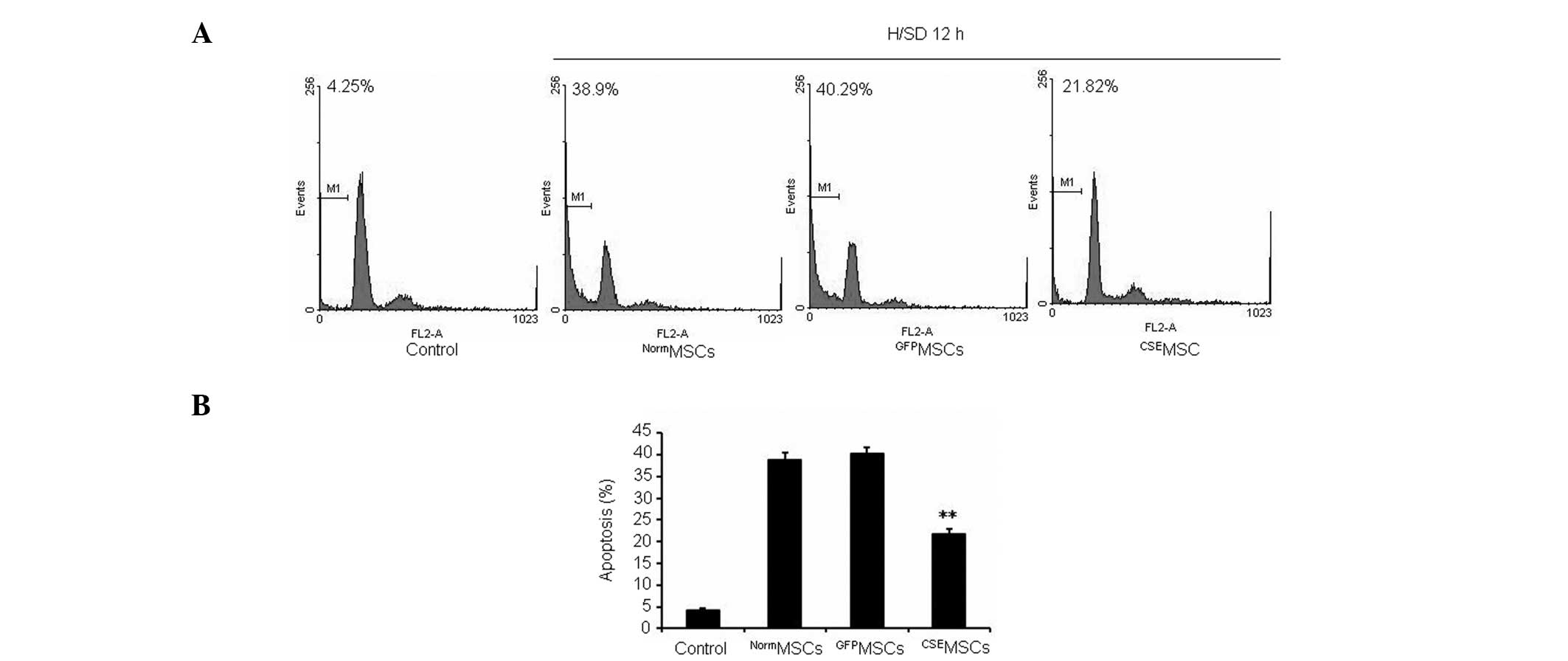
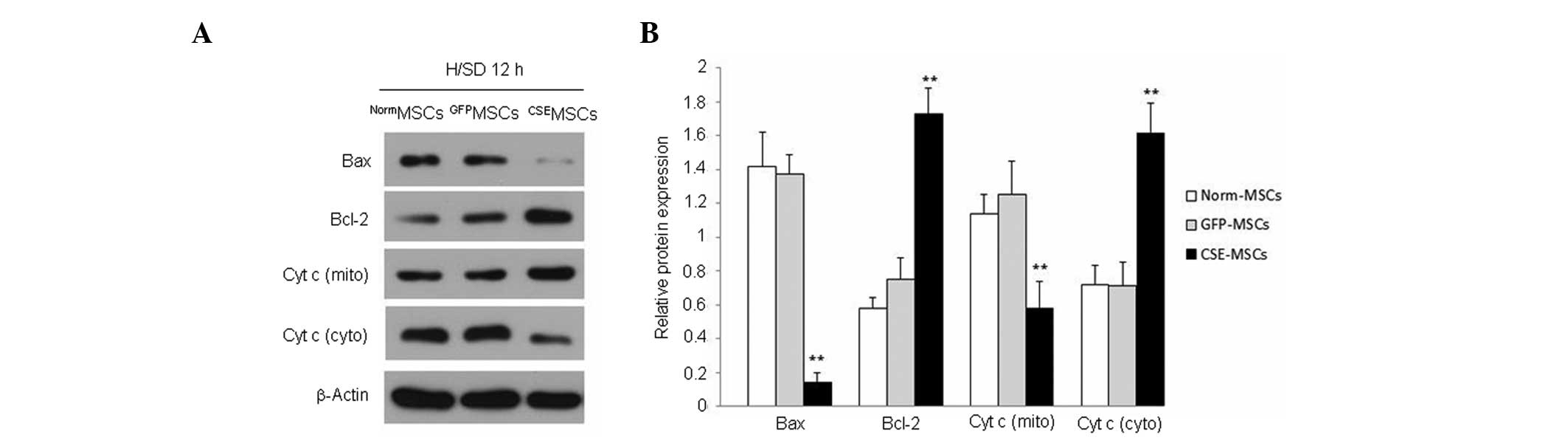
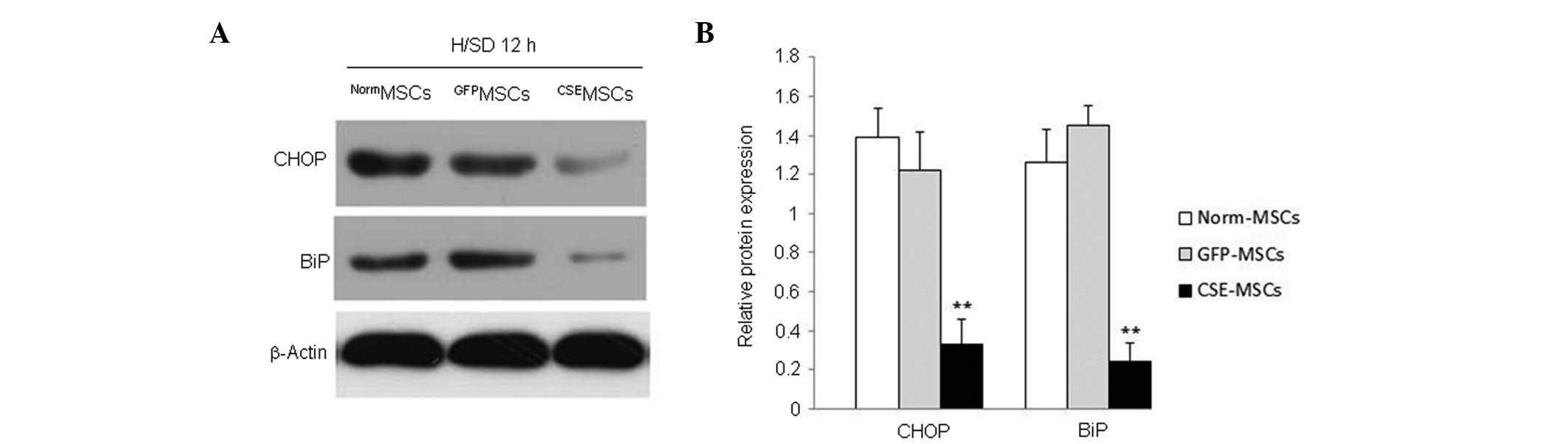
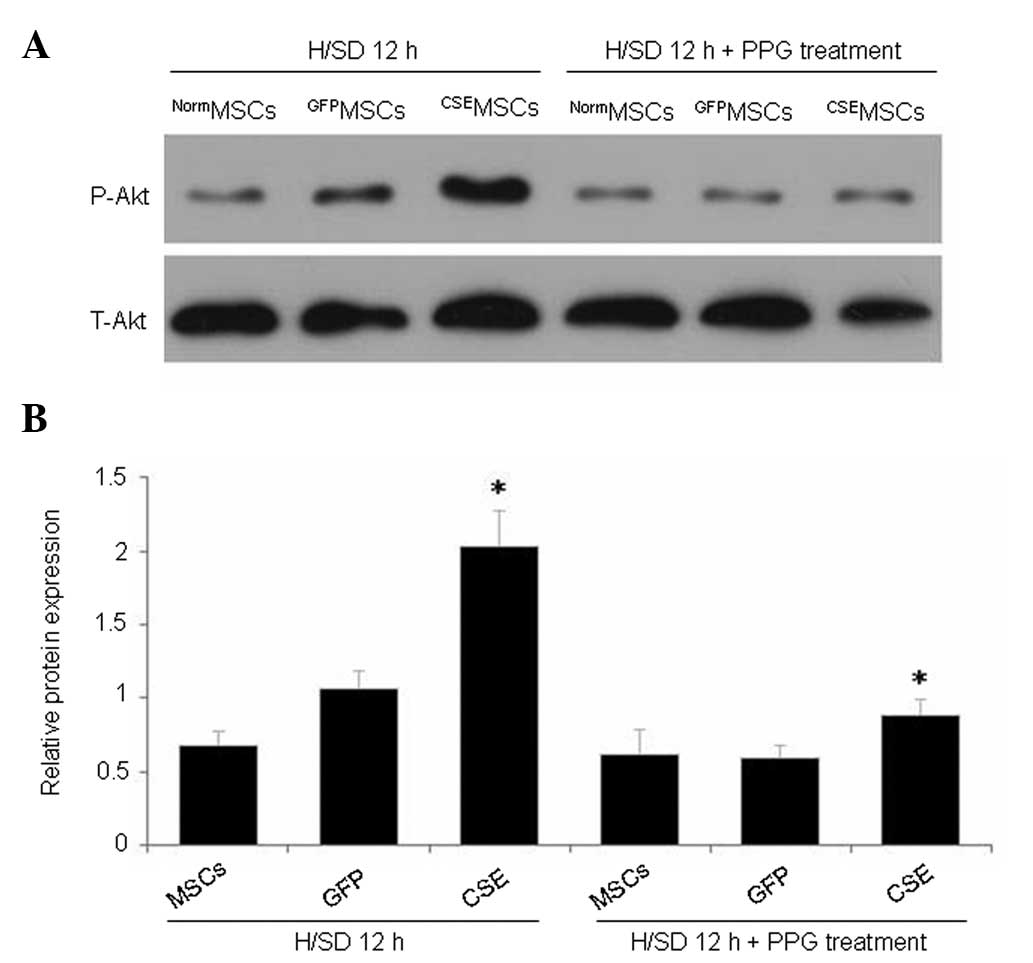
Mesenchymal stem cells (MSCs) have the potential to facilitate cardiac repair following acute myocardial infarction. However, MSC therapy is limited by apoptosis of the stem cells following transplantation. Hydrogen sulfide (H2S) has recently been proposed as an endogenous mediator of cell apoptosis in various systems. The aim of the present study was to investigate the mechanism underlying the antiapoptotic effect of the endogenous cystathionine γ‑lyase (CSE)/H2S system in MSCs cultivated in conditions of hypoxia and serum deprivation (H/SD). Western blotting was performed in order to determine the expression of proteins associated with the mitochondrial injury pathway, endoplasmic reticulum stress and the phosphatidylinositol 3‑kinase (PI3K)/Akt signaling pathway. It was demonstrated that H/SD is able to significantly induce apoptosis in MSCs. CSE overexpression, which enhances the endogenous H2S level, protects MSCs from H/SD‑induced apoptosis via attenuation of the mitochondrial injury pathway, inhibition of endoplasmic reticulum stress and activation of the PI3K/Akt signaling pathway. In conclusion, the present findings suggest that modulation of the CSE/H2S system may a therapeutic approach with which to promote the viability of transplanted MSCs.
View Figures

Figure 1

Figure 2

Figure 3

Figure 4

Figure 5

Figure 6

View References

1 

Miyahara Y, Nagaya N, Kataoka M, et al: Monolayered mesenchymal stem cells repair scarred myocardium after myocardial infarction. Nat Med. 12:459–465. 2006. View Article : Google Scholar : PubMed/NCBI

2 

Mathur A and Martin JF: Stem cells and repair of the heart. Lancet. 364:183–192. 2004. View Article : Google Scholar : PubMed/NCBI

3 

Amado LC, Saliaris AP, Schuleri KH, et al: Cardiac repair with intramyocardial injection of allogeneic mesenchymal stem cells after myocardial infarction. Proc Natl Acad Sci USA. 102:11474–11479. 2005. View Article : Google Scholar : PubMed/NCBI

4 

Gyongyosi M, Lang I, Dettke M, et al: Combined delivery approach of bone marrow mononuclear stem cells early and late after myocardial infarction: the MYSTAR prospective, randomized study. Nat Clin Pract Cardiovasc Med. 6:70–81. 2009. View Article : Google Scholar

5 

Zhang M, Methot D, Poppa V, Fujio Y, Walsh K and Murry CE: Cardiomyocyte grafting for cardiac repair: graft cell death and anti-death strategies. J Mol Cell Cardiol. 33:907–921. 2001. View Article : Google Scholar : PubMed/NCBI

6 

Calvert JW, Coetzee WA and Lefer DJ: Novel insights into hydrogen sulfide-mediated cytoprotection. Antioxid Redox Signal. 12:1203–1217

7 

Dong XB, Yang CT, Zheng DD, et al: Inhibition of ROS-activated ERK1/2 pathway contributes to the protection of H2S against chemical hypoxia-induced injury in H9c2 cells. Mol Cell Biochem. 362:149–157. 2012. View Article : Google Scholar

8 

Biermann J, Lagrèze WA, Schallner N, Schwer CI and Goebel U: Inhalative preconditioning with hydrogen sulfide attenuated apoptosis after retinal ischemia/reperfusion injury. Mol Vis. 17:1275–1286. 2011.PubMed/NCBI

9 

Taniguchi S, Kang L, Kimura T and Niki I: Hydrogen sulphide protects mouse pancreatic β-cells from cell death induced by oxidative stress, but not by endoplasmic reticulum stress. Br J Pharmacol. 162:1171–1178. 2011. View Article : Google Scholar :

10 

Sivarajah A, Collino M, Yasin M, et al: Anti-apoptotic and anti-inflammatory effects of hydrogen sulfide in a rat model of regional myocardial I/R. Shock. 31:267–274. 2009. View Article : Google Scholar

11 

Li C, Guo Z and Guo B: Inhibition of endogenous CSE/H2S system contributes to hypoxia and serum deprivation-induced apoptosis in mesenchymal stem cells. Mol Med Rep. 9:2467–2472. 2014.PubMed/NCBI

12 

Wang A, Shen F, Liang Y and Wang J: Marrow-derived MSCs and atorvastatin improve cardiac function in rat model of AMI. Int J Cardiol. 150:28–32. 2011. View Article : Google Scholar

13 

Zhu W, Chen J, Cong X, Hu S and Chen X: Hypoxia and serum deprivation-induced apoptosis in mesenchymal stem cells. Stem Cells. 24:416–425. 2006. View Article : Google Scholar

14 

Ferri KF and Kroemer G: Organelle-specific initiation of cell death pathways. Nat Cell Biol. 3:E255–E263. 2001. View Article : Google Scholar : PubMed/NCBI

15 

Oyadomari S and Mori M: Roles of CHOP/GADD153 in endoplasmic reticulum stress. Cell Death Differ. 11:381–389. 2004. View Article : Google Scholar

16 

Li Z, Wei H, Liu X, Hu S, Cong X and Chen X: LPA rescues ER stress-associated apoptosis in hypoxia and serum deprivation-stimulated mesenchymal stem cells. J Cell Biochem. 111:811–820. 2010. View Article : Google Scholar : PubMed/NCBI

17 

Wei H, Li Z, Hu S, Chen X and Cong X: Apoptosis of mesenchymal stem cells induced by hydrogen peroxide concerns both endoplasmic reticulum stress and mitochondrial death pathway through regulation of caspases, p38 and JNK. J Cell Biochem. 111:967–978. 2010. View Article : Google Scholar : PubMed/NCBI

18 

Harding HP and Ron D: Endoplasmic reticulum stress and the development of diabetes: a review. Diabetes. 51(Suppl 3): 455–461. 2002. View Article : Google Scholar

19 

Franke TF, Kaplan DR and Cantley LC: PI3K: Downstream AKTion blocks apoptosis. Cell. 88:435–437. 1997. View Article : Google Scholar : PubMed/NCBI

20 

Datta SR, Brunet A and Greenberg ME: Cellular survival: A play in three Akts. Genes Dev. 13:2905–2927. 1999. View Article : Google Scholar : PubMed/NCBI

21 

Liao Y and Hung MC: Regulation of the activity of p38 mitogen-activated protein kinase by Akt in cancer and adenoviral protein E1A-mediated sensitization to apoptosis. Mol Cell Biol. 23:6836–6848. 2003. View Article : Google Scholar : PubMed/NCBI

22 

Chen J, Baydoun AR, Xu R, et al: Lysophosphatidic acid protects mesenchymal stem cells against hypoxia and serum deprivation-induced apoptosis. Stem Cells. 26:135–145. 2008. View Article : Google Scholar

23 

Dong Q, Yang Y, Song L, et al: Atorvastatin prevents mesen-chymal stem cells from hypoxia and serum-free injury through activating AMP-activated protein kinase. Int J Cardiol. 153:311–316. 2011. View Article : Google Scholar

24 

Nie Y, Han BM, Liu XB, et al: Identification of MicroRNAs involved in hypoxia- and serum deprivation-induced apoptosis in mesenchymal stem cells. Int J Biol Sci. 7:762–768. 2011. View Article : Google Scholar : PubMed/NCBI

25 

Gao F, Hu XY, Xie XJ, et al: Heat shock protein 90 protects rat mesenchymal stem cells against hypoxia and serum deprivation-induced apoptosis via the PI3K/Akt and ERK1/2 pathways. J Zhejiang Univ Sci B. 11:608–617. 2010. View Article : Google Scholar : PubMed/NCBI

26 

Wang R: Two’s company, three’s a crowd: Can H2S be the third endogenous gaseous transmitter. FASEB J. 6:1792–1798. 2002. View Article : Google Scholar

27 

Yang C, Yang Z, Zhang M, et al: Hydrogen sulfide protects against chemical hypoxia-induced cytotoxicity and inflammation in HaCaT cells through inhibition of ROS/NF-κB/COX-2 pathway. PLoS One. 6:e219712011. View Article : Google Scholar

28 

Yao LL, Huang XW, Wang YG, Cao YX, Zhang CC and Zhu YC: Hydrogen sulfide protects cardiomyocytes from hypoxia/reoxygenation-induced apoptosis by preventing GSK-3beta-dependent opening of mPTP. Am J Physiol Heart Circ Physiol. 298:H1310–H1319. PubMed/NCBI

29 

Hu Y, Chen X, Pan TT, et al: Cardioprotection induced by hydrogen sulfide preconditioning involves activation of ERK and PI3K/Akt pathways. Pflugers Arch. 455:607–616. 2008. View Article : Google Scholar

30 

Elrod JW, Calvert JW, Morrison J, et al: Hydrogen sulfide attenuates myocardial ischemia-reperfusion injury by preservation of mitochondrial function. Proc Natl Acad Sci USA. 104:15560–15565. 2007. View Article : Google Scholar : PubMed/NCBI

31 

Guan Q, Zhang Y, Yu C, Liu Y, Gao L and Zhao J: Hydrogen sulfide protects against high-glucose-induced apoptosis in endo-thelial cells. J Cardiovasc Pharmacol. 59:188–193. 2012. View Article : Google Scholar

32 

Xie X, Sun A, Zhu W, et al: Transplantation of mesenchymal stem cells preconditioned with hydrogen sulfide enhances repair of myocardial infarction in rats. Tohoku J Exp Med. 226:29–36. 2012. View Article : Google Scholar

33 

Kumar S: Caspase function in programmed cell death. Cell Death Differ. 14:32–43. 2007. View Article : Google Scholar

34 

Berridge MJ: The endoplasmic reticulum: a multifunctional signaling organelle. Cell Calcium. 32:235–249. 2002. View Article : Google Scholar

35 

Wang XY, Yang CT, Zheng DD, et al: Hydrogen sulfide protects H9c2 cells against doxorubicin-induced cardiotoxicity through inhibition of endoplasmic reticulum stress. Mol Cell Biochem. 363:419–426. 2012. View Article : Google Scholar

36 

Mangi AA, Noiseux N, Kong D, et al: Mesenchymal stem cells modified with Akt prevent remodeling and restore performance of infarcted hearts. Nat Med. 9:1195–1201. 2003. View Article : Google Scholar : PubMed/NCBI

Related Articles

  • Abstract
  • View
  • Download
  • Twitter
Copy and paste a formatted citation
Spandidos Publications style
Guo Z, Li CS, Wang CM, Xie YJ and Wang AL: CSE/H2S system protects mesenchymal stem cells from hypoxia and serum deprivation‑induced apoptosis via mitochondrial injury, endoplasmic reticulum stress and PI3K/Akt activation pathways. Mol Med Rep 12: 2128-2134, 2015.
APA
Guo, Z., Li, C.S., Wang, C.M., Xie, Y.J., & Wang, A.L. (2015). CSE/H2S system protects mesenchymal stem cells from hypoxia and serum deprivation‑induced apoptosis via mitochondrial injury, endoplasmic reticulum stress and PI3K/Akt activation pathways. Molecular Medicine Reports, 12, 2128-2134. https://doi.org/10.3892/mmr.2015.3651
MLA
Guo, Z., Li, C. S., Wang, C. M., Xie, Y. J., Wang, A. L."CSE/H2S system protects mesenchymal stem cells from hypoxia and serum deprivation‑induced apoptosis via mitochondrial injury, endoplasmic reticulum stress and PI3K/Akt activation pathways". Molecular Medicine Reports 12.2 (2015): 2128-2134.
Chicago
Guo, Z., Li, C. S., Wang, C. M., Xie, Y. J., Wang, A. L."CSE/H2S system protects mesenchymal stem cells from hypoxia and serum deprivation‑induced apoptosis via mitochondrial injury, endoplasmic reticulum stress and PI3K/Akt activation pathways". Molecular Medicine Reports 12, no. 2 (2015): 2128-2134. https://doi.org/10.3892/mmr.2015.3651
Copy and paste a formatted citation
x
Spandidos Publications style
Guo Z, Li CS, Wang CM, Xie YJ and Wang AL: CSE/H2S system protects mesenchymal stem cells from hypoxia and serum deprivation‑induced apoptosis via mitochondrial injury, endoplasmic reticulum stress and PI3K/Akt activation pathways. Mol Med Rep 12: 2128-2134, 2015.
APA
Guo, Z., Li, C.S., Wang, C.M., Xie, Y.J., & Wang, A.L. (2015). CSE/H2S system protects mesenchymal stem cells from hypoxia and serum deprivation‑induced apoptosis via mitochondrial injury, endoplasmic reticulum stress and PI3K/Akt activation pathways. Molecular Medicine Reports, 12, 2128-2134. https://doi.org/10.3892/mmr.2015.3651
MLA
Guo, Z., Li, C. S., Wang, C. M., Xie, Y. J., Wang, A. L."CSE/H2S system protects mesenchymal stem cells from hypoxia and serum deprivation‑induced apoptosis via mitochondrial injury, endoplasmic reticulum stress and PI3K/Akt activation pathways". Molecular Medicine Reports 12.2 (2015): 2128-2134.
Chicago
Guo, Z., Li, C. S., Wang, C. M., Xie, Y. J., Wang, A. L."CSE/H2S system protects mesenchymal stem cells from hypoxia and serum deprivation‑induced apoptosis via mitochondrial injury, endoplasmic reticulum stress and PI3K/Akt activation pathways". Molecular Medicine Reports 12, no. 2 (2015): 2128-2134. https://doi.org/10.3892/mmr.2015.3651
Follow us
  • Twitter
  • LinkedIn
  • Facebook
About
  • Spandidos Publications
  • Careers
  • Cookie Policy
  • Privacy Policy
How can we help?
  • Help
  • Live Chat
  • Contact
  • Email to our Support Team