Spandidos Publications Logo
  • About
    • About Spandidos
    • Aims and Scopes
    • Abstracting and Indexing
    • Editorial Policies
    • Reprints and Permissions
    • Job Opportunities
    • Terms and Conditions
    • Contact
  • Journals
    • All Journals
    • Oncology Letters
      • Oncology Letters
      • Information for Authors
      • Editorial Policies
      • Editorial Board
      • Aims and Scope
      • Abstracting and Indexing
      • Bibliographic Information
      • Archive
    • International Journal of Oncology
      • International Journal of Oncology
      • Information for Authors
      • Editorial Policies
      • Editorial Board
      • Aims and Scope
      • Abstracting and Indexing
      • Bibliographic Information
      • Archive
    • Molecular and Clinical Oncology
      • Molecular and Clinical Oncology
      • Information for Authors
      • Editorial Policies
      • Editorial Board
      • Aims and Scope
      • Abstracting and Indexing
      • Bibliographic Information
      • Archive
    • Experimental and Therapeutic Medicine
      • Experimental and Therapeutic Medicine
      • Information for Authors
      • Editorial Policies
      • Editorial Board
      • Aims and Scope
      • Abstracting and Indexing
      • Bibliographic Information
      • Archive
    • International Journal of Molecular Medicine
      • International Journal of Molecular Medicine
      • Information for Authors
      • Editorial Policies
      • Editorial Board
      • Aims and Scope
      • Abstracting and Indexing
      • Bibliographic Information
      • Archive
    • Biomedical Reports
      • Biomedical Reports
      • Information for Authors
      • Editorial Policies
      • Editorial Board
      • Aims and Scope
      • Abstracting and Indexing
      • Bibliographic Information
      • Archive
    • Oncology Reports
      • Oncology Reports
      • Information for Authors
      • Editorial Policies
      • Editorial Board
      • Aims and Scope
      • Abstracting and Indexing
      • Bibliographic Information
      • Archive
    • Molecular Medicine Reports
      • Molecular Medicine Reports
      • Information for Authors
      • Editorial Policies
      • Editorial Board
      • Aims and Scope
      • Abstracting and Indexing
      • Bibliographic Information
      • Archive
    • World Academy of Sciences Journal
      • World Academy of Sciences Journal
      • Information for Authors
      • Editorial Policies
      • Editorial Board
      • Aims and Scope
      • Abstracting and Indexing
      • Bibliographic Information
      • Archive
    • International Journal of Functional Nutrition
      • International Journal of Functional Nutrition
      • Information for Authors
      • Editorial Policies
      • Editorial Board
      • Aims and Scope
      • Abstracting and Indexing
      • Bibliographic Information
      • Archive
    • International Journal of Epigenetics
      • International Journal of Epigenetics
      • Information for Authors
      • Editorial Policies
      • Editorial Board
      • Aims and Scope
      • Abstracting and Indexing
      • Bibliographic Information
      • Archive
    • Medicine International
      • Medicine International
      • Information for Authors
      • Editorial Policies
      • Editorial Board
      • Aims and Scope
      • Abstracting and Indexing
      • Bibliographic Information
      • Archive
  • Articles
  • Information
    • Information for Authors
    • Information for Reviewers
    • Information for Librarians
    • Information for Advertisers
    • Conferences
  • Language Editing
Spandidos Publications Logo
  • About
    • About Spandidos
    • Aims and Scopes
    • Abstracting and Indexing
    • Editorial Policies
    • Reprints and Permissions
    • Job Opportunities
    • Terms and Conditions
    • Contact
  • Journals
    • All Journals
    • Biomedical Reports
      • Information for Authors
      • Editorial Policies
      • Editorial Board
      • Aims and Scope
      • Abstracting and Indexing
      • Bibliographic Information
      • Archive
    • Experimental and Therapeutic Medicine
      • Information for Authors
      • Editorial Policies
      • Editorial Board
      • Aims and Scope
      • Abstracting and Indexing
      • Bibliographic Information
      • Archive
    • International Journal of Epigenetics
      • Information for Authors
      • Editorial Policies
      • Editorial Board
      • Aims and Scope
      • Abstracting and Indexing
      • Bibliographic Information
      • Archive
    • International Journal of Functional Nutrition
      • Information for Authors
      • Editorial Policies
      • Editorial Board
      • Aims and Scope
      • Abstracting and Indexing
      • Bibliographic Information
      • Archive
    • International Journal of Molecular Medicine
      • Information for Authors
      • Editorial Policies
      • Editorial Board
      • Aims and Scope
      • Abstracting and Indexing
      • Bibliographic Information
      • Archive
    • International Journal of Oncology
      • Information for Authors
      • Editorial Policies
      • Editorial Board
      • Aims and Scope
      • Abstracting and Indexing
      • Bibliographic Information
      • Archive
    • Medicine International
      • Information for Authors
      • Editorial Policies
      • Editorial Board
      • Aims and Scope
      • Abstracting and Indexing
      • Bibliographic Information
      • Archive
    • Molecular and Clinical Oncology
      • Information for Authors
      • Editorial Policies
      • Editorial Board
      • Aims and Scope
      • Abstracting and Indexing
      • Bibliographic Information
      • Archive
    • Molecular Medicine Reports
      • Information for Authors
      • Editorial Policies
      • Editorial Board
      • Aims and Scope
      • Abstracting and Indexing
      • Bibliographic Information
      • Archive
    • Oncology Letters
      • Information for Authors
      • Editorial Policies
      • Editorial Board
      • Aims and Scope
      • Abstracting and Indexing
      • Bibliographic Information
      • Archive
    • Oncology Reports
      • Information for Authors
      • Editorial Policies
      • Editorial Board
      • Aims and Scope
      • Abstracting and Indexing
      • Bibliographic Information
      • Archive
    • World Academy of Sciences Journal
      • Information for Authors
      • Editorial Policies
      • Editorial Board
      • Aims and Scope
      • Abstracting and Indexing
      • Bibliographic Information
      • Archive
  • Articles
  • Information
    • For Authors
    • For Reviewers
    • For Librarians
    • For Advertisers
    • Conferences
  • Language Editing
Login Register Submit
  • This site uses cookies
  • You can change your cookie settings at any time by following the instructions in our Cookie Policy. To find out more, you may read our Privacy Policy.

    I agree
Search articles by DOI, keyword, author or affiliation
Search
Advanced Search
presentation
Molecular Medicine Reports
Join Editorial Board Propose a Special Issue
Print ISSN: 1791-2997 Online ISSN: 1791-3004
Journal Cover
August-2015 Volume 12 Issue 2

Full Size Image

Sign up for eToc alerts
Recommend to Library

Journals

International Journal of Molecular Medicine

International Journal of Molecular Medicine

International Journal of Molecular Medicine is an international journal devoted to molecular mechanisms of human disease.

International Journal of Oncology

International Journal of Oncology

International Journal of Oncology is an international journal devoted to oncology research and cancer treatment.

Molecular Medicine Reports

Molecular Medicine Reports

Covers molecular medicine topics such as pharmacology, pathology, genetics, neuroscience, infectious diseases, molecular cardiology, and molecular surgery.

Oncology Reports

Oncology Reports

Oncology Reports is an international journal devoted to fundamental and applied research in Oncology.

Experimental and Therapeutic Medicine

Experimental and Therapeutic Medicine

Experimental and Therapeutic Medicine is an international journal devoted to laboratory and clinical medicine.

Oncology Letters

Oncology Letters

Oncology Letters is an international journal devoted to Experimental and Clinical Oncology.

Biomedical Reports

Biomedical Reports

Explores a wide range of biological and medical fields, including pharmacology, genetics, microbiology, neuroscience, and molecular cardiology.

Molecular and Clinical Oncology

Molecular and Clinical Oncology

International journal addressing all aspects of oncology research, from tumorigenesis and oncogenes to chemotherapy and metastasis.

World Academy of Sciences Journal

World Academy of Sciences Journal

Multidisciplinary open-access journal spanning biochemistry, genetics, neuroscience, environmental health, and synthetic biology.

International Journal of Functional Nutrition

International Journal of Functional Nutrition

Open-access journal combining biochemistry, pharmacology, immunology, and genetics to advance health through functional nutrition.

International Journal of Epigenetics

International Journal of Epigenetics

Publishes open-access research on using epigenetics to advance understanding and treatment of human disease.

Medicine International

Medicine International

An International Open Access Journal Devoted to General Medicine.

Journal Cover
August-2015 Volume 12 Issue 2

Full Size Image

Sign up for eToc alerts
Recommend to Library

  • Article
  • Citations
    • Cite This Article
    • Download Citation
    • Create Citation Alert
    • Remove Citation Alert
    • Cited By
  • Similar Articles
    • Related Articles (in Spandidos Publications)
    • Similar Articles (Google Scholar)
    • Similar Articles (PubMed)
  • Download PDF
  • Download XML
  • View XML
Article Open Access

Identification of human leukemia antigen A*0201‑restricted epitopes derived from epidermal growth factor pathway substrate number 8

  • Authors:
    • Baishan Tang
    • Weijun Zhou
    • Jingwen Du
    • Yanjie He
    • Yuhua Li
  • View Affiliations / Copyright

    Affiliations: Department of Hematology, Zhujiang Hospital, Southern Medical University, Guangzhou, Guangdong 510280, P.R. China
    Copyright: © Tang et al. This is an open access article distributed under the terms of Creative Commons Attribution License [CC BY_NC 3.0].
  • Pages: 1741-1752
    |
    Published online on: April 23, 2015
       https://doi.org/10.3892/mmr.2015.3673
  • Expand metrics +
Metrics: Total Views: 0 (Spandidos Publications: | PMC Statistics: )
Metrics: Total PDF Downloads: 0 (Spandidos Publications: | PMC Statistics: )
Cited By (CrossRef): 0 citations Loading Articles...

This article is mentioned in:


Abstract

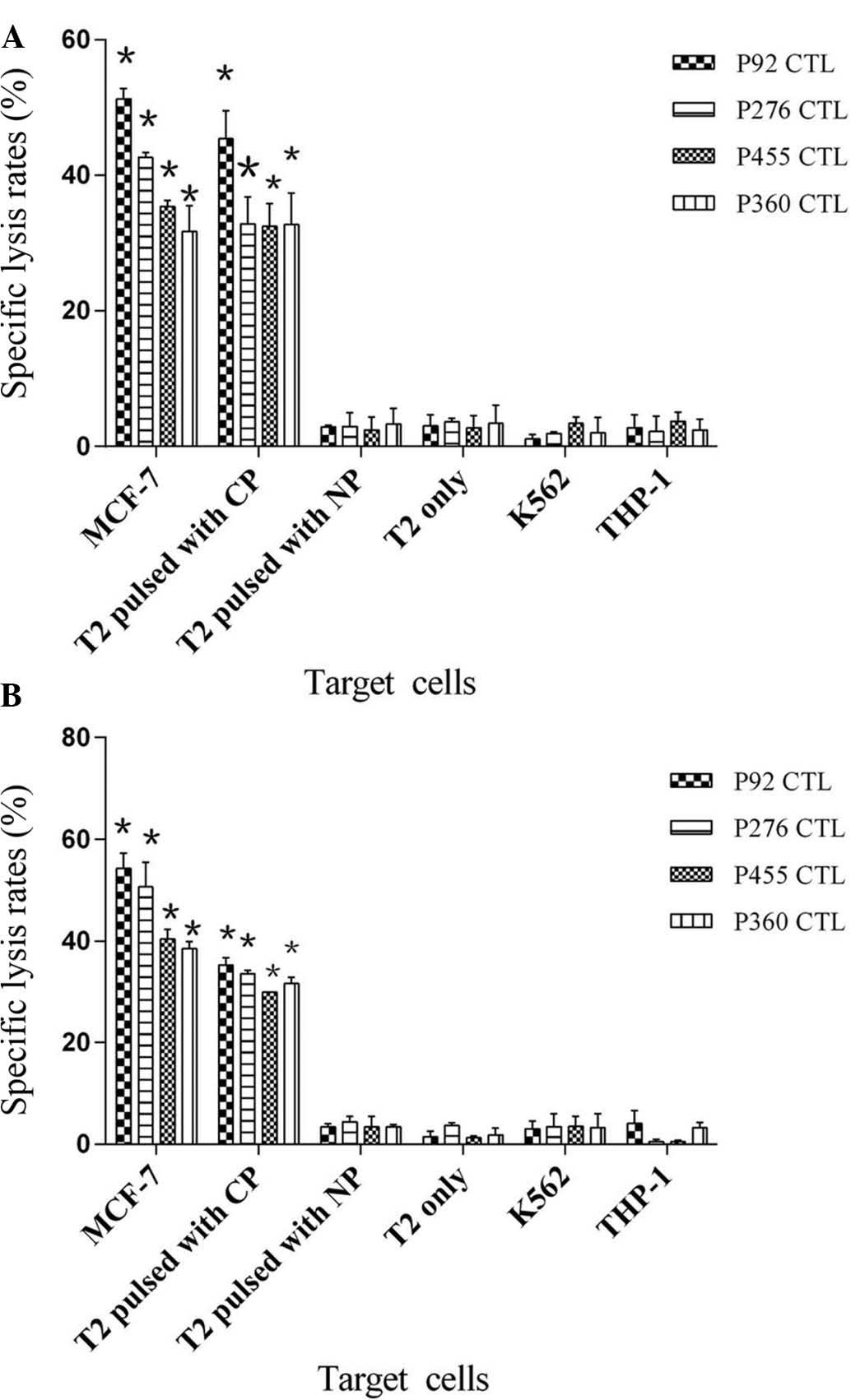
T‑cell‑mediated immunotherapy of hematological malignancies requires selection of targeted tumor‑associated antigens and T‑cell epitopes contained in these tumor proteins. Epidermal growth factor receptor pathway substrate 8 (EPS8), whose function is pivotal for tumor proliferation, progression and metastasis, has been found to be overexpressed in most human tumor types, while its expression in normal tissue is low. The aim of the present study was to identify human leukemia antigen (HLA)‑A*0201‑restricted epitopes of EPS8 by using a reverse immunology approach. To achieve this, computer algorithms were used to predict HLA‑A*0201 molecular binding, proteasome cleavage patterns as well as translocation of transporters associated with antigen processing. Candidate peptides were experimentally validated by T2 binding affinity assay and brefeldin‑A decay assay. The functional avidity of peptide‑specific cytotoxic T lymphocytes (CTLs) induced from peripheral blood mononuclear cells of healthy volunteers were evaluated by using an enzyme‑linked immunosorbent spot assay and a cytotoxicity assay. Four peptides, designated as P455, P92, P276 and P360, had high affinity and stability of binding towards the HLA‑A*0201 molecule, and specific CTLs induced by them significantly responded to the corresponding peptides and secreted IFN‑γ. At the same time, the CTLs were able to specifically lyse EPS8‑expressing cell lines in an HLA‑A*0201‑restricted manner. The present study demonstrated that P455, P92, P276 and P360 were CTL epitopes of EPS8, and were able to be used for epitope‑defined adoptive T‑cell transfer and multi‑epitope‑based vaccine design.
View Figures

Figure 1

Figure 2

Figure 3

Figure 4

Figure 5

View References

1 

Zigler M, Shir A and Levitzki A: Targeted cancer immunotherapy. Curr Opin Pharmacol. 13:504–510. 2013. View Article : Google Scholar : PubMed/NCBI

2 

Casalegno-Garduño R, Schmitt A and Schmitt M: Clinical peptide vaccination trials for leukemia patients. Expert Rev Vaccines. 10:785–799. 2011. View Article : Google Scholar : PubMed/NCBI

3 

Vaggi F, Disanza A, Milanesi F, Di Fiore PP, Menna E, Matteoli M, Gov NS, Scita G and Ciliberto A: The Eps8/IRSp53/VASP network differentially controls actin capping and bundling in filopodia formation. PLOS Comput Biol. 7:e10020882011. View Article : Google Scholar : PubMed/NCBI

4 

Disanza A, Carlier MF, Stradal TE, Didry D, Frittoli E, Confalonieri S, Croce A, Wehland J, Di Fiore PP and Scita G: Eps8 controls actin-based motility by capping the barbed ends of actin filaments. Nat cell Biol. 6:1180–1188. 2004. View Article : Google Scholar : PubMed/NCBI

5 

Werner A, Disanza A, Reifenberger N, Habeck G, Becker J, Calabrese M, Urlaub H, Lorenz H, Schulman B, Scita G, et al: SCFFbxw5 mediates transient degradation of actin remodeller Eps8 to allow proper mitotic progression. Nat cell Biol. 15:179–188. 2013. View Article : Google Scholar : PubMed/NCBI

6 

Yao J, Weremowicz S, Feng B, Gentleman RC, Marks JR, Gelman R, Brennan C and Polyak K: Combined cDNA array comparative genomic hybridization and serial analysis of gene expression analysis of breast tumor progression. Cancer Res. 66:4065–4078. 2006. View Article : Google Scholar : PubMed/NCBI

7 

Xu M, Shorts-Cary L, Knox AJ, Kleinsmidt-DeMasters B, Lillehei K and Wierman ME: Epidermal growth factor receptor pathway substrate 8 is overexpressed in human pituitary tumors: Role in proliferation and survival. Endocrinology. 150:2064–2071. 2009. View Article : Google Scholar : PubMed/NCBI

8 

Welsch T, Endlich K, Giese T, Büchler MW and Schmidt J: Eps8 is increased in pancreatic cancer and required for dynamic actin-based cell protrusions and intercellular cytoskeletal organization. Cancer Lett. 255:205–218. 2007. View Article : Google Scholar : PubMed/NCBI

9 

Chen YJ, Shen MR, Chen YJ, Maa MC and Leu TH: Eps8 decreases chemosensitivity and affects survival of cervical cancer patients. Mol Cancer Ther. 7:1376–1385. 2008. View Article : Google Scholar : PubMed/NCBI

10 

Maa MC, Lee JC, Chen YJ, Chen YJ, Lee YC, Wang ST, Huang CC, Chow NH and Leu TH: Eps8 facilitates cellular growth and motility of colon cancer cells by increasing the expression and activity of focal adhesion kinase. J Biol Chem. 282:19399–19409. 2007. View Article : Google Scholar : PubMed/NCBI

11 

Wang H, Patel V, Miyazaki H, Gutkind JS and Yeudall WA: Role for EPS8 in squamous carcinogenesis. Carcinogenesis. 30:165–174. 2009. View Article : Google Scholar

12 

Bashir M, Kirmani D, Bhat HF, Baba RA, Hamza R, Naqash S, Wani NA, Andrabi KI, Zargar MA and Khanday FA: P66shc and its downstream Eps8 and Rac1 proteins are upregulated in esophageal cancers. Cell Commun Signal. 8:132010. View Article : Google Scholar : PubMed/NCBI

13 

Ding X, Zhou F, Wang F, Yang Z, Zhou C, Zhou J, Zhang B, Yang J, Wang G, Wei Z, et al: Eps8 promotes cellular growth of human malignant gliomas. Oncol Rep. 29:697–703. 2013.

14 

Gorsic LK, Stark AL, Wheeler HE, Wong SS, Im HK and Dolan ME: EPS8 inhibition increases cisplatin sensitivity in lung cancer cells. PLoS One. 8:e822202013. View Article : Google Scholar : PubMed/NCBI

15 

Wang L, Cai SH, Xiong WY, He YJ, Deng L and Li YH: Real-time quantitative polymerase chain reaction assay for detecting the eps8 gene in acute myeloid leukemia. Clin Lab. 59:1261–1269. 2013.

16 

He YJ, Zhou J, Zhao TF, Hu LS, Gan JY, Deng L and Li Y: Eps8 vaccine exerts prophylactic antitumor effects in a murine model: A novel vaccine for breast carcinoma. Mol Med Rep. 8:662–668. 2013.PubMed/NCBI

17 

Li S, Li H, Chen B, Lu D, Deng W, Jiang Y, Zhou Z and Yang Z: Identification of novel HLA-A 0201-restricted cytotoxic T lymphocyte epitopes from Zinc Transporter 8. Vaccine. 31:1610–1615. 2013. View Article : Google Scholar

18 

Wang B, Chen H, Jiang X, Zhang M, Wan T, Li N, Zhou X, Wu Y, Yang F, Yu Y, et al: Identification of an HLA-A*0201-restricted CD8+ T-cell epitope SSp-1 of SARS-CoV spike protein. Blood. 104:200–206. 2004. View Article : Google Scholar : PubMed/NCBI

19 

Guo YJ, Wang KY and Sun SH: Identification of an HLA-A*0201-restricted CD8(+) T-cell epitope encoded within Leptospiral immunoglobulin like protein. A Microbes Infect. 12:364–373. 2010. View Article : Google Scholar

20 

Dervillez X, Qureshi H, Chentoufi AA, Khan AA, Kritzer E, Yu DC, Diaz OR, Gottimukkala C, Kalantari M, Villacres MC, et al: Asymptomatic HLA-A*02:01-restricted epitopes from herpes simplex virus glycoprotein B preferentially recall polyfunctional CD8+ T-cells from seropositive asymptomatic individuals and protect HLA transgenic mice against ocular herpes. J Immunol. 191:5124–5138. 2013. View Article : Google Scholar : PubMed/NCBI

21 

Saini SK, Ostermeir K, Ramnarayan VR, Schuster H, Zacharias M and Springer S: Dipeptides promote folding and peptide-binding of MHC class I molecules. Proc Natl Acad Sci USA. 110:15383–15388. 2013. View Article : Google Scholar

22 

Imai K, Hirata S, Irie A, Senju S, Ikuta Y, Yokomine K, Harao M, Inoue M, Tomita Y, Tsunoda T, et al: Identification of HLA-A2-restricted CTL epitopes of a novel tumour-associated antigen, KIF20A, overexpressed in pancreatic cancer. Br J Cancer. 104:300–307. 2011. View Article : Google Scholar :

23 

Wu YH, Gao YF, He YJ, Shi RR, Zhai MX, Wu ZY, Sun M, Zhai WJ, Chen X and Qi YM: A novel cytotoxic T lymphocyte epitope analogue with enhanced activity derived from cyclooxygenase-2. Scand J Immunol. 76:278–285. 2012. View Article : Google Scholar : PubMed/NCBI

24 

Zhu B, Chen Z, Cheng X, Lin Z, Guo J, Jia Z, Zou L, Wang Z, Hu Y, Wang D, et al: Identification of HLA-A*0201-restricted cytotoxic T lymphocyte epitope from TRAG-3 antigen. Clin Cancer Res. 9:1850–1857. 2003.PubMed/NCBI

25 

Imahashi N, Nishida T, Ito Y, Kawada J, Nakazawa Y, Toji S, Suzuki S, Terakura S, Kato T, Murata M, et al: Identification of a novel HLA-A*24:02-restricted adenovirus serotype 11-specific CD8+ T-cell epitope for adoptive immunotherapy. Mol Immunol. 56:399–405. 2013. View Article : Google Scholar : PubMed/NCBI

26 

Paul S, Weiskopf D, Angelo MA, Sidney J, Peters B and Sette A: HLA class I alleles are associated with peptide-binding repertoires of different size, affinity, and immunogenicity. J Immunol. 191:5831–5839. 2013. View Article : Google Scholar : PubMed/NCBI

27 

Gajewski TF: Cancer immunotherapy. Mol Oncol. 6:242–250. 2012. View Article : Google Scholar : PubMed/NCBI

28 

Weber G, Gerdemann U, Caruana I, Savoldo B, Hensel NF, Rabin KR, Shpall EJ, Melenhorst JJ, Leen AM, Barrett AJ, et al: Generation of multi-leukemia antigen-specific T cells to enhance the graft-versus-leukemia effect after allogeneic stem cell transplant. Leukemia. 27:1538–1547. 2013. View Article : Google Scholar : PubMed/NCBI

29 

Vesely MD and Schreiber RD: Cancer immunoediting: Antigens, mechanisms, and implications to cancer immunotherapy. Ann NY Acad Sci. 1284:1–5. 2013. View Article : Google Scholar : PubMed/NCBI

30 

Mishra S and Sinha S: Immunoinformatics and modeling perspective of T cell epitope-based cancer immunotherapy: A holistic picture. J Biomol Struct Dyn. 27:293–306. 2009. View Article : Google Scholar : PubMed/NCBI

31 

Matoskova B, Wong WT, Salcini AE, Pelicci PG and Di Fiore PP: Constitutive phosphorylation of eps8 in tumor cell lines: Relevance to malignant transformation. Mol Cell Biol. 15:3805–3812. 1995.PubMed/NCBI

32 

Li YH, Xue TY, He YZ and Du JW: Novel oncoprotein EPS8: A new target for anticancer therapy. Future Oncol. 9:1587–1594. 2013. View Article : Google Scholar : PubMed/NCBI

33 

Kessler JH and Melief CJ: Identification of T-cell epitopes for cancer immunotherapy. Leukemia. 21:1859–1874. 2007. View Article : Google Scholar : PubMed/NCBI

34 

Vigneron N and Van den Eynde BJ: Insights into the processing of MHC class I ligands gained from the study of human tumor epitopes. Cell Mol Life Sci. 68:1503–1520. 2011. View Article : Google Scholar : PubMed/NCBI

35 

Dönnes P and Kohlbacher O: Integrated modeling of the major events in the MHC class I antigen processing pathway. Protein Sci. 14:2132–2140. 2005. View Article : Google Scholar : PubMed/NCBI

36 

Castelli M, Cappelletti F, Diotti RA, Sautto G, Criscuolo E, Dal Peraro M and Clementi N: Peptide-based vaccinology: Experimental and computational approaches to target hyper-variable viruses through the fine characterization of protective epitopes recognized by monoclonal antibodies and the identification of T-cell-activating peptides. Clin Dev Immunol. 2013:5212312013. View Article : Google Scholar

37 

Lundegaard C, Nielsen M and Lund O: The validity of predicted T-cell epitopes. Trends Biotechnol. 24:537–538. 2006. View Article : Google Scholar : PubMed/NCBI

38 

Sieker F, May A and Zacharias M: Predicting affinity and specificity of antigenic peptide binding to major histocompatibility class I molecules. Curr Protein Pept Sci. 10:286–296. 2009. View Article : Google Scholar : PubMed/NCBI

39 

Lundegaard C, Lund O, Buus S and Nielsen M: Major histocompatibility complex class I binding predictions as a tool in epitope discovery. Immunology. 130:309–318. 2010. View Article : Google Scholar : PubMed/NCBI

40 

Viatte S, Alves PM and Romero P: Reverse immunology approach for the identification of CD8 T-cell-defined antigens: Advantages and hurdles. Immunol Cell Biol. 84:318–330. 2006. View Article : Google Scholar : PubMed/NCBI

41 

Kessler JH, Mommaas B, Mutis T, Huijbers I, Vissers D, Benckhuijsen WE, Schreuder GM, Offringa R, Goulmy E, Melief CJ, et al: Competition-based cellular peptide binding assays for 13 prevalent HLA class I alleles using fluorescein-labeled synthetic peptides. Hum Immunol. 64:245–255. 2003. View Article : Google Scholar : PubMed/NCBI

42 

Cole DK, Edwards ES, Wynn KK, et al: Modification of MHC anchor residues generates heteroclitic peptides that alter TCR binding and T cell recognition. J Immunol. 185:2600–2610. 2010. View Article : Google Scholar : PubMed/NCBI

43 

Assarsson E, Sidney J, Oseroff C, et al: A quantitative analysis of the variables affecting the repertoire of T cell specificities recognized after vaccinia virus infection. J Immunol. 178:7890–7901. 2007. View Article : Google Scholar : PubMed/NCBI

44 

Jørgensen KW, Rasmussen M, Buus S and Nielsen M: NetMHCstab-predicting stability of peptide-MHC-I complexes; impacts for cytotoxic T lymphocyte epitope discovery. Immunology. 141:18–26. 2014. View Article : Google Scholar

45 

Harndahl M, Rasmussen M, Roder G, Dalgaard Pedersen I, Sørensen M, Nielsen M and Buus S: Peptide-MHC class I stability is a better predictor than peptide affinity of CTL immunogenicity. Eur J Immunol. 42:1405–1416. 2012. View Article : Google Scholar : PubMed/NCBI

46 

Strous GJ, van Kerkhof P, van Meer G, Rijnboutt S and Stoorvogel W: Differential effects of brefeldin A on transport of secretory and lysosomal proteins. J Biol Chem. 268:2341–2347. 1993.PubMed/NCBI

47 

Misumi Y, Misumi Y, Miki K, Takatsuki A, Tamura G and Ikehara Y: Novel blockade by brefeldin A of intracellular transport of secretory proteins in cultured rat hepatocytes. J Biol Chem. 261:11398–11403. 1986.PubMed/NCBI

48 

Okuyama R, Aruga A, Hatori T, Takeda K and Yamamoto M: Immunological responses to a multi-peptide vaccine targeting cancer-testis antigens and VEGFRs in advanced pancreatic cancer patients. OncoImmunology. 2:e270102013. View Article : Google Scholar

49 

Laugel B, van den Berg HA, Gostick E, Cole DK, Wooldridge L, Boulter J, Milicic A, Price DA and Sewell AK: Different T cell receptor affinity thresholds and CD8 coreceptor dependence govern cytotoxic T lymphocyte activation and tetramer binding properties. J Biol Chem. 282:23799–23810. 2007. View Article : Google Scholar : PubMed/NCBI

50 

Zhong S, Malecek K, Johnson LA, Yu Z, Vega-Saenz de Miera E, Darvishian F, McGary K, Huang K, Boyer J, Corse E, et al: T-cell receptor affinity and avidity defines antitumor response and autoimmunity in T-cell immunotherapy. Proc Natl Acad Sci USA. 110:6973–6978. 2013. View Article : Google Scholar : PubMed/NCBI

51 

Corse E, Gottschalk RA, Krogsgaard M and Allison JP: Attenuated T cell responses to a high-potency ligand in vivo. PLoS Biol. 8:e10004812010. View Article : Google Scholar : PubMed/NCBI

52 

Slansky JE and Jordan KR: The Goldilocks model for TCR-too much attraction might not be best for vaccine design. PLoS Biol. 8:e10004822010. View Article : Google Scholar : PubMed/NCBI

53 

Hebeisen M, Baitsch L, Presotto D, Baumgaertner P, Romero P, Michielin O, Speiser DE and Rufer N: SHP-1 phosphatase activity counteracts increased T cell receptor affinity. J Clin Invest. 123:1044–1056. 2013. View Article : Google Scholar : PubMed/NCBI

54 

Alexander Miller MA, Leggatt GR and Berzofsky JA: Selective expansion of high- or low-avidity cytotoxic T lymphocytes and efficacy for adoptive immunotherapy. Proc Natl Acad Sci USA. 93:4102–4107. 1996. View Article : Google Scholar : PubMed/NCBI

55 

Zeh HJ 3rd, Perry-Lalley D, Dudley ME, Rosenberg SA and Yang JC: High avidity CTLs for two self antigens demonstrate superior in vitro and in vivo antitumor efficacy. J Immunol. 162:989–994. 1999.PubMed/NCBI

56 

Brentville VA, Metheringham RL, Gunn B and Durrant LG: High avidity cytotoxic T lymphocytes can be selected into the memory pool but they are exquisitely sensitive to functional impairment. PLoS One. 7:e411122012. View Article : Google Scholar : PubMed/NCBI

57 

Ho WY, Nguyen HN, Wolfl M, Kuball J and Greenberg PD: In vitro methods for generating CD8+ T-cell clones for immunotherapy from the naïve repertoire. J Immunol Methods. 310:40–52. 2006. View Article : Google Scholar : PubMed/NCBI

58 

Kang YJ, Zeng W, Song W, Reinhold B, Choi J, Brusic V, Yamashita T, Munshi A, Li C, Minvielle S, et al: Identification of human leucocyte antigen (HLA)-A*0201-restricted cytotoxic T lymphocyte epitopes derived from HLA-DOβ as a novel target for multiple myeloma. Br J Haematol. 163:343–351. 2013. View Article : Google Scholar : PubMed/NCBI

Related Articles

  • Abstract
  • View
  • Download
  • Twitter
Copy and paste a formatted citation
Spandidos Publications style
Tang B, Zhou W, Du J, He Y and Li Y: Identification of human leukemia antigen A*0201‑restricted epitopes derived from epidermal growth factor pathway substrate number 8. Mol Med Rep 12: 1741-1752, 2015.
APA
Tang, B., Zhou, W., Du, J., He, Y., & Li, Y. (2015). Identification of human leukemia antigen A*0201‑restricted epitopes derived from epidermal growth factor pathway substrate number 8. Molecular Medicine Reports, 12, 1741-1752. https://doi.org/10.3892/mmr.2015.3673
MLA
Tang, B., Zhou, W., Du, J., He, Y., Li, Y."Identification of human leukemia antigen A*0201‑restricted epitopes derived from epidermal growth factor pathway substrate number 8". Molecular Medicine Reports 12.2 (2015): 1741-1752.
Chicago
Tang, B., Zhou, W., Du, J., He, Y., Li, Y."Identification of human leukemia antigen A*0201‑restricted epitopes derived from epidermal growth factor pathway substrate number 8". Molecular Medicine Reports 12, no. 2 (2015): 1741-1752. https://doi.org/10.3892/mmr.2015.3673
Copy and paste a formatted citation
x
Spandidos Publications style
Tang B, Zhou W, Du J, He Y and Li Y: Identification of human leukemia antigen A*0201‑restricted epitopes derived from epidermal growth factor pathway substrate number 8. Mol Med Rep 12: 1741-1752, 2015.
APA
Tang, B., Zhou, W., Du, J., He, Y., & Li, Y. (2015). Identification of human leukemia antigen A*0201‑restricted epitopes derived from epidermal growth factor pathway substrate number 8. Molecular Medicine Reports, 12, 1741-1752. https://doi.org/10.3892/mmr.2015.3673
MLA
Tang, B., Zhou, W., Du, J., He, Y., Li, Y."Identification of human leukemia antigen A*0201‑restricted epitopes derived from epidermal growth factor pathway substrate number 8". Molecular Medicine Reports 12.2 (2015): 1741-1752.
Chicago
Tang, B., Zhou, W., Du, J., He, Y., Li, Y."Identification of human leukemia antigen A*0201‑restricted epitopes derived from epidermal growth factor pathway substrate number 8". Molecular Medicine Reports 12, no. 2 (2015): 1741-1752. https://doi.org/10.3892/mmr.2015.3673
Follow us
  • Twitter
  • LinkedIn
  • Facebook
About
  • Spandidos Publications
  • Careers
  • Cookie Policy
  • Privacy Policy
How can we help?
  • Help
  • Live Chat
  • Contact
  • Email to our Support Team