Spandidos Publications Logo
  • About
    • About Spandidos
    • Aims and Scopes
    • Abstracting and Indexing
    • Editorial Policies
    • Reprints and Permissions
    • Job Opportunities
    • Terms and Conditions
    • Contact
  • Journals
    • All Journals
    • Oncology Letters
      • Oncology Letters
      • Information for Authors
      • Editorial Policies
      • Editorial Board
      • Aims and Scope
      • Abstracting and Indexing
      • Bibliographic Information
      • Archive
    • International Journal of Oncology
      • International Journal of Oncology
      • Information for Authors
      • Editorial Policies
      • Editorial Board
      • Aims and Scope
      • Abstracting and Indexing
      • Bibliographic Information
      • Archive
    • Molecular and Clinical Oncology
      • Molecular and Clinical Oncology
      • Information for Authors
      • Editorial Policies
      • Editorial Board
      • Aims and Scope
      • Abstracting and Indexing
      • Bibliographic Information
      • Archive
    • Experimental and Therapeutic Medicine
      • Experimental and Therapeutic Medicine
      • Information for Authors
      • Editorial Policies
      • Editorial Board
      • Aims and Scope
      • Abstracting and Indexing
      • Bibliographic Information
      • Archive
    • International Journal of Molecular Medicine
      • International Journal of Molecular Medicine
      • Information for Authors
      • Editorial Policies
      • Editorial Board
      • Aims and Scope
      • Abstracting and Indexing
      • Bibliographic Information
      • Archive
    • Biomedical Reports
      • Biomedical Reports
      • Information for Authors
      • Editorial Policies
      • Editorial Board
      • Aims and Scope
      • Abstracting and Indexing
      • Bibliographic Information
      • Archive
    • Oncology Reports
      • Oncology Reports
      • Information for Authors
      • Editorial Policies
      • Editorial Board
      • Aims and Scope
      • Abstracting and Indexing
      • Bibliographic Information
      • Archive
    • Molecular Medicine Reports
      • Molecular Medicine Reports
      • Information for Authors
      • Editorial Policies
      • Editorial Board
      • Aims and Scope
      • Abstracting and Indexing
      • Bibliographic Information
      • Archive
    • World Academy of Sciences Journal
      • World Academy of Sciences Journal
      • Information for Authors
      • Editorial Policies
      • Editorial Board
      • Aims and Scope
      • Abstracting and Indexing
      • Bibliographic Information
      • Archive
    • International Journal of Functional Nutrition
      • International Journal of Functional Nutrition
      • Information for Authors
      • Editorial Policies
      • Editorial Board
      • Aims and Scope
      • Abstracting and Indexing
      • Bibliographic Information
      • Archive
    • International Journal of Epigenetics
      • International Journal of Epigenetics
      • Information for Authors
      • Editorial Policies
      • Editorial Board
      • Aims and Scope
      • Abstracting and Indexing
      • Bibliographic Information
      • Archive
    • Medicine International
      • Medicine International
      • Information for Authors
      • Editorial Policies
      • Editorial Board
      • Aims and Scope
      • Abstracting and Indexing
      • Bibliographic Information
      • Archive
  • Articles
  • Information
    • Information for Authors
    • Information for Reviewers
    • Information for Librarians
    • Information for Advertisers
    • Conferences
  • Language Editing
Spandidos Publications Logo
  • About
    • About Spandidos
    • Aims and Scopes
    • Abstracting and Indexing
    • Editorial Policies
    • Reprints and Permissions
    • Job Opportunities
    • Terms and Conditions
    • Contact
  • Journals
    • All Journals
    • Biomedical Reports
      • Information for Authors
      • Editorial Policies
      • Editorial Board
      • Aims and Scope
      • Abstracting and Indexing
      • Bibliographic Information
      • Archive
    • Experimental and Therapeutic Medicine
      • Information for Authors
      • Editorial Policies
      • Editorial Board
      • Aims and Scope
      • Abstracting and Indexing
      • Bibliographic Information
      • Archive
    • International Journal of Epigenetics
      • Information for Authors
      • Editorial Policies
      • Editorial Board
      • Aims and Scope
      • Abstracting and Indexing
      • Bibliographic Information
      • Archive
    • International Journal of Functional Nutrition
      • Information for Authors
      • Editorial Policies
      • Editorial Board
      • Aims and Scope
      • Abstracting and Indexing
      • Bibliographic Information
      • Archive
    • International Journal of Molecular Medicine
      • Information for Authors
      • Editorial Policies
      • Editorial Board
      • Aims and Scope
      • Abstracting and Indexing
      • Bibliographic Information
      • Archive
    • International Journal of Oncology
      • Information for Authors
      • Editorial Policies
      • Editorial Board
      • Aims and Scope
      • Abstracting and Indexing
      • Bibliographic Information
      • Archive
    • Medicine International
      • Information for Authors
      • Editorial Policies
      • Editorial Board
      • Aims and Scope
      • Abstracting and Indexing
      • Bibliographic Information
      • Archive
    • Molecular and Clinical Oncology
      • Information for Authors
      • Editorial Policies
      • Editorial Board
      • Aims and Scope
      • Abstracting and Indexing
      • Bibliographic Information
      • Archive
    • Molecular Medicine Reports
      • Information for Authors
      • Editorial Policies
      • Editorial Board
      • Aims and Scope
      • Abstracting and Indexing
      • Bibliographic Information
      • Archive
    • Oncology Letters
      • Information for Authors
      • Editorial Policies
      • Editorial Board
      • Aims and Scope
      • Abstracting and Indexing
      • Bibliographic Information
      • Archive
    • Oncology Reports
      • Information for Authors
      • Editorial Policies
      • Editorial Board
      • Aims and Scope
      • Abstracting and Indexing
      • Bibliographic Information
      • Archive
    • World Academy of Sciences Journal
      • Information for Authors
      • Editorial Policies
      • Editorial Board
      • Aims and Scope
      • Abstracting and Indexing
      • Bibliographic Information
      • Archive
  • Articles
  • Information
    • For Authors
    • For Reviewers
    • For Librarians
    • For Advertisers
    • Conferences
  • Language Editing
Login Register Submit
  • This site uses cookies
  • You can change your cookie settings at any time by following the instructions in our Cookie Policy. To find out more, you may read our Privacy Policy.

    I agree
Search articles by DOI, keyword, author or affiliation
Search
Advanced Search
presentation
Molecular Medicine Reports
Join Editorial Board Propose a Special Issue
Print ISSN: 1791-2997 Online ISSN: 1791-3004
Journal Cover
August-2015 Volume 12 Issue 2

Full Size Image

Sign up for eToc alerts
Recommend to Library

Journals

International Journal of Molecular Medicine

International Journal of Molecular Medicine

International Journal of Molecular Medicine is an international journal devoted to molecular mechanisms of human disease.

International Journal of Oncology

International Journal of Oncology

International Journal of Oncology is an international journal devoted to oncology research and cancer treatment.

Molecular Medicine Reports

Molecular Medicine Reports

Covers molecular medicine topics such as pharmacology, pathology, genetics, neuroscience, infectious diseases, molecular cardiology, and molecular surgery.

Oncology Reports

Oncology Reports

Oncology Reports is an international journal devoted to fundamental and applied research in Oncology.

Experimental and Therapeutic Medicine

Experimental and Therapeutic Medicine

Experimental and Therapeutic Medicine is an international journal devoted to laboratory and clinical medicine.

Oncology Letters

Oncology Letters

Oncology Letters is an international journal devoted to Experimental and Clinical Oncology.

Biomedical Reports

Biomedical Reports

Explores a wide range of biological and medical fields, including pharmacology, genetics, microbiology, neuroscience, and molecular cardiology.

Molecular and Clinical Oncology

Molecular and Clinical Oncology

International journal addressing all aspects of oncology research, from tumorigenesis and oncogenes to chemotherapy and metastasis.

World Academy of Sciences Journal

World Academy of Sciences Journal

Multidisciplinary open-access journal spanning biochemistry, genetics, neuroscience, environmental health, and synthetic biology.

International Journal of Functional Nutrition

International Journal of Functional Nutrition

Open-access journal combining biochemistry, pharmacology, immunology, and genetics to advance health through functional nutrition.

International Journal of Epigenetics

International Journal of Epigenetics

Publishes open-access research on using epigenetics to advance understanding and treatment of human disease.

Medicine International

Medicine International

An International Open Access Journal Devoted to General Medicine.

Journal Cover
August-2015 Volume 12 Issue 2

Full Size Image

Sign up for eToc alerts
Recommend to Library

  • Article
  • Citations
    • Cite This Article
    • Download Citation
    • Create Citation Alert
    • Remove Citation Alert
    • Cited By
  • Similar Articles
    • Related Articles (in Spandidos Publications)
    • Similar Articles (Google Scholar)
    • Similar Articles (PubMed)
  • Download PDF
  • Download XML
  • View XML
Article

A hyposensitive anticancer drug induces higher surface expression and release of heat shock proteins in a human hepatocellular carcinoma cell line

  • Authors:
    • Mei Yang
    • Zhe Xu
    • Qi Wang
    • An‑Qin Zhang
    • Jun Min
  • View Affiliations / Copyright

    Affiliations: Breast Disease Center, Guangdong Women and Children Hospital of Guangzhou Medical University, Guangzhou, Guangdong 510010, P.R. China, Department of Ophthalmology, General Hospital of Guangzhou Military Command of PLA, Guangzhou, Guangdong 510010, P.R. China, Department of Hepatobiliary Surgery, Sun Yat‑Sen Memorial Hospital, Sun Yat‑Sen University, Guangzhou, Guangdong 510120, P.R. China
  • Pages: 2879-2885
    |
    Published online on: May 5, 2015
       https://doi.org/10.3892/mmr.2015.3727
  • Expand metrics +
Metrics: Total Views: 0 (Spandidos Publications: | PMC Statistics: )
Metrics: Total PDF Downloads: 0 (Spandidos Publications: | PMC Statistics: )
Cited By (CrossRef): 0 citations Loading Articles...

This article is mentioned in:


Abstract

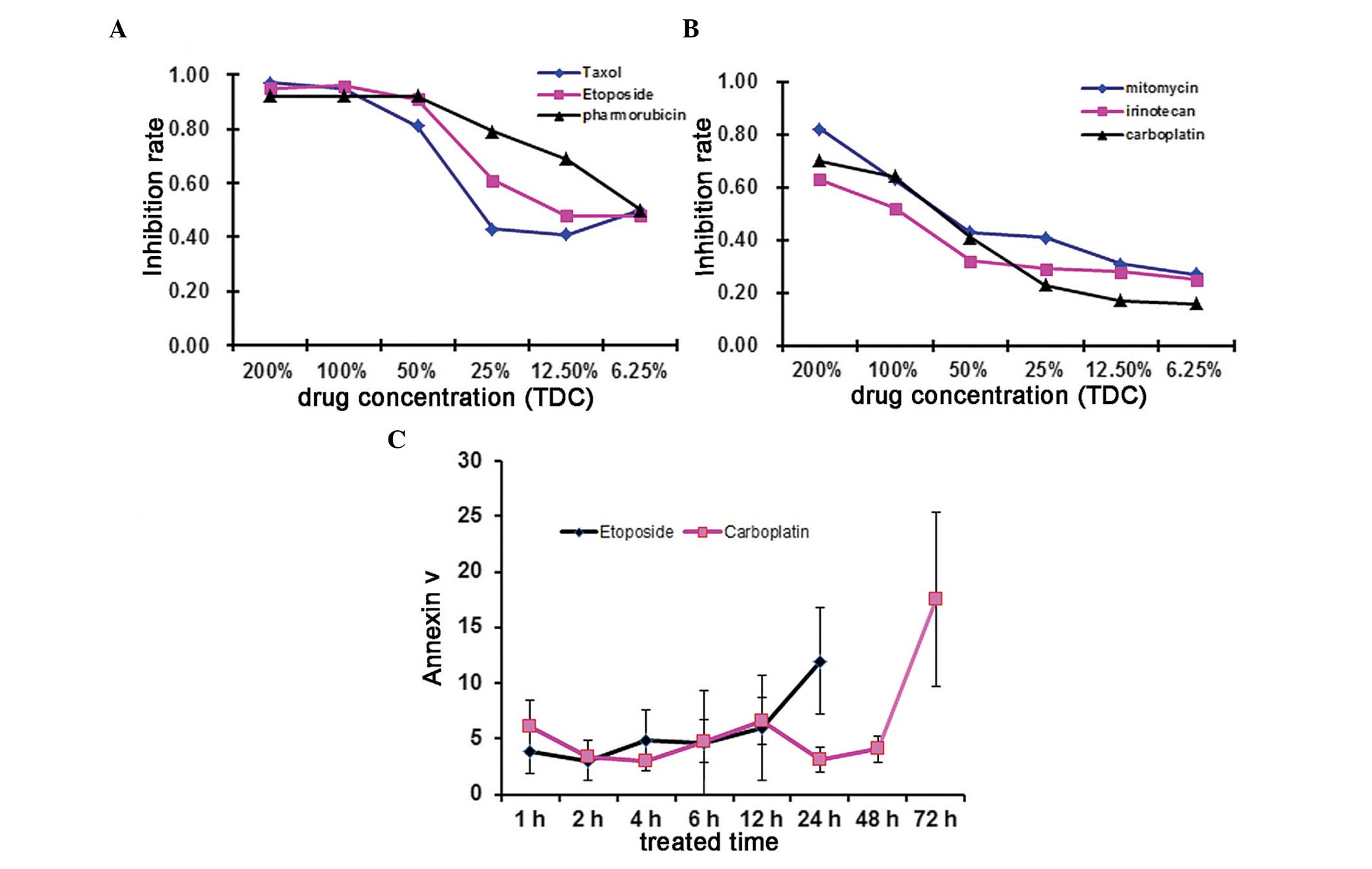
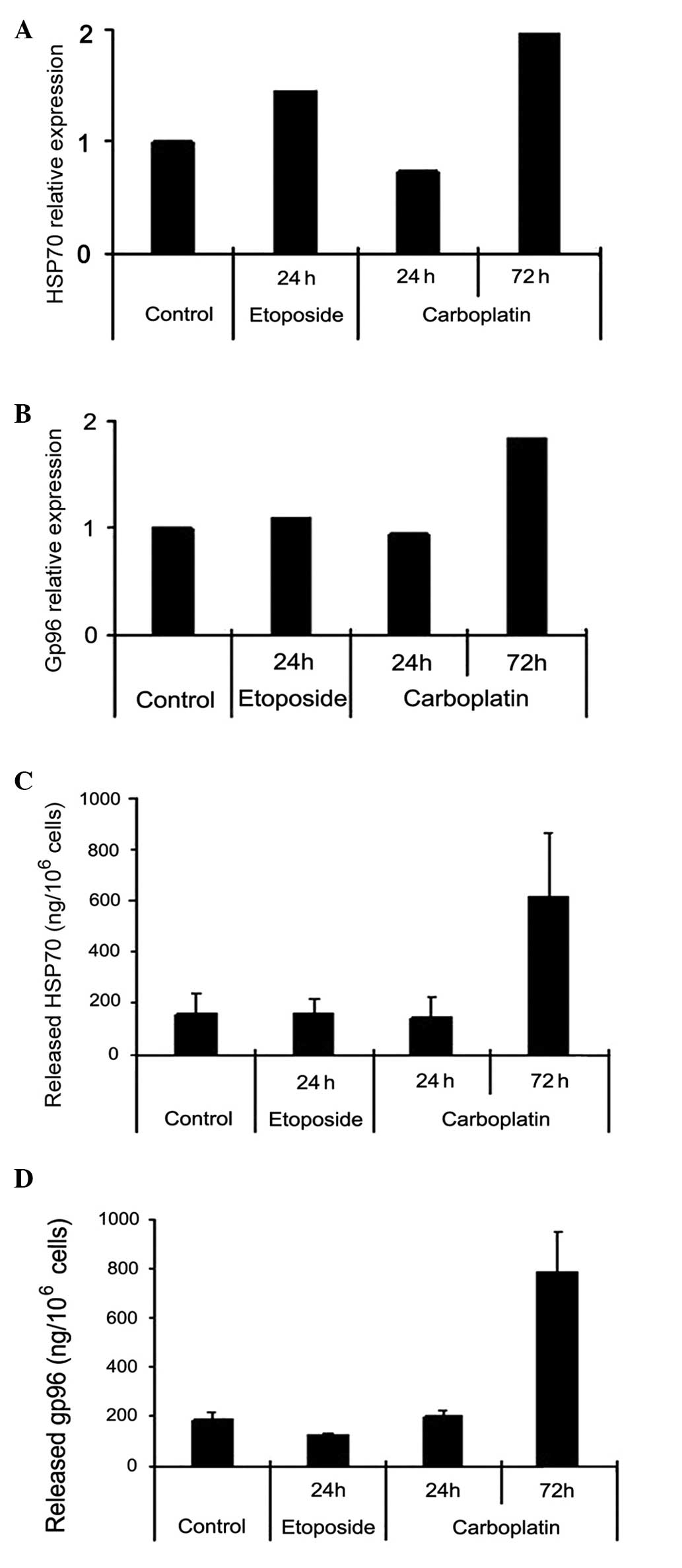
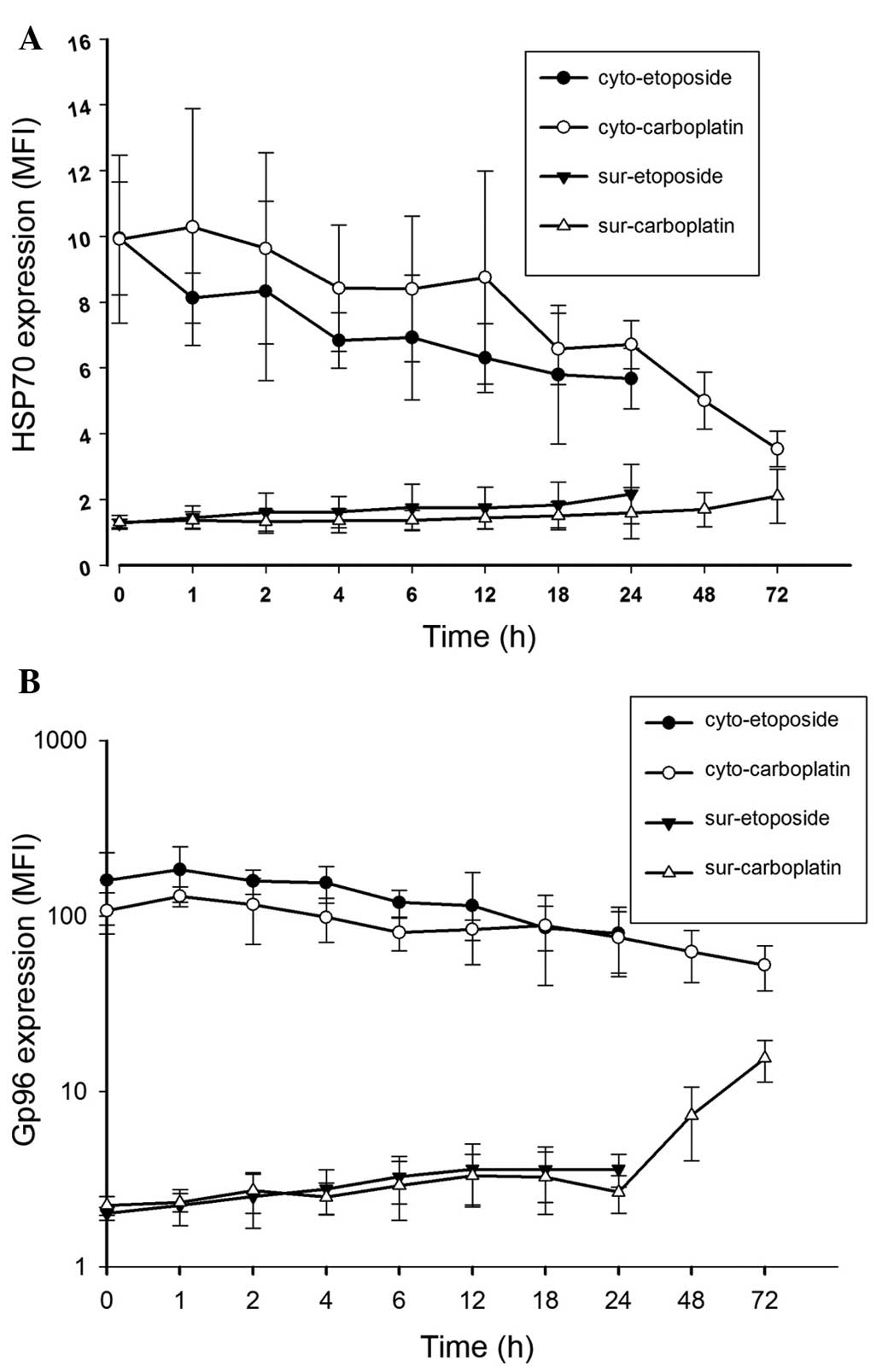
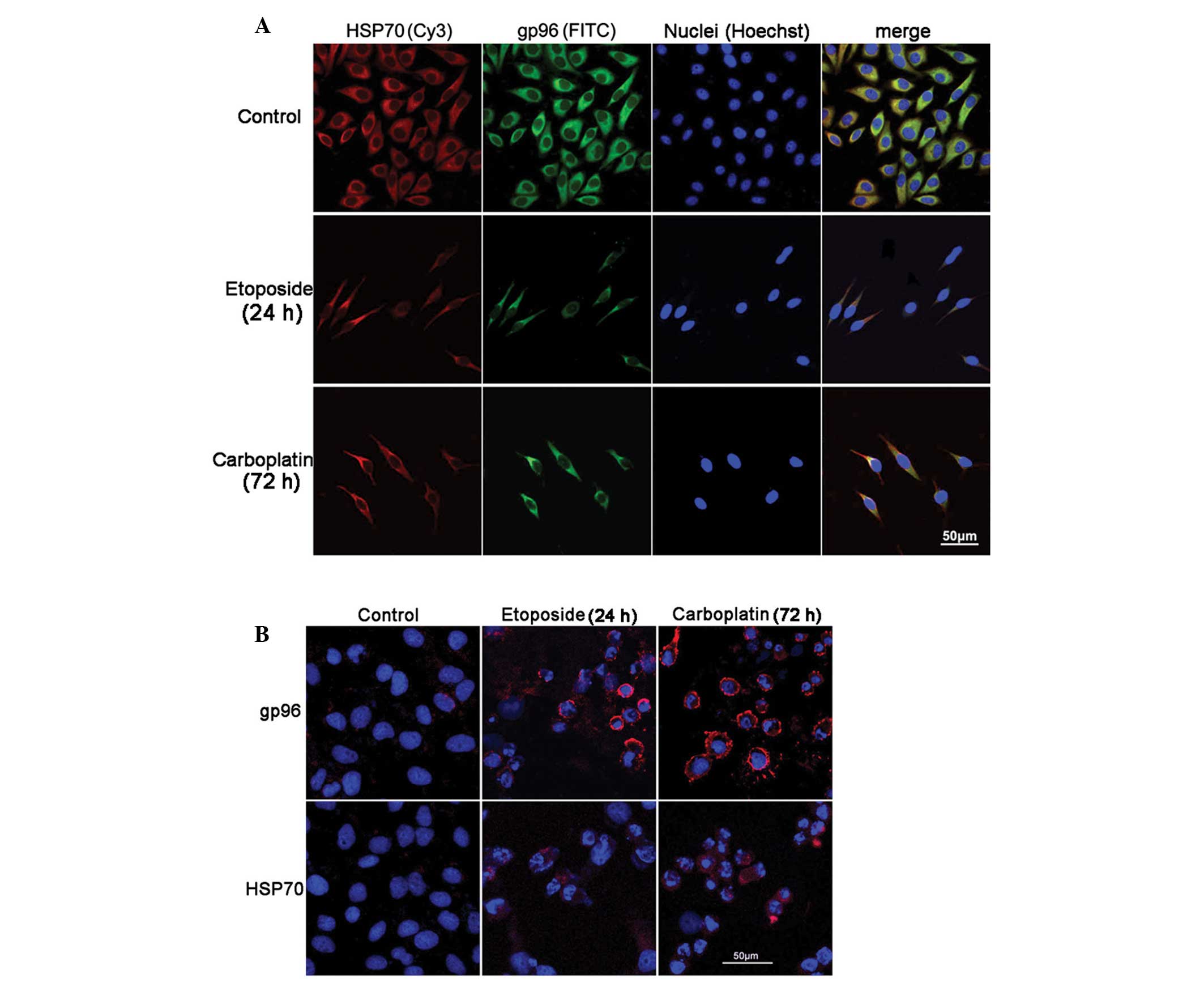
Heat shock proteins (HSPs) respond to multiple stresses and have been implicated as essential immune chaperones that regulate innate and adaptive immunity. The exposure of HSPs containing tumour peptide complex to immune surveillance elements may elicit a specific anti‑tumour response. The present study examined the potential of anticancer drugs to induce apoptosis of HepG2 cells and elicit the expression of HSP proteins, including HSP70 and gp96, on the membrane or their release to the extracellular environment, leading to HSP exposure. In the present study, etoposide and carboplatin were classified by an adenosine triphosphate assay as representatives of hypersensitive and hyposensitive anticancer drugs, respectively. Flow cytometry, immunofluorescence, ELIZA and reverse transcription quantitative polymerase chain reaction were all used to detect changes in the HSPs. The results demonstrated that etoposide and carboplatin induced apoptosis of HepG2 cells. In addition, following treatment with etoposide or carboplatin, HSP70/gp96 expression increased, demonstrating a ‘transfer expression’ pattern: The cytosol expression decreased while the surface expression increased. These alterations progressed steadily with notable alterations following treatment with etoposide for 24 h or carboplatin for 72 h. Additionally, at the end of treatment, release of HSP70/gp96 to the extracellular environment increased. Notably, following treatment with the hyposensitive anticancer drug carboplatin for 72 h, the surface expression of gp96 in HepG2 cells was significantly increased. These results suggest that when combined with cancer cell apoptosis, anticancer drugs induce the membrane expression and release of HSP70/gp96 in hepatocellular carcinoma (HCC) cells, which may represent a crucial event in the immune anti‑tumour response. Notably, treatment with the hyposensitive anticancer drug for a longer time period resulted in greater surface expression and release of gp96, which suggests a potential use for hyposensitive anticancer drugs in HSP‑based dendritic cell vaccine preparation and chemoimmunotherapy for HCC patients.
View Figures

Figure 1

Figure 2

Figure 3

Figure 4

View References

1 

Tang ZY, Yu YQ, Zhou XD, Ma ZC and Wu ZQ: Progress and prospects in hepatocellular carcinoma surgery. Ann Chir. 52:558–563. 1998.PubMed/NCBI

2 

Zhou XD, Tang ZY, Yu YQ, et al: Recurrence after resection of alpha-fetoprotein-positive hepatocellular carcinoma. J Cancer Res Clin Oncol. 120:369–373. 1994. View Article : Google Scholar : PubMed/NCBI

3 

Bismuth H, Chiche L, Adam R, Castaing D, Diamond T and Dennison A: Liver resection versus transplantation for hepatocellular carcinoma in cirrhotic patients. Ann Surg. 218:145–151. 1993. View Article : Google Scholar : PubMed/NCBI

4 

Jaeck D, Bachellier P, Oussoultzoglou E, Weber JC and Wolf P: Surgical resection of hepatocellular carcinoma. Post-operative outcome and long-term results in Europe: an overview. Liver Transpl. 10(2 Suppl 1): S58–S63. 2004. View Article : Google Scholar : PubMed/NCBI

5 

El-Serag HB, Marrero JA, Rudolph L and Reddy KR: Diagnosis and treatment of hepatocellular carcinoma. Gastroenterology. 134:1752–1763. 2008. View Article : Google Scholar : PubMed/NCBI

6 

Kabilova TO, Kovtonyuk LV, Zonov EV, et al: Immunotherapy of hepatocellular carcinoma with small double-stranded RNA. BMC Cancer. 14:338–349. 2014. View Article : Google Scholar : PubMed/NCBI

7 

Breous E and Thimme R: Potential of immunotherapy for hepatocellular carcinoma. J Hepatol. 54:830–834. 2011. View Article : Google Scholar

8 

Srivastava P: Roles of heat-shock proteins in innate and adaptive immunity. Nat Rev Immunol. 2:185–194. 2002. View Article : Google Scholar : PubMed/NCBI

9 

Ravoet C, Bleiberg H and Gerard B: Non-surgical treatment of hepatocarcinoma. J Surg Oncol Suppl. 3:104–111. 1993. View Article : Google Scholar : PubMed/NCBI

10 

Zinkernagel RM: Immunity against solid tumors? Int J Cancer. 93:1–5. 2001. View Article : Google Scholar : PubMed/NCBI

11 

Correale P, Cusi MG, Tsang KY, et al: Chemo-immunotherapy of metastatic colorectal carcinoma with gemcitabine plus FOLFOX 4 followed by subcutaneous granulocyte macrophage colony-stimulating factor and interleukin-2 induces strong immunologic and antitumor activity in metastatic colon cancer patients. J Clin Oncol. 23:8950–8958. 2005. View Article : Google Scholar : PubMed/NCBI

12 

Correale P, Cusi MG, Del Vecchio MT, et al: Dendritic cell-mediated cross-presentation of antigens derived from colon carcinoma cells exposed to a highly cytotoxic multidrug regimen with gemcitabine, oxaliplatin, 5-fluorouracil and leucovorin, elicits a powerful human antigen-specific CTL response with antitumor activity in vitro. J Immunol. 175:820–828. 2005. View Article : Google Scholar : PubMed/NCBI

13 

Skoberne M, Beignon AS, Larsson M, et al: Apoptotic cells at the crossroads of tolerance and immunity. Curr Top Microbiol Immunol. 289:259–292. 2005.PubMed/NCBI

14 

Kleinclauss F, Perruche S, Masson E, et al: Intravenous apoptotic spleen cell infusion induces a TGF-beta-dependent regulatory T-cell expansion. Cell Death Differ. 13:41–52. 2006. View Article : Google Scholar

15 

Zheng L, He M, Long M, Blomgran R and Stendahl O: Pathogen-induced apoptotic neutrophils express heat shock proteins and elicit activation of human macrophages. J Immunol. 173:6319–6326. 2004. View Article : Google Scholar : PubMed/NCBI

16 

Feng H, Zeng Y, Whitesell L and Katsanis E: Stressed apoptotic tumor cells express heat shock proteins and elicit tumor-specific immunity. Blood. 97:3505–3512. 2001. View Article : Google Scholar : PubMed/NCBI

17 

Korbelik M, Sun J and Cecic I: Photodynamic therapy-induced cell surface expression and release of heat shock proteins: relevance for tumor response. Cancer Res. 65:1018–1026. 2005.PubMed/NCBI

18 

Liu B, DeFilippo AM and Li Z: Overcoming immune tolerance to cancer by heat shock protein vaccines. Mol Cancer Ther. 1:1147–1151. 2002.PubMed/NCBI

19 

Clark PR and Ménoret A: The inducible Hsp70 as a marker of tumor immunogenicity. Cell Stress Chaperones. 6:121–125. 2001. View Article : Google Scholar : PubMed/NCBI

20 

Li CL, Meng X, Lang ZW and Zhang LJ: The detection of heat shock protein gp96 in primary hepatocellular carcinoma. Zhonghua Gan Zang Bing Za Zhi. 12:569–570. 2004.In Chinese. PubMed/NCBI

21 

Udono H and Srivastava PK: Comparison of tumor-specific immunogenicities of stress-induced proteins gp96, hsp90, and hsp70. J Immunol. 152:5398–5403. 1994.PubMed/NCBI

22 

Lancaster GI and Febbraio MA: Exosome-dependent trafficking of HSP70: A novel secretory pathway for cellular stress proteins. J Biol Chem. 280:23349–23355. 2005. View Article : Google Scholar : PubMed/NCBI

23 

Brusa D, Migliore E, Garetto S, Simone M and Matera L: Immunogenicity of 56 degrees C and UVC-treated prostate cancer is associated with release of HSP70 and HMGB1 from necrotic cells. Prostate. 69:1343–1352. 2009. View Article : Google Scholar : PubMed/NCBI

24 

Beg AA: Endogenous ligands of Toll-like receptors: implications for regulating inflammatory and immune responses. Trends Immunol. 23:509–512. 2002. View Article : Google Scholar : PubMed/NCBI

25 

Matzinger P: The danger model: a renewed sense of self. Science. 296:301–305. 2002. View Article : Google Scholar : PubMed/NCBI

26 

Nowak AK, Robinson BW and Lake RA: Synergy between chemotherapy and immunotherapy in the treatment of established murine solid tumors. Cancer Res. 63:4490–4496. 2003.PubMed/NCBI

27 

Ménoret A, Chaillot D, Callahan M and Jacquin C: Hsp70, an immunological actor playing with the intracellular self under oxidative stress. Int J Hyperthermia. 18:490–505. 2002. View Article : Google Scholar

28 

Singh-Jasuja H, Scherer HU, Hilf N, et al: The heat shock protein gp96 induces maturation of dendritic cells and down-regulation of its receptor. Eur J Immunol. 30:2211–2215. 2000. View Article : Google Scholar : PubMed/NCBI

29 

Millar DG, Garza KM, Odermatt B, et al: Hsp70 promotes antigen-presenting cell function and converts T-cell tolerance to autoimmunity in vivo. Nat Med. 9:1469–1476. 2003. View Article : Google Scholar : PubMed/NCBI

30 

Tamura Y, Peng P, Liu K, Daou M and Srivastava PK: Immunotherapy of tumors with autologous tumor-derived heat shock protein preparations. Science. 278:117–120. 1997. View Article : Google Scholar : PubMed/NCBI

31 

Schild H, Arnold-Schild D, Lammert E and Rammensee HG: Stress proteins and immunity mediated by cytotoxic T lymphocytes. Curr Opin Immunol. 11:109–113. 1999. View Article : Google Scholar : PubMed/NCBI

32 

Sato K, Torimoto Y, Tamura Y, et al: Immunotherapy using heat-shock protein preparations of leukemia cells after syngeneic bone marrow transplantation in mice. Blood. 98:1852–1857. 2001. View Article : Google Scholar : PubMed/NCBI

33 

Pawel S and Anne MD: The immunosuppressive activity of heat shock protein 70. Autoimmune Diseases. 2012:1–6. 2012.

Related Articles

  • Abstract
  • View
  • Download
  • Twitter
Copy and paste a formatted citation
Spandidos Publications style
Yang M, Xu Z, Wang Q, Zhang AQ and Min J: A hyposensitive anticancer drug induces higher surface expression and release of heat shock proteins in a human hepatocellular carcinoma cell line. Mol Med Rep 12: 2879-2885, 2015.
APA
Yang, M., Xu, Z., Wang, Q., Zhang, A., & Min, J. (2015). A hyposensitive anticancer drug induces higher surface expression and release of heat shock proteins in a human hepatocellular carcinoma cell line. Molecular Medicine Reports, 12, 2879-2885. https://doi.org/10.3892/mmr.2015.3727
MLA
Yang, M., Xu, Z., Wang, Q., Zhang, A., Min, J."A hyposensitive anticancer drug induces higher surface expression and release of heat shock proteins in a human hepatocellular carcinoma cell line". Molecular Medicine Reports 12.2 (2015): 2879-2885.
Chicago
Yang, M., Xu, Z., Wang, Q., Zhang, A., Min, J."A hyposensitive anticancer drug induces higher surface expression and release of heat shock proteins in a human hepatocellular carcinoma cell line". Molecular Medicine Reports 12, no. 2 (2015): 2879-2885. https://doi.org/10.3892/mmr.2015.3727
Copy and paste a formatted citation
x
Spandidos Publications style
Yang M, Xu Z, Wang Q, Zhang AQ and Min J: A hyposensitive anticancer drug induces higher surface expression and release of heat shock proteins in a human hepatocellular carcinoma cell line. Mol Med Rep 12: 2879-2885, 2015.
APA
Yang, M., Xu, Z., Wang, Q., Zhang, A., & Min, J. (2015). A hyposensitive anticancer drug induces higher surface expression and release of heat shock proteins in a human hepatocellular carcinoma cell line. Molecular Medicine Reports, 12, 2879-2885. https://doi.org/10.3892/mmr.2015.3727
MLA
Yang, M., Xu, Z., Wang, Q., Zhang, A., Min, J."A hyposensitive anticancer drug induces higher surface expression and release of heat shock proteins in a human hepatocellular carcinoma cell line". Molecular Medicine Reports 12.2 (2015): 2879-2885.
Chicago
Yang, M., Xu, Z., Wang, Q., Zhang, A., Min, J."A hyposensitive anticancer drug induces higher surface expression and release of heat shock proteins in a human hepatocellular carcinoma cell line". Molecular Medicine Reports 12, no. 2 (2015): 2879-2885. https://doi.org/10.3892/mmr.2015.3727
Follow us
  • Twitter
  • LinkedIn
  • Facebook
About
  • Spandidos Publications
  • Careers
  • Cookie Policy
  • Privacy Policy
How can we help?
  • Help
  • Live Chat
  • Contact
  • Email to our Support Team