Spandidos Publications Logo
  • About
    • About Spandidos
    • Aims and Scopes
    • Abstracting and Indexing
    • Editorial Policies
    • Reprints and Permissions
    • Job Opportunities
    • Terms and Conditions
    • Contact
  • Journals
    • All Journals
    • Oncology Letters
      • Oncology Letters
      • Information for Authors
      • Editorial Policies
      • Editorial Board
      • Aims and Scope
      • Abstracting and Indexing
      • Bibliographic Information
      • Archive
    • International Journal of Oncology
      • International Journal of Oncology
      • Information for Authors
      • Editorial Policies
      • Editorial Board
      • Aims and Scope
      • Abstracting and Indexing
      • Bibliographic Information
      • Archive
    • Molecular and Clinical Oncology
      • Molecular and Clinical Oncology
      • Information for Authors
      • Editorial Policies
      • Editorial Board
      • Aims and Scope
      • Abstracting and Indexing
      • Bibliographic Information
      • Archive
    • Experimental and Therapeutic Medicine
      • Experimental and Therapeutic Medicine
      • Information for Authors
      • Editorial Policies
      • Editorial Board
      • Aims and Scope
      • Abstracting and Indexing
      • Bibliographic Information
      • Archive
    • International Journal of Molecular Medicine
      • International Journal of Molecular Medicine
      • Information for Authors
      • Editorial Policies
      • Editorial Board
      • Aims and Scope
      • Abstracting and Indexing
      • Bibliographic Information
      • Archive
    • Biomedical Reports
      • Biomedical Reports
      • Information for Authors
      • Editorial Policies
      • Editorial Board
      • Aims and Scope
      • Abstracting and Indexing
      • Bibliographic Information
      • Archive
    • Oncology Reports
      • Oncology Reports
      • Information for Authors
      • Editorial Policies
      • Editorial Board
      • Aims and Scope
      • Abstracting and Indexing
      • Bibliographic Information
      • Archive
    • Molecular Medicine Reports
      • Molecular Medicine Reports
      • Information for Authors
      • Editorial Policies
      • Editorial Board
      • Aims and Scope
      • Abstracting and Indexing
      • Bibliographic Information
      • Archive
    • World Academy of Sciences Journal
      • World Academy of Sciences Journal
      • Information for Authors
      • Editorial Policies
      • Editorial Board
      • Aims and Scope
      • Abstracting and Indexing
      • Bibliographic Information
      • Archive
    • International Journal of Functional Nutrition
      • International Journal of Functional Nutrition
      • Information for Authors
      • Editorial Policies
      • Editorial Board
      • Aims and Scope
      • Abstracting and Indexing
      • Bibliographic Information
      • Archive
    • International Journal of Epigenetics
      • International Journal of Epigenetics
      • Information for Authors
      • Editorial Policies
      • Editorial Board
      • Aims and Scope
      • Abstracting and Indexing
      • Bibliographic Information
      • Archive
    • Medicine International
      • Medicine International
      • Information for Authors
      • Editorial Policies
      • Editorial Board
      • Aims and Scope
      • Abstracting and Indexing
      • Bibliographic Information
      • Archive
  • Articles
  • Information
    • Information for Authors
    • Information for Reviewers
    • Information for Librarians
    • Information for Advertisers
    • Conferences
  • Language Editing
Spandidos Publications Logo
  • About
    • About Spandidos
    • Aims and Scopes
    • Abstracting and Indexing
    • Editorial Policies
    • Reprints and Permissions
    • Job Opportunities
    • Terms and Conditions
    • Contact
  • Journals
    • All Journals
    • Biomedical Reports
      • Information for Authors
      • Editorial Policies
      • Editorial Board
      • Aims and Scope
      • Abstracting and Indexing
      • Bibliographic Information
      • Archive
    • Experimental and Therapeutic Medicine
      • Information for Authors
      • Editorial Policies
      • Editorial Board
      • Aims and Scope
      • Abstracting and Indexing
      • Bibliographic Information
      • Archive
    • International Journal of Epigenetics
      • Information for Authors
      • Editorial Policies
      • Editorial Board
      • Aims and Scope
      • Abstracting and Indexing
      • Bibliographic Information
      • Archive
    • International Journal of Functional Nutrition
      • Information for Authors
      • Editorial Policies
      • Editorial Board
      • Aims and Scope
      • Abstracting and Indexing
      • Bibliographic Information
      • Archive
    • International Journal of Molecular Medicine
      • Information for Authors
      • Editorial Policies
      • Editorial Board
      • Aims and Scope
      • Abstracting and Indexing
      • Bibliographic Information
      • Archive
    • International Journal of Oncology
      • Information for Authors
      • Editorial Policies
      • Editorial Board
      • Aims and Scope
      • Abstracting and Indexing
      • Bibliographic Information
      • Archive
    • Medicine International
      • Information for Authors
      • Editorial Policies
      • Editorial Board
      • Aims and Scope
      • Abstracting and Indexing
      • Bibliographic Information
      • Archive
    • Molecular and Clinical Oncology
      • Information for Authors
      • Editorial Policies
      • Editorial Board
      • Aims and Scope
      • Abstracting and Indexing
      • Bibliographic Information
      • Archive
    • Molecular Medicine Reports
      • Information for Authors
      • Editorial Policies
      • Editorial Board
      • Aims and Scope
      • Abstracting and Indexing
      • Bibliographic Information
      • Archive
    • Oncology Letters
      • Information for Authors
      • Editorial Policies
      • Editorial Board
      • Aims and Scope
      • Abstracting and Indexing
      • Bibliographic Information
      • Archive
    • Oncology Reports
      • Information for Authors
      • Editorial Policies
      • Editorial Board
      • Aims and Scope
      • Abstracting and Indexing
      • Bibliographic Information
      • Archive
    • World Academy of Sciences Journal
      • Information for Authors
      • Editorial Policies
      • Editorial Board
      • Aims and Scope
      • Abstracting and Indexing
      • Bibliographic Information
      • Archive
  • Articles
  • Information
    • For Authors
    • For Reviewers
    • For Librarians
    • For Advertisers
    • Conferences
  • Language Editing
Login Register Submit
  • This site uses cookies
  • You can change your cookie settings at any time by following the instructions in our Cookie Policy. To find out more, you may read our Privacy Policy.

    I agree
Search articles by DOI, keyword, author or affiliation
Search
Advanced Search
presentation
Molecular Medicine Reports
Join Editorial Board Propose a Special Issue
Print ISSN: 1791-2997 Online ISSN: 1791-3004
Journal Cover
September-2015 Volume 12 Issue 3

Full Size Image

Sign up for eToc alerts
Recommend to Library

Journals

International Journal of Molecular Medicine

International Journal of Molecular Medicine

International Journal of Molecular Medicine is an international journal devoted to molecular mechanisms of human disease.

International Journal of Oncology

International Journal of Oncology

International Journal of Oncology is an international journal devoted to oncology research and cancer treatment.

Molecular Medicine Reports

Molecular Medicine Reports

Covers molecular medicine topics such as pharmacology, pathology, genetics, neuroscience, infectious diseases, molecular cardiology, and molecular surgery.

Oncology Reports

Oncology Reports

Oncology Reports is an international journal devoted to fundamental and applied research in Oncology.

Experimental and Therapeutic Medicine

Experimental and Therapeutic Medicine

Experimental and Therapeutic Medicine is an international journal devoted to laboratory and clinical medicine.

Oncology Letters

Oncology Letters

Oncology Letters is an international journal devoted to Experimental and Clinical Oncology.

Biomedical Reports

Biomedical Reports

Explores a wide range of biological and medical fields, including pharmacology, genetics, microbiology, neuroscience, and molecular cardiology.

Molecular and Clinical Oncology

Molecular and Clinical Oncology

International journal addressing all aspects of oncology research, from tumorigenesis and oncogenes to chemotherapy and metastasis.

World Academy of Sciences Journal

World Academy of Sciences Journal

Multidisciplinary open-access journal spanning biochemistry, genetics, neuroscience, environmental health, and synthetic biology.

International Journal of Functional Nutrition

International Journal of Functional Nutrition

Open-access journal combining biochemistry, pharmacology, immunology, and genetics to advance health through functional nutrition.

International Journal of Epigenetics

International Journal of Epigenetics

Publishes open-access research on using epigenetics to advance understanding and treatment of human disease.

Medicine International

Medicine International

An International Open Access Journal Devoted to General Medicine.

Journal Cover
September-2015 Volume 12 Issue 3

Full Size Image

Sign up for eToc alerts
Recommend to Library

  • Article
  • Citations
    • Cite This Article
    • Download Citation
    • Create Citation Alert
    • Remove Citation Alert
    • Cited By
  • Similar Articles
    • Related Articles (in Spandidos Publications)
    • Similar Articles (Google Scholar)
    • Similar Articles (PubMed)
  • Download PDF
  • Download XML
  • View XML
Article

Interleukin-10 gene transfer into insulin-producing β cells protects against diabetes in non-obese diabetic mice

  • Authors:
    • Aijing Xu
    • Wei Zhu
    • Tang Li
    • Xiuzhen Li
    • Jing Cheng
    • Cuiling Li
    • Peng Yi
    • Li Liu
  • View Affiliations / Copyright

    Affiliations: Department of Pediatric Endocrinology and Metabolism, Guangzhou Women and Children's Medical Center, Guangzhou Medical College, Guangzhou, Guangdong 510520, P.R. China, Guangdong Provincial Key Laboratory of Medical Molecular Diagnostics, Guangdong Medical College, Dongguan, Guangdong 523808, P.R. China, Department of Pediatrics, The Affiliated Hospital of Qingdao Medical College, Qingdao University, Qingdao, Shandong 266003, P.R. China
  • Pages: 3881-3889
    |
    Published online on: May 21, 2015
       https://doi.org/10.3892/mmr.2015.3809
  • Expand metrics +
Metrics: Total Views: 0 (Spandidos Publications: | PMC Statistics: )
Metrics: Total PDF Downloads: 0 (Spandidos Publications: | PMC Statistics: )
Cited By (CrossRef): 0 citations Loading Articles...

This article is mentioned in:


Abstract

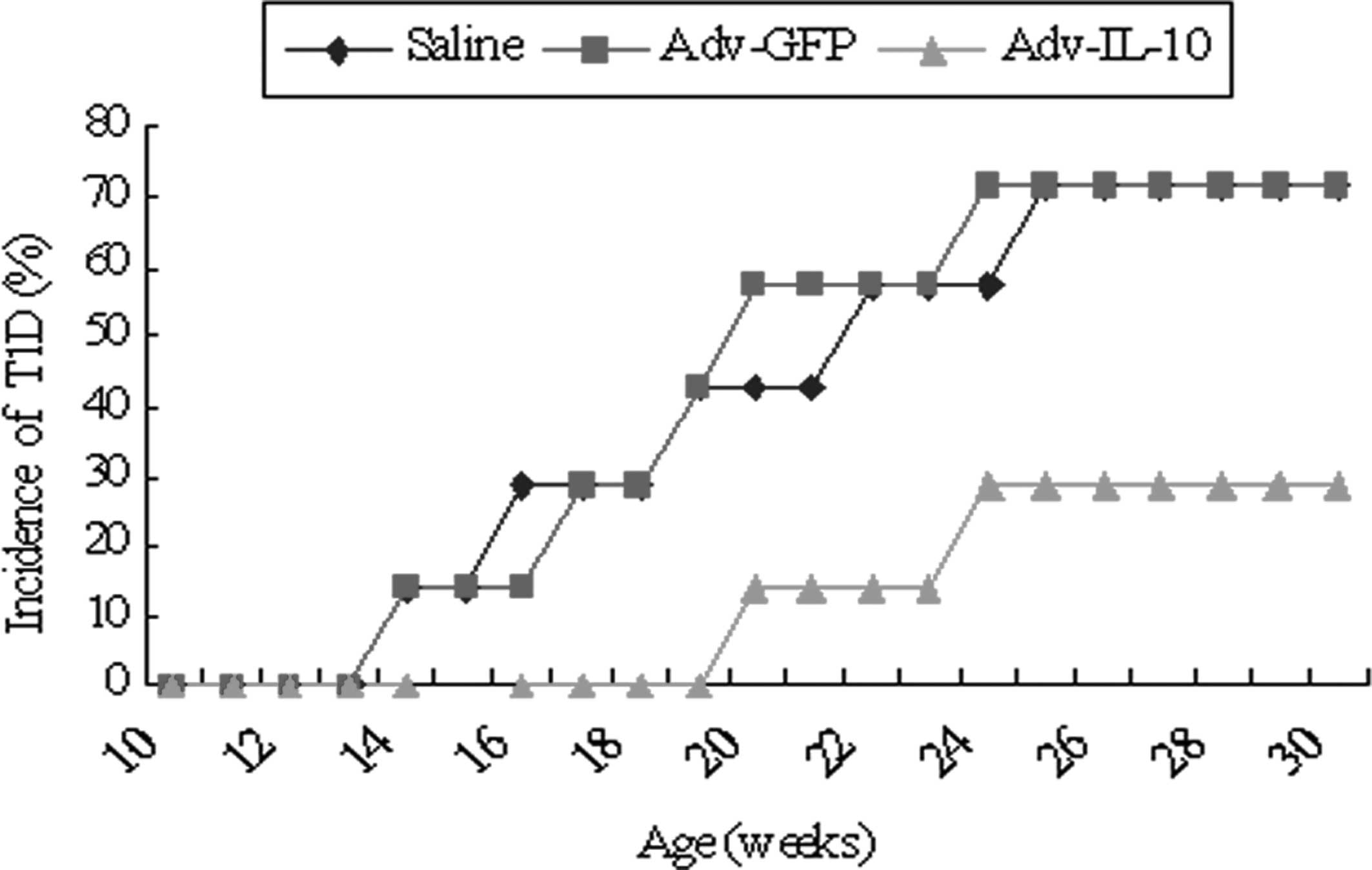
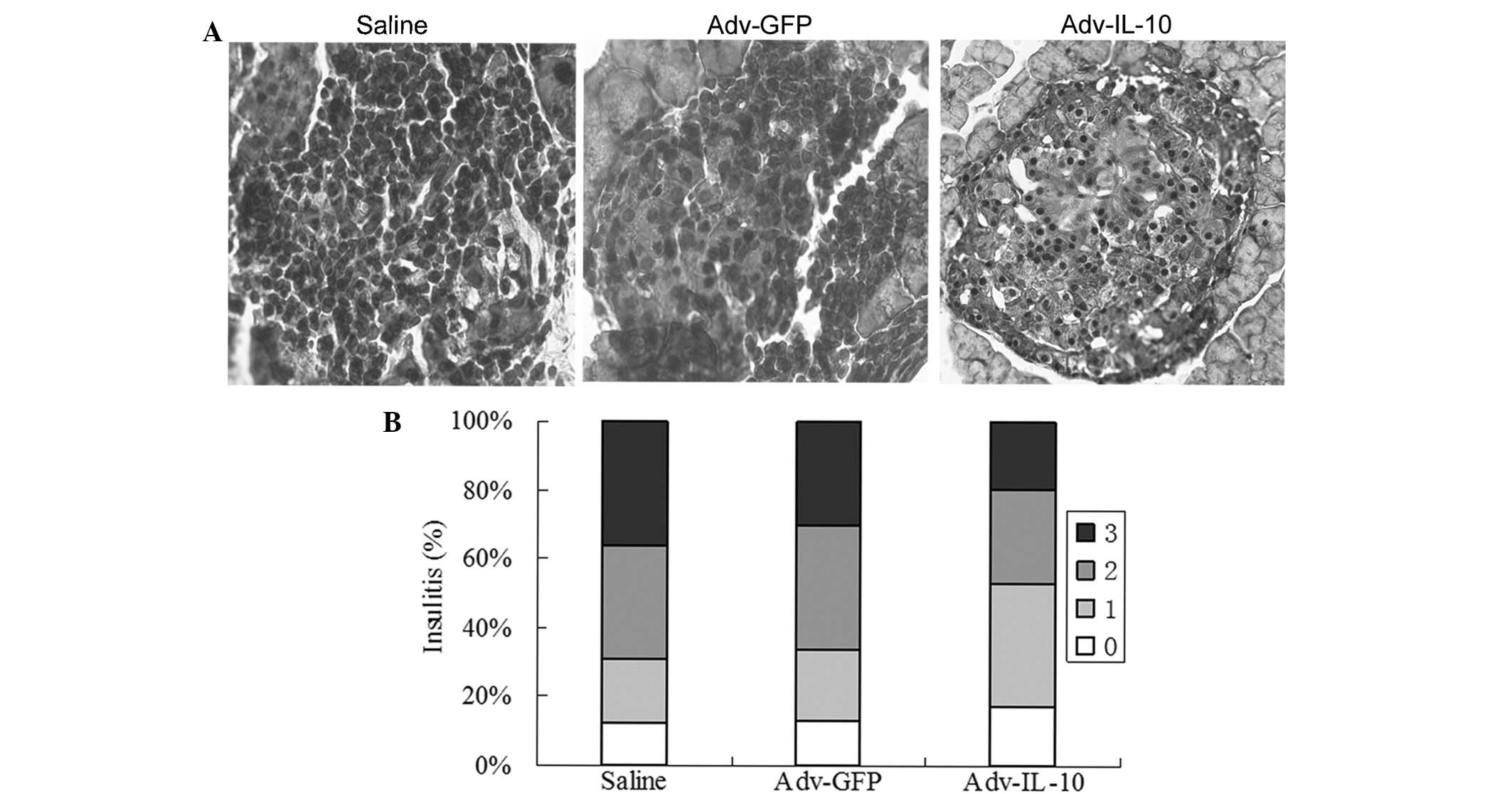
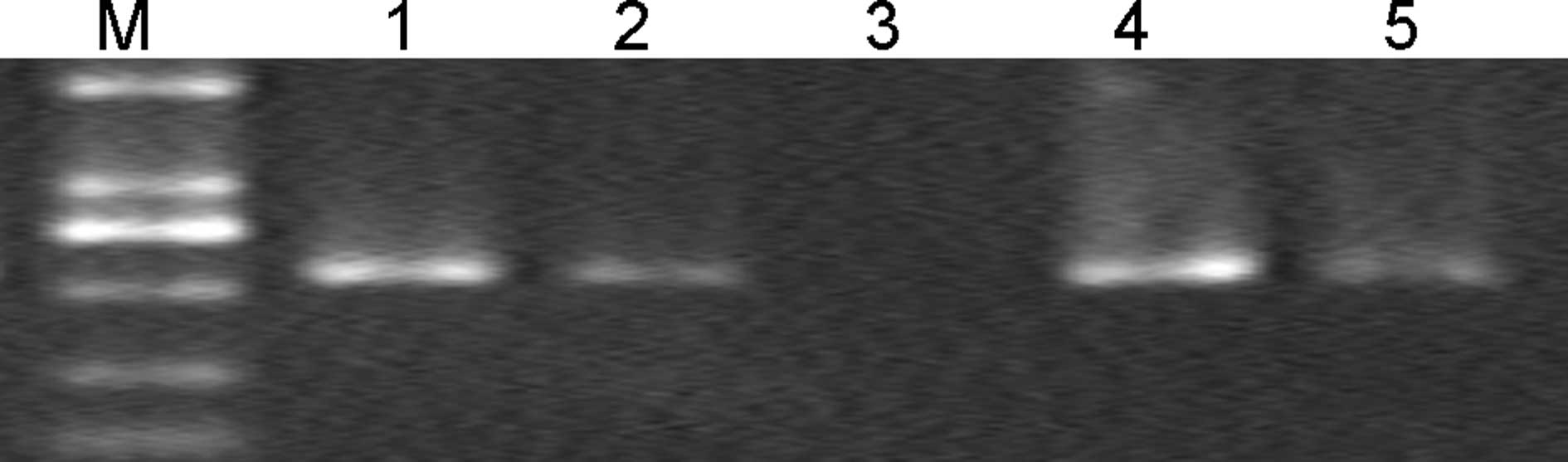
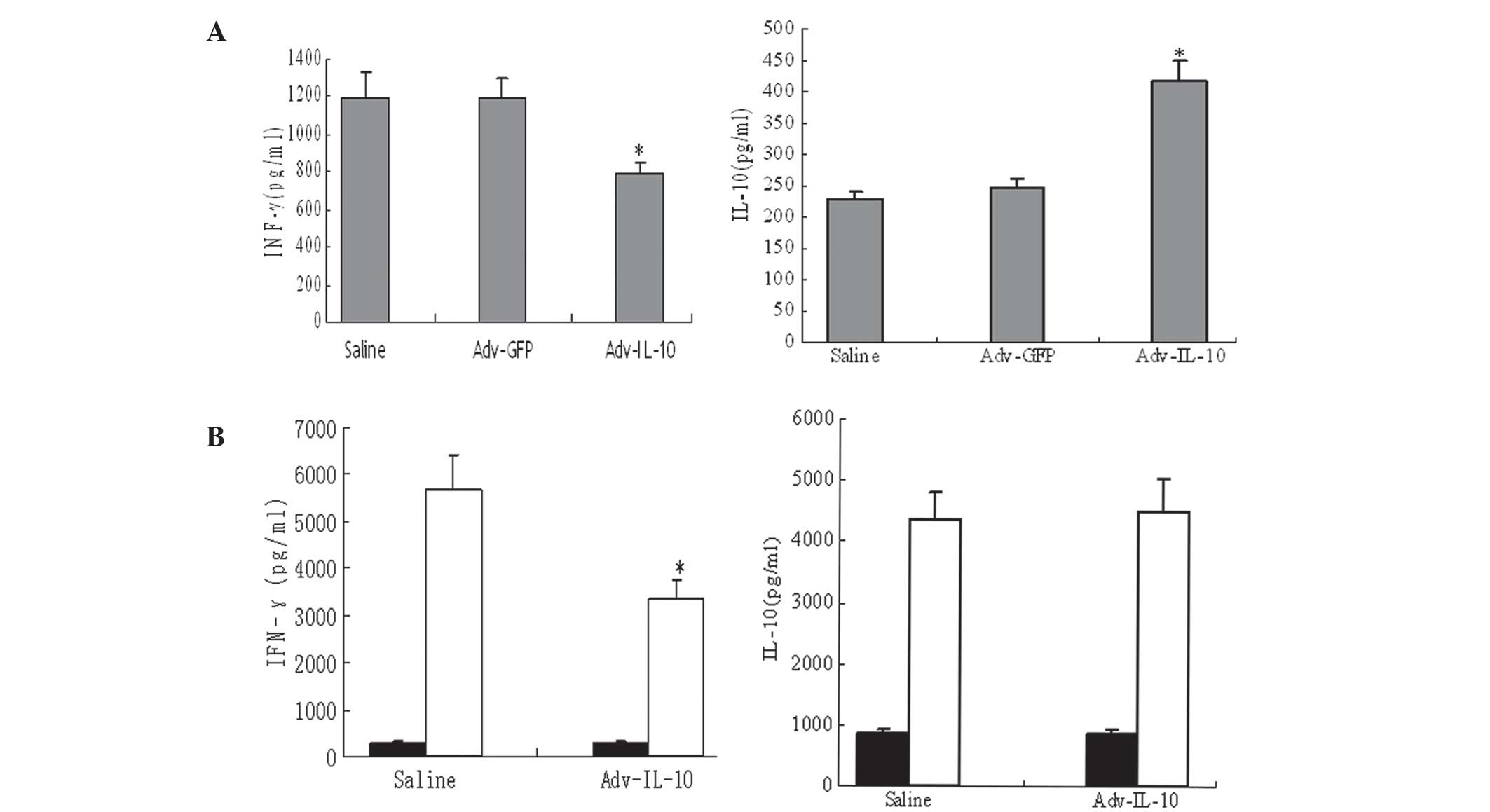
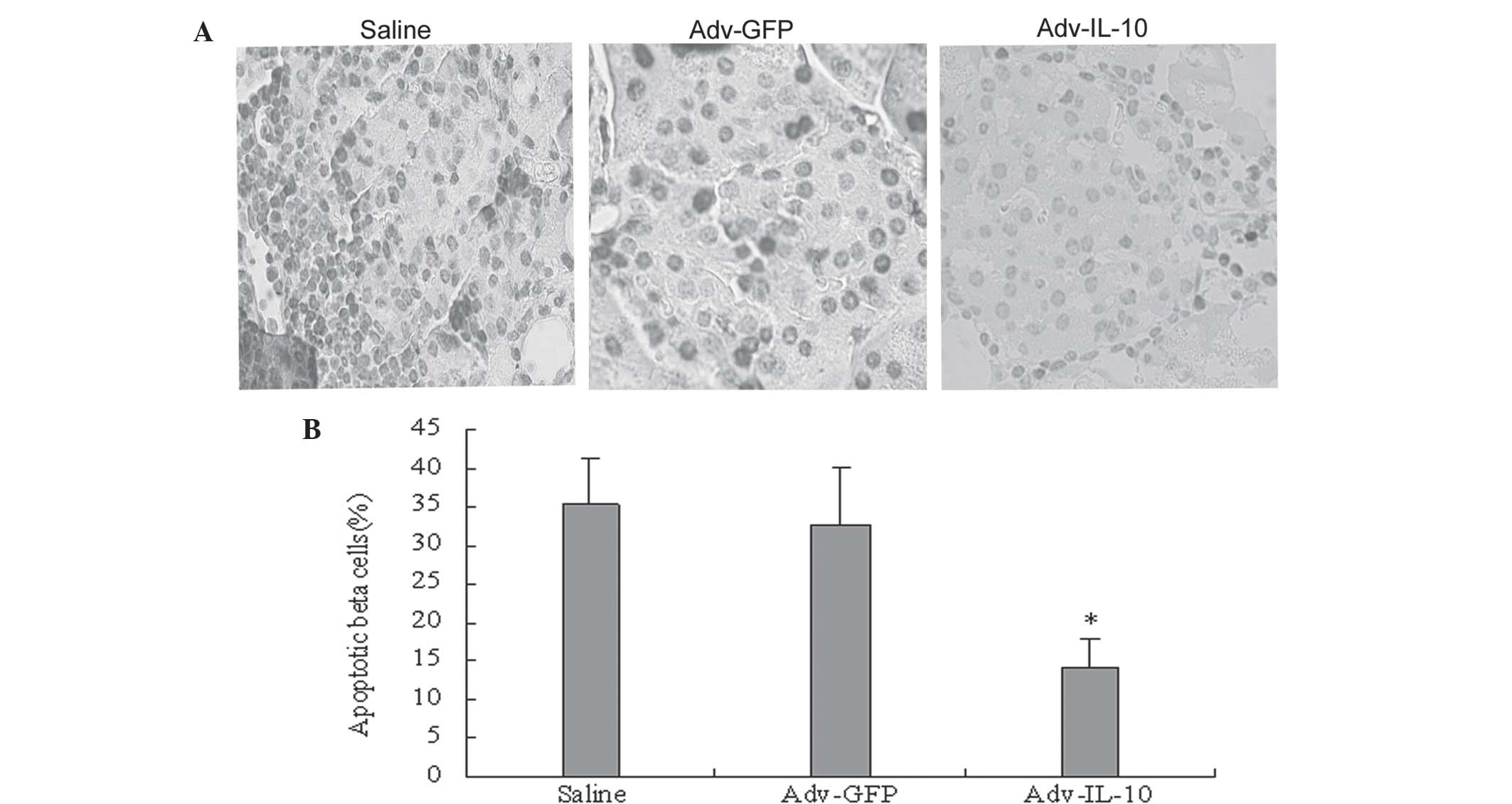
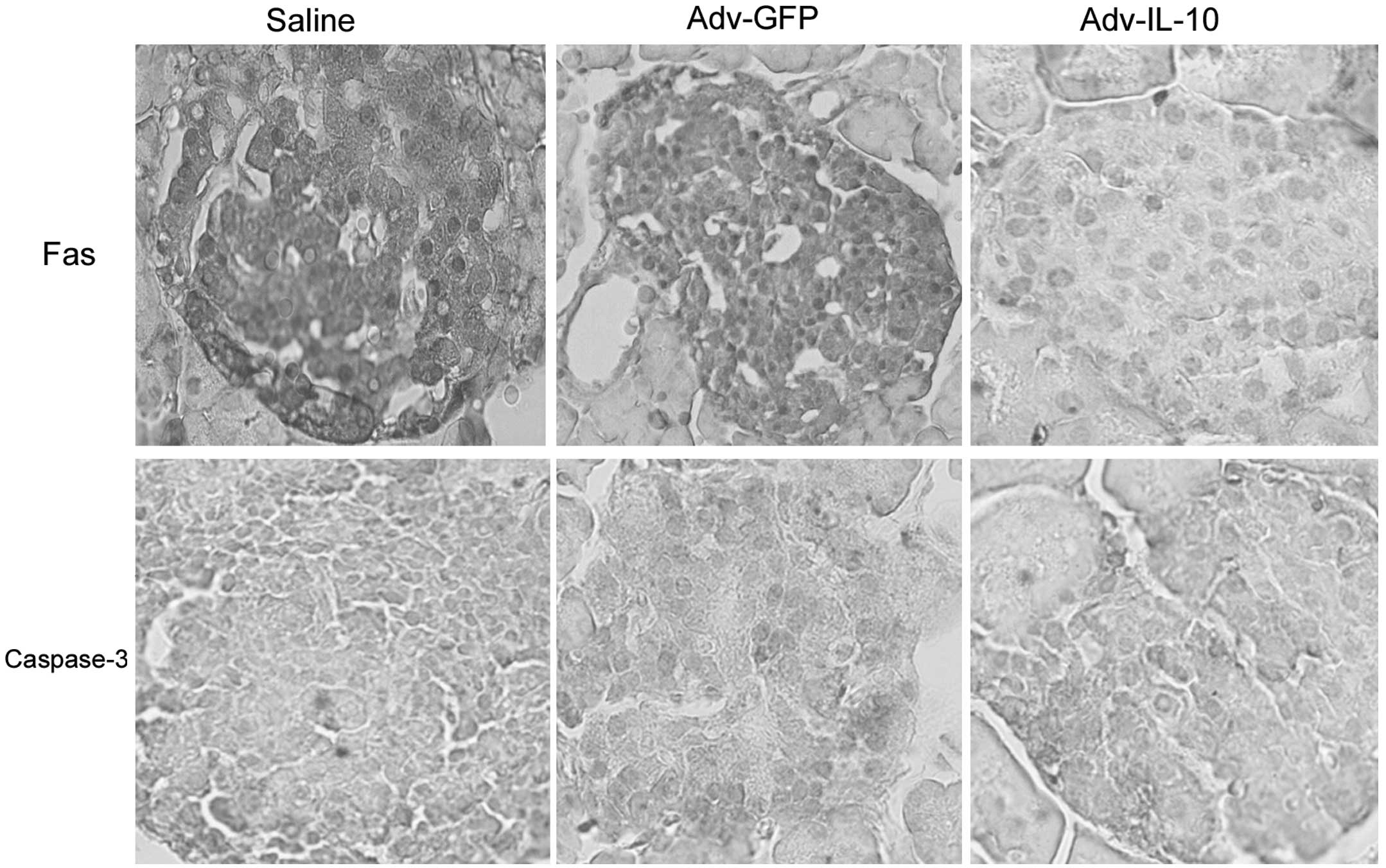
Type 1 diabetes is an autoimmune disorder, which occurs due to β cell damage. Interleukin (IL)-10, a pleotropic cytokine, has been reported to have anti‑inflammatory, immunosuppressive and immunostimulatory properties. Administration of IL‑10 is known to prevent autoimmune diabetes in non‑obese diabetic (NOD) mice. However, the mechanism of IL‑10‑induced protection in NOD mice requires further investigation. The aim of the present study was to evaluate the protective effect of transgenic IL‑10 expression in pancreatic β cells against autoimmune damage in NOD mice and to elucidate its mechanism of action. Female NOD mice (9 weeks old) were intraperitoneally injected with an adenovirus carrying either IL‑10 (Adv‑IL‑10) or green fluorescent protein (Adv‑GFP). Blood glucose was monitored weekly and the expression of IL‑10 was evaluated using reverse transcription quantitative polymerase chain reaction. IL‑10 and interferon (IFN)‑γ expression levels in serum and splenocytes were analyzed. CD4+CD25+FoxP3+ T regulatory (Treg) cells were determined by flow cytometry. Apoptosis of pancreatic β cells was determined using a terminal deoxynucleotidyl transferase deoxyuridine triphosphate nick‑end labeling assay and expression levels of Fas and caspase‑3 were estimated by immunohistochemistry analysis. The results revealed that mice treated with IL‑10 showed less severe insulitis and a lower incidence of diabetes compared with the saline control and Adv‑GFP groups. In addition, compared with the control group, IFN‑γ levels were decreased in sera and splenocytes, while IL‑10 expression was increased in sera only. The number of CD4+CD25+FoxP3+ Treg cells was increased in IL‑10‑injected mice. Furthermore, the expression levels of Fas and caspase‑3 were decreased in IL‑10‑injected mice compared with that of GFP‑injected and control mice, which was concomitant with a reduction in β cell apoptosis. In conclusion, the present study demonstrated that IL‑10 gene transfer reduced the expression of the inflammatory cytokines, attenuated pancreatic insulitis and inhibited β cell apoptosis. This therefore indicated that IL-10 reduced the incidence of diabetes in female NOD mice.
View Figures

Figure 1

Figure 2

Figure 3

Figure 4

Figure 5

Figure 6

View References

1 

Bekris LM, Kavanagh TJ and Lernmark A: Targeting type 1 diabetes before and at the clinical onset of disease. Endocr Metab Immune Disord Drug Targets. 6:103–124. 2006. View Article : Google Scholar : PubMed/NCBI

2 

Karlsson FA, Berne C, Björk E, et al: Beta-cell activity and destruction in type 1 diabetes. Ups J Med Sci. 105:85–95. 2000.PubMed/NCBI

3 

Wilson SB, Kent SC, Patton KT, et al: Extreme Th1 bias of invariant Valpha24JalphaQ T cells in type 1 diabetes. Nature. 391:177–181. 1998. View Article : Google Scholar : PubMed/NCBI

4 

Rabinovitch A: Immunoregulatory and cytokine imbalances in the pathogenesis of IDDM. Therapeutic intervention by immunostimulation? Diabetes. 43:613–621. 1994. View Article : Google Scholar : PubMed/NCBI

5 

Tisch R and McDevitt H: Insulin-dependent diabetes mellitus. Cell. 85:291–297. 1996. View Article : Google Scholar : PubMed/NCBI

6 

Delovitch TL and Singh B: The nonobese diabetic mouse as a model of autoimmune diabetes: immune dysregulation gets the NOD. Immunity. 7:727–738. 1997. View Article : Google Scholar

7 

Zhang YC, Pileggi A, Agarwal A, et al: Adeno-associated virus-mediated IL-10 gene therapy inhibits diabetes recurrence in syngeneic islet cell transplantation of NOD mice. Diabetes. 52:708–716. 2003. View Article : Google Scholar : PubMed/NCBI

8 

Saraiva M and O'Garra A: The regulation of IL-10 production by immune cells. Nat Rev Immunol. 10:170–181. 2010. View Article : Google Scholar : PubMed/NCBI

9 

Moore KW, de Waal Malefyt R, Coffman RL, et al: Interleukin-10 and the interleukin-10 receptor. Annu Rev Immunol. 19:683–765. 2001. View Article : Google Scholar : PubMed/NCBI

10 

Ding Y, Chen D, Tarcsafalvi A, et al: Suppressor of cytokine signaling 1 inhibits IL-10-mediated immune responses. J Immunol. 170:1383–1391. 2003. View Article : Google Scholar : PubMed/NCBI

11 

Nitta Y, Tashiro F, Tokui M, et al: Systemic delivery of interleukin 10 by intramuscular injection of expression plasmid DNA prevents autoimmune diabetes in nonobese diabetic mice. Hum Gene Ther. 9:1701–1707. 1998. View Article : Google Scholar : PubMed/NCBI

12 

Yang Z, Chen M, Wu R, et al: Suppression of autoimmune diabetes by viral IL-10 gene transfer. J Immunol. 168:6479–6485. 2002. View Article : Google Scholar : PubMed/NCBI

13 

Groux H, O'Garra A, Bigler M, et al: A CD4+ T-cell subset inhibits antigen-specific T-cell responses and prevents colitis. Nature. 389:737–742. 1997. View Article : Google Scholar : PubMed/NCBI

14 

Asseman C, Mauze S, Leach MW, Coffman RL and Powrie F: An essential role for interleukin 10 in the function of regulatory T cells that inhibit intestinal inflammation. J Exp Med. 190:995–1004. 1999. View Article : Google Scholar : PubMed/NCBI

15 

Levings MK, Sangregorio R, Galbiati F, et al: IFN-alpha and IL-10 induce the differentiation of human type 1 T regulatory cells. J Immunol. 166:5530–5539. 2001. View Article : Google Scholar : PubMed/NCBI

16 

Goudy KS, Burkhardt BR, Wasserfall C, et al: Systemic overexpression of IL-10 induces CD4+CD25+cell populations in vivo and ameliorates type 1 diabetes in nonobese diabetic mice in a dose-dependent fashion. J Immunol. 171:2270–2278. 2003. View Article : Google Scholar : PubMed/NCBI

17 

Xu AJ, Chen ZH, Tian F, Yan LH and Li T: Effects of adenovirus-mediated interleukin-10 gene transfer on apoptosis and insulin secretion function of beta cell. Chinese Medical Journal. 90:1711–1715. 2010.In Chinese.

18 

Xu AJ, Zhu W, Tian F, Yan LH and Li T: Recombinant adenoviral expression of IL-10 protects beta cell from impairment induced by pro-inflammatory cytokine. Mol Cell Biochem. 344:163–171. 2010. View Article : Google Scholar : PubMed/NCBI

19 

Marselli L, Dotta F, Piro S, et al: Th2 cytokines have a partial, direct protective effect on the function and survival of isolated human islets exposed to combined proinflammatory and Th1 cytokines. J Clin Endocrinol Metab. 86:4974–4978. 2001. View Article : Google Scholar : PubMed/NCBI

20 

Casellas A, Salavert A, Agudo J, et al: Expression of IGF-I in pancreatic islets prevents lymphocytic infiltration and protects mice from type 1 diabetes. Diabetes. 55:3246–3255. 2006. View Article : Google Scholar : PubMed/NCBI

21 

van Belle TL, Coppieters KT and von Herrath MG: Type 1 diabetes: Etiology, immunology, and therapeutic strategies. Physiol Rev. 91:79–118. 2011. View Article : Google Scholar : PubMed/NCBI

22 

Thomas HE, Graham KL, Chee J, et al: Proinflammatory cytokines contribute to development and function of regulatory T cells in type 1 diabetes. Ann NY Acad Sci. 1283:81–86. 2013. View Article : Google Scholar

23 

Serreze DV, Chapman HD, Post CM, et al: Th1 to Th2 cytokine shifts in nonobese diabetic mice: sometimes an outcome, rather than the cause, of diabetes resistance elicited by immunostimulation. J Immunol. 166:1352–1359. 2001. View Article : Google Scholar : PubMed/NCBI

24 

Asadullah K, Sterry W and Volk HD: Interleukin-10 therapy – review of a new approach. Pharmacol Rev. 55:241–269. 2003. View Article : Google Scholar : PubMed/NCBI

25 

Pennline KJ, Roque-Gaffney E and Monahan M: Recombinant human IL-10 prevents the onset of diabetes in the nonobese diabetic mouse. Clin Immunol Immunopathol. 71:169–175. 1994. View Article : Google Scholar : PubMed/NCBI

26 

Goudy K, Song S, Wasserfall C, et al: Adeno-associated virus vector-mediated IL-10 gene delivery prevents type 1 diabetes in NOD mice. Proc Natl Acad Sci USA. 98:13913–13918. 2001. View Article : Google Scholar : PubMed/NCBI

27 

Suk K, Kim S, Kim YH, et al: IFN-gamma/TNF-alpha synergism as the final effector in autoimmune diabetes: a key role for STAT1/IFN regulatory factor-1 pathway in pancreatic beta cell death. J Immunol. 166:4481–4489. 2001. View Article : Google Scholar : PubMed/NCBI

28 

Tang Q, Henriksen KJ, Boden EK, et al: Cutting edge: CD28 controls peripheral homeostasis of CD4+CD25+ regulatory T cells. J Immunol. 171:3348–3352. 2003. View Article : Google Scholar : PubMed/NCBI

29 

Chen Z, Herman AE, Matos M, Mathis D and Benoist C: Where CD4+CD25+ Treg cells impinge on autoimmune diabetes. J Exp Med. 202:1387–1397. 2005. View Article : Google Scholar : PubMed/NCBI

30 

Feuerer M, Shen Y, Littman DR, Benoist C and Mathis D: How punctual ablation of regulatory T cells unleashes an autoimmune lesion within the pancreatic islets. Immunity. 31:654–664. 2009. View Article : Google Scholar : PubMed/NCBI

31 

Herman AE, Freeman GJ, Mathis D and Benoist C: CD4+CD25+ T regulatory cells dependent on ICOS promote regulation of effector cells in the prediabetic lesion. J Exp Med. 199:1479–1489. 2004. View Article : Google Scholar : PubMed/NCBI

32 

Gregori S, Giarratana N, Smiroldo S and Adorini L: Dynamics of pathogenic and suppressor T cells in autoimmune diabetes development. J Immunol. 171:4040–4047. 2003. View Article : Google Scholar : PubMed/NCBI

33 

Salomon B, Lenschow DJ, Rhee L, et al: B7/CD28 costimulation is essential for the homeostasis of the CD4+CD25+ immunoregulatory T cells that control autoimmune diabetes. Immunity. 12:431–440. 2000. View Article : Google Scholar : PubMed/NCBI

34 

Walker LS: Natural Treg in autoimmune diabetes: all present and correct? Expert Opin Biol Ther. 8:1691–1703. 2008. View Article : Google Scholar : PubMed/NCBI

35 

Szanya V, Ermann J, Taylor C, Holness C and Fathman CG: The subpopulation of CD4+CD25+ splenocytes that delays adoptive transfer of diabetes expresses L-selectin and high levels of CCR7. J Immunol. 169:2461–2465. 2002. View Article : Google Scholar : PubMed/NCBI

36 

Kay TW, Thomas HE, Harrison LC and Allison J: The beta cell in autoimmune diabetes: many mechanisms and pathways of loss. Trends Endocrinol Metab. 11:11–15. 2000. View Article : Google Scholar : PubMed/NCBI

37 

Cnop M, Welsh N, Jonas JC, et al: Mechanisms of pancreatic beta-cell death in type 1 and type 2 diabetes: many differences, few similarities. Diabetes. 54(Suppl 2): S97–S107. 2005. View Article : Google Scholar : PubMed/NCBI

38 

Katz JD, Benoist C and Mathis D: T helper cell subsets in insulin-dependent diabetes. Science. 268:185–1188. 1995. View Article : Google Scholar

39 

Kurrer MO, Pakala SV, Hanson HL and Katz JD: Beta cell apoptosis in T cell-mediated autoimmune diabetes. Proc Natl Acad Sci USA. 94:213–218. 1997. View Article : Google Scholar : PubMed/NCBI

40 

Kim YH, Kim S, Kim KA, et al: Apoptosis of pancreatic beta-cells detected in accelerated diabetes of NOD mice: no role of Fas-Fas ligand interaction in autoimmune diabetes. Eur J Immunol. 29:455–465. 1999. View Article : Google Scholar : PubMed/NCBI

41 

Eizirik DL and Mandrup-Poulsen T: A choice of death – the signal-transduction of immune-mediated beta-cell apoptosis. Diabetologia. 44:2115–2133. 2001. View Article : Google Scholar

42 

Slee EA, Adrain C and Martin SJ: Serial killers: ordering caspase activation events in apoptosis. Cell Death Differ. 6:1067–1074. 1999. View Article : Google Scholar : PubMed/NCBI

43 

Wolf BB, Schuler M, Echeverri F and Green DR: Caspase-3 is the primary activator of apoptotic DNA fragmentation via DNA fragmentation factor-45/inhibitor of caspase-activated DNase inactivation. J Biol Chem. 274:30651–30656. 1999. View Article : Google Scholar : PubMed/NCBI

44 

Loweth AC, Williams GT, James RF, Scarpello JH and Morgan NG: Human islets of Langerhans express Fas ligand and undergo apoptosis in response to interleukin-1beta and Fas ligation. Diabetes. 47:727–732. 1998. View Article : Google Scholar : PubMed/NCBI

45 

Riachy R, Vandewalle B, Moerman E, et al: 1, 25-Dihydroxyvitamin D3 protects human pancreatic islets against cytokine-induced apoptosis via down-regulation of the Fas receptor. Apoptosis. 11:151–159. 2006. View Article : Google Scholar : PubMed/NCBI

46 

Zhou JH, Broussard SR, Strle K, et al: IL-10 inhibits apoptosis of promyeloid cells by activating insulin receptor substrate-2 and phosphatidylinositol 3′-kinase. J Immunol. 167:4436–4442. 2001. View Article : Google Scholar : PubMed/NCBI

47 

Dhingra S, Sharma AK, Arora RC, Slezak J and Singal PK: IL-10 attenuates TNF-alpha-induced NF kappaB pathway activation and cardiomyocyte apoptosis. Cardiovasc Res. 82:59–66. 2009. View Article : Google Scholar : PubMed/NCBI

48 

Londoño D, Carvajal J, Strle K, Kim KS and Cadavid D: IL-10 Prevents apoptosis of brain endothelium during bacteremia. J Immunol. 186:7176–7186. 2011. View Article : Google Scholar : PubMed/NCBI

49 

Bharhani MS, Borojevic R, Basak S, et al: IL-10 protects mouse intestinal epithelial cells from Fas-induced apoptosis via modulating Fas expression and altering caspase-8 and FLIP expression. Am J Physiol Gastrointest Liver Physiol. 291:G820–G829. 2006. View Article : Google Scholar : PubMed/NCBI

Related Articles

  • Abstract
  • View
  • Download
  • Twitter
Copy and paste a formatted citation
Spandidos Publications style
Xu A, Zhu W, Li T, Li X, Cheng J, Li C, Yi P and Liu L: Interleukin-10 gene transfer into insulin-producing β cells protects against diabetes in non-obese diabetic mice. Mol Med Rep 12: 3881-3889, 2015.
APA
Xu, A., Zhu, W., Li, T., Li, X., Cheng, J., Li, C. ... Liu, L. (2015). Interleukin-10 gene transfer into insulin-producing β cells protects against diabetes in non-obese diabetic mice. Molecular Medicine Reports, 12, 3881-3889. https://doi.org/10.3892/mmr.2015.3809
MLA
Xu, A., Zhu, W., Li, T., Li, X., Cheng, J., Li, C., Yi, P., Liu, L."Interleukin-10 gene transfer into insulin-producing β cells protects against diabetes in non-obese diabetic mice". Molecular Medicine Reports 12.3 (2015): 3881-3889.
Chicago
Xu, A., Zhu, W., Li, T., Li, X., Cheng, J., Li, C., Yi, P., Liu, L."Interleukin-10 gene transfer into insulin-producing β cells protects against diabetes in non-obese diabetic mice". Molecular Medicine Reports 12, no. 3 (2015): 3881-3889. https://doi.org/10.3892/mmr.2015.3809
Copy and paste a formatted citation
x
Spandidos Publications style
Xu A, Zhu W, Li T, Li X, Cheng J, Li C, Yi P and Liu L: Interleukin-10 gene transfer into insulin-producing β cells protects against diabetes in non-obese diabetic mice. Mol Med Rep 12: 3881-3889, 2015.
APA
Xu, A., Zhu, W., Li, T., Li, X., Cheng, J., Li, C. ... Liu, L. (2015). Interleukin-10 gene transfer into insulin-producing β cells protects against diabetes in non-obese diabetic mice. Molecular Medicine Reports, 12, 3881-3889. https://doi.org/10.3892/mmr.2015.3809
MLA
Xu, A., Zhu, W., Li, T., Li, X., Cheng, J., Li, C., Yi, P., Liu, L."Interleukin-10 gene transfer into insulin-producing β cells protects against diabetes in non-obese diabetic mice". Molecular Medicine Reports 12.3 (2015): 3881-3889.
Chicago
Xu, A., Zhu, W., Li, T., Li, X., Cheng, J., Li, C., Yi, P., Liu, L."Interleukin-10 gene transfer into insulin-producing β cells protects against diabetes in non-obese diabetic mice". Molecular Medicine Reports 12, no. 3 (2015): 3881-3889. https://doi.org/10.3892/mmr.2015.3809
Follow us
  • Twitter
  • LinkedIn
  • Facebook
About
  • Spandidos Publications
  • Careers
  • Cookie Policy
  • Privacy Policy
How can we help?
  • Help
  • Live Chat
  • Contact
  • Email to our Support Team