Spandidos Publications Logo
  • About
    • About Spandidos
    • Aims and Scopes
    • Abstracting and Indexing
    • Editorial Policies
    • Reprints and Permissions
    • Job Opportunities
    • Terms and Conditions
    • Contact
  • Journals
    • All Journals
    • Oncology Letters
      • Oncology Letters
      • Information for Authors
      • Editorial Policies
      • Editorial Board
      • Aims and Scope
      • Abstracting and Indexing
      • Bibliographic Information
      • Archive
    • International Journal of Oncology
      • International Journal of Oncology
      • Information for Authors
      • Editorial Policies
      • Editorial Board
      • Aims and Scope
      • Abstracting and Indexing
      • Bibliographic Information
      • Archive
    • Molecular and Clinical Oncology
      • Molecular and Clinical Oncology
      • Information for Authors
      • Editorial Policies
      • Editorial Board
      • Aims and Scope
      • Abstracting and Indexing
      • Bibliographic Information
      • Archive
    • Experimental and Therapeutic Medicine
      • Experimental and Therapeutic Medicine
      • Information for Authors
      • Editorial Policies
      • Editorial Board
      • Aims and Scope
      • Abstracting and Indexing
      • Bibliographic Information
      • Archive
    • International Journal of Molecular Medicine
      • International Journal of Molecular Medicine
      • Information for Authors
      • Editorial Policies
      • Editorial Board
      • Aims and Scope
      • Abstracting and Indexing
      • Bibliographic Information
      • Archive
    • Biomedical Reports
      • Biomedical Reports
      • Information for Authors
      • Editorial Policies
      • Editorial Board
      • Aims and Scope
      • Abstracting and Indexing
      • Bibliographic Information
      • Archive
    • Oncology Reports
      • Oncology Reports
      • Information for Authors
      • Editorial Policies
      • Editorial Board
      • Aims and Scope
      • Abstracting and Indexing
      • Bibliographic Information
      • Archive
    • Molecular Medicine Reports
      • Molecular Medicine Reports
      • Information for Authors
      • Editorial Policies
      • Editorial Board
      • Aims and Scope
      • Abstracting and Indexing
      • Bibliographic Information
      • Archive
    • World Academy of Sciences Journal
      • World Academy of Sciences Journal
      • Information for Authors
      • Editorial Policies
      • Editorial Board
      • Aims and Scope
      • Abstracting and Indexing
      • Bibliographic Information
      • Archive
    • International Journal of Functional Nutrition
      • International Journal of Functional Nutrition
      • Information for Authors
      • Editorial Policies
      • Editorial Board
      • Aims and Scope
      • Abstracting and Indexing
      • Bibliographic Information
      • Archive
    • International Journal of Epigenetics
      • International Journal of Epigenetics
      • Information for Authors
      • Editorial Policies
      • Editorial Board
      • Aims and Scope
      • Abstracting and Indexing
      • Bibliographic Information
      • Archive
    • Medicine International
      • Medicine International
      • Information for Authors
      • Editorial Policies
      • Editorial Board
      • Aims and Scope
      • Abstracting and Indexing
      • Bibliographic Information
      • Archive
  • Articles
  • Information
    • Information for Authors
    • Information for Reviewers
    • Information for Librarians
    • Information for Advertisers
    • Conferences
  • Language Editing
Spandidos Publications Logo
  • About
    • About Spandidos
    • Aims and Scopes
    • Abstracting and Indexing
    • Editorial Policies
    • Reprints and Permissions
    • Job Opportunities
    • Terms and Conditions
    • Contact
  • Journals
    • All Journals
    • Biomedical Reports
      • Information for Authors
      • Editorial Policies
      • Editorial Board
      • Aims and Scope
      • Abstracting and Indexing
      • Bibliographic Information
      • Archive
    • Experimental and Therapeutic Medicine
      • Information for Authors
      • Editorial Policies
      • Editorial Board
      • Aims and Scope
      • Abstracting and Indexing
      • Bibliographic Information
      • Archive
    • International Journal of Epigenetics
      • Information for Authors
      • Editorial Policies
      • Editorial Board
      • Aims and Scope
      • Abstracting and Indexing
      • Bibliographic Information
      • Archive
    • International Journal of Functional Nutrition
      • Information for Authors
      • Editorial Policies
      • Editorial Board
      • Aims and Scope
      • Abstracting and Indexing
      • Bibliographic Information
      • Archive
    • International Journal of Molecular Medicine
      • Information for Authors
      • Editorial Policies
      • Editorial Board
      • Aims and Scope
      • Abstracting and Indexing
      • Bibliographic Information
      • Archive
    • International Journal of Oncology
      • Information for Authors
      • Editorial Policies
      • Editorial Board
      • Aims and Scope
      • Abstracting and Indexing
      • Bibliographic Information
      • Archive
    • Medicine International
      • Information for Authors
      • Editorial Policies
      • Editorial Board
      • Aims and Scope
      • Abstracting and Indexing
      • Bibliographic Information
      • Archive
    • Molecular and Clinical Oncology
      • Information for Authors
      • Editorial Policies
      • Editorial Board
      • Aims and Scope
      • Abstracting and Indexing
      • Bibliographic Information
      • Archive
    • Molecular Medicine Reports
      • Information for Authors
      • Editorial Policies
      • Editorial Board
      • Aims and Scope
      • Abstracting and Indexing
      • Bibliographic Information
      • Archive
    • Oncology Letters
      • Information for Authors
      • Editorial Policies
      • Editorial Board
      • Aims and Scope
      • Abstracting and Indexing
      • Bibliographic Information
      • Archive
    • Oncology Reports
      • Information for Authors
      • Editorial Policies
      • Editorial Board
      • Aims and Scope
      • Abstracting and Indexing
      • Bibliographic Information
      • Archive
    • World Academy of Sciences Journal
      • Information for Authors
      • Editorial Policies
      • Editorial Board
      • Aims and Scope
      • Abstracting and Indexing
      • Bibliographic Information
      • Archive
  • Articles
  • Information
    • For Authors
    • For Reviewers
    • For Librarians
    • For Advertisers
    • Conferences
  • Language Editing
Login Register Submit
  • This site uses cookies
  • You can change your cookie settings at any time by following the instructions in our Cookie Policy. To find out more, you may read our Privacy Policy.

    I agree
Search articles by DOI, keyword, author or affiliation
Search
Advanced Search
presentation
Molecular Medicine Reports
Join Editorial Board Propose a Special Issue
Print ISSN: 1791-2997 Online ISSN: 1791-3004
Journal Cover
September-2015 Volume 12 Issue 3

Full Size Image

Sign up for eToc alerts
Recommend to Library

Journals

International Journal of Molecular Medicine

International Journal of Molecular Medicine

International Journal of Molecular Medicine is an international journal devoted to molecular mechanisms of human disease.

International Journal of Oncology

International Journal of Oncology

International Journal of Oncology is an international journal devoted to oncology research and cancer treatment.

Molecular Medicine Reports

Molecular Medicine Reports

Covers molecular medicine topics such as pharmacology, pathology, genetics, neuroscience, infectious diseases, molecular cardiology, and molecular surgery.

Oncology Reports

Oncology Reports

Oncology Reports is an international journal devoted to fundamental and applied research in Oncology.

Experimental and Therapeutic Medicine

Experimental and Therapeutic Medicine

Experimental and Therapeutic Medicine is an international journal devoted to laboratory and clinical medicine.

Oncology Letters

Oncology Letters

Oncology Letters is an international journal devoted to Experimental and Clinical Oncology.

Biomedical Reports

Biomedical Reports

Explores a wide range of biological and medical fields, including pharmacology, genetics, microbiology, neuroscience, and molecular cardiology.

Molecular and Clinical Oncology

Molecular and Clinical Oncology

International journal addressing all aspects of oncology research, from tumorigenesis and oncogenes to chemotherapy and metastasis.

World Academy of Sciences Journal

World Academy of Sciences Journal

Multidisciplinary open-access journal spanning biochemistry, genetics, neuroscience, environmental health, and synthetic biology.

International Journal of Functional Nutrition

International Journal of Functional Nutrition

Open-access journal combining biochemistry, pharmacology, immunology, and genetics to advance health through functional nutrition.

International Journal of Epigenetics

International Journal of Epigenetics

Publishes open-access research on using epigenetics to advance understanding and treatment of human disease.

Medicine International

Medicine International

An International Open Access Journal Devoted to General Medicine.

Journal Cover
September-2015 Volume 12 Issue 3

Full Size Image

Sign up for eToc alerts
Recommend to Library

  • Article
  • Citations
    • Cite This Article
    • Download Citation
    • Create Citation Alert
    • Remove Citation Alert
    • Cited By
  • Similar Articles
    • Related Articles (in Spandidos Publications)
    • Similar Articles (Google Scholar)
    • Similar Articles (PubMed)
  • Download PDF
  • Download XML
  • View XML
Article

Vaccination with ubiquitin-hepatitis B core antigen-cytoplasmic transduction peptide enhances the hepatitis B virus-specific cytotoxic T-lymphocyte immune response and inhibits hepatitis B virus replication in transgenic mice

  • Authors:
    • Meng Zhuo
    • Linlin Song
    • Yuyan Tang
    • Shenglan Dai
    • Xiaohua Chen
    • Yongsheng Yu
    • Guoqing Zang
    • Zhenghao Tang
  • View Affiliations / Copyright

    Affiliations: Department of Infectious Disease, Sixth People's Hospital Affiliated to Shanghai Jiao Tong University, Shanghai 200233, P.R. China
  • Pages: 3591-3598
    |
    Published online on: May 25, 2015
       https://doi.org/10.3892/mmr.2015.3834
  • Expand metrics +
Metrics: Total Views: 0 (Spandidos Publications: | PMC Statistics: )
Metrics: Total PDF Downloads: 0 (Spandidos Publications: | PMC Statistics: )
Cited By (CrossRef): 0 citations Loading Articles...

This article is mentioned in:


Abstract

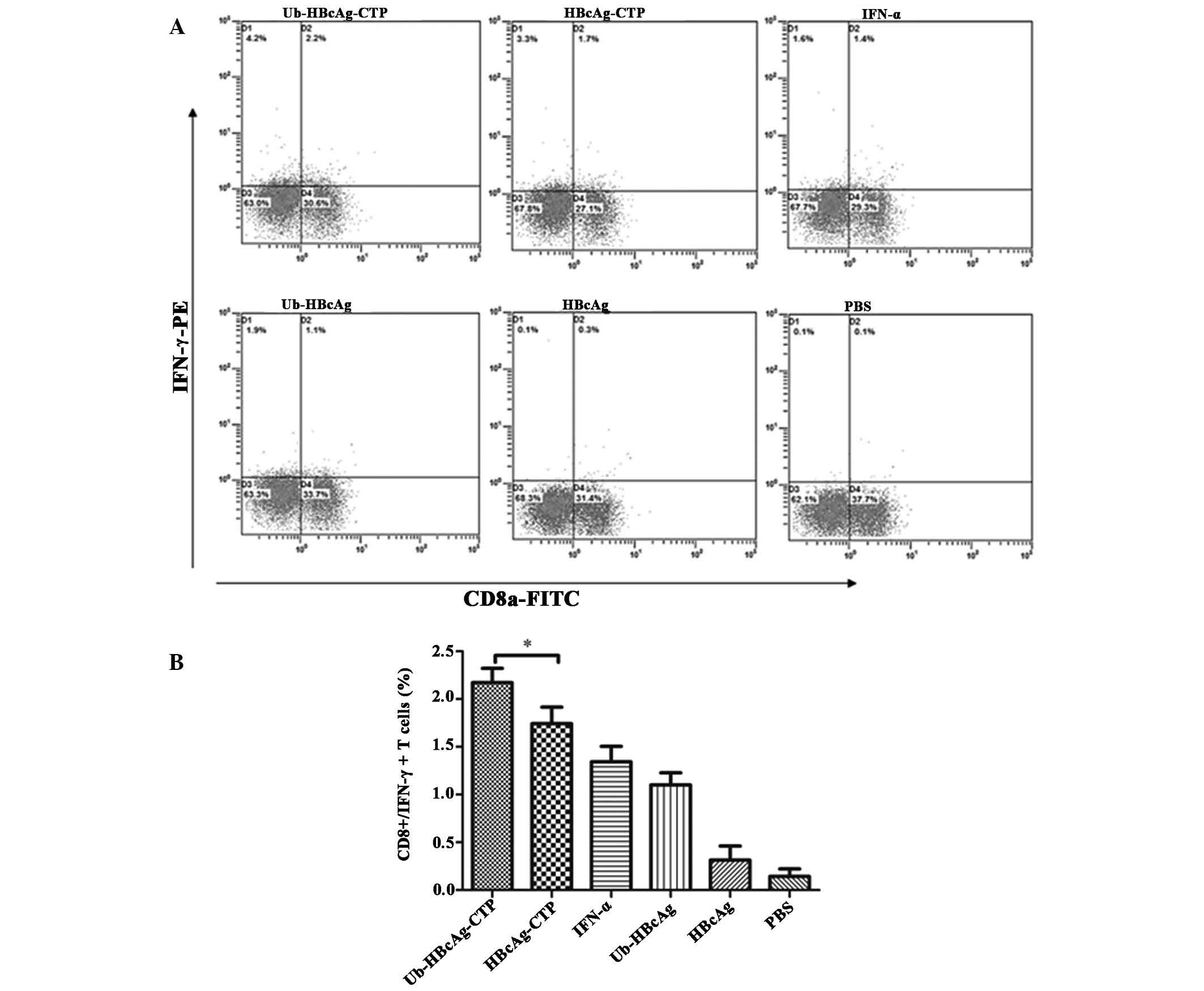
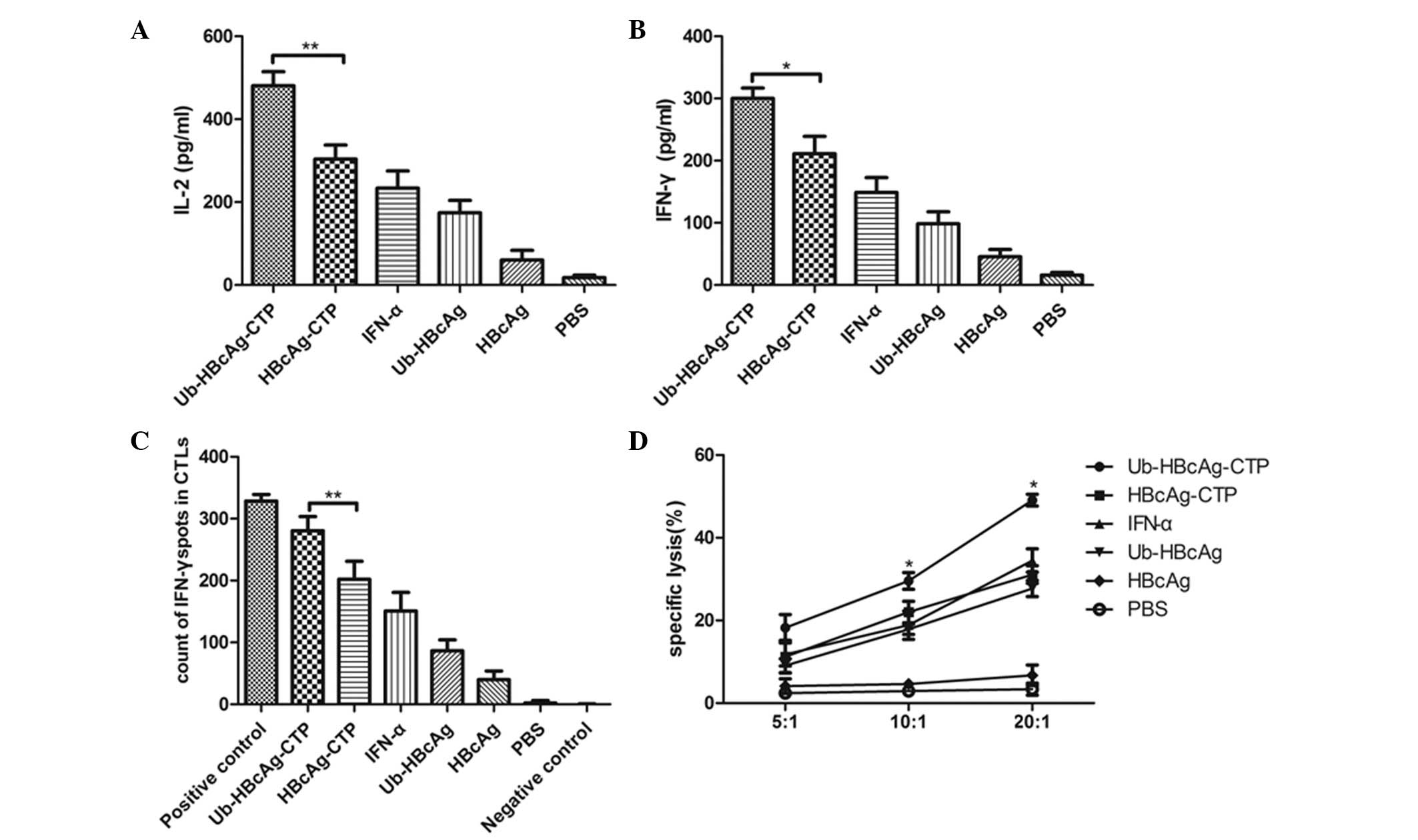
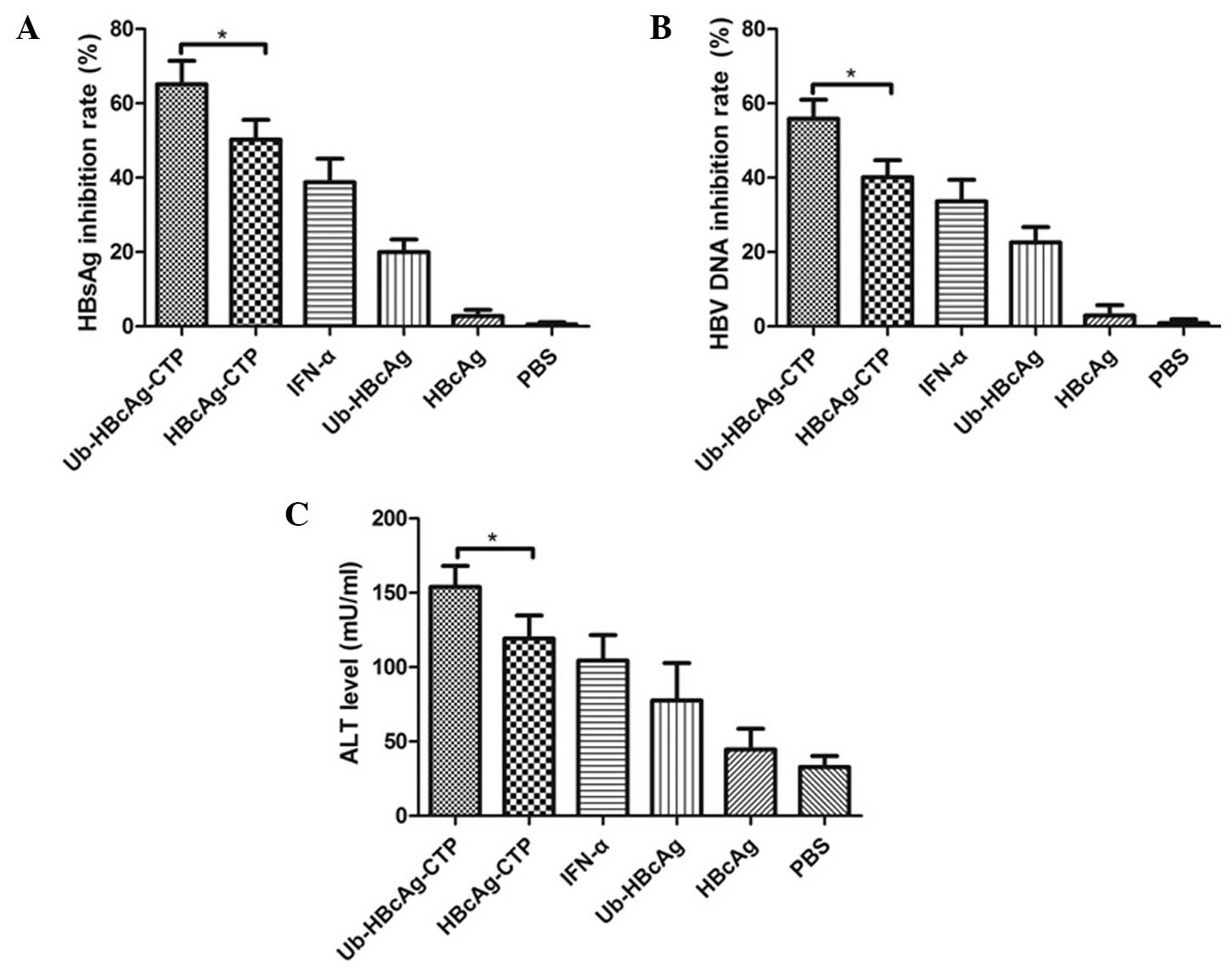
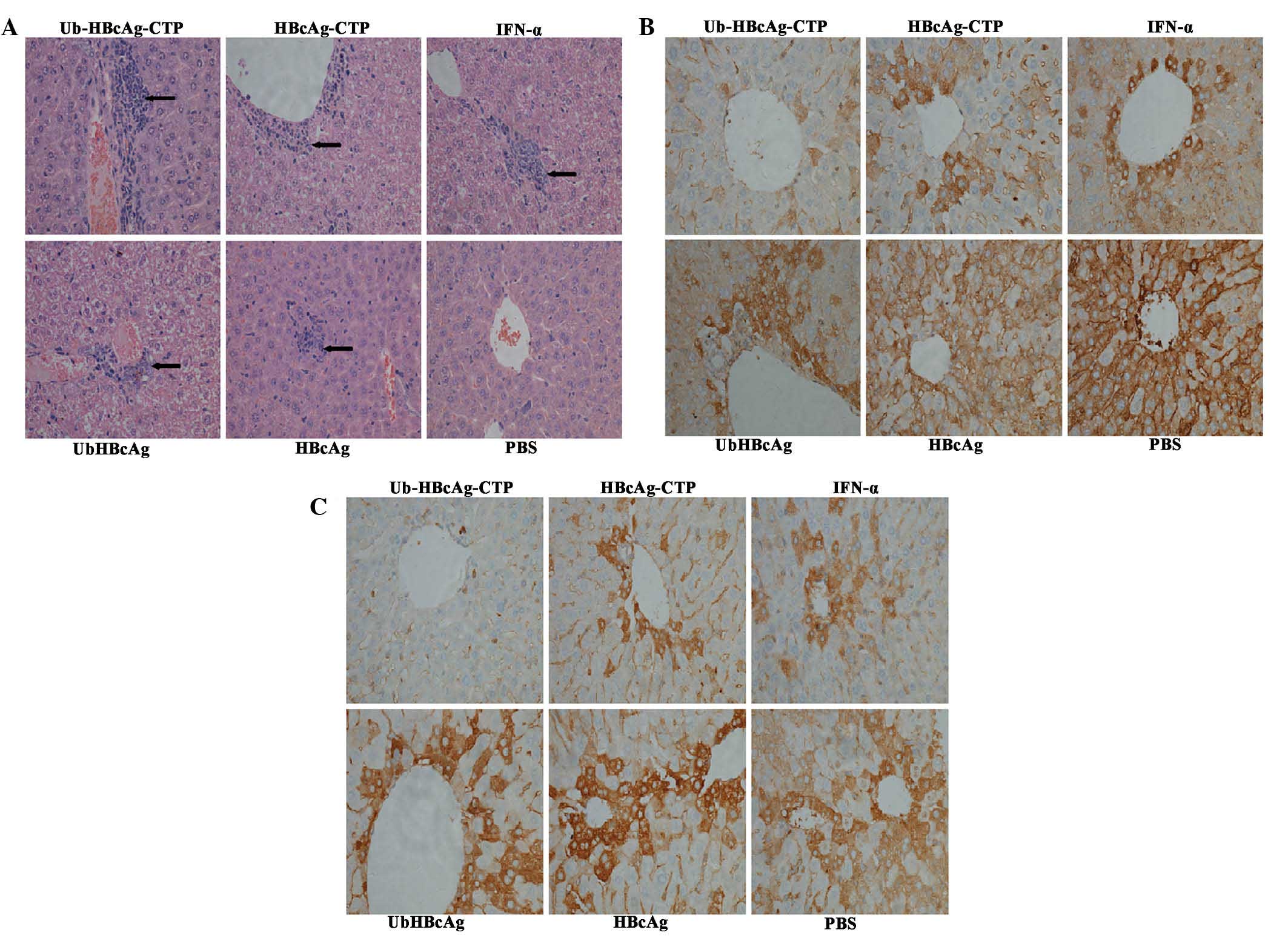
Chronic hepatitis B virus (HBV) infection is characterized by functionally impaired type 1 T-helper cell (Thl) immunity and poor HBV‑specific T‑cell responses. Ubiquitin (Ub), a highly conserved small regulatory protein, commonly serves as a signal for target proteins that are recognized and degraded in proteasomes. The rapid degradation of Ub‑mediated antigens results in efficient stimulation of cell‑mediated immune responses. Thus, the Ub‑HBV core antigen (HBcAg)‑cytoplasmic transduction peptide (CTP) fusion protein was designed for specific delivery of a foreign modified antigen to the cytoplasm of antigen‑presenting cells. HBV transgenic mice were used to determine whether Ub‑HBcAg‑CTP would restore HBV‑specific immune responses and anti‑viral immunity in these animals. The results demonstrated that synthesized Ub‑HBcAg‑CTP not only significantly increased the levels of interleukin‑2 and interferon (IFN)‑γ compared with those in the HBcAg‑CTP, IFN‑α, Ub‑HBcAg, HBcAg and phosphate‑buffered saline groups, but additionally induced the highest IFN‑γ+ CD8+ T‑cell numbers and HBV‑specific cytotoxic T lymphocyte (CTL) responses, indicating a strong immune response. In addition, enhancement of specific CTL activity provoked by the fusion protein reduced hepatitis B surface antigen (HBsAg) and HBV DNA serum levels and diminished the expression of HBsAg and HBcAg in liver tissue of HBV transgenic mice, suggesting that there was a therapeutic effect. In conclusion, the present study provided evidence that Ub‑HBcAg‑CTP activated the Th1‑dependent immunity, triggered functional T cell responses and subsequently inhibited viral replication in HBV transgenic mice. These observations suggested that the fusion protein may represent an innovative and promising candidate for active immunotherapy during chronic and persistent HBV.
View Figures

Figure 1

Figure 2

Figure 3

Figure 4

View References

1 

Custer B, Sullivan SD, Hazlet TK, Iloeje U, Veenstra DL and Kowdley KV: Global epidemiology of hepatitis B virus. J Clin Gastroenterol. 38:S158–S168. 2004. View Article : Google Scholar : PubMed/NCBI

2 

Perz JF, Armstrong GL, Farrington LA, Hutin YJ and Bell BP: The contributions of hepatitis B virus and hepatitis C virus infections to cirrhosis and primary liver cancer worldwide. J Hepatol. 45:529–538. 2006. View Article : Google Scholar : PubMed/NCBI

3 

Buchmann P, Dembek C, Kuklick L, et al: A novel therapeutic hepatitis B vaccine induces cellular and humoral immune responses and breaks tolerance in hepatitis B virus (HBV) transgenic mice. Vaccine. 31:1197–1203. 2013. View Article : Google Scholar : PubMed/NCBI

4 

Rehermann B: Immune responses in hepatitis B virus infection. Semin Liver Dis. 23:21–38. 2003. View Article : Google Scholar : PubMed/NCBI

5 

Baumert TF, Thimme R and Von Weizsacker F: Pathogenesis of hepatitis B virus infection. World J Gastroenterol. 13:82–90. 2007. View Article : Google Scholar : PubMed/NCBI

6 

Thimme R, Wieland S, Steiger C, et al: CD8+ T cells mediate viral clearance and disease pathogenesis during acute hepatitis B virus infection. J Virol. 77:68–76. 2003. View Article : Google Scholar :

7 

Chen W, Shi M, Shi F, et al: HBcAg-pulsed dendritic cell vaccine induces Th1 polarization and production of hepatitis B virus-specific cytotoxic T lymphocytes. Hepatol Res. 39:355–365. 2009. View Article : Google Scholar : PubMed/NCBI

8 

Yang BF, Zhao HL, Xue C, et al: Recombinant heat shock protein 65 carrying hepatitis B core antigen induces HBcAg-specific CTL response. Vaccine. 25:4478–4486. 2007. View Article : Google Scholar : PubMed/NCBI

9 

Tang Y, Chen X, Zhang Y, et al: Fusion protein of tapasin and hepatitis B core antigen 18–27 enhances T helper cell type 1/2 cytokine ratio and antiviral immunity by inhibiting suppressors of cytokine signaling family members 1/3 in hepatitis B virus transgenic mice. Mol Med Rep. 9:1171–1178. 2014.PubMed/NCBI

10 

Kim D, Jeon C, Kim JH, et al: Cytoplasmic transduction peptide (CTP): new approach for the delivery of biomolecules into cytoplasm in vitro and in vivo. Exp Cell Res. 312:1277–1288. 2006. View Article : Google Scholar : PubMed/NCBI

11 

Song L, Zhuo M, Tang Y, Chen X, Yu Y, Tang Z, et al: Ubiquitin-modified hepatitis B virus core antigen effectively facilitates antigen presentation and enhances cytotoxic T lymphocyte activity via the cytoplasmic transduction peptide invitro. Mol Med Rep. 12:289–296. 2015.PubMed/NCBI

12 

Kerscher O, Felberbaum R and Hochstrasser M: Modification of proteins by ubiquitin and ubiquitin-like proteins. Annu Rev Cell Dev Biol. 22:159–180. 2006. View Article : Google Scholar : PubMed/NCBI

13 

Goldberg AL: Protein degradation and protection against misfolded or damaged proteins. Nature. 426:895–899. 2003. View Article : Google Scholar : PubMed/NCBI

14 

Bandi P, Garcia ML, Booth CJ, Chisari FV and Robek MD: Bortezomib inhibits hepatitis B virus replication in transgenic mice. Antimicrob Agents Chemother. 54:749–756. 2010. View Article : Google Scholar :

15 

Loureiro J and Ploegh HL: Antigen Presentation and the ubiquitin-proteasome system in host-pathogen interactions. Adv Immunol. 92:225–305. 2006. View Article : Google Scholar : PubMed/NCBI

16 

Kerscher O, Felberbaum R and Hochstrasser M: Modification of proteins by ubiquitin and ubiquitin-like proteins. Annu Rev Cell Dev Biol. 22:159–180. 2006. View Article : Google Scholar : PubMed/NCBI

17 

Welchman RL, Gordon C and Mayer RJ: Ubiquitin and ubiq-uitin-like proteins as multifunctional signals. Nat Rev Mol Cell Biol. 6:599–609. 2005. View Article : Google Scholar : PubMed/NCBI

18 

Song L, Zhuo M, Tang Y, Chen X, Tang Z and Zang G: Ubiquitin-hepatitis B core antigen-cytoplasmic transduction peptide enhances HBV-specific humoral and CTL immune responses in vivo. International Immunopharmacology. 23:1–7. 2014. View Article : Google Scholar : PubMed/NCBI

19 

Chen JH, Yu YS, Chen XH, Liu HH, Zang GQ and Tang ZH: Enhancement of CTLs induced by DCs loaded with ubiqui-tinated hepatitis B virus core antigen. World J Gastroenterol. 18:1319–1327. 2012. View Article : Google Scholar : PubMed/NCBI

20 

Guidotti LG, Matzke B, Schaller H and Chisari FV: High-level hepatitis B virus replication in transgenic mice. J Virol. 69:6158–6169. 1995.PubMed/NCBI

21 

Crawford TQ, Ndhlovu LC, Tan A, et al: HIV-1 infection abrogates CD8+T cell mitogen-activated protein kinase signaling responses. J Virol. 85:12343–12350. 2011. View Article : Google Scholar : PubMed/NCBI

22 

Lycke NY and Coico R: Measurement of immunoglobulin synthesis using the ELISPOT assay. Curr Protoc Immunol. 14:2001. View Article : Google Scholar

23 

Chen X, Lai J, Pan Q, Tang Z, Yu Y and Zang G: The delivery of HBcAg via Tat-PTD enhances specific immune response and inhibits Hepatitis B virus replication in transgenic mice. Vaccine. 28:3913–3919. 2010. View Article : Google Scholar : PubMed/NCBI

24 

Huang Y, Chen Z, Jia H, Wu W, Zhong S and Zhou C: Induction of Tc1 response and enhanced cytotoxic T lymphocyte activity in mice by dendritic cells transduced with adenovirus expressing HBsAg. Clin Immunol. 119:280–290. 2006. View Article : Google Scholar : PubMed/NCBI

25 

Boni C, Fisicaro P, Valdatta C, et al: Characterization of hepatitis B virus (HBV)-specific T-cell dysfunction in chronic HBV infection. J Virol. 81:4215–4225. 2007. View Article : Google Scholar : PubMed/NCBI

26 

Deng Q, Mancini-Bourgine M, Zhang X, et al: Hepatitis B virus as a gene delivery vector activating foreign antigenic T cell response that abrogates viral expression in mouse models. Hepatology. 50:1380–1391. 2009. View Article : Google Scholar : PubMed/NCBI

27 

Neefjes J, Jongsma ML, Paul P and Bakke O: Towards a systems understanding of MHC class I and MHC class II antigen presentation. Nat Rev Immunol. 11:823–836. 2011.PubMed/NCBI

28 

Tavakoli S, Mederacke I, Herzog-Hauff S, et al: Peripheral blood dendritic cells are phenotypically and functionally intact in chronic hepatitis B virus (HBV) infection. Clin Exp Immunol. 151:61–70. 2008. View Article : Google Scholar

29 

Op den Brouw ML, Binda RS, Van Roosmalen MH, et al: Hepatitis B virus surface antigen impairs myeloid dendritic cell function: a possible immune escape mechanism of hepatitis B virus. Immunology. 126:280–289. 2009. View Article : Google Scholar :

30 

Chen X, Liu H, Tang Z, Yu Y and Zang G: The modification of Tapasin enhances cytotoxic T lymphocyte activity of intracel-lularly delivered CTL epitopes via cytoplasmic transduction peptide. Acta Biochim Biophys Sin (Shanghai). 45:203–212. 2013. View Article : Google Scholar

31 

Das A, Hoare M, Davies N, et al: Functional skewing of the global CD8 T cell population in chronic hepatitis B virus infection. J Exp Med. 205:2111–2124. 2008. View Article : Google Scholar : PubMed/NCBI

32 

Chamoto K, Kosaka A, Tsuji T, et al: Critical role of the Th1/Tc1 circuit for the generation of tumor-specific CTL during tumor eradication in vivo by Th1-cell therapy. Cancer Sci. 94:924–928. 2003. View Article : Google Scholar : PubMed/NCBI

33 

Tsai SL, Sheen IS, Chien RN, et al: Activation of Th1 immunity is a common immune mechanism for the successful treatment of hepatitis B and C: tetramer assay and therapeutic implications. J Biomed Sci. 10:120–135. 2003. View Article : Google Scholar : PubMed/NCBI

34 

Boni C, Bertoletti A, Penna A, et al: Lamivudine treatment can restore T cell responsiveness in chronic hepatitis B. J Clin Invest. 102:968–975. 1998. View Article : Google Scholar : PubMed/NCBI

35 

Kosinska AD, Johrden L, Zhang E, et al: DNA prime-adenovirus boost immunization induces a vigorous and multifunctional T-cell response against hepadnaviral proteins in the mouse and woodchuck model. J Virol. 86:9297–9310. 2012. View Article : Google Scholar : PubMed/NCBI

36 

Seifert U and Krüger E: Remodelling of the ubiq-uitin-proteasome system in response to interferons. Biochem Soc Trans. 36:879–884. 2008. View Article : Google Scholar : PubMed/NCBI

37 

Varshavsky A: The N-end rule. Cell. 69:725–735. 1992. View Article : Google Scholar : PubMed/NCBI

38 

Ciechanover A and Ben-Saadon R: N-terminal ubiquitination: more protein substrates join in. Trends Cell Biol. 14:103–106. 2004. View Article : Google Scholar : PubMed/NCBI

39 

Rock KL and Goldberg AL: Degradation of cell proteins and the generation of MHC class I-presented peptides. Ann Rev Immunol. 17:739–779. 1999. View Article : Google Scholar

40 

Rodriguez F, Zhang J and Whitton JL: DNA immunization: ubiquitination of a viral protein enhances cytotoxic T-lymphocyte induction and antiviral protection but abrogates antibody induction. J Virol. 71:8497–8503. 1997.PubMed/NCBI

41 

Liu Y, Testa JS, Philip R, Block TM and Mehta AS: A ubiquitin independent degradation pathway utilized by a hepatitis B virus envelope protein to limit antigen presentation. PLoS One. 6:e244772011. View Article : Google Scholar : PubMed/NCBI

42 

Roh S and Kim K: Overcoming tolerance in hepatitis B virus transgenic mice: a possible involvement of regulatory T cells. Microbiol Immunol. 47:453–460. 2003. View Article : Google Scholar : PubMed/NCBI

43 

Akbar SM, Chen S, Al-Mahtab M, Abe M, Hiasa Y and Onji M: Strong and multi-antigen specific immunity by hepatitis B core antigen (HBcAg)-based vaccines in a murine model of chronic hepatitis B: HBcAg is a candidate for a therapeutic vaccine against hepatitis B virus. Antiviral Res. 96:59–64. 2012. View Article : Google Scholar : PubMed/NCBI

Related Articles

  • Abstract
  • View
  • Download
  • Twitter
Copy and paste a formatted citation
Spandidos Publications style
Zhuo M, Song L, Tang Y, Dai S, Chen X, Yu Y, Zang G and Tang Z: Vaccination with ubiquitin-hepatitis B core antigen-cytoplasmic transduction peptide enhances the hepatitis B virus-specific cytotoxic T-lymphocyte immune response and inhibits hepatitis B virus replication in transgenic mice. Mol Med Rep 12: 3591-3598, 2015.
APA
Zhuo, M., Song, L., Tang, Y., Dai, S., Chen, X., Yu, Y. ... Tang, Z. (2015). Vaccination with ubiquitin-hepatitis B core antigen-cytoplasmic transduction peptide enhances the hepatitis B virus-specific cytotoxic T-lymphocyte immune response and inhibits hepatitis B virus replication in transgenic mice. Molecular Medicine Reports, 12, 3591-3598. https://doi.org/10.3892/mmr.2015.3834
MLA
Zhuo, M., Song, L., Tang, Y., Dai, S., Chen, X., Yu, Y., Zang, G., Tang, Z."Vaccination with ubiquitin-hepatitis B core antigen-cytoplasmic transduction peptide enhances the hepatitis B virus-specific cytotoxic T-lymphocyte immune response and inhibits hepatitis B virus replication in transgenic mice". Molecular Medicine Reports 12.3 (2015): 3591-3598.
Chicago
Zhuo, M., Song, L., Tang, Y., Dai, S., Chen, X., Yu, Y., Zang, G., Tang, Z."Vaccination with ubiquitin-hepatitis B core antigen-cytoplasmic transduction peptide enhances the hepatitis B virus-specific cytotoxic T-lymphocyte immune response and inhibits hepatitis B virus replication in transgenic mice". Molecular Medicine Reports 12, no. 3 (2015): 3591-3598. https://doi.org/10.3892/mmr.2015.3834
Copy and paste a formatted citation
x
Spandidos Publications style
Zhuo M, Song L, Tang Y, Dai S, Chen X, Yu Y, Zang G and Tang Z: Vaccination with ubiquitin-hepatitis B core antigen-cytoplasmic transduction peptide enhances the hepatitis B virus-specific cytotoxic T-lymphocyte immune response and inhibits hepatitis B virus replication in transgenic mice. Mol Med Rep 12: 3591-3598, 2015.
APA
Zhuo, M., Song, L., Tang, Y., Dai, S., Chen, X., Yu, Y. ... Tang, Z. (2015). Vaccination with ubiquitin-hepatitis B core antigen-cytoplasmic transduction peptide enhances the hepatitis B virus-specific cytotoxic T-lymphocyte immune response and inhibits hepatitis B virus replication in transgenic mice. Molecular Medicine Reports, 12, 3591-3598. https://doi.org/10.3892/mmr.2015.3834
MLA
Zhuo, M., Song, L., Tang, Y., Dai, S., Chen, X., Yu, Y., Zang, G., Tang, Z."Vaccination with ubiquitin-hepatitis B core antigen-cytoplasmic transduction peptide enhances the hepatitis B virus-specific cytotoxic T-lymphocyte immune response and inhibits hepatitis B virus replication in transgenic mice". Molecular Medicine Reports 12.3 (2015): 3591-3598.
Chicago
Zhuo, M., Song, L., Tang, Y., Dai, S., Chen, X., Yu, Y., Zang, G., Tang, Z."Vaccination with ubiquitin-hepatitis B core antigen-cytoplasmic transduction peptide enhances the hepatitis B virus-specific cytotoxic T-lymphocyte immune response and inhibits hepatitis B virus replication in transgenic mice". Molecular Medicine Reports 12, no. 3 (2015): 3591-3598. https://doi.org/10.3892/mmr.2015.3834
Follow us
  • Twitter
  • LinkedIn
  • Facebook
About
  • Spandidos Publications
  • Careers
  • Cookie Policy
  • Privacy Policy
How can we help?
  • Help
  • Live Chat
  • Contact
  • Email to our Support Team