Spandidos Publications Logo
  • About
    • About Spandidos
    • Aims and Scopes
    • Abstracting and Indexing
    • Editorial Policies
    • Reprints and Permissions
    • Job Opportunities
    • Terms and Conditions
    • Contact
  • Journals
    • All Journals
    • Oncology Letters
      • Oncology Letters
      • Information for Authors
      • Editorial Policies
      • Editorial Board
      • Aims and Scope
      • Abstracting and Indexing
      • Bibliographic Information
      • Archive
    • International Journal of Oncology
      • International Journal of Oncology
      • Information for Authors
      • Editorial Policies
      • Editorial Board
      • Aims and Scope
      • Abstracting and Indexing
      • Bibliographic Information
      • Archive
    • Molecular and Clinical Oncology
      • Molecular and Clinical Oncology
      • Information for Authors
      • Editorial Policies
      • Editorial Board
      • Aims and Scope
      • Abstracting and Indexing
      • Bibliographic Information
      • Archive
    • Experimental and Therapeutic Medicine
      • Experimental and Therapeutic Medicine
      • Information for Authors
      • Editorial Policies
      • Editorial Board
      • Aims and Scope
      • Abstracting and Indexing
      • Bibliographic Information
      • Archive
    • International Journal of Molecular Medicine
      • International Journal of Molecular Medicine
      • Information for Authors
      • Editorial Policies
      • Editorial Board
      • Aims and Scope
      • Abstracting and Indexing
      • Bibliographic Information
      • Archive
    • Biomedical Reports
      • Biomedical Reports
      • Information for Authors
      • Editorial Policies
      • Editorial Board
      • Aims and Scope
      • Abstracting and Indexing
      • Bibliographic Information
      • Archive
    • Oncology Reports
      • Oncology Reports
      • Information for Authors
      • Editorial Policies
      • Editorial Board
      • Aims and Scope
      • Abstracting and Indexing
      • Bibliographic Information
      • Archive
    • Molecular Medicine Reports
      • Molecular Medicine Reports
      • Information for Authors
      • Editorial Policies
      • Editorial Board
      • Aims and Scope
      • Abstracting and Indexing
      • Bibliographic Information
      • Archive
    • World Academy of Sciences Journal
      • World Academy of Sciences Journal
      • Information for Authors
      • Editorial Policies
      • Editorial Board
      • Aims and Scope
      • Abstracting and Indexing
      • Bibliographic Information
      • Archive
    • International Journal of Functional Nutrition
      • International Journal of Functional Nutrition
      • Information for Authors
      • Editorial Policies
      • Editorial Board
      • Aims and Scope
      • Abstracting and Indexing
      • Bibliographic Information
      • Archive
    • International Journal of Epigenetics
      • International Journal of Epigenetics
      • Information for Authors
      • Editorial Policies
      • Editorial Board
      • Aims and Scope
      • Abstracting and Indexing
      • Bibliographic Information
      • Archive
    • Medicine International
      • Medicine International
      • Information for Authors
      • Editorial Policies
      • Editorial Board
      • Aims and Scope
      • Abstracting and Indexing
      • Bibliographic Information
      • Archive
  • Articles
  • Information
    • Information for Authors
    • Information for Reviewers
    • Information for Librarians
    • Information for Advertisers
    • Conferences
  • Language Editing
Spandidos Publications Logo
  • About
    • About Spandidos
    • Aims and Scopes
    • Abstracting and Indexing
    • Editorial Policies
    • Reprints and Permissions
    • Job Opportunities
    • Terms and Conditions
    • Contact
  • Journals
    • All Journals
    • Biomedical Reports
      • Information for Authors
      • Editorial Policies
      • Editorial Board
      • Aims and Scope
      • Abstracting and Indexing
      • Bibliographic Information
      • Archive
    • Experimental and Therapeutic Medicine
      • Information for Authors
      • Editorial Policies
      • Editorial Board
      • Aims and Scope
      • Abstracting and Indexing
      • Bibliographic Information
      • Archive
    • International Journal of Epigenetics
      • Information for Authors
      • Editorial Policies
      • Editorial Board
      • Aims and Scope
      • Abstracting and Indexing
      • Bibliographic Information
      • Archive
    • International Journal of Functional Nutrition
      • Information for Authors
      • Editorial Policies
      • Editorial Board
      • Aims and Scope
      • Abstracting and Indexing
      • Bibliographic Information
      • Archive
    • International Journal of Molecular Medicine
      • Information for Authors
      • Editorial Policies
      • Editorial Board
      • Aims and Scope
      • Abstracting and Indexing
      • Bibliographic Information
      • Archive
    • International Journal of Oncology
      • Information for Authors
      • Editorial Policies
      • Editorial Board
      • Aims and Scope
      • Abstracting and Indexing
      • Bibliographic Information
      • Archive
    • Medicine International
      • Information for Authors
      • Editorial Policies
      • Editorial Board
      • Aims and Scope
      • Abstracting and Indexing
      • Bibliographic Information
      • Archive
    • Molecular and Clinical Oncology
      • Information for Authors
      • Editorial Policies
      • Editorial Board
      • Aims and Scope
      • Abstracting and Indexing
      • Bibliographic Information
      • Archive
    • Molecular Medicine Reports
      • Information for Authors
      • Editorial Policies
      • Editorial Board
      • Aims and Scope
      • Abstracting and Indexing
      • Bibliographic Information
      • Archive
    • Oncology Letters
      • Information for Authors
      • Editorial Policies
      • Editorial Board
      • Aims and Scope
      • Abstracting and Indexing
      • Bibliographic Information
      • Archive
    • Oncology Reports
      • Information for Authors
      • Editorial Policies
      • Editorial Board
      • Aims and Scope
      • Abstracting and Indexing
      • Bibliographic Information
      • Archive
    • World Academy of Sciences Journal
      • Information for Authors
      • Editorial Policies
      • Editorial Board
      • Aims and Scope
      • Abstracting and Indexing
      • Bibliographic Information
      • Archive
  • Articles
  • Information
    • For Authors
    • For Reviewers
    • For Librarians
    • For Advertisers
    • Conferences
  • Language Editing
Login Register Submit
  • This site uses cookies
  • You can change your cookie settings at any time by following the instructions in our Cookie Policy. To find out more, you may read our Privacy Policy.

    I agree
Search articles by DOI, keyword, author or affiliation
Search
Advanced Search
presentation
Molecular Medicine Reports
Join Editorial Board Propose a Special Issue
Print ISSN: 1791-2997 Online ISSN: 1791-3004
Journal Cover
September-2015 Volume 12 Issue 3

Full Size Image

Sign up for eToc alerts
Recommend to Library

Journals

International Journal of Molecular Medicine

International Journal of Molecular Medicine

International Journal of Molecular Medicine is an international journal devoted to molecular mechanisms of human disease.

International Journal of Oncology

International Journal of Oncology

International Journal of Oncology is an international journal devoted to oncology research and cancer treatment.

Molecular Medicine Reports

Molecular Medicine Reports

Covers molecular medicine topics such as pharmacology, pathology, genetics, neuroscience, infectious diseases, molecular cardiology, and molecular surgery.

Oncology Reports

Oncology Reports

Oncology Reports is an international journal devoted to fundamental and applied research in Oncology.

Experimental and Therapeutic Medicine

Experimental and Therapeutic Medicine

Experimental and Therapeutic Medicine is an international journal devoted to laboratory and clinical medicine.

Oncology Letters

Oncology Letters

Oncology Letters is an international journal devoted to Experimental and Clinical Oncology.

Biomedical Reports

Biomedical Reports

Explores a wide range of biological and medical fields, including pharmacology, genetics, microbiology, neuroscience, and molecular cardiology.

Molecular and Clinical Oncology

Molecular and Clinical Oncology

International journal addressing all aspects of oncology research, from tumorigenesis and oncogenes to chemotherapy and metastasis.

World Academy of Sciences Journal

World Academy of Sciences Journal

Multidisciplinary open-access journal spanning biochemistry, genetics, neuroscience, environmental health, and synthetic biology.

International Journal of Functional Nutrition

International Journal of Functional Nutrition

Open-access journal combining biochemistry, pharmacology, immunology, and genetics to advance health through functional nutrition.

International Journal of Epigenetics

International Journal of Epigenetics

Publishes open-access research on using epigenetics to advance understanding and treatment of human disease.

Medicine International

Medicine International

An International Open Access Journal Devoted to General Medicine.

Journal Cover
September-2015 Volume 12 Issue 3

Full Size Image

Sign up for eToc alerts
Recommend to Library

  • Article
  • Citations
    • Cite This Article
    • Download Citation
    • Create Citation Alert
    • Remove Citation Alert
    • Cited By
  • Similar Articles
    • Related Articles (in Spandidos Publications)
    • Similar Articles (Google Scholar)
    • Similar Articles (PubMed)
  • Download PDF
  • Download XML
  • View XML
Article

Identification of proteins interacting with protein kinase C‑δ in hyperthermia‑induced apoptosis and thermotolerance of Tca8113 cells

  • Authors:
    • Jianqi Liu
    • Wenchuan Huang
    • Yunhong Lin
    • Li Bian
    • Yongwen He
  • View Affiliations / Copyright

    Affiliations: Department of Dental Research, The Affiliated Stomatological Hospital of Kunming Medical University, Kunming, Yunnan 650031, P.R. China, Department of Pathology, The First Affiliated Hospital of Kunming Medical University, Kunming, Yunnan 650032, P.R. China
  • Pages: 3821-3828
    |
    Published online on: May 27, 2015
       https://doi.org/10.3892/mmr.2015.3861
  • Expand metrics +
Metrics: Total Views: 0 (Spandidos Publications: | PMC Statistics: )
Metrics: Total PDF Downloads: 0 (Spandidos Publications: | PMC Statistics: )
Cited By (CrossRef): 0 citations Loading Articles...

This article is mentioned in:


Abstract

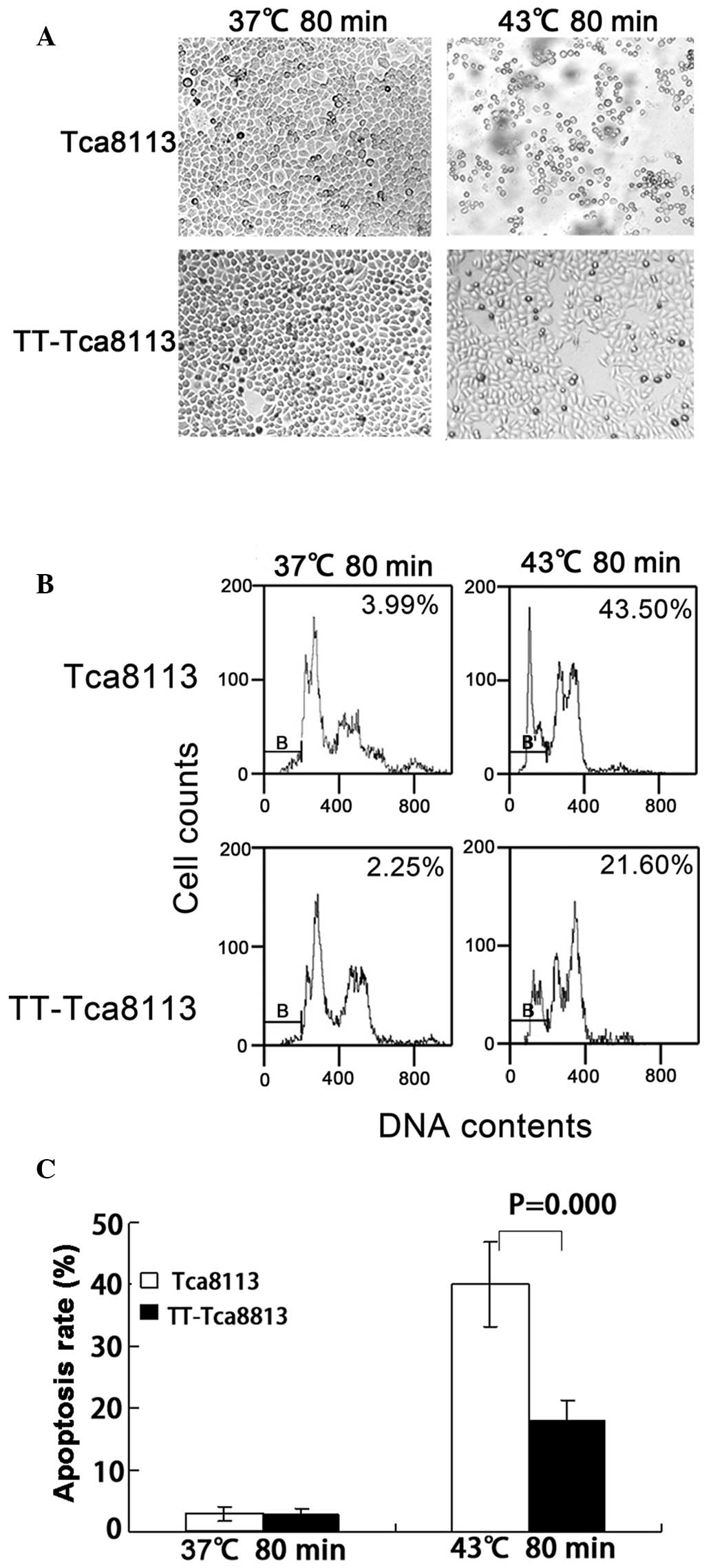
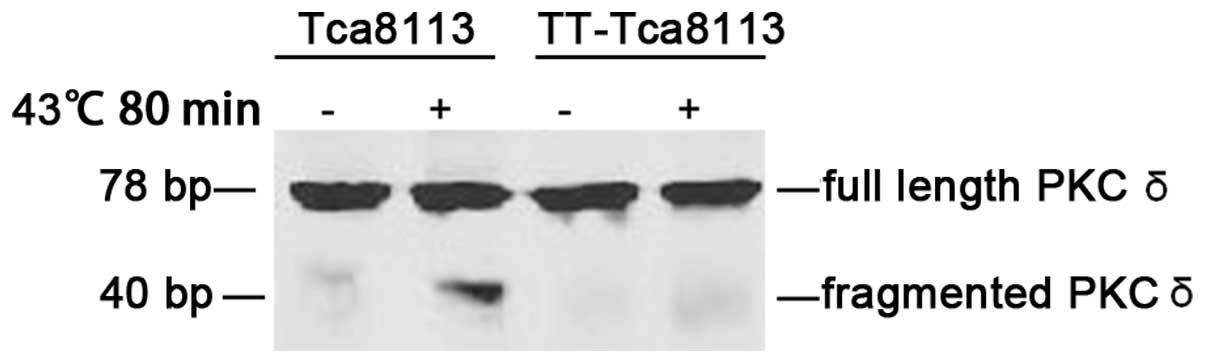
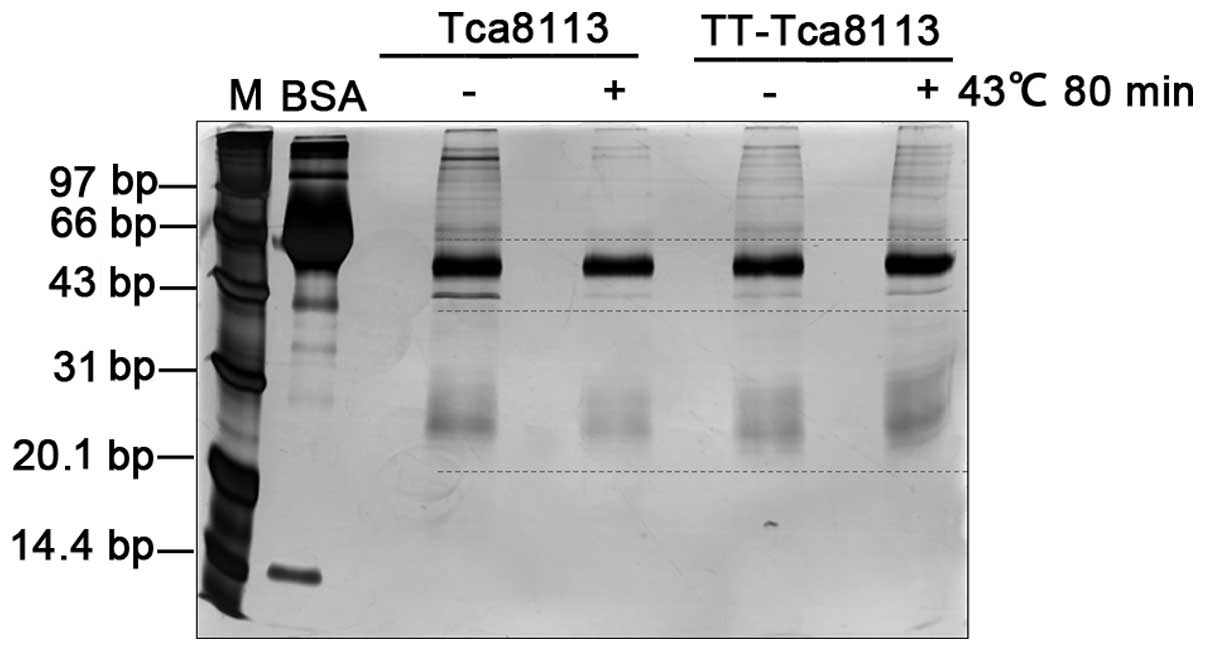
The purpose of the present study was to investigate the differential proteins that interact with protein kinase C‑δ (PKC‑δ) in hyperthermia‑induced apoptosis as well as thermotolerance in Tca8113 cells, and furthermore, to investigate the mechanisms of these processes in tumor cells. Activation of PKC‑δ was previously indicated to be involved in the heat sensitivity and thermal resistance of tongue squamous carcinoma cells. Tca8113 cell apoptosis was induced by incubation at 43˚C for 80 min and the thermotolerant Tca8113 cells (TT‑Tca8113) were generated through a gradient temperature‑elevating method. The apoptotic rate of the cells was determined by flow cytometry, while cleavage and activation of PKC‑δ were analyzed by western blot analysis. The proteins that interacted with PKC‑δ in the Tca8113 and TT‑Tca8113 cells were identified by co‑immunoprecipitation coupled with mass spectrometry. Co‑immunoprecipitation analysis followed by electrospray ionization mass spectrometric analysis were utilized to identify the pro‑ and anti‑apoptotic proteins that interacted with PKC‑δ. Significant cell apoptosis was observed in Tca8113 cells following hyperthermia, and the apoptotic rate was significantly higher than that in the control group (P<0.05). Marked PKC‑δ cleavage fragmentation was also identified. By contrast, the apoptotic rate of the TT‑Tca8113 cells was not significantly increased following hyperthermia and no PKC‑δ cleavage fragmentation was observed. Among the proteins interacting with PKC‑δ, 39 were found to be involved in the promotion of apoptosis and 16 in the inhibition of apoptosis of Tca8113 cells; these proteins were known to be involved in the regulation of cell proliferation, apoptosis, transcription and intracellular protein transport. The results of the present study provided evidence that PKC‑δ is a crucial factor in the heat sensitivity and thermal resistance of tongue squamous carcinoma cells and elucidated the underlying molecular basis, which may aid in the improvement of hyperthermic cancer treatments.
View Figures

Figure 1

Figure 2

Figure 3

View References

1 

Wust P, Hildebrandt B, Sreenivasa G, et al: Hyperthermia in combined treatment of cancer. Lancet Oncol. 3:487–497. 2002. View Article : Google Scholar : PubMed/NCBI

2 

Roesch M and Mueller-Huebenthal B: The role of hyperthermia in treating pancreatic tumors. Indian J Surg Oncol. 6:75–81. 2015. View Article : Google Scholar : PubMed/NCBI

3 

van der Zee J: Heating the patient: a promising approach? Ann Oncol. 13:1173–1184. 2002. View Article : Google Scholar : PubMed/NCBI

4 

Basile A, Biziato D, Sherbet GV, Comi P and Cajone F: Hyperthermia inhibits cell proliferation and induces apoptosis: relative signaling status of P53, S100A4 and Notch in heat sensitive and resistant cell lines. J Cell Biochem. 103:212–220. 2008. View Article : Google Scholar

5 

Kruger S, Angele MK, Reu S, et al: Complete pathological response to neoadjuvant pemetrexed/cisplatin in combination with regional hyperthermia in a patient with sarcomatoid peritoneal mesothelioma. Anticancer Drugs. 25:854–856. 2014. View Article : Google Scholar : PubMed/NCBI

6 

Xie Y, Liu P and Xu LX: A novel thermal treatment modality for controlling breast tumor growth and progression. Conf Proc IEEE Eng Med Biol Soc. 2012:5703–5706. 2012.

7 

Lyu X, Zheng D, Zhang H, Zhang T, Han N, Zhang M and Dong Z: Hyperthermia improves immune function and radiotherapy efficacy in patients with post-operative recurrent gastric cancer. Hepatogastroenterology. 61:2428–2433. 2014.

8 

Qi D, Hu Y, Li J, Peng T, Su J, He Y and Ji W: Hyperthermia induces apoptosis of 786-O cells through suppressing Ku80 expression. PLoS One. 10:e01229772015. View Article : Google Scholar : PubMed/NCBI

9 

Hou CH, Lin FL, Hou SM and Liu JF: Hyperthermia induces apoptosis through endoplasmic reticulum and reactive oxygen species in human osteosarcoma cells. Int J Mol Sci. 15:17380–17395. 2014. View Article : Google Scholar : PubMed/NCBI

10 

Harmon BV, Corder AM, Collins RJ, et al: Cell death induced in a murine mastocytoma by 42–47 degrees C heating in vitro: evidence that the form of death changes from apoptosis to necrosis above a critical heat load. Int J Radiat Biol. 58:845–858. 1990. View Article : Google Scholar : PubMed/NCBI

11 

Takahashi A, Torigoe T, Tamura Y, et al: Heat shock enhances the expression of cytotoxic granule proteins and augments the activities of tumor-associated antigen-specific cytotoxic T lymphocytes. Cell Stress Chaperones. 17:757–763. 2012. View Article : Google Scholar : PubMed/NCBI

12 

Jung HJ and Seo YR: Protective effects of thioredoxin-mediated p53 activation in response to mild hyperthermia. Oncol Rep. 27:650–656. 2012.

13 

Hassan MK, Watari H, Salah-Eldin AE, et al: Histone deacetylase inhibitors sensitize lung cancer cells to hyperthermia: involvement of Ku70/SirT-1 in thermo-protection. PLoS One. 9:e942132014. View Article : Google Scholar : PubMed/NCBI

14 

Bidwell GL III, Perkins E and Raucher D: A thermally targeted c-Myc inhibitory polypeptide inhibits breast tumor growth. Cancer Lett. 319:136–143. 2012. View Article : Google Scholar : PubMed/NCBI

15 

Klostergaard J, Leroux ME, Auzenne E, et al: Hyperthermia engages the intrinsic apoptotic pathway by enhancing upstream caspase activation to overcome apoptotic resistance in MCF-7 breast adenocarcinoma cells. J Cell Biochem. 98:356–369. 2006. View Article : Google Scholar : PubMed/NCBI

16 

Zhou J, Wang X, Du L, et al: Effect of hyperthermia on the apoptosis and proliferation of CaSki cells. Mol Med Rep. 4:187–191. 2011.PubMed/NCBI

17 

Oommen D, Giricz Z, Srinivas UK and Samali A: Atypical heat shock response and acquisition of thermotolerance in P388D1 cells. Biochem Biophys Res Commun. 430:236–240. 2013. View Article : Google Scholar

18 

Miot M, Reidy M, Doyle SM, et al: Species-specific collaboration of heat shock proteins (Hsp) 70 and 100 in thermotolerance and protein disaggregation. Proc Natl Acad Sci USA. 108:6915–6920. 2011. View Article : Google Scholar : PubMed/NCBI

19 

Huang BJ and Cheng XS: Effect of hypoxia inducible factor-1alpha on thermotolerance against hyperthemia induced cardiomyocytes apoptosis. Chin J Cardiovasc Dis. 41:785–789. 2013.In Chinese.

20 

von Burstin VA, Xiao L and Kazanietz MG: Bryostatin 1 inhibits phorbol ester-induced apoptosis in prostate cancer cells by differentially modulating protein kinase C (PKC) delta translocation and preventing PKCdelta-mediated release of tumor necrosis factor-alpha. Mol Pharmacol. 78:325–332. 2010. View Article : Google Scholar : PubMed/NCBI

21 

Doller A, Winkler C, Azrilian I, et al: High-constitutive HuR phosphorylation at Ser 318 by PKC{delta} propagates tumor relevant functions in colon carcinoma cells. Carcinogenesis. 32:676–685. 2011. View Article : Google Scholar : PubMed/NCBI

22 

Brodie C and Blumberg PM: Regulation of cell apoptosis by protein kinase c delta. Apoptosis. 8:19–27. 2003. View Article : Google Scholar : PubMed/NCBI

23 

Jackson DN and Foster DA: The enigmatic protein kinase Cdelta: complex roles in cell proliferation and survival. Faseb J. 18:627–636. 2004. View Article : Google Scholar : PubMed/NCBI

24 

Jiang W, Bian L, Ma LJ, Tang RZ, Xun S and He YW: Hyperthermia-induced apoptosis in Tca8113 cells is inhibited by heat shock protein 27 through blocking phospholipid scramblase 3 phosphorylation. Int J Hyperthermia. 26:523–537. 2010. View Article : Google Scholar : PubMed/NCBI

25 

Jiang W, Bian L, Li GQ, Ma LJ, Tang RZ and He YW: Role of protein kinase C-delta in hyperthermia-induced apoptosis in tongue squamous cell carcinoma Tca8113cells. Hua Xi Kou Qiang Yi Xue Za Zhi. 28:539–542. 2010.In Chinese.

26 

Zhang XH, Zheng B, Gu C, Fu JR and Wen JK: TGF-beta1 downregulates AT1 receptor expression via PKC-delta-mediated Sp1 dissociation from KLF4 and Smad-mediated PPAR-gamma association with KLF4. Arterioscler Thromb Vasc Biol. 32:1015–1023. 2012. View Article : Google Scholar : PubMed/NCBI

27 

Parent N, Scherer M, Liebisch G, Schmitz G and Bertrand R: Protein kinase C-delta isoform mediates lysosome labilization in DNA damage-induced apoptosis. Int J Oncol. 38:313–324. 2011.

28 

Wang S, Zheng Y, Yu Y, et al: Phosphorylation of beta-actin by protein kinase C-delta in camptothecin analog-induced leukemic cell apoptosis. Acta Pharmacol Sin. 29:135–142. 2008. View Article : Google Scholar

29 

Cross T, Griffiths G, Deacon E, et al: PKC-delta is an apoptotic lamin kinase. Oncogene. 19:2331–2337. 2000. View Article : Google Scholar : PubMed/NCBI

30 

Shifrin Y, Pinto VI, Hassanali A, Arora PD and McCulloch CA: Force-induced apoptosis mediated by the Rac/Pak/p38 signalling pathway is regulated by filamin A. Biochem J. 445:57–67. 2012. View Article : Google Scholar : PubMed/NCBI

31 

Komiya K, Sueoka-Aragane N, Sato A, et al: Mina53, a novel c-Myc target gene, is frequently expressed in lung cancers and exerts oncogenic property in NIH/3T3 cells. J Cancer Res Clin Oncol. 136:465–473. 2010. View Article : Google Scholar

32 

Mantovani A, Garlanda C and Allavena P: Molecular pathways and targets in cancer-related inflammation. Ann Med. 42:161–170. 2010. View Article : Google Scholar : PubMed/NCBI

33 

Deiss LP, Feinstein E, Berissi H, Cohen O and Kimchi A: Identification of a novel serine/threonine kinase and a novel 15-kD protein as potential mediators of the gamma interferon-induced cell death. Genes Dev. 9:15–30. 1995. View Article : Google Scholar : PubMed/NCBI

34 

Roussigne M, Cayrol C, Clouaire T, Amalric F and Girard JP: THAP1 is a nuclear proapoptotic factor that links prostate-apoptosis-response-4 (Par-4) to PML nuclear bodies. Oncogene. 22:2432–2442. 2003. View Article : Google Scholar : PubMed/NCBI

35 

Leite KR, Morais DR, Reis ST, et al: MicroRNA 100: a context dependent miRNA in prostate cancer. Clinics (Sao Paulo). 68:797–802. 2013. View Article : Google Scholar

36 

Koike K, Fujii T, Nakamura AM, et al: Activation of protein kinase C delta induces growth arrest in NPA thyroid cancer cells through extracellular signal-regulated kinase mitogen-activated protein kinase. Thyroid. 16:333–341. 2006. View Article : Google Scholar : PubMed/NCBI

37 

Ghavami S, Chitayat S, Hashemi M, et al: S100A8/A9: a Janus-faced molecule in cancer therapy and tumorgenesis. Eur J Pharmacol. 625:73–83. 2009. View Article : Google Scholar : PubMed/NCBI

38 

Hiratsuka S, Watanabe A, Aburatani H and Maru Y: Tumour-mediated upregulation of chemoattractants and recruitment of myeloid cells predetermines lung metastasis. Nat Cell Biol. 8:1369–1375. 2006. View Article : Google Scholar : PubMed/NCBI

39 

Dong X, Jiao L, Li Y, et al: Significant associations of mismatch repair gene polymorphisms with clinical outcome of pancreatic cancer. J Clin Oncol. 27:1592–1599. 2009. View Article : Google Scholar : PubMed/NCBI

40 

Jain N, Zhang T, Kee WH, Li W and Cao X: Protein kinase C delta associates with and phosphorylates Stat3 in an interleukin-6-dependent manner. J Biol Chem. 274:24392–24400. 1999. View Article : Google Scholar : PubMed/NCBI

41 

Uddin S, Sassano A, Deb DK, et al: Protein kinase C-delta (PKC-delta) is activated by type I interferons and mediates phosphorylation of Stat1 on serine 727. J Biol Chem. 277:14408–14416. 2002. View Article : Google Scholar : PubMed/NCBI

42 

Chen J, Wu M, Zhang X, et al: Hepatitis B virus polymerase impairs interferon-alpha-induced STA T activation through inhibition of importin-alpha5 and protein kinase C-delta. Hepatology. 57:470–482. 2013. View Article : Google Scholar

43 

Chen TH, Kambal A, Krysiak K, et al: Knockdown of Hspa9, a del (5q31.2) gene, results in a decrease in hematopoietic progenitors in mice. Blood. 117:1530–1539. 2011. View Article : Google Scholar :

44 

Peng C, Yang P, Cui Y, He M, Liang L and Di Y: HSPA9 over-expression inhibits apoptin-induced apoptosis in the HepG2 cell line. Oncol Rep. 29:2431–2437. 2013.PubMed/NCBI

45 

Guo XX, Kim H, Li Y, Yim H, Lee SK and Jin YH: Cdk2 acts upstream of mitochondrial permeability transition during paclitaxel-induced apoptosis. Protein Cell. 2:543–553. 2011. View Article : Google Scholar : PubMed/NCBI

46 

Wu CL, Huang AC, Yang JS, et al: Benzyl isothiocyanate (BITC) and phenethyl isothiocyanate (PEITC)-mediated generation of reactive oxygen species causes cell cycle arrest and induces apoptosis via activation of caspase-3, mitochondria dysfunction and nitric oxide (NO) in human osteogenic sarcoma U-2 OS cells. J Orthop Res. 29:1199–1209. 2011. View Article : Google Scholar : PubMed/NCBI

47 

Tu YS, Kang XL, Zhou JG, Lv XF, Tang YB and Guan YY: Involvement of Chk1-Cdc25A-cyclin A/CDK2 pathway in simvastatin induced S-phase cell cycle arrest and apoptosis in multiple myeloma cells. Eur J Pharmacol. 670:356–364. 2011. View Article : Google Scholar : PubMed/NCBI

48 

Ye Y, Wang H, Chu JH, et al: Atractylenolide II induces G1 cell-cycle arrest and apoptosis in B16 melanoma cells. J Ethnopharmacol. 136:279–282. 2011. View Article : Google Scholar : PubMed/NCBI

49 

Tyagi A, Agarwal C, Harrison G, Glode LM and Agarwal R: Silibinin causes cell cycle arrest and apoptosis in human bladder transitional cell carcinoma cells by regulating CDKI-CDK-cyclin cascade and caspase 3 and PARP cleavages. Carcinogenesis. 25:1711–1720. 2004. View Article : Google Scholar : PubMed/NCBI

50 

Sun F, Zhou B, Lin X and Duan L: Proteomic analysis identifies nuclear protein effectors in PKC-delta signaling under high glucose-induced apoptosis in human umbilical vein endothelial cells. Mol Med Rep. 4:865–872. 2011.PubMed/NCBI

51 

Sinha R, Kiley SC, Lu JX, et al: Effects of methylselenocysteine on PKC activity, cdk2 phosphorylation and gadd gene expression in synchronized mouse mammary epithelial tumor cells. Cancer Lett. 146:135–145. 1999. View Article : Google Scholar

52 

Sambri I, Capasso R, Pucci P, Perna AF and Ingrosso D: The microRNA 15a/16-1 cluster down-regulates protein repair isoaspartyl methyltransferase in hepatoma cells: implications for apoptosis regulation. J Biol Chem. 286:43690–43700. 2011. View Article : Google Scholar : PubMed/NCBI

53 

Yan G, Qin Q, Yi B, et al: Protein-L-isoaspartate (D-aspartate) O-methyltransferase protects cardiomyocytes against hypoxia induced apoptosis through inhibiting proapoptotic kinase Mst1. Int J Cardiol. 168:3291–3299. 2013. View Article : Google Scholar : PubMed/NCBI

54 

Perry NA, Shriver M, Mameza MG, Grabias B, Balzer E and Kontrogianni-Konstantopoulos A: Loss of giant obscurins promotes breast epithelial cell survival through apoptotic resistance. Faseb J. 26:2764–2775. 2012. View Article : Google Scholar : PubMed/NCBI

55 

Kulkarni K, Yang J, Zhang Z and Barford D: Multiple factors confer specific Cdc42 and Rac protein activation by dedicator of cytokinesis (DOCK) nucleotide exchange factors. J Biol Chem. 286:25341–25351. 2011. View Article : Google Scholar : PubMed/NCBI

56 

Reymond N, Im JH, Garg R, et al: Cdc42 promotes transendothelial migration of cancer cells through beta1 integrin. J Cell Biol. 199:653–668. 2012. View Article : Google Scholar : PubMed/NCBI

Related Articles

  • Abstract
  • View
  • Download
  • Twitter
Copy and paste a formatted citation
Spandidos Publications style
Liu J, Huang W, Lin Y, Bian L and He Y: Identification of proteins interacting with protein kinase C‑δ in hyperthermia‑induced apoptosis and thermotolerance of Tca8113 cells. Mol Med Rep 12: 3821-3828, 2015.
APA
Liu, J., Huang, W., Lin, Y., Bian, L., & He, Y. (2015). Identification of proteins interacting with protein kinase C‑δ in hyperthermia‑induced apoptosis and thermotolerance of Tca8113 cells. Molecular Medicine Reports, 12, 3821-3828. https://doi.org/10.3892/mmr.2015.3861
MLA
Liu, J., Huang, W., Lin, Y., Bian, L., He, Y."Identification of proteins interacting with protein kinase C‑δ in hyperthermia‑induced apoptosis and thermotolerance of Tca8113 cells". Molecular Medicine Reports 12.3 (2015): 3821-3828.
Chicago
Liu, J., Huang, W., Lin, Y., Bian, L., He, Y."Identification of proteins interacting with protein kinase C‑δ in hyperthermia‑induced apoptosis and thermotolerance of Tca8113 cells". Molecular Medicine Reports 12, no. 3 (2015): 3821-3828. https://doi.org/10.3892/mmr.2015.3861
Copy and paste a formatted citation
x
Spandidos Publications style
Liu J, Huang W, Lin Y, Bian L and He Y: Identification of proteins interacting with protein kinase C‑δ in hyperthermia‑induced apoptosis and thermotolerance of Tca8113 cells. Mol Med Rep 12: 3821-3828, 2015.
APA
Liu, J., Huang, W., Lin, Y., Bian, L., & He, Y. (2015). Identification of proteins interacting with protein kinase C‑δ in hyperthermia‑induced apoptosis and thermotolerance of Tca8113 cells. Molecular Medicine Reports, 12, 3821-3828. https://doi.org/10.3892/mmr.2015.3861
MLA
Liu, J., Huang, W., Lin, Y., Bian, L., He, Y."Identification of proteins interacting with protein kinase C‑δ in hyperthermia‑induced apoptosis and thermotolerance of Tca8113 cells". Molecular Medicine Reports 12.3 (2015): 3821-3828.
Chicago
Liu, J., Huang, W., Lin, Y., Bian, L., He, Y."Identification of proteins interacting with protein kinase C‑δ in hyperthermia‑induced apoptosis and thermotolerance of Tca8113 cells". Molecular Medicine Reports 12, no. 3 (2015): 3821-3828. https://doi.org/10.3892/mmr.2015.3861
Follow us
  • Twitter
  • LinkedIn
  • Facebook
About
  • Spandidos Publications
  • Careers
  • Cookie Policy
  • Privacy Policy
How can we help?
  • Help
  • Live Chat
  • Contact
  • Email to our Support Team