Spandidos Publications Logo
  • About
    • About Spandidos
    • Aims and Scopes
    • Abstracting and Indexing
    • Editorial Policies
    • Reprints and Permissions
    • Job Opportunities
    • Terms and Conditions
    • Contact
  • Journals
    • All Journals
    • Oncology Letters
      • Oncology Letters
      • Information for Authors
      • Editorial Policies
      • Editorial Board
      • Aims and Scope
      • Abstracting and Indexing
      • Bibliographic Information
      • Archive
    • International Journal of Oncology
      • International Journal of Oncology
      • Information for Authors
      • Editorial Policies
      • Editorial Board
      • Aims and Scope
      • Abstracting and Indexing
      • Bibliographic Information
      • Archive
    • Molecular and Clinical Oncology
      • Molecular and Clinical Oncology
      • Information for Authors
      • Editorial Policies
      • Editorial Board
      • Aims and Scope
      • Abstracting and Indexing
      • Bibliographic Information
      • Archive
    • Experimental and Therapeutic Medicine
      • Experimental and Therapeutic Medicine
      • Information for Authors
      • Editorial Policies
      • Editorial Board
      • Aims and Scope
      • Abstracting and Indexing
      • Bibliographic Information
      • Archive
    • International Journal of Molecular Medicine
      • International Journal of Molecular Medicine
      • Information for Authors
      • Editorial Policies
      • Editorial Board
      • Aims and Scope
      • Abstracting and Indexing
      • Bibliographic Information
      • Archive
    • Biomedical Reports
      • Biomedical Reports
      • Information for Authors
      • Editorial Policies
      • Editorial Board
      • Aims and Scope
      • Abstracting and Indexing
      • Bibliographic Information
      • Archive
    • Oncology Reports
      • Oncology Reports
      • Information for Authors
      • Editorial Policies
      • Editorial Board
      • Aims and Scope
      • Abstracting and Indexing
      • Bibliographic Information
      • Archive
    • Molecular Medicine Reports
      • Molecular Medicine Reports
      • Information for Authors
      • Editorial Policies
      • Editorial Board
      • Aims and Scope
      • Abstracting and Indexing
      • Bibliographic Information
      • Archive
    • World Academy of Sciences Journal
      • World Academy of Sciences Journal
      • Information for Authors
      • Editorial Policies
      • Editorial Board
      • Aims and Scope
      • Abstracting and Indexing
      • Bibliographic Information
      • Archive
    • International Journal of Functional Nutrition
      • International Journal of Functional Nutrition
      • Information for Authors
      • Editorial Policies
      • Editorial Board
      • Aims and Scope
      • Abstracting and Indexing
      • Bibliographic Information
      • Archive
    • International Journal of Epigenetics
      • International Journal of Epigenetics
      • Information for Authors
      • Editorial Policies
      • Editorial Board
      • Aims and Scope
      • Abstracting and Indexing
      • Bibliographic Information
      • Archive
    • Medicine International
      • Medicine International
      • Information for Authors
      • Editorial Policies
      • Editorial Board
      • Aims and Scope
      • Abstracting and Indexing
      • Bibliographic Information
      • Archive
  • Articles
  • Information
    • Information for Authors
    • Information for Reviewers
    • Information for Librarians
    • Information for Advertisers
    • Conferences
  • Language Editing
Spandidos Publications Logo
  • About
    • About Spandidos
    • Aims and Scopes
    • Abstracting and Indexing
    • Editorial Policies
    • Reprints and Permissions
    • Job Opportunities
    • Terms and Conditions
    • Contact
  • Journals
    • All Journals
    • Biomedical Reports
      • Information for Authors
      • Editorial Policies
      • Editorial Board
      • Aims and Scope
      • Abstracting and Indexing
      • Bibliographic Information
      • Archive
    • Experimental and Therapeutic Medicine
      • Information for Authors
      • Editorial Policies
      • Editorial Board
      • Aims and Scope
      • Abstracting and Indexing
      • Bibliographic Information
      • Archive
    • International Journal of Epigenetics
      • Information for Authors
      • Editorial Policies
      • Editorial Board
      • Aims and Scope
      • Abstracting and Indexing
      • Bibliographic Information
      • Archive
    • International Journal of Functional Nutrition
      • Information for Authors
      • Editorial Policies
      • Editorial Board
      • Aims and Scope
      • Abstracting and Indexing
      • Bibliographic Information
      • Archive
    • International Journal of Molecular Medicine
      • Information for Authors
      • Editorial Policies
      • Editorial Board
      • Aims and Scope
      • Abstracting and Indexing
      • Bibliographic Information
      • Archive
    • International Journal of Oncology
      • Information for Authors
      • Editorial Policies
      • Editorial Board
      • Aims and Scope
      • Abstracting and Indexing
      • Bibliographic Information
      • Archive
    • Medicine International
      • Information for Authors
      • Editorial Policies
      • Editorial Board
      • Aims and Scope
      • Abstracting and Indexing
      • Bibliographic Information
      • Archive
    • Molecular and Clinical Oncology
      • Information for Authors
      • Editorial Policies
      • Editorial Board
      • Aims and Scope
      • Abstracting and Indexing
      • Bibliographic Information
      • Archive
    • Molecular Medicine Reports
      • Information for Authors
      • Editorial Policies
      • Editorial Board
      • Aims and Scope
      • Abstracting and Indexing
      • Bibliographic Information
      • Archive
    • Oncology Letters
      • Information for Authors
      • Editorial Policies
      • Editorial Board
      • Aims and Scope
      • Abstracting and Indexing
      • Bibliographic Information
      • Archive
    • Oncology Reports
      • Information for Authors
      • Editorial Policies
      • Editorial Board
      • Aims and Scope
      • Abstracting and Indexing
      • Bibliographic Information
      • Archive
    • World Academy of Sciences Journal
      • Information for Authors
      • Editorial Policies
      • Editorial Board
      • Aims and Scope
      • Abstracting and Indexing
      • Bibliographic Information
      • Archive
  • Articles
  • Information
    • For Authors
    • For Reviewers
    • For Librarians
    • For Advertisers
    • Conferences
  • Language Editing
Login Register Submit
  • This site uses cookies
  • You can change your cookie settings at any time by following the instructions in our Cookie Policy. To find out more, you may read our Privacy Policy.

    I agree
Search articles by DOI, keyword, author or affiliation
Search
Advanced Search
presentation
Molecular Medicine Reports
Join Editorial Board Propose a Special Issue
Print ISSN: 1791-2997 Online ISSN: 1791-3004
Journal Cover
September-2015 Volume 12 Issue 3

Full Size Image

Sign up for eToc alerts
Recommend to Library

Journals

International Journal of Molecular Medicine

International Journal of Molecular Medicine

International Journal of Molecular Medicine is an international journal devoted to molecular mechanisms of human disease.

International Journal of Oncology

International Journal of Oncology

International Journal of Oncology is an international journal devoted to oncology research and cancer treatment.

Molecular Medicine Reports

Molecular Medicine Reports

Covers molecular medicine topics such as pharmacology, pathology, genetics, neuroscience, infectious diseases, molecular cardiology, and molecular surgery.

Oncology Reports

Oncology Reports

Oncology Reports is an international journal devoted to fundamental and applied research in Oncology.

Experimental and Therapeutic Medicine

Experimental and Therapeutic Medicine

Experimental and Therapeutic Medicine is an international journal devoted to laboratory and clinical medicine.

Oncology Letters

Oncology Letters

Oncology Letters is an international journal devoted to Experimental and Clinical Oncology.

Biomedical Reports

Biomedical Reports

Explores a wide range of biological and medical fields, including pharmacology, genetics, microbiology, neuroscience, and molecular cardiology.

Molecular and Clinical Oncology

Molecular and Clinical Oncology

International journal addressing all aspects of oncology research, from tumorigenesis and oncogenes to chemotherapy and metastasis.

World Academy of Sciences Journal

World Academy of Sciences Journal

Multidisciplinary open-access journal spanning biochemistry, genetics, neuroscience, environmental health, and synthetic biology.

International Journal of Functional Nutrition

International Journal of Functional Nutrition

Open-access journal combining biochemistry, pharmacology, immunology, and genetics to advance health through functional nutrition.

International Journal of Epigenetics

International Journal of Epigenetics

Publishes open-access research on using epigenetics to advance understanding and treatment of human disease.

Medicine International

Medicine International

An International Open Access Journal Devoted to General Medicine.

Journal Cover
September-2015 Volume 12 Issue 3

Full Size Image

Sign up for eToc alerts
Recommend to Library

  • Article
  • Citations
    • Cite This Article
    • Download Citation
    • Create Citation Alert
    • Remove Citation Alert
    • Cited By
  • Similar Articles
    • Related Articles (in Spandidos Publications)
    • Similar Articles (Google Scholar)
    • Similar Articles (PubMed)
  • Download PDF
  • Download XML
  • View XML
Article

Determination of whether screening tests for chronic atrophic gastritis really has a positive predictive value

  • Authors:
    • Flaviano Di Paola
    • Valentina D'Angelo
    • Fabiana Tatangelo
    • Vittoria Barchiesi
    • Marianna Rizzo
    • Monica Cantile
    • Gerardo Botti
    • Ernesta Cavalcanti
  • View Affiliations / Copyright

    Affiliations: Division of Laboratory Medicine, National Institute of Tumors G. Pascale Foundation, Institute for Hospitalization and Treatment for Scientific Purposes, Naples I‑80131, Italy, Division of Diagnostic and Operative Endoscopy, National Institute of Tumors G. Pascale Foundation, Institute for Hospitalization and Treatment for Scientific Purposes, Naples I‑80131, Italy, Division of Pathology, National Institute of Tumors G. Pascale Foundation, Institute for Hospitalization and Treatment for Scientific Purposes, Naples I‑80131, Italy
  • Pages: 3521-3524
    |
    Published online on: June 2, 2015
       https://doi.org/10.3892/mmr.2015.3872
  • Expand metrics +
Metrics: Total Views: 0 (Spandidos Publications: | PMC Statistics: )
Metrics: Total PDF Downloads: 0 (Spandidos Publications: | PMC Statistics: )
Cited By (CrossRef): 0 citations Loading Articles...

This article is mentioned in:


Abstract

Intestinal‑type gastric adenocarcinomas are preceded by precancerous lesions, which begin with chronic atrophic gastritis. Over the last few years, multiple serological screening techniques have been performed and commercialized for the diagnosis of chronic atrophic gastritis. In the present study, 123 patients were recruited at the International Cancer Institute 'G. Pascale' Foundation (Naples, Italy) to test commercial kits for the serological determination of chronic atrophic gastritis, supported by histological analysis, according to the International Group of Gastroenterologists 'Operative Link for Gastritis Assessment Staging System'. The results revealed a significant discrepancy between serological screening and histological evaluation in 10.6% of patients, which highlighted the dubious positive predictive value of commercial serological screening kits.

Introduction

Intestinal-type gastric adenocarcinomas are the most common type of gastric tumor, and are preceded by a series of precancerous lesions, beginning with chronic atrophic gastritis, prior to progression to intestinal metaplasia, dysplasia and finally developing into gastric cancer (1). Gastric endoscopy and biopsy collection are frequently used in the diagnosis of chronic atrophic gastritis; however, this procedure is highly invasive. For this reason, numerous experimental and meta-analysis studies have been conducted in order to identify an effective serological screening method for chronic atrophic gastritis (2–6).

However, the level of variation in the results of these studies have made it difficult to identify a standardized method for the effective diagnosis of chronic atrophic gastritis.

Currently, commercially available serological screening tests identify four main molecular markers: Pepsinogen I (PGI, 30–160 mg/l), whose concentration levels in the blood reflect the structure and function of the mucosa of the gastric body (corpus); pepsinogen II (PGII, 3–15 g/l), whose concentration levels are associated with the structure and function of the mucosa of the stomach; gastrin-17b (G17b, 1–7 pmol/l), whose concentration levels reflect the structure and function of the antrum mucosa of the stomach and Helicobacter pylori (HPAbG, <30 EIU), which is responsible for gastric mucosal atrophy and dysfunction.

The evaluation of the ratio of PGI:PGII, and the detected combinations of these markers should provide adequate and complete information regarding the structure and function of the gastric mucosa (7). The present study therefore aimed to evaluate the positive predictive value of such commercial serological screening kits via comparison with data from histological evaluation.

Materials and methods

Patients

In the present study, 123 patients (mean age 53±14 years), who gave their informed consent and had been referred by their general practitioner for endoscopy, were enrolled at the Institute for Cancer Cure and Research, the International Cancer Institute 'G. Pascale' Foundation (Naples, Italy). They donated blood and underwent an endoscopy. A total of 13 patients (six females and seven males; mean age 51±16 years) were selected due to discrepancies observed between serological and histological analyses. The study was approved by the ethics committee of INT Fondazione Pascale.

Determination of biological marker expression

All blood samples were tested for antibodies against H. pylori, PGI, PGII and G17b using a GastroPanel® commercial ELISA kit (cod. 601300; Biohit HealthCare, Helsinki, Finland) assay. The final report contained the results of biological marker expression levels, including the cut-off values outlined in Table I.

Table I

Patients selected according to the discrepancy between serological screening results (indicated by cut-off values of HPAbG, PGI, PGII, PGI/PGII and G17b) and histological phenotypes according to the OLGA staging system (from stage 0 to 4).

Table I

Patients selected according to the discrepancy between serological screening results (indicated by cut-off values of HPAbG, PGI, PGII, PGI/PGII and G17b) and histological phenotypes according to the OLGA staging system (from stage 0 to 4).

PtSerological screening
DiagnosisOLGA staging system
PGI (30–165μg/l)PGII (3–15μg/l)PGI/PGII (3–20)G17b (1–10 pmol/l)HPAbG (<30 EIU)SCORE ANTRUM/ANGULARIS INCISURASCORE CORPUSStage
194.915.06.319.999.0NON ATROPHIC GASTRITIS223
2109.010.310.60.82.1NORMAL223
391.511.48.01.6119.4NON ATROPHIC GASTRITIS323
4103.58.012.93.80.7NORMAL313
554.36.48.52.62.1NORMAL223
6121.313.78.914.9115.5NON ATROPHIC GASTRITIS323
7190.419.010.025.359.5NON ATROPHIC GASTRITIS223
855.33.117.81.968.9NON ATROPHIC GASTRITIS333
9179.711.615.58.682.5NON ATROPHIC GASTRITIS223
10197.223.78.318.614.8NORMAL233
1125.04.55.613.76.1ATROPHIC GASTRITIS111
1220.311.61.740.0104.5ATROPHIC GASTRITIS111
130.03.50.040.09.7ATROPHIC GASTRITIS212

[i] Pt, patient; PGI, pepsinogen I; PGII, pepsinogen II; G17b, gastrin-17b; HPAbG, anti-Helicobacter pylori.

Histological examination

The stomach mucosa was evaluated using routine methods, and biopsies were taken from the corpus, antrum and angularis incisura for histological examination. Formalin-fixed, paraffin-embedded sections (5 µm), were stained with hematoxylin/eosin by automated instruments (Stainer AUS124; Bio Optica, Milan, Italy) and the results were interpreted using a light microscope, observing a minimum of 10 fields (Leica DM 1000; Leica Microsystems GmbH, Heidelberg, Germany). Histological parameters were outlined according to the 'Operative Link for Gastritis Assessment (OLGA) Staging System', which was defined by an international group of gastroenterologists and pathologists. The OLGA staging system defines the histological phenotypes of gastritis according to a scale of progressively increasing risk of gastric cancer, from lowest (stage 0) to highest (stage 4) (8). To minimize disagreement amongst pathological diagnoses of chronic atrophic gastritis, two independent reviews of each biopsy were required from two pathologists, culminating in a final consensus diagnosis for each patient.

Results

Intestinal-type gastric adenocarcinomas are preceded by a series of precancerous lesions, initiating with chronic atrophic gastritis (9). The development of techniques to effectively perturb the progression of such diseases represents a potentially significant public health benefit, reducing the associated economic burden of medical expenses and relieving the suffering of patients.

In the present study, 123 patients were enrolled to evaluate a commercial kit for the serological determination of chronic atrophic gastritis, compared with histological analysis.

The results indicated a significant discrepancy between the results of serological screening and histological evaluation amongst 13 of the 123 patients (10.6%; Table I and Fig. 1).
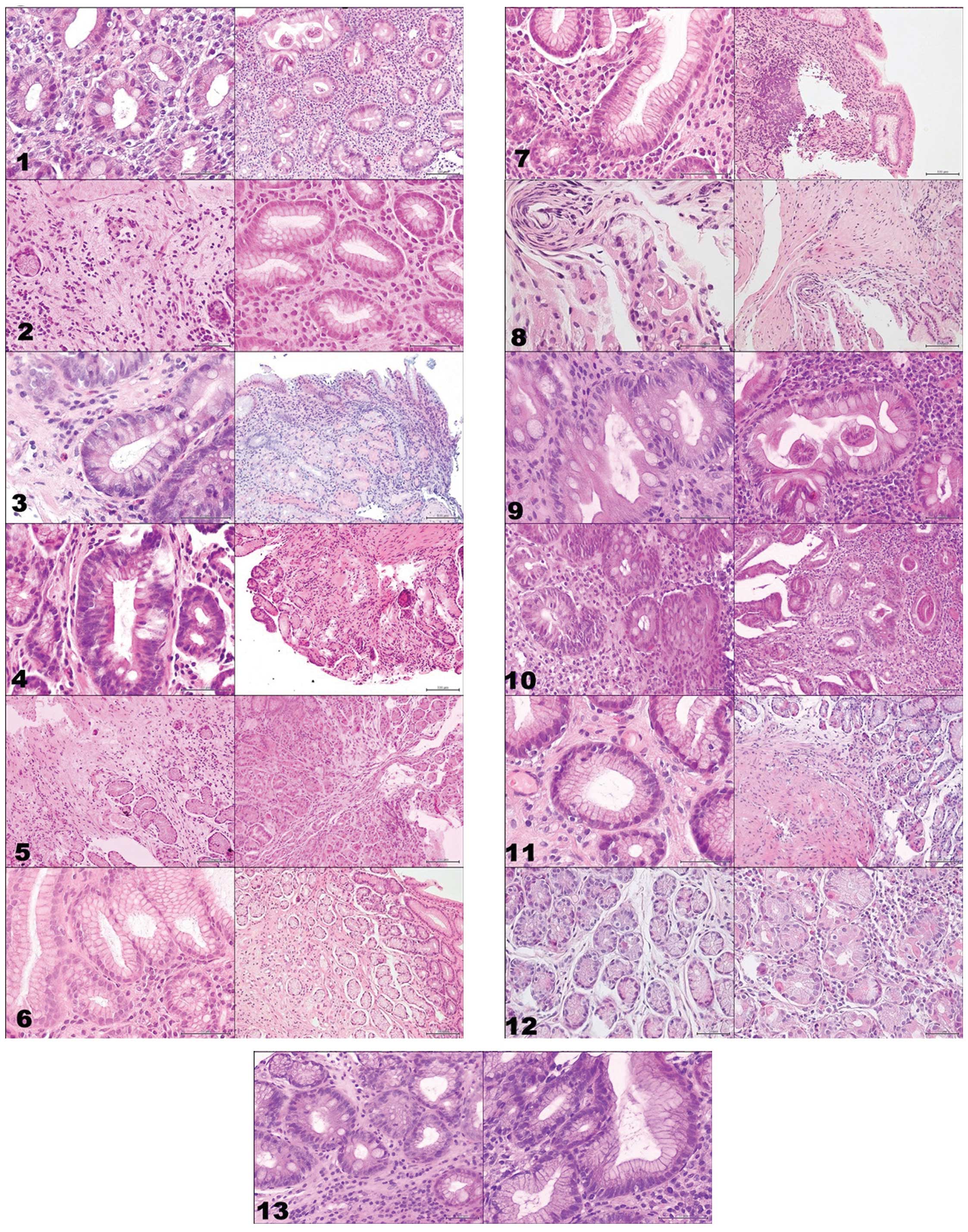
Figure 1

Histology of the antrum (left) and the corpus (right) of the thirteen discrepant patients identified. Magnification: 1) Left ×60, right 20×; 2) left ×60, right ×60; 3) left ×60, right ×40; 4) left ×60, right ×40; 5) left ×40, right ×40; 6) left ×60, right ×60; 7) left ×60, right ×40; 8) left ×60, right ×40; 9) left ×60, right ×60; 10) left ×60, right ×40; 11) left ×60, right ×40; 12) left ×60, right ×60; 13) left ×40, right ×60.

Ten patients (8.1%) were identified to be negative following serological screening (normal phenotype or non-atrophic gastritis) and positive at histology (OLGA stage ≥3) (Table I and Fig. 1). Amongst these patients, four exhibited a normal serological phenotype and six demonstrated non-atrophic gastritis. By contrast, three patients (2.4%) revealed a positive serological screening indicative of atrophic gastritis, while the histological examination was considered negative (OLGA stage ≤2). One case exhibited histology indicating stage 2 atrophic gastritis and two cases exhibited histology indicating stage 1 atrophic gastritis (Table I and Fig. 1).

Discussion

Numerous studies have demonstrated the sensitivity and specificity of serological screening tests for chronic atrophic gastritis, determining a range of cut-off values used in commercial kits (10).

However, the significant levels of variation described in experimental studies, despite numerous validation studies (11), may also be present in standardized commercial methods. This may be due to discrepancies in population characteristics, for example country of origin or patient selection criteria, and also to variations in the cut-off values used (11).

In particular, in the present study, the patients evaluated represented a select group, often exhibiting clinical disease, which represents a common limitation amongst studies of various screening tests (11–13).

Studies have yielded conflicting results regarding the use of the biomarkers evaluated in the present study. For example, serological evaluation of PGI, PGII, the ratio of PGI and PGII and serum gastrin revealed that only the ratio of PGI to PGII was reliable, demonstrating a specificity of 87% and a sensitivity of 77% for the detection of chronic atrophic gastritis (12). However, even in this example, the study was limited by the recruitment of a patient cohort presenting with dyspeptic symptoms (for endoscopy), which may increase the probability of gastric atrophy identification. Furthermore, in alternative studies conducted on selected populations, the positive predictive value of serum PG for gastric cancer was demonstrated to be low (13).

In conclusion, although existing commercial tests for chronic atrophic gastritis are suggested to be highly sensitive and specific, the results of the present study revealed that they may not have the positive predictive value that has been previously reported.

References

1 

Dicken BJ, Bigam DL, Cass C, et al: Gastric adenocarcinoma review and considerations for future directions. Ann Surg. 241:27–39. 2005.

2 

Thijs JC, van Zwet AA, Thijs WJ, et al: Diagnostic tests for Helicobacter pylori: a prospective evaluation of their accuracy, without selecting a single test as the gold standard. Am J Gastroenterol. 91:2125–2129. 1996.PubMed/NCBI

3 

Mårdh E, Mårdh S, Mårdh B and Borch K: Diagnosis of gastritis by means of a combination of serological analyses. Clin Chim Acta. 320:17–27. 2002. View Article : Google Scholar : PubMed/NCBI

4 

Ricci C, Vakil N, Rugge M, et al: Serological markers for gastric atrophy in asymptomatic patients infected with Helicobacter pylori. Am J Gastroenterol. 99:1910–1915. 2004. View Article : Google Scholar : PubMed/NCBI

5 

Mizuno S, Miki I, Ishida T, et al: Prescreening of a high-risk group for gastric cancer by serologically determined Helicobacter pylori infection and atrophic gastritis. Dig Dis Sci. 55:3132–3137. 2010. View Article : Google Scholar : PubMed/NCBI

6 

Bornschein J, Selgrad M, Wex T, et al: Serological assessment of gastric mucosal atrophy in gastric cancer. BMC Gastroenterol. 12:102012. View Article : Google Scholar : PubMed/NCBI

7 

Miki K, Morita M, Sasajima M, et al: Usefulness of gastric cancer screening using the serum pepsinogen test method. Am J Gastroenterol. 98:735–739. 2003. View Article : Google Scholar : PubMed/NCBI

8 

Rugge M and Genta RM; OLGA Group: Staging gastritis: an international proposal. Gastroenterology. 129:1807–1808. 2005. View Article : Google Scholar : PubMed/NCBI

9 

Correa P and Piazuelo MB: Helicobacter pylori infection and gastric adenocarcinoma. US Gastroenterol Hepatol Rev. 7:59–64. 2011.PubMed/NCBI

10 

Nasrollahzadeh D, Aghcheli K, Sotoudeh M, et al: Accuracy and cut-off values of pepsinogens I, II and gastrin 17 for diagnosis of gastric fundic atrophy: influence of gastritis. PLoS One. 6:P12011. View Article : Google Scholar

11 

Haj-Sheykholeslami A, Rakhshani N, Amirzargar A, et al: Serum pepsinogen I, pepsinogen II and gastrin 17 in relatives of gastric cancer atrophy patients: comparative study with type and severity of gastritis. Clin Gastroenterol Hepatol. 6:174–179. 2008. View Article : Google Scholar : PubMed/NCBI

12 

Broutet N, Plebani M, Sakarovitch C, et al: Pepsinogen A, pepsinogen C and gastrin as markers of atrophic chronic gastritis in European dyspeptics. Br J Cancer. 88:1239–1247. 2003. View Article : Google Scholar : PubMed/NCBI

13 

Miki K, Morita M, Sasajima M, et al: Usefulness of gastric cancer screening using the serum pepsinogen test method. Am J Gastroenterol. 98:735–739. 2003. View Article : Google Scholar : PubMed/NCBI

Related Articles

  • Abstract
  • View
  • Download
  • Twitter
Copy and paste a formatted citation
Spandidos Publications style
Di Paola F, D'Angelo V, Tatangelo F, Barchiesi V, Rizzo M, Cantile M, Botti G and Cavalcanti E: Determination of whether screening tests for chronic atrophic gastritis really has a positive predictive value. Mol Med Rep 12: 3521-3524, 2015.
APA
Di Paola, F., D'Angelo, V., Tatangelo, F., Barchiesi, V., Rizzo, M., Cantile, M. ... Cavalcanti, E. (2015). Determination of whether screening tests for chronic atrophic gastritis really has a positive predictive value. Molecular Medicine Reports, 12, 3521-3524. https://doi.org/10.3892/mmr.2015.3872
MLA
Di Paola, F., D'Angelo, V., Tatangelo, F., Barchiesi, V., Rizzo, M., Cantile, M., Botti, G., Cavalcanti, E."Determination of whether screening tests for chronic atrophic gastritis really has a positive predictive value". Molecular Medicine Reports 12.3 (2015): 3521-3524.
Chicago
Di Paola, F., D'Angelo, V., Tatangelo, F., Barchiesi, V., Rizzo, M., Cantile, M., Botti, G., Cavalcanti, E."Determination of whether screening tests for chronic atrophic gastritis really has a positive predictive value". Molecular Medicine Reports 12, no. 3 (2015): 3521-3524. https://doi.org/10.3892/mmr.2015.3872
Copy and paste a formatted citation
x
Spandidos Publications style
Di Paola F, D'Angelo V, Tatangelo F, Barchiesi V, Rizzo M, Cantile M, Botti G and Cavalcanti E: Determination of whether screening tests for chronic atrophic gastritis really has a positive predictive value. Mol Med Rep 12: 3521-3524, 2015.
APA
Di Paola, F., D'Angelo, V., Tatangelo, F., Barchiesi, V., Rizzo, M., Cantile, M. ... Cavalcanti, E. (2015). Determination of whether screening tests for chronic atrophic gastritis really has a positive predictive value. Molecular Medicine Reports, 12, 3521-3524. https://doi.org/10.3892/mmr.2015.3872
MLA
Di Paola, F., D'Angelo, V., Tatangelo, F., Barchiesi, V., Rizzo, M., Cantile, M., Botti, G., Cavalcanti, E."Determination of whether screening tests for chronic atrophic gastritis really has a positive predictive value". Molecular Medicine Reports 12.3 (2015): 3521-3524.
Chicago
Di Paola, F., D'Angelo, V., Tatangelo, F., Barchiesi, V., Rizzo, M., Cantile, M., Botti, G., Cavalcanti, E."Determination of whether screening tests for chronic atrophic gastritis really has a positive predictive value". Molecular Medicine Reports 12, no. 3 (2015): 3521-3524. https://doi.org/10.3892/mmr.2015.3872
Follow us
  • Twitter
  • LinkedIn
  • Facebook
About
  • Spandidos Publications
  • Careers
  • Cookie Policy
  • Privacy Policy
How can we help?
  • Help
  • Live Chat
  • Contact
  • Email to our Support Team












