Spandidos Publications Logo
  • About
    • About Spandidos
    • Aims and Scopes
    • Abstracting and Indexing
    • Editorial Policies
    • Reprints and Permissions
    • Job Opportunities
    • Terms and Conditions
    • Contact
  • Journals
    • All Journals
    • Oncology Letters
      • Oncology Letters
      • Information for Authors
      • Editorial Policies
      • Editorial Board
      • Aims and Scope
      • Abstracting and Indexing
      • Bibliographic Information
      • Archive
    • International Journal of Oncology
      • International Journal of Oncology
      • Information for Authors
      • Editorial Policies
      • Editorial Board
      • Aims and Scope
      • Abstracting and Indexing
      • Bibliographic Information
      • Archive
    • Molecular and Clinical Oncology
      • Molecular and Clinical Oncology
      • Information for Authors
      • Editorial Policies
      • Editorial Board
      • Aims and Scope
      • Abstracting and Indexing
      • Bibliographic Information
      • Archive
    • Experimental and Therapeutic Medicine
      • Experimental and Therapeutic Medicine
      • Information for Authors
      • Editorial Policies
      • Editorial Board
      • Aims and Scope
      • Abstracting and Indexing
      • Bibliographic Information
      • Archive
    • International Journal of Molecular Medicine
      • International Journal of Molecular Medicine
      • Information for Authors
      • Editorial Policies
      • Editorial Board
      • Aims and Scope
      • Abstracting and Indexing
      • Bibliographic Information
      • Archive
    • Biomedical Reports
      • Biomedical Reports
      • Information for Authors
      • Editorial Policies
      • Editorial Board
      • Aims and Scope
      • Abstracting and Indexing
      • Bibliographic Information
      • Archive
    • Oncology Reports
      • Oncology Reports
      • Information for Authors
      • Editorial Policies
      • Editorial Board
      • Aims and Scope
      • Abstracting and Indexing
      • Bibliographic Information
      • Archive
    • Molecular Medicine Reports
      • Molecular Medicine Reports
      • Information for Authors
      • Editorial Policies
      • Editorial Board
      • Aims and Scope
      • Abstracting and Indexing
      • Bibliographic Information
      • Archive
    • World Academy of Sciences Journal
      • World Academy of Sciences Journal
      • Information for Authors
      • Editorial Policies
      • Editorial Board
      • Aims and Scope
      • Abstracting and Indexing
      • Bibliographic Information
      • Archive
    • International Journal of Functional Nutrition
      • International Journal of Functional Nutrition
      • Information for Authors
      • Editorial Policies
      • Editorial Board
      • Aims and Scope
      • Abstracting and Indexing
      • Bibliographic Information
      • Archive
    • International Journal of Epigenetics
      • International Journal of Epigenetics
      • Information for Authors
      • Editorial Policies
      • Editorial Board
      • Aims and Scope
      • Abstracting and Indexing
      • Bibliographic Information
      • Archive
    • Medicine International
      • Medicine International
      • Information for Authors
      • Editorial Policies
      • Editorial Board
      • Aims and Scope
      • Abstracting and Indexing
      • Bibliographic Information
      • Archive
  • Articles
  • Information
    • Information for Authors
    • Information for Reviewers
    • Information for Librarians
    • Information for Advertisers
    • Conferences
  • Language Editing
Spandidos Publications Logo
  • About
    • About Spandidos
    • Aims and Scopes
    • Abstracting and Indexing
    • Editorial Policies
    • Reprints and Permissions
    • Job Opportunities
    • Terms and Conditions
    • Contact
  • Journals
    • All Journals
    • Biomedical Reports
      • Information for Authors
      • Editorial Policies
      • Editorial Board
      • Aims and Scope
      • Abstracting and Indexing
      • Bibliographic Information
      • Archive
    • Experimental and Therapeutic Medicine
      • Information for Authors
      • Editorial Policies
      • Editorial Board
      • Aims and Scope
      • Abstracting and Indexing
      • Bibliographic Information
      • Archive
    • International Journal of Epigenetics
      • Information for Authors
      • Editorial Policies
      • Editorial Board
      • Aims and Scope
      • Abstracting and Indexing
      • Bibliographic Information
      • Archive
    • International Journal of Functional Nutrition
      • Information for Authors
      • Editorial Policies
      • Editorial Board
      • Aims and Scope
      • Abstracting and Indexing
      • Bibliographic Information
      • Archive
    • International Journal of Molecular Medicine
      • Information for Authors
      • Editorial Policies
      • Editorial Board
      • Aims and Scope
      • Abstracting and Indexing
      • Bibliographic Information
      • Archive
    • International Journal of Oncology
      • Information for Authors
      • Editorial Policies
      • Editorial Board
      • Aims and Scope
      • Abstracting and Indexing
      • Bibliographic Information
      • Archive
    • Medicine International
      • Information for Authors
      • Editorial Policies
      • Editorial Board
      • Aims and Scope
      • Abstracting and Indexing
      • Bibliographic Information
      • Archive
    • Molecular and Clinical Oncology
      • Information for Authors
      • Editorial Policies
      • Editorial Board
      • Aims and Scope
      • Abstracting and Indexing
      • Bibliographic Information
      • Archive
    • Molecular Medicine Reports
      • Information for Authors
      • Editorial Policies
      • Editorial Board
      • Aims and Scope
      • Abstracting and Indexing
      • Bibliographic Information
      • Archive
    • Oncology Letters
      • Information for Authors
      • Editorial Policies
      • Editorial Board
      • Aims and Scope
      • Abstracting and Indexing
      • Bibliographic Information
      • Archive
    • Oncology Reports
      • Information for Authors
      • Editorial Policies
      • Editorial Board
      • Aims and Scope
      • Abstracting and Indexing
      • Bibliographic Information
      • Archive
    • World Academy of Sciences Journal
      • Information for Authors
      • Editorial Policies
      • Editorial Board
      • Aims and Scope
      • Abstracting and Indexing
      • Bibliographic Information
      • Archive
  • Articles
  • Information
    • For Authors
    • For Reviewers
    • For Librarians
    • For Advertisers
    • Conferences
  • Language Editing
Login Register Submit
  • This site uses cookies
  • You can change your cookie settings at any time by following the instructions in our Cookie Policy. To find out more, you may read our Privacy Policy.

    I agree
Search articles by DOI, keyword, author or affiliation
Search
Advanced Search
presentation
Molecular Medicine Reports
Join Editorial Board Propose a Special Issue
Print ISSN: 1791-2997 Online ISSN: 1791-3004
Journal Cover
September-2015 Volume 12 Issue 3

Full Size Image

Sign up for eToc alerts
Recommend to Library

Journals

International Journal of Molecular Medicine

International Journal of Molecular Medicine

International Journal of Molecular Medicine is an international journal devoted to molecular mechanisms of human disease.

International Journal of Oncology

International Journal of Oncology

International Journal of Oncology is an international journal devoted to oncology research and cancer treatment.

Molecular Medicine Reports

Molecular Medicine Reports

Covers molecular medicine topics such as pharmacology, pathology, genetics, neuroscience, infectious diseases, molecular cardiology, and molecular surgery.

Oncology Reports

Oncology Reports

Oncology Reports is an international journal devoted to fundamental and applied research in Oncology.

Experimental and Therapeutic Medicine

Experimental and Therapeutic Medicine

Experimental and Therapeutic Medicine is an international journal devoted to laboratory and clinical medicine.

Oncology Letters

Oncology Letters

Oncology Letters is an international journal devoted to Experimental and Clinical Oncology.

Biomedical Reports

Biomedical Reports

Explores a wide range of biological and medical fields, including pharmacology, genetics, microbiology, neuroscience, and molecular cardiology.

Molecular and Clinical Oncology

Molecular and Clinical Oncology

International journal addressing all aspects of oncology research, from tumorigenesis and oncogenes to chemotherapy and metastasis.

World Academy of Sciences Journal

World Academy of Sciences Journal

Multidisciplinary open-access journal spanning biochemistry, genetics, neuroscience, environmental health, and synthetic biology.

International Journal of Functional Nutrition

International Journal of Functional Nutrition

Open-access journal combining biochemistry, pharmacology, immunology, and genetics to advance health through functional nutrition.

International Journal of Epigenetics

International Journal of Epigenetics

Publishes open-access research on using epigenetics to advance understanding and treatment of human disease.

Medicine International

Medicine International

An International Open Access Journal Devoted to General Medicine.

Journal Cover
September-2015 Volume 12 Issue 3

Full Size Image

Sign up for eToc alerts
Recommend to Library

  • Article
  • Citations
    • Cite This Article
    • Download Citation
    • Create Citation Alert
    • Remove Citation Alert
    • Cited By
  • Similar Articles
    • Related Articles (in Spandidos Publications)
    • Similar Articles (Google Scholar)
    • Similar Articles (PubMed)
  • Download PDF
  • Download XML
  • View XML
Article

Relative levels of let‑7a, miR‑17, miR‑27b, miR‑125a, miR‑125b and miR‑206 as potential molecular markers to evaluate grade, receptor status and molecular type in breast cancer

  • Authors:
    • Tomasz P. Lehmann
    • Konstanty Korski
    • Robert Gryczka
    • Mathew Ibbs
    • Anna Thieleman
    • Sylwia Grodecka‑Gazdecka
    • Paweł P. Jagodziński
  • View Affiliations / Copyright

    Affiliations: Department of Biochemistry and Molecular Biology, University of Medical Sciences, Poznań 60‑781, Poland, Department of Pathology, Wielkopolska Cancer Center, Poznań 61‑866, Poland, Department of Surgery, Chair and Clinic of Oncology, University of Medical Sciences, Poznań 60‑569, Poland, Department of Laboratory Diagnostics, University of Medical Sciences, Poznań 60‑569, Poland
  • Pages: 4692-4702
    |
    Published online on: June 26, 2015
       https://doi.org/10.3892/mmr.2015.4002
  • Expand metrics +
Metrics: Total Views: 0 (Spandidos Publications: | PMC Statistics: )
Metrics: Total PDF Downloads: 0 (Spandidos Publications: | PMC Statistics: )
Cited By (CrossRef): 0 citations Loading Articles...

This article is mentioned in:


Abstract

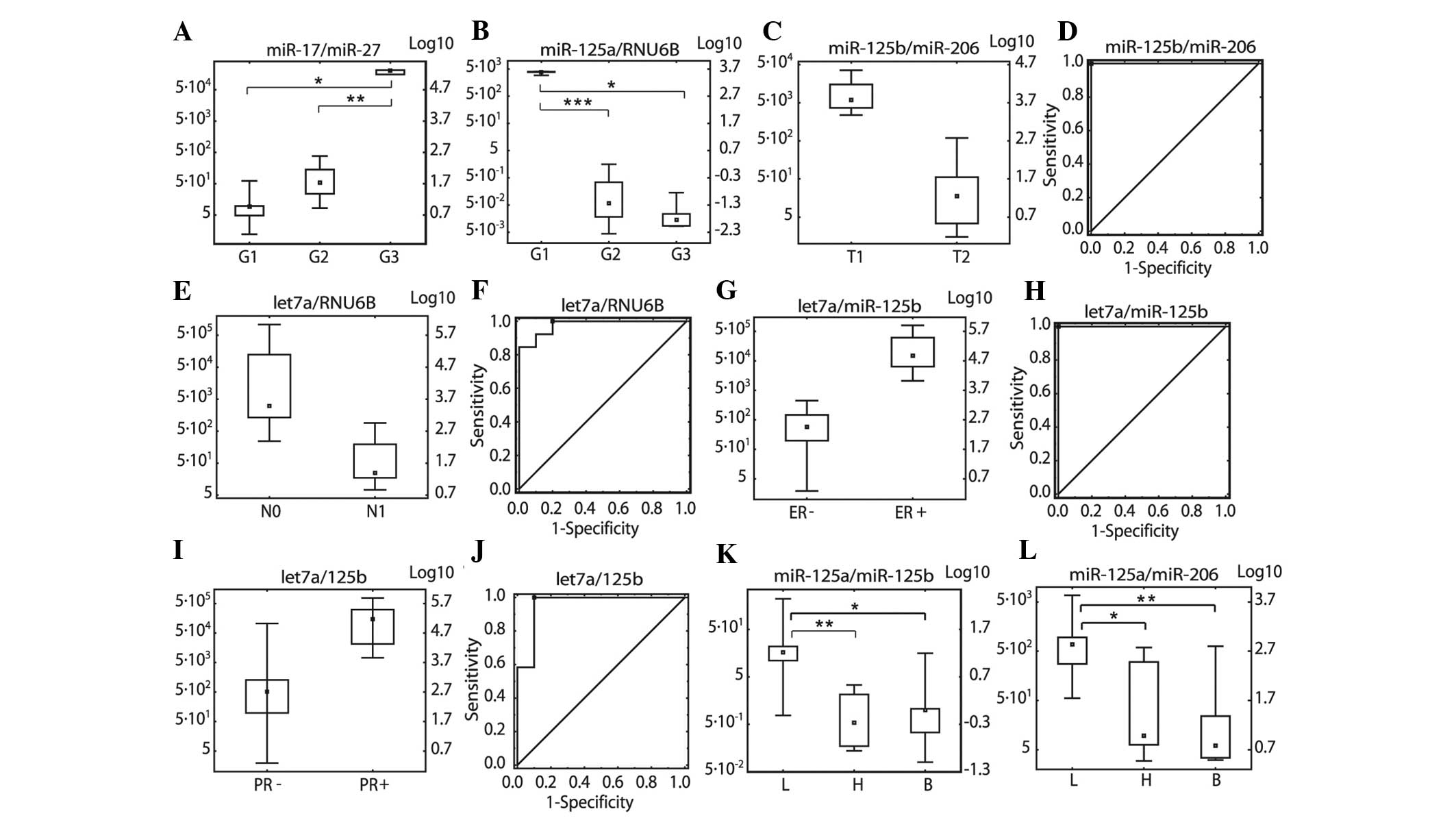
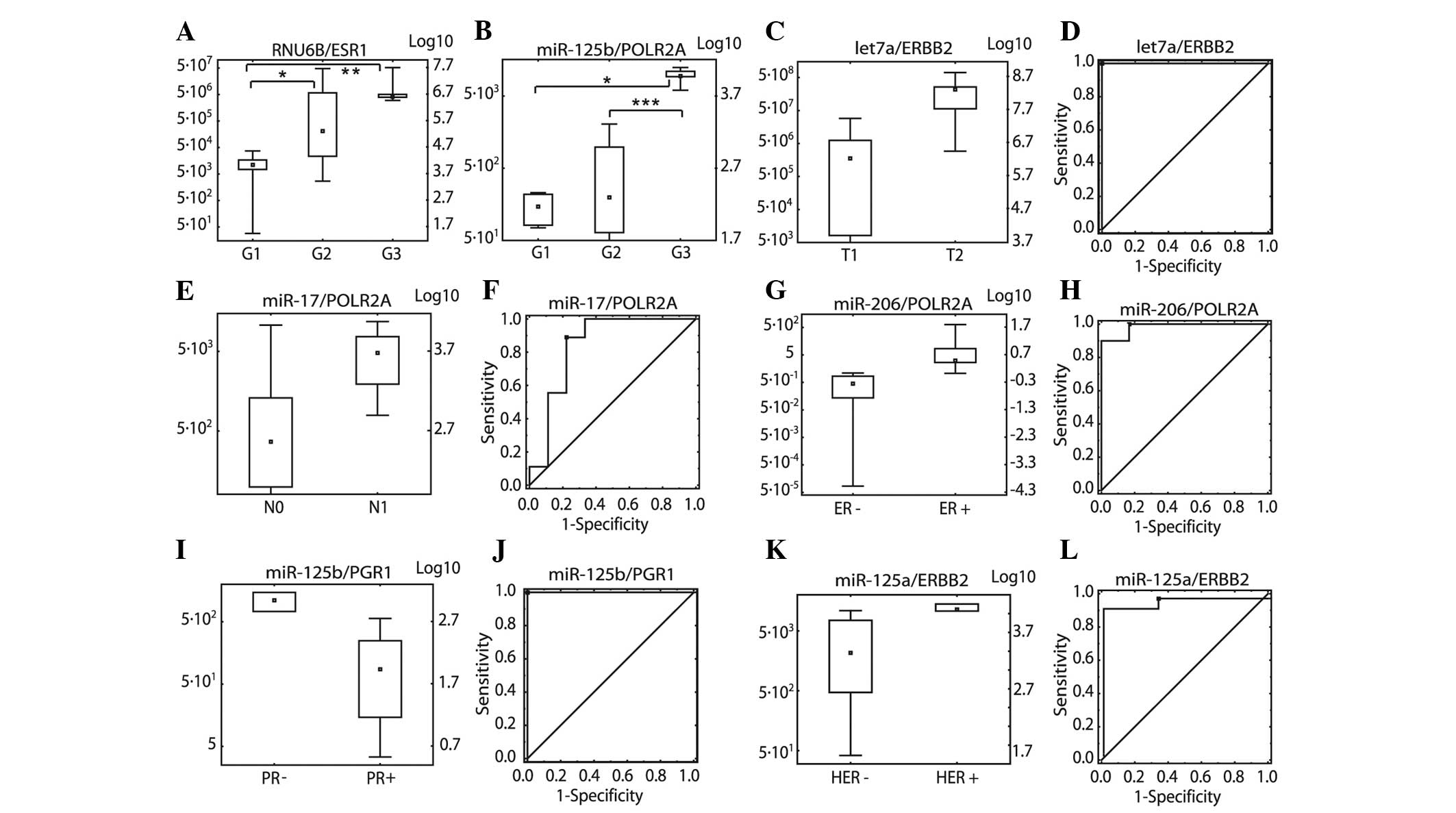
MicroRNAs (miRNAs/miRs) are a class of short, single‑stranded nucleic acids, which have been investigated as potential molecular markers for various types of cancer. The gold‑standard and most sensitive method for comparing miRNA levels in cancer tissues is reverse transcription‑quantitative polymerase chain reaction (RT‑qPCR). This technique uses stably expressed genes for normalisation. The aim of the present study was to improve this model of analysis in the context of RT‑qPCR results. A total of six known miRNAs (let‑7a, miR‑17, miR‑27b, miR‑125a, miR‑125b and miR‑206), RNU6B RNA and five mRNAs [erb‑b2 receptor tyrosine kinase 2 (ERBB2), hydroxymethylbilane synthase and polymerase (RNA) II (DNA directed) polypeptide A] were analysed pair‑wise, in order to determine which biomarker pairs best correlated with the histological groups of 27 breast cancer samples. The lowest P‑values and the highest area under the curve values in the receiver operating characteristic analysis were used to select the optimum ratios for discrimination among groups. Among the 21 pairs, miR‑17/miR‑27b and miR‑125a/RNU6B best discriminated three groups of samples with different tumour grades (G classification). miR‑125b/miR‑206 best discriminated two groups of samples with different tumour sizes (pT), let‑7a/RNU6B best discriminated two groups of samples with different lymph node status (pN), and let‑7a/miR‑125b best discriminated groups of samples with negative and positive oestrogen and progesterone receptor status. No pair of miRNAs was found to discriminate well between groups with either a negative or positive human epidermal growth factor receptor 2 (HER2) status. However, one miRNA/mRNA pair, miR‑125a/ERBB2, discriminated HER2‑negative from HER2‑positive groups. The breast cancer samples investigated in the present study were grouped by immunohistological methods into three molecular classes: Luminal, HER2 positive and basal (L, H and B, respectively). In order to discern L from H and L from B, two miRNA pairs were selected: miR‑125a/miR‑125b and miR‑125a/miR‑206. In conclusion, the pair‑wise method of RT‑qPCR data analysis may be a reasonable alternative to the standard method of using stably expressed reference genes, such as RNU6B RNA, for normalisation. This method may increase the classification power of miRNA biomarkers in breast cancer diagnostics.
View Figures

Figure 1

Figure 2

View References

1 

Ebert MS and Sharp PA: Roles for microRNAs in conferring robustness to biological processes. Cell. 149:515–524. 2012. View Article : Google Scholar : PubMed/NCBI

2 

Dvinge H, Git A, Graf S, et al: The shaping and functional consequences of the microRNA landscape in breast cancer. Nature. 497:378–382. 2013. View Article : Google Scholar : PubMed/NCBI

3 

Mogilyansky E and Rigoutsos I: The miR-17/92 cluster: a comprehensive update on its genomics, genetics, functions and increasingly important and numerous roles in health and disease. Cell Death Differ. 20:1603–1614. 2013. View Article : Google Scholar : PubMed/NCBI

4 

Croft L, Szklarczyk D, Jensen LJ, et al: Multiple independent analyses reveal only transcription factors as an enriched functional class associated with microRNAs. BMC Syst Biol. 6:902012. View Article : Google Scholar : PubMed/NCBI

5 

Lehmann U: Aberrant DNA methylation of microRNA genes in human breast cancer-a critical appraisal. Cell Tissue Res. 356:657–664. 2014. View Article : Google Scholar : PubMed/NCBI

6 

Castells A, Gusella JF, Ramesh V, et al: A region of deletion on chromosome 22q13 is common to human breast and colorectal cancers. Cancer Res. 60:2836–2839. 2000.PubMed/NCBI

7 

Hu X, Guo J, Zheng L, et al: The heterochronic microRNA let-7 inhibits cell motility by regulating the genes in the actin cytoskeleton pathway in breast cancer. Mol Cancer Res. 11:240–250. 2013. View Article : Google Scholar : PubMed/NCBI

8 

Kim SJ, Shin JY, Lee KD, et al: MicroRNA let-7a suppresses breast cancer cell migration and invasion through downregulation of C-C chemokine receptor type 7. Breast Cancer Res. 14:R142012. View Article : Google Scholar : PubMed/NCBI

9 

Wang X, Cao L, Wang Y, et al: Regulation of let-7 and its target oncogenes (Review). Oncol Lett. 3:955–960. 2012.PubMed/NCBI

10 

Volinia S, Calin GA, Liu CG, et al: A microRNA expression signature of human solid tumors defines cancer gene targets. Proc Natl Acad Sci USA. 103:2257–2261. 2006. View Article : Google Scholar : PubMed/NCBI

11 

Santos-Jr GC, Goes AC, Vitto H, et al: Genomic instability at the 13q31 locus and somatic mtDNA mutation in the D-loop site correlate with tumor aggressiveness in sporadic Brazilian breast cancer cases. Clinics (Sao Paulo). 67:1181–1190. 2012. View Article : Google Scholar

12 

Olive V, Li Q and He L: mir-17-92: a polycistronic oncomir with pleiotropic functions. Immunol Rev. 253:158–166. 2013. View Article : Google Scholar : PubMed/NCBI

13 

Hossain A, Kuo MT and Saunders GF: Mir-17-5p regulates breast cancer cell proliferation by inhibiting translation of AIB1 mRNA. Mol Cell Biol. 26:8191–8201. 2006. View Article : Google Scholar : PubMed/NCBI

14 

Yu Z, Wang C, Wang M, et al: A cyclin D1/microRNA 17/20 regulatory feedback loop in control of breast cancer cell proliferation. J Cell Biol. 182:509–517. 2008. View Article : Google Scholar : PubMed/NCBI

15 

Yu Z, Willmarth NE, Zhou J, et al: microRNA 17/20 inhibits cellular invasion and tumor metastasis in breast cancer by heterotypic signaling. Proc Natl Acad Sci USA. 107:8231–8236. 2010. View Article : Google Scholar : PubMed/NCBI

16 

Sinha S, Singh RK, Alam N, et al: Alterations in candidate genes PHF2, FANCC, PTCH1 and XPA at chromosomal 9q22.3 region: pathological significance in early- and late-onset breast carcinoma. Mol Cancer. 7:842008. View Article : Google Scholar : PubMed/NCBI

17 

Tsuchiya Y, Nakajima M, Takagi S, et al: MicroRNA regulates the expression of human cytochrome P450 1B1. Cancer Res. 66:9090–9098. 2006. View Article : Google Scholar : PubMed/NCBI

18 

Jin L, Wessely O, Marcusson EG, et al: Prooncogenic factors miR-23b and miR-27b are regulated by Her2/Neu, EGF and TNF-alpha in breast cancer. Cancer Res. 73:2884–2896. 2013. View Article : Google Scholar : PubMed/NCBI

19 

Iorio MV, Ferracin M, Liu CG, et al: MicroRNA gene expression deregulation in human breast cancer. Cancer Res. 65:7065–7070. 2005. View Article : Google Scholar : PubMed/NCBI

20 

Gentile M, Olsen K, Dufmats M, et al: Frequent allelic losses at 11q24.1-q25 in young women with breast cancer: association with poor survival. Br J Cancer. 80:843–849. 1999. View Article : Google Scholar : PubMed/NCBI

21 

Feliciano A, Castellvi J, Artero-Castro A, et al: miR-125b acts as a tumor suppressor in breast tumorigenesis via its novel direct targets ENPEP, CK2-alpha, CCNJ and MEGF9. PLoS One. 8:e762472013. View Article : Google Scholar

22 

Serpico D, Molino L and Di Cosimo S: microRNAs in breast cancer development and treatment. Cancer Treat Rev. 40:595–604. 2014. View Article : Google Scholar

23 

Scott GK, Goga A, Bhaumik D, et al: Coordinate suppression of ERBB2 and ERBB3 by enforced expression of micro-RNA miR-125a or miR-125b. J Biol Chem. 282:1479–1486. 2007. View Article : Google Scholar

24 

Zhang Y, Yan LX, Wu QN, et al: miR-125b is methylated and functions as a tumor suppressor by regulating the ETS1 proto-oncogene in human invasive breast cancer. Cancer Res. 71:3552–3562. 2011. View Article : Google Scholar : PubMed/NCBI

25 

Nexo BA, Vogel U, Olsen A, et al: Linkage disequilibrium mapping of a breast cancer susceptibility locus near RAI/PPP1R13 L/iASPP. BMC Med Genet. 9:562008. View Article : Google Scholar

26 

Nohata N, Hanazawa T, Enokida H, et al: microRNA-1/133a and microRNA-206/133b clusters: dysregulation and functional roles in human cancers. Oncotarget. 3:9–21. 2012.PubMed/NCBI

27 

Adams BD, Furneaux H and White BA: The micro-ribonucleic acid (miRNA) miR-206 targets the human estrogen receptor-alpha (ERalpha) and represses ERalpha messenger RNA and protein expression in breast cancer cell lines. Mol Endocrinol. 21:1132–1147. 2007. View Article : Google Scholar : PubMed/NCBI

28 

Song G, Zhang Y and Wang L: MicroRNA-206 targets notch3, activates apoptosis and inhibits tumor cell migration and focus formation. J Biol Chem. 284:31921–31927. 2009. View Article : Google Scholar : PubMed/NCBI

29 

Yan D, Dong Xda E, Chen X, et al: MicroRNA-1/206 targets c-Met and inhibits rhabdomyosarcoma development. J Biol Chem. 284:29596–29604. 2009. View Article : Google Scholar : PubMed/NCBI

30 

Zhou J, Tian Y, Li J, et al: miR-206 is down-regulated in breast cancer and inhibits cell proliferation through the up-regulation of cyclinD2. Biochem Biophys Res Commun. 433:207–212. 2013. View Article : Google Scholar : PubMed/NCBI

31 

Applied Biosystems: Endogenous Controls for Real-Time Quantitation of miRNA Using TaqMan MicroRNA Assays. 2010.

32 

Matthaei H, Wylie D, Lloyd MB, et al: miRNA biomarkers in cyst fluid augment the diagnosis and management of pancreatic cysts. Clin Cancer Res. 18:4713–4724. 2012. View Article : Google Scholar : PubMed/NCBI

33 

Pfaffl MW, Tichopad A, Prgomet C, et al: Determination of stable housekeeping genes, differentially regulated target genes and sample integrity: BestKeeper-Excel-based tool using pair-wise correlations. Biotechnol Lett. 26:509–515. 2004. View Article : Google Scholar : PubMed/NCBI

34 

Escobar PF, Patrick RJ, Rybicki LA, et al: The 2003 revised TNM staging system for breast cancer: Results of stage re-classification on survival and future comparisons among stage groups. Ann Surg Oncol. 14:143–147. 2007. View Article : Google Scholar

35 

Elston CW and Ellis IO: Pathological prognostic factors in breast cancer. I. The value of histological grade in breast cancer: Experience from a large study with long-term follow-up. Histopathology. 19:403–410. 1991. View Article : Google Scholar : PubMed/NCBI

36 

Corcoran C, Friel AM, Duffy MJ, et al: Intracellular and extracellular microRNAs in breast cancer. Clin Chem. 57:18–32. 2011. View Article : Google Scholar

37 

Calvano Filho CM, Calvano-Mendes DC, Carvalho KC, et al: Triple-negative and luminal A breast tumors: differential expression of miR-18a-5p, miR-17-5p and miR-20a-5p. Tumour Biol. 35:7733–7741. 2014. View Article : Google Scholar : PubMed/NCBI

38 

Hannafon BN, Sebastiani P, de las Morenas A, et al: Expression of microRNA and their gene targets are dysregulated in preinvasive breast cancer. Breast Cancer Res. 13:R242011. View Article : Google Scholar : PubMed/NCBI

39 

Wang Y, Rathinam R, Walch A, et al: ST14 (suppression of tumorigenicity 14) gene is a target for miR-27b and the inhibitory effect of ST14 on cell growth is independent of miR-27b regulation. J Biol Chem. 284:23094–23106. 2009. View Article : Google Scholar : PubMed/NCBI

40 

Baffa R, Fassan M, Volinia S, et al: MicroRNA expression profiling of human metastatic cancers identifies cancer gene targets. J Pathol. 219:214–221. 2009. View Article : Google Scholar : PubMed/NCBI

41 

Bockmeyer CL, Christgen M, Muller M, et al: MicroRNA profiles of healthy basal and luminal mammary epithelial cells are distinct and reflected in different breast cancer subtypes. Breast Cancer Res Treat. 130:735–745. 2011. View Article : Google Scholar : PubMed/NCBI

42 

Li Y, Hong F and Yu Z: Decreased expression of microRNA-206 in breast cancer and its association with disease characteristics and patient survival. J Int Med Res. 41:596–602. 2013. View Article : Google Scholar : PubMed/NCBI

43 

Falkenberg N, Anastasov N, Rappl K, et al: MiR-221/-222 differentiate prognostic groups in advanced breast cancers and influence cell invasion. Br J Cancer. 109:2714–2723. 2013. View Article : Google Scholar : PubMed/NCBI

44 

Lerebours F, Cizeron-Clairac G, Susini A, et al: miRNA expression profiling of inflammatory breast cancer identifies a 5-miRNA signature predictive of breast tumor aggressiveness. Int J Cancer. 133:1614–1623. 2013. View Article : Google Scholar : PubMed/NCBI

45 

Davoren PA, McNeill RE, Lowery AJ, et al: Identification of suitable endogenous control genes for microRNA gene expression analysis in human breast cancer. BMC Mol Biol. 9:762008. View Article : Google Scholar : PubMed/NCBI

46 

Meyer SU, Pfaffl MW and Ulbrich SE: Normalization strategies for microRNA profiling experiments: a 'normal' way to a hidden layer of complexity? Biotechnol Lett. 32:1777–1788. 2010. View Article : Google Scholar : PubMed/NCBI

47 

Qureshi R and Sacan A: A novel method for the normalization of microRNA RT-PCR data. BMC Med Genomics. 6(Suppl 1): 142013. View Article : Google Scholar

48 

Sheinerman KS, Tsivinsky VG, Crawford F, et al: Plasma microRNA biomarkers for detection of mild cognitive impairment. Aging (Albany NY). 4:590–605. 2012.

49 

Hennessey PT, Sanford T, Choudhary A, et al: Serum microRNA biomarkers for detection of non-small cell lung cancer. PLoS One. 7:e323072012. View Article : Google Scholar : PubMed/NCBI

Related Articles

  • Abstract
  • View
  • Download
  • Twitter
Copy and paste a formatted citation
Spandidos Publications style
Lehmann TP, Korski K, Gryczka R, Ibbs M, Thieleman A, Grodecka‑Gazdecka S and Jagodziński PP: Relative levels of let‑7a, miR‑17, miR‑27b, miR‑125a, miR‑125b and miR‑206 as potential molecular markers to evaluate grade, receptor status and molecular type in breast cancer. Mol Med Rep 12: 4692-4702, 2015.
APA
Lehmann, T.P., Korski, K., Gryczka, R., Ibbs, M., Thieleman, A., Grodecka‑Gazdecka, S., & Jagodziński, P.P. (2015). Relative levels of let‑7a, miR‑17, miR‑27b, miR‑125a, miR‑125b and miR‑206 as potential molecular markers to evaluate grade, receptor status and molecular type in breast cancer. Molecular Medicine Reports, 12, 4692-4702. https://doi.org/10.3892/mmr.2015.4002
MLA
Lehmann, T. P., Korski, K., Gryczka, R., Ibbs, M., Thieleman, A., Grodecka‑Gazdecka, S., Jagodziński, P. P."Relative levels of let‑7a, miR‑17, miR‑27b, miR‑125a, miR‑125b and miR‑206 as potential molecular markers to evaluate grade, receptor status and molecular type in breast cancer". Molecular Medicine Reports 12.3 (2015): 4692-4702.
Chicago
Lehmann, T. P., Korski, K., Gryczka, R., Ibbs, M., Thieleman, A., Grodecka‑Gazdecka, S., Jagodziński, P. P."Relative levels of let‑7a, miR‑17, miR‑27b, miR‑125a, miR‑125b and miR‑206 as potential molecular markers to evaluate grade, receptor status and molecular type in breast cancer". Molecular Medicine Reports 12, no. 3 (2015): 4692-4702. https://doi.org/10.3892/mmr.2015.4002
Copy and paste a formatted citation
x
Spandidos Publications style
Lehmann TP, Korski K, Gryczka R, Ibbs M, Thieleman A, Grodecka‑Gazdecka S and Jagodziński PP: Relative levels of let‑7a, miR‑17, miR‑27b, miR‑125a, miR‑125b and miR‑206 as potential molecular markers to evaluate grade, receptor status and molecular type in breast cancer. Mol Med Rep 12: 4692-4702, 2015.
APA
Lehmann, T.P., Korski, K., Gryczka, R., Ibbs, M., Thieleman, A., Grodecka‑Gazdecka, S., & Jagodziński, P.P. (2015). Relative levels of let‑7a, miR‑17, miR‑27b, miR‑125a, miR‑125b and miR‑206 as potential molecular markers to evaluate grade, receptor status and molecular type in breast cancer. Molecular Medicine Reports, 12, 4692-4702. https://doi.org/10.3892/mmr.2015.4002
MLA
Lehmann, T. P., Korski, K., Gryczka, R., Ibbs, M., Thieleman, A., Grodecka‑Gazdecka, S., Jagodziński, P. P."Relative levels of let‑7a, miR‑17, miR‑27b, miR‑125a, miR‑125b and miR‑206 as potential molecular markers to evaluate grade, receptor status and molecular type in breast cancer". Molecular Medicine Reports 12.3 (2015): 4692-4702.
Chicago
Lehmann, T. P., Korski, K., Gryczka, R., Ibbs, M., Thieleman, A., Grodecka‑Gazdecka, S., Jagodziński, P. P."Relative levels of let‑7a, miR‑17, miR‑27b, miR‑125a, miR‑125b and miR‑206 as potential molecular markers to evaluate grade, receptor status and molecular type in breast cancer". Molecular Medicine Reports 12, no. 3 (2015): 4692-4702. https://doi.org/10.3892/mmr.2015.4002
Follow us
  • Twitter
  • LinkedIn
  • Facebook
About
  • Spandidos Publications
  • Careers
  • Cookie Policy
  • Privacy Policy
How can we help?
  • Help
  • Live Chat
  • Contact
  • Email to our Support Team