Spandidos Publications Logo
  • About
    • About Spandidos
    • Aims and Scopes
    • Abstracting and Indexing
    • Editorial Policies
    • Reprints and Permissions
    • Job Opportunities
    • Terms and Conditions
    • Contact
  • Journals
    • All Journals
    • Oncology Letters
      • Oncology Letters
      • Information for Authors
      • Editorial Policies
      • Editorial Board
      • Aims and Scope
      • Abstracting and Indexing
      • Bibliographic Information
      • Archive
    • International Journal of Oncology
      • International Journal of Oncology
      • Information for Authors
      • Editorial Policies
      • Editorial Board
      • Aims and Scope
      • Abstracting and Indexing
      • Bibliographic Information
      • Archive
    • Molecular and Clinical Oncology
      • Molecular and Clinical Oncology
      • Information for Authors
      • Editorial Policies
      • Editorial Board
      • Aims and Scope
      • Abstracting and Indexing
      • Bibliographic Information
      • Archive
    • Experimental and Therapeutic Medicine
      • Experimental and Therapeutic Medicine
      • Information for Authors
      • Editorial Policies
      • Editorial Board
      • Aims and Scope
      • Abstracting and Indexing
      • Bibliographic Information
      • Archive
    • International Journal of Molecular Medicine
      • International Journal of Molecular Medicine
      • Information for Authors
      • Editorial Policies
      • Editorial Board
      • Aims and Scope
      • Abstracting and Indexing
      • Bibliographic Information
      • Archive
    • Biomedical Reports
      • Biomedical Reports
      • Information for Authors
      • Editorial Policies
      • Editorial Board
      • Aims and Scope
      • Abstracting and Indexing
      • Bibliographic Information
      • Archive
    • Oncology Reports
      • Oncology Reports
      • Information for Authors
      • Editorial Policies
      • Editorial Board
      • Aims and Scope
      • Abstracting and Indexing
      • Bibliographic Information
      • Archive
    • Molecular Medicine Reports
      • Molecular Medicine Reports
      • Information for Authors
      • Editorial Policies
      • Editorial Board
      • Aims and Scope
      • Abstracting and Indexing
      • Bibliographic Information
      • Archive
    • World Academy of Sciences Journal
      • World Academy of Sciences Journal
      • Information for Authors
      • Editorial Policies
      • Editorial Board
      • Aims and Scope
      • Abstracting and Indexing
      • Bibliographic Information
      • Archive
    • International Journal of Functional Nutrition
      • International Journal of Functional Nutrition
      • Information for Authors
      • Editorial Policies
      • Editorial Board
      • Aims and Scope
      • Abstracting and Indexing
      • Bibliographic Information
      • Archive
    • International Journal of Epigenetics
      • International Journal of Epigenetics
      • Information for Authors
      • Editorial Policies
      • Editorial Board
      • Aims and Scope
      • Abstracting and Indexing
      • Bibliographic Information
      • Archive
    • Medicine International
      • Medicine International
      • Information for Authors
      • Editorial Policies
      • Editorial Board
      • Aims and Scope
      • Abstracting and Indexing
      • Bibliographic Information
      • Archive
  • Articles
  • Information
    • Information for Authors
    • Information for Reviewers
    • Information for Librarians
    • Information for Advertisers
    • Conferences
  • Language Editing
Spandidos Publications Logo
  • About
    • About Spandidos
    • Aims and Scopes
    • Abstracting and Indexing
    • Editorial Policies
    • Reprints and Permissions
    • Job Opportunities
    • Terms and Conditions
    • Contact
  • Journals
    • All Journals
    • Biomedical Reports
      • Information for Authors
      • Editorial Policies
      • Editorial Board
      • Aims and Scope
      • Abstracting and Indexing
      • Bibliographic Information
      • Archive
    • Experimental and Therapeutic Medicine
      • Information for Authors
      • Editorial Policies
      • Editorial Board
      • Aims and Scope
      • Abstracting and Indexing
      • Bibliographic Information
      • Archive
    • International Journal of Epigenetics
      • Information for Authors
      • Editorial Policies
      • Editorial Board
      • Aims and Scope
      • Abstracting and Indexing
      • Bibliographic Information
      • Archive
    • International Journal of Functional Nutrition
      • Information for Authors
      • Editorial Policies
      • Editorial Board
      • Aims and Scope
      • Abstracting and Indexing
      • Bibliographic Information
      • Archive
    • International Journal of Molecular Medicine
      • Information for Authors
      • Editorial Policies
      • Editorial Board
      • Aims and Scope
      • Abstracting and Indexing
      • Bibliographic Information
      • Archive
    • International Journal of Oncology
      • Information for Authors
      • Editorial Policies
      • Editorial Board
      • Aims and Scope
      • Abstracting and Indexing
      • Bibliographic Information
      • Archive
    • Medicine International
      • Information for Authors
      • Editorial Policies
      • Editorial Board
      • Aims and Scope
      • Abstracting and Indexing
      • Bibliographic Information
      • Archive
    • Molecular and Clinical Oncology
      • Information for Authors
      • Editorial Policies
      • Editorial Board
      • Aims and Scope
      • Abstracting and Indexing
      • Bibliographic Information
      • Archive
    • Molecular Medicine Reports
      • Information for Authors
      • Editorial Policies
      • Editorial Board
      • Aims and Scope
      • Abstracting and Indexing
      • Bibliographic Information
      • Archive
    • Oncology Letters
      • Information for Authors
      • Editorial Policies
      • Editorial Board
      • Aims and Scope
      • Abstracting and Indexing
      • Bibliographic Information
      • Archive
    • Oncology Reports
      • Information for Authors
      • Editorial Policies
      • Editorial Board
      • Aims and Scope
      • Abstracting and Indexing
      • Bibliographic Information
      • Archive
    • World Academy of Sciences Journal
      • Information for Authors
      • Editorial Policies
      • Editorial Board
      • Aims and Scope
      • Abstracting and Indexing
      • Bibliographic Information
      • Archive
  • Articles
  • Information
    • For Authors
    • For Reviewers
    • For Librarians
    • For Advertisers
    • Conferences
  • Language Editing
Login Register Submit
  • This site uses cookies
  • You can change your cookie settings at any time by following the instructions in our Cookie Policy. To find out more, you may read our Privacy Policy.

    I agree
Search articles by DOI, keyword, author or affiliation
Search
Advanced Search
presentation
Molecular Medicine Reports
Join Editorial Board Propose a Special Issue
Print ISSN: 1791-2997 Online ISSN: 1791-3004
Journal Cover
October-2015 Volume 12 Issue 4

Full Size Image

Sign up for eToc alerts
Recommend to Library

Journals

International Journal of Molecular Medicine

International Journal of Molecular Medicine

International Journal of Molecular Medicine is an international journal devoted to molecular mechanisms of human disease.

International Journal of Oncology

International Journal of Oncology

International Journal of Oncology is an international journal devoted to oncology research and cancer treatment.

Molecular Medicine Reports

Molecular Medicine Reports

Covers molecular medicine topics such as pharmacology, pathology, genetics, neuroscience, infectious diseases, molecular cardiology, and molecular surgery.

Oncology Reports

Oncology Reports

Oncology Reports is an international journal devoted to fundamental and applied research in Oncology.

Experimental and Therapeutic Medicine

Experimental and Therapeutic Medicine

Experimental and Therapeutic Medicine is an international journal devoted to laboratory and clinical medicine.

Oncology Letters

Oncology Letters

Oncology Letters is an international journal devoted to Experimental and Clinical Oncology.

Biomedical Reports

Biomedical Reports

Explores a wide range of biological and medical fields, including pharmacology, genetics, microbiology, neuroscience, and molecular cardiology.

Molecular and Clinical Oncology

Molecular and Clinical Oncology

International journal addressing all aspects of oncology research, from tumorigenesis and oncogenes to chemotherapy and metastasis.

World Academy of Sciences Journal

World Academy of Sciences Journal

Multidisciplinary open-access journal spanning biochemistry, genetics, neuroscience, environmental health, and synthetic biology.

International Journal of Functional Nutrition

International Journal of Functional Nutrition

Open-access journal combining biochemistry, pharmacology, immunology, and genetics to advance health through functional nutrition.

International Journal of Epigenetics

International Journal of Epigenetics

Publishes open-access research on using epigenetics to advance understanding and treatment of human disease.

Medicine International

Medicine International

An International Open Access Journal Devoted to General Medicine.

Journal Cover
October-2015 Volume 12 Issue 4

Full Size Image

Sign up for eToc alerts
Recommend to Library

  • Article
  • Citations
    • Cite This Article
    • Download Citation
    • Create Citation Alert
    • Remove Citation Alert
    • Cited By
  • Similar Articles
    • Related Articles (in Spandidos Publications)
    • Similar Articles (Google Scholar)
    • Similar Articles (PubMed)
  • Download PDF
  • Download XML
  • View XML
Article Open Access

Fatsioside A‑induced apoptotic death of HepG2 cells requires activation of AMP‑activated protein kinase

  • Authors:
    • Yu‑Shan Zheng
    • Jian‑You Zhang
    • Dong‑Hui Zhang
  • View Affiliations / Copyright

    Affiliations: Department of Liver Diseases, Hospital for Infectious Diseases of Jining, Jining, Shandong 272031, P.R. China, Department of Radiology, The First People's Hospital of Jining, Jining, Shandong 272031, P.R. China, Department of Infectious Diseases, Linyi People's Hospital, Linyi, Shandong 276003, P.R. China
    Copyright: © Zheng et al. This is an open access article distributed under the terms of Creative Commons Attribution License.
  • Pages: 5679-5684
    |
    Published online on: August 6, 2015
       https://doi.org/10.3892/mmr.2015.4194
  • Expand metrics +
Metrics: Total Views: 0 (Spandidos Publications: | PMC Statistics: )
Metrics: Total PDF Downloads: 0 (Spandidos Publications: | PMC Statistics: )
Cited By (CrossRef): 0 citations Loading Articles...

This article is mentioned in:


Abstract

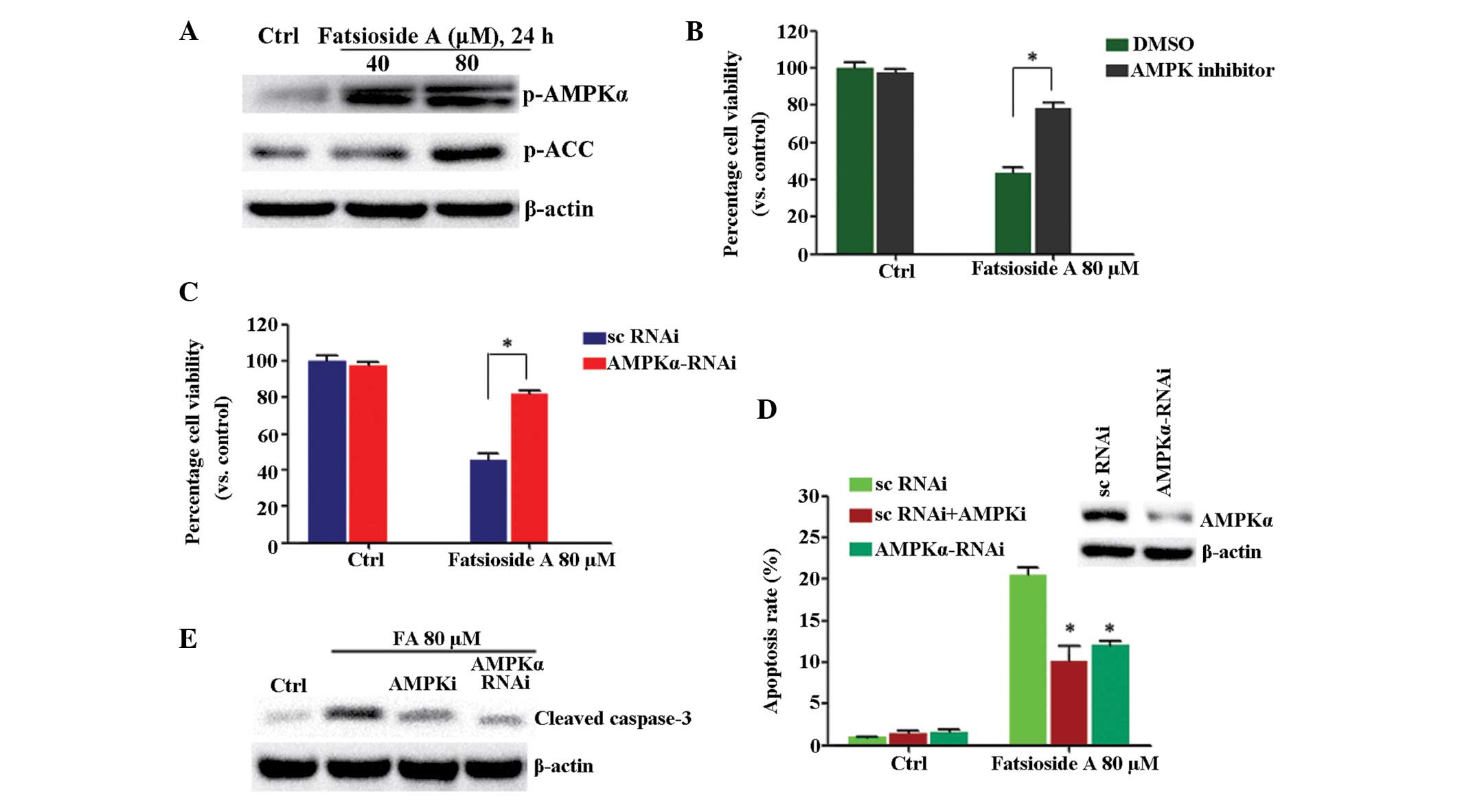
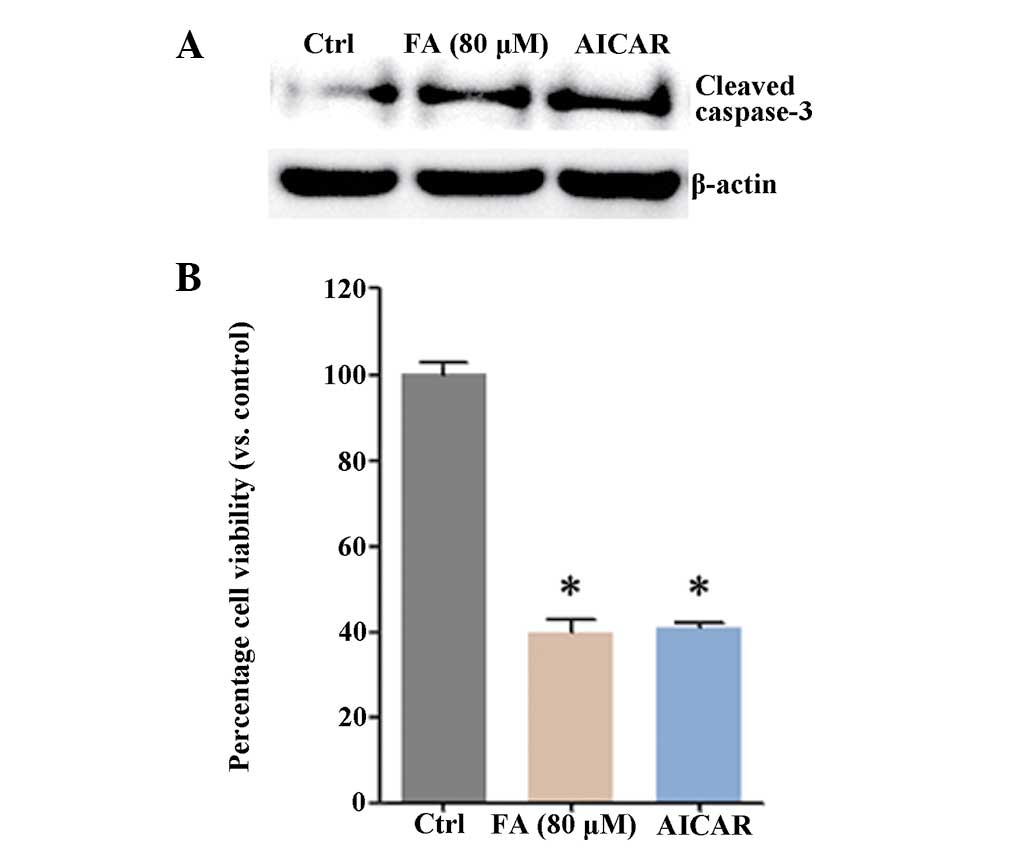
Hepatocellular carcinoma (HCC) is one of the most malignant types of human primary tumor and has a poor prognosis, therefore, the development of novel therapeutic modalities is necessary. Fatsioside A is a novel baccharane‑type triterpenoid glycoside, which is extracted from the fruits of Fatsia japonica. Previous data has revealed that fatsioside A can exert growth inhibition, cell cycle arrest and induce apoptosis in human glioma cells. However, no detailed investigations have been performed to determine its action on human hepatocellular cells, and the exact mechanisms underlying the induction of apoptosis remain to be elucidated. The aim of the present study was to investigate the anticancer effect of fatsioside A in the HepG2 human HCC cell line, and to investigate the underlying mechanisms by focusing on the AMP‑activated protein kinase (AMPK) signaling cascade. The results of the present study demonstrated that fatsioside A induced apoptotic death of the human HepG2 HCC cells, which was associated with a marked activation of AMPK and increased expression of the downstream acetyl‑CoA carboxylase carboxylase. Inhibition of AMPK by RNA interference or by its inhibitor, compound C, suppressed fatsioside A‑induced caspase‑3 cleavage and apoptosis in the HepG2 cells, while AICAR, the AMPK activator, elicited marked cytotoxic effects. Together, these results suggested that fatsioside A‑induced apoptotic death requires AMPK activation in HepG2 cells.
View Figures

Figure 1

Figure 2

Figure 3

Figure 4

View References

1 

Zhang JP, Yan J, Xu J, Pang XH, Chen MS, Li L, Wu C, Li SP and Zheng L: Increased intratumoral IL-17-producing cells correlate with poor survival in hepatocellular carcinoma patients. J Hepatol. 50:980–989. 2009. View Article : Google Scholar : PubMed/NCBI

2 

Srivatanakul P, Sriplung H and Deerasamee S: Epidemiology of liver cancer: An overview. Asian Pac J Cancer Prev. 5:118–125. 2004.PubMed/NCBI

3 

Ferenci P, Fried M, Labrecque D, Bruix J, Sherman M, Omata M, Heathcote J, Piratsivuth T, Kew M, Otegbayo JA, et al: Hepatocellular carcinoma (HCC): A global perspective. J Clin Gastroenterol. 44:239–245. 2010. View Article : Google Scholar : PubMed/NCBI

4 

Yang JD and Roberts LR: Hepatocellular carcinoma: A global view. Nat Rev Gastroenterol Hepatol. 7:448–458. 2010. View Article : Google Scholar : PubMed/NCBI

5 

Llovet JM: Updated treatment approach to hepatocellular carcinoma. J Gastroenterol. 40:225–235. 2005. View Article : Google Scholar : PubMed/NCBI

6 

Villanueva A and Llovet JM: Targeted therapies for hepatocellular carcinoma. Gastroenterology. 140:1410–1426. 2011. View Article : Google Scholar : PubMed/NCBI

7 

Sun Y and Peng Z: Programmed cell death and cancer. Postgrad Med J. 85:134–140. 2009. View Article : Google Scholar : PubMed/NCBI

8 

Ashkenazi A and Herbst RS: To kill a tumor cell: The potential of proapoptotic receptor agonists. J Clin Invest. 118:1979–1990. 2008. View Article : Google Scholar : PubMed/NCBI

9 

Pérez-Garijo A, Martín FA and Morata G: Caspase inhibition during apoptosis causes abnormal signalling and developmental aberrations in Drosophila. Development. 131:5591–5598. 2004. View Article : Google Scholar : PubMed/NCBI

10 

Yu S, Ye X, Xin W, Xu K, Lian XY and Zhang Z: Fatsioside A, a rare baccharane-type glycoside inhibiting the growth of glioma cells from the fruits of fatsia japonica. Planta Med. 80:315–320. 2014. View Article : Google Scholar : PubMed/NCBI

11 

Papandreou I, Lim AL, Laderoute K and Denko N: Hypoxia signals autophagy in tumor cells via AMPK activity, independent of HIF-1, BNIP3 and BNIP3L. Cell Death Differ. 15:1572–1581. 2008. View Article : Google Scholar : PubMed/NCBI

12 

Laderoute KR, Amin K, Calaoagan JM, Knapp M, Le T, Orduna J, Foretz M and Viollet B: 5-AMP-activated protein kinase (AMPK) is induced by low-oxygen and glucose deprivation conditions found in solid-tumor microenvironments. Mol Cell Biol. 26:5336–5347. 2006. View Article : Google Scholar : PubMed/NCBI

13 

Schulz E, Anter E, Zou MH and Keaney JF Jr: Estradiol-mediated endothelial nitric oxide synthase association with heat shock protein 90 requires adenosine monophosphate-dependent protein kinase. Circulation. 111:3473–3480. 2005. View Article : Google Scholar : PubMed/NCBI

14 

Ceolotto G, Gallo A, Papparella I, Franco L, Murphy E, Iori E, Pagnin E, Fadini GP, Albiero M, Semplicini A and Avogaro A: Rosiglitazone reduces glucose-induced oxidative stress mediated by NAD (P) H oxidase via AMPK-dependent mechanism. Arterioscl Throm Vasc Biol. 27:2627–2633. 2007. View Article : Google Scholar

15 

Horie T, Ono K, Nagao K, Nishi H, Kinoshita M, Kawamura T, Wada H, Shimatsu A, Kita T and Hasegawa K: Oxidative stress induces GLUT4 translocation by activation of PI3K/Akt and dual AMPK kinase in cardiac myocytes. J Cell Physiol. 215:733–742. 2008. View Article : Google Scholar : PubMed/NCBI

16 

Jorgensen SB and Rose AJ: How is AMPK activity regulated in skeletal muscles during exercise? Front Biosci. 13:5589–5604. 2007.

17 

Jones RG, Plas DR, Kubek S, Buzzai M, Mu J, Xu Y, Birnbaum MJ and Thompson CB: AMP-activated protein kinase induces a p53-dependent metabolic checkpoint. Mol Cell. 18:283–293. 2005. View Article : Google Scholar : PubMed/NCBI

18 

Hwang JT, Ha J, Park IJ, Lee SK, Baik HW, Kim YM and Park OJ: Apoptotic effect of EGCG in HT-29 colon cancer cells via AMPK signal pathway. Cancer Lett. 247:115–121. 2007. View Article : Google Scholar

19 

Hwang JT, Ha J and Park OJ: Combination of 5-fluorouracil and genistein induces apoptosis synergistically in chemo-resistant cancer cells through the modulation of AMPK and COX-2 signaling pathways. Biochem Bioph Res Commun. 332:433–440. 2005. View Article : Google Scholar

20 

Shaw RJ, Kosmatka M, Bardeesy N, Hurley RL, Witters LA, DePinho RA and Cantley LC: The tumor suppressor LKB1 kinase directly activates AMP-activated kinase and regulates apoptosis in response to energy stress. Proc Natl Acad Sci USA. 101:3329–3335. 2004. View Article : Google Scholar : PubMed/NCBI

21 

Sid B, Glorieux C, Valenzuela M, Rommelaere G, Najimi M, Dejeans N, Renard P, Verrax J and Calderon PB: AICAR induces Nrf2 activation by an AMPK-independent mechanism in hepato-carcinoma cells. Biochem Pharmacol. 91:168–180. 2014. View Article : Google Scholar : PubMed/NCBI

22 

Xu Q, Liu X, Zheng X, Yao Y, Wang M and Liu Q: The transcriptional activity of Gli1 is negatively regulated by AMPK through Hedgehog partial agonism in hepatocellular carcinoma. Int J Mol Med. 34:733–741. 2014.PubMed/NCBI

23 

Cheng J, Huang T, Li Y, Guo Y, Zhu Y, Wang Q, Tan X, Chen W, Zhang Y, Cheng W, et al: AMP-activated protein kinase suppresses the in vitro and in vivo proliferation of hepatocellular carcinoma. PLoS One. 9:e932562014. View Article : Google Scholar : PubMed/NCBI

24 

Johnson JJ: Carnosol: A promising anti-cancer and anti-inflammatory agent. Cancer Lett. 305:1–7. 2011. View Article : Google Scholar : PubMed/NCBI

25 

Kim T, Davis J, Zhang AJ, He X and Mathews ST: Curcumin activates AMPK and suppresses gluconeogenic gene expression in hepatoma cells. Biochem Biophys Res Commun. 388:377–382. 2009. View Article : Google Scholar : PubMed/NCBI

26 

HemaIswarya S and Doble M: Potential synergism of natural products in the treatment of cancer. Phytother Res. 20:239–249. 2006. View Article : Google Scholar : PubMed/NCBI

27 

Chiu YL, Ali A, Chu CY, Cao H and Rana TM: Visualizing a correlation between siRNA localization, cellular uptake, and RNAi in living cells. Chem Biol. 11:1165–1175. 2004. View Article : Google Scholar : PubMed/NCBI

28 

Bruix J and Sherman M; American Association for the Study of Liver Diseases: Management of hepatocellular carcinoma: An update. Hepatology. 53:1020–1022. 2011. View Article : Google Scholar : PubMed/NCBI

29 

Bruix J and Sherman M; Practice Guidelines Committee; American Association for the Study of Liver Diseases: Management of hepatocellular carcinoma. Hepatology. 42:1208–1236. 2005. View Article : Google Scholar : PubMed/NCBI

30 

El-Serag HB and Rudolph KL: Hepatocellular carcinoma: Epidemiology and molecular carcinogenesis. Gastroenterology. 132:2557–2576. 2007. View Article : Google Scholar : PubMed/NCBI

31 

Elmore S: Apoptosis: A review of programmed cell death. Toxicol Pathol. 35:495–516. 2007. View Article : Google Scholar : PubMed/NCBI

32 

Skulachev V: Bioenergetic aspects of apoptosis, necrosis and mitoptosis. Apoptosis. 11:473–485. 2006. View Article : Google Scholar : PubMed/NCBI

33 

Hunter AM, LaCasse EC and Korneluk RG: The inhibitors of apoptosis (IAPs) as cancer targets. Apoptosis. 12:1543–1568. 2007. View Article : Google Scholar : PubMed/NCBI

34 

Plumas J, Chaperot L, Richard MJ, Molens JP, Bensa JC and Favrot MC: Mesenchymal stem cells induce apoptosis of activated T cells. Leukemia. 19:1597–1604. 2005. View Article : Google Scholar : PubMed/NCBI

35 

Fesik SW: Promoting apoptosis as a strategy for cancer drug discovery. Nat Rev Cancer. 5:876–885. 2005. View Article : Google Scholar : PubMed/NCBI

36 

Motoshima H, Goldstein BJ, Igata M and Araki E: AMPK and cell proliferation-AMPK as a therapeutic target for atherosclerosis and cancer. J Physiol. 574:63–71. 2006. View Article : Google Scholar : PubMed/NCBI

37 

Lee YM, Uhm KO, Lee ES, Kwon J, Park SH and Kim HS: AM251 suppresses the viability of HepG2 cells through the AMPK (AMP-activated protein kinase)-JNK (c-Jun N-terminal kinase)-ATF3 (activating transcription factor 3) pathway. Biochem Bioph Res Commun. 370:641–645. 2008. View Article : Google Scholar

38 

Duan X, Ponomareva L, Veeranki S and Choubey D: IFI16 induction by glucose restriction in human fibroblasts contributes to autophagy through activation of the ATM/AMPK/p53 pathway. Plos One. 6:e195322011. View Article : Google Scholar : PubMed/NCBI

39 

Sugiyama M, Takahashi H, Hosono K, Endo H, Kato S, Yoneda K, Nozaki Y, Fujita K, Yoneda M, Wada K, et al: Adiponectin inhibits colorectal cancer cell growth through the AMPK/mTOR pathway. Int J Oncol. 34:339–344. 2009.PubMed/NCBI

40 

Rocha GZ, Dias MM, Ropelle ER, Osório-Costa F, Rossato FA, Vercesi AE, Saad MJ and Carvalheira JB: Metformin amplifies chemotherapy-induced AMPK activation and antitumoral growth. Clin Cancer Res. 17:3993–4005. 2011. View Article : Google Scholar : PubMed/NCBI

41 

Zhang WB, Wang Z, Shu F, Jin YH, Liu HY, Wang QJ and Yang Y: Activation of AMP-activated protein kinase by temozolomide contributes to apoptosis in glioblastoma cells via p53 activation and mTORC1 inhibition. J Biol Chem. 285:40461–40471. 2010. View Article : Google Scholar : PubMed/NCBI

42 

Hwang JT, Kwak DW, Lin SK, Kim HM, Kim YM and Park OJ: Resveratrol induces apoptosis in chemoresistant cancer cells via modulation of AMPK signaling pathway. Ann NY Acad Sci. 1095:441–448. 2007. View Article : Google Scholar : PubMed/NCBI

43 

Kim YM, Hwang JT, Kwak DW, Lee YK and Park OJ: Involvement of AMPK signaling cascade in capsaicin-induced apoptosis of ht-29 colon cancer cells. Ann NY Acad Sci. 1095:496–503. 2007. View Article : Google Scholar : PubMed/NCBI

Related Articles

  • Abstract
  • View
  • Download
  • Twitter
Copy and paste a formatted citation
Spandidos Publications style
Zheng YS, Zhang JY and Zhang DH: Fatsioside A‑induced apoptotic death of HepG2 cells requires activation of AMP‑activated protein kinase. Mol Med Rep 12: 5679-5684, 2015.
APA
Zheng, Y., Zhang, J., & Zhang, D. (2015). Fatsioside A‑induced apoptotic death of HepG2 cells requires activation of AMP‑activated protein kinase. Molecular Medicine Reports, 12, 5679-5684. https://doi.org/10.3892/mmr.2015.4194
MLA
Zheng, Y., Zhang, J., Zhang, D."Fatsioside A‑induced apoptotic death of HepG2 cells requires activation of AMP‑activated protein kinase". Molecular Medicine Reports 12.4 (2015): 5679-5684.
Chicago
Zheng, Y., Zhang, J., Zhang, D."Fatsioside A‑induced apoptotic death of HepG2 cells requires activation of AMP‑activated protein kinase". Molecular Medicine Reports 12, no. 4 (2015): 5679-5684. https://doi.org/10.3892/mmr.2015.4194
Copy and paste a formatted citation
x
Spandidos Publications style
Zheng YS, Zhang JY and Zhang DH: Fatsioside A‑induced apoptotic death of HepG2 cells requires activation of AMP‑activated protein kinase. Mol Med Rep 12: 5679-5684, 2015.
APA
Zheng, Y., Zhang, J., & Zhang, D. (2015). Fatsioside A‑induced apoptotic death of HepG2 cells requires activation of AMP‑activated protein kinase. Molecular Medicine Reports, 12, 5679-5684. https://doi.org/10.3892/mmr.2015.4194
MLA
Zheng, Y., Zhang, J., Zhang, D."Fatsioside A‑induced apoptotic death of HepG2 cells requires activation of AMP‑activated protein kinase". Molecular Medicine Reports 12.4 (2015): 5679-5684.
Chicago
Zheng, Y., Zhang, J., Zhang, D."Fatsioside A‑induced apoptotic death of HepG2 cells requires activation of AMP‑activated protein kinase". Molecular Medicine Reports 12, no. 4 (2015): 5679-5684. https://doi.org/10.3892/mmr.2015.4194
Follow us
  • Twitter
  • LinkedIn
  • Facebook
About
  • Spandidos Publications
  • Careers
  • Cookie Policy
  • Privacy Policy
How can we help?
  • Help
  • Live Chat
  • Contact
  • Email to our Support Team