Spandidos Publications Logo
  • About
    • About Spandidos
    • Aims and Scopes
    • Abstracting and Indexing
    • Editorial Policies
    • Reprints and Permissions
    • Job Opportunities
    • Terms and Conditions
    • Contact
  • Journals
    • All Journals
    • Oncology Letters
      • Oncology Letters
      • Information for Authors
      • Editorial Policies
      • Editorial Board
      • Aims and Scope
      • Abstracting and Indexing
      • Bibliographic Information
      • Archive
    • International Journal of Oncology
      • International Journal of Oncology
      • Information for Authors
      • Editorial Policies
      • Editorial Board
      • Aims and Scope
      • Abstracting and Indexing
      • Bibliographic Information
      • Archive
    • Molecular and Clinical Oncology
      • Molecular and Clinical Oncology
      • Information for Authors
      • Editorial Policies
      • Editorial Board
      • Aims and Scope
      • Abstracting and Indexing
      • Bibliographic Information
      • Archive
    • Experimental and Therapeutic Medicine
      • Experimental and Therapeutic Medicine
      • Information for Authors
      • Editorial Policies
      • Editorial Board
      • Aims and Scope
      • Abstracting and Indexing
      • Bibliographic Information
      • Archive
    • International Journal of Molecular Medicine
      • International Journal of Molecular Medicine
      • Information for Authors
      • Editorial Policies
      • Editorial Board
      • Aims and Scope
      • Abstracting and Indexing
      • Bibliographic Information
      • Archive
    • Biomedical Reports
      • Biomedical Reports
      • Information for Authors
      • Editorial Policies
      • Editorial Board
      • Aims and Scope
      • Abstracting and Indexing
      • Bibliographic Information
      • Archive
    • Oncology Reports
      • Oncology Reports
      • Information for Authors
      • Editorial Policies
      • Editorial Board
      • Aims and Scope
      • Abstracting and Indexing
      • Bibliographic Information
      • Archive
    • Molecular Medicine Reports
      • Molecular Medicine Reports
      • Information for Authors
      • Editorial Policies
      • Editorial Board
      • Aims and Scope
      • Abstracting and Indexing
      • Bibliographic Information
      • Archive
    • World Academy of Sciences Journal
      • World Academy of Sciences Journal
      • Information for Authors
      • Editorial Policies
      • Editorial Board
      • Aims and Scope
      • Abstracting and Indexing
      • Bibliographic Information
      • Archive
    • International Journal of Functional Nutrition
      • International Journal of Functional Nutrition
      • Information for Authors
      • Editorial Policies
      • Editorial Board
      • Aims and Scope
      • Abstracting and Indexing
      • Bibliographic Information
      • Archive
    • International Journal of Epigenetics
      • International Journal of Epigenetics
      • Information for Authors
      • Editorial Policies
      • Editorial Board
      • Aims and Scope
      • Abstracting and Indexing
      • Bibliographic Information
      • Archive
    • Medicine International
      • Medicine International
      • Information for Authors
      • Editorial Policies
      • Editorial Board
      • Aims and Scope
      • Abstracting and Indexing
      • Bibliographic Information
      • Archive
  • Articles
  • Information
    • Information for Authors
    • Information for Reviewers
    • Information for Librarians
    • Information for Advertisers
    • Conferences
  • Language Editing
Spandidos Publications Logo
  • About
    • About Spandidos
    • Aims and Scopes
    • Abstracting and Indexing
    • Editorial Policies
    • Reprints and Permissions
    • Job Opportunities
    • Terms and Conditions
    • Contact
  • Journals
    • All Journals
    • Biomedical Reports
      • Information for Authors
      • Editorial Policies
      • Editorial Board
      • Aims and Scope
      • Abstracting and Indexing
      • Bibliographic Information
      • Archive
    • Experimental and Therapeutic Medicine
      • Information for Authors
      • Editorial Policies
      • Editorial Board
      • Aims and Scope
      • Abstracting and Indexing
      • Bibliographic Information
      • Archive
    • International Journal of Epigenetics
      • Information for Authors
      • Editorial Policies
      • Editorial Board
      • Aims and Scope
      • Abstracting and Indexing
      • Bibliographic Information
      • Archive
    • International Journal of Functional Nutrition
      • Information for Authors
      • Editorial Policies
      • Editorial Board
      • Aims and Scope
      • Abstracting and Indexing
      • Bibliographic Information
      • Archive
    • International Journal of Molecular Medicine
      • Information for Authors
      • Editorial Policies
      • Editorial Board
      • Aims and Scope
      • Abstracting and Indexing
      • Bibliographic Information
      • Archive
    • International Journal of Oncology
      • Information for Authors
      • Editorial Policies
      • Editorial Board
      • Aims and Scope
      • Abstracting and Indexing
      • Bibliographic Information
      • Archive
    • Medicine International
      • Information for Authors
      • Editorial Policies
      • Editorial Board
      • Aims and Scope
      • Abstracting and Indexing
      • Bibliographic Information
      • Archive
    • Molecular and Clinical Oncology
      • Information for Authors
      • Editorial Policies
      • Editorial Board
      • Aims and Scope
      • Abstracting and Indexing
      • Bibliographic Information
      • Archive
    • Molecular Medicine Reports
      • Information for Authors
      • Editorial Policies
      • Editorial Board
      • Aims and Scope
      • Abstracting and Indexing
      • Bibliographic Information
      • Archive
    • Oncology Letters
      • Information for Authors
      • Editorial Policies
      • Editorial Board
      • Aims and Scope
      • Abstracting and Indexing
      • Bibliographic Information
      • Archive
    • Oncology Reports
      • Information for Authors
      • Editorial Policies
      • Editorial Board
      • Aims and Scope
      • Abstracting and Indexing
      • Bibliographic Information
      • Archive
    • World Academy of Sciences Journal
      • Information for Authors
      • Editorial Policies
      • Editorial Board
      • Aims and Scope
      • Abstracting and Indexing
      • Bibliographic Information
      • Archive
  • Articles
  • Information
    • For Authors
    • For Reviewers
    • For Librarians
    • For Advertisers
    • Conferences
  • Language Editing
Login Register Submit
  • This site uses cookies
  • You can change your cookie settings at any time by following the instructions in our Cookie Policy. To find out more, you may read our Privacy Policy.

    I agree
Search articles by DOI, keyword, author or affiliation
Search
Advanced Search
presentation
Molecular Medicine Reports
Join Editorial Board Propose a Special Issue
Print ISSN: 1791-2997 Online ISSN: 1791-3004
Journal Cover
October-2015 Volume 12 Issue 4

Full Size Image

Sign up for eToc alerts
Recommend to Library

Journals

International Journal of Molecular Medicine

International Journal of Molecular Medicine

International Journal of Molecular Medicine is an international journal devoted to molecular mechanisms of human disease.

International Journal of Oncology

International Journal of Oncology

International Journal of Oncology is an international journal devoted to oncology research and cancer treatment.

Molecular Medicine Reports

Molecular Medicine Reports

Covers molecular medicine topics such as pharmacology, pathology, genetics, neuroscience, infectious diseases, molecular cardiology, and molecular surgery.

Oncology Reports

Oncology Reports

Oncology Reports is an international journal devoted to fundamental and applied research in Oncology.

Experimental and Therapeutic Medicine

Experimental and Therapeutic Medicine

Experimental and Therapeutic Medicine is an international journal devoted to laboratory and clinical medicine.

Oncology Letters

Oncology Letters

Oncology Letters is an international journal devoted to Experimental and Clinical Oncology.

Biomedical Reports

Biomedical Reports

Explores a wide range of biological and medical fields, including pharmacology, genetics, microbiology, neuroscience, and molecular cardiology.

Molecular and Clinical Oncology

Molecular and Clinical Oncology

International journal addressing all aspects of oncology research, from tumorigenesis and oncogenes to chemotherapy and metastasis.

World Academy of Sciences Journal

World Academy of Sciences Journal

Multidisciplinary open-access journal spanning biochemistry, genetics, neuroscience, environmental health, and synthetic biology.

International Journal of Functional Nutrition

International Journal of Functional Nutrition

Open-access journal combining biochemistry, pharmacology, immunology, and genetics to advance health through functional nutrition.

International Journal of Epigenetics

International Journal of Epigenetics

Publishes open-access research on using epigenetics to advance understanding and treatment of human disease.

Medicine International

Medicine International

An International Open Access Journal Devoted to General Medicine.

Journal Cover
October-2015 Volume 12 Issue 4

Full Size Image

Sign up for eToc alerts
Recommend to Library

  • Article
  • Citations
    • Cite This Article
    • Download Citation
    • Create Citation Alert
    • Remove Citation Alert
    • Cited By
  • Similar Articles
    • Related Articles (in Spandidos Publications)
    • Similar Articles (Google Scholar)
    • Similar Articles (PubMed)
  • Download PDF
  • Download XML
  • View XML
Article Open Access

Extract of Rhizoma Polygonum cuspidatum reduces early renal podocyte injury in streptozotocin‑induced diabetic rats and its active compound emodin inhibits methylglyoxal‑mediated glycation of proteins

  • Authors:
    • Eunjin Sohn
    • Junghyun Kim
    • Chan Sik Kim
    • Kyuhyung Jo
    • Jin Sook Kim
  • View Affiliations / Copyright

    Affiliations: Korean Medicine Based Herbal Drug Development Group, Herbal Medicine Research Division, Korea Institute of Oriental Medicine, Daejeon 305‑811, Republic of Korea
    Copyright: © Sohn et al. This is an open access article distributed under the terms of Creative Commons Attribution License.
  • Pages: 5837-5845
    |
    Published online on: August 11, 2015
       https://doi.org/10.3892/mmr.2015.4214
  • Expand metrics +
Metrics: Total Views: 0 (Spandidos Publications: | PMC Statistics: )
Metrics: Total PDF Downloads: 0 (Spandidos Publications: | PMC Statistics: )
Cited By (CrossRef): 0 citations Loading Articles...

This article is mentioned in:


Abstract

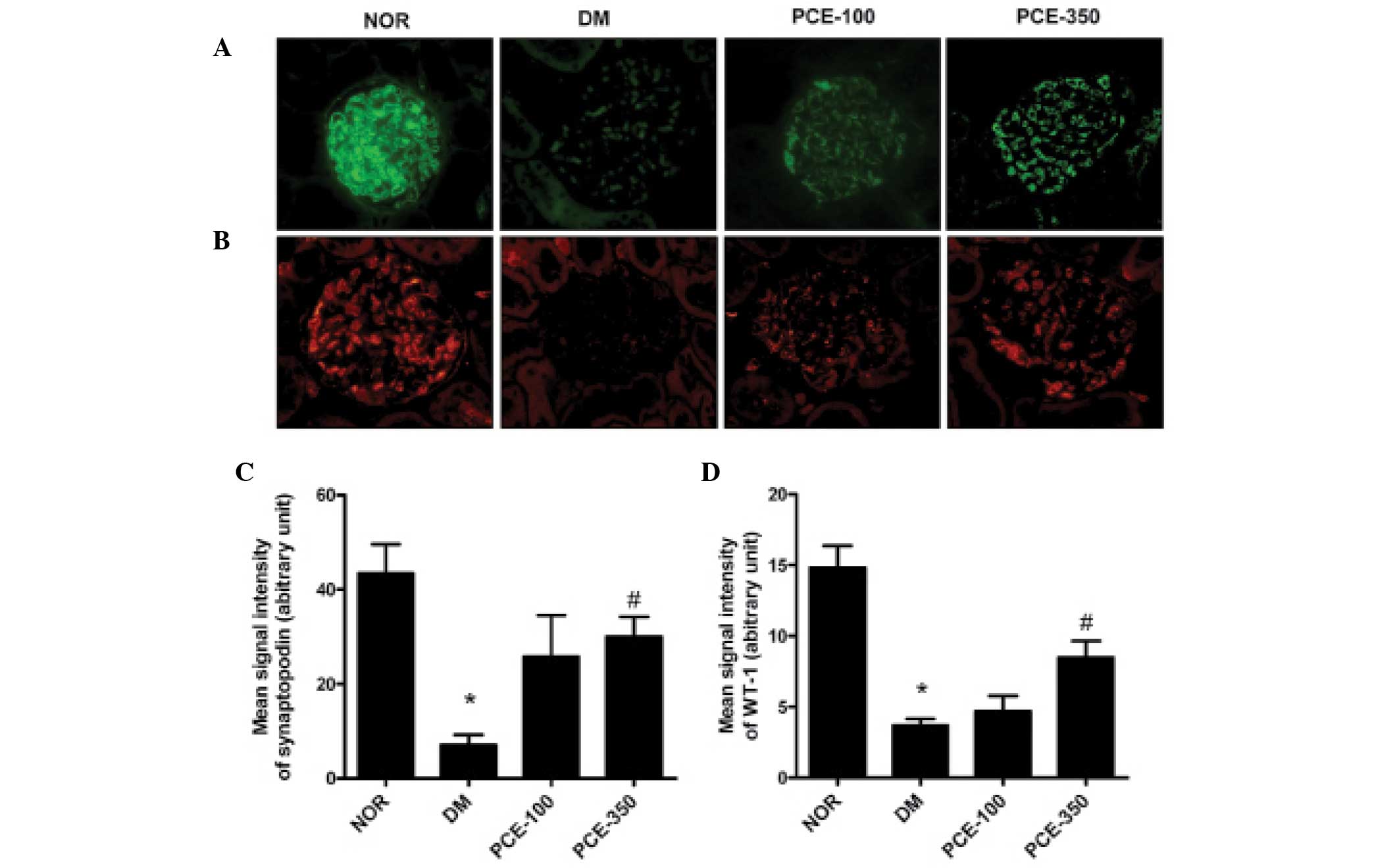
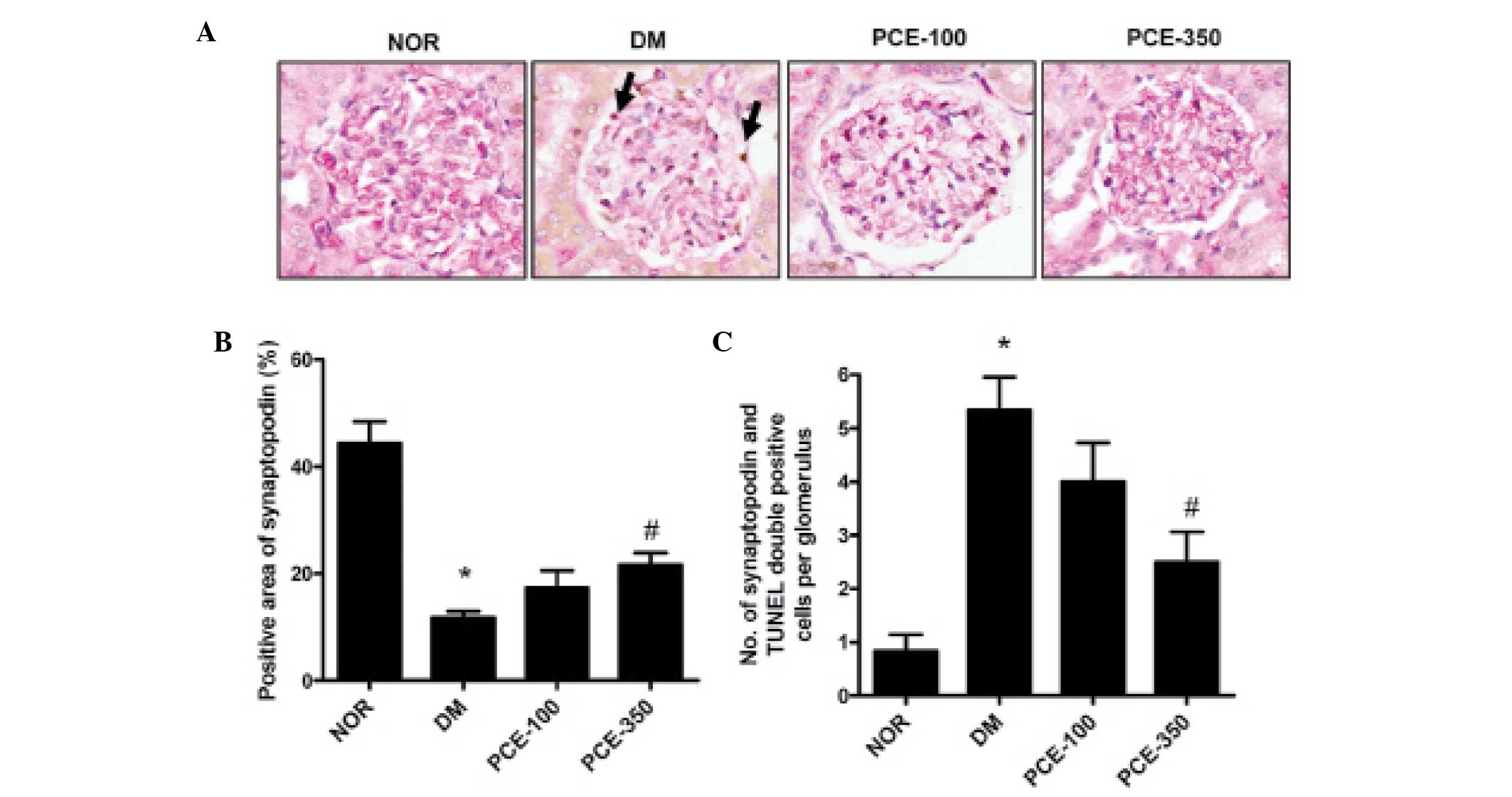
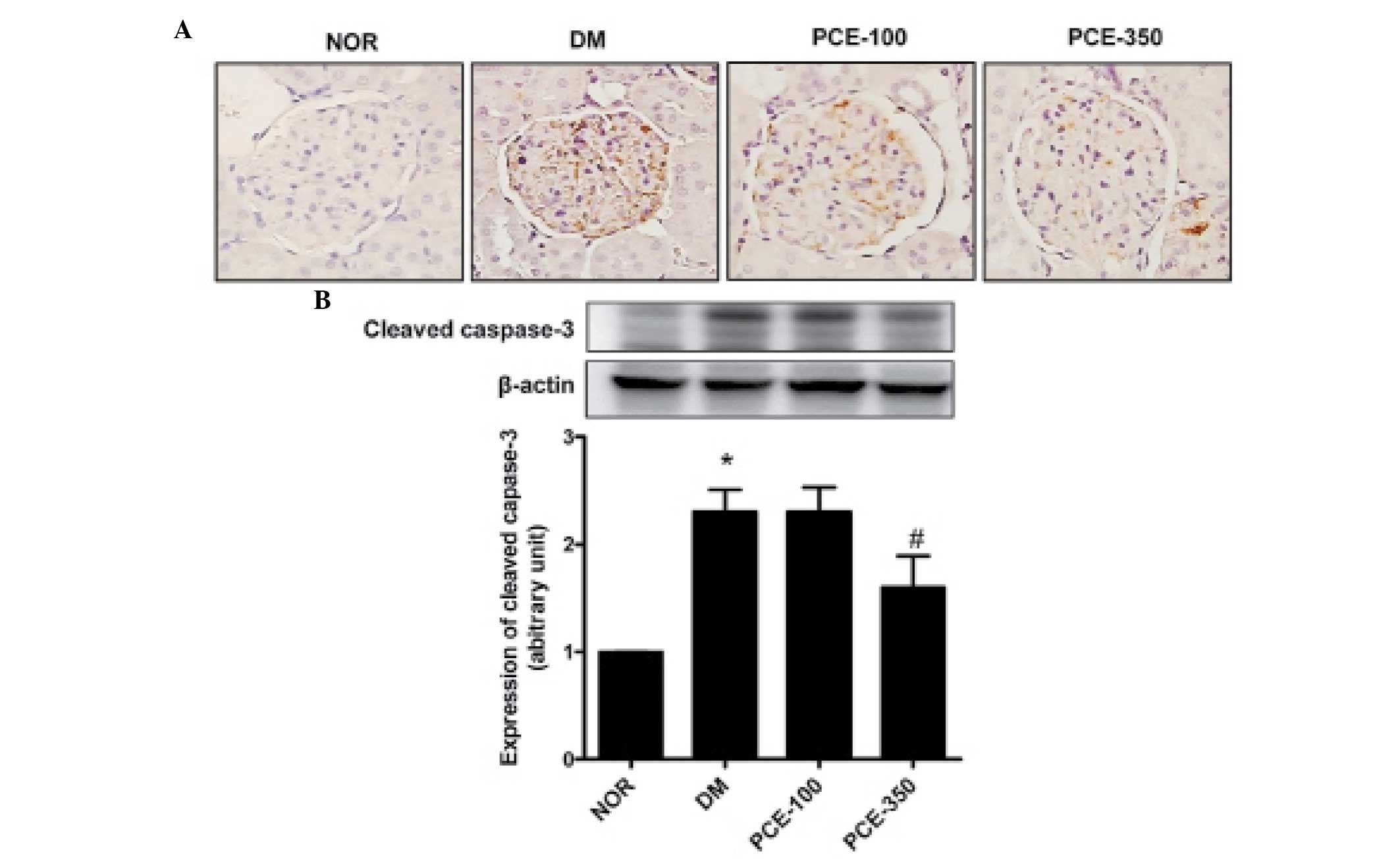
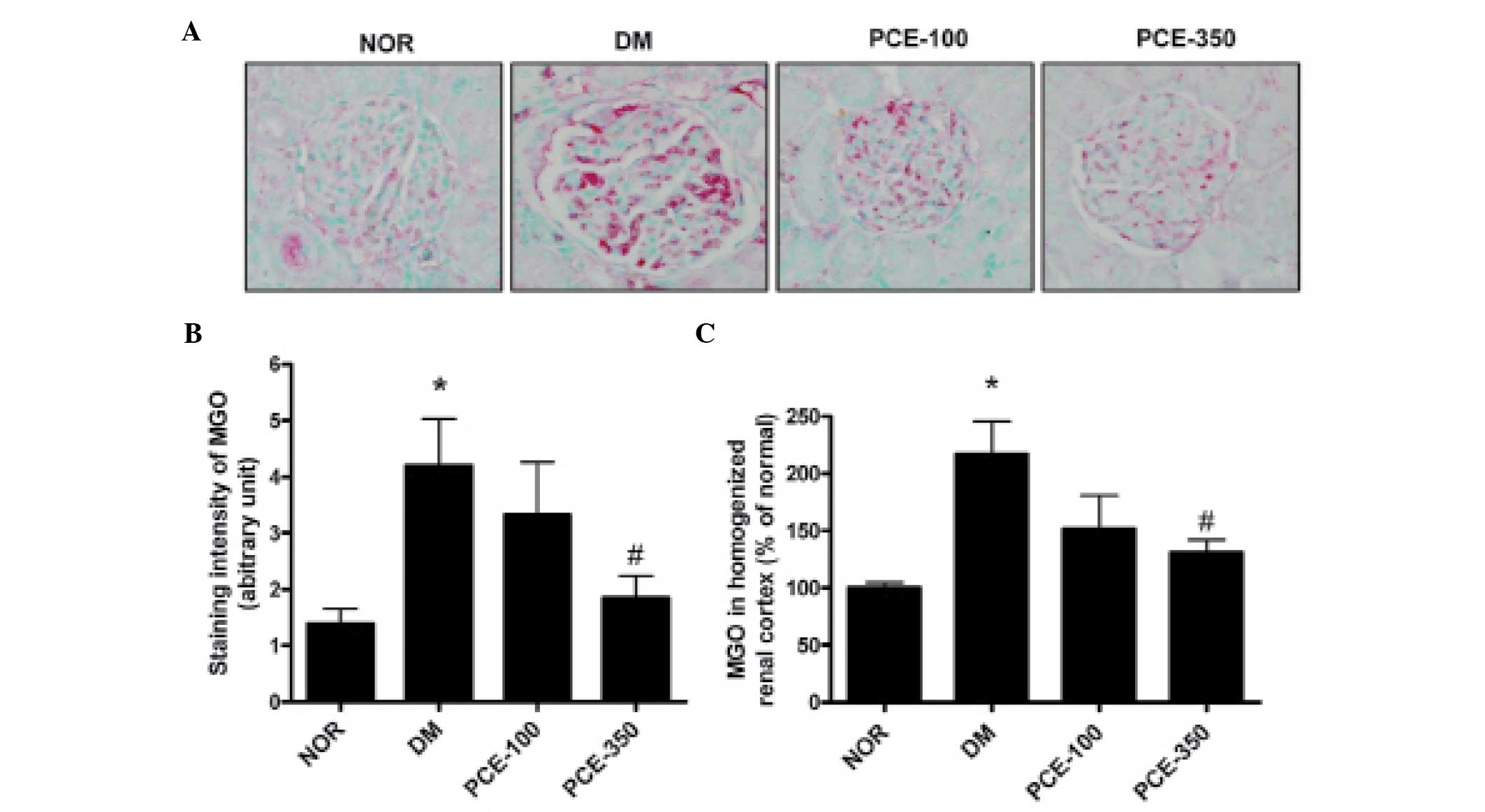
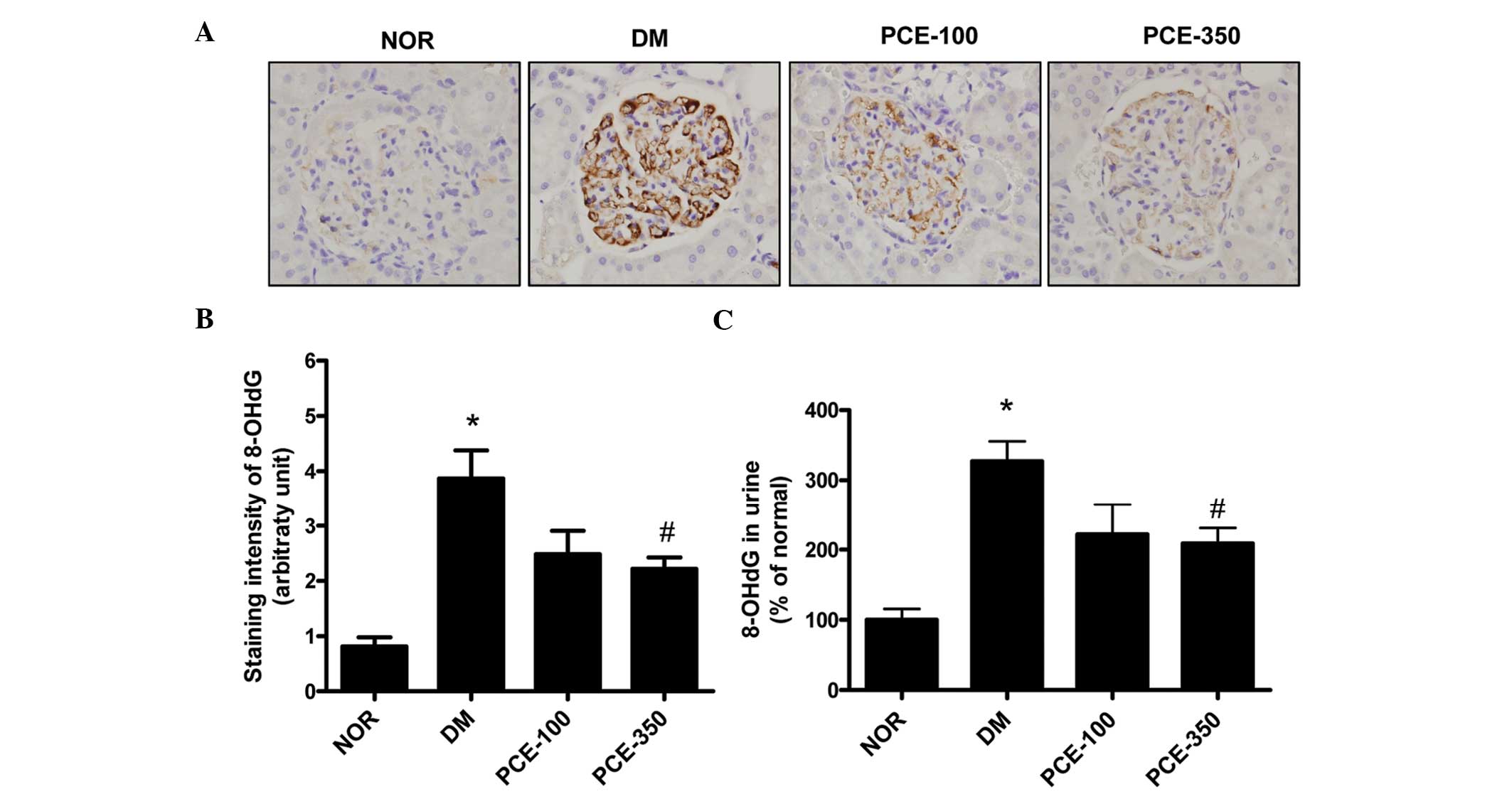
Podocyte injury contributes to renal damage and, eventually, to the occurrence of proteinuria in diabetic nephropathy. The aim of the present study was to investigate the effect of an ethanol extract from Rhizoma Polygonum cuspidatum (P. cuspidatum) on proteinuria and podocyte injury, and elucidate the underlying mechanism for streptozotocin (STZ)‑induced diabetic nephropathy. The protective effects of P. cuspidatum extract (PCE) on renal podocytes in STZ‑induced diabetic rats were also investigated. PCE (100 or 350 mg/kg/day) was administered to STZ‑induced diabetic rats for 16 weeks, and blood glucose levels, body weight and proteinuria were measured. A double labeling technique with the terminal deoxynucleotidyl transferase dUTP nick end labeling assay was performed and synaptopodin expression was observed. In addition, cleaved caspase‑3, methylglyoxal (MGO) and 8‑hydroxydeoxyguanosine (8‑OHdG) expression levels were measured. STZ‑induced diabetic rats developed hyperglycemia and proteinuria. Increased apoptosis of the podocytes and increased cleaved caspase‑3, MGO and 8‑OHdG expression levels, as well as decreased synaptopodin expression were detected in the glomeruli of STZ‑induced diabetic rats. However, treatment with PCE for 16 weeks restored protein levels to normal, and reduced podocyte loss and apoptosis. Levels of caspase‑3 and MGO expression, as well as oxidative stress were ameliorated by PCE treatment. In addition, emodin, a biologically active ingredient of PCE, exerted an MGO scavenging effect and inhibited MGO‑derived advanced glycation end‑product formation. These findings indicate that PCE may be administered to prevent proteinuria and podocyte loss in STZ‑induced diabetic rats partly by inhibiting podocyte apoptosis and cleaved caspase‑3 expression, and by restoring the balance of oxidative stress and MGO expression.
View Figures

Figure 1

Figure 2

Figure 3

Figure 4

Figure 5

View References

1 

White KE and Bilous RW: Type 2 diabetic patients with nephropathy show structural-functional relationships that are similar to type 1 disease. J Am Soc Nephrol. 11:1667–1673. 2000.PubMed/NCBI

2 

Steffes MW, Schmidt D, McCrery R and Basgen JM; International Diabetic Nephropathy Study Group: Glomerular cell number in normal subjects and in type 1 diabetic patients. Kidney Int. 59:2104–2113. 2001. View Article : Google Scholar : PubMed/NCBI

3 

Susztak K, Raff AC, Schiffer M and Böttinger EP: Glucose-induced reactive oxygen species cause apoptosis of podocytes and podocyte depletion at the onset of diabetic nephropathy. Diabetes. 55:225–233. 2006. View Article : Google Scholar

4 

Gui D, Guo Y, Wang F, Liu W, Chen J, Chen Y, Huang J and Wang N: Astragaloside IV, a novel antioxidant, prevents glucose-induced podocyte apoptosis in vitro and in vivo. PloS one. 7:e398242012. View Article : Google Scholar : PubMed/NCBI

5 

Zhang Y, Chen B, Hou XH, Guan GJ, Liu G, Liu HY and Li XG: Effects of mycophenolate mofetil, valsartan and their combined therapy on preventing podocyte loss in early stage of diabetic nephropathy in rats. Chin med J. 120:988–995. 2007.PubMed/NCBI

6 

Estacio RO and Schrier RW: Diabetic nephropathy: Pathogenesis, diagnosis and prevention of progression. Adv Intern Med. 46:359–408. 2001.

7 

Ha H, Kim C, Son Y, Chung MH and Kim KH: DNA damage in the kidneys of diabetic rats exhibiting microalbuminuria. Free Radic Biol Med. 16:271–274. 1994. View Article : Google Scholar : PubMed/NCBI

8 

Kakimoto M, Inoguchi T, Sonta T, Yu HY, Imamura M, Etoh T, Hashimoto T and Nawata H: Accumulation of 8-hydroxy-2′-deoxyguanosine and mitochondrial DNA deletion in kidney of diabetic rats. Diabetes. 51:1588–1595. 2002. View Article : Google Scholar : PubMed/NCBI

9 

Marshall CB, Pippin JW, Krofft RD and Shankland SJ: Puromycin aminonucleoside induces oxidant-dependent DNA damage in podocytes in vitro and in vivo. Kidney Int. 70:1962–1973. 2006.PubMed/NCBI

10 

Yamada H, Miyata S, Igaki N, Yatabe H, Miyauchi Y, Ohara T, Sakai M, Shoda H, Oimomi M and Kasuga M: Increase in 3-deoxyglucosone levels in diabetic rat plasma. Specific in vivo determination of intermediate in advanced Maillard reaction. J Biol Chem. 269:20275–20280. 1994.PubMed/NCBI

11 

McLellan AC, Thornalley PJ, Benn J and Sonksen PH: Glyoxalase system in clinical diabetes mellitus and correlation with diabetic complications. Clin Sci (Lond). 87:21–29. 1994. View Article : Google Scholar

12 

Lapolla A, Flamini R, Dalla Vedova A, Senesi A, Reitano R, Fedele D, Basso E, Seraglia R and Traldi P: Glyoxal and methylglyoxal levels in diabetic patients: Quantitative determination by a new GC/MS method. Clin Chem Lab Med. 41:1166–1173. 2003. View Article : Google Scholar : PubMed/NCBI

13 

Randell EW, Vasdev S and Gill V: Measurement of methylg-lyoxal in rat tissues by electrospray ionization mass spectrometry and liquid chromatography. J Pharmacol Toxicol Methods. 51:153–157. 2005. View Article : Google Scholar : PubMed/NCBI

14 

Amicarelli F, Colafarina S, Cattani F, Cimini A, Di Ilio C, Ceru MP and Miranda M: Scavenging system efficiency is crucial for cell resistance to ROS-mediated methylglyoxal injury. Free Radic Biol Med. 35:856–871. 2003. View Article : Google Scholar : PubMed/NCBI

15 

Pedchenko VK, Chetyrkin SV, Chuang P, Ham AJ, Saleem MA, Mathieson PW, Hudson BG and Voziyan PA: Mechanism of perturbation of integrin-mediated cell-matrix interactions by reactive carbonyl compounds and its implication for pathogenesis of diabetic nephropathy. Diabetes. 54:2952–2960. 2005. View Article : Google Scholar : PubMed/NCBI

16 

Kim J, Sohn E, Kim CS and Kim JS: Renal podocyte apoptosis in Zucker diabetic fatty rats: Involvement of methylglyoxal-induced oxidative DNA damage. J Comp Pathol. 144:41–47. 2011. View Article : Google Scholar

17 

Alarcon-Aguilara FJ, Roman-Ramos R, Perez-Gutierrez S, Aguilar-Contreras A, Contreras-Weber CC and Flores-Saenz JL: Study of the anti-hyperglycemic effect of plants used as antidiabetics. J Ethnopharmacol. 61:101–110. 1998. View Article : Google Scholar : PubMed/NCBI

18 

Li WL, Zheng HC, Bukuru J and De Kimpe N: Natural medicines used in the traditional Chinese medical system for therapy of diabetes mellitus. J Ethnopharmacol. 92:1–21. 2004. View Article : Google Scholar : PubMed/NCBI

19 

Ban SH, Kwon YR, Pandit S, Lee YS, Yi HK and Jeon JG: Effects of a bio-assay guided fraction from Polygonum cuspidatum root on the viability, acid production and glucosyltranferase of mutans streptococci. Fitoterapia. 81:30–34. 2010. View Article : Google Scholar

20 

Bralley EE, Greenspan P, Hargrove JL, Wicker L and Hartle DK: Topical anti-inflammatory activity of Polygonum cuspidatum extract in the TPA model of mouse ear inflammation. J Inflamm (Lond). 5:12008. View Article : Google Scholar

21 

Zhang H, Li C, Kwok ST, Zhang QW and Chan SW: A review of the pharmacological effects of the dried root of (hu zhang) and its constituents. Evid Based Complement Alternat Med. 2013(208349)2013.

22 

National Research Council: Guide for the Care and Use of Laboratory Animals. 8th edition. The National Academies Press; Washington, DC, USA: 2011

23 

Mundel P, Reiser J and Kriz W: Induction of differentiation in cultured rat and human podocytes. J Am Soc Nephrol. 8:697–705. 1997.PubMed/NCBI

24 

Schiffer M, Mundel P, Shaw AS and Böttinger EP: A novel role for the adaptor molecule CD2-associated protein in transforming growth factor-beta-induced apoptosis. J Biol Chem. 279:37004–37012. 2004. View Article : Google Scholar : PubMed/NCBI

25 

Tang D, Zhu JX, Wu AG, Xu YH, Duan TT, Zheng ZG, Wang RS, Li D and Zhu Q: Pre-column incubation followed by fast liquid chromatography analysis for rapid screening of natural methylglyoxal scavengers directly from herbal medicines: Case study of Polygonum cuspidatum. J chromatogr A. 1286:102–110. 2013. View Article : Google Scholar : PubMed/NCBI

26 

Shaheen F, Shmygol A, Rabbani N and Thornalley PJ: A fluorogenic assay for methylglyoxal. Bioche Soc Trans. 42:548–555. 2014. View Article : Google Scholar

27 

Pan M and Wang X: Chemical constituents and pharmacological action of Polygonum cuspidatum Sieb. Et Zucc Zhong Yao Cai. 23:56–58. 2000.

28 

Qian G, Leung SY, Lu G and Leung KS: Differentiation of rhizoma et radix polygoni cuspidati from closely related herbs by HPLC fingerprinting. Chem Pharm Bull (Tokyo). 54:1179–1186. 2006. View Article : Google Scholar

29 

Siu B, Saha J, Smoyer WE, Sullivan KA and Brosius FC III: Reduction in podocyte density as a pathologic feature in early diabetic nephropathy in rodents: Prevention by lipoic acid treatment. BMC nephrol. 7:62006. View Article : Google Scholar : PubMed/NCBI

30 

Riedl E, Pfister F, Braunagel M, Brinkkötter P, Sternik P, Deinzer M, Bakker SJ, Henning RH, van den Born J, Krämer BK, et al: Carnosine prevents apoptosis of glomerular cells and podocyte loss in STZ diabetic rats. Cell Physiol Biochem. 28:279–288. 2011. View Article : Google Scholar : PubMed/NCBI

31 

Sohn E, Kim J, Kim CS, Kim YS, Jang DS and Kim JS: Extract of the aerial parts of Aster koraiensis reduced development of diabetic nephropathy via anti-apoptosis of podocytes in streptozotocin-induced diabetic rats. Biochem Biophys Res Commun. 391:733–738. 2010. View Article : Google Scholar

32 

Reiser J, Gupta V and Kistler AD: Toward the development of podocyte-specific drugs. Kidney Int. 77:662–668. 2010. View Article : Google Scholar : PubMed/NCBI

33 

Meyer TW, Bennett PH and Nelson RG: Podocyte number predicts long-term urinary albumin excretion in Pima Indians with Type II diabetes and microalbuminuria. Diabetologia. 42:1341–1344. 1999. View Article : Google Scholar : PubMed/NCBI

34 

Nuñez G, Benedict MA, Hu Y and Inohara N: Caspases: The proteases of the apoptotic pathway. Oncogene. 17:3237–3245. 1998. View Article : Google Scholar

35 

Oya T, Hattori N, Mizuno Y, Miyata S, Maeda S, Osawa T and Uchida K: Methylglyoxal modification of protein. Chemical and immunochemical characterization of methylglyoxal-arginine adducts. J Biol Chem. 274:18492–18502. 1999. View Article : Google Scholar : PubMed/NCBI

36 

Pesce C, Menini S, Pricci F, Favre A, Leto G, DiMario U and Pugliese G: Glomerular cell replication and cell loss through apoptosis in experimental diabetes mellitus. Nephron. 90:484–488. 2002. View Article : Google Scholar : PubMed/NCBI

37 

Li CS, Wu KY, Chang-Chien GP and Chou CC: Analysis of oxidative DNA damage 8-hydroxy-2′-deoxyguanosine as a biomarker of exposures to persistent pollutants for marine mammals. Environ Sci Technol. 39:2455–2460. 2005. View Article : Google Scholar : PubMed/NCBI

38 

Zgheib O, Huyen Y, DiTullio RA Jr, Snyder A, Venere M, Stavridi ES and Halazonetis TD: ATM signaling and 53BP1. Radiother Oncol. 76:119–122. 2005. View Article : Google Scholar : PubMed/NCBI

39 

Kim OS, Kim J, Kim CS, Kim NH and Kim JS: KIOM-79 prevents methyglyoxal-induced retinal pericyte apoptosis in vitro and in vivo. J Ethnophamacol. 129:285–292. 2010. View Article : Google Scholar

40 

Ikizler M, Ovali C, Dernek S, Erkasap N, Sevin B, Kaygisiz Z and Kural T: Protective effects of resveratrol in ischemia-reperfusion injury of skeletal muscle: A clinically relevant animal model for lower extremity ischemia. Chin J Physiol. 49:204–209. 2006.PubMed/NCBI

41 

Kong LD, Yang C and Qiu X: Effects of processing on antioxidation of radix et rhizoma rhei and rhizoma polygoni cuspidati. Zhongguo Zhong Yao Za Zhi. 26:388–391. 2001.In Chinese.

42 

Ding DF, You N, Wu XM, Xu JR, Hu AP, Ye XL, Zhu Q, Jiang XQ, Miao H, Liu C and Lu YB: Resveratrol attenuates renal hypertrophy in early-stage diabetes by activating AMPK. Am J Nephrol. 31:363–374. 2010. View Article : Google Scholar : PubMed/NCBI

43 

Lu Y, Jeong YT, Li X, Kim MJ, Park PH, Hwang SL, Son JK and Chang HW: Emodin isolated from polygoni cuspidati radix inhibits tnf-alpha and il-6 release by blockading nf-kappab and map kinase pathways in mast cells stimulated with PMA Plus A23187. Biomol Thera. 21:435–441. 2013. View Article : Google Scholar

44 

Yang J, Zeng Z, Wu T, Yang Z, Liu B and Lan T: Emodin attenuates high glucose-induced TGF-β1 and fibronectin expression in mesangial cells through inhibition of NF-κB pathway. Exp Cell Res. 319:3182–3189. 2013. View Article : Google Scholar : PubMed/NCBI

45 

Cui YT, Liu B, Xie J, Xu P, Habte-Tsion HM and Zhang YY: The effect of emodin on cytotoxicity, apoptosis and antioxidant capacity in the hepatic cells of grass carp (Ctenopharyngodon idellus). Fish Shellfish Immunol. 38:74–79. 2014. View Article : Google Scholar : PubMed/NCBI

46 

Li X, Liu W, Wang Q, Liu P, Deng Y, Lan T, Zhang X, Qiu B, Ning H and Huang H: Emodin suppresses cell proliferation and fibronectin expression via p38MAPK pathway in rat mesangial cells cultured under high glucose. Mol Cell Endocrinol. 307:157–162. 2009. View Article : Google Scholar : PubMed/NCBI

Related Articles

  • Abstract
  • View
  • Download
  • Twitter
Copy and paste a formatted citation
Spandidos Publications style
Sohn E, Kim J, Kim CS, Jo K and Kim JS: Extract of Rhizoma Polygonum cuspidatum reduces early renal podocyte injury in streptozotocin‑induced diabetic rats and its active compound emodin inhibits methylglyoxal‑mediated glycation of proteins. Mol Med Rep 12: 5837-5845, 2015.
APA
Sohn, E., Kim, J., Kim, C.S., Jo, K., & Kim, J.S. (2015). Extract of Rhizoma Polygonum cuspidatum reduces early renal podocyte injury in streptozotocin‑induced diabetic rats and its active compound emodin inhibits methylglyoxal‑mediated glycation of proteins. Molecular Medicine Reports, 12, 5837-5845. https://doi.org/10.3892/mmr.2015.4214
MLA
Sohn, E., Kim, J., Kim, C. S., Jo, K., Kim, J. S."Extract of Rhizoma Polygonum cuspidatum reduces early renal podocyte injury in streptozotocin‑induced diabetic rats and its active compound emodin inhibits methylglyoxal‑mediated glycation of proteins". Molecular Medicine Reports 12.4 (2015): 5837-5845.
Chicago
Sohn, E., Kim, J., Kim, C. S., Jo, K., Kim, J. S."Extract of Rhizoma Polygonum cuspidatum reduces early renal podocyte injury in streptozotocin‑induced diabetic rats and its active compound emodin inhibits methylglyoxal‑mediated glycation of proteins". Molecular Medicine Reports 12, no. 4 (2015): 5837-5845. https://doi.org/10.3892/mmr.2015.4214
Copy and paste a formatted citation
x
Spandidos Publications style
Sohn E, Kim J, Kim CS, Jo K and Kim JS: Extract of Rhizoma Polygonum cuspidatum reduces early renal podocyte injury in streptozotocin‑induced diabetic rats and its active compound emodin inhibits methylglyoxal‑mediated glycation of proteins. Mol Med Rep 12: 5837-5845, 2015.
APA
Sohn, E., Kim, J., Kim, C.S., Jo, K., & Kim, J.S. (2015). Extract of Rhizoma Polygonum cuspidatum reduces early renal podocyte injury in streptozotocin‑induced diabetic rats and its active compound emodin inhibits methylglyoxal‑mediated glycation of proteins. Molecular Medicine Reports, 12, 5837-5845. https://doi.org/10.3892/mmr.2015.4214
MLA
Sohn, E., Kim, J., Kim, C. S., Jo, K., Kim, J. S."Extract of Rhizoma Polygonum cuspidatum reduces early renal podocyte injury in streptozotocin‑induced diabetic rats and its active compound emodin inhibits methylglyoxal‑mediated glycation of proteins". Molecular Medicine Reports 12.4 (2015): 5837-5845.
Chicago
Sohn, E., Kim, J., Kim, C. S., Jo, K., Kim, J. S."Extract of Rhizoma Polygonum cuspidatum reduces early renal podocyte injury in streptozotocin‑induced diabetic rats and its active compound emodin inhibits methylglyoxal‑mediated glycation of proteins". Molecular Medicine Reports 12, no. 4 (2015): 5837-5845. https://doi.org/10.3892/mmr.2015.4214
Follow us
  • Twitter
  • LinkedIn
  • Facebook
About
  • Spandidos Publications
  • Careers
  • Cookie Policy
  • Privacy Policy
How can we help?
  • Help
  • Live Chat
  • Contact
  • Email to our Support Team