Spandidos Publications Logo
  • About
    • About Spandidos
    • Aims and Scopes
    • Abstracting and Indexing
    • Editorial Policies
    • Reprints and Permissions
    • Job Opportunities
    • Terms and Conditions
    • Contact
  • Journals
    • All Journals
    • Oncology Letters
      • Oncology Letters
      • Information for Authors
      • Editorial Policies
      • Editorial Board
      • Aims and Scope
      • Abstracting and Indexing
      • Bibliographic Information
      • Archive
    • International Journal of Oncology
      • International Journal of Oncology
      • Information for Authors
      • Editorial Policies
      • Editorial Board
      • Aims and Scope
      • Abstracting and Indexing
      • Bibliographic Information
      • Archive
    • Molecular and Clinical Oncology
      • Molecular and Clinical Oncology
      • Information for Authors
      • Editorial Policies
      • Editorial Board
      • Aims and Scope
      • Abstracting and Indexing
      • Bibliographic Information
      • Archive
    • Experimental and Therapeutic Medicine
      • Experimental and Therapeutic Medicine
      • Information for Authors
      • Editorial Policies
      • Editorial Board
      • Aims and Scope
      • Abstracting and Indexing
      • Bibliographic Information
      • Archive
    • International Journal of Molecular Medicine
      • International Journal of Molecular Medicine
      • Information for Authors
      • Editorial Policies
      • Editorial Board
      • Aims and Scope
      • Abstracting and Indexing
      • Bibliographic Information
      • Archive
    • Biomedical Reports
      • Biomedical Reports
      • Information for Authors
      • Editorial Policies
      • Editorial Board
      • Aims and Scope
      • Abstracting and Indexing
      • Bibliographic Information
      • Archive
    • Oncology Reports
      • Oncology Reports
      • Information for Authors
      • Editorial Policies
      • Editorial Board
      • Aims and Scope
      • Abstracting and Indexing
      • Bibliographic Information
      • Archive
    • Molecular Medicine Reports
      • Molecular Medicine Reports
      • Information for Authors
      • Editorial Policies
      • Editorial Board
      • Aims and Scope
      • Abstracting and Indexing
      • Bibliographic Information
      • Archive
    • World Academy of Sciences Journal
      • World Academy of Sciences Journal
      • Information for Authors
      • Editorial Policies
      • Editorial Board
      • Aims and Scope
      • Abstracting and Indexing
      • Bibliographic Information
      • Archive
    • International Journal of Functional Nutrition
      • International Journal of Functional Nutrition
      • Information for Authors
      • Editorial Policies
      • Editorial Board
      • Aims and Scope
      • Abstracting and Indexing
      • Bibliographic Information
      • Archive
    • International Journal of Epigenetics
      • International Journal of Epigenetics
      • Information for Authors
      • Editorial Policies
      • Editorial Board
      • Aims and Scope
      • Abstracting and Indexing
      • Bibliographic Information
      • Archive
    • Medicine International
      • Medicine International
      • Information for Authors
      • Editorial Policies
      • Editorial Board
      • Aims and Scope
      • Abstracting and Indexing
      • Bibliographic Information
      • Archive
  • Articles
  • Information
    • Information for Authors
    • Information for Reviewers
    • Information for Librarians
    • Information for Advertisers
    • Conferences
  • Language Editing
Spandidos Publications Logo
  • About
    • About Spandidos
    • Aims and Scopes
    • Abstracting and Indexing
    • Editorial Policies
    • Reprints and Permissions
    • Job Opportunities
    • Terms and Conditions
    • Contact
  • Journals
    • All Journals
    • Biomedical Reports
      • Information for Authors
      • Editorial Policies
      • Editorial Board
      • Aims and Scope
      • Abstracting and Indexing
      • Bibliographic Information
      • Archive
    • Experimental and Therapeutic Medicine
      • Information for Authors
      • Editorial Policies
      • Editorial Board
      • Aims and Scope
      • Abstracting and Indexing
      • Bibliographic Information
      • Archive
    • International Journal of Epigenetics
      • Information for Authors
      • Editorial Policies
      • Editorial Board
      • Aims and Scope
      • Abstracting and Indexing
      • Bibliographic Information
      • Archive
    • International Journal of Functional Nutrition
      • Information for Authors
      • Editorial Policies
      • Editorial Board
      • Aims and Scope
      • Abstracting and Indexing
      • Bibliographic Information
      • Archive
    • International Journal of Molecular Medicine
      • Information for Authors
      • Editorial Policies
      • Editorial Board
      • Aims and Scope
      • Abstracting and Indexing
      • Bibliographic Information
      • Archive
    • International Journal of Oncology
      • Information for Authors
      • Editorial Policies
      • Editorial Board
      • Aims and Scope
      • Abstracting and Indexing
      • Bibliographic Information
      • Archive
    • Medicine International
      • Information for Authors
      • Editorial Policies
      • Editorial Board
      • Aims and Scope
      • Abstracting and Indexing
      • Bibliographic Information
      • Archive
    • Molecular and Clinical Oncology
      • Information for Authors
      • Editorial Policies
      • Editorial Board
      • Aims and Scope
      • Abstracting and Indexing
      • Bibliographic Information
      • Archive
    • Molecular Medicine Reports
      • Information for Authors
      • Editorial Policies
      • Editorial Board
      • Aims and Scope
      • Abstracting and Indexing
      • Bibliographic Information
      • Archive
    • Oncology Letters
      • Information for Authors
      • Editorial Policies
      • Editorial Board
      • Aims and Scope
      • Abstracting and Indexing
      • Bibliographic Information
      • Archive
    • Oncology Reports
      • Information for Authors
      • Editorial Policies
      • Editorial Board
      • Aims and Scope
      • Abstracting and Indexing
      • Bibliographic Information
      • Archive
    • World Academy of Sciences Journal
      • Information for Authors
      • Editorial Policies
      • Editorial Board
      • Aims and Scope
      • Abstracting and Indexing
      • Bibliographic Information
      • Archive
  • Articles
  • Information
    • For Authors
    • For Reviewers
    • For Librarians
    • For Advertisers
    • Conferences
  • Language Editing
Login Register Submit
  • This site uses cookies
  • You can change your cookie settings at any time by following the instructions in our Cookie Policy. To find out more, you may read our Privacy Policy.

    I agree
Search articles by DOI, keyword, author or affiliation
Search
Advanced Search
presentation
Molecular Medicine Reports
Join Editorial Board Propose a Special Issue
Print ISSN: 1791-2997 Online ISSN: 1791-3004
Journal Cover
November-2015 Volume 12 Issue 5

Full Size Image

Sign up for eToc alerts
Recommend to Library

Journals

International Journal of Molecular Medicine

International Journal of Molecular Medicine

International Journal of Molecular Medicine is an international journal devoted to molecular mechanisms of human disease.

International Journal of Oncology

International Journal of Oncology

International Journal of Oncology is an international journal devoted to oncology research and cancer treatment.

Molecular Medicine Reports

Molecular Medicine Reports

Covers molecular medicine topics such as pharmacology, pathology, genetics, neuroscience, infectious diseases, molecular cardiology, and molecular surgery.

Oncology Reports

Oncology Reports

Oncology Reports is an international journal devoted to fundamental and applied research in Oncology.

Experimental and Therapeutic Medicine

Experimental and Therapeutic Medicine

Experimental and Therapeutic Medicine is an international journal devoted to laboratory and clinical medicine.

Oncology Letters

Oncology Letters

Oncology Letters is an international journal devoted to Experimental and Clinical Oncology.

Biomedical Reports

Biomedical Reports

Explores a wide range of biological and medical fields, including pharmacology, genetics, microbiology, neuroscience, and molecular cardiology.

Molecular and Clinical Oncology

Molecular and Clinical Oncology

International journal addressing all aspects of oncology research, from tumorigenesis and oncogenes to chemotherapy and metastasis.

World Academy of Sciences Journal

World Academy of Sciences Journal

Multidisciplinary open-access journal spanning biochemistry, genetics, neuroscience, environmental health, and synthetic biology.

International Journal of Functional Nutrition

International Journal of Functional Nutrition

Open-access journal combining biochemistry, pharmacology, immunology, and genetics to advance health through functional nutrition.

International Journal of Epigenetics

International Journal of Epigenetics

Publishes open-access research on using epigenetics to advance understanding and treatment of human disease.

Medicine International

Medicine International

An International Open Access Journal Devoted to General Medicine.

Journal Cover
November-2015 Volume 12 Issue 5

Full Size Image

Sign up for eToc alerts
Recommend to Library

  • Article
  • Citations
    • Cite This Article
    • Download Citation
    • Create Citation Alert
    • Remove Citation Alert
    • Cited By
  • Similar Articles
    • Related Articles (in Spandidos Publications)
    • Similar Articles (Google Scholar)
    • Similar Articles (PubMed)
  • Download PDF
  • Download XML
  • View XML
Article Open Access

RNA interference‑mediated knockdown of translationally controlled tumor protein induces apoptosis, and inhibits growth and invasion in glioma cells

  • Authors:
    • Hua Jin
    • Xuexin Zhang
    • Jun Su
    • Yueqiu Teng
    • Huan Ren
    • Lizhuang Yang
  • View Affiliations / Copyright

    Affiliations: Department of Immunology, Harbin Medical University, Harbin, Heilongjiang 150081, P.R. China, Department of Neurosurgery, The Third Affiliated Hospital of Harbin Medical University, Harbin, Heilongjiang 150040, P.R. China, Stem Cell Research Institute, The First Affiliated Hospital of Harbin Medical University, Harbin, Heilongjiang 150001, P.R. China, Department of Neurosurgery, The Second Affiliated Hospital of Harbin Medical University, Harbin, Heilongjiang 150081, P.R. China
    Copyright: © Jin et al. This is an open access article distributed under the terms of Creative Commons Attribution License.
  • Pages: 6617-6625
    |
    Published online on: September 2, 2015
       https://doi.org/10.3892/mmr.2015.4280
  • Expand metrics +
Metrics: Total Views: 0 (Spandidos Publications: | PMC Statistics: )
Metrics: Total PDF Downloads: 0 (Spandidos Publications: | PMC Statistics: )
Cited By (CrossRef): 0 citations Loading Articles...

This article is mentioned in:


Abstract

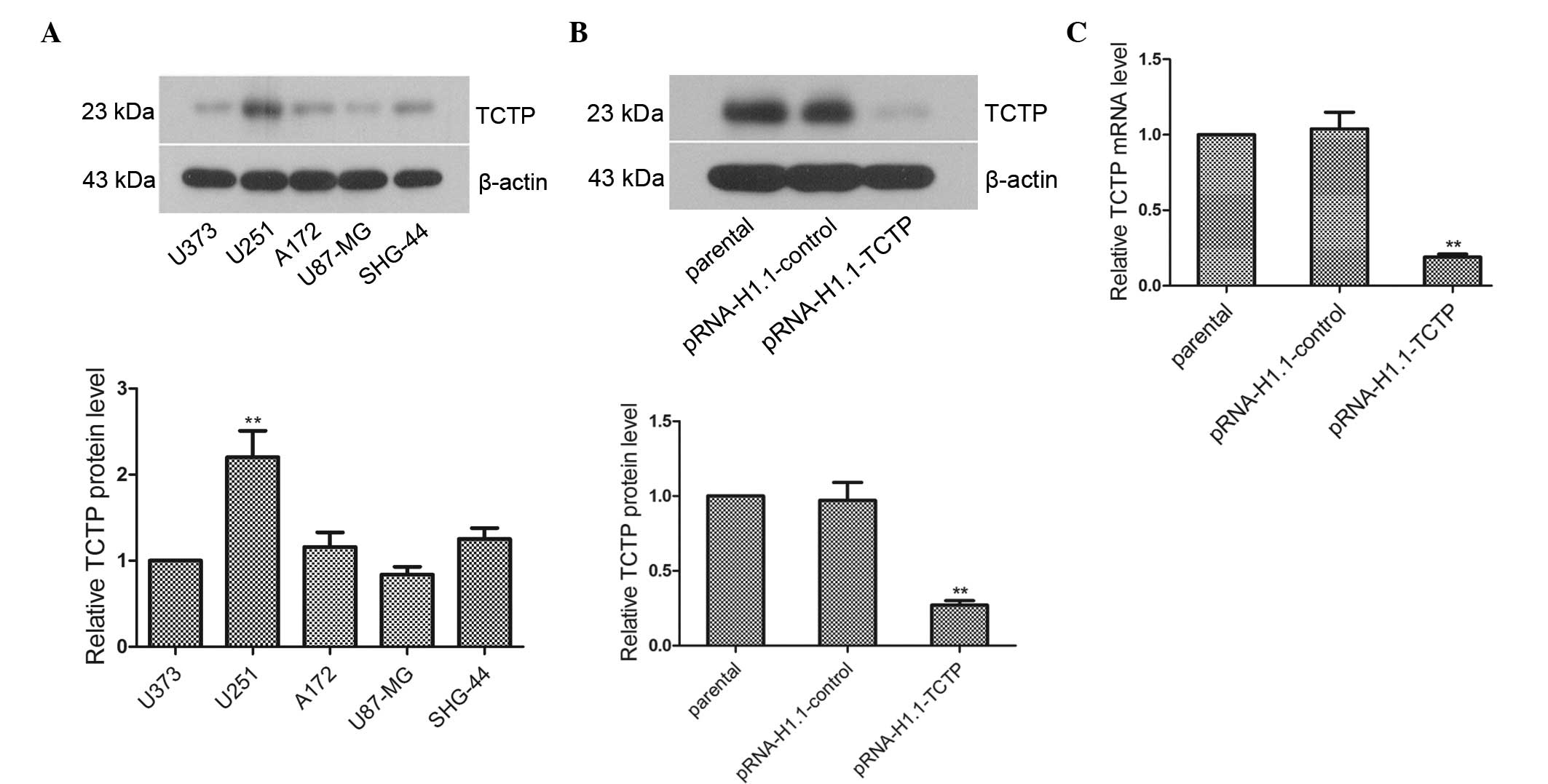
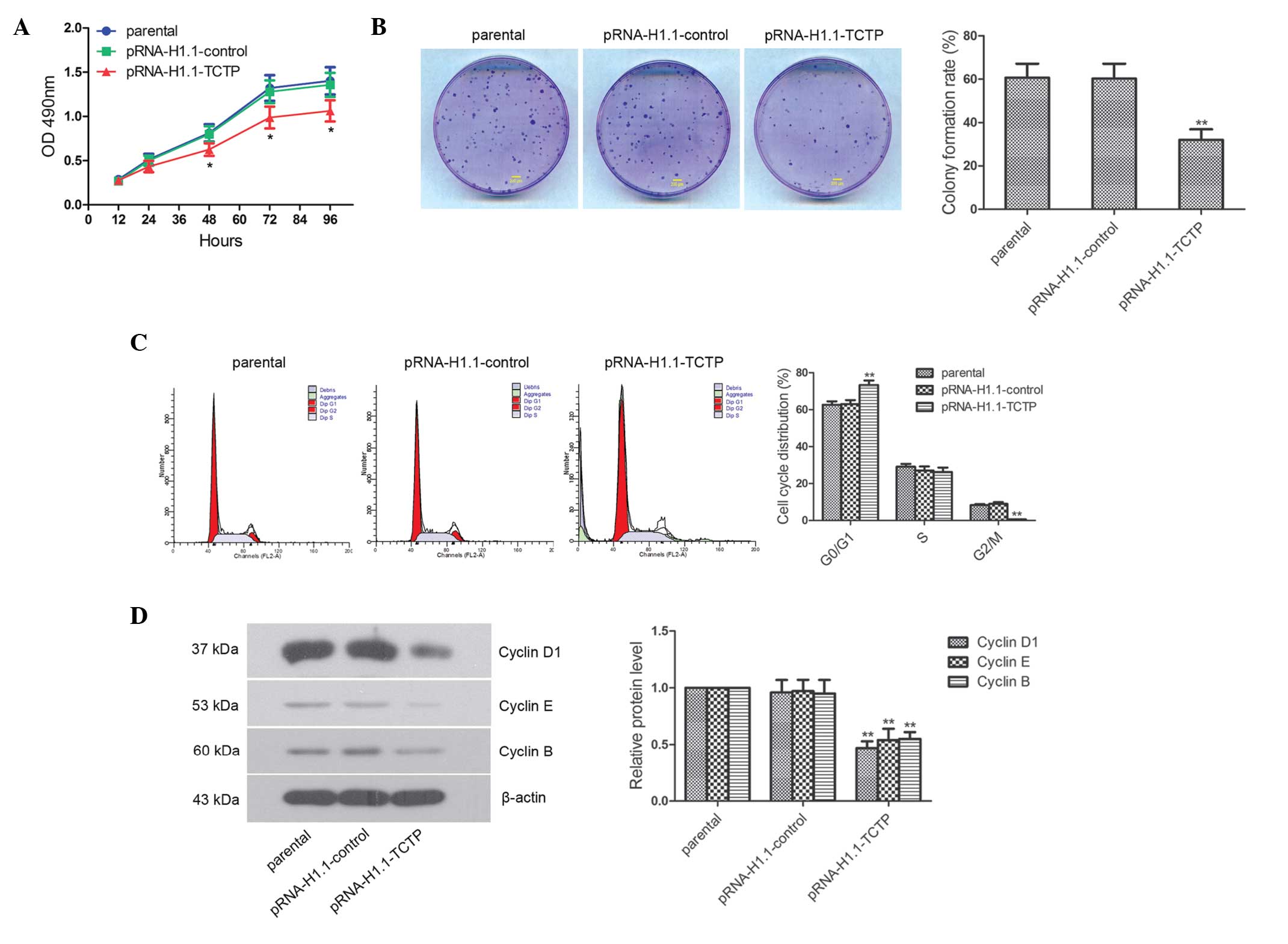
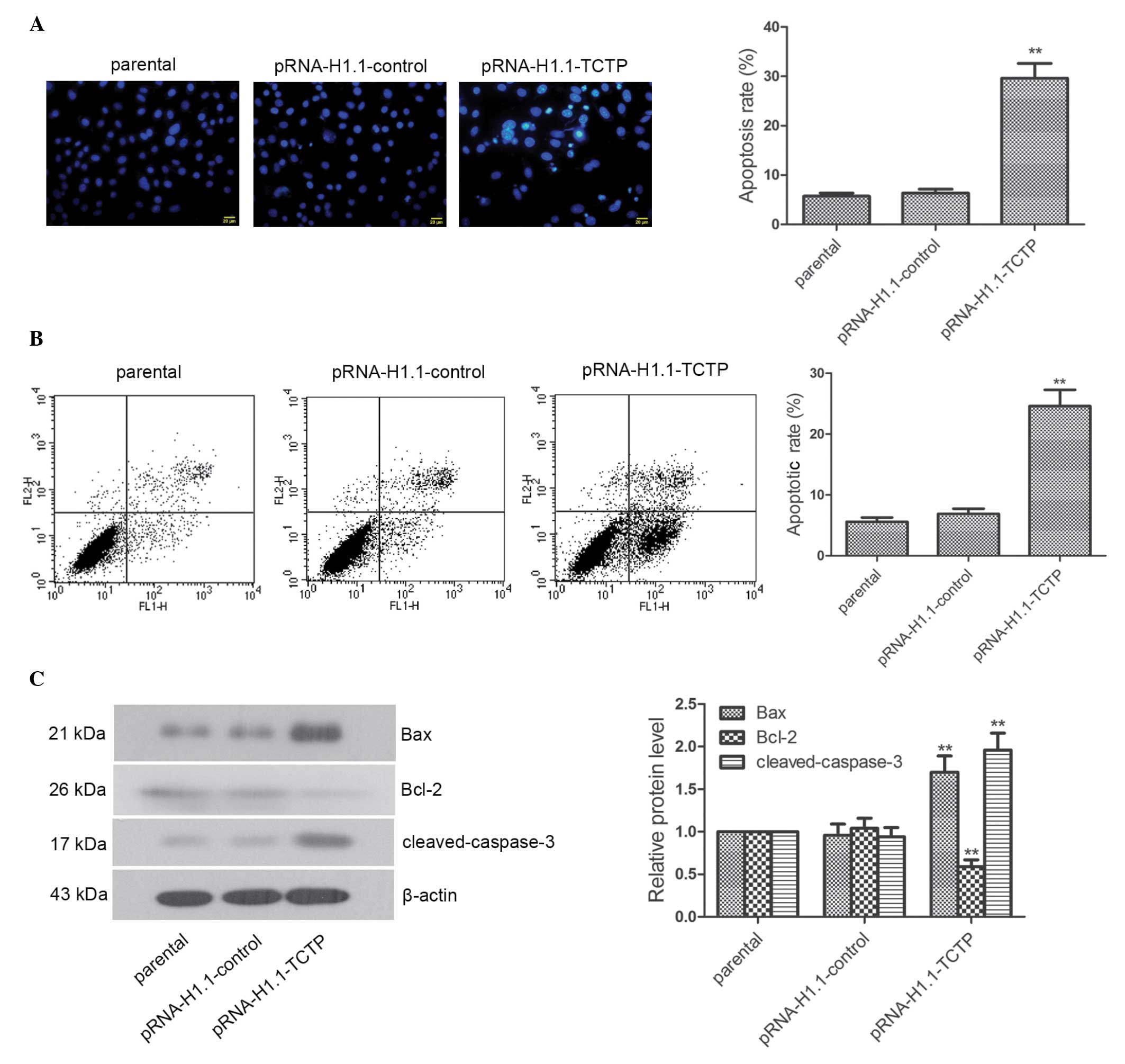
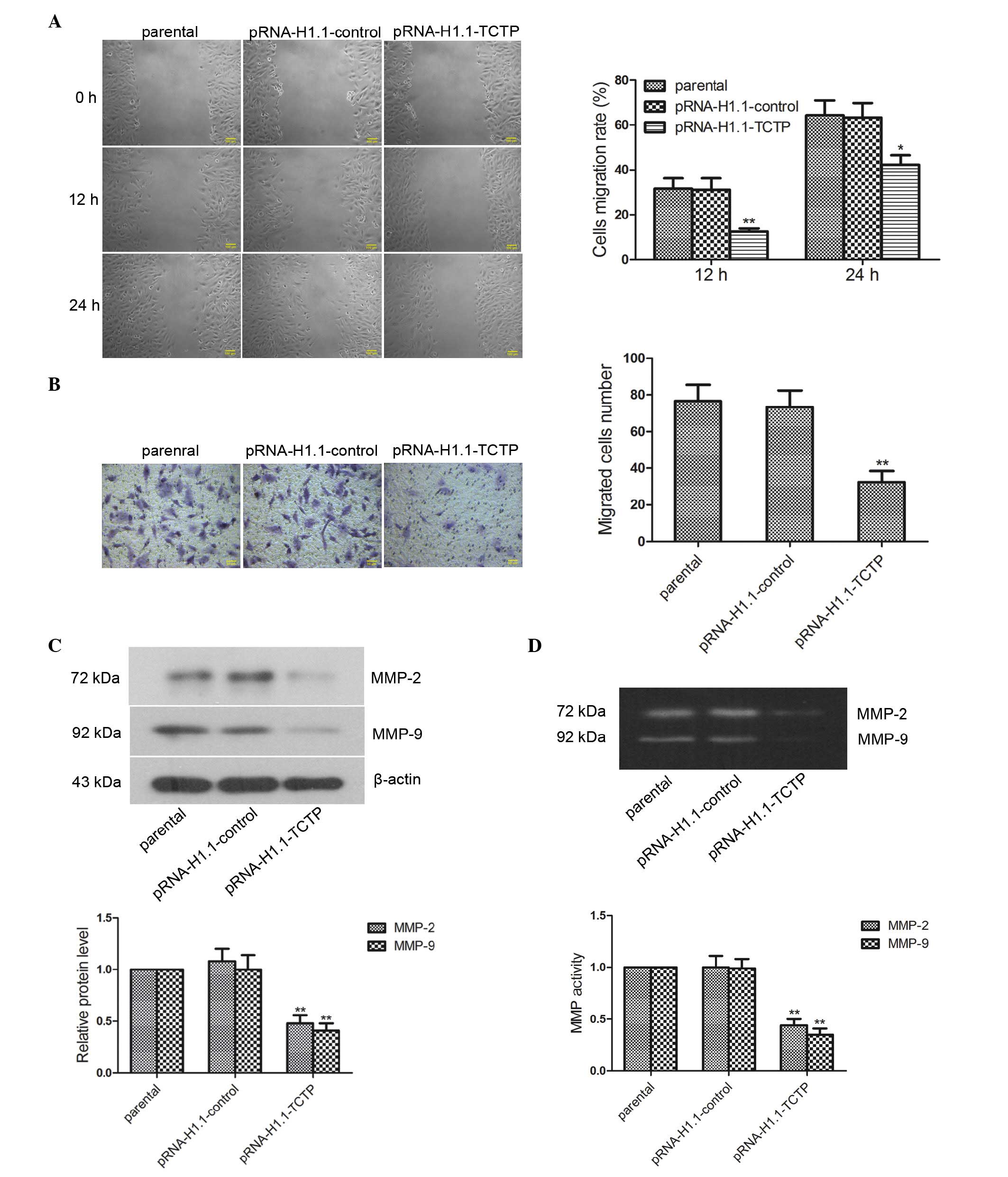
Translationally controlled tumor protein (TCTP) is a highly conserved, growth‑associated and small molecule protein, which is highly expressed in various types of tumor cell. TCTP can promote the growth and suppress apoptosis of tumor cels. However, few studies have reported the effects of TCTP in gliomas. In the present study, a glioma cell line was established, which was stably transfected with TCTP short hairpin ribonucleic acid (shRNA), to investigate the impact of downregulated expression of TCTP on the proliferation, apoptosis and invasion of glioma cells. Western blot and reverse transcription-quantitative polymerase chain reaction analyses demonstrated that TCTP shRNA effectively reduced the expression of TCTP in the U251 glioma cell line. MTT and colony formation assays revealed that downregulated expression of TCTP significantly inhibited glioma cell proliferation. Cell cycle analysis using flow cytometry revealed that the cells in the pRNA‑H1.1‑TCTP group were arrested in the G0/G1 phase of the cell cycle. Western blot analysis detected downregulated expression levels of cyclins, including Cyclin D1, Cyclin E and Cyclin B. Annexin V‑fluorescein isothiocyanate/propidium iodide and Hoechst staining demonstrated that the apoptotic rate of the cells in the pRNA‑H1.1‑TCTP group was significantly higher than that of the cells in the pRNA‑H1.1‑control group, with upregulated expression levels of B-cell-associated X protein and cleaved‑caspase‑3 and downregulated expression of B-cell lmyphoma-2 in the apoptotic process. Wound healing and Transwell assays revealed that downregulated expression of TCTP significantly inhibited the migration and invasiveness of the glioma cells; and the expression levels and activities of matrix metalloproteinase (MMP)‑2 and MMP‑9 were also significantly affected. In conclusion, the present study demonstrated that downregulated expression of TCTP significantly inhibited proliferation and invasion, and induced apoptosis in the glioma cells. These results suggested that TCTP may be important in glioma development and metastasis. Therefore, TCTP is expected to become an effective target for glioma gene therapy.
View Figures

Figure 1

Figure 2

Figure 3

Figure 4

View References

1 

Fine HA, Dear KB, Loeffler JS, Black PM and Canellos GP: Meta-analysis of radiation therapy with and without adjuvant chemotherapy for malignant gliomas in adults. Cancer. 71:2585–2597. 1993. View Article : Google Scholar : PubMed/NCBI

2 

Wu X, Li Y, Wan X, Kayira TM, Cao R, Ju X, Zhu X and Zhao G: Down-regulation of neogenin accelerated glioma progression through promoter Methylation and its overexpression in SHG-44 Induced Apoptosis. PLoS One. 7:e380742012. View Article : Google Scholar : PubMed/NCBI

3 

Van Meir EG, Hadjipanayis CG, Norden AD, Shu HK, Wen PY and Olson JJ: Exciting new advances in neuro-oncology: The avenue to a cure for malignant glioma. CA Cancer J Clin. 60:166–193. 2010. View Article : Google Scholar : PubMed/NCBI

4 

Turbyville TJ, Gürsel DB, Tuskan RG, Walrath JC, Lipschultz CA, Lockett SJ, Wiemer DF, Beutler JA and Reilly KM: Schweinfurthin A selectively inhibits proliferation and Rho signaling in glioma and neurofibromatosis type 1 tumor cells in a NF1-GRD-dependent manner. Mol Cancer Ther. 9:1234–1243. 2010. View Article : Google Scholar : PubMed/NCBI

5 

Ohgaki H and Kleihues P: Epidemiology and etiology of gliomas. Acta Neuropathol. 109:93–108. 2005. View Article : Google Scholar : PubMed/NCBI

6 

Schwartzbaum JA, Fisher JL, Aldape KD and Wrensch M: Epidemiology and molecular pathology of glioma. Nat Clin Pract Neurol. 2:494–503. 2006.quiz 491 p following 516. View Article : Google Scholar : PubMed/NCBI

7 

Gross B, Gaestel M, Böhm H and Bielka H: cDNA sequence coding for a translationally controlled human tumor protein. Nucleic Acids Res. 17:83671989. View Article : Google Scholar : PubMed/NCBI

8 

Chung S, Kim M, Choi W, Chung J and Lee K: Expression of translationally controlled tumor protein mRNA in human colon cancer. Cancer Lett. 156:185–190. 2000. View Article : Google Scholar : PubMed/NCBI

9 

Bazile F, Pascal A, Arnal I, Le Clainche C, Chesnel F and Kubiak JZ: Complex relationship between TCTP, microtubules and actin microfilaments regulates cell shape in normal and cancer cells. Carcinogenesis. 30:555–565. 2009. View Article : Google Scholar : PubMed/NCBI

10 

Zhang F, Liu B, Wang Z, Yu XJ, Ni QX, Yang WT, Mukaida N and Li YY: A novel regulatory mechanism of Pim-3 kinase stability and its involvement in pancreatic cancer progression. Mol Cancer Res. 11:1508–1520. 2013. View Article : Google Scholar : PubMed/NCBI

11 

Liu LK, Wu HF, Guo ZR, Chen XJ, Yang D, Shu YQ and Zhang JN: Targeted efficacy of dihydroartemisinin for transla-tionally controlled protein expression in a lung cancer model. Asian Pac J Cancer Prev. 15:2511–2515. 2014. View Article : Google Scholar

12 

Cans C, Passer BJ, Shalak V, Nancy-Portebois V, Crible V, Amzallag N, Allanic D, Tufino R, Argentini M, Moras D, et al: Translationally controlled tumor protein acts as a guanine nucleotide dissociation inhibitor on the translation elongation factor eEF1A. Proc Natl Acad Sci USA. 100:13892–13897. 2003. View Article : Google Scholar : PubMed/NCBI

13 

Gachet Y, Tournier S, Lee M, Lazaris-Karatzas A, Poulton T and Bommer UA: The growth-related, translationally controlled protein P23 has properties of a tubulin binding protein and associates transiently with microtubules during the cell cycle. J Cell Sci. 112:1257–1271. 1999.PubMed/NCBI

14 

Liu H, Peng HW, Cheng YS, Yuan HS and Yang-Yen HF: Stabilization and enhancement of the antiapoptotic activity of mcl-1 by TCTP. Mol Cell Biol. 25:3117–3126. 2005. View Article : Google Scholar : PubMed/NCBI

15 

Nagano-Ito M and Ichikawa S: Biological effects of Mammalian translationally controlled tumor protein (TCTP) on cell death, proliferation and tumorigenesis. Biochem Res Int. 2012:2049602012. View Article : Google Scholar

16 

Li F, Zhang D and Fujise K: Characterization of fortilin, a novel antiapoptotic protein. J Biol Chem. 276:47542–47549. 2001. View Article : Google Scholar : PubMed/NCBI

17 

Miao X, Chen YB, Xu SL, Zhao T, Liu JY, Li YR, Wang J, Zhang J and Guo GZ: TCTP overexpression is associated with the development and progression of glioma. Tumour Biol. 34:3357–3361. 2013. View Article : Google Scholar : PubMed/NCBI

18 

Gu X, Yao L, Ma G, Cui L, Li Y, Liang W, Zhao B and Li K: TCTP promotes glioma cell proliferation in vitro and in vivo via enhanced β-catenin/TCF-4 transcription. Neuro Oncol. 16:217–227. 2014. View Article : Google Scholar :

19 

Acunzo J, Baylot V, So A and Rocchi P: TCTP as therapeutic target in cancers. Cancer Treat Rev. 40:760–769. 2014. View Article : Google Scholar : PubMed/NCBI

20 

Lucibello M, Gambacurta A, Zonfrillo M, Pierimarchi P, Serafino A, Rasi G, Rubartelli A and Garaci E: TCTP is a critical survival factor that protects cancer cells from oxidative stress-induced cell-death. Exp Cell Res. 317:2479–2489. 2011. View Article : Google Scholar : PubMed/NCBI

21 

Graidist P, Phongdara A and Fujise K: Antiapoptotic protein partners fortilin and MCL1 independently protect cells from 5-fluorouracil-induced cytotoxicity. J Biol Chem. 279:40868–40875. 2004. View Article : Google Scholar : PubMed/NCBI

22 

Livak KJ and Schmittgen TD: Analysis of relative gene expression data using real-time quantitative PCR and the 2 (-Delta Delta C(T)) Method. Methods. 25:402–408. 2001. View Article : Google Scholar

23 

Chan TH, Chen L and Guan XY: Role of translationally controlled tumor protein in cancer progression. Biochem Res Int. 2012:3693842012. View Article : Google Scholar : PubMed/NCBI

24 

Tuynder M, Fiucci G, Prieur S, Lespagnol A, Géant A, Beaucourt S, Duflaut D, Besse S, Susini L, Cavarelli J, et al: Translationally controlled tumor protein is a target of tumor reversion. Proc Natl Acad Sci USA. 101:15364–15369. 2004. View Article : Google Scholar : PubMed/NCBI

25 

Chen SH, Wu PS, Chou CH, Yan YT, Liu H, Weng SY and Yang-Yen HF: A knockout mouse approach reveals that TCTP functions as an essential factor for cell proliferation and survival in a tissue-or cell type-specific manner. Mol Biol Cell. 18:2525–2532. 2007. View Article : Google Scholar : PubMed/NCBI

26 

Zhu WL, Cheng HX, Han N, Liu DL, Zhu WX, Fan BL and Duan FL: Messenger RNA expression of translationally controlled tumor protein (TCTP) in liver regeneration and cancer. Anticancer Res. 28:1575–1580. 2008.PubMed/NCBI

27 

Hsiao YC, Hsieh YS, Kuo WH, Chiou HL, Yang SF, Chiang WL and Chu SC: The tumor-growth inhibitory activity of flavanone and 2′-OH flavanone in vitro and in vivo through induction of cell cycle arrest and suppression of cyclins and CDKs. J Biomed Sci. 14:107–119. 2007. View Article : Google Scholar

28 

Ayyagari VN and Brard L: Bithionol inhibits ovarian cancer cell growth in vitro-studies on mechanism(s) of action. BMC Cancer. 14:612014. View Article : Google Scholar

29 

He L, Lu N, Dai Q, Zhao Y, Zhao L, Wang H, Li Z, You Q and Guo Q: Wogonin induced G1 cell cycle arrest by regulating Wnt/β-catenin signaling pathway and inactivating CDK8 in human colorectal cancer carcinoma cells. Toxicology. 312:36–47. 2013. View Article : Google Scholar : PubMed/NCBI

30 

Jung J, Kim HY, Maeng J, Kim M, Shin DH and Lee K: Interaction of translationally controlled tumor protein with Apaf-1 is involved in the development of chemoresistance in HeLa cells. BMC Cancer. 14:1652014. View Article : Google Scholar : PubMed/NCBI

31 

Susini L, Besse S, Duflaut D, Lespagnol A, Beekman C, Fiucci G, Atkinson AR, Busso D, Poussin P, Marine JC, et al: TCTP protects from apoptotic cell death by antagonizing bax function. Cell Death Differ. 15:1211–1220. 2008. View Article : Google Scholar : PubMed/NCBI

32 

Wu D, Guo Z, Min W, Zhou B, Li M, Li W and Luo D: Upregulation of TCTP expression in human skin squamous cell carcinoma increases tumor cell viability through anti-apoptotic action of the protein. Exp Ther Med. 3:437–442. 2012.PubMed/NCBI

33 

Rho SB, Lee JH, Park MS, Byun HJ, Kang S, Seo SS, Kim JY and Park SY: Anti-apoptotic protein TCTP controls the stability of the tumor suppressor p53. FEBS Lett. 585:29–35. 2011. View Article : Google Scholar

34 

Kaarbo M, Storm ML, Qu S, Wæhre H, Risberg B, Danielsen HE and Saatcioglu F: TCTP is an androgen-regulated gene implicated in prostate cancer. PLoS One. 8:e693982013. View Article : Google Scholar : PubMed/NCBI

35 

Nakopoulou L, Tsirmpa I, Alexandrou P, Louvrou A, Ampela C, Markaki S and Davaris PS: MMP-2 protein in invasive breast cancer and the impact of MMP-2/TIMP-2 phenotype on overall survival. Breast Cancer Res Treat. 77:145–155. 2003. View Article : Google Scholar : PubMed/NCBI

36 

Luo Y, Liang F and Zhang ZY: PRL1 promotes cell migration and invasion by increasing MMP2 and MMP9 expression through Src and ERK1/2 pathways. Biochemistry. 48:1838–1846. 2009. View Article : Google Scholar : PubMed/NCBI

37 

Chu ZH, Liu L, Zheng CX, Lai W, Li SF, Wu H, Zeng YJ, Zhao HY and Guan YF: Proteomic analysis identifies translationally controlled tumor protein as a mediator of phosphatase of regenerating liver-3-promoted proliferation, migration and invasion in human colon cancer cells. Chin Med J (Engl). 124:3778–3785. 2011.

38 

Ma Q, Geng Y, Xu W, Wu Y, He F, Shu W, Huang M, Du H and Li M: The role of translationally controlled tumor protein in tumor growth and metastasis of colon adenocarcinoma cells. J Proteome Res. 9:40–49. 2010. View Article : Google Scholar

Related Articles

  • Abstract
  • View
  • Download
  • Twitter
Copy and paste a formatted citation
Spandidos Publications style
Jin H, Zhang X, Su J, Teng Y, Ren H and Yang L: RNA interference‑mediated knockdown of translationally controlled tumor protein induces apoptosis, and inhibits growth and invasion in glioma cells. Mol Med Rep 12: 6617-6625, 2015.
APA
Jin, H., Zhang, X., Su, J., Teng, Y., Ren, H., & Yang, L. (2015). RNA interference‑mediated knockdown of translationally controlled tumor protein induces apoptosis, and inhibits growth and invasion in glioma cells. Molecular Medicine Reports, 12, 6617-6625. https://doi.org/10.3892/mmr.2015.4280
MLA
Jin, H., Zhang, X., Su, J., Teng, Y., Ren, H., Yang, L."RNA interference‑mediated knockdown of translationally controlled tumor protein induces apoptosis, and inhibits growth and invasion in glioma cells". Molecular Medicine Reports 12.5 (2015): 6617-6625.
Chicago
Jin, H., Zhang, X., Su, J., Teng, Y., Ren, H., Yang, L."RNA interference‑mediated knockdown of translationally controlled tumor protein induces apoptosis, and inhibits growth and invasion in glioma cells". Molecular Medicine Reports 12, no. 5 (2015): 6617-6625. https://doi.org/10.3892/mmr.2015.4280
Copy and paste a formatted citation
x
Spandidos Publications style
Jin H, Zhang X, Su J, Teng Y, Ren H and Yang L: RNA interference‑mediated knockdown of translationally controlled tumor protein induces apoptosis, and inhibits growth and invasion in glioma cells. Mol Med Rep 12: 6617-6625, 2015.
APA
Jin, H., Zhang, X., Su, J., Teng, Y., Ren, H., & Yang, L. (2015). RNA interference‑mediated knockdown of translationally controlled tumor protein induces apoptosis, and inhibits growth and invasion in glioma cells. Molecular Medicine Reports, 12, 6617-6625. https://doi.org/10.3892/mmr.2015.4280
MLA
Jin, H., Zhang, X., Su, J., Teng, Y., Ren, H., Yang, L."RNA interference‑mediated knockdown of translationally controlled tumor protein induces apoptosis, and inhibits growth and invasion in glioma cells". Molecular Medicine Reports 12.5 (2015): 6617-6625.
Chicago
Jin, H., Zhang, X., Su, J., Teng, Y., Ren, H., Yang, L."RNA interference‑mediated knockdown of translationally controlled tumor protein induces apoptosis, and inhibits growth and invasion in glioma cells". Molecular Medicine Reports 12, no. 5 (2015): 6617-6625. https://doi.org/10.3892/mmr.2015.4280
Follow us
  • Twitter
  • LinkedIn
  • Facebook
About
  • Spandidos Publications
  • Careers
  • Cookie Policy
  • Privacy Policy
How can we help?
  • Help
  • Live Chat
  • Contact
  • Email to our Support Team