Spandidos Publications Logo
  • About
    • About Spandidos
    • Aims and Scopes
    • Abstracting and Indexing
    • Editorial Policies
    • Reprints and Permissions
    • Job Opportunities
    • Terms and Conditions
    • Contact
  • Journals
    • All Journals
    • Oncology Letters
      • Oncology Letters
      • Information for Authors
      • Editorial Policies
      • Editorial Board
      • Aims and Scope
      • Abstracting and Indexing
      • Bibliographic Information
      • Archive
    • International Journal of Oncology
      • International Journal of Oncology
      • Information for Authors
      • Editorial Policies
      • Editorial Board
      • Aims and Scope
      • Abstracting and Indexing
      • Bibliographic Information
      • Archive
    • Molecular and Clinical Oncology
      • Molecular and Clinical Oncology
      • Information for Authors
      • Editorial Policies
      • Editorial Board
      • Aims and Scope
      • Abstracting and Indexing
      • Bibliographic Information
      • Archive
    • Experimental and Therapeutic Medicine
      • Experimental and Therapeutic Medicine
      • Information for Authors
      • Editorial Policies
      • Editorial Board
      • Aims and Scope
      • Abstracting and Indexing
      • Bibliographic Information
      • Archive
    • International Journal of Molecular Medicine
      • International Journal of Molecular Medicine
      • Information for Authors
      • Editorial Policies
      • Editorial Board
      • Aims and Scope
      • Abstracting and Indexing
      • Bibliographic Information
      • Archive
    • Biomedical Reports
      • Biomedical Reports
      • Information for Authors
      • Editorial Policies
      • Editorial Board
      • Aims and Scope
      • Abstracting and Indexing
      • Bibliographic Information
      • Archive
    • Oncology Reports
      • Oncology Reports
      • Information for Authors
      • Editorial Policies
      • Editorial Board
      • Aims and Scope
      • Abstracting and Indexing
      • Bibliographic Information
      • Archive
    • Molecular Medicine Reports
      • Molecular Medicine Reports
      • Information for Authors
      • Editorial Policies
      • Editorial Board
      • Aims and Scope
      • Abstracting and Indexing
      • Bibliographic Information
      • Archive
    • World Academy of Sciences Journal
      • World Academy of Sciences Journal
      • Information for Authors
      • Editorial Policies
      • Editorial Board
      • Aims and Scope
      • Abstracting and Indexing
      • Bibliographic Information
      • Archive
    • International Journal of Functional Nutrition
      • International Journal of Functional Nutrition
      • Information for Authors
      • Editorial Policies
      • Editorial Board
      • Aims and Scope
      • Abstracting and Indexing
      • Bibliographic Information
      • Archive
    • International Journal of Epigenetics
      • International Journal of Epigenetics
      • Information for Authors
      • Editorial Policies
      • Editorial Board
      • Aims and Scope
      • Abstracting and Indexing
      • Bibliographic Information
      • Archive
    • Medicine International
      • Medicine International
      • Information for Authors
      • Editorial Policies
      • Editorial Board
      • Aims and Scope
      • Abstracting and Indexing
      • Bibliographic Information
      • Archive
  • Articles
  • Information
    • Information for Authors
    • Information for Reviewers
    • Information for Librarians
    • Information for Advertisers
    • Conferences
  • Language Editing
Spandidos Publications Logo
  • About
    • About Spandidos
    • Aims and Scopes
    • Abstracting and Indexing
    • Editorial Policies
    • Reprints and Permissions
    • Job Opportunities
    • Terms and Conditions
    • Contact
  • Journals
    • All Journals
    • Biomedical Reports
      • Information for Authors
      • Editorial Policies
      • Editorial Board
      • Aims and Scope
      • Abstracting and Indexing
      • Bibliographic Information
      • Archive
    • Experimental and Therapeutic Medicine
      • Information for Authors
      • Editorial Policies
      • Editorial Board
      • Aims and Scope
      • Abstracting and Indexing
      • Bibliographic Information
      • Archive
    • International Journal of Epigenetics
      • Information for Authors
      • Editorial Policies
      • Editorial Board
      • Aims and Scope
      • Abstracting and Indexing
      • Bibliographic Information
      • Archive
    • International Journal of Functional Nutrition
      • Information for Authors
      • Editorial Policies
      • Editorial Board
      • Aims and Scope
      • Abstracting and Indexing
      • Bibliographic Information
      • Archive
    • International Journal of Molecular Medicine
      • Information for Authors
      • Editorial Policies
      • Editorial Board
      • Aims and Scope
      • Abstracting and Indexing
      • Bibliographic Information
      • Archive
    • International Journal of Oncology
      • Information for Authors
      • Editorial Policies
      • Editorial Board
      • Aims and Scope
      • Abstracting and Indexing
      • Bibliographic Information
      • Archive
    • Medicine International
      • Information for Authors
      • Editorial Policies
      • Editorial Board
      • Aims and Scope
      • Abstracting and Indexing
      • Bibliographic Information
      • Archive
    • Molecular and Clinical Oncology
      • Information for Authors
      • Editorial Policies
      • Editorial Board
      • Aims and Scope
      • Abstracting and Indexing
      • Bibliographic Information
      • Archive
    • Molecular Medicine Reports
      • Information for Authors
      • Editorial Policies
      • Editorial Board
      • Aims and Scope
      • Abstracting and Indexing
      • Bibliographic Information
      • Archive
    • Oncology Letters
      • Information for Authors
      • Editorial Policies
      • Editorial Board
      • Aims and Scope
      • Abstracting and Indexing
      • Bibliographic Information
      • Archive
    • Oncology Reports
      • Information for Authors
      • Editorial Policies
      • Editorial Board
      • Aims and Scope
      • Abstracting and Indexing
      • Bibliographic Information
      • Archive
    • World Academy of Sciences Journal
      • Information for Authors
      • Editorial Policies
      • Editorial Board
      • Aims and Scope
      • Abstracting and Indexing
      • Bibliographic Information
      • Archive
  • Articles
  • Information
    • For Authors
    • For Reviewers
    • For Librarians
    • For Advertisers
    • Conferences
  • Language Editing
Login Register Submit
  • This site uses cookies
  • You can change your cookie settings at any time by following the instructions in our Cookie Policy. To find out more, you may read our Privacy Policy.

    I agree
Search articles by DOI, keyword, author or affiliation
Search
Advanced Search
presentation
Molecular Medicine Reports
Join Editorial Board Propose a Special Issue
Print ISSN: 1791-2997 Online ISSN: 1791-3004
Journal Cover
November-2015 Volume 12 Issue 5

Full Size Image

Sign up for eToc alerts
Recommend to Library

Journals

International Journal of Molecular Medicine

International Journal of Molecular Medicine

International Journal of Molecular Medicine is an international journal devoted to molecular mechanisms of human disease.

International Journal of Oncology

International Journal of Oncology

International Journal of Oncology is an international journal devoted to oncology research and cancer treatment.

Molecular Medicine Reports

Molecular Medicine Reports

Covers molecular medicine topics such as pharmacology, pathology, genetics, neuroscience, infectious diseases, molecular cardiology, and molecular surgery.

Oncology Reports

Oncology Reports

Oncology Reports is an international journal devoted to fundamental and applied research in Oncology.

Experimental and Therapeutic Medicine

Experimental and Therapeutic Medicine

Experimental and Therapeutic Medicine is an international journal devoted to laboratory and clinical medicine.

Oncology Letters

Oncology Letters

Oncology Letters is an international journal devoted to Experimental and Clinical Oncology.

Biomedical Reports

Biomedical Reports

Explores a wide range of biological and medical fields, including pharmacology, genetics, microbiology, neuroscience, and molecular cardiology.

Molecular and Clinical Oncology

Molecular and Clinical Oncology

International journal addressing all aspects of oncology research, from tumorigenesis and oncogenes to chemotherapy and metastasis.

World Academy of Sciences Journal

World Academy of Sciences Journal

Multidisciplinary open-access journal spanning biochemistry, genetics, neuroscience, environmental health, and synthetic biology.

International Journal of Functional Nutrition

International Journal of Functional Nutrition

Open-access journal combining biochemistry, pharmacology, immunology, and genetics to advance health through functional nutrition.

International Journal of Epigenetics

International Journal of Epigenetics

Publishes open-access research on using epigenetics to advance understanding and treatment of human disease.

Medicine International

Medicine International

An International Open Access Journal Devoted to General Medicine.

Journal Cover
November-2015 Volume 12 Issue 5

Full Size Image

Sign up for eToc alerts
Recommend to Library

  • Article
  • Citations
    • Cite This Article
    • Download Citation
    • Create Citation Alert
    • Remove Citation Alert
    • Cited By
  • Similar Articles
    • Related Articles (in Spandidos Publications)
    • Similar Articles (Google Scholar)
    • Similar Articles (PubMed)
  • Download PDF
  • Download XML
  • View XML
Article

Low-frequency and low-intensity ultrasound-mediated microvessel disruption enhance the effects of radiofrequency ablation on prostate cancer xenografts in nude mice

  • Authors:
    • Yu Yang
    • Wenkun Bai
    • Yini Chen
    • Wei Zhang
    • Meiwen Wang
    • Bing Hu
  • View Affiliations / Copyright

    Affiliations: Department of Ultrasound in Medicine, Shanghai Jiao Tong University Affiliated Sixth People's Hospital, Shanghai Institute of Ultrasound in Medicine, Shanghai 200233, P.R. China
  • Pages: 7517-7525
    |
    Published online on: September 28, 2015
       https://doi.org/10.3892/mmr.2015.4375
  • Expand metrics +
Metrics: Total Views: 0 (Spandidos Publications: | PMC Statistics: )
Metrics: Total PDF Downloads: 0 (Spandidos Publications: | PMC Statistics: )
Cited By (CrossRef): 0 citations Loading Articles...

This article is mentioned in:


Abstract

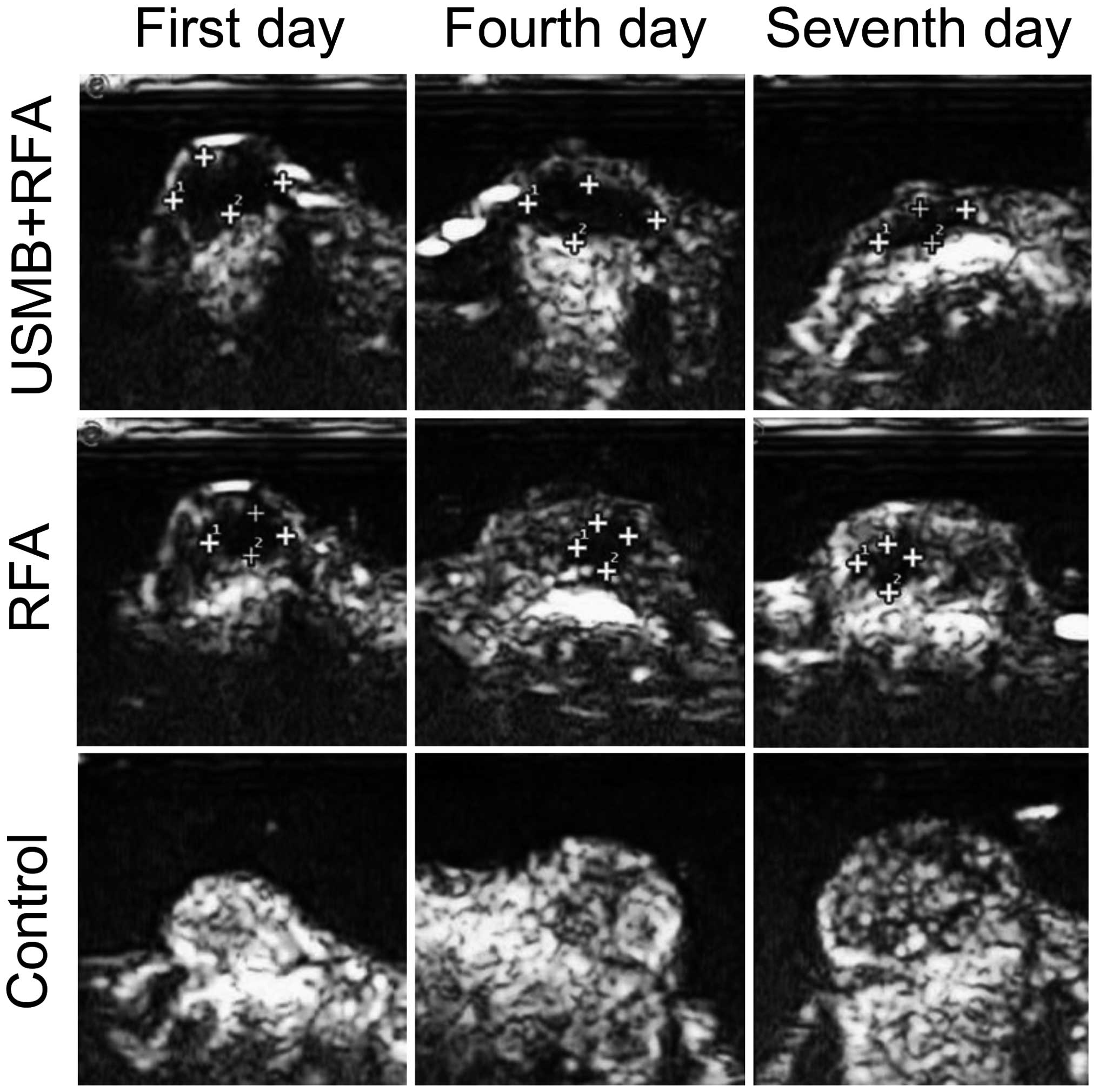
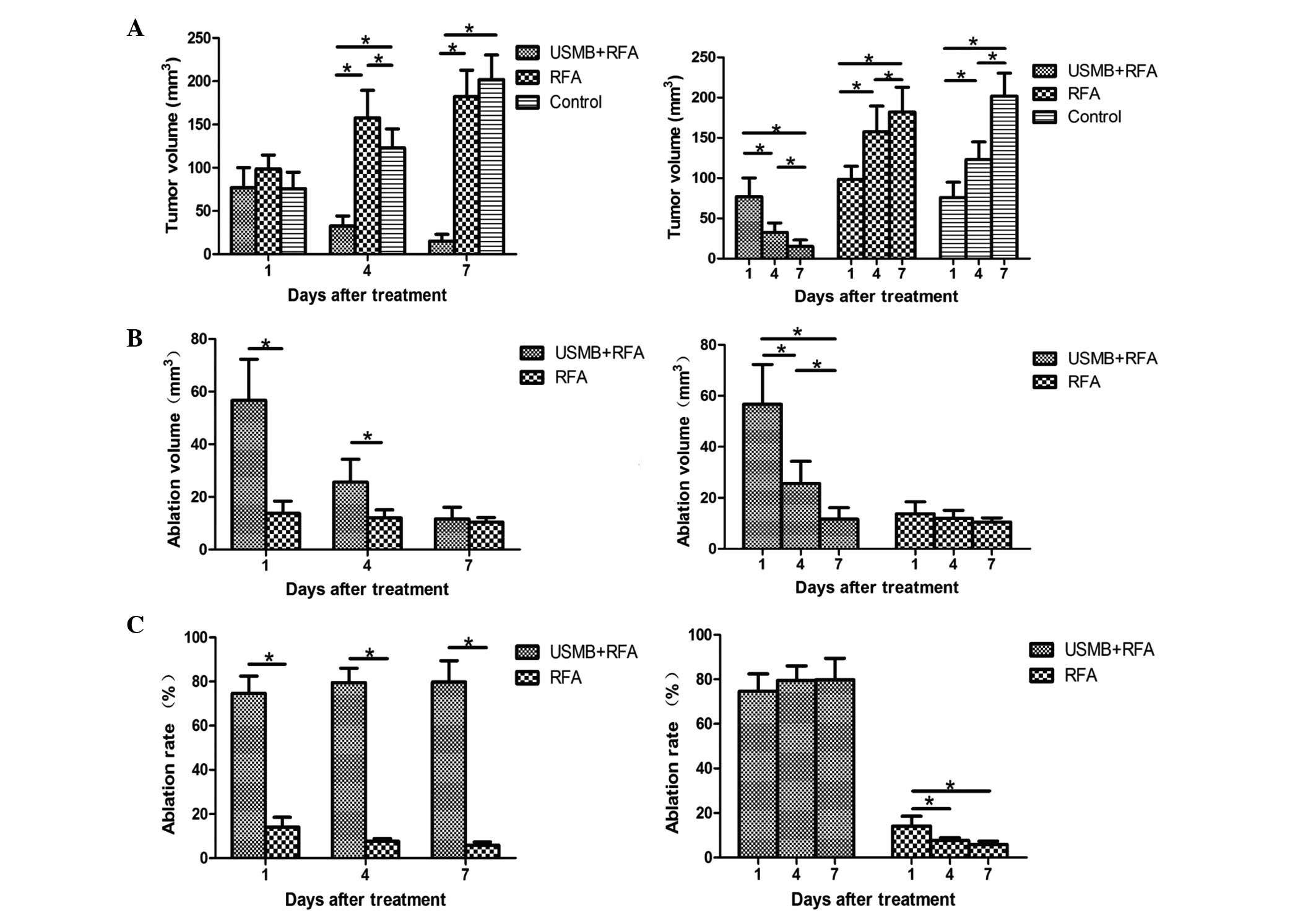
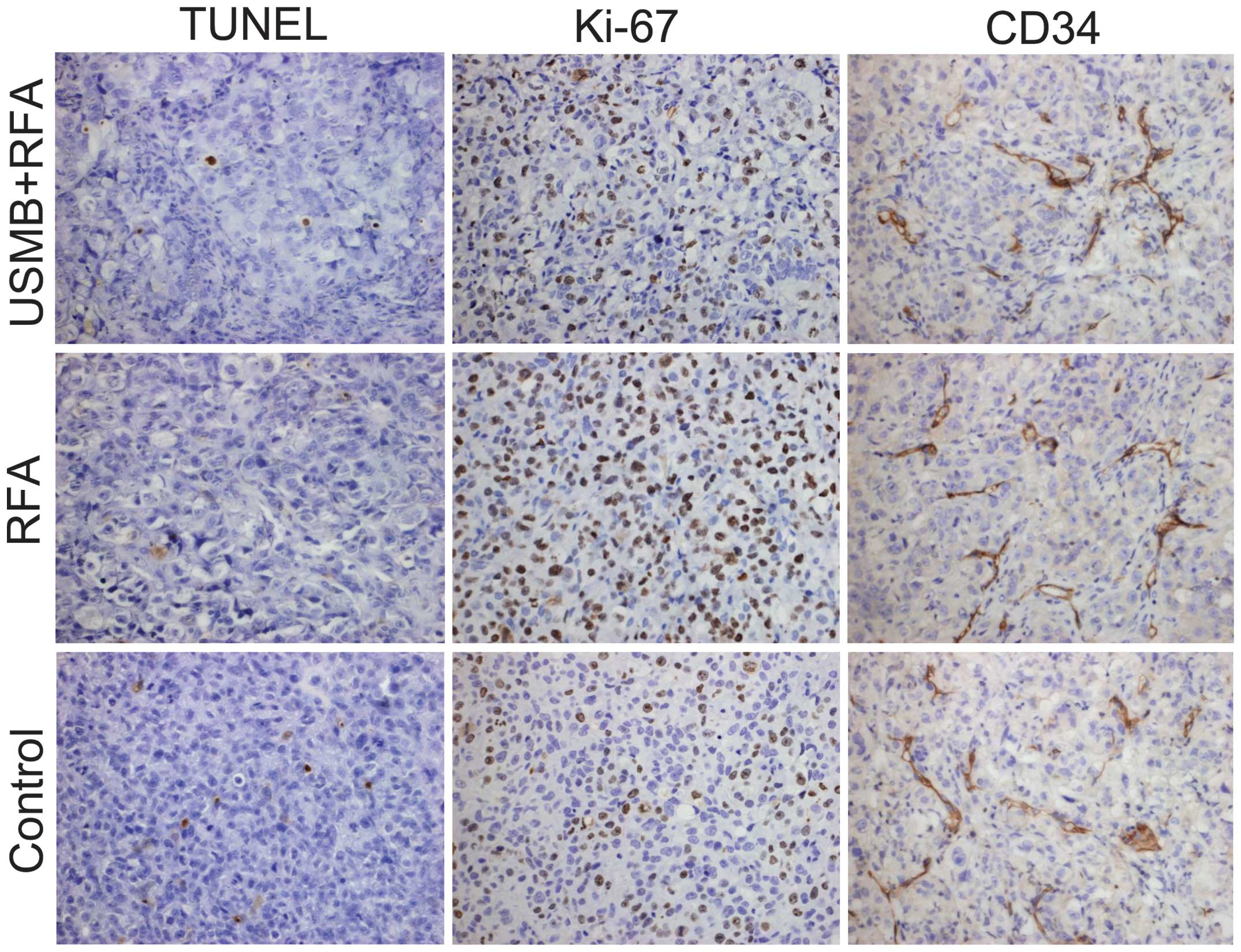
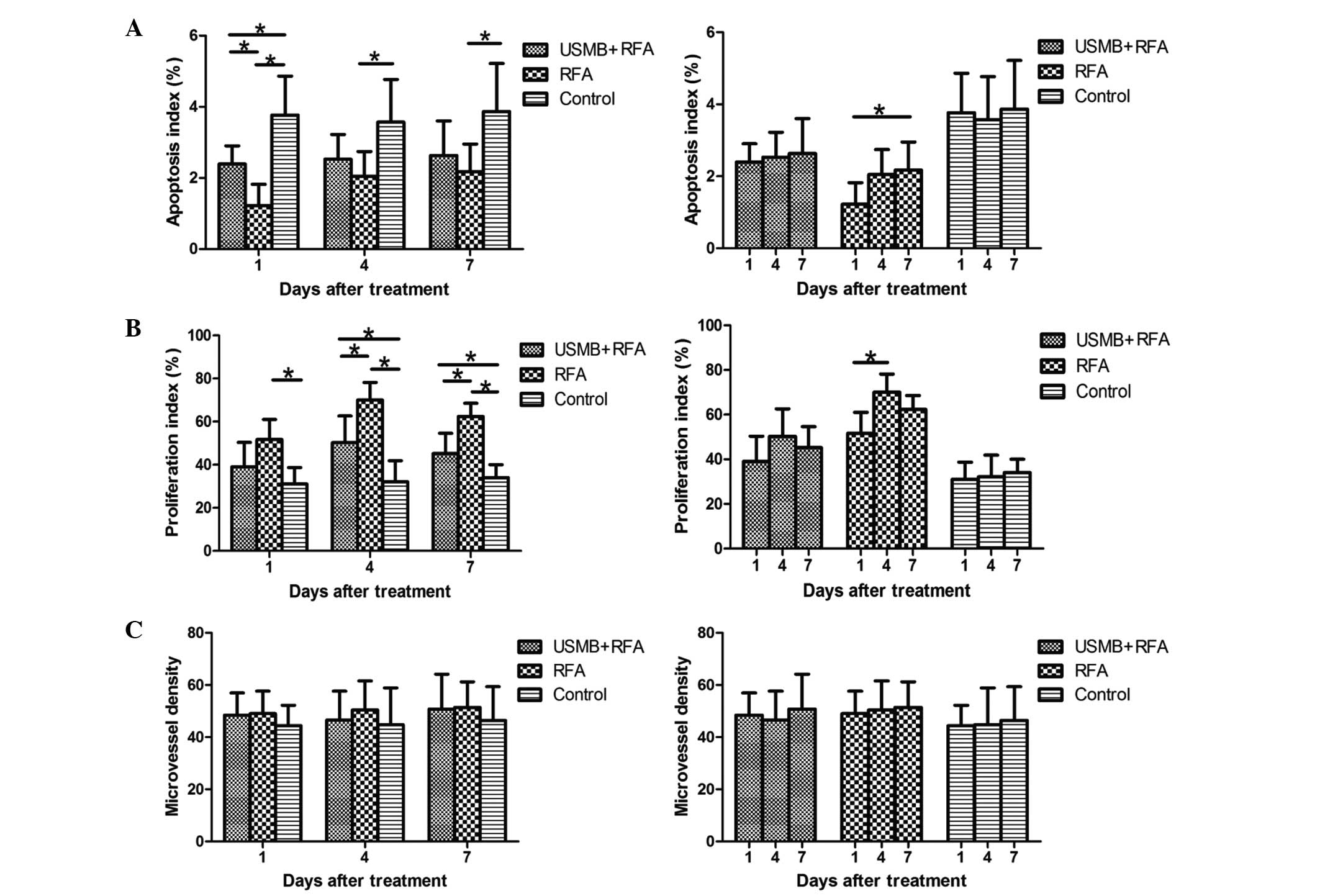
The aim of the present study was to examine the impact of low-frequency, low-intensity ultrasound (US)-stimulated microbubbles (USMB) on radiofrequency ablation (RFA) in the treatment of nude mice with human prostate cancer xenografts. The tumor‑bearing nude mice were divided into three groups: The USMB+RFA group was treated with USMB immediately followed by RFA, the RFA group was treated with RFA alone, and the control group remained untreated. The animals underwent enhanced US to calculate the tumor volumes, ablation volumes and ablation rates. Subsequently, the tumors were excised for hematoxylin and eosin staining, to identify necrosis in the tumors following the treatments, and immunohistochemical staining, to analyze the apoptotic index (AI), proliferative index (PI) and microvessel density (MVD) at 1, 4 and 7 days post-treatment. Each group contained five mice at each time‑point. Necrosis was apparent in the center of the tumors in the treatment groups. Ablation lesion volumes of the USMB+RFA group were larger than those in the RFA group at 1 and 4 days post‑treatment (P=0.002 and P=0.022, respectively), and the ablation rates of the USMB+RFA group were significantly higher, compared with the RFA group at the three time‑points (all P<0.001). There were fewer apoptotic cells and more proliferative cells in the RFA group, compared with the control group 1,4 and 7 days post‑treatment (all P<0.05). The AI of the USMB+RFA group was higher than that of the control group and lower than that of the RFA group 1 day post-treatment (P=0.034 and P=0.016, respectively). The PI of the USMB+RFA group was lower than that of the control group and higher than that of the RFA group 4 and 7 days post-treatment (all P<0.05). No significant differences were observed in MVD among the three groups throughout the experiment. In conclusion, exposure to USMB prior to RFA produced larger volumes of ablation, compared with treatment with RFA alone, and increased AI and reduced PI in the residual carcinoma cells induced by RFA.
View Figures

Figure 1

Figure 2

Figure 3

Figure 4

View References

1 

Siegel R, Ma J, Zou Z and Jemal A: Cancer statistics, 2014. CA Cancer J Clin. 64:9–29. 2014. View Article : Google Scholar : PubMed/NCBI

2 

Fung-Kee-Fung SD, Porten SP, Meng MV and Kuettel M: The role of active surveillance in the management of prostate cancer. J Natl Compr Canc Netw. 11:183–187. 2013.PubMed/NCBI

3 

Goldberg AA, Titorenko VI, Beach A and Sanderson JT: Bile acids induce apoptosis selectively in androgen-dependent and -independent prostate cancer cells. PeerJ. 1:e1222013. View Article : Google Scholar : PubMed/NCBI

4 

Pienta KJ and Smith DC: Advances in prostate cancer chemotherapy: A new era begins. CA Cancer J Clin. 55:300–318; quiz 323–325. 2005. View Article : Google Scholar : PubMed/NCBI

5 

Penson DF: Quality of life after therapy for localized prostate cancer. Cancer J. 13:318–326. 2007. View Article : Google Scholar : PubMed/NCBI

6 

Bul M, Zhu X, Valdagni R, Pickles T, Kakehi Y, Rannikko A, Bjartell A, van der Schoot DK, Cornel EB, Conti GN, et al: Active surveillance for low-risk prostate cancer worldwide: the PRIAS study. Eur Urol. 63:597–603. 2013. View Article : Google Scholar

7 

Bozzini G, Colin P, Nevoux P, Villers A, Mordon S and Betrouni N: Focal therapy of prostate cancer: Energies and procedures. Urol Oncol. 31:155–167. 2013. View Article : Google Scholar

8 

Djavan B, Zlotta AR, Susani M, Heinz G, Shariat S, Silverman DE, Schulman CC and Marberger M: Transperineal radiofrequency interstitial tumor ablation of the prostate: Correlation of magnetic resonance imaging with histopathologic examination. Urology. 50:986–992. 1997. View Article : Google Scholar

9 

Yoon SK, Choi JC, Cho JH, Oh JY, Nam KJ, Jung SI, Kwon HC, Kim DC and Rha SH: Radiofrequency ablation of renal VX2 tumors with and without renal artery occlusion in a rabbit model: Feasibility, therapeutic efficacy and safety. Cardiovasc Intervent Radiol. 32:1241–1246. 2009. View Article : Google Scholar : PubMed/NCBI

10 

Morimoto M, Sugimori K, Shirato K, Kokawa A, Tomita N, Saito T, Tanaka N, Nozawa A, Hara M, Sekihara H, et al: Treatment of hepatocellular carcinoma with radiofrequency ablation: Radiologic-histologic correlation during follow-up periods. Hepatology. 35:1467–1475. 2002. View Article : Google Scholar : PubMed/NCBI

11 

Mostafa EM, Ganguli S, Faintuch S, Mertyna P and Goldberg SN: Optimal strategies for combining transcatheter arterial chemoembolization and radiofrequency ablation in rabbit VX2 hepatic tumors. J Vasc Interv Radiol. 19:1740–1748. 2008. View Article : Google Scholar : PubMed/NCBI

12 

Lee IJ, Kim YI, Kim KW, Kim DH, Ryoo I, Lee MW and Chung JW: Radiofrequency ablation combined with transcatheter arterial embolisation in rabbit liver: investigation of the ablation zone according to the time interval between the two therapies. Br J Radiol. 85:e987–e994. 2012. View Article : Google Scholar : PubMed/NCBI

13 

Chang I, Mikityansky I, Wray-Cahen D, Pritchard WF, Karanian JW and Wood BJ: Effects of perfusion on radiofrequency ablation in swine kidneys. Radiology. 231:500–505. 2004. View Article : Google Scholar : PubMed/NCBI

14 

Kroeze SG, van Melick HH, Nijkamp MW, Kruse FK, Kruijssen LW, van Diest PJ, Bosch JL and Jans JJ: Incomplete thermal ablation stimulates proliferation of residual renal carcinoma cells in a translational murine model. BJU Int. 110:E281–E286. 2012. View Article : Google Scholar : PubMed/NCBI

15 

Hwang JH, Brayman AA, Reidy MA, Matula TJ, Kimmey MB and Crum LA: Vascular effects induced by combined 1-MHz ultrasound and microbubble contrast agent treatments in vivo. Ultrasound Med Biol. 31:553–564. 2005. View Article : Google Scholar : PubMed/NCBI

16 

Wood AK, Bunte RM, Price HE, Deitz MS, Tsai JH, Lee WM and Sehgal CM: The disruption of murine tumor neovasculature by low-intensity ultrasound-comparison between 1- and 3-MHz sonication frequencies. Acad Radiol. 15:1133–1141. 2008. View Article : Google Scholar : PubMed/NCBI

17 

Liu Z, Gao S, Zhao Y, Li P, Liu J, Li P, Tan K and Xie F: Disruption of tumor neovasculature by microbubble enhanced ultrasound: A potential new physical therapy of anti-angiogenesis. Ultrasound Med Biol. 38:253–261. 2012. View Article : Google Scholar

18 

Shen ZY, Shen E, Diao XH, Bai WK, Zeng MX, Luan YY, Nan SL, Lin YD, Wei C, Chen L, et al: Inhibitory effects of subcutaneous tumors in nude mice mediated by low-frequency ultrasound and microbubbles. Oncol Lett. 7:1385–1390. 2014.PubMed/NCBI

19 

Wang Y, Hu B, Diao X and Zhang J: Antitumor effect of micro-bubbles enhanced by low frequency ultrasound cavitation on prostate carcinoma xenografts in nude mice. Exp Ther Med. 3:187–191. 2012.PubMed/NCBI

20 

Yang Y, Bai W, Chen Y, Nan S, Lin Y and Hu B: Low-frequency low-intensity ultrasound mediated microvessel disruption combined with docetaxel to treat prostate carcinoma xenografts in nude mice: A new type of chemoembolization. Oncol Lett. In press.

21 

Yang Y, Bai W, Chen Y, Lin Y and Hu B: Optimization of low-frequency low-intensity ultrasound mediated microvessel disruption on prostate cancer xenografts in nude mice by orthogonal experimental design. Oncol Lett. In press.

22 

Djavan B, Zlotta AR, Susani M, Heinz G, Shariat S, Silverman DE, Schulman CC and Marberger M: Transperineal radiofrequency interstitial tumor ablation of the prostate: correlation of magnetic resonance imaging with histopathologic examination. Urology. 50:986–983. 1997. View Article : Google Scholar

23 

McGahan JP, Griffey SM, Budenz RW and Brock JM: Percutaneous ultrasound-guided radiofrequency electrocautery ablation of prostate tissue in dogs. Acad Radiol. 2:61–65. 1995. View Article : Google Scholar : PubMed/NCBI

24 

Nakasone Y, Ikeda O, Kawanaka K, Yokoyama K and Yamashita Y: Radiofrequency ablation in a porcine kidney model: Effect of occlusion of the arterial blood supply on ablation temperature, coagulation diameter and histology. Acta Radiol. 53:852–856. 2012. View Article : Google Scholar : PubMed/NCBI

25 

Duan X, Zhou G, Zheng C, Liang H, Liang B, Song S and Feng G: Heat shock protein 70 expression and effect of combined trans-catheter arterial embolization and radiofrequency ablation in the rabbit VX2 liver tumour model. Clin Radiol. 69:186–193. 2014. View Article : Google Scholar

26 

Levenback BJ, Sehgal CM and Wood AK: Modeling of thermal effects in antivascular ultrasound therapy. J Acoust Soc Am. 131:540–549. 2012. View Article : Google Scholar : PubMed/NCBI

27 

Wu F, Chen WZ, Bai J, Zou JZ, Wang ZL, Zhu H and Wang ZB: Tumor vessel destruction resulting from high-intensity focused ultrasound in patients with solid malignancies. Ultrasound Med Biol. 28:535–542. 2002. View Article : Google Scholar : PubMed/NCBI

28 

Wood AK, Ansaloni S, Ziemer LS, Lee WM, Feldman MD and Sehgal CM: The antivascular action of physiotherapy ultrasound on murine tumors. Ultrasound Med Biol. 31:1403–1410. 2005. View Article : Google Scholar : PubMed/NCBI

29 

Chen H, Brayman AA, Bailey MR and Matula TJ: Blood vessel rupture by cavitation. Urol Res. 38:321–326. 2010. View Article : Google Scholar : PubMed/NCBI

30 

Ahmadi F, McLoughlin IV, Chauhan S and ter-Haar G: Bio-effects and safety of low-intensity, low-frequency ultrasonic exposure. Prog Biophys Mol Biol. 108:119–138. 2012. View Article : Google Scholar : PubMed/NCBI

31 

Polat BE, Hart D, Langer R and Blankschtein D: Ultrasound-mediated transdermal drug delivery: Mechanisms, scope and emerging trends. J Control Release. 152:330–348. 2011. View Article : Google Scholar : PubMed/NCBI

32 

Carvell KJ and Bigelow TA: Dependence of optimal seed bubble size on pressure amplitude at therapeutic pressure levels. Ultrasonics. 51:115–122. 2011. View Article : Google Scholar

33 

Stride EP and Coussios CC: Cavitation and contrast: The use of bubbles in ultrasound imaging and therapy. Proc Inst Mech Eng H. 224:171–191. 2010. View Article : Google Scholar : PubMed/NCBI

34 

Hosseinkhah N and Hynynen K: A three-dimensional model of an ultrasound contrast agent gas bubble and its mechanical effects on microvessels. Phys Med Biol. 57:785–808. 2012. View Article : Google Scholar : PubMed/NCBI

35 

VanBavel E: Effects of shear stress on endothelial cells: Possible relevance for ultrasound applications. Prog Biophys Mol Biol. 93:374–383. 2007. View Article : Google Scholar

36 

Dayton P, Klibanov A, Brandenburger G and Ferrara K: Acoustic radiation force in vivo: A mechanism to assist targeting of microbubbles. Ultrasound Med Biol. 25:1195–1201. 1999. View Article : Google Scholar : PubMed/NCBI

37 

Basta G, Venneri L, Lazzerini G, Pasanisi E, Pianelli M, Vesentini N, Del Turco S, Kusmic C and Picano E: In vitro modulation of intracellular oxidative stress of endothelial cells by diagnostic cardiac ultrasound. Cardiovasc Res. 58:156–161. 2003. View Article : Google Scholar : PubMed/NCBI

38 

Chen H, Brayman AA, Kreider W, Bailey MR and Matula TJ: Observations of translation and jetting of ultrasound-activated microbubbles in mesenteric microvessels. Ultrasound Med Biol. 37:2139–2148. 2011. View Article : Google Scholar : PubMed/NCBI

39 

Coralic V and Colonius T: Shock-induced collapse of a bubble inside a deformable vessel. Eur J Mech B Fluids. 40:64–74. 2013. View Article : Google Scholar : PubMed/NCBI

40 

Chen H, Kreider W, Brayman AA, Bailey MR and Matula TJ: Blood vessel deformations on microsecond time scales by ultrasonic cavitation. Phys Rev Lett. 106:0343012011. View Article : Google Scholar : PubMed/NCBI

41 

Gao F, Xiong C and Xiong Y: Constrained oscillation of a bubble subjected to shock wave in microvessel. Prog Nat Sci. 19:1109–1117. 2009. View Article : Google Scholar

42 

Ke S, Ding XM, Kong J, Gao J, Wang SH, Cheng Y and Sun WB: Low temperature of radiofrequency ablation at the target sites can facilitate rapid progression of residual hepatic VX2 carcinoma. J Transl Med. 8:732010. View Article : Google Scholar : PubMed/NCBI

43 

Nijkamp MW, van der Bilt JD, de Bruijn MT, Molenaar IQ, Voest EE, van Diest PJ, Kranenburg O and Borel Rinkes IH: Accelerated perinecrotic outgrowth of colorectal liver metastases following radiofrequency ablation is a hypoxia-driven phenomenon. Ann Surg. 249:814–823. 2009. View Article : Google Scholar : PubMed/NCBI

44 

Ruan K, Song G and Ouyang G: Role of hypoxia in the hallmarks of human cancer. J Cell Biochem. 107:1053–1062. 2009. View Article : Google Scholar : PubMed/NCBI

Related Articles

  • Abstract
  • View
  • Download
  • Twitter
Copy and paste a formatted citation
Spandidos Publications style
Yang Y, Bai W, Chen Y, Zhang W, Wang M and Hu B: Low-frequency and low-intensity ultrasound-mediated microvessel disruption enhance the effects of radiofrequency ablation on prostate cancer xenografts in nude mice. Mol Med Rep 12: 7517-7525, 2015.
APA
Yang, Y., Bai, W., Chen, Y., Zhang, W., Wang, M., & Hu, B. (2015). Low-frequency and low-intensity ultrasound-mediated microvessel disruption enhance the effects of radiofrequency ablation on prostate cancer xenografts in nude mice. Molecular Medicine Reports, 12, 7517-7525. https://doi.org/10.3892/mmr.2015.4375
MLA
Yang, Y., Bai, W., Chen, Y., Zhang, W., Wang, M., Hu, B."Low-frequency and low-intensity ultrasound-mediated microvessel disruption enhance the effects of radiofrequency ablation on prostate cancer xenografts in nude mice". Molecular Medicine Reports 12.5 (2015): 7517-7525.
Chicago
Yang, Y., Bai, W., Chen, Y., Zhang, W., Wang, M., Hu, B."Low-frequency and low-intensity ultrasound-mediated microvessel disruption enhance the effects of radiofrequency ablation on prostate cancer xenografts in nude mice". Molecular Medicine Reports 12, no. 5 (2015): 7517-7525. https://doi.org/10.3892/mmr.2015.4375
Copy and paste a formatted citation
x
Spandidos Publications style
Yang Y, Bai W, Chen Y, Zhang W, Wang M and Hu B: Low-frequency and low-intensity ultrasound-mediated microvessel disruption enhance the effects of radiofrequency ablation on prostate cancer xenografts in nude mice. Mol Med Rep 12: 7517-7525, 2015.
APA
Yang, Y., Bai, W., Chen, Y., Zhang, W., Wang, M., & Hu, B. (2015). Low-frequency and low-intensity ultrasound-mediated microvessel disruption enhance the effects of radiofrequency ablation on prostate cancer xenografts in nude mice. Molecular Medicine Reports, 12, 7517-7525. https://doi.org/10.3892/mmr.2015.4375
MLA
Yang, Y., Bai, W., Chen, Y., Zhang, W., Wang, M., Hu, B."Low-frequency and low-intensity ultrasound-mediated microvessel disruption enhance the effects of radiofrequency ablation on prostate cancer xenografts in nude mice". Molecular Medicine Reports 12.5 (2015): 7517-7525.
Chicago
Yang, Y., Bai, W., Chen, Y., Zhang, W., Wang, M., Hu, B."Low-frequency and low-intensity ultrasound-mediated microvessel disruption enhance the effects of radiofrequency ablation on prostate cancer xenografts in nude mice". Molecular Medicine Reports 12, no. 5 (2015): 7517-7525. https://doi.org/10.3892/mmr.2015.4375
Follow us
  • Twitter
  • LinkedIn
  • Facebook
About
  • Spandidos Publications
  • Careers
  • Cookie Policy
  • Privacy Policy
How can we help?
  • Help
  • Live Chat
  • Contact
  • Email to our Support Team