Spandidos Publications Logo
  • About
    • About Spandidos
    • Aims and Scopes
    • Abstracting and Indexing
    • Editorial Policies
    • Reprints and Permissions
    • Job Opportunities
    • Terms and Conditions
    • Contact
  • Journals
    • All Journals
    • Oncology Letters
      • Oncology Letters
      • Information for Authors
      • Editorial Policies
      • Editorial Board
      • Aims and Scope
      • Abstracting and Indexing
      • Bibliographic Information
      • Archive
    • International Journal of Oncology
      • International Journal of Oncology
      • Information for Authors
      • Editorial Policies
      • Editorial Board
      • Aims and Scope
      • Abstracting and Indexing
      • Bibliographic Information
      • Archive
    • Molecular and Clinical Oncology
      • Molecular and Clinical Oncology
      • Information for Authors
      • Editorial Policies
      • Editorial Board
      • Aims and Scope
      • Abstracting and Indexing
      • Bibliographic Information
      • Archive
    • Experimental and Therapeutic Medicine
      • Experimental and Therapeutic Medicine
      • Information for Authors
      • Editorial Policies
      • Editorial Board
      • Aims and Scope
      • Abstracting and Indexing
      • Bibliographic Information
      • Archive
    • International Journal of Molecular Medicine
      • International Journal of Molecular Medicine
      • Information for Authors
      • Editorial Policies
      • Editorial Board
      • Aims and Scope
      • Abstracting and Indexing
      • Bibliographic Information
      • Archive
    • Biomedical Reports
      • Biomedical Reports
      • Information for Authors
      • Editorial Policies
      • Editorial Board
      • Aims and Scope
      • Abstracting and Indexing
      • Bibliographic Information
      • Archive
    • Oncology Reports
      • Oncology Reports
      • Information for Authors
      • Editorial Policies
      • Editorial Board
      • Aims and Scope
      • Abstracting and Indexing
      • Bibliographic Information
      • Archive
    • Molecular Medicine Reports
      • Molecular Medicine Reports
      • Information for Authors
      • Editorial Policies
      • Editorial Board
      • Aims and Scope
      • Abstracting and Indexing
      • Bibliographic Information
      • Archive
    • World Academy of Sciences Journal
      • World Academy of Sciences Journal
      • Information for Authors
      • Editorial Policies
      • Editorial Board
      • Aims and Scope
      • Abstracting and Indexing
      • Bibliographic Information
      • Archive
    • International Journal of Functional Nutrition
      • International Journal of Functional Nutrition
      • Information for Authors
      • Editorial Policies
      • Editorial Board
      • Aims and Scope
      • Abstracting and Indexing
      • Bibliographic Information
      • Archive
    • International Journal of Epigenetics
      • International Journal of Epigenetics
      • Information for Authors
      • Editorial Policies
      • Editorial Board
      • Aims and Scope
      • Abstracting and Indexing
      • Bibliographic Information
      • Archive
    • Medicine International
      • Medicine International
      • Information for Authors
      • Editorial Policies
      • Editorial Board
      • Aims and Scope
      • Abstracting and Indexing
      • Bibliographic Information
      • Archive
  • Articles
  • Information
    • Information for Authors
    • Information for Reviewers
    • Information for Librarians
    • Information for Advertisers
    • Conferences
  • Language Editing
Spandidos Publications Logo
  • About
    • About Spandidos
    • Aims and Scopes
    • Abstracting and Indexing
    • Editorial Policies
    • Reprints and Permissions
    • Job Opportunities
    • Terms and Conditions
    • Contact
  • Journals
    • All Journals
    • Biomedical Reports
      • Information for Authors
      • Editorial Policies
      • Editorial Board
      • Aims and Scope
      • Abstracting and Indexing
      • Bibliographic Information
      • Archive
    • Experimental and Therapeutic Medicine
      • Information for Authors
      • Editorial Policies
      • Editorial Board
      • Aims and Scope
      • Abstracting and Indexing
      • Bibliographic Information
      • Archive
    • International Journal of Epigenetics
      • Information for Authors
      • Editorial Policies
      • Editorial Board
      • Aims and Scope
      • Abstracting and Indexing
      • Bibliographic Information
      • Archive
    • International Journal of Functional Nutrition
      • Information for Authors
      • Editorial Policies
      • Editorial Board
      • Aims and Scope
      • Abstracting and Indexing
      • Bibliographic Information
      • Archive
    • International Journal of Molecular Medicine
      • Information for Authors
      • Editorial Policies
      • Editorial Board
      • Aims and Scope
      • Abstracting and Indexing
      • Bibliographic Information
      • Archive
    • International Journal of Oncology
      • Information for Authors
      • Editorial Policies
      • Editorial Board
      • Aims and Scope
      • Abstracting and Indexing
      • Bibliographic Information
      • Archive
    • Medicine International
      • Information for Authors
      • Editorial Policies
      • Editorial Board
      • Aims and Scope
      • Abstracting and Indexing
      • Bibliographic Information
      • Archive
    • Molecular and Clinical Oncology
      • Information for Authors
      • Editorial Policies
      • Editorial Board
      • Aims and Scope
      • Abstracting and Indexing
      • Bibliographic Information
      • Archive
    • Molecular Medicine Reports
      • Information for Authors
      • Editorial Policies
      • Editorial Board
      • Aims and Scope
      • Abstracting and Indexing
      • Bibliographic Information
      • Archive
    • Oncology Letters
      • Information for Authors
      • Editorial Policies
      • Editorial Board
      • Aims and Scope
      • Abstracting and Indexing
      • Bibliographic Information
      • Archive
    • Oncology Reports
      • Information for Authors
      • Editorial Policies
      • Editorial Board
      • Aims and Scope
      • Abstracting and Indexing
      • Bibliographic Information
      • Archive
    • World Academy of Sciences Journal
      • Information for Authors
      • Editorial Policies
      • Editorial Board
      • Aims and Scope
      • Abstracting and Indexing
      • Bibliographic Information
      • Archive
  • Articles
  • Information
    • For Authors
    • For Reviewers
    • For Librarians
    • For Advertisers
    • Conferences
  • Language Editing
Login Register Submit
  • This site uses cookies
  • You can change your cookie settings at any time by following the instructions in our Cookie Policy. To find out more, you may read our Privacy Policy.

    I agree
Search articles by DOI, keyword, author or affiliation
Search
Advanced Search
presentation
Molecular Medicine Reports
Join Editorial Board Propose a Special Issue
Print ISSN: 1791-2997 Online ISSN: 1791-3004
Journal Cover
November-2015 Volume 12 Issue 5

Full Size Image

Sign up for eToc alerts
Recommend to Library

Journals

International Journal of Molecular Medicine

International Journal of Molecular Medicine

International Journal of Molecular Medicine is an international journal devoted to molecular mechanisms of human disease.

International Journal of Oncology

International Journal of Oncology

International Journal of Oncology is an international journal devoted to oncology research and cancer treatment.

Molecular Medicine Reports

Molecular Medicine Reports

Covers molecular medicine topics such as pharmacology, pathology, genetics, neuroscience, infectious diseases, molecular cardiology, and molecular surgery.

Oncology Reports

Oncology Reports

Oncology Reports is an international journal devoted to fundamental and applied research in Oncology.

Experimental and Therapeutic Medicine

Experimental and Therapeutic Medicine

Experimental and Therapeutic Medicine is an international journal devoted to laboratory and clinical medicine.

Oncology Letters

Oncology Letters

Oncology Letters is an international journal devoted to Experimental and Clinical Oncology.

Biomedical Reports

Biomedical Reports

Explores a wide range of biological and medical fields, including pharmacology, genetics, microbiology, neuroscience, and molecular cardiology.

Molecular and Clinical Oncology

Molecular and Clinical Oncology

International journal addressing all aspects of oncology research, from tumorigenesis and oncogenes to chemotherapy and metastasis.

World Academy of Sciences Journal

World Academy of Sciences Journal

Multidisciplinary open-access journal spanning biochemistry, genetics, neuroscience, environmental health, and synthetic biology.

International Journal of Functional Nutrition

International Journal of Functional Nutrition

Open-access journal combining biochemistry, pharmacology, immunology, and genetics to advance health through functional nutrition.

International Journal of Epigenetics

International Journal of Epigenetics

Publishes open-access research on using epigenetics to advance understanding and treatment of human disease.

Medicine International

Medicine International

An International Open Access Journal Devoted to General Medicine.

Journal Cover
November-2015 Volume 12 Issue 5

Full Size Image

Sign up for eToc alerts
Recommend to Library

  • Article
  • Citations
    • Cite This Article
    • Download Citation
    • Create Citation Alert
    • Remove Citation Alert
    • Cited By
  • Similar Articles
    • Related Articles (in Spandidos Publications)
    • Similar Articles (Google Scholar)
    • Similar Articles (PubMed)
  • Download PDF
  • Download XML
  • View XML
Article Open Access

Rapamycin protects neurons from brain contusion‑induced inflammatory reaction via modulation of microglial activation

  • Authors:
    • Qi Song
    • Dujiang Xie
    • Shiyong Pan
    • Weijun Xu
  • View Affiliations / Copyright

    Affiliations: Department of Healthcare, Nanjing General Hospital of Nanjing Command, Nanjing, Jiangsu 210002, P.R. China, Department of Cardiology, Nanjing First Hospital, Nanjing Medical University, Nanjing, Jiangsu 210006, P.R. China
    Copyright: © Song et al. This is an open access article distributed under the terms of Creative Commons Attribution License.
  • Pages: 7203-7210
    |
    Published online on: October 1, 2015
       https://doi.org/10.3892/mmr.2015.4407
  • Expand metrics +
Metrics: Total Views: 0 (Spandidos Publications: | PMC Statistics: )
Metrics: Total PDF Downloads: 0 (Spandidos Publications: | PMC Statistics: )
Cited By (CrossRef): 0 citations Loading Articles...

This article is mentioned in:


Abstract

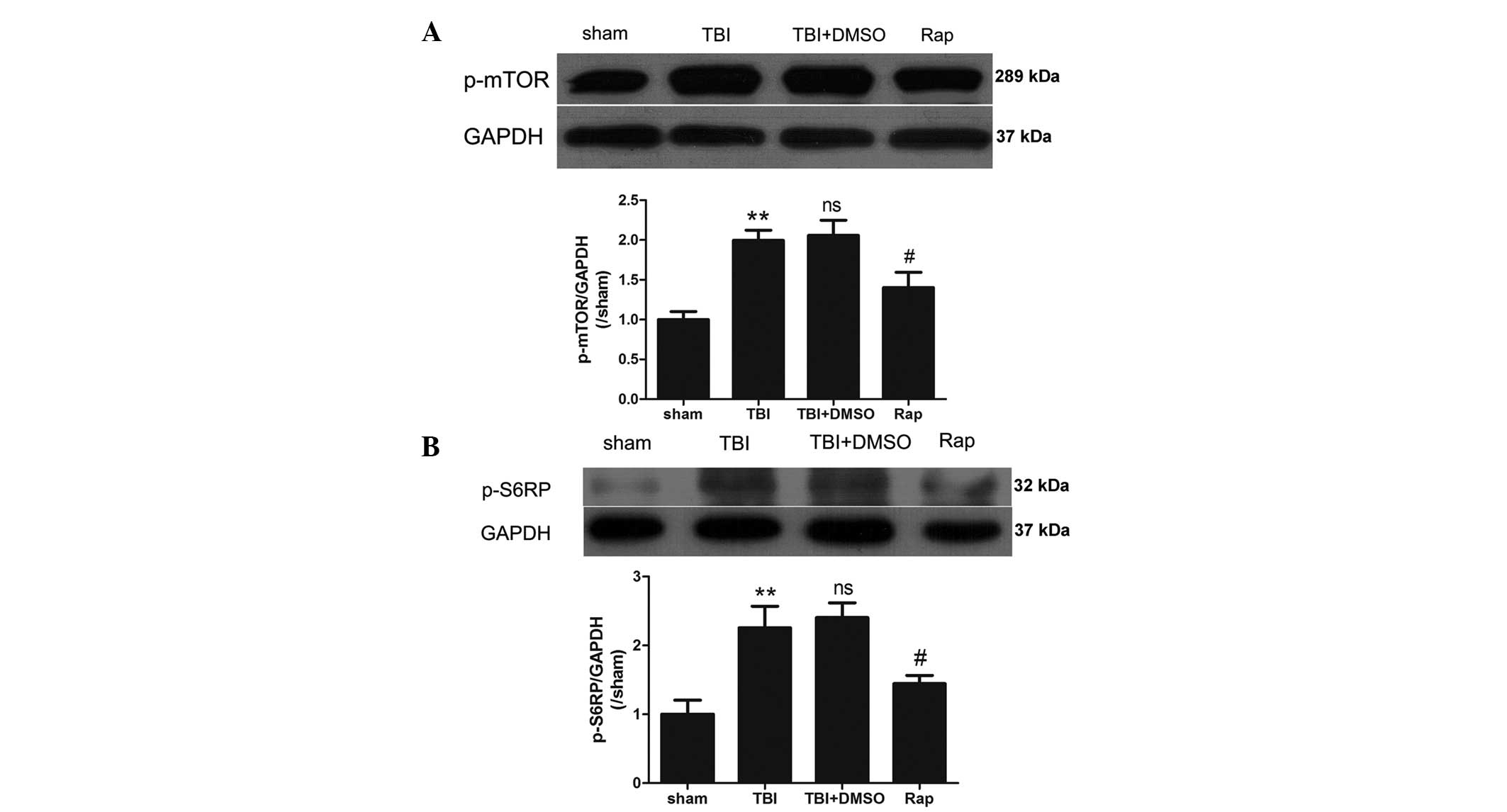
The inflammatory reaction is important in secondary injury following traumatic brain injury (TBI). Rapamycin has been demonstrated as a neuroprotective agent in a mouse model of TBI, however, there is a lack of data regarding the effects of rapamycin on the inflammatory reaction following TBI. Therefore, the present study was designed to assess the effects of treatment with rapamycin on inflammatory reactions and examine the possible involvement of microglial activation following TBI. Male imprinting control region mice were randomly divided into four groups: Sham group (n=23), TBI group (n=23), TBI + dimethyl sulfoxide (DMSO) group (n=31) and TBI + rapamycin group (n=31). Rapamycin was dissolved in DMSO (50 mg/ml) and injected 30 min after TBI (2 mg/Kg; intraperitoneally). A weight‑drop model of TBI was induced, and the brain tissues were harvested 24 h after TBI. The findings indicated that the administration of rapamycin following TBI was associated with decreased levels of activated microglia and neuron degeneration at the peri‑injury site, reduced levels of proinflammatory cytokines and increased neurobehavioral function, possibly mediated by inactivation of the mammalian target of rapamycin pathway. The results of the present study offer novel insight into the mechanisms responsible for the anti‑neuroinflammatory effects of rapamycin, possibly involving the modulation of microglial activation.
View Figures

Figure 1

Figure 2

Figure 3

Figure 4

Figure 5

View References

1 

Cernak I: Animal models of head trauma. NeuroRx. 2:410–422. 2005. View Article : Google Scholar

2 

Yatsiv I, Grigoriadis N, Simeonidou C, et al: Erythropoietin is neuroprotective, improves functional recovery and reduces neuronal apoptosis and inflammation in a rodent model of experimental closed head injury. FASEB J. 19:1701–1703. 2005.PubMed/NCBI

3 

Xu J, Wang H, Ding K, et al: Inhibition of cathepsin S produces neuroprotective effects after traumatic brain injury in mice. Mediators Inflamm. 2013:1878732013. View Article : Google Scholar : PubMed/NCBI

4 

Cornelius C, Crupi R, Calabrese V, et al: Traumatic brain injury: oxidative stress and neuroprotection. Antioxid Redox Signal. 19:836–853. 2013. View Article : Google Scholar : PubMed/NCBI

5 

Ziebell JM and Morganti-Kossmann MC: Involvement of pro- and anti-inflammatory cytokines and chemokines in the pathophysiology of traumatic brain injury. Neurotherapeutics. 7:22–30. 2010. View Article : Google Scholar : PubMed/NCBI

6 

Venkatesan C, Chrzaszcz M, Choi N and Wainwright MS: Chronic upregulation of activated microglia immunoreactive for galectin-3/Mac-2 and nerve growth factor following diffuse axonal injury. J Neuroinflammation. 7:322010. View Article : Google Scholar : PubMed/NCBI

7 

Cao T, Thomas TC, Ziebell JM, Pauly JR and Lifshitz J: Morphological and genetic activation of microglia after diffuse traumatic brain injury in the rat. Neuroscience. 225:65–75. 2012. View Article : Google Scholar : PubMed/NCBI

8 

Kelley BJ, Lifshitz J and Povlishock JT: Neuroinflammatory responses after experimental diffuse traumatic brain injury. J Neuropathol Exp Neurol. 66:989–1001. 2007. View Article : Google Scholar : PubMed/NCBI

9 

Zhang R, Liu Y, Yan K, et al: Anti-inflammatory and immunomodulatory mechanisms of mesenchymal stem cell transplantation in experimental traumatic brain injury. J Neuroinflammation. 10:1062013. View Article : Google Scholar : PubMed/NCBI

10 

Ng SY, Semple BD, Morganti-Kossmann MC and Bye N: Attenuation of microglial activation with minocycline is not associated with changes in neurogenesis after focal traumatic brain injury in adult mice. J Neurotrauma. 29:1410–1425. 2012. View Article : Google Scholar : PubMed/NCBI

11 

D'Avila JC, Lam TI, Bingham D, et al: Microglial activation induced by brain trauma is suppressed by post-injury treatment with a PARP inhibitor. J Neuroinflammation. 9:312012. View Article : Google Scholar : PubMed/NCBI

12 

Dazert E and Hall MN: mTOR signaling in disease. Curr Opin Cell Biol. 23:744–755. 2011. View Article : Google Scholar : PubMed/NCBI

13 

Reynolds TH IV, Bodine SC and Lawrence JC Jr: Control of Ser2448 phosphorylation in the mammalian target of rapamycin by insulin and skeletal muscle load. J Biol Chem. 277:17657–17662. 2002. View Article : Google Scholar : PubMed/NCBI

14 

Chong ZZ, Shang YC, Zhang L, Wang S and Maiese K: Mammalian target of rapamycin: hitting the bull's-eye for neurological disorders. Oxid Med Cell Longev. 3:374–391. 2010. View Article : Google Scholar

15 

Park J, Zhang J, Qiu J, et al: Combination therapy targeting Akt and mammalian target of rapamycin improves functional outcome after controlled cortical impact in mice. J Cereb Blood Flow Metab. 32:330–340. 2012. View Article : Google Scholar :

16 

Fan W, Cheng K, Qin X, et al: mTORC1 and mTORC2 play different roles in the functional survival of transplanted adipose-derived stromal cells in hind limb ischemic mice via regulating inflammation in vivo. Stem Cells. 31:203–214. 2013. View Article : Google Scholar

17 

Vignot S, Faivre S, Aguirre D and Raymond E: mTOR-targeted therapy of cancer with rapamycin derivatives. Ann Oncol. 16:525–537. 2005. View Article : Google Scholar : PubMed/NCBI

18 

Hosoi H, Dilling MB, Shikata T, et al: Rapamycin causes poorly reversible inhibition of mTOR and induces p53-independent apoptosis in human rhabdomyosarcoma cells. Cancer Res. 59:886–894. 1999.PubMed/NCBI

19 

Erlich S, Alexandrovich A, Shohami E and Pinkas-Kramarski R: Rapamycin is a neuroprotective treatment for traumatic brain injury. Neurobiol Dis. 26:86–93. 2007. View Article : Google Scholar : PubMed/NCBI

20 

Flierl MA, Stahel PF, Beauchamp KM, Morgan SJ, Smith WR and Shohami E: Mouse closed head injury model induced by a weight-drop device. Nat Protoc. 4:1328–1337. 2009. View Article : Google Scholar : PubMed/NCBI

21 

Ding K, Wang H, Wu Y, Zhang L, Xu J, Li T, Ding Y, Zhu L and He J: Rapamycin protects against apoptotic neuronal death and improves neurologic function after traumatic brain injury in mice via modulation of the mTOR-p53-Bax axis. J Surg Res. 194:239–247. 2015. View Article : Google Scholar

22 

Wang J and Doré S: Heme oxygenase-1 exacerbates early brain injury after intracerebral haemorrhage. Brain. 130:1643–1652. 2007. View Article : Google Scholar : PubMed/NCBI

23 

Zhuang Z, Zhou Ml, You WC, et al: Hydrogen-rich saline alleviates early brain injury via reducing oxidative stress and brain edema following experimental subarachnoid hemorrhage in rabbits. BMC Neurosci. 13:472012. View Article : Google Scholar : PubMed/NCBI

24 

Bermpohl D, You Z, Korsmeyer SJ, Moskowitz MA and Whalen MJ: Traumatic brain injury in mice deficient in Bid: effects on histopathology and functional outcome. J Cereb Blood Flow Metab. 26:625–633. 2006. View Article : Google Scholar : PubMed/NCBI

25 

Kumar A and Loane DJ: Neuroinflammation after traumatic brain injury: opportunities for therapeutic intervention. Brain Behav Immun. 26:1191–1201. 2012. View Article : Google Scholar : PubMed/NCBI

26 

Lu J, Goh SJ, Tng PY, Deng YY, Ling EA and Moochhala S: Systemic inflammatory response following acute traumatic brain injury. Front Biosci (Landmark Ed). 14:3795–3813. 2009. View Article : Google Scholar

27 

Rothwell NJ: Annual review prize lecture cytokines-killers in the brain? J Physiol. 514:3–17. 1999. View Article : Google Scholar

28 

Ramilo O, Saez-Llorens X, Mertsola J, et al: Tumor necrosis factor alpha/cachectin and interleukin 1 beta initiate meningeal inflammation. J Exp Med. 172:497–507. 1990. View Article : Google Scholar : PubMed/NCBI

29 

Kim KS, Wass CA, Cross AS and Opal SM: Modulation of blood-brain barrier permeability by tumor necrosis factor and antibody to tumor necrosis factor in the rat. Lymphokine Cytokine Res. 11:293–298. 1992.PubMed/NCBI

30 

Smith RM and Giannoudis PV: Trauma and the immune response. J R Soc Med. 91:417–420. 1998.PubMed/NCBI

31 

Hesse DG, Tracey KJ, Fong Y, et al: Cytokine appearance in human endotoxemia and primate bacteremia. Surg Gynecol Obstet. 166:147–153. 1988.PubMed/NCBI

32 

Winter CD, Iannotti F, Pringle AK, Trikkas C, Clough GF and Church MK: A microdialysis method for the recovery of IL-1beta, IL-6 and nerve growth factor from human brain in vivo. J Neurosci Methods. 119:45–50. 2002. View Article : Google Scholar : PubMed/NCBI

33 

Loddick SA and Rothwell NJ: Neuroprotective effects of human recombinant interleukin-1 receptor antagonist in focal cerebral ischaemia in the rat. J Cereb Blood Flow Metab. 16:932–940. 1996. View Article : Google Scholar : PubMed/NCBI

34 

Morganti-Kossmann MC, Satgunaseelan L, Bye N and Kossmann T: Modulation of immune response by head injury. Injury. 38:1392–1400. 2007. View Article : Google Scholar : PubMed/NCBI

35 

Min KJ, Jou I and Joe E: Plasminogen-induced IL-1beta and TNF-alpha production in microglia is regulated by reactive oxygen species. Biochem Biophys Res Commun. 312:969–974. 2003. View Article : Google Scholar : PubMed/NCBI

36 

Dean JM, Wang X, Kaindl AM, et al: Microglial MyD88 signaling regulates acute neuronal toxicity of LPS-stimulated microglia in vitro. Brain Behav Immun. 24:776–783. 2010. View Article : Google Scholar

37 

Pinteaux-Jones F, Sevastou IG, Fry VA, Heales S, Baker D and Pocock JM: Myelin-induced microglial neurotoxicity can be controlled by microglial metabotropic glutamate receptors. J Neurochem. 106:442–454. 2008. View Article : Google Scholar : PubMed/NCBI

38 

Pais TF, Figueiredo C, Peixoto R, Braz MH and Chatterjee S: Necrotic neurons enhance microglial neurotoxicity through induction of glutaminase by a MyD88-dependent pathway. J Neuroinflammation. 5:432008. View Article : Google Scholar : PubMed/NCBI

39 

Dello RC, Lisi L, Feinstein DL and Navarra P: mTOR kinase, a key player in the regulation of glial functions: relevance for the therapy of multiple sclerosis. Glia. 61:301–311. 2013. View Article : Google Scholar

40 

Dello Russo C, Lisi L, Tringali G and Navarra P: Involvement of mTOR kinase in cytokine-dependent microglial activation and cell proliferation. Biochem Pharmacol. 78:1242–1251. 2009. View Article : Google Scholar : PubMed/NCBI

41 

Wong M: Mammalian target of rapamycin (mTOR) pathways in neurological diseases. Biomed J. 36:40–50. 2013. View Article : Google Scholar : PubMed/NCBI

42 

Fingar DC, Salama S, Tsou C, Harlow E and Blenis J: Mammalian cell size is controlled by mTOR and its downstream targets S6K1 and 4EBP1/eIF4E. Genes Dev. 16:1472–1487. 2002. View Article : Google Scholar : PubMed/NCBI

43 

Shima H, Pende M, Chen Y, Fumagalli S, Thomas G and Kozma SC: Disruption of the p70(s6k)/p85(s6k) gene reveals a small mouse phenotype and a new functional S6 kinase. EMBO J. 17:6649–6659. 1998. View Article : Google Scholar : PubMed/NCBI

Related Articles

  • Abstract
  • View
  • Download
  • Twitter
Copy and paste a formatted citation
Spandidos Publications style
Song Q, Xie D, Pan S and Xu W: Rapamycin protects neurons from brain contusion‑induced inflammatory reaction via modulation of microglial activation. Mol Med Rep 12: 7203-7210, 2015.
APA
Song, Q., Xie, D., Pan, S., & Xu, W. (2015). Rapamycin protects neurons from brain contusion‑induced inflammatory reaction via modulation of microglial activation. Molecular Medicine Reports, 12, 7203-7210. https://doi.org/10.3892/mmr.2015.4407
MLA
Song, Q., Xie, D., Pan, S., Xu, W."Rapamycin protects neurons from brain contusion‑induced inflammatory reaction via modulation of microglial activation". Molecular Medicine Reports 12.5 (2015): 7203-7210.
Chicago
Song, Q., Xie, D., Pan, S., Xu, W."Rapamycin protects neurons from brain contusion‑induced inflammatory reaction via modulation of microglial activation". Molecular Medicine Reports 12, no. 5 (2015): 7203-7210. https://doi.org/10.3892/mmr.2015.4407
Copy and paste a formatted citation
x
Spandidos Publications style
Song Q, Xie D, Pan S and Xu W: Rapamycin protects neurons from brain contusion‑induced inflammatory reaction via modulation of microglial activation. Mol Med Rep 12: 7203-7210, 2015.
APA
Song, Q., Xie, D., Pan, S., & Xu, W. (2015). Rapamycin protects neurons from brain contusion‑induced inflammatory reaction via modulation of microglial activation. Molecular Medicine Reports, 12, 7203-7210. https://doi.org/10.3892/mmr.2015.4407
MLA
Song, Q., Xie, D., Pan, S., Xu, W."Rapamycin protects neurons from brain contusion‑induced inflammatory reaction via modulation of microglial activation". Molecular Medicine Reports 12.5 (2015): 7203-7210.
Chicago
Song, Q., Xie, D., Pan, S., Xu, W."Rapamycin protects neurons from brain contusion‑induced inflammatory reaction via modulation of microglial activation". Molecular Medicine Reports 12, no. 5 (2015): 7203-7210. https://doi.org/10.3892/mmr.2015.4407
Follow us
  • Twitter
  • LinkedIn
  • Facebook
About
  • Spandidos Publications
  • Careers
  • Cookie Policy
  • Privacy Policy
How can we help?
  • Help
  • Live Chat
  • Contact
  • Email to our Support Team