Spandidos Publications Logo
  • About
    • About Spandidos
    • Aims and Scopes
    • Abstracting and Indexing
    • Editorial Policies
    • Reprints and Permissions
    • Job Opportunities
    • Terms and Conditions
    • Contact
  • Journals
    • All Journals
    • Oncology Letters
      • Oncology Letters
      • Information for Authors
      • Editorial Policies
      • Editorial Board
      • Aims and Scope
      • Abstracting and Indexing
      • Bibliographic Information
      • Archive
    • International Journal of Oncology
      • International Journal of Oncology
      • Information for Authors
      • Editorial Policies
      • Editorial Board
      • Aims and Scope
      • Abstracting and Indexing
      • Bibliographic Information
      • Archive
    • Molecular and Clinical Oncology
      • Molecular and Clinical Oncology
      • Information for Authors
      • Editorial Policies
      • Editorial Board
      • Aims and Scope
      • Abstracting and Indexing
      • Bibliographic Information
      • Archive
    • Experimental and Therapeutic Medicine
      • Experimental and Therapeutic Medicine
      • Information for Authors
      • Editorial Policies
      • Editorial Board
      • Aims and Scope
      • Abstracting and Indexing
      • Bibliographic Information
      • Archive
    • International Journal of Molecular Medicine
      • International Journal of Molecular Medicine
      • Information for Authors
      • Editorial Policies
      • Editorial Board
      • Aims and Scope
      • Abstracting and Indexing
      • Bibliographic Information
      • Archive
    • Biomedical Reports
      • Biomedical Reports
      • Information for Authors
      • Editorial Policies
      • Editorial Board
      • Aims and Scope
      • Abstracting and Indexing
      • Bibliographic Information
      • Archive
    • Oncology Reports
      • Oncology Reports
      • Information for Authors
      • Editorial Policies
      • Editorial Board
      • Aims and Scope
      • Abstracting and Indexing
      • Bibliographic Information
      • Archive
    • Molecular Medicine Reports
      • Molecular Medicine Reports
      • Information for Authors
      • Editorial Policies
      • Editorial Board
      • Aims and Scope
      • Abstracting and Indexing
      • Bibliographic Information
      • Archive
    • World Academy of Sciences Journal
      • World Academy of Sciences Journal
      • Information for Authors
      • Editorial Policies
      • Editorial Board
      • Aims and Scope
      • Abstracting and Indexing
      • Bibliographic Information
      • Archive
    • International Journal of Functional Nutrition
      • International Journal of Functional Nutrition
      • Information for Authors
      • Editorial Policies
      • Editorial Board
      • Aims and Scope
      • Abstracting and Indexing
      • Bibliographic Information
      • Archive
    • International Journal of Epigenetics
      • International Journal of Epigenetics
      • Information for Authors
      • Editorial Policies
      • Editorial Board
      • Aims and Scope
      • Abstracting and Indexing
      • Bibliographic Information
      • Archive
    • Medicine International
      • Medicine International
      • Information for Authors
      • Editorial Policies
      • Editorial Board
      • Aims and Scope
      • Abstracting and Indexing
      • Bibliographic Information
      • Archive
  • Articles
  • Information
    • Information for Authors
    • Information for Reviewers
    • Information for Librarians
    • Information for Advertisers
    • Conferences
  • Language Editing
Spandidos Publications Logo
  • About
    • About Spandidos
    • Aims and Scopes
    • Abstracting and Indexing
    • Editorial Policies
    • Reprints and Permissions
    • Job Opportunities
    • Terms and Conditions
    • Contact
  • Journals
    • All Journals
    • Biomedical Reports
      • Information for Authors
      • Editorial Policies
      • Editorial Board
      • Aims and Scope
      • Abstracting and Indexing
      • Bibliographic Information
      • Archive
    • Experimental and Therapeutic Medicine
      • Information for Authors
      • Editorial Policies
      • Editorial Board
      • Aims and Scope
      • Abstracting and Indexing
      • Bibliographic Information
      • Archive
    • International Journal of Epigenetics
      • Information for Authors
      • Editorial Policies
      • Editorial Board
      • Aims and Scope
      • Abstracting and Indexing
      • Bibliographic Information
      • Archive
    • International Journal of Functional Nutrition
      • Information for Authors
      • Editorial Policies
      • Editorial Board
      • Aims and Scope
      • Abstracting and Indexing
      • Bibliographic Information
      • Archive
    • International Journal of Molecular Medicine
      • Information for Authors
      • Editorial Policies
      • Editorial Board
      • Aims and Scope
      • Abstracting and Indexing
      • Bibliographic Information
      • Archive
    • International Journal of Oncology
      • Information for Authors
      • Editorial Policies
      • Editorial Board
      • Aims and Scope
      • Abstracting and Indexing
      • Bibliographic Information
      • Archive
    • Medicine International
      • Information for Authors
      • Editorial Policies
      • Editorial Board
      • Aims and Scope
      • Abstracting and Indexing
      • Bibliographic Information
      • Archive
    • Molecular and Clinical Oncology
      • Information for Authors
      • Editorial Policies
      • Editorial Board
      • Aims and Scope
      • Abstracting and Indexing
      • Bibliographic Information
      • Archive
    • Molecular Medicine Reports
      • Information for Authors
      • Editorial Policies
      • Editorial Board
      • Aims and Scope
      • Abstracting and Indexing
      • Bibliographic Information
      • Archive
    • Oncology Letters
      • Information for Authors
      • Editorial Policies
      • Editorial Board
      • Aims and Scope
      • Abstracting and Indexing
      • Bibliographic Information
      • Archive
    • Oncology Reports
      • Information for Authors
      • Editorial Policies
      • Editorial Board
      • Aims and Scope
      • Abstracting and Indexing
      • Bibliographic Information
      • Archive
    • World Academy of Sciences Journal
      • Information for Authors
      • Editorial Policies
      • Editorial Board
      • Aims and Scope
      • Abstracting and Indexing
      • Bibliographic Information
      • Archive
  • Articles
  • Information
    • For Authors
    • For Reviewers
    • For Librarians
    • For Advertisers
    • Conferences
  • Language Editing
Login Register Submit
  • This site uses cookies
  • You can change your cookie settings at any time by following the instructions in our Cookie Policy. To find out more, you may read our Privacy Policy.

    I agree
Search articles by DOI, keyword, author or affiliation
Search
Advanced Search
presentation
Molecular Medicine Reports
Join Editorial Board Propose a Special Issue
Print ISSN: 1791-2997 Online ISSN: 1791-3004
Journal Cover
December-2015 Volume 12 Issue 6

Full Size Image

Sign up for eToc alerts
Recommend to Library

Journals

International Journal of Molecular Medicine

International Journal of Molecular Medicine

International Journal of Molecular Medicine is an international journal devoted to molecular mechanisms of human disease.

International Journal of Oncology

International Journal of Oncology

International Journal of Oncology is an international journal devoted to oncology research and cancer treatment.

Molecular Medicine Reports

Molecular Medicine Reports

Covers molecular medicine topics such as pharmacology, pathology, genetics, neuroscience, infectious diseases, molecular cardiology, and molecular surgery.

Oncology Reports

Oncology Reports

Oncology Reports is an international journal devoted to fundamental and applied research in Oncology.

Experimental and Therapeutic Medicine

Experimental and Therapeutic Medicine

Experimental and Therapeutic Medicine is an international journal devoted to laboratory and clinical medicine.

Oncology Letters

Oncology Letters

Oncology Letters is an international journal devoted to Experimental and Clinical Oncology.

Biomedical Reports

Biomedical Reports

Explores a wide range of biological and medical fields, including pharmacology, genetics, microbiology, neuroscience, and molecular cardiology.

Molecular and Clinical Oncology

Molecular and Clinical Oncology

International journal addressing all aspects of oncology research, from tumorigenesis and oncogenes to chemotherapy and metastasis.

World Academy of Sciences Journal

World Academy of Sciences Journal

Multidisciplinary open-access journal spanning biochemistry, genetics, neuroscience, environmental health, and synthetic biology.

International Journal of Functional Nutrition

International Journal of Functional Nutrition

Open-access journal combining biochemistry, pharmacology, immunology, and genetics to advance health through functional nutrition.

International Journal of Epigenetics

International Journal of Epigenetics

Publishes open-access research on using epigenetics to advance understanding and treatment of human disease.

Medicine International

Medicine International

An International Open Access Journal Devoted to General Medicine.

Journal Cover
December-2015 Volume 12 Issue 6

Full Size Image

Sign up for eToc alerts
Recommend to Library

  • Article
  • Citations
    • Cite This Article
    • Download Citation
    • Create Citation Alert
    • Remove Citation Alert
    • Cited By
  • Similar Articles
    • Related Articles (in Spandidos Publications)
    • Similar Articles (Google Scholar)
    • Similar Articles (PubMed)
  • Download PDF
  • Download XML
  • View XML
Article

Phosphoinositide 3-kinase/Akt pathway is involved in pingyangmycin‑induced growth inhibition, apoptosis and reduction of invasive potential in EOMA mouse hemangioendothelioma cells

Retraction in: /10.3892/mmr.2025.13739
  • Authors:
    • Li‑Xia Peng
    • Ping Zhao
    • Hong‑Sheng Zhao
    • Er Pan
    • Bin‑Bin Yang
    • Qin Li
  • View Affiliations / Copyright

    Affiliations: Southern Medical University, Guangzhou, Guangdong 510515, P.R. China, Department of Breast Surgery, The Third Hospital Affiliated to Kunming Medical University, Kunming, Yunnan 650000, P.R. China, Department of General Surgery, The Second People's Hospital of Dehong, Dehong, Yunnan 678400, P.R. China, Department of Dermatology, The Second Hospital Affiliated to Kunming Medical University, Kunming, Yunnan 650000, P.R. China
  • Pages: 8275-8281
    |
    Published online on: October 15, 2015
       https://doi.org/10.3892/mmr.2015.4447
  • Expand metrics +
Metrics: Total Views: 0 (Spandidos Publications: | PMC Statistics: )
Metrics: Total PDF Downloads: 0 (Spandidos Publications: | PMC Statistics: )
Cited By (CrossRef): 0 citations Loading Articles...

This article is mentioned in:


Abstract

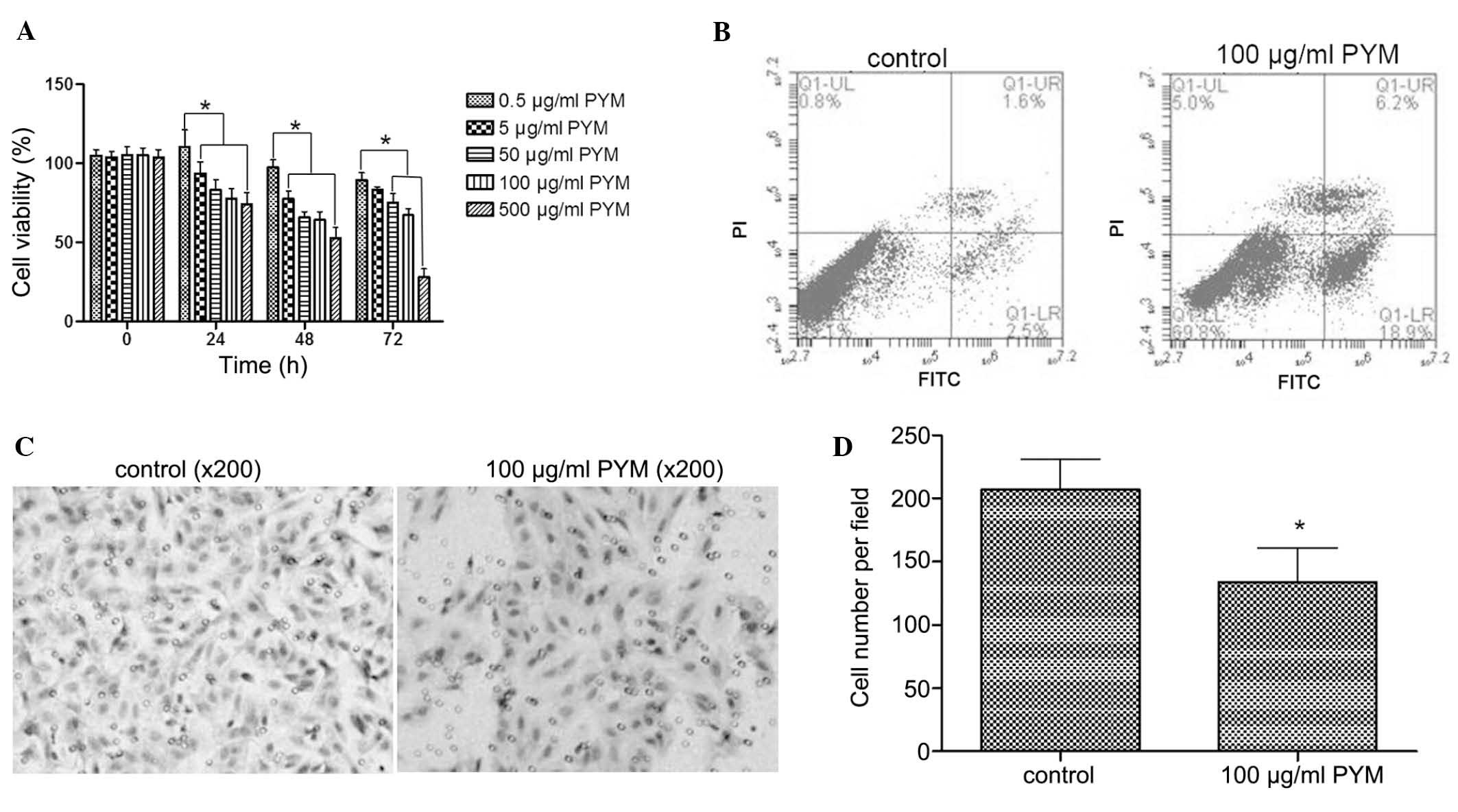
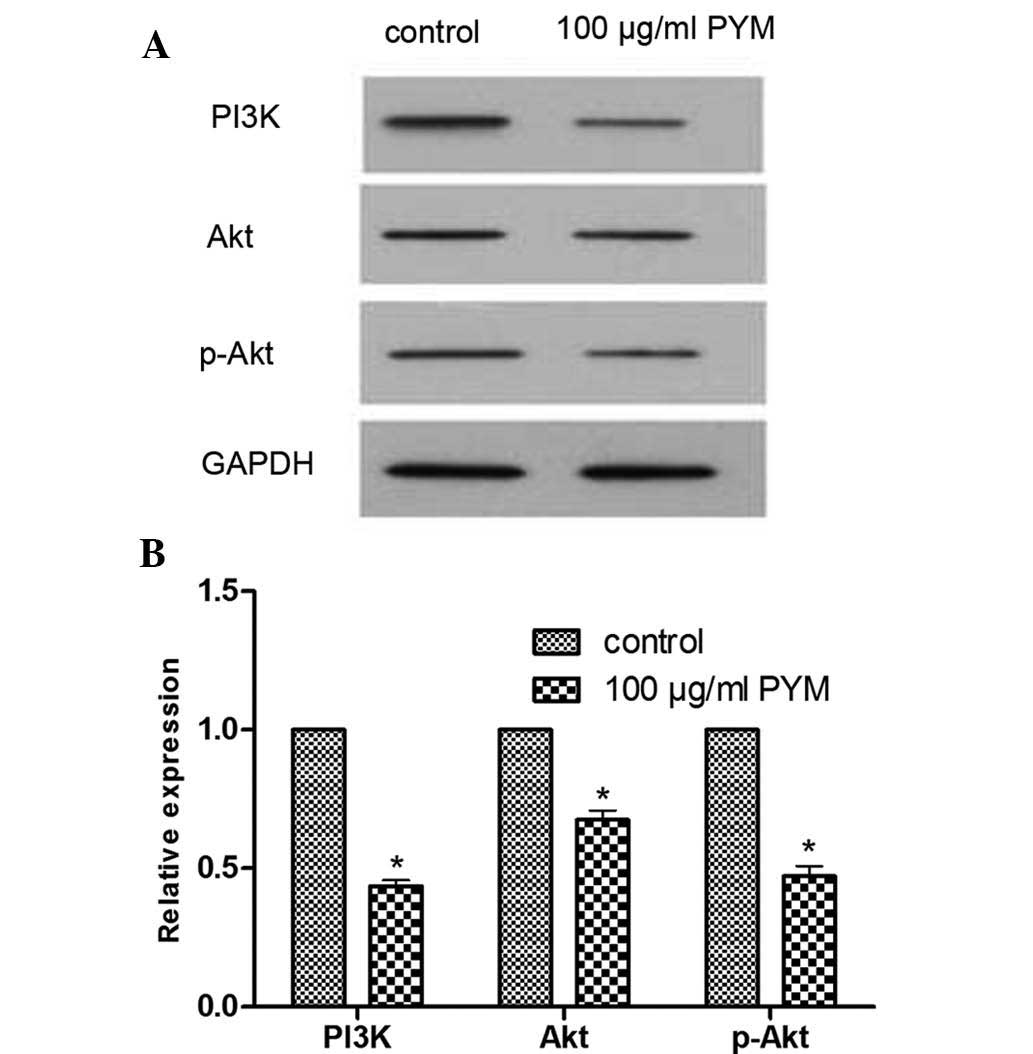
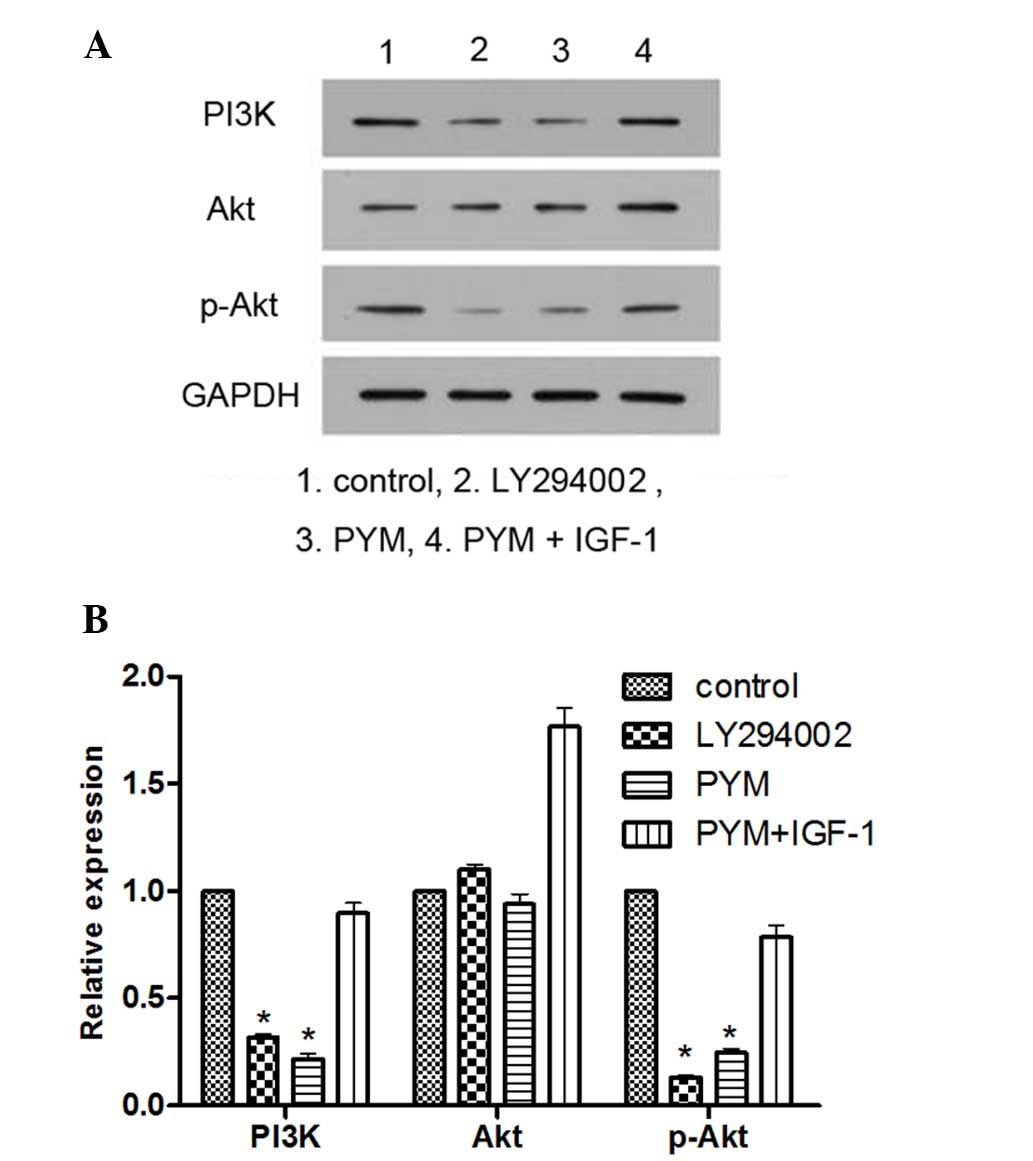
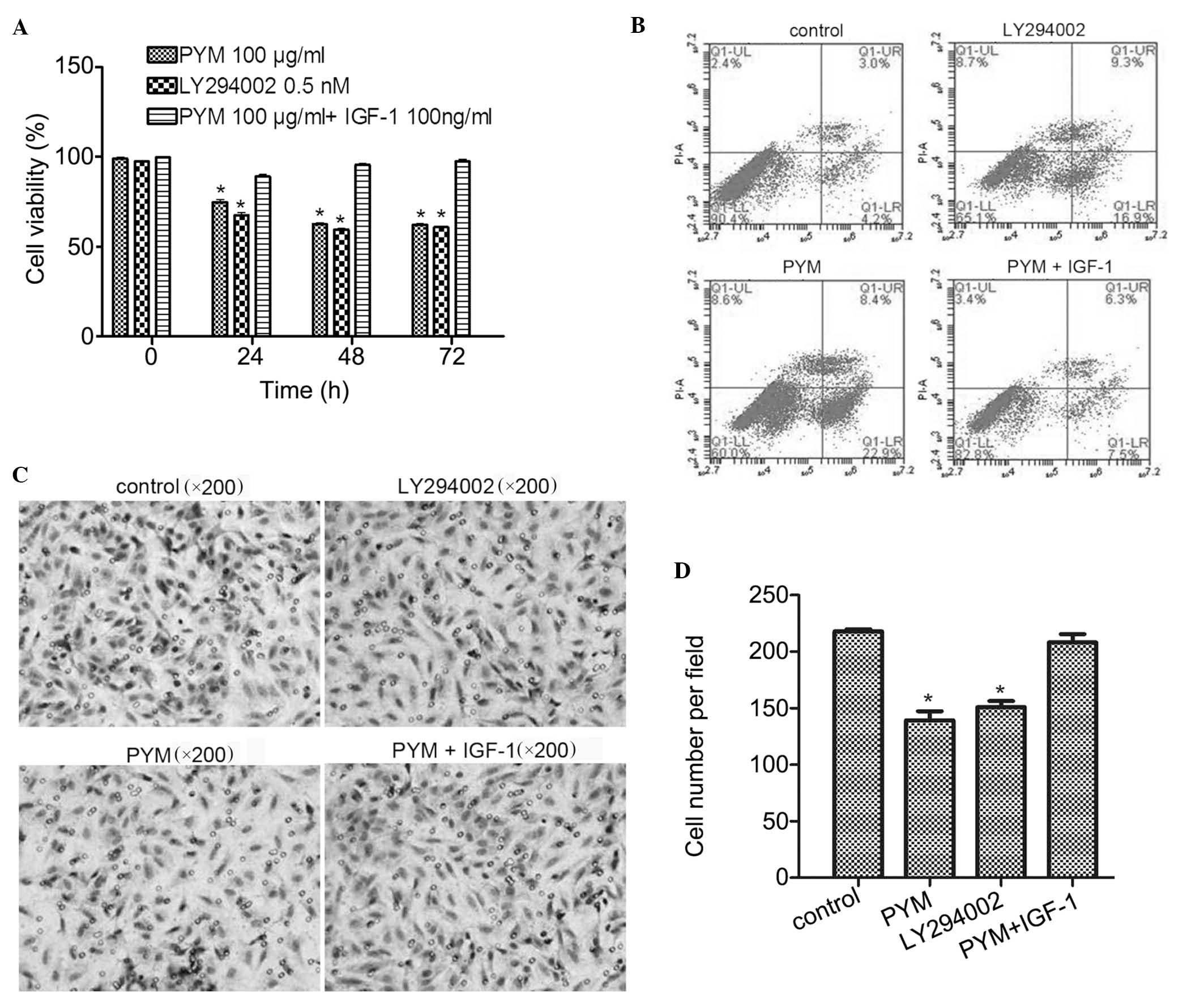
Pingyangmycin (PYM), a glycopeptide antibiotic, has been recommended as a stand treatment for hemangioma. However, the underlying mechanisms of its anti‑tumor effects have remained elusive. The purpose of the present study was to explore the effects of PYM on the biological behavior of the EOMA mouse hemangioendothelioma cell line and investigate the possible mechanisms. The effects of PYM on EOMA cell viability were determined by an MTT assay, apoptosis was evaluated by Annexin V/propidium iodide staining and flow cytometric analysis, and cell invasion ability was determined using a Transwell invasion assay. In order to investigate the underlying mechanism of action of PYM, the expression of angiogenic signaling proteins was determined by western blot analysis. PYM treatment (0.5‑500 µg/ml) inhibited cell growth in a time- and dose‑dependent manner. PYM at 100 µg/ml significantly induced apoptosis and reduced the invasive ability of EOMA cells. Effects of PYM on cell viability, apoptosis and invasion ability were completely blocked by co‑treatment with phosphoinositide 3‑kinase (PI3K) activator insulin‑like growth factor‑1 (IGF‑1). Furthermore, treatment with PYM reduced the expression of PI3K and phosphorylated Akt. In conclusion, the present study indicated that the PI3K/Akt pathway is likely to be involved in the anti-cancer effects of PYM on EOMA cells.
View Figures

Figure 1

Figure 2

Figure 3

Figure 4

View References

1 

Meisheng X: Histopathologic study of esophageal squamous cell carcinoma treated preoperatively with Pingyangmycin. Chin Med J (Engl). 92:343–348. 1979.

2 

Zheng JW, Zhou Q, Yang XJ, He Y, Wang YA, Ye WM, Zhu HG and Zhang ZY: Intralesional injection of Pingyangmycin may be an effective treatment for epulis. Med Hypotheses. 72:453–454. 2009. View Article : Google Scholar : PubMed/NCBI

3 

Liang XH, He YW, Tang YL, Wu JL, Cao XP, Xiao GZ and Mao ZY: Thermochemotherapy of lower lip squamous cell carcinoma without metastases: An experience of 31 cases. J Craniomaxillofac Surg. 38:260–265. 2010. View Article : Google Scholar

4 

Guan JY, He XF, Chen Y, Zeng QL, Mei QL and Li YH: Percutaneous intratumoral injection with pingyangmycin lipiodol emulsion for the treatment of recurrent sacrococcygeal chordomas. J Vasc Interv Radiol. 22:1216–1220. 2011. View Article : Google Scholar : PubMed/NCBI

5 

Qi W, Guo J, Wu S, Su B, Zhang L, Pan J and Zhang J: Synergistic effect of nanosecond pulsed electric field combined with low-dose of pingyangmycin on salivary adenoid cystic carcinoma. Oncol Rep. 31:2220–2228. 2014.PubMed/NCBI

6 

Bai N, Chen YZ, Fu YJ, Wu P and Zhang WN: A clinical study of pingyangmycin sclerotherapy for venous malformation: An evaluation of 281 consecutive patients. J Clin Pharm Ther. 39:521–526. 2014. View Article : Google Scholar : PubMed/NCBI

7 

Jia R, Xu S, Huang X, Song X, Pan H, Zhang L, He F, Lin M, Ge S and Fan X: Pingyangmycin as first-line treatment for low-flow orbital or periorbital venous malformations: Evaluation of 33 consecutive patients. JAMA Ophthalmol. 132:942–948. 2014. View Article : Google Scholar : PubMed/NCBI

8 

Yue H, Qian J, Elner VM, Guo J, Yuan YF, Zhang R and Ge Q: Treatment of orbital vascular malformations with intralesional injection of pingyangmycin. Br J Ophthalmol. 97:739–745. 2013. View Article : Google Scholar : PubMed/NCBI

9 

Luo QF and Zhao FY: The effects of Bleomycin A5 on infantile maxillofacial haemangioma. Head Face Med. 7:112011. View Article : Google Scholar : PubMed/NCBI

10 

Luo Q and Zhao F: How to use bleomycin A5 for infantile maxillofacial haemangiomas: Clinical evaluation of 82 consecutive cases. J Craniomaxillofac Surg. 39:482–486. 2011. View Article : Google Scholar

11 

Hou J, Wang M, Tang H, Wang Y and Huang H: Pingyangmycin sclerotherapy for infantile hemangiomas in oral and maxillofacial regions: An evaluation of 66 consecutive patients. Int J Oral Maxillofac Surg. 40:1246–1251. 2011. View Article : Google Scholar : PubMed/NCBI

12 

Yang Y, Sun M, Cheng X, Hu X, Zhang P, Ma Q, Li J, Tian L and Lei D: Bleomycin A5 plus dexamethasone for control of growth in infantile parotid hemangiomas. Oral Surg Oral Med Oral Pathol Oral Radiol Endod. 108:62–69. 2009. View Article : Google Scholar : PubMed/NCBI

13 

Zheng JW, Zhou Q, Yang XJ, Wang YA, Fan XD, Zhou GY, Zhang ZY and Suen JY: Treatment guideline for hemangiomas and vascular malformations of the head and neck. Head Neck. 32:1088–1098. 2010. View Article : Google Scholar

14 

Greenberger S and Bischoff J: Infantile hemangioma-mechanism(s) of drug action on a vascular tumor. Cold Spring Harb Perspect Med. 1:a0064602011. View Article : Google Scholar

15 

Greenberger S and Bischoff J: Pathogenesis of infantile haemangioma. Br J Dermatol. 169:12–19. 2013. View Article : Google Scholar : PubMed/NCBI

16 

Verheul HM and Pinedo HM: The role of vascular endothelial growth factor (VEGF) in tumor angiogenesis and early clinical development of VEGF-receptor kinase inhibitors. Clin Breast Cancer. 1(Suppl 1): S80–S84. 2000. View Article : Google Scholar

17 

Boye E and Olsen BR: Signaling mechanisms in infantile hemangioma. Curr Opin Hematol. 16:202–208. 2009. View Article : Google Scholar : PubMed/NCBI

18 

Augustin HG, Koh GY, Thurston G and Alitalo K: Control of vascular morphogenesis and homeostasis through the angiopoietin-Tie system. Nat Rev Mol Cell Biol. 10:165–177. 2009. View Article : Google Scholar : PubMed/NCBI

19 

Phng LK and Gerhardt H: Angiogenesis: A team effort coordinated by notch. Dev Cell. 16:196–208. 2009. View Article : Google Scholar : PubMed/NCBI

20 

Bauer TM, Patel MR and Infante JR: Targeting PI3 kinase in cancer. Pharmacol Ther. 146:53–60. 2015. View Article : Google Scholar

21 

Phung TL, Eyiah-Mensah G, O'Donnell RK, Bieniek R, Shechter S, Walsh K, Kuperwasser C and Benjamin LE: Endothelial Akt signaling is rate-limiting for rapamycin inhibition of mouse mammary tumor progression. Cancer Res. 67:5070–5075. 2007. View Article : Google Scholar : PubMed/NCBI

22 

Guba M, von Breitenbuch P, Steinbauer M, Koehl G, Flegel S, Hornung M, Bruns CJ, Zuelke C, Farkas S, Anthuber M, et al: Rapamycin inhibits primary and metastatic tumor growth by antiangiogenesis: Involvement of vascular endothelial growth factor. Nat Med. 8:128–135. 2002. View Article : Google Scholar : PubMed/NCBI

23 

Tai KW, Chang YC, Chou LS and Chou MY: Cytotoxic effect of pingyangmycin on cultured KB cells. Oral Oncol. 34:219–223. 1998. View Article : Google Scholar : PubMed/NCBI

24 

Tu JB, Li QY, Jiang F, Hu XY, Ma RZ, Dong Q, Zhang H, Pattar P and Li SX: Pingyangmycin stimulates apoptosis in human hemangioma-derived endothelial cells through activation of the p53 pathway. Mol Med Rep. 10:301–305. 2014.PubMed/NCBI

25 

Zhao J, Wang SZ, Tang XF, Liu N, Zhao D and Mao ZY: Analysis of thermochemotherapy-induced apoptosis and the protein expressions of Bcl-2 and Bax in maxillofacial squamous cell carcinomas. Med Oncol. 28(Suppl 1): S354–S359. 2011. View Article : Google Scholar

26 

Huang Y, Li P, Xia S, Zhuo Y and Wu L: Proapoptotic effect and the mechanism of action of pingyangmycin on cavernous hemangiomas. Exp Ther Med. 7:473–477. 2014.PubMed/NCBI

27 

Tai KW, Chou MY, Hu CC, Yang JJ and Chang YC: Induction of apoptosis in KB cells by pingyangmycin. Oral Oncol. 36:242–247. 2000. View Article : Google Scholar : PubMed/NCBI

28 

Yang LC, Yang SH, Tai KW, Chou MY and Yang JJ: MEK inhibition enhances bleomycin A5-induced apoptosis in an oral cancer cell line: Signaling mechanisms and therapeutic opportunities. J Oral Pathol Med. 33:37–45. 2004. View Article : Google Scholar

29 

Fruman DA and Rommel C: PI3K and cancer: Lessons, challenges and opportunities. Nat Rev Drug Discov. 13:140–156. 2014. View Article : Google Scholar : PubMed/NCBI

30 

Hassan B, Akcakanat A, Holder AM and Meric-Bernstam F: Targeting the PI3-kinase/Akt/mTOR signaling pathway. Surg Oncol Clin N Am. 22:641–664. 2013. View Article : Google Scholar : PubMed/NCBI

31 

Khan KH, Yap TA, Yan L and Cunningham D: Targeting the PI3K-AKT-mTOR signaling network in cancer. Chin J Cancer. 32:253–265. 2013. View Article : Google Scholar : PubMed/NCBI

32 

Sun SY: MTOR kinase inhibitors as potential cancer therapeutic drugs. Cancer Lett. 340:1–8. 2013. View Article : Google Scholar : PubMed/NCBI

33 

Alessi DR, Pearce LR and Garcia-Martinez JM: New insights into mTOR signaling: MTORC2 and beyond. Sci Signal. 2:pe272009. View Article : Google Scholar : PubMed/NCBI

34 

Zheng NN, Ding XD and Zhang HP: Targeting rictor inhibits mouse vascular tumor cell proliferation and invasion in vitro and tumor growth in vivo. Neoplasma. 60:41–45. 2013. View Article : Google Scholar

35 

Aouida M and Ramotar D: A new twist in cellular resistance to the anticancer drug bleomycin-A5. Curr Drug Metab. 11:595–602. 2010. View Article : Google Scholar : PubMed/NCBI

36 

Raisfeld IH: Pulmonary toxicity of bleomycin analogs. Toxicol Appl Pharmacol. 56:326–336. 1980. View Article : Google Scholar : PubMed/NCBI

37 

Russo RC, Garcia CC, Barcelos LS, Rachid MA, Guabiraba R, Roffê E, Souza AL, Sousa LP, Mirolo M, Doni A, et al: Phosphoinositide 3-kinase γ plays a critical role in bleomycin-induced pulmonary inflammation and fibrosis in mice. J Leukoc Biol. 89:269–282. 2011. View Article : Google Scholar

38 

Wei X, Han J, Chen ZZ, Qi BW, Wang GC, Ma YH, Zheng H, Luo YF, Wei YQ and Chen LJ: A phosphoinositide 3-kinase-gamma inhibitor, AS605240 prevents bleomycin-induced pulmonary fibrosis in rats. Biochem Biophys Res Commun. 397:311–317. 2010. View Article : Google Scholar : PubMed/NCBI

Related Articles

  • Abstract
  • View
  • Download
  • Twitter
Copy and paste a formatted citation
Spandidos Publications style
Peng LX, Zhao P, Zhao HS, Pan E, Yang BB and Li Q: Phosphoinositide 3-kinase/Akt pathway is involved in pingyangmycin‑induced growth inhibition, apoptosis and reduction of invasive potential in EOMA mouse hemangioendothelioma cells Retraction in /10.3892/mmr.2025.13739. Mol Med Rep 12: 8275-8281, 2015.
APA
Peng, L., Zhao, P., Zhao, H., Pan, E., Yang, B., & Li, Q. (2015). Phosphoinositide 3-kinase/Akt pathway is involved in pingyangmycin‑induced growth inhibition, apoptosis and reduction of invasive potential in EOMA mouse hemangioendothelioma cells Retraction in /10.3892/mmr.2025.13739. Molecular Medicine Reports, 12, 8275-8281. https://doi.org/10.3892/mmr.2015.4447
MLA
Peng, L., Zhao, P., Zhao, H., Pan, E., Yang, B., Li, Q."Phosphoinositide 3-kinase/Akt pathway is involved in pingyangmycin‑induced growth inhibition, apoptosis and reduction of invasive potential in EOMA mouse hemangioendothelioma cells Retraction in /10.3892/mmr.2025.13739". Molecular Medicine Reports 12.6 (2015): 8275-8281.
Chicago
Peng, L., Zhao, P., Zhao, H., Pan, E., Yang, B., Li, Q."Phosphoinositide 3-kinase/Akt pathway is involved in pingyangmycin‑induced growth inhibition, apoptosis and reduction of invasive potential in EOMA mouse hemangioendothelioma cells Retraction in /10.3892/mmr.2025.13739". Molecular Medicine Reports 12, no. 6 (2015): 8275-8281. https://doi.org/10.3892/mmr.2015.4447
Copy and paste a formatted citation
x
Spandidos Publications style
Peng LX, Zhao P, Zhao HS, Pan E, Yang BB and Li Q: Phosphoinositide 3-kinase/Akt pathway is involved in pingyangmycin‑induced growth inhibition, apoptosis and reduction of invasive potential in EOMA mouse hemangioendothelioma cells Retraction in /10.3892/mmr.2025.13739. Mol Med Rep 12: 8275-8281, 2015.
APA
Peng, L., Zhao, P., Zhao, H., Pan, E., Yang, B., & Li, Q. (2015). Phosphoinositide 3-kinase/Akt pathway is involved in pingyangmycin‑induced growth inhibition, apoptosis and reduction of invasive potential in EOMA mouse hemangioendothelioma cells Retraction in /10.3892/mmr.2025.13739. Molecular Medicine Reports, 12, 8275-8281. https://doi.org/10.3892/mmr.2015.4447
MLA
Peng, L., Zhao, P., Zhao, H., Pan, E., Yang, B., Li, Q."Phosphoinositide 3-kinase/Akt pathway is involved in pingyangmycin‑induced growth inhibition, apoptosis and reduction of invasive potential in EOMA mouse hemangioendothelioma cells Retraction in /10.3892/mmr.2025.13739". Molecular Medicine Reports 12.6 (2015): 8275-8281.
Chicago
Peng, L., Zhao, P., Zhao, H., Pan, E., Yang, B., Li, Q."Phosphoinositide 3-kinase/Akt pathway is involved in pingyangmycin‑induced growth inhibition, apoptosis and reduction of invasive potential in EOMA mouse hemangioendothelioma cells Retraction in /10.3892/mmr.2025.13739". Molecular Medicine Reports 12, no. 6 (2015): 8275-8281. https://doi.org/10.3892/mmr.2015.4447
Follow us
  • Twitter
  • LinkedIn
  • Facebook
About
  • Spandidos Publications
  • Careers
  • Cookie Policy
  • Privacy Policy
How can we help?
  • Help
  • Live Chat
  • Contact
  • Email to our Support Team