Spandidos Publications Logo
  • About
    • About Spandidos
    • Aims and Scopes
    • Abstracting and Indexing
    • Editorial Policies
    • Reprints and Permissions
    • Job Opportunities
    • Terms and Conditions
    • Contact
  • Journals
    • All Journals
    • Oncology Letters
      • Oncology Letters
      • Information for Authors
      • Editorial Policies
      • Editorial Board
      • Aims and Scope
      • Abstracting and Indexing
      • Bibliographic Information
      • Archive
    • International Journal of Oncology
      • International Journal of Oncology
      • Information for Authors
      • Editorial Policies
      • Editorial Board
      • Aims and Scope
      • Abstracting and Indexing
      • Bibliographic Information
      • Archive
    • Molecular and Clinical Oncology
      • Molecular and Clinical Oncology
      • Information for Authors
      • Editorial Policies
      • Editorial Board
      • Aims and Scope
      • Abstracting and Indexing
      • Bibliographic Information
      • Archive
    • Experimental and Therapeutic Medicine
      • Experimental and Therapeutic Medicine
      • Information for Authors
      • Editorial Policies
      • Editorial Board
      • Aims and Scope
      • Abstracting and Indexing
      • Bibliographic Information
      • Archive
    • International Journal of Molecular Medicine
      • International Journal of Molecular Medicine
      • Information for Authors
      • Editorial Policies
      • Editorial Board
      • Aims and Scope
      • Abstracting and Indexing
      • Bibliographic Information
      • Archive
    • Biomedical Reports
      • Biomedical Reports
      • Information for Authors
      • Editorial Policies
      • Editorial Board
      • Aims and Scope
      • Abstracting and Indexing
      • Bibliographic Information
      • Archive
    • Oncology Reports
      • Oncology Reports
      • Information for Authors
      • Editorial Policies
      • Editorial Board
      • Aims and Scope
      • Abstracting and Indexing
      • Bibliographic Information
      • Archive
    • Molecular Medicine Reports
      • Molecular Medicine Reports
      • Information for Authors
      • Editorial Policies
      • Editorial Board
      • Aims and Scope
      • Abstracting and Indexing
      • Bibliographic Information
      • Archive
    • World Academy of Sciences Journal
      • World Academy of Sciences Journal
      • Information for Authors
      • Editorial Policies
      • Editorial Board
      • Aims and Scope
      • Abstracting and Indexing
      • Bibliographic Information
      • Archive
    • International Journal of Functional Nutrition
      • International Journal of Functional Nutrition
      • Information for Authors
      • Editorial Policies
      • Editorial Board
      • Aims and Scope
      • Abstracting and Indexing
      • Bibliographic Information
      • Archive
    • International Journal of Epigenetics
      • International Journal of Epigenetics
      • Information for Authors
      • Editorial Policies
      • Editorial Board
      • Aims and Scope
      • Abstracting and Indexing
      • Bibliographic Information
      • Archive
    • Medicine International
      • Medicine International
      • Information for Authors
      • Editorial Policies
      • Editorial Board
      • Aims and Scope
      • Abstracting and Indexing
      • Bibliographic Information
      • Archive
  • Articles
  • Information
    • Information for Authors
    • Information for Reviewers
    • Information for Librarians
    • Information for Advertisers
    • Conferences
  • Language Editing
Spandidos Publications Logo
  • About
    • About Spandidos
    • Aims and Scopes
    • Abstracting and Indexing
    • Editorial Policies
    • Reprints and Permissions
    • Job Opportunities
    • Terms and Conditions
    • Contact
  • Journals
    • All Journals
    • Biomedical Reports
      • Information for Authors
      • Editorial Policies
      • Editorial Board
      • Aims and Scope
      • Abstracting and Indexing
      • Bibliographic Information
      • Archive
    • Experimental and Therapeutic Medicine
      • Information for Authors
      • Editorial Policies
      • Editorial Board
      • Aims and Scope
      • Abstracting and Indexing
      • Bibliographic Information
      • Archive
    • International Journal of Epigenetics
      • Information for Authors
      • Editorial Policies
      • Editorial Board
      • Aims and Scope
      • Abstracting and Indexing
      • Bibliographic Information
      • Archive
    • International Journal of Functional Nutrition
      • Information for Authors
      • Editorial Policies
      • Editorial Board
      • Aims and Scope
      • Abstracting and Indexing
      • Bibliographic Information
      • Archive
    • International Journal of Molecular Medicine
      • Information for Authors
      • Editorial Policies
      • Editorial Board
      • Aims and Scope
      • Abstracting and Indexing
      • Bibliographic Information
      • Archive
    • International Journal of Oncology
      • Information for Authors
      • Editorial Policies
      • Editorial Board
      • Aims and Scope
      • Abstracting and Indexing
      • Bibliographic Information
      • Archive
    • Medicine International
      • Information for Authors
      • Editorial Policies
      • Editorial Board
      • Aims and Scope
      • Abstracting and Indexing
      • Bibliographic Information
      • Archive
    • Molecular and Clinical Oncology
      • Information for Authors
      • Editorial Policies
      • Editorial Board
      • Aims and Scope
      • Abstracting and Indexing
      • Bibliographic Information
      • Archive
    • Molecular Medicine Reports
      • Information for Authors
      • Editorial Policies
      • Editorial Board
      • Aims and Scope
      • Abstracting and Indexing
      • Bibliographic Information
      • Archive
    • Oncology Letters
      • Information for Authors
      • Editorial Policies
      • Editorial Board
      • Aims and Scope
      • Abstracting and Indexing
      • Bibliographic Information
      • Archive
    • Oncology Reports
      • Information for Authors
      • Editorial Policies
      • Editorial Board
      • Aims and Scope
      • Abstracting and Indexing
      • Bibliographic Information
      • Archive
    • World Academy of Sciences Journal
      • Information for Authors
      • Editorial Policies
      • Editorial Board
      • Aims and Scope
      • Abstracting and Indexing
      • Bibliographic Information
      • Archive
  • Articles
  • Information
    • For Authors
    • For Reviewers
    • For Librarians
    • For Advertisers
    • Conferences
  • Language Editing
Login Register Submit
  • This site uses cookies
  • You can change your cookie settings at any time by following the instructions in our Cookie Policy. To find out more, you may read our Privacy Policy.

    I agree
Search articles by DOI, keyword, author or affiliation
Search
Advanced Search
presentation
Molecular Medicine Reports
Join Editorial Board Propose a Special Issue
Print ISSN: 1791-2997 Online ISSN: 1791-3004
Journal Cover
December-2015 Volume 12 Issue 6

Full Size Image

Sign up for eToc alerts
Recommend to Library

Journals

International Journal of Molecular Medicine

International Journal of Molecular Medicine

International Journal of Molecular Medicine is an international journal devoted to molecular mechanisms of human disease.

International Journal of Oncology

International Journal of Oncology

International Journal of Oncology is an international journal devoted to oncology research and cancer treatment.

Molecular Medicine Reports

Molecular Medicine Reports

Covers molecular medicine topics such as pharmacology, pathology, genetics, neuroscience, infectious diseases, molecular cardiology, and molecular surgery.

Oncology Reports

Oncology Reports

Oncology Reports is an international journal devoted to fundamental and applied research in Oncology.

Experimental and Therapeutic Medicine

Experimental and Therapeutic Medicine

Experimental and Therapeutic Medicine is an international journal devoted to laboratory and clinical medicine.

Oncology Letters

Oncology Letters

Oncology Letters is an international journal devoted to Experimental and Clinical Oncology.

Biomedical Reports

Biomedical Reports

Explores a wide range of biological and medical fields, including pharmacology, genetics, microbiology, neuroscience, and molecular cardiology.

Molecular and Clinical Oncology

Molecular and Clinical Oncology

International journal addressing all aspects of oncology research, from tumorigenesis and oncogenes to chemotherapy and metastasis.

World Academy of Sciences Journal

World Academy of Sciences Journal

Multidisciplinary open-access journal spanning biochemistry, genetics, neuroscience, environmental health, and synthetic biology.

International Journal of Functional Nutrition

International Journal of Functional Nutrition

Open-access journal combining biochemistry, pharmacology, immunology, and genetics to advance health through functional nutrition.

International Journal of Epigenetics

International Journal of Epigenetics

Publishes open-access research on using epigenetics to advance understanding and treatment of human disease.

Medicine International

Medicine International

An International Open Access Journal Devoted to General Medicine.

Journal Cover
December-2015 Volume 12 Issue 6

Full Size Image

Sign up for eToc alerts
Recommend to Library

  • Article
  • Citations
    • Cite This Article
    • Download Citation
    • Create Citation Alert
    • Remove Citation Alert
    • Cited By
  • Similar Articles
    • Related Articles (in Spandidos Publications)
    • Similar Articles (Google Scholar)
    • Similar Articles (PubMed)
  • Download PDF
  • Download XML
  • View XML
Article

Substance P prevents 1-methyl-4-phenylpyridinium-induced cytotoxicity through inhibition of apoptosis via neurokinin-1 receptors in MES23.5 cells

  • Authors:
    • Shuang‑Yan Wang
    • Lei Chen
    • Yan Xue
    • Yu‑Jun Xia
  • View Affiliations / Copyright

    Affiliations: Department of Physiology, Qingdao University, Qingdao, Shandong 266071, P.R. China, Department of Anatomy, Qingdao University, Qingdao, Shandong 266071, P.R. China
  • Pages: 8085-8092
    |
    Published online on: October 21, 2015
       https://doi.org/10.3892/mmr.2015.4464
  • Expand metrics +
Metrics: Total Views: 0 (Spandidos Publications: | PMC Statistics: )
Metrics: Total PDF Downloads: 0 (Spandidos Publications: | PMC Statistics: )
Cited By (CrossRef): 0 citations Loading Articles...

This article is mentioned in:


Abstract

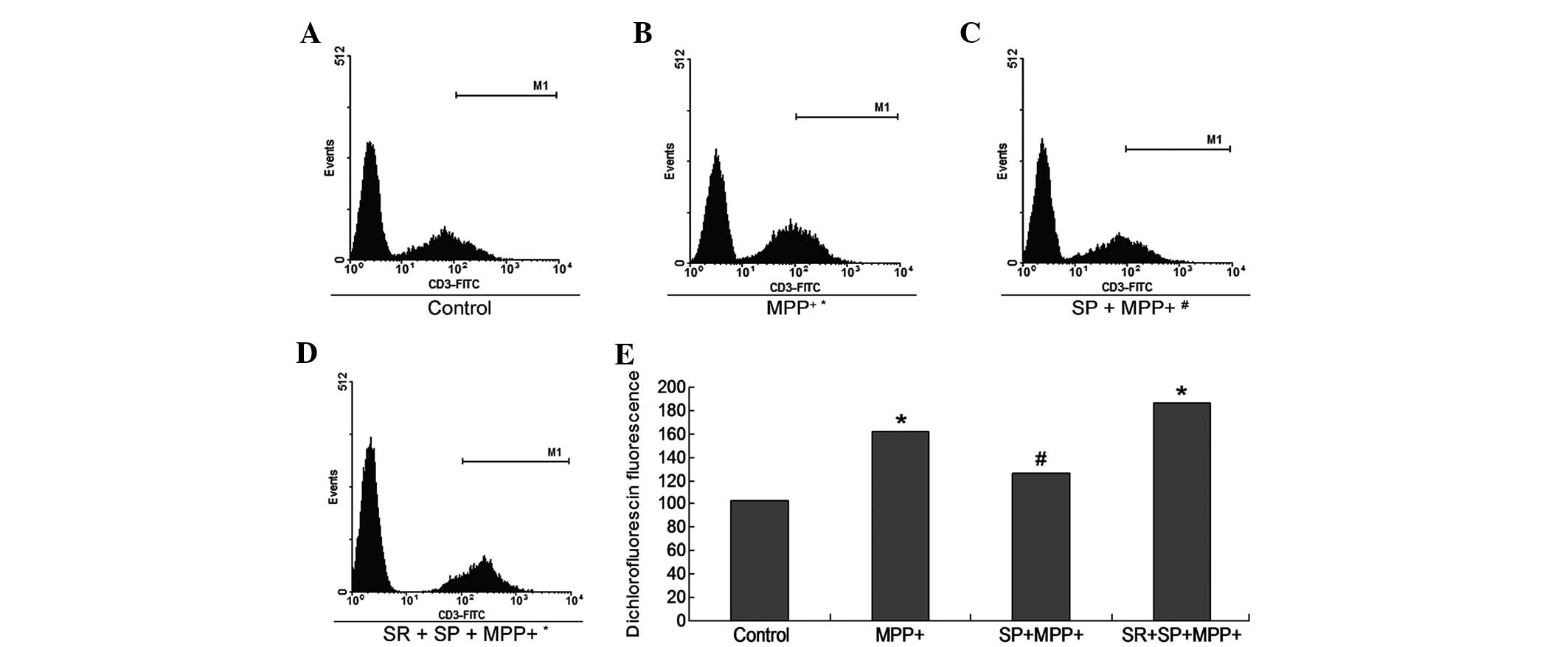
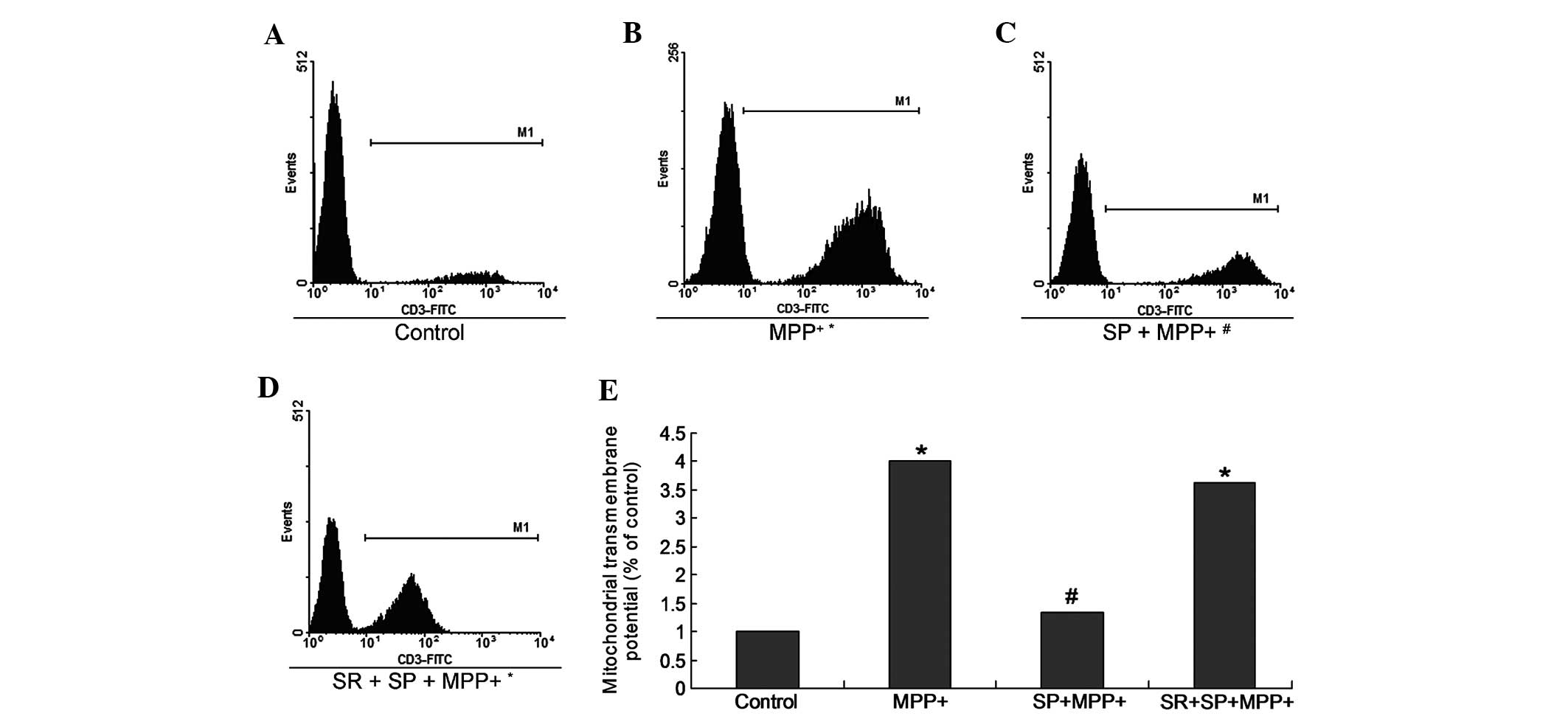
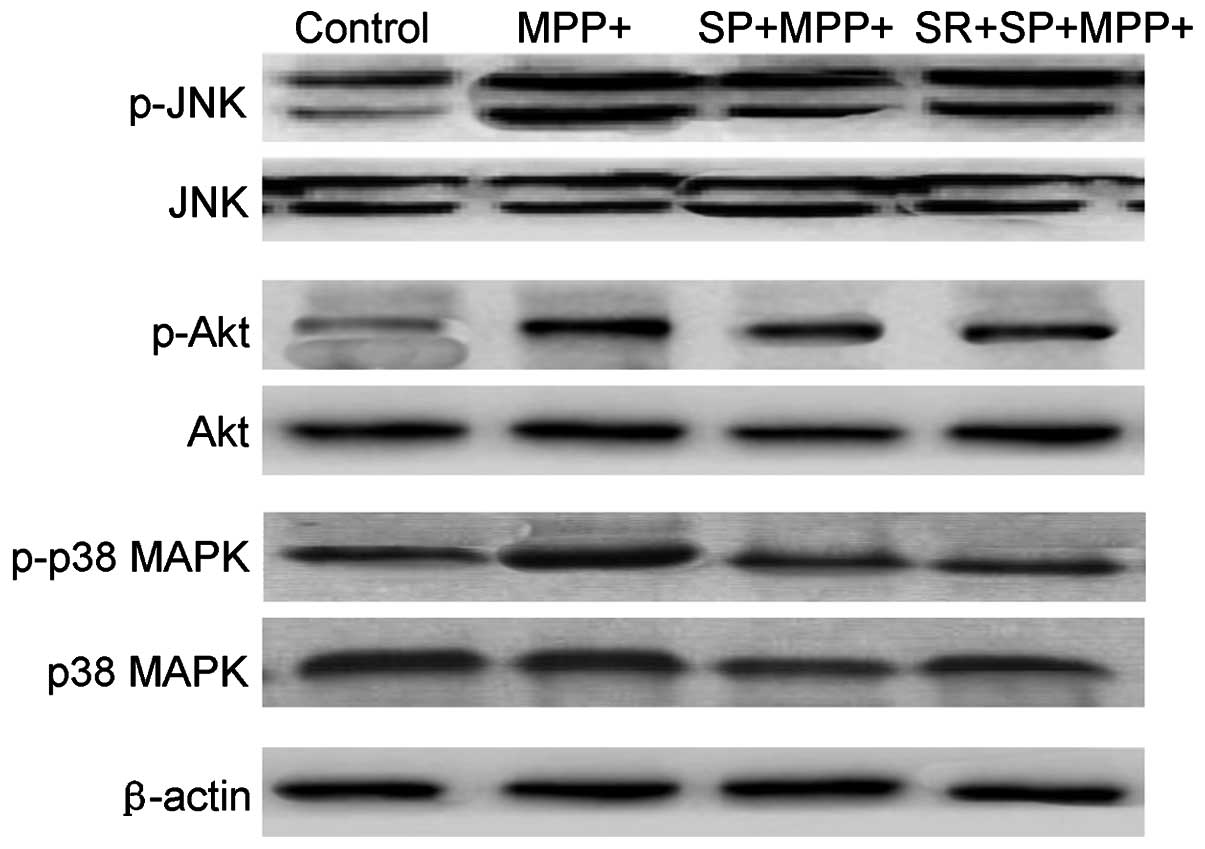
[Sar9, Met(O2)11] termed Substance P (SP), is an effective and selective agonist for the neurokinin‑1 (NK‑1) receptors, which are synthetic peptides, similar in structure to SP. SP is an important neurotransmitter or neuromodulator mediated by neurokinin receptors, namely the SP receptor in the central nervous system. The excitatory effects induced by SP may be selectively inhibited by a neurokinin‑1 receptor antagonist, such as SR140333B. It has been proposed that Parkinson's disease (PD) is primarily caused by the loss of trophic peptidergic neurotransmitter, possibly SP, which may lead to the degeneration of neurons. In previous studies, 1‑methyl‑4‑phenylpyridinium (MPP+) has been frequently utilized to establish animal or cell models of PD. In the present study, to further investigate the effects of SP in PD, MPP+ was employed to investigate the promising anti‑apoptotic effects of SP, and examine the underlying mechanisms of the pathology in the MES23.5 dopaminergic cell line. The results indicated that MPP+‑triggered apoptosis was prevented by treatment with SP. SP treatment also decreased the MPP+‑triggered Ca2+ influx, caspase‑3 re‑activity, reactive oxygen species production and mitochondrial membrane potential decrease. Treatment with MPP+ also induced phosphorylation of c‑Jun N‑terminal kinase and p38 mitogen‑activated protein kinase. In addition, treatment with SP inhibited the MPP+‑triggered neurotoxicity in MES23.5 cells. However, no changes were observed in SR140333B+SP+MPP+‑treated MES23.5 cell lines. In conclusion, SP could protect the cells from MPP+‑induced cytotoxicity by inhibiting the apoptosis via NK-1 receptors.
View Figures

Figure 1

Figure 2

Figure 3

Figure 4

Figure 5

Figure 6

Figure 7

View References

1 

Li DW, Liu ZQ, Chen W, Yao M and Li GR: Association of glycogen synthase kinase-3β with Parkinson's disease (review). Mol Med Rep. 9:2043–2050. 2014.PubMed/NCBI

2 

Obeso JA, Rodríguez-Oroz MC, Rodríguez M, Lanciego JL, Artieda J, Gonzalo N and Olanow CW: Pathophysiology of the basal ganglia in Parkinson's disease. Trends Neurosci. 23(Suppl): S8–S19. 2000. View Article : Google Scholar : PubMed/NCBI

3 

Oertel WH and Ellgring H: Parkinson's disease - medical education and psychosocial aspects. Patient Educ Couns. 26:71–79. 1995. View Article : Google Scholar : PubMed/NCBI

4 

Levy OA, Malagelada C and Greene LA: Cell death pathways in Parkinson's disease: Proximal triggers, distal effectors, and final steps. Apoptosis. 14:478–500. 2009. View Article : Google Scholar : PubMed/NCBI

5 

Irrcher I and Park DS: Parkinson's disease: To live or die by autophagy. Sci Signal. 2:pe212009. View Article : Google Scholar : PubMed/NCBI

6 

Hartmann A and Hirsch EC: Parkinson's disease. The apoptosis hypothesis revisited. Adv Neurol. 86:143–153. 2001.PubMed/NCBI

7 

Tatton WG, Chalmers-Redman R, Brown D and Tatton N: Apoptosis in Parkinson's disease: Signals for neuronal degradation. Ann Neurol. 53(Suppl 3): S61–S72. 2003. View Article : Google Scholar : PubMed/NCBI

8 

Chang WA, Lin ES, Tsai MJ, Huang MS and Kuo PL: Isolinderalactone inhibits proliferation of A549 human non small cell lung cancer cells by arresting the cell cycle at the G0/G1 phase and inducing a Fas receptor and soluble Fas ligand-mediated apoptotic pathway. Mol Med Rep. 9:1653–1659. 2014.PubMed/NCBI

9 

Anglade P, Vyas S, Javoy-Agid F, Herrero MT, Michel PP, Marquez J, Mouatt-Prigent A, Ruberg M, Hirsch EC and Agid Y: Apoptosis and autophagy in nigral neurons of patients with Parkinson's disease. Histol Histopathol. 12:25–31. 1997.PubMed/NCBI

10 

Fornai F, Lenzi P, Gesi M, Soldani P, Ferrucci M, Lazzeri G, Capobianco L, Battaglia G, De Blasi A, Nicoletti F, et al: Methamphetamine produces neuronal inclusions in the nigrostriatal system and in PC12 cells. J Neurochem. 88:114–123. 2004. View Article : Google Scholar

11 

Yakhine-Diop SM, Bravo-San Pedro JM, Gómez-Sánchez R, Pizarro-Estrella E, Rodríguez-Arribas M, Climent V, Aiastui A, López de Munain A, Fuentes JM and González-Polo RA: G2019S LRRK2 mutant fibroblasts from Parkinson's disease patients show increased sensitivity to neurotoxin 1-methyl-4-phenylpyridinium dependent of autophagy. Toxicology. 324:1–9. 2014. View Article : Google Scholar : PubMed/NCBI

12 

Robinson P, Garza A, Moore J, Eckols TK, Parti S, Balaji V, Vallejo J and Tweardy DJ: Substance P is required for the pathogenesis of EMCV infection in mice. Int J Clin Exp Med. 2:76–86. 2009.PubMed/NCBI

13 

Barker R: Tachykinins, neurotrophism and neurodegenerative diseases: A critical review on the possible role of tachykinins in the aetiology of CNS diseases. Rev Neurosci. 7:187–214. 1996. View Article : Google Scholar : PubMed/NCBI

14 

Thornton E and Vink R: Treatment with a substance P receptor antagonist is neuroprotective in the intrastriatal 6-hydroxydopamine model of early Parkinson's disease. PLoS One. 7:e341382012. View Article : Google Scholar : PubMed/NCBI

15 

Nalivaiko E, Michaud JC, Soubrié P, Le Fur G and Feltz P: Tachykinin neurokinin-1 and neurokinin-3 receptor-mediated responses in guinea-pig substantia nigra: An in vitro electrophysiological study. Neuroscience. 78:745–757. 1997. View Article : Google Scholar : PubMed/NCBI

16 

Strell C, Sievers A, Bastian P, Lang K, Niggemann B, Zänker KS and Entschladen F: Divergent effects of norepinephrine, dopamine and substance P on the activation, differentiation and effector functions of human cytotoxic T lymphocytes. BMC Immunol. 10:622009. View Article : Google Scholar : PubMed/NCBI

17 

Crawford GD Jr, Le WD, Smith RG, Xie WJ, Stefani E and Appel SH: A novel N18TG2 x mesencephalon cell hybrid expresses properties that suggest a dopaminergic cell line of substantia nigra origin. J Neurosci. 12:3392–3398. 1992.PubMed/NCBI

18 

Liu L, Xu H, Jiang H, Wang J, Song N and Xie J: Ghrelin prevents 1-methyl-4-phenylpyridinium ion-induced cytotoxicity through antioxidation and NF-kappaB modulation in MES23.5 cells. Exp Neurol. 222:25–29. 2010. View Article : Google Scholar

19 

Yao G, Yang L, Hu Y, Liang J, Liang J and Hou Y: Nonylphenol-induced thymocyte apoptosis involved caspase-3 activation and mitochondrial depolarization. Mol Immunol. 43:915–926. 2006. View Article : Google Scholar

20 

Feng Z and Zhang JT: Protective effect of melatonin on b-amyloid induced apoptosis in rat astroglioma c6 cells and its mechanism. Free Radic Biol Med. 2004:1790–1801. 2014.

21 

Wei CD, Li Y, Zheng HY, Tong YQ and Dai W: Palmitate induces H9c2 cell apoptosis by increasing reactive oxygen species generation and activation of the ERK1/2 signaling pathway. Mol Med Rep. 7:855–861. 2013.PubMed/NCBI

22 

Zhao L, Teng B, Wen L, Feng Q, Wang H, Li N, Wang Y and Liang Z: mTOR inhibitor AZD8055 inhibits proliferation and induces apoptosis in laryngeal carcinoma. Int J Clin Exp Med. 7:337–347. 2014.PubMed/NCBI

23 

Egnatchik RA, Leamy AK, Jacobson DA, Shiota M and Young JD: ER calcium release promotes mitochondrial dysfunction and hepatic cell lipotoxicity in response to palmitate overload. Mol Metab. 3:544–553. 2014. View Article : Google Scholar : PubMed/NCBI

24 

Wang XJ and Xu JX: Possible involvement of Ca2+ signaling in rotenone-induced apoptosis in human neuroblastoma SH-SY5Y cells. Neurosci Lett. 376:127–132. 2005. View Article : Google Scholar : PubMed/NCBI

25 

Bhattacharyya S, Ghosh S, Shant J, Ganguly NK and Majumdar S: Role of the W07-toxin on Vibrio cholerae-induced diarrhoea. Biochim Biophys Acta. 1670:69–80. 2004. View Article : Google Scholar : PubMed/NCBI

26 

Wang J, Du XX, Jiang H and Xie JX: Curcumin attenuates 6-hydroxydopamine-induced cytotoxicity by anti-oxidation and nuclear factor-kappa B modulation in MES23.5 cells. Biochem Pharmacol. 78:178–183. 2009. View Article : Google Scholar : PubMed/NCBI

27 

Iwasaki Y, Kinoshita M, Ikeda K, Takamiya K and Shiojima T: Trophic effect of various neuropeptides on the cultured ventral spinal cord of rat embryo. Neurosci Lett. 101:316–320. 1989. View Article : Google Scholar : PubMed/NCBI

28 

Bleiblo F, Michael P, Brabant D, Ramana CV, Tai T, Saleh M, Parrillo JE and Kumar A and Kumar A: JAK kinases are required for the bacterial RNA and poly I:C induced tyrosine phosphorylation of PKR. Int J Clin Exp Med. 6:16–25. 2013.

29 

Kitamura Y, Shimohama S, Akaike A and Taniguchi T: The parkinsonian models: Invertebrates to mammals. Jpn J Pharmacol. 84:237–243. 2000. View Article : Google Scholar

30 

Siddique YH, Naz F and Jyoti S: Effect of curcumin on lifespan, activity pattern, oxidative stress, and apoptosis in the brains of transgenic Drosophila model of Parkinson's disease. BioMed Res Int. 606928:20142014.

31 

Zhang Z, Zhang K, Du X and Li Y: Neuroprotection of desferrioxamine in lipopolysaccharide-induced nigrostriatal dopamine neuron degeneration. Mol Med Rep. 5:562–566. 2012.

32 

Ekshyyan O and Aw TY: Apoptosis: A key in neurodegenerative disorders. Curr Neurovasc Res. 1:355–371. 2004. View Article : Google Scholar

33 

Enari M, Sakahira H, Yokoyama H, Okawa K, Iwamatsu A and Nagata S: A caspase-activated DNase that degrades DNA during apoptosis, and its inhibitor ICAD. Nature. 391:43–50. 1998. View Article : Google Scholar : PubMed/NCBI

34 

Beal MF: Excitotoxicity and nitric oxide in Parkinson's disease pathogenesis. Ann Neurol. 44(Suppl 1): S110–S114. 1998. View Article : Google Scholar : PubMed/NCBI

35 

Ma S, Cai C, Ma Y, Bai Z, Meng X, Yang X, Zou F and Ge R: Store-operated Ca2+ entry mediated regulation of polarization in differentiated human neutrophil-like HL-60 cells under hypoxia. Mol Med Rep. 9:819–824. 2014.PubMed/NCBI

36 

Kim HY, LaVaute T, Iwai K, Klausner RD and Rouault TA: Identification of a conserved and functional iron-responsive element in the 5'-untranslated region of mammalian mitochondrial aconitase. J Biol Chem. 271:24226–24230. 1996. View Article : Google Scholar : PubMed/NCBI

37 

Scorrano L, Oakes SA, Opferman JT, Cheng EH, Sorcinelli MD, Pozzan T and Korsmeyer SJ: BAX and BAK regulation of endoplasmic reticulum Ca2+: A control point for apoptosis. Science. 300:135–139. 2003. View Article : Google Scholar : PubMed/NCBI

38 

Brecht S, Kirchhof R, Chromik A, Willesen M, Nicolaus T, Raivich G, Wessig J, Waetzig V, Goetz M, Claussen M, et al: Specific pathophysiological functions of JNK isoforms in the brain. Eur J Neurosci. 21:363–377. 2005. View Article : Google Scholar : PubMed/NCBI

39 

Dhanasekaran DN and Reddy EP: JNK signaling in apoptosis. Oncogene. 27:6245–6251. 2008. View Article : Google Scholar : PubMed/NCBI

40 

Eminel S, Roemer L, Waetzig V and Herdegen T: c-Jun N-terminal kinases trigger both degeneration and neurite outgrowth in primary hippocampal and cortical neurons. J Neurochem. 104:957–969. 2008. View Article : Google Scholar

41 

Yeste-Velasco M, Folch J, Casadesús G, Smith MA, Pallàs M and Camins A: Neuroprotection by c-Jun NH2-terminal kinase inhibitor SP600125 against potassium deprivation-induced apoptosis involves the Akt pathway and inhibition of cell cycle reentry. Neuroscience. 159:1135–1147. 2009. View Article : Google Scholar : PubMed/NCBI

42 

Hsu MJ, Hsu CY, Chen BC, Chen MC, Ou G and Lin CH: Apoptosis signal-regulating kinase 1 in amyloid beta peptide-induced cerebral endothelial cell apoptosis. J Neurosci. 27:5719–5729. 2007. View Article : Google Scholar : PubMed/NCBI

43 

Liu XW, Ji EF, He P, Xing RX, Tian BX and Li XD: Protective effects of the p38 MAPK inhibitor SB203580 on NMDA induced injury in primary cerebral cortical neurons. Mol Med Rep. 10:1942–1948. 2014.PubMed/NCBI

Related Articles

  • Abstract
  • View
  • Download
  • Twitter
Copy and paste a formatted citation
Spandidos Publications style
Wang SY, Chen L, Xue Y and Xia YJ: Substance P prevents 1-methyl-4-phenylpyridinium-induced cytotoxicity through inhibition of apoptosis via neurokinin-1 receptors in MES23.5 cells. Mol Med Rep 12: 8085-8092, 2015.
APA
Wang, S., Chen, L., Xue, Y., & Xia, Y. (2015). Substance P prevents 1-methyl-4-phenylpyridinium-induced cytotoxicity through inhibition of apoptosis via neurokinin-1 receptors in MES23.5 cells. Molecular Medicine Reports, 12, 8085-8092. https://doi.org/10.3892/mmr.2015.4464
MLA
Wang, S., Chen, L., Xue, Y., Xia, Y."Substance P prevents 1-methyl-4-phenylpyridinium-induced cytotoxicity through inhibition of apoptosis via neurokinin-1 receptors in MES23.5 cells". Molecular Medicine Reports 12.6 (2015): 8085-8092.
Chicago
Wang, S., Chen, L., Xue, Y., Xia, Y."Substance P prevents 1-methyl-4-phenylpyridinium-induced cytotoxicity through inhibition of apoptosis via neurokinin-1 receptors in MES23.5 cells". Molecular Medicine Reports 12, no. 6 (2015): 8085-8092. https://doi.org/10.3892/mmr.2015.4464
Copy and paste a formatted citation
x
Spandidos Publications style
Wang SY, Chen L, Xue Y and Xia YJ: Substance P prevents 1-methyl-4-phenylpyridinium-induced cytotoxicity through inhibition of apoptosis via neurokinin-1 receptors in MES23.5 cells. Mol Med Rep 12: 8085-8092, 2015.
APA
Wang, S., Chen, L., Xue, Y., & Xia, Y. (2015). Substance P prevents 1-methyl-4-phenylpyridinium-induced cytotoxicity through inhibition of apoptosis via neurokinin-1 receptors in MES23.5 cells. Molecular Medicine Reports, 12, 8085-8092. https://doi.org/10.3892/mmr.2015.4464
MLA
Wang, S., Chen, L., Xue, Y., Xia, Y."Substance P prevents 1-methyl-4-phenylpyridinium-induced cytotoxicity through inhibition of apoptosis via neurokinin-1 receptors in MES23.5 cells". Molecular Medicine Reports 12.6 (2015): 8085-8092.
Chicago
Wang, S., Chen, L., Xue, Y., Xia, Y."Substance P prevents 1-methyl-4-phenylpyridinium-induced cytotoxicity through inhibition of apoptosis via neurokinin-1 receptors in MES23.5 cells". Molecular Medicine Reports 12, no. 6 (2015): 8085-8092. https://doi.org/10.3892/mmr.2015.4464
Follow us
  • Twitter
  • LinkedIn
  • Facebook
About
  • Spandidos Publications
  • Careers
  • Cookie Policy
  • Privacy Policy
How can we help?
  • Help
  • Live Chat
  • Contact
  • Email to our Support Team