Spandidos Publications Logo
  • About
    • About Spandidos
    • Aims and Scopes
    • Abstracting and Indexing
    • Editorial Policies
    • Reprints and Permissions
    • Job Opportunities
    • Terms and Conditions
    • Contact
  • Journals
    • All Journals
    • Oncology Letters
      • Oncology Letters
      • Information for Authors
      • Editorial Policies
      • Editorial Board
      • Aims and Scope
      • Abstracting and Indexing
      • Bibliographic Information
      • Archive
    • International Journal of Oncology
      • International Journal of Oncology
      • Information for Authors
      • Editorial Policies
      • Editorial Board
      • Aims and Scope
      • Abstracting and Indexing
      • Bibliographic Information
      • Archive
    • Molecular and Clinical Oncology
      • Molecular and Clinical Oncology
      • Information for Authors
      • Editorial Policies
      • Editorial Board
      • Aims and Scope
      • Abstracting and Indexing
      • Bibliographic Information
      • Archive
    • Experimental and Therapeutic Medicine
      • Experimental and Therapeutic Medicine
      • Information for Authors
      • Editorial Policies
      • Editorial Board
      • Aims and Scope
      • Abstracting and Indexing
      • Bibliographic Information
      • Archive
    • International Journal of Molecular Medicine
      • International Journal of Molecular Medicine
      • Information for Authors
      • Editorial Policies
      • Editorial Board
      • Aims and Scope
      • Abstracting and Indexing
      • Bibliographic Information
      • Archive
    • Biomedical Reports
      • Biomedical Reports
      • Information for Authors
      • Editorial Policies
      • Editorial Board
      • Aims and Scope
      • Abstracting and Indexing
      • Bibliographic Information
      • Archive
    • Oncology Reports
      • Oncology Reports
      • Information for Authors
      • Editorial Policies
      • Editorial Board
      • Aims and Scope
      • Abstracting and Indexing
      • Bibliographic Information
      • Archive
    • Molecular Medicine Reports
      • Molecular Medicine Reports
      • Information for Authors
      • Editorial Policies
      • Editorial Board
      • Aims and Scope
      • Abstracting and Indexing
      • Bibliographic Information
      • Archive
    • World Academy of Sciences Journal
      • World Academy of Sciences Journal
      • Information for Authors
      • Editorial Policies
      • Editorial Board
      • Aims and Scope
      • Abstracting and Indexing
      • Bibliographic Information
      • Archive
    • International Journal of Functional Nutrition
      • International Journal of Functional Nutrition
      • Information for Authors
      • Editorial Policies
      • Editorial Board
      • Aims and Scope
      • Abstracting and Indexing
      • Bibliographic Information
      • Archive
    • International Journal of Epigenetics
      • International Journal of Epigenetics
      • Information for Authors
      • Editorial Policies
      • Editorial Board
      • Aims and Scope
      • Abstracting and Indexing
      • Bibliographic Information
      • Archive
    • Medicine International
      • Medicine International
      • Information for Authors
      • Editorial Policies
      • Editorial Board
      • Aims and Scope
      • Abstracting and Indexing
      • Bibliographic Information
      • Archive
  • Articles
  • Information
    • Information for Authors
    • Information for Reviewers
    • Information for Librarians
    • Information for Advertisers
    • Conferences
  • Language Editing
Spandidos Publications Logo
  • About
    • About Spandidos
    • Aims and Scopes
    • Abstracting and Indexing
    • Editorial Policies
    • Reprints and Permissions
    • Job Opportunities
    • Terms and Conditions
    • Contact
  • Journals
    • All Journals
    • Biomedical Reports
      • Information for Authors
      • Editorial Policies
      • Editorial Board
      • Aims and Scope
      • Abstracting and Indexing
      • Bibliographic Information
      • Archive
    • Experimental and Therapeutic Medicine
      • Information for Authors
      • Editorial Policies
      • Editorial Board
      • Aims and Scope
      • Abstracting and Indexing
      • Bibliographic Information
      • Archive
    • International Journal of Epigenetics
      • Information for Authors
      • Editorial Policies
      • Editorial Board
      • Aims and Scope
      • Abstracting and Indexing
      • Bibliographic Information
      • Archive
    • International Journal of Functional Nutrition
      • Information for Authors
      • Editorial Policies
      • Editorial Board
      • Aims and Scope
      • Abstracting and Indexing
      • Bibliographic Information
      • Archive
    • International Journal of Molecular Medicine
      • Information for Authors
      • Editorial Policies
      • Editorial Board
      • Aims and Scope
      • Abstracting and Indexing
      • Bibliographic Information
      • Archive
    • International Journal of Oncology
      • Information for Authors
      • Editorial Policies
      • Editorial Board
      • Aims and Scope
      • Abstracting and Indexing
      • Bibliographic Information
      • Archive
    • Medicine International
      • Information for Authors
      • Editorial Policies
      • Editorial Board
      • Aims and Scope
      • Abstracting and Indexing
      • Bibliographic Information
      • Archive
    • Molecular and Clinical Oncology
      • Information for Authors
      • Editorial Policies
      • Editorial Board
      • Aims and Scope
      • Abstracting and Indexing
      • Bibliographic Information
      • Archive
    • Molecular Medicine Reports
      • Information for Authors
      • Editorial Policies
      • Editorial Board
      • Aims and Scope
      • Abstracting and Indexing
      • Bibliographic Information
      • Archive
    • Oncology Letters
      • Information for Authors
      • Editorial Policies
      • Editorial Board
      • Aims and Scope
      • Abstracting and Indexing
      • Bibliographic Information
      • Archive
    • Oncology Reports
      • Information for Authors
      • Editorial Policies
      • Editorial Board
      • Aims and Scope
      • Abstracting and Indexing
      • Bibliographic Information
      • Archive
    • World Academy of Sciences Journal
      • Information for Authors
      • Editorial Policies
      • Editorial Board
      • Aims and Scope
      • Abstracting and Indexing
      • Bibliographic Information
      • Archive
  • Articles
  • Information
    • For Authors
    • For Reviewers
    • For Librarians
    • For Advertisers
    • Conferences
  • Language Editing
Login Register Submit
  • This site uses cookies
  • You can change your cookie settings at any time by following the instructions in our Cookie Policy. To find out more, you may read our Privacy Policy.

    I agree
Search articles by DOI, keyword, author or affiliation
Search
Advanced Search
presentation
Molecular Medicine Reports
Join Editorial Board Propose a Special Issue
Print ISSN: 1791-2997 Online ISSN: 1791-3004
Journal Cover
January-2016 Volume 13 Issue 1

Full Size Image

Sign up for eToc alerts
Recommend to Library

Journals

International Journal of Molecular Medicine

International Journal of Molecular Medicine

International Journal of Molecular Medicine is an international journal devoted to molecular mechanisms of human disease.

International Journal of Oncology

International Journal of Oncology

International Journal of Oncology is an international journal devoted to oncology research and cancer treatment.

Molecular Medicine Reports

Molecular Medicine Reports

Covers molecular medicine topics such as pharmacology, pathology, genetics, neuroscience, infectious diseases, molecular cardiology, and molecular surgery.

Oncology Reports

Oncology Reports

Oncology Reports is an international journal devoted to fundamental and applied research in Oncology.

Experimental and Therapeutic Medicine

Experimental and Therapeutic Medicine

Experimental and Therapeutic Medicine is an international journal devoted to laboratory and clinical medicine.

Oncology Letters

Oncology Letters

Oncology Letters is an international journal devoted to Experimental and Clinical Oncology.

Biomedical Reports

Biomedical Reports

Explores a wide range of biological and medical fields, including pharmacology, genetics, microbiology, neuroscience, and molecular cardiology.

Molecular and Clinical Oncology

Molecular and Clinical Oncology

International journal addressing all aspects of oncology research, from tumorigenesis and oncogenes to chemotherapy and metastasis.

World Academy of Sciences Journal

World Academy of Sciences Journal

Multidisciplinary open-access journal spanning biochemistry, genetics, neuroscience, environmental health, and synthetic biology.

International Journal of Functional Nutrition

International Journal of Functional Nutrition

Open-access journal combining biochemistry, pharmacology, immunology, and genetics to advance health through functional nutrition.

International Journal of Epigenetics

International Journal of Epigenetics

Publishes open-access research on using epigenetics to advance understanding and treatment of human disease.

Medicine International

Medicine International

An International Open Access Journal Devoted to General Medicine.

Journal Cover
January-2016 Volume 13 Issue 1

Full Size Image

Sign up for eToc alerts
Recommend to Library

  • Article
  • Citations
    • Cite This Article
    • Download Citation
    • Create Citation Alert
    • Remove Citation Alert
    • Cited By
  • Similar Articles
    • Related Articles (in Spandidos Publications)
    • Similar Articles (Google Scholar)
    • Similar Articles (PubMed)
  • Download PDF
  • Download XML
  • View XML
Article Open Access

Growth differentiation factor 15 may protect the myocardium from no‑reflow by inhibiting the inflammatory‑like response that predominantly involves neutrophil infiltration

  • Authors:
    • Mei Zhang
    • Kunying Pan
    • Qianping Liu
    • Xin Zhou
    • Tiemin Jiang
    • Yuming Li
  • View Affiliations / Copyright

    Affiliations: Department of Cardiology, The Affiliated Hospital of Logistics University of Chinese People's Armed Police Force, Tianjin 300162, P.R. China, Tianjin Key Laboratory of Cardiovascular Remodeling and Target Organ Injury, Institute of Cardiovascular Disease and Heart Center, Logistics University of Chinese People's Armed Police Force, Tianjin 300162, P.R. China
    Copyright: © Zhang et al. This is an open access article distributed under the terms of Creative Commons Attribution License.
  • Pages: 623-632
    |
    Published online on: November 19, 2015
       https://doi.org/10.3892/mmr.2015.4573
  • Expand metrics +
Metrics: Total Views: 0 (Spandidos Publications: | PMC Statistics: )
Metrics: Total PDF Downloads: 0 (Spandidos Publications: | PMC Statistics: )
Cited By (CrossRef): 0 citations Loading Articles...

This article is mentioned in:


Abstract

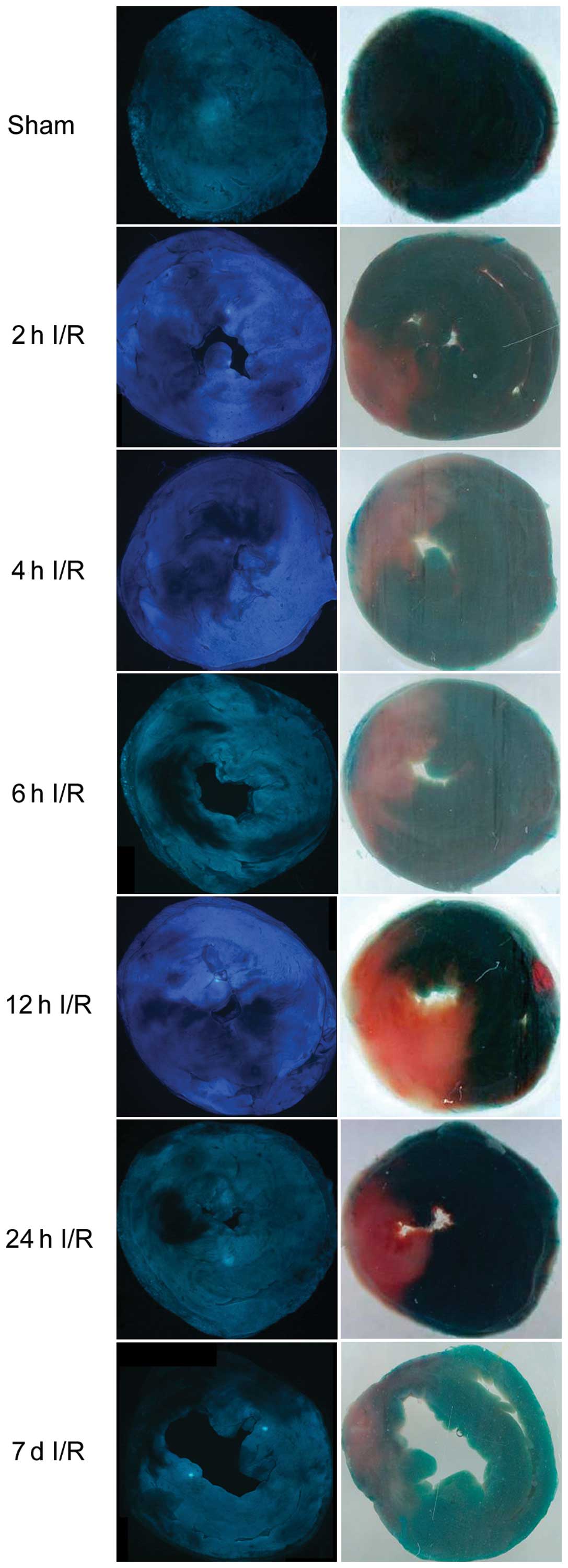
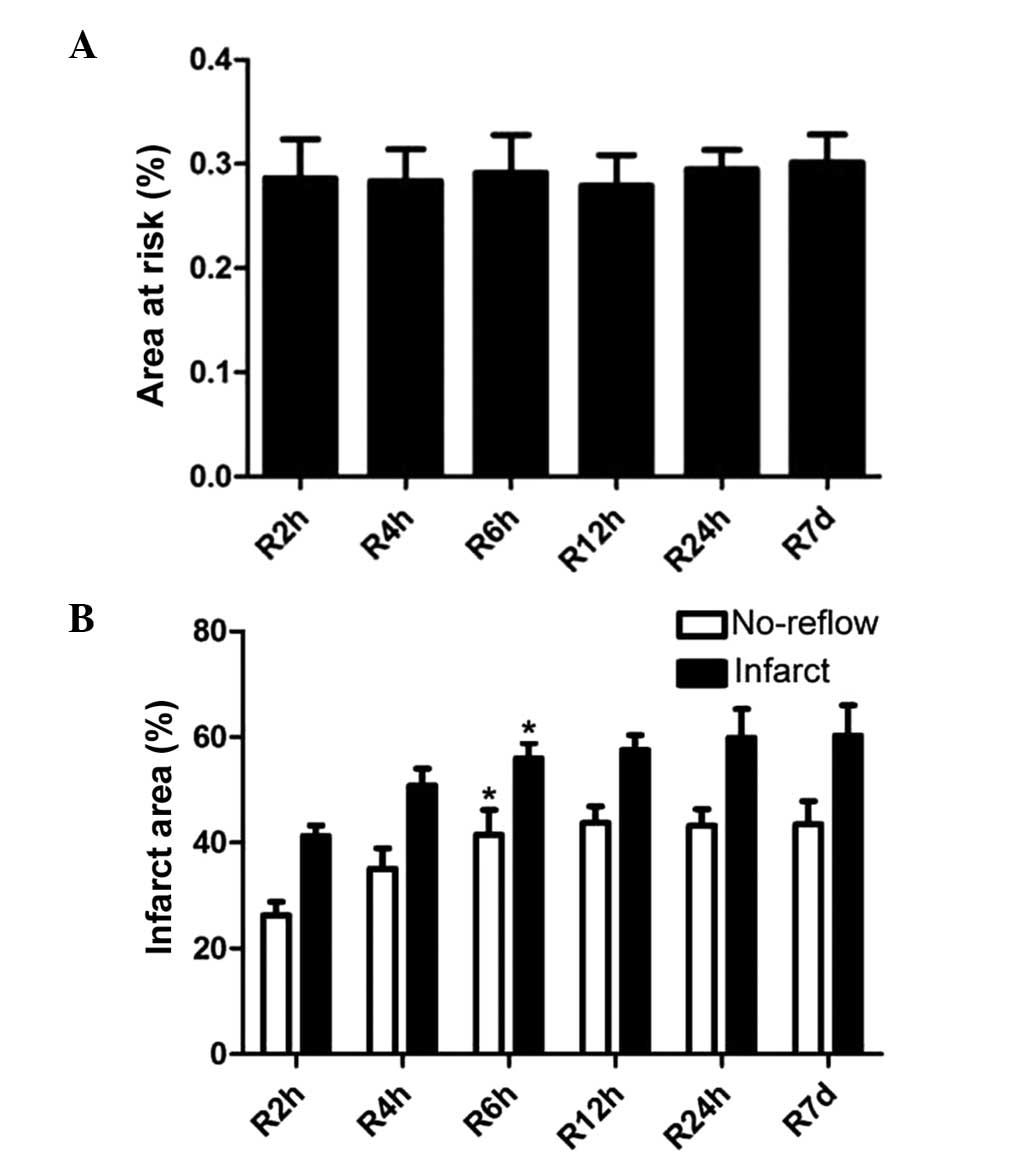
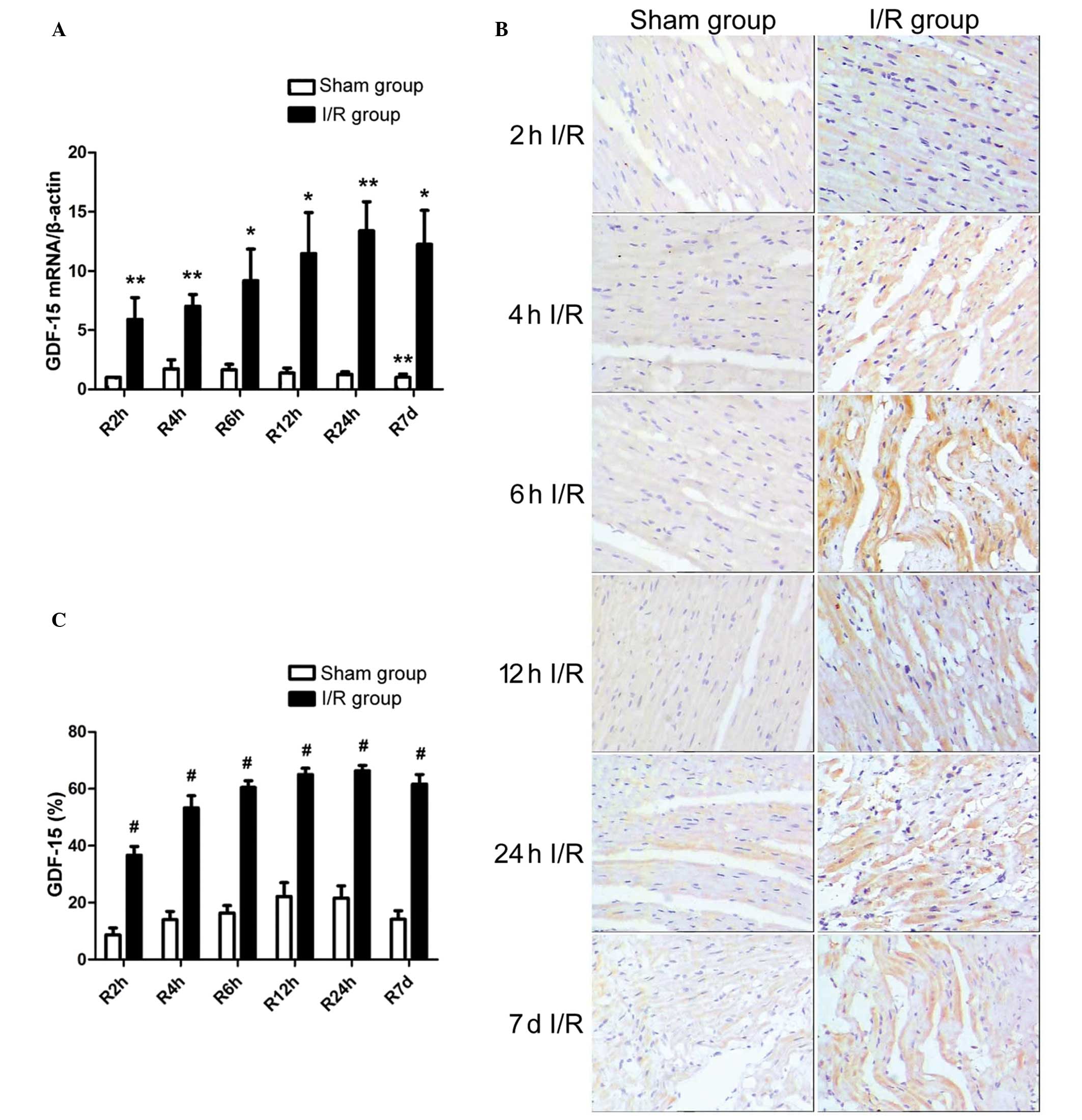
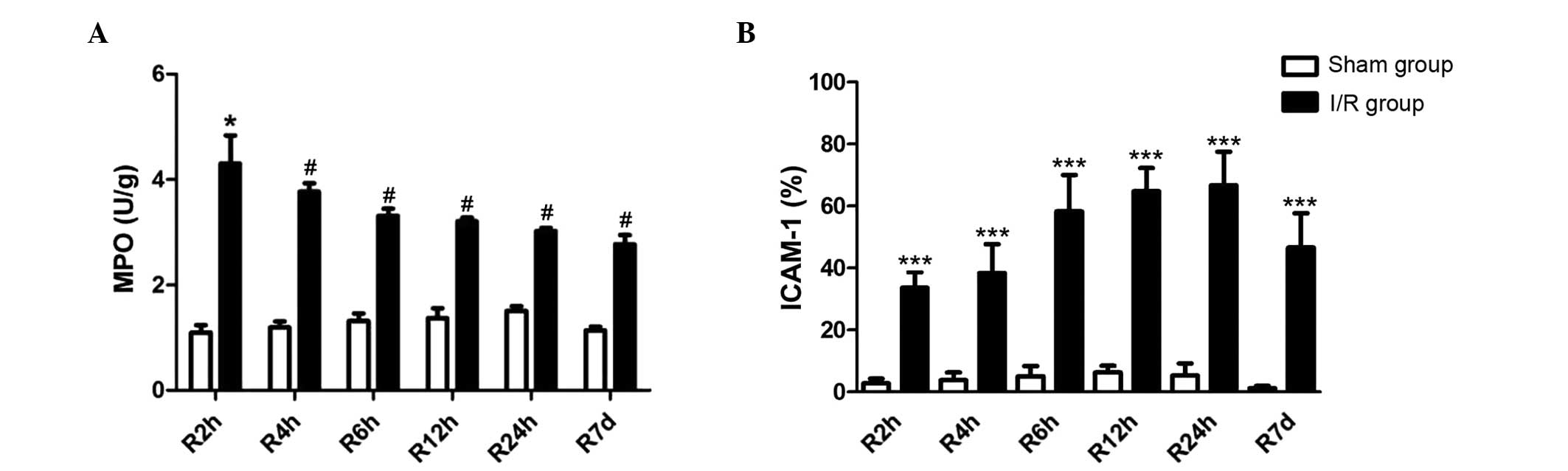
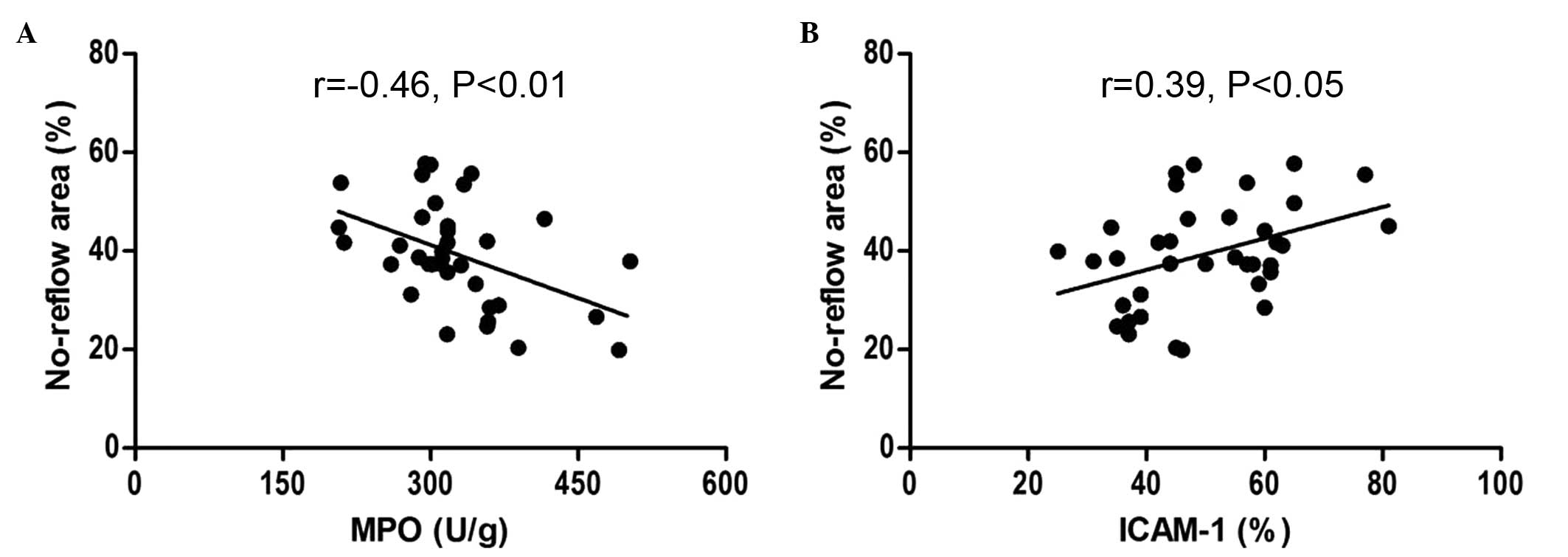
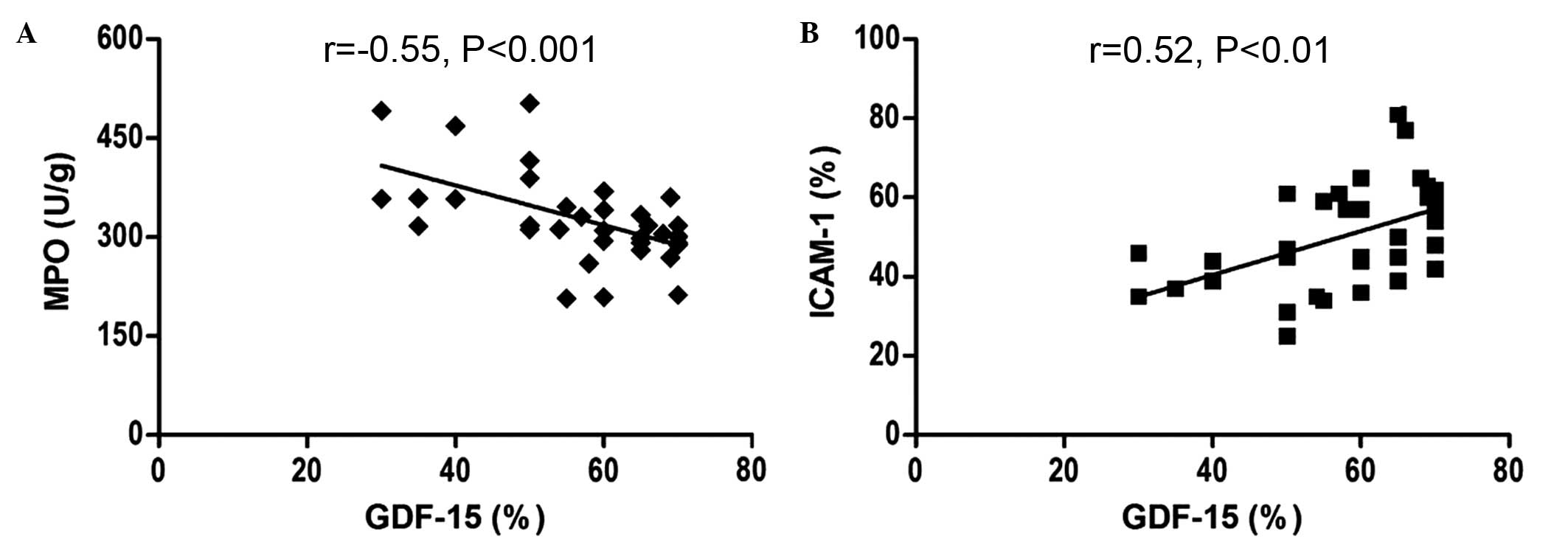
The aim of the current study was to investigate the time course of the expression of growth differentiation factor‑15 (GDF‑15) in rat ischemic myocardium with increasing durations of reperfusion, and to elucidate its physiopathological role in the no‑reflow phenomenon. Wistar rats were randomly divided into ischemia reperfusion (I/R) and sham groups, and myocardial I/R was established by ligation of the left anterior descending coronary artery for 1 h followed by reperfusion for 2, 4, 6, 12, 24 h and 7 days whilst rats in the sham group were subjected to a sham operation. The expression levels of GDF‑15 and ICAM‑1 were measured, in addition to myeloperoxidase (MPO) activity. The myocardial anatomical no‑reflow and infarction areas were assessed. The area at risk was not significantly different following various periods of reperfusion, while the infarct area and no‑reflow area were significantly greater following 6 h of reperfusion (P<0.05). The mRNA and protein expression levels of GDF‑15 were increased during the onset and development of no‑reflow, and peaked following 24 h of reperfusion. MPO activity was reduced with increasing reperfusion duration, while ICAM‑1 levels were increased. Hematoxylin and eosin staining demonstrated that myocardial neutrophil infiltration was significantly increased by I/R injury, in particular following 2, 4 and 6 h of reperfusion. GDF‑15 expression levels were negatively correlated with MPO activity (r=‑0.55, P<0.001), and the MPO activity was negatively correlated with the area of no‑reflow (r=‑0.46, P<0.01). By contrast, GDF‑15 was significantly positively correlated with ICAM‑1 levels (r=0.52, P<0.01), which additionally were demonstrated to be significantly positively associated with the size of the no‑reflow area (r=0.39, P<0.05). The current study demonstrated the time course effect of reperfusion on the expression of GDF‑15 in the myocardial I/R rat model, with the shorter reperfusion times (6 h) resulting in significant no‑reflow in ischemic myocardium. GDF‑15 may protect the I/R myocardium from no‑reflow by inhibiting the inflammatory‑like response, which involves neutrophil infiltration and transendothelial migration.
View Figures

Figure 1

Figure 2

Figure 3

Figure 4

Figure 5

Figure 6

Figure 7

View References

1 

Lee G, Sou SM, Twerenbold R, Reichlin T, Oshima S, Hochgruber T, Zürcher S, Matter D, Tanglay Y, Freese M, et al: B-type natriuretic peptide and clinical judgment in the detection of exercise-induced myocardial ischemia. Am J Med. 127:427–435. 2014. View Article : Google Scholar : PubMed/NCBI

2 

Bell RM and Yellon DM: Conditioning the whole heart - not just the cardiomyocyte. J Mol Cell Cardiol. 53:24–32. 2012. View Article : Google Scholar : PubMed/NCBI

3 

Hausenloy DJ, Tsang A, Mocanu MM and Yellon DM: Ischemic preconditioning protects by activating prosurvival kinases at reperfusion. Am J Physiol Heart Circ Physiol. 288:H971–H976. 2005. View Article : Google Scholar

4 

Zeymer U, Bauer T, Gersh BJ, Zahn R, Gitt A, Jünger C and Senges J: Beneficial effect of reperfusion therapy beyond the preservation of left ventricular function in patients with acute ST-segment elevation myocardial infarction. Int J Cardiol. 146:177–180. 2011. View Article : Google Scholar

5 

Braunwald E and Kloner RA: Myocardial reperfusion: A double-edged sword? J Clin Invest. 76:1713–1719. 1985. View Article : Google Scholar : PubMed/NCBI

6 

Lin J-Y, Hung L-M, Lai LY and Wei F-C: Kappa-opioid receptor agonist protects the microcirculation of skeletal muscle from ischemia reperfusion injury. Ann Plast Surg. 61:330–336. 2008. View Article : Google Scholar : PubMed/NCBI

7 

Nallamothu BK, Bradley EH and Krumholz HM: Time to treatment in primary percutaneous coronary intervention. N Engl J Med. 357:1631–1638. 2007. View Article : Google Scholar : PubMed/NCBI

8 

Niccoli G, Burzotta F, Galiuto L and Crea F: Myocardial no-reflow in humans. J Am Coll Cardiol. 54:281–292. 2009. View Article : Google Scholar : PubMed/NCBI

9 

Jordan JE, Zhao ZQ and Vinten-Johansen J: The role of neutrophils in myocardial ischemia-reperfusion injury. Cardiovasc Res. 43:860–878. 1999. View Article : Google Scholar

10 

Ito H, Maruyama A, Iwakura K, Takiuchi S, Masuyama T, Hori M, Higashino Y, Fujii K and Minamino T: Clinical implications of the 'no reflow' phenomenon. A predictor of complications and left ventricular remodeling in reperfused anterior wall myocardial infarction. Circulation. 93:223–228. 1996. View Article : Google Scholar : PubMed/NCBI

11 

Ndrepepa G, Tiroch K, Fusaro M, Keta D, Seyfarth M, Byrne RA, Pache J, Alger P, Mehilli J, Schömig A, et al: 5-year prognostic value of no-reflow phenomenon after percutaneous coronary intervention in patients with acute myocardial infarction. J Am Coll Cardiol. 55:2383–2389. 2010. View Article : Google Scholar : PubMed/NCBI

12 

Xu X, Li Z and Gao W: Growth differentiation factor 15 in cardiovascular diseases: From bench to bedside. Biomarkers. 16:466–475. 2011. View Article : Google Scholar : PubMed/NCBI

13 

Hsiao EC, Koniaris LG, Zimmers-Koniaris T, Sebald SM, Huynh TV and Lee SJ: Characterization of growth-differentiation factor 15, a transforming growth factor β superfamily member induced following liver injury. Mol Cell Biol. 20:3742–3751. 2000. View Article : Google Scholar : PubMed/NCBI

14 

Kempf T, Eden M, Strelau J, Naguib M, Willenbockel C, Tongers J, Heineke J, Kotlarz D, Xu J, Molkentin JD, et al: The transforming growth factor-β superfamily member growth-differentiation factor-15 protects the heart from ischemia/reperfusion injury. Circ Res. 98:351–360. 2006. View Article : Google Scholar : PubMed/NCBI

15 

Bonaca MP, Morrow DA, Braunwald E, Cannon CP, Jiang S, Breher S, Sabatine MS, Kempf T, Wallentin L and Wollert KC: Growth differentiation factor-15 and risk of recurrent events in patients stabilized after acute coronary syndrome: Observations from PROVE IT-TIMI 22. Arterioscler Thromb Vasc Biol. 31:203–210. 2011. View Article : Google Scholar

16 

Anand IS, Kempf T, Rector TS, Tapken H, Allhoff T, Jantzen F, Kuskowski M, Cohn JN, Drexler H and Wollert KC: Serial measurement of growth-differentiation factor-15 in heart failure: Relation to disease severity and prognosis in the Valsartan Heart Failure Trial. Circulation. 122:1387–1395. 2010. View Article : Google Scholar : PubMed/NCBI

17 

Kempf T, Zarbock A, Widera C, Butz S, Stadtmann A, Rossaint J, Bolomin-Vittori M, Korf-Klingebiel M, Napp LC, Hansen B, et al: GDF-15 is an inhibitor of leukocyte integrin activation required for survival after myocardial infarction in mice. Nat Med. 17:581–588. 2011. View Article : Google Scholar : PubMed/NCBI

18 

Eitel I, Blase P, Adams V, Hildebrand L, Desch Sm, Schuler G and Thiele H: Growth-differentiation factor 15 as predictor of mortality in acute reperfused ST-elevation myocardial infarction: insights from cardiovascular magnetic resonance. Heart. 97:632–640. 2011. View Article : Google Scholar : PubMed/NCBI

19 

Reffelmann T and Kloner RA: Microvascular reperfusion injury: Rapid expansion of anatomic no reflow during reperfusion in the rabbit. Am J Physiol Heart Circ Physiol. 283:H1099–H1107. 2002. View Article : Google Scholar : PubMed/NCBI

20 

Yang Z, Chen P, Yu H, Luo W, Pi M, Wu Y, Wang L, Yang F and Gou Y: Combinatorial effects of conception and governor vessel electroacupuncture and human umbilical cord blood-derived mesenchymal stem cells on pathomorphologic lesion and cellular apoptosis in rats with cerebral ischemia/reperfusion. J Tradit Chin Med. 33:779–786. 2013. View Article : Google Scholar

21 

Chan W, Stub D, Clark DJ, Ajani AE, Andrianopoulos N, Brennan AL, New G, Black A, Shaw JA, Reid CM, et al Melbourne Interventional Group Investigators: Usefulness of transient and persistent no reflow to predict adverse clinical outcomes following percutaneous coronary intervention. Am J Cardiol. 109:478–485. 2012. View Article : Google Scholar

22 

Galasso G, Schiekofer S, D'Anna C, Gioia GD, Piccolo R, Niglio T, Rosa RD, Strisciuglio T, Cirillo P, Piscione F, et al: No-reflow phenomenon: Pathophysiology, diagnosis, prevention, and treatment. A review of the current literature and future perspectives. Angiology. 65:180–189. 2014. View Article : Google Scholar

23 

Rezkalla SH and Kloner RA: No-reflow phenomenon. Circulation. 105:656–662. 2002. View Article : Google Scholar : PubMed/NCBI

24 

Reffelmann T and Kloner RA: The no-reflow phenomenon: A basic mechanism of myocardial ischemia and reperfusion. Basic Res Cardiol. 101:359–372. 2006. View Article : Google Scholar : PubMed/NCBI

25 

Niccoli G, Cosentino N, Lombardo A, Sgueglia GA, Spaziani C, Fracassi F, Cataneo L, Minelli S, Burzotta F, Maria Leone A, et al: Angiographic patterns of myocardial reperfusion after primary angioplasty and ventricular remodeling. Coron Artery Dis. 22:507–514. 2011.PubMed/NCBI

26 

Poli A, Fetiveau R, Vandoni P, del Rosso G, D'Urbano M, Seveso G, Cafiero F and De Servi S: Integrated analysis of myocardial blush and ST-segment elevation recovery after successful primary angioplasty: Real-time grading of micro-vascular reperfusion and prediction of early and late recovery of left ventricular function. Circulation. 106:313–318. 2002. View Article : Google Scholar : PubMed/NCBI

27 

Rochitte CE, Lima JA, Bluemke DA, Reeder SB, McVeigh ER, Furuta T, Becker LC and Melin JA: Magnitude and time course of microvascular obstruction and tissue injury after acute myocardial infarction. Circulation. 98:1006–1014. 1998. View Article : Google Scholar : PubMed/NCBI

28 

Reffelmann T, Hale SL, Dow JS and Kloner RA: No-reflow phenomenon persists long-term after ischemia/reperfusion in the rat and predicts infarct expansion. Circulation. 108:2911–2917. 2003. View Article : Google Scholar : PubMed/NCBI

29 

Kurrelmeyer KM, Michael LH, Baumgarten G, Taffet GE, Peschon JJ, Sivasubramanian N, Entman ML and Mann DL: Endogenous tumor necrosis factor protects the adult cardiac myocyte against ischemic-induced apoptosis in a murine model of acute myocardial infarction. Proc Natl Acad Sci USA. 97:5456–5461. 2000. View Article : Google Scholar : PubMed/NCBI

30 

Croisille P, Revel D and Saeed M: Contrast agents and cardiac MR imaging of myocardial ischemia: from bench to bedside. Eur Radiol. 16:1951–1963. 2006. View Article : Google Scholar : PubMed/NCBI

31 

Reffelmann T, Hale SL, Li G and Kloner RA: Relationship between no reflow and infarct size as influenced by the duration of ischemia and reperfusion. Am J Physiol Heart Circ Physiol. 282:H766–H772. 2002. View Article : Google Scholar : PubMed/NCBI

32 

Khan SQ, Ng K, Dhillon O, Kelly D, Quinn P, Squire IB, Davies JE and Ng LL: Growth differentiation factor-15 as a prognostic marker in patients with acute myocardial infarction. Eur Heart J. 30:1057–1065. 2009. View Article : Google Scholar : PubMed/NCBI

33 

Wollert KC, Kempf T, Lagerqvist B, Lindahl B, Olofsson S, Allhoff T, Peter T, Siegbahn A, Venge P, Drexler H, et al: Growth differentiation factor 15 for risk stratification and selection of an invasive treatment strategy in non ST-elevation acute coronary syndrome. Circulation. 116:1540–1548. 2007. View Article : Google Scholar : PubMed/NCBI

34 

Kempf T, Björklund E, Olofsson S, Lindahl B, Allhoff T, Peter T, Tongers J, Wollert KC and Wallentin L: Growth-differentiation factor-15 improves risk stratification in ST-segment elevation myocardial infarction. Eur Heart J. 28:2858–2865. 2007. View Article : Google Scholar : PubMed/NCBI

35 

Eggers KM, Kempf T, Lagerqvist B, Lindahl B, Olofsson S, Jantzen F, Peter T, Allhoff T, Siegbahn A, Venge P, et al: Growth-differentiation factor-15 for long-term risk prediction in patients stabilized after an episode of non-ST-segment-elevation acute coronary syndrome. Circ Cardiovasc Genet. 3:88–96. 2010. View Article : Google Scholar : PubMed/NCBI

36 

Wollert KC: Growth-differentiation factor-15 in cardiovascular disease: From bench to bedside, and back. Basic Res Cardiol. 102:412–415. 2007. View Article : Google Scholar : PubMed/NCBI

37 

Go LO, Murry CE, Richard VJ, Weischedel GR, Jennings RB and Reimer KA: Myocardial neutrophil accumulation during reperfusion after reversible or irreversible ischemic injury. Am J Physiol. 255:H1188–H1198. 1988.PubMed/NCBI

38 

Litt MR, Jeremy RW, Weisman HF, Winkelstein JA and Becker LC: Neutrophil depletion limited to reperfusion reduces myocardial infarct size after 90 minutes of ischemia. Evidence for neutrophil-mediated reperfusion injury. Circulation. 80:1816–1827. 1989. View Article : Google Scholar : PubMed/NCBI

39 

Liu FC, Chuang YH, Tsai YF and Yu HP: Role of neutrophil extracellular traps following injury. Shock. 41:491–498. 2014. View Article : Google Scholar : PubMed/NCBI

40 

Huang C, Li R, Zeng Q, Ding Y, Zou Y, Mao X, Hu W, Xiong R and Li M: Effect of minocycline postconditioning and ischemic postconditioning on myocardial ischemia-reperfusion injury in atherosclerosis rabbits. J Huazhong Univ Sci Technolog Med Sci. 32:524–529. 2012. View Article : Google Scholar : PubMed/NCBI

41 

Issekutz AC, Rowter D and Springer TA: Role of ICAM-1 and ICAM-2 and alternate CD11/CD18 ligands in neutrophil transendothelial migration. J Leukoc Biol. 65:117–126. 1999.PubMed/NCBI

42 

Metzler B, Mair J, Lercher A, Schaber C, Hintringer F, Pachinger O and Xu Q: Mouse model of myocardial remodelling after ischemia: Role of intercellular adhesion molecule-1. Cardiovasc Res. 49:399–407. 2001. View Article : Google Scholar : PubMed/NCBI

43 

Eggers KM, Kempf T, Lind L, Sundström J, Wallentin L, Wollert KC and Siegbahn A: Relations of growth-differentiation factor-15 to biomarkers reflecting vascular pathologies in a population-based sample of elderly subjects. Scand J Clin Lab Invest. 72:45–51. 2012. View Article : Google Scholar

44 

Wang J and Arase H: Regulation of immune responses by neutrophils. Ann NY Acad Sci. 1319:66–81. 2014. View Article : Google Scholar : PubMed/NCBI

45 

Yang L, Froio RM, Sciuto TE, Dvorak AM, Alon R and Luscinskas FW: ICAM-1 regulates neutrophil adhesion and transcellular migration of TNF-α-activated vascular endothelium under flow. Blood. 106:584–592. 2005. View Article : Google Scholar : PubMed/NCBI

Related Articles

  • Abstract
  • View
  • Download
  • Twitter
Copy and paste a formatted citation
Spandidos Publications style
Zhang M, Pan K, Liu Q, Zhou X, Jiang T and Li Y: Growth differentiation factor 15 may protect the myocardium from no‑reflow by inhibiting the inflammatory‑like response that predominantly involves neutrophil infiltration. Mol Med Rep 13: 623-632, 2016.
APA
Zhang, M., Pan, K., Liu, Q., Zhou, X., Jiang, T., & Li, Y. (2016). Growth differentiation factor 15 may protect the myocardium from no‑reflow by inhibiting the inflammatory‑like response that predominantly involves neutrophil infiltration. Molecular Medicine Reports, 13, 623-632. https://doi.org/10.3892/mmr.2015.4573
MLA
Zhang, M., Pan, K., Liu, Q., Zhou, X., Jiang, T., Li, Y."Growth differentiation factor 15 may protect the myocardium from no‑reflow by inhibiting the inflammatory‑like response that predominantly involves neutrophil infiltration". Molecular Medicine Reports 13.1 (2016): 623-632.
Chicago
Zhang, M., Pan, K., Liu, Q., Zhou, X., Jiang, T., Li, Y."Growth differentiation factor 15 may protect the myocardium from no‑reflow by inhibiting the inflammatory‑like response that predominantly involves neutrophil infiltration". Molecular Medicine Reports 13, no. 1 (2016): 623-632. https://doi.org/10.3892/mmr.2015.4573
Copy and paste a formatted citation
x
Spandidos Publications style
Zhang M, Pan K, Liu Q, Zhou X, Jiang T and Li Y: Growth differentiation factor 15 may protect the myocardium from no‑reflow by inhibiting the inflammatory‑like response that predominantly involves neutrophil infiltration. Mol Med Rep 13: 623-632, 2016.
APA
Zhang, M., Pan, K., Liu, Q., Zhou, X., Jiang, T., & Li, Y. (2016). Growth differentiation factor 15 may protect the myocardium from no‑reflow by inhibiting the inflammatory‑like response that predominantly involves neutrophil infiltration. Molecular Medicine Reports, 13, 623-632. https://doi.org/10.3892/mmr.2015.4573
MLA
Zhang, M., Pan, K., Liu, Q., Zhou, X., Jiang, T., Li, Y."Growth differentiation factor 15 may protect the myocardium from no‑reflow by inhibiting the inflammatory‑like response that predominantly involves neutrophil infiltration". Molecular Medicine Reports 13.1 (2016): 623-632.
Chicago
Zhang, M., Pan, K., Liu, Q., Zhou, X., Jiang, T., Li, Y."Growth differentiation factor 15 may protect the myocardium from no‑reflow by inhibiting the inflammatory‑like response that predominantly involves neutrophil infiltration". Molecular Medicine Reports 13, no. 1 (2016): 623-632. https://doi.org/10.3892/mmr.2015.4573
Follow us
  • Twitter
  • LinkedIn
  • Facebook
About
  • Spandidos Publications
  • Careers
  • Cookie Policy
  • Privacy Policy
How can we help?
  • Help
  • Live Chat
  • Contact
  • Email to our Support Team