Spandidos Publications Logo
  • About
    • About Spandidos
    • Aims and Scopes
    • Abstracting and Indexing
    • Editorial Policies
    • Reprints and Permissions
    • Job Opportunities
    • Terms and Conditions
    • Contact
  • Journals
    • All Journals
    • Oncology Letters
      • Oncology Letters
      • Information for Authors
      • Editorial Policies
      • Editorial Board
      • Aims and Scope
      • Abstracting and Indexing
      • Bibliographic Information
      • Archive
    • International Journal of Oncology
      • International Journal of Oncology
      • Information for Authors
      • Editorial Policies
      • Editorial Board
      • Aims and Scope
      • Abstracting and Indexing
      • Bibliographic Information
      • Archive
    • Molecular and Clinical Oncology
      • Molecular and Clinical Oncology
      • Information for Authors
      • Editorial Policies
      • Editorial Board
      • Aims and Scope
      • Abstracting and Indexing
      • Bibliographic Information
      • Archive
    • Experimental and Therapeutic Medicine
      • Experimental and Therapeutic Medicine
      • Information for Authors
      • Editorial Policies
      • Editorial Board
      • Aims and Scope
      • Abstracting and Indexing
      • Bibliographic Information
      • Archive
    • International Journal of Molecular Medicine
      • International Journal of Molecular Medicine
      • Information for Authors
      • Editorial Policies
      • Editorial Board
      • Aims and Scope
      • Abstracting and Indexing
      • Bibliographic Information
      • Archive
    • Biomedical Reports
      • Biomedical Reports
      • Information for Authors
      • Editorial Policies
      • Editorial Board
      • Aims and Scope
      • Abstracting and Indexing
      • Bibliographic Information
      • Archive
    • Oncology Reports
      • Oncology Reports
      • Information for Authors
      • Editorial Policies
      • Editorial Board
      • Aims and Scope
      • Abstracting and Indexing
      • Bibliographic Information
      • Archive
    • Molecular Medicine Reports
      • Molecular Medicine Reports
      • Information for Authors
      • Editorial Policies
      • Editorial Board
      • Aims and Scope
      • Abstracting and Indexing
      • Bibliographic Information
      • Archive
    • World Academy of Sciences Journal
      • World Academy of Sciences Journal
      • Information for Authors
      • Editorial Policies
      • Editorial Board
      • Aims and Scope
      • Abstracting and Indexing
      • Bibliographic Information
      • Archive
    • International Journal of Functional Nutrition
      • International Journal of Functional Nutrition
      • Information for Authors
      • Editorial Policies
      • Editorial Board
      • Aims and Scope
      • Abstracting and Indexing
      • Bibliographic Information
      • Archive
    • International Journal of Epigenetics
      • International Journal of Epigenetics
      • Information for Authors
      • Editorial Policies
      • Editorial Board
      • Aims and Scope
      • Abstracting and Indexing
      • Bibliographic Information
      • Archive
    • Medicine International
      • Medicine International
      • Information for Authors
      • Editorial Policies
      • Editorial Board
      • Aims and Scope
      • Abstracting and Indexing
      • Bibliographic Information
      • Archive
  • Articles
  • Information
    • Information for Authors
    • Information for Reviewers
    • Information for Librarians
    • Information for Advertisers
    • Conferences
  • Language Editing
Spandidos Publications Logo
  • About
    • About Spandidos
    • Aims and Scopes
    • Abstracting and Indexing
    • Editorial Policies
    • Reprints and Permissions
    • Job Opportunities
    • Terms and Conditions
    • Contact
  • Journals
    • All Journals
    • Biomedical Reports
      • Information for Authors
      • Editorial Policies
      • Editorial Board
      • Aims and Scope
      • Abstracting and Indexing
      • Bibliographic Information
      • Archive
    • Experimental and Therapeutic Medicine
      • Information for Authors
      • Editorial Policies
      • Editorial Board
      • Aims and Scope
      • Abstracting and Indexing
      • Bibliographic Information
      • Archive
    • International Journal of Epigenetics
      • Information for Authors
      • Editorial Policies
      • Editorial Board
      • Aims and Scope
      • Abstracting and Indexing
      • Bibliographic Information
      • Archive
    • International Journal of Functional Nutrition
      • Information for Authors
      • Editorial Policies
      • Editorial Board
      • Aims and Scope
      • Abstracting and Indexing
      • Bibliographic Information
      • Archive
    • International Journal of Molecular Medicine
      • Information for Authors
      • Editorial Policies
      • Editorial Board
      • Aims and Scope
      • Abstracting and Indexing
      • Bibliographic Information
      • Archive
    • International Journal of Oncology
      • Information for Authors
      • Editorial Policies
      • Editorial Board
      • Aims and Scope
      • Abstracting and Indexing
      • Bibliographic Information
      • Archive
    • Medicine International
      • Information for Authors
      • Editorial Policies
      • Editorial Board
      • Aims and Scope
      • Abstracting and Indexing
      • Bibliographic Information
      • Archive
    • Molecular and Clinical Oncology
      • Information for Authors
      • Editorial Policies
      • Editorial Board
      • Aims and Scope
      • Abstracting and Indexing
      • Bibliographic Information
      • Archive
    • Molecular Medicine Reports
      • Information for Authors
      • Editorial Policies
      • Editorial Board
      • Aims and Scope
      • Abstracting and Indexing
      • Bibliographic Information
      • Archive
    • Oncology Letters
      • Information for Authors
      • Editorial Policies
      • Editorial Board
      • Aims and Scope
      • Abstracting and Indexing
      • Bibliographic Information
      • Archive
    • Oncology Reports
      • Information for Authors
      • Editorial Policies
      • Editorial Board
      • Aims and Scope
      • Abstracting and Indexing
      • Bibliographic Information
      • Archive
    • World Academy of Sciences Journal
      • Information for Authors
      • Editorial Policies
      • Editorial Board
      • Aims and Scope
      • Abstracting and Indexing
      • Bibliographic Information
      • Archive
  • Articles
  • Information
    • For Authors
    • For Reviewers
    • For Librarians
    • For Advertisers
    • Conferences
  • Language Editing
Login Register Submit
  • This site uses cookies
  • You can change your cookie settings at any time by following the instructions in our Cookie Policy. To find out more, you may read our Privacy Policy.

    I agree
Search articles by DOI, keyword, author or affiliation
Search
Advanced Search
presentation
Molecular Medicine Reports
Join Editorial Board Propose a Special Issue
Print ISSN: 1791-2997 Online ISSN: 1791-3004
Journal Cover
February-2016 Volume 13 Issue 2

Full Size Image

Sign up for eToc alerts
Recommend to Library

Journals

International Journal of Molecular Medicine

International Journal of Molecular Medicine

International Journal of Molecular Medicine is an international journal devoted to molecular mechanisms of human disease.

International Journal of Oncology

International Journal of Oncology

International Journal of Oncology is an international journal devoted to oncology research and cancer treatment.

Molecular Medicine Reports

Molecular Medicine Reports

Covers molecular medicine topics such as pharmacology, pathology, genetics, neuroscience, infectious diseases, molecular cardiology, and molecular surgery.

Oncology Reports

Oncology Reports

Oncology Reports is an international journal devoted to fundamental and applied research in Oncology.

Experimental and Therapeutic Medicine

Experimental and Therapeutic Medicine

Experimental and Therapeutic Medicine is an international journal devoted to laboratory and clinical medicine.

Oncology Letters

Oncology Letters

Oncology Letters is an international journal devoted to Experimental and Clinical Oncology.

Biomedical Reports

Biomedical Reports

Explores a wide range of biological and medical fields, including pharmacology, genetics, microbiology, neuroscience, and molecular cardiology.

Molecular and Clinical Oncology

Molecular and Clinical Oncology

International journal addressing all aspects of oncology research, from tumorigenesis and oncogenes to chemotherapy and metastasis.

World Academy of Sciences Journal

World Academy of Sciences Journal

Multidisciplinary open-access journal spanning biochemistry, genetics, neuroscience, environmental health, and synthetic biology.

International Journal of Functional Nutrition

International Journal of Functional Nutrition

Open-access journal combining biochemistry, pharmacology, immunology, and genetics to advance health through functional nutrition.

International Journal of Epigenetics

International Journal of Epigenetics

Publishes open-access research on using epigenetics to advance understanding and treatment of human disease.

Medicine International

Medicine International

An International Open Access Journal Devoted to General Medicine.

Journal Cover
February-2016 Volume 13 Issue 2

Full Size Image

Sign up for eToc alerts
Recommend to Library

  • Article
  • Citations
    • Cite This Article
    • Download Citation
    • Create Citation Alert
    • Remove Citation Alert
    • Cited By
  • Similar Articles
    • Related Articles (in Spandidos Publications)
    • Similar Articles (Google Scholar)
    • Similar Articles (PubMed)
  • Download PDF
  • Download XML
  • View XML
Article

Transforming growth factor‑β2 increases the capacity of retinal pigment epithelial cells to induce the generation of regulatory T cells

  • Authors:
    • Feng Yan
    • Jin He
    • Li Tang
    • Yi Kong
    • Yuhua Shi
    • Suihua Chen
    • Zhenping Huang
  • View Affiliations / Copyright

    Affiliations: Department of Ophthalmology, Jinling Hospital, School of Medicine, Nanjing University, Nanjing, Jiangsu 210002, P.R. China, Department of Neurosurgical Laboratory, Jinling Hospital, School of Medicine, Nanjing University, Nanjing, Jiangsu 210002, P.R. China, Department of Ophthalmology, No. 97 Hospital, Xuzhou, Jiangsu 221004, P.R. China
  • Pages: 1367-1372
    |
    Published online on: December 9, 2015
       https://doi.org/10.3892/mmr.2015.4666
  • Expand metrics +
Metrics: Total Views: 0 (Spandidos Publications: | PMC Statistics: )
Metrics: Total PDF Downloads: 0 (Spandidos Publications: | PMC Statistics: )
Cited By (CrossRef): 0 citations Loading Articles...

This article is mentioned in:


Abstract

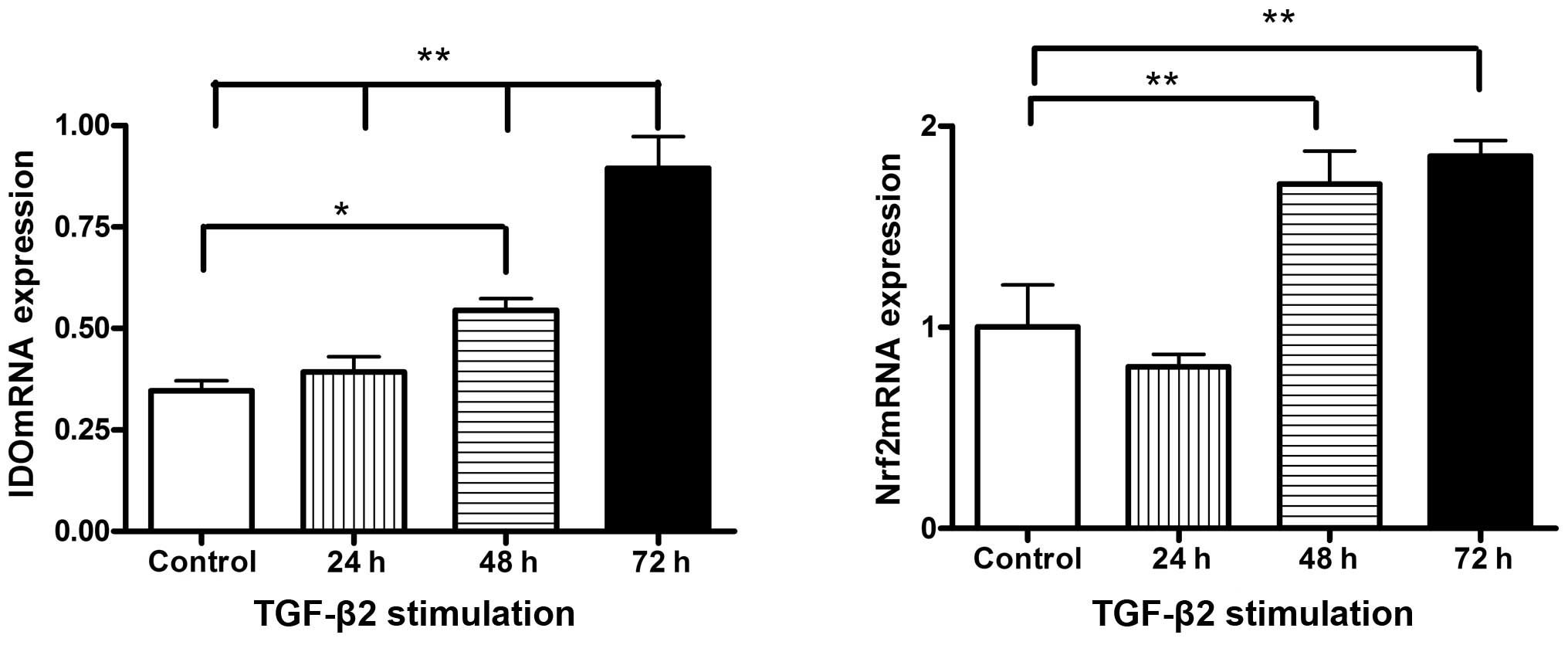
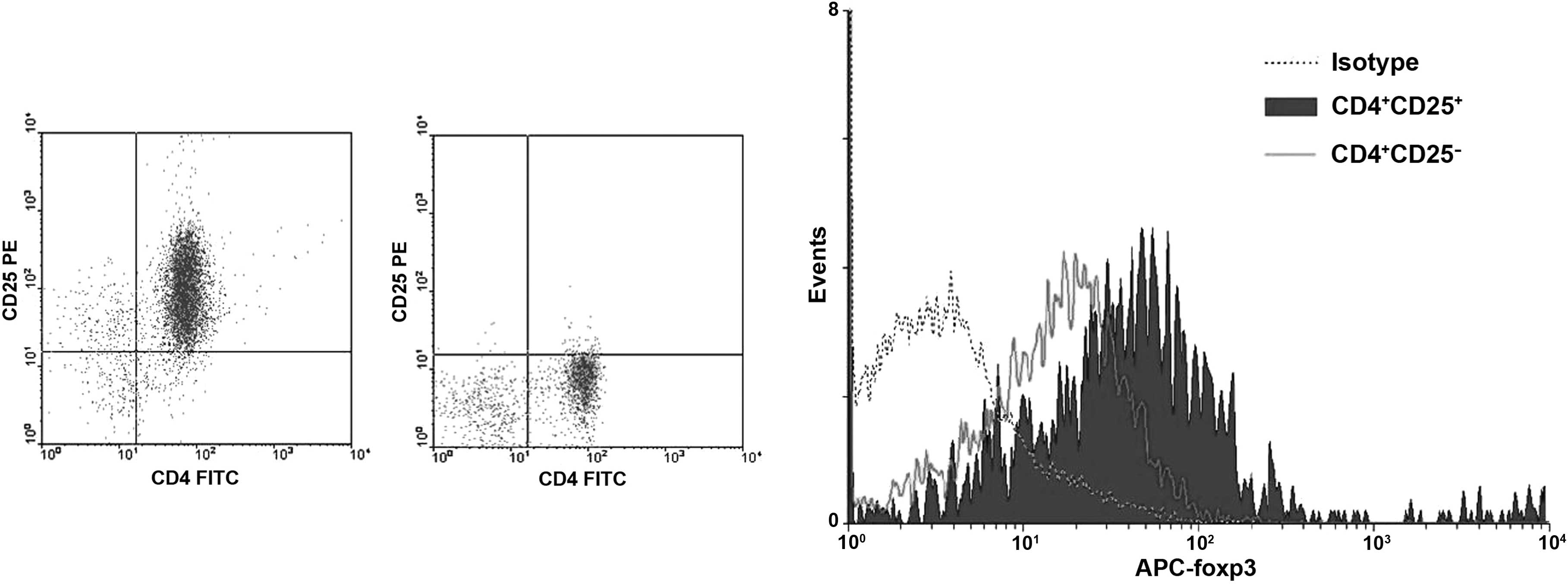
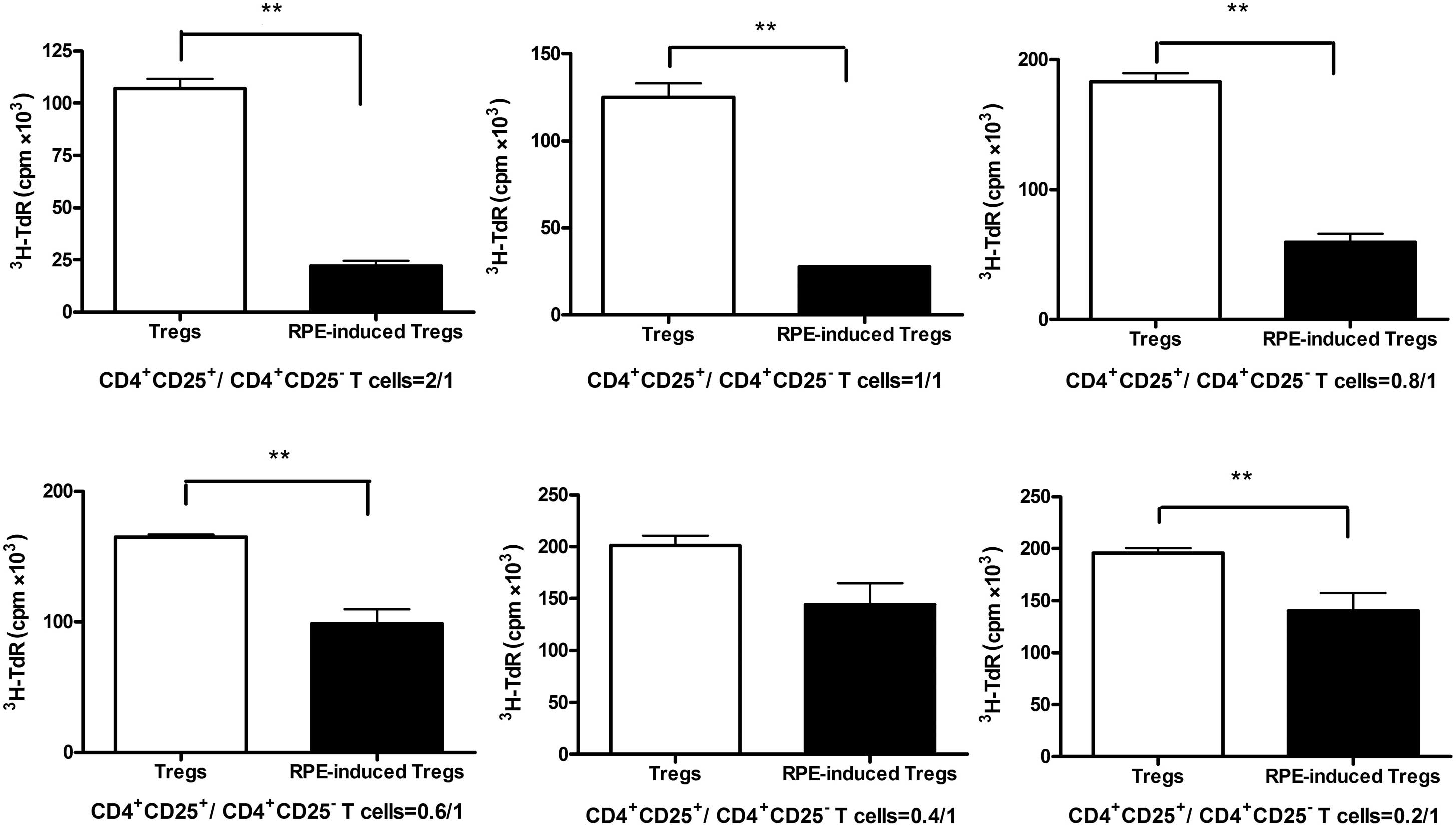
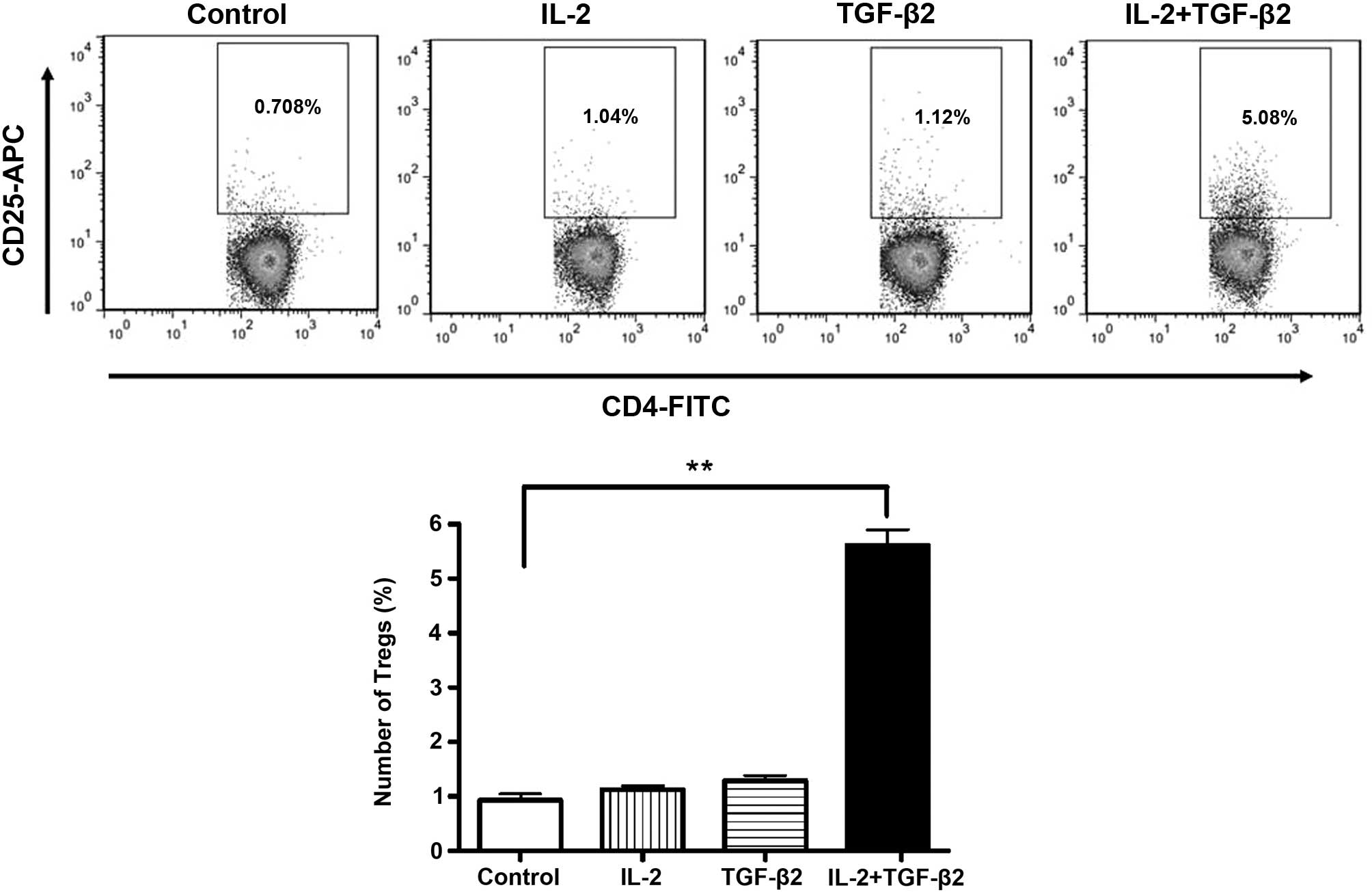
The present study investigated the underlying mechanism of the induction of regulatory T cells (Tregs) by retinal pigment epithelial (RPE) cells and the characteristics of these Tregs. Human RPE cells were cultured in the presence or absence of transforming growth factor‑β 2 (TGF‑β2), and reverse-transcription quantitative PCR was performed to determine the mRNA expression of indoleamine 2,3‑dioxygenase (IDO) and nuclear factor erythroid 2‑related factor (Nrf2). Supernatants of RPE cell cultures were added to CD4+ T cells to induce Tregs. The RPE‑induced Tregs were purified by two‑step magnetic cell sorting. The natural Tregs were isolated from the peripheral blood mononuclear cells of healthy volunteers. Purified CD4+ CD25- T cells (2x10⁵/well) were cultured alone or with Tregs (various densities, natural or RPE‑induced). The proliferation of CD4+ CD25- T cells was determined by 3H‑thymidine incorporation. After 24 h of stimulation with TGF‑β2, the mRNA expression of IDO in RPE cells was upregulated. The highest level of IDO mRNA expression was reached after 72 h of stimulation with TGF‑β2. However, the Nrf2 mRNA expression was slightly decreased after 24 h of stimulation with TGF‑β2 and significantly increased after 48‑72 h of TGF‑β2 stimulation. Increased levels of CD25 expression were observed on CD4+ T cells exposed to supernatants of RPE cell cultures treated with TGF‑β2 and recombinant interleukin‑2. The RPE‑induced Tregs were more effective at suppressing the proliferation of CD4+ CD25- T cells compared with native Tregs. These findings suggested that IDO may be a signaling protein in RPE cells which is implicated in the induction of Tregs. RPE‑induced Tregs have the potential to be applied for immunotherapy for ocular inflammatory diseases.
View Figures

Figure 1

Figure 2

Figure 3

Figure 4

View References

1 

Sugita S: Role of ocular pigment epithelial cells in immune privilege. Arch Immunol Ther Exp (Warsz). 57:263–268. 2009. View Article : Google Scholar

2 

Imai A, Sugita S, Kawazoe Y, Horie S, Yamada Y, Keino H, Maruyama K and Mochizuki M: Immunosuppressive properties of regulatory T cells generated by incubation of peripheral blood mononuclear cells with supernatants of human RPE cells. Invest Ophthalmol Vis Sci. 53:7299–7309. 2012. View Article : Google Scholar : PubMed/NCBI

3 

Detrick B and Hooks JJ: Immune regulation in the retina. Immunol Res. 47:153–161. 2010. View Article : Google Scholar : PubMed/NCBI

4 

Gregerson DS, Heuss ND, Lew KL, McPherson SW and Ferrington DA: Interaction of retinal pigmented epithelial cells and CD4 T cells leads to T-cell anergy. Invest Ophthalmol Vis Sci. 48:4654–4663. 2007. View Article : Google Scholar : PubMed/NCBI

5 

Sugita S, Horie S, Nakamura O, Futagami Y, Takase H, Keino H, Aburatani H, Katunuma N, Ishidoh K, Yamamoto Y and Mochizuki M: Retinal pigment epithelium-derived CTLA-2alpha induces TGFbeta-producing T regulatory cells. J Immunol. 181:7525–7536. 2008. View Article : Google Scholar : PubMed/NCBI

6 

Sakaguchi S, Sakaguchi N, Asano M, Itoh M and Toda M: Immunologic self-tolerance maintained by activated T cells expressing IL-2 receptor alpha-chains (CD25). Breakdown of a single mechanism of self-tolerance causes various autoimmune diseases. J Immunol. 155:1151–1164. 1995.PubMed/NCBI

7 

Sakaguchi S: Naturally arising Foxp3-expressing CD25+CD4+ regulatory T cells in immunological tolerance to self and non-self. Nat Immunol. 6:345–352. 2005. View Article : Google Scholar : PubMed/NCBI

8 

Yamazaki S and Morita A: Dendritic cells in the periphery control antigen-specific natural and induced regulatory T cells. Front Immunol. 4:1512013. View Article : Google Scholar : PubMed/NCBI

9 

Golshayan D, Jiang S, Tsang J, Garin MI, Mottet C and Lechler RI: In vitro-expanded donor alloantigen-specific CD4+CD25+ regulatory T cells promote experimental transplantation tolerance. Blood. 109:827–835. 2007. View Article : Google Scholar

10 

Yamazaki S, Inaba K, Tarbell KV and Steinman RM: Dendritic cells expand antigen-specific Foxp3+ CD25+ CD4+ regulatory T cells including suppressors of alloreactivity. Immunol Rev. 212:314–329. 2006. View Article : Google Scholar : PubMed/NCBI

11 

Singer-Sam J, Robinson MO, Bellvé AR, Simon MI and Riggs AD: Measurement by quantitative PCR of changes in HPRT, PGK-1, PGK-2, APRT, MTase and Zfy gene transcripts during mouse spermatogenesis. Nucleic Acids Res. 18:1255–1259. 1990. View Article : Google Scholar : PubMed/NCBI

12 

Horie S, Sugita S, Futagami Y, Yamada Y and Mochizuki M: Human retinal pigment epithelium-induced CD4+CD25+ regulatory T cells suppress activation of intraocular effector T cells. Clin Immunol. 136:83–95. 2010. View Article : Google Scholar : PubMed/NCBI

13 

Bodaghi B, Goureau O, Zipeto D, Laurent L, Virelizier JL and Michelson S: Role of IFN-gamma-induced indoleamine 2,3 dioxygenase and inducible nitric oxide synthase in the replication of human cytomegalovirus in retinal pigment epithelial cells. J Immunol. 162:957–964. 1999.PubMed/NCBI

14 

Livak KJ and Schmittgen TD: Analysis of relative gene expression data using real-time quantitative PCR and the 2(-Delta Delta C(T)) Method. Methods. 25:402–408. 2001. View Article : Google Scholar

15 

Grohmann U, Fallarino F and Puccetti P: Tolerance: DCs and tryptophan: Much ado about IDO. Trends Immunol. 24:242–248. 2003. View Article : Google Scholar : PubMed/NCBI

16 

Chen W: IDO: More than an enzyme. Nat Immunol. 12:809–811. 2011. View Article : Google Scholar : PubMed/NCBI

17 

Harden JL and Egilmez NK: Indoleamine 2,3-dioxygenase and dendritic cell tolerogenicity. Immunol Invest. 41:738–764. 2012. View Article : Google Scholar : PubMed/NCBI

18 

Pallotta MT, Orabona C, Volpi C, Vacca C, Belladonna ML, Bianchi R, Servillo G, Brunacci C, Calvitti M, Bicciato S, et al: Indoleamine 2,3-dioxygenase is a signaling protein in long-term tolerance by dendritic cells. Nat Immunol. 12:870–878. 2011. View Article : Google Scholar : PubMed/NCBI

19 

Cousins SW, McCabe MM, Danielpour D and Streilein JW: Identification of transforming growth factor-beta as an immunosuppressive factor in aqueous humor. Invest Ophthalmol Vis Sci. 32:2201–2211. 1991.PubMed/NCBI

20 

Park CY, Yang SH, Chuck RS, Gehlbach PL and Park CG: The role of indoleamine 2,3-dioxygenase in retinal pigment epithelial cell-mediated immune modulation. Ocul Immunol Inflamm. 18:24–31. 2010. View Article : Google Scholar : PubMed/NCBI

21 

Chan K, Han XD and Kan YW: An important function of Nrf2 in combating oxidative stress: Detoxification of acetaminophen. Proc Natl Acad Sci USA. 98:4611–4616. 2001. View Article : Google Scholar : PubMed/NCBI

22 

Wang X, Lu L and Jiang S: Regulatory T cells: Customizing for the clinic. Sci Transl Med. 3:83ps192011. View Article : Google Scholar : PubMed/NCBI

23 

Okubo Y, Mera T, Wang L and Faustman DL: Homogeneous expansion of human T-regulatory cells via tumor necrosis factor receptor 2. Sci Rep. 3:31532013. View Article : Google Scholar : PubMed/NCBI

24 

Hippen KL, Merkel SC, Schirm DK, Sieben CM, Sumstad D, Kadidlo DM, McKenna DH, Bromberg JS, Levine BL, Riley JL, et al: Massive ex vivo expansion of human natural regulatory T cells [T(regs)] with minimal loss of in vivo functional activity. Sci Transl Med. 3:83ra412011. View Article : Google Scholar

25 

Karlsson F, Martinez NE, Gray L, Zhang S, Tsunoda I and Grisham MB: Therapeutic evaluation of ex vivo-generated versus natural regulatory T-cells in a mouse model of chronic gut inflammation. Inflamm Bowel Dis. 19:2282–2294. 2013. View Article : Google Scholar : PubMed/NCBI

Related Articles

  • Abstract
  • View
  • Download
  • Twitter
Copy and paste a formatted citation
Spandidos Publications style
Yan F, He J, Tang L, Kong Y, Shi Y, Chen S and Huang Z: Transforming growth factor‑β2 increases the capacity of retinal pigment epithelial cells to induce the generation of regulatory T cells. Mol Med Rep 13: 1367-1372, 2016.
APA
Yan, F., He, J., Tang, L., Kong, Y., Shi, Y., Chen, S., & Huang, Z. (2016). Transforming growth factor‑β2 increases the capacity of retinal pigment epithelial cells to induce the generation of regulatory T cells. Molecular Medicine Reports, 13, 1367-1372. https://doi.org/10.3892/mmr.2015.4666
MLA
Yan, F., He, J., Tang, L., Kong, Y., Shi, Y., Chen, S., Huang, Z."Transforming growth factor‑β2 increases the capacity of retinal pigment epithelial cells to induce the generation of regulatory T cells". Molecular Medicine Reports 13.2 (2016): 1367-1372.
Chicago
Yan, F., He, J., Tang, L., Kong, Y., Shi, Y., Chen, S., Huang, Z."Transforming growth factor‑β2 increases the capacity of retinal pigment epithelial cells to induce the generation of regulatory T cells". Molecular Medicine Reports 13, no. 2 (2016): 1367-1372. https://doi.org/10.3892/mmr.2015.4666
Copy and paste a formatted citation
x
Spandidos Publications style
Yan F, He J, Tang L, Kong Y, Shi Y, Chen S and Huang Z: Transforming growth factor‑β2 increases the capacity of retinal pigment epithelial cells to induce the generation of regulatory T cells. Mol Med Rep 13: 1367-1372, 2016.
APA
Yan, F., He, J., Tang, L., Kong, Y., Shi, Y., Chen, S., & Huang, Z. (2016). Transforming growth factor‑β2 increases the capacity of retinal pigment epithelial cells to induce the generation of regulatory T cells. Molecular Medicine Reports, 13, 1367-1372. https://doi.org/10.3892/mmr.2015.4666
MLA
Yan, F., He, J., Tang, L., Kong, Y., Shi, Y., Chen, S., Huang, Z."Transforming growth factor‑β2 increases the capacity of retinal pigment epithelial cells to induce the generation of regulatory T cells". Molecular Medicine Reports 13.2 (2016): 1367-1372.
Chicago
Yan, F., He, J., Tang, L., Kong, Y., Shi, Y., Chen, S., Huang, Z."Transforming growth factor‑β2 increases the capacity of retinal pigment epithelial cells to induce the generation of regulatory T cells". Molecular Medicine Reports 13, no. 2 (2016): 1367-1372. https://doi.org/10.3892/mmr.2015.4666
Follow us
  • Twitter
  • LinkedIn
  • Facebook
About
  • Spandidos Publications
  • Careers
  • Cookie Policy
  • Privacy Policy
How can we help?
  • Help
  • Live Chat
  • Contact
  • Email to our Support Team