Spandidos Publications Logo
  • About
    • About Spandidos
    • Aims and Scopes
    • Abstracting and Indexing
    • Editorial Policies
    • Reprints and Permissions
    • Job Opportunities
    • Terms and Conditions
    • Contact
  • Journals
    • All Journals
    • Oncology Letters
      • Oncology Letters
      • Information for Authors
      • Editorial Policies
      • Editorial Board
      • Aims and Scope
      • Abstracting and Indexing
      • Bibliographic Information
      • Archive
    • International Journal of Oncology
      • International Journal of Oncology
      • Information for Authors
      • Editorial Policies
      • Editorial Board
      • Aims and Scope
      • Abstracting and Indexing
      • Bibliographic Information
      • Archive
    • Molecular and Clinical Oncology
      • Molecular and Clinical Oncology
      • Information for Authors
      • Editorial Policies
      • Editorial Board
      • Aims and Scope
      • Abstracting and Indexing
      • Bibliographic Information
      • Archive
    • Experimental and Therapeutic Medicine
      • Experimental and Therapeutic Medicine
      • Information for Authors
      • Editorial Policies
      • Editorial Board
      • Aims and Scope
      • Abstracting and Indexing
      • Bibliographic Information
      • Archive
    • International Journal of Molecular Medicine
      • International Journal of Molecular Medicine
      • Information for Authors
      • Editorial Policies
      • Editorial Board
      • Aims and Scope
      • Abstracting and Indexing
      • Bibliographic Information
      • Archive
    • Biomedical Reports
      • Biomedical Reports
      • Information for Authors
      • Editorial Policies
      • Editorial Board
      • Aims and Scope
      • Abstracting and Indexing
      • Bibliographic Information
      • Archive
    • Oncology Reports
      • Oncology Reports
      • Information for Authors
      • Editorial Policies
      • Editorial Board
      • Aims and Scope
      • Abstracting and Indexing
      • Bibliographic Information
      • Archive
    • Molecular Medicine Reports
      • Molecular Medicine Reports
      • Information for Authors
      • Editorial Policies
      • Editorial Board
      • Aims and Scope
      • Abstracting and Indexing
      • Bibliographic Information
      • Archive
    • World Academy of Sciences Journal
      • World Academy of Sciences Journal
      • Information for Authors
      • Editorial Policies
      • Editorial Board
      • Aims and Scope
      • Abstracting and Indexing
      • Bibliographic Information
      • Archive
    • International Journal of Functional Nutrition
      • International Journal of Functional Nutrition
      • Information for Authors
      • Editorial Policies
      • Editorial Board
      • Aims and Scope
      • Abstracting and Indexing
      • Bibliographic Information
      • Archive
    • International Journal of Epigenetics
      • International Journal of Epigenetics
      • Information for Authors
      • Editorial Policies
      • Editorial Board
      • Aims and Scope
      • Abstracting and Indexing
      • Bibliographic Information
      • Archive
    • Medicine International
      • Medicine International
      • Information for Authors
      • Editorial Policies
      • Editorial Board
      • Aims and Scope
      • Abstracting and Indexing
      • Bibliographic Information
      • Archive
  • Articles
  • Information
    • Information for Authors
    • Information for Reviewers
    • Information for Librarians
    • Information for Advertisers
    • Conferences
  • Language Editing
Spandidos Publications Logo
  • About
    • About Spandidos
    • Aims and Scopes
    • Abstracting and Indexing
    • Editorial Policies
    • Reprints and Permissions
    • Job Opportunities
    • Terms and Conditions
    • Contact
  • Journals
    • All Journals
    • Biomedical Reports
      • Information for Authors
      • Editorial Policies
      • Editorial Board
      • Aims and Scope
      • Abstracting and Indexing
      • Bibliographic Information
      • Archive
    • Experimental and Therapeutic Medicine
      • Information for Authors
      • Editorial Policies
      • Editorial Board
      • Aims and Scope
      • Abstracting and Indexing
      • Bibliographic Information
      • Archive
    • International Journal of Epigenetics
      • Information for Authors
      • Editorial Policies
      • Editorial Board
      • Aims and Scope
      • Abstracting and Indexing
      • Bibliographic Information
      • Archive
    • International Journal of Functional Nutrition
      • Information for Authors
      • Editorial Policies
      • Editorial Board
      • Aims and Scope
      • Abstracting and Indexing
      • Bibliographic Information
      • Archive
    • International Journal of Molecular Medicine
      • Information for Authors
      • Editorial Policies
      • Editorial Board
      • Aims and Scope
      • Abstracting and Indexing
      • Bibliographic Information
      • Archive
    • International Journal of Oncology
      • Information for Authors
      • Editorial Policies
      • Editorial Board
      • Aims and Scope
      • Abstracting and Indexing
      • Bibliographic Information
      • Archive
    • Medicine International
      • Information for Authors
      • Editorial Policies
      • Editorial Board
      • Aims and Scope
      • Abstracting and Indexing
      • Bibliographic Information
      • Archive
    • Molecular and Clinical Oncology
      • Information for Authors
      • Editorial Policies
      • Editorial Board
      • Aims and Scope
      • Abstracting and Indexing
      • Bibliographic Information
      • Archive
    • Molecular Medicine Reports
      • Information for Authors
      • Editorial Policies
      • Editorial Board
      • Aims and Scope
      • Abstracting and Indexing
      • Bibliographic Information
      • Archive
    • Oncology Letters
      • Information for Authors
      • Editorial Policies
      • Editorial Board
      • Aims and Scope
      • Abstracting and Indexing
      • Bibliographic Information
      • Archive
    • Oncology Reports
      • Information for Authors
      • Editorial Policies
      • Editorial Board
      • Aims and Scope
      • Abstracting and Indexing
      • Bibliographic Information
      • Archive
    • World Academy of Sciences Journal
      • Information for Authors
      • Editorial Policies
      • Editorial Board
      • Aims and Scope
      • Abstracting and Indexing
      • Bibliographic Information
      • Archive
  • Articles
  • Information
    • For Authors
    • For Reviewers
    • For Librarians
    • For Advertisers
    • Conferences
  • Language Editing
Login Register Submit
  • This site uses cookies
  • You can change your cookie settings at any time by following the instructions in our Cookie Policy. To find out more, you may read our Privacy Policy.

    I agree
Search articles by DOI, keyword, author or affiliation
Search
Advanced Search
presentation
Molecular Medicine Reports
Join Editorial Board Propose a Special Issue
Print ISSN: 1791-2997 Online ISSN: 1791-3004
Journal Cover
March-2016 Volume 13 Issue 3

Full Size Image

Sign up for eToc alerts
Recommend to Library

Journals

International Journal of Molecular Medicine

International Journal of Molecular Medicine

International Journal of Molecular Medicine is an international journal devoted to molecular mechanisms of human disease.

International Journal of Oncology

International Journal of Oncology

International Journal of Oncology is an international journal devoted to oncology research and cancer treatment.

Molecular Medicine Reports

Molecular Medicine Reports

Covers molecular medicine topics such as pharmacology, pathology, genetics, neuroscience, infectious diseases, molecular cardiology, and molecular surgery.

Oncology Reports

Oncology Reports

Oncology Reports is an international journal devoted to fundamental and applied research in Oncology.

Experimental and Therapeutic Medicine

Experimental and Therapeutic Medicine

Experimental and Therapeutic Medicine is an international journal devoted to laboratory and clinical medicine.

Oncology Letters

Oncology Letters

Oncology Letters is an international journal devoted to Experimental and Clinical Oncology.

Biomedical Reports

Biomedical Reports

Explores a wide range of biological and medical fields, including pharmacology, genetics, microbiology, neuroscience, and molecular cardiology.

Molecular and Clinical Oncology

Molecular and Clinical Oncology

International journal addressing all aspects of oncology research, from tumorigenesis and oncogenes to chemotherapy and metastasis.

World Academy of Sciences Journal

World Academy of Sciences Journal

Multidisciplinary open-access journal spanning biochemistry, genetics, neuroscience, environmental health, and synthetic biology.

International Journal of Functional Nutrition

International Journal of Functional Nutrition

Open-access journal combining biochemistry, pharmacology, immunology, and genetics to advance health through functional nutrition.

International Journal of Epigenetics

International Journal of Epigenetics

Publishes open-access research on using epigenetics to advance understanding and treatment of human disease.

Medicine International

Medicine International

An International Open Access Journal Devoted to General Medicine.

Journal Cover
March-2016 Volume 13 Issue 3

Full Size Image

Sign up for eToc alerts
Recommend to Library

  • Article
  • Citations
    • Cite This Article
    • Download Citation
    • Create Citation Alert
    • Remove Citation Alert
    • Cited By
  • Similar Articles
    • Related Articles (in Spandidos Publications)
    • Similar Articles (Google Scholar)
    • Similar Articles (PubMed)
  • Download PDF
  • Download XML
  • View XML
Case Report

Complete cytogenetic response to Nilotinib in a chronic myeloid leukemia case with a rare e13a3(b2a3) BCR-ABL fusion transcript: A case report

  • Authors:
    • Bei Liu
    • Wei Zhang
    • Haizhen Ma
  • View Affiliations / Copyright

    Affiliations: Department of Hematology, The First Affiliated Hospital, Lanzhou University, Lanzhou, Gansu 730000, P.R. China, Central Laboratory, The First Affiliated Hospital, Lanzhou University, Lanzhou, Gansu 730000, P.R. China
  • Pages: 2635-2638
    |
    Published online on: January 29, 2016
       https://doi.org/10.3892/mmr.2016.4826
  • Expand metrics +
Metrics: Total Views: 0 (Spandidos Publications: | PMC Statistics: )
Metrics: Total PDF Downloads: 0 (Spandidos Publications: | PMC Statistics: )
Cited By (CrossRef): 0 citations Loading Articles...

This article is mentioned in:


Abstract

In the present study, an atypical case of chronic myeloid leukemia (CML) in a 32-year-old male was reported. CML cases with e13a3 breakpoint cluster region (BCR)-ABL transcripts are extremely rare. Reverse transcription quantitative‑polymerase chain reaction (RT-qPCR) was initially negative due to the primer corresponding to ABL a2 sequences and diagnosis was based upon analysis of the bone marrow smear, fluorescence in situ hybridization and karyotype analysis. RT‑qPCR analysis with the ABL primer, which was located in ABL exon 3 to enable the detection of fusions with either ABL a2 or exon a3 demonstrated the presence of the BCR‑ABL fusion transcript e13a3. The patient responded well to Nilotinib and achieved a complete cytogenetic response after 3 months.

Introduction

CML is a malignant clonal disorder of pluripotent hematopoietic stem cells. Patients with CML have a t (9;22) (q34;q11) translocation that results in a breakpoint cluster region (BCR)-ABL fusion gene. In general, three breakpoint cluster regions in the BCR gene have been described: Major (M-bcr), minor (m-bcr) and micro (u-bcr). The M-bcr region consists of BCR introns downstream of either exon 13 (e13, previously known as b2) or 14 (e14, previously known as b3) and introns upstream of ABL exon 2 (a2). These BCR-ABL e13a2 and e14a2 fusions result in a 210-kDa fusion protein. m-bcr and u-bcr are two less common breakpoints in the intronic region between the alternative BCR exon 2 and exons 19 and 20, which encode a 190-kDa (e1a2) and 230-kDa fusion protein (e19a2), respectively.

However, a number of 'atypical' BCR-ABL transcripts (e1a3, e13a3, e14a3, e19a3, e6a2 and e8a2) resulting from chromosomal breakpoints outside the ABL intron 1 or BCR intron 1, 13 or 14, have been reported (1). These atypical transcripts may escape detection when using methods that are optimized to detect only the typical ones (1).

In the present study, a case of CML, which tested positive for the BCR-ABL translocation by fluorescence in situ hybridization (FISH) and cytogenetic analysis, but tested negative by reverse transcription quantitative-polymerase chain reaction (RT-qPCR) molecular analysis at the time of diagnosis was reported. Further RT-qPCR analysis with alternative primer sets demonstrated the presence of an e13a3 BCR-ABL fusion gene (2), in which ABL exon 3 rather than exon 2 was fused to BCR, which is extremely rare (3). BCR-ABL with the e13a3 transcript in CML patients, however, usually predicts improved treatment response and a longer survival time (4). This patient responded immediately to Nilotinib with the achievement of a complete cytogenetic remission.

Case report

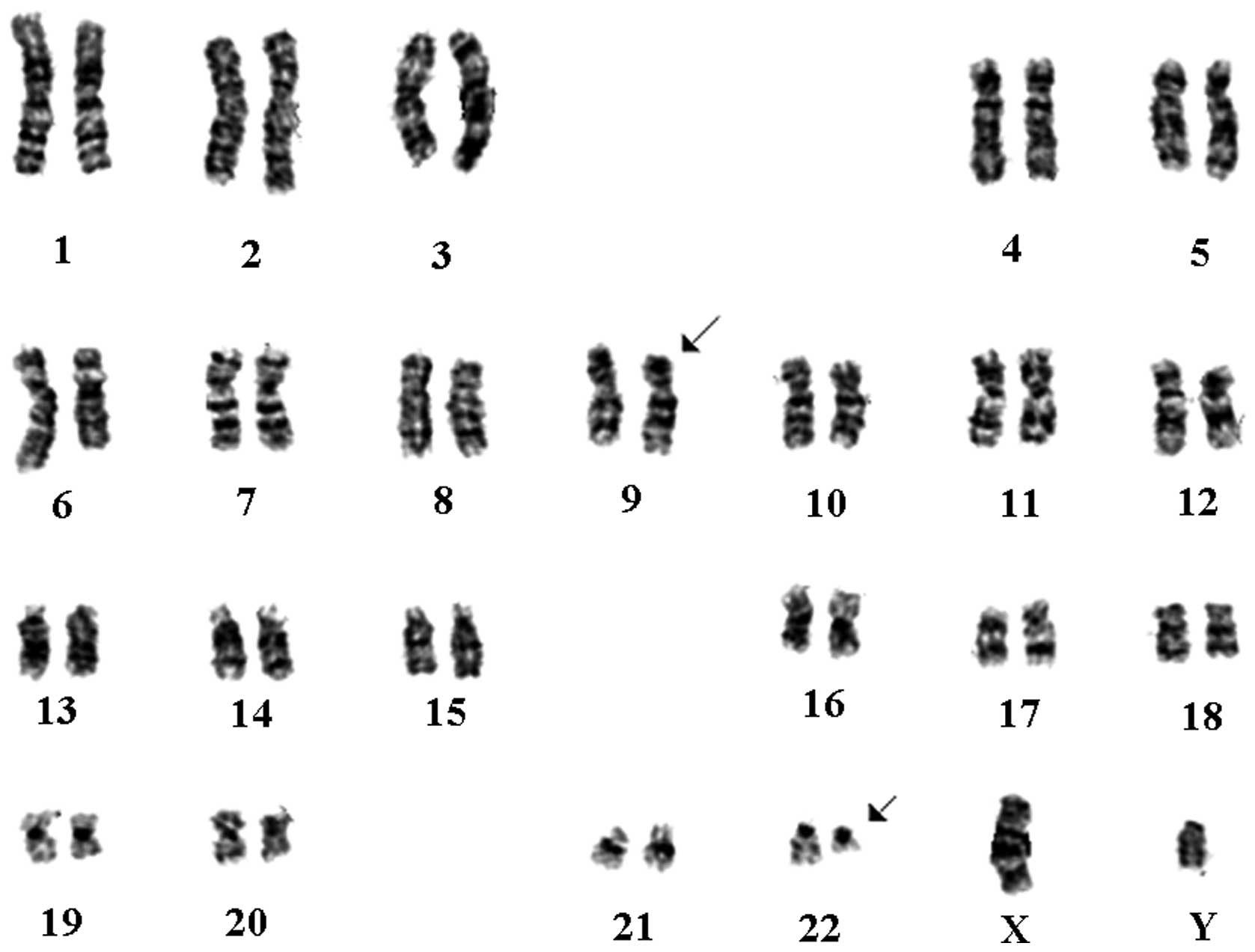
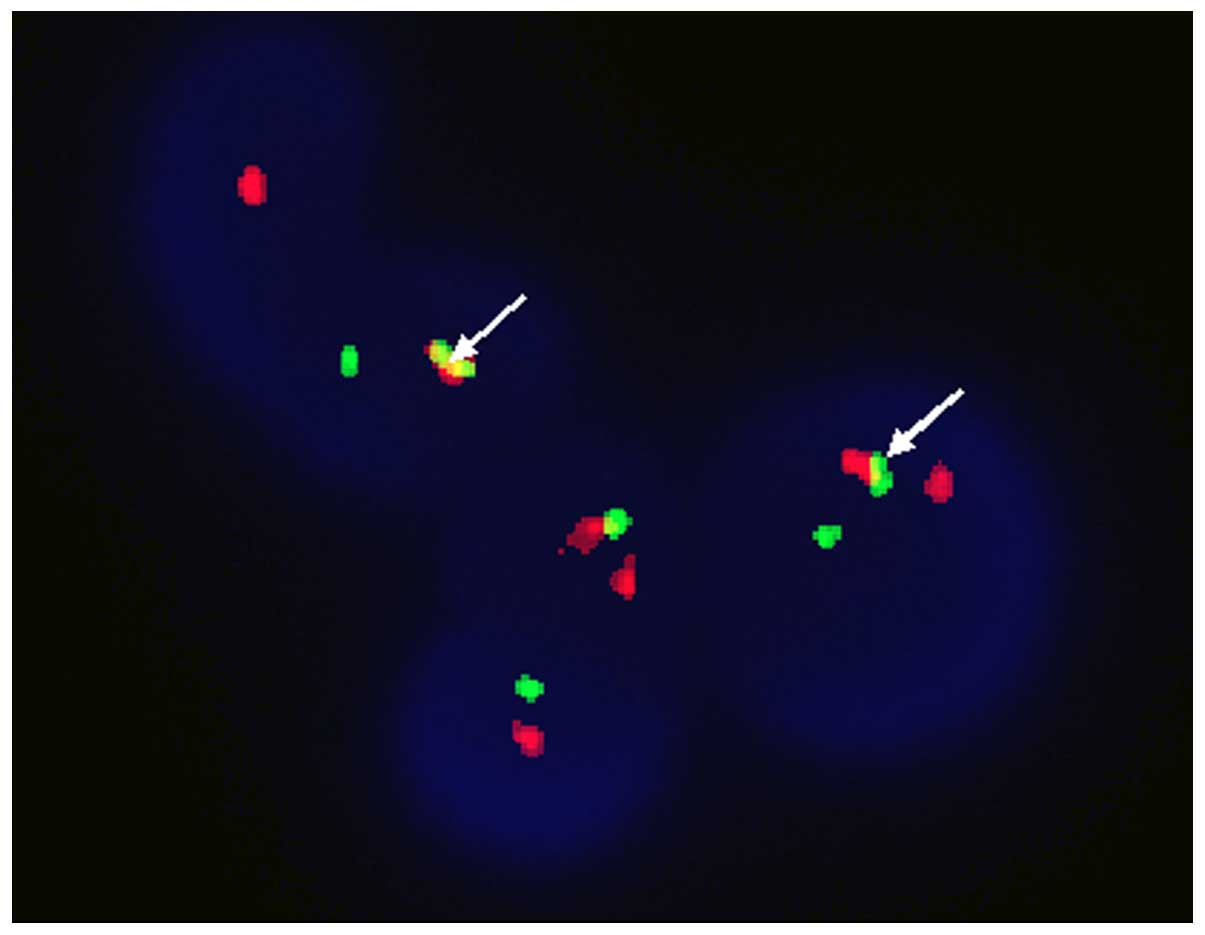
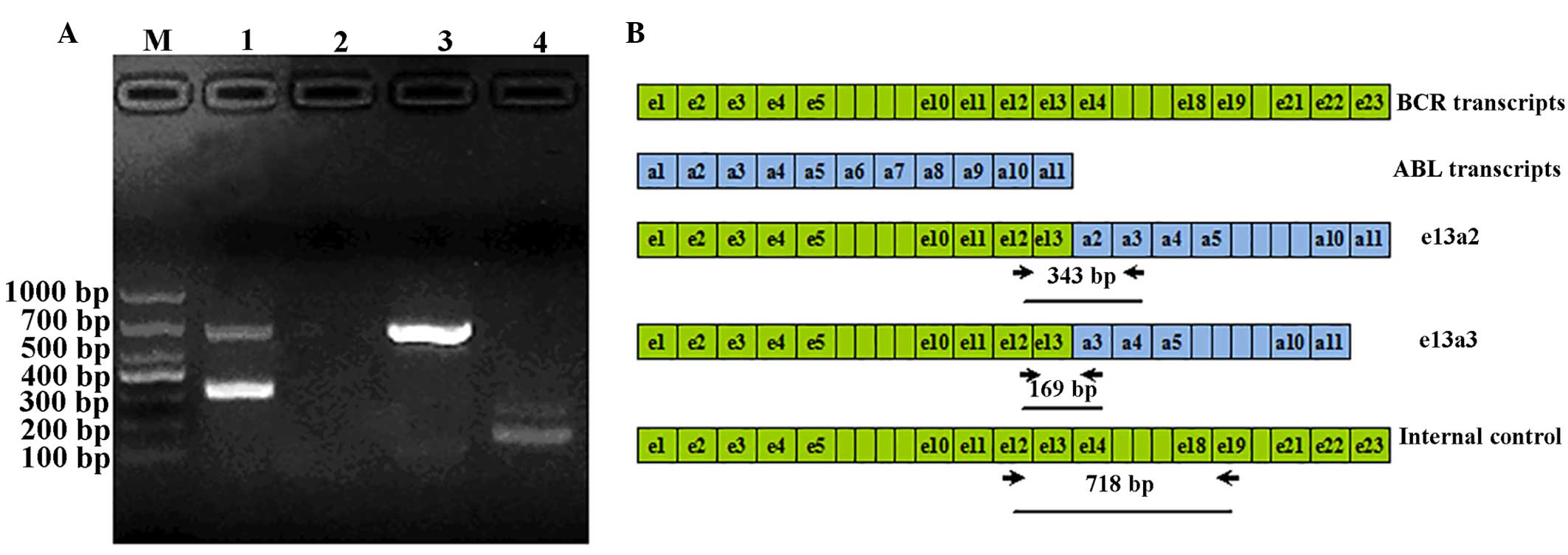
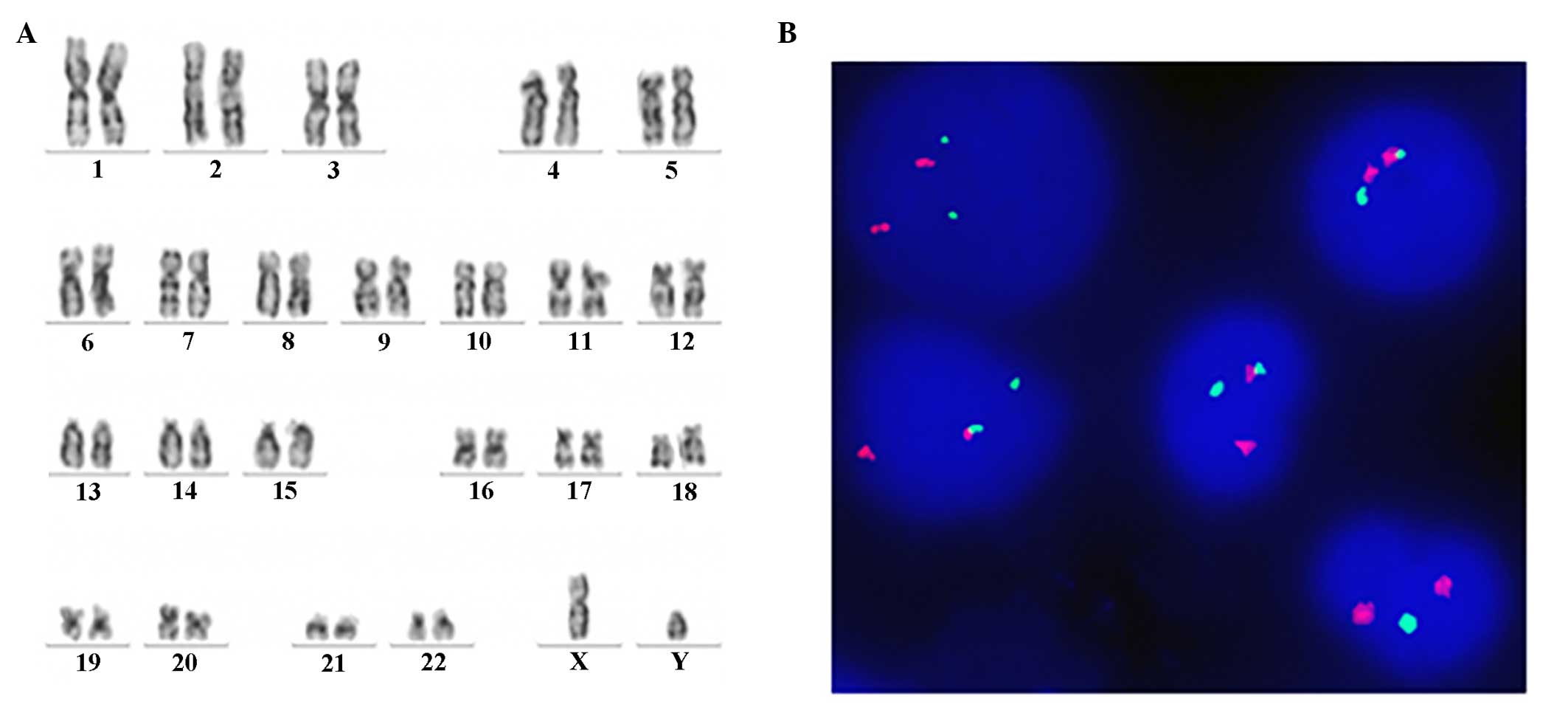
A 32-year-old male was admitted to the Department of General Surgery at The First Affiliated Hospital of Lanzhou University (Lanzhou, China) in June 2014 with a history of weight loss and splenomegaly. Routine peripheral blood analysis demonstrated white blood cell (WBC) counts of 310.10×10⁹/l (2% blasts, 2% promyelocytes, 25% myelocytes, 9% metamyelocytes, 19% band neutrophils, 26% segmented neutrophils, 5.0% basophils, 9% eosinophils and 3% lymphocytes), a hemoglobin count of 8.7 g/dl and a platelet count of 130×109/l. In conclusion, the patient was diagnosed with leukemia and admitted to the Department of Hematology. Following this, the patient underwent a bone marrow aspirate, which demonstrated hypercellularity with a marked myeloid predominance. Bone marrow mononuclear cells were cultured according to standard methods and the karyotypes were analyzed by G-banding, which demonstrated 46,XY, t (9,22) in 20/20 metaphases (Fig. 1). The positive rate of BCR-ABL fusion was 100% as determined by FISH (results were considered clonal when the percentage of cells containing a reciprocal t(9;22) exceeded 4.0%; Fig. 2). No BCR-ABL fusion gene (e13a2, e14a2, e1a2 and e19a2) was detected by RT-qPCR. However, further detection by RT-PCR demonstrated the presence of the e13a3 fusion gene (Fig. 3). Subsequently, the patient was treated initially with hydroxyurea (3,000 mg/day) with reasonably good control of WBCs. After 3 weeks, the WBC count was decreased (9.8×10⁹/l) and the previous relevant symptoms disappeared. Following this, the patient was administered 800 mg of Nilotinib daily. No side effects or hematologic toxicity were observed. The karyotype was normalized [46,XY (20/20)] and FISH for BCR-ABL decreased to 0% after 3 months on Nilotinib, indicating a complete cytogenetic response (Fig. 4). Written informed consent was obtained from the patient and the study was approved by the Ethics Committee of The First Hospital of Lanzhou University.

Figure 1

G-banded karyotype. Arrows indicate the t(9;22) translocation.

Figure 2

FISH analysis showing a typical pattern of t(9;22) (1O1G2R). FISH was performed using a GLP BCR/GLP ABL to identify BCR-ABL fusion genes. A normal cell shows two separate sets of red and green signals (2R2G), while a cell containing a reciprocal t(9;22) translocation shows individual red and green signals from the normal 9 and 22 chromosomes and red/green fusion signals from the derivative 9 and 22 chromosomes (1O1G2R). The two fusions are indicated by arrows. FISH, fluorescence in situ hybridization; GLP, gene locus-specific probe.

Figure 3

Polymerase chain reaction products and schematic representation of BCR-ABL transcripts. (A) Lane M, bp markers; lane 1, e13a2-positive control (343 bp); lane 2, negative control; lane 3, internal control (718 bp); lane 4, patient with e13a3 (169 bp). (B) The arrows indicate the position of the primers. The ABL primer was located in ABL exon 3 to enable the detection of fusions with either ABL exon 2 (a2) or exon 3 (a3) (5′-CCA TTG TGA TTA TAG CCT AAG ACC CGGAG-3′). The BCR primer was located in exon 12 (e12) for the M-bcr transcripts (5′-AGA ACA TCC GGG AGC AGC AGA AGAA-3′). The internal control primers were 5′-AGA ACA TCC GGG AGC AGC AGA AGAA-3′ and 5′-ATG TCC GTG GCC ACA CCG GACAC-3′, which were from the normal BCR gene (1).

Figure 4

Follow up of G-banded and FISH analysis. (A) G-banding demonstrated that the patient's karyotype was altered from the t(9;22) translocation to a normal karyotype following treatment with Nilotinib for 3 months. (B) FISH demonstrated a markedly reduced BCR-ABL fusion rate of 0% (2G2R), indicating a complete cytogenetic response. FISH, fluorescence in situ hybridization.

Discussion

BCR-ABL transcripts with intronic breakpoints downstream of ABL a2, lacking ABL exon 2, are rare. The present study described a chronic myeloid leukemia (CML) case with an e13a3 BCR-ABL fusion transcript. To date, only 16 cases of CML with e13a3 BCR-ABL transcripts have been reported (3,5–7). Ito et al reported the frequency and distribution of BCR-ABL transcript types among the Japanese. Overall, the percentage of patients with the e14a2, e13a2 and e13a3 transcript types was 67.50 (85/126), 30.20 (38/126) and 0.80% (1/126), respectively (8). Goh et al reported that the majority of patients (538/548, 98.18%) were found to have e14a2 or e13a2 in Korea, and the frequency of occurrence of e13a3 was 0.18% (1/548) (9). In a previous study by Todoric-Zivanovic et al, the e14a2 form of BCR-ABL was detected in 100 patients (73.5%) and the e13a2 form was detected in 34 patients (25%). One (0.75%) patient had the e1a1 transcript of BCR-ABL, however, no BCR-a3 case was detected (10).

The number of reported BCR-a3 cases is small compared with the theoretical frequency of BCR-a3 cases. An explanation for this mismatch may be due to the methodology of RT-qPCR. Initially, the e13a3 fusion transcript was missed by RT-qPCR using the primer corresponding to ABL a2 sequences despite the existence of the t (9;22) (q34;q11) translocation by G-banding. In addition, FISH also detected this translocation due to the large size of the probes used. Following this, RT-qPCR analysis with the ABL primer, which was located in ABL exon 3 to enable the detection of fusions with either ABL exon 2 (a2) or exon 3 (a3) demonstrated a 169 bp band in the present case, in comparison with an e13a2-positive control band (343 bp), suggesting that the ABL a2 region (174 bp) was completely deficient. There may be more cases that present BCR-a3 fusion transcripts if a proper primer is used routinely in RT-qPCR. The patient was administered 800 mg of Nilotinib daily, and using classic cytogenetics, the Ph+ metaphases decreased from 100% prior to Nilotinib treatment to 0% by 3 months. The patient did respond quickly and completely to Nilotinib, with rapid achievement of complete hematologic and cytogenetic remission.

The ABL a2 region encodes a part of the Src homology (SH)3 domain. The SH3 domain is considered to have a negative regulatory role in the kinase domain (SH1). Therefore, the lack of a SH3 domain may result in a more aggressive form of Ph-positive leukemia. By contrast, the SH3 domain is required for activation of signal transducer and activator of transcription 5 by the BCR-ABL protein, leading to full leukemogenesis. Thus, deletion of the SH3 domain may induce a less progressive clinical course (5,11). The BCR-ABL a3 break-point does not alter the sequence coding for the ATP/imatinib binding domain, but alterations in tertiary structure compared with a typical a2 fusion could affect drug response. The clinical outcomes specific to CML patients with BCR-ABL a3 fusions are difficult to define due to the limited number of cases reported (2,4).

In conclusion, CML with a BCR-ABL a3 fusion gene is a rare and challenging disease, which could lead to negative RT-qPCR results and be erroneously interpreted. According to National Comprehensive Cancer Network (NCCN) practice guidelines, cytogenetics, FISH and RT-qPCR are recommended as the initial workup for chronic phase adult CML, as each essay can provide unique information. As mentioned, FISH and standard cytogenetics can identify uncommon BCR-ABL translocations that may be missed by RT-qPCR. Karyotyping identifies other cytogenetic abnormalities that may have prognostic significance. Once a complete cytogenetic remission has been obtained, the NCCN guidelines recommend RT-qPCR every 3 to 6 months, which may not be effective for patients with rare breakpoints. Further studies are required to interpret natural frequency and unique clinical manifestations of this rare BCR-ABL fusion in patients with CML.

Acknowledgments

The authors would like to thank High Trust Diagnostics Inc. and Dr Ren Li and Dr Luo Xiu Feng for their assistance with the experiment.

References

1 

Burmeister T and Reinhardt R: A multiplex PCR for improved detection of typical and atypical BCR-ABL fusion transcripts. Leuk Res. 32:579–585. 2008. View Article : Google Scholar

2 

Jinawath N, Norris-Kirby A, Smith BD, Gocke CD, Batista DA, Griffin CA and Murphy KM: A rare e14a3 (b3a3) BCR-ABL fusion transcript in chronic myeloid leukemia: Diagnostic challenges in clinical laboratory practice. J Mol Diagn. 11:359–363. 2009. View Article : Google Scholar : PubMed/NCBI

3 

Achkar WA, Wafa A, Ali BY, Manvelyan M and Liehr T: A rare chronic myeloid leukemia case with Philadelphia chromosome, BCR-ABL e13a3 transcript and complex translocation involving four different chromosomes. Oncol Lett. 1:797–800. 2010.PubMed/NCBI

4 

Pienkowska-Grela B, Woroniecka R, Solarska I, Kos K, Pastwińska A, Konopka L and Majewski M: Complete cytogenetic and molecular response after imatinib treatment for chronic myeloid leukemia in a patient with atypical karyotype and BCR-ABL b2a3 transcript. Cancer Genet Cytogenet. 174:111–115. 2007. View Article : Google Scholar : PubMed/NCBI

5 

Fujisawa S, Nakamura S, Naito K, Kobayashi M and Ohnishi K: A variant transcript, e1a3, of the minor BCR-ABL fusion gene in acute lymphoblastic leukemia: Case report and review of the literature. Int J Hematol. 87:184–188. 2008. View Article : Google Scholar : PubMed/NCBI

6 

Masuko M, Furukawa T, Abe T, Wada R, Maruyama S, Kitajima T, Shibasaki Y, Toba K, Okada M and Aizawa Y: A chronic myeloid leukemia patient with atypical karyotype and BCR-ABL e13a3 transcript caused by complex chromosome rearrangement. Int J Hematol. 90:230–234. 2009. View Article : Google Scholar : PubMed/NCBI

7 

De Braekeleer E, Douet-Guilbert N, Rowe D, Bown N, Morel F, Berthou C, Férec C and De Braekeleer M: ABL1 fusion genes in hematological malignancies: A review. Eur J Haematol. 86:361–371. 2011. View Article : Google Scholar : PubMed/NCBI

8 

Ito T, Tanaka H, Tanaka K, Ito K, Kyo T, Dohy H, Kamada N and Kimura A: Insertion of a genomic fragment of chromosome 19 between BCR intron 19 and ABL intron 1a in a chronic myeloid leukaemia patient with micro-BCR-ABL (e19a2) transcript. Br J Haematol. 126:752–753. 2004. View Article : Google Scholar : PubMed/NCBI

9 

Goh HG, Hwang JY, Kim SH, Lee YH, Kim YL and Kim DW: Comprehensive analysis of BCR-ABL transcript types in Korean CML patients using a newly developed multiplex RT-PCR. Transl Res. 148:249–256. 2006. View Article : Google Scholar : PubMed/NCBI

10 

Todoric-Zivanovic B, Strnad M, Stamatovic D, Tukic L, Krtolica K, Tatomirovic Z, Djordjevic V, Bogdanovic A, Jankovic G and Magic Z: Frequency of BCR-ABL fusion transcripts in Serbian patients with chronic myeloid leukemia. J BUON. 16:104–107. 2011.PubMed/NCBI

11 

Snyder DS, McMahon R, Cohen SR and Slovak ML: Chronic myeloid leukemia with an e13a3 BCR-ABL fusion: Benign course responsive to imatinib with an RT-PCR Advisory. Am J Hematol. 75:92–95. 2004. View Article : Google Scholar : PubMed/NCBI

Related Articles

  • Abstract
  • View
  • Download
  • Twitter
Copy and paste a formatted citation
Spandidos Publications style
Liu B, Zhang W and Ma H: Complete cytogenetic response to Nilotinib in a chronic myeloid leukemia case with a rare e13a3(b2a3) BCR-ABL fusion transcript: A case report. Mol Med Rep 13: 2635-2638, 2016.
APA
Liu, B., Zhang, W., & Ma, H. (2016). Complete cytogenetic response to Nilotinib in a chronic myeloid leukemia case with a rare e13a3(b2a3) BCR-ABL fusion transcript: A case report. Molecular Medicine Reports, 13, 2635-2638. https://doi.org/10.3892/mmr.2016.4826
MLA
Liu, B., Zhang, W., Ma, H."Complete cytogenetic response to Nilotinib in a chronic myeloid leukemia case with a rare e13a3(b2a3) BCR-ABL fusion transcript: A case report". Molecular Medicine Reports 13.3 (2016): 2635-2638.
Chicago
Liu, B., Zhang, W., Ma, H."Complete cytogenetic response to Nilotinib in a chronic myeloid leukemia case with a rare e13a3(b2a3) BCR-ABL fusion transcript: A case report". Molecular Medicine Reports 13, no. 3 (2016): 2635-2638. https://doi.org/10.3892/mmr.2016.4826
Copy and paste a formatted citation
x
Spandidos Publications style
Liu B, Zhang W and Ma H: Complete cytogenetic response to Nilotinib in a chronic myeloid leukemia case with a rare e13a3(b2a3) BCR-ABL fusion transcript: A case report. Mol Med Rep 13: 2635-2638, 2016.
APA
Liu, B., Zhang, W., & Ma, H. (2016). Complete cytogenetic response to Nilotinib in a chronic myeloid leukemia case with a rare e13a3(b2a3) BCR-ABL fusion transcript: A case report. Molecular Medicine Reports, 13, 2635-2638. https://doi.org/10.3892/mmr.2016.4826
MLA
Liu, B., Zhang, W., Ma, H."Complete cytogenetic response to Nilotinib in a chronic myeloid leukemia case with a rare e13a3(b2a3) BCR-ABL fusion transcript: A case report". Molecular Medicine Reports 13.3 (2016): 2635-2638.
Chicago
Liu, B., Zhang, W., Ma, H."Complete cytogenetic response to Nilotinib in a chronic myeloid leukemia case with a rare e13a3(b2a3) BCR-ABL fusion transcript: A case report". Molecular Medicine Reports 13, no. 3 (2016): 2635-2638. https://doi.org/10.3892/mmr.2016.4826
Follow us
  • Twitter
  • LinkedIn
  • Facebook
About
  • Spandidos Publications
  • Careers
  • Cookie Policy
  • Privacy Policy
How can we help?
  • Help
  • Live Chat
  • Contact
  • Email to our Support Team