Spandidos Publications Logo
  • About
    • About Spandidos
    • Aims and Scopes
    • Abstracting and Indexing
    • Editorial Policies
    • Reprints and Permissions
    • Job Opportunities
    • Terms and Conditions
    • Contact
  • Journals
    • All Journals
    • Oncology Letters
      • Oncology Letters
      • Information for Authors
      • Editorial Policies
      • Editorial Board
      • Aims and Scope
      • Abstracting and Indexing
      • Bibliographic Information
      • Archive
    • International Journal of Oncology
      • International Journal of Oncology
      • Information for Authors
      • Editorial Policies
      • Editorial Board
      • Aims and Scope
      • Abstracting and Indexing
      • Bibliographic Information
      • Archive
    • Molecular and Clinical Oncology
      • Molecular and Clinical Oncology
      • Information for Authors
      • Editorial Policies
      • Editorial Board
      • Aims and Scope
      • Abstracting and Indexing
      • Bibliographic Information
      • Archive
    • Experimental and Therapeutic Medicine
      • Experimental and Therapeutic Medicine
      • Information for Authors
      • Editorial Policies
      • Editorial Board
      • Aims and Scope
      • Abstracting and Indexing
      • Bibliographic Information
      • Archive
    • International Journal of Molecular Medicine
      • International Journal of Molecular Medicine
      • Information for Authors
      • Editorial Policies
      • Editorial Board
      • Aims and Scope
      • Abstracting and Indexing
      • Bibliographic Information
      • Archive
    • Biomedical Reports
      • Biomedical Reports
      • Information for Authors
      • Editorial Policies
      • Editorial Board
      • Aims and Scope
      • Abstracting and Indexing
      • Bibliographic Information
      • Archive
    • Oncology Reports
      • Oncology Reports
      • Information for Authors
      • Editorial Policies
      • Editorial Board
      • Aims and Scope
      • Abstracting and Indexing
      • Bibliographic Information
      • Archive
    • Molecular Medicine Reports
      • Molecular Medicine Reports
      • Information for Authors
      • Editorial Policies
      • Editorial Board
      • Aims and Scope
      • Abstracting and Indexing
      • Bibliographic Information
      • Archive
    • World Academy of Sciences Journal
      • World Academy of Sciences Journal
      • Information for Authors
      • Editorial Policies
      • Editorial Board
      • Aims and Scope
      • Abstracting and Indexing
      • Bibliographic Information
      • Archive
    • International Journal of Functional Nutrition
      • International Journal of Functional Nutrition
      • Information for Authors
      • Editorial Policies
      • Editorial Board
      • Aims and Scope
      • Abstracting and Indexing
      • Bibliographic Information
      • Archive
    • International Journal of Epigenetics
      • International Journal of Epigenetics
      • Information for Authors
      • Editorial Policies
      • Editorial Board
      • Aims and Scope
      • Abstracting and Indexing
      • Bibliographic Information
      • Archive
    • Medicine International
      • Medicine International
      • Information for Authors
      • Editorial Policies
      • Editorial Board
      • Aims and Scope
      • Abstracting and Indexing
      • Bibliographic Information
      • Archive
  • Articles
  • Information
    • Information for Authors
    • Information for Reviewers
    • Information for Librarians
    • Information for Advertisers
    • Conferences
  • Language Editing
Spandidos Publications Logo
  • About
    • About Spandidos
    • Aims and Scopes
    • Abstracting and Indexing
    • Editorial Policies
    • Reprints and Permissions
    • Job Opportunities
    • Terms and Conditions
    • Contact
  • Journals
    • All Journals
    • Biomedical Reports
      • Information for Authors
      • Editorial Policies
      • Editorial Board
      • Aims and Scope
      • Abstracting and Indexing
      • Bibliographic Information
      • Archive
    • Experimental and Therapeutic Medicine
      • Information for Authors
      • Editorial Policies
      • Editorial Board
      • Aims and Scope
      • Abstracting and Indexing
      • Bibliographic Information
      • Archive
    • International Journal of Epigenetics
      • Information for Authors
      • Editorial Policies
      • Editorial Board
      • Aims and Scope
      • Abstracting and Indexing
      • Bibliographic Information
      • Archive
    • International Journal of Functional Nutrition
      • Information for Authors
      • Editorial Policies
      • Editorial Board
      • Aims and Scope
      • Abstracting and Indexing
      • Bibliographic Information
      • Archive
    • International Journal of Molecular Medicine
      • Information for Authors
      • Editorial Policies
      • Editorial Board
      • Aims and Scope
      • Abstracting and Indexing
      • Bibliographic Information
      • Archive
    • International Journal of Oncology
      • Information for Authors
      • Editorial Policies
      • Editorial Board
      • Aims and Scope
      • Abstracting and Indexing
      • Bibliographic Information
      • Archive
    • Medicine International
      • Information for Authors
      • Editorial Policies
      • Editorial Board
      • Aims and Scope
      • Abstracting and Indexing
      • Bibliographic Information
      • Archive
    • Molecular and Clinical Oncology
      • Information for Authors
      • Editorial Policies
      • Editorial Board
      • Aims and Scope
      • Abstracting and Indexing
      • Bibliographic Information
      • Archive
    • Molecular Medicine Reports
      • Information for Authors
      • Editorial Policies
      • Editorial Board
      • Aims and Scope
      • Abstracting and Indexing
      • Bibliographic Information
      • Archive
    • Oncology Letters
      • Information for Authors
      • Editorial Policies
      • Editorial Board
      • Aims and Scope
      • Abstracting and Indexing
      • Bibliographic Information
      • Archive
    • Oncology Reports
      • Information for Authors
      • Editorial Policies
      • Editorial Board
      • Aims and Scope
      • Abstracting and Indexing
      • Bibliographic Information
      • Archive
    • World Academy of Sciences Journal
      • Information for Authors
      • Editorial Policies
      • Editorial Board
      • Aims and Scope
      • Abstracting and Indexing
      • Bibliographic Information
      • Archive
  • Articles
  • Information
    • For Authors
    • For Reviewers
    • For Librarians
    • For Advertisers
    • Conferences
  • Language Editing
Login Register Submit
  • This site uses cookies
  • You can change your cookie settings at any time by following the instructions in our Cookie Policy. To find out more, you may read our Privacy Policy.

    I agree
Search articles by DOI, keyword, author or affiliation
Search
Advanced Search
presentation
Molecular Medicine Reports
Join Editorial Board Propose a Special Issue
Print ISSN: 1791-2997 Online ISSN: 1791-3004
Journal Cover
June-2016 Volume 13 Issue 6

Full Size Image

Sign up for eToc alerts
Recommend to Library

Journals

International Journal of Molecular Medicine

International Journal of Molecular Medicine

International Journal of Molecular Medicine is an international journal devoted to molecular mechanisms of human disease.

International Journal of Oncology

International Journal of Oncology

International Journal of Oncology is an international journal devoted to oncology research and cancer treatment.

Molecular Medicine Reports

Molecular Medicine Reports

Covers molecular medicine topics such as pharmacology, pathology, genetics, neuroscience, infectious diseases, molecular cardiology, and molecular surgery.

Oncology Reports

Oncology Reports

Oncology Reports is an international journal devoted to fundamental and applied research in Oncology.

Experimental and Therapeutic Medicine

Experimental and Therapeutic Medicine

Experimental and Therapeutic Medicine is an international journal devoted to laboratory and clinical medicine.

Oncology Letters

Oncology Letters

Oncology Letters is an international journal devoted to Experimental and Clinical Oncology.

Biomedical Reports

Biomedical Reports

Explores a wide range of biological and medical fields, including pharmacology, genetics, microbiology, neuroscience, and molecular cardiology.

Molecular and Clinical Oncology

Molecular and Clinical Oncology

International journal addressing all aspects of oncology research, from tumorigenesis and oncogenes to chemotherapy and metastasis.

World Academy of Sciences Journal

World Academy of Sciences Journal

Multidisciplinary open-access journal spanning biochemistry, genetics, neuroscience, environmental health, and synthetic biology.

International Journal of Functional Nutrition

International Journal of Functional Nutrition

Open-access journal combining biochemistry, pharmacology, immunology, and genetics to advance health through functional nutrition.

International Journal of Epigenetics

International Journal of Epigenetics

Publishes open-access research on using epigenetics to advance understanding and treatment of human disease.

Medicine International

Medicine International

An International Open Access Journal Devoted to General Medicine.

Journal Cover
June-2016 Volume 13 Issue 6

Full Size Image

Sign up for eToc alerts
Recommend to Library

  • Article
  • Citations
    • Cite This Article
    • Download Citation
    • Create Citation Alert
    • Remove Citation Alert
    • Cited By
  • Similar Articles
    • Related Articles (in Spandidos Publications)
    • Similar Articles (Google Scholar)
    • Similar Articles (PubMed)
  • Download PDF
  • Download XML
  • View XML
Article Open Access

Cordyceps militaris induces tumor cell death via the caspase‑dependent mitochondrial pathway in HepG2 and MCF‑7 cells

  • Authors:
    • Jingjing Song
    • Yingwu Wang
    • Meiyu Teng
    • Shiqiang Zhang
    • Mengya Yin
    • Jiahui Lu
    • Yan Liu
    • Robert J Lee
    • Di Wang
    • Lesheng Teng
  • View Affiliations / Copyright

    Affiliations: School of Life Sciences, Jilin University, Changchun, Jilin 130012, P.R. China
    Copyright: © Song et al. This is an open access article distributed under the terms of Creative Commons Attribution License.
  • Pages: 5132-5140
    |
    Published online on: April 25, 2016
       https://doi.org/10.3892/mmr.2016.5175
  • Expand metrics +
Metrics: Total Views: 0 (Spandidos Publications: | PMC Statistics: )
Metrics: Total PDF Downloads: 0 (Spandidos Publications: | PMC Statistics: )
Cited By (CrossRef): 0 citations Loading Articles...

This article is mentioned in:


Abstract

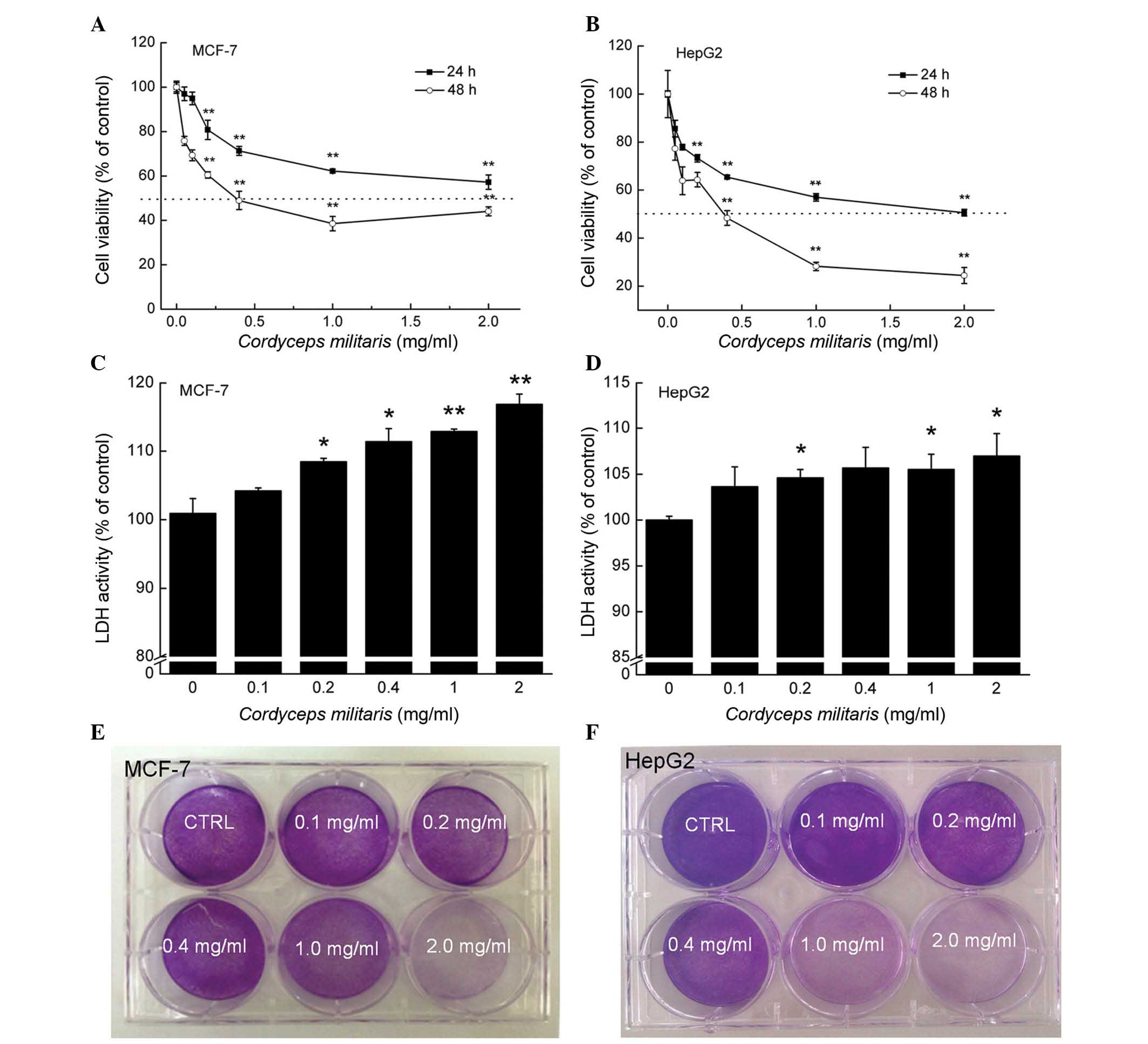
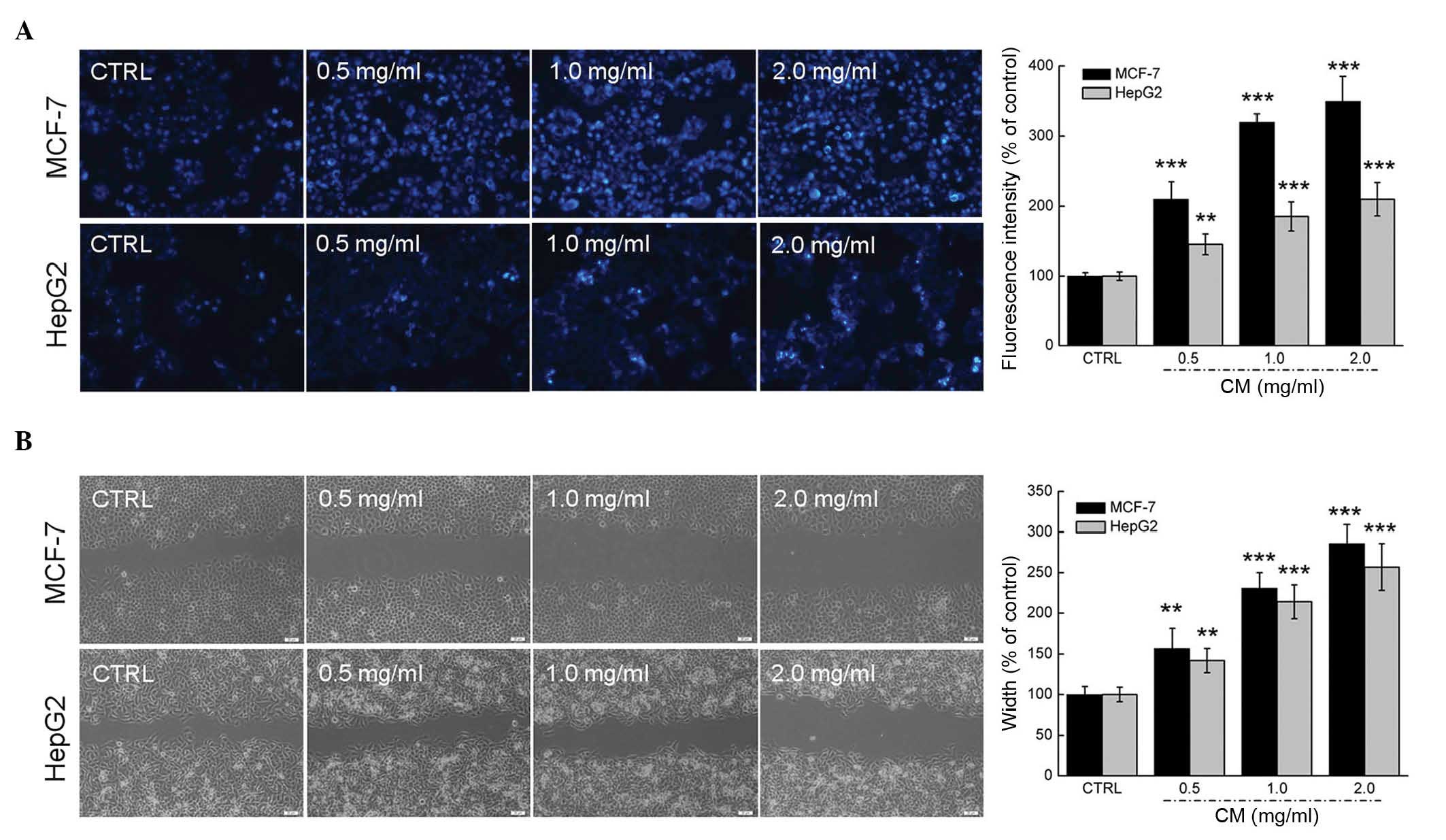
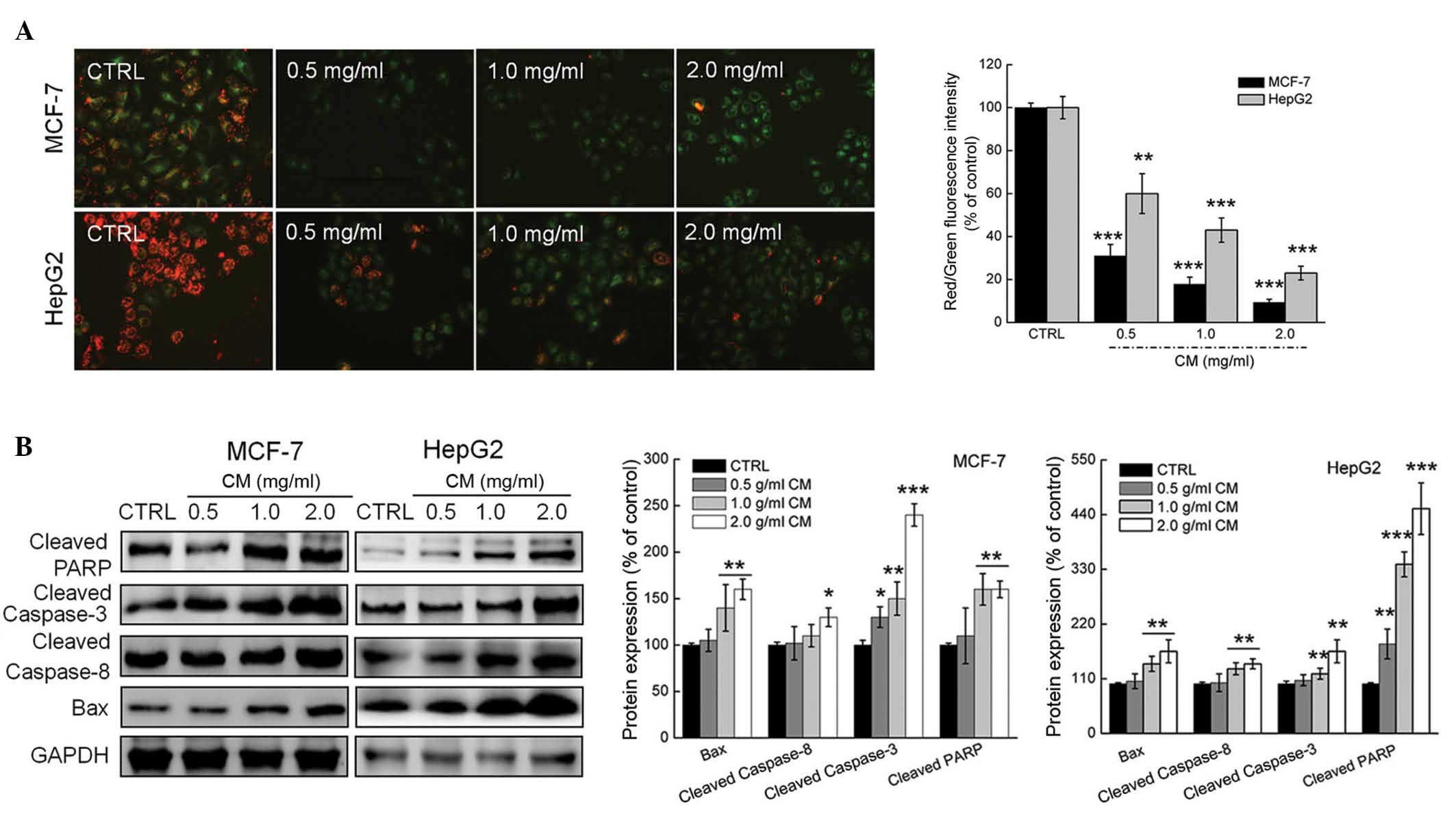
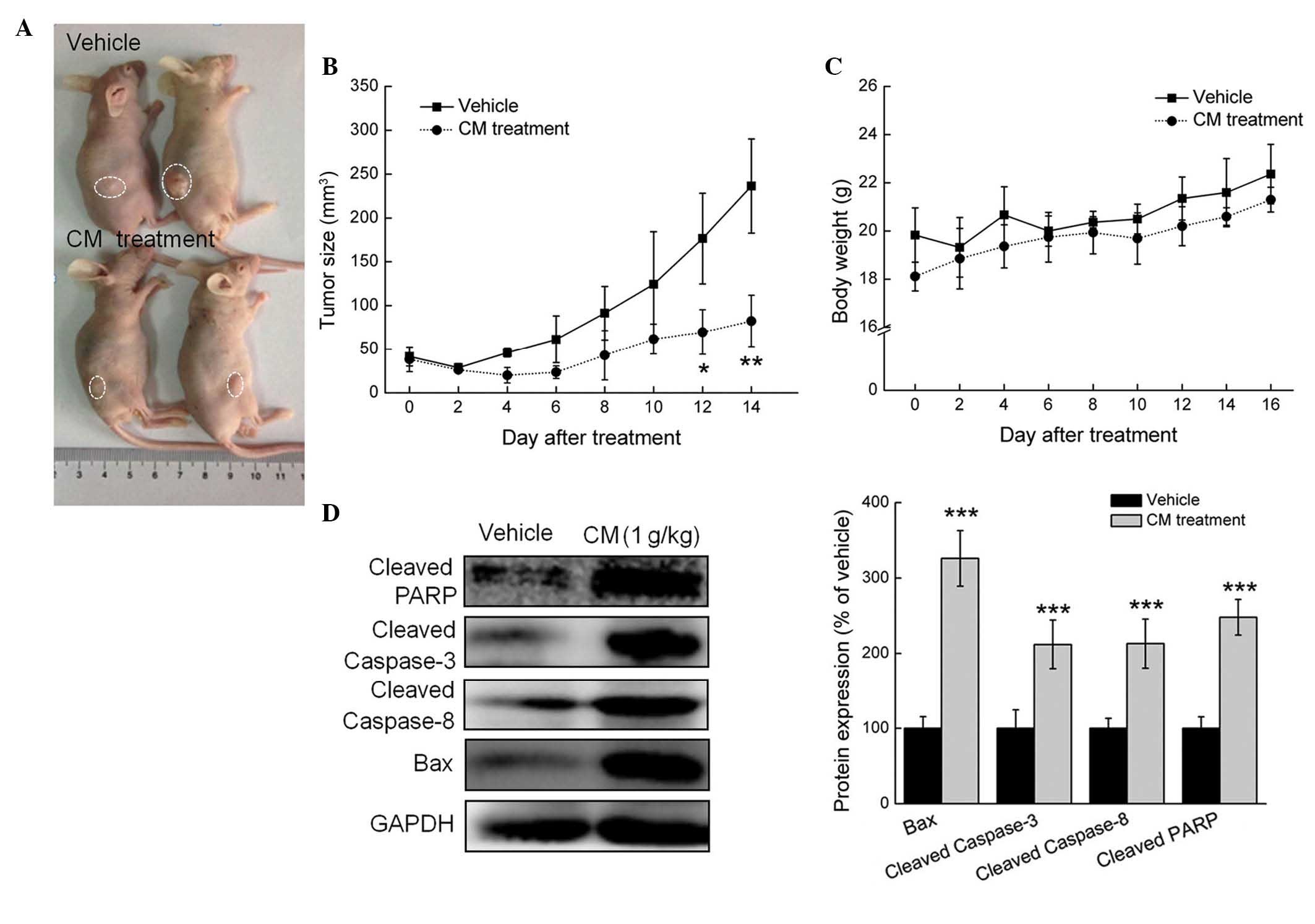
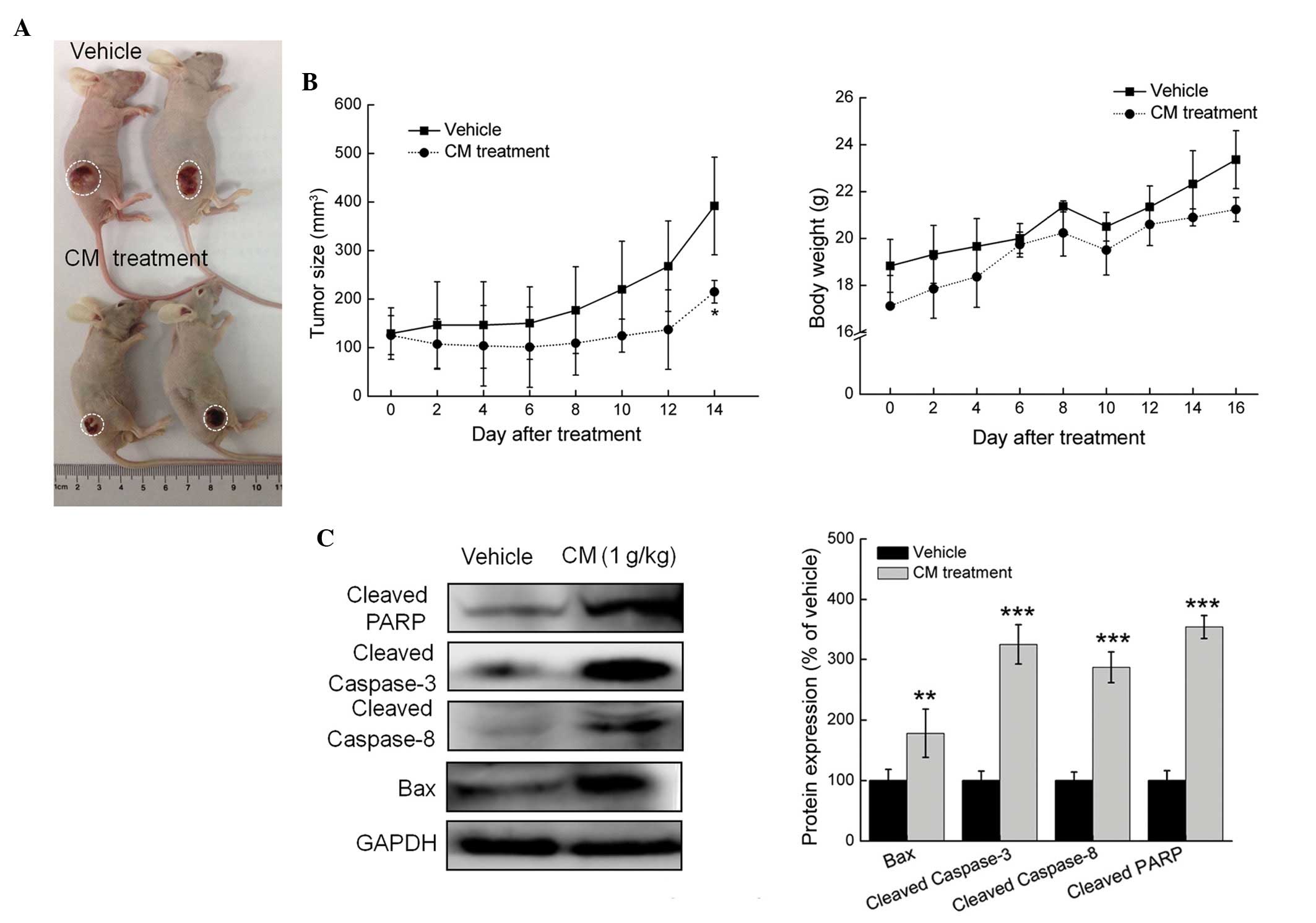
Cordyceps militaris (CM), an entomopathogenic fungus belonging to the class ascomycetes, possesses various pharmacological activities, including cytotoxic effects, on various types of human tumor cells. The present study investigated the anti‑hepatocellular carcinoma (HCC) and anti‑breast cancer effects of CM in in vitro and in vivo models. CM aqueous extract reduced cell viability, suppressed cell proliferation, inhibited cell migration ability, caused the over-release of lactate dehydrogenase, induced mitochondrial dysfunction and enhanced apoptotic rates in MCF‑7 and HepG2 cells. The expression levels of cleaved poly (ADP ribose) polymerase and caspase‑3, biomarkers of apoptosis, were increased following treatment with CM aqueous extract for 24 h. Furthermore, in the MCF‑7 and HepG2 cells, enhanced levels of B cell‑associated X protein and cleaved caspase‑8 were observed in the CM‑treated cells. Finally, the antitumor activities of CM in HCC and breast cancer were also confirmed in MCF‑7‑ and HepG2‑xengraft nude mice models. Collectively, the data obtained in the present study suggested that the cytotoxic effects of CM aqueous extract on HCC and breast cancer are associated with the caspase‑dependent mitochondrial pathway.
View Figures

Figure 1

Figure 2

Figure 3

Figure 4

Figure 5

View References

1 

Hosseini BA, Pasdaran A, Kazemi T, Shanehbandi D, Karami H, Orangi M and Baradaran B: Dichloromethane fractions of Scrophularia oxysepala extract induce apoptosis in MCF-7 human breast cancer cells. Bosn J Basic Med Sci. 15:26–32. 2015. View Article : Google Scholar : PubMed/NCBI

2 

Jemal A, Bray F, Center MM, Ferlay J, Ward E and Forman D: Global Cancer Statistics. CA Cancer J Clin. 61:69–90. 2011. View Article : Google Scholar : PubMed/NCBI

3 

Forner A and Bruix J: Hepatocellular carcinoma-Authors' reply. Lancet. 380:470–471. 2012. View Article : Google Scholar

4 

Johnson PJ: Hepatocellular carcinoma: Is current therapy really altering outcome? Gut. 51:459–462. 2002. View Article : Google Scholar : PubMed/NCBI

5 

Arii S, Yamaoka Y, Futagawa S, Inoue K, Kobayashi K, Kojiro M, Makuuchi M, Nakamura Y, Okita K and Yamada R: Results of surgical and nonsurgical treatment for small-sized hepatocellular carcinomas: A retrospective and nationwide survey in Japan. The liver cancer study group of Japan. Hepatology. 32:1224–1229. 2000. View Article : Google Scholar : PubMed/NCBI

6 

Chang CH, Chen SJ and Liu CY: Adjuvant treatments of breast cancer increase the risk of depressive disorders: A population-based study. J Affect Disord. 182:44–49. 2015. View Article : Google Scholar : PubMed/NCBI

7 

Chaube SK, Shrivastav TG, Tiwari M, Prasad S, Tripathi A and Pandey AK: Neem (Azadirachta indica L) leaf extract deteriorates oocyte quality by inducing ROS-mediated apoptosis in mammals. Springerplus. 3:4642014. View Article : Google Scholar

8 

Ghate NB, Chaudhuri D, Sarkar R, Sajem AL, Panja S, Rout J and Mandal N: An antioxidant extract of tropical lichen, Parmotrema reticulatum, induces cell cycle arrest and apoptosis in breast carcinoma cell line MCF-7. PLoS One. 8:e822932013. View Article : Google Scholar : PubMed/NCBI

9 

Das SK, Masuda M, Sakurai A and Sakakibara M: Medicinal uses of the mushroom Cordyceps militaris: Current state and prospects. Fitoterapia. 81:961–968. 2010. View Article : Google Scholar : PubMed/NCBI

10 

Ng TB and Wang HX: Pharmacological actions of Cordyceps, a prized folk medicine. J Pharm Pharmacol. 57:1509–1519. 2005. View Article : Google Scholar : PubMed/NCBI

11 

Jin CY, Kim GY and Choi YH: Induction of apoptosis by aqueous extract of Cordyceps militaris through activation of caspases and inactivation of Akt in human breast cancer MDA-MB-231 cells. J Microbiol Biotechnol. 18:1997–2003. 2008.

12 

Yoo HS, Shin JW, Cho JH, Son CG, Lee YW, Park SY and Cho CK: Effects of Cordyceps militaris extract on angiogenesis and tumor growth. Acta Pharmacol Sin. 25:657–665. 2004.PubMed/NCBI

13 

Lee H, Kim YJ, Kim HW, Lee DH, Sung MK and Park T: Induction of apoptosis by Cordyceps militaris through activation of caspase-3 in leukemia HL-60 cells. Biol Pharm Bull. 29:670–674. 2006. View Article : Google Scholar : PubMed/NCBI

14 

Reis FS, Barros L, Calhelha RC, Cirić A, van Griensven LJ, Soković M and Ferreira IC: The methanolic extract of Cordyceps militaris (L.) Link fruiting body shows antioxidant, antibacterial, antifungal and antihuman tumor cell lines properties. Food Chem Toxicol. 62:91–98. 2013. View Article : Google Scholar : PubMed/NCBI

15 

Jing Y, Cui X, Chen Z, Huang L, Song L, Liu T, Lv W and Yu R: Elucidation and biological activities of a new polysaccharide from cultured Cordyceps militaris. Carbohydr Polym. 102:288–296. 2014. View Article : Google Scholar : PubMed/NCBI

16 

Nakagawa S, Shiraishi T, Kihara S and Tabuchi K: Detection of DNA strand breaks associated with apoptosis in human brain tumors. Virchows Arch. 427:175–179. 1995. View Article : Google Scholar : PubMed/NCBI

17 

Pintus F, Floris G and Rufini A: Nutrient availability links mitochondria, apoptosis and obesity. Aging (Albany NY). 4:734–741. 2012. View Article : Google Scholar

18 

Chen R, Liu S, Piao F, Wang Z, Qi Y, Li S, Zhang D and Shen J: 2,5-Hexanedione induced apoptosis in mesenchymal stem cells from rat bone marrow via mitochondria-dependent caspase-3 pathway. Ind Health. 53:222–235. 2015. View Article : Google Scholar : PubMed/NCBI

19 

Wang Y, Wu Y, Luo K, Liu Y, Zhou M, Yan S, Shi H and Cai Y: The protective effects of selenium on cadmium-induced oxidative stress and apoptosis via mitochondria pathway in mice kidney. Food Chem Toxicol. 58:61–67. 2013. View Article : Google Scholar : PubMed/NCBI

20 

Hu Q, Wu D, Chen W, Yan Z and Shi Y: Proteolytic processing of the caspase-9 zymogen is required for apoptosome-mediated activation of caspase-9. J Biol Chem. 288:15142–15147. 2013. View Article : Google Scholar : PubMed/NCBI

21 

Boatright KM, Renatus M, Scott FL, Sperandio S, Shin H, Pedersen IM, Ricci JE, Edris WA, Sutherlin DP, Green DR and Salvesen GS: A unified model for apical caspase activation. Mol Cell. 11:529–541. 2003. View Article : Google Scholar : PubMed/NCBI

22 

Kroemer G, Dallaporta B and Resche-Rigon M: The mitochondrial death/life regulator in apoptosis and necrosis. Annu Rev Physiol. 60:619–642. 1998. View Article : Google Scholar : PubMed/NCBI

23 

Baharara J and Amini E: The potential of brittle star extracted polysaccharide in promoting apoptosis via intrinsic signaling pathway. Avicenna J Med Biotechnol. 7:151–158. 2015.PubMed/NCBI

24 

Kato M, Yamazaki T, Kato H, Eyama S, Goto M, Yoshioka M and Takatsu A: Development of high-purity certified reference materials for 17 proteinogenic amino acids by traceable titration methods. Anal Sci. 31:805–814. 2015. View Article : Google Scholar : PubMed/NCBI

25 

Li SP, Yang FQ and Tsim KW: Quality control of Cordyceps sinensis, a valued traditional Chinese medicine. J Pharm Biomed Anal. 41:1571–1584. 2006. View Article : Google Scholar : PubMed/NCBI

26 

Mosmann T: Rapid colorimetric assay for cellular growth and survival: Application to proliferation and cytotoxicity assays. J Immunol Methods. 65:55–63. 1983. View Article : Google Scholar : PubMed/NCBI

27 

Chan SL and Yu VC: Proteins of the bcl-2 family in apoptosis signalling: From mechanistic insights to therapeutic opportunities. Clin Exp Pharmacol Physiol. 31:119–128. 2004. View Article : Google Scholar : PubMed/NCBI

28 

Reis FS, Barros L, Calhelha RC, Cirić A, van Griensven LJ, Soković M and Ferreira IC: The methanolic extract of Cordyceps militaris (L.) Link fruiting body shows antioxidant, antibacterial, antifungal and antihuman tumor cell lines properties. Food Chem Toxicol. 62:91–98. 2013. View Article : Google Scholar : PubMed/NCBI

29 

Rao YK, Fang SH, Wu WS and Tzeng YM: Constituents isolated from Cordyceps militaris suppress enhanced inflammatory mediator's production and human cancer cell proliferation. J Ethnopharmacol. 131:363–367. 2010. View Article : Google Scholar : PubMed/NCBI

30 

Jing Y, Cui X, Chen Z, Huang L, Song L, Liu T, Lv W and Yu R: Elucidation and biological activities of a new polysaccharide from cultured Cordyceps militaris. Carbohydr Polym. 102:288–296. 2014. View Article : Google Scholar : PubMed/NCBI

31 

Wong JH, Wang H and Ng TB: A haemagglutinin from the medicinal fungus Cordyceps militaris. Biosci Rep. 29:321–327. 2009. View Article : Google Scholar

32 

Nourazarian SM, Nourazarian A, Majidinia M and Roshaniasl E: Effect of root extracts of medicinal herb Glycyrrhiza glabra on HSP90 gene rxpression and apoptosis in the HT-29 colon cancer cell line. Asian Pac J Cancer Prev. 16:8563–8566. 2015. View Article : Google Scholar

33 

Hu B, An HM, Wang SS, Chen JJ and Xu L: Preventive and therapeutic effects of Chinese herbal compounds against hepatocellular carcinoma. Molecules. 21:1422016. View Article : Google Scholar : PubMed/NCBI

34 

Fulda S and Debatin KM: Extrinsic versus intrinsic apoptosis pathways in anticancer chemotherapy. Oncogene. 25:4798–4811. 2006. View Article : Google Scholar : PubMed/NCBI

35 

Zhang Y, Xie RF, Xiao QG, Li R, Shen XL and Zhu XG: Hedyotis diffusa Willd extract inhibits the growth of human glioblastoma cells by inducing mitochondrial apoptosis via AKT/ERK pathways. J Ethnopharmaco. 158:404–411. 2014. View Article : Google Scholar

36 

Hengartner MO: The biochemistry of apoptosis. Nature. 407:770–776. 2000. View Article : Google Scholar : PubMed/NCBI

37 

Galluzzi L, Vitale I, Kepp O, Séror C, Hangen E, Perfettini JL, Modjtahedi N and Kroemer G: Methods to dissect mitochondrial membrane permeabilization in the course of apoptosis. Methods Enzymol. 442:355–374. 2008. View Article : Google Scholar : PubMed/NCBI

38 

Hisatomi T, Ishibashi T, Miller JW and Kroemer G: Pharmacological inhibition of mitochondrial membrane permeabilization for neuroprotection. Exp Neurol. 218:347–352. 2009. View Article : Google Scholar : PubMed/NCBI

39 

Schug ZT, Gonzalvez F, Houtkooper RH, Vaz FM and Gottlieb E: BID is cleaved by caspase-8 within a native complex on the mitochondrial membrane. Cell Death Differ. 18:538–548. 2011. View Article : Google Scholar :

40 

Hyun HB, Lee WS, Go SI, Nagappan A, Park C, Han MH, Hong SH, Kim G, Kim GY, Cheong J, et al: The flavonoid morin from Moraceae induces apoptosis by modulation of Bcl-2 family members and Fas receptor in HCT 116 cells. Int J Oncol. 46:2670–2678. 2015.PubMed/NCBI

41 

Lee JW, Park C, Han MH, Hong SH, Lee TK, Lee SH, Kim GY and Choi YH: Induction of human leukemia U937 cell apoptosis by an ethanol extract of Dendropanax morbifera Lev. Through the caspase-dependent pathway. Oncol Rep. 30:1231–1238. 2013.PubMed/NCBI

42 

Lee KH, Feig C, Tchikov V, Schickel R, Hallas C, Schütze S, Peter ME and Chan AC: The role of receptor internalization in CD95 signaling. EMBO J. 25:1009–1023. 2006. View Article : Google Scholar : PubMed/NCBI

43 

Liu XF, Jiang H, Zhang CS, Yu SP, Wang ZQ and Su HL: Targeted drug regulation on methylation of p53-BAX mitochondrial apoptosis pathway affects the growth of cholangiocarcinoma cells. J Int Med Res. 40:67–75. 2012. View Article : Google Scholar : PubMed/NCBI

44 

Kroemer G, Galluzzi L and Brenner C: Mitochondrial membrane permeabilization in cell death. Physiol Rev. 87:99–163. 2007. View Article : Google Scholar : PubMed/NCBI

45 

Bao Q and Shi Y: Apoptosome: A platform for the activation of initiator caspases. Cell Death Differ. 14:56–65. 2007. View Article : Google Scholar

46 

Porter AG and Jänicke RU: Emerging roles of caspase-3 in apoptosis. Cell Death Differ. 6:99–104. 1999. View Article : Google Scholar : PubMed/NCBI

47 

Visagie M, Theron A, Mqoco T, Vieira W, Prudent R, Martinez A, Lafanechère L and Joubert A: Sulphamoylated 2-methoxyestradiol analogues induce apoptosis in adenocarcinoma cell lines. PLoS One. 8:e719352013. View Article : Google Scholar : PubMed/NCBI

48 

Tor YS, Yazan LS, Foo JB, Armania N, Cheah YK, Abdullah R, Imam MU, Ismail N and Ismail M: Induction of apoptosis through oxidative stress-related pathways in MCF-7, human breast cancer cells, by ethyl acetate extract of Dillenia suffruticosa. BMC Complement Altern Med. 14:552014. View Article : Google Scholar : PubMed/NCBI

49 

Woo M, Hakem R, Soengas MS, Duncan GS, Shahinian A, Kägi D, Hakem A, McCurrach M, Khoo W, Kaufman SA, et al: Essential contribution of caspase 3/CPP32 to apoptosis and its associated nuclear changes. Genes Dev. 12:806–819. 1998. View Article : Google Scholar : PubMed/NCBI

50 

Liu J, Wu Y, Wang B, Yuan X and Fang B: High levels of glucose induced the caspase-3/PARP signaling pathway, leading to apoptosis in human periodontal ligament fibroblasts. Cell Biochem Biophys. 66:229–237. 2013. View Article : Google Scholar

51 

Benjamin RC and Gill DM: Poly (ADP-ribose) synthesis in vitro programmed by damaged DNA. A comparison of DNA molecules containing different types of strand breaks. J Biol Chem. 255:10502–10508. 1980.PubMed/NCBI

52 

Wang H, Shimoji M, Yu SW, Dawson TM and Dawson VL: Apoptosis inducing factor and PARP-mediated injury in the MPTP mouse model of Parkinson's disease. Ann N Y Acad Sci. 991:132–139. 2003. View Article : Google Scholar : PubMed/NCBI

53 

Shi Y, Zhou F, Jiang F, Lu H, Wang J and Cheng C: PARP inhibitor reduces proliferation and increases apoptosis in breast cancer cells. Chin J Cancer Res. 26:142–147. 2014.PubMed/NCBI

Related Articles

  • Abstract
  • View
  • Download
  • Twitter
Copy and paste a formatted citation
Spandidos Publications style
Song J, Wang Y, Teng M, Zhang S, Yin M, Lu J, Liu Y, Lee RJ, Wang D, Teng L, Teng L, et al: Cordyceps militaris induces tumor cell death via the caspase‑dependent mitochondrial pathway in HepG2 and MCF‑7 cells. Mol Med Rep 13: 5132-5140, 2016.
APA
Song, J., Wang, Y., Teng, M., Zhang, S., Yin, M., Lu, J. ... Teng, L. (2016). Cordyceps militaris induces tumor cell death via the caspase‑dependent mitochondrial pathway in HepG2 and MCF‑7 cells. Molecular Medicine Reports, 13, 5132-5140. https://doi.org/10.3892/mmr.2016.5175
MLA
Song, J., Wang, Y., Teng, M., Zhang, S., Yin, M., Lu, J., Liu, Y., Lee, R. J., Wang, D., Teng, L."Cordyceps militaris induces tumor cell death via the caspase‑dependent mitochondrial pathway in HepG2 and MCF‑7 cells". Molecular Medicine Reports 13.6 (2016): 5132-5140.
Chicago
Song, J., Wang, Y., Teng, M., Zhang, S., Yin, M., Lu, J., Liu, Y., Lee, R. J., Wang, D., Teng, L."Cordyceps militaris induces tumor cell death via the caspase‑dependent mitochondrial pathway in HepG2 and MCF‑7 cells". Molecular Medicine Reports 13, no. 6 (2016): 5132-5140. https://doi.org/10.3892/mmr.2016.5175
Copy and paste a formatted citation
x
Spandidos Publications style
Song J, Wang Y, Teng M, Zhang S, Yin M, Lu J, Liu Y, Lee RJ, Wang D, Teng L, Teng L, et al: Cordyceps militaris induces tumor cell death via the caspase‑dependent mitochondrial pathway in HepG2 and MCF‑7 cells. Mol Med Rep 13: 5132-5140, 2016.
APA
Song, J., Wang, Y., Teng, M., Zhang, S., Yin, M., Lu, J. ... Teng, L. (2016). Cordyceps militaris induces tumor cell death via the caspase‑dependent mitochondrial pathway in HepG2 and MCF‑7 cells. Molecular Medicine Reports, 13, 5132-5140. https://doi.org/10.3892/mmr.2016.5175
MLA
Song, J., Wang, Y., Teng, M., Zhang, S., Yin, M., Lu, J., Liu, Y., Lee, R. J., Wang, D., Teng, L."Cordyceps militaris induces tumor cell death via the caspase‑dependent mitochondrial pathway in HepG2 and MCF‑7 cells". Molecular Medicine Reports 13.6 (2016): 5132-5140.
Chicago
Song, J., Wang, Y., Teng, M., Zhang, S., Yin, M., Lu, J., Liu, Y., Lee, R. J., Wang, D., Teng, L."Cordyceps militaris induces tumor cell death via the caspase‑dependent mitochondrial pathway in HepG2 and MCF‑7 cells". Molecular Medicine Reports 13, no. 6 (2016): 5132-5140. https://doi.org/10.3892/mmr.2016.5175
Follow us
  • Twitter
  • LinkedIn
  • Facebook
About
  • Spandidos Publications
  • Careers
  • Cookie Policy
  • Privacy Policy
How can we help?
  • Help
  • Live Chat
  • Contact
  • Email to our Support Team