Spandidos Publications Logo
  • About
    • About Spandidos
    • Aims and Scopes
    • Abstracting and Indexing
    • Editorial Policies
    • Reprints and Permissions
    • Job Opportunities
    • Terms and Conditions
    • Contact
  • Journals
    • All Journals
    • Oncology Letters
      • Oncology Letters
      • Information for Authors
      • Editorial Policies
      • Editorial Board
      • Aims and Scope
      • Abstracting and Indexing
      • Bibliographic Information
      • Archive
    • International Journal of Oncology
      • International Journal of Oncology
      • Information for Authors
      • Editorial Policies
      • Editorial Board
      • Aims and Scope
      • Abstracting and Indexing
      • Bibliographic Information
      • Archive
    • Molecular and Clinical Oncology
      • Molecular and Clinical Oncology
      • Information for Authors
      • Editorial Policies
      • Editorial Board
      • Aims and Scope
      • Abstracting and Indexing
      • Bibliographic Information
      • Archive
    • Experimental and Therapeutic Medicine
      • Experimental and Therapeutic Medicine
      • Information for Authors
      • Editorial Policies
      • Editorial Board
      • Aims and Scope
      • Abstracting and Indexing
      • Bibliographic Information
      • Archive
    • International Journal of Molecular Medicine
      • International Journal of Molecular Medicine
      • Information for Authors
      • Editorial Policies
      • Editorial Board
      • Aims and Scope
      • Abstracting and Indexing
      • Bibliographic Information
      • Archive
    • Biomedical Reports
      • Biomedical Reports
      • Information for Authors
      • Editorial Policies
      • Editorial Board
      • Aims and Scope
      • Abstracting and Indexing
      • Bibliographic Information
      • Archive
    • Oncology Reports
      • Oncology Reports
      • Information for Authors
      • Editorial Policies
      • Editorial Board
      • Aims and Scope
      • Abstracting and Indexing
      • Bibliographic Information
      • Archive
    • Molecular Medicine Reports
      • Molecular Medicine Reports
      • Information for Authors
      • Editorial Policies
      • Editorial Board
      • Aims and Scope
      • Abstracting and Indexing
      • Bibliographic Information
      • Archive
    • World Academy of Sciences Journal
      • World Academy of Sciences Journal
      • Information for Authors
      • Editorial Policies
      • Editorial Board
      • Aims and Scope
      • Abstracting and Indexing
      • Bibliographic Information
      • Archive
    • International Journal of Functional Nutrition
      • International Journal of Functional Nutrition
      • Information for Authors
      • Editorial Policies
      • Editorial Board
      • Aims and Scope
      • Abstracting and Indexing
      • Bibliographic Information
      • Archive
    • International Journal of Epigenetics
      • International Journal of Epigenetics
      • Information for Authors
      • Editorial Policies
      • Editorial Board
      • Aims and Scope
      • Abstracting and Indexing
      • Bibliographic Information
      • Archive
    • Medicine International
      • Medicine International
      • Information for Authors
      • Editorial Policies
      • Editorial Board
      • Aims and Scope
      • Abstracting and Indexing
      • Bibliographic Information
      • Archive
  • Articles
  • Information
    • Information for Authors
    • Information for Reviewers
    • Information for Librarians
    • Information for Advertisers
    • Conferences
  • Language Editing
Spandidos Publications Logo
  • About
    • About Spandidos
    • Aims and Scopes
    • Abstracting and Indexing
    • Editorial Policies
    • Reprints and Permissions
    • Job Opportunities
    • Terms and Conditions
    • Contact
  • Journals
    • All Journals
    • Biomedical Reports
      • Information for Authors
      • Editorial Policies
      • Editorial Board
      • Aims and Scope
      • Abstracting and Indexing
      • Bibliographic Information
      • Archive
    • Experimental and Therapeutic Medicine
      • Information for Authors
      • Editorial Policies
      • Editorial Board
      • Aims and Scope
      • Abstracting and Indexing
      • Bibliographic Information
      • Archive
    • International Journal of Epigenetics
      • Information for Authors
      • Editorial Policies
      • Editorial Board
      • Aims and Scope
      • Abstracting and Indexing
      • Bibliographic Information
      • Archive
    • International Journal of Functional Nutrition
      • Information for Authors
      • Editorial Policies
      • Editorial Board
      • Aims and Scope
      • Abstracting and Indexing
      • Bibliographic Information
      • Archive
    • International Journal of Molecular Medicine
      • Information for Authors
      • Editorial Policies
      • Editorial Board
      • Aims and Scope
      • Abstracting and Indexing
      • Bibliographic Information
      • Archive
    • International Journal of Oncology
      • Information for Authors
      • Editorial Policies
      • Editorial Board
      • Aims and Scope
      • Abstracting and Indexing
      • Bibliographic Information
      • Archive
    • Medicine International
      • Information for Authors
      • Editorial Policies
      • Editorial Board
      • Aims and Scope
      • Abstracting and Indexing
      • Bibliographic Information
      • Archive
    • Molecular and Clinical Oncology
      • Information for Authors
      • Editorial Policies
      • Editorial Board
      • Aims and Scope
      • Abstracting and Indexing
      • Bibliographic Information
      • Archive
    • Molecular Medicine Reports
      • Information for Authors
      • Editorial Policies
      • Editorial Board
      • Aims and Scope
      • Abstracting and Indexing
      • Bibliographic Information
      • Archive
    • Oncology Letters
      • Information for Authors
      • Editorial Policies
      • Editorial Board
      • Aims and Scope
      • Abstracting and Indexing
      • Bibliographic Information
      • Archive
    • Oncology Reports
      • Information for Authors
      • Editorial Policies
      • Editorial Board
      • Aims and Scope
      • Abstracting and Indexing
      • Bibliographic Information
      • Archive
    • World Academy of Sciences Journal
      • Information for Authors
      • Editorial Policies
      • Editorial Board
      • Aims and Scope
      • Abstracting and Indexing
      • Bibliographic Information
      • Archive
  • Articles
  • Information
    • For Authors
    • For Reviewers
    • For Librarians
    • For Advertisers
    • Conferences
  • Language Editing
Login Register Submit
  • This site uses cookies
  • You can change your cookie settings at any time by following the instructions in our Cookie Policy. To find out more, you may read our Privacy Policy.

    I agree
Search articles by DOI, keyword, author or affiliation
Search
Advanced Search
presentation
Molecular Medicine Reports
Join Editorial Board Propose a Special Issue
Print ISSN: 1791-2997 Online ISSN: 1791-3004
Journal Cover
June-2016 Volume 13 Issue 6

Full Size Image

Sign up for eToc alerts
Recommend to Library

Journals

International Journal of Molecular Medicine

International Journal of Molecular Medicine

International Journal of Molecular Medicine is an international journal devoted to molecular mechanisms of human disease.

International Journal of Oncology

International Journal of Oncology

International Journal of Oncology is an international journal devoted to oncology research and cancer treatment.

Molecular Medicine Reports

Molecular Medicine Reports

Covers molecular medicine topics such as pharmacology, pathology, genetics, neuroscience, infectious diseases, molecular cardiology, and molecular surgery.

Oncology Reports

Oncology Reports

Oncology Reports is an international journal devoted to fundamental and applied research in Oncology.

Experimental and Therapeutic Medicine

Experimental and Therapeutic Medicine

Experimental and Therapeutic Medicine is an international journal devoted to laboratory and clinical medicine.

Oncology Letters

Oncology Letters

Oncology Letters is an international journal devoted to Experimental and Clinical Oncology.

Biomedical Reports

Biomedical Reports

Explores a wide range of biological and medical fields, including pharmacology, genetics, microbiology, neuroscience, and molecular cardiology.

Molecular and Clinical Oncology

Molecular and Clinical Oncology

International journal addressing all aspects of oncology research, from tumorigenesis and oncogenes to chemotherapy and metastasis.

World Academy of Sciences Journal

World Academy of Sciences Journal

Multidisciplinary open-access journal spanning biochemistry, genetics, neuroscience, environmental health, and synthetic biology.

International Journal of Functional Nutrition

International Journal of Functional Nutrition

Open-access journal combining biochemistry, pharmacology, immunology, and genetics to advance health through functional nutrition.

International Journal of Epigenetics

International Journal of Epigenetics

Publishes open-access research on using epigenetics to advance understanding and treatment of human disease.

Medicine International

Medicine International

An International Open Access Journal Devoted to General Medicine.

Journal Cover
June-2016 Volume 13 Issue 6

Full Size Image

Sign up for eToc alerts
Recommend to Library

  • Article
  • Citations
    • Cite This Article
    • Download Citation
    • Create Citation Alert
    • Remove Citation Alert
    • Cited By
  • Similar Articles
    • Related Articles (in Spandidos Publications)
    • Similar Articles (Google Scholar)
    • Similar Articles (PubMed)
  • Download PDF
  • Download XML
  • View XML
Article Open Access

Quantitative analysis of gene expression in fixed colorectal carcinoma samples as a method for biomarker validation

  • Authors:
    • Beata Ostasiewicz
    • Paweł Ostasiewicz
    • Kamila Duś‑Szachniewicz
    • Katarzyna Ostasiewicz
    • Piotr Ziółkowski
  • View Affiliations / Copyright

    Affiliations: Department of Pathology, Wrocław Medical University, Wrocław 50‑368, Poland, Department of Statistics, Wrocław University of Economics, Wrocław 53‑345, Poland
    Copyright: © Ostasiewicz et al. This is an open access article distributed under the terms of Creative Commons Attribution License.
  • Pages: 5084-5092
    |
    Published online on: April 27, 2016
       https://doi.org/10.3892/mmr.2016.5200
  • Expand metrics +
Metrics: Total Views: 0 (Spandidos Publications: | PMC Statistics: )
Metrics: Total PDF Downloads: 0 (Spandidos Publications: | PMC Statistics: )
Cited By (CrossRef): 0 citations Loading Articles...

This article is mentioned in:


Abstract

Biomarkers have been described as the future of oncology. Modern proteomics provide an invaluable tool for the near‑whole proteome screening for proteins expressed differently in neoplastic vs. healthy tissues. However, in order to select the most promising biomarkers, an independent method of validation is required. The aim of the current study was to propose a methodology for the validation of biomarkers. Due to material availability the majority of large scale biomarker studies are performed using formalin‑fixed paraffin‑embedded (FFPE) tissues, therefore these were selected for use in the current study. A total of 10 genes were selected from what have been previously described as the most promising candidate biomarkers, and the expression levels were analyzed with reverse transcription‑quantitative polymerase chain reaction (RT‑qPCR) using calibrator normalized relative quantification with the efficiency correction. For 6/10 analyzed genes, the results were consistent with the proteomic data; for the remaining four genes, the results were inconclusive. The upregulation of karyopherin α 2 (KPNA2) and chromosome segregation 1‑like (CSE1L) in colorectal carcinoma, in addition to downregulation of chloride channel accessory 1 (CLCA1), fatty acid binding protein 1 (FABP1), sodium channel, voltage gated, type VII α subunit (SCN7A) and solute carrier family 26 (anion exchanger), member 3 (SLC26A3) was confirmed. With the combined use of proteomic and genetic tools, it was reported, for the first time to the best of our knowledge, that SCN7A was downregulated in colorectal carcinoma at mRNA and protein levels. It had been previously suggested that the remaining five genes served an important role in colorectal carcinogenesis, however the current study provided strong evidence to support their use as biomarkers. Thus, it was concluded that combination of RT‑qPCR with proteomics offers a powerful methodology for biomarker identification, which can be used to analyze FFPE samples.
View Figures

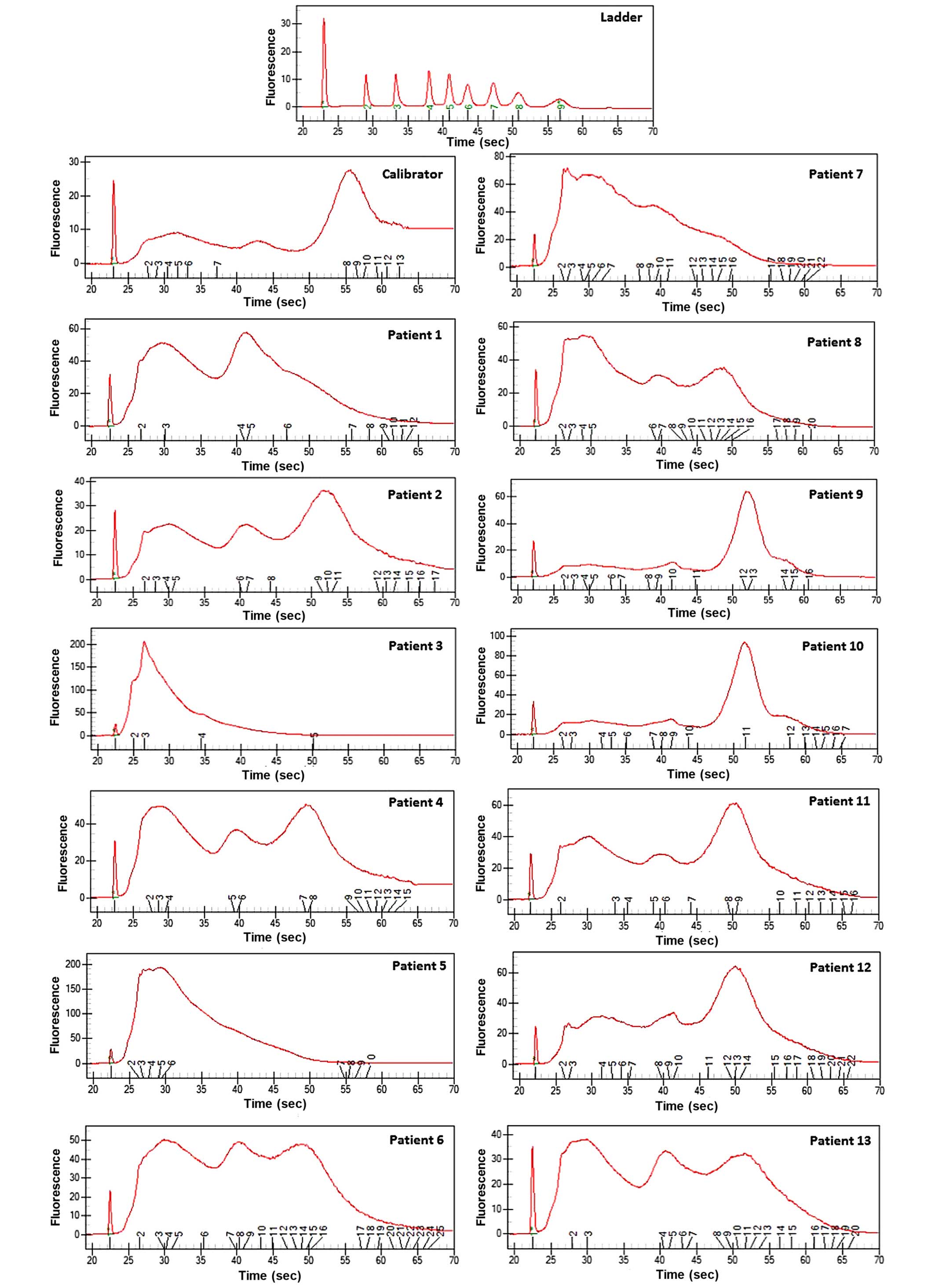
Figure 1

View References

1 

Torre LA, Bray F, Siegel RL, Ferlay J, Lortet-Tieulent J and Jemal A: Global cancer statistics, 2012. CA Cancer J Clin. 65:87–108. 2015. View Article : Google Scholar : PubMed/NCBI

2 

Vockley JG and Niederhuber JE: Diagnosis and treatment of cancer using genomics. BMJ. 350:h18322015. View Article : Google Scholar : PubMed/NCBI

3 

Kondo T: Inconvenient truth: Cancer biomarker development by using proteomics. Biochim Biophys Acta. 1844:861–865. 2014. View Article : Google Scholar

4 

Di Meo A, Diamandis EP, Rodriguez H, Hoofnagle AN, Ioannidis J and Lopez M: What is wrong with clinical proteomics? Clin Chem. 60:1258–1266. 2014. View Article : Google Scholar : PubMed/NCBI

5 

Wiśniewski JR, Ostasiewicz P, Duś K, Zielińska DF, Gnad F and Mann M: Extensive quantitative remodeling of the proteome between normal colon tissue and adenocarcinoma. Mol Syst Biol. 8:6112012. View Article : Google Scholar

6 

Sandin M, Chawade A and Levander F: Is label-free LC-MS/MS ready for biomarker discovery? Proteomics Clin Appl. 9:289–294. 2015. View Article : Google Scholar : PubMed/NCBI

7 

Farragher SM, Tanney A, Kennedy RD and Paul Harkin PD: RNA expression analysis from formalin fixed paraffin embedded tissues. Histochem Cell Biol. 130:435–445. 2008. View Article : Google Scholar : PubMed/NCBI

8 

Ibusuki M, Fu P, Yamamoto S, Fujiwara S, Yamamoto Y, Honda Y, Iyama K and Iwase H: Establishment of a standardized gene-expression analysis system using formalin-fixed, paraffin-embedded, breast cancer specimens. Breast Cancer. 20:159–166. 2013. View Article : Google Scholar

9 

Walter RF, Mairinger FD, Wohlschlaeger J, Worm K, Ting S, Vollbrecht C, Schmid KW and Hager T: FFPE tissue as a feasible source for gene expression analysis-a comparison of three reference genes and one tumor marker. Pathol Res Pract. 209:784–789. 2013. View Article : Google Scholar : PubMed/NCBI

10 

Kalmar A, Wichmann B, Galamb O, Spisák S, Tóth K, Leiszter K, Tulassay Z and Molnár B: Gene expression analysis of normal and colorectal cancer tissue samples from fresh frozen and matched formalin-fixed, paraffin-embedded (FFPE) specimens after manual and automated RNA isolatio. Methods. 59:S16–S19. 2013. View Article : Google Scholar

11 

Antonov J, Goldstein DR, Oberli A, Baltzer A, Pirotta M, Fleischmann A, Altermatt HJ and Jaggi R: Reliable gene expression measurements from degraded RNA by quantitative real-time PCR depend on short amplicons and a proper normalization. Lab Invest. 85:1040–1050. 2005. View Article : Google Scholar : PubMed/NCBI

12 

Kong H, Zhu M, Cui F, Wang S, Gao X, Lu S, Wu Y and Zhu H: Quantitative assessment of short amplicons in FFPE-derived long-chain RNA. Sci Rep. 4:72462014. View Article : Google Scholar : PubMed/NCBI

13 

Zhu JH, Hong DF, Song YM, Sun LF, Wang ZF and Wang JW: Suppression of cellular apoptosis susceptibility (CSE1L) inhibits proliferation and induces apoptosis in colorectal cancer cells. Asian Pac J Cancer Prev. 14:1017–1021. 2013. View Article : Google Scholar : PubMed/NCBI

14 

Tai CJ, Su TC, Jiang MC, Chen HC, Shen SC, Lee WR, Liao CF, Chen YC, Lin SH, Li LT, et al: Correlations between cytoplasmic CSE1L in neoplastic colorectal glands and depth of tumor penetration and cancer stage. J Transl Med. 11:292013. View Article : Google Scholar : PubMed/NCBI

15 

Sillars-Hardebol AH, Carvalho B, Beliën JA, de Wit M, Delis-van Diemen PM, Tijssen M, van de Wiel MA, Pontén F, Meijer GA and Fijneman RJ: CSE1L, DIDO1 and RBM39 in colorectal adenoma to carcinoma progression. Cell Oncol (Dordr). 35:293–300. 2012. View Article : Google Scholar

16 

Tung MC, Tsai CS, Tung JN, Tsao TY, Chen HC, Yeh KT, Liao CF and Jiang MC: Higher prevalence of secretory CSE1L/CAS in sera of patients with metastatic cancer. Cancer Epidemiol Biomarkers Prev. 18:1570–1577. 2009. View Article : Google Scholar : PubMed/NCBI

17 

Alnabulsi A, Agouni A, Mitra S, Garcia-Murillas I, Carpenter B, Bird S and Murray GI: Cellular apoptosis susceptibility (chromosome segregation 1-like, CSE1L) gene is a key regulator of apoptosis, migration and invasion in colorectal cancer. J Pathol. 228:471–481. 2012. View Article : Google Scholar : PubMed/NCBI

18 

Liao CF, Luo SF, Li LT, Lin CY, Chen YC and Jiang MC: CSE1L/CAS, the cellular apoptosis susceptibility protein, enhances invasion and metastasis but not proliferation of cancer cells. J Exp Clin Cancer Res. 27:152008. View Article : Google Scholar : PubMed/NCBI

19 

Brinkmann U, Gallo M, Polymeropoulos MH and Pastan I: The human CAS (cellular apoptosis susceptibility) gene mapping on chromosome 20q13 is amplified in BT474 breast cancer cells and part of aberrant chromosomes in breast and colon cancer cell lines. Genome Res. 6:187–194. 1996. View Article : Google Scholar : PubMed/NCBI

20 

Rachidi SM, Qin T, Sun S, Zheng WJ and Li Z: Molecular profiling of multiple human cancers defines an inflammatory cancer-associated molecular pattern and uncovers KPNA2 as a uniform poor prognostic cancer marker. PLoS One. 8:e579112013. View Article : Google Scholar : PubMed/NCBI

21 

Alshareeda AT, Negm OH, Green AR, Nolan CC, Tighe P, Albarakati N, Sultana R, Madhusudan S, Ellis IO and Rakha EA: KPNA2 is a nuclear export protein that contributes to aberrant localisation of key proteins and poor prognosis of breast cancer. Br J Cancer. 112:1929–1937. 2015. View Article : Google Scholar : PubMed/NCBI

22 

Ma S and Zhao X: KPNA2 is a promising biomarker candidate for esophageal squamous cell carcinoma and correlates with cell proliferation. Oncol Rep. 32:1631–1637. 2014.PubMed/NCBI

23 

Bustin SA, Li SR and Dorudi S: Expression of the Ca2+-activated chloride channel genes CLCA1 and CLCA2 is downregulated in human colorectal cancer. DNA Cell Biol. 20:331–338. 2001. View Article : Google Scholar : PubMed/NCBI

24 

Musrap N, Tuccitto A, Karagiannis GS, Saraon P, Batruch I and Diamandis EP: Comparative proteomics of ovarian cancer aggregate formation reveals an increased expression of calcium-activated chloride channel regulator 1 (CLCA1). J Biol Chem. 290:17218–17227. 2015. View Article : Google Scholar : PubMed/NCBI

25 

Muranen TA, Greco D, Fagerholm R, Kilpivaara O, Kämpjärvi K, Aittomäki K, Blomqvist C, Heikkilä P, Borg A and Nevanlinna H: Breast tumors from CHEK2 1100delC-mutation carriers: Genomic landscape and clinical implications. Breast Cancer Res. 13:R902011. View Article : Google Scholar : PubMed/NCBI

26 

Yang B, Cao L, Liu J, Xu Y, Milne G, Chan W, Heys SD, McCaig CD and Pu J: Low expression of chloride channel accessory 1 predicts a poor prognosis in colorectal cancer. Cancer. 121:1570–1580. 2015. View Article : Google Scholar : PubMed/NCBI

27 

Yang B, Cao L, Liu B, McCaig CD and Pu J: The transition from proliferation to differentiation in colorectal cancer is regulated by the calcium activated chloride channel A1. PLoS One. 8:e608612013. View Article : Google Scholar : PubMed/NCBI

28 

Lee S, Bang S, Song K and Lee I: Differential expression in normal-adenoma-carcinoma sequence suggests complex molecular carcinogenesis in colon. Oncol Rep. 16:747–754. 2006.PubMed/NCBI

29 

Lawrie LC, Dundas SR, Curran S and Murray GI: Liver fatty acid binding protein expression in colorectal neoplasia. Br J Cancer. 90:1955–1960. 2004. View Article : Google Scholar : PubMed/NCBI

30 

Kheirelseid EA, Chang KH, Newell J, Kerin MJ and Miller N: Identification of endogenous control genes for normalisation of real-time quantitative PCR data in colorectal cancer. BMC Mol Biol. 11:122010. View Article : Google Scholar : PubMed/NCBI

31 

Yamazaki T, Kanda T, Sakai Y and Hatakeyama K: Liver fatty acid-binding protein is a new prognostic factor for hepatic resection of colorectal cancer metastases. J Surg Oncol. 72:83–87. 1999. View Article : Google Scholar : PubMed/NCBI

32 

Wang B, Tao X, Huang CZ, Liu JF, Ye YB and Huang AM: Decreased expression of liver-type fatty acid-binding protein is associated with poor prognosis in hepatocellular carcinoma. Hepatogastroenterology. 61:1321–1326. 2014.PubMed/NCBI

33 

Hashimoto T, Kusakabe T, Watanabe K, Sugino T, Fukuda T, Nashimoto A, Honma K, Sato Y, Kimura H, Fujii H and Suzuki T: Liver-type fatty acid-binding protein is highly expressed in intestinal metaplasia and in a subset of carcinomas of the stomach without association with the fatty acid synthase status in the carcinoma. Pathobiology. 71:115–122. 2004. View Article : Google Scholar : PubMed/NCBI

34 

Satoh Y, Mori K, Kitano K, Kitayama J, Yokota H, Sasaki H, Uozaki H, Fukayama M, Seto Y and Nagawa H: Analysis for the combination expression of CK20, FABP1 and MUC2 is sensitive for the prediction of peritoneal recurrence in gastric cancer. Jpn J Clin Oncol. 42:148–152. 2012. View Article : Google Scholar

35 

Sharaf RN, Butte AJ, Montgomery KD, Pai R, Dudley JT and Pasricha PJ: Computational prediction and experimental validation associating FABP-1 and pancreatic adenocarcinoma with diabetes. BMC Gastroenterol. 11:52011. View Article : Google Scholar : PubMed/NCBI

36 

Schweinfest CW, Henderson KW, Suster S, Kondoh N and Papas TS: Identification of a colon mucosa gene that is down-regulated in colon adenomas and adenocarcinomas. Proc Natl Acad Sci USA. 90:4166–4170. 1993. View Article : Google Scholar : PubMed/NCBI

37 

Höglund P, Haila S, Socha J, Tomaszewski L, Saarialho-Kere U, Karjalainen-Lindsberg ML, Airola K, Holmberg C, de la Chapelle A and Kere J: Mutations of the down-regulated in adenoma (DRA) gene cause congenital chloride diarrhoea. Nat Genet. 14:316–319. 1996. View Article : Google Scholar : PubMed/NCBI

38 

Kim HS, Kang SH, Park CH, Yang WI, Jeung HC, Chung HC, Roh JK, Ahn JB, Kim NK, Min BS and Rha SY: Genome-wide molecular characterization of mucinous colorectal adenocarcinoma using cDNA microarray analysis. Oncol Rep. 25:717–727. 2011.PubMed/NCBI

39 

Mlakar V, Berginc G, Volavsek M, Stor Z, Rems M and Glavac D: Presence of activating KRAS mutations correlates significantly with expression of tumour suppressor genes DCN and TPM1 in colorectal cancer. BMC Cancer. 9:2822009. View Article : Google Scholar : PubMed/NCBI

40 

Antalis TM, Reeder JA, Gotley DC, Byeon MK, Walsh MD, Henderson KW, Papas TS and Schweinfest CW: Down-regulation of the down-regulated in adenoma (DRA) gene correlates with colon tumor progression. Clin Cancer Res. 4:1857–1863. 1998.PubMed/NCBI

41 

Silberg DG, Wang W, Moseley RH and Traber PG: The down regulated in adenoma (dra) gene encodes an intestine-specific membrane sulfate transport protein. J Biol Chem. 270:11897–11902. 1995. View Article : Google Scholar : PubMed/NCBI

42 

Schweinfest CW, Spyropoulos DD, Henderson KW, Kim JH, Chapman JM, Barone S, Worrell RT, Wang Z and Soleimani M: Slc26a3 (dra)-deficient mice display chloride-losing diarrhea, enhanced colonic proliferation and distinct up-regulation of ion transporters in the colon. J Biol Chem. 281:37962–37971. 2006. View Article : Google Scholar : PubMed/NCBI

43 

Chapman JM, Knoepp SM, Byeon MK, Henderson KW and Schweinfest CW: The colon anion transporter, down-regulated in adenoma, induces growth suppression that is abrogated by E1A. Cancer Res. 62:5083–5088. 2002.PubMed/NCBI

44 

Hemminki A, Höglund P, Pukkala E, Salovaara R, Järvinen H, Norio R and Aaltonen LA: Intestinal cancer in patients with a germline mutation in the down-regulated in adenoma (DRA) gene. Oncogene. 16:681–684. 1998. View Article : Google Scholar : PubMed/NCBI

45 

Consortium The UniProt: http://www.uniprot.org/uniprot/Q01118. Accessed 18.07.15

46 

The Human Protein Atlas. http://www.proteinatlas.org/ENSG00000136546-SCN7A/gene. Accessed 18.07.15

47 

Juhlin CC, Goh G, Healy JM, Fonseca AL, Scholl UI, Stenman A, Kunstman JW, Brown TC, Overton JD, Mane SM, et al: Whole-exome sequencing characterizes the landscape of somatic mutations and copy number alterations in adrenocortical carcinoma. J Clin Endocrinol Metab. 100:E493–E502. 2015. View Article : Google Scholar

48 

Hubbard K, Catalano J, Puri RK and Gnatt A: Knockdown of TFIIS by RNA silencing inhibits cancer cell proliferation and induces apoptosis. BMC Cancer. 8:1332008. View Article : Google Scholar : PubMed/NCBI

49 

Shema E, Kim J, Roeder RG and Oren M: RNF20 inhibits TFIIS-facilitated transcriptional elongation to suppress pro-oncogenic gene expression. Mol Cell. 42:477–488. 2011. View Article : Google Scholar : PubMed/NCBI

50 

Zougman A, Hutchins GG, Cairns DA, Verghese E, Perry SL, Jayne DG, Selby PJ and Banks RE: Retinoic acid-induced protein 3: Identification and characterisation of a novel prognostic colon cancer biomarker. Eur J Cancer. 49:531–539. 2013. View Article : Google Scholar

51 

Kume H, Muraoka S, Kuga T, Adachi J, Narumi R, Watanabe S, Kuwano M, Kodera Y, Matsushita K and Fukuoka J: Discovery of colorectal cancer biomarker candidates by membrane proteomic analysis and subsequent verification using selected reaction monitoring (SRM) and tissue microarray (TMA) analysis. Mol Cell Proteomics. 13:1471–1484. 2014. View Article : Google Scholar : PubMed/NCBI

Related Articles

  • Abstract
  • View
  • Download
  • Twitter
Copy and paste a formatted citation
Spandidos Publications style
Ostasiewicz B, Ostasiewicz P, Duś‑Szachniewicz K, Ostasiewicz K and Ziółkowski P: Quantitative analysis of gene expression in fixed colorectal carcinoma samples as a method for biomarker validation. Mol Med Rep 13: 5084-5092, 2016.
APA
Ostasiewicz, B., Ostasiewicz, P., Duś‑Szachniewicz, K., Ostasiewicz, K., & Ziółkowski, P. (2016). Quantitative analysis of gene expression in fixed colorectal carcinoma samples as a method for biomarker validation. Molecular Medicine Reports, 13, 5084-5092. https://doi.org/10.3892/mmr.2016.5200
MLA
Ostasiewicz, B., Ostasiewicz, P., Duś‑Szachniewicz, K., Ostasiewicz, K., Ziółkowski, P."Quantitative analysis of gene expression in fixed colorectal carcinoma samples as a method for biomarker validation". Molecular Medicine Reports 13.6 (2016): 5084-5092.
Chicago
Ostasiewicz, B., Ostasiewicz, P., Duś‑Szachniewicz, K., Ostasiewicz, K., Ziółkowski, P."Quantitative analysis of gene expression in fixed colorectal carcinoma samples as a method for biomarker validation". Molecular Medicine Reports 13, no. 6 (2016): 5084-5092. https://doi.org/10.3892/mmr.2016.5200
Copy and paste a formatted citation
x
Spandidos Publications style
Ostasiewicz B, Ostasiewicz P, Duś‑Szachniewicz K, Ostasiewicz K and Ziółkowski P: Quantitative analysis of gene expression in fixed colorectal carcinoma samples as a method for biomarker validation. Mol Med Rep 13: 5084-5092, 2016.
APA
Ostasiewicz, B., Ostasiewicz, P., Duś‑Szachniewicz, K., Ostasiewicz, K., & Ziółkowski, P. (2016). Quantitative analysis of gene expression in fixed colorectal carcinoma samples as a method for biomarker validation. Molecular Medicine Reports, 13, 5084-5092. https://doi.org/10.3892/mmr.2016.5200
MLA
Ostasiewicz, B., Ostasiewicz, P., Duś‑Szachniewicz, K., Ostasiewicz, K., Ziółkowski, P."Quantitative analysis of gene expression in fixed colorectal carcinoma samples as a method for biomarker validation". Molecular Medicine Reports 13.6 (2016): 5084-5092.
Chicago
Ostasiewicz, B., Ostasiewicz, P., Duś‑Szachniewicz, K., Ostasiewicz, K., Ziółkowski, P."Quantitative analysis of gene expression in fixed colorectal carcinoma samples as a method for biomarker validation". Molecular Medicine Reports 13, no. 6 (2016): 5084-5092. https://doi.org/10.3892/mmr.2016.5200
Follow us
  • Twitter
  • LinkedIn
  • Facebook
About
  • Spandidos Publications
  • Careers
  • Cookie Policy
  • Privacy Policy
How can we help?
  • Help
  • Live Chat
  • Contact
  • Email to our Support Team