Spandidos Publications Logo
  • About
    • About Spandidos
    • Aims and Scopes
    • Abstracting and Indexing
    • Editorial Policies
    • Reprints and Permissions
    • Job Opportunities
    • Terms and Conditions
    • Contact
  • Journals
    • All Journals
    • Oncology Letters
      • Oncology Letters
      • Information for Authors
      • Editorial Policies
      • Editorial Board
      • Aims and Scope
      • Abstracting and Indexing
      • Bibliographic Information
      • Archive
    • International Journal of Oncology
      • International Journal of Oncology
      • Information for Authors
      • Editorial Policies
      • Editorial Board
      • Aims and Scope
      • Abstracting and Indexing
      • Bibliographic Information
      • Archive
    • Molecular and Clinical Oncology
      • Molecular and Clinical Oncology
      • Information for Authors
      • Editorial Policies
      • Editorial Board
      • Aims and Scope
      • Abstracting and Indexing
      • Bibliographic Information
      • Archive
    • Experimental and Therapeutic Medicine
      • Experimental and Therapeutic Medicine
      • Information for Authors
      • Editorial Policies
      • Editorial Board
      • Aims and Scope
      • Abstracting and Indexing
      • Bibliographic Information
      • Archive
    • International Journal of Molecular Medicine
      • International Journal of Molecular Medicine
      • Information for Authors
      • Editorial Policies
      • Editorial Board
      • Aims and Scope
      • Abstracting and Indexing
      • Bibliographic Information
      • Archive
    • Biomedical Reports
      • Biomedical Reports
      • Information for Authors
      • Editorial Policies
      • Editorial Board
      • Aims and Scope
      • Abstracting and Indexing
      • Bibliographic Information
      • Archive
    • Oncology Reports
      • Oncology Reports
      • Information for Authors
      • Editorial Policies
      • Editorial Board
      • Aims and Scope
      • Abstracting and Indexing
      • Bibliographic Information
      • Archive
    • Molecular Medicine Reports
      • Molecular Medicine Reports
      • Information for Authors
      • Editorial Policies
      • Editorial Board
      • Aims and Scope
      • Abstracting and Indexing
      • Bibliographic Information
      • Archive
    • World Academy of Sciences Journal
      • World Academy of Sciences Journal
      • Information for Authors
      • Editorial Policies
      • Editorial Board
      • Aims and Scope
      • Abstracting and Indexing
      • Bibliographic Information
      • Archive
    • International Journal of Functional Nutrition
      • International Journal of Functional Nutrition
      • Information for Authors
      • Editorial Policies
      • Editorial Board
      • Aims and Scope
      • Abstracting and Indexing
      • Bibliographic Information
      • Archive
    • International Journal of Epigenetics
      • International Journal of Epigenetics
      • Information for Authors
      • Editorial Policies
      • Editorial Board
      • Aims and Scope
      • Abstracting and Indexing
      • Bibliographic Information
      • Archive
    • Medicine International
      • Medicine International
      • Information for Authors
      • Editorial Policies
      • Editorial Board
      • Aims and Scope
      • Abstracting and Indexing
      • Bibliographic Information
      • Archive
  • Articles
  • Information
    • Information for Authors
    • Information for Reviewers
    • Information for Librarians
    • Information for Advertisers
    • Conferences
  • Language Editing
Spandidos Publications Logo
  • About
    • About Spandidos
    • Aims and Scopes
    • Abstracting and Indexing
    • Editorial Policies
    • Reprints and Permissions
    • Job Opportunities
    • Terms and Conditions
    • Contact
  • Journals
    • All Journals
    • Biomedical Reports
      • Information for Authors
      • Editorial Policies
      • Editorial Board
      • Aims and Scope
      • Abstracting and Indexing
      • Bibliographic Information
      • Archive
    • Experimental and Therapeutic Medicine
      • Information for Authors
      • Editorial Policies
      • Editorial Board
      • Aims and Scope
      • Abstracting and Indexing
      • Bibliographic Information
      • Archive
    • International Journal of Epigenetics
      • Information for Authors
      • Editorial Policies
      • Editorial Board
      • Aims and Scope
      • Abstracting and Indexing
      • Bibliographic Information
      • Archive
    • International Journal of Functional Nutrition
      • Information for Authors
      • Editorial Policies
      • Editorial Board
      • Aims and Scope
      • Abstracting and Indexing
      • Bibliographic Information
      • Archive
    • International Journal of Molecular Medicine
      • Information for Authors
      • Editorial Policies
      • Editorial Board
      • Aims and Scope
      • Abstracting and Indexing
      • Bibliographic Information
      • Archive
    • International Journal of Oncology
      • Information for Authors
      • Editorial Policies
      • Editorial Board
      • Aims and Scope
      • Abstracting and Indexing
      • Bibliographic Information
      • Archive
    • Medicine International
      • Information for Authors
      • Editorial Policies
      • Editorial Board
      • Aims and Scope
      • Abstracting and Indexing
      • Bibliographic Information
      • Archive
    • Molecular and Clinical Oncology
      • Information for Authors
      • Editorial Policies
      • Editorial Board
      • Aims and Scope
      • Abstracting and Indexing
      • Bibliographic Information
      • Archive
    • Molecular Medicine Reports
      • Information for Authors
      • Editorial Policies
      • Editorial Board
      • Aims and Scope
      • Abstracting and Indexing
      • Bibliographic Information
      • Archive
    • Oncology Letters
      • Information for Authors
      • Editorial Policies
      • Editorial Board
      • Aims and Scope
      • Abstracting and Indexing
      • Bibliographic Information
      • Archive
    • Oncology Reports
      • Information for Authors
      • Editorial Policies
      • Editorial Board
      • Aims and Scope
      • Abstracting and Indexing
      • Bibliographic Information
      • Archive
    • World Academy of Sciences Journal
      • Information for Authors
      • Editorial Policies
      • Editorial Board
      • Aims and Scope
      • Abstracting and Indexing
      • Bibliographic Information
      • Archive
  • Articles
  • Information
    • For Authors
    • For Reviewers
    • For Librarians
    • For Advertisers
    • Conferences
  • Language Editing
Login Register Submit
  • This site uses cookies
  • You can change your cookie settings at any time by following the instructions in our Cookie Policy. To find out more, you may read our Privacy Policy.

    I agree
Search articles by DOI, keyword, author or affiliation
Search
Advanced Search
presentation
Molecular Medicine Reports
Join Editorial Board Propose a Special Issue
Print ISSN: 1791-2997 Online ISSN: 1791-3004
Journal Cover
September-2016 Volume 14 Issue 3

Full Size Image

Sign up for eToc alerts
Recommend to Library

Journals

International Journal of Molecular Medicine

International Journal of Molecular Medicine

International Journal of Molecular Medicine is an international journal devoted to molecular mechanisms of human disease.

International Journal of Oncology

International Journal of Oncology

International Journal of Oncology is an international journal devoted to oncology research and cancer treatment.

Molecular Medicine Reports

Molecular Medicine Reports

Covers molecular medicine topics such as pharmacology, pathology, genetics, neuroscience, infectious diseases, molecular cardiology, and molecular surgery.

Oncology Reports

Oncology Reports

Oncology Reports is an international journal devoted to fundamental and applied research in Oncology.

Experimental and Therapeutic Medicine

Experimental and Therapeutic Medicine

Experimental and Therapeutic Medicine is an international journal devoted to laboratory and clinical medicine.

Oncology Letters

Oncology Letters

Oncology Letters is an international journal devoted to Experimental and Clinical Oncology.

Biomedical Reports

Biomedical Reports

Explores a wide range of biological and medical fields, including pharmacology, genetics, microbiology, neuroscience, and molecular cardiology.

Molecular and Clinical Oncology

Molecular and Clinical Oncology

International journal addressing all aspects of oncology research, from tumorigenesis and oncogenes to chemotherapy and metastasis.

World Academy of Sciences Journal

World Academy of Sciences Journal

Multidisciplinary open-access journal spanning biochemistry, genetics, neuroscience, environmental health, and synthetic biology.

International Journal of Functional Nutrition

International Journal of Functional Nutrition

Open-access journal combining biochemistry, pharmacology, immunology, and genetics to advance health through functional nutrition.

International Journal of Epigenetics

International Journal of Epigenetics

Publishes open-access research on using epigenetics to advance understanding and treatment of human disease.

Medicine International

Medicine International

An International Open Access Journal Devoted to General Medicine.

Journal Cover
September-2016 Volume 14 Issue 3

Full Size Image

Sign up for eToc alerts
Recommend to Library

  • Article
  • Citations
    • Cite This Article
    • Download Citation
    • Create Citation Alert
    • Remove Citation Alert
    • Cited By
  • Similar Articles
    • Related Articles (in Spandidos Publications)
    • Similar Articles (Google Scholar)
    • Similar Articles (PubMed)
  • Download PDF
  • Download XML
  • View XML
Article Open Access

Molecular analysis of FGFR 2 and associated clinical observations in two Chinese families with Crouzon syndrome

  • Authors:
    • Ying Lin
    • Hongbin Gao
    • Siming Ai
    • Jacob V.P. Eswarakumar
    • Tao Li
    • Bingqian Liu
    • Hongye Jiang
    • Yuhua Liu
    • Xialin Liu
    • Yonghao Li
    • Yao Ni
    • Jiangna Chen
    • Zhuoling Lin
    • Xiaoling Liang
    • Chenjin Jin
    • Xinhua Huang
    • Lin Lu
    • Yizhi Liu
  • View Affiliations / Copyright

    Affiliations: State Key Laboratory of Ophthalmology, Zhongshan Ophthalmic Center, Sun Yat‑Sen University, Guangzhou, Guangdong 510060, P.R. China, Guangdong Provincial Key Laboratory of Occupational Diseases Prevention and Treatment, Guangdong Province Hospital for Occupational Diseases Prevention and Treatment, Guangzhou, Guangdong 510300, P.R. China, Department of Orthopaedics and Rehabilitation, Yale University School of Medicine, New Haven, CT 06520, USA, Department of Obstetrics and Gynecology, The First Affiliated Hospital, Sun Yat-Sen University, Guangzhou, Guangdong 510000, P.R. China
    Copyright: © Lin et al. This is an open access article distributed under the terms of Creative Commons Attribution License.
  • Pages: 1941-1946
    |
    Published online on: July 11, 2016
       https://doi.org/10.3892/mmr.2016.5497
  • Expand metrics +
Metrics: Total Views: 0 (Spandidos Publications: | PMC Statistics: )
Metrics: Total PDF Downloads: 0 (Spandidos Publications: | PMC Statistics: )
Cited By (CrossRef): 0 citations Loading Articles...

This article is mentioned in:


Abstract

Crouzon syndrome, a dominantly inherited disorder and the most common type of craniosynostosis syndrome, is caused by mutations in the fibroblast growth factor receptor 2 (FGFR 2) gene, and characterized by craniosynostosis, shallow orbits, ocular proptosis, midface hypoplasia and a curved, beak‑like nose. The purpose of the present study was to investigate the fibroblast growth factor receptor 2 (FGFR 2) gene in two Chinese families with Crouzon syndrome and to characterize the associated clinical features. Two families underwent complete ophthalmic examination, and three patients in two families were diagnosed with Crouzon syndrome. Genomic DNA was extracted from leukocytes of peripheral blood samples, which were collected from the family members and 200 unrelated control subjects from the same population. Exons 8 and 10 of the FGFR 2 gene were amplified using polymerase chain reaction analysis and were directly sequenced. Ophthalmic examinations, including best‑corrected visual acuity, slit‑lamp examination, fundus examination and Computerized Tomography scans, and physical examinations were performed to exclude systemic diseases. These patients were affected with shallow orbits and ocular proptosis, accompanied by midface hypoplasia, craniosynostosis, strabismus or papilloedema, with clinically normal hands and feet. A heterozygous FGFR 2 missense mutation, c.811‑812insGAG (p.273insGlu) in exon 8 was identified in the affected individual, but not in the unaffected family members or the normal control individuals in family 1. In family 2, another heterozygous FGFR 2 missense mutation, c.842A>G (P.Tyr281Cys or Y281C), in exon 8 was identified in the affected boy and his mother, but not in the unaffected family members or the normal control individuals. Although FGFR 2 gene mutations and polymorphisms have been reported in various ethnic groups, particularly in the area of osteology, the present study reported for the first time, to the best of our knowledge, the identification of two novel FGFR 2 gene mutations in Chinese patients with Crouzon syndrome.

Introduction

Crouzon syndrome, a type of craniosynostosis, is a dominantly inherited disorder, which is predominantly caused by mutations in the fibroblast growth factor receptor 2 (FGFR 2) gene and is characterized by craniosynostosis, shallow orbits, ocular proptosis, midface hypoplasia and a curved, beak-like nose (1–4).

The most common genetic mutations of FGFR 2, located at chromosome 10q26, are localized at exons IIIa (exon 8) and IIIc (exon 10) that encode the extracellular immunoglobulin-like III (IgIII) domain of the protein (5–7).

Although Crouzon syndrome is inherited as an autosomal dominant trait, several cases present as de novo mutations arising from unaffected parents (8–11). The present study reported the mutational analyses of three patients with Crouzon syndrome from separate families at the gene level and reported its associated clinical features, resulting in the identification of two heterozygous mutations.

Patients and methods

Crouzon syndrome families

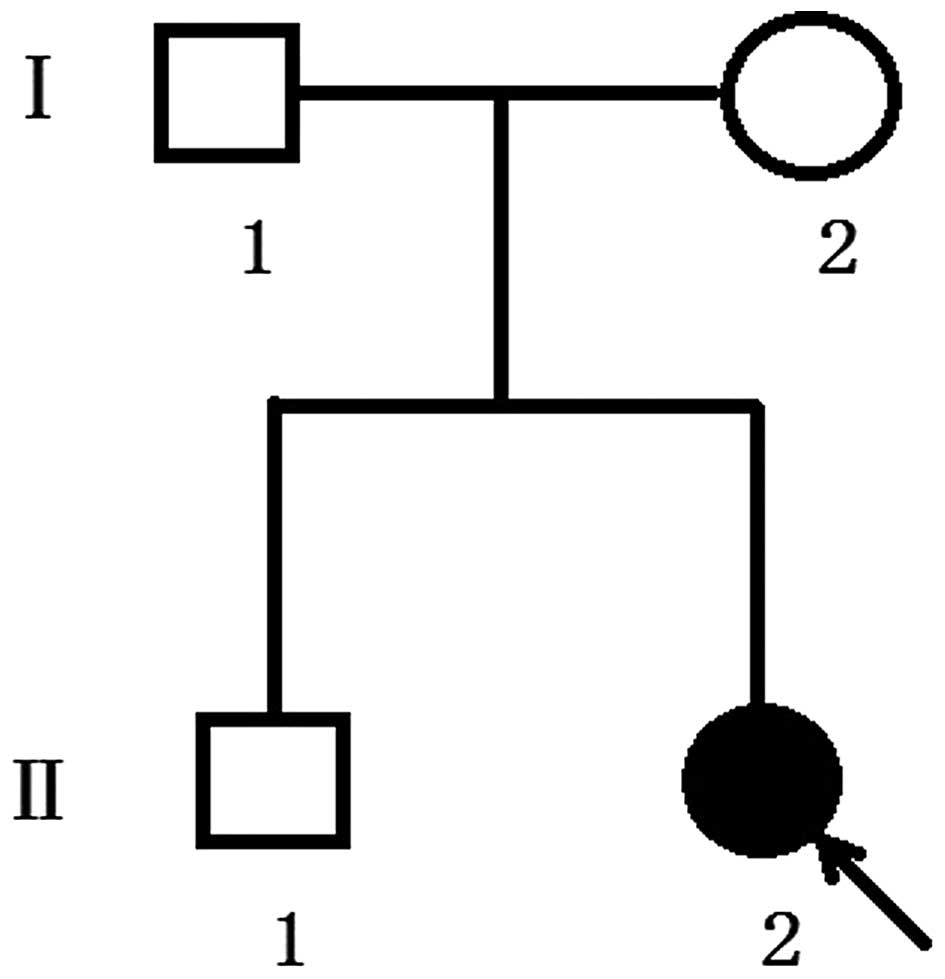
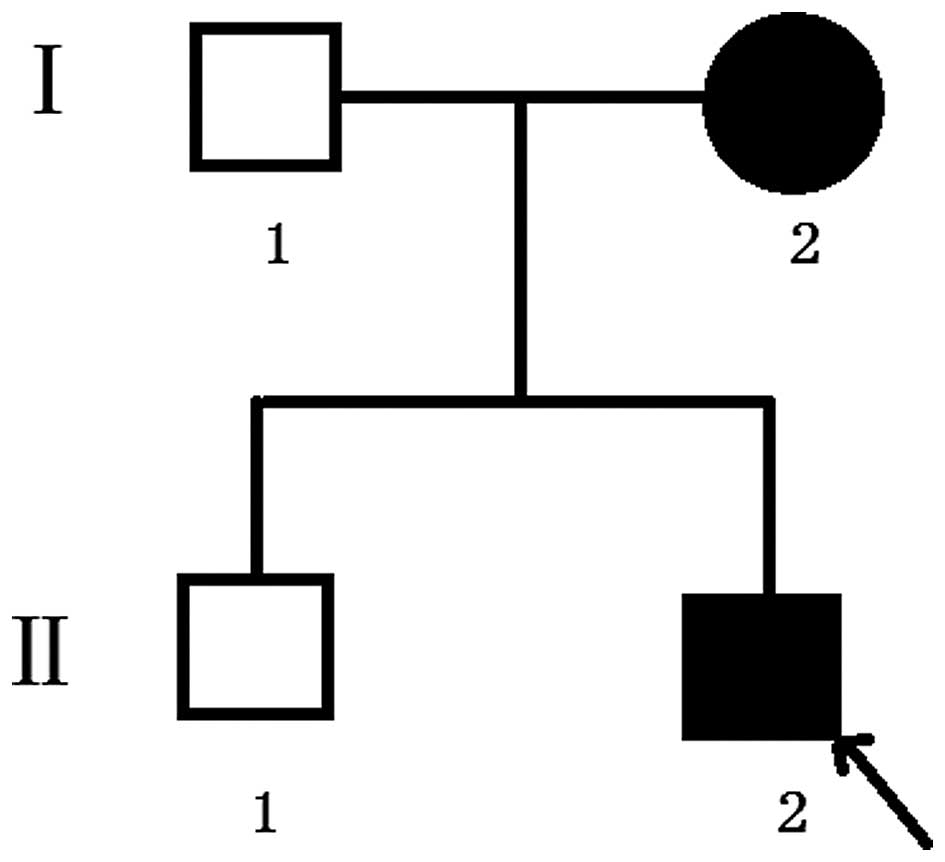
Two probands in two Chinese families were diagnosed as having Crouzon syndrome at the Zhongshan Ophthalmic Center (Guangzhou, China). The proband of family 1 (Fig. 1) was a one-year-old girl and was the second child of healthy unrelated parents, vaginally delivered maturely at 39 weeks. The second proband, in family 2, (Fig. 2) was a three-year-old boy and was also the second child of his family. For the present study, ophthalmic examinations of these two families were performed, as follows: Visual acuity was examined using the Early Treatment Diabetic Retinopathy Study chart (Precision Vision, LaSalle, IL, USA). Anterior segment images were captured using a BX 900 Slit Lamp (Haag-StreitAG, Köniz, Switzerland). Anterior segment measurements were obtained using Pentacam® HR version 70700 (OCULUS Optikgeräte GmbH, Wetzlar, Germany). Fundus imaging was performed using a Heidelberg Retina Angiograph (Heidelberg Engineering GmbH, Heidelberg, Germany). In addition, physical examinations, including blood examination, a urine test, electrocardiogram, chest X-ray, blood biochemistry test, blood lipid and blood coagulation tests, were performed to exclude systemic diseases. The study was approved by the ethics committee of Zhongshan Ophthalmic Center, Sun Yat-Sen University.

Figure 1

Pedigree of a Chinese family (family 1) with Crouzon syndrome. Squares denote males, circles denote females. Shaded symbol indicates ophthalmologist-confirmed Crouzon syndrome. Arrow indicates the proband.

Figure 2

Pedigree of a Chinese family (family 2) with Crouzon syndrome. Squares denote males, circles denote females. The shaded symbols indicate ophthalmologist-confirmed Crouzon syndrome. The arrow indicates the proband.

Sample collection

The affected families were identified at Zhongshan Ophthalmic Center. In addition, 200 subjects from the same population, but without diagnostic features of Crouzon syndrome, were recruited to serve as normal controls. Informed consent was obtained from all participating individuals and, in accordance with the principles of the Declaration of Helsinki, venous blood samples were collected from the two families and 200 controls for genomic DNA extraction from peripheral blood leukocytes, using the a DNA extraction kit (Qiagen, Inc., Valencia, CA, USA) with standard protocols.

Mutation detection

Exons 8 and 10 of the FGFR 2 gene were amplified using polymerase chain reaction (PCR) analysis with the following primers: FGFR2-8 (IIIa), forward 5′-GGTCTCTCATTCTCCCATCCC-3′, reverse 5′-CCAACAGGAAATCAAAGAACC-3′ (product size, 325 bp); FGFR2-10 (IIIc), forward 5′-CCTCCACAATCATTCCTGTGTC-3′, reverse 5′-ATAGCAGTCAACCAAGAAAAGGG-3′ (product size, 257 bp) (9-10) (Beijing Genomics Institute, Guangzhou, China). Briefly, PCR was performed with a 50 μl reaction volume with 2 μl each primer, 2 μl DNA, 25 μl buffer mix and 19 μl H2O. All reagents used for PCR were purchased from (Takara Bio, Inc., Tokyo, Japan).

The cycling profile included one cycle at 94°C for 5 min, followed by 40 cycles at 94°C for 45 sec, 61°C for 45 sec, and 72°C for 45 sec, with one cycle at 72°C for 10 min. The PCR products were sequenced from both directions using an ABI3730 automated sequencer (PE Biosystems, Foster City, CA, USA). The sequencing results were analyzed using Chromas (version 2.3; Technelysium Pty., Ltd., Brisbane, QLD, Australia), and they were compared with the reference sequences in the database at the National Center for Biotechnology Information (NCBI; NC_000010).

Results

Clinical data

The Chinese families included in the present study were from the southern area of China. In two successive generations, one individual was found to have a congenital disease. The proband of family 1 was referred by her local pediatrician at the age of 2 months, owing to concerns about her elongated head shape and a possible diagnosis of sagittal synostosis. The proband had otherwise been developing well with normal feeding and steady weight gain following birth. There was no history of learning difficulties or genetic problems in the family. The parents considered her development to be equivalent to her age-matched peers.

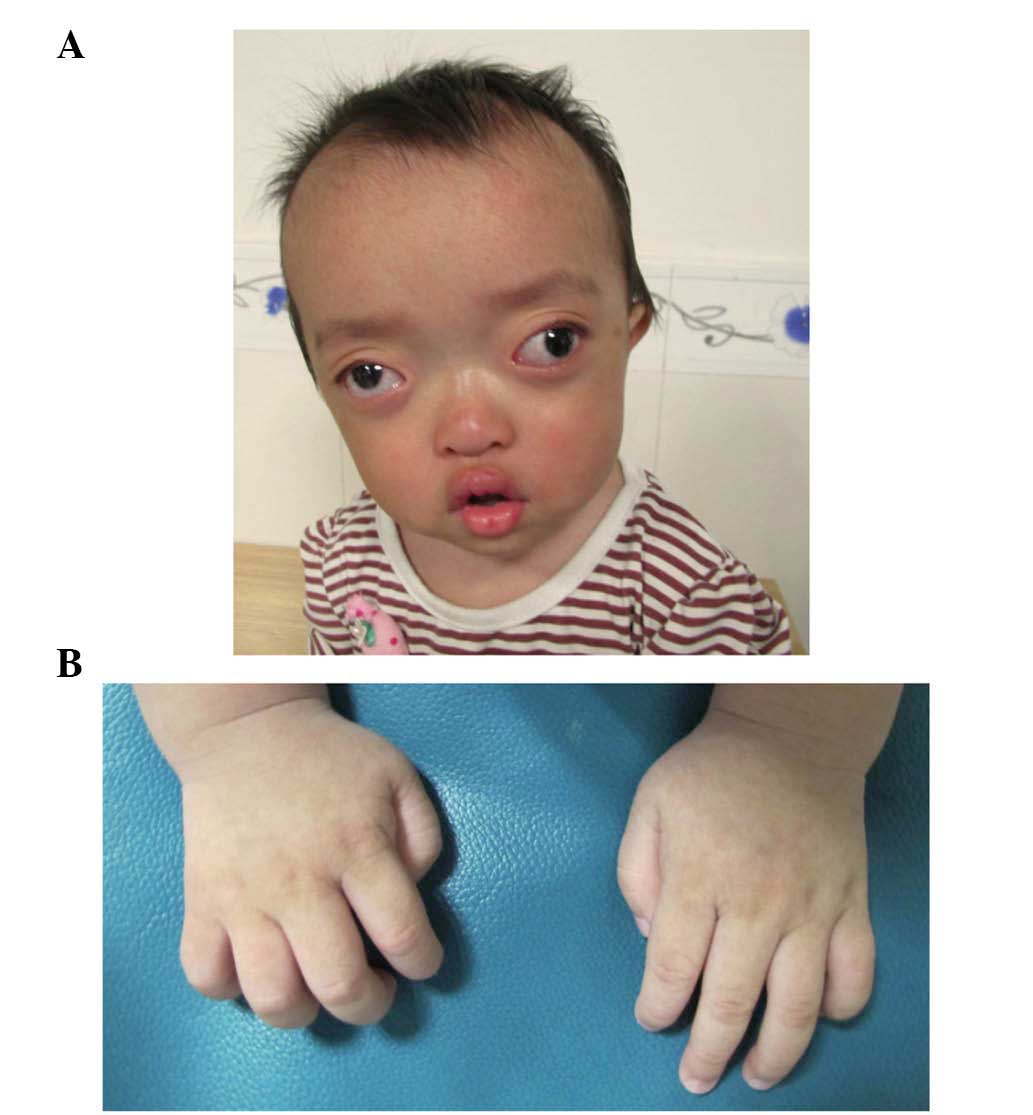
On examination, the proband exhibited shallow orbits and ocular proptosis, accompanied by midface hypoplasia, craniosynostosis and a curved, beak-like nose (Fig. 3A), with clinically normal hands and feet (Fig. 3B). The proband also showed exotropia of the left eye, although the corneas were normal in size and transparency, and the lenses were positioned normally and remained clear. As the child was just 1 year old, it was not possible to assess visual acuity, however, visual tracking was present. The parents and the old brother of the proband showed normal visual acuity and eye examinations.

Figure 3

Images of the proband of family 1. (A) Proband of family 1 exhibited ocular proptosis, strabismus and midface hypoplasia. (B) Clinical image of the hands of the proband of family 1.

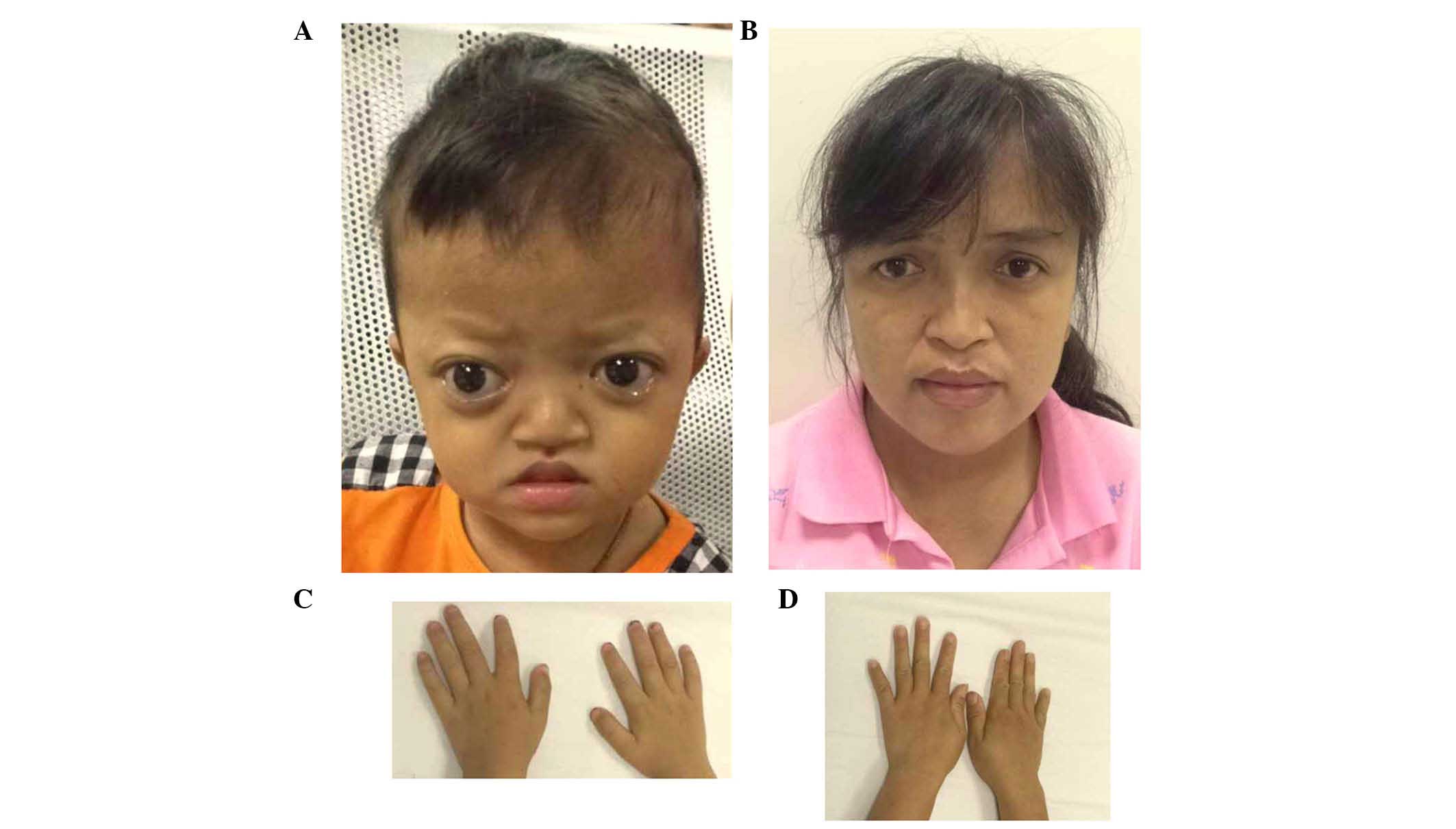
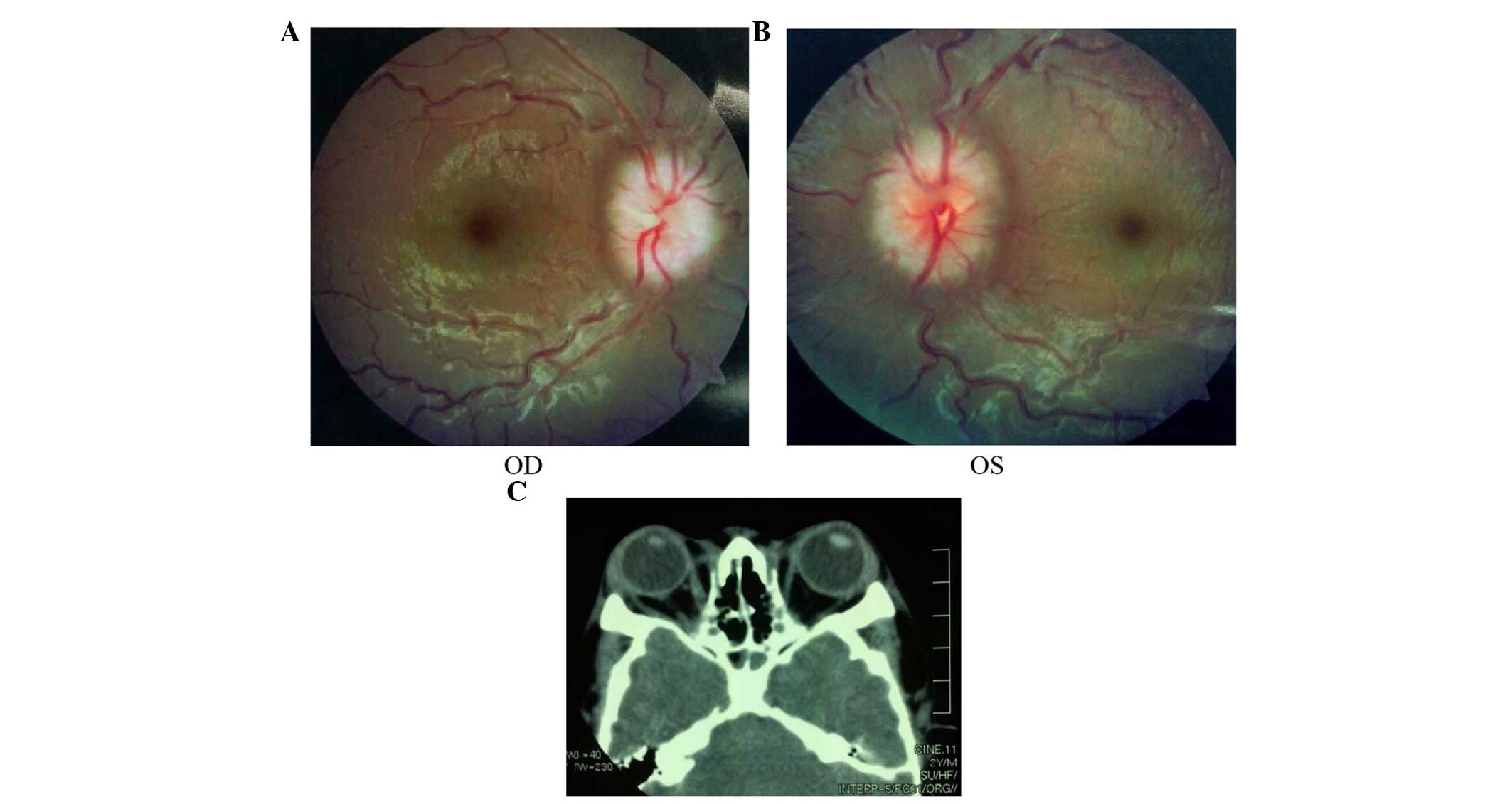
The proband of family 2 had midface hypoplasia and craniosynostosis (Fig. 4A). His mother's condition was less severe, with normal visual acuity (Fig. 4B). The proband and his mother had clinically normal hands and feet (Fig. 4C and D). The proband had papilloedema of both eyes (Fig. 5A and B) and had a history of intracranial hypertension (1 year previously). The Computed Tomography examination revealed shallow orbits (Fig. 5C). No abnormalities were detected in the corneas or lens.

Figure 4

Images of the proband of family 2 and his mother. (A) Proband of family 2 exhibited ocular proptosis and midface hypoplasia. (B) Mother of the proband of family 2, who presented with a similar appearance to her son. (C) Clinically normal hands of the proband of family 2. (D) Clinically normal hands of the mother of the proband of family 2.

Figure 5

Images of the examination of the proband of family 2. (A and B) Papilloedema of both eyes were noted. (C) Shallow orbits were found on Computed Tomography examination. OD, right eye; OS, left eye.

Mutation screening

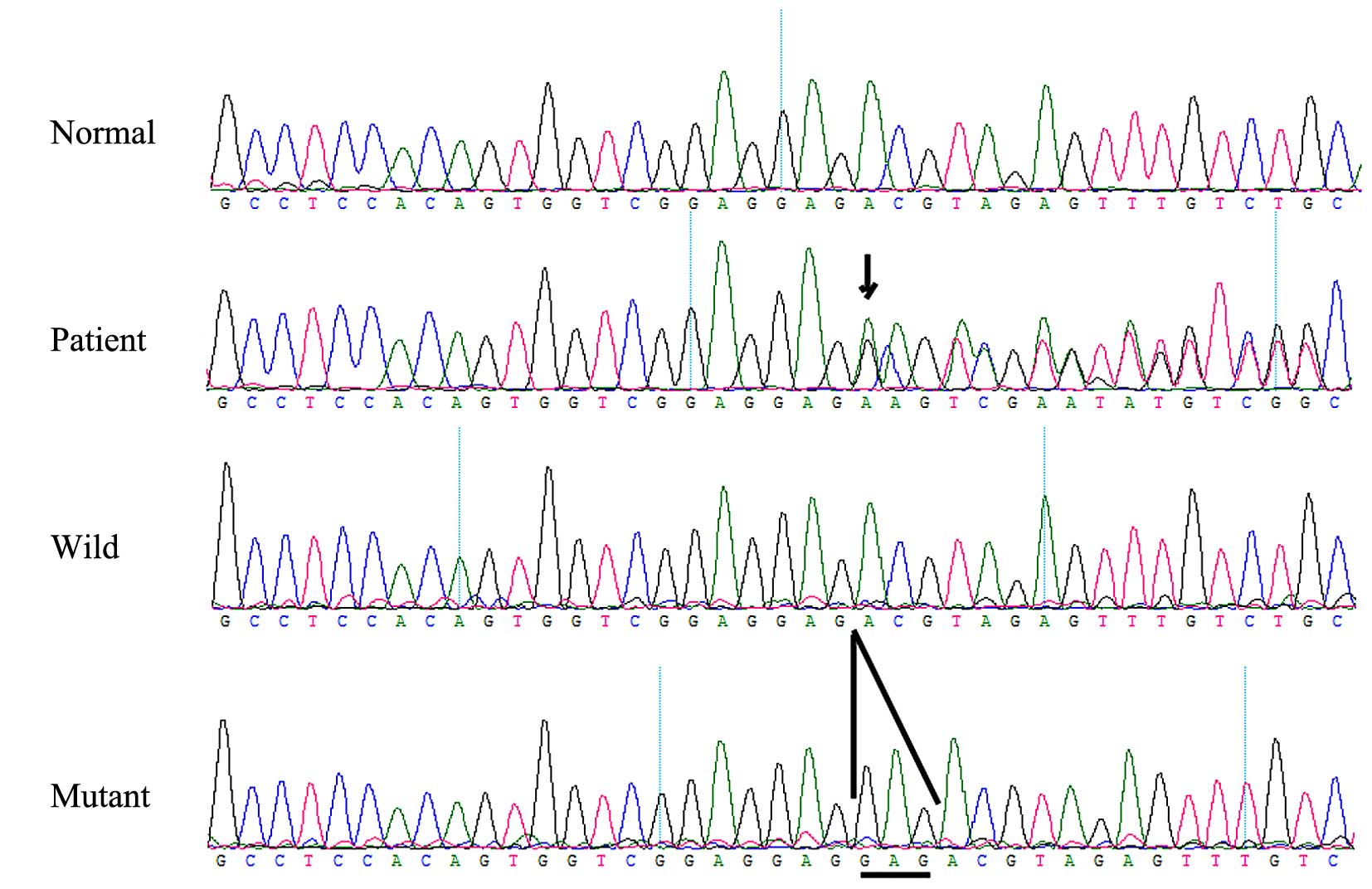
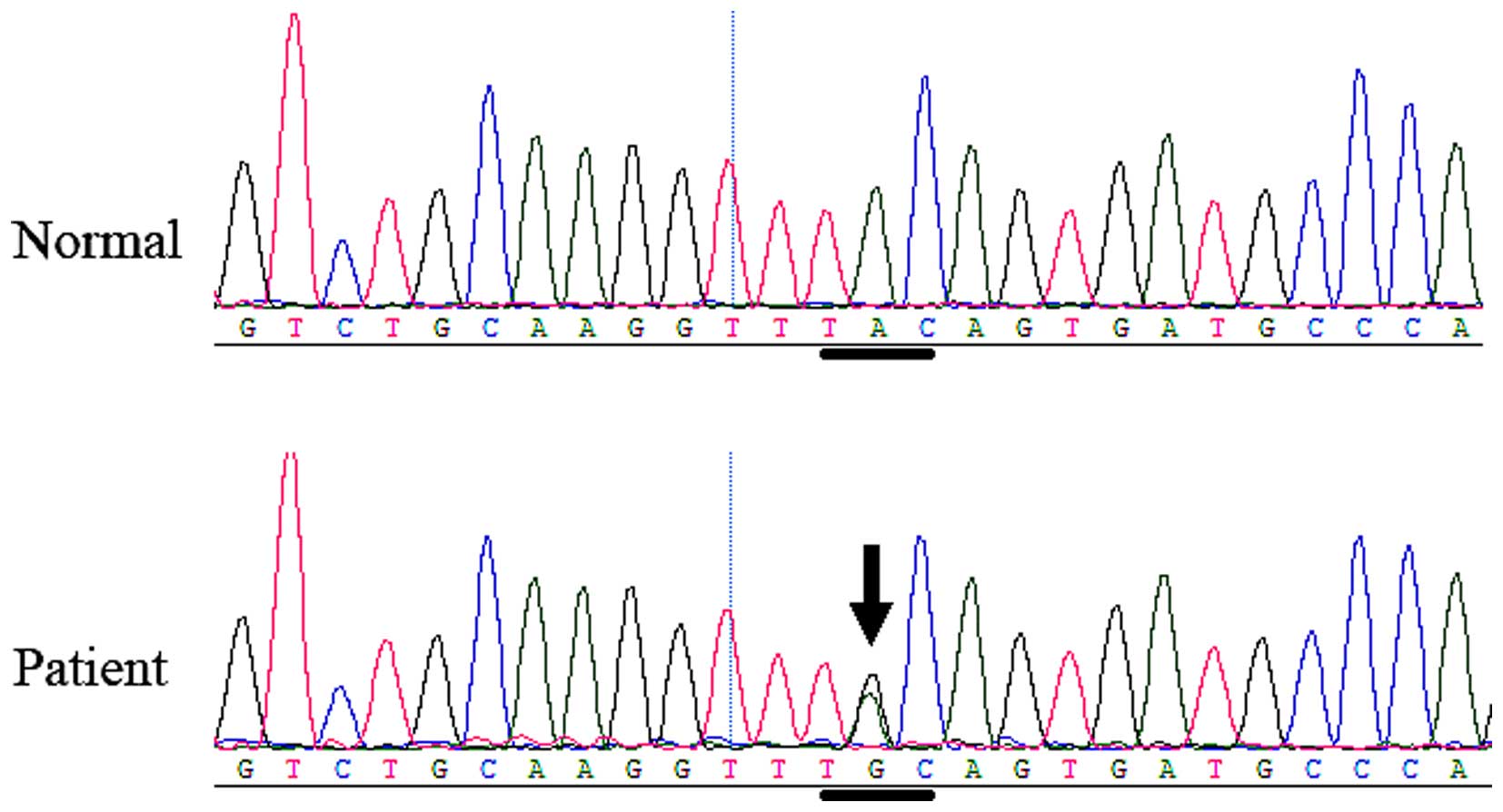
A heterozygous FGFR 2 missense mutation, c.811-812insGAG (p.273insGlu), in exon 8 (Fig. 6) was identified in the affected individual, but was not identified in any of the unaffected family members or the normal control individuals. This mutation causes the insertion of glutamic acid in position of 273 of the FGFR 2 gene. In family 2, another heterozygous FGFR 2 missense mutation, c.842A>G (P.Tyr281Cys or Y281C), in exon 8 (Fig. 7) was identified in the affected boy and his mother, but was not identified in any of the unaffected family members or the normal control individuals. The mutation causes the tyrosine 281 codon to change to a cysteine codon.

Figure 6

DNA sequence of a region of the FGFR 2 gene in the affected and unaffected individuals of family 1. A heterozygous FGFR 2 missense mutation, c.811-812insGAG (p.273insGlu), in exon 8 was identified in the affected individual, but not in any of the unaffected family members or the normal controls. The mutation caused the insertion of glutamic acid in the position of 273 of FGFR 2. Patient; c.811-812insGAG (p.273insGlu) mutation in exon 8 in the affected individuals; wild, sequence of the normal allele of exon 8 subcloned into the pGEM-T vector (used as a control); mutant, heterozygous missense mutation, c.811-812insGAG (p.273insGlu), in exon 8 in the affected individuals. This mutation caused the insertion of glutamic acid in position of 273 of the FGFR 2 gene. FGFR 2, fibroblast growth factor receptor 2.

Figure 7

DNA sequence of the reigon of the FGFR 2 gene in the affected and unaffected individuals of family 2. In family 2, the heterozygous FGFR 2 missense mutation, c.842A>G (P.Tyr281Cys or Y281C), in exon 8 was identified in the affected boy and his mother, but not in any of the unaffected family members or the normal control individuals. The mutation caused the tyrosine 281 codon to change to a cysteine codon (arrow). FGFR 2, fibroblast growth factor receptor 2.

Discussion

In the present study, two mutations in exon 8 of the FGFR 2 gene were identified, which were associated with Crouzon syndrome: A de novo mutation, c.811-812insGAG (p.273insGlu), in family 1 and a familial mutation, c.842A>G (p.Tyr281Cys or Y281C), in family 2. These mutations, rather than representing a rare polymorphism in the normal population, were the causative mutations in these two families.

The c.811-812insGAG (p.273insGlu) mutation was identified for the first time in the FGFR 2 gene in Chinese patients, and, to the best of our knowledge, has not previously been reported either in China or elsewhere. However, the c.842A>G (P.Tyr281Cys or Y281C) mutation, identified in family 2, has been previously reported outside of China (12). Although Crouzon syndrome is inherited as an autosomal dominant trait, several cases are sporadic and present as de novo mutations arising from unaffected parents, as observed in family 1 in the present study.

The most common genetic mutation of FGFR 2 has been localized in the third Ig-like domain and in the flanking linker regions, coded by exons IIIa (exon 8) and IIIc (exon 10) (13,14). The two mutations found in the two families in the present study were in exon IIIa. The mutations may disrupt the intra-Ig domain disulfide bond, thus leading to changes in FGF signaling, and may induce the activation or downregulation of FGFR 2 (15–20).

Okajima et al (21) reported that certain patients with an FGFR 2 mutation may have Peters anomaly, optic nerve hypoplasia, scleralization of the cornea and corectopia in craniosynostosis syndromes. In the present study, the proband of family 2 had papilloedema, which expands the clinical manifestations of Crouzon syndrome.

In conclusion, the present study identified two mutations of FGFR 2 in two Chinese families with Crouzon syndrome. This finding expands the mutation spectrum of FGFR 2, and is useful and valuable for genetic counseling and prenatal diagnosis in families with Crouzon syndrome with ocular disorders.

Acknowledgments

This study was supported by the National Natural Science Foundation of China (grant no. 81500709), the Project of Fundamental Research Funds of State Key Laboratory of Ophthalmology (grant nos. 2011Q09, 2012KF03 and 2014QN04), and the Medical Scientific Research Foundation of Guangdong Province (grant no. A201646).

References

1 

Reardon W, Winter RM, Rutland P, Pulleyn LJ, Jones BM and Malcolm S: Mutations in the fibroblast growth factor receptor 2 gene cause Crouzon syndrome. Nat Genet. 8:98–103. 1994. View Article : Google Scholar : PubMed/NCBI

2 

Gorry MC, Preston RA, White GJ, Zhang Y, Singhal VK, Losken HW, Parker MG, Nwokoro NA, Post JC and Ehrlich GD: Crouzon syndrome: Mutations in two spliceoforms of FGFR2 and a common point mutation shared with Jackson-Weiss syndrome. Hum Mol Genet. 4:1387–1390. 1995. View Article : Google Scholar : PubMed/NCBI

3 

Oldridge M, Lunt PW, Zackai EH, McDonald-McGinn DM, Muenke M, Moloney DM, Twigg SR, Heath JK, Howard TD, Hoganson G, et al: Genotype-phenotype correlation for nucleotide substitutions in the IgII-IgIII linker of FGFR2. Hum Mol Genet. 6:137–143. 1997. View Article : Google Scholar : PubMed/NCBI

4 

Murano I: Crouzon syndrome. Nihon Rinsho. (Suppl 3): S416–S417. 2006.In Japanese.

5 

Steinberger D, Reinhartz T, Unsöld R and Müller U: FGFR2 mutation in clinically nonclassifiable autosomal dominant craniosynostosis with pronounced phenotypic variation. Am J Med Genet. 66:81–86. 1996. View Article : Google Scholar : PubMed/NCBI

6 

Park WJ, Meyers GA, Li X, Theda C, Day D, Orlow SJ, Jones MC and Jabs EW: Novel FGFR2 mutations in Crouzon and Jackson-Weiss syndromes show allelic heterogeneity and phenotypic variability. Hum Mol Genet. 4:1229–1233. 1995. View Article : Google Scholar : PubMed/NCBI

7 

Meyers GA, Day D, Goldberg R, Daentl DL, Przylepa KA, Abrams LJ, Graham JM Jr, Feingold M, Moeschler JB, Rawnsley E, et al: FGFR2 exon IIIa and IIIc mutations in Crouzon, Jackson-Weiss and Pfeiffer syndromes: Evidence for missense changes, insertions, and a deletion due to alternative RNA splicing. Am J Hum Genet. 58:491–498. 1996.PubMed/NCBI

8 

Steinberger D, Collmann H, Schmalenberger B and Müller U: A novel mutation (a886 g) in exon 5 of FGFR2 in members of a family with Crouzon phenotype and plagiocephaly. J Med Genet. 34:420–422. 1997. View Article : Google Scholar : PubMed/NCBI

9 

Lin Y, Ai S, Chen C, Liu X, Luo L, Ye S, Liang X, Zhu Y, Yang H and Liu Y: Ala344Pro mutation in the FGFR2 gene and related clinical findings in one Chinese family with Crouzon syndrome. Mol Vis. 18:1278–1282. 2012.PubMed/NCBI

10 

Lin Y, Liang X, Ai S, Chen C, Liu X, Luo L, Ye S, Li B, Liu Y and Yang H: FGFR2 molecular analysis and related clinical findings in one Chinese family with Crouzon syndrome. Mol Vis. 18:449–454. 2012.PubMed/NCBI

11 

Hollway GE, Suthers GK, Haan EA, Thompson E, David DJ, Gecz J and Mulley JC: Mutation detection in FGFR2 craniosynostosis syndromes. Hum Genet. 99:251–255. 1997. View Article : Google Scholar : PubMed/NCBI

12 

Kan SH, Elanko N, Johnson D, Cornejo-Roldan L, Cook J, Reich EW, Tomkins S, Verloes A, Twigg SR, Rannan-Eliya S, et al: Genomic screening of fibroblast growth-factor receptor 2 reveals a wide spectrum of mutations in patients with syndromic craniosynostosis. Am J Hum Genet. 70:472–486. 2002. View Article : Google Scholar : PubMed/NCBI

13 

Tartaglia M, Valeri S, Velardi F, Di Rocco C and Battaglia PA: Trp290Cys mutation in exon IIIa of the fibroblast growth factor receptor 2 (FGFR2) gene is associated with Pfeiffer syndrome. Hum Genet. 99:602–606. 1997. View Article : Google Scholar : PubMed/NCBI

14 

Ke R, Yang X, Tianyi C, Ge M, Lei J and Mu X: The C342R mutation in FGFR2 causes Crouzon syndrome with elbow deformity. J Craniofac Surg. 26:584–586. 2015. View Article : Google Scholar : PubMed/NCBI

15 

Padmanabhan V, Hegde AM and Rai K: Crouzon's syndrome: A review of literature and case report. Contemp Clin Dent. 2:211–214. 2011. View Article : Google Scholar

16 

Robin NH, Falk MJ and Haldeman-Englert CR: FGFR-Related Craniosynostosis Syndromes. Pagon RA, Adam MP, Ardinger HH, Wallace SE, Amemiya A, Bean LJH, Bird TD, Fong CT, Mefford HC, Smith RJH and Stephens K: GeneReviews®. http://www.ncbi.nlm.nih.gov/books/NBK1455/. University of Washington; Seattle, WA: 1993

17 

Snyder-Warwick AK, Perlyn CA, Pan J, Yu K, Zhang L and Ornitz DM: Analysis of a gain-of-function FGFR2 Crouzon mutation provides evidence of loss of function activity in the etiology of cleft palate. Proc Natl Acad Sci USA. 107:2515–2520. 2010. View Article : Google Scholar : PubMed/NCBI

18 

Piccione M, Antona V, Niceta M, Fabiano C, Martines M, Bianchi A and Corsello G: Q289P mutation in the FGFR2 gene: First report in a patient with type 1 Pfeiffer syndrome. Eur J Pediatr. 168:1135–1139. 2009. View Article : Google Scholar

19 

Lapunzina P, Fernández A, Sánchez Romero JM, Delicado A, Sáenz de Pipaon M, López Pajares I and Molano J: A novel insertion in the FGFR2 gene in a patient with Crouzon phenotype and sacrococcygeal tail. Birth Defects Res A Clin Mol Teratol. 73:61–64. 2005. View Article : Google Scholar

20 

Gong SG: The Fgfr2 W290R mouse model of Crouzon syndrome. Childs Nerv Syst. 28:1495–1503. 2012. View Article : Google Scholar : PubMed/NCBI

21 

Okajima K, Robinson LK, Hart MA, Abuelo DN, Cowan LS, Hasegawa T, Maumenee IH and Jabs EW: Ocular anterior chamber dysgenesis in craniosynostosis syndromes with a fibroblast growth factor receptor 2 mutation. Am J Med Genet. 85:160–170. 1999. View Article : Google Scholar : PubMed/NCBI

Related Articles

  • Abstract
  • View
  • Download
  • Twitter
Copy and paste a formatted citation
Spandidos Publications style
Lin Y, Gao H, Ai S, Eswarakumar JV, Li T, Liu B, Jiang H, Liu Y, Liu X, Li Y, Li Y, et al: Molecular analysis of FGFR 2 and associated clinical observations in two Chinese families with Crouzon syndrome. Mol Med Rep 14: 1941-1946, 2016.
APA
Lin, Y., Gao, H., Ai, S., Eswarakumar, J.V., Li, T., Liu, B. ... Liu, Y. (2016). Molecular analysis of FGFR 2 and associated clinical observations in two Chinese families with Crouzon syndrome. Molecular Medicine Reports, 14, 1941-1946. https://doi.org/10.3892/mmr.2016.5497
MLA
Lin, Y., Gao, H., Ai, S., Eswarakumar, J. V., Li, T., Liu, B., Jiang, H., Liu, Y., Liu, X., Li, Y., Ni, Y., Chen, J., Lin, Z., Liang, X., Jin, C., Huang, X., Lu, L., Liu, Y."Molecular analysis of FGFR 2 and associated clinical observations in two Chinese families with Crouzon syndrome". Molecular Medicine Reports 14.3 (2016): 1941-1946.
Chicago
Lin, Y., Gao, H., Ai, S., Eswarakumar, J. V., Li, T., Liu, B., Jiang, H., Liu, Y., Liu, X., Li, Y., Ni, Y., Chen, J., Lin, Z., Liang, X., Jin, C., Huang, X., Lu, L., Liu, Y."Molecular analysis of FGFR 2 and associated clinical observations in two Chinese families with Crouzon syndrome". Molecular Medicine Reports 14, no. 3 (2016): 1941-1946. https://doi.org/10.3892/mmr.2016.5497
Copy and paste a formatted citation
x
Spandidos Publications style
Lin Y, Gao H, Ai S, Eswarakumar JV, Li T, Liu B, Jiang H, Liu Y, Liu X, Li Y, Li Y, et al: Molecular analysis of FGFR 2 and associated clinical observations in two Chinese families with Crouzon syndrome. Mol Med Rep 14: 1941-1946, 2016.
APA
Lin, Y., Gao, H., Ai, S., Eswarakumar, J.V., Li, T., Liu, B. ... Liu, Y. (2016). Molecular analysis of FGFR 2 and associated clinical observations in two Chinese families with Crouzon syndrome. Molecular Medicine Reports, 14, 1941-1946. https://doi.org/10.3892/mmr.2016.5497
MLA
Lin, Y., Gao, H., Ai, S., Eswarakumar, J. V., Li, T., Liu, B., Jiang, H., Liu, Y., Liu, X., Li, Y., Ni, Y., Chen, J., Lin, Z., Liang, X., Jin, C., Huang, X., Lu, L., Liu, Y."Molecular analysis of FGFR 2 and associated clinical observations in two Chinese families with Crouzon syndrome". Molecular Medicine Reports 14.3 (2016): 1941-1946.
Chicago
Lin, Y., Gao, H., Ai, S., Eswarakumar, J. V., Li, T., Liu, B., Jiang, H., Liu, Y., Liu, X., Li, Y., Ni, Y., Chen, J., Lin, Z., Liang, X., Jin, C., Huang, X., Lu, L., Liu, Y."Molecular analysis of FGFR 2 and associated clinical observations in two Chinese families with Crouzon syndrome". Molecular Medicine Reports 14, no. 3 (2016): 1941-1946. https://doi.org/10.3892/mmr.2016.5497
Follow us
  • Twitter
  • LinkedIn
  • Facebook
About
  • Spandidos Publications
  • Careers
  • Cookie Policy
  • Privacy Policy
How can we help?
  • Help
  • Live Chat
  • Contact
  • Email to our Support Team